The Nio ES8 is a big electric SUV from China that can go far on a single charge. It has some cool features, like being able to swap its battery for a new one quickly, which makes it easier to use than some other electric cars.
JLR is the company that makes Jaguar and Land Rover cars. They've been having some problems recently, including issues with their production and changes in management.
The Land Rover Defender is a tough, off-road vehicle that's been updated for modern drivers. It's known for its unique look and ability to handle rough terrain.
The Range Rover Velar is a mid-sized SUV that focuses on luxury and modern technology. It's designed to be stylish and comfortable while still being capable off-road.
The Range Rover Evoque is a smaller, stylish SUV that offers luxury features and can handle off-road conditions. It's popular for its design and comfort.
Premium EVs are expensive electric cars that come with lots of luxury features and high performance. They're aimed at people who want a fancy car that is also good for the environment.
Car
Kia EV2
The Kia EV2 is a small electric car that Kia is launching. It's part of their plan to offer more electric vehicles, especially for people looking for affordable options.
The Kia EV3 is another electric vehicle from Kia, which is slightly larger than the EV2. It shows that Kia is making more electric cars for different types of buyers.
EGMP stands for Electric Global Modular Platform, which is a special design that helps make electric cars. It allows different models to be built on the same base, making them more efficient.
The Kia EV5 is a new electric car that will come in different versions with various battery sizes. This means you can choose how far you want to drive on a single charge, and it will have modern features to make driving easier.
NMC batteries are another type of battery used in electric cars. They are known for being efficient and providing a longer driving range compared to some other types.
Capacity retention is how much charge a battery can still hold after some time. If a battery keeps most of its power, it means it's still in good shape.
A factory warranty is a promise from the car maker that they will fix certain problems for free for a certain amount of time or distance you drive. For BYD, this is six years or 150,000 kilometers.
A BEV is a car that runs only on electricity and doesn't use gasoline or diesel. It doesn't produce any pollution from its exhaust because it doesn't have an engine that burns fuel.
Bidirectional charging means that an electric car can both take in electricity to charge its battery and send electricity back out. This can help provide power to homes or the grid when needed.
Bidirectionality means that electric vehicles can both take electricity from the power grid and give it back when needed. This can help keep homes powered during outages and support the overall energy system.
Electric vehicles are cars that run on electricity instead of gas. They are considered better for the environment because they don't produce exhaust fumes.
The Alpine A290 is a small, sporty electric car that is designed to be fun to drive. It's part of a new trend where car companies are making electric versions of their popular models, and this one aims to keep the excitement of racing.
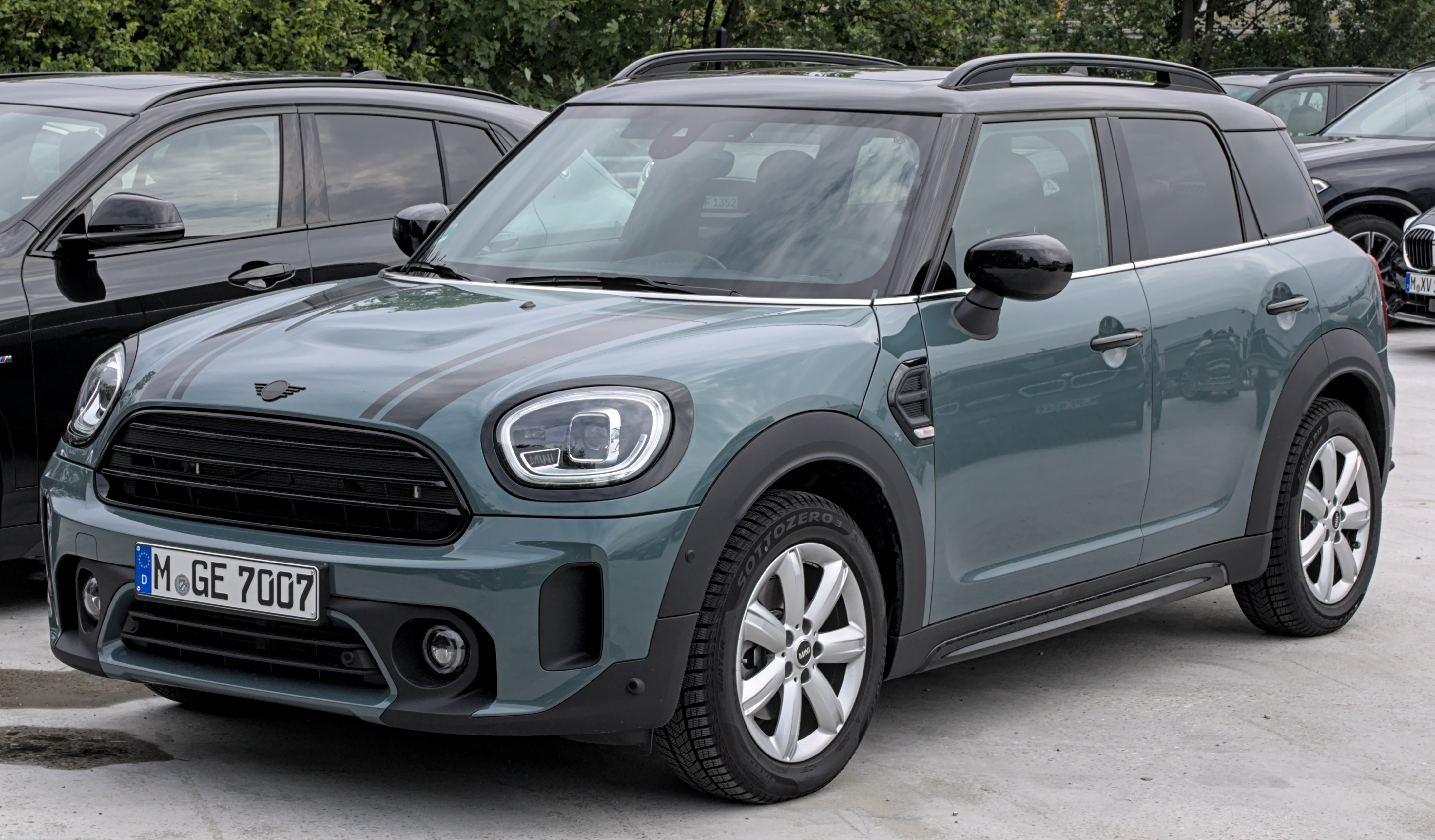
The Mini Countryman is a bigger Mini car that can fit more people and stuff. It keeps the fun look of a Mini but adds more room, making it a good choice for families or anyone needing extra space.
The Ford Puma is a small SUV that looks stylish and is great for city driving. It has a lot of space inside for passengers and luggage, and it often comes with cool tech features to make driving easier and more fun.
The Citroën C5 is a comfortable car that is good for long drives. It has some unique features that make it easy to ride in, and it's designed to be practical for everyday use.
Mercedes-Benz is a famous car brand that makes luxury vehicles and owns the company Yes, sir.
LIVE
Five years ago, I was paying $65 a month for my subscriptions.
Today, those same subscriptions cost $111, and I don't even use half of them anymore.
That's why now I use RocketMoney to manage my subscriptions for me.
The app gives you a list of all of your subscriptions and reminds you of upcoming payments,
so you're not hit with any surprise charges.
On top of that, it also sends you alerts when subscription prices go up,
so you always know the price you're paying.
If you decide you no longer want a subscription, you can cancel it right from the app.
No customer service needed.
And the best part is RocketMoney even reaches out
and tries to get you refunded for some of the money you lost.
On average, people that cancel their subscriptions with RocketMoney save $378 a year.
And overall, RocketMoney has saved its members $880 million in canceled subscriptions.
Stop wasting money on things you don't use.
Go to rocketmoney.com slash cancel to get started.
That's rocketmoney.com slash cancel.
Rocketmoney.com slash cancel.
League One Volleyball is back.
The world's best players together on American soil.
This is volleyball like you've never seen before.
Huge swings, massive blocks, jaw-dropping digs.
A sport where every play is a highlight.
League One Volleyball returns January 7th, 2026 with teams in Atlanta, Austin, Houston,
Madison, Nebraska, and Salt Lake.
To buy tickets, visit lovb.com slash iHeart.
Let's do the 60-Second Savings Challenge.
Step one, download RocketMoney.
Step two, link your accounts and see every subscription you're paying for.
Tap one you don't use and cancel it.
That's money back every month.
Step three, create a financial goal.
$50 every paycheck.
Or let the app automatically move small amounts of cash when you can afford it.
In a week, you'll forget you set it up.
In a month, you'll see real dollars piling up.
In a year, you'll be shocked at how much money you've saved.
Bonus challenge.
Upload an internet or phone bill and let RocketMoney try to lower it.
You only pay if they find you savings.
On average, RocketMoney members can save up to $740 a year
when using all of the app's premium features.
Users love the app with over 186,000 five-star ratings.
Make saving money the resolution you actually keep.
Start the 60-second savings challenge at RocketMoney.com slash cancel.
That's RocketMoney.com slash cancel.
RocketMoney.com slash cancel.
Hear that?
That's me in Tokyo learning to make sushi from a master.
How did I get here?
I invested wisely.
Now the only thing I worry about is using too much wasabi.
Get where you're going with SPI, the world's most traded ETF.
Getting there starts here with state street investment management.
Before investing, consider the fund's investment objectives, risks, charges, and expenses.
Visit statestreet.com slash im for prospectus containing this and other information.
Read it carefully.
SPI is subject to risks similar to those of stocks.
All ETFs are subject to risk, including possible loss of principal.
Alps distributors ink distributor.
Welcome back to the podcast today.
Jaguar fires its EV design boss.
Kia's EV2 is coming and BYD extends its warranties.
Plus, stay tuned.
Later in the show, I'll tell you why everyone seems to be excited
about in-wheel motors.
On EV News China today, our spin-off podcast,
I've been talking about the BYD Denzer D9, Dolphin's million deliveries,
and NEO's third-generation ES8, getting a sales surge.
Let's get into it.
Jaguar Land Rover's move to EV has been thrown into doubt
after the sudden firing of Chief Creative Officer Jerry McGovern.
The design force behind some of its most successful SUVs,
and indeed Jaguar's planned high-end EV reboot.
AutoCar reports that McGovern, who has held the top design job since 2020,
was dismissed by the new Chief Executive and escorted from the building.
The leadership change comes at a really fragile moment.
JLR is still recovering from a major cyberattack
that disrupted production at several plants,
while Jaguar delayed their flagship electric grand tourer worth about $130,000,
a halo model meant to signal where the brand is heading.
McGovern had pushed a radical plan for Jaguar,
an all-electric range built around fewer, more expensive, limited production cars.
Instead of competing head-on with mass premium rivals,
Jaguar would chase the ultra-luxury buyers,
who might also consider Bentley, or top marks from Germany.
That vision took shape in what became a controversial Jaguar-type
double-o concept, and that triggered fierce debate inside and even outside the company
about what Jaguar should be in the EV age.
Of course, there was the very famous rebranding,
video, showreel, commercial, whatever that was, using bright colors,
and which went down pretty poorly with the internet.
But, well, you know, a lot of people who are very online
tend to have an opinion about just about everything.
Maybe they should keep their opinions slightly more to themselves.
Beyond Jaguar, McGovern's mark on the wider group is hard to miss.
He oversaw the modern Land Rover Defender,
and is widely seen as the key figure behind the Range Rover Evoque and Range Rover Velar,
SUVs that underpinned JLR's profit for over a decade.
JLR declined to comment on reports of McGovern's exit,
but attention now turns to the Chief Executive Balaji,
how he will reshape Jaguar's premium EV plans,
and whether this new ultra-luxury, all-electric strategy gets tweaked,
delayed, or even scrapped under his new rule.
Kia will widen its EV range in Europe at the bottom end of the market.
The brand has confirmed that its smallest EV, the Kia EV2,
is going to get a January the 9th debut.
It'll be Brussels Motor Show in Belgium.
It's going to sit below the Kia EV3, you won't be surprised to hear.
The EV2 has a compact SUV silhouette.
Teaser images released today show the car close to production,
and that largely mirrors the concept from the outside,
but the cabin will move away from that kind of concept study.
I would think very similar to a Kia EV3, and that's no bad thing,
because the Kia EV3 has largely been one of my recommendations of 2025.
EV2 sits on the front-wheel-drive version of their low-voltage EGMP architecture,
shared with other dedicated EVs up to the EV5.
Two battery choices are planned.
Entry-level LFP, longer-range NMC.
These packs would be smaller, we think, than the EV3 to keep costs down.
EV3 has either a 58.3 or 81.4 kilowatt-hour pack.
Now, Hyundai's little Insta, or Casper in its home market,
has a 49 kilowatt-hour battery.
So could it be that, or could it be something in between?
They're going to make the EV2 over here.
I say over here, I mean Europe in Slovakia.
The company says the car has been designed, developed,
and will be produced in and for Europe.
The EV2 joins a crowded field like the Renault 5 and the Renault 4,
and Hyundai's Insta.
European prices, what, $30,000, maybe a bit less.
The model won't be sold in the US.
Tariffs are a major obstacle.
BYD is lengthening their EV battery warranty.
In Norway, it'll be eight years, or 250,000 kilometers.
That's one of the strongest guarantees now on offer.
The new limit lifts BYD's earlier cap by 50,000 kilometers,
up from 200,000 kays,
and stands well above the industry norm of about 160,000.
Under the revised terms, BYD promises that the battery
will retain at least 70% of its original capacity for eight years.
The change covers not only new buyers, but existing BYD owners.
The upgrade tackles one of the biggest worries for EV buyers.
How is this battery technology is going to hold up over time?
You know, and I know, we talk about it so much on this podcast,
there is data point after data point.
These batteries are just going on forever.
Not to say there's no failures.
All machines will fail, but it's incredibly low as a percentage.
This expanded battery cover comes, well, on top of BYD's factory warranty,
that is six years and 150,000 kilometers,
which is already very generous.
The extended battery warranty applies to all BYD models sold in Norway,
with demand for BYD's cars already boosted ahead of recent tax rises.
Attention now turns to whether rival makers will match the move.
EU is eyeing EV quotas for corporate car fleets.
The European Commission is weighing rules that would push petrol cars
out of Europe's corporate fleets by 2030.
That's five years before the formal 2035 end of pure combustion,
but Germany is lobbying really hard to allow combustion after 2035,
as well as plug-in hybrids and e-refs.
People briefed on the talks say Brussels is considering binding quotas
for any really big rental, leasing and company car fleets,
under which most new vehicles would need to be purebev by the end of this decade.
The proposal is due on December 10th.
Industry groups argue that the measure would amount to an indirect petrol ban.
Nico Gabriel, chief operating officer at the rental giant Sixth,
said this quota on corporate fleets would actually lead to a far earlier
ban of combustion vehicles.
Calling it some kind of a double-sword play.
Or a backdoor petrol ban.
Corporate buyers dominate Europe's new car market.
Around six in ten new vehicles go to either rental, leasing or company fleets.
And for some manufacturers, these customers account for half of their deliveries.
That makes fleet policy very, very important.
The environmental campaign group Transport and Environment
points out that company cars generate more than 70% of emissions from new vehicles.
They often drive further than personal vehicles.
And that faster electrification of fleets is essential to hit climate goals.
I would add sometimes, obviously that's a campaign group
with the word environment in their title.
That's what they do.
I would add sometimes, we need to remind people as well,
a lot of EVs aren't bought because they're good for the environment.
There's not zero tailpipe emissions.
And they generate EV with my solar panels.
And apart from making the panels, they're now zero emissions.
But it's just better.
It's better for the drivers.
It's better for the bottom line.
It's much cheaper to charge.
And you can charge your vehicle at home.
And then there's all sorts of things you can do now.
It's very sophisticated with reimbursing your employees
for charging at home at the right rate
so they don't lose out on anything like that as well.
And you completely avoid all the wasted time
of filling up those vehicles.
Especially if you have a depot
where you run a fleet or rental vehicles where you can charge.
The time and money saved from not refilling those vehicles
but doing them yourself on your own schedule
at the lowest possible prices is huge.
You know, oh, and of course, let's save polar bears.
The commission's proposal will show
how far Europe is willing to go
in using corporate fleets to speed up the shift to EV.
Now FastNed will build France's first
fully electric motorway service area.
I couldn't believe when I read the headlines.
I read it a few times more.
France's first fully electric motorway service area.
Now we've got the Gridsurf ones over here.
They are these wonderful sites that are 10, 20, 30, 40,
50, 60 chargers, a canopy, a little gym area,
showers and all that.
So I think what the specific phrase here is
on the French motorway networks.
This is a motorway service station,
often regulated by different,
some countries treat their motorway networks
as kind of the spines of the country in poor infrastructure.
I suppose those Gridsurf ones I'm talking about
might be just off the main roads.
So I think that's what the significance is here.
The FastNed is building France's first fully
the motorway service area.
Changing how long distance trips will happen.
The Dutch charging operator has won a national tender
to replace the pumps with all-electric dispensers.
Opening in 2026 on route Nationale 165,
a corridor that carries more than 28,000 vehicles a day.
The site will host six ultra-rapids at 400 kilowatts each,
one designed for large trucks as well.
FastNed is aiming for full motorway stop experiences
like shops, restrooms and landscaped gardens.
That's not the motorway experience that we have in Great Britain.
I mean, we have food and restrooms,
but landscaped gardens, is that a French thing?
That takes it closer to the classic service area model.
The project builds on FastNed's 50 operational
charging stations in France in 318 Europe.
Also targeting a market where EV demand is rising fast.
In 2024, France registered over 291,000 new BEVs.
Sales will be up this year.
And this site will be FastNed's second service area of the future.
They got one in Belgium as well.
Okay, let's move on.
And Ford is asking US regulators to loosen grid connection rules
for EVs, warning that current policy holds back
the spread of bidirectional charging.
Bidirectionality, using electric vehicles,
drawing power from the grid,
but also sending it back when it's needed
or is financially beneficial to you.
Electricity keeps homes running during an outage.
Bill Crider, who leads global charging and energy at Ford,
argues that this capability boosters the grid,
would make the American grid more resilient,
would support energy, and it actually lowers bills.
The snag is how vehicles get classified.
Many new models leave the factory as bidirectional capable.
In many states, the label alone is enough to trigger
a full interconnection review.
That's the same review.
The lengthy process that happens for solar or stationary
battery installations, just for plugging in your car.
That is out of step with how we should be thinking about it.
We don't need a full review when you plug your car in.
Most owners will drive their vehicles in the usual way.
They may never even discharge,
but it treats every capability as if it were feeding power
into the grid.
That creates paperwork, costs, and lengthens the queues.
Ford's proposal has three parts.
First, regulators need to distinguish between vehicles
that are capable and those that are being used,
actually set up to discharge.
Second, adopting tiered interconnection rules,
plugging your car in and taking maybe five kilowatts out of it,
it is very different to having a big grid storage site
being built somewhere, and third, utilities,
regulators, and car makers need to work more closely together.
And the timing of this really matters
as more bidirectional models reach the market.
The wording in codes and tariffs will shape how fast
vehicle-to-home and vehicle-to-grid grows.
It seems a very sensible thing.
It strengthens America's power grid.
It lowers the price for Americans.
And because it's EVs doing it, and there is such a central policy
against electric vehicles at the moment,
against renewables or clean energy in America,
the largely fossil-funded administration
that's in for the next three years,
I think that even though this is an amazing solution
that you would think would be adopted
because it's EVs providing the solution,
I think people's dogma will get in the way.
So many people who always vote a certain color,
both ways, by the way,
but particularly some people might go,
EVs bad, then no.
But it's always more nuanced than black and white.
Life is shades of gray.
But I fear that's the way that many people,
perhaps maybe less sophisticated thinkers,
unlike you and I,
I think we like to think about the world in shades of gray.
Many people who think about it in shades of black and white
just won't go for the idea of an EV at all
because they've been told by a dear leader,
you may not think about that.
All right, let's move on.
Ford's American electric vehicle business
hit some road bumps in November,
underlying how dependent Ford were on the federal support
the company sold in the U.S. last month,
166,000 vehicles,
it was a slight drop on the total.
Under the surface though, the EV business
after the federal tax credit ended
did pretty poorly at Ford sales
of all electric vehicles fell 61%
and the Mustang marquee slid,
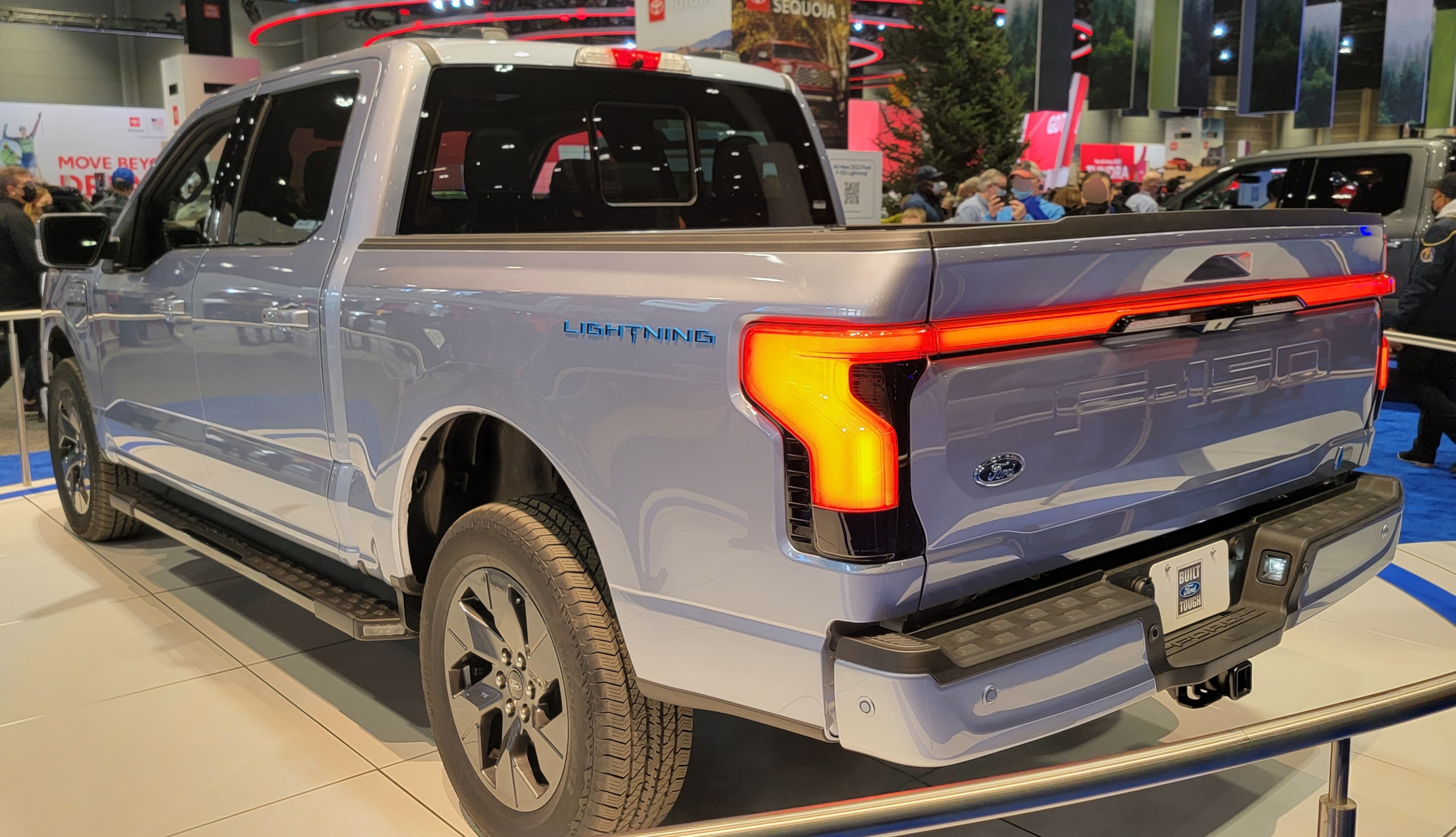
the F-150 Lightning dropped 72%,
each round it down 82%.
The sale setback comes as Ford waste the future
of their electric pickup.
According to the Wall Street Journal,
the firm was considering cancelling
the F-150 Lightning altogether.
Production is paused and it will resume
when they say there is demand.
Interesting.
Now, let's talk about the UK expanding.
No, let's take a break.
And when we come back,
we'll talk about the UK grant expanding.
The holidays are expensive.
You're paying for gifts, travel, decorations, food,
and before you know it,
you've blown way past what you were planning to spend.
Don't start the new year off with bad money vibes.
Download rocket money to stay on top of your finances.
The app pulls your income, expenses,
and upcoming charges into one place
so you can get the clearest picture of your money.
It shows how much to set aside for bills
and how much is safe to spend for the month
so you can spend with confidence.
No guesswork needed.
Get alerts before bills hit, track budgets,
and see every subscription you're paying for.
Rocket Money also finds extra ways to save you money
by cancelling subscriptions you're not using
and negotiating lower bills for you.
On average, Rocket Money users can save
up to $740 a year
when using all the app's premium features.
Start the year off right
by taking control of your finances.
Go to rocketmoney.com slash cancel to get started.
That's rocketmoney.com slash cancel.
Rocketmoney.com slash cancel.
Hear that?
That's me with a lemonade
in a rocker on my front porch.
How did I get here?
I invested to make my dream home.
Get where you're going with MDY,
the original mid-cap ETF
from State Street Investment Management.
Getting there starts here.
Before investing, consider the fund's
investment objectives, risks, charges, and expenses.
Visit statestreet.com slash im for a prospectus
containing this and other information.
MDY is subject to risk
similar to those of stocks.
All ETFs are subject to risk,
including possible loss of principle
Alps, Distributors, Inc. Distributor.
Five years ago, I was paying $65 a month
for my subscriptions.
Today, those same subscriptions cost $111,
and I don't even use half of them anymore.
That's why now I use Rocket Money
to manage my subscriptions for me.
The app gives you a list of all your subscriptions
and reminds you of upcoming payments
so you're not hit with any surprise charges.
On top of that, it also sends you alerts
when subscription prices go up,
so you always know the price you're paying.
If you decide you no longer want a subscription,
you can cancel it right from the app.
No customer service needed.
And the best part is, Rocket Money even reaches out
and tries to get you refunded
for some of the money you lost.
On average, people that cancel their subscriptions
with Rocket Money save $378 a year.
And overall, Rocket Money has saved its members
$880 million in canceled subscriptions.
Stop wasting money on things you don't use.
Go to rocketmoney.com slash cancel to get started.
That's rocketmoney.com slash cancel.
Rocketmoney.com slash cancel.
Visit statestreet.com slash im for prospectus,
containing this and other information.
Read it carefully.
Spies subject to risk similar to those of stocks.
All ETS are subject to risk,
including possible loss of principle.
Alps distributors ink distributor.
Welcome back.
Great Britain's most generous EV subsidy
now covers more models.
Twice as many actually pulling in more mainstream EVs.
It's the Grant, which is either the lower
or the higher amount.
From now, the Renault 4, Alpine A290,
Mini Countryman, and the 52 kilowatt hour Renault 5
all move in to band one.
That is almost £4,000 off those vehicles.
The lower tier is $1,500.
With the grant applied, the Renault 4
starts at $23,500.
The Renault 5 big battery at $24,000.
Mini Countryman, $25,000.
And Alpine A290, £30,000.
They join the existing ones.
Nissan Leaf, Ford Puma Gen E,
Ford e-tonner Courier, and the Citroën EC5 Aircross.
35 eligible EVs get the lower level,
like the entry-level Renault 5 with its smaller battery.
The update follows the budget last week,
which put an extra £1.5 billion into the EV grant,
funding it through to 2030.
At the same time, they confirmed plans
of a paper mile levy from 2028.
The big question now is how quickly car makers tweak prices
and specifications to nudge more models into band one.
That scheme closing in 2030.
So we've got four years, three, four years,
depending on when the money runs out.
But I wonder what pricing we'll do
in that kind of 20,000 to 30,000 pound segment.
It's really competitive.
And we've got a ton of vehicles that we can get
that are smaller family cars.
Now, vehicle to grid technology is being cast
as central to Australia's EV transition.
But adoption is lagging.
Robert Llewellyn is the founder
of everything electric, aka fully charged as it was,
and a longtime EV advocate calling vehicle to grid
and vehicle to home critically important for the shift to EV.
Australia now has around four million rooftop solar systems,
roughly one in three homes,
but that's because Australia's got all the sunshine,
especially this time of year.
According to the Federal Department
of Climate Change, Energy and Environment,
advocates argue that electric cars
act as giant batteries on wheels,
soaking up excess daytime solar
and powering homes at night.
Mr. Llewellyn says that the real impact will come once,
that there are a couple of million EVs in Australia
and a million of them are bidirectional capable.
That makes a massive difference to energy costs
and the grid for now.
Progress hinges on approvals and that's slow.
Daniel Bleakley of New Energy Transport
describes VitaG as one of the most understated opportunities
in decarbonization.
He points to work by the Australian Renewable Energy Agency,
suggesting that if 10% of passenger vehicles
did have VitaG, national peak electricity
would be dropping sharply.
South Australia became the first state
to offer VitaG last year.
Trials are running in Victoria and New South Wales.
Bidirectional charges are reaching the retail market now
through the likes of RevCharge,
with standards Australia now signing off
on regulations for VitaG
and bidirectional ready models
on the way from Mercedes-Benz and other brands.
The focus shifts to other policy and technology
and pricing can line up as well.
And finally, in-wheel motors are the talk of the town right now.
Yes, sir, is an Oxfordshire-based electric motor specialist.
These days they're owned by Mercedes-Benz.
And they've been talking a lot about their motors this year.
They have developed their new prototype
in-wheel electric powertrain.
The company recently broke an unofficial world record
for power density in an EV motor.
That same compact unit now sits at the centre
of an in-wheel system.
Founder and CEO Tim Wulmer
caused the in-wheel motors the major challenge
but opportunity for EVs,
arguing that early attempts were too heavy
and talk limited and underpowered.
Yes, sir, builds its design
as the world's first mass-neutral in-wheel motor,
delivering 750 kilowatts per corner.
That's not bad, is it?
It's per thousand horsepower a wheel.
Yet the prototype motor they use weighs 12.7 kilograms.
Koenigsegg's dark matter motor, by contrast,
weighs 39 kilograms and makes about three-quarters of the power.
The motor is paired with a YASA-designed dual inverter
weighing 15 kilograms to create a compact,
integrated powertrain.
According to the company,
this architecture could trim 500 kilograms
from a clean sheet EV platform.
Savings come from eliminating hardware
like drive shafts and parts of the braking.
Because the motor offers very strong regen,
YASA says rear friction brakes won't be needed
in some applications,
particularly hypercars with more than a thousand horsepower.
Mr. Wulmer argues that the concept will bring
about a step change in weight reduction,
performance and efficiency,
and not just for ultra-powerful hypercars.
The fully functional prototype
is going through development and testing now.
YASA supplies motors to Ferrari and Lamborghini
and have been backing Mercedes,
have been backed by Mercedes since 2021.
If the new system proves itself,
it could help define the next generation
of performance cars.
These incredible motors
and the next generation battery technology
with solid state we know just around the corner
between now and the end of the decade,
which, by the way,
will all blink and wake up in 2030.
It's the way life works,
is just incredible to think about.
It will there will just be no competition to EV.
And we know it's coming,
and it's just around the corner.
And that's your podcast for today.
Thanks for listening.
Thanks to our premium partners,
National Car Charging on the US mainland
and the Low Heart Charge in Hawaii,
and Octopus Electroverse Global Public Charging
made simple with one map and one map.
One app and one map.
What did I say?
Have a good and sit in the mirror
and remember there's no such thing
as a self-charging hybrid.
Let's do the 60-Second Savings Challenge.
Step one, download rocket money.
Step two,
link your accounts and see
every subscription you're paying for.
Tap one you don't use and cancel it.
That's money back every month.
Step three,
create a financial goal.
$50 every paycheck,
or let the app automatically move
small amounts of cash when you can afford it.
In a week, you'll forget you set it up.
In a month, you'll see real dollars piling up.
In a year, you'll be shocked
at how much money you've saved.
Bonus challenge.
Upload an internet or phone bill
and let rocket money try to lower it.
You only pay if they find you savings.
On average, rocket money members
can save up to $740 a year
when using all of the app's premium features.
Users love the app
with over 186,000 five-star ratings.
Make saving money the resolution you actually keep.
Start the 60-Second Savings Challenge
at rocketmoney.com slash cancel.
That's rocketmoney.com slash cancel.
Rocketmoney.com slash cancel.
Hear that?
That's me in Tokyo
learning to make sushi from a master.
How did I get here?
I invested wisely.
Now the only thing I worry about
is using too much wasabi.
Get where you're going with SPI,
the world's most traded ETF.
Getting there starts here
with State Street Investment Management.
Before investing, consider the fund's investment objectives,
risks, charges, and expenses.
Visit statestreet.com slash im for prospectus,
containing this and other information.
Read it carefully.
SPI is subject to risks similar to those of stocks.
All ETFs are subject to risk
including possible loss of principal,
Alps Distributors, Inc. Distributor.
Love Madison Volleyball is back
bringing the tough and gritty play
Wisconsin is known for.
Featuring world-class athletes
including Wisconsin favorite Lauren Harlini.
Get ready for fast digs,
huge swings, and long rallies.
This is volleyball built for Wisconsin fans
and this season there are even
more home matches to get behind.
Tickets available now.
Visit lovmad.com slash iHeart.
Love Madison's new season begins January 2026.
This isn't just a game.
It's a once in a generation event.
The Harlem Globetrotters 100-year tour.
Celebrate 100 years of high-flying dunks.
100 years of showstopping moves.
And 100 years of changing the game.
Bring the whole family and be part of the legacy.
This game is once in a century.
Be there at Motor Center on January 24th.
Go to HarlemGlobetrotters.com for your tickets
to the 100-year tour.
League One Volleyball is back.
The world's best players together on American soil.
This is volleyball like you've never seen before.
Huge swings, massive blocks, jaw-dropping digs.
A sport where every play is a highlight.
League One Volleyball returns January 7th, 2026
with teams in Atlanta, Austin, Houston,
Madison, Nebraska, and Salt Lake.
To buy tickets, visit lovb.com slash iHeart.
About this episode
Jaguar's EV strategy faces uncertainty with the firing of Chief Creative Officer Jerry McGovern, who was pivotal in shaping the brand's luxury electric vision. Meanwhile, Kia is set to unveil its compact EV2 at the Brussels Motor Show, targeting the budget-friendly segment. BYD enhances its battery warranty in Norway, addressing consumer concerns about battery longevity. Discussions also cover the potential impact of vehicle-to-grid technology in Australia and the exciting developments in in-wheel motor technology, which could revolutionize EV performance and efficiency.