DAILY: Mercedes Premium VLE Van, GM Bolt Arrives At Dealers and Porsche Adds Cayenne S EV | 11 Mar 2026
EV News Daily - Technology and Business of EVs
DAILY: Mercedes Premium VLE Van, GM Bolt Arrives At Dealers and Porsche Adds Cayenne S EV | 11 Mar 2026 EV News Daily - Technology and Business of EVs · Mar 12, 2026
The Porsche Cayenne is a big, fancy SUV made by Porsche. The Cayenne S EV is the electric version, which means it runs on batteries instead of gas. It's a luxury car that can carry people and has sporty features.
The D9 is an electric van made by a company called Denza. It uses batteries to run and has new technology to help with charging and driving. It is part of the growing electric car market.
Mercedes-Benz made a new electric van called the VLE. It comes in different versions, from basic to very fancy, and is built on a special design that lets them make many kinds of vans from the same base.
The Mercedes-Benz S-Class is a very fancy and comfortable car made by Mercedes. It's known for having lots of high-tech features and is seen as a top luxury car. Here, it is used as a comparison for a very nice van.
The VLE 250 is the basic version of Mercedes' electric van. It has front-wheel drive and a battery that can charge quickly, so you can use it easily every day.
Drag coefficient tells us how easily a car moves through the air. The lower the number, the easier it is for the car to drive fast and use less energy.
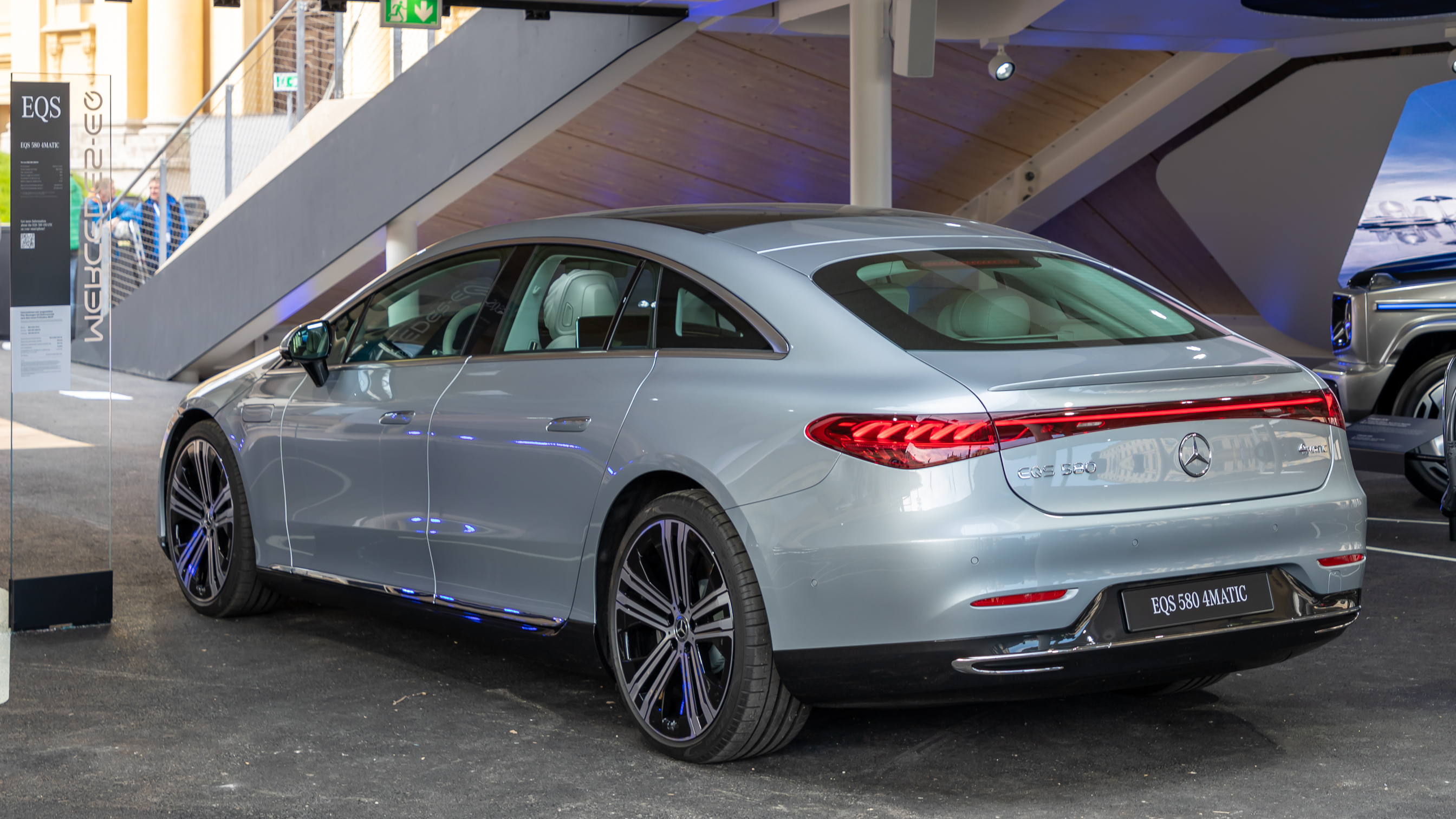
The Mercedes-Benz EQS is a fancy electric car made by Mercedes. It has a big screen inside to show information and controls. It's a high-end car that runs on electricity.
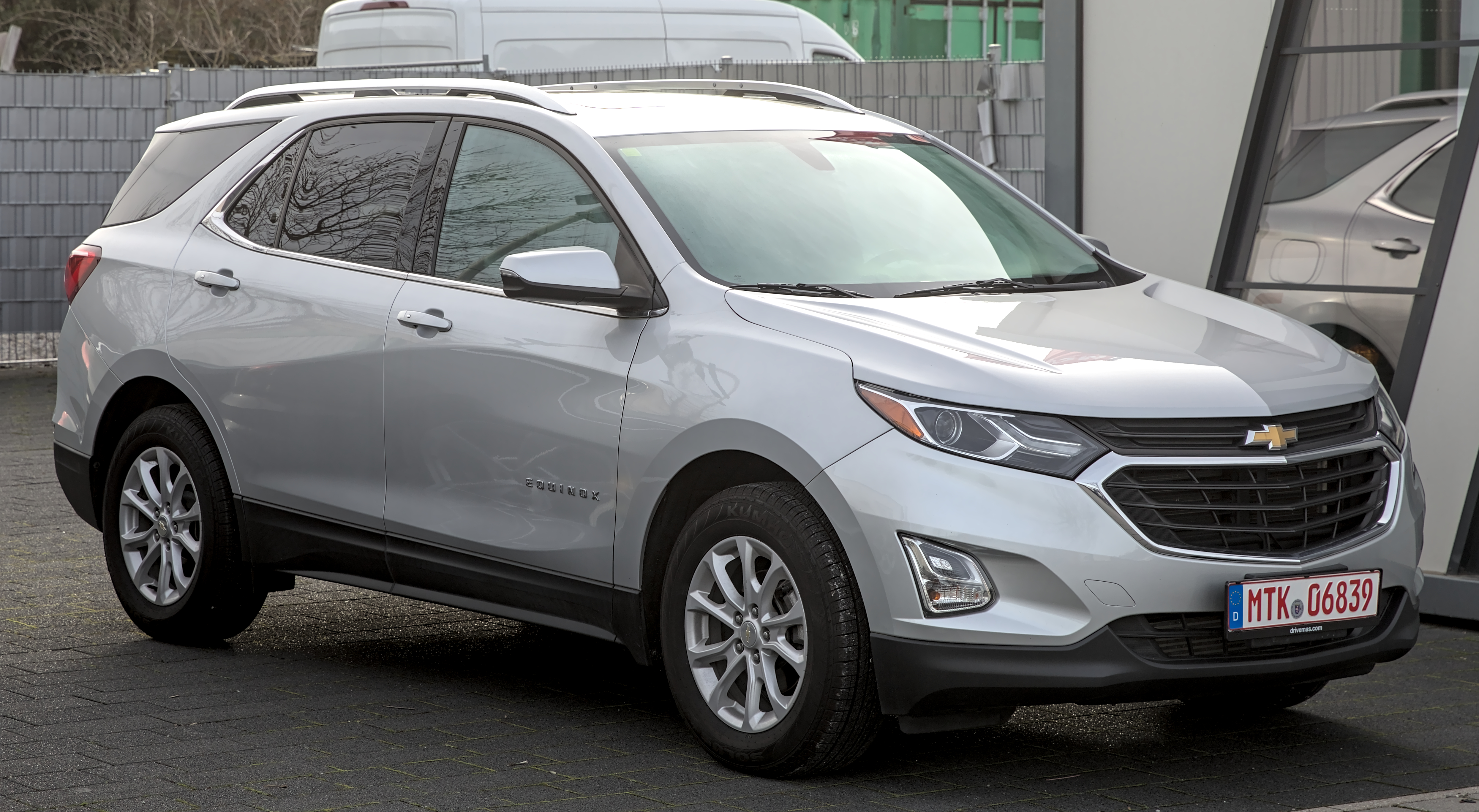
The Chevrolet Equinox is a small SUV made by Chevrolet. It's good for families and daily driving. The company is moving where they build it from Mexico to the US.
The Chevrolet Bolt EUV is an electric car made by Chevrolet. It has a big battery that lets it drive far on a single charge and uses one motor to power the front wheels.
An LFP battery is a type of battery used in electric cars that lasts longer and is safer than some other batteries. It helps the car run on electricity.
The Nissan Leaf is an electric car made by Nissan. It runs on batteries and is known for lasting a long time and being easy to take care of. Many people buy it because it is affordable.
The Porsche Cayenne S EV is an electric SUV from Porsche. It has a big battery for long trips, special brakes, and a feature that gives extra power for a short time when you want to pass another car.
Genesis is a luxury car brand made by Hyundai. The GV90 is a new big SUV they are making that runs on electricity. It was seen being charged, which means it is an electric car.
The 5 E-Tech Electric is a small electric car made by Renault. It is based on an older model called the Renault 5 but uses batteries to run instead of gas. It is designed to be efficient and modern.
LIVE
Welcome back to EV News Daily, Mercedes premium VLV van, GM Bolt arrives at dealers and Porsche
adds the Cayenne S EV, plus stay tuned, later in the show I'll tell you which three brands
are likely front of the queue to make the most of Canada's tariff cut on Chinese EVs.
Talking of which, over on EV News China today, our spin-off podcast looking at what happens
in the east and how it affects the global EV industry, NIO defending their battery-swapping
strategy, Denzer's Z9 GT, Showcars are arriving, and Zika hit by rising chip costs, you can
blame AI for that.
Alright, let's get into it.
Big news today, all the YouTube videos dropped, and the written articles came out so Embargo
lifted on Mercedes launching the new all-electric VLE, very premium van.
In fact, not that premium in base spec, you'd have to stretch to get into it, I mean you'd
be a very nice family hauler, but it does go up to, hooly-dooly this thing is special
kind of price, van.ea is the modular, scalable van architecture that will support everything
from the cost-optimized base model to the ultra premium VLS, which is coming, Mercedes
positioning that as the van segment's S-class, but frankly, it's like borderline my-back.
The range starts with the VLE 250, front-wheel drive, 80 kWh LFP pack, charging at 300 kW,
that's brilliant.
Then you've got the VLE 300 or 400-formatic all-wheel drive, the battery pack grows a
lot bigger, 115 kWh, and that's net, by the way.
CATL provide the NMC pack, it's the good stuff, regardless of battery size, 800V architecture
and cell-to-pack construction, DC charging peaks at 315 kW on the big pack, Mercedes-Benz
says it'll charge 10-80 in 25 minutes.
For context, the old EQV, which was a combustion platform in which some feel was compromised
but I really love the EQV, particularly when you've got a little mid-cycle refresh, got
a little digital dashboard and stuff, that peaked out at 110 kW.
The drag coefficient is 0.25, and okay, that's not the lowest CD number that we'll talk about,
this thing's a barge, and that's very, very low for this class of vehicle.
The Aero team at Mercedes-Benz have worked their magic.
For the big battery, in its most efficient spec, WLTP range 700 km.
More realistic motorway range would be 300 miles or 500 km.
Frankly, that's more than enough on a big old hauler that charges this quick.
Short wheelbase VLE is 5.31 metres, yeah, that's not that short, is it?
209 inches, the long wheelbase adds 17.5 centimetres, or 7 inches.
That longer version will be the standard wheelbase for the high-end VLS when it comes.
So, wheel sizes 19s, 21s, or 22s in the exclusive top spec.
And it was the exclusive top spec that pretty much all of the YouTubers wanted to feature.
Now, Thomas at Autocouple, one of the Internet's finest car reviewers,
also insisted on looking around the entry-level version.
And we thank him for that, because it gave us an insight into exactly what this van is really all about.
Yes, it's probably about families that can afford a really premium van to haul people around,
but also going all the way up to hotels that want a really premium shuttle,
companies that do airport shuttle runs, and every other use for a big van like this.
So, standard suspension on steel springs, but air suspension on the options list.
Rear wheel steering at seven degrees means, in the opposite to the front wheels,
means this thing turns on a much tighter turning circle.
Eight seats in its most dense, if you like, on a 2 plus 3 plus 3.
Again, most of the YouTube videos had the exclusive trim, the high end,
and so it was a 2, 2, 3, 7-seater.
Six-seat versions will be coming.
The second and third rows sit on rails and slide forwards and backwards, like a EQV,
like a Volkswagen Multivan, and all the others, and can be taken out completely.
Which, if you take out all the seats, does make this enormously versatile.
The full electric luxury rear seats in the exclusive trim,
that pretty much featured on the YouTube videos and all the reviewers,
are fixed to the vehicle because these are just like airline first-class seats,
not that I've sat in one, but you know, it's those kind of lazy boy recliner level seats.
Electric seats can move through the central displays, or the smartphone app can even.
So if you have the app on your phone, you can have shortcuts to configure the seats in the back
that move electronically, to you might want to move the second row all the way back,
to give the two people in the back maximum leg room, or move all the seats individually around.
You can even move the third row, the backrest can electronically fold completely flat,
if you've got more luggage to place on top of them without actually having to remove the seats.
Electric sliding doors come as standard on both sides, the VLE 400 Formatic,
the four-wheel drive one will tow two and a half tons, that's really good.
The VLE 300 is rated at a ton at the moment, but they're going to raise that to 1.8 tons.
They say, rear side windows drop fully down, a rarity on vans that have sliding doors,
they physically go all the way down into the doors, that's a really nice touch.
The roof has a large panoramic glass panel with a powered blind,
a privacy blind that'll electronically come across.
There's a rear cinema package, a 31-inch 8K widescreen display,
that folds down from the roof, not just folds down, because that's on a few Chinese cars,
it's on the BMW i7, it's on Chinese ones like the Maestro S800 and others as well,
but this cinema screen that folds down between the first and second rows
then disappears out of view, it kind of goes into the headliner because it's done just that
extra level of detail, the way that the Germans, if you want to say that level of engineering,
it's just really nicely done, rather than just being this massive
screen that just kind of folds up onto the roof, it's amazing.
And so, apart from that, which by the way, Cinema Mode, you can activate from any of the screens
in the car, because yes, there's screens in the back as well for the passengers,
Cinema Mode closes the roof blind, pulls up the side blinds as well,
blacks out the cabin and then deploys the rear screen, there's YouTube online apps,
there's an HDMI input, even a camera that will face the rear of the car for video calling.
As we see on many Chinese cars, fridges, so a center console fridge,
there's a Ford and an aft fridge, if you like, present for both front and rear passengers,
which just tells me more and more that this is really aiming at the Chinese market and, well,
at least designed to be sold in the Chinese market, because so many of the MPVs from the
Chinese names that we talk about on our spin-off podcast, EV News China,
are making MPVs with this level of tech, but they don't have this level of luxury,
some of them aspire to it, and they don't have Mercedes Benz badge on.
But there we go. Up front, the VLA gets a digital instrument cluster,
a 14-inch center infotainment display, and an optional super screen, not the hyper screen
that we've seen in like the EQS, but a super screen, which is still a massive single slab
of glass running the entire width of the front of the vehicle with different displays inside.
Of course, passenger gets their own screen as well. The system uses MBUX interface with
routing and mapping integrated with Google Maps on the back end. Apple CarPlay, Android Auto,
of course, feature pricing in Germany, €68,000, including their 19% VAT for the smaller battery
base spec. I say base, still very, very nice vehicle. At the other end, you could probably
fully load this thing up to the very top for €135,000, including the big battery, the cinema
screen, the airline style first-class electric rear seats, and top trim. That's not the VLS,
that's coming. Big launch for this. Can you tell I'm excited? Can you tell I'm excited? Wow, this
is not going to be a massive seller, but I absolutely love it. Anyway, we should move on.
Now, General Motors has bought back the Chevrolet Bolt as an affordable EV and then planned to
end it after a single year. The move looks less odd once you realize the factory plan comes into
view. Ending Bolt Production frees up GM's Kansas plant to move the Equinox assembly from Mexico
to the US, which is why they're doing it. It's a shame because the bolt is back and it's really
good. In effect, it's the Bolt EUV using a single motor front wheel drive, 65 kilowatt hour LFP pack,
210 horsepower, EPA rated at 262 miles or 422 kilometers, and this thing charges. Not like
a beast, but it does charge at 150 kilowatts. GM says it'll do 10 to 80 in 25 minutes. More
importantly, I was watching Out of Spec or Out of Spec Dave, one of their channels,
and Dave charge tested this and the curve looks really strong to about 40%. So it's not always
about the peak. Although the peak's 150 kilowatts, I think it's pretty good for a car in this class.
People say the Bolt isn't a road tripper. This is a big battery, 65 kilowatt hours,
and it's a 25 minute, 10 to 80. In my book, that's a road tripper. Now, why not be everyone's
road tripper? But for me, I mean, I'm stopping with two kids anyway, 25 minutes is, you know,
not going to happen. They're always longer. But still, like that is, and with a good curve,
more importantly, not just all about the peak number. I think this is a road tripper. The
Bolt's a road tripper now, bearing in mind the old one peaked at 55 kilowatts. Hey, it's on sale
right now. It's with dealers. 28995 is the cheapest TV on sale, and they're going to make it for a
year. It's a real shame. And that could cause a long-term concern for parts availability and
support and service bias who care about longevity and after sales might towards a Nissan Leaf.
But the Bolt is back, and I wish it was around for a long time. Porsche has added a new spec to
the Cayenne range, the Cayenne S halfway between the base model and the turbo. The turbo, by the way,
is over 1100 horsepower. And if you don't need that, you might want the Cayenne S dual motor,
all wheel drive, over 500 horsepower in standard. But it's got launch control for almost 700 horsepower,
nor 60 miles an hour, 3.6 seconds, 155 miles an hour top speed, like the other cars in the
10 to 80. Now, this beast is a road tripper. Also, hardware from the turbo ends up in this,
like the oil cooled system for the rear axle motor and more thermal resilience at performance
driving. Buyers can add the Porsche talk vectoring package for rear diff control, Porsche's active
ride, adaptive dampers, ceramic brakes and more as well. And even a push to pass function for
another 120 horsepower for 10 seconds. You can order it now. It's 99,000 pounds or 128,000 US dollars
above the Cayenne Electric's 86,000 pounds. If you need to ask the price on this one, chances are
you probably can't afford it. We'll come back. We'll talk about Volkswagen's battery grid plans
and the Genesis GV90, the top end one seen at a supercharger. Back in a mo.
All right. Welcome back to the podcast. Now, Volkswagen's energy business,
Ellie, has connected up its first large scale battery energy storage system, BESS,
to the grid in Germany. It's branded the power center and their power center comes in a capacity
of 20 megawatts or 40 megawatt hours. And the first step that they've made in connecting up to the
energy storage market did a bit of trading, storing energy when it's cheaper, absorbing surplus
renewables and feeding it back when demand rises, stabilizing the grid. The facility uses
unified cells from Volkswagen, the kind that you'd find in the new VW cars as well. Now,
a camouflaged Genesis GV90 has turned up and been pictured plugging into a Tesla supercharger
in Nevada is confirmed that the all new U.S. market EVs for Hyundai Genesis will come with
J3400 ports or NAX. GV90 is the top end. This is, we'll be talking about the Mercedes for a long
time on the podcast today, the van. This is, you know, the Genesis is SUV, three row big SUV.
It's gone around the rainbow mill since we saw the Neolun concept with its coach doors.
Those doors have a different name, which I'm not too keen on. But coach doors,
so no B pillar. The engineering of that must be quite a challenge. Now this
camouflage test vehicle does have regular doors, but we've seen camo cars with the coach doors.
And so, you know, maybe it's a different spec. Obviously, coach doors feels very Rolls Roycey.
And so it could be an entry level vehicle has the regular doors. We hopefully are getting
close to seeing underneath this camouflage. GV90 has the new Hyundai platform as well. It's called
the EM platform. They say can do 50% more range than the current tech they've got. And their cars
are nothing to be sniffed at, are they? Now, let's move on. Slate Auto has made a big move
and they've replaced their chief executive just months to go until they launched their
truck. Peter Faracy took over yesterday. The former CEO, Christine Barman, has been moved
into a position called President of Vehicles. The change matters because Barman had been
the public face of Slate since it emerged from its stealth phase last year. She was also their
first hire, a Chrysler veteran, one of only two women at the top of a US car maker. Now, Mr.
Faracy has 12 years at Amazon. Slate, of course, is backed by Jeff Bezos. He was VP of music and
movies. He became VP of marketplace. Yeah, that's a pretty big bit of Amazon's business,
allowing third party sellers. So yeah, this guy's got form and it's probably pretty well known,
I would think, to the Bezos and Amazon backers of Slate Auto. The new chief exec now takes charge
a delicate point in the launch of the truck. Gotta get his feet under the table. Now, Datia
will add a second small EV to its range alongside the spring, remaining unnamed for now. They're
going to have four new EVs by 2030. This is the vehicle that was set above the spring, so 18,000
euros, $19,000, 15,000 pounds. Datia sells the spring as a small, affordable EV. You can get
pre-reg ones at 12 grand, 12 and a half. Get used ones for 10 that are nearly new as well.
The spring is cheap and cheerful. There's no getting around it. It is a small car. It'll do a
job. This new Datia will sit on Renault's AMPR platform, and that has got the underpinnings of
good stuff like the Renault 5. Datia has also released no styling details, but maybe the Datia
hipster concepts from a couple of years ago could be a bit of an idea. Eviko has launched
real-world trials of its dynamic wireless power, DWP-T, on the A35 motorway in northern Italy.
Now, DWP-T, dynamic wireless power transfer, is where it charges an EV while it drives,
and you embed the charger in the roadway, and then you have something on the underneath of the
vehicle. They use the Eviko eDaily van with the inductive charging underneath, supporting static
wireless charging. That makes sense, but also dynamic charging when the vehicle is moving.
It's been in development for years, not this Eviko, but the idea of charging an EV on the move.
I reckon once every six months, there will be a new trial. There'll be a city, a local authority,
a region that puts a ton of money into it, digs up a mile of road, and makes a big fuss on a press
release about how they are reinventing charging. I'll just, I'll just, just editorialise a bit
here. Forgive me jumping in with my opinion, it's an utterly stupid idea. There is no need to do this.
Just stop the car and charge it for five minutes, like BYD are doing with their new flash charging,
or stop and swap the battery, like CATL will do you in 70 seconds in China. We don't need to dig up
all of the roads to put inductive charging underneath all of the roads and then work out
how to connect them to the grid either way. These projects continue to extract money from
various places, much like hydrogen trials, and then you get press releases saying,
this is the future of charging. It's not. Anyway, finally BYD,
Cherry and Geely could be the first three names into Canada under the new 6% tariff deal. BYD,
Cherry, Geely are now working through the paperwork, the vehicle certification, the retail network,
the local financial partnerships. They think by the end of the year should be done and more will
follow as many as 15 additional Chinese brands could enter, though none yet as far along in the
process. The opening came in January when Canada and China did a deal that meant China would be a
most favored nation tariff rate of 6.1% and China would buy more Canadian agricultural
exports on low tariffs. 49,000 was the number chosen, so 49,000 DVs coming into Canada this year
set in two blocks of six months, so half and half, because that was the number of imported
DVs before Canada followed the USA with the 100% tariff a year and a bit ago, two years ago.
So that's how it wasn't a random number, by the way. So people were going,
well, there's going to be Chinese cars everywhere in Canada. Well, that was the number they were
importing anyway before the tariffs were raised. So there was method to the madness.
There's homologation and a brand starting from scratch is at least a year away from
getting the paperwork in place. If you'd already started homologation,
then you would confirm correct parts. I think, I mean, obviously, Tesla have done all that.
Volvo has done that. Polestar has done that. They'll obviously be first movers in the first
six months. But what about the actual Chinese names? Well, BYD kicked off in 2024 with plans to
enter Canada. And I would presume that process would have started and Ottawa's EV tariffs
caused it to shelve the plans. It may have made some progress that it can now fall back on.
And BYD could be the first of those. And that's your podcast for today. Thanks to our premium
partners, National Car Charging on the US mainland and the low heart charge in Hawaii,
and Test EV, Avalu's trusted partner for independent EV battery health testing
in Australia and New Zealand. Have a good one. See you tomorrow. And remember,
there's no such thing as a self charging hybrid. That's not, you know,
About this episode
Mercedes-Benz unveils its new all-electric VLE van, offering a range of premium features from a base model to an ultra-luxury VLS version, with impressive fast charging and versatile seating. GM reintroduces the Chevrolet Bolt with a 65 kWh LFP battery and improved charging, but plans to end production soon. Porsche expands its Cayenne EV lineup with the powerful Cayenne S, boasting over 500 horsepower and rapid charging. Volkswagen launches a large-scale battery storage system in Germany, while a camouflaged Genesis GV90 is spotted using Tesla superchargers, hinting at new U.S. market EVs. The episode also touches on Canadian EV tariff changes and industry news from China.