DAILY: Next-Gen Chevy Bolt Debuts, Germany Commits To Incentives and NHTSA Probes 3 Million Teslas | 11 Oct 2025
EV News Daily - Technology and Business of EVs
DAILY: Next-Gen Chevy Bolt Debuts, Germany Commits To Incentives and NHTSA Probes 3 Million Teslas | 11 Oct 2025EV News Daily - Technology and Business of EVs · Oct 11, 2025
The Chevy Bolt is a budget-friendly electric car made by Chevrolet. The 2027 version is important because it's coming back to compete with other affordable electric cars.
The Nissan Leaf is a car that runs entirely on electricity, meaning it doesn’t use gas at all. It's popular because it's affordable and helps people save money on fuel while being better for the environment. People talk about it because it's one of the first electric cars that many can afford.
The Chevrolet Bolt EUV is a larger version of the Bolt electric car, designed to give you more space inside. It runs on electricity, so you don’t need gas, and it's a good choice for families who want an affordable electric vehicle. People talk about it because it offers a lot of features for the price.
Bidirectional charging means your electric car can send power back to your home or the grid, not just take power from it. This can help during power outages.
Super Cruise is a feature that lets your car drive itself on some highways without you needing to touch the steering wheel. It uses cameras and sensors to help it stay in the lane and follow traffic.
Cargo space is how much room you have in your car to carry things like bags or boxes. It's measured in cubic feet, which tells you how big the area is.
MSRP is the price that car makers suggest you should pay for a new car. Knowing this can help you when you're buying a car, as it gives you a starting point for negotiations.
The Tesla Model 3 is a popular electric car that is known for being fast and having a lot of technology. It's a good choice for people who want to drive an eco-friendly vehicle.
The NHTSA is a government agency that makes sure cars are safe to drive. They look into problems with cars and can investigate companies if there are safety concerns.
Full self-driving is a feature in some Tesla cars that helps with driving, but you still need to pay attention and be ready to take over if needed. It's not completely self-driving yet.
ADAS means Advanced Driver Assistance Systems. These are features in cars that help drivers stay safe, like warning you if you're drifting out of your lane or helping you brake automatically.
The Kia EV3 is a new electric car that Kia is planning to release, and it's designed to be very efficient and high-tech. It will have features that help keep track of how well the battery is working. People are excited about it because it shows how car companies are trying to make better electric vehicles.
The Audi Quattro is a special system that helps Audi cars drive better by sending power to all four wheels instead of just two. This makes the car grip the road better, especially in bad weather. People talk about it because it helps Audi cars perform really well and feel safer to drive.
A plug-in hybrid is a type of car that uses both a gas engine and an electric motor. You can charge it by plugging it in, which lets you drive on electricity for a while before using gas.
Formula E is a racing series where all the cars are electric. They race in cities around the world, showing how electric cars can perform in competitions.
Vehicle electrification means changing regular cars that use gasoline to electric cars that run on batteries. This helps reduce pollution and is better for the environment.
The Dacia Spring Electric Cargo is a small electric van that businesses can use to transport goods. It's very affordable, which makes it a good choice for companies that want to save money and go green. People mention it because it's one of the cheapest electric vehicles you can buy.
Charging infrastructure is the places where you can charge electric cars. This includes chargers at home and in public areas, like parking lots or gas stations.
An adaptive safety belt is a special seatbelt that changes how it works depending on the person sitting in the seat and the traffic around them. This helps keep everyone safer in the car.
Car
Volvo EX60
The Volvo EX60 is a new electric car that will be released in 2025. It will have special safety features to help protect passengers better.
State of charge is how much energy is left in a battery. Keeping it at a good level can help the battery last longer, especially in electric cars.
LIVE
Welcome back to the podcast. Today, the Chevy Bolt 2027 debuts, Germany commits to new incentives
and NHTSA is probing almost three million Teslas plus stay tuned later in the show. I'll tell
you how little EV batteries degrade over a year according to new data. Well, if I'm sounding
a little bit different, I'm on the road today away with the family this weekend. They're
offering a morning activity. So I'm using the time to get the weekend show done for you and get
you up to speed because big news this week Chevy reintroduced the Bolt. Now the Bolt previously
one of the cheapest, if not the cheapest EV you could get in the US, especially on monthly deals
towards the end of its run. And whenever I speak to a Bolt owner, generally they all really love
their vehicles. So the Bolt coming back is big news because this will be fighting with Nissan's
Leaf to be the cheapest EV on sale in the United States. Now it's a compact affordable EV and
it looks the same as the Bolt EUV except this is simply called the Chevy Bolt. There's no Bolt
EV or Bolt EUV. However, what under the skin is really different and that's what's important,
interior upgrades, styling on the front and rear and charging upgrades too. First of all,
we'll get this out of the way. It looks the same because they use the same stamping materials.
The sheet metal is all the same and GM says that brings the vehicle to market much quicker
than retooling and there's nothing wrong with the styling. The front and the rear, like I say,
have had some tweaks to bring it up to modern design language and family looks. But otherwise,
yeah, it's the same bits of metal. And honestly, I'm fine with that. The vehicle looks pretty cool.
Let's talk about the battery. Well, that's the same size as well. That is same 65 kilowatt hours,
but we moved to LFP. That's the chemistry. It stands for Lithium Iron Phosphate and it comes from
CATL, at least to begin with anyway. And it supports much faster charging, two and a half times
faster charging. 150 kilowatts plus, described as DC fast charging. And it's all about the curve,
as always, 10 to 80. If you're road tripping, 10 to 80, 26 minutes. It also comes with plug and
charge and is GM's first vehicle with a native J3400 connector and inlet. Otherwise, Naxx,
NACS, or just the Tesla plug, if you like. And that's really important because this vehicle
will be future-proofed. Bidirectional charging is standard. So it was all compatible with GM
energies, vehicle to home products, exporting 9.6 kilowatts, powering your home, all the
Altium technology does. This is not branded as Altium because, well, for a while, GM was
completely in with LG and they called the whole platform the Altium platform. But now they're
buying the batteries from CATL. Well, LG won't want that. And so the Altium thing is not dead
as such. This is an Altium vehicle because it's got the vehicle to home and all the Altium stuff
has, but they just don't, they can't use that marketing term. So it's all a little bit messy,
but at the end of the day, I mean, it's just all of internal politics, isn't it? But GM says the
range of this is bigger, but not wildly bigger. So it's 255 miles. Now, that is a small bump on the
outgoing Bolt. But it's, you know, it's a long way from 300, which I know some Americans feel that
300 and Tesla have said it's got to begin with a three. And I understand all of that. But, you
know, cars have use cases. And again, talking about owners of the original Bolt and how,
you know, woeful it was to charge, you know, an hour of charging on DC fast charger,
you know, they're all charged at home and so many EVs are. So yeah, I understand apartment
dwellers and, you know, living in flats and stuff like that. And you have to DC fast charge maybe
once a week and that'll get all your commuting done. You don't want to be sitting around for ages,
blocking a charger. So it's fantastic that they've sped this up super cruise. Well, that's optional.
And we'll include a route following feature that changes lanes and handles highway interchanges.
The cabin gets a much larger display in ambient lighting. Ray physical volume knob physical
HVAC controls cargo 16 cubic feet with the seats up 57 with them down matching the equinoxes cargo
space. The equinox is actually 20 inches longer, significantly bigger vehicle. Well, the drive
modes include a customizable my mode for steering weight, brake feel, acceleration,
even the foe motor sound toggle. So when does it arrive? Well, it comes with dealers at least
early 2026. So we're a few months away. Initial pricing is the RS. That's around $32,000.
And then there's an LT at 29.9. But that's all in. That's the launch spec. There's also I think
a launch spec RS that doesn't have the extra package. So a little confusing around how they
described it. But either way, let's say around $29 or $30,000, they advertise their prices,
including destination, which is what I presume that car makers would do. But
that's such a common practice that we don't have that here. The price that we see advertised
is the price we have to pay. There's maybe on a small registration fee. We call them on the road
fees, but nothing like the US where I've seen Ford increasing their destination fees for
last six months, nine months or so. It was just over $1,000. And then it's heading towards $2,000
now. And well, that seems a little unfair to advertise an MSRP without it. The prices we
talk about destination included. $28, $29,000, $30,000, whatever it is around that point,
it will be the cheapest EV you can go buy. Brand new EV. Now, obviously,
lots of reaction by the internet, which did its thing yesterday. And people say, well,
if you wait a year and get a heavily depreciated Tesla Model 3, you get a much better car. But
let's stick to apples to apples, pairs to pairs on this one. Okay, so let's compare new car prices.
I understand the various arguments about the nearly new market, but for a new car, this really
is Nissan Leaf versus Bolt and around that price. And I'm really, really excited for this vehicle.
Okay, that's a big headline today. Let's move on. Germany's coalition government approved 3
billion euros and subsidies to help low and middle income households buy zero emission vehicles.
This is three 2029, the Chancellor Friedrich Merz and made the announcement yesterday in
Berlin after talks with the Social Democrat coalition partners, framing the package as
support for Germany's ailing automakers and boosting EV adoption. The government says that
the funding will expand EV access and support the industry's transition. And whilst also saying,
we love EV owners, the same Chancellor in Germany also arguing against any kind of 2035
ban on pure combustion vehicles. Now, in the US, the National Highway Traffic Safety Administration,
NHTSA just opened an investigation into 2.88 million Teslas. Now, it's nothing that you've
done wrong by the way. It's basically anything on the road with full self-driving. And this is
after more than 50 reports of traffic safety violations and actually some collisions and
crashes. The NHTSA describes full self-driving FSD as an assistance system that requires drivers to
pay close attention and intervene at any moment. However, it induced vehicle behavior that then
violated traffic safety laws. And so Tesla have got themselves in a little bit of a pickle with
their promises, their guarantees, their language, even the way they describe autopilot and full
self-driving because lots of people are taking them in some cases to court over that. But in this case,
the agency administration, I should say, are saying, well, Teslas that have been running the
ADAS systems have been running red lights. They've been moving against the direction of traffic.
They're looking at 58 reports in total, like 14 crashes, 23 injuries. And this is very awkward
for Tesla because they really want to position themselves as the experts on autonomy and the
future of the company. And now this huge investigation being opened to look into the safety
of their autonomous features. All right, let's move on. Kia in Europe is testing a new battery
passport scheme at cell level, cell level battery passports that upload real-time
condition and performance data for each cell in the pack. The EV3 trial evaluates continuous
cell monitoring across the battery life cycle to give, well, for one, dealers more detailed
battery performance data when talking about used EVs. Data from the cells gets uploaded
to a digital battery passport system so that users, technicians, and regulators can view
accurate state of health via the vehicle's infotainment system in your case. But where is
your data going? And do you have a say over this? EVs are inherently connected vehicles. And
there is certainly a large amount of people that feel very strongly about their personal data.
And that could even be down to not wanting to be tracked on your battery. Now, if that means
that they could perhaps diagnose something remotely or even potentially AI could spot
something in terms of a pattern that predicts when your car is heading towards an issue,
well, I would like that feature before it becomes an expensive big bill. But you might say, sure,
but why is all of my data going to the dealer, to the technicians,
possibly to the car maker, possibly to central government? And that becomes a big data issue
as well. The company plans to roll the feature out across all EV models in Europe by February
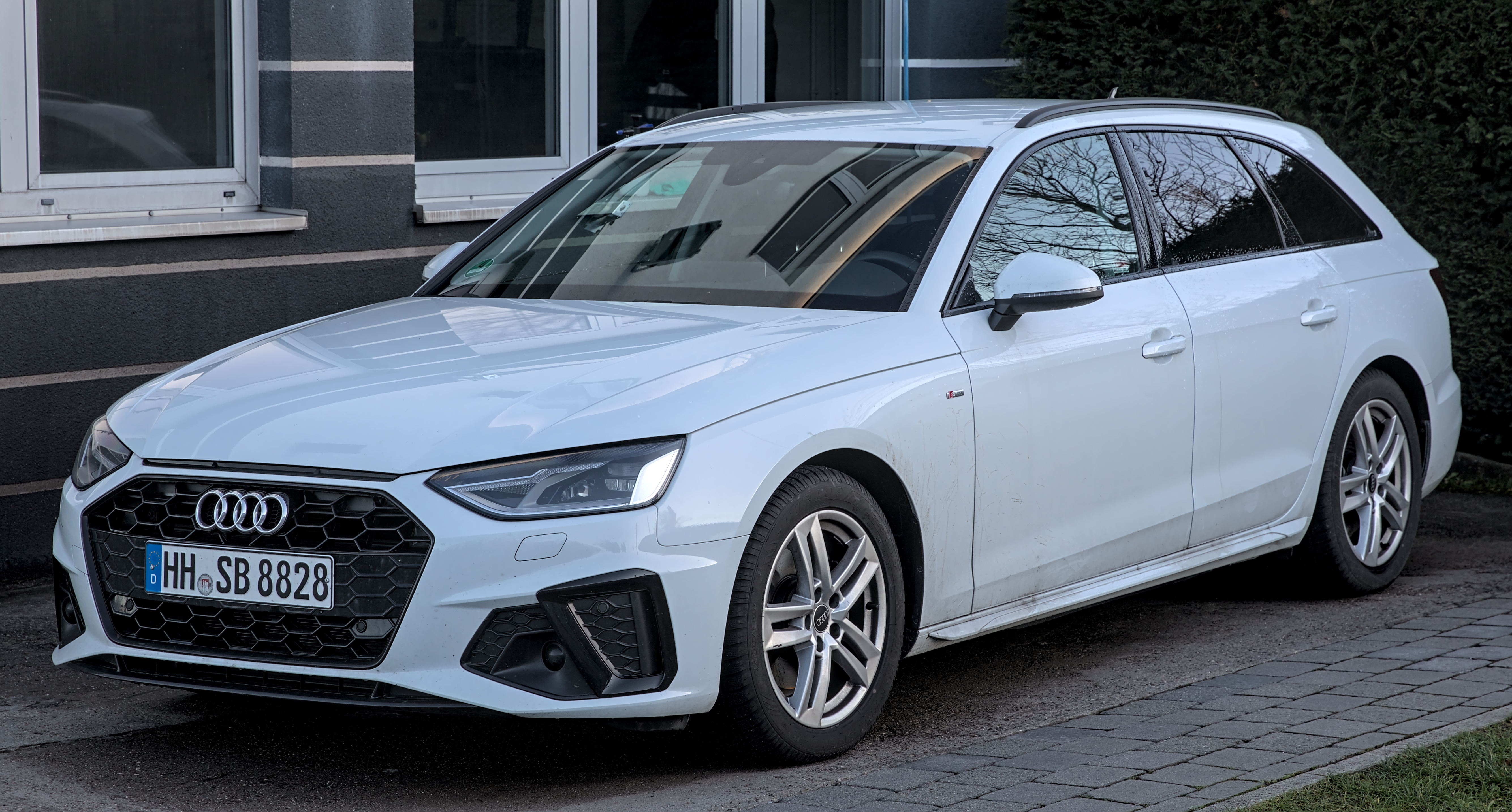
2027, ahead of the incoming EU battery passport rules. Audi is next in the news. They will reintroduce
the A4 as an all electric model in 2028. The combustion version of the A4 ended in 2024.
The new A4 will sit on Volkswagen's SSPE platform, no published specs, but you would think an A4,
that's got to be around 600 kilometers of range. It's got to be 300 kilowatts DC fast charging,
because it's going to be a vehicle in two, three years time. So you've got to hit those specs.
That's probably going to be a real bare minimum in a few years time. A more efficient, lower cost
single motor variant would come to Europe. Maybe the US, obviously the all wheel drive version would
be Audi Quattro technology as well. Now BMW Group sees plug-in sales rise in both Q3 and year-to-date
as well. BMW Group itself, that's Rolls Royce, mini BMW brand grew in Q3 with customer deliveries up
8.8%. First nine months of the year, they delivered about 1.8 million vehicles, and that's driven
by, you beat me to the punch again, their BEVs. Their electric business was up 10%. The BMW Group
up 15% for electrified, if you include plug-in hybrids as well. The BMW brand reporting
6% growth, 400,000 of their total BMW sold were electrified, is what it says here. So I think
that would be BEV and plug-in hybrid regionally. Sales rose in Europe and the Americas, and you
won't be surprised to hear China is struggling with anyone who's a western premium car maker.
Now we'll take a break, we'll come back, got some UK pricing for the new Nissan Leaf and
Formula E and their pit stop boost could help the cars that you and I drive. They say anyway,
I'll tell you more, stick around, back in a mo. Alright, welcome back to the podcast on location.
Actually, not far from a light aircraft airfield. So you might hear that in the background,
they've been flying over. I think I'm either on landing or takeoff, I'm on the circuit somewhere,
so I can hear loads of little light aircraft over me. So that might be picked up on the mic
and sorry if it is. Now, Nissan's Leaf is getting some attention at the moment because
the pricing is coming out on sale in Japan earlier this week, and now the UK gets our final starting
price, £33,000 and expected eligibility of the full government grant of £3,750, so that would
be a £3,000 premium and if you look at the monthly cost on that and maybe the bigger battery
makes sense for many people. Official range, 271 miles WLTP or 386 miles WLTP. DC fast charging,
105 kilowatts small battery, 150 on the big battery and you'll add about 273 miles of range
in half an hour. 11 kilowatt AC standard, 22 an option, vehicle to load up to 3.1 kilowatts
and vehicle to grid ready, they say. We keep hearing that. All right, I'm glad you're ready.
Can we get it sorted? That's great news. It'll be made in Nissan's Sunderland plant,
we knew that already. And so first deliveries in the spring, less than 30k for a new Nissan Leaf.
It is a competitive bit of the market, by the way, late 20s here in the UK. I mean,
the whole 20,000 something is very competitive. So I think that's really sensible pricing though.
Now, more than 200 executives from the EV and clean tech sectors are urging Germany not to waver
on their commitment to 2035 zero emission vehicles. The E-Mobility Europe group says
accelerated vehicle electrification is central to Europe's goal of becoming a global leader
in zero emission transport. It creates high quality jobs. It reduces the dependence on foreign
entities for oil and it delivers more affordable transport. And it's one of the things I always
and I say, look, the environmentally friendly thing is on my list, but it's quite a long way down
my list. Like I've got solar panels and a battery and it's important and we're committed to that.
But EVs are firstly just better vehicles and they just drive better and they're just easier
to drive and it's more stress free. But also it's just cheaper. Like even if I was called Mr
McDiesel from diesel town, I would still have a hard job thinking, well, why would I spend more money
voluntarily? Like we always charge it off peak or 7p whenever we can. And so really important
reasons to remember about going EV. It's not ideological. It's not political. Let's take
those things out of it. It's just because the tech is better and it's much cheaper. And so if you're
low or middle income family moving to EV, the purchase price of vehicles in Europe is really
coming down now. I've talked about this. I was looking at a new Dacia spring this week at $9995.
Now that was a pre-reg car. So it's registered in March and it's still on the dealer lot six months
later. But that's a brand new vehicle with a battery just under 30 kilowatt hours. It's small,
$9995. And so we need to get past this mental hurdle that we've got from a lot of us that
have been talking about this for a long time. Tesla's were 40, 50, 60 thousand pound car.
They still are. And there was nothing cheaper apart from Leafs and Zoys. And the world is
different in a really short amount of time. Now the CEO of ABB has been talking about this as well,
Michael Halbhair, warning policymakers not to waver on the commitment for 2035 saying it's
important for many reasons. Industry needs clear targets, not things that change with the wind
and each different political cycle. Now talking of ABB, they're a big supporter of Formula E,
always have been. Formula E's new pit boost is where you add 10% of the energy of the battery
in about 30 seconds time at 600 kilowatts charge speed. It's not megawatt charging,
but it's very interesting. And their VP of sustainability been talking with BBC Sport
about how Formula E believes that this fast charging technology will eventually work its way
onto road cars beyond racing. And the minute it's a lack of infrastructure is a barrier to EV
adoption, but that mainstream fast charges within the next five years will be charging things as,
you know, as quickly as that usual plug for China on this one, where they already are.
Now this week has seen bus world in Brussels couldn't make it to bus world this year. What a
highlighting the shift and to going electric only. Now electric only urban buses have been around
ages, long time. Not new news, it's a solved problem. But what about long distance electric
coaches? Well, this year's bus world, we saw more and more of that. Diamond the buses revealed a
series production coach with two 207 kilowatt hour battery packs 500 kilometers of range LFP
technology from CATL. We saw the same from MAN launching their three axle coach with six battery
packs Scania introducing a modular battery electric platform for high floor buses and other medium
and long distance electric buses on display from China as well BYD and CRRC, which is a new one to
me now. Time magazine has named Volvo cars and their first multi adaptive safety belt
as part of their best inventions of 2025 list. It will debut in the new EX 60, which we get to
see in January next year. Volvo's new seat belt adapts restraint behavior to the traffic
conditions and the individual occupants in that seat using real time data inputs from the interior
and exterior sensors and it will adjust the protection based on your height, weight, body
shape and seating position. Performance enrolls through over the air software updates over time
as they learn more about how to make these seat belts even safer. Now the UK public EV charging
network has been growing. How's it doing this year? Well, we've got some data from Q3 coming in up
22%, almost 4,000 new charging devices in the last three months added to the UK. Ultra rapids led
the expansion up 51, rising 51% to 9,290 units, ZAPMAP recording new charging hubs nationwide,
126 new hubs since the beginning of the year. Now we'll finish off with news about how EV
batteries degrade. Real world data shows modern EV batteries lose about 1.8% capacity per year
and failures occur below 0.5%. This report by GeoTab called How Longed EV Batteries Last?
EV Battery Health Insights from over 10,000 vehicles were studied of in-use electric vehicles
finding most retain over 90% of their original capacity after years of driving,
implying service lives of 20 years or longer on a real world condition. And after 20 years,
vehicles are pretty much ready to be recycled for many cases. That's not to say that some don't
go on for a lot longer, but 20 years of real world use before those batteries become second
life home storage or grid support. Researchers tracked state of health alongside charging behavior
and the environmental conditions. Across a broad range of vehicles and note that charging between
20% and 80% state of charge in most cases helped extend battery life. We have ours in fairness
stuck at 50% because we don't need to do long journeys spontaneously and so I leave the pole
start at 50% and on the Octopus app I just say charge 50% and it looks after it and that does us
and the battery is not being stressed in the slightest. So what's the average service life
of a gasoline car in the United States? Now we see a lot of old cars rolling around, don't we?
What's the average service life? It's 14 years of a combustion car and this is US data or this
is batteries lasting 20. Yeah, that whole thing about batteries going in the skip after five minutes,
another myth disproven and that's your podcast for today. Thanks to our premium partner's
Porsche of the Village in Cincinnati, Audi of Cincinnati East and Volvo cars of Cincinnati
East. National car charging on the US mainland and the Low Heart Charge in Hawaii and Octopus
Electroverse Global Public Charging made simple with one app and one map. Have a good and sit
tomorrow and remember there's no such thing as a self-charging hybrid.
About this episode
The latest episode covers the debut of the 2027 Chevy Bolt, highlighting its competitive pricing and significant upgrades, including faster charging capabilities and improved interior features. Germany's commitment to €3 billion in EV incentives is discussed, alongside an NHTSA investigation into nearly three million Teslas for safety violations related to full self-driving features. The episode also touches on Kia's battery passport initiative, Audi's plans for an electric A4, and the latest trends in EV battery degradation, revealing that modern batteries retain over 90% capacity after years of use.