DAILY: Rivian Boosts R2 Plans, Global EV Sales Reach New Record and Tax Credit Changes Hit GM | 16 Oct 2025
EV News Daily - Technology and Business of EVs
DAILY: Rivian Boosts R2 Plans, Global EV Sales Reach New Record and Tax Credit Changes Hit GM | 16 Oct 2025EV News Daily - Technology and Business of EVs · Oct 16, 2025
The Rivian R1T is a new electric truck that runs on batteries instead of gas. It's designed for people who love outdoor adventures, with features that help it drive off-road and carry gear. People are excited about it because it's part of a new wave of electric vehicles that are becoming popular.
A BEV is a type of car that runs only on electricity, using batteries instead of gasoline. They are better for the environment because they don't produce exhaust fumes.
A tax credit is money that the government allows you to subtract from what you owe in taxes. For electric cars, this means you can pay less tax if you buy one.
The Model Y is an electric SUV made by Tesla. It has lots of space inside and comes with high-tech features, making it a favorite for people who want an electric car.
Variable profit positive means a company is making more money from each sale than it costs to make the product. For GM's electric vehicles, this means they're making money on the materials and labor for each car, but not on the overall business costs like factories.
Fixed costs are costs that stay the same no matter how many cars a company makes. This includes things like rent for factories and salaries for workers. Even if no cars are sold, these costs still need to be paid.
EVs stands for electric vehicles, which are cars that run on electricity instead of gasoline. They are often considered better for the environment because they don't produce exhaust fumes.
The Tesla Model S is a high-end electric car that can go long distances on a single charge. It's known for being fast and having lots of cool technology inside.
A warranty is like a guarantee from the car maker that they will fix things if they break within a certain time. It helps you feel safer about buying a new car.
A catalytic converter helps clean the air by changing harmful gases from the car's exhaust into less harmful ones. It's an important part of a car's system to reduce pollution.
Car
Polestar
Polestar is a brand that makes electric cars, known for being sporty and high-tech. They are part of the Volvo family and focus on performance.
The Mercedes-Benz GLC is a stylish and comfortable SUV that feels luxurious inside. It's a smaller SUV, making it easier to drive around town, but still has plenty of space for passengers and cargo. People like to talk about it because it looks good and offers a lot of nice features.
Decarbonization means finding ways to reduce the amount of carbon dioxide we put into the air, usually by using cleaner energy like electricity instead of fossil fuels.
The Quasar 2 is a special charger for electric cars that lets you use the car's battery to power your home. This means you can save money on electricity by using energy stored in your car.
The BMW X5 is a fancy SUV that offers a lot of space and a comfortable ride. It's known for being fun to drive, even though it's a larger vehicle, and has lots of high-tech features. People talk about it because it's a popular choice for those who want luxury and performance in one car.
The Nissan Micra is a small car that's easy to drive and park, making it great for city use. It's known for being budget-friendly and fuel-efficient.
LIVE
This holiday season reached for the one butter that never disappoints,
Kerrygold. Made with milk from grass-fed cows on Irish family farms,
it's rich, creamy, and perfect for baking. Whether browning butter for cookies
or crafting the flakiest pie crust, Kerrygold's high butterfat content
makes all the difference in flavor and texture.
Holiday treats will taste extraordinary. As the holidays approach, it's time to
return to the classics. Flaky pie crusts, perfectly browned butter,
and cookies with just the right texture. And one ingredient you cannot compromise
on is Kerrygold butter. Kerrygold butter is crafted with milk
from grass-fed cows that graze on lush green pastures
across family farms in Ireland. The result?
A rich, creamy butter with a high butterfat content
that elevates every recipe. Whether you're making signature shortbread
or browning butter for a nutty depth in your pecan pie,
Kerrygold makes all the difference. The flavor is unmatched,
and the texture it brings to baked goods is simply
divine. So this holiday season, if you're baking for loved ones
or just for yourself, reach for Kerrygold. It's the butter of choice,
and your pies, your cookies, and your cakes will thank you.
Increase their estimates. Previously, they said that it'll do 155,000 R2s.
Next year, projected alongside 85,000 of the R1s and R1s' R1Ts.
And they got about 65,000 vans as well. This week, the CEO, R.J. Scarridge,
said the plant will be able to make up to 175,000 R2 vehicles. That's 20,000
more than the previous projection. But that's at the detriment of the R1s.
Not making more vehicles overall. And that's kind of understandable because,
you know, I think that if there are 60, 85,000 people, whatever it was that wanted an R1
vehicle, they've probably got one by now. And I think there's so much excitement around the R2s.
The factory has already produced hundreds of production intent builds, he said,
undergoing retooling at the moment for full-scale manufacturing, though Scarridge,
called the early ramp modest, said that the first step is moving from less than 50,000 R2s per year.
Rivian reaffirmed the normal plant's annual capacity is in total 215,000 units and said the
higher R2 forecast is because of things like supply chains being localized, strategically
located next to Rivian, things like a 1.2 million square foot supplier park in normal,
that allows major partners the likes of OP Mobility. They make the components like the
bumpers directly on site right next to where the vehicles are made. R2 deliveries will begin in
the first half of next year. Starting price will be $45,000 eventually. That won't be the first car
out of the factory doors. It'll start with higher price trims, but they will come, we think, before
the end of next year. Now, this is great news. Global deliveries of BEVs and plug-in hybrids.
BEV is battery electric vehicle, by the way, if you're new to the podcast. I record 2.1 million
in September. This is global. This is all plug-in vehicles and it's 2.1 million in a single month.
That's compared to the same month last year. 26% higher, led by strong demand in China,
Europe and, of course, the expiration of the tax credit in the United States brought forward
some sales. China accounted for 1.3 million vehicles as September, typically the country's
busiest buying month, saw consumers accelerate purchases to use trade-in subsidies before some
regional phase-outs as well. North America posting a monthly high as US buyers rushed
to claim the expiring federal tax credit. Now, the organization Row Motion has warned that demand
will fall sharply in Q4s. Consumers and businesses lose access to the incentives, but I'm no expert.
I disagree, actually, and I'll tell you why in one of the following stories.
Europe reached a new monthly peak as well. In Europe, 427,541 plug-in vehicles,
that's up 36% year on year. Strong demand in the UK, strong demand in Germany. Model Y had some really
good offers on in the quarter as well. Chinese brands like BYD and JQ are gaining popularity
in Europe and the UK, with models like the BYD CLU and the JQ7 achieving top 10 status amongst
all cars, not just EVs. These family-oriented SUVs and crossovers are affordable, they're functional,
and they cater to the mass market. Now, General Motors will record a $1.6 billion hit,
a charge. After scaling back their US EV manufacturing capacity, talking about expectations
of slower US EV adoption than were predicted years ago when these predictions were made,
the filing says $1.2 billion in a non-cash impairment and other charges from EV capacity
adjustments and $0.4 billion in cash charges related to contract cancellation fees. That's a
big deal in the supply chain if you many years ago have contracts in place and now you need to
adjust them or even cancel them. There is a cost to that, of course. GM said late last year that
they were, are you ready for this? GM said they were variable profit positive on their electric
vehicles. What does variable profit positive mean? I think it means that selling above the
variable costs. So anything it cost to make the vehicle, so the materials, the labor,
they're all variable costs to put a car in your driveway. It doesn't cover the capex, the fixed
costs, building the factories and putting machinery inside them. And so higher production
hasn't increased its losses there, but they're not overall profitable on their electric vehicle
programs. Now let's talk SK. Again, in terms of some of the projections made post lockdowns when
it was kind of almost giddy, we're all going to be driving EVs in the next five minutes,
lots of battery investment in the United States and some of that battery capacity is now being
used not for electric vehicles until the market perhaps catches up, but for energy storage. And
that's fascinating, isn't it? So SK on the South Korean company is expanding its LFP,
that's lithium ion phosphate capacity in Georgia. After signing a four year,
a $1.4 billion deal with a Colorado firm, which I think is called Flatiron Energy Development,
or maybe Flatiron Energy to supply 7.2 gigawatt hours delivery start next year.
SK will convert part of their NMC battery lines at their plant in Georgia. So NMC is or NCM,
nickel cobalt manganese, it's chemistry, which EV batteries have typically been made out of outside
of China. LFP lithium ion phosphate is cheaper, great for mass production of LFP cells in the
United States in the second half of next year. And it's sometimes a lot cheaper as well. The
conversion creates a dual chemistry facility. It's really important they can adjust to the
market then can't they? So SK and LG are going to be the only battery makers with a North American
plant that can make both. LFP is capturing the US energy storage market as tariffs on Chinese
made cells, which right now a 41% next year, there'll be 58.4% mean China's cells are less
cost competitive. And actually it puts US cells or China cells all around $85 to $90 per kilowatt
hour for energy storage. So you might as well buy the US made ones. Now great wall motor is
relaunching in Europe and you push with a revised product strategy and the same dealer based sales
model focusing on SUVs under their Haval brand. Great wall motors first arrived in Europe in
2021 with two BEVs and two plug-in hybrids. They were SUVs, but the results I'll be kind. We'll
call them modest. In 2023 they sold 316,000 vehicles outside of China, but in Europe only
6,300 and they closed their European headquarters in Munich. The lineup has been
reprioritized to add hybrids alongside pure BEVs and plug-in hybrids. And they say they're
still investing in the European market. They want to spotlight Haval, H-A-V-A-L, Haval,
Haval in other markets as well. And that'll be their focus going forward over here.
Now let's get back to this story about the United States and the federal tax credit because there's
a lot has been said about how many people think that the US is going to enter the dark ages
for electrification. And who am I to argue with the likes of, well, very well-informed people,
like the CEO of Ford, for instance. Jim Farley thinks that the new car market in the US could go
from 10% EVs to 5%. And Rome Motion, who I mentioned a little while ago, said it's going to fall off
very steeply this quarter. I think we should, let's wait and see, should we? Because despite the
federal tax credit going, which is undoubtedly a short-term pain in the backside, automakers and
dealers have actually kept the pricing, the incentives pretty substantial. The director of
Insider Edmunds, Ivan Drury, Drury, saying the dollar for dollar, you can't find a better deal
on an equivalent ICE vehicle than if you buy an EV. General Motors gives about $6,000 of net savings,
which is, I know, not much less than you were getting before with the federal tax credit.
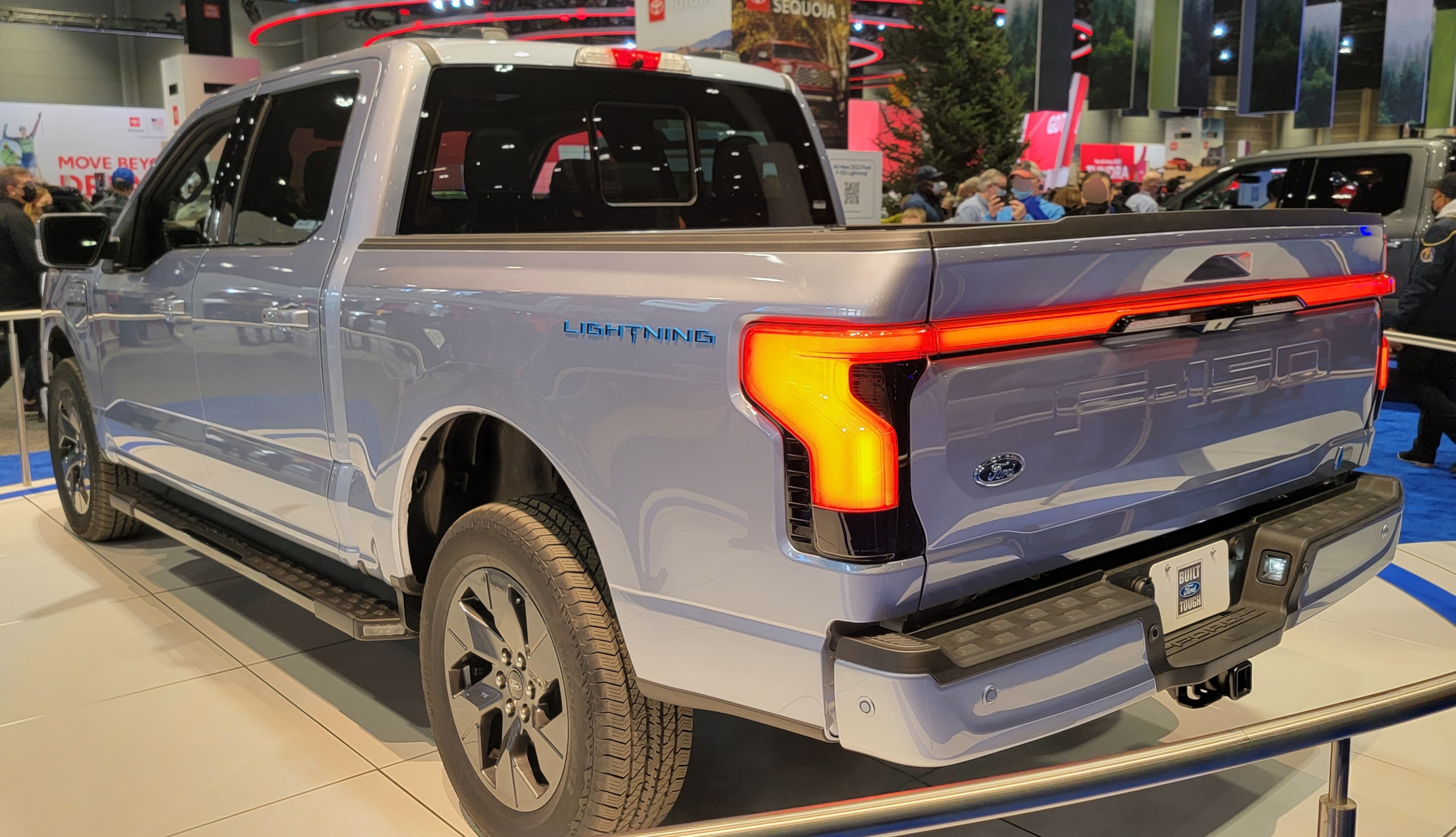
Several models from Ford now have 0% APR and cashback, like the Ford F-150 Lightning,
Kia's EV6, EV9, 0%. Ford, credit, offering 0% for 72 months on the Mustang Mach-E.
Stellantis, well, they're matching the $7,500 now-expired federal tax credit on existing stock
of plug-in hybrids and bevs, and some bonus cash for leases and purchases as well. Hyundai's doing
the same amount for their IONIQ 5 and last year, and this year's model years, or 2026 model years,
and a notable lease example is something like the Chevy Blazer, so $1,500 down,
which is not a huge amount of money. I'm not a huge fan of putting any money down on a car,
but if you've got to put some down, okay, $1,500, and then $299 a month for two years to lease a
Blazer, a great vehicle. Although I don't lease vehicles, so I can't tell you whether that's a
stellar deal or not. $300 per month for a Blazer in your driveway, if that's
for you, it seems like a good deal to me. So I'm not so convinced with this theory
that the US is about to walk its way backwards to combustion. You can't put the genie back in the
bottle, and people know EVs are just better. I think this is also some short-term pain that'll
shake its way out. Anyway, let's talk about China. They have asked the World Trade Organization
to help with a situation in India over New Delhi's subsidies in EV and battery sectors.
China's Ministry of Commerce said on Wednesday this week a ministry spokesperson said the measures
breach WTO obligations, like the national treatment principle, which I'll confess I'm not
familiar with, but it's about import substitution subsidies, which is prohibited under WTO rules.
They say it harms China's legitimate interests and they want some resolution to this. I think China
has done, if anything, over the last 20 years, certainly used all of their power and pulled
every possible lever to subsidize and incentivize the EV industry, whether that's cheap money to
build factories and there's a massive oversupply problem in China, whether that is encouraging
people to buy domestic products through various means and not a foreign product. Other countries
are saying, well, China do this and so we'll have some of the same. Maybe it's not exactly like for
like, as I'm no economist, but China complaining over countries giving help to their industries is
somewhat pot kettle and black. Now let's talk about EVs in the UK. A new data point coming out
of the comparison website compare the market. They say that EVs cost £350 a year less than a
comparative combustion car. That's good. That's important to always compare like for like, by the
way, I've seen that from people saying, well, EVs aren't cheaper because, you know, if you compare
a little Toyota Igo or something to a city, a segment small car and a Tesla Model S, well,
they're about the same price to run. If you look at the insurance and this, okay, so let's not do
that. Let's do comparative models like for like, which is what you need to do. If you look at the
insurance, the tax and to fuel the thing, and they say that it's £350 a year cheaper to drive an EV,
but that doesn't include service. They ignored any kind of service. And of course, that is a
really, really big issue, maybe not for a brand new car, because hopefully new cars don't need
service. And hopefully they're all under warranty that doesn't get, you know, any kind of pushback
if something goes wrong in the first three years. Look, a lot of EVs. I've got seven, eight, nine.
I've seen a 10 year warranty coming out of China. Hopefully they're good for that. Still around in
10 years. But if you are driving combustion cars any period of time, well, then service does start
to kick in. You do start to need oil changes and catalytic converters and all the oily, greasy bits
that eventually will want to bump into each other in unfortunate ways. And you have to try and,
you know, stop that happening. And so, you know, keep the engine running smoothly. That's a very
expensive hobby. If you really love your petrol and diesel, which you just don't get with electric
vehicles, anything that can go wrong with an EV is something that's big, which is why I've got a
third party warranty on my Polestar because I don't really want a surprise bill. I don't mind
paying for a warranty. My Polestar is five years old now. And if anything goes wrong with it,
I know that I'm covered. Could I save some money? Yeah, absolutely.
Am I worried about small things going wrong with it? No, not at all. Cars are mechanical.
And we've seen this with some of the older Teslas now. Some of the mechanical bits,
not the motors, although some have been replaced, obviously, and batteries have been replaced.
But some of those mechanical bits that keep the wheels on the ground wear out. And that's
absolutely fine. It's a machine that's going to need servicing, but not in the way that a
combustion car needs servicing. So now they're interesting data point there.
Right, a new factory in Romania is starting the electric drive unit assembly for the GLC
from Mercedes-Benz, which says it's getting closer. A Star Assembly is a wholly owned subsidiary of
Mercedes-Benz. They've now started making the EDU's electric drive units for their all new,
all electric Mercedes-Benz GLC. They make them in Romania, and then they send them over to the
factories where they are made. I didn't make notes on that. I think it is, I'm not quite sure
where the GLC is going. Bremen, maybe. They make the GLC and ship it to Bremen where they'll make
that. GLC looks like a fantastic new all electric vehicle. And so the fact that they're spinning
up all those things right now, like making the drive units, which are all integrated at the
electric motor, the power electronics and the gear units as well, a complete system, and then ship
them off to the factory to be made tells me that, well, looks like serious production of the GLC
is very, very close, maybe the beginning of next year. New York is investing nearly $80 million
in zero emission buses. New York State is investing the money across seven regional transit providers
to accelerate the shift to zero emission buses, also supporting the infrastructure needed to
decarbonize. These awards come through the zero emission transit transition program launched
last year in December with $120 million in total in the pot out of the state's budget.
Regional transit authorities and municipal providers are part of the recipients in this
round. We'll take a quick break. A couple of stories when we come back and we will talk
about spidirectional wallboxes and solar plus storage. Stick around back in a moment.
As the holidays approach, it's time to return to the classics. Flaky pie crusts, perfectly browned
butter, and cookies with just the right texture. And one ingredient you cannot compromise on
is Kerrygold butter. Kerrygold butter is crafted with milk from grass-fed cows that graze on lush
green pastures across family farms in Ireland. The result? A rich, creamy butter with a high
butterfat content that elevates every recipe. Whether you're making signature shortbread
or browning butter for a nutty depth in your pecan pie, Kerrygold makes all the difference.
The flavor is unmatched, and the texture it brings to baked goods is simply divine. So this
holiday season, if you're baking for loved ones, or just for yourself, reach for Kerrygold. It's
the butter of choice, and your pies, your cookies, and your cakes will thank you.
As the holidays approach, it's time to return to the classics. Flaky pie crusts, perfectly browned
butter, and cookies with just the right texture. And one ingredient you cannot compromise on
is Kerrygold butter. Kerrygold butter is crafted with milk from grass-fed cows that graze on lush
green pastures across family farms in Ireland. The result? A rich, creamy butter with a high
butterfat content that elevates every recipe. Whether you're making signature shortbread
or browning butter for a nutty depth in your pecan pie, Kerrygold makes all the difference.
The flavor is unmatched, and the texture it brings to baked goods is simply divine. So this
holiday season, if you're baking for loved ones, or just for yourself, reach for Kerrygold. It's
the butter of choice, and your pies, your cookies, and your cakes will thank you.
I've seen these demoed for such a long time now, and they work with things like the Kia EV9.
Owners in California are now getting theirs installed as part of the initial rollout of these,
so you can use your vehicle to power your home. Obviously, there's manufacturers that have been
doing this a long time. There's the Ford system, the Tesla system, GM system. But this is entirely
third-party, installed through a collaboration with Kia, though, and the University of California.
The Quasar 2 not only charge your EV, but also send electricity back to the house. The charges
are deployed in a newly built, all-electric neighborhood, it says here, testing how clean
energy technologies support the residence and the grid itself. Warbox will have a broader rollout of
the Quasar 2 soon. Now, Oregon's rolling out solar and storage DC fast charging. I love stuff like
this. The first station is in Pendleton, where XCharge North America is installing its dual
dispenser gridlink charges. The installation pairs the gridlink units, which are 215 kilowatt
hours of storage. They've got 40 kilowatts of on-site solar, because I presume that's 40 kWP,
and each unit will deliver 194 kilowatts to an EV. That's a very specific amount,
enabling high-speed charging for EVs that pull up to it. The gridlink system supports
bidirectionality, thermal management, fire suppression functions inside the battery as
well. It will return back power from the battery back to the grid, even the site on which it's
based in an emergency. They're putting these into the Wild Horse Resort and Casino's Arrowhead
Travel Plaza, which sounds lovely. Located on the Confederated Tribes of the Umatilla Indian
Reservation Lands, the Travel Plaza serves more than 1.7 million vehicles annually on Interstate
84, and so new fast charging going in, but paired with solar and storage. Hey, congratulations to
the everything electric team, aka the fully charged team. Everything electric, farm broke,
was last weekend, couldn't attend myself, I was away with the family, and we were
not too far away, actually, but I couldn't make it. As you all know, if you're listening to the
weekend episodes of the podcast from location, I took my microphones and laptop and everything
with me so I could work on holiday, but we were away for the weekend, so we couldn't make it this
year, but I wasn't needed. There was a single largest attendance day record for the everything
electric events. It's a two-day edition, normally they're three. It's the UK's first two-day edition,
saw 25,703 visitors, which matched last year, but was over three days. Lots of test drives,
lots of tech exhibits, more than 100 EV models, loads of Chinese, JQ E5, GLE X5, BYD Ato2, Leap
Motor T03, the new little Nissan Micra, and the Nissan Leaf were there, gutted I couldn't go,
3,000, almost 4,000 test drives were done over the two days. The new MG's, the IM5 and the
IM6, they look cool, Changan SO7, and the organisers linked more buyer interest from
things like the new UK government grant scheme. There was a B2B day as well on the Friday,
and that I think will be the model they use going forward, should have some news on their UK dates
for next year. And finally, Australia's largest battery has for the first time squirted its full
capacity back into the grid. Not being an expert in grid electronics, I'm not sure the actual
technical phrase is squirting the power back into the grid, but we'll go with that. It's not
bad, it's 850 megawatts of capacity. Yeah, the Waratara, is that how I say it? Waratara? No,
Waratara, that's more like it. The Waratara Super Battery has 1,680 megawatt hours of energy
storage, and its rated capacity is 850 megawatts. They're close, it's in New South Wales on the
Central Coast. They are close to commissioning that, by the way. This big battery is designed to
be a shock absorber to the grid. It lets primary transmission lines, which supply Sydney, Newcastle
and Wollongong, operate at their capacity, while the Waratara facility stands ready to respond
instantly to faults or disturbances. That role is coordinated with a solar farm as well,
and a wind farm, and even pumped hydro. Now, they are, I think, got to supply a minimum of 700
megawatts to the grid, but it can do 850, and that is its peak. Its scale and rapid response
is part of our future grid, with EVs on it, big batteries in your driveway, but even bigger
batteries on the grid. What I love about this is it's built on the site of an old coal plant.
Isn't that amazing? And it had its big tick, a big moment, putting its full capacity back into
the grid as they get ready to fully commission that in Australia. Very cool little storage story
to finish you off today. Thank you so much to our partners of this podcast via Patreon, which is
the platform we use to fund this show. Now, how are our living? Thanks to our premium partners
who get a daily mention. You can be one, Porsche of the Village in Cincinnati, Audi of Cincinnati
East, and Volvo cars of Cincinnati East. National car charging on the US mainland,
and the low-high charge in Hawaii. An octopus electroverse global public charging made simple,
with one app and one map. Have a good in cinema, and remember there's no such thing as a self-charging
hybrid. As the holidays approach, it's time to return to the classics. Flaky pie crusts,
perfectly browned butter, and cookies with just the right texture. And one ingredient you cannot
compromise on is Kerrygold butter. Kerrygold butter is crafted with milk from grass-fed cows
that graze on lush green pastures across family farms in Ireland. The result? A rich, creamy butter
with a high butterfat content that elevates every recipe. Whether you're making signature shortbread
or browning butter for a nutty depth in your pecan pie, Kerrygold makes all the difference.
The flavor is unmatched, and the texture it brings to baked goods is simply divine.
So this holiday season, if you're baking for loved ones, or just for yourself,
reach for Kerrygold. It's the butter of choice, and your pies, your cookies, and your cakes will
thank you. This holiday season, reach for the one butter that never disappoints, Kerrygold. Made
with milk from grass-fed cows on Irish family farms, it's rich, creamy, and perfect for baking.
Whether browning butter for cookies, or crafting the flakiest pie crust,
Kerrygold's high butterfat content makes all the difference in flavor and texture.
Holiday treats will taste extraordinary.
About this episode
Rivian has increased its production estimates for the R2 model, projecting 175,000 units annually, while global EV sales hit a record 2.1 million in September, driven by demand in China and the US. General Motors faces a $1.6 billion charge due to reduced EV manufacturing capacity. The episode also discusses the rise of LFP battery production in the US, the relaunch of Great Wall Motors in Europe, and the impact of expiring tax credits on EV sales. Additionally, it highlights advancements in solar and storage technologies for EV charging.