The Tesla Cybertruck is a new kind of electric truck that looks very different from regular trucks because of its sharp angles and shiny metal body. It's important because it's trying to change how people think about trucks by using electricity instead of gas, which is better for the environment.
The Jeep Grand Wagoneer is a high-end SUV that offers both luxury and off-road capabilities, and it's part of Jeep's plans to include more electric options.
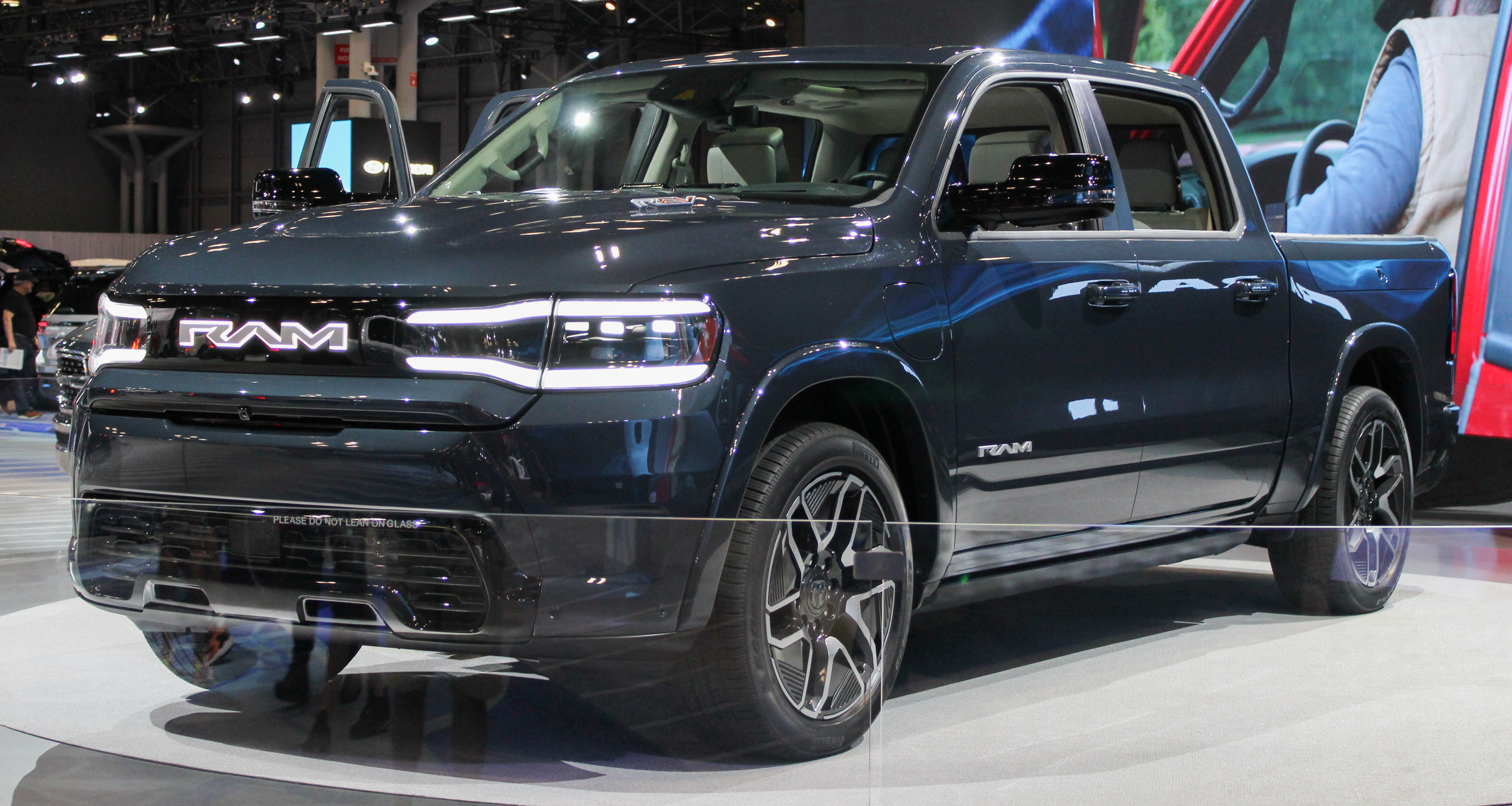
The Ram 1500 is a big truck that people use for work and towing things, but it’s also comfortable enough for everyday driving. It’s talked about a lot because it combines strength with nice features, making it a favorite among truck lovers.
The Dodge Avenger is a mid-sized car that used to be popular because it looked sporty and was affordable. Even though it’s not made anymore, people still talk about it because it was a fun option for those looking for a stylish car.
The Jeep Avenger Black Edition is a small SUV that has a stylish black design and tinted windows, making it look more premium. It's a version of the regular Avenger model.
The Jeep Compass plug-in hybrid is a type of SUV that uses both a gasoline engine and an electric motor, giving it good power and the ability to drive on electricity for a certain distance.
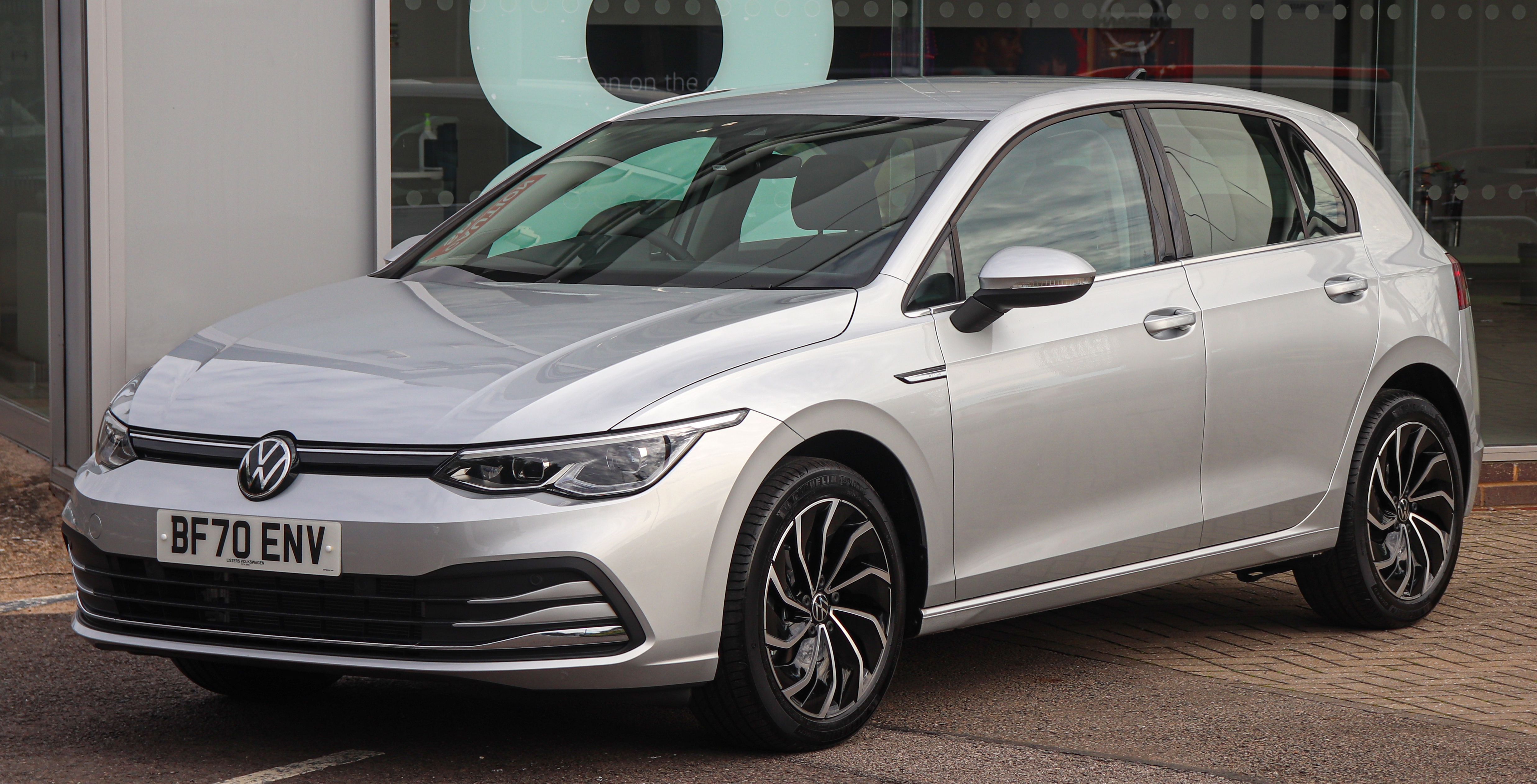
The Volkswagen Golf is a small car that many people like because it’s easy to drive and has a lot of space inside. It’s often mentioned because it’s reliable and has a good mix of fun and practicality for everyday use.
The Kia EV9 is a new electric SUV that is big and has lots of room for families. It’s important because it shows that Kia is making more electric cars, which are better for the planet than regular gas cars.
The Hyundai Ioniq 5 is a new electric SUV that looks cool and has a lot of modern features, making it a great choice for those looking for an electric vehicle.
The Kia EV5 GT is a new electric car that has two motors to make it powerful, giving it more than 300 horsepower. It's built to handle well and drive fast.
Car
BMW iX4
The BMW iX4 is a new electric SUV that looks a bit like a coupe, meaning it has a sporty shape. It's made to be efficient and fun to drive.
The Audi e-tron is a fancy electric SUV that has a lot of space and nice features, making it great for families. It’s talked about because it looks good and drives well while being better for the environment.
The BMW iX3 is an electric version of the X3, which is a popular SUV from BMW. It has a similar look and feel but runs on electricity instead of gasoline.
Polestar 2 is an electric car made by Polestar, which is a brand that focuses on performance and sustainability. It's designed to be stylish and efficient.
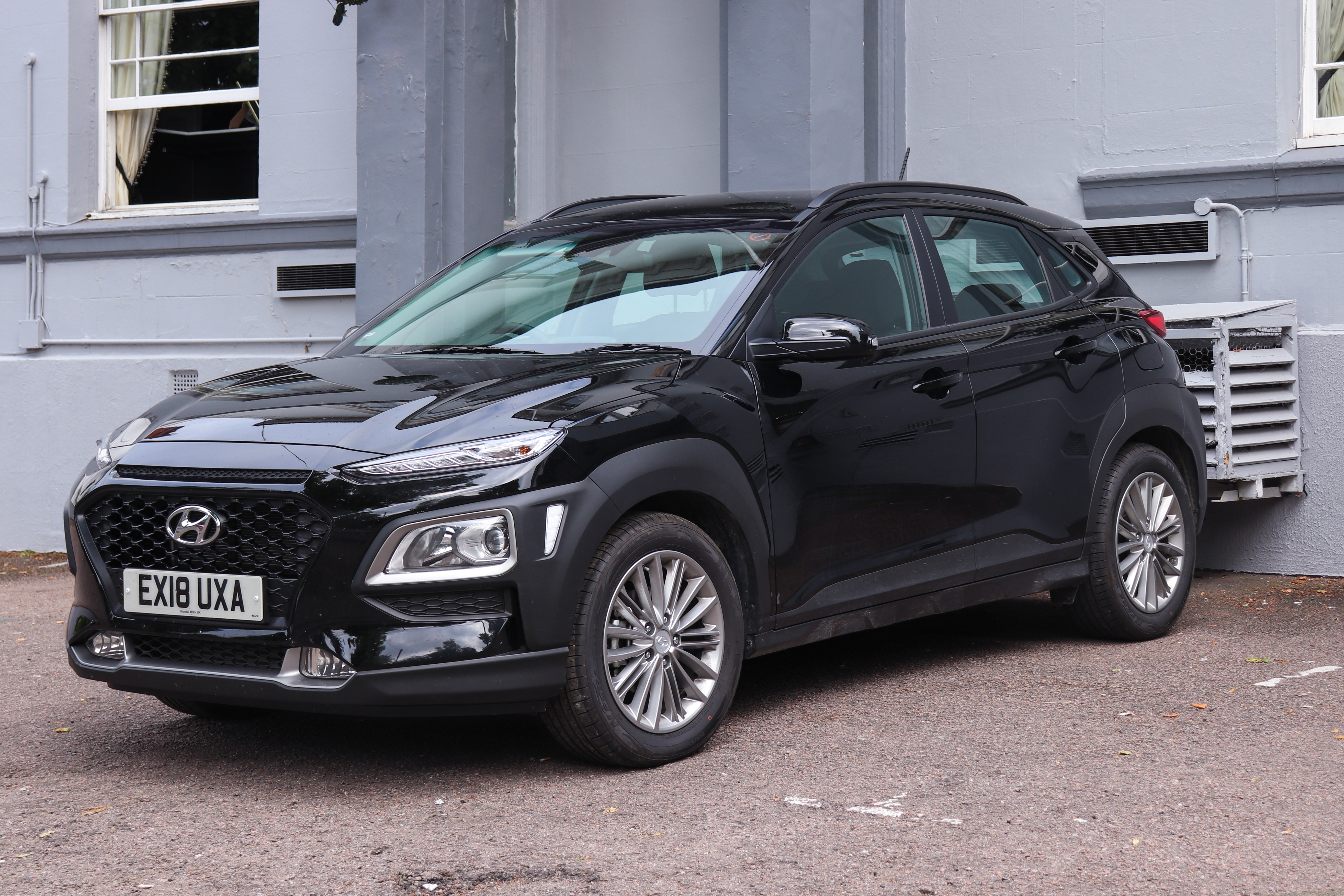
The Hyundai Kona is a small SUV that people like because it looks good and has a lot of useful features. It comes in both gas and electric versions, making it a flexible choice for different drivers.
LIVE
Welcome back to EV news daily. Today's to Lantus. Just can't decide on plug-in hybrids,
Kia's GT models and the BMW iX4 coupé. Plus stay tuned, later in the show I'll tell you why
Turkey is driving EV sales with a lot of Togs and Teslas. No EV news China today, it's the weekend.
Our spin-off podcast looking at China happens weekdays and no bonus shows this weekend. But
next Saturday we'll have our later sponsor on Nathan Gore-Brown from Test EV talking about
why used EV markets need battery certificates. If I may as well, if you get a chance to listen
to some of the bonus shows I've done since I came back from holidays, I mean I don't know what I do
is any good, but there's a big one about Tesla Cybertruck and a big one about how we can get
more EVs on the roads in different parts of the world. I've called it the carrot or the stick,
is the incentives or rules for the car makers. Those shows took so much work over the holidays
and Christmas and New Year and a few people have said, oh that was an interesting one,
so maybe check it out if you have time, but they're long and they are what they are.
Now for America, Stellantis doesn't want EVs, plug-in hybrids. Stellantis will drop its entire
plug-in hybrid range for North America, including America's best-selling plug-in hybrid, the Jeep
Wrangler 4xE, the Grand Cherokee 4xE and the Chrysler Pacifica plug-in hybrid is the one
I'm really surprised about all discontinued as they drop their EV plan in America. The move
is a strategic shift, not a product refresh. Stellantis says it will phase out plug-in hybrids
beginning with the 2026 model year and focus on competitive electrified solutions, hybrid,
soft hybrid, mild hybrid things. It's pivoting from plug-in hybrids to non plug-in hybrids and
in time E revs, so using an engine, because they've got a lot of engine technology they still want
to sell you remember, as range extenders. Charging a battery, electric motors drive the wheel,
okay, but you could just do it properly and and anyway, as long as it has a plug socket on is
what I always say, as long as you can charge your E rev overnight. The decision follows
Jeep's quiet removal of the Wrangler 4xE and the Jeep Cherokee or the Grand Cherokee, sorry,
4xE from its website earlier in the week that I told you about, prompting speculation that the
plug-in hybrids were not set for renewal. The 4xE badge will survive though, Jeep's plug-in
branding will shift to future range extended models like the facelifted Grand Wagoneer and
the Ram 1500 rev which Stellantis presents as the next phase of their EV plan. They do have a plan,
but here in Europe it's quite the opposite. Jeep turned up at the Brussels Motor Show last week
with a deep push into EVs and plug-in hybrids. The first one led by a darker urban take on its
smallest model, the Avenger Black Edition was unveiled based on the altitude trim,
but lots of black exterior elements, tinted windows, trying to look a little bit more upmarket in a
B segment SUV that's already found more than 235,000 buyers since it launched. The little Avenger
is a dinky little thing, but it looks perfect on our roads. The changes go beyond paint and glass,
the Avenger Black Edition folds in advanced driver aids and off-road helpers like hill
descent control and the select terrain with six driving modes plus a 12.25-inch digital instrument
cluster. Jeep wants even its smallest SUV to keep playing the brand's capability card
while steering its buyers towards EVs. Above it, the new Compass plug-in hybrid was shown off in
Brussels. The Compass plug-in hybrid pairs petrol and electric power for 225 horsepower aimed at
stronger performance for those that want the electric range of 90km. Not bad. In a total
driving range, they say of 983, has the select terrain electric modes as usual for sand, snow
and mud to make you feel the Compass a bit more, you know, GP. And finally, oh and also the new
Compass 4xE Leans further into off-road use because they've raised the suspension by a centimeter
and reworked the bumpers for approach angles and departure angles and things like that. At the top
of the range is the all-new Wagoneer S. Jeep's global fully electric vehicle, its flagship,
600 horsepower, 0-62 in 3.5 seconds, ultra rapid charging in 23 minutes, still a 400-volt platform,
but a 100.5 kilowatt hour pack, 250 kilowatts motors on each axle, obviously all-wheel drive,
instant talk and things like that. So different territories, different geographies and divergent
strategies. I guess for any global carmaker, it's fine. You can talk to your local audiences and
sell your product mix how you have to do it, but I just thought it's funny because obviously you
have to sell yourself. So to American listeners and half this audience's podcast listeners are
in the US or at least you guys have USAIP addresses, that's all I can see. Then Stellantis are like,
no, plug-in hybrids, EVs, bad, it's all E-Revs. And so, okay, that's what you stand for at Jeep.
Good stuff. And yet, for my European listeners, you've got to believe the marketing line, which is,
hang on, you want to add some plug-in hybrids and EVs to your life, my friends. So I know,
I know, I know, but it's a global world we're living, right? So it's hard to pretend to be
one thing and pretend to be another and, you know, not talk out of both sides of your face.
Doesn't really matter, does it? I amused me. Kia used the Brussels Motor Show to sharpen their
electric range. It's unveiled GT versions of the EV3, EV4, EV5. So EV3 is the, call it a crossover
if you want. Some people do, look, it's just, it's just a Volkswagen Golf in electric colors.
The EV3 was my car of 2026. The EV4 is the one that comes in either the hatchback or the fastback,
and the EV5 is a bigger SUV, actually. Dual motors, chassis upgrades, it's, they're not the GT lines,
they're GT versions. So you know when Kia goes GT GT, they actually upgrade the vehicle. GT lines
are trim line. So joining the EV6, joining the EV9 as their electric flagships. The move pushes Kia
deeper into performance EVs that European and Chinese rivals target rather than chase only range
and efficiency. They want that extra little bit. Kia EV3 and EV4 GT are on the same platform,
EGMP, same powertrain, dual motor, all wheel drive, 194 horsepower front unit, 94 horsepower rear
unit, combined almost 300 horsepower, then 81.2 kilowatt hour pack. The same one fits to the
long range versions. They don't give official ranges, but they gave the speeds. EV3 GT does
62 miles an hour in 5.7 seconds, and the EV4 in 5.6 seconds. So yeah, I think you've worked out by
now. This is not Tesla Model 3 performance territory of three seconds. It's going to be rapid, and I
mean arguably anything less than six seconds gets a bit bonkers on public roads anyway.
Changes go beyond the power. The GT pair gain bespoke chassis tuning. They've got different
suspension with unique settings, and there's also some performance focused tires on the new 20
inch wheels. A dedicated GT drive mode alters power delivery, steering response and suspension to
give what Kia calls focused and immersive driving character. Both cars also have virtual gear shift.
We saw this a long time ago. A crop up on the sister car Hyundai, the Arnic 5. So it's actually,
it works. The technology works really well. Yeah, it's a party trick and a gimmick, but
everyone who tries it smiles, and then they turn it off again. But it is good for what it is.
Active sound design. We're going to get that in the new Genesis GV60 Magma. More on that
soon. The larger car, the EV5 GT has a different twin motor setup. That one is over 300 horsepower,
all in six seconds, 0-62. Kia's not confirmed batteries and things for that, but it would still
be the 88.1 kilowatt hour pack, slightly bigger, maybe an extra module or two on the EV5. That's
logical. Let's see why they changed the battery pack on that. So yeah, these are
a little bit more rapid, all-wheel drive, a bit more performance. They are not a
performance set of cars, if that makes any sense. Now let's talk about BMW's IX4 is leaving
its private test tracks and moving on to German roads in camouflage, hiding the detail, but not
the intent. Coupé'd styling version of the IX3, another model in the Neuerklasse lineup. When
this comes, I don't know, because after IX3, we think we'll get the Neuerklasse version of the
three series before this. Either way, this new styling with its sloping rear
matters, because BMW is taking that playbook of the X3 and the X4 into the electric world.
As with the combustion-powered pair, the IX4 trades that lower rear roof line
for a more dynamic profile. Because I've got two kids, I'm all about the space. So if you
offer me two versions of the same car, like the old Audi e-tron with a sloping dynamic rear end,
no, no, no, just give me the square one. I want all the room for the kids' bikes, but either way,
if you don't, this could be what you want. Spy shots published by BMW blog online today show
a front end that looks the same as the IX3. The prototype wears the same DRLs, the daytime running
lights, and the vertical kidney grills, all part of BMW's new EV design under the skin.
You'd think it's the same. IX4 would have the IX3 technical recipe, 108 kilowatt-hour pack,
800-volt architecture, 500 miles of range. But hang on, IX3 delivers 650 kilometers of range.
Surely the IX4 would go further, because it's more aero. Timing is tight, but clear enough,
it's on public roads now in Camo, so we should see it in showrooms at some point.
We'll talk about Polestar in a bit. Of course, I'm just a Polestar fanboy these days,
and Rivian's app taking top on us. Stick around, back in a mo.
All right, back to the podcast. Polestar is growing. Polestar sold 46,479 vehicles in Europe
last year. Globally, the brand shifted 60,000. Okay, so that's a 34% jump on 2024.
There's still a niche mark. It's growth that stands out, and it's growth in Europe. Now,
they sell nothing in China anymore, ironic because they're a Chinese company,
and they're made in China, but it's where all the action is happening in Europe. I'm seeing
loads of Polestar's around now, anecdotally, obviously, but loads of Polestar IV's, the cheaper
one, and then the more expensive Polestar III. I've also been looking at used prices,
not because I can afford to change my Polestar II, but because we all like to go window shopping.
Holy bazookas, the depreciation hitting Polestar is enormous. What do I pay for mine?
£25,000 two years ago from auction, so pricing a little bit lower than going to a dealer,
and in two years' time, what's it worth now? I think maybe 18? That's really optimistic,
by the way. Oh, and my wife has done a couple of the alloys, which I'll have to get fixed first.
I say, it's not like a bad woman driver. I'm not being sexist, but it's just a fact.
My wife has done the alloys on kerbs, and so that'll have to be fixed. But either way,
getting good Nick, maybe £17,000 it's worth. So I've not been hit too bad, not like the year
that I owned the Hyundai Kona, and it went from £34,000 to £21,000 in 12 months. That whole
time when EV depreciation really hit. However, the new ones, the Polestar III and IV,
I mean, the depreciation is just huge. Now, that's interesting to me as a Polestar owner,
because I blink and love the cars. They're kind of minimalist with buttons. They're like
scandy and cool, and the materials feel nice, and I'm of a certain age, and maybe it just suits me.
This surge in Polestar's comes despite a volatile pattern of monthly registrations.
Polestar sales track up and down all over the time because of shipping cycles in China and the
logistics snags. Most of the volume rests on the Polestar II, built at the Luqiao factory in
Xiejiang in China. The newer Polestar III sits between Chengdu production and the Volvo plant
in South Carolina. Polestar IV is even more complex. Output began in the Hangzhou Bay area
of China, and from late last year they also made it in South Korea, in Busan, in a partnership
with Renault. The new Busan factory will serve North American markets for the Polestar IV. That's
a really good car. And at home, the Swedish-based firm is gaining ground, headquartered of course
in Gottenberg, and yet Polestar is a UK company. I know, it's difficult to keep up. Polestar registered
7,500 vehicles in Sweden last year. They love it at home. Polestar ends 2025 as a growing brand,
but not without issues. Rivian's app took the Motor Trend Tech Honors Award Best Automaker
app in the 2026 tech awards at Motor Trend for the second year in a row. They called it the
overall automotive technology of the year. They say the app stands out for a clean design, quick
response and features that feel essential rather than decorative, an app that people genuinely
want to use. The app handles everyday vehicle functions, charging and real-time status in a
car's state remotely. I must admit, I've loved that the Polestar app has rolled out a new feature
where it can tell if any of the windows are down slightly. And that's useful because I'm really
bad at doing that. And so yeah, lying in bed at night, I think I'll just check the car up,
the window's open, and of course you can close the windows from the app on the Polestar now,
which is nice. They improve it all the time. The results Motor Trend argues is an example of Rivian
getting the software right in an era when apps and software are increasingly important.
Let's go to Vietnam, where Ho Chi Minh City wants to squeeze petrol out of its centre,
get its owners and residents to go electric. Not going to be easy, though. It echoes plans
to start in central Hanoi as well. The city wants electric vehicles to be half of the motorbikes
and government official vehicles and ride-hailing drivers by 2027. A city-backed institute proposed
that in July, from 2027, gasoline-powered vehicles restricted from operating in peak times
in low-emission zones in Ho Chi Minh City, with tighter limits from 2028. Drivers who would flout
the rules in low-emission zones being fined with street cameras. We have the same thing in London
here, by the way, and more low-emission zones rolling out in the UK. This policy runs against
habits nearly four-fifths of people own a motorbike in the area. They're petrol-powered,
but the motive has to be dirty air. A Swiss air purifier platform called IQ Air in their data
ranked Hanoi as the 10th most polluted city out of the 126 cities in which they measured
from a piece of data coming out on January the 8th. And it's the worst city in Southeast Asia.
Ho Chi Minh City is, I think, in 33rd place of all dirtiest cities. And so academics will argue
that things like asthma attributed to air pollution cost a huge amount of money, one data point,
in Vietnam as it costs around 16 million US dollars equivalent per year because of pollution-related
asthma alone. Yet as the state promotes EVs, in Vietnam some building managers are barring them
fears of battery fires. Sometimes unjustified as well, but thanks to media speculation have
led apartment complexes in cities to ban e-bikes, motorbikes, e-cars as well, which opens up a
tension with the regulators. The result is that many people are caught between two conflicting
schools of thought. They are arguing that to encourage EV adoption, officials must regulate
not only the roads but buildings as well, suggesting mandatory standards for charging
facilities and apartment blocks. That's a good idea to make sure standards are kept.
Now, the car industry is on course to overshoot its 1.5 degree pathway by 75% by 2050. That's the
Rivian and Polestar together, which uses open source data to model the car sector's emissions.
Passenger vehicles account for 15% of global greenhouse gas emissions to stay within 1.5
degrees global warming. The IPCC says that all emissions must fall by 43% by 2030. Instead,
this report finds the automotive sector is going to burn through its CO2 budget by 2035, well ahead
of 2050. Electrification is helping, but not enough. The report sets out three levers that
must move together, replace fossil-fuelled cars on the road, increase renewable energy in the power
grid, so when we charge our EVs, they're clean and green, and also cut emissions in the manufacturing
supply chain. This study urges car makers to invest in EV manufacturing capacity and to commit to a
firm global date for fossil-fuelled car sales, ending while pressing governments and utilities
to build out more renewables. Polestar's head of sustainability, Frederica Claren, says firms
must look beyond tailpipe emissions, calling the climate crisis a shared responsibility.
Capital markets already tilt towards the shift, global sustainability investments
are now $35.3 trillion. The car industry needs to catch up. Finally, Turkey is an unexpected EV
star. Nearly one in six new cars sold in Turkey are now fully electric. It's a record that puts
the country ahead of many European markets on EV take-up. And it matters because it has emerged
that despite high taxes and tight financing in Turkey, overall EV sales are rising considerably.
So what are they buying? Well, the EV segment is concentrated between two brands.
TOGs and Teslas. Now TOG is Turkey's own domestic champion. Tesla took about 27% of the EV market
and TOG 24%. Kia followed on just 7%. China's BYD ranking fourth. Other BYD models are a little bit
cheaper and other Korean brands further down. Yet simple EV figures, BEV figures at least, underestimate
China's role in Turkey. Turkey doesn't buy fewer Chinese electric cars overall, but rather buys
fewer Chinese EVs and more Chinese plug-in hybrids instead. If you look at the actual plug-in data,
well, there's loads of plug-in hybrids being bought in Turkey. Plus, of course,
Turkey would like to be one of the countries that is on the shopping list, let's say, of Chinese EV
makers when they leave home turf and go overseas and look to build factories and invest in European
countries. Turkey is somewhere that will say, hey, we've got an EV industry here, not only their own
TOG brand, but plenty of Teslas on the road as well, and saying to global car makers that want
a base with some cheaper labour, but still access to Europe that, hey, we're not a fringe market
and that you should give us a shot. And that's your podcast for today. Thanks for listening to
the podcast. Thanks to our premium partners as well for supporting the show. Daily mention for
them. Anybody else that wants to get in on the act? Yeah, more than welcome to. There's still a
bit of room. National car charging on the US mainland and a low-high charge in Hawaii and
Test EV. Avalu's trusted partner for independent EV battery health testing in Australia and New
Zealand. Have a good incident tomorrow. And remember, there's no such thing as a self-charging hybrid.
About this episode
Stellantis is making a significant shift away from plug-in hybrids in North America, discontinuing popular models like the Jeep Wrangler 4xE, while focusing on non-plug-in hybrids. Meanwhile, Kia unveiled performance-oriented GT versions of its EV lineup at the Brussels Motor Show, aiming to compete with rivals. BMW's IX4 Coupe is also making strides, moving from testing to public roads. The episode highlights Turkey's surprising rise in EV sales, driven by local brand TOG and Tesla, amidst a backdrop of global EV market dynamics and sustainability challenges.