DAILY: Tesla Ends FSD Purchases, BYD Extends Warranties and Lotus Halves Prices | 17 Jan 2026
EV News Daily - Technology and Business of EVs
DAILY: Tesla Ends FSD Purchases, BYD Extends Warranties and Lotus Halves Prices | 17 Jan 2026 EV News Daily - Technology and Business of EVs · Jan 19, 2026
FSD means Full Self-Driving, which is a feature from Tesla that helps the car drive itself in some situations. It's not completely self-driving yet, but it can assist with things like changing lanes and parking.
Full self-driving means a car can drive itself without help from a person. But right now, these systems still need someone to be ready to take control if needed.
Range anxiety is the worry that an electric car will run out of battery before you can recharge it. This fear can make people hesitant to buy electric cars.
Battery health is a way to measure how well a battery is working. In electric cars, it shows how much charge the battery can still hold compared to when it was new.
Car
BYD ETP-3
The BYD ETP-3 is an electric vehicle made by a Chinese company called BYD. They are known for making electric cars and batteries, and the ETP-3 is one of their models.
Import tariffs are fees that countries charge on products brought in from other countries. Canada is lowering these fees for electric cars from China, which could help more of those cars come into Canada.
Car
Lotus Electra
The Lotus Electra is a new electric SUV made by Lotus, a company famous for sports cars. This SUV is part of the trend of more electric vehicles being available.
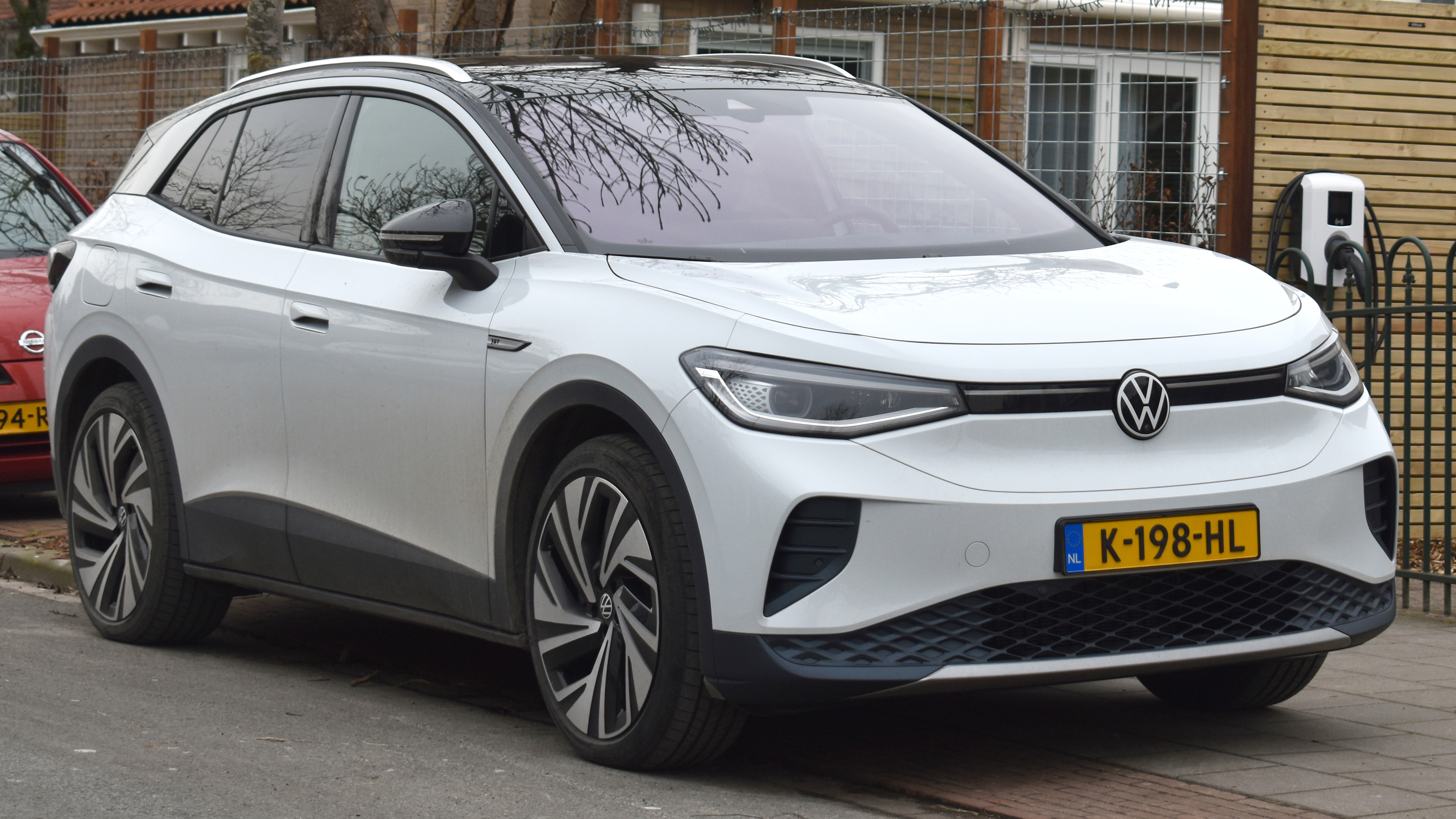
The Volkswagen ID.4 is a new electric SUV that doesn't need gas, which is great for the planet. It's designed to be roomy and has lots of modern technology inside. The car recently got some updates to make it look better and work even more smoothly.
The MEB Plus platform is a special design by Volkswagen for building electric cars. It helps make the cars more efficient and allows for different designs and technologies to be used.
The Volkswagen ID Tiguan is a new electric version of the Tiguan SUV, which is a popular model. It will use a special platform designed for electric vehicles to improve its performance.
MEB architecture is a special design framework that Volkswagen uses for making electric cars. It helps them build different types of electric vehicles more easily.
NMC cells are another type of battery for electric cars that help them go further and perform better. They are made from nickel, manganese, and cobalt.
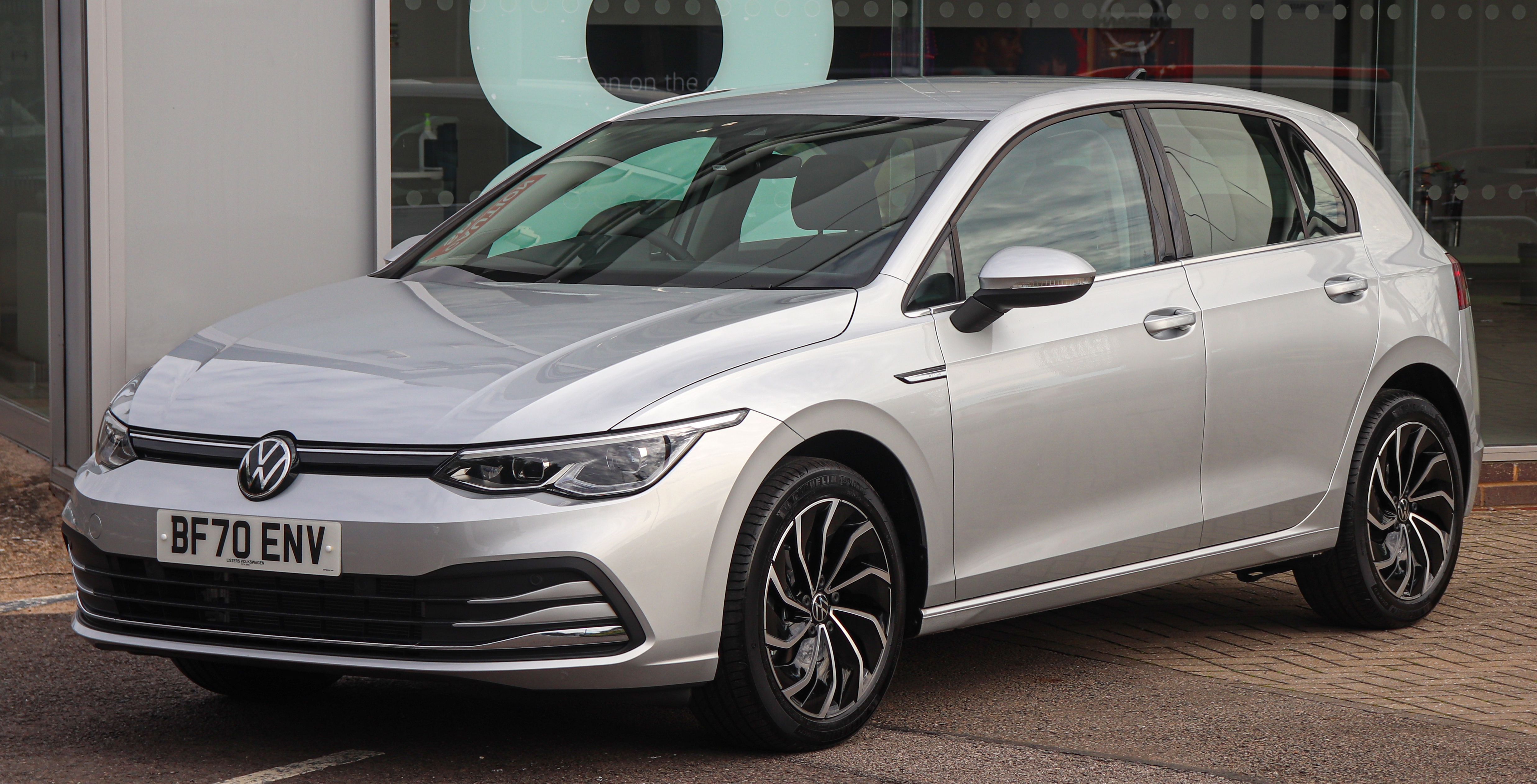
The Volkswagen Golf is a small car that many people like because it's easy to drive and has a lot of space inside. It's been around for a long time and comes in different versions.
The Kia EV5 is a new electric SUV that Kia is planning to sell in the United States. It's designed to be practical and has new technology to help save energy and reduce pollution. This car shows that Kia is serious about making more electric vehicles.
CATL is a Chinese company that makes batteries for electric cars. They are one of the biggest battery makers in the world and supply many car manufacturers with the batteries they need.
LFP technology refers to a kind of battery used in electric cars. It is known for being safe and lasting a long time, making it a popular choice for many car manufacturers.
The Alpina B10 is a fancy version of a BMW car that goes really fast and feels very luxurious inside. Alpina takes regular BMWs and makes them even better with more power and special features. It's a car for people who want to enjoy driving while also being comfortable.
The Tesla Model Y is a fully electric SUV that doesn't use gas, making it better for the environment. It has a lot of cool technology, like self-driving features, and is known for being roomy and comfortable. Recently, Tesla made a cheaper version of this car so more people can buy it.
LIVE
The holidays are expensive.
You're paying for gifts, travel, decorations, food,
and before you know it, you've blown way past
what you were planning to spend.
Don't start the new year off with bad money vibes.
Download rocket money to stay on top of your finances.
The app pulls your income, expenses,
and upcoming charges into one place
so you can get the clearest picture of your money.
It shows how much to set aside for bills
and how much is safe to spend for the month
so you can spend with confidence.
No guesswork needed.
Get alerts before bills hit, track budgets,
and see every subscription you're paying for.
Rocket money also finds extra ways to save you money
by cancelling subscriptions you're not using
and negotiating lower bills for you.
On average, rocket money users can save up to $740 a year
when using all of the app's premium features.
Start the year off right by taking control of your finances.
Go to rocketmoney.com slash cancel to get started.
That's rocketmoney.com slash cancel.
Rocketmoney.com slash cancel.
I didn't realize I was wasting $415 a month
until I downloaded rocket money.
I thought I had my finances under control
until the app laid out all my spending
and categorized it for me.
Takeout, shopping, and unused subscriptions
were quietly draining my account.
And as a result, my savings took a backseat.
But rocket money doesn't just tell you
what you're wasting money on.
It takes action to save you money.
First, the app looks at your income and monthly expenses
and calculates how much you can safely spend each day
to stay under budget.
Rocket money also finds and cancels
unwanted subscriptions for you
and even negotiates better rates on your bills
so you have more money in your pocket.
On average, rocket money members can save up to $740 a year
when using all the app's premium features.
Users love the app with over 186,000 five-star ratings.
It's time to simplify your finances
and take control of your money.
Go to rocketmoney.com slash cancel to get started.
That's rocketmoney.com slash cancel.
Rocketmoney.com slash cancel.
Welcome back to EV News Daily.
Today, Tesla ends FSD purchases,
BYD extends warranties, and Lotus halves prices.
Plus, stay tuned because later in the show
I'll tell you why the infamous
but technically never confirmed Apple Car
just got outed in public by an HR department.
No EV News China today as it's the weekend
our spin-off podcast, Looking at China, happens weekdays.
And join me tonight for a bonus show over on Patreon.
Tonight, we have our latest sponsor
on Nathan Gore-Brown from Test EV,
talking about why the used EV market
needs to think more about battery certificates.
Let's get into it.
From February the 14th this year,
Tesla buyers will lose the option to pay once
for full self-driving and keep it for the life of the car.
Also recently, Tesla reopened the ability
to transfer it to new purchases too.
Elon Musk says the Tesla action means
that they will drop the one-off purchase
in the United States and sell FSD only
as a 99 per month subscription.
But I take a little bit of the phrasing
of selling it for $99.
It's a bit like selling Netflix or selling Spotify.
You're not buying anything.
You are simply renting a service
that they can turn off at any time.
Do we have to subscribe to everything these days?
The move suits a growing taste for recurring revenue
and follows a wider shift in car making
towards software sold as a service.
It also tightens Tesla's grip on the data
and its upgrade path of its driver assistance system.
Britain stands apart for now.
Tesla has yet to fully release FSD in the UK,
so it will still let buyers pay upfront
if you'd like to future-proof your car.
The firm plans to reassess the split
between subscriptions and outright sales
only once FSD gets homologated
and offered in full in this country.
For British owners, the Model 3 and Y
ship with basic autopilot as standard,
bundling adaptive cruise control
and lane centering.
Enhanced autopilot costs us 3,400 pounds,
adds automated lane changes and overtakes,
but is not sold as a subscription.
Full self-driving here is 6,800 pounds,
sits above that on the order page,
yet is not approved for UK roads.
It still needs driver input.
Despite the name, it doesn't actually full self-drive.
Testing is underway.
A recent video shows a Model 3 using FSD
to handle a complex British roundabout
without driver intervention,
hinting at what a formal launch might look like.
Policymakers also weighing Tesla's long-term pitch.
A robo-taxi service for London.
Floated as part of government trials of driverless taxis.
There is also a school of thought going around.
I first read it on Clean Technica,
I see Electric picked up on that a little bit afterwards
as well, that California has given Tesla
until exactly this date
to either change the name of full self-driving
because it's not or stop selling it.
And so there is a school of thought
that actually they've been forced into this.
There's been no comment from Tesla or its high-profile CEO
about that, perhaps just a wonderful coincidence.
Let's move on.
BYD has quietly lifted the European warranty
on its Blade battery to eight years
or 250,000 kilometers up from 150,000 kilometers.
The change covers customers in the European Economic Area,
Switzerland and the UK,
and applies to both new buyers and existing owners
of BYD EVs and plug-in hybrids.
The move signals more than sheer generosity.
BYD is betting that its lithium-ion phosphate Blade battery
outlasts typical use and wants buyers to file range anxiety
or degradation fears in the history box.
The firm still guarantees 70% battery health after eight years,
but now over a longer distance.
The Blade's Blade battery,
standard on all BYD cars over here,
has been tested to endure 3000 charge and discharge cycles,
a service life of 1.2 kilometers.
The extended battery cover sits on top
of BYD's existing package,
a six-year or 150,000 kilometer vehicle warranty
and a 12-year unlimited mileage anti-perforation warranty
and an eight-year or 150,000 kilometer drive unit warranty.
But BYD still draws some lines in the sand.
The longer Blade battery warranty is only for vehicles
if they're not used for mobility services,
those under special fleet warranty agreements
and the BYD ETP-3.
The firm is clearly targeting private buyers
and not commercial users.
Let's circle it back a little bit to yesterday's news
that Canada and China have come to an agreement.
Canada will drop the 100% import tariffs on Chinese EVs
down to single figures now
and China will also reduce significantly
its tariffs on things like canola oil and seafood.
Lotus, owned by Geely,
obviously Volvo, Polestar, all vehicles made in China.
But Lotus was one of the first ones out of the blocks
to say it will cut the price of its Electra SUV by 50%
after Ottawa slashed its tariffs on Chinese-made vehicles.
The move would take the standard Electra
from 126,000 Canadian to 63,000 Canadian,
shaping the premium EV segment at a stroke.
Canada's new trade deal with China
allows a cap 49,000 Chinese EVs a year to enter the country
at 6.1% tariff down from 100% in return.
China's more open for business with Canada.
Lotus seems to be the first ones out of the blocks
giving some actual prices.
Lotus's chief executive calls Canada
strategically important, citing robust demand
for performance cars.
The firm already runs six dealerships in the country
and has completed North American moligation
for the Electra, its first all-electric hyper SUV.
A 50% cut on the price would place it
well below established luxury EVs,
while the Electra R would drop to about 90,000 Canadian.
The high-performance Electra Carbon
would land near 150,000 priced to bite
into the high-end niche rather than dominate it.
This deal has stirred lots of cross-border nerves.
American officials, fear Chinese EVs
could reach the United States through the Canadian backdoor.
President Trump backed the agreement, though.
Before he came out and said what he thought publicly,
there were some members of the political scene in Washington
saying this was a terrible idea.
It's funny how people can do a complete 180
and lose all of their beliefs
when all of a sudden the boss says,
go for it, if you can get a deal with China,
I would have done exactly the same thing.
I'm paraphrasing there, but he said,
if you can get a deal with China, you should do it.
Absolutely brilliant news for Canada.
I love it when people say I have really strong beliefs
in this point of view and this is really bad news
until you tell them, oh, the president just said this
and then they go, completely.
I totally agree with him, ignore everything I said.
Man, could never be a politician myself.
All right, let's move on.
Volkswagen plans to restart its electric push
with two new models, the ID Polo and the ID Cross
and a new refreshed, a heavily refreshed ID4.
The compact crossover gets a big refresh,
the new MEB Plus platform and a new name, the ID Tiguan.
Engineers are putting it through its paces in Sweden.
The firm wants to repair its standing in the EV markets
early models through criticism for software
and clumsy controls with its new platform delayed.
The scalable systems platform, but back to 2029,
Volkswagen will work with what it's got.
It will update the vintage MEB architecture to MEB Plus
and shift its compact EVs from rear wheel drive to front.
ID Tiguan will sit on MEB Plus with lithium ion
phosphate cells.
It should offer at least 250 miles of range
with NMC cells, 350.
Volkswagen also plans a big redesign
to make it look like an electric Tiguan.
One change responds directly to customers' gripes
after years of touch sliders and haptic panels
and some of them in the early days not even illuminated
so you couldn't see a thing in the evenings.
They were gonna replace the common things
that you need to do with a physical button
so you don't have to take your eyes off the road
and your thumb using muscle memory
or just feeling sometimes little changes
in the buttons on the steering wheel,
like we've done for, you know, forever,
can change things and settings
and temperatures and things like that.
The firm will also drop its numeric naming for EVs.
The shift to ID Tiguan signals a broader move
to familiar badges.
Not to say that I've been talking about this for years
but I'm almost eight years into EV news daily
and I've been talking about this for years.
If I was Volkswagen, and thank goodness I am not,
and I'd spent countless years writing checks
to the marketing department to build up names like Golf,
Polo, Tiguan, Tuare, and all the rest.
And then they invent EVs and throw it all in the bin.
I mean, hey, luckily I'm not running a car company,
luckily for all of us.
Let's move on.
Now the world's biggest electric ship
is beginning sea trials.
Harbor trials have begun on the River Derwent in Hobart.
Hobart for Hull 96.
Hull 96 is the world's largest battery electric ship
built by Incat Tasmania for the South American ferry operator
that it's going to.
It's the largest aluminium ferry and EV of its kind.
Been talking about this over the last few months,
giving you regular updates.
The vessel carries over 40 megawatt hours of stored energy.
It can accommodate 2,100 passengers and 225 vehicles.
This is a chunky boy.
Unlike hybrid systems, its propulsion is solely battery electric.
The first operational testing of a ship of this scale.
For the electric vehicle industry,
Hull 96 pushes the battery power into a whole new segment
long constrained by energy density and duty cycle limits.
Incat's chairman, Robert Clifford,
calls the milestone proof that electric propulsion
now looks viable for large commercial vessels,
not just for short hop commuter craft or retrofitted tonnage.
The harbor trials focus on propulsion performance,
manoeuvrability, control systems and wider behaviour
under real world conditions.
Engineers will use the results to fine tune the ship
as part of a broader testing and commissioning programme
before delivery to South America.
We'll take a break, we'll come back.
We've got a bit of China to talk about,
entering the US market and Kia's EV5.
Stick around, back in a moment.
Let's do the 60 second savings challenge.
Step one, download rocket money.
Step two, link your accounts
and see every subscription you're paying for.
Tap one you don't use and cancel it.
That's money back every month.
Step three, create a financial goal.
$50 every paycheck or let the app automatically move
small amounts of cash when you can afford it.
In a week, you'll forget you set it up.
In a month, you'll see real dollars piling up.
In a year, you'll be shocked at how much money you've saved.
Bonus challenge, upload an internet or phone bill
and let rocket money try to lower it.
You only pay if they find you savings.
On average, rocket money members can save up to $740 a year
when using all the app's premium features.
Users love the app with over 186,000 five-star ratings.
Make saving money the resolution you actually keep.
Start the 60 second savings challenge
at rocketmoney.com slash cancel.
That's rocketmoney.com slash cancel.
Rocketmoney.com slash cancel.
I didn't even realize I was wasting $415 a month
until I downloaded rocket money.
I thought I had my finances under control
until the app laid out all my spending
and categorized it for me.
Takeout, shopping, and unused subscriptions
were quietly draining my account.
And as a result, my savings took a backseat.
But rocket money doesn't just tell you
what you're wasting money on.
It takes action to save you money.
First, the app looks at your income and monthly expenses
and calculates how much you can safely spend
each day to stay on your budget.
Rocket money also finds and cancels
unwanted subscriptions for you
and even negotiates better rates on your bills
so you have more money in your pocket.
On average, rocket money members
can save up to $740 a year
when using all the app's premium features.
Users love the app with over 186,000 five-star ratings.
It's time to simplify your finances
and take control of your money.
Go to rocketmoney.com slash cancel to get started.
That's rocketmoney.com slash cancel.
Rocketmoney.com slash cancel.
Right, welcome back to the podcast.
Now, it's been a bumpy ride on Wall Street
for the last week or so
with the American automakers GM Ford Stellantis.
They were down 11%, all falling over the last week.
The slide came as the president went to Detroit
to claim he was standing up for the American auto worker
like no president has ever stood up before
and his administration turned away from electric vehicles,
prompting fresh EV related losses and warnings.
Yet on the Detroit auto show floor,
the talk amongst the delegates
and those in the industry was not about their president.
It was when Chinese car makers were land in America, not if.
Just one week after the high tech CES in Las Vegas,
Chinese brands had turned their tech fair
into a de facto motor show.
Even though none yet makes or sells cars in the United States,
an executive at Geely did say the firm would weigh
an American push in maybe three years.
Mr. Trump told his Detroit audience,
let China come in,
signaling he would not block Chinese manufacturers
from building in America.
The show itself told a different story though.
EVs at the Detroit Motor Show, thin on the ground this year.
American firms are pushing their petrol models instead.
Visitors looked abroad.
An engineer from Brazil, where BYD cars he said were everywhere,
sees little to stop Chinese brands building cars in America.
BYD holds 72% of BYDs at Brazil's EV market last year
and opened a plant in South America.
John McCabe of Auto Four Car Solutions said,
it's a matter of time before the Chinese enter,
as consumers judge product quality.
He compared the moments to the early days of the Japanese
and South Korean brands and noted that Chinese firms
used CES to court buyers despite political tensions.
One word keeps coming up on the show floor in Detroit.
The word affordable, something around 20 or 30,000 US dollars
from the Chinese is very possible,
even if the US has 100% tariffs,
some Chinese cars could still come in
and be sold at a profit.
He also said that as long as you build it on American soil
with American workers, China's welcome,
which I thought was interesting
because that's exactly what Ford have been trying to do
and the Republicans have been knocking them back
at every step.
Ford said, okay, we'll build a factory, we'll pay for it,
we'll employ Americans,
we will license CATL's LFP technology
or battery technology and we'll make the sales
but with their IP.
And there'll be some Chinese in the country
to get us going but then they'll leave.
My goodness, the pushback on that was so hard last year.
I presume that project is still ongoing
but it's being tied up and Republican representatives
saying, no way, do we want this to happen?
Well, we'll see what they say now
after the president turned up in Detroit
and said, nah, that's cool, I'm okay with that.
Wonder how many will change their tune.
Ford must have smiled hearing the news.
Now, Leap Motors range extended technology,
the EREV system, now offered in the B10
and the C10 SUVs will be used
across the Stellantis mass market brands.
Buyers can pick pure electric versions of the B10 and C10
or an EREV setup, which uses a small petrol engine
not mechanically connected to the wheels
to charge the battery.
It's a generator.
The C10 hybrid SUV is claimed to manage up to 590 miles
all in while emitting 10 grams of CO2 per kilometer.
The Mazda car, the MX30REV, recently got axed
so Leap Motor are the only ones selling an EREV option.
That matters for Stellantis,
the international boss of Leap Motor,
international Tianxu Xin, says the group
is eyeing the technology
for Vauxhall, Citroën, Peugeot, DS and Fiat.
EREV hardware can slot into the existing platforms,
much like BMW did with the i3 Rex back in the day.
Leap Motor and Stellantis will swap technology.
Future Leap Motors could use Stellantis platforms.
Vertical integration, 65% of components developed
by Leap Motor themselves could also give
Stellantis sharper prices.
As for Mr. Xin, he maintains that EREVs
are only ever going to be a stop gap
and not the end state.
Kia's EV5 is struggling to stand out
a little bit in the market.
Kia has an incredible lineup.
Kia EV2, three, my car of the year last year.
Four, the one that comes in two different rear ends.
We get the hatchback, it's the better looker.
The five, of course, is the one we're talking about
and so on through the range.
Kia's got a lot of vehicles on sale here now.
The new model is the Kia EV5.
It's now on sale, I've been having a look on AutoTrader
at some of the prices.
It's competitive, it's slotted between,
in terms of the boxy shape between the three and the nine,
but it's crowded at 39,000 pounds,
just under 40K to get our grant money.
81.4 kilowatt hour battery is the only choice.
Single motor, 214 horsepower, 330 miles of range.
That price and range, but it's squarely up against
high tech cars like the Smart Number 5
and Tesla's Model Y.
Tesla's latest move is the cheaper standard Model Y,
rear wheel drive, 41, 42,000 pounds,
63 kilowatt hour battery, but around similar range
because Tesla's are so efficient, 313 miles.
Okay, so maybe it's 15, 17 miles less than the Kia.
The Smart Hashtag 5, majors on design, quirkiness, space,
and good interior equipment.
Some of the tech can be a little off-putting
when you first use it.
Tesla, on the other hand, is going for the stripped back thing
with their standard versions.
All three models though, have great safety scores,
loads of tech, yet one hard metric favors Kia,
their warranty, three years for smarts
and Tesla's warranty is good,
but in a 40,000 pound class vehicle,
a seven year all-in warranty,
that surely makes it stand out.
But maybe not a great sign,
but the only thing I can talk about the EV5 being brilliant
is it's warranty paperwork.
Right, let's talk about the American musician
and artist, Will I Am.
He has a new venture.
He was at CES, showing off his three-wheeled EV,
the Trinity, a motorcycle-like agility,
in a car-like crash protection.
It's an interesting-looking vehicle.
He wants to tackle what he sees as urban transport,
streets clogged by cars with one person inside,
and delivery vans wasting space and energy.
Trinity, his three-wheeler,
aims to slot into cities as a compact option,
drawing on his long-standing interest in EVs,
shaped by an early bet on Tesla,
and close attention to what's happening in China.
Maybe he's even a listener to EV news daily.
Highly doubt it, highly doubt it.
But he frames Trinity,
less as a gadget and more as a mission.
He will shun venture capital and put it on Kickstarter,
arguing that crowd-funded bases give communities
a stake in products and data
that will train its intelligence.
Backers like NVIDIA and Qualcomm
will supply the computing muscle.
Rollout will follow a franchise model.
He plans Trinity hubs run by community leaders and champions.
He wants to keep tight control of the brand,
doing everything from the music for the campaign.
You'd hope so.
And the wager is that a fast, compact, three-wheeled EV,
owned and shaped by the community,
can prize open the space between cars and motorcycles.
And finally, very quickly,
Apple never actually admitted it was building an EV.
A welcome to the company email at Airbnb,
just did it for them, though.
Airbnb's new chief technology officer
led Apple's autonomous technology group from 2014,
but has now confirmed the self-driving Apple Car project,
which the business itself has never actually commented on.
As the website Apple Insider wrote today,
when he joined Airbnb,
came the inevitable description of the new guy's history.
HR have sent an email to the whole company.
In 2014, Ahmad created and led Apple's autonomous technology
group responsible for developing the core AI systems
for the company's self-driving car.
Says the Airbnb email to the whole company.
So someone Airbnb would have written that description,
someone who perhaps never signed, you know, an NDA with Apple.
Still, that's it, a decade of work,
more than a billion dollars spent,
and the secret gets blown by another company.
Airbnb also revealed that Mr. Aldahl worked
for the iPhone project team two years before
that was even launched and also on the first Apple Watch.
It's an amusing way for the Apple Car to be outed,
to be fair, not as if Apple's secrecy was that good.
Yes, the work doesn't vanish.
The team built core AI systems for autonomy
that now seep into other bits of the business.
The firm's research has fed improvements in hardware
and software for Apple CarPlay Ultra.
Customers will never buy the Apple EV,
but they will instead get a machine learning,
sensing set of systems inside Apple
and they now hide itself inside other products.
Plus, it's great that we now know
the product definitely did exist at a certain point in time,
if only because Airbnb's HR department
wanted to do a roll out the carpet
for their shiny new guy email.
And that is your forecast for today.
Thanks to National Car Charging on the US mainland
and the Loja Charge in Hawaii
and our other premium partner of the show, Test EV.
Have a lose trusted partner
for independent EV battery health testing
in Australia and New Zealand.
Have a good day tomorrow.
And remember, there's no such thing
as a self-charging hybrid.
The number one resolution for people last year
was to save more money,
but nearly half gave up by February.
Don't let that be you.
Download RocketMoney to reach your financial goals this year.
Track your spending, cut waste,
and automate savings in one simple app.
RocketMoney shows you all your expenses
and categorizes them,
so you know exactly where your money's going
and where you're overspending.
From there, the app cuts waste
by canceling your unused subscriptions
and loading your money into your account.
No customer service needed.
With that money freed up,
the app will automatically set some cash aside for your goals.
Whether it's an emergency fund,
paying off debt,
or saving for vacation,
RocketMoney's got you covered.
Users love the app
with over 186,000 five-star ratings.
And on average,
users can save up to $740 a year
when using all the app's premium features.
Make saving money a priority this year.
Go to rocketmoney.com slash cancel to get started.
That's rocketmoney.com slash cancel.
Rocketmoney.com slash cancel.
About this episode
Tesla's recent decision to end one-time purchases of its Full Self-Driving (FSD) feature in favor of a subscription model marks a significant shift in the EV landscape. Meanwhile, BYD extends its battery warranty to eight years, aiming to alleviate range anxiety among consumers. Lotus announces a dramatic 50% price cut on its Electra SUV following new trade agreements, while Volkswagen plans to revitalize its EV lineup with new models. The episode also touches on the emergence of Chinese automakers in the U.S. market and features a discussion on Will I Am's innovative three-wheeled EV, Trinity.