DAILY: Tesla Kills Off S & X, Ford Adds LFP In Europe and More Miles From Mini | 29 Jan 2026
EV News Daily - Technology and Business of EVs
DAILY: Tesla Kills Off S & X, Ford Adds LFP In Europe and More Miles From Mini | 29 Jan 2026EV News Daily - Technology and Business of EVs · Jan 29, 2026
ADAS means Advanced Driver Assistance Systems. These are features in cars that help drivers stay safe, like warning you if you're drifting out of your lane or helping you brake if there's an obstacle.
Car
NIO X-Pung X9
The NIO X-Pung X9 is an electric SUV made by the Chinese company NIO. It's designed to offer a high-quality driving experience with modern technology.
Volkswagen is a well-known car company from Germany that makes many different types of cars, including electric ones. They are famous for models like the Beetle and the Golf.
The Tesla Model X is a big electric car that can drive long distances without needing gas. It has unique doors that open up like wings, and it's packed with cool tech features.
The Tesla Model Y is an electric SUV made by Tesla. It's known for being efficient and having good performance, making it a popular option for people looking for electric vehicles.
Robot taxis are self-driving cars that can take you places without a driver. Tesla is working on making these cars a reality for ride-sharing services.
Full self-driving is a technology that allows a car to drive itself without needing a driver to control it. Tesla has developed this system to help cars navigate roads and traffic on their own.
FSD means Full Self-Driving, which is a set of features that help a Tesla drive itself. However, it still needs a human driver to be ready to take control at any time.
The Tesla Model 3 is a popular electric car known for being more affordable than other Tesla models. It has good performance and a long driving range on a single charge.
The Chevrolet Bolt is an electric car that is known for being affordable and having a good driving range. It's a practical choice for those looking to go electric without spending too much.
The Polestar 2 is a fancy electric car that looks sleek and drives well. It's made by a company that's part of Volvo, and it's designed to be good for the environment while still being fun to drive.
The Polestar 1 is a special car that uses both gas and electricity to run. It's designed to be fast and luxurious, making it a unique choice for car lovers.
Car
BST270
The BST270 is a special version of the Polestar 2 that is made for people who want a faster and more exciting driving experience. It's not made in large numbers, making it unique.
Dual motors mean that the vehicle has two electric motors instead of one. This helps the car accelerate faster and have better control, especially in tricky driving conditions.
The Ford Puma is a small SUV that looks stylish and is great for everyday use. It's designed to be fun to drive while also being practical for carrying things and people.
The Ford Capri is a sporty car that was popular many years ago. It's known for its good looks and fun driving experience, making it a favorite among car fans.
Energy density is how much energy a battery can hold compared to its size or weight. A battery with high energy density can store more energy without being too big or heavy.
The Mini Countryman E is the electric version of the Mini Countryman, which is a small SUV. It can drive a certain distance before needing to be recharged, which is important for electric cars.
A silicon carbide inverter is a device that helps electric cars use their battery power more efficiently. It changes the type of electricity from the battery so the car can run better.
A kilowatt hour is a way to measure how much electricity a battery can store. It helps you understand how far an electric car can go before it needs to be charged again.
Low friction wheel bearings help the wheels turn more easily, which can save energy and help the car go farther on the same amount of fuel or battery power.
Electric range is how far an electric car can go before it needs to be recharged. It's important for knowing if the car can handle your daily driving needs.
The Chevrolet Bolt EUV is a roomy electric car that doesn't cost too much. It's a good choice if you want to save money on gas and still have plenty of space for passengers and cargo.
BEV means Battery Electric Vehicle, which is a car that runs only on electricity and doesn't use gas at all. They are better for the environment and can save you money on fuel.
A plug-in hybrid is a car that can use both electricity and gas. You can charge it up like an electric car, but it also has a gas engine for longer trips.
Depreciation is how much a car loses value over time. When you buy a car, it’s worth less after a few years because it gets older and used.
LIVE
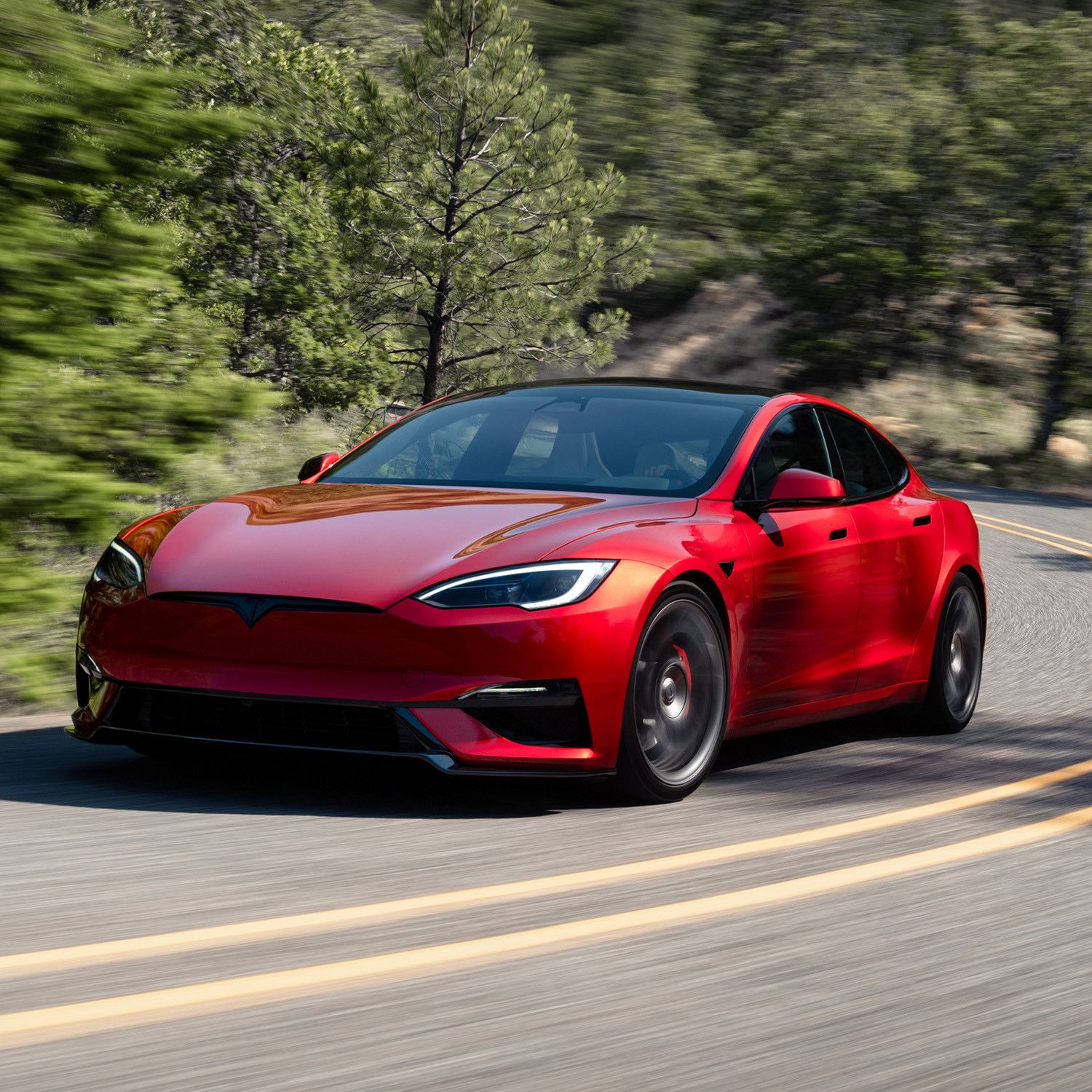
Welcome back to EV news daily today, Tesla officially kills off the Model S and the Model
X Polestar updates its 2 for another model year and Ford gives its cheapest EVs more
range and more power.
On EV news, China today, our spin-off podcast, we talk about NIO pushing their updated ADAS
system to hundreds of thousands of cars, the X-Pung X9 and VW's China Platform Zonal
architecture rolling out on tens of vehicles over the coming years from Volkswagen China.
Let's get into it then.
Last night were the financial results for Tesla for the quarter and all of 2025 and
then there's always a call with the chief executive and investors get to ask the management
some questions.
So we'll try and avoid all of that chat but there's some product stuff that we get excited
about.
So there's plenty of financials that you can go find online, I won't talk about profit
and things like that.
However, in terms of what you and I get to go and buy, it'll be a lot less going forward.
Tesla will stop building its longest-lived cars.
Elon Musk told investors last night, well, night time, my time anyway, during the firm's
queue for earnings call that production of the Model S and the Model X will now officially
end in the second quarter.
The move ends a run that helped turn Tesla from a niche startup to global dominance.
It also marks a shift in where the firm sees its future away from high-end flagships and
towards high volume models and new projects.
The firm will turn Fremont, California that makes those vehicles into a factory that makes
robots.
It's humanoid optimus.
It marks a shift from car making to what Tesla calls physical AI because everything's AI.
My toothbrush is probably physical AI, I have no idea.
With capital moving from vehicles to its robots, 2025 still bought Tesla's first-ever year-on-year
revenue drop.
In the history of the company, it was down 3%, doesn't sound like a lot, but a couple
of years ago they were promising 50% year-over-year improvements.
Not so long ago, they were promising 20 million vehicles a year by 2030.
Well, they went down from 1.8 to 1.7 to 1.6 million vehicles over three consecutive
years.
Total automotive revenues fell 11% much more.
Other bits of the business are doing okay, things like their energy storage business
small compared to where they make all of their money, which is selling cars right now.
In many ways, Tesla has become analogous to the industry it disrupted.
The problems that the established companies have got is they still need to sell engines
to drive their EV plans.
The problem Tesla has got, it still needs to sell you a Model Y to make the money to
do things like energy storage and robots, which are taking up 20 billion a year in investment.
They have 44 billion in cash and investment, so they'll be around for a couple of years.
They make no money, but still it's the same problem.
They've turned into the establishment.
Tesla is now the legacy.
It's crazy, isn't it?
And so Musk didn't frame the move of killing off the S and the X with any kind of nostalgia
at all, just a broader effort to streamline, pushing down costs and shifting capital to
products that he wants to develop like robots and robot taxis.
The Model S and Model X ones central to Tesla have already been at the edge of their portfolio
for a long time.
And I've loved having them in the lineup and it's been fun to have them around.
They are their flagship brand cars.
They have been improved.
Last year, they got a liquor pain and some ambient lighting.
There wasn't much.
And so I think we knew the writing was on the wall.
That's a shame.
Now, Tesla's Robo Taxi claims are being analysed in the hours after the call.
Tesla said its Robo Taxis are working in places from Austin to San Francisco's Bay Area.
California, though, says no, they don't and they cannot because Tesla does not have a license.
Tesla stake much of its future yesterday on its call on autonomous vehicles and investors
track each hint of progress carefully.
It's a claim that already runs Robo Taxis in major American cities.
And so regulatory acceptance and commercial readiness are being watched.
If the claim runs ahead of the law, then the claim runs ahead of reality.
California's rules on autonomy are very clear.
You need very specific approvals to operate any kind of self-driving Robo Taxi on public roads,
especially for paid services.
And Tesla holds no such permission for Robo Taxis.
In their financial report yesterday, they intermixed the words Robo Taxi,
spelled with a capital R that signifies the internal Tesla brand of a Robo Taxi.
What they think is something that drives itself and the word Robo Taxi,
spelt with a lowercase R.
Now, those are just vehicles in Tesla's ride-hailing fleets, like an Uber.
You open your app and you can call a Tesla, but humans are involved along the way.
And Tesla very subtly mixed those two things up.
Yeah, Robo Taxis in California.
Investors shrugged off the gaps, though, between promise and permission with a very positive reaction.
Tesla now says 1.1 million people worldwide use full self-driving.
That's a big number.
I'm so pleased they updated it.
It's been a long time since we got a number on FSD.
Of course, these days called FSD supervised in parentheses.
And 1.1 million is a lovely number to see, especially for fans of the brand that do use
that system and some people claim extraordinary mileages with no interventions.
Yet this first public figure blurs as much as it clarifies.
Unfortunately, today's podcast does have a bit of a theme running through it.
You see, that tally folds together.
Anyone who bought FSD from back in the day and anyone who now subscribes to it.
But it was presented in the graph as active subscribers.
The firm hasn't split the two out and won't do, apart from using the word subscribers
to describe people who paid the lump sum to buy something.
In its Q4 shareholder deck, Tesla reported 1.1 million active FSD subscriptions.
Unless it was up from 800,000 in 2024, 600,000 in 2023, and 500,000 at the end of 2022.
However, in early 2023, Tesla said that they had been roughly 400,000 FSD purchases in North America.
Now, that new figure that they've given is a global one and it mixes everything together.
After the initial release, Tesla added crucial detail.
70% of that 1.1 million are people who bought it.
Only 30% actually pay monthly.
That mix points to a large legacy base of people who were committed back in the day and willing
to pay a very high one-off price, believing that Tesla would deliver what was being promised
and the disclosure puts Tesla's talk of future robot taxi networks, I think in context.
Because if just over one in 10 cars sold to date carries full self-driving,
Tesla must either, which is kind of where they are, Tesla has to massively improve the take-up
of FSD or get more money from the existing users.
Yet the absolute figure, 1.1 million subscribers, is huge by any competitive set, by the way,
any advanced driver assistance system.
On EV News China today, we're talking about NEO's big upgrade.
They're rolling it out to their fleets like $400,000.
NEO's, everything says 2021, I think with the RNX chips or something, so they can all be updated.
Now, from February the 14th, in a couple of weeks time, Tesla will end FSD purchasing and you'll
have to do a monthly subscription. The chief executive, Mr Musk, has a performance-based
pay package now in place and he will get the money with a long-term milestone of 10 million
active FSD subscriptions. Will his future stock reward be granted on the definition of a subscriber
being people who paid up front to buy something? Doesn't sound like a subscriber to me.
Hey, we'll finish off talking about the call last night with Tesla
having a solution to the Cybertruck problem. They didn't acknowledge that nobody wants to buy a
Cybertruck anymore, that they built capacity to that truck is probably 10 times more than
they're selling. Say, if you're being generous, 25,000 Cybertrucks last year, the line can build
250,000 massive, massive waste of money, which they've never been really held to account on by
their shareholders. On its fourth quarter earnings call, Mr Musk floated a new use for its
unsold and unwanted Cybertruck units, intra-city autonomous deliveries. The idea sounds neat,
it runs into the same basic issue though, that has dogged the Cybertruck from launch,
it's a terrible vehicle because of the shape. Tesla pitched the model as its hyper-utility
workhorse. It didn't kill it off like the S and the X. No, it's sharp-angled stainless steel shell,
they say, and the tapering bed makes it perfect for commercial use. No, it makes it very ill-suited
to the task. It's a very boring task moving urban logistics around, standard-sized boxes,
and standard-sized pallets, none of which fit. Urban cargo is all about rectangles and right
angles. Vans and box trucks use vertical walls and flat roofs to maximize cubic capacity,
and keep loading simple. I'm an idiot, and I know that. Palettes, roll cages, parcel totes,
all slot in, they stack and they strap down. The Cybertruck's profile trades usable volume
for the styling whim of the chief executive. Odd corners, wasted space, sloping panels,
none of its any use. Musk's answer, sorry, Mr. Musk's answer, hints at soft demand for a model
that was once going to sell 250,000 units a year. In its first year, before it ramped up,
Tesla can clearly write new software at whim. It cannot rewrite shapes. Oh, and finally,
I must mention that Elon Musk told investors last night that not a single,
optimist robot is doing any kind of useful work at its factories. That jars with two years of
claims now that Tesla's humanoid machines will be taking on real tasks. The climb down, not that
it was admitted as a climb down, of course, matters less for the reaction, which was very positive
by the stock market. They increased their company value hugely last night in the after hours.
Musk has cast Optimus as Tesla's next act. He called it the biggest product of all time again.
Fleets of robots out earning their car business. And yet now, none of them perform any useful work
inside Tesla's own plants. The timeline is now hazier than ever. The gap between claims
and reality is nothing new in Silicon Valley. I'm not picking on just Tesla, nor in Mr.
Musk's back catalogue, may I add. It's all very common stuff in the world of tech bros to
boast about things that are coming. But robots pose a much tougher test than sending out an
over the air updates or adding a new paint color to your design studio on the website.
Factory work is probably the easiest setting of anything because you can do it in a controlled
layout. In fact, most factories these days are controlled by robots anyway. And China has talked
about there being dark factories by the end of the year. So China have these humanoid robots
doing useful work. Everybody thinks Tesla's in the lead on this. And yet China is now talking
about by the end of the year, the first car factory that has no humans in turn the lights out.
They call them dark factories. And so there's repeatable tasks. They have a captive customer
when it's when you are the owner and you are making the robot. And you have your own engineering.
Optimus has yet to even do that. And they're doing it in China, which is the inconvenient
truth for Tesla. Although last night, the chief executive did
hint at the biggest problem Tesla has. And he said that is China. Mr Musk promised 12 months ago.
It was actually a year ago that there would be 1000 optimist robots doing useful work inside
Tesla's factories by the end of 2025. Fast forward to year. And he made exactly the same
claim, not the thousand, just that there would be some doing something useful by the end of the
year. He said it's really hard to build humanoid robots, by the way. That's really good to know.
Investors already juggle Tesla's twin identities as a car making business that makes all the money
and its new tech bets. The admission on the earnings call nudges the balance back and forth
for now towards the firm's more prosaic role, designing, building and selling model threes
and whys while its most ambitious plans remain idle. Let's take a break because I didn't intend
to do so much of the podcast on Tesla's earnings call, but it's nice to check in with how they're
doing once every so often. We'll come back and we'll talk about some actual cars,
poll stars and fords and minis and they're all getting better. And why the bolt is better
than a used Toyota Corolla on the used market. Got some data on that back in a moment.
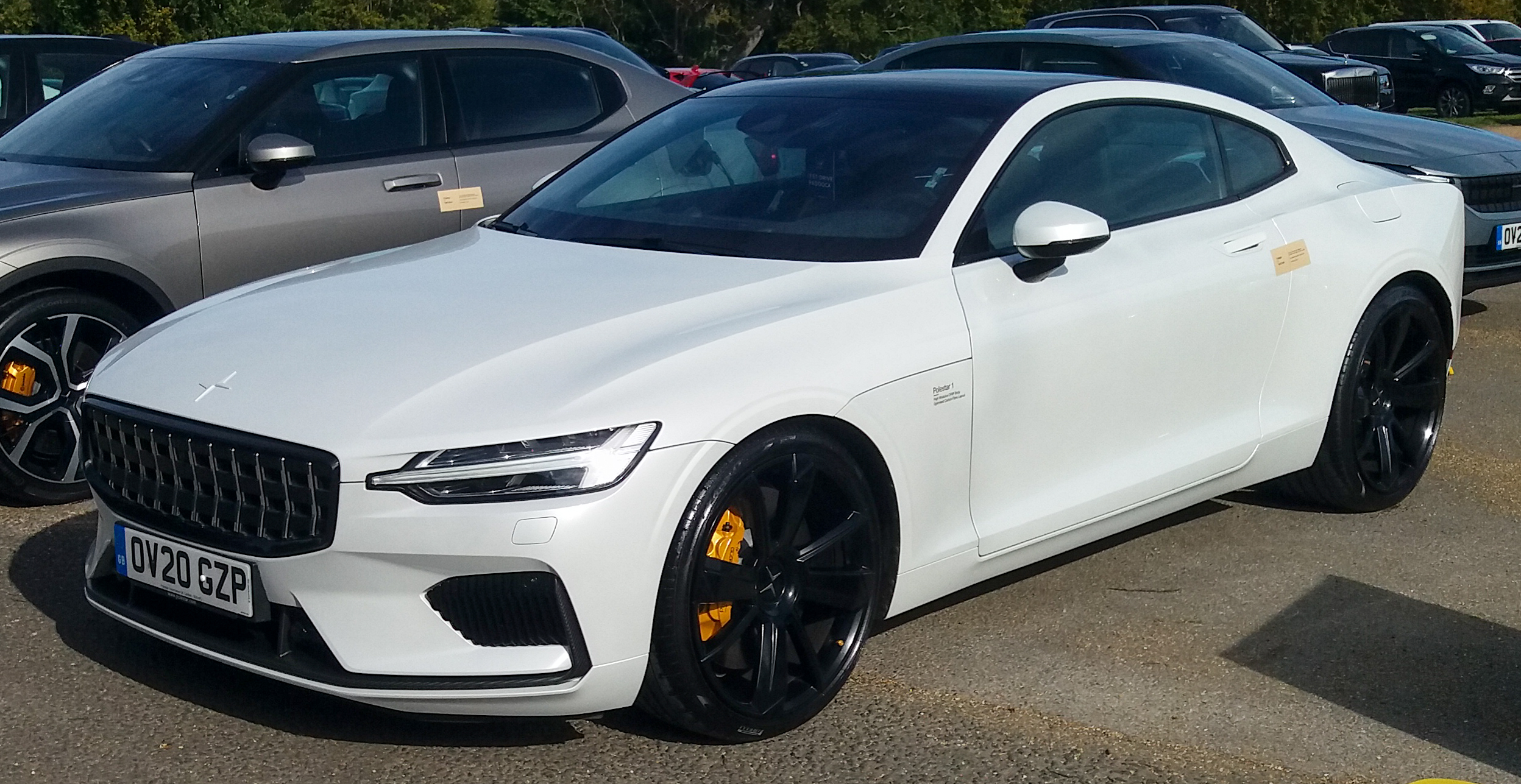
Alright, welcome back. Let's talk about the Polestar 2 getting better for 2026. They've reworked
their original electric car once again and it just keeps getting better every year. If this was an
internal combustion car, it would get one mid-cycle refresh and that'd be your lot. It's been on the
road since 2020 and the change has been brisk. The two launched as Polestar's second model,
of course, after the plug-in hybrid Polestar 1 dual motor long range. I still think pretty high
tech and mine's one of the original launch additions and so long in the tooth now. Then they
broadened out the range. First a shorter range car, then a single motor version, then the BST270.
That was a limited run performance tuned flagship. Occasionally look at the one auto
trainer. Don't tell my wife. Most petrol cars charge change less over many generations than
Polestar have updated the two. In 2023, they changed the look of the car. There's that new
slick front of it, which you can get by the way, if you didn't know, if Polestar owners, as a paid
aftermarket thing from the Polestar website. It was on the other day and it was a lot of money.
But if you want the front of your Polestar to look the same as new ones and you've got an old one
like me, you can actually pay to have it refreshed next time you're in one of their lovely black
square dealerships. And so the single motor versions went from front to rear wheel drive.
They became way, way more efficient. Mine is awfully inefficient and notable gains in day-to-day
usefulness. The lineup now looks really simple on paper. The new 2026 model year here, standard range
or long range. And the latter is dual motor four wheel drive and power steps from 268 horsepower in
the Polestar to standard range all the way to 300 horsepower in the long range single motor
and 500 horsepower with the performance pack or wheel drive options. Pilots add driving assist.
The plus is the kit and the dual motors obviously is the performance bit with more power. They'll
lower the suspension, even get the one with the O-Line dampers that you can manually adjust.
So more improvements on the spec sheet for 2026, which is a great thing. Ford has done exactly the
same thing. Maybe not quite the cadence is the same, but they're two cheapest electric vehicles.
I don't think they're very cheap. Of course, the Ford Puma Gen E is sits like kind of mid-20s.
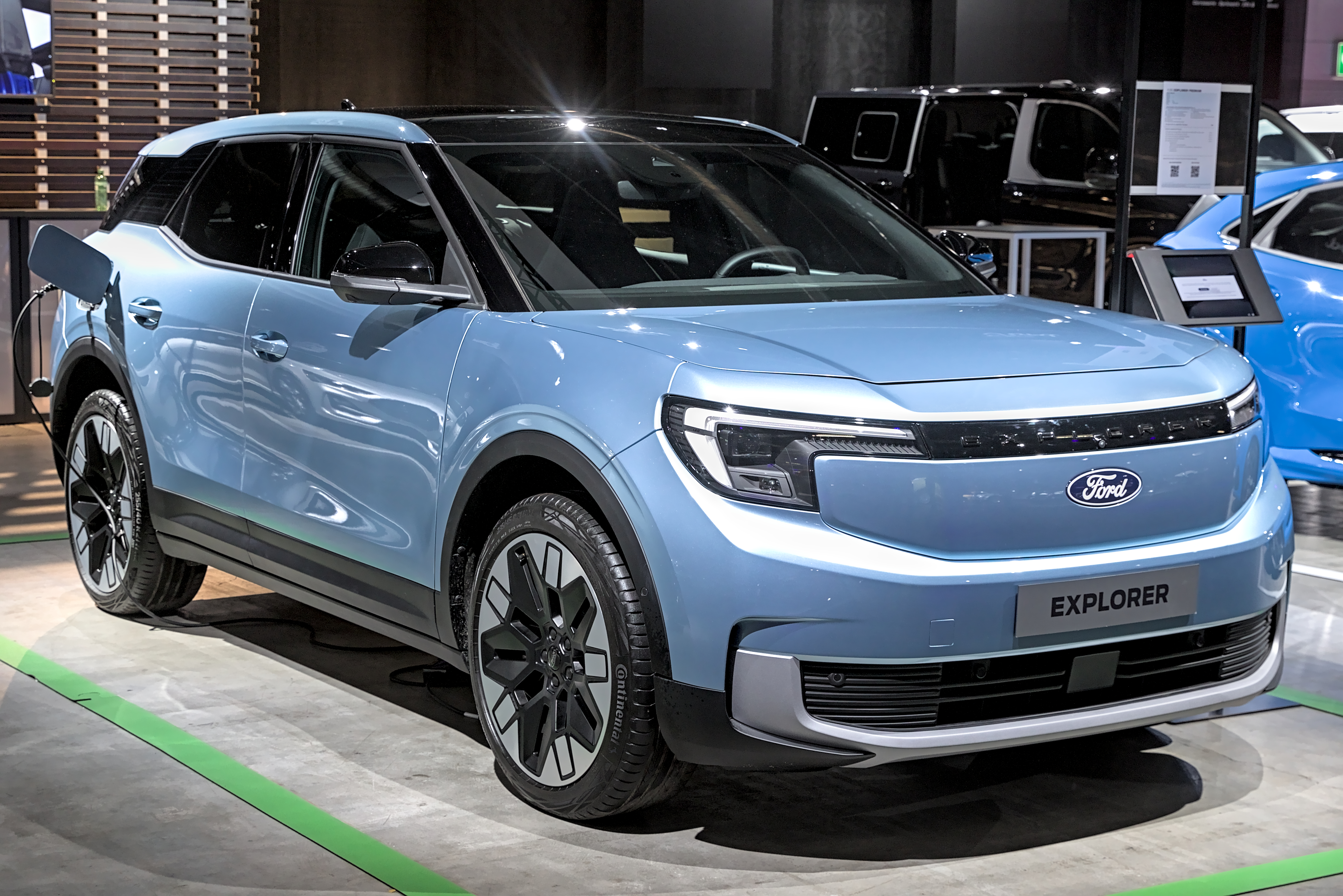
Now it gets the full UK grant, but otherwise, Ford's Capri and Explorer now go further and faster
for the same price. So what's not to love? Thank you, Ford. The entry level versions of the Capri
and the Explorer get LFP batteries and a stronger motor. Standard range pack goes from NMC to LFP,
which means the official range goes up by 45 miles. So WLTPs 243 to 288. The Explorer
goes from 233 to 276. It's slightly less of an aero shape than the Capri. The Capri's a bit of a
brick, but anyway. Ford also fitted a new drive unit. So you now get 187 brake horsepower in those
again. And the 0-60 time drops by about a second. The shift to LFP brings some benefits that matter
to things like fleet buyers and the used market as well. More thermally stable, less likely to
catch fire if they are punctured. Although if your battery gets punctured, you've probably got
bigger things to worry about than the chemistry of your battery. Just get out of it either way.
They also promise a longer service life as well. And you can charge LFP to 100%. They want to be
charged and balance the pack at the top. LFP has a cost in weight. Lower energy density means
like for like pack weighs more. But they didn't say how much that the Capri and the Explorer
have added around the waist. But we all have after Christmas, you know? A lot of cheese.
And so we're all carrying a bit of extra weight in January. Nor has it said whether it will pass on
any of those LFP savings for now. Price is staying the same. But that's good news. And Mini
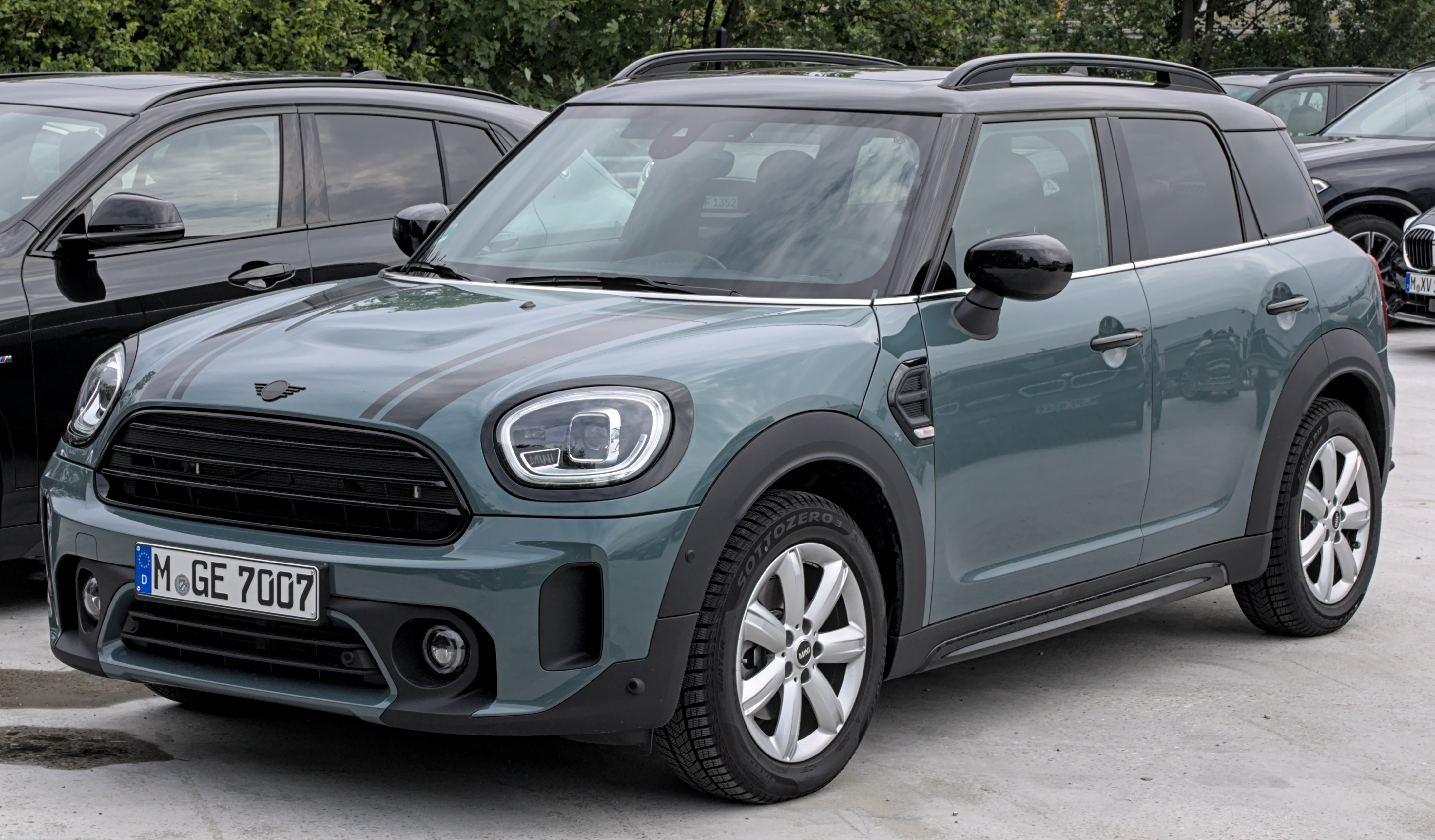
have done the same. Mini found some more miles kind of out of nowhere, actually.
They say they haven't changed the battery pack, but they have added 25 miles to the Countryman E.
Is it just new official testing numbers? The gain is modest until you look at the class. The
Škoda LROC is 355 miles. The Explorer can't really put it in the same class as the Mini.
374 miles. So the Countryman, which is actually quite a big vehicle. I always think Mini's a Mini,
but Mini's aren't Mini anymore. That's 311 miles now, which keeps it at least competitive.
New silicon carbide inverter is what they've used to cut the losses when it turns DC to AC.
So 66.5 kilowatt hour pack. But the motors and the onboard systems all run on AC.
That conversion is more efficient now. Low friction wheel bearings on the front axle.
Just little efficiency gains like that. Also made the pack more usable. They're giving you
less buffer. So you can actually use more of the energy. And the tweaks reach across the range.
The four-wheel drive Countryman E. All four now does 290 miles. That's up from 267,
which is still trailing its competitors. But you know, they're very stylish vehicles.
And the inside and the interior, really, if you like it, you must really love it. I think it's
very unique and big circular dials and bags of personality. So in that case, you don't need to
win, you know, the spec sheet wars on paper, do you? Now, the support props up one of Mini's core
products. The Countryman made up a third of its brand sales last year with 93,000 registrations
globally. And Mini hadn't updated that in, as far as I know, a while since launch. And so
that's a good thing. Hey, you should buy a used Chevy Bolt if you want the best bang for your buck.
A used Bolt EUV is cheaper than Toyota Corolla on the used market overall. According to research
from University of Michigan School of for Environment and Sustainability, they say,
going used Bev costs you the least over the lifetime of ownership. This is America that
they've done the data on and they've ruled out anything like federal tax credits and state
subsidies. The work compares 14 vehicles, which were model year 2024. They looked at combustion
and they compared it to plug-in hybrid and pure Bev and three years of ownership and two mileage
profiles, nine thousand or 15,000 miles a year. They tallied the purchase price that you would
have paid. They factor in depreciation, financing costs, fuel maintenance repairs, insurance and
taxes as well. Substract that from the resale value or rather the resale value from the overall.
So all added together, the headline results come from mainstream models.
For typical drivers, a used Chevrolet Bolt EUV now delivers the lowest three year cost
followed by a used Hyundai Arnick 5. For heavy users, the order shifts slightly, new EVs fare
better. Fuel and maintenance swing the numbers across the sample. Battery electric models cut
energy costs by up to 70% than the energy that you have to pay to put inside your petrol cars
and maintenance by 40%. What is that 40% like that should be like 100%. You know, obviously
the EVs do go wrong. All machines go wrong. Never cost me any money. Ever? I mean servicing.
I've always kept my servicing up at main dealers. But I've had to just for the warranty. And when
I sell them on, I want to make sure they've got, you know, every stamp in the book, which is a pain
in the backside. But still, because you paid money for someone to go, yeah, yeah, car looks good,
mate. Thanks for that. Now I'm not saying I want oil changes, just something for my money.
Let's move on. Jku has found another thousand buyers for their EV, the J5, the Chinese brand
extending their launch financing offers. And so drive away price staying the same free premium
paint for the next thousand customers and the order books opened in December. So this is in
Australia, this story. So the J5 in Australia, $37,000. So that's a stellar deal. And they will
quickly fill those order books every single time at that pricing. And the price matters more than a
coat of paint because 37,000 Aussie drive away, the J5 is the one of the cheapest EVs in Australia.
So versus what BYD Ato 2 and Ato 3 versus obviously the MGs like the MGS5, the Geely EX5,
they get the GAC Ion V, don't they? Little compact Chinese high riders that the Jku sits
against. That's really, really competitive pricing. They also sell the midsize J7 and the J8,
that's a big SUV, the J8 in Australia. It's hard to keep up with so many Chinese cars around the
world and you know, obviously right hand drive. So I pay a bit more attention to Australia because
you know, they get cars before we do. Now the UK wealth fund is pumping more money into EV charges
and batteries. Britain's national wealth fund will channel more public money into EV charging and
domestic battery production, betting that manufacturing in the United Kingdom and hardware
to charge EVs will scale our industry. Ministers have ordered the fund to step up backing for
both sectors. Private capital has been cooling a little bit recently without faster build out of
high speed charges and the bigger investment of cell production itself, Great Britain could
fall a little bit behind, the national wealth fund will target public charging and ultra rapid
charging on key trunk roads and urban hubs where utilization rates look uncertain for public,
for private money rather, to do all of the work itself on battery production, looking at large
scale domestic sell and pack production tied to UK assembly lines, the aim to anchor supply chains for
EV vans, company cars, last mile delivery, things like that. Yet the fund can't do everything,
local planning, grid reinforcement, clear long term consistency of policy and CO2 standards
matter as much as just writing a check. Now how many countries tell the United Nations,
the UN, that they have a plan to go EV? What's the number? It's a big one by the way,
a total of 104 countries now tell the UN they plan to expand into electric mobility.
EVs are in the national discourse and climate contribution conversations in over 100 countries.
The numbers matter more than simply making a promise to the UN. Of those 104 countries,
66 countries around the world have hard concrete expansion targets never before have so many places
moved from vague support for environmental support and clean transport. All sounds nice,
doesn't it? There's now 66 countries with explicit numbers on timelines and goals to go EV.
And that breadth gives EV mobility huge momentum and political backing. Climate diplomacy once
centered on power plants and smokestacks now, we're talking national plans for EVs. When
countries codify their EV ambitions with the UN, that gives investors, car makers,
grid operators, the direction of travel for the next 10, 15 years. The split between intent and
detail stands out though. 38 countries talk about more EV mobility without a hard line in the sand.
They add to a sense of global momentum but not as much as the 66 countries that have a hard
target. Yet even this mix of firm and loose pledges moves the baseline as more national
climate contributions come up for revision. EVs are increasingly getting that specific
role in national policy. Governments that have already set numbers face pressure to raise them
and those that have not find it hard to sit on the sidelines. The UN process will not install
things like charges. It's not the job of the UN to do that and put charges in the ground but
it can be there to act as a scoreboard for electric mobility as it goes from a niche concern 20
years ago to a test of climate seriousness. You listen to this podcast that we do together
every single day and we know that the move to EV is not only happening at such a crazy pace
but it happens around the world at different speeds. One of the countries
moving will have some catching up to do when political climate change is the United States
but because so much media comes from the US. So many headlines written by US journalists or
there's so many vested interests in the US, the oil industry that wants to knock EVs back so you
get a lot of media stories about EVs in cold weather or there's an accident and the needy's
on fire. That gets spread far and wide. Very dark forces spreading that but equally just like the
friendly media as well are printing things that are affecting the US market and that's really
important and it will never be irrelevant to this podcast because the United States is incredibly
important. So much innovation. Companies are based there and you know some of the world's
cleverest EV people are working on US soil but in terms of the actual share of people buying EVs
it is a little bit behind some other countries at the moment. There is going to be some catching up
one day. There's no doubt about that but if you believe the headlines that come from there you
might think the world is moving EV at a slower rate than what it actually is. Everyone will run
their own race but it has an outsized impact on the narrative if you like and so I'd bring you
that bit of news at the end to remind you that it's happening whether people like it or not
and we are right at the forefront of it talking about it every single day. Thank you for your
company as always. Thank you to our premium partners who put the show on the air, National
Car Charging on the US mainland and the Low Heart Charge in Hawaii and Test EV, Avalu's trusted
partner for independent EV battery health testing in Australia and New Zealand. Have a good and
sit-amara and remember this no such thing as a self-charging hybrid.
About this episode
Tesla's decision to end production of the Model S and Model X marks a significant shift towards high-volume models and robotics, as discussed during their recent earnings call. The episode also covers updates from Polestar and Ford, highlighting improvements in their EV offerings, including increased range and performance. Additionally, insights into Tesla's full self-driving subscriptions and the competitive landscape of used EVs are shared, along with a look at global trends in electric mobility and the growing number of countries committing to EV expansion.