DAILY: VW Hits 2 Million EVs, Skoda Adds Powerful Plug-In and Canada Opens Books For China | 01 Mar 2026
EV News Daily - Technology and Business of EVs
DAILY: VW Hits 2 Million EVs, Skoda Adds Powerful Plug-In and Canada Opens Books For China | 01 Mar 2026EV News Daily - Technology and Business of EVs · Mar 2, 2026
A battery electric vehicle is a car that runs only on electricity stored in big batteries. It doesn't use gas and doesn't make pollution when you drive it.
The Volkswagen ID.3 is a small electric car that looks like a regular hatchback but runs only on electricity. It's one of the first electric cars Volkswagen made to help people switch from gas cars.
The ID family is a group of electric cars made by Volkswagen. These cars run on batteries and are part of Volkswagen's plan to make more electric cars.
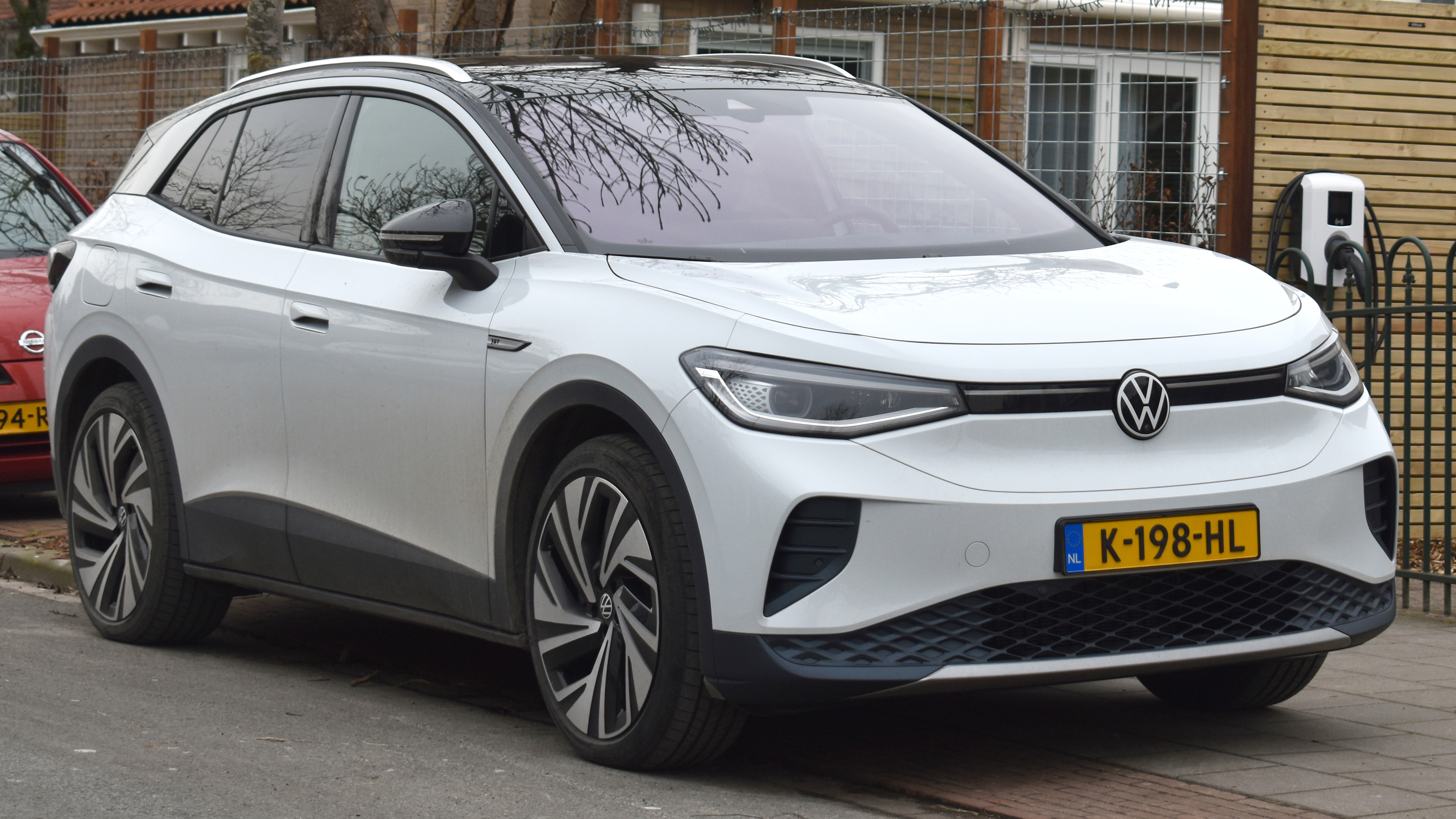
The Volkswagen ID.4 is an electric car shaped like a small SUV that many people buy because it can drive far without gas and has plenty of room inside. It's helping Volkswagen sell more electric cars to regular buyers.
The Volkswagen ID.7 is a new electric car that looks like a fancy sedan. It's made to be comfortable and stylish while running only on electricity, helping more people switch to electric cars.
The Skoda Epiq is an electric car made by Skoda, a company that wants to make easy-to-use electric cars for everyday people. It's part of a group of electric cars that share similar technology.
The Skoda Superb is a big car made by Skoda that has a back door you can lift up to put stuff in. This version uses both a gasoline engine and an electric motor to help it go.
The 1.5-liter engine means the engine is a certain size that helps the car run. It's a middle-sized engine that gives enough power without using too much fuel.
The electric motor is a part that helps the car move using electricity. It works together with the gas engine to make the car go faster or use less gas.
A facelift is when a car gets a new look partway through its life, like new lights or bumpers, to make it look more modern without changing everything.
The Range Rover Velar is a fancy SUV made by Land Rover. It's bigger than some models but smaller than others, and it looks stylish and has cool features.
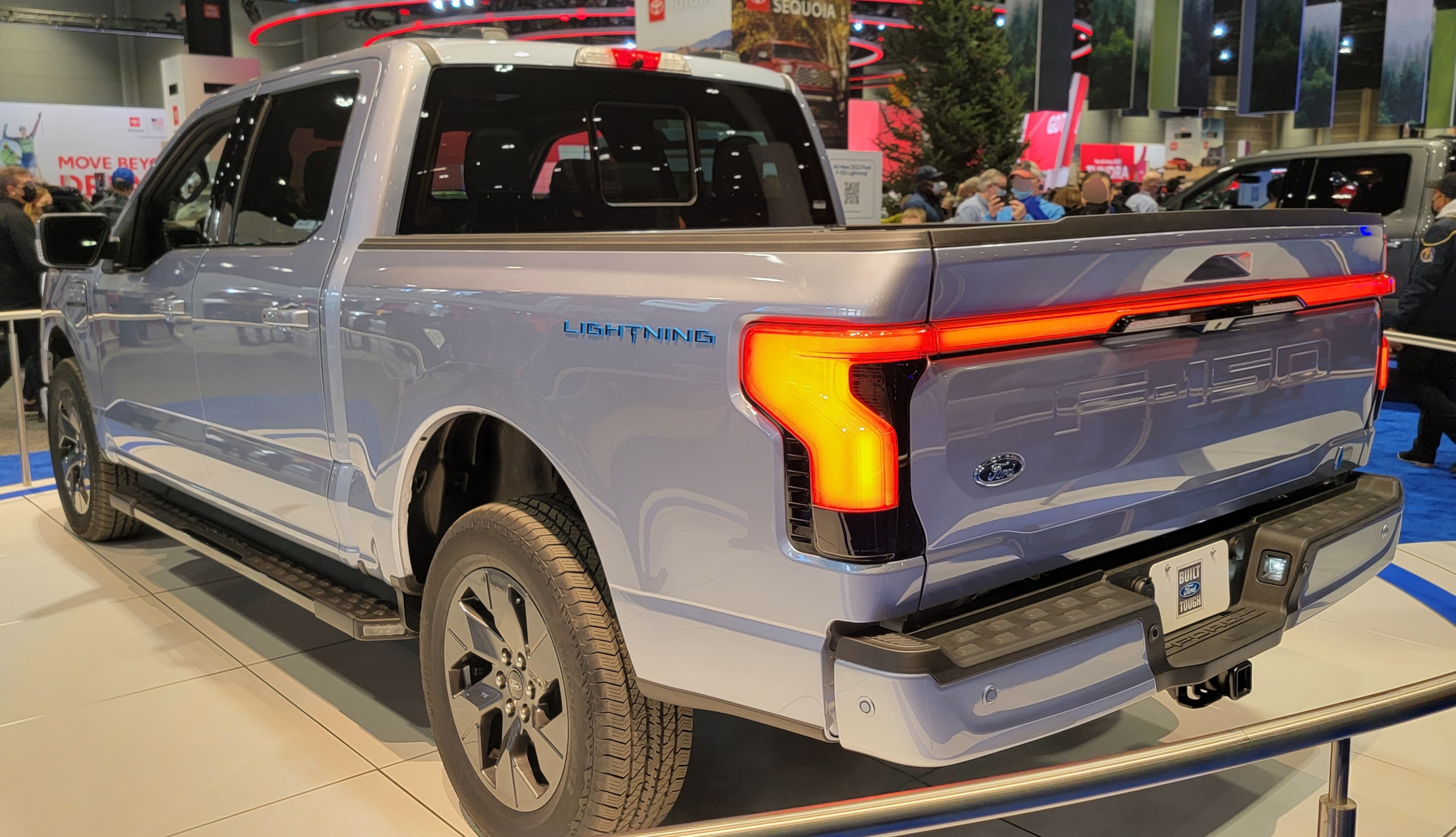
The Ford F-150 is a big truck that many people use for work or fun. There's a special version called the Raptor that is made to drive fast and handle rough roads easily.
The Tesla Model Y is a small electric car that looks like a sporty SUV. It's popular because it can go far on a single charge and has lots of cool features that Tesla keeps updating to make it better.
Lithium-ion batteries are the type of batteries that power electric cars. They can be charged and used many times but slowly lose their ability to hold power as they get older.
A charge and discharge cycle is when you charge your car's battery and then use that power to drive until the battery runs low. Doing this many times slowly wears out the battery.
Supercharging is a way to quickly charge a Tesla car's battery so you can drive more without waiting long. But using it too much can make the battery wear out faster.
The Ford Explorer is a big car that can carry families and lots of stuff. It's good for driving around town or going on trips, and Ford is working on making more electric versions of cars like this.
The Ford Excursion is a very big SUV made by Ford many years ago. It can carry lots of people and stuff but isn't connected to boats or ocean trips.
LIVE
Welcome back to EV News Daily. Today, VW hits two million,
Scodder adds a powerful plug-in hybrid,
and Canada opens the books for China.
Plus, stay tuned later in the show while I tell you why zero-emission ferry transport
just got a big boost.
No EV News China today, the spinoff podcast,
where we try and learn about what's happening in the East
and how it affects the global landscape.
That's back tomorrow morning.
Volkswagen just delivered its two millionth battery electric vehicle.
I'm glad someone was keeping count.
They say it was an ID3 handed to a customer at the factory in Dresden.
The milestone caps a run that started back in 2013.
The vehicle then was an E-Up, then grew to the E-Golf and today's ID family.
Volkswagen now holds one of the leading market positions in countries like Germany
and across all of Europe.
And it ranks among the world's highest-volume EV makers.
The ID4 leads the way for VW.
They've sold about 901,000 units across Europe, China and the US.
The ID3 follows at 628,000, and the ID3 mattered for timing
because it was the first MEB vehicle.
That's a platform that many of the Volkswagen group cars run on,
even some Fords, and in 2020 it pushed compact class mobility to the mass market.
At the top end, though, the ID7 and the ID7 Tourer, that's the looker,
has added about 132,000 units in the last two or three years in the upper-mid-range segment.
And some countries often see the ID7 as the number one car sold there.
Volkswagen now points to the next steps in the small car battle.
It plans a product upgrade for the ID3, then we'll get the ID Polo
and that family of vehicles like the Skoda Epic and the Coupre Reval,
more on Coupre in a moment, by the way, more on Skoda in a minute.
The ID Polo will be the first of four affordable small cars
in the compact segment to widen market accessibility.
Moving on.
And Skoda has unveiled a 200 kilowatt plug-in hybrid for the superb range.
This is the superb hatchback version, the most powerful combustion
battery electric version of a Skoda they've made.
So it's still the 1.5-liter engine.
They've now added it to 100, sorry, an 85 kilowatt electric motor.
And the battery size is almost 26 kilowatt hours.
Battery capacity, charging power and the charging times
stay the same as the lower powered version.
Skoda keeps the lower powered version plug-in hybrid on sale.
But the move lands as plug-in hybrids are taking a larger share of superb sales
for Skoda, one in four of them now leave the factory door
with a plug-in hybrid powertrain.
Since 2019, they've delivered more than 68,000 of the superb IV models.
In other words, they have a plug socket on the side.
Now, Canada is opening the books to Chinese made cars.
Now you have now begun accepting import permit applications as of today.
So these cars can be built in China, but not necessarily be Chinese EVs,
if that makes sense.
The move lets the first legal shipments enter Canada at the most
favored nation rate, which is 6.1 percent.
Now, that's 49,000 vehicles this year, this 12 months.
OK, so that marks a sharp cut from 106.1 percent
until now, when Canada followed the United States in 2024
by adding those tariffs in.
Importers only get the lower rate inside the permit quota.
No Chinese made EVs beyond the quota ceiling
get to clear Canadian customs in any given year.
Global First Canada will hand out the permits on a first come first serve basis.
The first try and shall be 24 and a half thousand for the first six month window.
And there's no cap per automaker, by the way, in the first six months.
Then the second quota, again, 24 and a half thousand vehicles
starts on September 1st for the next six months.
Plus, that includes any permits left over.
It's like mobile minutes rolling over, if you like.
Global Affairs Canada will consult the industry on whether to scrap
or retain the first come first served model.
So who has the permits in place, who has the paperwork in place
to bring vehicles into Canada that are made in China?
Well, at the moment, none of the Chinese brands,
which you might be excited about and which we have a spin off podcast
called EV News China, where I'm learning every day.
I'm far from an expert, by the way.
But we try and look at the news, analysis and insights
from what's happening in the East and decode it for the global landscape.
And hopefully, you know, if you listen to that spin off podcast,
even occasionally with me, we're on that journey together.
And I'm enjoying learning about it.
But so far, none of the brands that you might be excited about,
if my Canadian listeners hear about these fast charging EVs,
very high tech EVs, the X-Pungs, the Xiaomi's and the Neos of the world,
they can't come in at the minute.
The ones that do have all of the paperwork in place,
the likes of the Polestar's and Volvo's.
Obviously, Tesla make giga Shanghai vehicles.
They could not bring the Teslas in from Berlin, as they are at the moment,
into Canada, but bring some Shanghai vehicles in.
I dare say a higher profit margin on those vehicles.
And so maybe those those companies could be early winners.
Also, a plans to scale to 70,000 vehicles coming in from China by 2030.
OK, Cooper is next in the news, give them a little mention earlier.
Cooper will unveil the born facelift.
The Cooper born is the ID three, effectively.
So the end of this week, fifth of March, we get more details on that.
The update gives the Cooper a family look, a probably sharper look
from the Cooper from the Terramar and Taverscan, a new triangular rear lighting
and echoing the front end theme, hard edges, perhaps less curvy styling,
which it already was actually compared to the ID three and the ID four.
The VW brand vehicles are quite friendly, smiley.
If you like the Cooper styling is all a little bit more in your face, I could say that.
Cooper has yet to confirm technical changes.
It's promised interior quality improvements, more upmarket materials,
you know, infotainment touchscreen coming from Volkswagen, revised climate layout,
control, more buttons.
We would think that matters because VW Group realized the error of their ways
and retreating from just the one big screen and the capacitive buttons
on the on the steering wheel, which if you do brush them with your hand
as you're turning the wheel, all of a sudden, your dashboard starts scrolling
through something or something starts playing.
I'll bring back buttons.
The Bourne has sold nearly 30,000 units here in the UK alone in the last four years.
So Cooper has reason to keep it nice and fresh.
Whenever I see one, I do think they look very nice.
The Cooper Reval, though, is where I'm really excited.
It's the small electric hatchback along with the VW ID Polo, ID Cross.
What else is going to be the Skoda Epic?
These twenty three thousand ish vehicles.
Give me some monthly offer details on those.
But automaker financing, deposit contribution, that's, you know,
I'm talking that kind of language wouldn't be for me, by the way,
because we tend to buy used vehicles, older vehicles.
But the majority of people buy vehicles on finance, other new, certainly fleets.
Oh, by the way, I have a special podcast in your feed for patrons
and it's coming into the free feed in the next couple of days.
Oh, maybe it's Judy Wensdee all about the power of fleets
and why they're important in the rest of us buying used EVs down the line.
Check it out when that comes out on the free feed.
All right, moving on.
A Range Rover Velar prototype has surfaced in European winter testing
and the test mule looks like a clean break in shape from what many people might
think a Range Rover looks like cab forward, truncated bonnet and thick
camouflage over the rear quarters.
But we can tell that perhaps some of the boxy Range Rover styling
has made way for aerodynamic efficiency.
The roof line plunges at the rear, no more boxy shape, more fastback.
The splits roof spoilers, it's over the glass and beneath the rear window.
A secondary lip kind of mirrors the Porsche Cayenne and the tailgate.
Clamshell tailgate, obviously a nod towards Land Rover wanting cargo access.
The Velar Range Rover matters because it will be on Jaguar Land Rover's
eight hundred volt platform.
They say over 300 miles of range.
Looking forward to that.
Rivian has launched the Rivian Adventure Department RAD.
They've called it rad and I'm here for it.
The performance sub brand aimed at harder, faster off road driving.
Think Ford Raptor.
The rad says it will stretch the boundaries of electric off road
capability by developing existing future models.
This is the engineering team that did all the quad motor stuff for the R1 vehicles.
It's just kind of been formalized by Rivian, right?
Tesla is updating its guidance for Model Y owners.
They've actually just updated the Model Y owners manual, which does sound
like, I don't know, perhaps a bit of a dry topic, but it's actually interesting
because they've updated the battery advice.
The message stays simple.
Use the superchargers only when you have to.
Tesla is telling its owners to charge mainly at home on level one or two,
avoiding a daily charge limit of more than 80 percent.
That's not new for Tesla with NMC or any of the kind of non LFP battery
chemistries. I keep my Polestar at 50 percent.
Not because they've told me to just because I keep the cars at 50 percent.
It also pushes frequent top ups over running the pack low.
So don't run your and I did run the car down to two or three percent
at the weekend as a necessity and plugged it straight in.
I didn't want to leave it because I haven't got big miles to do over the next few days.
I don't want to leave the car sitting at two percent because that can
that deep discharge speed up long term degradation.
Now, time spent near the extremes matters to Tesla avoids any prolonged
periods of your battery being at zero or 100 percent in the Model Y
and defining battery health as the percentage of original energy
capacity that remains 85 percent health would be 85 percent of original driving range.
Tesla saying in the new manual update that lithium ion batteries degrade over time
through repeated charge and discharge cycles with charging habits and time spent
near the extremes affecting the rate of decline and saying only use the super
charges when you really have to on a road trip.
In fact, Tesla taking the approach now that if you can store your vehicles
at 50 percent for a long period of time, if you're leaving the vehicle for whatever
reason, leave it plugged in, set the charge limit to 50 percent and let it
trickle charge when it needs to and warns a little bit about what it calls parasitic drain.
Century mode, dog mode, USB connected devices can drain the battery.
Isn't that interesting? OK, we'll take a break.
We'll come back. We'll talk Volvo and cells and electric trimerans back in a moment.
OK, welcome back to the podcast.
Volvo Group wants to speed up its move to battery electric heavy trucking
and with electrification at the heart of its decarbonisation plan for the long haul,
it starts from a position of strength because Volvo holds almost 20 percent
share of the heavy truck market in Europe and has done for the last two years.
Their latest hardware is the Volvo FH Aero.
That is 780 kilowatt hours of batteries and a new axle integrating motors
and transmission at the rear, which frees up chassis space for more cells,
373 miles of range.
The FH Aero electric supports megawatt charging 20 to 80 in 45 minutes.
And that lines up nicely with mandated driver rest periods under European rules.
Volvo says megawatt charging less fleets run longer electric routes
without cutting utilisation rates.
Lytton has closed its acquisition of Northvolt.
Northvolt is one of the most well funded European battery hopes.
It didn't work out for a variety of reasons.
Northvolt at Northvolt expansion and Northvolt labs in Sweden.
Now, under the ownership of Lytton, the deal covers assets with a book value of
five billion dollars.
The portfolio brings 16 gigawatt hours of battery manufacturing capacity,
395 acres of land and the largest battery
R&D centre in Europe under Lytton's control, the CEO and co-founder
Dan Cook says the company operates one of the largest campuses in Europe.
Now, Northvolt did make cells.
It's not like it was a well funded business
that couldn't get it off the ground.
They had many issues, particularly around yield and quality.
Europeans found out that what the Chinese were doing with cell making
wasn't maybe as easy as some had thought.
I'm sure they didn't underestimate the size of the challenge,
but it didn't work out in the end, even though plenty of cells were made,
by the way, that were good enough to go in vehicles on batteries.
Lytton's going to restart the Northvolt at facility
to make NMC cells, lithium ion NMC cells for automotive, mobility
and energy storage, targeting commercial sales in the second half of this year.
Northvolt labs will continue lithium ion cell development
and industrializing their lithium sulfur battery technology.
They're going to hire 600 more people across its Swedish operations
over the next 12 months.
And finally, the Oslo based tourism and tech firm Brim Explorer
has signed contracts to build two fully electric trimerans.
These deliveries are going to happen in 2027.
And Brim Explorer says the pair will become the most efficient,
battery powered maritime vessels out there.
Brim builds itself as a provider of silent ocean excursions.
The new boats will run emission free for sightseeing trips totally silently
and experienced cruises along Norwegian coastlines
and environmentally sensitive areas.
Brim Tech, the firm's in-house technology division,
has designed these new trimerans, which will carry 180 people,
be 24 metres long with an 11 metre beam, battery only range of about 115 miles.
That's 100 nautical miles at up to 20 knots.
The Brim Explorer business operates five vessels already,
three are hybrid electric and two battery only.
The two new trimerans join the fleet early next year,
increasing the firm's exposure to battery only electric operations on the water.
And that's your podcast for today.
Thanks to our premium partners, National Car Charging on the US mainland
and the Low Heart Charge in Hawaii and Test TV,
Avalos Trusted Partner for Independent EV Battery Health Testing
in Australia and New Zealand.
Have a good one.
See you tomorrow and remember there's no such thing as a self-charging hybrid.
About this episode
Volkswagen celebrates delivering its two millionth electric vehicle, highlighting the success of its ID family, especially the ID4 and ID3 models. Skoda introduces a powerful 200 kW plug-in hybrid for its Superb range, reflecting growing demand for electrified options. Canada opens import permits for Chinese-made EVs, easing tariffs but with limited brand participation so far. Mini previews a refreshed Cooper Born with updated styling and interior upgrades. A new Range Rover Velar prototype hints at a sleek, aerodynamic design with advanced electric architecture. Rivian launches a performance off-road sub-brand, while Tesla updates Model Y battery care advice. Volvo accelerates electric heavy truck development with new battery tech and megawatt charging.