DAILY: VW ID.3 Neo Gets Big Upgrades, IONNA Joins With Circle K and BMW EV Deliveries Fall Ahead of Neue Klasse | 15 Apr 2026
EV News Daily - Technology and Business of EVs
DAILY: VW ID.3 Neo Gets Big Upgrades, IONNA Joins With Circle K and BMW EV Deliveries Fall Ahead of Neue Klasse | 15 Apr 2026EV News Daily - Technology and Business of EVs · Apr 15, 2026
Capital One is a financial company. Here, they’re talking about using AI to make buying a car easier—like helping you pick a car and set up a test drive, and even helping with financing and trade-in estimates.
Chat Concierge is an AI chat tool for car shopping. It’s meant to help you find a car, set up a test drive, and get help with financing and trade-in estimates.
Pre-approved financing means a lender checks you ahead of time and gives you an estimate of what loan you might get. It can make buying the car faster when you’re ready.
OEMs are the car companies themselves. The host is saying Chinese automakers are ahead when it comes to software—like the car’s computer features and updates.
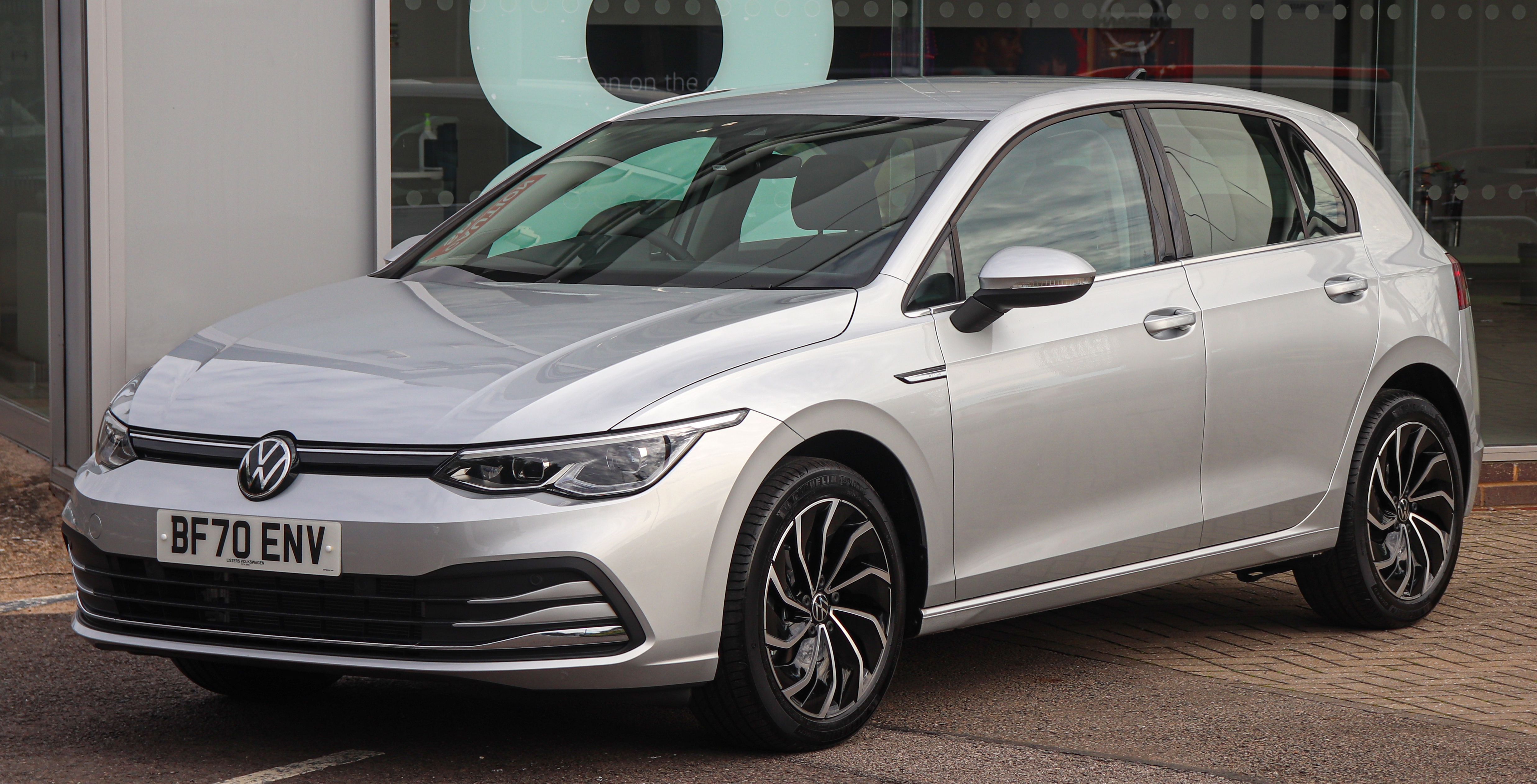
The Volkswagen Golf is a regular (non-electric) compact car model that’s been around for many years. The podcast is saying a newer version is being updated, but it’s not the same size as an electric ID model. It’s basically a clarification about which car is being talked about.
They’re saying the updated EV uses a different battery. That matters because the battery can change things like how far you can drive and how quickly you can charge.
“NEO” started as an internal project name during development. When companies reuse that name publicly, it usually means the update is significant, not just cosmetic.
The updated EV is bringing back real buttons instead of relying mostly on touchscreens. That usually makes it easier to control things quickly while you’re driving.
The host brings up Tesla because Tesla helped popularize cars with fewer buttons and more reliance on screens. Volkswagen is now going in the opposite direction for usability.
Thomas Schaeffer is mentioned as Volkswagen’s CEO who took over in 2022. The host attributes the company’s EV direction—toward more intuitive, everyday usability—to his leadership decisions.
Volkswagen’s ID.3 Neo is an updated version of the ID.3 electric car. The big idea here is making it easier and more “normal” to use day to day, not just changing the looks.
WLTP range is a standardized way of estimating how far an EV can go on a full charge, used in Europe. Your real range may be different, but it helps you compare cars fairly.
DC fast charging is the quick-charging method you use at compatible stations. It can refill the battery much faster than regular home charging, but the speed can vary.
A facelift is when a car gets refreshed during its model life—often looks and some features change. Here, the point is that this update is more substantial than just cosmetic changes.
Towing is how much weight the car can pull behind it, like a small trailer. If the number goes up, it usually means the car can handle more real-world tasks.
An electric car grant is government financial support that reduces the purchase price of eligible EVs. Eligibility rules can change, so manufacturers and markets may reapply to keep EVs qualifying for the incentive.
Charging hardware is the actual fast-charger equipment. The episode is saying that where the charger is installed matters just as much as the charger itself.
180 kilowatts is how strong the fast charger is. In general, stronger chargers can add energy faster, but the car still has to be able to accept that power.
Split power means if two cars use the same charger at the same time, they may share the charger’s power. That can make each car charge a bit slower than if it were alone.
Rivian is an electric-vehicle company. Here, the batteries from Rivian EVs are being reused for power storage in buildings or the electric grid, not just for cars.
Lithium-ion batteries are the common rechargeable batteries used in EVs. They’re also being used in big power-storage systems for businesses and the electric grid.
EV charging is where you plug in your electric car to add power. More charging stations and more charging ports mean it’s easier to find a place to charge.
Lucid Motors is a company that makes electric cars. When they change the CEO, it can influence how quickly they improve the cars and get more vehicles to customers.
Renault’s Scenic E-Tech is the electric version of the Scenic family car. The hosts are saying it could be a good family option once it’s cheaper and more available.
A “halo project” is a high-visibility product meant to showcase a brand’s technology and craftsmanship, even if it isn’t built in large numbers. The segment ties this to revenue impact through personalization, margins, and limited volume.
107 kWh is how much energy the EV battery can store. More stored energy usually means you can drive farther, though it depends on how efficiently the car uses it.
LIVE
Capital One's tech team isn't just talking about multi-agentic AI.
They are already deployed one.
It's called Chat Concierge and it's simplifying car shopping.
Using self-reflection and layered reasoning with live API checks, it doesn't just help
buyers find a car they love.
It helps schedule a test drive, get pre-approved for financing, and estimate trading value.
Advanced, intuitive, and deployed.
That's how they stack.
That's technology at Capital One.
Capital One's tech team isn't just talking about multi-agentic AI.
They are already deployed one.
It's called Chat Concierge and it's simplifying car shopping.
Using self-reflection and layered reasoning with live API checks, it doesn't just help
buyers find a car they love.
It helps schedule a test drive, get pre-approved for financing, and estimate trading value.
Advanced, intuitive, and deployed.
That's how they stack.
That's technology at Capital One.
Welcome back to EV news daily.
Coming up today, VW's ID3 NEO gets big upgrades.
Iona joins with Circle K and BMW's EV deliveries fall ahead of Neuerklasse.
Plus they tuned.
Later in the show, I'll tell you why Rolls-Royce think they can find 100 buyers for a £7m EV.
Over on our spin-off podcast EV news China today, we're talking about Chinese OEMs
leading in software.
Shanghai EV exports and GAC launching a European EV.
One of those stories that could go in either podcast here or there.
But it went in EV news China today.
The new ION UT designed in Europe for European buyers.
And welcome to a new member of the Patreon gang.
In the last 24 hours, Joe signed up.
That'll be Joe Edgel or Edgel.
Joe, thank you so much for being a producer of the podcast.
Thanks to the ads that we put in the free feed and the essential support of all the
legends on Patreon.
It allows me to do this full time now as a living and create content for you.
Thank you to everybody and you Joe for helping me do this via the Patreon platform,
patreon.com slash EV news daily.
Let's get into it.
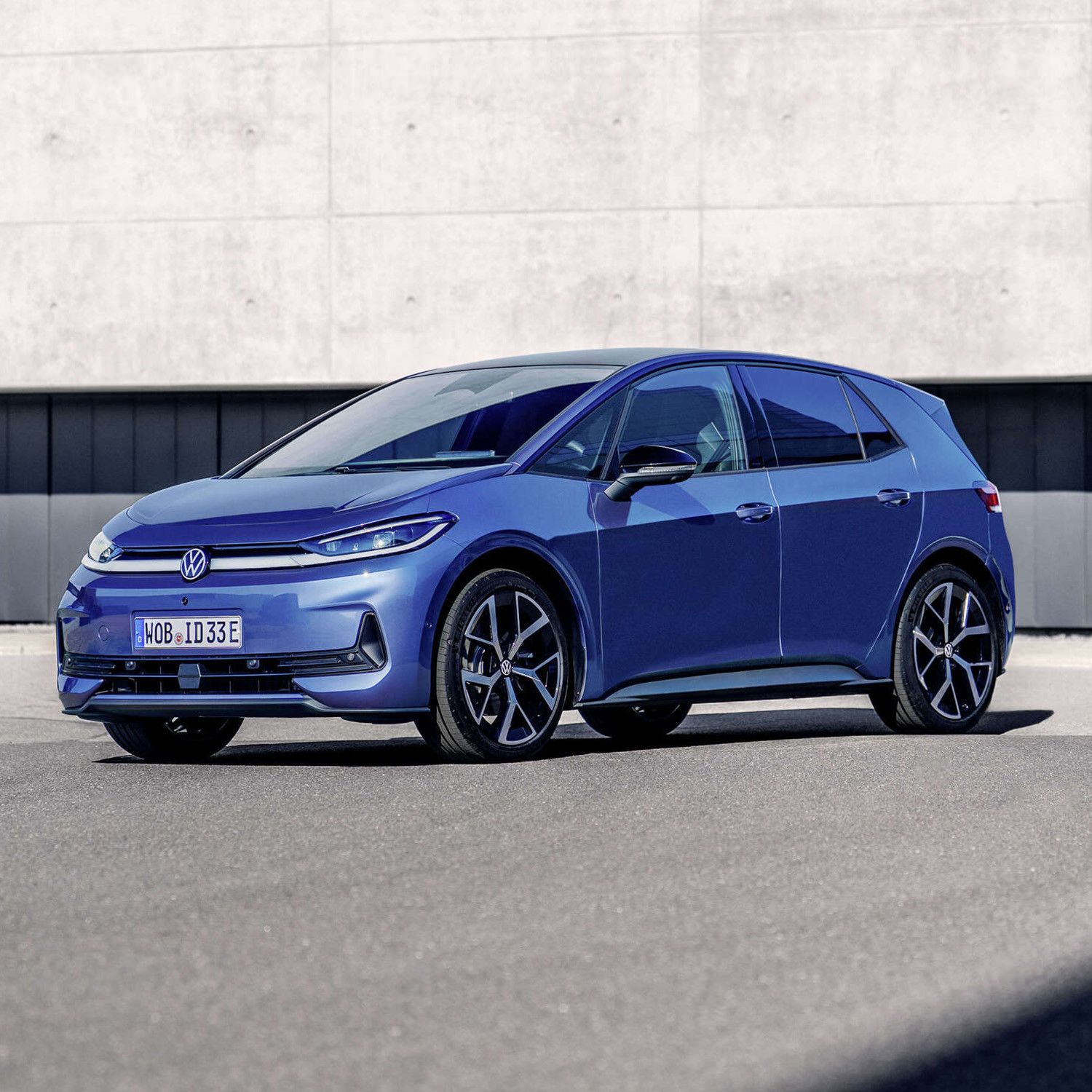
Volkswagen earlier today unveiled the new NEO ID3 NEO.
That's it's got a double barreled name for a start.
The revised car is not an ID golf.
They point out the dimensions are different.
And besides, they're saving ID golf for a whole new vehicle.
It has new styling, has different batteries, has a new interior.
A lot has been fixed.
Volkswagen says NEO, the suffix was the name used during the development codename.
And signals the fact that it's more than just a tweak because the ID threes had a tweak already.
A new front end and some various fiddling around, some fettling.
This is a proper upgrade.
The firm is also moving away from number based names.
So ID4 becomes ID Tiguan.
This is still ID3 NEO, not ID NEO, but still we're getting the ID Polo ID Cross.
They're all coming.
Biggest changes to this car and it is a really big change is a whole new interior to ID3.
Physical buttons are back and boy are they back.
The steering wheel is a properly busy steering wheel.
Just buttons for everything.
There's also a row of buttons inside that are like up and down toggle buttons
below the main screen for everything from your hazard lights to your heating controls
to your de-mister that you want to instantly flick on and a volume knob.
And so the original car's touch heavy interface is all gone.
We'll see this interior on the Polo and the Cross as well.
And so they have explicitly linked all of those cars to the new button led philosophy,
which seems crazy because that's what the car makers doing before EVs
kind of came along before Tesla minimized everything.
Well, the direction comes from the top.
Thomas Schaeffer took over as CEO in 2022 and said,
Volkswagen's first wave of dedicated EVs moved away from what the brand really stood for.
And the first wave ID3, 4, 5, 7 and bars,
that first wave of EVs weren't where they should be.
The new ones are more intuitive, a more reliable part of everyday life, he says,
to be a true Volkswagen.
Without saying that everything they've made has been rubbish,
they've had to draw a walk of fine line, I would say.
And so that we've improved the vehicles and added buttons back and real door handles and
things like the window controls.
There's just four controls next to the driver on the door card,
rather than two buttons that then you have to toggle for the rear two windows,
which even on very premium vehicles like the Volvo EX90 is a ridiculous cost saving measure.
Just give us four windows, just give us four buttons.
Now the VW tech chief, Kai Grunetz, said the original ID3 was good,
but he also said that there were usability problems and that's
probably a nice way of putting it, I think we all agree.
Here in Europe, Volkswagen have three versions of the NEO and new trim names,
as well, gone of pro and pro S, there's three new trims and three battery sizes,
50, 55 and 79 kilowatt hours.
And with those three battery sizes, three power outputs,
the smallest battery, 168 horsepower, the middle battery,
188 horsepower, the big battery, 228 horsepower.
WLTP ranges start at 259 and go up to almost 400 miles,
which is class-leading, segment-leading 400 miles for the ID3.
On the big battery is great DC fast charging between 105 and almost 200 kilowatts DC,
again for the biggest battery.
Very, very good charge speeds, 10 to 80 in less than half an hour.
That's right up there with what you'd get with, like a Tesla.
ID3 NEO will arrive this July.
By then, Volkswagen will hope buyers will see more than a simple facelift
after six years of learning the hard way it now wants its EVs to feel,
like proper Volkswagen's again.
All the reviews today, admittedly from the British motoring press that I did a little
flick around and read the reviews, all very, very positive, by the way.
Nobody had a negative word to say about this upgrade.
Lots of praise and pricing.
Well, might even be there's more flexibility there because they're
moving to their own Volkswagen made LFP packs from their subsidiary called PowerCo.
And so they're making their own batteries and it's LFP.
And at least with the smaller batteries, with the smaller, medium-sized batteries,
that's going to give them more pricing maneuverability.
So it's not going to be a lot more money.
If anything might be the same, could be less.
Volkswagen has also updated the ID4 and the ID5 with larger batteries,
more range and vehicle to load.
Prices in the UK as well start slightly higher at $36,995,
but that is on the road price, including VAT.
The ID4 Pro 4-motion, the all-wheel drive, gets a WLTP of 341 miles and vehicle to load as well,
using two new optional adapters to connect to the charging port.
Also a 230-volt power outlet inside both models as well of ID4, ID5,
effectively the same car with different body styles.
Physical steering wheels are back.
There's a whole new steering wheel like we've seen on the ID3 Neo.
On the ID4 and ID5, Traffic Assist now adds front cross traffic support,
improving protection for pedestrians and cyclists at junctions.
There's an improved infotainment system, more driver retention monitoring,
faster wireless phone charging at 15 watts, a new heat pump as well to keep the cabin comfortable
more efficiently.
Volkswagen has made a few practical changes.
Towing is up from 1200 to 1800 kilograms as well,
and there's little or no extra cost for this for the buyer,
so a nice quality of life improvement there.
Volkswagen UK are reapplying for eligibility for the electric car grant as well.
Let's go to the United States, where I honor the charging network
from a collaboration of car makers has struck a deal with Circle K
to deploy high-powered charging to begin with at 350 US locations.
They're going to be called Rechargeries at Circle K,
which, I mean, all the I honor stuff is called Rechargeries.
It's at Circle K. It's a bit mealy-mouthed, but it does what it is.
It's Rechargeries at Circle K.
I don't know if anyone's going to call them that,
but anyway, the partnership gives I honor a broad retail foothold in the US.
Circle K has more than 7,300 US stores
and ranks as the second largest convenience store operator in the country,
and that matters because charging networks need sites that are good,
just as much as the charging hardware.
I honor, of course, founded by BMW, GM, Honda, Hyundai, Kia, Mercedes-Benz,
DeLantis, and Toyota under the deal.
It'll also take over operation of Circle K's existing US charging portfolio,
which, frankly, some of their charging is 180 kilowatts.
That might even be split at some sites if both cars plug in.
It could do with a bump, and so it plans to convert and upgrade 85 existing charging sites.
The tie-up also aims to speed up new charging deployments at high-traffic Circle K locations
that don't have charging infrastructure yet.
Those sites sit on major commuter and highway corridors,
which will help I honor place chargers where drivers will use them.
The chargers will be 400 kilowatts units.
They'll support J3400 or Naxx and CCS1.
The sites will pair honor's charging technology
with all of the conveniences of Circle K, food, drink, and other retail.
The first of the rechargeries at Circle K will open by the end of the year,
with more scale planned for next year.
The deal supports I honor's charging target of 30,000 high-powered bays by the end of the decade.
That's great news and welcome news to my US listeners.
Of course, more charging is always always good,
but more great charging, as I honor tend to use the Alpetronic hardware in great locations,
where Circle K offer a lot of conveniences as well.
Well, that's win-win, isn't it?
Let's move on. BMW would like to be selling more electric vehicles,
but for now, they are waiting for their latest technology to filter through.
BMW Group, so Mini and Rolls-Royce, as well as the main brand,
delivered 87,500 BEVs globally in Q1,
but that was down on 110,000 BEVs on Q1 last year.
And that left BEVs or BEVs, if you're new to the podcast.
Battery electric vehicles, so not hybrids, but pure battery cars.
20% lower year-on-year Q1 to Q1.
And it marked BMW's second straight quarter of decline.
BMW failed to beat its year prior BEV sales in Q4 as well at the end of last year.
BMW pointed to two external factors.
It said the removal of the US EB tax credit heard their US business,
and the expiry of Chinese subsidies heard their business there.
The Group also lacked a key product.
For many months, BMW had no high-volume BEV SUV on sale.
The old I-X3 ended, but we were waiting for its newer-class successor to arrive.
The new I-X3 became available generally in March last month.
The I-4 saloon was on sale, but the new I-3 won't enter production until August this year.
And besides, mid-range SUVs are where the volume is,
and BMW spent the quarter without anything on sale.
European order intake, though, for the new newer-class I-X3 is good.
It's better than good, actually.
BMW's BEVs rose 40% year-on-year in terms of orders, strong demand for I-X3.
Of course, the I-3, the saloon version coming,
and there'll be a touring wagon version of it too.
BMW said the I-X3's attracted over 50,000 orders since books opened last month.
More than half of all BMW X3's ordered, they're fully electric version.
Let's move on.
And Rivian, next.
Patrick George writing for The Wall Street Journal,
says Rivian will use old EV batteries to power its normal Illinois plant
under a deal with Redwood Materials.
The system will go live this year.
Redwood, founded by Tesla co-founder JB Straubel,
will build what Rivian says will be the largest repurposed battery
energy storage system by an automotive manufacturer.
At least in the US, it'll use more than 100 retired Rivian batteries
and cover the size of a small car park.
The batteries will come from Rivian test vehicles,
or customer vehicles that have viable battery packs
that weren't roadworthy for any reason.
Redwood Materials will integrate them into energy storage.
The system will deliver an initial capacity of 10 megawatt hours.
Rivian says that equals about 1,000 home energy storage units combined.
The Wall Street Journal writes,
the partnership is the latest example of the battery energy storage industry boom
in the US, where lithium ion packs, not dissimilar to those in EVs,
are increasingly used to power businesses, industrial facilities,
residential zones, and artificial intelligence data centers.
Yeah, I'd agree with the Wall Street Journal there.
I would point out that they're using very, very good EV batteries,
and when I say good, I mean the chemistry and the technology
as energy storage, which typically is size is less of a constraint.
If you're doing grid storage or energy storage for things like
factories, micro grids, things like that,
where you can use LFP technology or even a sodium ion technology,
anything that might not be as energy dense as the best out there.
But that's less of a factor when you're building large storage units
outside in a field compared to making everything compact for a car.
But either way, that's great news and a very welcome story.
We'll take a break.
We'll come back and talk Ohio and Lucid and Renault back in a moment.
Ohio has awarded $51 million in nevy funding for EV charging,
paired with a minimum of $26 million in private money.
The combined investment is $77 million, delivering 64 charging sites in Ohio.
Each will have at least four ports, adding more than 260 new public charges across the state.
Host locations include places like Sheets, Tesla locations, United Dairy Farmers,
Aldi's, Loves and Pilots.
All 64 sites will have at least a restroom, food and beverage options.
Lucid has a new boss, Lucid Motors, named Silvio Napoli as its new chief executive
after a 14-month search.
Napoli will take a base salary of $1.5 million and can earn a bonus of 200% of that salary,
including a $9.5 million equity grant, performance-based stock options and up to a million shares,
a $1 million in relocation and $25 grand a month for housing.
Mark Winterhoff, the old interim chief executive, stays on until Napoli gets his U.S. Work
Authorization – that should come, you would think, for an executive pretty soon.
Winterhoff's pay rises to $1 million a year with target bonuses,
and he moves back to the Chief Operating Officer role.
I think we've got to say he's done a very good job since Peter Rawlinson was shuffled aside.
For Lucid, they would obviously like to be selling more vehicles,
but the air, despite some recent recalls, continues to be a great EV.
Gravity, the SUV, has launched very well, software is being updated nice and quickly,
and they're going to have their latest model, the smaller vehicle on sale by the end of the year,
they say, so some would say that's China speed.
Renault is next in the news, the Scenic E-Tech.
I really love the Renault Scenic. It's definitely on our shopping list.
Now, it's still a new, very new vehicle, and probably still a little bit too new for us.
We tend to buy older vehicles in cash, and there's nothing against finance, of course,
but that's just the way we tend to do it.
And so, that's definitely, when it gets a little bit more used, that's a great family vehicle.
If we can get a bargain on one of those in a few years' time, it would be definitely
worth at least a test drive with Mrs. Lee. The Scenic E-Tech now gets the full UK car grant
of almost £4,000. Entry price now starts at £33,245.
So, for the Techno trim is the base price Techno Espirit Alpine,
is the mid-trim at £36, the iconic trim £38. The Scenic has the same full grant now as the
Renault 4 and Renault 5. The Renault Scenic E-Tech has a 220 horsepower motor, 87 kilowatt hour pack,
almost 400 miles of range WLTP. That's a big number in the electric family crossover segment.
How do they get it? Because the UK government gives out the full grant based on environmental
boxes being ticked. They show that the cell production at LG in Poland runs entirely on
renewable energy. Right, couple more stories. LightShip, the makers of those battery powered RV
trailers, are expanding their facility in Colorado to more than quadruple production.
Turns out these very expensive trailers are actually very popular. Construction's underway,
operations in the new space begin in the summer. LightShip says a growing order backlog has driven
the capacity expansion and a simpler product plan. The AE-1 lineup has gone from three trims to just
a single model. The AE-1 is $157,000 and it replaces the Cosmos, Atmos and Panos trims.
The Atmos trim was $184,000, the Panos trim was $151,000. So now what do you get for your $157,000
single trim 77 kilowatt hour integrated battery pack, which was previously only on the top tier.
90% of customers optioned it anyway, so makes no difference. The new configuration options also
include home backup, power use, extended travel use, things like short-term rental as well,
even full-time living, they say. Launch Edition Cosmos trim sold out during early production.
This thing's fantastic. It looks so high-tech and there's no denying.
$150,000 for a battery-powered trailer is a huge amount of money, but there's lots of people in
America with a huge amount of money that would spend a lot on an RV and don't want to tow this
behind their, I don't know, Silverado or something, or even their gas-powered truck and not have a huge
range hit into the battery can power it onwards, but also be a great backup source and of course
power all of your activities and with the solar panels as well, whilst you are parked up. Now
let's finish with this. Have you got a spare 7 million? I know I've got a few down the back
of the sofa, but if you have a spare 7 million pounds, Rolls-Royce will happily hand-build you
a new EV. Project Nightingale is all-electric, open-top, two-seater. It's the most ambitious
project and when they decided to coach build a new vehicle, of course they went for an EV
powertrain. Now they can absolutely lean into some BMW i7 bits, I suppose, for the powertrain,
but either way, Rolls-Royce and their coach-build program do build everything by hand, bespoke
results for the kind of clients that, well, there is no base model, I say 7 million pounds,
but there is no spec is there because everyone's going to be entirely unique. It's a halo project
and it does drive a lot of revenue for Rolls-Royce. The business case rests on complete personalization,
huge margins, and they'll only ever make 100 of them. They actually made 5,500 cars last year
at Rolls-Royce, so this is a small run. So what are they doing? Well, the name comes from the French
Nightingale, Le Rossignol. Le Rossignol was a house used by Rolls-Royce designers near the
co-founder Henry Royce's estate on the Côte d'Azur. The coach-build designer led the design,
he's worked at BMW Group for more than 20 years, worked on BMW 3 Series and 8 Series
Grand Coupes in the past. The design draws on the Rolls-Royce Torpedo 17 EX, a long boat tail.
However long in your minds are you think the back of this car is, double it. There's only two seats,
it's a tiny compact cabin, but this thing has got a huge boat tail on it. Between you and me,
I'll whisper it quietly because this won't put me in the good books of Rolls-Royce.
It's kinda ugly. However, if you've got the millions to spend on this, then you might be into
slightly eccentric looking things anyway, things that the rest of us normals haven't got in our
life. Rolls-Royce, they went with convertible because they thought about a speedster layout,
but let's face it, these cars will be driven once or twice a month,
round the south of France as part of your car collection. Maybe you'll have it shipped to
possibly Monaco or somewhere else for some months of the year so you can drive it around.
Powertrain-wise, they're gonna give it a big battery, not the Spectre's 107kWh but maybe
something bigger from the Black Badge version. The CEO, Chris Brownridge, said the project combines
full coach build design, freedom, silent or electric drivetrain and open top motoring. This
thing, I know a half joke, this thing is utterly spectacular and of course the punchline to the
story is when you make something that is just the best possible thing that you can make for the
handful of people in the world where money is no object, then of course you choose EV because
it is the best, of course. And that's your podcast for today. Thanks to our premium partners,
National Car Charging on the US mainland and the Low Heart Charge in Hawaii, and Test EV,
Avalu's trusted partner for independent EV battery health testing in Australia and New Zealand.
Have a good one. See you tomorrow and remember there's no such thing as a self-charging hybrid.
About this episode
Capital One’s “Chat Concierge” uses multi-agentic AI with live API checks to streamline car shopping—finding vehicles, scheduling test drives, estimating trade-ins, and even helping with financing. Volkswagen then steals the spotlight with the ID.3 Neo: a major interior rethink with physical buttons, new trims and battery options, and faster charging, plus updates to the ID.4 and ID.5. IONITY expands via Circle K in the US with 400 kW “Rechargeries.” BMW BEV deliveries drop ahead of Neue Klasse, while Rivian and Redwood push repurposed EV batteries into grid storage. Ohio funds new charging, Lucid hires a new CEO, Renault’s Scenic E-Tech gets UK grant support, and Rolls-Royce teases a £7m coachbuilt EV limited to 100.