The Audi Quattro is a famous sports car known for its ability to drive all four wheels at the same time, making it great for handling and speed, especially in races.
Car
Porsche
Porsche is a famous car brand that makes high-speed sports cars. They are known for their stylish designs and powerful engines.
Car
Toyota pickup truck
The 1988 Toyota pickup truck is a small truck that many people used for work or everyday driving. It had a manual transmission, which means you had to shift gears yourself, making it a bit more engaging to drive.
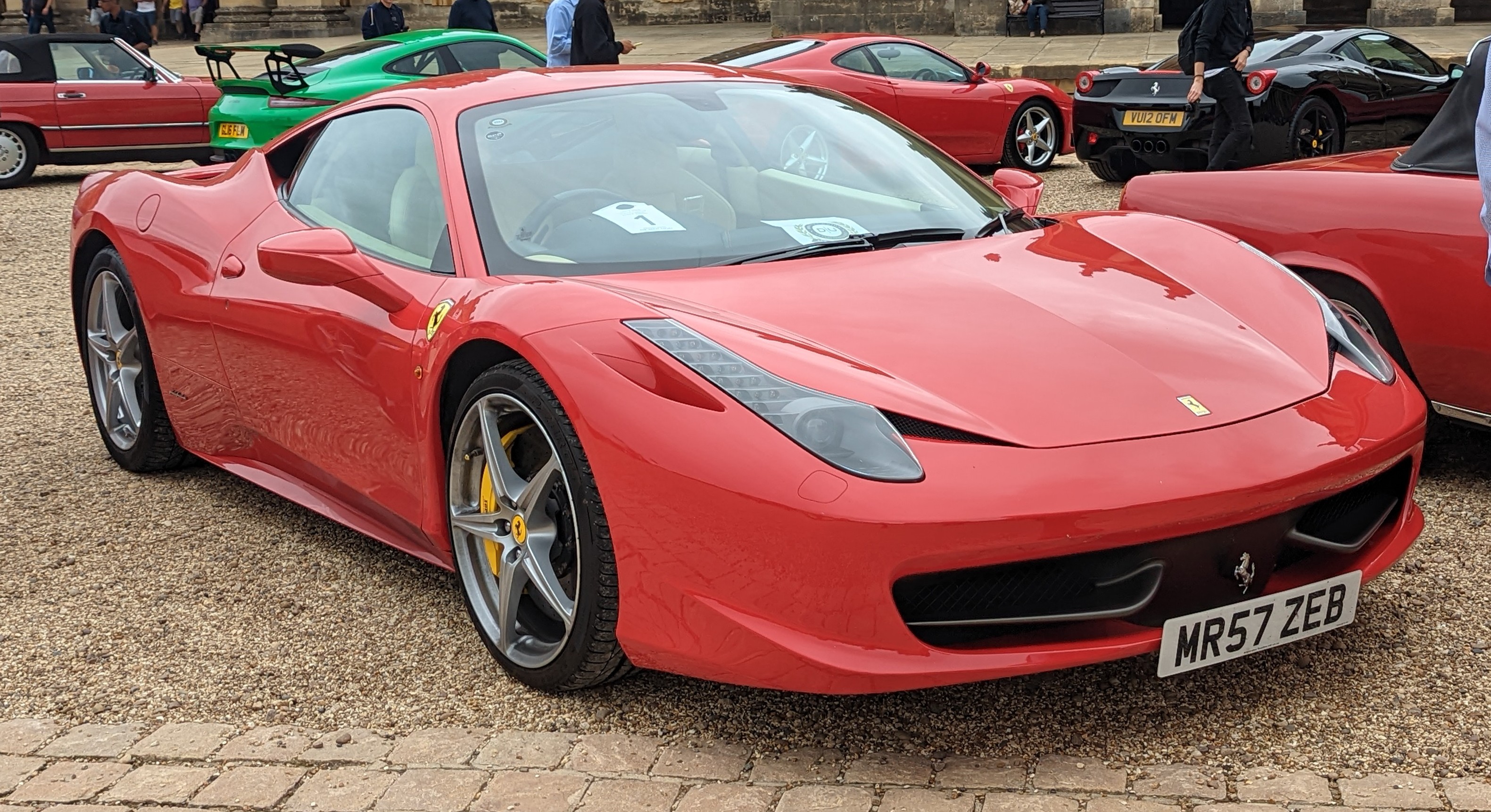
The Ferrari 458 is a fast and stylish sports car made by Ferrari. It's known for its powerful engine and great handling, making it a favorite among car enthusiasts.
Gumball is a fun event where people drive fancy and fast cars together across different places. It's popular among car lovers and often includes celebrities.
The McLaren Senna is a very fast and expensive sports car made by McLaren. It's named after a famous race car driver and is known for being lightweight and powerful.
LIVE
Daily Driven Exotics also gets called Daily Drama Experts.
How does that make you feel?
I love it.
Damon!
What's up?
You founded one of the biggest car YouTube channels on the internet.
I think I'm just your average guy doing the above average things.
I never saw myself working for somebody else.
I always saw myself as an entrepreneur.
People think drama and conflict is something to be avoided.
And I don't.
I go head first into it.
Do you ever let anything go?
Or are you like, I have to win?
Most of the time I'm trying to win.
But there's plenty of times where I will step back and admit that I was wrong.
You've got to bring up to me.
Sure.
Do you regret in any way the situation, the drama and everything that went on,
the fact that I asked him about it,
any of that kind of situation that happened from gum?
Yeah, I think first of all, let's say you and I get an argument right now and I leave the van.
The reality of that is very possible.
This is DDE people.
Damon.
What's up?
You founded one of the biggest car YouTube channels on the internet,
DDE Daily Driven Exotics,
which you now present with Dave and you've even brought on so many more people
and personalities into your universe,
your brand, your global brand that you're building.
But Damon, in your own words, who are you and what do you do?
Well, I'd like to think of myself as a father,
a husband and a family guy first and foremost,
and then obviously definitely the business,
you know, with DDE and as well as a new venture recently,
why is it to be fit?
But at the heart of it all,
I'm just, I think I'm just your average guy doing the above average things.
But to understand someone that does the above average things,
normally that comes from a moment,
an ingredient in a recipe in our earliest years,
that is the thing that made this special,
is the thing that elevated this dish to be able to do what it does.
So if you were to like pick a moment,
maybe in your teens, maybe earlier,
that without maybe that moment,
that experience or those things around you,
you wouldn't be here.
Is there anything that sticks out to you?
I think the motivation from my parents,
my parents are very hardworking people,
and they were entrepreneurs, they ran their own business.
So I grew up in an environment
because we're all a product of our environment.
So I grew up in an environment where I never saw my parents work for other people.
People worked for my parents.
I think that plays a big role in shaping anyone's environment
and what they believe is possible.
So I never saw myself working for somebody else.
I always saw myself as being an entrepreneur from a very young age.
So I would say a lot of it is, like you said,
a seed or a part of a recipe that makes it what it is.
It would be the way that my parents worked very hard
and led the way that way.
That's what I saw as the environment I grew up in.
But an entrepreneur without a passion is like a fishing rod without line.
True.
It's like it's there, but it needs something to cast.
So it's like, did you have that passion for cars
and know you wanted to make that your profession early on?
Or was you like a little bit lost of what to do with this entrepreneurial passion?
Yeah, no, absolutely lost.
The car thing didn't come to me until later.
I always loved cars.
I never thought it was possible to have a career doing anything with cars.
That came later once I started to unpackage
the power of social media and the marketing,
which is kind of an interesting story because I had children really young.
So I did need to ground myself in some type of employment to support my family
when I was younger.
And I did that by working at one of the largest department stores in Canada.
They sell furniture and mattresses and electronics,
a company called The Brick.
I ended up working there for a little over four years
and doing various roles in commission sales,
helped me there hone in my marketing and sales skills.
And through working there,
I ended up meeting a gentleman who did online marketing.
I didn't know what that was and he did affiliate marketing
and then specifically the email space.
So he was sending out email blasts to millions and millions of people
with third party products or service offers
and people were buying stuff out of email.
And I was like, wow, this is crazy because I just came from a commission sales job.
So I understood the correlation of if I had a limited,
so to speak, traffic of people coming to my department store,
I would just through the sheer, you know, law of averages,
I would make more money because I'd be able to sell more stuff.
And that resonated with me.
Also the whole concept of the laptop lifestyle.
So we ended up kicking it off being friends.
He taught me how to do online marketing through email
and that very quickly changed the complete trajectory of my life.
And through doing that, I understood later on the power of what YouTube was doing
because YouTube is powered.
YouTube is Google and Google had a very, very powerful, you know,
the most powerful search engine on the planet.
And I understood how all the ads were curated
and how the backend of that worked through YouTube.
So it just made sense to me.
I was like, oh, this is cool.
It's kind of like actually growing up in my family restaurant,
understanding like the front of the house versus the back of the house.
I saw that with online marketing.
I saw that I was the back of the house when I was doing email ads.
I was, you know, managing the data and the actual offers
and creating all that and then sending it out to this email list.
And I would get paid from that.
And I understood that the YouTube side of it was like the front of the house of a restaurant.
There were people in the back end who were ad buyers like I was
when I was an email marketer or when I was doing Facebook ads.
And if I had just swapped roles, I would be the content creator
that people back here would be buying traffic, right?
That I would be bringing in.
So it just made sense to me when I saw that opportunity
and I didn't know how it was going to work, right?
I was just like, I don't know.
I think if you make videos and they get enough views, it'll all work out.
I don't know.
I just had this blind faith in Google.
It sounds like that was like the lighting of your match.
That spark was like the lighting of your match.
You'd found the beginning root of that kind of purpose in doing that.
But I think that was because you've been doing this so long now
that must have also been on the cusp that Google actually acquired YouTube
and kind of brought it all together because sometimes some of the most successful people
are also really good at catching a wave.
And I always say this about like Ben Francis with Gymshark.
It seems like he got his surfboard right on the wave at the beginning
of right when social media took off.
And do you feel like you kind of did the similar thing with when you got into YouTube?
You just caught that wave at the right time too?
Absolutely.
You know, it's one of the most important things I think with being, you know,
successful in any industry is the timing of it.
So yeah, I mean, if you look at where YouTube is today and social media
and how everyone's now kind of accepted what being an influencer is
and that this little device in your pocket, the phone can be used to broadcast
anything you want to talk about and add either value or entertainment to an audience
and build your own audience off of that and then you can market that.
That's accepted now.
It's like everyone now is at this place where it's like, OK, that's a thing.
You go back when I first started, that wasn't accepted.
So definitely I was at the beginning or the early stages of that becoming,
you know, over a decade, a known thing, you know, like in the very beginning
if you had told someone 14 years ago, I'm going to do YouTube as a business.
People would be like, YouTube's not a business.
And there's a few people that still to this day are like, don't understand
or don't comprehend that YouTube's a business.
But for the most part, I would say an easy 75 to 80 percent of people now would
would say if you said to them, would recognize that I do YouTube as a business,
they go, OK, you said something interesting there, which was like the way people
thought about YouTube or about the way they interacted with it.
What was the difference between the comments section when you started and now?
And was it quite vicious at the start?
No, I think it's more vicious now.
I think there's more people.
I don't know why, but there's definitely a correlation between
the way people have, I think, used social media as an outlet
for their own frustrations and potentially most likely lack of accomplishments
in their lives to go in, you know, spew hate on the Internet.
It wasn't like that in the beginning.
I think in the beginning, people were rooting for you because you were the underdog
and people saw this as a neat, fun, new opportunity, new thing.
And people weren't, I think in a lot of ways, maybe using it as a way to be so annoyed by it.
And now it feels like people use some of the content or creators that they see as
an outlet.
And they're like, well, I'm annoyed by this because now you see like, oh, there's
and there's these comments that's like, you know, I recently started the fitness thing.
We briefly talked off camera about and people are so annoyed that I'm the car guy
now doing fitness stuff.
It's like everybody was rooting for me to become the car guy.
And then, you know, I became the car guy.
And then the same principles that people want to say like, oh, you can do anything.
You just have to go and like start.
You just, and it's true.
It sounds like all these dumb cliche things, but people want to pretend like they're
positive and they're rooting for you.
But the second, if you do become successful and then all of a sudden you do a 180 and
want to do something else, people will tear you down.
They'll, they'll tell you, you shouldn't be doing that.
Or we don't need another, we don't need another fitness influencer.
The world's full of these in, you know, fitness influencers.
If you went back a decade ago, there was none of that because it was so new.
I think anybody who did anything on social media, it was still like exciting.
It was like, oh, I'm rooting for you.
But now I think it's harder than ever to be honest.
I don't know exactly why that is.
I think people are just frustrated with potentially seeing.
I think the people who are negatively commenting are frustrated with seeing so many people
now win or appear to win.
There is a difference.
There's a lot of people who are faking it on the internet.
But there is this perception of thousands, if not millions of people who are changing
their lives and they're winning and doing something that they're passionate about,
talking about something they're really passionate about, and they're changing their
lives and they're more happy.
And the people who haven't been able to make that transformation or transition by using
social media in some way, I think are getting more and more resentful.
And I think there's this big pocket of humans that are using social media to just, you know,
I was always told if you want to feel better, you know, you talk about, or what was the
saying I had this morning, I had a good one I was talking about.
Here's to quitting.
Quitting the couch for a quick run.
Quitting the snooze button for a morning workout.
Quitting giving up after two weeks.
You see, staying committed to your fitness goals isn't easy.
But with Apple Watch, you don't have to do it alone.
Because Apple Watch gives you real-time motivation, plus advanced metrics that track all your
workouts so you can stick to your New Year's fitness resolutions.
And once and for all, quit quitting with Apple Watch.
iPhone 11 are later required.
If you want to feel better, you blame other people.
If you want to be better, you blame yourself.
And I think it's one of those scenarios where I think a lot of people are getting on the internet
pointing the finger to try to feel better about whatever it is they're going through.
And we're all going through something.
I think there's this either internal accountability you can take and be hold yourself to that
and then go out and try to make your life better.
Or there's this external finger pointing you can do to try to make yourself feel better that,
oh, everything's not going my way because I'm not getting this or I'm not getting that.
And then they just go out and attack other people.
But let's unpack that because everything has an impact, right?
I've heard you talk on other podcasts before about the impact of also having coaches
when you were younger for your sports, you were clearly fitness minded back then.
And then that enables you so easily to say a statement like,
oh, so I just knew that I needed to be on the front end of the camera, not the back end,
so I just did that.
To so many people, they'd never consider that being,
they could even be on the front end of the camera,
but there's such a acceptance from your mind of, yeah, of course I could do it.
Because if he could do it, why can't I do it?
And I can see that.
But when it comes to the comments section,
and kind of getting into it and unpacking how it's changed over those years,
you talk about mental resilience, mental toughness, all of these things.
Does it start to have an impact on you though?
Do you remember having like, say you put out a video
and there was a really negative response to that video,
or you did something in there that just really got the feathers ruffled and people go in?
Would you like the next day think, oh, that really wound me up last night, that wasn't me?
Or like, have you ever noticed yourself change off the back of a situation that you like, I didn't like him?
Oh, yeah, I think that is the human side of all of this.
I think all of us have moments of weakness where we allow something to trigger us,
and it doesn't matter what it is, it could be a comment or something that someone even just looks at you the wrong way.
That's us allowing that situation, we're justifying something in our own story
to allow us to justify these outbursts or to have these knee-jerk reactions.
And yeah, I've had moments, you mean like someone made a comment and then I'm like, I get all wound up about it?
Oh, for sure, yeah, I've had many of those.
And I always do have to get back to grounding myself in the foundation of, again, I don't know who that is,
I don't know their environment, and always, always 100% if someone's making a negative comment and it's not,
there's criticism and then there's constructive criticism.
So someone can say something really bad about what you're doing,
and if there's no constructive outcome to how it could be different or why their perspective is the way it is,
then it's just an attack.
But I think if someone comes to me and says, you know, because I run a business, I want it to be better
and I do want to take people's feedback and do the best I can to collect the data to make good informed decisions.
And I don't think I know everything and I love having constructive criticism, but just criticism is hard.
When someone comes to you and just says, you're doing a shit job, you know, like these videos suck.
Why?
It's like, yeah, I could have made them better.
Right, like, okay, cool.
How would you have done it?
And sometimes that's where I get caught in the weeds.
I don't take my own advice.
And instead of ignoring the people who are just criticizing, I'll get in the weeds with them and be like, okay,
but tell me why and then they'll come back and they just be mean, more mean.
And then you realize like five comments into a thread with this person, they're not being constructive.
There is no positive outcome.
Their mindset and their point of view is just to attack you and tear you down.
And you're literally giving them what they want.
And that's where sometimes, you know, I have to be like, what am I doing here?
I've really noticed a trend about successful people that come on the podcast.
And I like to think that my mind works in this way as well, because I noticed it in myself.
We get so frustrated with the logical thinking.
I do that the one thing that winds me up more than anything in the world is when I perceive someone to be acting illogically on emotion with no logic.
That drives me to the twist.
And I can kind of see that that's in there as well.
But the problem is when your five comments deep into a thread because you've got caught as you're on the end of the hook,
you're giving them what they wanted.
So it can take its toll, but despite all of those challenges in growing a YouTube channel,
you guys have still built one of the biggest automotive channels in the world.
We spoke at one point, you were uploading daily.
And not only that, you've turned your passion into a dream.
Why did you have the passion for cars?
What kicked that off?
Honestly, it's my mom's side of the family.
I grew up, my mom's Swiss and I grew up in Canada.
I was born in Canada, but because my mom is Swiss, I have Swiss nationality.
So I have a Swiss passport, Swiss ID, and we did trips to Switzerland to see my mom's side of the family who never immigrated outside of Switzerland.
My mom was the only one that left out of her two sisters and her brother.
And so we would travel back to Switzerland.
And when we came back, my mom's side of the family, my grandfather, my uncle Mandy, and even my aunts were all into cars.
And so my uncle Mandy was into sports cars.
So he had the souped up Audi Quattros.
He had Porsches.
He had Lamborghini.
He had a Rolls Royce because he had a successful tech company where he was doing, you know, computer systems and stuff.
Actually for various big corporations and even some Swiss banks.
So my uncle was quite, quite well off for a period of his life.
And he had these ambitions to have these hypercars at the time.
His dream car was a Bugatti EB110.
So when I'd come over and we'd spend time together, we would go out and he would take me into town and we would, you know, be doing 180 kilometers an hour in between these on these tiny country roads in between these little towns in Switzerland.
I was wondering where you get it from.
You know, I think I just thought that was really exciting and fun in the sound of the engines.
And then also back in Canada, where I grew up in this little mill and fishing town of Portal Bernie, there were a lot of muscle cars.
So a lot of the guys who would go and do in the forestry industry who would go and work would make good money as a, you know, as a career back then or in the fishing industry were making good money.
And they would invest money into these souped up muscle cars.
So in my town, there were a lot of really nice classic muscle cars that were very modified for drag racing and stuff like that.
And so I just love cars.
I was always around really beautiful muscle cars, European cars, speed.
And so I just had this itch.
Like I was just couldn't wait to get my driver's license to a fault because when I was 15 turning 16, I went right away to write the written exam to get my learner's learner's permit.
And as a learner, you are restricted to not be able to do certain things.
You can't drive at night.
You can't drive a manual.
You have to drive an automatic car, things like this to kind of, you know, obviously protect you.
Is that US law, Canadian?
Canadian.
Okay.
And this is, these are old loss.
They've changed since then.
But yeah, I went and got my learner's permit and broke all the rules and got caught.
I took my first vehicle, which was a little mini truck Toyota 88 Toyota pickup truck, which was a standard manual.
So I legally wasn't supposed to be driving that.
And I drove it at night.
And I had back in the day, some like neon license plate frame and some stuff that got attention from the police and a police officer went to pull me over and I panicked and I fled the scene.
And with little to no driving experience, I crashed, not into anybody, but into a barrier and got hung up and stuck there.
And the police eventually caught up to me, arrested me.
And I went to jail and lost my license for now two years.
You know, instead of getting my license at 16, I didn't get my license until I was 18.
I learned a really hard lesson.
And yeah, I was like just too excited.
So I think early on in my life, I learned a really good valuable lesson about patience and just slowing down.
Because if you rush into things too quickly, it can be a bad outcome.
And so I think at 16, that's always stuck with me.
I think these are the lessons in life that you can learn that can really benefit you.
Did you get an absolute bollocking from the parents and the uncle and all the rest of it?
I didn't really say a whole lot.
I mean, I was distraught.
I was in tears and upset and I was in a jail cell.
Yeah, that's going to wake anybody up.
I think my parents actually had the opportunity to come and get me out of jail
and left me in jail for the weekend to teach me a lesson.
I think they recall at some point someone had said, you know, they could have, they could have got you out.
They just had to leave you in there.
I always look for these moments of like fire a little bit as well of like, okay,
what's all those pieces of the recipe that's helped someone achieve X, Y or Z?
You mentioned kind of your uncle's success.
And then the fact that also your dad had the restaurant, et cetera.
I've experienced, I grew up with a daddy as an entrepreneur, started a company.
And for me, I thought success in beating him, the competitive side of I must outdo dad was,
okay, his company once turned over 50 million pounds a year.
Amazing, grew up on a council estate, like my number one hero.
I must do 51.
I must do 100.
I must double it.
That was my kind of measure of success was purely like a turnover number.
And that drove me, especially when he passed away.
It's obviously horrendously sad, but I still want to compete against him.
It's always the case, smile up at the sky.
Do you feel this?
Have you always felt the same way?
Like, well, if they can, if they can do that and achieve that,
I must outdo my uncle and my dad.
Have you ever kind of had that?
Not really, because my dad operated from a different mindset.
He was never chasing overly expensive things or a lifestyle.
My dad lives a very simple lifestyle.
He has different philosophies than I do.
He's like one of my best friends and we get along so well, but we are so different that way.
He doesn't really care for fancy cars or fancy jewelry or watches or, you know,
he's never chased that kind of stuff.
And I really respect him for that.
My uncle, on the other hand, liked fancy stuff and all that.
Unfortunately, my uncle did pass away quite young.
And so I never got to reconnect with him later as an adult.
He passed away when I was in my, you know, mid twenties.
And so, yeah, I think the, the part for me is honestly just,
I've always seen what the transaction of money does for someone's life.
Like it can buy you a better life.
It can buy you nicer things that allow you to do and have different experiences.
And I've always wanted to experience the most I could.
Well, I have this time on this planet.
I think I've been very fortunate that as a young, at a young age in my twenties,
I really grasped that time is the most important commodity we have.
And to be successful, part of my journey through personal development was learning
that the time management is what makes people more successful than other people.
It's not necessarily like, I think a lot of us think that people are really smart
or they had this really crazy idea that like nobody else has had.
And there are moments of that, but the average person who is way more successful
than you or I is just better at managing the 24 hours in a day that they have.
They just don't procrastinate.
They don't hesitate.
They don't, they don't second guess if something, you know, could go wrong.
They just do it.
And if it goes wrong, they're just like, chalk it up to like, okay,
now I know one more thing that's not going to work.
And they just keep going, keep going, keep going.
And they don't waste a lot of time with the people and the nobodies that are holding them back
or the negativity and they just, they don't get into the common section as frequently.
You know, I think those are the most successful people on the planet
or the people who are really good about having a clear destination
and going towards that destination with the least amount of distractions.
Did you have your kids prior to starting DDE?
Yeah, oh yeah.
I've had kids since I was like 23 years old.
Have you ever thought, oh, I've got it harder because I've got to manage that additional time?
Have you used it as a superpower?
Yeah, I think that's actually, I think that's a really good question.
No one's really asked me that I have thought about because I've thought about it externally
from seeing how other people use things as excuses.
It seems like your journey is life, life, life, life, life, kids.
Oh shit.
Look at that.
Mine was, I made a choice to live my life and have children early for specific reasons.
And that was just always a part of my responsibilities.
So it was never like, I never saw it as I can't do this because I have that.
I always made sure I did my best to be where I needed to be for my kids.
I was also a benefit.
There was also a benefit that I didn't raise my kids for the majority of their life in the same home with their mom.
We split because we were just boyfriend, girlfriend, and we got together really young.
And the reason why we even had kids in the first place to quickly explain this is because she and I went to a medical exam because she was having severe pain.
And we'd been together for about three and a half, almost going on four years.
And she was diagnosed with something that was causing her pain.
There was a procedure, but what she had was going to make it very complicated for her to have kids later on in life.
This was a not life-threatening illness, but it's an illness that makes it complicated to have children.
It affects your reproductive organs.
So long story short, her dream, ironically, when we got together was to do an educational type program where she would be able to work with kids as a career when she grew up.
And when she got this information, I could just see she's just devastated.
She wanted to build a family, want to have her own kids.
It was really important to her.
And so I just knew sitting in that room when she got this information, I was like, when the doctor said, we can do this procedure and the best chance of you ever having kids is going to be right after this procedure.
I just knew in that room right then and there, I'm not someone to ever crush someone's hopes and dreams or goals.
And even though I didn't know in that moment if I wanted to be with this person forever, I knew I could man up and be a good parent and dad with her and be accountable to kids.
So I just said, do you want to have kids?
And she was like, yes, like, you know, so she went through this procedure and the outcome was we had two beautiful girls.
And, you know, later on down that path, it became really clear that even though we were meant to be together to have kids, we weren't meant to be together for the rest of our lives.
So we went our own separate ways and we've been co-parenting my two beautiful oldest daughters ever since.
And so that was just, I made that choice and I owned it and I've never used it as a way to be like, oh, I can't do this because I have kids or these responsibilities.
I was always like, I will just figure out a way to manage my 24 hours in a day so that my kids get this much of the time in the day.
My hopes and dreams get this much time.
My current finances get this much time.
Like I have to just divvy it up.
That's how I did it.
I didn't go out and party and do as much of that stuff as I probably could have or I don't know, I just prioritized my time differently.
Did you have siblings growing up?
I have one sister younger.
Okay.
We say sometimes, or a lot of people will say we're around Christmas time at the minute, that some friends and family feel, some friends feel closer than family.
And for that, I want to kind of bring Dave into the conversation as well because surely he's like the closest thing to a brother you ever had, right?
Like when did you meet Dave and how quickly did you click with him to the point that you knew you could do something kind of forever with him?
Sure.
We knew each other when we were younger in our early 20s and then lost kind of our connection as life happens.
You know, I had my kids and then later on Dave had kids and even got married and took it a few steps further than me.
And it wasn't until I was launching Daily Driven Exotics while also still managing a Facebook marketing business that I had.
And Dave was working at a Starbucks.
He was like a regional manager or something like this.
I don't know the exact title, but he was the guy that went around and checked on like 10 or 12 different locations.
And I'd went into one of his locations because I had that, you know, laptop lifestyle and I happened to be in a town where my children were because I was up there visiting my kids.
And I had to go do some work.
So I just went to a local Starbucks because it was easy to get Wi-Fi and I was sitting there.
And at that time I had already acquired a couple of nice exotic cars.
And I'd already gotten a Ferrari 458, which back then was one of the best where we lived.
I mean, it was like the car.
It's like a laugh pulled up now.
Yeah, it was.
It got a lot of attention.
It was a beautiful car.
It was the new, new of the, you know, DCT transmission and all that sort of fun stuff.
If you're listening to this episode and have your own business and need help with your digital marketing services, then I'm here to help.
Just drop me a message as I own Tweak Marketing, a leading agency specializing in technology, healthcare, automotive and many more sectors.
We built websites from small individual one-man bands all the way up to huge global companies.
We're here to help you take steps forward in your digital marketing.
Get in touch with me via the link in the description and we'll hop on a call and see how we can help you.
So I have this car parked outside of the Starbucks.
Dave walks in.
He tells a story because I've heard him tell the story.
He goes, I see this car and I'm like blown away.
I don't even know what this thing is.
I just know it's this beautiful Ferrari.
I walk into Starbucks and out of all the people in the store, he goes, I was scanning the store to figure out who owned this Ferrari.
And he saw me sitting over in the corner and he said, he just knew that was my car.
And so he came up and said hi.
And we kind of quickly reconnected the typical, what have you been up to?
What have you been up to?
We explained our situations.
And we stayed in contact because I said to Dave, you know, I'm doing this upcoming charity event for children with life threatening illnesses at a hospital.
And I'm going to wrap my Ferrari outside to look like a red kind of, you know, Santa's sleigh.
And we're getting all these toys and I'm going to dress up as Santa and go in and do this thing for these kids at Christmas time.
I'm looking for someone to deliver hot coffee and hot chocolate and stuff like that for the parents and the kids because they have to do it outside in December.
And it's going to be cold because they can't do it inside because you can't be in these confined areas with these kids.
A lot of them have to wear masks.
They have low immune systems.
So we had to do it outside in the parking lot.
And I just wanted to create, give this convenience.
And he was like, yeah, no problem.
Starbucks does stuff like this all the time.
I'll supply all the hot coffee or bring the staff or bring the tents.
And I was like, oh, this is awesome.
And that's really what kicked off our relationship again.
I was trying to do this philanthropy and Dave got involved and I was really impressed by that.
And he showed up and, you know, deliver it.
The initial part of that story, I was fully picturing the Wolf of Wall Street scene.
Where he comes in, is that yours in the car?
It literally sounds exactly like that.
Yeah, it's almost like, I think, you know, I think, yeah, Dave had walked in and said the whole, you know, you show me a check for $60,000 a month.
I will quit my job right now and come work for you.
I'm kind of seeing you two as those two a little bit to be fair.
A little bit.
I think I didn't quite, I didn't carry myself like that.
I didn't really brag to people about what I was making.
The irony was back then when I was doing online marketing, you know, I would have been making more than $60,000 a month.
Luckily at that time.
And that came in waves, you know, it was never consistent.
Yeah, yeah.
Working in that industry was you could work for two months and make nothing and then have a month where you made $100 or $150,000.
So when people say that again, it's important to always understand the context.
It's easy to be like, ooh, I made.
People always talk about their turnover as well.
Turnover vanity profits, vanity cash just came.
Yeah, yeah.
It's like, it's easy to be like, oh, I made $100,000 in a month, but then they don't want to talk about the months that they made nothing.
Because really, when you averaged it out in the beginning, even if I had a few months where I did really well, you know, and not to downplay it.
If you averaged it out over the months that you didn't make anything, plus the expenses you put out.
It's not as glamorous as being like, oh, I make six figures every month.
It doesn't work like that sometimes.
But yeah, that's how that relationship kicked off.
And Dave and I connected and Dave was like, I'm sick and tired of working corporate Starbucks.
I was like, well, I might have an opportunity for you.
Why don't you come down to my offices in Victoria, which was like a two hour drive at that time.
That's what he did.
He came down and worked for the Facebook company, the Facebook marketing company I had.
Got his feet wet in that.
And as I was going full time with daily driven exotics, I saw some skill sets in Dave that I could use for DDE.
And so we had a conversation, moved them over to DDE.
And it was, you asked me what was the moment that it clicked that I knew there was going to be a long term future with Dave.
It was after Dave had invested a lot of time showing up and doing the work that I needed him to do.
And he never asked for anything.
He was never asking for a lot of money or asking for any opportunity.
He was just really excited to be involved in the vision and the project.
And that's what I was really attracted to.
And the fact that he showed up and he was accountable to doing the things he said he would do.
I think a lot of people in this world will tell you anything you want to hear.
Even when they know they're not willing to do the work.
So they over promise and then they under deliver.
The thing that I've always liked about Dave is Dave doesn't over promise under deliver.
Dave will under promise and he'll over deliver.
And that's the best thing about Dave.
And so that and then time builds loyalty because you see through people's actions in times that aren't convenient to be your friend or in business with you.
And there's always going to be that time.
Things don't always go smoothly.
Right.
So it's in times of crisis or times of hardship that you turn around and you go, oh, the people who are still behind you in those times are the people that you want to roll with.
And Dave was always there for me when things weren't easy and things weren't convenient, not just for me or in the business, but also for him.
Like he also had kids and a wife and, you know, there were times and he was getting shit by his wife because he was out later than he said he would be.
You know, and he had to manage that and still show up the next day and not just bow out and be like, why can't do this?
Because the wife doesn't like it.
Like he's eating a lot of shit to be where he is today.
And that earns a lot of respect with me because it's not easy.
I think in the 30 so minutes we've been chatting, I'd almost described the way you talk as semi military.
It's like very, very logical, very straight, very considered answering, you know, just prim and proper to say where we know that there is that full on flip in that case emotional side as well,
especially when you're behind the wheel of a car that's in there too.
So I kind of want to get into that because what does it make you feel when you're kind of shown as that kind of logical structured individual when daily driven exotics also gets called by other creators
and has been in the past daily drama experts.
And the word drama comes into what you guys do.
I can see you smiling like you're ready.
It's like ignited.
But like, how does that make you feel?
I love it.
I think that because I think people think drama and conflict is something to be avoided.
And I don't.
I go head first into it, which I think is obvious if you watch anything I do.
When was the first time you did?
When was the first time you kind of chose that path versus pacifying?
Probably when I was 16, I used to get bullied as a kid.
And there was a time when I just decided I was no longer going to allow people to push me around.
And I was going to stand up for myself.
And I had to define what was I standing up for?
What was my belief system?
What would I speak and believe in so much that I would be able to stand up straight and have the confidence to back it up?
And so I started to go to the gym when I was 16 and work out.
And I built up my mind and my body at the same time.
And from 16 to 19, I went from being this scrawny little kid who got picked on all the time to being this quite muscular young adult with this newfound confidence because of my strength to no longer be worried about people trying to physically pick on me.
And through the process of that, I also learned to have more mental self confidence.
So people couldn't just emotionally pick on me either.
And I've been working on that ever since, you know, it's not something that you stop working on.
Could you ever let anything go?
Or are you like, I have to win even if it's a conversation and an argument or whatever.
And even if you seem to deem yourself, if you question yourself going, hang on a second, is it me?
Would you still have to win that situation?
No, most of the time I'm trying to win.
But there's plenty of times where I will step back and admit that I was wrong.
It doesn't necessarily happen in the moment.
A lot of the time it happens afterwards.
So there'll be something where, you know, I will be confrontational and maybe halfway through that conversation or maybe the next day because I do a lot of self reflecting because I want to be a better person.
And again, like I said, I don't believe I'm right or I have all the answers.
And it's always stuck with me from a very young age when I went through personal development, this saying of if you're the smartest person in the room, you're in the wrong room, right?
So that saying alone always reminds me that a, I don't want to be the smartest person in the room even, right?
So it's like, okay, well, what could I do differently?
What could I do better?
Was the outcome of that what I ultimately desired?
How did that make me feel?
How did it make other people feel?
So I have this ability to reflect.
But in the moment, a lot of the time I'm like head on, let's just go for it.
And for everybody watching, if you're enjoying Ben and I chat and the other podcast that he's been doing, please subscribe to his channel.
It supports YouTubers and podcasters enormously.
It's absolutely free.
And if you could up your game, do do the YouTube premium.
This is the bit that fascinates me because there's a side to you, which is clearly just like, I know, I want to help people.
They've not done anything to me.
I'm being, I've seemed to be deemed to be logical, very structured military in the word and saying, and then I just see your eyes light up.
Like I can tell if somebody, if somebody punches once, like you're, you have to hit harder, like for sure.
And you're obviously explaining where that comes from in early years.
But you mentioned a word early when we were indoors and I want to bring that into it as well.
You mentioned the word show.
We're talking about the channel and you said the word show.
How much of your true self?
Because early in the morning we're outside of freezing cold English estate.
You've just had a coffee.
Nice gentleman.
It's like we've just come out of the club.
Yeah.
How much of this of you?
How you are now is actually how you are on the channel in your own head from your own side.
Yeah, I mean, everything about me on the channel is me.
Is it turned up?
It's turned up.
I think the fun thing about life is that we are different versions of our self depending on the environment we're in and who we're with.
I don't think there is any one type of person.
I think people can be multiple things and it really depends on the environment, the energy, the situation that's going to bring out the type of person you're dealing with.
That's why one person can see someone to be like that person is an asshole and someone else can be like that's the kindest person I've ever met.
If you had met me at that Christmas philanthropic thing that I was doing and you knew as an adult that I was there supplying all the toys and bringing the car and dressing up as Santa and organizing this whole thing for kids,
people would be like, I was just like the sweet nicest guy and there is that side of me.
Then there's the side of me where if you do something I feel is intent, there's an intent to harm or be malicious, right?
And I feel like you're trying to attack me or even worse, someone I love.
It's like I will be your worst fucking enemy.
And then there's a point where like to a fault like I don't want to just like take you down like I want you to know to never fuck with me ever again.
So there's like those two sides, right?
I think depending on the environment and the situation that you end up in with somebody, you can see good or bad, right?
And even doesn't matter if I feel like I'm justified, you can look at me and be like, you know, oh, it's too bad that person's like that.
But like I just I was so sick and tired of being pushed around and bullied as a kid that I made us.
I made an oath to myself that I would never let that happen again.
And if I ever feel like someone's intently trying to be malicious with me directly or indirectly, I'm going to have words with that person at a minimum.
If you then put yourself in a situation where you go on an event like Gumball, yeah, literally you've sponsored Gumball in the past.
You've been so involved. I've had Max on the podcast.
We've gone through how Gumball was founded, started all the rest credible story.
It's insane.
Yeah.
But Gumball can't avoid the fact that it's bringing together a lot of highly engaged testosterone fueled, mostly males with high powered super cars together in a group.
And to me, I've got this saying is that there's there's always the biggest dickhead.
And there's there will always be out of 100 people three.
You will not get on with your like there's a personality profile thing.
It's called disk and you just you just won't click.
Correct.
Do you kind of go into Gumball knowing that there's going to be people on that rally you don't click with?
No, not at all.
I'm actually really open to meeting everybody and trying to understand what motivates them to do this.
What's their connection to the cars?
What's their connection to travel and adventure?
You know, why are they here?
What's their purpose?
And I think that's always intriguing to me.
I'm highly aware that there's different people trying to achieve different things.
And for me, I'm married, faithful, loyal.
This is how I see myself.
You got to understand that everybody operates based on a self image profile you have in your brain.
How you see yourself is how you're going to operate, right?
So if I see myself like you're asking if I see myself as a confident, strong male that, you know, can't be fucked with.
If someone tries to fuck with me, I'm going to operate from that place of like, you know, well, no, you're not, right?
Also, from that same perspective, if I see myself as a loyal, faithful husband, I'm going to operate from that.
I'm not going to ever put myself in a situation that would not make me look like that.
So like, I don't go to the club.
I don't hang around single women.
You stop drinking.
I quit drinking, right?
There's certain things that you can change about the way you see yourself to give yourself a certain outcome.
If you want a certain outcome, you need to start seeing yourself as the person who you need to be that would have that lifestyle, right?
So I go into gumball knowing that there's going to be guys who are married, who aren't like me, who aren't faithful to their wives, right?
And I know I'm not going to be friends with that person.
Like, I just know, like you're talking about, there's a profile, a person that I'm going to surround myself with.
I want to surround myself with more than likely somebody who's married, somebody who has children, because these are the most common things that I'm going to have in common with that person to build a relationship off of.
Because it's really hard to get on with someone, you know, just on one thing, you know, long term.
And so, yeah, when I go to gumball, I'm really open, but I'm also really aware that the people I'll get on with the most are the people that I see who showed up with their wives on gumball, right?
Or walking a path that that is the same path that I walk.
And I don't judge other people.
I'm just like, if you're over here doing that, and I know I don't want to be doing that, we're probably not going to be friends.
No, I understand.
That's it.
Do you and Dave ever disagree on a situation on something when it gets fiery, whether to put out something, whether or not.
And do you always have final say?
No, I really value what Dave has to say.
And again, goes back to not wanting to always be right.
Something I actually taught Dave that someone taught me is you can be right or you can be rich.
And that doesn't that metaphor doesn't mean financial money.
It means like you can be right or you can be rich in the outcome of whatever that is, right?
And sometimes this is where avoiding the fight is more beneficial than going at it.
But half the time when I see something going a bit more viral, it does involve the fight.
Of course.
Is that fair to say?
It is fair to say.
I mean, the whole purpose of getting attention for whatever reason is based off of the human need for drama.
Like this, you know, what's the new saying?
If it bleeds, it leads.
Have you heard that?
No.
Yeah.
In media, they had a saying back when, you know, it was more traditional television.
When they would chase a new story, it was always like if it bleeds, it leads, you know, like the car crash, the problems that people are conflicted and dealing with is what gets other people's attention.
More than the shiny, nice outcomes.
It's just, I don't know, human nature is like that.
Okay.
So I think it's important to the audience listening and watching this to kind of understand from a host's perspective that when we're talking about Gumball, we're talking about drama, we're talking about situations.
We've got to bring up Tim and Shami, who is for the audience watching a friend of mine, someone I've known for a long time, gone to car events with.
And when I had Tim on the podcast that many of you would have seen, I tried to be because I knew, of course, obviously Damon and David would also be watching as kind of neutral with the question as possible so the audience could make their mind up.
I'm going to try and do a similar thing today.
So I'm going to start by kind of asking, do you regret in any way the situation, the drama and everything that went on, the fact that I asked him about it, any of that kind of situation that happened from Gumball?
Nope.
Nope.
Gumball?
Are you guys, because in the recent Gumball, which was in Paris, am I right in saying, or Italy?
It was a European, a European trip.
A Euro trip.
I saw you guys with like the mics, you looked to be absolutely fine, really pleasant interactions.
Do you kind of just time heal in the same way as talking about other things and will you guys just like move on now or is there, is there any kind of lasting issue?
Yeah, I think, first of all, I love that you said does time heal.
I would say yes.
I would say that the further away you get from a situation, the more you have the ability to reflect on it.
And also, you know, I think just realize that life needs to move forward.
You don't want to ever stay stuck in a moment of time because when something happens, right, let's say you and I get an argument right now and I leave the van.
The reality of that is very possible.
This is GDA people.
The reality is that the moment that I've left the van that's already in the past, it's no longer happening.
And the problem of what we do as humans so many times is we replay that moment in our head and we hold on to it as if it's still happening.
And when I, again, going back to personal development stuff, I sat in rooms of a thousand and fifteen hundred people.
Well, the coach at the front of the room would find someone in the crowd who's going through a very traumatic, had a very traumatic experience in their life that happened 20 years ago.
And they're still operating as if it as if it's still happening to them.
And you watch the coach at the front of the room walk this person through the process of them having this aha moment that it's not happening anymore and they can let it go.
And that their whole life doesn't need to be going in this negative direction because they're still holding on to this thing from so long ago.
Now that can be something as far as 20 years ago or it could be something from 60 seconds ago.
And so I try really hard to reflect back on what happened when I have conflict.
And I think really hard about do I need to hold on to this?
Is there any intrinsic value to me to hold on to this any longer than this moment?
And 99% of the time the answer is no.
Would you now visit the Schmuseum, see Tim collaborate on that level?
Or is it more just a case of what kind of done that?
I was thinking, you know, everyone's in this whole like influencer boxing situation.
Maybe Tim and I should just fight.
It's a really unfair thing to say for multiple reasons.
The truth is, is now I've let it go.
I have an enormous amount of respect for Tim.
And even though on camera back at the end of Gumball,
I walked up and confronted him about that.
And he said what he needed to say.
And we said what we needed to say.
It was pretty much after that that I was pretty much over it.
I was just like, OK, you know, if he feels that my brand is a threat to his brand because we're somehow competitors, I get that.
You know, I see businesses that all the time.
I've seen other people as a threat to me.
So I was going to ask you about that.
Do you because I really wanted to ask you about that earlier,
which was when you talk about your marketing business and those kind of things from back in the day,
I was always taught brought up with your competitors of war.
You're at war with your competitors.
Everyone's a competitor.
You're at war business is savage.
It's war.
And I once went to India on a trip for natural stone when I was a kid as part of my dad's business.
I walked out and he was having lunch with one of his biggest competitors.
And it just a guy that he hated and hated him and it blew my mind that he sit down.
He was having like this conversation with him.
Do you see other creators, even if you collaborate with them still as a competitor,
like you want you want that view, not me having that view?
Or does it change a bit when it comes to content in YouTube?
No, I think it's a really challenging question to answer because depends who I don't think it depends who I think it depends on in a business relationship.
You have to be aware that the best version of a business relationship is that both parties have a positive outcome.
So, you know, such as your podcast, right?
I don't do a lot of podcasts, but I want my brand to be relevant.
So the more people who talk about my brand, right, the more relevant it stays.
You want to talk to interesting people because it's what builds your podcast.
So this is a very mutually beneficial relationship.
However, you do podcasts and I do YouTube videos and the way that we do what we do, even though it's both media, it is very different.
It's not like someone's really going to have to make a choice between watching your podcast and watching my show and it being too similar that they would they would likely choose one over the other.
Does that make sense?
Yeah, and they're completely different.
Yours is when your video pops up, it's an emotional I must watch that immediately or as fast as I can fit it in where mine is.
I might watch that next Thursday on the way up to Leeds like it's one of those different about it, right?
But then there's obviously people who do stuff that is very similar.
And I think you feel less threatened when someone's established and you meet them versus someone who's not established.
They come on your show.
They stick around for a while.
They get they tell you that they're not interested in starting a YouTube channel and all this bullshit.
And then what they do is they're really just hanging out with you to infiltrate how you do what you do and then they leave.
And it's very clear that when they start their channel that they didn't have before they met you that they were just playing you and they wanted to really learn how to do what you do.
And they really want to learn what you do.
And then it's obvious because what they end up doing is literally like a cookie cutter version of you.
They copy your titles and thumbnails.
They do everything that you're doing.
They vlog.
And that's the that's where that's where I feel like as the competitive side of this business.
It gets annoying because you're like, oh, you know, yeah, I just I just created another mini version of me in some indirect way.
And that will compete with my view because when someone comes on my channel and the audience that they build is my audience.
That I built, right?
Those people now have to make a choice when they see a title and thumbnail looks almost identical.
And the video length is almost identical and they upload at the exact same time as I upload at.
People do have to make a choice.
And that's where it is frustrating.
And that's where the the savage business side of it, as you said, comes in.
The other part of it is and I think that the hardest thing in business is people, whether that be employees working for you or just managing people in general.
But the first the first kind of channel I ever saw introducing other hosts for, say, into the brand was maybe Supercar Blondie.
I don't know if I'm off a little bit with that, but I think that's my first memory of maybe doing that.
But I call it the barber shop scenario, which is like a bit like what you were saying about people taking the ideas when they've hung around you.
It's like, eventually, will that barber just go and set up his own shop and rent out the chairs because he's learned everything there is to learn.
Now, I know the lad apologies for forgetting his name for a minute.
It started in a lot of videos on the DDE channel.
He's part of the channel now, his name right now.
He's got the Lambo.
Oh, Keller Keller Keller.
That's it.
And I've spoke to Keller before I met Keller several times.
But Keller seems to be doing a fab job.
The views seem to be really high.
How do you manage that Keller doesn't go off by himself?
Well, the neat thing about Keller is that, again, Keller didn't come to daily driven exotics and have no involvement in YouTube.
He had a lot of involvement in a really big channel, which was Whistle and Diesel, and he had been there for years.
And so he really came to us because he was like, look, kind of like David Starbucks.
He's like, I've done this thing for a long time.
It's not what I'm passionate about anymore.
I'd really like to do something I'm more interested in.
As much as he loved being a part of Cody's vision and doing what Cody built, which is incredible, his passion was in doing what we do.
He wants to drive supercars.
So he wanted an opportunity to be involved in being behind the wheel of a supercar and trying to find a way to make a career out of that.
His passion and his vision of what I did resonated with him more than what Cody built.
So, you know, Keller coming to us, first of all, already had experience in YouTube.
He was already known.
He had been on Cody's channel.
That's a very different scenario than I just found Keller on the street and he was like, yeah, I really want to drive a supercar.
I have no experience like he knows how he knows how to.
He knows what vlogging is.
He knows how to hold the camera.
He knows how to edit his own media company.
You know, he's the guy who actually gets hired by Gold Rush to shoot all of Gold Rush rallies week long content for the social media.
So he's in the game.
So how do I stop Keller from coming on DDE and taking off?
Well, I can't.
I can't stop really anybody from doing that.
You can make people sign NDAs and contracts and all that.
But I mean, who really is going to take anybody to court and spend hundreds of thousands of dollars and years of their time for what?
Like most of the time it's just it's an agreement you have to deal with.
Over the years, we've had a lot of people come and go on the channel.
Some have worked out better than others.
Some I would say are more in alignment with they got what they needed to get and we got what we needed to get.
No hard feelings like people are going to move on.
We don't expect everybody to come and stay forever.
And then there's been the relationships that you said you were going to do this and you're not doing any of this shit.
You said you would do and then we make people look really good on the Internet because for the most part, we don't try to show people's flaws or screw ups or.
Mistakes or business, you know, wrong doings and the audience doesn't understand why we stop a relationship with somebody and funny enough, you know, like shops and buildings, etc.
Yeah, shops, other characters, you know, and it's the hardest part about this business being so public, trying to bring people on, trying to make sure that they honor their commitments to the brand and the business because this is a business, right?
Like people want to people come and work at daily driven exotics because they want my money, right?
Like they they want money from me or cloud or cloud.
But a lot of time I look at it like or cloud.
But a lot of time I look at the business, the literal tangible like I'm paying you to do ABC and the logical side of it, right?
And I pay you this money and I pay you on time.
I'm a big believer in that paying people on time, always doing that honorably.
And I need you to do ABC and D and then all of a sudden they're doing a and they're not doing BC and D.
And then it has to be a conversation and then it's that happens again and again and then eventually as an owner, you have to be like, hey, man, I'm paying you all this money.
You're not doing what you said you're going to do.
Like it's over.
I think the thing that I've also realized there is I like to involve the audience so everybody listening can just think about this for a second.
When was the last time somebody annoyed you in your life?
Think about it.
Everybody got it.
That could have been for some people listening then yesterday, an hour ago, a week whenever.
But if they're a very private individual, they maybe got a smaller following.
They don't want to light any fires.
They're not confrontational.
All these different things.
No one's going to see it, but it happens where the kind of content that you guys have been making over the years, especially when you were daily vlogging is that word there is a vlog.
It's an experience of the day.
What happened?
So I think maybe that there is just as much miscommunications, relationship endings, disagreements going on out there, but don't necessarily get broadcast in the same way.
Correct.
Do you think that's correct?
It is because we've tried in the past to be more transparent if you want to call that with the audience.
But it bites you because there's so many people that are watching that their environment, you know, they didn't grow up in an entrepreneurial environment.
They grew up in a different environment.
They've never seen what it's like to have to manage people and be accountable to paying them their paycheck, but then holding them accountable to doing their tasks they need to do for the business.
Like a lot of people don't even understand how business works.
Right.
A lot of people I've seen people in my comments who are like, your YouTube thing is not even when I say it's a business.
I've seen people say it's not a business.
And I'm like, bro, you have no idea.
Yeah.
And this is where I have to stop myself from having like a 15 comment thread with somebody arguing with them about how it works.
And that's the hardest part.
And I think that's the part of maturing this business that Dave and I would both agree that we've come to realize is like, you just can't talk about it.
Like I can't like if someone comes on the channel and then they disappear and they're not on my channel anymore and everyone's like, what happened to so and so you can't make a video and talk openly about it for two reasons.
One, it's one sided.
Right.
Like no matter how much I think I'm in the right, it's only my side.
And am I really going to bring the other person on so they can tell their side?
No.
Because again, it's just like.
There's millions of people who are subscribed to my channel.
Right.
Four point was a four point one million.
What's crazy is YouTube tells you how many people also watch your channel that are not subscribed.
You know that, right?
Yeah.
57% of our audience is not subscribed.
So double four point one million.
So eight point two million people have consumed our content on some level on a consistent basis.
Plus the other thing there is your kind of content compared to mine is the kind of thing that a family of four would watch and is one view.
And that's the always the thing that blows my mind.
I call it like the bulking effect of YouTube.
It's like, what is the actual reality?
It's millions.
So let's just say it's over 10 million people that have watched the channel.
That's 10 million different opinions.
You are never in a million years going to get everybody on the same page.
It's literally impossible.
So it goes to a place of why even try just keep making especially like for us.
We're not.
We're not.
We're an entertainment channel.
I think some people also don't realize that like we're just here to try to entertain you.
We're just like it's not all so serious and so real.
It's not like this.
It's not exactly everything that's going on.
You don't see everything.
We put it.
We put the highlight reel into a 30 minute video and so many things happen outside of that.
Some things are boring.
Some things are dramatic that we don't want to show on the Internet.
You know, maybe I'm driving and someone starts a fight and you know, something gets said that, you know,
would just like totally blow up on the Internet.
Not in a good way.
Like we cut things out that Dave and I are exposed to that we just don't expose other people to bad things.
Car crashes.
We see stuff all the time around the road that's like doesn't go into vlog.
Right.
We're not really showing what our whole day looks like.
And so we just want to entertain you and we just want to make it fun and let it be your escape.
Right.
And we've come to terms with we're not always going to be super transparent about how the business works because every time we've tried, it doesn't work out.
There's a group of people that get it.
There's a group of people who don't get it.
There's a group of people who are confused and I don't have the time and energy to try to explain it to everybody.
So we just stick to the facts.
We're an entertainment channel.
We make entertaining content.
There's drama and there's a problem for the most part.
We try to avoid it unless it is directly tied to the outcome of a story such as like Dave's car recently, whether to try to get it wrapped.
Huge problem with the wrap shop.
Wrap shop is super irresponsible.
The owner of that wrap shop has caused other problems with other people.
Those people take Dave's key to try to get back at the wrap shop owner.
Dave now has the one key to his one to 50 squad or course of missing.
He's got towed out of the wrap shop because the wrap shop screwed that up cars in pieces.
This car that Dave loves that we also pay a lease amount every month on.
Now is not operational for our business, which is the whole reason why we have it.
Now we're losing money on this thing.
This is massive inconvenience of time and energy that Dave's got to put into that instead of the business or his kids and being home with his wife.
And so Dave's really pissed off and annoyed and he goes and confronts the guy who stole the key who takes no accountability for it.
And the internet gets mad at Dave.
I think I know why.
And I'm like, bro.
And I think I know why because what you've just described there is because it's your business to anyone else.
It's a wrap.
Dude, it's a wrap.
Like I've got a car.
It's a wrap.
Oh, okay.
I didn't go to plan this.
But what I don't think people realize is that link to business.
And if 99% of them aren't entrepreneurs, they won't understand the feelings that you just said.
So we can unpack why.
I think, you know, again, just to tie it back to that, the interesting thing there was, again, Dave confronted both the wrap owner who owned the wrap shop and he confronted the person who stole the key.
The person who stole the key has no relationship with the person at the wrap shop.
He has an established relationship with someone we know, even consider a friend.
And so his approach with one person versus his approach with the other person came off a lot more aggressive to one person versus the other person.
And people decided to make the choice that that was unfair.
And Dave took a bunch of heat, right?
Even though the reality is Dave is the victim in all of this.
And he's just trying to get his key back for this massive inconvenience with all these other problems.
While he's dealing with something in a situation where he's left his family back in a different country.
Again, we were from Canada.
He's in the United States.
He said to take two flights, spend this money, go down with an objective to manage his 24 hours in a day as efficiently as possible to move the business forward.
And instead he's dealing with this whole bullshit situation, right?
That was created out of all these inconveniences that really had nothing to do with him.
And so it was interesting to see how people were upset at Dave because of how it was handled and all this sort of stuff.
And again, it goes back to just you have millions of people with millions of different experiences and perspectives and you'll never be able to win everybody over.
I think a big piece of being successful in this business is you just have to be OK with doing your best.
And when you put your head down on a pillow at the end of the night, you have to truly believe that you're doing what you need to do for you and your family.
And the people who get it will follow and the people who don't will move on.
And that's just the way it is.
Do you think you're ready to sit in this van and have a conversation with someone you have disagreed with like Tim?
Like Tim?
I think so.
I think the interesting thing about what a lot of people probably don't understand about my point of view with him that I would love to make clear on this podcast.
It might even be controversial is that I have a massive amount of respect for Tim.
Tim was around doing this before me and a lot of people.
I feel like Tim is a massive trailblazer.
I feel I have a massive amount of respect for to this day, how hard he still works.
Most people can get excited for a week, even a month or six months or maybe even a year.
It takes serious dedication and power and discipline to stay dedicated to something for a decade.
Or like Tim's got to be going on like 17 or 18 years now.
It's incredible.
And the way he's been able to do it with such consistency in class and he's a walking encyclopedia about cars.
I'm so jealous of that because I can't retain any of that information, mostly because my brain just doesn't work like that.
I don't care how an engine works or all the specs.
I'm a driver.
I like to get in the car and I like to be in control of a car.
That's where I get my pleasure from.
That's why I was so excited and passionate about what Ken Block was doing because he would get in a car.
He wouldn't talk about the specs of the car.
He'd get in the car and he'd show you what the car could do.
That's how I resonate with cars.
But I also am super grateful and respect what Tim's done for everybody in this industry.
And I don't have any hard feelings towards him at all.
Which is why on Gumball, when I saw him for the first time in a long time in Florence at the he was hosting the end of the day.
The talks with the cars.
The where you pull up as your participant when you come into the city, the finished grid, they call it in Florence.
I got out of the back of English Handi's car and walked right up to him and shook his hand and said, Hey, our mate.
I bet he said his your phone is English Handi, you know.
It is.
Actually, his nickname is everyone calls him English Handi.
So I got out of his car and walked right up to Tim before I saw anybody and shook Tim's hand and said, Hey, good to see you.
Hope you're doing well.
You know, and it's cool that you're here with Gumball and hosting everybody.
And then, you know, we had a few words on the mic and then we got in the car left and I didn't get to see him again because I didn't realize he wasn't continuing on with the rally.
He was just there for that one part.
But yeah, I mean, if Tim's watching this, huge respect to you, mate.
No hard feelings.
And I understand everything you said about why you were upset and frustrated with our situation.
Totally get it.
And I think with all that behind us now, we can move forward and probably do something more positive.
And if not, we just coexist.
I think a scenario.
I think that's really important because one of the reasons I wanted to kind of also bring that up and get into it and bring it part of coming to the close is because I try as a host to allow people listening, whether it's the army from your audience,
the army from Tim's audience or the army that sits completely in between and has no opinion whatsoever.
I like to try and give them the ability to leave with something called or think that something could happen that was different to what they thought might happen.
And we mentioned and we've spoken about like that drama, the channel associated with that word.
It's like someone said the other day, Yanny said the other day said, you hear Yannemise, you think car wrapping straight away.
You hear DMO, you think scammer straight away.
It's the word associated.
And I do think for a period of time, DDE, you get my friends like, oh my God, the drama straight away.
It was like that word association.
But I think it would be really nice to also show that some people wrap shops, companies that just don't care, pitch you off, make stupid illogical mistakes and decisions.
Fair enough.
Do you know what?
You're allowed to have people that you don't like, don't agree with and say, do you know what?
Leave a bad review.
They're not good people.
Fuck you.
We're allowed to do that.
We're human beings.
But I also think it would be good to show that there's another side that you guys can have those disagreements and kind of bring it full circle back and all just crack on with the thing that we love, which is cars as well.
So I'd love to be part of making that happen as well and see if we could get to this museum or something like that.
I think the neat thing is I love the people who think of drama when they think of daily driven exotics.
Like, yeah, I mean, we because it's entertainment.
But yeah, it's entertainment.
We play into that.
Like we know what we're doing.
Like we're not done.
We know what gets attention.
And in a world where everybody in automotive is doing their thing, right?
I don't want to be another car review channel.
I don't want to be another build channel.
I don't I want to be what we do best, which is like we've tried certain things, right?
To see how it could be integrated in what we do and some things have worked better than others.
But at the foundation of what we've always wanted to be is entertainment.
And, you know, with the level of output that we do and the vlogging style that we do, there is a fine line that we walk with giving people a certain level of drama.
But then there's a lot of stuff we don't show.
There's all there's tons of stuff that we don't show that because it's just it's too toxic and it's it's not entertainment.
It goes too far.
And so it is hard because people make their opinions off of what we show them and they don't know what they don't see.
And it's like this.
Again, I've given you a bunch of different things I've learned when I was younger, but I was also taught there's three things when it comes to knowledge.
There's the things you know, you know, there's the things you know, you don't know.
But then there's the things you don't know, you don't know.
And that's where I understand and have empathy with the audience when they call me names or attack us for certain things.
I'm like, I get it.
Like, you only know what we've shown you and we've shown you this and it probably wasn't the best story or interpretation of what was really going on.
But do I want to take it further?
No.
So I just live with the outcome and just move on.
What was, I can't finish this off without asking because it's genuinely connected with me like different content connects with different people.
But when I saw your transformation photos, it was a point in my life where I was employing the most people I'd ever employed a few months ago.
I was under the most stress that I was ever under, had over a hundred people across my businesses.
It was hell, a difficult other founder in another company.
And I just went, you know, I don't have to do this.
I don't have to be in this other business.
I can leave.
And I did.
And the next thing that I'm focused on is actually my body for a bit, my health and have it as a challenge like business.
Have you changed your mindset more in the last year than you have in the last 10?
No.
No, not at all.
I mean, my mindset was mainly developed in my late 20s, early 30s.
And what I have operated from in my mid 30s to now has mainly been the same.
I have made tweaks and adjustments to that mindset.
But for the most part, no, I would, it wouldn't be fair to say it's changed more in the last year.
The thing that's changed more in the last year is just my priorities.
I just prioritize certain things that were always important to me.
But again, going back to the efficient, efficient use of my 24 hours in a day, I willingly knew what I was doing when I gave up going to the gym and eating healthy.
I knew what I was doing.
I knew I wanted to take that brain power and the time that it would take me to meal prep and focus on that whole lifestyle.
Because I knew how it worked.
I've been doing it since I was 16.
I've actually been in an insanely good shape most of my life.
You go look at my Facebook 10, 15, 20 years ago.
I've always had like some form of a six back to some degree and like in good shape.
And I gave that up willingly knowing I wanted to get the hour and a half I used to spend going to the gym and sometimes even more time.
Because if I had to travel to the gym or whatever, like there's real time dedicated to the pursuit of taking care of yourself.
Whether it be physically or even emotionally, right, you need to sit and meditate for an hour, still an hour out of your 24 hours.
So I gave that stuff up willingly to build my business and go all in.
And I did that for a couple of reasons.
One, I made a promise with my wife that I would take care of the family financially and that my wife could be a stay at home mom in exchange for having a full time parent.
Take care and raise our child, which is what we wanted.
We agreed on.
So I had this massive responsibility to not only earn a living, my mindset's way beyond that.
Like I'm going after my dreams, right?
But if I'm the financial breadwinner in my family and I'm telling my wife, you can be a stay at home mom.
Being a stay at home mom doesn't mean that now she gives up her hopes and dreams.
No, no, fuck no.
That means that it's on my shoulders to make sure whatever my wife wants financially for her hopes and dreams is also on my shoulders.
So now I got to go and earn two people's dream lifestyle, right?
And part of that lifestyle is also showing up and being the person my wife wants to even be fucking married to.
So that in itself was just like overwhelming and but I was willing to take that on.
And to do that, I gave up taking care of myself.
So I gave up the couple of hours of going to the gym.
I gave up the extra time I'd spend on certain days going to the grocery store and meal prepping and blah, blah, blah, blah, blah to stay in good shape.
And it took its toll.
And then eventually I knew I could I could bounce back and get it back.
And I did in my forties and it was just a lot harder than I anticipated.
But I just locked in and had a conversation with Dave.
Luckily, I had a great business partner or a business was going well.
I had mentored him for all these years.
He had taught me so many things I didn't know.
And we were in this great position where I could finally relinquish some of my control over the business and get my time back to then go back and focus on my fitness and my mental health, which I really needed.
I was at a breaking point and had depression and all this other bad thoughts and I destroyed some of my self image because I wasn't being the person I had believed in my head.
I was not the logical, straight, easy talking thinker.
Correct.
Strong that sits in front of me today.
Yeah.
And so, you know, I went to get that back and in order to get that back, I knew I needed some time back in my 24 hours.
And that's where Dave took that off my plate.
I'm just so grateful that I have people like that that I can trust to not screw the business up because I don't have my thumb on it 24 hours a day.
That's not an easy thing to do, as you know, as a business owner, right?
To like give up your control.
Yeah.
Yeah.
It's the hardest thing to let go of.
And yeah, I'm very fortunate it all worked out and, you know, it's worked out in every way because, like you said, you know, do I have any regrets giving up my health for that period of time?
Sitting here today, I would say no, because I...
You got it back.
As far as I know, I got it back.
I'm disease free.
I don't have anything life-threatening illnesses long term.
It didn't cause...
Vans made of wood.
Yeah.
Yeah.
The thing is, is like, yeah, as of right now, as far as I know, that outcome of those decisions weren't long term.
Does that make sense?
Yep.
Like I got back.
I got my health back.
And at the same time, I built my wife's and my dream life, you know?
My wife stayed at home mom.
We're financially secure.
We raised a beautiful...
We're raising a beautiful third daughter and then my two older daughters who were out on their own.
And yeah, I mean, I wouldn't trade any of it.
I have exactly what I wanted for my dream life sitting here today through all the drama and all the problems and all the bad choices and all the good choices.
It shaped me as who I am as a human and a man and a husband and a father and a business partner.
And I'm not perfect, but I think I'm doing a pretty damn good job because of the outcome of what I have.
I have my friends that I like, you know, the bigger you get in the sense of like feeling fulfilled, the less you need externally to fulfill you.
And so when you get two or three loyal friends and you have a beautiful life partner, best friend, like a wife or whoever you're into, husband or whatever.
You have a family and you have a successful business and a great business partner.
It's like you've checked all the boxes.
Other than where do you go?
Yeah.
What do you think?
You can just stay in this like top piece of feeling fulfilled and that's where you go.
You just got to maintain.
I think you try.
I think you try to stay as happy fulfilled for as long as you can for the rest of your life and just live in that zany moment of one fun experience.
So the next of exploring the world and meeting new people and being a lot more relaxed and not allowing things to trigger you, right?
And de-stressing.
The thing that's going to age you the quickest and destroy you the fastest is stress.
So just like, yeah, just being more like, not worried about what other people are doing or other things are happening.
Like, just relax.
Well, I think that conversation is the epitome of a road to success.
I hope that your audience took some things away from that that they don't normally hear.
You kind of talk about, say, and get a different side of you.
As usual, we could have sat here and talked about what color is the best for a McLaren Senna or a Lamborghini Merchilago, but I think do that any day of the week.
And I really wanted to get into who the real Damon is.
And I think that we've done that today.
So thank you so much for coming on Road to Success.
I think it's worth also mentioning that we're hoping to record with Dave tomorrow.
So you guys should see another episode drop just after this.
We can make that happen and maybe something else special too.
So thank you so much for giving me your time, man.
I appreciate it.
And I hope you have a great rest of your time because we're over his time.
And you know what he thinks about his time.
I really appreciate you having me on here.
And I would just leave with the again.
My my next when you said, well, you where do you go from here?
I think giving back some of the knowledge that I've learned that's worked for me through experiences to other people who are open to it.
And a lot of people think right now that my new fitness program is about me trying to sell people in the traditional sense like other fitness influencers do.
Or they say a course or program.
I'm not trying to sell anybody on anything.
I had so many people reach out to me asking for help that I'm genuinely just trying to get the knowledge that I have to those people through my social media.
I get that a lot of people in the process gets spammed.
You know, you could see all the stuff that I'm putting out noise, but it's the only it's the only way that I know how to communicate.
Hey, I'm ready.
I'm here to help the people who ask for help because I don't have everyone's number.
Like these are just people in the world that I had a connection with briefly over the years some five years ago, some longer who've seen me on my health journey because I've done this in the health journey.
You know, like when I started my personal YouTube channel five years ago, if you go look at the first videos, it all involved fitness.
It was me and Dave going to the gym and Dave and I taking my buddy billionaire Mike Hall to the gym.
I think people forget that.
I've always been invested in this and I had people reaching out to me then.
Hey, I see you going on this health.
You know, going back to the gym, you motivate me.
Help me.
And I had so many people reach out.
I didn't know how to get back at them now that I have something to offer them.
And so that's why I'm doing it the way that I'm doing it.
But yes, in the process, a lot of people are like, you know, I don't want to see this.
Well, my answer is like just unfollow my personal channel.
I'm not asking you to like.
I'm not trying to sell anybody on anything.
It is a weird.
If you want the help, I mean, if you want the help, I'm here.
Is there a cost?
Yeah, there's a cost because it's not just me.
I had to develop a whole system and team.
I have, you know, people like, well, you're not a personal trainer.
No, I'm not.
I'm the motivator.
I have personal trainers and they're not free.
So my program is a serious program.
I don't ever want to offer something to somebody.
That's not, in my opinion, a professional, complete package.
And I tried to genuinely deliver this in the least expensive, most affordable way possible.
And a lot of people are charging thousands and thousands of dollars for the information I'm giving people for a few hundred bucks.
And I know this because I've paid thousands and thousands of dollars to get this information.
It's very expensive.
And that just is what it is.
So just to make that clear so people know.
So the next part of my evolution of, well, where do I go from here?
My next level of fulfillment comes from trying to help people change their lives.
So how about we make a pledge that this evening, since I'm not in the best shape I've been in years,
I've been got out of some of my stress with other businesses.
And how about I begin that program this evening when I leave the van?
Oh, you check it out.
Yeah.
And then we touch base in a year and see what the differences are between us and the podcast.
I think what would be really cool is even if you wanted to just even take on my 21 day challenge,
because it's only a few weeks and the transformations that the guys have had already in the last three weeks.
In fact, today is the 21st day of my first 21 day challenge.
Guys are finishing today.
Tonight I have a zoom call.
It's my final zoom call.
I do live zoom calls with everybody every week on the team.
We had over 200 guys join and I have gentlemen on this program in 21 days that have lost anywhere from 10 pounds minimum all the way up to 38 pounds in 21 days.
So they're well on their way to creating what's more important than the dieting.
It's the mindset and the habitual way of being so that they can keep the weight off forever or continue to lose the weight because being healthy is a lifestyle.
The second you look at it as like a 21 day thing, right?
Like, oh, I'm doing this diet for 21 days.
That's the wrong thing.
I teach that in my course.
I tell everybody what you're doing for the next 21 days is you're changing your daily habitual habits.
So when the 21 days finishes, which is my big talk tonight, it's not over.
Just because you're not on Damon's 21 day fitness plan, that does nothing to do with it.
When you wake up tomorrow, the habits you've been doing for the last 21 days, you keep doing them.
And you keep living that lifestyle and you'll keep having the great amazing results we you've all been blown away by.
You'll still feel great.
You'll feel proud.
You'll have more confidence and you will continue to see the change in your body.
Right?
Let's do it.
Cheers, mom.
Cheers, mate.
Thanks for having me.
About this episode
Damon Fryer, founder of Daily Driven Exotics, shares his journey from a regular guy to a major influencer in the automotive world. He discusses the drama often associated with his brand, emphasizing that he embraces conflict rather than shying away from it. Damon reflects on his entrepreneurial spirit, the impact of his upbringing, and the importance of timing in his success. He also delves into personal challenges, including balancing family responsibilities and managing mental health, while highlighting the significance of constructive criticism and resilience in the face of negativity.
In this episode of Road To Success, we sit down with Damon, co-founder of Daily Driven Exotics, one of the biggest automotive YouTube channels in the world.But this conversation goes far beyond supercars.Damon opens up about the real story behind the brand — from going to jail at 16, losing his license, and learning hard lessons about patience… to becoming an early believer in YouTube as a business when almost nobody took it seriously.Don’t forget to subscribe to our channel for more exciting content about your favourite shows and celebrities. Hit the bell icon to stay updated on all our latest episodes.
In this episode of Road To Success, we sit down with Damon, co-founder of Daily Driven Exotics, one of the biggest automotive YouTube channels in the world.But this conversation goes far beyond supercars.Damon opens up about the real story behind the brand — from going to jail at 16, losing his license, and learning hard lessons about patience… to becoming an early believer in YouTube as a business when almost nobody took it seriously.Don’t forget to subscribe to our channel for more exciting content about your favourite shows and celebrities. Hit the bell icon to stay updated on all our latest episodesTimestamps: 00:00 – “Trailer" 02:05 – “I Don’t Avoid Conflict”Why drama, attention, and growth go together04:10 – The Making of an EntrepreneurWhy working for others was never the plan07:20 – Kids, Pressure & No Way OutTaking responsibility early — no excuses09:40 – From Normal Job to Bigger AmbitionsSales, marketing, and leverage13:30 – The Internet Changed EverythingSeeing the opportunity before everyone else17:20 – “YouTube Isn’t a Real Business”Why people laughed at the idea21:20 – Blind Faith & Catching the WaveTiming over talent25:30 – The Dark Side of the Comment SectionWhy online hate is worse than ever30:10 – “People Root for You… Until You Win”When support turns into resentment34:30 – When Criticism Becomes an AttackFeedback vs malicious intent39:45 – Jail at 16The mistake that could’ve ended everything45:05 – Speed, Power & ObsessionWhere the addiction to cars began47:10 – Shmee150 Chat: Different Worlds, Same SpaceContrasting styles, perception, and respect in car YouTube50:35 – A Hard Lesson in PatienceWhy rushing life backfires54:15 – Time Is the Ultimate WeaponWhy successful people don’t waste it58:05 – Kids Aren’t an ExcuseResponsibility as fuel1:02:20 – The Starbucks MomentHow Dave re-entered Damon’s life1:09:30 – Loyalty Is RareWho actually shows up1:14:20 – Embracing Drama Instead of Avoiding ItWhy Damon goes head-first1:33:10 – Shmee150 Revisited: Comparison, Competition & RealityAudience overlap, assumptions, and the creator ecosystem1:38:40 – From Being Bullied to Building ArmorThe mindset shift1:45:20 – “I’ll Be Your Worst Enemy”Where Damon draws the line1:50:30 – Gumball Fallout & Moving OnConflict, reflection, and maturity1:57:10 – Creators, Competitors & CopycatsWhen collaboration turns savage2:04:00 – The Ugly Side of Building a TeamMoney, clout, broken agreements2:10:30 – Cutting Distractions & People OffWhy focus beats talent2:14:20 – “You Can Be Right… Or You Can Be Rich”Final mindset lesson👍 Like, Comment, and Share this episode. Join our discussion in the comments sectionCheck out Tweak: https://www.tweakuk.com/🔗 Follow Us:Instagram: @Roadtosuccessofficialpodcast@benedictfowlerTimestamps:Contact: [email protected]