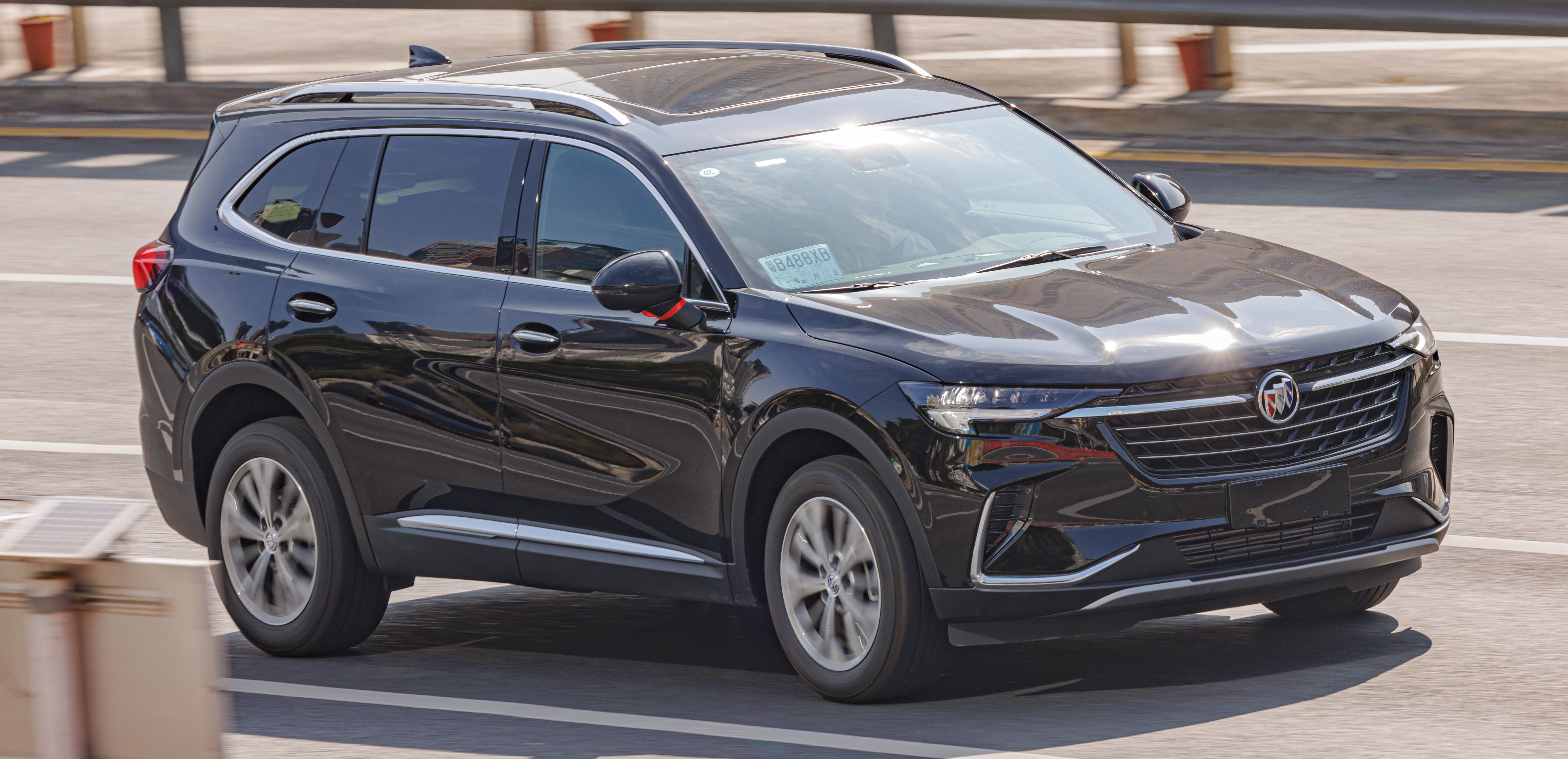
The Buick Envision is a small SUV that many people buy for its roomy inside and low cost. It’s made by the American company Buick, which is part of General Motors.
The Charger Daytona RT is a special version of Dodge’s big‑sized sedan that gets extra power and sporty looks, like a modern sports car built on the Charger platform.
Audi is a German car company that makes many different kinds of cars, from small family cars to big luxury ones. They are famous for their smooth driving and good technology.
Ford is a big car company from America that makes many kinds of cars and trucks, including the popular Mustang sports car and the F‑Series pickup trucks.
‘Hippie engine’ is a nickname for big, powerful V8 engines that were common in old American muscle cars. They’re known for their loud exhaust and strong performance.
An OTA update is like getting a new version of an app on your phone, but for the car’s computer. It lets the maker fix problems or add features by sending data over Wi‑Fi, so you don’t have to go to a dealership.
Instead of stopping a test when the part has worked for a set time, engineers keep running it until it actually breaks. This way they know exactly how strong the part is and can make sure it lasts longer.
AI is like a smart computer that can spot problems in cars while they’re being built, so workers don’t have to wait until the car is finished to fix them.
JD Power surveys ask people who own cars how happy they are with their vehicle. The results help show which cars have fewer problems early on.
LIVE
Welcome to Daily Drive for Monday, December 22, 2025, I'm Kellan Walker in Las Vegas. Today on the show, we kick off our series of year-end conversations about each corner of the automotive industry in 2025. Today, we're kicking things off with our automotive news automaker team. In this conversation, I talk with Nick Bunkley, director of automaker coverage at Automotive News, Stellantis reporter Vince Bond Jr., GM reporter Lindsey Van Holy, Ford reporter
Michael Martinez, and VW group reporter Jack Wallsworth. Nick, as the editor overseeing the automaker coverage, give us a 30,000-foot view. What defined 2025 for the auto industry? What were the dominant themes you saw across all these companies?
I think it starts with two words that begin with T and that's tariffs and Trump who put those tariffs in place, and that sort of filtered through the entire industry all year long. It was the whole year of first preparing for that, and then once the tariffs started in April, seeing all these automakers deal with them in various ways, whether that's reducing imports, dropping some name plates.
Investing in U.S. manufacturing, even though that's not going to happen for a couple more years down the road, it was just a year spent trying to navigate this environment with the change of administration.
And in your opinion, Nick, which automaker had the best year and which had the worst?
Well, despite all that chaos, the whole industry didn't have a real bad year. Sales are looking okay, and so GM, I would point out, had a pretty good year, even though they had a few billion dollars worth of tariff costs, they still continued to pile up profits.
And so you can't say that was a bad year for them. And then on the other side of things, again, it wasn't a terrible year, anybody stretch for Ford, but they definitely had some issues with quality and set a record for a number of recalls, which of course is the kind of record you don't want to be setting in this business.
All right, so let's then get into a little bit of Trump's trade war and manufacturing, Trump's tariffs dominated the year. Let's talk about how each company responded and Lindsay, let's start with you. How much did tariffs cost GM and how did they respond?
Well, in the beginning of the year, they were talking about four to five billion dollars, which is a pretty significant impact.
As of October, when they had their most recent earnings call, they were thinking now that that was going to decline to about three and a half billion to four and a half billion dollars.
There's some offsets that are out there that are going to help related just to bringing down that overall impact.
But I think still, it's pretty significant. They've talked about being able to offset at least 30% of it and a big reason for that.
I think that they're pointing to is really sort of alluded to earlier, just more US manufacturing, trying to shift some name plates back to the US increased production of others here, really trying to offset that as best they can.
But their exposure is pretty significant. They have a lot of manufacturing in Mexico. They have a couple of their most affordable name plates that are imported from South Korea.
The Buick Envision comes from China. There's a pretty big impact, but one of the things that they haven't really done is stop production of any of those.
They've said they're continuing to ship the Chevy Tracks and the Buick Envista, the lowest of their portfolio, the most affordable subcompacts that they have, because it is at a price point that's really needed in the market right now.
I think what we've seen from GM and a lot of other automakers that I'm sure my colleagues will talk about is just really absorbing a lot of that impact right now into the bottom line and not necessarily raising those prices across the board.
Vince, how about Stellantis? They had a wave of investments announced this year what's going on over there and how were they affected by tariffs?
Stellantis has some major changes directly due to tariffs. First off, they had to drop the Italian build Dodge Hornet, the small crossover they had just put out two years ago.
It wasn't really doing a lot of volume, but it was just a way for Dodge to try to expand their reach and get a new audience.
Even though it wasn't selling well, they didn't have another vehicle out there if somebody wanted to get a entry-level Dodge.
That model is no longer being produced right now. Then following that, they had to drop the base trim of the Charger Daytona RT.
That's the EV that came out on January. They dropped the base trim and that was around $50,000.
Those weren't really selling well either, but it was just Dodge's way to try to establish an EV and its first EV really and try to expand it in a new market.
They lost their RT trim, they lost the Hornet, and then also they did sort of change their marketing approach a little bit as well.
When those tariffs were enacted, they put in a new employee pricing program for dealerships.
Just try to draw some more customers in and make them comfortable, even with the price hikes pending later in the year.
They're hoping that they can get the employee discounts in there. Sooner or later, they'll feel more comfortable to buy vehicles anyway.
Those are really the main impacts for the tariffs on slanness.
Interesting. We're going to move over to Ford real quick. Mike, Ford brought back employee pricing as a defensive move. Has it worked?
I would argue it was an offensive move. I say that because coming into this, Ford was really the best positioned automaker.
They build the most vehicles here in the United States. They employ the most UAW workers out of any of the companies they love to say that in their marketing materials.
When tariffs hit in April, they really felt it was an opportunity to go on the offensive to get their message out there and to put some deals down to try to spur more people into the showrooms and maybe try to take away from the competition that was sort of really in a bit with some of these cost increases.
They've had a pretty strong year from a sales perspective. They're going to sell more vehicles in 2025 than they did in 2024.
That's impressive, given they don't really have a whole new lot on dealer lots right now. They have a new expedition and navigator. That's really about it.
All things considered from a terrorist standpoint, they did pretty well.
Gotcha. Jack, how did European automakers like VW navigate Trump's trade war differently than other domestics?
Yeah, I'd say it was kind of a day by day. For the Europeans, a lot of them have production in Europe. Obviously, can't just move that across the Atlantic quickly. Definitely kind of a brand by brand.
Differencing of Volkswagen brand has slight intensity in Mexico. Obviously they're as impacted as like a Porsche who only has European facilities.
One big brand was Audi. They do have a factory in Mexico, but besides that, all their vehicles are imported.
I think a lot of European brands, they were put in a tough spot because they relied so heavily on imports.
But even on the high end and the ultra luxury space, like Bentley's Lamborghini's Ferrari, those are vehicles that are only made in certain factories.
That's part of the heritage, part of the reason why people buy them is because they're handmade in Italy or England, things like that.
Obviously, those factories aren't going to come here. We saw some price increases. We saw prices ever already super high on this high end.
Exotics going up even higher, but the customer base is a little bit more insulated. They can handle that.
Definitely not one size fits all type of thing.
Another thing too is the EU is a huge block of countries. The trade deal with the EU and the US took a while to get over the goal line.
I think that was something that was hanging over a lot of these brands throughout the summer.
It was something that wasn't just realized quickly.
If one size fits all, depending on which European brand you are, probably a better spot than others, but definitely all those things that came with factory that quickly.
We haven't seen a ton of new investment from European brands into the US.
Volkswagen Group is considering an Audi plant that hasn't been finalized or announced.
Maybe more to come into 2026, but 2025 was definitely logistically challenging for many of the European brands.
That's one thing we haven't talked about as far as impacts of trade.
Since we're talking about the administration and some of the changes in general,
you could look at some of the changes around emissions that have had ripple effects on electric vehicle plans.
All of that taken together has just made the business of product planning even more challenging.
I think all of us ran into this as we were doing some of our future product pipeline reporting this year.
Trying to get a sense of what's coming in the pipeline, what's on the horizon.
A lot of that's just a lot more murky with uncertainty that's out there around trade policy and not knowing necessarily what deals were going to be reached and how much and when and changes to some of the things like the tax credit for electric vehicles, for instance.
I think one of the things that I heard throughout the year was just flexibility, right, in product planning, in power trains, in strategies being able to be nimble and pivot has been really important.
Coming up, Vince and Mike detail the years that Stellantis and Ford had in 2025.
That's next on Daily Drive.
Vince, we're starting off with you, the Stellantis turnaround.
You know, one of the biggest stories of the year, Stellantis went from crisis to comeback mode.
Can you walk us through what happened?
Yeah, yes.
So really the narrative around the company has really changed a lot.
So obviously Carlos de Barris, former CEO, he resigned in December and in 20th of alosa, he took over in June.
And he was previously the CEO or CEO for North America.
And so under alosa, I mean, there's the whole narrative has changed around the company.
I mean, it's gone from one of cutting costs and firing people to now they're growing.
And instead of talking about EVs, they're talking about big, hippie engines and bringing back old school American muscle.
And so that's really been the huge change under alosa.
They're trying to build some momentum, but they've seen some gains this year under Jeep and Ram in particular.
And so those are some, some of the signs you're seeing early on.
And Vince is part of Stellantis's turnaround is a big part of this, the refocus on North America.
Yes, yes.
So one of the big things in North America is the hippie engine.
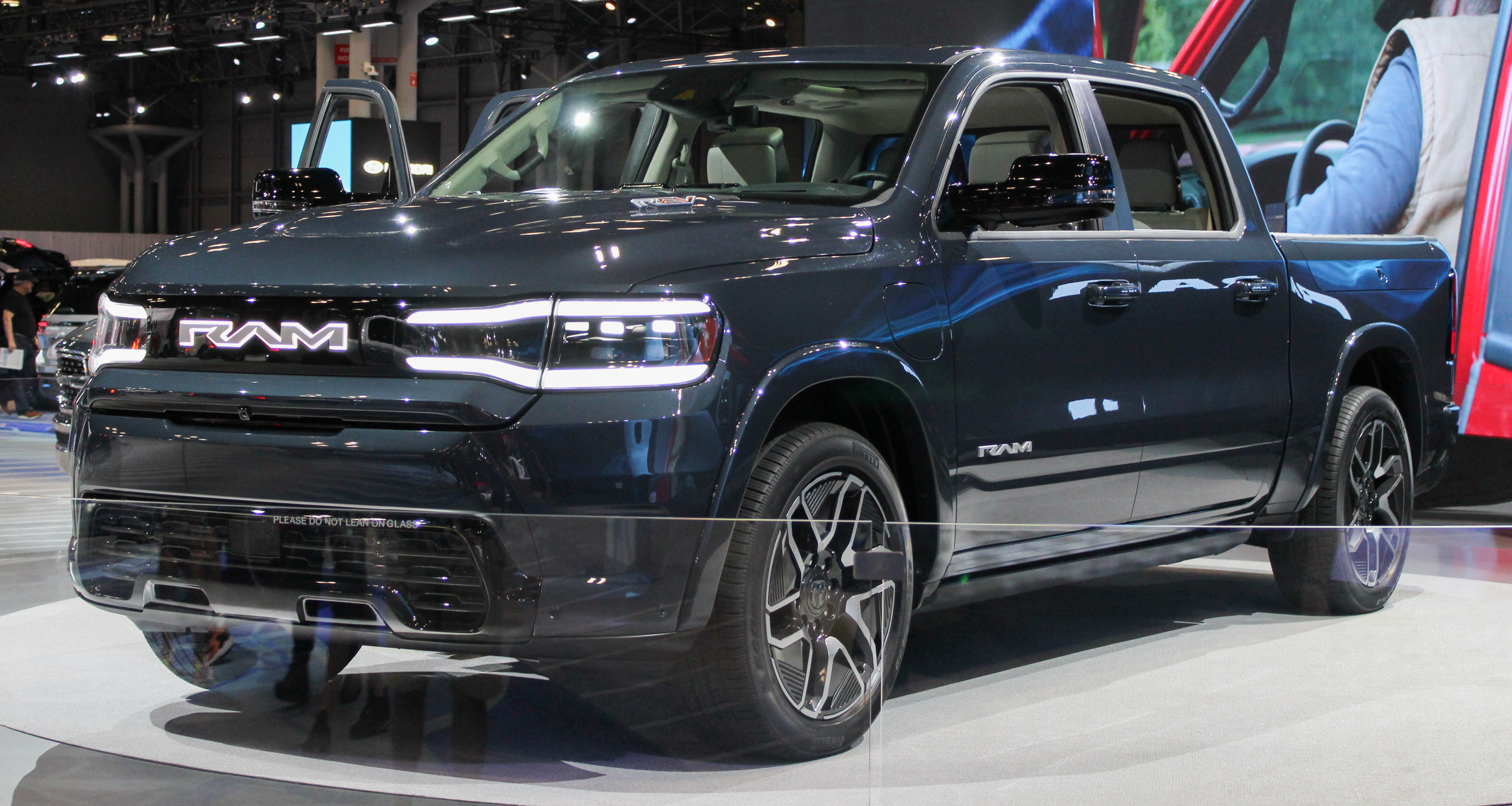
And so that is coming back to the Ram 1500, you know, pick up truck at 5.7 him.
That came back in the third quarter and Ram already saw, you know, some big gains off of that.
Those trucks are moving around in like five days, you know, on average in a third quarter.
So some serious momentum, you know, from that side of it.
And then also for alosa, you know, he's making his headquarters.
He's living right here in North America.
But that's a big shift from Tavares who still stayed overseas in Europe.
And so he's, you know, Pelosi is right here.
You know, he can talk to dealers every day, be on the ground, talk to the plants, go to the plants if he wants to.
And so he's here and he's making North America the main focus.
And what do we know so far about the repair of dealer relations with the company since Antonio Pelosi has taken over?
Yeah, well, that really ties back into what they're doing now.
We're trying to do it up sales.
So one, the hippie, that is something that dealers wanted.
And the brand is promised for the company has promised that not only will the Ram 1500 get the hippie back.
They're also going to expand that engine and bring it back to more models.
So we'll see a lot more jeeps with him.
There may be some other brands will get that that performance boost from that engine.
You know, the hippie fan base is very vocal.
They've been clamoring for it to come back in.
So slant is listening, you know, with Tavares.
And that's also going to please dealers at the same time.
And another thing I will say is just, you know, Pelosi is really just being, I guess, collaborative with dealers.
That's one of the big things.
And he's listening to what they want to do in this market.
You know, before he came in, they're really hoping for someone that was going to just listen to them and just kind of get more detail on what's needed in this market, not Europe.
And so far, Pelosi is delivering and he's doing what they want them, what dealers want him to do.
Perfect. Thanks Vince.
Now, Mike Ford had a record breaking year for recalls.
What happened?
Yeah, they had the record breaking year halfway through the year.
So it's really impressive in terms of the ineptitude and the inability to properly build a vehicle, so to speak.
But I think the company would point to a few things.
One of them being the fact that this isn't a new issue.
This has been a problem for years.
And they are addressing it by implementing stricter quality checks.
So if you have a lot more testing going on and you're catching more things, that's going to lead to more recalls.
So that's why they're saying the number jumped so substantially this year.
And at the same time, too, they point to software issues.
Ford's made it a point to really expand its subscription services.
And for all brands, vehicles are getting way more technical.
And Ford saying at least around half of these recalls over 100 at this point are software related that can be fixed relatively easily with an over the air update versus bringing it into a dealer and having them need to wrench on your car for a week.
So that's why they would say the numbers are so high.
It's still not good.
Again, I mentioned this is an issue that's been plaguing the automaker for years.
Jim Farley said a couple years ago that he let this fester too long when he first became CEO in 2020 and he wishes he would have acted faster.
But we're starting to see some of those actions take root in 2025 and hopefully lead to some better numbers moving forward.
So Cal for all the criticism that Ford has gotten probably rightly for their quality was it should be noted that they have made some improvements this year.
And I had mentioned earlier additional testing and we've seen situations where now instead of testing a certain part to a certain timeframe, they're now testing to failure.
And sometimes that leads to delays in product launches.
We saw that with the super duty redesign a few years ago, but ultimately Ford says it's going to lead to fewer recalls on those vehicles once they get out there.
We did a story earlier this year about how they've implemented artificial intelligence on the assembly line to scan vehicles as they're going through and catch defects sooner.
So they don't have to wait until the end to take cars apart.
They can just catch it right there and keep the line moving.
So things are going well.
Well, we saw them receive the best positioning and a recent JD power quality survey that they've had in a really long time to be fair, they were number 11.
So nobody's pop in champagne to be number 11 that doesn't mean you came in first twice.
So they have some work to do.
But Ford says one metric they look at is vehicles after three months in service when they're the freshest coming out of the factories.
And they say they're going to have their best three months in service internal scores that they've had in decades.
So there's a sign that maybe things aren't great right now, but they are slowly getting better.
And some other big Ford news, the headquarters move now.
Was that a symbolic thing or does this actually change how Ford operates?
I think you could argue it was symbolic, but also practical at the same time.
If you've been into the glass house in Dearborn, you know, it's not a great building.
I think any worker that has spent any amount of time there recently is jumping for joy at the fact that they get to leave that building and that it will be demolished and no longer exist a few years from now.
But it's also symbolic in that the executives want to get closer to where the action is.
They want to have to walk from their glass tower to a parking lot, drive 10 minutes somewhere else in Dearborn to a engineering building and then go into a meeting room.
They don't want to have to spend half the day trying to get to a design studio.
So by co-locating everybody in one space, you should remember that Ford was already building this building as part of a campus renovation plan they announced a decade ago.
They don't want to have it there anyway.
Jim Farley, everybody else decided, hey, we should be there right with the rest of our employees.
We can get work done a lot more efficiently. Maybe the employees might not like that.
If your boss is looking over your shoulder every day, that may not be the best thing, but they hope it will lead to more efficiencies in terms of how they work.
And you brought up how now everyone will essentially be under one roof.
How big of a cultural shift you think that'll be with now executives down the hallway from engineers?
I think Ford's been going through a cultural shift for a few years now, just like many of these other companies hiring a lot of talent from Silicon Valley.
Obviously, the big shift during COVID with remote work and you have a bunch of folks in California now that are beaming in for presentations and meetings.
So I think culturally there's been a change that's been happening, but I think this really accelerates that.
Ford sort of pivoted by bringing everybody back to their desks, to their offices five days a week from that COVID era remote work policy.
So workers are getting used to that, but Ford argues that it's a good thing that you get more ideas that work gets done faster.
And then again, if you have the bosses there, they can in an ideal world, sign off on projects quicker and bring new vehicles to market at a faster rate.
Vince Bond Jr. and Michael Martinez cover Ford and Stellantis for us at Automotive News.
Come back tomorrow for a look at the years that GM and VW had in 2025.
That's daily drive for today. I'm Kellyn Walker.
Thanks to Automotive News Executive Producer Jake Nier for his help on today's podcast.
You can get the latest news on manufacturing, tariffs, and everything happening in the auto industry at autonews.com.
We'd love to hear from you. Let us know what you think of the show when the topics we covered today.
Send us an email at dailydriveatautonews.com or leave us a voice mail at 313-444-2774.
And if you enjoyed the podcast, remember to like, leave a review, and subscribe so you never miss an episode.
About this episode
2025 was a pivotal year for automakers, heavily influenced by tariffs and trade policies under the Trump administration. The panel discusses how companies like GM, Stellantis, and Ford navigated these challenges, with GM managing to maintain profits despite significant tariff costs. Stellantis faced a turnaround under new leadership, focusing on North American production and reviving popular models. Ford dealt with record recalls but improved quality measures, while European brands struggled with logistics and import reliance. The episode provides insights into the industry's resilience amidst a turbulent economic landscape.
Daily Drive’s year-end series kicks off with a deep dive into how the Detroit automakers navigated 2025. In this first installment, the Automotive News Automaker team breaks down the biggest stories of the year. Today’s focus: Stellantis and Ford’s challenging 2025, with insights from the reporters who covered them closest.