Plug‑in hybrids are cars that can run on electricity for a while before the gas engine kicks in, saving fuel.
LIVE
With nearly 5,000 specialists dedicated to supporting dealer financial services, Ally has the expertise to help you with your retail finance, F&I, and remarketing needs. We're all better off with an Ally. Contact your local Ally account executive to get started today. Ally do it right.
Driver, a conanemi rules dealer sentiment sinks as the tear fresh fades and tax credits end. And Toyota regains its spot on top of consumer reports of most reliable brands. Plus, what are the steps dealers should take before they decide on A.I. tools for their stores? Yuri de Midco, a Fox Motors, joins the show to talk about it.
not just spray and pray. Let's run through all the news you need to know to keep up in the auto
industry. The Trump administration is proposing relaxed federal fuel economy standards, automakers
would be required to meet an average of 34.5 miles per gallon across 2031 model year vehicles.
That's a significant rollback from Biden-era rules that required 50.4 miles per gallon.
President Trump defended the move at a White House event attended by Ford CEO Jim Farley,
Stellantis CEO Antonio Filosa, and GM executives.
People were brainwashed. This is a green, new scam. And people were paying too much for a car
that didn't work as well. And now they're going to have a great car that's going to be environmentally
friendly, but it's going to push you a lot less and it's going to work great. All of the nonsense
is being taken out of the cars. The move continues the administration's push to unwind
federal support for EVs. Alliance for Automotive Innovation says the current cafe rules are
extremely challenging given the current EV marketplace. More on the story in a minute with
our own Molly Boygon. While automaker celebrate looser fuel efficiency standards, dealers are
feeling grim about their business. Dealership professionals showed near-record levels of unhappiness
in the fourth quarter. Second, only to their weak sentiment at the start of the COVID pandemic.
That's according to Cox Automotive's dealer sentiment index. Dealers blamed the economy and
lack of consumer confidence, but Cox analysts say they're really just coming off the high of
front-loaded sales when customers rushed to buy vehicles before tariffs hit and EV tax credits
ended. Cox's Erin Keating says dealer pessimism is, quote, probably a little disconnected
from actual reality. And Toyota is back in the top spot on consumer reports' annual ranking
of the most reliable car brands for the first time since 2022 edging out Subaru.
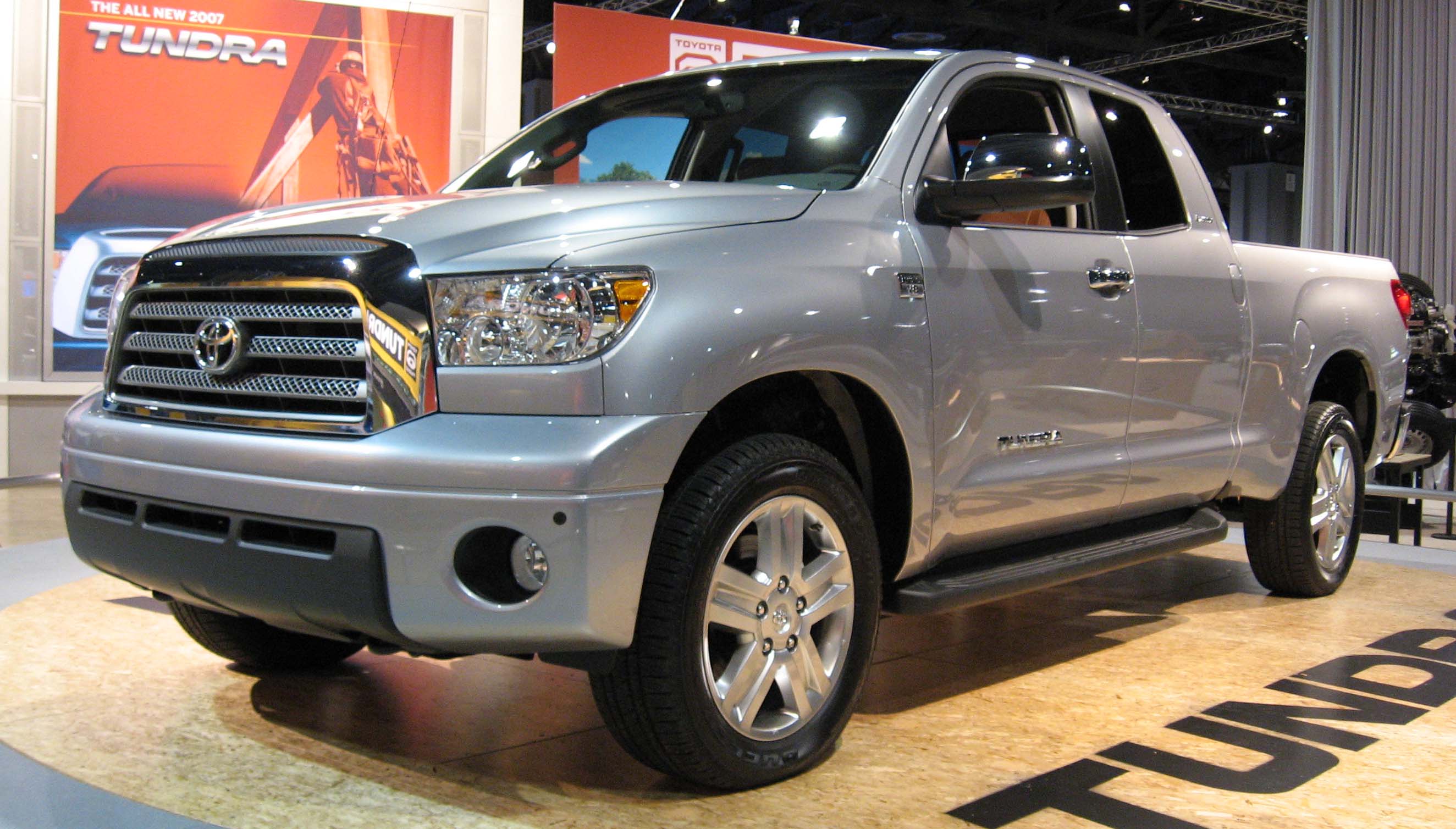
Improved reliability of the Camry, Tacoma, and Tundra gave Toyota just enough momentum to
pass last year's winner. Ford landed at number 11 its highest ranking in 15 years,
and assigned the automaker is making progress on quality despite leading the industry and recalls
this year. The rankings are based on survey data from about 380,000 vehicles. Consumer
reports says electric vehicles and plug-in hybrids experienced about 80% more problems than combustion
engine vehicles. And those are today's headlines. You can find more details on all those stories
at autonews.com. President Donald Trump's announcement from the White House yesterday included
some high-profile industry leaders who applauded his proposal to relax fuel economy standards.
Automotive news reporter Molly Boygon was tuning in, and she spoke with our own Jake
near about it. Molly Boygon, welcome back to Daily Drive. Thanks for having me, Jake.
Okay, so what do we know now that this press conference has happened? We've had President
Trump's announcement about sort of the top line numbers here and also what it would mean for
the industry if this rule is actually finalized. The Trump administration announced a change to
the corporate average fuel economy standards cafe. So under the Biden administration,
there was a rule that manufacturers had to achieve an average of 50.4 miles per gallon across
their 2031 model-year vehicles. Now, the proposal that's on the table from the Trump administration
would require 34.5 miles per gallon across 2031 model-year vehicles. So it's a loosening of the
regulations that basically gives manufacturers more wiggle room in making and selling vehicles that
have less fuel economy. The one interesting, one of many interesting parts of this is that the one
big beautiful bill act that passed over the summer actually eliminated fines for non-compliance
with cafe. So the practical implications of this are sort of unclear because the enforcement
mechanism for cafe has been eliminated. But the automakers and the industry stakeholders that were
at the press conference cheered the move saying that this previous administration standard was
really difficult to meet given market conditions and they're basically expressing relief about
the reduction in the standards. The White House has been citing affordability as the driving
force behind this, at least one of the main driving forces. As we know, MSRP's are getting really,
really high for most customers that are under a certain tax bracket, I guess you could say.
Just yesterday on the show, we had Jessica Caldwell on talking about how the new car market has become
exclusionary is the word that she used. Jessica Caldwell from Edmonds. So this is a real issue,
the affordability is a real issue, but when it comes to the actual impact on sticker prices,
based on even what the White House says, would this really move the needle?
The White House estimates that the change to the fuel economy standards will save consumers
around $900 on the sticker price of the vehicle. The increased consumption of the vehicle right now
is not as big of a deal because gas prices are at an historic low. But in reading some of the
analyst notes and having conversations about this, there is some question as to whether the
elimination of the gas savings that's provided by improved fuel economy will basically overshadow
the predicted sticker price savings. And again, the automakers already were not
accountable for fines if they did not comply with cafe. So that's another question that I have
about how the practical savings will actually work. I think anyone would be happy to save $900,
right? But again, just in the context of it, if you're talking about an average transaction price
around $50,000 that monthly payment to me, it seems like it's sort of questionable how much
that would really move the needle. But I guess I digress there, Molly. But what happens next?
What is the next steps for this? Once the government posts the proposal
in the federal register, there's a 45-day comment period where they will take feedback from
industry people and then issue a final decision. The other thing that is sort of factoring into this
is that the government is considering pulling back what's called the endangerment finding,
which is the government's acknowledgement that humans contribute to climate change. And therefore
that the government has the power to regulate different industries that may be contributing to
climate impact. So the endangerment finding underlies all of the different regulations across
different agencies related to greenhouse gas emissions and other polluters coming from the auto
industry. The Trump administration has indicated that it wants to pull back the endangerment
finding which would sort of render toothless any of the regulations that relate to greenhouse
gas emissions coming from the auto industry. So that's another thing that I'm watching because
if the government decides to make this move, it renders sort of this whole conversation mood
because it got the government's ability to regulate climate affecting industries like the auto
industry. Molly Boygan is tech and innovation reporter here at Automotive News and one of the hosts
of our shift podcast. Molly, thank you so much for joining us and breaking this down for us.
Thanks for having me, Jake. Coming up, a look at the steps retailers need to take before deciding
on AI tools for their dealerships. That's next on Daily Drive.
For over 100 years, Ally has helped dealers like you serve your customers by providing the best
in-class products and services you need and by remaining true to the automotive passion we share.
Your dedicated Ally account executive will work hand in hand with you to help you gain efficiencies,
increase your product offerings and work to improve per vehicle revenue because we care about your
business as much as you do. We're all better off with an Ally. Contact your local Ally account
executive to get started today. Ally, do it right. Welcome back to Daily Drive. I'm Kellyn Walker.
Shopping for AI isn't as simple as finding the flashiest vendor.
Yuri Demidko, chief information officer at Fox Motors, says dealerships need to assess their needs
and clean up their data before they even start looking at AI solutions. He spoke with
our own Mark Homer. Here's a piece of their conversation. Yuri, thanks for joining me.
We're going to talk about all things AI and we're precisely had a shop for it,
had a pick it out and how to install it in your dealership. So I'm grateful that you're taking the time.
Well, thank you for having me. I appreciate it. For sure. Now, not every dealership is using AI,
obviously. So what I'm wondering is what is step one? How do you get started?
Step one is very technical and very complicated. So get ready for this. If you need to write
something down, this will be really important. So step one is you go and you look at the sales
person's LinkedIn profile and you're going to pull the whole profile up. You just look at the title
under their name. If it says something along lines of AI expert, AI visionary, driving AI forward,
go ahead and disregard that company and proceed to the next one. That would be that would be the
first. Good move. Why is that? Why is that? That's a great question. The reason that is is if you
ask somebody, if somebody calls themselves an AI expert the way I would classify it's like,
so you're a data scientist, you actually build models because that would be in it. I'm not an AI
expert. For example, my background before I was a corporate stooge is I was an engineer.
So I'm a software engineer. I did full stack development, that kind of stuff. Now do I have
understanding of how AI works where it can be applied? Sure, but I would not classify myself as an
AI expert because I do not build models. So it's not to really mince words, but the salesperson selling
you the AI is probably not the AI expert. This is kind of what I'm trying to say.
So step one is to find someone to help you. So then it's not the AI expert. Who do you find?
So I think step one before you even start looking for it. This is really important. It sounds
like fluff, but it's not. What are you trying to solve or what problem are you trying to solve
or what are you trying to improve? And that's a very important question. Sometimes maybe you're
not maybe you're like, hey, I just want to see what's out there, which that's okay to. But generally,
if you have a problem, you're thinking AI can solve, make sure you really hone in on that problem.
And what I mean by that is don't go for like a monolithic way of I want to revolutionize
the service drive process. That's a really big like what are we talking about here?
You know, like that's it's like are we talking about greeting the customer? Are we talking about
getting the customer to the service drive? Are we are we talking about the write-up process?
Like there's a lot of steps there, which you really want to do, especially in the current
state that AI is in, is hone in on specific areas of improvements. In other words,
kind of map out what the friction points are. What are you trying to either improve or solve?
There is a problem or where you think where you're trying to find the better mouse trap. And that's
kind of like, hey, I don't know what's out there, but I want to see what I can do with it. Like that
that kind of stuff. So that would be the first thing. When she do that, then what comes next?
So after that, you need to start looking internally. And as you notice, you've just
been three questions already. And I have actually told you to go to talk to anybody yet.
There is a reason for why I'm doing that. You want to look internally at the state of your
data infrastructure. And if you're like, I literally don't know what you just said,
that's already a state of your data infrastructure. That means do you need to go find somebody
internal or do you start looking for a partner that can help you with the data side of things?
That is extremely important. Not every dealer has a formal data warehouse or a data lake or any
other of these cool tech words. So if that's the case, that's the type of partner you want to look at.
Reason I bring that up is because AI sits on top of data. And it's essentially useless without
data. It's just a brain with no knowledge. It could be the smart, you know, it could be Einstein's
brain. But if there is nothing in there, it just doesn't matter. And the important thing there. So
what a lot of AI companies do is, especially like you know, so let's talk our industry automotive.
So what AI companies do in automotive is they take an existing model, then they use something
called retrieval advantage generation or rag for short. And all that means is they take some of
the industry data or their specific data or your specific data and then put that along with
the other training stuff that's already been in the model. So OpenAI makes Chad GPT, which runs on
GPT-5 right now. They hook GPT-5 with all of its knowledge into your into other data as well.
That's retrieval advantage generation. Well, the catch with what I just said is that means that
the model will be using the data that they hook it into. If that data is complete garbage data,
like there is, let's say, let's say you're doing some kind of front end thing with the CRM,
let's just put it that way. If you have a bunch of duplicates, nothing is cleaned up.
Vehicle ownership is not, is not figured out. It's just, you know, a person owns 30 vehicles,
29 of which they haven't owned in 20 years, that kind of thing. This AI will just exacerbate
the, the problem has been going on in dealer world for the longest time where the way I like to put
it is, you know, when somebody dies, we litter their grave with marketing material for vehicles they
haven't owned in half their life. So up until this generative AI boom, that's already been a serious
problem from a marketing standpoint, from a business intelligence standpoint. Well, now it is even
further exacerbated from the AI standpoint. Because now, what happens if you don't have that in
order is when you hook the AI on top of it, it will give you the most eloquently worded
best cleaned up answer ever. It will sound perfect, you know, just a perfect answer to anything you
ask, anything you do, and it will be fundamentally wrong. So now, before you even went to a partner
and you didn't figure this part out, you will try it once. This is probably why a lot of dealers
call it, you know, it's just a bunch of AI slop is because what happens is you put it on top of
this garbage data set and then you go, this piece of crap, yeah, it doesn't work. And it's like
it is working. It is regurgitating the crap that you gave it. So let's recap them. Step one is to
assess your needs. Step two, please repeat step two, as you see it, a short version. Step step two
is either figure out the current hygiene state of your data or make sure you reach out to partners
that would be the ones taking care of cleaning up that data. So step two is getting becoming data
ready before you even start AI would be the easiest step to. So once your data is in order of
cleaned up for revamped or whatever is needed, then what comes after that? That's when the fun part
starts. So the fun part in my opinion is where you start looking what's out there. So this can be,
you know, every there is a lot of companies out there. And during the again in our current time,
the really interesting thing about automotive and that's what I've been like really energized by
is the fact that we have a lot of people from not automotive industry coming into our industry,
especially in the vendor space, as a result of this, as the say, I boom, bringing all this
technology into the automotive industry. Like for example, like myself, I'm the CIO in Fox Motors,
but I worked at Apple. Like so it's like, what are you doing there? What are you here?
So this is shopping for vendors, basically. How should a dealership shop for vendor?
So that best thing I would do is start with a nice Google search or chat GPT search or
perplexity search, whatever, you know, however you search. I would start with that and I would
really look at what people are saying about it. What are other people saying about it? I would
definitely, you know, the traditional start demoing. But again, fixate on what you are trying to solve.
Not just spray and pray. I will give you a, like so when shopping, this is extremely important
because a lot of times you see a feature and you're like, this is really cool, it's shiny,
I like it. And then you put it in and you're like, either, let's say even if it does work,
you're like, well, this is not really solving what I was trying to solve. And I'll give you a perfect
example of this. Let's say you had a problem and I know a lot of dealerships have this problem is
when people call into your service department, calls go to voicemail and nobody picks it up and
then we have trouble following up after that and customers are upset, CSI gets hit, that kind of
stuff. So it's a problem. So you immediately go, okay, well, this is a modern day of AI. There is
a lot of voice AI that we can implement, you know, to pick up the phone. Sweet. All right, cool. So
then you start going into a situation saying, well, majority of our calls are appointments.
You're saying this generally because majority, yes, a lot of calls are appointments, but that's not
all your calls, but you go majority of our calls are appointments. So now you land on the thing of,
well, why don't we get an AI to pick up the phone and if they want to do an appointment,
we use voice AI to get an appointment put into our system. But if you're picking a vendor,
is it a question of picking a vendor for a specific function? Yes, 100%. I would say 100%.
You definitely want to pick a vendor for a specific function.
Would you go to a big provider or would you go to a smaller startup? I mean, is one better than the
other? I would definitely see what the big providers are doing, but at the same, I would also look
at the small ones as well. I usually, my approach, I usually prefer small to medium, but hungry and
you know how the vendor, like the vendor curve and automotive is kind of like this. It's really
hard to get started. Then they hit kind of like this and then it goes like that. I'd get the ones
which are kind of like this. That's I think I think they're the scrapiest, most innovative and at
the same time, they're past like the really like the alpha beta stage where it's like, hey,
we've got a couple hundred rooftops or we got like 500 rooftops. So you're in the space a bit,
you're not sitting on 10 rooftops. Now at the same time, if you do have a large partner and the
partner can deliver it, maybe it's easier and more seamless, but I would definitely look at
at least one or two vendors at every size just to see what's out there. Come back for our bonus
episode of Daily Drive for more on that conversation with Yuri Dmitko, Chief Information Officer at Fox
Motors. That will be available Sunday morning. That's Daily Drive for today. I'm Kellyn Walker.
Thanks to automotive news executive producer Jake Near, as well as our own Molly Boygon,
John Hunter and Richard Chuitt for their reporting for today's podcast. You can get the latest news
on retail tech, fuel economy standards and everything happening in the auto industry at autonews.com.
We'd love to hear from you. Let us know you think of the show when the topics we covered today.
Send us an email at DailyDrive at autonews.com or leave us a voicemail at 313-444-2774.
And if you enjoyed the podcast remember to like, leave a review and subscribe so you'd never miss
an episode.
About this episode
Ally's expertise in dealer financial services is highlighted as the podcast discusses the current state of the automotive industry. The Trump administration's proposal to relax CAFE standards is a major topic, with industry leaders expressing relief over the changes. Toyota regains its title as the most reliable brand, while dealers report low sentiment due to economic pressures. Yuri Demidko from Fox Motors shares insights on how dealerships should approach AI tool selection, emphasizing the importance of understanding specific needs and ensuring data quality before implementation.
Yuri Demidko, chief information Officer at Fox Motors, outlines the steps dealers need to take before settling on new artificial intelligence tools for their stores. President Donald Trump unveils his plan to slash fuel economy rules. Plus, dealer sentiment sinks as the tariff rush fades and tax credits end.