The Nissan Silvia S13 is a car from the late 80s and early 90s that's great for drifting because it's light and has rear-wheel drive, which helps with control during turns.
The Ferrari F40 is a famous sports car made by Ferrari. It was built to be very fast and light, and it has a powerful engine that helped it become one of the best supercars in the world.
The Lamborghini Countach is a well-known sports car famous for its unique shape and doors that open upwards. It has a very strong engine and is considered one of the coolest cars ever made.
Daimler is a big car company from Germany that makes luxury cars like Mercedes-Benz. They are known for their high-quality vehicles and innovative designs.
The Mercedes-Benz R-Class is a type of vehicle that is a mix between an SUV and a minivan, made for families who want more space and comfort. It was made from 2006 to 2013.
The Detroit Auto Show is a big event where car companies show off their newest cars and technology every year in Detroit. It's a place where people can see the latest in the automotive world.
The Mercedes-Benz CLS is a stylish car that looks like a fancy coupe but has four doors, making it easier to get in and out. It's known for being very luxurious and comfortable to drive.
The Mercedes-Benz G-Class is a fancy SUV that looks a bit like a box on wheels. It's really strong and can go off-road, but people also love it because it looks cool and is very luxurious inside.
The Chrysler Pacifica is a type of minivan that has lots of space and is great for families. It has features that make it easy and comfortable to travel with kids.
The Jeep Wagoneer is a big SUV that can fit a lot of people and gear, and it's built to handle rough terrains. It's a mix of being tough for adventures and comfortable for everyday driving.
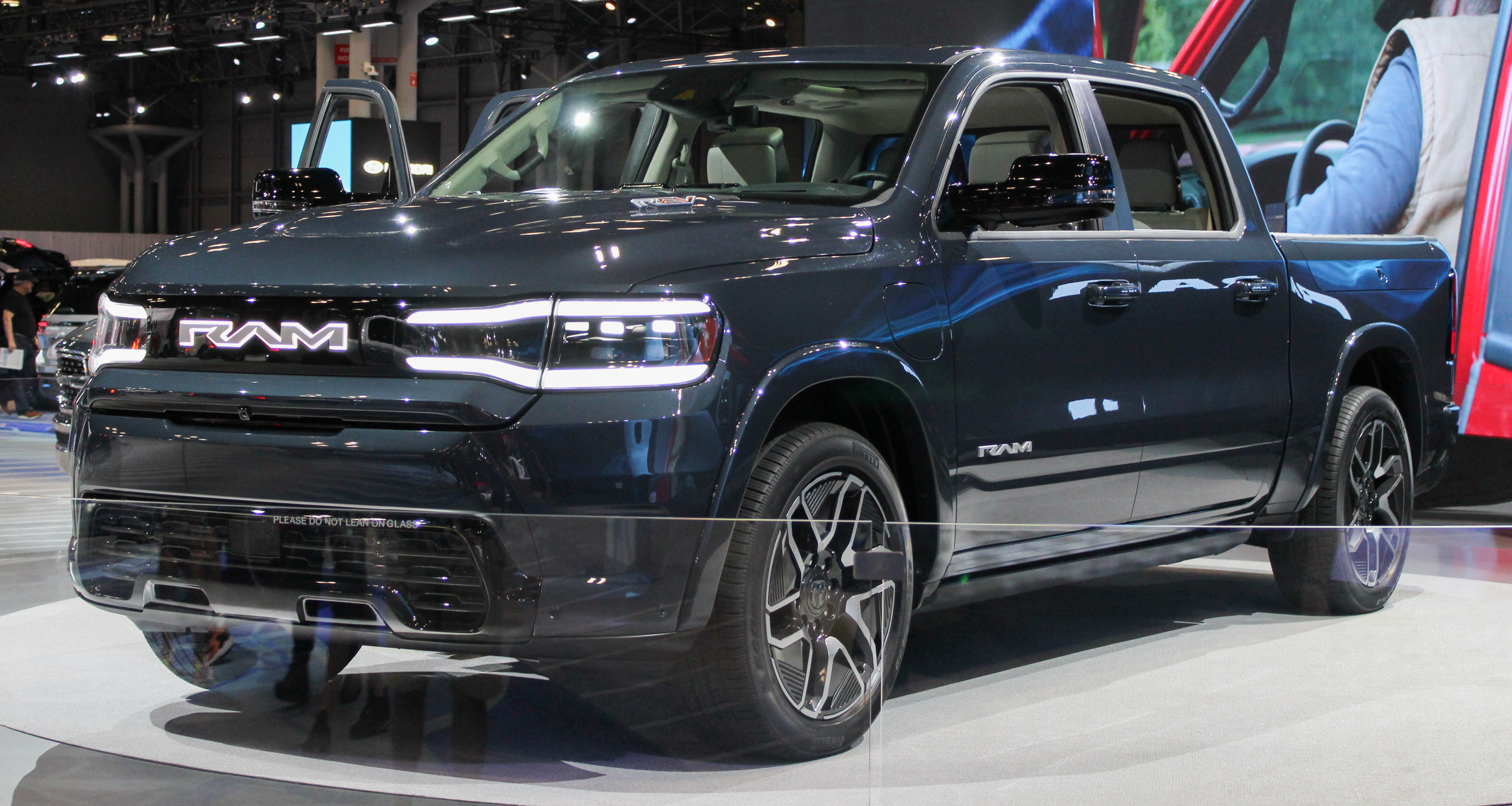
The Ram 1500 is a big truck that can carry heavy loads and is great for work or play. It's comfortable to drive and has a lot of cool features that make it stand out from other trucks.
An SUV is a type of vehicle that is bigger than a regular car and can handle rough roads. They are great for families and outdoor activities because they have more space.
The Ford Bronco is a tough SUV that was really popular a long time ago and just came back after being gone for many years. It's designed for people who love to go off-road and explore nature.
The International Harvester Scout is an older SUV that was made in the 1960s. It's known for being useful for both everyday driving and off-road adventures.
A range extended electric vehicle is an electric car that can also use a small gas engine to help recharge its battery. This means you can drive further without worrying about running out of battery power.
Range anxiety is when drivers worry that their electric car will run out of battery before they can charge it again. This can make people hesitant to drive long distances in electric vehicles.
The Rivian R1T is a new electric truck that runs on batteries instead of gas. It's designed for people who like outdoor adventures and can go off-road while being good for the environment.
The Dodge Ram is a big truck that can do a lot of different jobs, like hauling stuff or towing trailers. It's known for being powerful and useful for both work and everyday driving.
Body on frame construction means the main body of the vehicle is built on a strong frame. This is common in trucks and SUVs, making them tough and good for off-road driving.
The Porsche Taycan is a fast electric car that can go from 0 to 60 mph quickly. It's designed for luxury and has a lot of high-tech features.
LIVE
Hi there and welcome to another episode of The Inevitable. This is Motor Trends podcast and
our podcast about the future of cars, the future of transportation, where we're going,
how we're going to get there, especially when we go off road.
Before we get to today's guest Ed Lowe, my co-host has a message just for you.
Hi there. The Inevitable podcast is brought to you by nobody currently, but we're looking at
2026 and hopefully signing a new sponsor. If that could be you, please shoot me a note at
www.Edward.loh.herst.com because we have a great show. Yeah. The best, you might say.
And today we have an amazing gentleman. Great guest. He is the chief design officer for Scout
Motors. His name is Chris Benjamin, fascinating guy. He's got an amazing story throughout.
Back story is really, really good. Great backstory. Worked with a lot of guys that we know
quite well. Some funny stories. And the only person in human history to work at a very large
German company and a fast food giant at the same time. Yes. And we went way over. So without
further ado, let's bring on Chris Benjamin. Chris Benjamin, chief design officer of Scout Motors.
Thank you so much for making the journey. Come to see us. Absolutely. Pleasure to be here.
All right. Where do you want to start? Well, we can start at the beginning. This is...
What's the beginning? Well, another... We have a pretty long history of interviewing
car designers on this podcast, but mostly from Art Center. And you are not an Art Center guy.
Well, I am not an Art Center guy. Can you really be a chief designer or anything without paying an
Arts Center guy? Talk to us about those amateurs at Art Center. Or who actually probably all
work for you. Ooh, which is great. You know, it's funny because I do have a lot of friends
that went to Art Center. Obviously a lot more that went to CCS. But we don't discriminate when it
comes to that. At least I don't. I'm not too worried about that. But it's interesting because
there is this rivalry and, you know, obviously there are the schools in Ohio as well. But we,
you know, most of the good, best talent came out of CCS or Art Center. Right. And you're CCS.
Yeah. And he CCS in the same years that we went to school. He's a... He's 95. Hey, hey, hey. We're
talking about years here. Come on, guys. I'm older than that. You're 93, right? 93 to 97.
Yeah. So it was roughly the same. Roughly the same. Yeah. Yeah. Same era. Yeah. Yeah. Yeah. And
God, I've accomplished nothing. All right. So what led you to CCS? How did you learn about
art design school? Because every designer we've ever talked to, with the exception of like two,
never knew there was even a way to like go to school to design cars. They like to draw cars
on their notebook. Ditto. Okay. I mean, so I'm from New York City originally. Which borough?
Queens. Oh, nice. Yeah. South Jamaica. Yay. And I moved, we moved down to Miami when I was eight.
So my interaction with cars has always been, so my dad immigrated here from Jamaica. He was a
mechanic. He loved cars. He was always fixing them. I mean, for work, he fixed trucks, you know. But,
you know, he always drove fast. He always loved cars. I always watched him
tinker and fix things. So that's a big part of where my love of cars came from.
Big trucks. City trucks. So big trucks when he was in New York. And then when we moved to Miami,
he worked for a concrete company. So fixing cement mixers. Okay. And then he said he was
driving fast. What was he driving? Anything. He didn't need to have a fast car to drive fast.
Right. Right. He was just, you know, I mean, we, we, we didn't have, you know, we had like a Ford
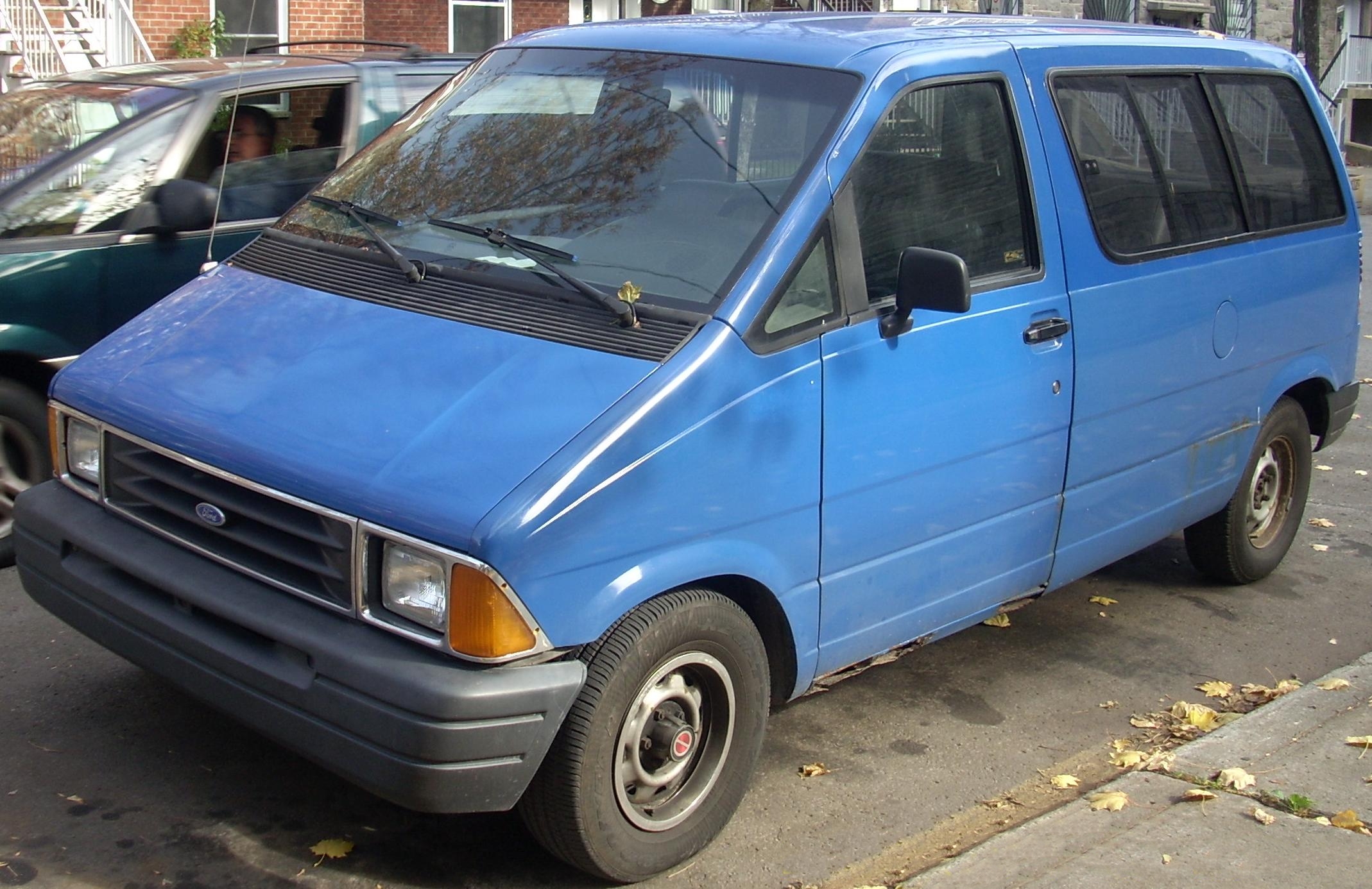
LTD. We had an air, because I have two brothers and two sisters, right? So we had an AeroStar at
one point. So, yeah. So domestics, you guys were into the, in American, American vehicles?
Yeah. And I, but I do remember like after my son, my parents got divorced when I was 12.
And then so when my dad was, you know, a single dude in his 40s,
had his place, he was driving a 240SX. So that was, that was fun. There was this one car for five
kids. Yeah. Yeah. I mean, there was a, you know, hey, but there was a, there was this one shortcut
corner that he would always take. And I mean, he would always like drift this corner. And it was,
yeah. So again, like a, like a 93, like a 94. Was it the, was it the lift back? Was it the
notch back? It was a, it was a fastback. Fastback. This would have been S13 for the drift nerds.
This would have been early, early 90s, late 80s. Yeah. Okay. Yeah. Yeah. All right. Cool.
All right. Cool. So then you're, you were into what cars coming out of Queens, coming out of?
Well, the thing is, so, so always loved cars. But the thing is, for me as a kid, we, you know,
when we would get toys, it was kind of like once or twice a year kind of thing where
my mom would save money from like grandparents or great aunts, great uncles. And then, you know,
we'd go to Toys R Us, we'd take a trip to Toys R Us. And, you know, just be like, okay, you have
15 bucks or you have 10 bucks. And back then, you know, there were only a couple of choices of
toys that I wanted to play with. G.I. Joe, Transformers. Same, same. Matchbox and Hot Wheels,
right? Yep. Same, same. Go-Bots, but yeah. Yeah. The toys, the toys kind of sell.
A little older than you two, apparently. Yeah. But I mean, but Go-Bots were like the
Transformers. That's right. But they were before Transformers. That's true. They were before.
Well, in the U.S. And I had a friend, I had a friend from, from his parents are from Taiwan.
And so there I was coming back with Go-Bots like, like a month before they showed up here.
Yeah. Yeah. You have kids? Yeah. Kids, I'll tell you that new Transformers are terrible. Like,
they are so hard to transform and they're, and they're, they're just laying. So the ones,
so the ones that my son has, they don't transform. So it's just like a super, so he has, he has Optimus
Prime, he has Megatron, Bumblebee, but they're, they're, I think it's, I forget the name of the
company, but they're super detailed. I mean, like the fingers articulate. They don't transform.
That's crazy. They don't transform. That's crazy. Because it's, yeah. It's a transformer. That's
like the whole. I get it. Anyhow. I get it. Yeah. But so anyway, of those three choices.
You're buying Hot Wheels. Let's say you got 15 bucks. You could get either
Mate, 4G, I Joe. Yeah. Right? Yeah.
One, maybe two Transformers if you were not getting good ones. Yeah.
Exactly. Or you could get 15 Smashbox cars. Yeah. Boom. Yeah. Yeah. Right. So it,
not saying that it was a simple math thing, but I loved cars anyway. And I'm like,
I love cars and I get more of them. Yes. That's how I learned about taxes,
because I remember there was a GI Joe helicopter that was 1995. And I saved up,
somehow I got a $20 bill and I didn't have enough money. I was like, what? Like, yep.
I got a funny story about taxes too. I had, it was one of these trips
and cars were 96 cents, a dollar one with tax. Right. Back then I had 20 bucks. And so I got
20 cars and I took my mom and I was like, mom, I even did the math. I was like, mom,
I need 20 cents because it'll be a dollar one per car. Right. And she was like, put one back.
It's like, it's rough. Yeah. Damn. So, mom, you're 20 years old. You can't
stop me towards you. Yeah. Yeah. Yeah. But anyway, so the first three
matchbox that I bought, two of them were three U8 GTBs and one was a Lamborghini Cuntosh.
Perfect. Yeah. I still have them. Oh, really? Yeah.
God, I would kill for my old Hot Wheels. I have thousands of Hot Wheels. I had,
but they come and go in waves. How did you not end up as a Hot Wheel designer then?
I mean, that's often a pass for a question. I don't know. I mean, you know,
so like the art, the art part of it. So I always loved art. I always drew a lot growing up and
third grade is when I did my first portfolio. Really? Yeah. Yeah, really.
Of what? Putting together my art pieces because the schools that I went to, so I went to,
so Miami Dade has a great public school program where they have the arts integrated into them. So
in elementary school, they had, you know, school of the arts. So art, dance, theater, and music.
And so whatever your discipline was, so you took the test in third grade, I got accepted.
I got in. So fourth, fifth, and sixth grade from my school, I would take a bus to another
elementary school and just do art all day long. Oh, wow. All day. The whole day. That's great.
And then when you get back the next day, you got to make up for all the work you missed.
Middle school of the six classes, I had two of them were art.
And, and then, you know, came high school and I'll get to that in a minute. But
like elementary school and middle school, I mean, we learned everything. So first, I'll
give you an example in fifth grade, we had to do a color wheel out of acrylic paint
that went from black in the center to white on the outside. And we were given red, yellow,
blue, white and black. Right. And so I learned color theory when I was 10. Right. Yeah. Right.
So which, which is abnormal, right, by any stretch of the imagination. And then especially
on that level, yeah, having to mix the colors with acrylic paint yourself. And like, no, this is
a light red, yellow, or orange, yellow, and then you have to, you know, make the step the other
way. And so, I mean, and then middle school, we learned everything from normal pencil drawing,
colored pencils, charcoal. But we did lithography with the metal plates and the acid,
linoleum print making, lost wax jewelry remaining, lost wax jewelry making, we learned
ceramic, classical renaissance, painting methods, ceramics. We did photography,
took our own photos, developed our own film, printed our own pictures. So it was really
all before high school. Yeah. So really comprehensive, like public school program,
you know. Is it still there, that program? Yeah. That's great. In the lower grades,
I mean, I haven't heard it's not, but I can't, I can't, I couldn't say for sure.
This administration, get out of it. Wow, that administration. Yeah.
But Miami's a bubble. Yeah. But so when I got to high school, there was New World School of the
Arts, which was the same type of thing, but for high school. And one of my teachers, Scott Hampsick,
was going over, he went over to a new high school called designer architecture senior high, Dash.
And he mentioned the school to me, he's like, Hey, I think you'd do really well here,
you should come here. And they basically majored, they had architecture, fashion design,
landscape and interior design, right? And then my senior year, they added industrial design,
product design, right? So for me, like at 15, I knew I didn't want to be a starving artist.
Right. You know, yeah. And so I went into that. And I mean, our, like the neighborhood we lived
in was rough. It was, it was rough. So for me, I was like, a bit of a refuge from rough neighborhood.
It was, it was school homework. Even, even though my days were long, for example. So like,
I will say this, my block was amazing. Right. I still have a group chat with all the boys from
the block outside of my block. Not so much, you know, I've been robbed at gunpoint, but all of
that stuff. So, you know, not, not great. But, but the, yeah, my commute, like high school,
my day in high school was like six AM, catch the bus, metro rail, another bus, school started at
845. So I get to school around 830 took me just over, you know, two and a half hours to get to
school. And you would do that. Wow. And then, because it was in dashes in the design district.
No. Close to downtown. So, and then after school, I would catch the bus to the mall,
163rd street mall. I'd work from five to nine and 30, catch another bus home. I'd get home 10,
30, 11 to homework till one or two in the morning. So that was working at the mall. What was your
retail men's clothing store? And it was, it was so I could get school clothes, you know. So why
so you said industrial design your senior year? Yeah. I assume that's what you took and that's
what that's kind of in your portfolio to get you into into CCS. Yeah. Why not fashion or why not
another kind of like consumer product design or you know, I just, I loved things, you know,
just how you interact with things, how you use things and industrial design is, is, you know,
our job is to make people's tasks better, easier, faster in some way, more efficient, or more enjoyable.
Right. Even if it's not more efficient or whatever, it's more beautiful. It's just more
beautiful, right, to go through the process. And I, so at first I did architecture, right,
for the first two years, because I started, I started there in 10th grade. And then I learned
that architects made like mid 20s starting salary back then. I was just like, I'm not going to be
able to. So when I graduated, I couldn't afford college. So I didn't go right away. I mean,
I went to community college because it was free for the top 10% of our class. But I had applied
to a bunch of schools, Pratt, you know, some other schools, so my grandmother was still in
Queens. So I was like, okay, I can go to Pratt and live with her. Didn't get enough scholarship money.
And so, so I just couldn't go. And then a year went by, community college wasn't doing art,
wasn't doing design. It's just, I felt like I was wasting away. And also still being in the same area
and just, you know, all that stuff going on. So one day after that year, my two best friends
showed up at my house, and they were like, Hey, we heard about this school called CCS.
In Michigan, they heard about it from a woman named Chia Muni. She owned her own product design
company. And we interned with her while we were in high school, right on Wednesdays, we would go
to her office, we just walk there and, you know, she teaches about product design. And so I guess
one of them had run into her, she told them about CCS. They came over, they were like, Hey, we heard
about this great school called CCS. They have industrial design. We got accepted. Here's your
application. Nice. Wow, that's incredible. And so I just, I was like, I just took loans. I just
did whatever, whatever to do when I, when I, I had very different types of friends, but that's an
incredible story. Wow. And you know, my parents, you know, my, I had separate conversations with
my mom and my dad, and I told my mom, mom, I love you, never coming back. Right. And my dad,
you know, he was obviously super proud. And he was like, you know, we can't really
financially help you. And I was like, I know, man. And he, he was like, so, you know, what are you
going to do? And I was like, I don't know, figure it out when I get there. Right. Right. Yeah.
And he'd never been to Detroit before. Nope. Yeah. Didn't, didn't really care. I mean, the city, the
city wasn't on event. Right. I didn't, I wasn't there for the city. Right. Oh, really? So you arrived
and you're like, you're not phased at all by coming from Queens or coming from, I mean,
I mean, it's rough here in Miami, South, South Jamaica, Queens. Yeah. Okay. Yeah. Yeah.
Yeah. I'm not 70s and 80s. South Jamaica, Queens is the crack capital of the world.
Yeah. Right. Yeah. Yeah. I was there in the 90s. Yeah. It was rough. Yeah. So, yeah. No, I,
I, no, I came to Detroit. I lived on campus. And honestly, everyone was like, Oh my God,
be careful. It's super dangerous. I'm like, where? I'm like, I'm like, isn't this the Midwest?
Yeah. So, I didn't, honestly didn't, I didn't feel, I never felt unsafe.
Cool. But no, let me ask you the big one. Have you paid off those loans?
Two years ago. Nice. Nice. Yeah. Boy, we should work on education in this country,
but what an incredible story about education. We're getting the bad, that's incredible.
All right. Have you guys seen Cloudy with a Chance of Meatballs?
Yes. Yes. Okay. Well, I read the book. I haven't seen them.
Okay. So, the first food storm scene, he's on the dock and his rocket had flown up into the sky.
And he's walking with his back away from the storm. And the girl that was there, she's like,
Oh my God. I forget how he, how his attention got turned, but he turned and he, he sees that
it's raining hamburgers. And he's like, So, that was me when I saw the car design stuff at
CCS for the first time. That's how I found out. Because you thought you were going to be a like
a refrigerator designer or whatever industrial design is. Yeah. No clue. So, who were, who were,
do you have a mentor? So, for those who don't know, sorry, we have to remember,
if not everyone knows what CCS is, College of Creative Studies, Big Design School in Michigan,
in Detroit, you got your BA of automotive design there. Did you have a specific mentor you worked
with there or somebody you want to give a shout out to? No, but I'll tell you what.
So, we came up with a crew, right? And we kind of got a reputation. We were like the guys from
Miami, right? And, you know, because we came in freshman year and with, imagine all of those
years of knowledge of art and all of that stuff. Right. They're teaching like perspective and how
to make a box look three dimensional. Right. Freshman year at CCS and we were like, what? Yeah,
we've been doing that since elementary school. Right. So, so there were the three of us that
went up. Dwayne Jackson, Jamal Peel, Jamal and I have been friends since third grade. Dwayne and I
met in high school. And so, we were the trio. And then there were two other guys that came up
from our school. We didn't know they were coming. We just saw them at the orientation.
And then there were two other guys that came from one of the other art schools, Dennis and Andrew.
And they, so all of us came up together and we, we all kind of hung out together. But it was
interesting because our dorm room ended up being the spot. Everyone, like a lot of the older
classmen would come, come over and, you know, let's face it, car design isn't very diverse.
No. Right. So, you had all of us come up. Yeah. And so, you made it diverse.
And, and so, and so all of the black older classmen were coming and hanging out in our room. So,
guys like Dave Houston, like this dude, you know, amazing, amazing guy, amazing designer.
Him, Joaquin Bryant, Guy Samuels, they used to come to our place, Brian Young. They used to come
to our place and they taught us how to draw cars. Oh, wow. Really? Because I came to CCS. I didn't
know how to draw cars. Right. Right. But the thing is that, you know, two hardest things in the world
to draw. Cars and people. Right. Because they're both so dependent on proportions. If you look at
someone's face and you find them attractive, it's because your brain is programmed to know that
the eyes should be about halfway down on the head. Yeah. About this far apart. About five eyes wide
is how wide their face should be, stuff like that, you know. And so, when you see someone you think,
oh, they're attractive, that's why it's because that's ingrained in all of us as humans. Right.
So, yeah. So, you just, you said something interesting. You said this, the first
classes you took there, you were like, like, what's going on here? We've heard from like Art Center,
when we, the students we had on. Oh, yeah, Matty and Matty. Oh, my God. He's going to kill me.
We talked to some of the, some recent graduates about how the first year you just spent all the
classes drawing like circles, thousands and thousands of circles and then squares and then
boxes to, they basically try to break you down. Preston. Preston. And then build you back up again.
And you were like, no, no, freshman year was right. It was a non-event, honestly.
But, but sophomore year kicked my ass. I will say that because freshman year is you're just,
you're all in industrial design. And then back then you would take, they would only take 20
students into the automotive program. So, it wasn't like you could show up at CCS and go,
I want to be a car designer. They were like, nope. So, they would post a list after your
freshman year of the 20 kids that got in. And that was it. And the rest of you, you can go
somewhere else. You can do industrial design so you didn't have a choice. But you got in.
I got in, yeah. So, is automotive design the top or do people want to also, where it's like,
if you didn't get to fashion design, you had an episode, I'm just, I'm messing with you.
At CCS? Yeah, yeah. Is there anything else? No. No. Okay. I mean, now, now, yes. Okay. Now,
I think automotive design has become a little different in the schools. I think they allow
more students in. They allow more skill sets in. They allow, honestly, kids that aren't that good
in, into both all the schools, right? And because it's a numbers game at the end of the day,
they know that if someone wants to study it, let them study it, you know? And
it's a business. Most of those kids that are, most of those kids that graduate, will they get jobs?
No, they won't. At least not, not in a company that is really looking for amazing talent.
It's funny what you said about diversity, because I have this thing where a friend of mine is a
carcassian and that's it. And so she, it was kind of at the height of Black Lives Matter. And she
said, like, we don't know how to do it. Like, is there anyone you could talk to about, like, finding,
like, black car design students? Because we don't have any. And so I reached out to Ralph Gilles,
CCS. And he said, yeah, that's a, that's a real problem. He's like, I can't find any,
you know? And I'm like, well, you're the, he's, I think, arguably the most prominent
black car designer. You might know him. Yeah, yeah, yeah. Since I've seen him
somewhere. Yeah, it's winter twice. We've been talking about that. Since Wellburn, maybe even
surpassed Wellburn and just like, you know, people know, and he's telling me, yeah, this is a real
problem. And it's, it's, it's crazy. It's still a problem. Because the problem is you can't start
in college. Yeah, right, right, right, right. And that's, yeah. Well, he was saying that kids,
and sounds like even you, like kids don't know that's even an option, you know, like that you
could go and learn how to design cars. Honestly now, honestly now,
there shouldn't be an excuse for that. Sure. Even kids in the hood have smartphones.
Sure, sure, fair enough. Yeah. These days. So I mean, I didn't know because there was no
internet back then. Right. We didn't have a computer. We didn't have, you know,
so that was my excuse. I don't think kids these days, if they're interested in something, can't
find out everything they need to know about that thing. Right. Right. Right. But it's, it's,
it's this, this is what it is. It's means and opportunity. And I can tell you because I'm
the board chair of Design Connect. And we, we're in Detroit, we, our main goal is to get
kids of diverse backgrounds out of Detroit public schools into design industries.
I'm putting you in touch with my friend after this.
So, and so, and so that's the real thing. So like I used to go back to Dash all the time.
And I remember one year I was there and we, we, when I was with Stellantis and we had a,
a contest where the kids would, would compete and we'd pick the top three and you're the winners
and the kid that won that year, he was just like, he's like, Oh yeah, so awesome. And then I saw him
a couple of months later at the end of the year, went for there, you know, and he's like, Hey,
I don't think I'm gonna, I don't think I'm gonna go to CCS. And I was like, why not? He's like,
I don't know, I was talking to my mom, maybe I'll do the military or something. I was like,
what are you talking about? He's like, well, you know, I only got scholarship. I got only covers
half my tuition. And as I said, well, that's half more than mine covered. Yeah, yeah, yeah.
I was like, so I was like, right? A, you're fucking going. B, you're going. Right. I was like,
I'll talk to your mom. Good. Yeah. And it worked out, he ended up getting more scholarship money
than he expected. But that's, it's like, you have kids in situations like that and their parents
are like, no, no, no, just get out and earn money. Sure. And so, so they're getting bad advice,
right? Because, because you gotta imagine their parents probably work two, three jobs,
whatever the case may be. And so they're just like, just start earning money.
And we were talking about this the other day, but like, you know, schools now cost real money.
It's no longer like, you're gonna, you know, I paid off my 14,000. Yeah. I paid off my $14,000
in student loans. You know, it took me a couple years, but you know, but like 14 only. I went to
a cheap school, you know, I wasn't very smart, wasn't a very good school, but good for you.
But I paid it off, you know, and I think I was like 25, you know, but it's impossible now to,
you know, you have to, you know, so I understand not want to take on massive debt. I get that.
Well, let's, let's jump into where you went after CCS because you have a really impressive
career resume all over the place. But impressively, you went to Daimler right after, right, directly
including, so two years in Irvine, and then you went to the mothership in Sindelfingen.
Yeah. Oh, wow. Yeah, no, that was awesome. Sure.
Doing what? You gotta imagine. Well, yeah, initially, what was the hired into Irvine
design studio on like? All the designers did everything. Okay.
Into your exterior. Okay. Now, you gotta imagine, too, that back then, GM hired half my class.
Right. Also made me an offer. Right.
But I was just like, you know, as a kid, like, as a kid growing up in the hood, you saw a Mercedes.
Dude, Miami, the 80s. That was special. Yeah, right. That was special, right?
Right. So then I have the opportunity to work for Mercedes. Yeah. Yes. You know,
and they didn't even pay as much as GM. Oh, yeah. Yeah. Well, GM is good. Yeah. No, no, I,
generous motors. Yeah. Yeah. But I mean, I actually had to talk them up to my starting
salary, which was still lower than what GM offered. Right. And so, no, started there.
You want me to ask you what that was? Because I'll just say right now, I graduated from USC in 1998.
I went, I did a program called Teach for America. So I taught public school,
and my starting salary was $29,000 as a high school science teacher. Mine was my starting
salary. I worked for like a software company type thing, education thing. It was $25,000.
I remember begging my boss and my hands and knees for $30,000 a year. So I can afford San Francisco.
You're 1999 in Irvine. 47. Oh, that's not bad. That's real money.
And you talk them up. We're rolling around in cash out there.
Do you ever pay more? Come on.
Dude, no. GM's throw out offer to everyone was 48. Okay. Right.
Mercedes originally offered me 42. Talked them up to 47. Okay. All right.
Hey. Crazy thing, though, is that
I was, I was broker than broke. Sure. When I got there. I mean, I had my school loans,
but I also had a mountain of credit card debt. Right. By the time I finished CCS, I had three jobs.
And still all of that. So when I moved there, I started working
a month or two went by and I realized like,
I can't really afford this. Like I can't really afford to live here.
So I got another job. Oh, really? Yeah. Do what are you doing?
Hey, you open the door. I got a night job at Taco Bell. Okay.
Working the drive through. It was a full-time job. Wow. 40 hours a week, 10 at night to six in the
I've met in Daimler was more than 40 hours a week. Yeah. Dang. So I was wrecked.
My schedule was like, which Taco Bell? Cause everybody's like,
was that the headquarters? Was it down there? It was the Taco Bell in Tustin. Okay.
And actually my chief designer, Ben Dimson, he, he lives in Tustin. And so my first day of work
at Taco Bell, they made me come in on a Saturday and work at the counter and I was dying because
it was in the middle of this shopping area. And I was like, please, please,
don't let him walk in here with his family. He walked in there. I hope he hates Taco Bell.
No, he didn't. But, but eventually he did find out because, you know, I'm working at Mercedes
8, 8 30 in the morning till 6 30 PM. I started at Taco Bell at 10. So I'd go home, sleep for two
and a half hours, get up, go to Taco Bell. That's going to affect your work at Mercedes. Right.
Got off at six in the morning, go back. And the only days I had off was either Tuesday or Wednesday
and then Sunday. So I'd come home from work, working Saturday night. I'd come home Sunday
morning. I'd had, I'd had that day off. This is crazy. So yeah. So he noticed he, he came to
me after work one day and he was like, Hey, Chris, what is everything okay? And I'm like,
yeah, it's like, is my work okay? And he's like, you know, work is great. He's like,
we love having you on the team. And this is the time when they were teaching all the clay
models to use alias, right, getting them into the digital tools. And I was really good at alias
as well. So James Cronin came in, he was the teacher for the class and I was kind of like
helping, you know, he was like, no, no, all of that's awesome. Work is great. And he was like,
I don't know, you just seem a little tired sometimes. And I was just like,
I was like, yeah, I don't know. It's like, I don't know. I haven't been sleeping well.
I didn't know what to tell him. Right. And he was like, okay. And I said, if you're good with
the work, I'm good. Don't nothing to worry about. And he was like, okay. A few weeks later, he came
back again. He was like, Hey, so like, you don't go to lunch with us. Someone saw you sleeping in
your car at lunch one day. What's up? And I was too embarrassed to tell him. So I said, I have
another job. While I was looking at the floor, I couldn't even look him in the face and say,
and he said, what do you mean? He's like, this is this is not this is unacceptable,
you know, you're still on probation, you know, what do you mean you have another job?
And when I told him, he was like,
what he's like, is the salary not high enough? I said, listen, we negotiated my salary.
I don't want to talk about that. But I have an absolute mountain of debt.
I can't get away from it. Right. I don't have a choice. Right. I was like, I don't have a choice.
So he went and spoke to Carl Heinz Bauer, who was the who was the president at the time.
And Ben came back to me. He's like, just wait here. And he came back, you know, 20 minutes later,
and he's like, listen, you're a great kid, you're a great designer.
He's like, we don't want you to go through this. We feel bad that this is what you're going through.
The designers at the time were getting quarterly bonuses, you know, and he said,
you know, you don't qualify because you're still on probation, but we will give you
the money you're trying to save and we'll call it a quarterly bonus.
But please, please go quit that job because because he said to me, he was like, when do you sleep?
And I was like, I don't right. Eventually you run out of youth. Yeah. Yeah. Yeah. And so
for me, like, and when he said that to me, like, honestly, like I started crying because I could
not. What a wonderful guy. Could not believe that they would just, it's still, you know, it's still,
I just couldn't believe that they would do this because they could. Yeah. And after that,
I decided it didn't matter what they wanted, what they asked of me when the deadline was.
Just yes, it would be better, faster, more always. And so I've basically lived my career that way.
That's great. Which is why they, you know, they're smart. They're like,
this is a, this is a thing we can do. And you ended up staying there for a total of seven,
seven years. Yeah. Six and a half years. So the reason I even went over there in the first place
was because they asked me, they said, Hey, you worked on this interior for the GST.
Your interior wasn't picked for production, but we'd like to make a show car out of it.
So maybe you can come over. So in 01, I went over there to work on the show car
interior. And over there is Germany. Yeah. Yeah. Sorry. And so Gordon Wagner did the exterior of
that car. Steve Matten was our studio director. And so I did the interior. And you know, these days,
you have like two, three, four designers working on an interior. You have the team of digital
modelers. I did that whole interior myself and built the whole dataset myself. Which car was this?
The GST. GST Grand. Grand Sports Touring Concept, which became the R-Class.
For the R-Class. Yes. So that was shown at the Detroit Auto Show in 02.
Yeah. In 02. Yeah, I remember it. Yeah. Were you like, man, I got to do a Mercedes-Benz Mini
Man? Or were you like, this is cool. No? I didn't care. Right. And I mean, they kind of let me do my
thing. Steve was so good at like the three-dimensional side of it. And it was a huge learning process
because I built the whole data for the whole interior by myself. And it was my first real
thing, let's say, because in school, we didn't do real things. Right. I didn't think. Did you
at all have, did you have to work on the vision CLS at all? No. No, I worked on the ocean drive,
the exterior. Alex Chen actually did the actual car. Okay. But I did all of the models leading
up to it, but then I left before they decided to make it a show car. So he did all the full-size
stuff. We got to keep moving here because we had to talk about stuff. I remember it was G-Class
Sport Tour, right? That was going to be the name. And then last second, I figure why. There's some
good story about it, but R-Class. Not that it would have been a success either way. So any other
big things at Daimler before we jump to how you got to BMW for Hot Second and then Volvo?
Yeah, things I did. I mean, I did the interior of the GLK, the production interior. I did a variety
of other things, doors for this and that, but those were the big ones, I would say.
And they were actually two GST show cars, two interiors. And you're still young at this point.
Yeah. And so I went to design works. You're still young now, Johnny.
Well, no, he's not. He's our age. That ship sailed.
So then you come home, you come back to BMW. I was tired of paying German taxes.
Okay. All right. I like that. Take my water. I'm good.
And then you end up at BMW Group Design Works USA for, what, 15 months or so?
Yeah. Because I wasn't doing cars. Okay. What does Design Works do at that point?
So they had the automotive studio, but they have transportation and product.
Is this in Santa Monica? It was in Newberry Park at the time.
Newberry Park? Yeah. He's from Cameroon from 1000 Echse.
I lived in Cameroon when I was there. Really? I did. Where?
Right. So it's like the second. Is it Flynn? What road?
Flynn Road, yes. Not worth remembering. It took me a long time.
Oh, great. Did you go to Somers Market? The best breeders in town. Just outside town.
That's true. No, but it was a short stint because I was doing mostly transportation stuff. So I did
redesign the interior of a 787 Dreamliner for a fictitious Russian billionaire,
did projects for Kenworth and Peterbilt, Carvillats.
So that kind of stuff. But then I did work on a couple of car interior projects, but
at the time they were like, oh, well, no, you're in the transportation studio.
You're not an automotive. And I'm like, yes, but that's not what we talked about in my interview.
Sure. She asked me what percentage of things I wanted to do. And so I was like.
Piece it out. And then jumped to Volvo where you did the exterior of the V40.
You worked in both Gothenburg and in the California Design Studio.
Yeah. So I joined and basically six months after I joined,
my exterior got picked to go into full size. So I moved over to Sweden.
And this is Thomas? No, no, no, no. This was Steve Matten. Oh, Matten? Oh, okay, okay.
Steve Matten. Yeah. Okay. Got to get it. And so, and I had two young boys at the time. So my youngest
was a month and a half old when we got on the plane the first time. Just like, we're going. So we
went. I was over there all together for two years. Ford was kind of too cheap to do a full
international assignment. So it was like back and forth, back and forth, back and forth for two years
pretty much. But no, that was awesome. Went in full size, worked on it for a while. Then the car
got picked to go in production. So. Where'd you meet your wife? In Germany? At a club? Yeah.
At a German? Not bad. Okay. Yeah. Wild. All right. Very cool. Okay. So then,
do you like living in Gothenburg? You weren't? Do you have a house in Gothenburg?
I had an apartment right in the center of town, which was awesome. I could come park my car on
Friday night. Didn't need to touch it again until Monday. Because you could just walk everywhere
in town. It's pretty awesome. I lived in the area called Hayden where they had,
there were a bunch of soccer fields. And so it was like one street over from the avenue.
So very central. So. Sweden. It was cool. Overrated, underrated. I think underrated.
You know, if the darkness doesn't kill you, then the rest of it's great. I mean, great
quality of life. Awesome people. Swedes are very agreeable, very easy to get along with.
I will say, I have to say, Germans as well. I loved living in Germany. I loved it.
Germany's great. Germany's fantastic. And as an American in Germany,
people don't know like Germans love Americans. They love America. And so
when I was over there, I met so many people organically and ended up playing, you know,
basketball in one of the German leagues and, you know, stuff like that. So just fun stuff,
you know. So. Wow. That's great. Okay. All right. So from Volvo to. Small company.
Or should we skip to Scout? No, well, we can just real quick because you, you spend. Well,
the longest I ever spent anywhere was Stellantis. Yeah. Right. Well, that's where we met. Yeah.
You joined, you joined when it was still. FCA. FCA. FCA. FCA. Okay. Yeah. So it's like 2009.
I joined in 2013. 2013. And your boss, who was the, was Ralph already the. Yeah. Yeah. Yeah.
But I joined. I was working for Klaus at the time. Klaus Busse. Klaus. We love Klaus.
Yeah. So Klaus. Mr. Maserati. Is he taller than you? Yes. Yes. Klaus is taller than everybody.
Come on. Klaus is six, seven. Six, four. Yeah. Yeah. He's six, seven.
All right. Look, he's tall. We both look up to this guy. I don't know. Klaus is not here.
Klaus is tall. Okay. All right. Klaus, the man. I think Klaus designed cars he can't fit in.
Klaus Busse. He does. He does. So yeah. So they, they had just restructured interior design
right as I was right before I was joining. And he was, I remember, I remember when he, he,
I remember like in 2010 when they tore up everything. And I remember he said to me, he's
like, he's like, they had, they had 40 shades of gray at Chrysler for interiors. No gray. I got rid
of gray. There's no more gray. So yeah. He was running interior. Yeah. He was running interiors.
And so he had four chief designers. I joined as the chief designer for Chrysler interiors.
So first project was the Pacifica Minivan, right? I mean, GST Pacifica. They, they related,
you know, you know, and so, and then he, he left two years later basically to go over to Europe.
And then I replaced him. Okay. Right. So then I was reporting directly to Ralph.
So I did report to Ralph for like the last eight years. Wow.
And you, so you got this, I mean, what's your, I'm trying to figure out your superpower here
because you're doing exterior, you're doing interiors. You can do it all.
Good designer, yeah. Like.
Learn German too. I mean, I, when I was, when I was a young designer, so when I first started
working, I had the goal for myself was to do production and concepts of both interiors and
exteriors as a designer. And I managed to do those things. So then after that, you know,
my experience has been everywhere. So when I was at, when I was at Chrysler's,
Delantis, whatever you want to call it, even though I did interiors most of the time, there was a
pretty sure it was like a one year period where I ran the advanced studio and UX.
So, which was interesting. So we did, yeah, obviously that was about exterior and,
you know, setting the proportions for, for the Stella Large platform and some of that stuff.
So it was, it was cool.
So are you responsible for making the Macintosh system in the Wagoneer green instead of blue,
isn't it green?
Well, no, yes. So the, no, so the, so the, the, the eyes, the eyes are blue where the needles are.
Yeah.
But if you look on all Macintosh equipment, the Macintosh logo is in blue is green.
And I thought that I didn't, I didn't like the green. And I asked them if I could make the
logo blue because it has the glowing logo on the speakers. Okay. And they, they said, yeah.
So that was cool.
And then, so you, I mean, you, you touched all these products. Obviously, you know,
Motor Trend has long loved a lot of Stalantis vehicles, particularly the Ram pickup truck,
1500. Like we, we love, we've given it.
And the HD, we like the HD.
Yeah, yeah. But we've given, and a lot of it has been on the strength of, well, the ride
in particular.
But all the interior.
The interior. So that's all, that's mostly, I mean, this timeframe, it's mostly you.
So when Klaus left, when Klaus left the Wrangler, the pre-facelift and the Ram, the 1500,
those were both third of the way there, halfway there. So then I took over kind of midway through
those and then, you know,
Who makes the call on the dial for the ramp to go to a transmission dial?
Does you, does engineering say, this is the way we're doing, make it look pretty?
Or are you guys like, we should, or?
Definitely, that definitely wasn't me.
Do you, it was just, it was just, it was like a, a corporate carryover part that
they were like, yeah, we can use this in as many vehicles as possible.
Right.
Do you, yeah.
It's electric anyways.
Do you have feelings about it? Because I, you know, people to this day, I, I like it.
I think it's great.
Like it's,
It's just another thing for someone to complain about on the internet.
Yeah. It's, it works, it's functional and it frees up space.
Do you hear the haters or you like, get out of here?
It didn't bother me one way or the other.
I mean, we, we put that into the grand Cherokee, grand Wagoneer, Wagoneer, you know,
but we made it like cool metal.
Right.
Made it a statement, made it an experience, you know.
And so I,
I will tell you my beef with the fact that you have,
It's worth there anymore.
You have, that's fine, but you got a cool dial and you can put it on the dash,
which means I don't need this big bin thing here.
You know, Ford put the big old shifter here, so you gotta have the big console.
Give me a, give me a three row truck.
Give me, make all the trucks.
Sorry, a three passenger.
Give me a bench seat and everything.
We got you covered at Scout.
Well, I was gonna say, yeah, he works at Scout now and gets what they have.
We'll talk about that.
Let's get to Scout.
All right, let's get to Scout.
So wait, well, hang on, before we go to Scout.
Come on, come on, let's get on.
How did you leave Stalantis and how, how mad was Ralph?
Or did he, did he kick you out the door?
You still got a good relationship with Ralph?
He's a, he's a, he's a go.
No, no, no, Ralph.
No, say something bad about Ralph.
Come on.
I have nothing to say about him.
He's got, he's got nothing bad to say about him.
No, no, I can, I can tell you, I can tell you this.
No, Ralph, when I left, he was, he was disappointed, you know, but at the same time,
Ralph's not that much older than me, right?
And I've always been ambitious.
I've always, you know, always said to myself, like, I'm not leaving the industry until
I've been at the top for a long time.
And so I didn't see that happening anytime soon at Stalantis.
And honestly, the Scout opportunity, I wasn't looking for it.
Right.
And it, and it's something that just happened.
So when I went to Ralph, I went to talk to him and people are usually pretty coy about
where they're going.
But I wasn't, I told him, he asked me where I was going.
I said, Scout.
Right.
And he said to me, what's that?
Moses reacted.
He said, he said, you know, obviously I'm disappointed.
I love having you here.
I don't want you to leave.
He's like, is it worth countering?
And I was like, no.
I said, because the only thing you could counter with is your job.
Right.
And I'm not coming after your job.
You know what I mean?
So it wasn't, so there was, so he did say to me, he's like, if you come after my people,
I'm coming after you.
So let's look who you're working for.
A lot, a lot.
And no.
And so he and I had a, he and I had a very uncomfortable conversation a few months later.
Sure.
I think three people quit the same day.
I don't know.
Right.
And you know, to his credit, he was just Ralph values loyalty, you know.
And the only, the only point that he and I don't see eye to eye on is, is that
because I also value loyalty and I understand why he's that way.
I understand he's been at Slantz Christ there and.
I mean, what is talking about a survivor, right?
Dude, I mean, he's been through however many, he went through C CEOs while I was there.
I mean, I mean, name the CEOs.
I dare you.
It's crazy.
Right.
And so, and so, I mean, if you can't respect that, then you, if you have to like,
you know, just imagine, just imagine what that takes.
You have to like reinvent, repivot, rework for every single new leader you have at that level.
Right.
Running a full organization and you have to make sure that the organization remains
untouched through that in some way, shape or form.
He's incredible.
Yeah.
You know what I mean?
Agreed.
And so, and so loyalty thing was a big one.
We talked about it and I said, listen, the people that came to work for me.
Called me.
Right.
I said, I wouldn't, I would never go after your guys like that.
You know that.
And so, we're good.
Right.
Well, you said something funny there that, that you're not, Ralph's not, not much older than
you.
Isn't he Benjamin Button?
Isn't he aging?
Yeah.
As I say, Ralph, Ralph is getting younger as he is.
It's actually a lot older than you, but he looks good.
No, I feel like he's only like six or seven years older than me.
Yeah.
That's all right.
He's got tracks.
Yep.
Anyway, I was at his 50th birthday party.
Yeah.
15 years ago.
Anyway, that was 2020.
Was it?
Yeah.
No, we just put them on blanks.
Right before, right before the shutdown.
I'm sorry, Ralph.
I'm sorry, Ralph.
I thought Ralph was older than that.
Okay.
Um, okay.
So Scout, so what year was, uh, did Scout present itself to you?
23.
2023.
Oh, okay.
So, so real recent.
Real recent.
But you, then you guys got the models, uh, designed.
You guys got the, the, the, the show cars, the whatever you're going to call them.
Concept cars design quick.
Yeah.
Was, was, was there anything there when you got there?
Yeah.
What was the state of Scout when you joined?
Yeah.
There were, there were, there were cars.
There were models there.
Um, did they, okay.
Yeah.
Yeah.
That's what I wanted to know.
Okay.
Did they look like anything that, okay.
No.
Because I don't remember that graphic initially.
They should have got like a side, you know, a hard side.
Yeah.
Sort of looked like the old car a little bit, but yeah.
Yeah.
I mean, listen, a lot of talent people worked on the cars before I got there.
But part of my recruitment was like, they wanted me,
they wanted to know what I thought a scout would look like.
Right.
So I did a project for them, you know.
And, um, so when I got there, I had a point of view and when I saw what had been done,
I was like, nope.
Right.
Sorry.
And, you know, you guys had Scott on and so I had that conversation with Scott and he's like,
well, we got a board meeting in three and a half weeks, bring your car.
Three and a half weeks.
Yeah.
So how long, what's a normal amount of time is someone given to do a ground up car and truck?
I mean, when you have a team, it's different.
Okay.
I didn't have a team.
Right.
Okay.
So what, but still, what's a normal three and a half weeks doesn't sound like enough time?
Couple months.
Yeah.
Yeah.
Okay.
So you pulled, you went back to your Daimler Taco Bell days and worked.
Yeah.
I just, yeah, I had, I had one contract alias guy.
I designed the car, me and him built the surface.
Wow.
Yeah.
Wow.
And then brought the car to the three and a half weeks.
Yeah.
And were they happy with it?
Getting there.
Okay.
And then I showed it to the group board, presented to the group board.
So I started May 10th, the board, I mean, because, and then I took two weeks and I came out to
California, looked at the work that had been done before, large, pretty large body of work.
And so then by the time I got into the meat and potatoes of like,
okay, now I'm going to do this car.
The first board meeting was mid June.
And then I had the group board mid July.
Okay.
So then, yeah, worked on it a little more, refined it, made it better and better and presented to
the group board mid July to a standing ovation, they were already standing.
Right, right.
Look at that car, yeah.
And from there, from there it was, you know, it was go time.
Yeah.
So what, and again, not again, you said, you know, the people there before you were very
talented, but what, what was the big changes from what, when you got there, you saw it scout to
what the production cars are going to look like?
What, what had to change in your mind?
Everything.
Okay.
Everything.
Okay.
It didn't, didn't look like a scout.
Okay.
In my opinion.
What did it look like?
Well, what's a scout supposed to look like?
A scout should make people that know the originals have a feeling of familiarity
without being an exact copy.
And for people that don't know the, the old vehicles, they should look at it and go,
yeah, that's a cool SUV.
And then if they're in and around other people that know the originals that go,
yeah, and it looks like a scout, you know what I mean?
So for me, that was the big thing.
That was, was the most important thing.
No, I, it was, it was everything.
I mean, the proportion was, was close.
I, I moved the windshield back further tapered the greenhouse a lot at the rear.
I think I took 30, 40 millimeters out of each side at the rear, because it just,
there was a stiffness to it that needed to go.
And then the body, I mean, the offset from the glass to the shoulder,
I had to create that in some way, right?
Right.
Because the scouts, you know, they had that clean shoulder that ran through.
That was important that needed to be there.
And so, yeah, so it was, it was quite a lot.
So I'm going to follow up on what you said there, because that's super interesting.
Like you want somebody who knows a band to sort of be immediately
recognize what you're doing and appreciate it, but also inform folks who don't know.
Scout is a name that existed.
It was popular 30, 40 years ago.
60 years ago, obviously.
Popular as a stretch, but they made trucks.
Right.
It's coming back.
There are brands that have also, there are, and you worked on one,
Jeep, that has been consistent throughout.
And then there have been other brands like the Bronco that were gone and have come back.
Came back sooner.
Coming back sooner.
Is there anyone out there that you want to name that you think has done
what you're trying to do with Scout?
Well, or really poorly?
Like Land Cruiser.
I'm a big Land Cruiser guy.
Yeah.
I, you know, sometimes I see what they're doing now and it's got a retro throwback.
And I know a lot of designers don't like retro for retro sake.
Yeah.
They just had two faces.
Oh, you don't like it by that one.
Right.
To that back, let me, I don't want to overcome the question.
Is there anyone out there that you think is like notable for a good or bad reason in
sort of interpreting this?
Because fundamentally, a lot of people are like, it's an off road.
It's a two box design.
It's going to have big wheels.
It's going to be off the ground.
Like how hard can this be?
Yeah, but I mean, you know, most SUVs don't have real SUV chops, I would say.
Yeah.
They're more for space.
They're basically sedans with more space.
Or minivans cut to look like SUVs.
In terms of, in terms of their like off road capability.
Right.
And for most people, that's totally fine.
They just want to go to the grocery store, drop their kids off at school,
and occasionally go out to dinner.
So for them, it's perfect.
And not thinking about anything else.
Yeah.
I mean, Bronco and the Wrangler are two different, completely different animals, right?
The Wrangler just kept going and it kept evolving.
And there are, there are like principles in that vehicle, and although I didn't do
exterior when I was there, there are principles in that vehicle that have
stayed true from the beginning all the way till now, right?
And there are certain things that will never change.
They will never not taper the front and have the separate fenders.
They will never not do that, right?
The Bronco, my opinion, the Bronco is super stiff in terms of just like form language wise.
A lot of people don't know it, but the original Bronco in 1965 was an exact copy of the scout
that came out in 1961.
Yeah, 100%.
And most people don't know that.
Right.
So now that we're coming back and people are like, oh, so it's like a Bronco and I'm like,
not exactly, you know.
I had a 61 Scout, so.
Yeah.
And so, and it's cool.
And so that was one of the, that was one of the, I don't know if I'd say controversial things,
but one of the most talked about things before we showed the vehicles was,
it better have round lights.
That's what everyone said.
It better have round lights.
Right, right, right.
Or else.
And I'm like, absolutely not.
It's not going to have round lights.
A, Bronco and Wrangler can keep them.
They already did it.
They can have those.
But B, every vehicle had the sealed beam round headlight back then.
Right.
Which means it's not a distinguishing design element of that brand.
That's right.
Like you're saying.
So automatically disqualified in my book.
Right.
Yeah.
Okay.
Okay.
So what is, what is, what is Scout?
You, you came in, like started a couple of years before you arrived.
It's got a little bit, I feel like it's got a little bit of a pivot when they announced
they would have an E-Ref or, or do you call it E-Ref or Reeve?
I hear Reeve is now coming back.
People say those things.
Range extended.
We say E-Ref.
E-Ref, yeah.
So range extended electric vehicle is Reeve, if that's the way you would say it.
But it's not pure that.
You get a pure EV or you get off for the range extended.
Either or.
Right.
So the, yeah.
So the pure EV is there and then the range extender is basically a smaller battery pack,
gas, a fuel tank in between the wheels, and then behind their axle, we have the,
the range extender engine, which basically recharges the batteries.
It's cool.
I mean, honestly, we, it was a quick development cycle.
It just in terms of the idea and then can we package it?
Can we do all of that stuff before leading up to the reveal?
And, and it was like, you know, I mean, Scott's brilliant.
I mean, I think he read the tea leaves in and, and, you know, we needed to offer something
that Americans really want.
Right.
So we are an EV brand for sure.
But we know that people, anyone that's ever driven an EV, they love them.
Yeah.
They love the way they drive.
It's just the infrastructure in this country isn't great and people get range anxiety.
That's it.
So we're just solving those two problems without taking away the EV driving experience
because our range extender will still drive like an EV, the harvester.
It'll still drive.
It'll still drive and feel just like an EV because the engine never, never powers the wheels.
Yeah.
So, so does the popularity.
My understanding is the order split between EV and range extender is heavily in favor
of the range extender.
Heavily is an understatement.
Okay.
Great.
So, so tons of interest.
Does that affect how you design it?
Does that affect the impact in terms of?
No, not at all.
In fact, in fact, our advanced packaging team, engineering team, they made every effort to
not let it impact most things.
So there are a couple of things that were, that were staples that couldn't, shouldn't move
ground clearance, break over angle, all of that stuff, storage inside the vehicle.
So really those two things.
But basically, I mean, you just, you, you give up battery for ice powertrain.
No, you give up battery for the fuel tank.
Fuel tank.
Yeah.
What do you give up in the, in the rear then?
On the pickup truck, you give up spare tire.
Okay, spare tire.
On the SUV, you don't give up anything.
Nothing.
No.
Okay.
Okay.
So it's literally like the inside floor, ground clearance line.
It's literally.
So it's a small engine that fits in there.
Sandwiched in between there.
Okay.
It's honestly, it's, it's a work of art.
Yeah.
It honestly is.
Can't wait.
Well, so this work of art of yours, you're so proud of, when do we see it?
Where can we drive it?
When can you drive it?
Yeah.
I keep getting invited to cocktail parties and I'm like, not really interested.
I want to drive the trucks, you know, like.
So yeah, we, initial production is late 27.
Okay.
So it's a year away.
Yeah.
Okay.
And that's the, for those again, following our home, scoutmotors.com.
You can see the traveler SUV and the Terra truck.
Okay.
I have to ask you the question in which you might throw the glass at me.
Rivian.
There's been a lot of comments about, well, these look a lot like the Rivian R1T and the R1S.
How do you, what do you say to those people?
Funny story.
So both me and the chief design officer of Rivian, Jeff,
who was a good personal friend of mine.
We liked it.
Disagree with that.
Okay.
As a Rivian owner, I don't really see it either, you know.
And, and I mean, we debated that when you, when you made that post.
Here's the thing.
So the proportions are completely different.
Right.
Our front overhang is like four inches shorter.
We don't have a third row.
So that if you saw them next to each other, you would, the difference would be obvious.
When people look at pictures online, they're like, I don't know.
They kind of feel the same.
But yeah, form language wise, they're very different actually.
And the terror is gigantic compared to the R1T.
It's a much larger vehicle.
So our 50 size.
Yeah.
On the pickup trucks, yeah, our, our bed is a foot larger than theirs.
We, we, the terror is essentially a full size truck, right?
The only difference is if you, if you like looking at F-150 or a RAM, even for that matter,
the full size trucks are very slab sided.
And the thing for me is that a scout had to always have a couple of things.
It had to have the proportion.
So cabin shifted to the rear as much as possible.
So good dash to axle super short for an overhang with the rear overhang being longer.
So it needed to look like the weight was shifted on the wheels.
Right.
And then, you know, graphically the front and rear mask were important
because even though on old scouts, it was body color, that line was so distinct that, that, that
encapsulated shape at the front, right?
And so, and then at the rear, it was like a depression.
But I, I reinterpreted that into like having the black graphic on both front and rear.
And then the simple should be side, the side of the vehicle should be simple.
So there's the shoulder, it's super clean.
There's only one single line on the traveler and that's in the lower and that, that brake that goes in,
that lines up with the body color front and rear of the wheels.
So it's really a design tool used to make it feel slimmer, more athletic, right?
And then the reduction of plastic.
So on the outside, everyone's like, oh, look, we put black plastic.
It's an SUV, right?
All the German companies are famous for that.
Like, look, we made the off-road version.
It's got cladding on it.
Yeah, the Mercedes wagon, the all-terrain.
They raise it literally less than an inch and put black plastic over the fenders.
Right.
And so if you, if you think about what Scouts were, they were like full-bodied,
sheet metal was the big thing.
And so the black around the wheels, we've minimized it to the absolute smallest
manufacturable size.
And it's just meant to protect the body from the elements.
Design nerd question.
What are you calling what you're doing at the C and D pillar?
What is this thing that goes up this little triangle?
The kick up in the belt line?
Yeah.
OK.
The kick up in the belt line.
OK.
Yeah.
I actually think, I mean, it's funny.
I was playing the video from the website.
I'm getting more like Lexus GX, the new GX than I am like Rivian.
30 a cup of them.
What's that?
No, it's a good looking car.
But yeah, I just, I never.
All right.
Well, OK, so here you are on Rivian.
You and the head of design for Rivian disagree that they look the same.
But of course you would say that.
But it's a psychographic.
And I hate to use that word because it's so marketing speaking, but you are
designing for a customer.
Is it the same customer?
Is it the same?
It's a Rivian buyer.
This guy you're going to try to approach.
I'd say not.
I mean, you might get crossover between the R2 and our vehicle.
I mean, we're going to be cheaper than the R1, R1S and R1T, right?
So we shouldn't get, we will get crossover probably on the top end.
We assume, but we'll also get a lot of crossover from ICE customers.
That's, you know, our bigger expectation.
People coming up from Broncos or Wranglers.
People that want the off-road capability.
But four-runner type people.
Yep, exactly.
And Land Cruiser to some degree.
And then the pickup trucks, just people that are sick of that.
Full-size pickup trucks.
And the thing is, the thing is like, so I was going to say it's before when I
talked about the shoulder.
So our cabin is smaller than the full-size pickup trucks by a bit.
You mean width?
In width, yeah.
Right.
But we needed to, the limiting factor was three people across, right?
So that was, and then so we put the glass as tight as we could to the occupants
so that we can maintain the shoulder.
So our body width is the same as the full-size trucks.
But our glass planes are further in there.
And that's very much like an old scout.
Very tight.
Glasses here.
All right.
And I'll just, the last question I have on, not just on Rivian,
it's because they keep coming up, right?
The, you know, VW Group has done a deal for the architecture within the car.
You've done the interiors, and I think you mentioned UX.
Like, it goes without saying, this guy's a Rivian owner.
He's not going to get into your traveler and go recognize anything going on in the vehicle.
Absolutely not.
No, they're doing the software stack, which is,
which is nothing the customer would ever say.
Yeah, they're doing the chipset, seven chips, and the controlling software.
That's what VW is talking about.
So yeah, so we designed the UIUX, the whole interface, all of that stuff.
And plus you guys have a ton of buttons in this vehicle.
We do.
I mean, we didn't talk about the interior at all, but it's briefly so.
Briefly, so the big thing when you get in the vehicle, the big thing you notice is the
very heavy brow that goes across the top, which is directly off of a scout too.
That was the inspiration for it.
And we wanted to make sure that the things you noticed at first glance were very few.
So you have the upper brow, and then you have the lower bar
that turns into kind of a quasi grab handle on the passenger side.
Those are the two lines you read.
And then in between those, we were able to neatly organize the screen.
So the center display, the driver display fit neatly in there.
So it's almost framing those in, holding them in place.
They're both the same aspect ratio, so eight to three.
So we have a super wide aspect ratio on the center display as well.
And then the big thing that we wanted to accomplish was having the tactile controls
and switches in there. So on that lower bar that I mentioned of the two that you see,
that's the only place you have this, this bank of heavy duty buttons.
So yeah, it stands out the row of toggles.
And then the only other two places you find buttons are on the passenger side.
We'll have a bank of accessory toggles and then in the overhead.
And these are like actual ox controls.
Yep.
So that's compelling because that's a frustration I have with Rivian is that
they never did that. And so like, you know,
boy, I'd love to throw a winch on the rear or something.
Oh yeah.
I can't do anything like that.
Our plan is to have a full set of accessories that we design.
And we will, obviously, we will allow aftermarket companies to do accessories as well.
But you allow that by having ox switches, you know.
But the idea is that any scout produced accessories would tie into the vehicle
automatically. That's our goal is that it recognizes them.
So that you, if you need to adjust anything in the UX, you can do that as well.
Right.
Instead of just on off. So if you wanted to make the,
if you had lights on the roof, you want to make them dimmer or brighter or whatever.
Yeah.
Stuff like that.
And so you're really trying to make a credible SUV with credible accessories.
And even, even all the drive stuff, right? You know, front rear lockers,
solid rear axle, body on frame construction. That's the biggest architectural difference
to the Rivian if we want to talk about that.
So real quick, just make sure you have enough amps to run a winch because
like, you know, even if you could figure out how to do a winch on a Rivian,
there's not enough, the inverter is not powerful enough.
Got you covered.
Run a winch. Okay, good.
The vehicles that, again, scoutmotors.com, if you're looking at it, these are all
concept stuff. Okay, they're not production intent.
Not at this point. Okay.
How close are we?
I say they're like 85, 90 percent.
Okay.
That's close.
Visually.
Where are you going to put a fuel filler for the range extender and the charging port?
Charging port is where it is.
Is it, has it been shown?
Rear driver side.
Yep.
Okay. Is it hidden?
Oh, I see.
It's, it's, it's the, it's the.
Under the little, under the red.
Okay. Yeah.
Kick up.
And then the, and then the fuel filler lids on the opposite side.
Got it.
Okay.
Front charging port.
Anyways.
Why, why?
And is it maxed?
You guys are, is it, is, is a scout going to have any CS on board?
Must be.
Okay.
Great.
I'm also noting where your camera is going to be, or is, is semi-autonomous or all the,
the fancy driving systems, not like a, are you, are you putting a blister anywhere with
some forward facing cameras or a LiDAR bump anywhere?
L2.
We're not going to L2 plus.
Listen, our vehicles are meant to be driven.
You know, the, the world will have enough robo-taxis.
Or not.
Look at the shade.
It's very subtle shade.
Actually not that subtle.
I like it.
It's great.
Okay.
Cool.
I got the other designer questions.
All right.
I can go, I can go on and on.
But I'm just wondering are we.
Yeah.
Yeah.
I'm just excited.
I just like, you know, as, as I had a 61 and I had a 68 and I really like scouts and, you know,
I like, I do a lot of off-roading.
I really like off-roading.
So for a new, it looks like very competent off-roader to come along.
It's like super thrilling for me.
And I have no interest in the range extender.
I want the, the pure EV because why, anyhow, they work.
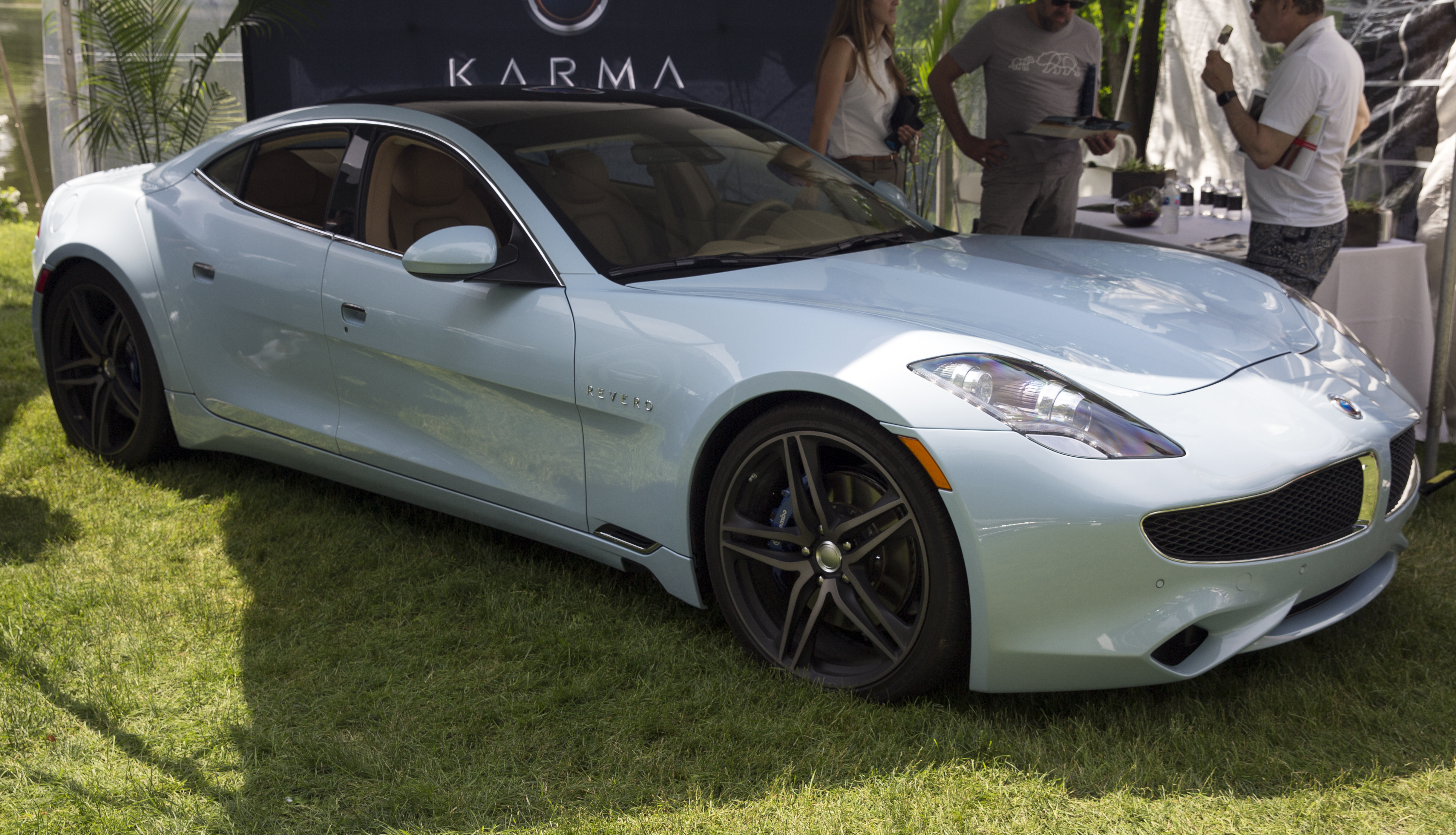
I'm driving a Karma Revero this week.
Surprisingly great.
It works great.
But yeah, another, another like real off-road EV option.
But the thing is like for you, like you've been driving EVs for a while.
Yeah.
You're used to it.
You've got your charging stations that you go to or you charge at home.
Sure.
For everyone in the middle of the country.
I get it.
I know.
I know.
Or like, or like, or like think about this.
Think about like, we just talked about like road trips, right?
Do you remember a few months ago where all the airlines went down in the US?
Mm-hmm.
What's happening now?
So that weekend, my son was going,
uh, he was going to go down to Florida and go on a cruise with his cousins, right?
Flight got canceled on Friday night.
Flight got canceled Saturday morning.
The cruise was on Monday.
So we hopped in the car and drove down there.
Uh-huh.
Right.
And people have situations like that where they want to do that.
Yeah.
But guess what?
You can do it in an EV.
You think it's charges everywhere.
You can.
But if you're, if you're, if you're time constraint, right?
Because I stopped at a gas station, right?
I mean, I hope you got like some 800 volt battery architecture
and decent charging because like, I, you know, I, I, I was just telling this story.
I took a, you know, a Tycon of Vegas with my kid went to charge it from like, you know,
20 some percent up to 80, whatever.
And by the time we both went to the bathroom and bought a drink, it was done.
It took no time.
Exactly.
Yeah.
But that's not the problem.
I know.
It's not the actual charging time.
It's like I stopped for, for gas in Florida and there was a line of like eight Tesla's.
And they all were sitting there looking miserable.
Sure.
Sure.
Because I'm waiting on everyone else.
That's, that's in big urban centers though.
Like, yeah, it's more about like reliability.
We had Kyle Conner on it, I'm sure you know, but he was saying that like, you know,
he never has charging anxiety until he gets to Southern California.
Then there's nowhere to charge.
Too many EVs.
Too many EVs.
Yeah.
I'm going to ask one question because I'm a big fan of the work truck.
Will there be a non glass roof vinyl spray out interior with the fuzzy gray
mouse for version of the pickup truck at some point?
Absolutely not.
Okay.
So this is always.
But you can get it.
You can get it without the glass roof.
Right.
You can.
We'll have a steel roof version of both vehicles.
Oh.
Yeah.
Primo.
Yeah.
But there's no future.
So this is always going to be a premium.
You're not trying to.
I don't know if I, I mean, yeah.
Well, I guess, I guess that price point.
I guess that price point is slightly higher than the average price of a car.
But there, there are a lot of vehicles more expensive than ours.
Sure.
As well.
So it is.
Yeah.
It is, I would say slightly elevated.
I wouldn't call it premium, but I mean, we certainly want to make sure that we capture
the right part of the market, right?
The right demographic.
And we will have, we will have varying versions of the vehicle.
One that's more basic, one that's more outfitted, right?
And so, because we want to hit the right prices for customers out there.
Okay.
Cool.
Where's the net?
Well, we can end on this one.
What's the next sort of major moment we should look for for Scout,
given that this podcast will be out probably about a month?
Is there anything, any particular, you don't have to tell us?
Give us a time.
We're going to be at LA.
Yeah, but are you going to show anything?
No, we're going to have, no, we're going to have the two vehicles.
We, we've outfitted the traveler for, for more urban exploring.
So you'll see the spare tire carrier is gone.
We have 22 inch wheels on it, still, still on 35 inch rubber.
And then, and then, and then the pickup truck, the pickup truck
has 37 inches, 37 inch tires sitting on 18 inch steelies.
Nice.
That also has a go box in it, in the bed.
We designed a full set of tools, actually.
So if you guys are coming, come down to the auto show, you can come check them out.
I will do that.
Have a good day.
So be fun to show that to you.
That's awesome.
And the factory is coming along and all good.
Yeah, the factories.
I mean, you have to think about all of the,
we're doing all of the hard things all at the same time.
Yeah.
Which, which, you know, people like to advise against, but that's what I love about it.
I mean, we're, we're just going for it.
And, and that's amazing to me.
It's an amazing thing to be a part of.
That's cool.
Well, I think speaking for both of us, we wish you a lot of luck and we're very excited.
Yeah.
Looks great.
It looks great.
Wish you all the luck and keep us in the loop because we'd love to see the next major update
on the Scout.
Again, scoutmotors.com.
Thank you so much.
Yeah, Chris Benjamin.
Chris Benjamin, Chief Design Officer.
Thanks for having me, guys.
About this episode
Chris Benjamin, Chief Design Officer at Scout Motors, shares insights on the design philosophy behind the new Scout vehicles, including the Traveler SUV and Terra truck. He discusses the challenges of balancing modern design with the nostalgic elements of the original Scouts, emphasizing the importance of off-road capability and user-friendly features. The episode also touches on comparisons with Rivian, the significance of EVs and range extenders, and the upcoming production timeline. Benjamin's passion for automotive design and commitment to creating a unique off-road experience shines through.
In this episode of MotorTrend’s The Inevitable, hosts dive deep with Chris Benjamin, Chief Design Officer at Scout Motors, to explore his remarkable journey—from growing up in Queens and Miami, to working nights at Taco Bell while designing for Mercedes, to leading the rebirth of one of America’s most iconic off-road brands.
Chris reveals how the new Scout SUV and truck were designed, what he changed the moment he arrived, how Scout differs from Rivian and Jeep, what the EV vs. range-extender split looks like, and what the future holds for Scout Motors.
Expect raw career stories, hilarious behind-the-scenes moments, and real talk about design, automotive culture, EV adoption, and off-roading.