The Geneva Motor Show was a big car event in Switzerland where car companies revealed new vehicles and prototypes. Here it’s used to set the timeline for when Chinese brands like BYD were still relatively unfamiliar to many visitors.
Volvo is a well-known European car brand. In this story, it’s mentioned to contrast the familiar big-name brands with the earlier, less-accepted presence of BYD.
Audi is a German automaker mentioned as part of the lineup of major European brands at the Geneva Motor Show. The hosts use these names to frame how BYD looked and felt “off” to them at the time.
Mercedes is a famous luxury car brand from Germany. It’s mentioned here as part of the “big-name” European lineup that the speaker was comparing BYD against.
Ford is a well-known American car company. In this segment, it’s used as another example of the big brands the speaker was used to seeing at major shows.
Place
Gotterberg in Sweden
This is a place in Sweden where cars are made. The point is that the speaker is describing what was happening at a real Volvo factory, not just a general market story.
Here, “electrics” means cars that run on electricity (EVs). The point is that EVs went from being a small part of car sales to a huge part in just a few years.
“Foreign automakers” are car companies from other countries that set up production in China. The speaker’s point is that when demand changed, those companies had to react, including by moving production to other markets.
“Exports” means sending cars from one country to sell in other countries. The speaker is saying China’s EV growth led to a lot more cars being shipped abroad.
The host is talking about a moment when more people are buying electric cars than buying gas-only cars. They use it to argue that EVs are gaining real traction.
Plug-in hybrids are cars that can run on electricity from a charger, but they also have a gas engine as backup. The battery can be charged at home or at public chargers.
In this conversation, “infrastructure” means the places and systems for charging electric cars. The host’s point is that once charging is all around, people worry less about whether they can find a charger.
Electric charging centres are places built for charging EVs, usually with more than one charger. The host is saying their location and visibility affects how people feel about charging.
A petrol station is where cars get gasoline. The episode is talking about one that used to be a petrol station and was turned into a place to charge electric cars.
An electric vehicle charging station is a place where you plug an electric car in to charge it. The point here is that one location was converted from a petrol station and became busy with EV charging.
“Chinese brands” means car makers based in China. The hosts are talking about whether people’s negative reliability assumptions about Chinese cars are fair or just old stereotypes.
“Hong Kong Ion Tire” is a tire product the host says is made specifically for electric cars. The idea is that it’s designed to work well with EVs, including quieter driving and better efficiency.
Energy efficiency means the car uses its battery power well. With EVs, things like tire design can change how much energy you burn to drive.
Term
long mileage
“Long mileage” here is a tire-performance claim tied to EV range. The host is implying that the tire’s efficiency and rolling resistance help the car go farther on the same battery energy.
Aston Martin is a well-known British luxury car brand. In this segment, it’s mentioned as one of the companies whose people the host says worked in China.
Jaguar is a British car brand. Here it’s brought up because the host says people from brands like Jaguar worked in China and helped with production and quality.
Rolls-Royce is a famous British luxury car brand. The host mentions it because people from brands like this, he says, worked in China on production and quality.
BYD is a big Chinese company that makes electric cars and batteries. The host is pointing out that BYD has a large research-and-development team, which supports the idea that they’re developing their own improvements.
“1.5 megawatt charging” means charging an EV using a very high amount of power. The higher the power, the faster the car can add energy—this segment claims it could mean charging in around five minutes.
“Flash charging” is a term for very fast EV charging. The idea is to get a big charge quickly, but the hosts are pointing out that it only works if the charging stations and power supply are actually in place.
“Made in China 2025” is a government plan to help China become a leader in advanced manufacturing. It includes goals related to electric cars and battery technology.
Term
electric to batteries
The speaker is talking about EVs and the batteries that power them. The policy aims to build strength in both areas, not just one.
Subsidies for manufacturers are government money that helps car and battery companies build more. The goal is to make EV production cheaper and faster.
Rebates to consumers are discounts the government gives to people when they buy an EV. They make the upfront cost lower so more people are willing to try one.
The Ford Expedition is a big SUV made for carrying more people and gear. It’s meant for road trips and everyday family use. The podcast is using it as an example of something large that may not be very practical for where it’s going.
The speaker is describing a plan where the government leads and pays for the push first. The idea is that it didn’t immediately convince regular buyers to switch to EVs.
A software-defined vehicle is a car where the main features are controlled by software. That’s why it can get new features or improvements later through updates.
The X9 is an electric vehicle model mentioned in the podcast as part of a group of newer EV companies. The conversation is focusing on the car’s design and how it stands out. It’s included because people are comparing what these new EVs look like.
Li Auto is a Chinese electric-car brand mentioned as gaining attention. The host is saying buyers were looking at different companies’ designs and features.
Complacency means getting too comfortable and not taking a new threat seriously. The host is saying some car companies didn’t react fast enough to EV changes.
Honda is mentioned as one of the older car companies that’s being hit by the shift to electric vehicles. The host is emphasizing how disruptive the change has been.
Volkswagen is mentioned as one of the big, established car brands that’s struggling as EVs take over. The host is listing multiple companies to make that point.
Nissan is mentioned as one of the older car brands feeling the impact of EV competition. It’s part of the host’s list of companies struggling compared to Tesla and Chinese EV makers.
Stellantis is mentioned as one of the big car companies being affected by the move to electric vehicles. The host is saying it’s happening across the board.
Battery technology is how an electric car’s battery is designed and built. It affects how far the car can go, how fast it charges, and how well it handles heat.
A drivetrain is the set of parts that makes the car move in an electric vehicle. It includes the motor and the components that transfer power to the wheels.
This is the 2023 auto-show timeframe the host is using to explain when people started taking Chinese EVs seriously. It’s basically the “turning point” date in the story.
A “Space Wagon” is a vehicle name mentioned in the podcast. It’s brought up while the hosts talk about which cars people might choose or where they might go. The exact details aren’t fully spelled out in the snippet, but it’s being used as an example of an EV option.
Klaus Meyer is referenced as a former CEO of Mercedes-Benz during the company’s earlier China operations (“Halcyon days”). The host uses him as an eyewitness to how quickly Chinese EV progress became obvious to visiting executives.
Here “renewable” means the electricity comes from sources like wind or solar that don’t run out. The point is that if your power is cheaper and cleaner, running an EV costs less.
The 5 E-Tech Electric is a small electric car based on the Renault 5. It’s mentioned because it’s becoming a common EV you can actually see in everyday life. The podcast is using it to talk about how popular EVs are spreading.
“Global electric car sales” just means how many electric cars are being sold around the world. The speaker is saying EV sales can jump fast when major decisions or events happen.
“Range” means how far the electric car can go before the battery runs out. Here, the host is giving an estimate of roughly 280 miles in real conditions.
When people say an EV is “fuel efficient,” they usually mean it uses energy efficiently—so it can go farther on the same charge. The host is praising that efficiency here.
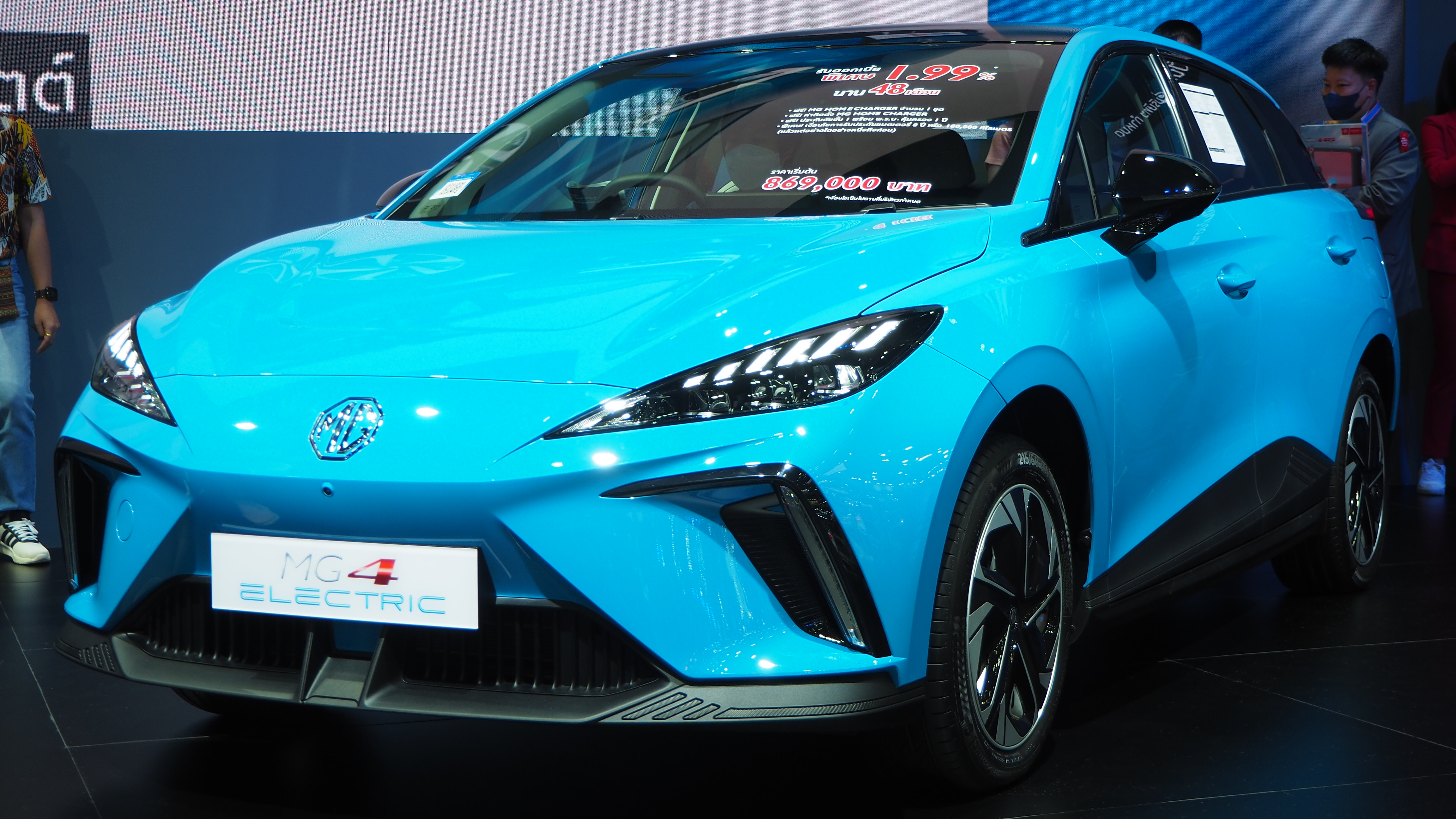
The MG4 Urban is an electric car model from MG. In this conversation, it’s mentioned as a newer version that’s improving—especially in how far it can go on a charge and how efficiently it uses power.
GM is short for General Motors, one of the biggest car companies in the U.S. Here, they’re involved in negotiations that affect access to technology used in electric vehicles.
A “blank check” means someone is saying, “Don’t worry about cost—just tell us what you need.” Here, it’s about getting a deal done quickly and completely.
Person
Jack Smith
Jack Smith is mentioned as a CEO making the call in the negotiation. In this story, he’s the person pushing for the deal to happen.
Rare earth magnets are very strong magnets made from special materials. EV motors often use them because they help the motor generate more force without needing to be as large.
General Motors is a big car company in the U.S. The speaker is saying a GM-related company had close ties to U.S. defense work and advanced technology.
Rare earth metals are special materials that are hard to replace. They’re important for things like electric motors, so controlling them can strongly affect who can build EVs and related tech.
An electric vehicle is a car that runs mainly on electricity from a battery. The speaker is saying they didn’t really see EVs until later, even though hybrids were around earlier.
The GM EV1 was an electric car made by General Motors. It was one of the earlier attempts to put EVs into real-world use. The podcast is asking what people think was good or bad about that early EV experience.
This is a 1969 Ford Mustang in the “fastback” shape, where the roof slopes back in one continuous line. The host is saying they got to drive one that was in excellent condition.
Fastback is a car shape where the roof smoothly slopes back toward the rear. It’s a recognizable style, and here it describes the look of the 1969 Mustang the host drove.
The EV1 was one of the first widely known electric cars from the 1990s. The host is saying they noticed the cars but didn’t realize what they were back then.
Car
the T zero
The T zero was an early experimental electric car. The host is using it as a historical stepping stone to explain how electric technology existed long before today’s EVs.
AC Propulsion was a company that helped build early electric-car technology. In this story, they developed a drivetrain that later showed up in the Tesla Roadster.
The Tesla Roadster was an early Tesla electric car that helped show EVs could be exciting and fast. The host is saying it used drivetrain technology that came from earlier experiments.
“Subsidized” means the government is giving companies extra financial help. That can make it easier for them to build cars or sell them for less money than they otherwise could.
“Industrial policy” means the government tries to shape which industries succeed. Instead of leaving it purely to the market, it uses tools like rules and money to push certain companies forward.
“State banks” are banks controlled by the government. If the government wants a company to grow, these banks can offer it loans on unusually favorable terms.
“Zero interest” refers to loans where the borrower pays no interest, dramatically reducing the true cost of capital. When paired with long loan terms, it functions like a hidden subsidy because the company can finance expansion much more cheaply than normal market lending.
A tax credit is money the government gives you by reducing your taxes. Here, the host is talking about a $7,500 incentive that makes EVs cheaper, and comparing it to what China offers.
A subsidy is government money that helps a business or industry afford things. In the EV world, it can make electric cars or factories cheaper to run, which helps companies compete.
Concept
real dilemma in the West
The host is describing a tough policy choice: should Western countries let in more foreign EV products, or protect their own EV makers? The concern is that opening the market could hurt local industries.
Concept
all in type of strategy
An “all in” strategy means going all-out instead of doing something small. The host is saying China is fully backing its EV push, so other countries have a tougher time catching up.
Swindon is a town in the UK where the host says the old car factory was located. They’re using it to describe a real place that’s now empty.
Car
Nissan
Nissan is a car company the host mentions because it has a big factory in northern England. They’re using it to set up a comparison with a Honda factory that has since closed.
Car
Honda
Honda is the car brand the host is talking about. They describe a former Honda factory site near Swindon that used to be active but is now closed and empty.
“First loss since 1955” means Honda lost money for the first time in a very long time. When a company reports losses, it can lead to changes in what cars it builds and how it plans for the future.
The Range Rover is a large, luxury SUV made by Land Rover. It’s designed to be comfortable for everyday driving and capable on rough roads too. The podcast mentions it because there are a lot of them around and parking can get crowded.
Solid state batteries are a newer type of EV battery. Instead of using a liquid inside the battery, they use a solid material, and people think it could improve things like safety and energy density—if it’s ready at scale.
Toyota is the company being talked about here. The host is wondering if Toyota can successfully deliver its next-generation battery technology on time.
The D9 is an electric vehicle mentioned in the podcast. The key detail from the snippet is that it’s associated with very fast charging, described as taking about five minutes. The discussion is focused on how quickly you can recharge it.
Battery chemistry is what the battery is made of inside. Different recipes can charge faster, last longer, and be safer—or not—depending on the materials.
Profit margins are how much money a company keeps from each dollar it earns after paying costs. The host is saying competitors might lower margins a lot to win customers.
A market share strategy means a company focuses on selling more cars and building a bigger customer base. The idea is they might accept smaller profits for a long time to win the market.
Apple CarPlay lets you connect your iPhone to the car so you can use certain apps on the car’s screen. It’s mainly for things like maps, music, and calls.
Lexus is a luxury car brand. The host is saying Lexus is planning to build an electric car in China because it can’t easily make it elsewhere and still compete.
The Jaguar I-Pace is an all-electric SUV from Jaguar. It’s a fully electric car, so it doesn’t use gasoline, and it’s known for feeling sporty for an SUV.
Here, “autonomy” means cars being able to drive themselves. Instead of a person doing everything, the car uses sensors and computer software to make driving decisions.
A “supply chain” is the whole system that gets materials and parts to where they’re needed. For electric cars, it’s especially important so batteries and key components can be made and delivered consistently.
LIVE
Alright, if you've been putting off car shopping because it sounds like a whole thing, buying
your car online on AutoTrader makes it way easier.
Like almost easier than ordering your coffee easier.
Really?
You can shop tons of cars online, compare prices, check financing and trade-in options all from
wherever you are.
And if you want to start online and still go to the dealership for a test drive, you can
do that too.
Really?
What I like is the flexibility.
Start online, finish at the dealer, or the other way around.
Your info stays with you, so you're not starting from scratch.
Plus, you're working with local dealer listings, so there are real people behind the scenes.
And when you're ready, you can pick it up or have it delivered.
So whether you know exactly what you want or you're still scrolling trying to figure
it out, AutoTrader's got options that fit how you want to buy.
Buy your car online on AutoTrader, really.
Hello, and welcome to another episode of the Everything Electric podcast.
We are very much focused in this episode on China.
I just had the most incredible conversation with a man called Michael Dunn.
He runs kind of an organization called Dunn Insights.
He has a very, very long history of interaction with China.
He speaks Chinese.
He's American.
He was brought up in Detroit, in the middle of the car-making culture of the USA, and
around about my age, a bit younger than me, he's a young man, and just has this incredible
knowledge of the history of how China got to the position it's in today and its incredible
market dominance in terms of electric vehicles and renewables and a lot of other stuff, electronics
in general.
Really interesting conversation, amazing man, very entertaining.
I know you're going to enjoy it.
Please do subscribe to this channel, because we get the most amazing people on here, and
it's a real privilege to talk to them, tell your mates about it, all that gubbins.
And also, if you're in the UK, we've got a show coming up in September where I've just
found out there's a couple of new Chinese vehicles being revealed there, launched there.
You won't have seen them anywhere else.
We haven't seen them, so very exciting.
And then we're also in Sydney, where the same vehicles will be on display, along with thousands
of others.
The Sydney show is going to be huge.
So I won't go on about that, that's all.
Please welcome on to the Everything Electric podcast.
Michael Dunn from Dunn Insights.
Our three free YouTube channels on EVs and Clean Energy Tech are funded by our fun packed
test drive tastic events in the UK and Australia.
Next up, Everything Electric Greater London, and then Sydney.
All events include a B2B EV Day and commercial vehicles too.
So Michael, thank you.
I won't bore our audience with the battles we've been through to get here, but it's so good to see you.
I'm really glad you've done this.
I mean, what would be good to explain to people what a bit of your background and how you got to where you are now.
I think people would be interested to know where you are now and all the rest of it.
Tremendous. Thank you, first off, for having me.
I've been looking forward to this conversation for weeks now.
And we did have some that we had to connect with the technology gods to make this happen.
So I'm just grateful to be with you today.
Briefly, background, credential, street cred, grew up in Detroit.
Son of Jim Dunn, legendary car spy used to take company him to take photos of next generation cars before they got out into the public.
So I broke around cars, straight out of school, went to China.
1986, 1986 as a graduate student.
The very first car I saw was this powder blue model called the Shanghai 760.
And when I looked at it, I had said, what is that?
It doesn't look like what I expected to look like a German car.
And sure as hell, it was based on a 1955 Mercedes that had been transplanted to the Soviet Union,
retransplanted to China.
So that that's my first impression, a big blue, lumbering bench seats,
huge steering wheel, no seat belts, push button radio.
It was that that was one of two cars that China was making at the time.
They only made a few thousand and only the party officials got their hands on them.
So that was first impressions in 1986.
But I've got to go back to that.
I mean, my bizarrely, my wife went to China in 1986.
But she was, yeah, yeah.
But and she was with her.
She was a circus performer.
This is this is so off topic, but just briefly, she she went and studied
with the Nanjing Acrobatic Company, and she learned to do amazing circus tricks
that no other, you know, European person of European descent has ever done before.
Since she's the only woman, I'll just quickly inform our audience is the only Caucasian woman
in the world who can balance three eggs on a chopstick on her nose.
She can't do any more.
I saw her do it. She could do it.
Three eggs on a chopstick on their rear legs, their rear legs.
And there's no glue involved. I don't know how she does it.
There is a trick, but it looks amazing.
Anyway, we don't need to get it.
But that. But what I'm intrigued is what what drew you to go to China.
Thanks. It was a very different country in 1986, really was very.
Imagine I grew up in Detroit, Detroit, through all my college, all my classmates.
They'd work for Ford or GM or Chrysler and my dad was a little bit of a,
you know, he'd always encouraged Robert Frost, the road not taken.
Go find out where everyone's not going and take that one.
So I studied some Chinese at University of Michigan
and straight out of school, bought a ticket and landed myself in China.
And naturally they when I got there, to China,
they said, what are you doing here? Are Yeah.
So that was that was ancient history.
We can go back just bringing us up to date and where we are today.
Because really there's serious action happening in the world
and arguably none bigger than what's happening where you are the UK.
So today I run a company called Done Insights.
We advise investors on the future of cars, in particular,
what China is trying to do with the world global auto industry.
And yeah, the transformation is just there's no words for it, right?
The things that are coming out of China these days.
Yeah. Now, I mean, the sketch, because I went for the first time
I visited Shanghai last year. You were. OK.
Yeah. Yeah. And that's my first visit ever.
And I just, you know, basically my my face looked like this for 90 percent of the time.
All right. So take us back to that moment.
You're stepping off the plane.
You're getting into the airport terminal.
Yeah. What were your very first impressions?
What did you see and feel? I mean, super modern, super clean, super efficient.
Everyone that I interacted with, every single Chinese person I interacted with
was incredibly courteous, kind, spoke English.
I mean, I'm sure, you know, I spoke to a tiny percentage of the population of China.
But I never had one bit of, you know,
I don't know what grit in the gears.
It was always very, very smooth.
I had this good energy.
Yeah. Amazing. I did.
Automated. Yeah. Yeah.
But I also had the benefit of Elliot, who I think you know,
Elliot, don't you? Yes.
So he lived there for a long time.
So I was with someone who's an English guy who lived there a long time
and understood how it all worked.
I think if I'd been on my own, it would have been just I'd just be stumbling around.
So he got me like all the kind of phone stuff and the, you know,
your pass to get on trains and all that kind of thing.
You know, I would I would have found that probably quite challenging on my own.
But that's true. That's true.
You get into those trains and it's all Chinese and it's moving and.
But it's incredible. I want all that stuff. Yeah.
And then the hotel we stayed in, you know, I can't even remember getting it all happened.
Got off the plane, got to the hotel.
And then I just went out for a little walk on the street outside the hotel.
You know, the first day I was there and it was really quiet and I could hear birds
song and I could breathe air and there were tens of thousands of scooters
going past me on a scooter and hundreds of thousands of cars
and trucks and buses. And it was so peaceful and quiet.
And you go, you go, that is, you know, every now and then.
Well, the one I really remember that was the following day.
I was walking along talking to Elliot and I heard a Ferrari.
And I went, oh, I could hear this engine.
We sort of looked around.
There was a red Ferrari.
There's a Ferrari. Yeah.
I'm guessing you were in Shanghai.
We were in Shanghai. Yeah. Yeah.
And all the cars are Primo, right?
Yes. Yeah.
We're city and smart Ferrari Lamborghini.
And then you've got the Chinese electrics, which are so impressive in their own right.
Yeah. Anyway. Yeah.
So that was it was amazing.
So, I mean, what I'm fascinated by then is my experience of Chinese cars
is much, much shorter than yours, but it would have been
about 17 or 18 years ago that I was at the Geneva Motor Show
when there still were things like big motor shows.
And there was a BYD stand there.
Yes. In comparison with Volvo, Audi, Mercedes, Ford,
you know, all these companies that big, big, you know, flashy things
of glossy cars. And there was in this, there was this three BYD taxi things that looked,
you know, my aesthetic sense of motor vehicles is pretty limited.
But I could tell these looked a bit weird.
They're just not now, not attractive.
And you ask a Chinese consumer.
And at that time they wanted nothing to do with BYD at my office in China.
The joke would be, oh, engineer Lee Gong, he just he had to buy BYD
because he didn't get his bonus this year.
Like you bought a BYD when you couldn't buy anything else.
You couldn't afford something better.
That was what it was at the time. Right.
Yeah. But that that turnaround then.
So that the other key moment I do remember as I was at the Volvo factory
in Gotterberg in Sweden.
And there were all these Volvo's big SUV Volvo's coming off the production line
with gold wheels, gold door handles, sort of salmon pink or shrimp pink color.
You know, just like where are the cars like that in Europe?
Yeah, where are they going? Oh, they're all going to China.
Yeah, which is but that was that was probably 20 years ago.
And then you think, well, that market that was huge for European brands.
I've got a sneaking situation that's changed a bit.
You're you're absolutely right.
They used to say I used to ask in check in with the president of General Motors,
which in itself had a huge market there.
And I used to say, I was a business.
He say, we're making more money than God.
It was for two decades, Robert.
It was growth and profits, automatic,
enormously profitable, whatever they put out to the market sold and they sold well
and they couldn't build factories fast enough.
And that would seem to be like, well, Chinese consumers love foreign products.
We're building foreign products for making a lot of money.
Let's do this forever.
Yeah, let's do this forever.
And as we know, when somebody wrote the song, all good things must end.
And it's ended very abruptly, Robert, suddenly like a lightning bolt came,
a meteor hit and things have completely transformed.
People talk about disruption.
I don't think the word disruption begins to describe what we're experiencing
and witnessing in China since, let's just say, since 2020,
the last five years, I think of two like major earthquakes.
One was, and these will be familiar to you and to your audience,
but the first one was in the world's largest market, China.
Electrics went from about 6% of total sales to last year, 50%.
Like it's I don't know.
I don't know. Imagine if like Guinness, no one's buying Guinness in the UK,
except for Ireland, of course, but no one's buying Guinness.
And all of a sudden half the people are drinking Guinness five years later.
What, what, what, what, what is that about?
And then the second earthquake is related to the first one
is that all those foreign automakers had these big, beautiful factories
all over the country that suddenly there's no demand for those cars.
And so the foreign automakers and their Chinese partners said,
we need to do something with these factories
and the workers in the factories. What are we? Oh, we start shipping them overseas.
And we've seen exports go from 1000000 in 2020 to it's on track
to be like 12 million this year, one to 12 million in five years.
Just phenomenal changes.
And I know you're seeing the consequences of that in the UK with
tell me what you're seeing on the streets these days, the Chinese cars pouring in.
I mean, it is that I think it's the this is in a way
why I want to talk to you is to kind of explore that because I think the British,
the general public in in the UK are now aware that there is such a thing,
you know, the general like everyone understands that like BYD,
they will have heard of it.
They know it's Chinese.
They might not know anyone who's got one, they might never have seen one.
But that information has gone into the to the general consensus.
And I mean, it is there everywhere you look, everywhere you go,
you see Chinese built cars, they're not all electric.
I mean, you know, there's a lot of that makes it, you know,
a motor and jacu, I think are the ones that have done it.
Yeah, I just see them everywhere.
Yes. Oh, my God, they're just so common.
Yes, in another country, Robert, they might say cherry.
That's cherry jaco cherry.
Yeah, exports are, as you say, not electric.
They're gasoline in another market.
They may say, oh, we had our time.
Chinese people don't want electric don't want gasoline powered vehicles anymore.
Right. Our business is done.
But the Chinese pivoted very quickly and said, our business in China is done.
But guess what?
We're going to start shipping these worldwide.
And it's just been phenomenal.
The traction. Because, yeah, I mean, that is interesting
because the one lot of sales figures I've seen very recently for the UK is
we've just overtaken.
So sales of electric cars have just overtaken pure petrol cars,
pure petrol cars going down.
I mean, diesel. Forget it. No one's buying diesel.
But electric cars, it's literally they've just in the UK already in the UK.
But what is interesting is still the most common sales are hybrids,
plug-in hybrids and hybrids, but they've completely flatlined.
They're not going up.
Electric sales going up by an extraordinary amount.
Is the infrastructure in place for that?
Or it doesn't really matter.
People just like the product.
I mean, they like the product, but also the infrastructure is there.
Once, you know, I've spoke to someone recently who's recently got an electric car
and thought there was nowhere to charge.
And now everywhere they go, all they see is places to charge.
Because you don't if you're not using it, you don't notice it.
You don't. It's not visible.
And there is a difference here in the states where I live.
The gas stations are very visible.
Very visible.
And the electric charging centres are there.
But they're around the back, usually.
Yes. Yes.
Yeah, we need kind of.
I mean, there are a few examples in the UK of there was one very
sort of well known one in the middle of London,
which used to be a gas station, as you call it, a petrol station.
We got it.
Yeah. And that was I forgot where I was.
But that was completely gutted and rebuilt.
And it's now electric vehicle charging station on a corner.
And it's very urban.
It's right in the middle of London in a very and it was a very small gas station.
It would have been.
But the two things I've learned about that one, it's in use all the time.
It's got phenomenal use levels.
It's run by.
I'm going to say the wrong one. It's either Shell or BP.
They still run it. It's got a nice shop.
It's got more to the new thing, new thing.
But the other one is the local residents
who have there's been some research with all the local residents
and they all say it's so much nicer here since it's not a petrol station.
Because you could, you know, no matter how well you run it, you smell it.
You know, if you live next door, which people do literally like overlooking it.
Then so. But anyway, that's something.
So, you know, normally when the Koreans came in or the Japanese before them,
early buyers, you might have some early movers,
but there'd be a question mark hanging over.
Oh, yeah. The case of Chinese brands, it doesn't seem to be that.
No, it has to be accurate.
Or what if it was? It was very short lived.
It was a blip. Whereas I do. I can remember as a child,
my dad making fun of Japanese cars that will fall to bits in two weeks.
You know, that was his joke. He was driving a Ford.
A British made Ford, which were quite renowned for falling apart in two weeks.
But, you know, they always made fun of, you know, Japanese was rubbish.
It wasn't they reliable. And then it was Korean.
It was their awful, you know, all that that's happened before.
And I'm sure it did happen with Chinese cars.
I mean, the thing that we still see comments on now
are people saying, I wouldn't buy Chinese.
I don't want to support the CCP, you know, whatever.
And and that's still there.
But they've also typed that on a Chinese built keyboard or on a Chinese made phone.
Yeah, that's true.
One doesn't really like to do you know, people in the UK,
are they aware that MG, the MG brand is Chinese owned for the most part?
I think so. I think it's hard to know.
I think they probably do.
But that brand has I have an MG for I'm about to drive across the country now.
It's such a great little car.
Yeah. And it's great value.
Yeah, with GM and with Volkswagen over the years, they do a good job.
This episode is brought to you by Hong Kong.
The Hong Kong Ion Tire is built exclusively for electric vehicles,
engineered to deliver what EV drivers need most.
Confident grip, quietness, energy efficiency and long mileage.
As the official tire partner of Formula E,
Hong Kong proves its EV technology is at the highest level of performance
and brings that same innovation to every Ion tire on the road.
But then so the other thing that I have come across every now and then is people who have
worked in the British, mainly the British auto industry.
So people who worked at Aston Martin, Jaguar, Bentley, Rolls-Royce,
quite a lot of the people.
And this is not necessarily designers.
This is people who run production lines.
And you know, quality control and all that.
And they all had a job in China in the last 15 years.
They did five years in China.
They were paid incredibly well.
And they're, you know, I don't know how, if you're aware of that,
but that was, it seemed to be quite a thing.
And then you'll see a car and you go, that looks a bit,
that's got a little bit of flavor of Aston Martin about it or of Jaguar.
Definitely.
Yeah.
So that has been a big thing, presumably, of European and American.
China does very smart recruits, attracts, recruits some of the best talented, most
talented designers.
I think there's at least 2000 foreign automotive designers now working in China.
So up and down to China.
If you can't find a Chinese company without a foreign designer,
many of them come from UK, Germany, Italy.
And so that's real.
And the second thing is we used to have an expression called,
what is Chinese R&D?
R&D stood for, this is 15 years ago, receive and duplicate.
So they were always very good at copying, but now what's happening
is they go receive, duplicate, and then build on top.
They innovate on top of that.
They don't just copy anymore.
They've really iterate and innovate on top of what they learn.
So they're a force to be reckoned with.
In my mind, people ask me, oh, they liked the Japanese and Koreans before that.
I think we're at a completely different magnitude.
I mean, that was one of the facts I learned last year was I'd been in a discussion
on an event where someone mentioned that Tesla had 100,000 employees around the world.
And I was going, that is amazing.
Considering I first met that company 20 years ago when there were seven employees or 10,
it was very, very small.
But then you find out that when I was in China that BYD have 100,000 employees
in their R&D department.
I have a million employees.
A million employees.
This is incredible.
How about that?
I mean, if you think back then to even Toyota's sort of heyday in the 80s and 90s or globally,
did they have a million employees?
I'm not sure they did.
They maybe did, but they were.
I don't think so.
I don't think they did.
And BYD makes no secret of the fact that by 2030, what's that?
How many years away?
33 and a half years.
They expect to be number one in the world.
Yeah.
Oh, I can't see how they won't be.
I mean, we've recently had the Denza and the 1.5 megawatt charging,
the flash charging introduced here.
You know, that bit of information, it doesn't matter whether anybody uses it or genuinely
understands what it is.
What goes in is you can charge an electric car in five minutes.
That's off.
That's the headline.
It doesn't matter whether there's the infrastructure to it or we generate the electricity.
Forget that.
But that is it.
But no one else, no one in Europe, America has done that.
That is not replicated, duplicated.
Absolutely, that is innovation.
Innovation, they're world-class now.
A little bit of backstory because I was living in China at the time,
and this might all be familiar to you, but as I said, foreign automakers were just having
their cake and eating it too in China for the longest time.
Xi Jinping comes to power in 2012.
2014, August, he gathers with the lieutenants in an offsite called Beidei up near North Korea,
across from North Korea.
And they put together this blueprint now known as Made in China 2025.
And it's this document that says, by 2025, China has aspirations to lead in next-generation
technologies from autonomous vehicles to electric to batteries.
And atop the list were these, let's make it go in electrics and batteries.
And they put in place extremely generous investments in infrastructure and batteries
in subsidies for manufacturers, in rebates to consumers.
And here's where it gets interesting, Robert, from 2014, 2015, 2016, 2017.
It's looking a lot like a top-down government-funded expedition that's not really going anywhere
because for most of the decade, Chinese consumers were still saying,
electric, I'm not sure, Chinese electric?
No, no, no, the designs aren't that great, the range isn't terrific.
I don't know about, I heard about some fires, I don't know about charging.
So through the 20 teens, 2010s, there was a lot of wheel spin.
There wasn't great immediate uptake by Chinese consumers.
And it was only after Tesla entered in 2020 that suddenly consumers' views of electrics
seemed to be transformed overnight.
And in my mind, what happened wasn't so much that they fell in love with an electric power
train overnight, but they saw, oh, this is a totally new type of vehicle, software-defined
vehicle with over-the-air updates, a big screen.
And as we know, the car culture, as we know it in the West, really never sunk in, got traction
in China. It wasn't about performance and handling and speed and cornering.
It was all about the experience inside the car.
So Tesla hit all of the right sort of chords with the Chinese consumer.
And then the Chinese consumers started to look again and go, oh, by the way,
BYD designs have gotten a lot better.
And there's these new companies called Neo and Xpong and Li Auto.
They were, oh, look at their designs.
So we saw this sort of something clicked right around when Tesla came in.
And there's been no looking back.
It just took off.
And if there's any defense for global automakers, they were lulled into a sense of complacency.
But that complacency, in a sense, was well-founded because until 2020, they're still killing it.
They're still saying they love us as a brand.
And they love gasoline-powered vehicles, and then they didn't.
So it's been a real shock to the industry for anybody outside of Tesla and the Chinese
automakers that you're Toyota, Nissan, Honda, Volkswagen, all taking it on the chin today.
GM, Ford, Stellantis, it's real.
It's real.
I mean, that was an incredible conversation I had with Elliot in, I think, 2022 when
Shanghai Motor Show or the Beijing Motor Show, I can't remember which one it was,
when he followed a group of European and American executives around the site.
Because nobody else was that interested in them.
But he just, they'd go to the BYD stand and he'd look at their faces and they're going.
And he said, essentially, what they were saying is we're screwed.
They looked at that.
They looked at the battery technology, at the drivetrains, at the software,
and they just went, it was like that was when the rest of the automotive industry in the world
realized what the Chinese had been doing.
That's right.
You're exactly right.
Shanghai 2023.
They used to have it when you walk into these huge auto shows and they'd be hauled.
It's so big.
Yeah.
It would all be these Western brands, and then the side corridors.
Maybe there's a BYD or a Chariot, but no one really is going to go over there.
And then in 2023, it was completely reversed.
Right.
I got a call from a good friend of mine, Klaus Meyer, who used to be the CEO
of Mercedes-Benz in their Halcyon days in China.
He got there in the first day in 2023.
I was boarding a flight out of California.
He goes, Mike, yeah, it's a shock.
It's a shock.
I go, you okay?
Wow.
Yeah, I'm telling you, it's over for foreign brands in China.
I said, what?
Wow.
What?
Wow.
Yeah.
Yeah, that is extraordinary.
Just like that.
So there is a, you know, we have to be mindful of the fact that this is all very good for China.
It is a little bit debilitating, a lot debilitating for incumbent automakers
and jobs and industry, and especially in Europe.
So the impoverished are happy, but as a society and as an industry and jobs,
we have to be mindful, like, what's the cost of having a better car out of China?
That's real.
Uh-huh.
Oh, absolutely.
Yeah.
And I mean, is that thing now that, I don't know if it's, I mean, it is happening up to a certain
extent, but I mean, there's new car factories owned by Chinese companies, I know, in Spain,
Hungary, the Czech Republic, you know, they're around, because what I've been saying,
I've been saying to, you know, the only politicians I know, which is very few,
can't you get them to come here and then, we then have to deal with Brexit,
which I don't want to talk about, but, you know, for-
Will they come to the UK, do you think?
I mean, I can't, it's not happening at the moment.
They don't need to right now, because-
They don't need to.
No, I mean, you know, I mean, for one thing, electricity in Spain is about half the cost
that it is here, and it's all renewable, and they've got it right.
They've done something right after, they went through a bit of a rough patch,
but they've got it sorted.
But that kind of change, I think, I can't sense like a big resistance
in the public mind against Chinese cars.
I mean, I think that the difference is, and that might not be so obvious,
if you're outside Europe, is that there are companies, so I would say Volkswagen, Renault,
Citroen, strangely, I mean, the Renault 5 is a hugely popular car, and you see,
I see more of those than I see BYDs, or-
Okay, good.
You know, they're doing, they are, they've done, well, they've had a 50% increase in sales
since a certain gentleman decided to bomb a quite annoying country.
Okay.
I don't want to get into the details of that, but I mean, that, I've got to say,
I've said it publicly a few times, you know, we've spent 16 years promoting and trying to
explain about electric vehicles and that, and, you know, we've had some success.
I'm not going to be overly humble with that, but in six weeks, one man in America has increased
global electric car sales by a phenomenal amount, just extraordinary.
No wonder he has such a giant ego.
Yeah, I think it's great.
I love it.
I think you can intend to make happen.
He's the best president you've ever had.
But no, anyway, that's-
Tell me a little bit about your own decision.
Like, how did you land on MG, was that your first Chinese car?
Is that your first electric car?
What came before that?
No, no, not my first electric car.
Okay.
I'm trying to work.
I think I test drove one and I just went, gosh, this goes a hell of a long way and look
how much it costs, you know, just, you know, yeah.
I mean, at this time of year, it's realistic 280 miles range, which is for a car that's
that price and size is extraordinary.
I mean, it's very, very fuel efficient car.
And they've got now newer ones, the MG4 Urban, I think, is even more-
Yeah, they keep getting better and better.
Have they introduced the premium brand in UK, the IM?
Have you seen that?
I'm not sure about the out there.
It's Pfizer, they are.
Oh, sorry, not the IM, the MG, sorry.
Yes, I think they have.
Yes.
Just coming.
Just I was in the UK last fall and they were talking about one of the dealers
said we expect to get the IM brand in.
That's right.
I think it was at Goodwood, Goodwood, the big festival, which I went to and it was
just too hot and I was too old and I couldn't cope.
When we have a heat wave in Britain, it just everything kind of grinds to a halt or, you
know, anyway.
A heat wave is in the 70s or what?
What's the 80s?
Oh, in Fahrenheit.
Oh, no, it was hot.
It was about 38 degrees centigrade, which is probably 90 Fahrenheit, maybe more.
I can't remember.
I grew up with Fahrenheit, but I've forgotten how it works now.
I can only do centigrade.
Come back, we need more Fahrenheit.
But the other one, I don't know what, if you're, I think is fascinating is that
how far back it goes.
So say your car maker, say your Mercedes Benz or Audi and you decide you want to make
electric cars and then you, you know, as a company, you go, well, where do we,
do we make our own batteries?
And you go, well, you can.
And they go, what do we need to do that?
Oh, well, we need these materials, nickel, cobalt, et cetera, et cetera.
Where do we get those from?
Well, the Chinese have bought all of them for the next all of them.
Did you just say all?
Yes.
Yes.
Have we got any in our country?
You've got a bit of copper, you know.
What did Henry Ford say?
You can have any car color as long as it's black.
As long as it's black.
If you need battery materials, no problem.
You can get it from any country as long as it's.
As long as it's China.
But I mean, that decision then to do that, if you just ignore the politics of it for a
moment, the decision to do that.
When did that happen?
That has to have happened 10, 15 years ago.
It did happen last week.
As you may know, I'm just working on a book that'll be published early next year called
Night Horse.
And it goes into the history of this little bit.
I'll just share one story that I found really, really fascinating is if you remember this
in the 1990s, China said, we're going to have a single luxury car program here in China.
And the winner, we're going to have a bid.
And whichever foreign company bids the highest will win the rights to be the exclusive producer
of a luxury vehicle for our market.
So they set it up beautifully.
So who did they get?
They got GM and Ford to bid against each other.
So for the, over the period of three years, it was Ford saying, I will promise this.
And then GM coming in a little bit higher.
And then they, Ford, GM, Ford, GM.
And then ultimately, Jack Smith CEO said to the Chinese partner, whatever it takes,
it's blank check.
We want this.
You just tell us what you need.
Okay.
So the Chinese at that time, this is 1995.
They said, well, we understand you have the subsidiary called MagnaQuench.
MagnaQuench at the time, no one knew about it, but it was the leading company with regards to
rare earth magnets, which would later become huge in electric vehicles and many other applications.
So GM went to the defense department said, we've been developing this with you for many years.
It also goes into fighter jets on the side.
Defense department said, no way in hell, not part of the deal can't happen.
Won't happen.
Uh-uh.
And then GM went to the state department and overruled the defense.
But they sold MagnaQuench to the Chinese.
Right.
Just to make clear, MagnaQuench was an American company.
I'm sorry, yes.
American company, subsidiary of General Motors, very tight with the defense department,
defense applications, advanced technology like you can't believe.
And the Chinese said, we want is part of the deal, but we're going to keep production in Indiana.
So don't worry.
We're not stealing it.
We're not taking, we're not, don't worry, we're buddies.
So they did, they kept it in Indiana for about seven more years and then they moved into China.
And today, China has a complete and utter stranglehold over rare earth metals.
So that's just one.
And then they continued, they did that with everything else.
Yes.
Stomatically over the last, what's 95?
That's like 30 years ago, right?
Yeah.
Uh-huh.
So it's been a plan from early on and here we are.
But that foresight, to have that foresight then, because I'm trying to think when,
yeah, I mean, I didn't really see anything that resembled an electric vehicle until probably 2002.
So, but a hybrid, so I was aware of then.
But 2002, I got, I was filming in California, had a, and some very excited engineers came over and
this is for a TV show called Jump God Wars.
What about EV1 was right or wrong?
I didn't know about the EV1.
They must have been around.
I was in California at the time.
I just, it wasn't in my world.
I've been loaned a 19, a mint condition, 1969 fastback Mustang.
I was happy.
Okay.
Okay.
Yeah, EV1's for around, I don't, I mean, I must have seen them.
I was totally unaware of what they were.
They were built on the, maybe a few thousand.
I was in the middle of Los Angeles.
I'm sure there was some around there.
Yeah.
But that, but what I'm staggered by is that understanding.
So like from 95 onwards, so say about the time that, that company moved from Indiana to China,
was when I, when I first went in a little electric car, an experimental one, it was called the,
the T zero.
It was a, you know, and it had, it was a company called AC Propulsion, an American company that
developed the drivetrain, which went into the Tesla roadster.
But this was way before Tesla, before Elon Musk, before all that.
And it meant nothing to me at the time because it was just,
it was a weird car that sounded like a vacuum cleaner.
You know, that was all I remember from it.
And it went very, very fast.
I do remember that.
Went very fast.
But there were people in the world that were going, this stuff's going to happen.
That's still fascinating.
When all the, the battery costs were high, the range, there's no charging.
There's questions about safety.
And it would take, that's why the imagination is so amazing.
Like people can imagine something that seems so unlikely.
And here we are.
Yeah, yeah.
And I mean, presumably what's that, do you think, driven in a way in China by the fact
that they had to import fossil fuel and they were.
You're absolutely right.
Just to fast forward that story, 95, by 15 years later, China became the
largest car market in the world and they were importing a 100000000000 dollars.
I remember they said at a conference hosted by the minister of science and technology,
a very impressive guy named Wang Gang.
You may know him or you've heard of him, but it was the minister of science and technology.
He said, we have a big problem.
We're the biggest market in the world.
We build more cars than anyone else, but we're also importing a 100000000000 dollars a year in oil.
And we don't want to get caught up in the same kind of quagmire as the US is in.
And he was a big, big advocate of making the switch to electronics.
Wow.
That is.
I mean, it's, I mean, yes.
It's the hardest thing not to say when you talk about China and electric and other,
well, and renewables and ground transport is, wow, you know, they're killing it.
They're killing it.
And then the other thing is that their domestic market, because of the property crash a few years ago,
domestic consumer confidence is not high, is not great.
So they're sitting on all this firepower and they're saying,
well, our own consumers aren't ready to buy, but the rest of the world is.
And we've seen them sort of systematically take over steel industry and solar panels,
shipbuilding.
And it seems like now they've set their sights on automotive.
And if we do the numbers, Robert, a total automotive like electrics,
plus gasoline, all the rest, they have capacity of about 50 million cars,
vehicles a year in a global market of what 90 million.
So they, they, they could supply more than half of.
More than half.
Wow.
And what do you think, 20 years ago, they could have supply, probably supplied
2% if that.
No, I think, yeah.
Well, no, right.
Yeah.
That, because the other thing is that, that is like beyond my mental capacity,
but I had a quick look on Wikipedia for Chinese automakers.
And it's about, I didn't even count, but it's around about 250 companies they list,
99% of which I've never heard of, you know, all the ones that we, that are common.
But there were then about roughly around 70 that I also never heard of,
that have either gone bankrupt or been absorbed into bigger company.
You know, BYD bought them all, you know, whatever.
I mean, the churn inside China of car companies seems to be
frenetic.
Or is that settling down now?
Is that, are they winnowing out the winners and losers?
So after graduating, came back to China in 1990, I remember one of my very first
impressions as the minister at that time held a conference and he goes, gosh,
we have too many automakers here.
We have like at the time they have about 26.
And he said, look at the United States, look at Europe, look at Japan.
They have 456 each.
That's our goal.
And they, they had the slogan, San Da, San Xiao, the big three and the little three.
We're going to have six within five years.
We're going to have six automakers and that's it.
We're going to consolidate, scale, be efficient, just like the rest of the world.
So that was in 1990.
In 1995, we have 33 automakers.
It's going in the wrong direction.
And these many years later, I can't tell you how many campaigns there have been by the
central government to consolidate the industry, but it's gone the other direction.
We have more than ever before.
So people always, that's just very hard for us in the West to get our minds around.
Like that's not, doesn't make any sense.
And it's inefficient, it's wasteful and a lot of them don't make money.
And how can this go on?
It can't go on as gravity.
And yet the way China's economy set up, the reality is that the, all the local governments
have incentives to draw investment and sustain loss making vehicle companies.
Like everyone wants to have one in his backyard because it said, I'm doing stuff
and maybe it'll draw more investment and more jobs.
So we have this an amazing industry with a lot of companies either losing money or making no
money and they don't go away.
They don't, they proliferate like rabbits, like hang on.
I thought you, I went, some of them will be gone for five years and oh, they're back.
What happened?
And so we have to sort of really do a big adjustment with our mind when we go into
China and think it's not a market economy.
It's not clearing like it might in the UK.
You've got government at every level trying to sustain companies and an economist would say,
that can't go on.
And I, and I went to go, but yeah, I get it.
I got paper, it can't go on, but I also live this thing.
I was saying it keeps going on even though I'm not supposed to.
So will it settle?
Will there be consolidation?
I guess, I don't know if you're a golfer, but my cat used to say, I like,
I'm out 160.
Can I get there with a seven iron?
And she'd say, eventually you'll get there with a seven iron.
I don't know how many shots I was going to take, but eventually we'll get to consolidation.
Robert, I don't know when, but you're not seeing that happening now.
That is, I'm not seeing it in every, every generation of smart leaders of the car comes
to themselves saying, this is not sustainable.
Anyway, it's gotta, we gotta have consolidation, but it doesn't happen because the governor
of Fujian and the governor of Anhui, and no one wants to give up and they get a state loan,
a loan from a state bank to sustain stuff.
And I guess one day, but look at the, there's 90, 90, how long ago is 1990?
They've been trying to consolidate forever and 30 years.
Yes.
And now they're, now they're exporting.
So they're saying, why would we, why would we shut down?
This is our glory years ahead of us.
So it's, it's a very peculiar, particular, unique industry unlike anything else in the world.
Yeah.
Yes, it is.
And I mean, that doesn't, because if you, I mean, my house is an example of literally above
me here, I've got German solar panels from, I don't know what 15 years ago, but in my backyard,
I've got a ground-mounted load of Chinese ones, which were so much cheaper in like 15 years later.
And there's more of those and they're really efficient.
They're, you know, they're, and so they have,
Very good.
But not, yeah, but not, but not in a, in the same way.
I mean, the kind of, you know, the public debate around it and the public awareness,
people know about solar panels.
They don't know where they come from and they're not interested.
Right.
And they don't ask.
Right.
Whereas the cars, they do.
They go with Chinese and the, you know, because that's one of the other arguments,
which suddenly occurred to me then was, it's not fair because they're all subsidized by the
Chinese government, all these companies.
And I mean, I don't know how it, is that still the case?
Because I kind of think I've heard that they were definitely, but companies like BYD are so huge,
turning over so much, they're selling so many cars.
Are they, I can't, are they still subsidized in some way by the government?
They are, they are in,
and I know it's a very delicate and sensitive point on social media because people will say,
well, if they measure this and the subsidies are actually going away,
but I, I'm just sharing my lived experience in China, 26 years.
And when the state decides, we want to take over an industry and dominate it.
We will bring all of our resources.
And the easiest example for is, is state banks.
So there's a directive given from the governor of a province,
make the loan to this, to this company, make it 30 years, make it zero interest.
And if they need more, let me know.
And so you have, people go, was that a sub, it's free money.
Then they go, well, this company needs some land.
Do we have, oh yeah, we, you're going to employ people?
Yeah, land, good.
Put the, this company would need some energy that's discounted at 50%.
Yeah, and make it, is it going to help them win?
Right.
So it's, it's not necessarily like cash coming from.
Yeah, it's like we're thinking subsidy, 7,500 tax credit, that's small potatoes.
That's like the Chinese are laughing at us going, oh, you guys are really,
you're going to compete with a $7,500 tax credit.
No, they're all in.
And so I don't want it.
I don't even want to say it's fair or not fair.
It's just different.
It's different.
That's their playbook and it's working for them.
And it presents us with a real dilemma in the West.
What do we do?
Do we give them access to our markets?
If so, we probably put our own industries at risk.
Because how do you compete against an all in type of strategy?
And that's, that's, I think one of the biggest questions facing us in the next 10 years in the West is,
do we sort of can see, okay, China's going to make all of our stuff for us.
Uh, but I don't know.
We need to have incomes ourselves.
So yeah, I mean, that was, I mean, it is in a way,
the, what I feel I've been banging on about as we say here for the last 10 years is
I'm not saying Chinese cars are better or that we should, we should all buy Chinese cars.
I'm going, are you aware that this is happening in China and that their cars are better at the moment?
And they are very good cars.
So that's where the thing gets a little bit blurry because people who don't say they don't like China,
they would say the cars are bad and it's only because of subsidies.
No, no, no, the cars are actually very good, but also it is true that they get a tremendous
amount of support from the government.
So what do we do with this?
And what do we do with this?
You know, it's, there's trade offs from a consumer perspective.
It's a beautiful thing.
I'm getting a better car at a lower cost.
From a social perspective, it is, it is dangerous.
It is dangerous.
It's like Warren Buffett used to say, the farmer who keeps selling his land in order to buy more stuff
for his family, eventually the land is gone.
Okay, now what?
Yeah.
Yeah.
Now, I mean, we've definitely inherited a legacy, you know, the current sort of working,
because I'm a bit too old now, but the current working generation, you know,
what happened when they, before they were born and when they were babies was that massive
movement of offshoring, which I was aware of as a young adult, because I grew up in a country
that made diggers and trains and aeroplanes and cars and motorbikes, you know, there were
fact everywhere you went.
Oh, that's through Royal Enfield factory.
It was in England, in India.
Yeah, the shipbuilding up in the shipbuilding.
Yeah, yeah, huge industry that employed tens of thousands of people, but also coal mining,
which was, you know, not a pleasant job to do, regardless of the other aspects of it.
That's a great point.
And today's coal mining is refining battery, the minerals are going to batteries,
which is a very, very dirty business.
China said, we'll take it.
And the West said, great, we don't want that.
Now we find ourselves in a pickle.
So I think the pendulum swung really, really wide.
And I think, I think as a, as a globe, as a collection of nations, we have to sort of
bring it back to what to do.
Yeah, I mean, it is desperately want to have, I mean, I've spent a huge lump of my career
trying to encourage people to take up engineering and to study become engineers,
because we, even if we don't make the stuff, we need people around who can fix it.
Yes.
We should be making this stuff.
And but it is, I mean, it is heartbreak.
There's a huge factory, not 20 miles from where I live, which was Honda's
factory that they made cars in, in England.
What was that?
What in Swindon?
It was in a town called Swindon, just outside Swindon, really.
And it's still there.
And if you drive,
Is that Nissan or not?
Wasn't that Nissan?
This is Honda.
So Nissan has got a big factory in the north in Newcastle, Sunderland.
But this was a very big car factory that was operating not that long ago.
And as you drive down the road there, it says, it's got a sign that says, you know,
the name of three weird old English villages.
And at the bottom, it says Honda.
And it says on a proper road, because it was such a big thing.
You want to turn left here to go Honda.
That's gone.
That's closed down.
And it's empty.
And it's, yeah.
So did you see that?
There's a headline the other day,
Honda declared its first loss since 1955 last year.
Whoa.
Which is bad.
And I've just driven the Honda Super N.
We've just done a review of it.
Yeah.
Which is a little K-Cut.
Great little car.
Yeah, I love good looking K-Cut.
And the seats, the clever seats in the back and the storage space, tiny little thing.
I parked it in one of our most annoying market towns that's very popular with tourists.
It's quite near us.
And there's never anywhere to park.
There's 5,000 Range Rovers all trying to park tourists.
And they're all like this.
And I was in that little cat.
And I just found a parking space right outside the post office.
No one else would be able to park there.
How does it compare in terms of size with, say, a Fiat 500 or a similar size to that?
Very narrow, very short, amazing turning circle.
You know, it's not very good range.
But it's reasonably, I mean, you just hope that they, that it sells well.
It's a quirky looking thing, you know.
But I mean, for a city to be in a city with it would make so much sense.
Perfect.
But you're right there.
I mean, that is incredible.
And they were, you know, and I do, I worry about Toyota and their solid state batteries,
you know, will they do it?
And you sort of think, oh, yeah, 2028.
Oh, that's not too bad.
And then you see Denzer now already with five minute charging and a completely different battery.
Chemistry and, you know, they, and that would have been developed five years ago.
You know, they, they're so far ahead of the game.
There's such fierce competitors to the Chinese, like if they're coming to these markets and
saying, we're really good and we're going to hold our profit margins, but they don't mind.
They compete fiercely with each other and they'll drive margins to nothing.
Right.
Yeah.
So recently I heard Mary Barra talking about the China market saying,
we looked at the thing, what's happening there.
It's not sustainable.
And I thought it's not sustainable for GM, but it might be sustainable for the Chinese.
They'll hang around making like nothing for 10 years and go, that's fine,
because 10 years later we'll own the whole thing.
Yeah.
And in 10 years, there'll be so many people around the world who've had a BYD for seven years,
and it was really good and it didn't break down.
It didn't catch fire and the rest of it, you know, that's the, yeah, it is.
I mean, it is a real dilemma.
I think it goes beyond the car market.
It absolutely goes beyond the car market.
So we need more, I drive a Tesla, I've driven Tesla since 2015.
We need, in the West, we need more Tesla.
We need Rivian to win.
We need, we just need more companies like that in our own backyards to innovate and go for it.
Yeah.
I mean, I think, I like the fact that in the United States at the moment,
where there isn't a lot of, I think it would be fair to say,
there's not a lot of government support for electric vehicles.
But the, well, and I can't remember the name of it.
There's a little pickup truck that's just come out recently.
Yes, yes, Slate.
Slate.
And that's a brilliant, brilliant innovative bit of technology.
And it does seem to have survived.
A lot of young people tell me they're into it in America because they said,
we don't need all that complexity.
We just want a vehicle with a little, we want to have our apple car play in there.
Yeah.
As long as it does that.
So I'll roll up windows.
I don't care.
I'll get the price down.
Yeah.
Yes.
Yeah, absolutely.
Yeah, no, that's very true.
And I think that finds a way.
I hope it finds a way.
Yeah, yeah.
So I mean, what do you, where do you see it going then?
I mean, just to round it up, you know, have you seen products in China that,
you know, sell more recent electric vehicles and not just cars.
I mean, because of the, the big change with buses and trucks and, you know,
larger vehicles is I think that to me feels like that.
That's the next step, if you like, that we'll see more and more of those.
Absolutely.
But buses, they quietly are in many cities around the world and trucks are coming fast.
I think for the West, and it's almost like if we're really honest with ourselves,
I know, I think Jim Farley recently had a conversation with him about how to compete
with them.
I don't know, in basketball, they say you can't teach tall, right?
In the car business, I don't know that anybody can summon the scale that China has
when it comes to manufacturing.
So even we saw recently, you know, Tesla, half of their global productions in China,
Lexus is deciding to go.
I couldn't believe my ears, my eyes.
Lexus is going into China to build an electric vehicle.
Why?
Because they looked around the world and they said,
we cannot build it anywhere else in the world.
So it's almost as if the West has to move on, I think, Robert, to autonomy,
to software and autonomy and beyond manufacturing electric cars.
Because it's going to be very hard for any country in the West to hold its own.
I mean, it's interesting in London at the moment, the Waymo cars are being tested.
You see them everywhere.
Do you really?
Yeah.
Yeah.
Oh, really common.
What vehicle are they running?
It's the Jaguar I-Pace.
Yeah.
Yeah, the Jaguar.
Yeah.
Beautiful.
And they're, I mean, it's not like the first time I saw one, I went,
oh my God, that's a Waymo and I took a picture of it.
I can't be bothered.
There's so many.
There's so many.
It's really easy.
If you haven't done so yet, just very easy to download the app, super cool.
Just summon it and it's going to pull up a little bit spooky.
I don't know in London, but I spend a lot of time in San Francisco.
There's no, hello, there's, where's the driver?
There's no driver.
Just pulls over, you get in and you go.
I mean, they're not, they're still, they're not
you can't hire one in London yet.
They're still testing it.
Okay.
So, yeah, it's causing a lot of debate.
We're going through that phase of the debate.
But that, what's interesting is that's not a Chinese company.
No.
That is an American and British company.
That's right.
In terms of the Jaguar, it is.
And Wave is in there too, a very impressive British company doing autonomy too.
So they're, yeah, just go back to the West is best one is innovating and it can't hold
on to the past.
So the Chinese are best in class when it comes to manufacturing, whether it's our cell phone,
our iPhones, or our Teslas, or, you know, they're very good at manufacturing.
They have the scale, they have the government support.
They have the supply chains, they have, as you said, they have the batteries locked up.
I mean, we can get, we can pull the even maybe 10 years from now, but
that would be really, really a heavy lift.
So let's try to move to the next thing, which doesn't mean
everybody's going to go autonomous, but in cities like London or San Francisco, New York, or
around the world where there's high density.
Yeah.
It makes it well.
Yes.
I mean, just what you want is no other cars.
Don't drive a car in London.
I mean, it's incredibly stupid to drive a car in London.
You can walk faster, right?
No, not even getting on the bus.
What's going on here?
Why are all these cars sitting?
Why are all these people sitting in a metal box and then the stationery?
Well, people walk past them.
Well, because someone did that a few years ago.
It's not new news.
I think the average speed of a transport thing in 1850 was about seven miles an hour.
It was horse-drawn carriage.
And now the average speed of a motor vehicle in London is about seven miles an hour.
Oh, great.
Progress.
Wow.
Yeah, that's really, so yeah.
Yeah, that needs some thought.
Well, that, yes.
You're going the same speed.
Yeah, that was the one thing I think I mentioned this to you in an email,
but the one thing that electric vehicles do not solve is congestion.
I mean, now you can, I can sit in a traffic jam in London.
It's all electric cars.
There's no petrol cars in sight, but we're still in a traffic jam.
It's still in a traffic jam.
Still, yeah, still.
Bumper in a bumper, wondering how we got there.
But then, I mean, so from what I can judge then, you're not seeing the end of the Chinese,
if you like, the Chinese automotive invasion of the rest of the world.
It's kind of the beginning.
It's the beginning.
It's the beginning now.
So as you said a moment ago, it may move beyond the business of cars to very quickly to politics
and saying, hang on, wait a second, we have some big things at risk here,
our so-called tent pole.
If we lose our auto industry.
Yeah, because it is still a huge industry in the United States.
It's much less here.
It's much more, you know, if essentially we make what we're good at,
and I think we will continue to do is to make very expensive luxury cars.
You know, the Rolls Royces, your Bentley's, your Jaguar Landrovers are doing,
I mean, I think they're all struggling in their own way, but they're not.
They've survived, you know, and they have a, that brand still has a punch, doesn't it?
I think.
Definitely.
Definitely.
If you're in a Rolls Royce in China, people know you're rich.
Oh, yeah.
Oh, yeah.
Here comes a Rolls.
Yeah.
But no, it's been fascinating talking to you, Michael.
Thank you so much for finding where we got there in the end, which was great.
But, and I would love to talk to you again, you know, about.
Tremendous.
Yeah, next time, I hope we, we connect.
I'll be, who knows, maybe I'm in the UK or back home.
If you're in the UK, no, let me know, please.
Yeah, no, that would be great to meet up.
No, really, really good fun.
Thank you so much.
Tremendous.
And thank you so much for having me and we'll see you soon.
Really hope you enjoyed that.
What a great man.
What a fascinating thing.
We will definitely talk to Michael again.
It's been really good to make contact with him.
That's all.
Please, you know, do come back next time.
I'm not going to say anything else.
As always, if you have been, thank you for watching.
About this episode
Auto shopping convenience via AutoTrader leads into a deep dive on China’s EV rise with Michael Dunn of Dunn Insights. The conversation moves from early automotive lineage (like the Shanghai 760) to modern Shanghai impressions, then to the numbers: electrics jumping from about 6% to 50% of sales and exports scaling rapidly. They connect China’s momentum to scale, supply-chain control, government support, and even “flash charging,” while debating whether it’s truly unstoppable.
Robert Llewellyn talks to Michael Dunne - entrepreneur, author and keynote speaker - about China's ambitions to dominate global electric car and battery markets. How did it happen, and is China's rise and America's automotive decline inevitable? Join us at our next Everything Electric expo: https://everythingelectric.show EE GREATER LONDON (Twickenham) - 11th & 12th Sept 2026 EE SYDNEY - Sydney Olympic Park - 18th - 20th Sept 2026 To partner, exhibit or sponsor at our award-winning expos email: [email protected] 00:00 – Intro 02:10 – Michael Dunne's background and first trip to China! 06:27 – Robert's own Shanghai trip 08:03 – The old China: BYD's unloved early days and foreign brands' golden years 11:36 – The "two earthquakes" — EV sales explode, exports skyrocket 13:14 – Chinese cars flooding the UK & charging infrastructure 18:13 – How China built its edge 22:11 – Made in China 2025 & the long game on batteries/rare earths 36:52 – The subsidy debate, state support, and the West's dilemma 58:52 – The road ahead: autonomy, robotaxis, congestion, and the West's remaining strengths Check out our sister channel Everything Electric CARS: https://www.youtube.com/@fullychargedshow Support our StopBurningStuff campaign: https://www.patreon.com/STOPBurningStuff Become an Everything Electric Patreon: https://www.patreon.com/fullychargedshow Become a YouTube member: use JOIN button above Buy the Fully Charged Guide to Electric Vehicles & Clean Energy : https://buff.ly/2GybGt0 Subscribe for episode alerts and the Everything Electric newsletter: https://fullycharged.show/zap-sign-up/ Visit: https://FullyCharged.Show Find us on X: https://x.com/Everyth1ngElec Follow us on Instagram: https://instagram.com/officialeverythingelectric