The Tesla Cybertruck is a new type of truck that runs on electricity instead of gas. It looks very different from regular trucks because it has a sharp, angular design and is made from strong metal. People are excited about it because it’s eco-friendly and has a lot of cool technology inside.
LIVE
This is the Automotive Repair Podcast Network.
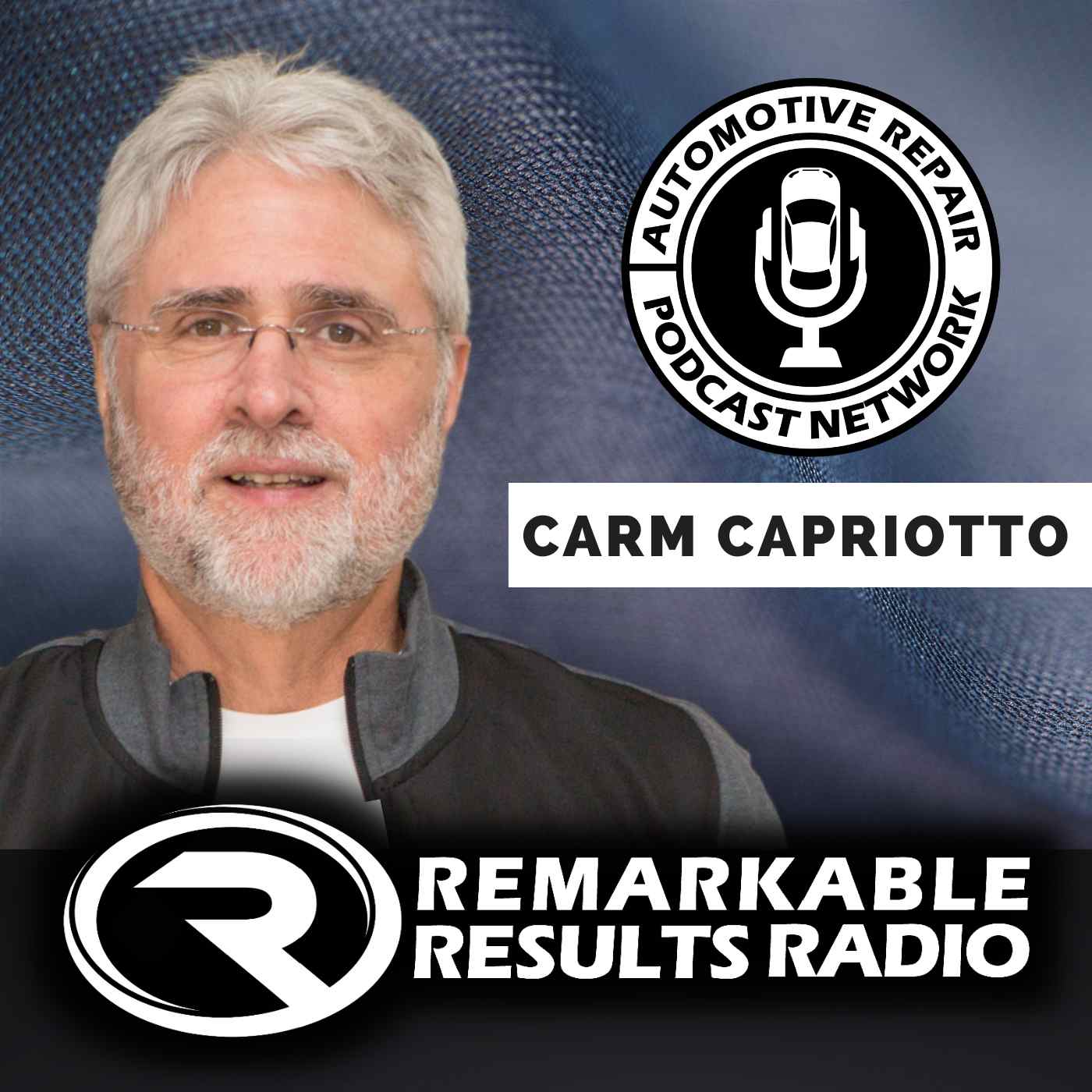
Hey everybody, Karm Capriotto.
Remarkable results radio, good to have you here.
Thank you so much for your loyalty over all these years.
Our listenership is way up.
I think you all know,
we created our own podcast listening app
and rebranded the company
to the Automotive Repair Podcast Network.
You can get this app
on the automotiverepairpodcastnetwork.com
and on the apps page
or a lot of the stuff that we put out
has our logo and stuff on it.
And don't forget everyone,
you know we do have a YouTube channel
and Karm Capriotto YouTube channel
where all of our stuff goes
and that is always so nice.
I have a great interview coming up
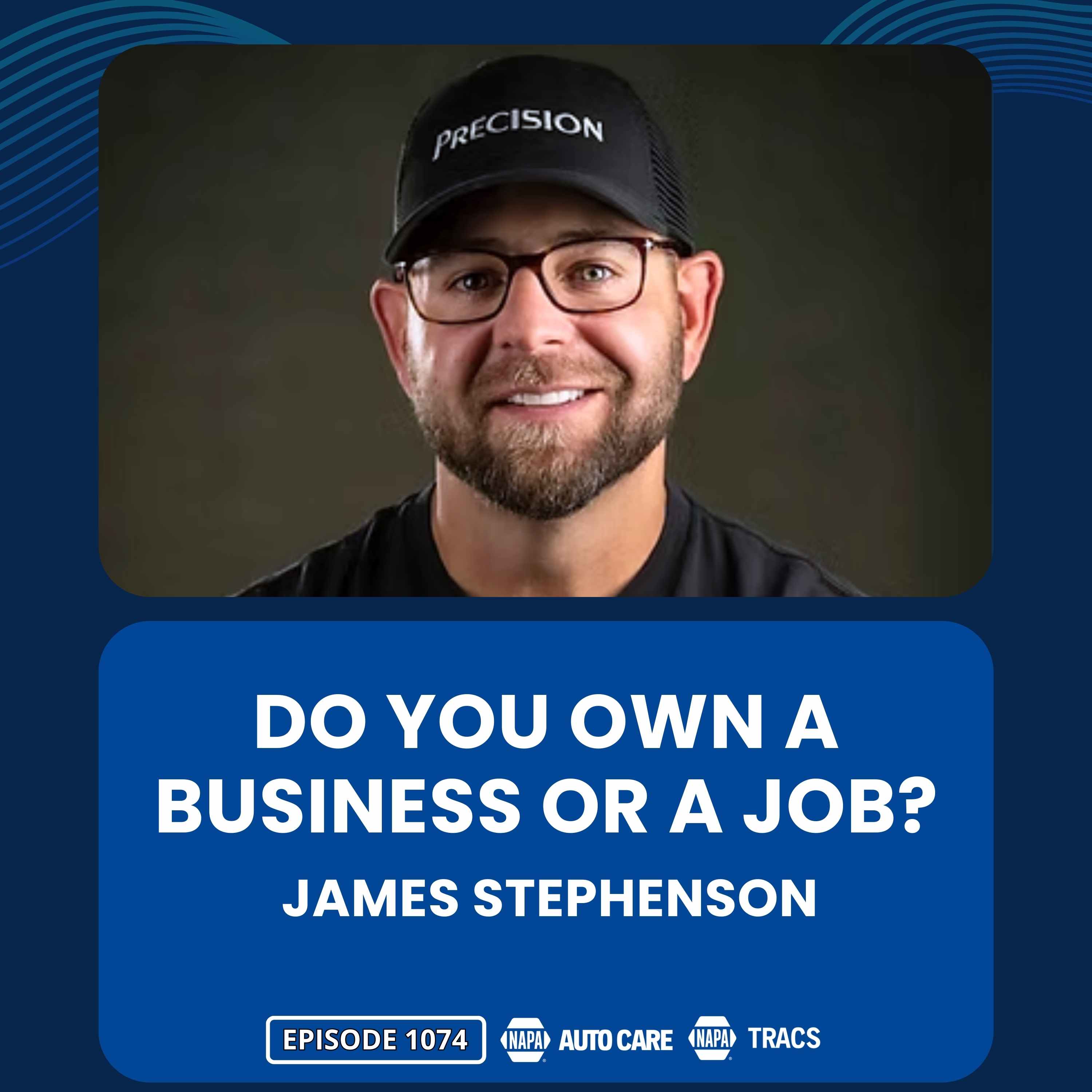
with James Stevenson from Precision Auto.
It is such a great interview
that I just can't wait to do it,
but first, great high fives from our sponsors.
Take your Napa AutoCare Center to the next level
with the Napa AutoCare Gold Certified Program.
Gold certified shops,
well they stand out,
build trust and enjoy exclusive benefits
designed to drive business growth.
Contact your Napa representative today
to get started with Gold Certified.
Hey, did you know that Napa Tracks
has on-site training plus six days a week support?
It all starts when a local representative meets with you
to learn about your business and how you run it.
After all, it's your shop, so it's your choice.
Let us prove to you that Tracks
is the single best shop management system in the business.
Find Napa Tracks on the web at NAPATRACS.com.
Hey, let's get started with James Stevenson.
Hello, James.
What's up, Karm, how are you?
I am great.
Wow, when you and I had our discovery call,
usually my discovery calls with anybody
I'm gonna do a podcast with is like 20 minutes
because I hate doing the podcast
when we're not recording.
And you and I spoke for maybe an hour and a half.
I think it was me wanting to dive in
and find out all the great things that you're doing.
And the thing that I love about James
in his very young, crazy life,
he's done a lot of things, continues to do a lot of things.
And we have a couple of mutual friends
and he told me this great story.
And I have to start this story out with Bob Cooper.
You were this young, impressionable,
I don't know where I'm going,
shooting from all cylinders.
And you went and you complained to Bob about something
and he spun your head around.
He spun it around.
That's a great way to look at it for sure.
He did.
Tell us that story, sir.
The listener, you're gonna love this story.
Go ahead.
Many years ago when I opened a repair shop,
I was a really good technician,
but just a disaster of a business owner.
I didn't know what I was doing in that regard.
And quickly I realized that obviously coaching
was the direction that I needed to go.
I used to get these magazines sent to the shop
and I'd read about Joe Marconi and Bob Cooper
and one day something resonated with me
and I became a client of theirs many, many years ago.
And so as the years went on,
the shop got better and better,
but we started to kind of fall victim
to this hiring crisis, right?
It was a real challenge to find good technicians.
Man, it just seemed like everywhere I was going,
when I was striking out, I just couldn't find them.
And everybody I would talk to,
everybody just kind of had the same problem.
It's tough to find people, you can't find good techs.
It almost became easy to succumb
to that side of the discussion.
James, I'm gonna stop you there.
How long ago was it?
That's gotta be 12 years ago.
My God, it sounds like now.
Yeah, I think at the time when I was going through this,
you know, another thing that kind of validated
that side of the discussion was just that,
like I had read a stat and I don't know where it was,
but it said that there was a 70,000 skilled tradesmen
or women shortage.
And that was like just in the Pittsburgh area,
you know, at the time.
And, you know, and obviously that resonated with me
and everything that you were hearing was, you know,
it's impossible to hire, you can't hire.
You know, I had this incredible company
that I was working with as a client at the time.
And they had this class and it was called
Fly With The Eagles.
At the time, Kevin Vaught and Joe Marconi were teaching that.
Kevin was actually my coach, my direct coach and mentor.
I really want to go out to this class to go see Bob Cooper
and just kind of hear what he had to say
about how to hire people.
The guy always, he's such a charismatic guy
and I just really relied on him heavily
for all kinds of insight.
And prior to that, just bigger decisions
that I had made in business.
So I was like, just so excited to go and see him
because I knew that he was gonna have a solution.
So I fly out and I'm getting ready to fly out
and the plane gets delayed, you know,
maybe an hour on the runway or something.
I'm just sitting there, patient reading a book or something
and then it gets delayed for another hour.
And I'm like, oh my gosh, you know,
I'm gonna miss my connector, but whatever, I'll get there.
And so after the second hour, they say,
all right, everybody get off the plane.
You know, the flight is canceled for tonight.
You know, we go down and we're trying to get our bags
and everything and I'll figure out a way to get there tomorrow.
And so next thing, you know, we're waiting on our bags
and you know, over the PA, they said,
on such and such flight into, you know,
as a connector into DC and then into San Diego,
they said, if you're on that flight, get to the plane now,
you know, and so there's this big scramble
to get back up onto the plane and I get on the plane,
they fly us into DC and there's no connector,
but they can fly me in the San Francisco, you know,
with no other information.
I'm like, man, how am I gonna get to San Diego?
James, trouble is following you or preceding you.
Well, this is a story about what Bob told you,
but I guess by the time you got there,
and woe is me, it was piled high and deep.
That's what PhD is, piled high and deep, right?
All this crap that was going on.
You know, my wife and I, Nicole,
were big into like signals, you know,
and I'm like, man, there's some signal telling me
not to go to this place today.
You know, it's like, there's just so many obstacles,
you know, and so I ended up having to spend the night
in the airport in San Francisco
when I get to the class a little bit late.
You know, I didn't have my bag,
so I had to buy some clothes before I get there.
I get there just a little bit late.
And so I walk into the class, I'm there for a couple hours
and then walks Bob Cooper.
And they always had breaks.
And, you know, in the first break,
Cooper comes right up to me
and he's just such a remarkable guy, walks right up.
Hey, James, how are you?
You know, how's your wife and kids?
And he remembers everybody by their names.
He goes, how's the shop doing?
How's precision doing?
You know, and that was my one shop at the time.
And I said, Bob, the shop is doing well,
but the problem I'm running into is like, is hiring techs.
Like I just can't find anybody and everybody I talk to,
they're all having the same problem.
And he pauses for a second to take it in
and he looks at me and goes, isn't it great?
And so at that moment, I'm like,
oh my gosh, this guy's lost his mind.
I went through like all of this stuff to get here
and he's gone crazy, you know?
And in true Cooper form and fashion, he finishes it up
and he says, look, he goes, it's great.
You know, he saw the look of surprise on my face, obviously.
And he says, it's great because the guy's like us.
And he points at me and him and he says,
is the guy's like us that realized that there's a problem?
Are the ones that are gonna be able to solve it?
He says, we don't wanna join that negative side
of the argument.
He says, we're gonna look outside the box for solutions.
And he says, in about five years, he says,
shops like yours are gonna be the only one standing.
And I'll tell you, man, as taken back as I was
when he first started the statement at the end of it, man,
that's something that literally changed the way that I hire,
changed the way that I run my companies.
Companies now, it really kind of put me
on a different side of every type of discussion.
It's like wherever there is a lot of, say, negativity
where people are saying, man, you just can't do this.
It's not the right time.
You know, you can't hire technicians.
That's the time to do it.
It's almost like buying stocks.
You know, if there's blood in the street,
that's the time to buy, typically.
You know, and so it kind of put me
in a totally different mindset and for many discussions.
James, why is there so much negativity out there?
Everybody's a pundit and oh, yeah, that's Charlie.
It's never gonna get better.
You were kind of taught to look at the positive
or the solutions side of every problem.
And that's the thing that I'm,
I guess I'm trying to combat for the last 10 years
by putting the kind of positivity on our podcast,
listen to learn just one thing.
And you take that thing and you implement it.
I think the one big takeaway from this episode
is going to be, isn't it great?
Oh, it is.
I can't breathe, I'm underwater.
You know, I had a straw.
I'm sucking air from a straw.
Isn't that great?
I think the biggest thing that I learned
from Cooper over the years was that
you have to really be fragile
with how you talk to yourself, that inner narrative, right?
And you don't wanna join these negative discussions
and you have to have a positive mindset.
And I have grown to understand that
like a negative opinion is the easiest one to have.
Like I have some seltzer water here, right?
It would be easy for you, Karm, to say,
I don't like seltzer water.
And I'd say, why?
And you say, I don't know, I just don't like it.
You know, I just don't like it.
And so I'd say, well, I do.
And you'd say, why?
And I almost have to defend it.
You know, and so it's just so much easier to just say,
it's just, I don't know, everybody else isn't doing it.
So like, I'm not gonna do it either, right?
Everybody's slow, so I should be slow too.
Everybody's not hiring.
And so I shouldn't hire either, right?
It's, I'm joining the discussion.
It's just easier.
It's like that crowd mentality.
And so I think some people go upstream
and they find solutions.
And, you know, that's kind of where I live my life.
And I could tell you that Bob Cooper
and definitely Kevin Vaught were very instrumental in that
because it was very easy for me naturally
just to kind of fall into that negative side
of the discussion.
So how did you overcome this?
The technician crisis, everyone tells me
it's really never hiring problem.
We hear a lot of words.
We hear always be recruiting.
We hear retention is a big thing.
The culture of the positivity
so that your top people don't leave.
And if you're growing, that's a good thing.
It's a positive thing.
We need more people.
And a lot of times your own people help you recruit.
Our own people help us recruit,
but I think that it's actually not that difficult
to hire good technicians.
I don't think, right?
I don't feel.
And so to date now, at that time I had, you know,
maybe two companies, one auto repair shop,
and then like a real estate management company
that managed my real estate.
And now we've got about a dozen companies.
And at all dozen companies,
we don't have an issue hiring.
We actually have an abundance.
I can tell you firsthand right now
we have almost too many people
and we need another business
so that we can put those people in.
And what really changed for us was obviously that discussion,
but ultimately the way that we look for technicians,
we stopped hiring out of need.
And we started recruiting for technicians
the way that we recruit for customers.
We started doing it all the time, right?
When you're looking for a customer and you market for them,
they may not come in right now
and there's a right customer, right message, right time.
And so it's about opportunity
and constantly being in front of them.
There's also like that abundance
and then there's a scarcity mindset, right?
And so like when you first start out in business,
you have the scarcity mindset.
Man, how do I not go broke this week?
How do I pay my bills?
And then there's that abundance mindset.
Well, how do I hit my goals?
How do I exceed my goals this week?
And so when we approach looking for technicians,
we just wanna find the right people
and we wanna do it not out of necessity,
but we just kind of recruit for people all of the time
just like we're recruiting for customers all of the time
and better vendors and then when you have them,
you're nurturing all of those relationships.
And so for us, it's just,
we don't put any more energy into one or the other.
We just do them all of the time.
It's kind of like the tortoise and the hare.
We're just kind of always walking
through all of those processes,
refining, figuring out what we did right,
what we did wrong and just continuously moving forward.
And from there, we're able to hire
from a place of abundance rather than scarcity.
So we're getting better quality technicians
and we're able to just kind of like nurture the pipeline.
And then obviously when you have them,
it's just like having customers.
You wanna make sure that you're nurturing
that customer base all of the time.
Well, you wanna make sure that you're taking care
of your people.
And in my experience, it's not just pay.
It's how you treat them.
It's all the little things you do between the lines.
It's a million different things.
And I can tell you that early on,
I probably didn't always do a good job
at nurturing those relationships with the technicians.
What was the defining moment
that got you out of normalcy
and into loving them and doing more?
I mean, can you go back?
Was it five years, 10 years?
Was it something Cooper told you?
Was it something that you did inside the business
and it works so well and says, we gotta do more of this?
The defining moment for me was actually
kind of a semi-tragic one.
We had a long-term staple technician.
He was our pillar in the shop.
And unfortunately he passed away, you know,
not in a great way.
It was really jarring for all of us, especially me,
because I had grown so close to him
working with him for about 10 years.
And we had to hire somebody else to replace him.
When we did, I think we took a lot of things for granted
in the relationship and I began to just work more
on obviously training and systems and all of that stuff.
Like there's a lot that goes into it
to make sure that they have everything that they need.
But more than that, you know,
just helping them understand that they are part of the company
and that we care about them
and doing a lot of the little things.
But another thing that we do is we really make sure
that their goals are our goals.
And we internalize that stuff, you know,
one, three, five-year personal professional goals.
We sit down periodically through the years
and, you know, we just try to find ways
to make people get things.
We've helped people buy houses and cars
and, you know, invest in their family
and all kinds of different things.
Things that are not necessarily always required
of an employer, but for us,
just like a customer is a relationship-based relationship,
right, so is a technician.
We see these people more than we see our families
in reality, right?
We're here with them all day long.
And then we go home, we have dinner with our families,
maybe watch a movie or read a book together,
but then everybody goes to sleep.
And so with the technicians and the people that we work with,
we're with them all day.
I think there was like this older mentality maybe
that I was brought up in
and that other people were brought up in
where it was kind of like when I was a tech initially,
I had learned basically that I was doing a good job
if I got paid on Friday.
You know, there was really nothing more to it.
I didn't get a lot of congratulations.
Nobody celebrated wins with me.
None of that stuff really happened.
And so as I learned how to be a manager and an owner,
it was really kind of the same thing.
I didn't really know any better.
And so through trial and error,
through the years I learned how to be better
at building these relationships with these people
that I'm around all the time.
And you know, it helped me appreciate them a lot more.
And I believe that they appreciate me a lot more too.
Now that you know what it takes to become a Napa Gold,
AutoCare Gold Certified Shop,
let's talk about the real value,
what you get when you achieve gold.
This isn't just about status.
It's about tangible benefits that grow your business.
Gold certified shops receive premium placement
on NapaOnline.com at no additional cost.
With millions of site visits each year,
your shop will be one of the top options consumers see
when they search locally.
That visibility, it means more cars in your bays.
You'll also get $1,500 annually in marketing funds
for pre-approved, co-branded messaging,
helping you connect with your community while benefiting
from the national reach of Napa branding.
Combine that with preferential referrals
and you've got a powerful marketing advantage.
Gold certified status enhances consumer confidence
with an extended 36 month, 36,000 mile,
peace of mind warranty and local labor coverage,
proving you stand behind your work.
You'll also gain access to award-winning
Napa Autotech training for technicians
and service advisors, helping improve efficiency,
reduce comebacks and support retention.
Additional benefits include Napa credit card financing rebates,
year round peak performance promotions,
Napa Tracks shop management software,
smart sign pro customer engagement displays,
a team tool rebate to invest in your technician's success
and a $300 annual credit toward master technician
or blue seal ASE certification.
Gold certified membership is designed to help you recruit,
retain and deliver the best experience to every customer.
Are you ready to elevate your shop?
Contact your local Napa representative today
to see if you qualify and start your journey
to Gold certified.
Contact your local Napa sales representative today
to see if you qualify and start your journey
to Gold certified.
Let's face it, your shop management system
is the single most important tool in your shop, period.
Napa Tracks was built from the ground up
to make your business more profitable and efficient.
We provide an extensive set of tools
to increase and track profitability in real time.
Napa Tracks offers the industry's best post sale support
hands down and we train your people on site.
Yep, on site and we offer remote refresher training
10 times a week and customer support is open
six days a week.
Give us a call, visit the website
or join our Facebook community today to learn more.
We'll prove to you that Tracks
is the single best shop management system in the business.
Napa Tracks is always customized and tailored for you
whether you're a one man shop
or a large multi-bay or multi-location company.
After all, it's your shop, so it's your choice.
Visit us on the web at Napa Tracks, that's N-A-P-A-T-R-A-C-S.com.
I just can't believe James is doing this.
I mean, here's the opposite side of the listener saying,
would you help your people buy houses and reach their goals?
And I get that and it is so important
and the top companies are doing that.
But an individual who's listening to this saying,
what is he nuts?
What did it take for you to realize
that that was an important step?
I guess I just began to think about
like what would I do for a friend?
So like how would I treat a friend if they work for me?
But obviously distinguishing the difference
between friendship, you know, and boss
because sometimes you have to hold people accountable
and it's a different type of accountable
that you can hold a friend
than you can somebody that works with you.
And so I think it just became like,
you know, Karm, if you were like, hey James,
you know, I really wanna buy a house
in the next couple of years.
Well, all right, Karm, what kind of house do you wanna buy?
You know, and what's your budget?
And we begin to have that conversation
and I begin to think about, well,
who do I know that's selling a house?
Or who do I know that are realtors up in your area?
And then I began to just kind of approach
the discussion that way,
wherever I could begin to help an employee
somewhere personally,
it really put something in what Bob Cooper
would call the emotional bank account.
And I think that it really did a lot for me
to really begin to celebrate those wins with them.
You know, I don't know.
I think it did something to my heart.
It makes me feel good too.
And our staff has been with us.
I mean, we don't have high turnover.
What you said is so powerful.
You started the question, the individual,
what kind of house, what kind of budget?
And when you take the wisdom, James,
that you have and the experience that you have
of maybe buying one or two houses
up into this moment in your life,
and I don't know that to be true,
but there are so many people out there
that need the wisdom of someone not older,
but who's been there and done that.
They could be the same age, but oh,
yeah, I bought a house a couple of years ago,
we're only 30 years old.
So what'd you do?
How'd you do this?
And I think for people willing to share
the things that they found successful
that they stumbled with.
It doesn't mean, oh, I want to buy a motorcycle.
Oh, great, what kind?
You know, how fast do you want to go?
What do you need it for?
Are you going to go on the leisure trips on the weekend?
What are you going to get a bike in with friends?
All of those determine how the decisions are made.
Well, the other thing too, it's like, all right, Karm,
you want to buy that motorcycle and how much is it?
It's $20,000.
Perfect, well, how much do you have to put down?
Well, nothing.
Okay, well, how's your credit?
Well, my credit sucks.
Okay, so like, how do we fix your credit first, right?
Well, I'm in debt, perfect.
So you need X amount of dollars to get out of debt.
And then we've also got to save X amount of dollars
to begin to get you that down payment for that motorcycle.
And so it's going to be a two-fold thing.
We're going to do both at the same time.
And here is how we can help you do that, right?
Like our pay plan is structured to incentivize the behavior
that we want to see out of the technician.
And so if you can, you know, have one less comeback
and, you know, maybe one less second call
and you could do a little bit better job
with your inspections, you know,
our average repair order is going to increase by this much
and you're going to notice X amount in your check.
And then from there, what we can do
is we can put this in a different bank account for you.
It can kind of sit there.
It'll gain a little bit of interest.
And in, you know, 12 months, you're going to pay off your debt
and you're going to have enough
and you'll never even actually feel the hit to your paycheck.
What would you think about that?
Would you like it?
Of course they're going to say yes.
You'd do that for me?
Yeah, of course I would do that for you too, Carl.
Oh, thank you so much.
But that's the, without saying the word intimate
and I do love the word intimate,
but by still being the boss,
you're helping this individual reach goals.
I've heard stories like this over and over again
and that creates what I call stickiness.
It does create that stickiness.
You know, you have tonight, for instance,
you know, my birthday is this coming weekend
and you know, tonight when we're done with this,
a bunch of guys will come by
and we're going to have cigars
and kind of just hang out and have fun, you know,
a bunch of people and a bunch of the guys
that work for me at different companies
all can't wait to come by, you know,
they're all excited and they like sharing wins with me
as we do things and I love sharing wins with them.
And it's just a really cool culture
because I internalize their wins
and I internalize the things that they need as well
because I don't know, it's like they're here,
they're with us and you wanna make sure
that they're getting like,
there has to be some benefit in it, right?
Like working for us must enrich their lives
and if it doesn't, then we've done something wrong
and that in my experience with coaching,
I don't know, dozens of shops through the years
and growing dozens and dozens of businesses
through the years and helping all kinds of people,
that is usually where people get lost
when they have people and they're like,
these people don't stay with me,
they leave me for a dollar,
they didn't leave you for a dollar, right?
The heart leaves before the body,
they left long before that
and the money is the easiest excuse.
Are you finding that some of your people
are living paycheck to paycheck or beyond their means?
Definitely, people that come in
and they start working with us,
there's probably more of them,
we don't quite realize it because, you know,
if I just started working for you,
I probably wouldn't wanna tell you
my full financial situation either,
especially if I was driving a new car
because I know on the surface,
I can't afford that car, you know,
and I shouldn't have that payment,
but it does something for your ego
and makes you feel good
and you've got that gigantic $10,000 toolbox
that you don't need,
the thousand dollar one holds the tools the same way.
And so in a lot of cases,
you don't have that relationship with them just yet
to give them that mentorship.
But as they see, you know, like,
what I do now isn't just owning that one shop,
you know, I'm constantly acquiring clients, companies,
acquiring property and, you know,
so they see me on the move all the time
and that becomes infectious, you know,
it really, really does because when I go
and I take on a new company,
I don't go and hire externally.
Sometimes when we acquire a company,
well, in most cases,
we try to keep as much staff as possible
because the staff is really where the value is.
They've been running the company for the most part,
but when we go and we take on a new company,
we just kind of plug our company into their company.
And so in doing that,
it helps when we have people that have already been trained
and been using our system and been helping us just win,
creating successful companies that have high CSI
and obviously produce, you know,
enough income for all of us.
And the best way to do that is like,
is just for us making sure
that that emotional bank account is full
and then promoting from within.
And so it's like, when you go and you get a cell phone,
Karm, you and I are gonna go Verizon or whatever, you know?
And so we both go there and you don't have them, but I do.
And so now, Karm, they're gonna give you a free phone,
a $1,000 credit and a back rub.
And, you know, and I still gotta pay my bill.
I've been paying my bill on time for 20 years.
How come I don't get anything?
When everybody can see that there's room for growth
in our company and that the hard work is rewarded today,
you know, on Friday through,
or well today because we always celebrate the wins with them.
Hey, great job, Karm.
You did awesome at this.
And then on Friday, they see a little bonus
or they see something.
All of our pay plans are built around
making sure that we share the profit, you know?
And they've got something going into a 529 for their kids
because that's a goal of theirs
or their 401K and all of these things.
They celebrate all of that, but now they know,
hey, look, if I could do a real good job
and I pass all these tests and everything
and I can get to the next level in this one building,
well, guess what?
When James opens the next one,
I can be a lead tech over there
and I can go and help onboard other people.
And that begins, you know, the discussion
about how we begin to plug our company into other companies.
You know, in a lot of cases, some of the leads that we get
when we start to acquire another shop is exactly that.
I can't find people.
No one wants to work.
No one wants to do it.
I'm like, well, what if I could put three, you know,
solid Bs and an ATEC in your shop Monday?
What would that be worth to you?
And that begins, you know, the kind of the next discussion
of how we have gotten into kind of solving
this succession crisis.
You know, the first crisis was techs, you know?
I loved your analogy about the cell phone, the new customer.
It's priceless.
We have all sat in front of our TVs
and seen our cell phone company recruit new people
and give them the world.
They dug down in their Santa bag and gave this person
everything and why not me?
Okay.
And that pisses me off all the time.
And I always say, I'm going to quit these people,
but then I got to find someone else giving all that stuff.
What a great thing to say that I just hired a new person.
And in order to get them, I had to do this, this and this
and that and that and that.
And I feel really bad that I haven't done.
There's an equality thing happening here.
So for all the people that are listening,
that are owners, CEOs, hiring people, be careful.
Right?
Yeah. I remember years ago, we used a hiring bonus and,
you know, and different people in the coaching circle
because, you know, I've got just as much experience
as a professional coach as, you know, just for automotive shops
as really, or I had prior, just as a business owner, you know?
And so I've been in the coaching space
for a long enough time to be a veteran coach.
And so I've got a really, really strong circle
of really some of the guys that you've had on this show.
They've been in all of the big publications and everything.
These are really brilliant people.
And I'm fortunate enough to have them, you know, in my corner.
I call them regularly.
We all talk regularly.
And one of the things a few years ago is they're like,
James, we got away from hiring bonuses.
I'm like, why?
You know, because it's a good hook, right?
In marketing in general, you want a good hook, right?
Things that move fast.
People all look at Tesla cyber trucks and beautiful women.
People all turn their head and they look at those things.
Well, the same thing is true for a big sign-on bonus,
but our crew has been with us in every business long enough
that everybody has gotten the bonus.
You know, and a lot of guys will say,
well, if one guy got it and the other didn't,
that's just not a problem.
We've been using it for so long.
And so, you know, that's one real good way to attract them,
but it's not necessarily how we always get them.
It just gets them to call, right?
It's marketing.
You know, you're marketing for new people
and marketing in general is how do we evoke emotion?
You know, and then from there,
our hiring process weeds out anybody that's not great
and isn't going to share our culture.
And, you know, we bring in the good ones
and we give them everything that they need,
the time, the tools, the training, and the accountability,
and we build them up.
James, I liked your answer, but you say,
we've got all these people here
and they've gotten the hiring bonus.
Well, what if you got somebody there for a dozen years,
but you needed to do a hiring bonus on somebody new?
And that person from a dozen years ago never got that.
Oh, we had that.
Are they going to understand
that this is how it's done today?
We had that with one singular person
and we just gave them the bonus.
A good buddy of mine was a divorce attorney,
really prominent divorce attorney in the Springfield area,
and he always had this funny saying.
He says, it's cheaper to keep her.
And I think that employees are the same way.
If you have a really good employee,
you just take care of them, whatever they need.
And if that was the constraint and it's a couple thousand dollars,
it didn't matter to me at that point.
It was a really good team member.
It's the do-right rule and I get you.
Now, this whole silver tsunami opportunity,
because obviously you have dropped a couple of hints
along this interview that I'm buying companies.
You know, I'm doing a little private equity myself.
What's going on with this silver tsunami?
I mean, for the whole industry, there's a lot of opportunity.
I think a lot of people are still on that negative side
of the discussion and it's the technician discussion still.
You know, and so you've got a lot of people that are like,
I don't know, man, I can't hire good people
and there's nobody out there and so I'll just do it myself.
And these are people that have run really good businesses
and they're really smart people,
but maybe they're already set up financially.
Maybe they're not, it's none of my business,
but in any event, they're just,
they lack the motivation to go and change right now, right?
We've been doing it this way forever
and I don't want to deal with the headache
and the stress of bringing somebody else in.
They're not going to do it right.
You know, in reality, what we find with a lot of these companies
is they're not doing a lot of the things
that they need to do to nurture the relationships
when they bring them in
or to give them the structure that they need
when they bring them in.
It is a real crisis.
You've got a huge generation of people
that are kind of, they got one foot out the door
and you know, they still put out
a really good product for their customers,
but they're not in any position to do the things
that they need to turn their business
into a sellable asset right now.
They still, for lack of better words,
they own a job and they don't necessarily own a business.
100%.
Are these people, these shop owners,
smart enough to realize that they have something to sell
if they get back to their core values and profitability?
And are they also willing to step aside
knowing they really don't have a whole lot to sell?
It's a great two-part question, Carl.
You know, and I think that they are smart enough,
but I think that there are two things there.
There is opportunity and then there is desire.
And so, you know, there's a mountain in between the two
in some cases, you know?
And so, you know, recently we were looking at a company
in Connecticut right near us.
It's a shop and this will kind of sum it up.
The guy was trying to sell his company
and we went in there and we met with them.
And so the first thing that was a red flag for us
is when we're beginning to work with a company,
we need to understand the profitability of the company
where they're at.
We need to know that we can add value, you know?
And so one of the first things that happened
is we go in there and the shop was messy, chaotic, you know?
And instantly when you walk in,
you're like, I could definitely add value to this shop.
You know, from the parking lot,
I knew I could add value to the shop.
We walk in and we're sitting down at the table
and there's the broker and there's the owner,
there's me and there's our CRO, our Chief Revenue Officer.
His name is Nick.
He helps us with sales training and just overall systems.
Make sure everything runs smooth.
And so Nick and I walk in and there's the broker
and there's the owner and we sit down
and even the desk is broken, you know?
And so they want X amount of money for the business
and they want X amount of money for the real estate.
And so on the surface, it just didn't make sense.
And when they sent over docs,
they're missing two years of docs.
Like the prior two years, not even 25,
they're missing 23 and 24.
And 21 and 22, they didn't even show a profit.
And so I'm like, where, how did you get this number?
You know, but nicely, you know,
come help me understand how you got to this number.
Well, because we do all these inspection stickers.
I said, okay, great.
You know, so you do all these inspection stickers.
That's awesome.
Yeah, yeah, we do them all.
And they threw a stack of papers at me, Karm.
You wouldn't believe it, this thick stack of papers.
Look at all these inspection stickers I'm doing.
Great.
What's your cost basis on the stickers?
They had no idea what I was talking about.
You know, well, we pay $6 per and we charge $20.
Isn't that great?
Yeah, but you're paying a guy $20 plus the load.
So you're paying $25 an hour for a guy.
How many can he do and so on?
And, you know, they're not getting repairs out of it
and everything else.
And so I'm like, all right, next.
Hey, Karm, where's the last two years' tax returns?
We didn't see them, you know, in this,
in the disclosure and what happened.
And so the broker and the owner both kind of chuckle
and they're like, well, you never filed them.
Why didn't you file them?
And the owner goes, we didn't want to pay taxes.
And I said, oh, that's how you do it, you know?
And so right there, there is no sellable asset.
There is no business to buy
because we can't get a tax clearance letter.
There is no business to buy.
The harsh reality of it is that business,
there is no EBITDA on that.
One, it's a loser on paper.
You must show revenue and you must pay tax
to build value in your business.
And a lot of guys, as they're getting closer to exit,
they're taking a little bit more cash in cases
and ethical or not, that's their business.
And, you know, and they're just not putting the money
back into the business that they would before they sell it.
It's like buying a house, you know?
You buy a house, you start with the end in mind, right?
And you're like, man, I know the next buyer,
he's going to want a pool and he's going to want a nice shutters.
And, you know, this door that I have to jiggle the handle
and like lift it and twist it a certain way to get it to close.
Man, I got to fix that
because Carm is not going to want to buy that, right?
And so these guys are not putting attention
into their business, not all of them,
but the majority of them are not putting the attention
into their business because it's just not their focus anymore.
And a lot of them, when I go to the deal table, respectfully,
I find that they just haven't done any of the things
that they need to do to get the multiplier that they want.
You see, when we value a business, we value it,
we use one of two things, right?
SDE, seller's discretionary earnings,
or we use EBITDA, earnings before interest,
tax depreciation, amateurization.
No, I speak quickly, but at the end of the day,
when you boil down the financials of the business,
there is the true calculation of what a business is worth, right?
And so like, say on a business that does like a million five,
on average, it's going to do about a $300,000 EBITDA.
On average. And so under a million, we usually use SDE.
And so that will like back in like your personal truck
that you're running through the business, your home office,
stuff like that, we back that stuff back in and you add that in there.
But in this case, you say, just for discussion's sake,
we'll say it's EBITDA.
Well, if the business is like fully self-sufficient,
it's run well, you can leave,
you could take off for a week here and there,
the afternoons are no problem,
you got to go on vacation for a couple of weeks,
it's no problem, it's going to run.
Then you get a multiplier of maybe four in this industry
with the wind at your back.
If you own a job like this guy with all the inspection stickers,
first of all, there is no value to that,
but then it maybe is just straight EBITDA.
And when you show no gain in the business
and you're not paying tax, there's nothing there, it's zero.
You know what I mean?
What's 100% of nothing.
I find it unfortunately too common.
I find it very, very common.
For us, it's opportunity because the asset there
really is the people.
I've found more owners that I guess I could classify
as bad owners, unfortunately, than I could classify.
And not all owners are bad companies,
don't take it as that.
A lot of them are really good people,
they just don't have the ability to put the energy back in.
But the people that work for these companies
typically are incredible people and they really like,
I've rarely met an employee at any of these companies
when we're in due diligence that go into work and they say,
man, I really want to do a bad job today.
They always say, man, we could do a better job,
but we are still writing paper tickets or our credit line
is shut off over here or our lifts are broken
or just whatever it would be, they just don't have.
We go back to time tools, training and accountability.
They don't have the things that they need to do the job.
And they're not celebrating the wins with anybody
because they're not getting them.
And that to me is why I see that there is
a big technician crisis because you have people
not wanting to go into the industry because a lot of shops
are just maybe not run properly.
They've been doing it the same way forever
and now they've got one foot out the door.
Now, I don't think that is the majority of shops at all.
I think the majority of shops are probably really well run shops,
but I think a lot of them, I think the majority of shops
that are even well run could do way better with a coach.
I think they could do phenomenal things with a coach.
I think that these shops that we're talking about
that kind of have somebody that maybe has one foot out the door,
they could do better by exiting
and letting somebody else take the reins
and manage their people and build their staff up,
build their team up.
And if you're struggling today,
I'm not trying to say that age is an issue,
but if you're a young individual 10 years in
and you're really struggling, say you're 40.
Well, I want to get out when I'm 50 or 55.
Great. Well, then start doing the things you need to do.
I'm a big advocate for coaching.
Every time I've talked to a friend who said no,
then realized then they did
and said I should have done it 10 years ago.
I've got people that I know in this industry
whose EBITDA, whose profitability is on fire,
they're getting ready to go and buy another place.
They're hiring much better people.
And I guess one of the things that we've talked about
for the 10 years that we've done this show
is get up and out of your own way,
get an advocate, somebody willing to help you,
like a mentor, like a coach, a networking group,
peer pressure networking group,
and you'll be amazed how your life will turn around.
I have another really quick question
and then I'm going to let you go.
But I think I have to have you back
because there's a million things I still want to talk to you about.
And here's one of the other things.
I call them hidden superstars.
You walk into a building, you see it, you're negotiating.
It's not the deal that the guy wants,
but yet two, three months down the road,
you get a chance to buy it almost at the price you were offering
because he realizes he doesn't have a whole lot of things to sell.
And there's three or four people inside the building.
Are there any hidden superstars?
And I believe there are inside of some of these
marginal and failing businesses who just need the right encouragement
to become top, top people.
Are there hidden superstars out there?
Yes. I could tell you in all of the deals
that we have been in every single one of them,
we acquired because everybody was a hidden superstar,
just about everybody.
And when we bolt our company onto another company,
and just to kind of make that clear,
what we do, we're not a typical private equity firm
and we're not a typical consultancy.
We want to essentially guarantee success for the shop
that we begin to work with and we partner with them, right?
And so like we own our accounting firm, that's my wife Nicole,
and she's got a, you know, other CPAs with her.
And then she's got a litany of bookkeepers.
They do a phenomenal job, smartest person I know,
beautiful inside and out too.
And I'm sure she'll listen to this and I hope she loves it.
I've seen your picture, you're right.
Yeah, Nicole is a phenomenal person,
just she's really as beautiful inside as she is outside.
But she's a phenomenal bookkeeper, she's brilliant.
You know, from there, we have an entire coaching team,
we have an entire marketing company.
And from there, what we do is we come in with our team,
you know, and so we train your writers,
or we just give you writers
that we've already had working in other businesses.
We train your texts with some of our master texts
and we built a training program,
or we put texts in your business.
And in any event, it's all about mentorship
at every level in the company, you know?
And so we come in, I think,
one of the questions we get asked is like,
well, what are you going to pay for the business?
And I'd say this, Carl, I'm just kind of in closing, right?
If it's not so much about that, right?
Like we're not necessarily buying.
If I told you that I could market your company
in a way that is ethical
and promotes you as a leader in the industry and in your area,
and you know, a real asset to your community
with charitable events,
and I could streamline your shop
and modernize it with systems and programs
and all of this other stuff
to really give a better customer and employee experience.
We get somebody to handle all of the phone calls
and train your staff.
We could put texts in your shop
that'll teach your texts,
train your texts,
and help you really continuously recruit.
Then what is it worth to you, right?
It's not so much that we're really buying,
we're kind of selling you an opportunity.
And then from there,
we put people into the portfolio
and then there's something totally different
that happens after that.
Because the way that it works with us
is we have a portfolio full of these companies.
And so if you had one good business
that was running really, really well
with the wind at your back totally self-sufficient,
you have EBITDA of say four.
Now you're in a group of shops
that all own their real estate
that are all run the same way
using the same systems, the same people,
so on and so forth.
You now get EBITDA of like anywhere between 18 and 20
on the whole package.
And so by working with us
and allowing us to help you
and partner with us and build up
your team and your systems and everything else,
the wind at the end of the day is incredible,
but that's a whole other episode in itself
of how we structure that and how we do that.
It reminds me of Instant oatmeal,
just add water.
Pretty much, yeah.
Get out of the way,
we're just going to add water here.
What do you do for fun, James?
Don't tell me.
I don't have fun, Carm, I work.
I wake up early.
As we in our discovery call,
we realize that our brains have returned off.
We wake up, we have no pads everywhere
so that we can write our random thoughts down.
Carm, you know, I woke up the other night
at 2.30 in the morning
because I had an idea
and I'm writing the idea down
and as I'm writing it down,
I'm like, man, I wonder if Carm is up right now
writing down an idea.
It was the craziest thing.
Honest to God, James, I probably was
because I have this three o'clock automatic get up
and don't ask me why.
And then I try, sometimes I just have to turn the TV
onto some really boring channel
in fact, I've heard the fun thing about this
is when you're in a hotel room
or you're away and you can't sleep,
you just throw forensic files on
because you've seen all 500 episodes
and they're all boring and crappy
and you go right back to sleep.
That's what I was told.
I'm a dateline guy.
I watch a lot of dateline
and then I look at my wife real crooked
after I'm like, what are you up to, you know?
I think you're just like that suspect
that was on that show.
Anyway, hey, James, thank you so much
for your great perspective on things,
precision auto seven shops,
a private equity company.
You even own a plumbing company in Texas, you told me.
Yeah, we got about a dozen companies on portfolio now.
Good for you.
And will you come back?
Absolutely, Carm.
I've been listening to this show for so many years
and I got to tell you it is an absolute honor
to be on here and I know you're a busy guy
and I know you talk to the top people in the industry
and I got to tell you, I'm really humbled
that you had me on here today
and you saw something in me to have me on here.
I really do appreciate that.
Sounds like you're doing some really good stuff, but...
Thanks, James Stevenson.
Appreciate it, man.
About this episode
Karm Capriotto interviews James Stevenson from Precision Auto, exploring the difference between owning a business and merely having a job. Stevenson shares his journey from struggling technician to successful business owner, emphasizing the importance of a positive mindset and proactive hiring strategies. He discusses overcoming the technician shortage by fostering a supportive work culture and nurturing employee relationships. The conversation also touches on the challenges of selling a business and the value of mentorship in the automotive industry, making it clear that a shift in perspective can lead to significant growth.
James Stephenson shares his journey from a struggling technician to the leader of multiple successful businesses, offering a candid look at what truly drives sustainable growth in auto repair. The conversation tackles the technician hiring crisis head-on, reframing recruitment as an ongoing, intentional process and rooted in a positive, proactive mindset.
Stephenson credits much of his success to mentorship from Bob Cooper, highlighting how investing in employees as people, not just producers, builds long-term loyalty. By supporting personal goals like homeownership and financial stability, shop owners can create cultures where teams want to stay and grow.
The episode also explores the coming “silver tsunami” of retiring shop owners and why many shops fail to become valuable, sellable businesses. Poor financial documentation and outdated systems often erode enterprise value. The takeaway is clear: with professional coaching and strong shop management practices, an auto repair shop can evolve from a job that owns you into a scalable, high-value business asset.