Annotations will appear as you listen
0:00
66:23
Car
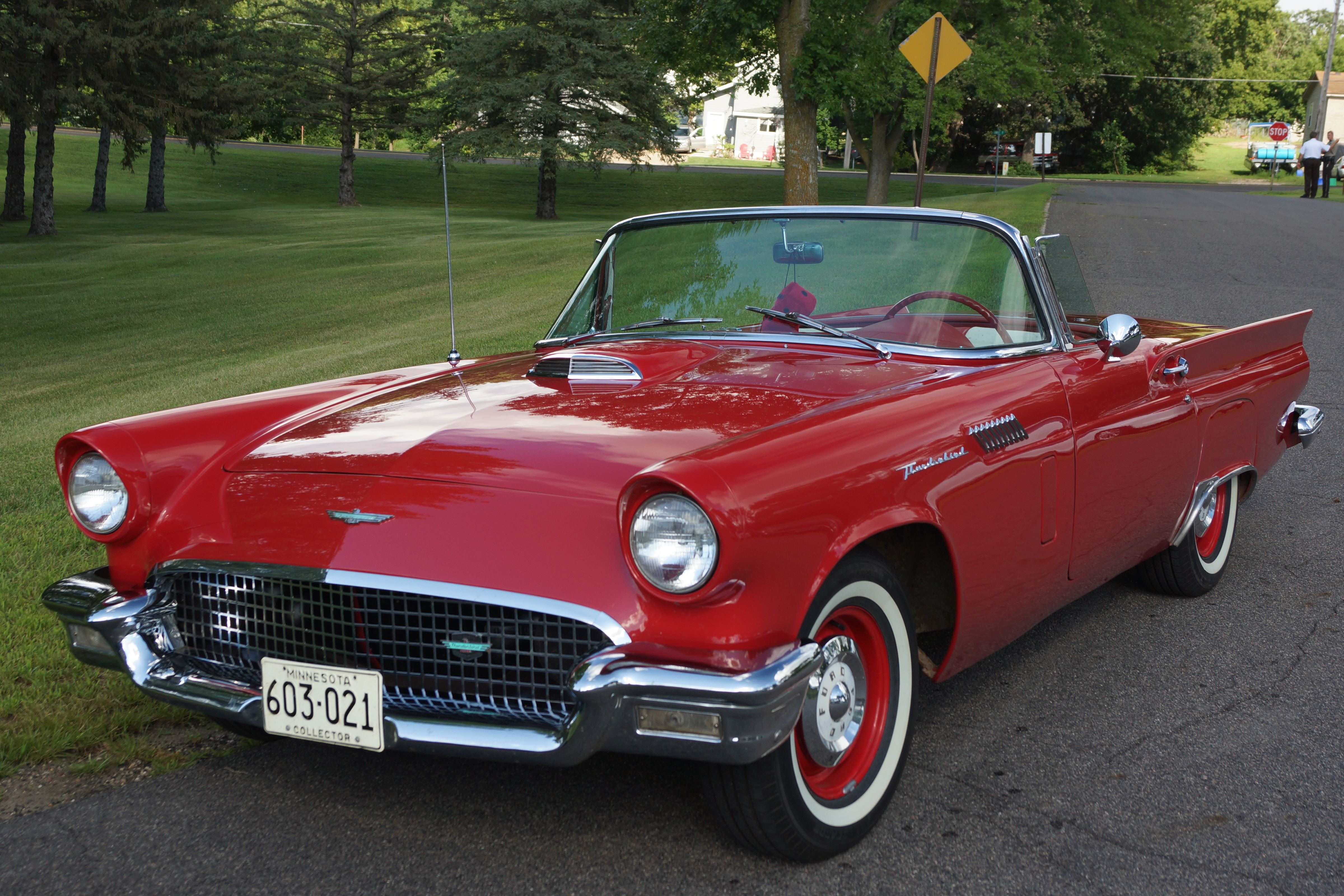
Ford Thunderbird

Car
Ford T

Car
Ford Capri

Car
Ac Cobra

Car
Ford Fairlane

Car
Ford Mustang

Car
Dodge Custom
Car
Mustang Fox Body

Car
Ford Mustang GTD

Car
Ford Model T

Car
Tesla 35 Model
Car
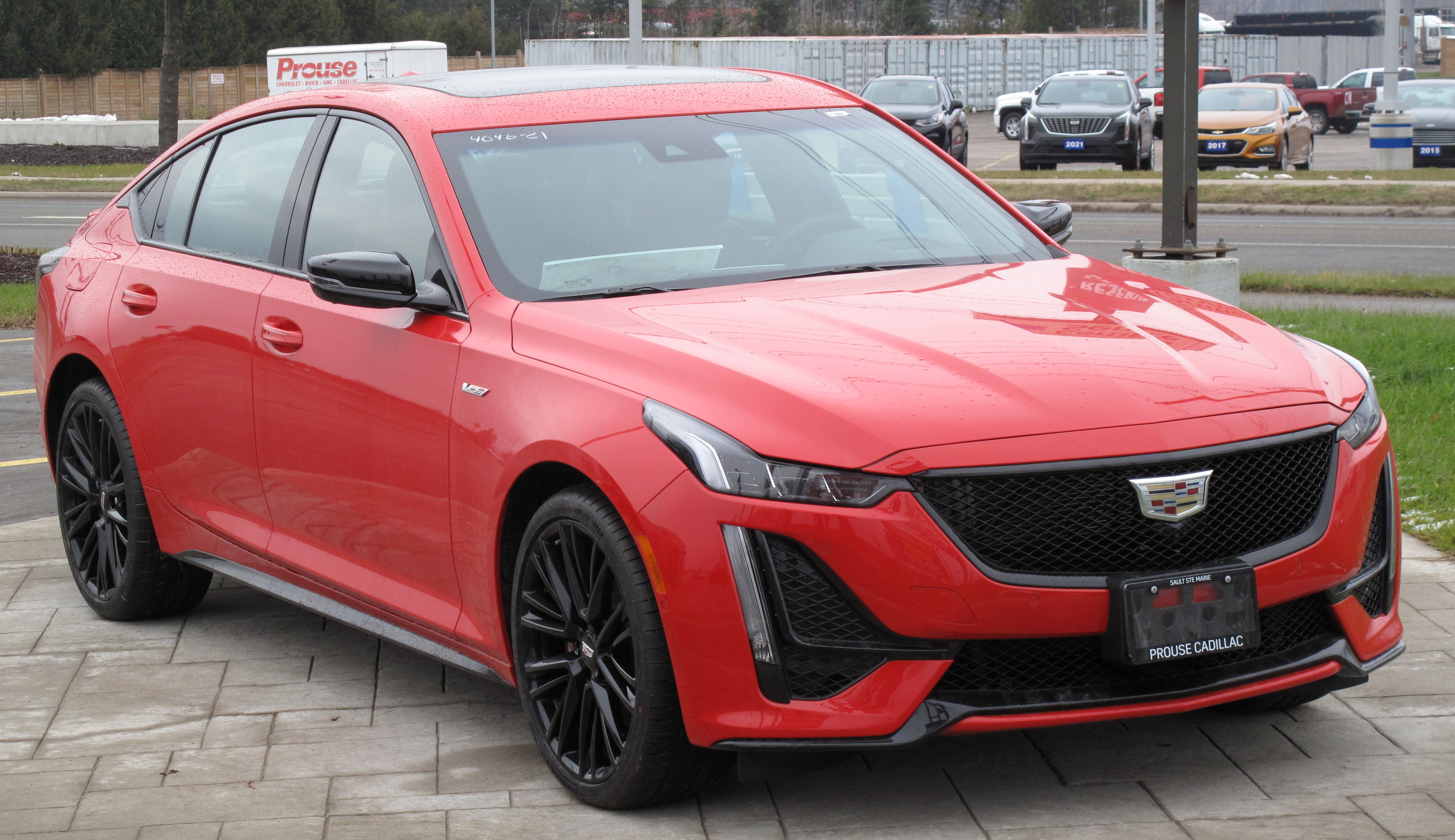
Cadillac CT5

Car
Dodge Charger

Car
Cadillac CT4
Car
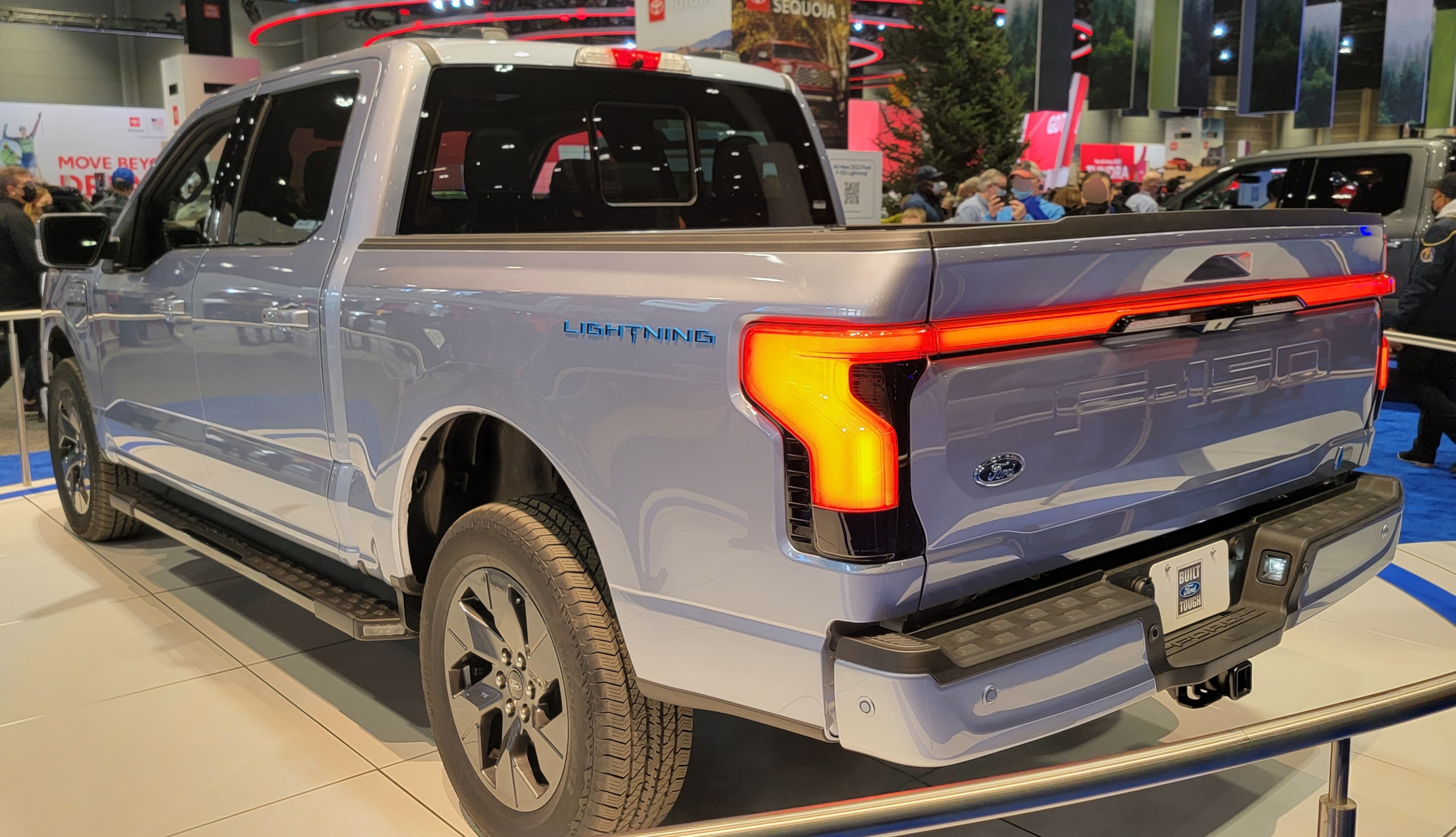
Ford F150

Car
Ford F100

Car
Ford F350

Car
Porsche 914


Car
Ford Bronco

Car
Honda S600

Car
Nissan XTerra
LIVE
Welcome to Driven Radio Show, your home for car talk covering the latest news to the greatest
views on the biggest names in performance, sports, and just plain cool driving machines.
Let's rev up the conversation.
Time for Driven Radio Show.
Hey all you gear heads and car fiends, welcome to Driven Radio Show, your weekly automotive
happy hour.
I am Brett Hatfield, here with my co-host and engineer extraordinaire, Mr. Mark Groves.
That's me.
I mean to you from Driven Radio Studios, where the weather's taken a weird turn.
We had really nice, cool, like early fire.
It almost felt like the second week of October for a while, and now we're going to go back
to scorching in the skillet.
Well, fall now self-identifies in summer, so, you know, and we're not allowed to
argue with it, so, no, damn it, you are fall, no I'm not.
I thought it self-identified as giving us the bird.
Pretty much.
You're still looking for another classic car before the show.
We were on Facebook, Marketplace, looking through a lot of stuff.
I like that big red Buick, that thing's freaking cool, man.
You know, it is kind of fun.
What I discovered was that for the size issue that I have, you know I'm
not enough to say that out loud.
This took a really dirty turn really quickly.
Don't open up too much, Mark, it's okay.
Because of the small size of the garage, you know, there were a number of ones that I'd
really kind of hyper-focused quite honestly on, you know, the mid-50s, Plymouths, funny
enough Dodges, not so much because they're too damn long.
They are longer than Plymouths.
Well, so there were some very specific ones in specific years, and then the Thunderbirds
was nice because like from 1958 to 63, and actually there were a number all the way up
to, I'm sorry, 1958 to 1967 roughly.
Pretty much any of those, now some of them would be a pretty tight fit.
But I had these few that I'd looked at, and I have always liked those 66, 67 Oldsmobiles
because they're just big, lumbering beasts, but you, and forgive me, I know I say
Craigers all the time, but if drop some Slotted Mags and Craigers some old school
wheels on them and they and give them that bit of a stance and the rumble,
they're actually kind of cool.
And when I was a kid, I didn't like as much because I thought they were old
man cars, but now that I'm old man, I'm like, shit, these are kind of cool.
So that's 66 Old Starfire, and it's here locally, it's close.
I looked it up and it'll fit in my garage.
And it's the trunk on that is massive.
Yeah, it's big.
I want to see how much, I want to see how much space is in that.
They don't show it with it open on the listing.
But that looks like you could get 17 guys in it.
You know, at least four bodies, two bags of lime, a shovel and two tarps.
And you still have room for a cooler full of beer.
Because, you know, when you're digging holes, you get thirsty.
That that little 63 Rambler American convertible, that thing is just stinking cute.
I was really charmed when I saw that because the early Ramblers, especially
a little earlier than this one, have a very cute front end.
And, you know, they've got plenty of room in massive engine bay
for the little tiny engines they put in there.
So there's a lot you can do with them, but this one is so clean.
Yeah, it really is a convertible.
It looks like somebody has gone through and done a very, very nice job of tidying that car up.
And I will say this, it's a short little squirt, which allows enough room
for motorcycle in the front of the garage in our own.
Yeah, it's a dink of a thing.
What did you say?
A motorcycle.
A motorcycle.
Paralyzed.
But yeah, did you look at the door panel, too?
That's in the in that.
Yeah, it's got that.
It's got an R molded into a Rambler or maybe Scooby-Doo drives in a real car.
That's a really cute little car.
And, you know, an inline six is not going to be fast, but it won't eat a
lot of gas, probably won't need a lot of gas.
And, you know, it's it's a 63 Rambler going fast.
And one of those things is no, no, don't do that.
Don't do that.
There's a little bit of chatter to it.
It'd be like a go kart that somebody's twisted and only three wheels will touch
the ground now with the door chime says, are you ready to make a mistake?
Yes, I am.
Let's close the door and do this.
I really like the look of the black 64 Ford Thunderbird Roadster from a distance.
Yeah.
And then it shows that first picture of the interior.
And I just, dude, all I can think is you raise goats.
82 and in a tanning bed.
Yeah, it's a.
Yeah, it does look like an 82 year old or spent her entire life on the beach.
Period.
Kind of kind of wrinkled and discolored.
And, you know, the skin doesn't really fit the way it should.
But still knows how to go fast.
That's right.
So yeah, I think that those what is it that 66 Thunderbird convertible?
Lovely. Oh, yeah.
Well, let's see here.
Sixty nine Ford T bird coop with a wonderful
economical gas sipping for twenty nine.
Yeah, she comes with a free monkey to jump out and put gas in it every four blocks.
I could not believe that that would actually fit into my garage, too,
because, you know, by that time, you're starting to get into the bigger,
is better malaise and that's got some funky styling to it.
Yeah, it doesn't look right.
And yet I kind of like it that that front fender within a fender.
Yeah, it's got a little bit of Lego to it, doesn't it?
Yeah. And then you've got that wide, weird grill in the front.
That's just like it really does look like a shark.
What is it? A whale shark? A whale shark.
I was going to say, it looks like it should have krill stuck in it.
It runs on plankton cigarettes in regret.
I don't know. You're not wrong.
You sent me a couple others that I hadn't seen.
Seventy seven Mercury Capri.
And that thing just makes me giggle.
Brightest, stinkin blue you've ever seen.
And it really does look like if the cast of Mad Max had a car show.
Yeah, they actually left enough paint on because they put massive fender flares
on this thing and yeah.
And it's a seventy seven Mercury Capri.
Now, remember Capris were basically Fox bodies.
Yeah, they were just little dudes with longer socks.
Just little economical things.
And this says it's got a three fifty one and an AOD trans in it.
Yeah, four point roll cage.
Oh, yeah. Well, staying two front suspension.
The four point roll cage is only there to try and keep the car from twisting in half.
Fuel gauge and after our gauges work, but not the originals.
I'm actually about halfway familiar with the gauges not working.
So I kind of get that.
Oh, wow. This is a little bit out of our price range.
I don't have that money. You don't have that.
That one was for you.
Together, we don't have this money, but the sixty five
superformance AC Cobra with a for real Roush four twenty seven in it.
And yeah, that thing's sexy.
I think before you get in this, you have to tell your significant other
or your family goodbye how you'd like to be buried
where you'd like to be buried and whether or not you want the fireman
to pry you out of the car beforehand or just dig a bigger hole stick in the ground.
God bless, man, five hundred horse.
You know, that thing weighs twenty two hundred pounds, right?
Yeah, yeah, it's a it's a it's a beautiful mother of pearl.
That it would be stinking fast.
You see, it's very, very pretty.
I like that red, but yeah, you don't get to retire.
No, not never. Oh, hey, take a look at this.
This is fantastic.
Fifty seven Ford Fairlane five hundred with what looks to be a bass boat paint job on it.
Isn't that great? Oh, wow, look at the metal flake on that thing.
Wow, it's a it's a 50 footer, no matter where you stand.
Oh, wow, it's it's got what looked like a polished torque thrust on it.
You know, want to be Craigers.
Everything about it says I did this myself, but it's still it's got that.
I love the lines. You could not be more right.
I just looked at the picture of the engine compartment and that screams.
I did it in my garage. Yeah.
Well, what in the hell? Yeah, I got this.
Oh, my God, the metal flake in it is gold.
Yeah, gold with with dark green.
I was just kind of razzling you about the bass boat paint job.
No, dude, it is. No, this.
Yeah, this thing comes with free with three free fishing rods.
I'm sure it's got a mercury under the hood.
The only fifty eight or fifty seven Fairlane, you pull start.
You know, it does.
And then the other one you sent me,
this is actually a pretty good looking car.
This is not too bad, that fifty eight Ford Fairlane five hundred
two tone black and white.
Yeah, has a full wheel covers and wide whites on it.
Oh, that's a pretty clean engine compartment,
but it looks like it's got a modern aluminum radiator on it
and modern AC compressor says three thirty two
two hundred sixty five horse.
That's it's a good looking car.
That's not bad.
It's been updated under the.
Oh, I'm OK with that.
Look at the plaid interior.
That looks like it looks like a picnic blanket.
Yeah, it looks like a really high class pizza hut in there.
Yeah, it really, really does.
Really, really.
From nineteen seventy six high class pizza hut,
the one where they refilled the cheese shakers every every time.
And it's even with fresh cheese.
Who knew? Oh, wow, that's beautiful.
It's got that underdash AC unit.
Oh, man, that's the knee cracker. Yeah, yeah.
You can you can stick three people in it,
but the guy in the center better be really short or a double amputee
because that's it's got the cute little hot scoop right there in the middle.
That little it's like that's not a bad looking car.
Mark, I like that.
That'd be a head turner and it does have what looks to be.
It may be a faux air intake, but it's it's still cool looking.
Yeah, that's tough for me to knock.
That's a pretty good looking car.
Plus, you look on the back end and it's got dual pipes.
Oh, yeah, it's got duals and it's got big old oval shaped tail light.
My God, where would you get the lenses for that?
You know what?
You would go to a friend who has a 3D printer and take one of the other
lenses, that's exactly right, scan it and then print it.
That's exactly right.
Well, that's a cool looking car and that's not that far away.
Mustang, Oklahoma, you and I have driven farther than that to look at a car.
Yeah, shit. So that one's not too bad.
Please pass on the Bass Boat 57 Ferulent.
My God, are you still marveling at that?
I'm thinking about how do you touch up a chip?
Well, you go to Bass Pro Shop first.
No, no, no, no, I got this one.
You get the testers gold testers and the testers black.
And you take a little bit of each out on a pallet and you swirl them together
and then touch up paint.
No one will ever be able to tell it.
Perfect. Oh, wow.
You know, we were going to do a show.
Oh, yeah, that's right.
And don't we have a guest?
Yeah, we do.
We do have a guest.
Oh, by the way, I wanted to mention
right before we get to to our guests this week, our favorite repeat offender,
Luke Channel, lots and lots of car shows coming up.
There's the cars in the park that's over at Shawnee Mission Park.
There's a by the time this comes out,
Ulmaray River Run should be in full motion.
Well, and I was about to bring that up, except have you seen what they're
charging per car now? No, it's 50 bucks.
What? Oh, guys, it's 50 bucks.
Guys, come on.
And I had a conversation with Rhonda about this the other day.
I think for charity car shows,
the perfect fee per car is $20.
And I will explain why.
It's a psychology thing.
You open up your wallet, you're going to pull out a $20 bill.
Yeah, you don't want to go back to your wallet
looking for another bill.
And if it's $50, almost nobody has a 50 on them.
You're going to have to go back three times, 20, 20, 10.
And 50 bucks is pretty steep.
And I know that's a hell of a production there.
And they got a lot of cars and a lot of vendors and a lot going on.
But 50 seems stiff.
But the the vendors also pay to be there.
So, yeah, you know, bless their hearts.
It is a hell of a car show.
Here's the thought. Here's the thought.
We are a car podcast.
Maybe we can weasel in like that.
Screw y'all. We're going to find our own way.
I have a media pass.
And you know, with any luck, if it hasn't priced him out,
I had no idea it was that much.
It's 50 bucks because we missed pre-registration,
I think, before that it was 40.
I want to deal with twice the price.
But the other thing is Ottawa is a drive.
Yeah, we'll be looking for a 1964 Dodge Custom 880 there.
Sybil's going to make an appearance.
Yeah, helmed by a very nice young man and his lovely young wife.
Our special guest this week is repeat offender,
Luke Channel of McPherson College.
Luke is an associate professor in the McPherson College
auto restoration program and a famous Bradley GT monger.
Luke also hosts the legendary
absolutely legendary after cars show barbecue
at which sweaty, semi sober auto journalists
can be found cooking sausages.
Luke, welcome back to Driven Radio.
Glad to be with you, Mr. Sausage King.
Thank you. Thank you. I wear that with pride.
I want to start by thanking you for the impromptu interview last night
during your automotive history class at McPherson College.
I was thoroughly unprepared and I hope I didn't ruin the class.
Not any worse than I would have.
Yeah, no, I really appreciate you coming by.
It's always fun to get people who kind of work out in the field
and do practice automotive history
and, you know, or have the real eye level view of what it looks like
to write a thousand articles
for many publications that you work for.
Yeah, well, I'm getting closer.
They, you know, you just keep plugging and they pile up.
The class last night was really interesting,
at least to me it was.
And it also showed me how much more I have to learn.
My goodness, you really I'd like to take that class.
Would you ever let somebody audit it?
Oh, yeah, of course.
So I currently have 48 students in the class, which is which is big.
It's one of the biggest classes on campus.
You know, at the college here, we really we had pride ourselves
on small class sizes, so we don't have big lecture halls
with 180 or 200 students like they do at big universities
and everything is taught by professors.
But yeah, we always welcome more people and auditing is welcome.
You just have to come to McPherson every Wednesday night.
Well, I've proven I can get there
and get back and be in one piece.
You know, the students were really involved.
They were paying attention.
They had great questions and I enjoyed answering it.
And it was it was a lot of fun.
With the departure of our dear friend, Dr. Kenyon.
And by departure, I don't mean he died.
He just left.
You're now teaching five classes, including the history
of the automobile lecture I attended last night.
What else are you teaching this semester
and how are you adjusting to the new workload?
Well, I have to say that Dr. Kenyon, you know,
your esteemed friend of both you and I.
Yes. So we've been spreading the rumor
that he's currently holed up in a Mexican prison.
And that's why he couldn't return to college.
That's his nickname, apparently is El Guapo.
So yeah.
So you have a plethora.
Yeah. So Ken has been my friend for going on 25 years now.
He was really my closest kind of right hand colleague here at the college,
especially outside of our department.
So as a political scientist and historian,
he and I, we did a lot of stuff together.
We taught in Europe together for seven years
and went on any number of adventures.
Of course, one of them involving Bradley, GT and you.
Oh, God, yeah.
Ken has always been my wild card to bring along
to see what would happen.
He made that a perfect trip because we got we got to listen to
everything he's ever done all the times he's been arrested.
We can say that now.
He doesn't teach there anymore.
And he's he is just a marvelous raconteur.
He absolutely is.
And he made the trip so much better, especially once we got there
and we saw what an absolute crap wagon that Bradley was.
Absolutely. Yeah.
So, you know, I became friends with Ken because I met him in college
and he was kind of unpredictable and a little wild and crazy.
And so his decision to retire basically the week before classes started
was quite in character for his unpredictable, wild and crazy nature.
And now I perhaps in regretting and slightly my decision to become
and befriend such a person. OK, so you picked up his history of the automobile class.
What are the other I know you're teaching for others.
What are you teaching?
So I'm teaching some of my courses that are regular rotation.
So I teach drivetrain, drivetrain restoration,
which is transmissions and axles.
I've got two sections of that.
I'm teaching chassis rebuilding, which is steering suspension brakes.
And then I also teach a class called materials and processes,
which is material science and then also industrial processing.
So it's kind of like a how it's made class,
which is it's super fun as it applies to old cars
because you get the in depth kind of materials knowledge
to look at something and say, oh, this is what they made it out of.
And here is how it was made back originally.
And so it really opens your eyes as a restore.
That's one of my favorite classes.
You're making me want to come back and go through the program again.
I mean, I'm here every all morning, every afternoon, all night.
I'm just never leave.
So maybe I can bring a laptop and write articles in between classes.
With the completion of the 53 Mercedes Benz 300 S Cabrio
and the second place class win at Pebble Beach Concorde elegance,
the students and staff in the restoration program
have 100 percent proved their metal,
especially Brian Martin, who spearheaded the program
and kept everything going in the right direction.
What's next for the program?
Is there another project in the pipeline?
So everyone's been asking that question.
And so we've been doing some some real serious work here,
actually, that's been kind of quiet really up until now.
So the idea that we had is that we feel like
we feel like doing a car was productive.
It was useful.
We certainly learned a lot,
and I think the world learned a lot about us from that.
But we kind of figured out that maybe doing a second car
or another car project to take a pebble really wasn't
really wasn't what we wanted to do.
I think we gained that experience and it was time to try something different.
So we last last year, last fall,
took a retreat with a lot of us and sat down at the N.B.
Center in Allentown, Pennsylvania
and really thought about what we wanted to do next
over the course of the next decade.
Ninety nine s six hundred.
To say, well, gee,
I was going to explain this whole big plan we have, Brett,
but that all just went out the way.
Bring the car down and get started right now.
I'll have it there tomorrow.
You know, I told you the cars got a new name, didn't I?
I did not hear that.
Oh, well, I've always liked Schadenfreude Express.
And then here a couple of months ago, I was reading something online
and somebody came up with a better name for a German
for a maddening German car.
And I was so mad.
I didn't think of it first.
And it was Hitler's revenge.
Oh, there you go.
Very nice.
So, well, yeah.
Seem very appropriate.
Spent all this money on consultants and travel and all this stuff.
And here you just blown us out of the water.
Oh, I'm sorry.
We might still proceed with our original plan.
I'm sorry to say. OK.
So that plan is basically over the course of the next decade.
We want to make this place the destination
for restoration and classic car activities.
Oh, yeah.
And so we want to build not only a new facility
that will house the program and showcase much in a much better way
what we do, but also create resources
and opportunities and places for collectors
and automotive enthusiasts to come and engage with us
beyond just the traditional college age student.
So for a long time, we've been taking the program out on the road
to show to people and we feel like it's really time for people to come to us.
So I'm really really excited about that
and really proud to be a part of the process that's led to that vision.
I want to make a comment that I have very,
very mixed feelings about the brand new building that's there
and putting the Lundquist Daytona up in the air in that building.
On the one hand, what a stunning decoration for a building.
That's fantastic.
On the other hand, it's not going to be driven.
Damn it. Damn it.
Yeah, well, I mean, the beauty of that display
is that the cars will rotate.
They won't rotate often, but I mean,
we made the logistics up to take up and put down cars on a regular basis.
And so something else will take its place
and then we can work on the Ferrari
as it turns out, that car needs a significant amount of mechanical attention.
Yeah, it does.
It just sat for a long, long time,
which is the worst thing is well known for any car.
So I was I was kind of surprised.
Well, I took a bath in about 15 gallons of bad gas that we drank out.
Oh, no.
So yeah, I had. Oh, man.
That stinky varnish.
Yeah, I did for a while.
I was having nightmares about, you know, the car up in the air
and all of a sudden some giant leak or pocket of fuel
that I didn't otherwise know about came, you know, crashing down
onto a bunch of students or the president of the college or something.
The whole building stunk like bad gas.
So but we think we got it all. I promise.
I can't believe that you ever got unnecessarily dirty
under a car. That's just so foreign.
I don't get it. Me. Never.
Oh, man.
Are you taking?
Are you taking volunteer cars to put on display?
Well, to be honest with you,
I don't think we've really talked about that, you know, the universe is big
and I don't know what might happen in the future.
Possibilities are unlimited.
Maybe a really pretty red and white sports car would look good.
Might. Yeah, we have a red and black one up there now.
Oh, well, it could be good, too.
Well, we might have to talk about that.
So speaking of getting dirty under the cars,
in your experience, which classic or vintage car
has been the easiest to restore?
And with that, there probably comes the qualification.
Are there any easy restorations?
I would say they're all different.
Different cars just require kind of different skill sets and mindsets.
And so at the college, I really one of my goals always is to keep
different types of cars and different eras of cars around
so that I can demonstrate and show to students, you know,
the different kind of skill sets and mindsets that they need to be able
to shift between to be able to work on.
That said, I mean,
the high volume cars, things like I mean traditionally model T's
and then early Mustangs are some of the easiest cars to do.
They're good projects. There's lots of support.
And recently, I was working on my 92 Mustang,
which I just completed a kind of mostly restoration on.
And I was just blown away at how many parts were available for that car.
There were a good quality made from the original for tooling
and just the knowledge base and parts base
increasingly for 1980s, 1990s, 2000s vehicles is huge.
Now, of course, they're much more complicated.
So there's a lot more pieces and parts,
but having the kind of support and enthusiast community around those
is really what makes restoring the car easy.
So basically the rare and more obscure it is,
the more fun it is for me because I enjoy the challenge,
but it makes the cars harder to harder to play with.
Which one has been the most difficult?
Oh, that's a great question.
I worked for a while
in a restoration shop here in town that had an Austin princess.
And that was the worst car I have ever seen.
The entire interior of the body was built,
you know, in a wood shed in England out of whatever trees
they had laying around and like none of the body,
all the body was brought on because it was poorly constructed.
And two, even if you tried to reconstruct all the stuff,
they'd all been hand hammered out.
So no two pieces of wood matched each other.
It was just an absolute nightmare of a car.
Wow.
And I honestly don't think it ever got done.
Yeah, stay away.
Somebody somebody came back a while, a while ago, and they said,
I'll get this really great opportunity to buy this car.
It's called an Austin princess.
And I just kind of went, oh, I don't think I'd do that.
PTSD right there.
And what year was that Austin princess?
Well, it would have been 50 51 somewhere in there.
I honestly, I think I blocked it from my memory.
It marks out shopping for stuff.
So and every now and then I have to tell him, no, don't do that.
I'll tell you what, do you want to deal?
I mean, go find that on Austin Princess out behind the bar
and somebody will make you a smoking deal.
I promise. Oh, my God.
It's kind of like a team who's version of a Rolls Royce.
Exactly. That's the best description I think I've ever heard.
You know, it's all the all the problems of a Rolls Royce
without any of the prestige. Yeah.
Wow, it's how can it look kind of cool?
And yet so very ugly at the same time?
It's that's too bad.
That's something only the British could do.
Like a taxi with good jeans.
You know, you mentioned you're 92 Mustang
and two people like us of a certain age.
92 doesn't seem like it was all that long ago.
But then you do the math.
You know, you know, damn it.
Yeah. I mean, so with that particular car,
my parents bought that car in 1995.
And so I learned to drive in that car.
And it's basically been around for my entire kind of more or less adult life.
And it's gone through several iterations of restorations
wearing probably the nicest one now.
But you know, it's it's it's very jarring.
It's very strange to have a car that has been basically a driver
for your entire life, become now a collector car.
See, people, young people in particular get excited about,
oh, wow, that's a Fox Mustang.
Yep. You know, for a long time,
I was driving the things where it's like, oh, man,
that's stupid Fox Mustang.
So it was the first one's forever bill.
You know, there I drove an early
Fox body convertible not that long ago.
And it was fun how basic it seemed.
And it was it was an eighty four Mustang GT
rag top and somebody had added.
I don't know those early convertibles.
Did they come with a roll bar option or?
There were some factory dealer option ones.
They did not come from them.
Well, so the the thing about those box convertibles
is they all started like this coupes.
And so they went over to cars and concepts
and then they cut the roof soft and put convertible tops in them.
It felt like a car. I'm not.
Yeah. And it shows up when you drive one
because, you know, the front end is not basically connected to the back end.
No. In a meaningful way.
Oh, shoot.
So I mean, to say that they have what they call
a cowl shake is kind of an understatement, you know,
you just feel the whole car flex under over any kind of uneven ground.
The word shatter comes to mind.
Yeah. So but yeah, cars and concepts may have offered those roll bars as an option.
But I don't know.
Well, it had that in it.
And it was a good looking car and a lot like
my old Stingray when you drove it hard,
it felt like you were really hauling, man.
You're doing a lot.
And you look down and realize, oh, I'm five over.
Yeah, I'm not really going all that fast.
So I had it out of the car show at the college this year.
And I was driving another car
until my wife got in and took the kids home.
And apparently she took a little bit of her getting used to the clutch.
I'm pretty sedate when I drive things.
I just I went fast enough in my youth that I don't need to anymore.
But so she gets in it and doesn't really know the clutch and so
isn't familiar with the car.
And the kids got home and they said, boy, it's a lot more fun
when bomb drives that car than you do.
Apparently she was burning rubber, you know, laying a little scratch.
Yeah, well, you know, planted on the floor side, stepped the clutch.
See, kids, mom's still got it.
Yeah, exactly. Your mom's cooler than dad.
Well, and to that to that end, along with the Fox Body Mustang and Mark
and I were talking about fortune Corvettes before the show.
As more modern computerized cars enter the vintage and collector car fray,
you know, they get to that age.
How are restores going to deal with aging electronics and computers
and stuff that is not strictly mechanical?
It's a great question.
I think it's one that a lot of people are not only beginning to address,
but there are plenty of full blown places that are doing some really
pretty amazing stuff, particularly computer technology.
I just again, because of my involvement in this Fox Mustang
on a lot of the Facebook groups and forums, you'll see people
that actually tear into the computers and they say, oh, look,
this capacitor is bad, replace one and then have the interface
to get in and check the coding and make alterations.
And really, I think the kind of sweet spot is once we get to OBD
two cars where the interfaces, so post 96, after the interfaces
became standardized, the cars are relatively easy to work on.
But OBD one cars, you know, from 1980 to 1996 are
there, they require some specialized skill sets.
Oh, yeah.
And a lot of the texts that knew about that stuff are now gone.
The dealers have gotten rid of the equipment and so the stuff is around,
but it takes a lot more hunting and finding and sometimes research
into kind of obscure, obscure by ways, which is again,
what I really enjoy, but it's not not everyone's cup of tea.
One of the things that we've talked about recently with a couple of people
we've interviewed, John Fakara one and then a gentleman we had on the show
last week is that there are so many
older restorers, guys in their 60s, 70s, even 80s who have such
an immense body of knowledge for whatever particular cars they work on.
And there are not enough young restorers to take their place
or to even learn what these people know.
And when they die, these this body of knowledge is going away.
It's not it's not catalogued anywhere.
And that's that's going to be a big problem, I think,
because there's an awful there are an awful lot of tricks of the trade
that aren't going to be passed down.
So when we talk about the college is kind of strategic vision,
that's really part of it is to build a mechanism
to record that knowledge and bring people here
so that we can capture that kind of spirit and that knowledge
and technical know how that those people have before they're gone
and hopefully imparted to the next generation,
because that's really what we're all about here.
And I will tell you, you know, on our end, we basically are capped
just from a space standpoint at around 60s new students a year.
And but, you know, we have 100, 150 applicants
and it can be really, really hard to say no to somebody
who clearly has a lot of passion for this.
So whenever people say, oh, my God, the kids don't like cars.
They're not going to do this. That's not true.
Passion. Yeah, it's not true at all.
And the passion is there. The drive is there.
And and they want to do it well.
So it's it's really it's important work to me to make the connections
and to be able to foster that and be able to show young people
really what those skills are and make sure that transfer of knowledge
between generations of car people happens.
So that's been my big mantra lately.
My other one lately has been like, so in the restoration industry,
it seems like, you know, as a generalist, it takes on
maybe not anything that comes in the door, but just about anything.
And I feel like we could all do a lot better
if maybe we were a little more open to specialize.
And what I mean by that is, you know,
there's like some guy who builds radiators.
I do Model T coils on the side.
But a lot of us just have like this widget that we do for cars.
And if you get a name for that widget, you one,
don't have to bring in a whole cavalcade of new cars all the time.
And two, it just takes up a lot less room.
You can use much more efficient processes
and really improve your end product by doing so
and make a pretty decent living at the end of it.
So it's like my whole thing lately has been with the students,
like find the widget that you are good at and make your fortune there.
Well, you got a brand new garage at your house.
We could probably send three or four specialists over there.
We could bring it on, man.
Yeah, that'd be great.
It's got a beautiful floor that I watched you epoxy.
It's roomy.
It's got a bathroom.
It's a really nice garage.
I mean, I'm practically living in there already.
And you know, after we got the bill for all the stuff
that I wanted, that was extra,
then I was kind of forced to live out there.
Didn't go over quite the way you thought it was.
Hell of a dog.
No, it's fine.
It's fine.
It's a gorgeous garage.
We're really happy with it.
Thank you.
It's a fantastic place to feed a couple hundred of your best friends.
Yeah, that's exactly what we are.
Well, kind of what we had in mind.
We sure, you know, we had 250 people at the barbecue.
Was that 250?
250.
You don't have a solid head count, but it was at least that many.
I just know that all the food was gone.
All of it.
Yeah, it was just that.
There were no leftovers.
That was a really, really good showing.
I can't wait for next year.
All righty.
California is arguably the nexus for the collector car world.
You make one trip out there for, you know, Monterey Car Week and you see it,
but they have really, really stringent automotive emissions laws that make it
difficult for some, some vintage vehicles to meet compliance.
A bill aimed at eliminating emissions,
tasking requirements on cars.
35 model years or older was introduced to the California assembly in March of this year.
It was called SB 712 and it was dubbed Leno's law because Jay Leno got involved with it last week.
Oh man.
A divided state legislature halted the bill's progress entirely by letting it die in committee.
What are your thoughts on allowing vintage vehicles, many of which were built
well before federal emissions standards were implemented, to be excluded from these testing
standards?
And did California get it wrong?
So I'm a professor, so I have to give the balanced view, which is not necessarily what
I want to give.
I mean, you have to remember that smog in the LA Basin in the 1960s and 70s was just
absolutely terrible.
Oh yeah.
I mean, it's a place that's naturally prone to temperature and versions of smog
and automotive exhaust made it worse, made it worse.
So I mean, at some level, emissions testing and emissions requirements make sense, but
I mean, I have some significant issues with the California regime in regards to
automobiles, one of which is that the California Air Resources Board is not
an elected body and they set all these emissions standards for a lot of people.
And so those are appointed people.
They don't have to run for office.
They're not accountable to voters and they have significant impacts on a large,
well basically the entire United States because CARB de facto sets standards.
But second to your point about emissions testing.
So establishing standards, I think, has been a net positive for the automotive
industry. It brought us electronic fuel injection, better engine controls, more reliable cars.
But the emissions testing regime is basically just a scam anymore.
I mean, it's influenced by the testing companies who get state licenses, state monopolies
to test cars and everyone is required to pay the fee, get the inspection, etc.
With a number of miles driven by 35, 40 year old cars and the amount of even if one is tuned
incorrectly or tuned to run, right? And the amount of emissions are just
piddling. I mean, just a drop in the bucket.
So I mean that that bill made perfect sense to me, but I'm sure.
I mean, there are any number of lobbies involved, but you can bet that
some people got paid fairly well to make sure that didn't happen.
Yeah, that wouldn't surprise me. And you brought up a really important point.
There may be more collector cars, more vintage collector cars in California than any other
state in the nation, but they don't drive that many miles.
There are very few people out there who try to daily their vintage cars.
I do, but, you know, I'm an idiot.
Yeah, yeah. No, I mean, this is, you know, it's the whole model that the classic car
insurance is built on. They're fundamentally a safe bet because they don't get driven that much
and the owners really care about. So, you know, yeah. So, enough said.
With American auto manufacturers going to almost exclusively truck and SUV lineups,
what are your thoughts on the death of the American sedan and the American coupe?
And to that end, the only car Chevy offers anymore, the only car is the Corvette Cadillac has a CT5
and the CT4 and the Celeste kind of counts. Ford has the Mustang and Dodge has the charger
and all the rest of the American made cars now are trucks or SUVs.
Well, I mean, part of that is a byproduct of emissions regulations and fuel economy standards,
but I mean, I think that it's also fair to say that consumer demand is driven that.
The thing is, like for me, we kind of have a policy around our house that we have one of
every category. So, we have the sedan, we have the SUV, we have the truck,
we have a convertible, we have an antique car, just like everything that fills, you know,
every slot and we kind of rotate cars through those different slots.
Hey, you have a car that has no doors?
Absolutely. No doors. I mean, I will always have a car that has no doors. We have tractors,
maybe too many tractors at this point, but I'm not saying anything about that.
But yeah. So, I love cars in like all forms, you know, and I think for some reason,
I seem to be the odd man out now, but when I grew up, like driving a pickup truck was not
something you really aspire to. That was for the plumber, right? I mean, the plumbers are fine
people, but like these were work vehicles, these were utility vehicles. And now people are obsessed
with driving their F 350 down to the school drop-off line. It's like, why do you need
something that has, you know, 14 leaf springs when your kids weigh 70 pounds? I fundamentally
don't understand that other than that people just like big cars and there's more profit
in making big cars, big trucks and SUVs. So, I mean, I personally,
if my personal preferred car is a sedan, I like having a nice four-door car with trunk so I don't
have to hear the luggage banging around in the back. Also, you know, when you shut the
trunk lid, you tend to forget about whatever's back there, which makes it fun to rifle through
later. And I mean, my off-road needs are basically none. So, you know, and I mean, all the SUVs
they sell today don't have any ground clearance anyway. So, I mean, the SUVs we drive today
are station wagons. Let's just call it spade to spade, right? And I think station wagons
are perfectly good cars and I wish we would just call them station wagons and be done with
but that's not the way that the things have seen the work. You know, the other piece of this is that,
again, from a fuel economy's aerodynamic standpoint, it's the Ferrari bread van issue,
right? Like, the cars are slipperier if they're built in that SUV format with the long
back tail. It's just a slipperier shape than a traditional sedan. So, you get,
you ultimately get better fuel mileage, assuming you don't have huge amounts of ground clearance.
But I, yeah, I wish we would just call it station wagons.
I wholeheartedly agree with you on the sedan argument. Even though I was in my truck last
night, I was in my truck for a reason because I couldn't get a stove in the back of the Mercedes.
Just wouldn't fit. I mean, the only, like the only time I drive my truck is either if there's
something in the bed or if I have a trailer on. That's like the only reason that that vehicle gets
used. And that is, as I believe, as the Lord intended, but I seem to be the odd man out.
No, no, no. I agree with you wholeheartedly. There's a reason I got a 2002 F-150 that's
got 19,000 miles on it. I just, I only use it when I'm hauling stuff or tow on a trailer.
And that's it. And the rest of the time I drive a car car. It's not that I don't like
the truck. I do. I just, I don't need it. The favorite car I ever had was my Lincoln town car.
You know, big, comfortable, fit plenty of people, all kinds of luggage, float down the road. Just was
a great car. And I wish I went forward, killed the Panther platform in like 2010, 2012. I still
don't understand why they did that. They didn't advertise them that all the tooling had to
have been paid for back in, you know, 1954. Oh, yeah. So they didn't fundamentally
need, I mean, the, the input costs were basically just materials and again, no advertising. So it
was a clear profit center, but something else prevailed there. And I settled to this day.
Don't understand that. My favorite car so far. And this is going to be weird to say because
I've had that, that red Corvette since I was 18, which is a million years ago now.
Still a shot in Freud Express, as maddening as it can be when everything's right. Oh my,
that is the best road car, great seats, great stereo rides like you're in a cloud
until you stick your foot in it. And then it's Jacqueline Hyde and I love it. I absolutely
love that car. I can't find parts for it, but I love the damn thing. So do you think that regular
cars will ever, regular American made cars will ever return to the market?
Let me put it to you this way. I'm a historian and historians are famously bad at predicting the
future. Famously bad. So if you ask like a whole room of historians who's going to win
the next election, you can almost bet it will be the other person. That's like how it always
plays out. And so I refrain from making predictions. I mean, I could see things changing, but it's going
to take it's it's going to be a combination of factors that would have to happen to make that
make that a reality. Oh man, I'd really like to see a Lincoln town car again. Wouldn't I wouldn't
that be the best thing ever? I mean, you know, I'm getting old like my pant, my belt line's
going up. I need something to light out for Florida. Nothing that fits my needs.
Oh man, a big boxy Lincoln town car with room for six in the front and four more in the trunk.
Just, you know, and it should be delivered from the dealer with the AM radio blaring and the high
beams on and the left blinker on permanently. Absolutely. Now I I'm saddened by the fact that
there are no car cars. There are no cars made by American manufacturers. They're very few. You
know, all the Buick's are SUVs and almost all the Ford's except for the Mustang and all the
Chevy's except for the Corvette. And it's all trucks and SUVs. And here's here's another thing.
And I've said this more than once on the show. My pickup is a 2002. And you and I have had the
conversation that Ford found that sweet spot between 97 and 03. But if you park my truck
next to a new F 150, it looks like a Ranger. Absolutely. Yeah. The size of pickup trucks just
astounds me these days. I mean, and especially, you know, if you try, if you I can't understand
how people can drive them as their primary vehicle, because honestly, they're, if you're in even in
a small town here, if you're in a parking garage, it's just about impossible to negotiate.
Oh, yeah. They're just too big. They're just too large. And I mean, I've been heartened to see
some of the return of the little pickup with the introduction again of the Ranger and, you know,
the Colorado has been around for a while. But yeah, even those when you park them next to
an older F 100 or F 150, they're about the same size. Yeah, contemporary Rangers.
And it just boggles blows me away. Yeah, my, my 23 year old F 150 looks like a small truck now. And
it's not. It's a it's a full size pickup. But compared to the new ones, man, it's just
the new ones are so stinking big. Oh, that reminds me, I parked two spaces over from
some kid last night who had the biggest white F 350 four wheel drive crew cab
with a power stroke. Whose whose truck is that? I don't know yet, but I've been trying to figure
that out. That's a ginormous truck. That thing's huge. Yeah, big, big truck. I was a little surprised
to see piloting that thing around campus. That's a that's a big sucker. Alrighty.
Usually this is where I ask you, what's the dumbest thing you've done in a car? But I
think you and I have covered that ad nauseam. What's the dumbest thing you've seen somebody
do in a car in the last year? Um, you know, I'm going to dodge that question and actually say
you brought back like, I think the dumbest decision of all time is restoring an Austin
Princess. That's just like nobody's ever gonna I had totally forgotten about that story.
And like, yeah, that was the most ridiculous, just point, not maybe not pointless, but just
asinine kind of idea was to take that car and try to bring it to some concord standard. Like
there was no rhyme, reason, logic point whatsoever to it. So and it's not like you're ever going
to do anything dumb in the car because it was never going to run all the blood and all this
stuff. You were confronted with the Lucas Electrics. Oh, yeah. Single handedly, I have to say,
I think the not only the construction of the Austin Princess by the original, you know,
guys who'd been at the pub too long, but then the decision to take one that was rotted and try
to restore it, qualify as the single worst dumbest automotive decision I have ever seen.
But I tell us how you really feel. I hate to pick a scab, but was it worse than the 914?
Oh, yeah, that was way worse than the 914. I mean, my 914 was a terrible car.
Talk about it for a minute because I haven't heard you tell any 914 stories in a really long time
and I miss it. Well, my so my grandfather was kind of a homespun machinist. And
he did a lot of really awesome stuff. He actually built his own line of go-karts and made all of
his own castings and made all the molds for all his own castings, cast them in our shop.
And I still have a couple of those around. But when it came to cars, he was a homespun
machinist. And so he had this portion 914 that he got on the cheap as all 914s were.
And he kind of slowly progressed through several engine and transmissions that he had built himself
over time. And so he finally got tired of that, bought a competent sports car, a Miata car.
And so he gave me the 914 when I was in college. And so he was a running driving car.
He'd converted it to a 2-liter, had solexes, which was much more desirable than the Bosch fuel
injection. And so I ran it for a while. And I finally kind of sold it and got tired of
for reasons that will become apparent. Sold it off. But I have to say the single most epic
experience I have ever had in that car was driving it around campus one day and it all of a
sudden would not turn right. Like refused to turn right. And so at the time, I was under way.
And so there was really no way I was going to pull out the wrenches and get underneath the car
because I was about to plow into somebody's house because the car wouldn't turn right.
So doing the logical thing, I yanked as hard as I could on that steering wheel.
And all of a sudden there was a satisfying grip and about half the dashboard quit working
after I tore the wiring harness that had become wrapped up in the steering
car. Completely out of the car. That was a good day. That was a great day. So I always
called that car an ashtray of a car and took the target top on. Like it looked like something you
should be you have around to smoking. Jump your cigarette ashes in when you were done.
I hated that car. I love 914 stories. I took the engine apart on that car at one point.
And my grandfather had ground his own crankshaft on the lathe.
Really? Yeah. Oh, yeah, you could do it. But it turns out that after running it on B blocks,
the stroke on each side of the engine was different because he didn't get the centering
right. So one side had a slightly longer stroke than the other side because it had
been offset ground. It was just like, oh, my God, it was just a cable thing of that kind.
Oh, man. Okay. Well, we're going to have maybe an adult beverage or two sometime and just do
914 stories. I love 914 stories. We've been speaking with one of my favorite repeat offenders,
Luke Channel, associate professor in McPherson College's automotive restoration program.
Luke, please tell us where we can find you online and on social media.
So my primary venue is Facebook. So I am at Luke Channel. That's C-H-E-N-N-E-L-L on Facebook.
And then, yeah, that's really all I do. So, but I write stuff on there in your
world. If you friend me, I'll friend you back. And I write stuff on there periodically.
How about the school? Where can we find McPherson College?
www.mcpherson.edu slash auto restoration. We'll get you to our page. And there's
lots of information about all the wonderful things we do. You're also, of course, welcome.
And there's contact information on there. Our main point of contact for the outside
world is Amanda Gutierrez, G-U-T-I-E-R-R-A at McPherson.edu.
Oh, okay. That's right. All right. Okay. And what a sweetheart of a human being she is.
There are so many great people involved with the program and the college down there.
If you're not familiar, folks, absolutely take the time to check it out. It is a fantastic
resource and probably the nexus for the restoration world. Luke, as always. Thanks a ton.
I appreciate it. Thanks, Matt. Great to see you.
Yeah, good to see you too.
Okay. As mushy as this is going to sound, I love Luke to death.
I just do. He is such a fantastic human being. And if you spend five minutes around him,
you realize, oh, this guy's brilliant. Okay.
He really is.
Crap. Now I got to keep up.
But he's so understated.
Yeah, he really is.
That you wouldn't really know it until he gets talking about and really get into cars.
And he starts without trying to look like a superstar. He starts just spouting stuff.
And you're like, oh my God, let me just take a minute and let that soak in. Jesus.
He is so brilliant, but he's also been a really good friend to me. And I just love him to death.
And, you know, he's got a kind of a dry sense of humor sometimes, but he'll post stuff on Facebook.
And something he posted, it's probably been close to a year ago. His son has
what looks like a Model A go-kart. And it's red. I think it was supposed to be,
it was supposed to look like an early fire engine.
But Luke has a big yard and he rides around his yard with Leo driving.
And he posted a picture on Facebook here a while back.
And Leo's driving and, you know, because the background is blurred, it looks like they're
flying. And Luke has a look of terror on his face. I mean, he looks truly frightened.
Dude, the sins of the father.
Oh, it's fantastic. And I don't even know that that thing goes all that fast. But what a great
picture that was. And it was really funny. But yeah, Leo's driving and he's a little
blonder kid and his hair's flying out behind him. And Luke looks scared for his life.
I love that picture. And I really love Luke. He's a fantastic human being. And again,
he's a lot of fun. We've done some really cool stuff together. We had the world's crappiest barbecue
team. And we do that big cookout at his house every year. And every year it gets better. And
I just love him to death. He's been the best friend. So, Luke, thanks so much for being
on. I really appreciate it. And thanks for letting me blather on in your class last night.
That was fantastic. Speaking of thank you. Thank you so much for spending time with
Driven Radio. We love what we do. We really do. And we wouldn't be able to do it without the support
of our listeners. You can find us online at drivenradioshow.com, follow us on Facebook,
Twitter and Instagram at Driven Radio Show. And on LinkedIn as Driven Radio Show podcast.
If you have a story you would like to tell or someone you would like us to interview,
please contact me at bratbrtt at drivenradioshow.com. I am Brett Hatfield for the
Estimable Mark L. Groves. Thank you for listening. We'll see you next time here on Driven Radio.
We've known Rick Hunter and the gang at Hot Rod Express and Blue Springs for years. We
first saw their work at car shows. And then we had to buff out the drool that we left on
their work at the car shows. And we've had Rick on both Road Muscle Radio and Driven Radio
Show several times to talk about cars and projects and the other cool stuff that was
going on over at Hot Rod Express. So when disaster struck in the form of the sweetest
little lady in Overland Park. Oh, she's a doll. Oh, God, you can't let your mom.
Who did I turn to to do the body repair on my 65 Corvette Stingray?
Hot Rod Express. These guys did a hell of a job. They aren't the cheapest and there's a reason
they're the best. They made the body look better than it did before. That is not an
exaggeration. And they even sourced the right emblem so that it was model accurate.
Hot Rod Express is crawled under the hood to fix weird and dangerous alternator issue that tried
to burn the car. And they've recently installed new running gear. Well, new suspension, both ends
of it. And it rides so much better and it drives better and it's not trying to rattle my
eye teeth out. And I still have the fillings in my teeth. Yeah, I was kind of happy with
the ride we took in it. That was nice. Yeah. Well, I'm telling you it's not quite as harsh
as it used to was. Since 1995, Hot Rod Express has been doing concor caliber frame off restorations,
award-winning restomods and everything in between. In fact, after they painted the Stingray,
they had it down at Bartle Hall for World of Wheels. Oh, yeah, yeah. My car won first place
for domestic sports car. Oh my God. Jesus, Hot Rod Express. So when we say award-winning
restorations, that's not an exaggeration. Your first hand. I got one of them. So if you can dream
it on four wheels, they can do it. Visit hotrod-express.com or call them at 816-224-9597.
Ask for Rick and tell them Driven Radio sent you. Don't worry, he won't hold that against you.
They're super easy to talk to and they've never met a stranger. Hot Rod Express on 40 Highway
in Blue Springs, Missouri at Hot Rod Express. They make friends fast.
Straight shooter, great communicator, honest mechanic, champion disco dancer.
One of these descriptions is a flat-out lie. The rest accurately described Daryl Ossipic,
owner of Ossipic Automotive. Yeah, we've been teasing him for a long time. Daryl has been a
really good friend and a personal mechanic for me for longer than I cared about. Jesus, man.
He's been working on my stuff forever. I've taken my vintage Bronco in there. I've taken
my Corvettes in there. I even have had the Schadenfreude Express in there. You've got
him to work on that. He's worked on that 99 Mercedes S600 and done a really good job on it.
Mark's even gone to Daryl for car repair. Yeah, that's 64 Dodge that I whine about. He was the one
that got it running and moving after I bought it and it ended up not running and moving.
It was a little different than the test drive. Don't get me wrong. It ran good for the test
drive. Yeah, it was great then. Plus, he put the transmission in that I bought for that
my 2000 Nissan XTERRA 4x4. Ossipic Automotive does maintenance and repair on foreign and domestic
petrol-powered autos. He also works on some diesel stuff I've seen in there. If he can do it,
he'll tell you. Yeah. If he can't, he'll tell you. But I haven't found anything that he
can't work on yet. The guy works on cars. He works on a giant offshore raceboat. He can
do about anything and he'll tell you upfront what he's going to do, how we're going to approach the
problem, what he thinks it might be. And if he can't do it, he'll tell you who can. Yeah. He's
an internal combustion whisperer who thinks running sucks for exercise but he rules behind the
wheel and he's also got some fantastic taste in his own personal stuff. Oh yeah. You would
never guess at looking at him. He looks like a mild-mannered mechanic. He's got interesting stuff
of his own. Ossipic Automotive doesn't have a website so you'll have to look up the reviews.
4.9 stars out of 5 on Google. 4.8 out of 5 on Yelp. Call Darrell at 913-831-3613.
What's that number? 913-831-3613. And you got to remember his motto,
Ossipic Automotive, where they'll fix your car no matter how much it costs.
He's going to kill me. He's going to kill me. I promised him I wouldn't tell anybody he says that.
Oh and where is he? We know where to go to be killed. 5920 Merriam Drive in Merriam, Kansas, 66203.
About this episode
Brett and Mark dive into car culture with Luke Chennell from McPherson College, discussing classic car restoration, the challenges of modern automotive education, and the future of vintage vehicles. They share humorous anecdotes about their own car experiences, debate the impact of emissions regulations on classic cars, and explore the changing landscape of American sedans and SUVs. Luke highlights the importance of passing down knowledge in the restoration community and the college's plans to foster a new generation of automotive enthusiasts.
Original notes
Brett and Mark welcome Luke Chennell, Associate Professor in the Automotive Restoration Program at McPherson College to discuss the Pebble Beach Concours winning 1953 Mercedes Benz 300S Cabriolet, restoring more modern cars, Leno's Law, and the death of the American sedan. This and more on Driven Radio Show!
Hosted on Acast. See acast.com/privacy for more information.
Driven Radio Show
Brett Hatfield
0:00
66:23