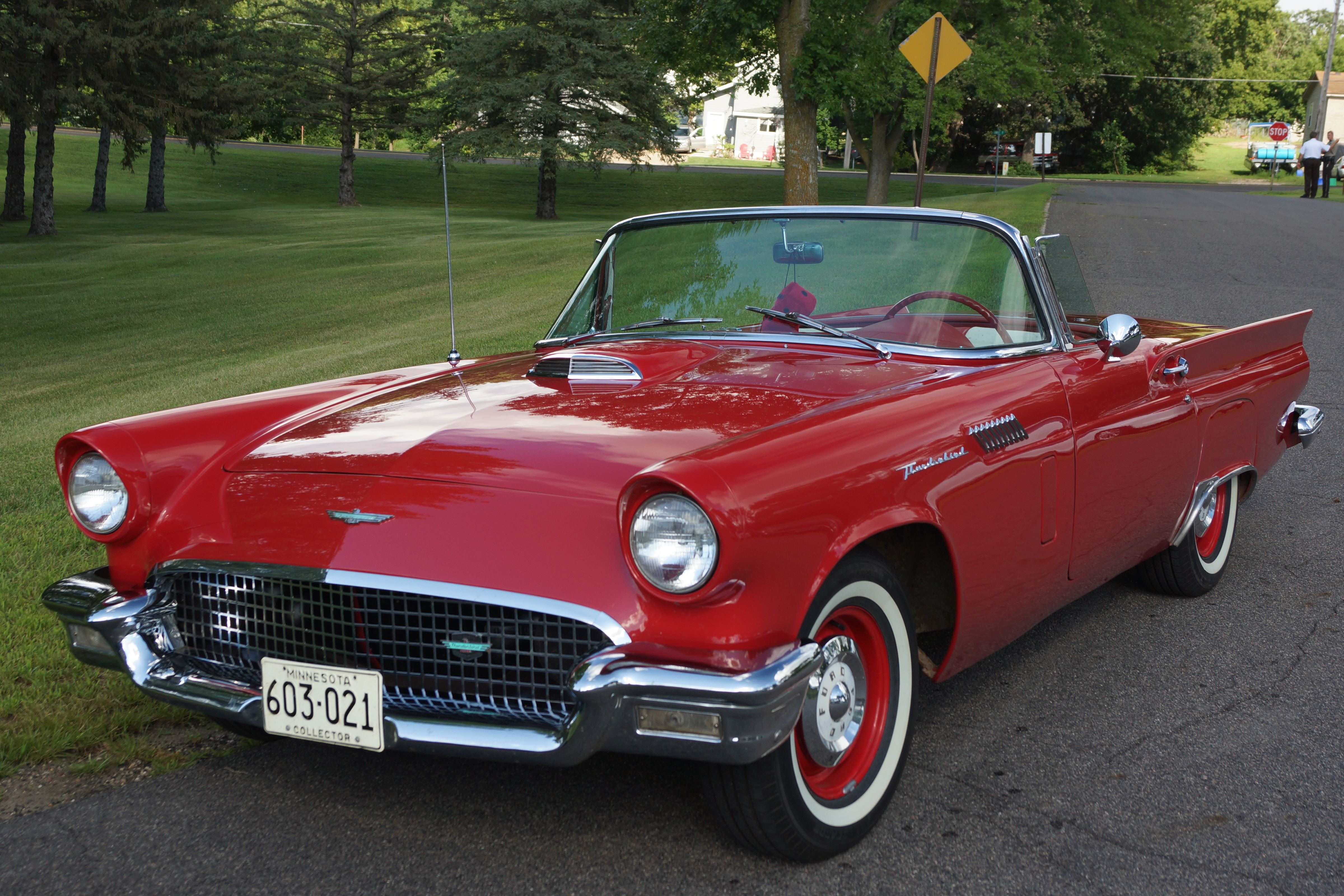
The Ford Thunderbird is a well-known car that has been around since the 1950s. It's famous for its cool looks and performance, making it a popular choice among car enthusiasts.
A carburetor is a part of an engine that helps mix air and fuel so the engine can run. It's more common in older cars, like the Thunderbird, rather than newer ones that use fuel injection.
Dual exhaust means the car has two pipes that let out exhaust gases instead of just one. This can make the car sound better and help it run more efficiently.
Front brakes are the parts of a car that help it stop when you press the brake pedal. If they are worn out, the car might not stop as quickly or safely.
The Chevrolet Corvette is a fast and stylish sports car made in America. It's famous for being fun to drive and has been around for a long time, making it a favorite among car lovers.
Car
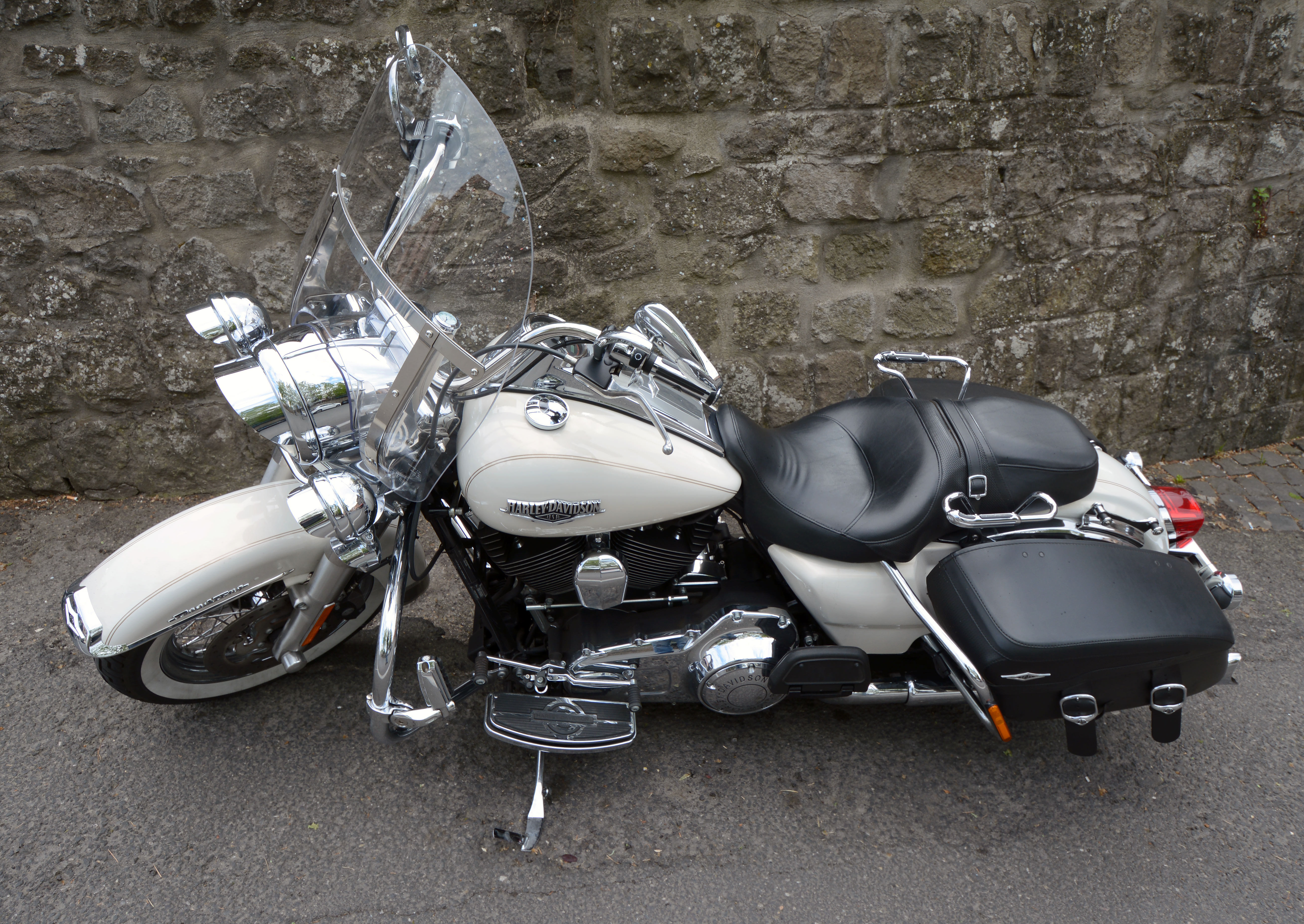
Road King
The Road King is a type of motorcycle made by Harley-Davidson. It's designed for comfortable long rides with features like a big front wheel and a windshield that can be taken off.
Car
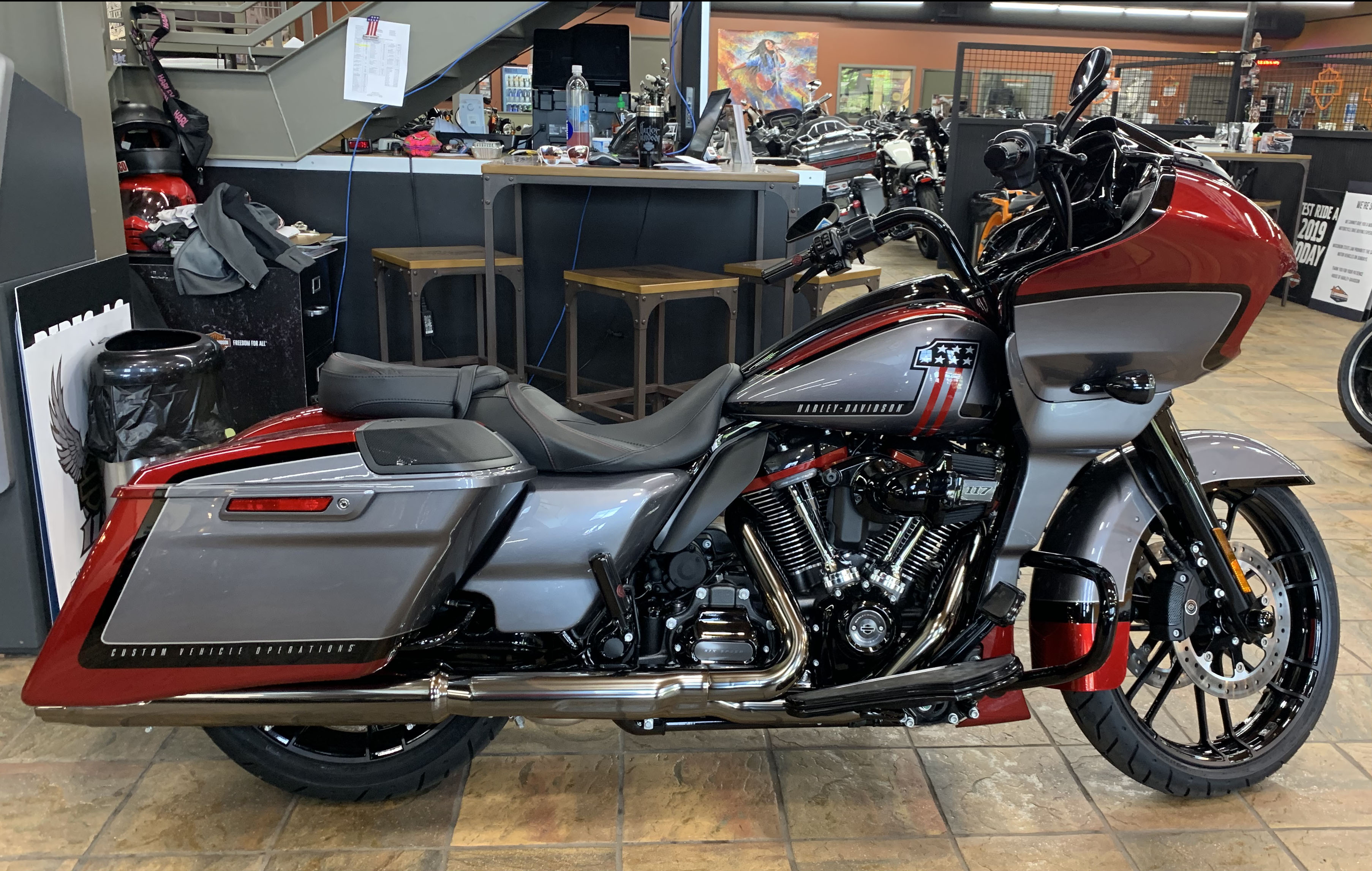
Road Glide
The Road Glide is also a motorcycle from Harley-Davidson. It has a unique front design with a fixed windshield, making it good for long trips.
Car
Mercedes
Mercedes is a well-known brand that makes luxury cars. Their vehicles are often packed with features and are considered very high quality.
An oil bath air cleaner is a part of the engine that helps keep dirt out of the engine by using oil to catch the dirt. It helps the engine run better by making sure it gets clean air.
The Alfa Romeo Giulia Quadrifoglio is a fast and sporty version of the Giulia car. It's made for people who love driving and want a car that feels exciting and powerful.
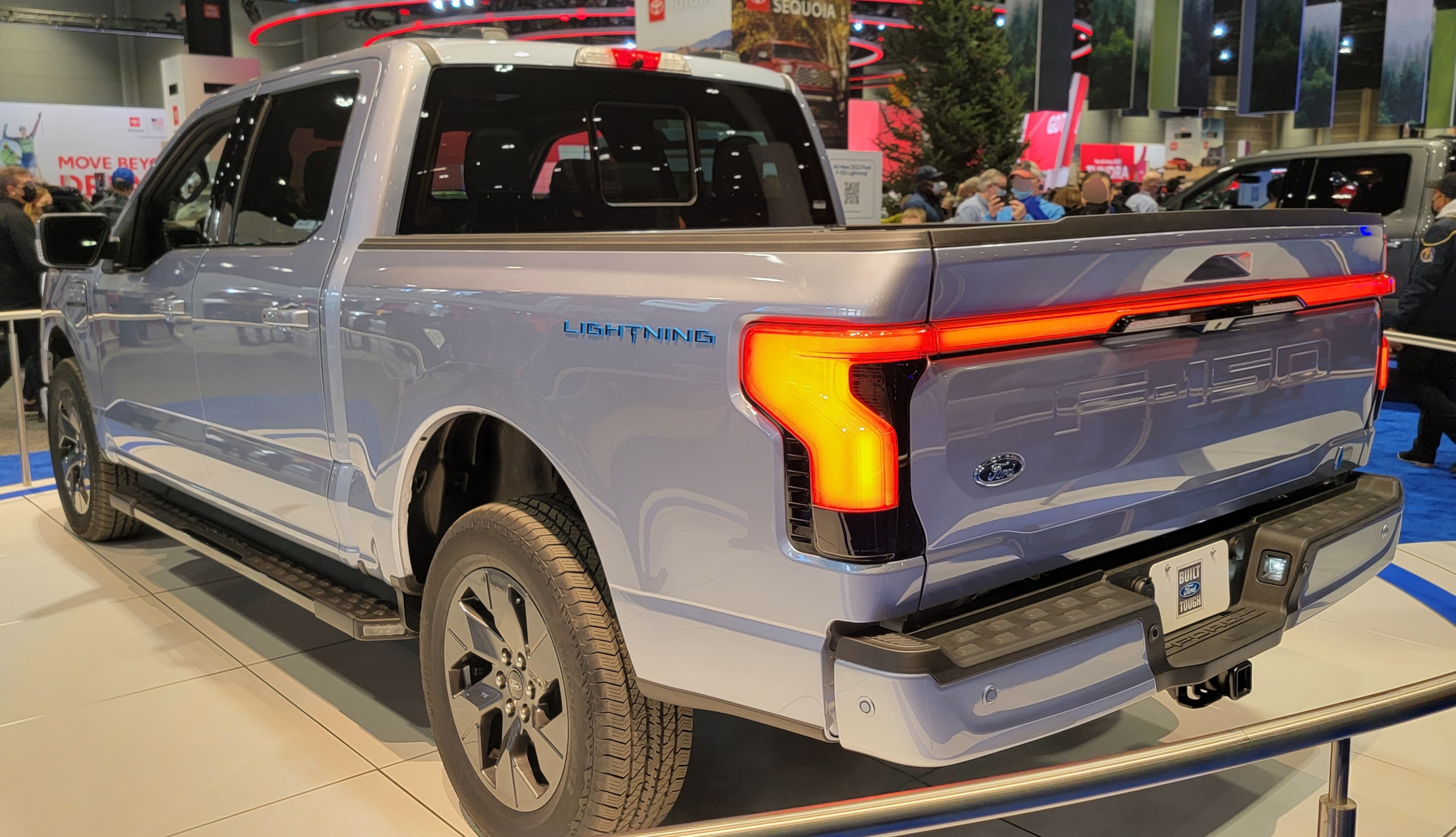
The Ford F-150 is a big truck that many people use for work or to haul things. It's known for being strong and having different options for how it can be built.
A fuse box is like a safety box for a car's electrical system. It contains fuses that stop electrical problems by breaking the circuit if something goes wrong.
The brake master cylinder helps your car stop by pushing brake fluid to the brakes when you press the pedal. If it breaks, you might not be able to stop your car properly.
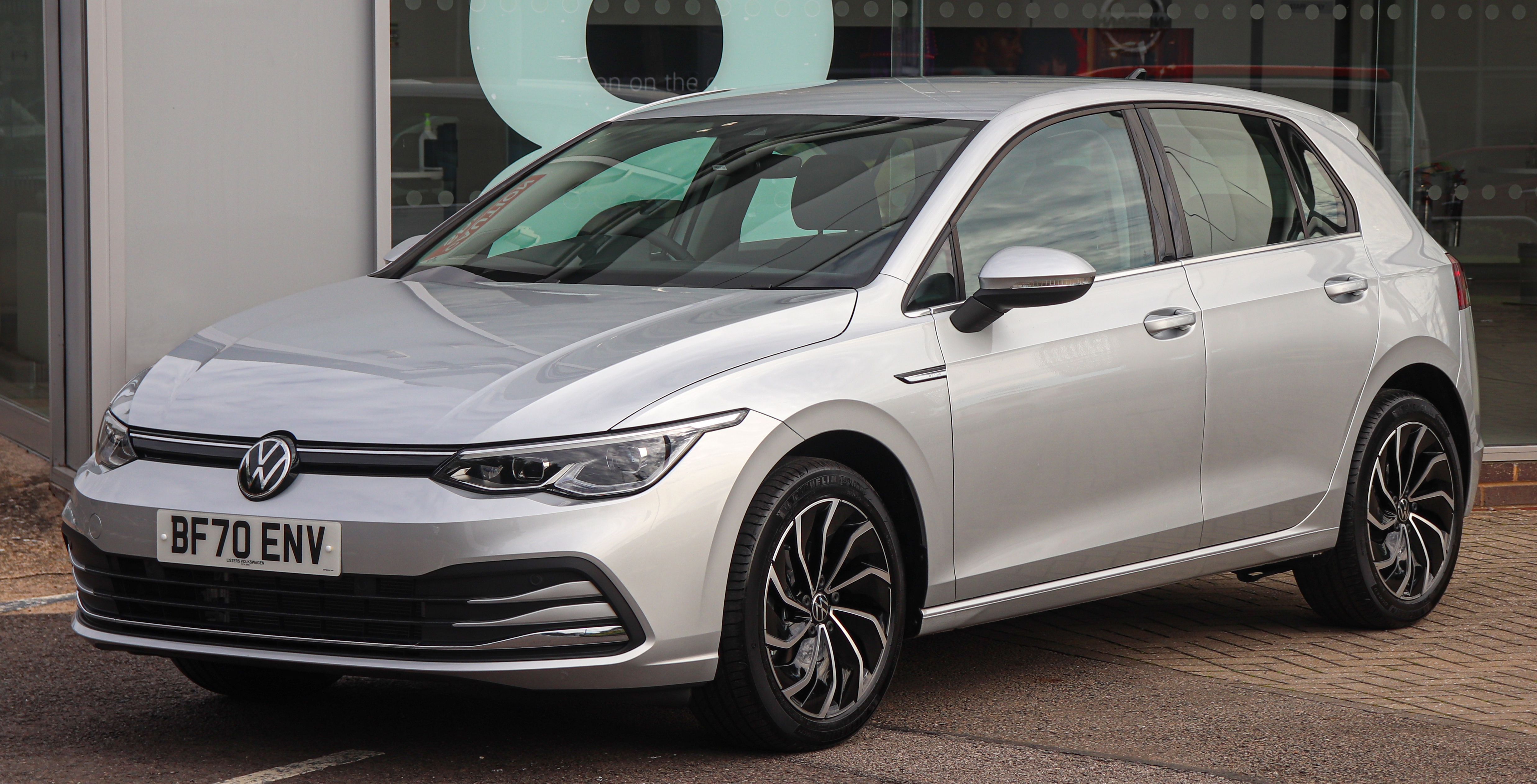
The Volkswagen Golf GTI is a fun and sporty version of a regular hatchback car called the Golf. It's great for driving around town and has enough space for everyday use, making it popular with many drivers.
A hatchback is a type of car that has a back door that opens upwards, allowing you to access the space where you can store things, like groceries or luggage.
The Volkswagen Jetta is a small car that looks more like a regular sedan, with a separate trunk for storage instead of a hatchback. It's a good choice for those who prefer a more classic car shape.
The Chevrolet Camaro is a classic American car that was first introduced in 1967. The Rally Sport version has special features that make it look and perform better.
The Nissan 240Z is a sports car that was popular in the 1970s. The 1973 model is known for being stylish and fun to drive, but some people prefer the manual version over the automatic one.
The Ferrari 365 GTB/4, often called the Daytona, is a famous sports car from the late 1960s and early 1970s. It's known for its speed and beautiful design, and many car enthusiasts admire it.
The Shelby Cobra is a classic American sports car that is known for being very fast and powerful. It was made in the 1960s and is loved by car fans for its performance.
The Jaguar XKSS is a very rare and beautiful sports car from the late 1950s that was made for racing. It's loved by collectors for its style and speed.
The Ford GT350 is a special version of the Mustang that is built for speed and performance. It's designed to be exciting to drive and is often used in racing.
The Jaguar SS100 is an old sports car from the late 1930s that is known for being fast and stylish. It's one of the first cars made by Jaguar and is very valuable now.
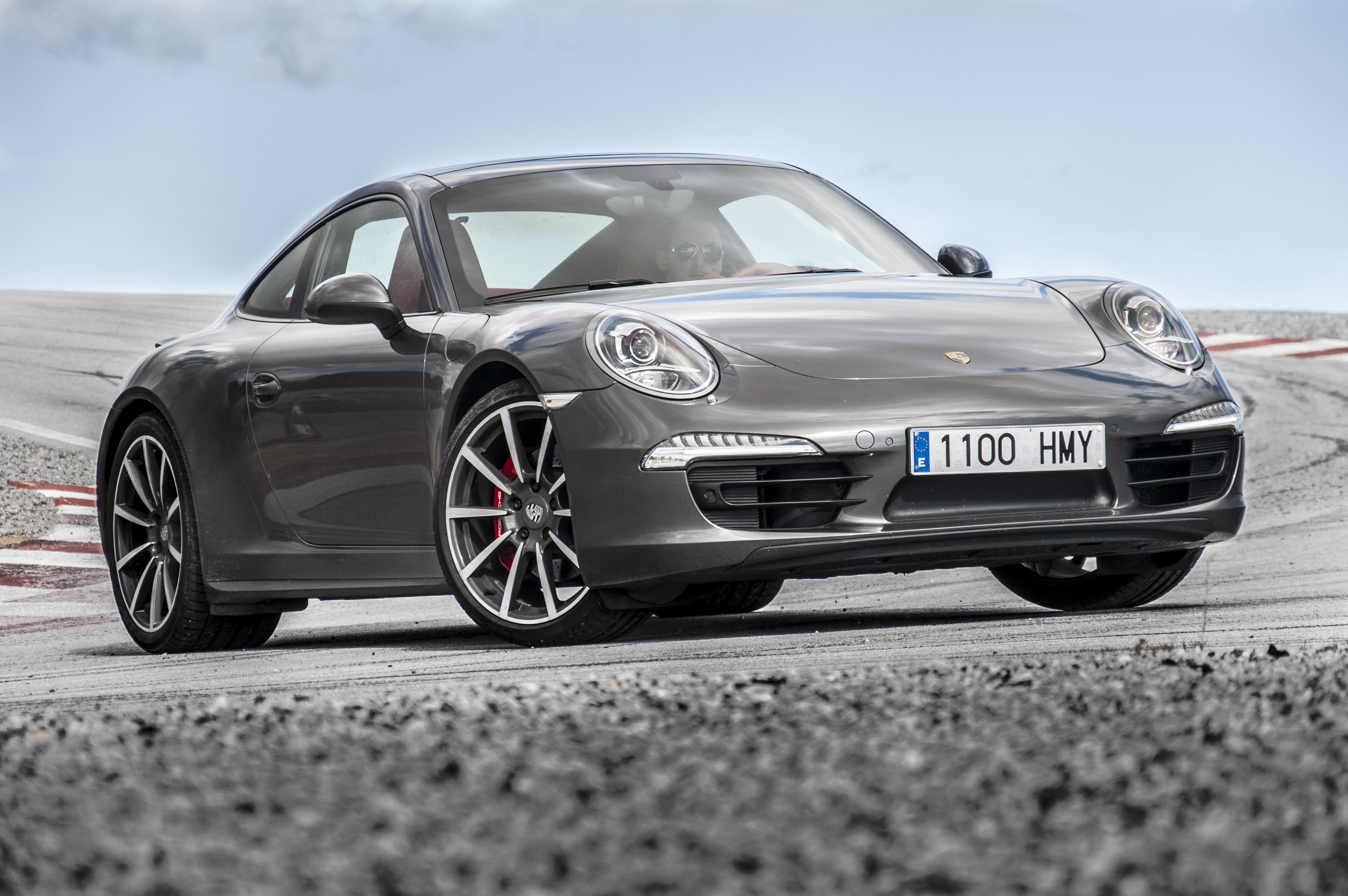
The Porsche 911 is a famous sports car that looks unique and is very fast. It's been around for a long time and is loved by many for how well it drives.
The Ferrari 400i is a luxury sports car from the late 1970s and early 1980s that is known for being fast and stylish. It has a big engine and is loved by car enthusiasts.
The Acura NSX is a fancy sports car that is known for being very fast and high-tech. It combines luxury features with great performance, making it special.
The Toyota Camry is a popular family car that is known for being dependable and easy to drive. It's comfortable and gets good gas mileage, making it a great choice for many people.
The Renault Wind is a small convertible car that you can drive with the top down. It's designed to be fun and is a good option for people who want a sporty car without spending too much.
The Ferrari 250 GTO is a very rare and beautiful sports car from the 1960s that people really want to own. It's famous for being fast and is considered one of the best cars ever made.
The Mercedes-Benz SLS AMG is a luxury sports car that is very fast and has doors that open up like wings. It's known for being high-quality and fun to drive.
The Mercury Mountaineer is a family-friendly SUV that is comfortable to drive and has plenty of space inside. It's similar to another SUV called the Ford Explorer.
The Nissan XTerra is a tough SUV that is good for driving off-road and on regular roads. It's popular with people who like adventures and need space for their gear.
LIVE
Hey, all you gearheads and car fiends, welcome to Driven Radio Show, your weekly automotive
happy hour.
I am Brett Hatfield, here with my co-host and Thunderbird Monger, Thunderbird and Mr.
Mark Groves.
That's me.
We are coming to you from Driven Radio Studios, where it was really nice yesterday and I still
didn't get out on it.
Damn.
Yeah.
I only got out a little bit because it was, I worked all day and yeah, and today at least
it was cold.
And we are recording this on January 1st, which means happy New Year, means last night
was New Year's Eve, when all the amateurs and lunatics are out.
Yeah, I didn't, we didn't go out and even it was kind of funny, my wife, Cammie, had
a number of friends and girlfriends that were going to all come over and I was going to
sit in my office and watch movies with screaming and...
Poultry guys.
Yes.
Things like that.
Amen.
And then they ended up, a couple got six, blah, blah, blah, so that didn't happen and
we were both like, yeah.
So she and I went out and had dinner and then we had the, you know, old ephers type of New
Year's Eve.
We were in bed by 10, 20.
You know, Rhonda and I did something real similar, early dinner, saw George Brett over
at Q39.
That was kind of cool.
Oh, wow.
And then came home and we were down, Jaden got off work, she had to work at the liquor
store and, you know, Zuperade and then Rhonda, rather than having her, our new driver out
running around on New Year's Eve, took her all the way to a friend's house over past
homes.
Oh, wow.
Yeah.
A little bit of a drive and came back and then went and collected her around 1.30 or
2 in the morning and came back and I, I sat on my fat button, did nothing.
King of the world.
I think I watched three Terminator movies last night.
Oh my God.
And along the way, I'm trying to explain them to Rhonda, who's like, I don't understand
any of this crap.
This isn't making no sense.
You're like, I'm just, this is just telling you the future.
This is like idiocracy for AI.
It's telling you what's going to happen.
This is why I'm so mad at AI.
Hey, is the T-bird running?
Oh, no.
Okay.
What have you done to screw it up more this week?
Well, let's see.
I went through, an interesting thing with the T-bird is that on that, the old carburetor,
whether I, you know, absolutely opened up, opened it up on both sides or got it either
super lean or completely rich, didn't matter, ran the same way.
Oh, are you sure you're messing with the right screws?
Oh yeah.
And I was working with a few other things.
One thing I did notice is that at least the way I've got it twisted right now, it does
have real dual exhaust and left side's fine.
The right side still has a little whitey puff puff going on, even when it's completely
warmed up.
Oh.
And I'm like, uh, and yeah, that's also the side that has the, uh, and I've read the breather
cap on it.
Okay.
And, uh, what was it, uh, last, or two weeks ago, that breather cap was breathing some,
some, uh, mist out of it, some, some heavy white.
Now, didn't you say this guy had this thing sitting, not running a lot?
Yeah, for a while.
Okay.
A lot of this may just be working the crud out of it.
That's what I got my fingers crossed, but I also got my new, uh, carburetor.
So, um, I've decided I'm going to frickin' man up.
Okay.
Uh, because I, you know, I've been so worried about it, I'm like, oh, but I can, and I watched
these videos, then I watched one video of a, I think it's called the angry farmer.
Uh, and it's this guy just, uh, every other word starts with an F, but it's hilarious.
I think I know that guy.
He's a real farmer and he's just blah, blah, blah, and in one of his videos, he's like,
wouldn't, you know, I was an F and kid.
We didn't have anybody to do F and anything for us.
We did it ourselves.
We learned, we got it, F and done.
And I'm watching this and I'm like, he's talking to me and, uh, you know what?
Do it.
There's going to be some stuff that I'm not going to know how to do it.
I'm going to have to reach out.
I'll probably be talking to Luke channel, Luke talking about you, uh, to say, Hey, where
does this hook up to?
But overall it's like, you know, take all the pictures, take the pictures of the, of
the setup as it is right now, while it's near running, uh, won't start without gas down
car butt runs and then, you know, get on it, take it off.
What's the worst you can do?
What?
I'm not going to be able to drive it to a, uh, uh, mechanic right now.
So if I have to do it because I did something, what's the diff who you're going to flat bet
it to?
Uh, that's a, that's a great question.
There's a pretty, um, uh, a place that, uh, here in, you know, Raytona Beach, uh, I have,
uh, discovered that does good work.
They, they worked on the, um, on the Nissan got all set up, especially when I, I got it,
uh, I got it inspected for Missouri and come to find out my front brakes were not great.
Little thin.
Yeah.
And they were, they were not wrong.
Okay.
So got that fixed.
They took care of me.
They took care of me on a couple other things.
And I'm like, you know what, I'll see the problem is most places don't know how to work
on carburetors anymore.
No, no, and I'm like, because they're not, they're not plug and play.
No, no, they are not.
And there are not enough of our, uh, McPherson brethren out there floating around, uh, who
actually know how to take something and repair it, not pull a part off and plug in a new
one.
Yeah.
It's gonna be real interesting if, you know, if first comes to worse, I may have to shell
out another couple of hundred dollars to get it towed across town and beg our friend.
Oh, Darrell.
Who Darrell?
That might be a Sopac automotive at 59, 20, Merriam Lane, uh, 913, 831, 3613.
God, you know how many times you got to dial a number before you have it burn into your
brain?
Darrell, you're on my mind too.
Uh, and it's funny enough, they, uh, they thanked me the other day for this kind of,
yeah, they have thanked us before.
So, uh, make sure you check out a quality auto care quality auto care at, uh, lovely
prices and they'll be absolutely honest with you.
Oh, and Darrell loves telling me I'll fix it no matter what it costs.
Uh, how about you?
Okay.
Real quick.
Like tomorrow morning, we are installing not one, but two, two, two four post lifts
down at the warehouse.
Lifts?
Lifts.
In the warehouse?
LIFTS.
Lifts.
Okay.
Wait a minute.
This, this is literally no lie.
This is the first time I've heard this.
What, what's the plan?
Dad is threatened to do this for years.
He finally told me, pull the trigger, find out about this.
Talk to Mark, the nether mark, my brother-in-law, find out about his lift.
Ask him what it costs.
Was he happy with it and all this other stuff?
And yeah, those guys are coming tomorrow morning, nine o'clock.
We are going to start setting up lifts.
Oh, yeah.
You're just getting it done.
In the warehouse.
Oh, shoot.
Yeah.
This is dad.
He's, uh, and not a moment too soon.
Yeah.
Yeah.
He wants to get, he wants to get both his Corvettes off the floor for the one or time and I can't
say that I blame him.
Oh, I was thinking, I was thinking like for working on them.
Well, that too.
Okay.
Lots easier to polish wheels if they're.
Give a damn about your dad.
I'm thinking about me, buddy.
Yeah.
Lots, lots, lots easier to polish wheels if they're at eye level.
Yeah, they do help.
We're all suffering old aphoritis.
None of us wants to get down on the floor.
Clean anything.
Also, I had, uh, Dave Seider, if you're listening, Dave, I had his heritage, early heritage down
at the warehouse.
Yeah.
And then I had my road glide parked in between that and my road king.
Now the road king is 100% absolutely spotless, not a Nick chip spot, anything on it.
It looks like the day it rolled off the factory line, uh, 8,500 miles on it.
The road glide, uh, the former owner lowered that some and that means it doesn't sit over
on the kickstand as much.
You start to see where I'm going with this.
Uh, I was down there the other day.
I've been collecting a bunch of parts for it and just throw them in the saddlebags figured
I'd work on it when I got it down there and, uh, I'm, I was looking in, I was on the kickstand
side on the left side and I'm looking in the right side saddlebag and I had one hand on
the seat looking at it and I'm kind of leaning on it, but not really paying attention to it.
That sucker started to go over and it made it about two thirds the way over.
And as it did, it was falling into the road king and standing that thing up and I was
going to push that one up and, uh, I'm down at the warehouse by myself.
I got nobody else to help.
The road king hasn't gotten to straight up and down yet, you know, so it'll still
settle back down on its, on its, uh, kickstand.
If I get the stinking road glide out of it, road glide, 850, 900 pounds, maybe.
Yeah.
It's a heavy bike.
Yeah.
It's, it's a heavy bike and I got hold of one of the crash bars and I think with the seat,
I just, I was so panicked.
I grabbed whatever I could get hold of.
I wasn't paying attention to it and I'm tugging on it and I'm not making any progress.
I'm just holding it where it is.
And I'm starting to panic and it's not like I can reach a phone and call somebody to help.
And how long would it take them to get there if I did?
And it just, just really starting to panic.
So I gave it everything and just pulled back.
But what you're pulling with is you lower back, you dummy.
And I mean, there's not a good way to do it.
There wasn't.
Got the bike standing back up.
Oh my God.
All right.
Pulled all the crap in my back since the last time we were in studio,
I've been walking around looking like I was a solid 30 years older than I am.
I was walking out the door to the garage a couple of days ago.
And like I said, Baxman soar.
So not really walking the way you would.
Lost my balance a little bit, started to fall, put my hand out.
Dude.
Snap the star off the end of the shot and Freud Express.
No, damn it.
No.
It's an easily replaceable thing.
You heard that little voice coming from the car.
Victory.
Yeah.
Well, one more time.
What's that car's other name?
Yeah.
Hitler's Revenge.
Goddamn Germans.
Wow.
These are all new stories to me.
I haven't heard these until tonight.
And I was I was waiting for worse endings.
And the back.
Now the back thing's not great.
But I was like, no, the bike didn't go over.
No, but the red Mercedes was up on the left.
Up on the left, laughing at me.
So screw both of them.
Oh, you got this fixed?
Oh, you've got my butt fixed?
Well, look what you've done to my nose.
You are dead to me.
Still going to the body shop on the 19th.
I dig it.
I care.
Care.
Going to get everything fixed.
And then I'm going to have to put a cover on it
and put it someplace I can't touch it.
It's one of those cars that just you've got to prove you love it.
Yeah, I'm going to put it back.
Hey, but I'm guessing by Valentine's Day, that car is perfect.
Which means I can't touch it anymore.
Yeah, I can't drive it.
Hey, have to stay the hell away from that thing.
Have to stay the hell away from the blue Corvette.
Have to stay the hell away from the red Mercedes.
You know, I'm getting all of this stuff dolled up.
Finally, I'm kind of in project completion mode,
but I'm also reminded you're a stupid bull.
So, you know, crap happens along the way.
It does.
It does.
Busy week.
Oh, man.
I was just, I was just leaving to go running.
Nope, you're going to fall on the hood of your car
and that thing's going to come off in your hand.
Hey, guess what?
You got to run DMC necklace now.
Hey, our special guest this week is motorsports photographer Evan Klein.
Evan is a lifelong car fan who has been fortunate enough to shoot
some of the world's most renowned cars for the rich and famous all over the world.
He's been published in Motor Trend Octane.
Hey, Dave Kenny writes for Octane.
Nice.
Magneto, Haggerty Drivers Club.
Hey, Dave Kenny writes for Haggerty.
Nice.
Cavalino, Panorama, Shelby Road and Track Car and Driver,
Automobile, Import Tuner, Dr. Seuss and everybody else.
As well as having been his work featured in movies, TV shows, commercials.
Evan is also the creative force behind the annual Team Shelby Club book
that was published today, January 1st.
Oh, wow.
Evan, welcome to Driven Radio.
Thank you.
Thanks.
Thanks for having me.
It's nice to be here.
We're thrilled you're here.
We're thrilled you could listen to all the stuff we jacked up this week.
Evan's reconsidering.
He says, why didn't I get a drink before I started?
He was kind enough to just shake his head quietly.
Oh, God, these guys.
I am vicariously living through you because for every good deed,
you at least break one or two items on the car while you're trying to do something.
Not everyone.
You know, a good portion.
No good wrenching goes unpunished.
Oh, God, no kidding, man.
Keep me away from my toolbox.
Mark, you were saying like the carburetor, right on your on your Thunderbird,
and it brought me back to work guys.
And the very first carburetor we all ever touched brings in Stratton.
Oh, yeah.
Oh, yeah.
The lawnmower, right?
Screw it up, too.
It was, don't worry, I got this.
It's all, you turn it in, you turn it out, two and a half screws.
I can fix it.
Don't worry.
Exactly, yeah.
Three quarter, three, two, good.
You know, that's where my wrenching career really started was a
creptastic Sears lawnmower.
Yes.
And put a straight pipe on mine.
I remember being about 10 years old, my old man pulls into the driveway.
I got the garage doors up.
Three quarters of the lawnmower has been disassembled and it's sitting on the floor
and he looks at me and says, I was going to cut the grass.
You were?
Oh, don't worry, dad.
I know how to put this back together.
Oh, did you?
It's the I'm fixing it, but it wasn't broken.
Uh-huh.
You think I didn't hide that little box full of extra bolts?
You fucking hand it.
That, uh, that 1955 Plymouth I had when I was 16.
Oh, yeah.
That was one of my most, I'm a guy type of things was I would take off that oil bath
air cleaner and get in there and monkey with the carb.
And, you know, put my hair on it.
Just kind of listen to timing light.
Yeah.
Timing lights for people who know things.
Me, I was just like turning it until it sounded like it was running.
Okay.
Didn't have problems that needed to be fixed before you got in.
No, no, no.
I'm sure it did after you'd been there.
Give me 10 minutes.
I can break anything.
Well, and as an alpha owner, you probably get lots of opportunities.
It breaks its own.
And you're searching for like what, you know, I, you know, here you are.
You're in Monterey.
You've taken the alpha all the way up there or in the Julia super.
You're right outside of the Pebble Beach entrance before 17 mile drive, you know,
and, and, and we're guys and, you know, you gun it through the traffic light, right?
Yeah.
And it's kind of this roundabout thing that's happening there.
And you get halfway through, you've cut someone off.
You're, I mean, you're being kind of a, you know, an alpha owner, like sort of like, I'm first.
And I think I know where this is going.
And the car dies.
Yep.
Yep.
That's the one.
Yep.
And that's the one as I'm going through the intersection.
I've done it.
I've cut somebody off.
I've been my true pecker self.
I get the other side of the intersection.
The car says blah, blah, blah, blah.
No more your crap.
And you go, I've restored this thing from nose to tail.
We've replaced every single item on the car.
Did you use alpha parts?
Well, you know, you know, so I coast to the side and there's a little like, you know,
it's kind of grassy area underneath the pines and you pull off and you pop the hood and no one's
stopping to help you and you're looking at it.
Right.
And first thing, cell phone and you're calling your mechanic and Evan, I'm sorry.
We drove right, right past you in a hybrid F-150 on our way down 17 mile drive.
And the reason I didn't stop is because we'd sat in traffic for two stinking hours just to get there.
Yeah.
You actually never did.
I had people honk at me.
I've been on the side of the road and they're like, oh, there's Evan.
Honk, honk, hi.
Screw you, Evan.
We'll see you later.
Miss you already.
And I was like, I saw you when you were and you was like, and you didn't think to stop.
I guess we're not that close.
It's okay.
Hey, you're in the traffic circle.
Do you think you can coast down to pebble?
Oh, the same alpha.
Okay.
So it turns this is great is that the alpha, it turned out to call the mechanic and we talk
it through like where you're getting air fuel spark and it's the fuse box mounted on the inside of
the fender well, right?
Yeah.
They overheat and they start to melt.
Oh, for the love of God.
It's a really visible short.
Wow.
And I wiggled and it was like, my God, the plastics mounted.
I had to wait for the plastic to re solidify and just, you know, start all over again.
This reminds me of our Dodge.
I was going to mention at the end of Kevin's story about the Chrysler's of that time.
Yeah, I'm reminded of Mark had a, used to have a 64 Dodge custom 880 car.
They only made for two or three years.
About four.
Yeah, four years.
Okay.
And it was his first classic.
He got it and he and I, you know, were kind of spitball on the ideas off of each other.
But he had some kind of weird ass electrical glimelin that would come and go.
Had no, there was no rhyme or reason to it.
There's no nothing.
And you talking about the fuses mounted on the fender and I'm just seeing Mark
standing over the hood of that car going, what the hell is wrong with this?
What happened?
Yeah, it's a, and it ended up, mine was in a way luckier because yours, you know,
you had the one on the wall and that little fuse.
I can't remember what it, yeah, we'll just call it a fuse thing that was on the wall
for the Chrysler's and Dodges.
That one was notorious for going bad.
On mine, it didn't go bad.
What went bad was the amateur that was in the dashboard
that I found out later through a couple of chat groups that I was lucky that my dashboard
didn't catch fire because those things apparently would short out heat up and then catch fire.
And I had, I had like five different dudes on this board go, dude, you were really lucky.
What do you mean?
Lucky, but damn car stopped in the middle of nothing was dead.
It took a DJ from a local radio stations guy had worked with to come down and go,
okay, here it is.
And I'm like, well, I'm the car guy.
But, uh, he, uh, uh, it was, it was that thing.
And all he did was take the, the two wires, put them both on the same single post so that
they made a connection, boom, car ran.
And I'm like, you've got to be, oh my God, this was some great engineering.
This one little tiny thing with its little resistors so that the gauge would work.
If it went bad, you've got nothing.
I'm glad none of my old stuff ever has any problems.
So how did, so once that, uh, once that plastic fuse thing kind of got cooler,
you were able to start it and then get it out of the way.
Yeah, it was, you know, it's the red wire, you know, and it's the heavy red wire.
And, and so, you know, you just kind of figure out where to like screw it back on.
Right.
You know, you undo the nut, you know, it's probably like a 10 mil something in or a 13.
And, and yeah, so it gets hot.
It starts to melt.
You sit on the side of the road long enough for it to cool off.
And then you're good to go again.
Well, yeah, I mean, but this was like the one thing you're always transitioning
from one problem to the next.
Oh yeah.
Okay.
The other thing, like we went through a whole series of problems with brake master cylinders.
Okay.
And they're now made in China.
Oh yeah, they all suck.
Yeah.
And they'd last about three weeks until the the brake pedal just drops to the floor.
And another pebble trip was up there with my client from Haggerty, the art director,
and we're doing shoots and stuff.
And it was like, it's Haggerty, the classic car, you know, company of the world.
We're going to drive up in the alpha.
This is going to be great.
Best day ever.
Yeah, best day ever.
You know, it's like, you know, a 10 gallon tank.
You're stopping every 12 minutes to put more gas in it.
And, you know, the car, you know, there's no air conditioning.
We're sweating like children.
And, and, you know, now we're now we've had a whole week of car week.
And, you know, oh, best time ever.
Oh, God, I love you.
You know, and it's like, let's go home.
Yes.
Oh, no.
Yeah.
But the thing about car week is not, hey, my car broke down 17 goddamn times.
And I can't believe I put up with this.
It's first of all, and you know, this is as well as anybody.
It's all the connections you've got.
It's all the people you've met.
It's all the the cool people you got to hang out with.
It's the stories you got to listen to about.
I can't believe my car started to burn up on the side of the road after I passed that guy.
Yeah.
It's all of that.
Secondly, man, it's tough to find better scenery in Monterey.
It is so stinking pretty out there.
And the fact that all the golf courses let us tear stuff up.
So did you get it home?
Were you able to get the get the car home?
Well, well, we were like, it was that last day in the afternoon.
And we're going like, we're going to drive back.
And then I hop in and you know, he's next and we start the car
and the pedal falls to the floor.
Oh, God.
And it's like, oh, God, you've got to be kidding.
And so you go, well, how far is that late?
Like, you were with me.
It's five hours.
Well, you're not driving back.
You're driving down to Doty's and written a U-Haul.
No, we drove back using the handbrake.
I said, you know, once we're on the freeway.
OK, car guys, right?
With car logic.
We're not the smartest guys, right?
A break is a break is a break.
And we're going back on a Sunday.
How much traffic could there be?
You know, it's like, you know, on the map LA is downhill.
Sure, it'll all work out, man.
Drove back using the umbrella break.
You know, the pull thing.
Low gear, you know.
The hardest part was getting it to the shop.
Once back in LA.
Oh, yeah.
The highway is fine.
Oh, my God.
Yeah, yeah, yeah.
Getting it to the other side of town that next morning.
Yeah, once you're in LA, you're screwed.
You got to drive around at three o'clock in the morning
and hope to God the traffic's light.
No, no, no.
I'm just as stupid on a Sunday as I am on a Monday.
On a Monday as a Sunday.
And I drove to the shop.
On a Monday because it's like, you know, guys,
I can fix this.
I can do it.
It's not a big deal.
I think the universal saying for guys
should be more balls than brains.
Because we all seem to have that.
So I eventually at a certain point, you know,
I was putting all my photo gear, strobes and light stands
in the trunk.
I was shooting.
I've gotten pulled over, you know, for shooting out of it,
getting a ticket.
You can't ride in the trucks or, you know,
going to court and talking to, you know,
judges about this and like, how much?
Yeah, I know my people hanging off the bumper, but.
Look at this.
The judge is like, you know, I'm a professional.
You know, this is what I do.
I was harnessed in and, you know, there was, you know,
we were working off of radios.
It was a closed strip of road.
And he goes, well, you know, it looks like, you know,
you work a lot.
You brought magazines.
You showed me your camera and harness.
So yeah, I'm finding you a thousand bucks.
It looks like you can afford it.
Welcome to La Jolla.
Oh, wait.
No, I could have told you my sister lives down there.
Oh, my God.
Oh, wow.
That is the most friendliest evil place I've ever been.
Right.
Yeah.
All right.
So, and again, very pretty.
You know, the car's been on the cover of automobile magazine.
So, and you write about it and octane in your adventures.
And so everyone knows about it.
So at a certain point it's like, you know, I've had enough of this.
Did you name the judge by name?
I would have.
Well, I know that it's okay to photograph out of a hatch.
But that's what the law says.
Really?
Not a trunk.
And I said, so if I had a hatch, I could do this.
He goes, yeah, the law says trunk.
That's not a, trunk isn't a hatch.
So I got a thousand dollars worth of education.
So SUV hatch or like Volkswagen Golf hatch?
I have an Audi TT.
Okay.
All right.
A hatch is a hatch.
Yeah.
Hatch.
That's pretty cool.
Hatch goes right up.
That's not that far away from being a golf.
Same parent company.
It's a hatch.
It's not a trunk.
Yeah, exactly.
If you had a Jetta, you know, then you'd be sitting in the trunk, right?
How about a convertible just crawling over the back?
Are you okay with that or do you have a problem with that one?
No, no.
Convertibles, you can't do a convertible.
Too high up.
Camera angle's bad.
Oh, wow.
Okay.
Think, all right.
Think about this.
You're in the back of a convertible.
All right.
Now the distance between where you're sitting in the convertible to the tail end of the car,
that's what at least 46 feet, right?
We say three to six feet, right?
And you're up high.
All right.
So when you, the parallax between where your eye sees in the car behind you,
now you're on a long lens because you got to zoom in to correct for the distance.
So I'm starting to think motorcycle sidecar.
It actually kind of gets.
Get a minivan with a hatch.
I'm just trying to think all the different ways you could do this.
And how many of them you get pulled over for?
Get the seatbelt looped around your ankles and just throw your ass right over that trunk.
I mean, come on, commit.
Evan, commit to the shot.
Make sure you tied your shoes.
I got this all figured out.
I'm all good.
I'm sure you do.
Evan, the pro has been doing this for years.
No, no, he needs our suggestions.
I'm on top of it.
Shit.
There's nothing like taking a Chrysler minivan around Laguna Seca
and you're hanging out of the side door.
You're strapped in and you're looking forward and you see front tire roll over,
you know, and you're like, that's rolling over a bunch.
The best part was when it came time to I'm selling this alpha, right?
And so I put it up like on the bulletin board on a Friday, right?
Alpha BB and it was sold by Monday.
I had six sight unseen offers.
Wow.
Okay.
Because the car, you write about it.
You do tell stories about it.
You have pictures of the restoration and all this stuff.
Everyone's, you know, they know.
So the guy buys the car and he's got other alphas.
So like, thank God, you know what you're buying.
And then like, I don't know, two, three years later, he calls me.
He goes, Evan, it's me, I bought your alpha.
The kids, you know, I've got a GTV, I got this, I got too many alphas.
And so I sold it.
And, you know, I sold it for more than I paid you for it.
And I always thought I should have paid you more for it.
Well, there's anything more money.
I want to send you some money.
You're kidding.
Nobody does that.
Wow.
And I, you know, so I like, well, here's my paypal.
Go ahead, you can send me whatever you want.
And he sent me 1500 bucks.
So who knows how much he sold it for.
But then the new owner has contacted me, right?
And he wants to talk about the car.
You know, I mean, has anyone ever, like if you were married to a wife and you got divorced,
would the new husband ever call you to ask you about your ex?
No, I told him in advance and he married her anyway.
And Tony made it so I never had to talk to her again.
You talk about the best friend ever.
Brett sent him 1500 bucks.
Really taking one from the team.
Oh, hell no, man.
I gave him a Yukon.
Shit.
Evan, when did you realize you were a car guy?
How old were you?
Very, very early on.
You know, my dad always bought cars that he kind of liked,
but he always bought the wrong one.
You know, like now that we're older, we know about classics and we look back on it.
And it was like, oh, we had a rally Sport Camaro from like 67 with a V6.
And it was a convertible.
And it was like, oh man, so cool.
But you cut.
And you know, and then I remember he had a 240Z, but he bought an automatic and a 73.
It was like, that's the bad gear and an automatic.
Why would you do that?
You know, and I realized at a certain point, you know, there was, as you left our house,
you went past the shell station to the GM dealer, right?
And so there was an orange Pantera for, say, $9,995, right?
And we stopped at the shell station and dad's like, look at that.
Oh boy.
You know, we walk around it and like, it's pretty cool.
It's like, it's 10 grand.
We're going to the GM.
I'm like, oh, okay.
And we drive down.
We pull in because they got a DeLorean and it's an automatic.
Oh, Lord.
No, no, no.
And, you know, we, you know, the dealers think it's a GM and they're handling the door.
Yes.
And we're both sitting in the DeLorean now and I'm looking at my dad and he's looking at me.
You know, we can watch this thing with steel wool.
Yeah, that's not a good idea.
Okay.
Right.
That's their logic.
Like if they get scratchy, just use steel wool and that's that.
All right.
And my dad goes to start it and the battery is dead.
Okay.
Best thing that ever happened.
Yeah.
That is a fabulous warning.
They didn't have a jump box.
They couldn't get it started and we went home without a Pantera and we went home without a DeLorean.
Thank God.
Probably, you know, I don't know what we wound up with at some point at TR6 entered.
Our life.
Well, a TR6 compared to a DeLorean, hell of a lot more fun.
Lots, lots, lots better sounds out of them.
Let's hope your dad didn't get an automatic.
It wasn't an automatic, was it?
No, actually, dad drove it and he said to me, he goes, now son, if you get straight A's,
the TR, now that you're old enough to drive it off, the TR6 will be yours.
Oh, right.
Mark, right, right, right.
Yeah, I'm feeling some motivation.
Okay.
I've never even gotten a pizza for anything I've done, you know, not even a burger or fries.
It was like, all you ever heard was like, go to your room, you know, or put, you know, right,
you know, you're not playing in a band.
Get rid of that guitar.
Why inform me, right?
So, so I'm like, straight A's.
It's not so hard.
You're in high school.
Well, it could be so hard.
Ah, all right.
So you're like, I go home, I get straight A's and I'm like, here.
They're like, why didn't you do this before, son?
Like, well, you never promised me a TR6 in front of me.
Dad, this is the right kind of carrot, okay?
Yeah, yeah, right?
You nailed it.
And that's where, like, you know, learning, like, dumbest thing you've ever done in your life,
sort of stuff comes in.
It was like, you know, the TR6, like, I had a go kart when I was a kid with the three horse
power Briggs and Stratton motor, a neighborhood where you could drive on the street and you
didn't have to worry.
And you learned how to like four wheel drift and like, if you could bounce it and I mean,
you could do anything you wanted on this thing, you know, until you learn that a TR6 isn't a go kart.
No, the same skills that you use in your go kart, you can't really apply to an automobile
because they don't drift the same way.
The back end doesn't come out the same way.
And, you know, your dog isn't sitting next to you when you drive and, you know, you're not
doing 30, you're doing a lot faster.
You remember how gutless your go kart was, my V6 Camaro was about that gutless.
So, you know, trying to get the thing sideways, that's a similar skill set.
It was.
That's how I, you know, some things we shouldn't, you know, talk about for long periods.
Well, some things you don't want to talk about in front of your kids.
There's definitely.
Yeah.
And if dad is listening, he's like, so that's what happened.
No, wait, Evan, my dad does listen to this show.
And every now and then I'll mention something he said or done.
And then, you know, we'll be talking about stuff.
He says, hey, by the way, I was listening.
Oh, crap.
And I always have to remember, yeah, but you said so.
Yeah.
Yeah.
Uh, there's, there's so much stuff that I would have never stood in front of my old
man and said, hey, guess what I did that he's found out because of the show.
So, uh, yeah, you're, you're right.
I'm just not smart enough to shut my mouth.
That is our love.
That is our love for cars.
It is.
It evolved into photography.
You know, how could, you know, because you learn after a while,
but I can't afford to be a race car driver.
Well, how did you get into photography?
I mean, what started that?
Was it just my dash camera?
Okay.
It was my Schwinn varsity and my dad's, I think it was a Pintax 35 millimeter.
Oh, cool.
He didn't use it and he didn't use my bicycle.
So I used my bicycle.
I used his camera and I would pedal around and take pictures of cars in the
neighborhood and the dealerships and things like that.
Cool.
Oh, seriously.
Did, now did you ever sell any of those to the dealership or show it to them?
And they went, oh, kid, this is really good.
I was on a Schwinn varsity.
I was like 13, you know, I had a bar mitzvah.
I might have been 14, you know, I, you know, you, I remember like knocking on
some guy's door at his house, you know, dunk, dunk, dunk.
It's the middle of the day and he answers the door in his bathrobe.
And you know, I don't know if you've been drinking or not, but he's older than me.
And but he's got a Ferrari through a GTB4 right there that was blue.
Wow.
And you know, it's cool.
You don't know why, but it's like, hi, I'm Evan.
I have a camera and your 10 speed.
Can I take a picture of your car?
So go ahead, you know, and he goes back inside.
And so, okay, that's, that's like your first lesson in learning the approach.
Sure.
Right.
Because as a photographer, you have to scout for locations to match the car.
Sure.
Okay.
And you only get, boy, it's that first and correct.
You get about four to eight seconds of that door will crack open and the person on the
inside is looking out and think of all those things that go through your head.
Is he going to rob me?
Is he going to kill me?
Does he look trustworthy?
How old is he?
You know, why is he knocking on my door?
Is he going to sell me something?
What does he want?
And so you usually bring a copy of the, of a magazine that you've shot the cover of.
And let's go.
Right.
And you're like, hey, my name's Evan.
You have a fantastic home and I'm a, I'm a photographer.
I shoot automobiles.
This is my work right here.
I'm shot the cover and I, and I'd like to shoot, you know, these Shelby copras,
you know, the Daytona and the coupe here at your place.
And they're usually, their response is like, here, you, you want to shoot here?
And you're like, yeah.
And, and then two things will happen.
They'll either love cars or they'll be like, yeah, okay.
And that's it.
I mean, then you've got the guy that's, you know, with the copras, he's like, well,
I got a vet around back.
You will see it.
Oh, very cool.
It doesn't run.
You know, offer them.
It's like, look, if we'll shoot here, I'll shoot your car too.
Really?
Yeah, up on the blocks, take the blanket off of it.
You know, with this, we, we were in Palm Beach shooting for Cavalino.
And when we had a Ferrari intercoastal waterway sort of area, it was a cul-de-sac.
Yeah.
And one guy pedals up on his bicycle, the neighbor, and he's like, oh, this is great.
I think it was a Daytona convertible.
And he goes, this is great.
Right.
And he goes, I have two Ferraris in my garage.
I love these cars.
And he pedals off and he was like an ambassador.
And the driveway that we were using was this woman.
And you could tell she was someone's grandmother.
And she's like, yeah, no, no one even ever asked to use.
They just park here.
I can't believe you asked.
Go right ahead.
Oh.
And the other neighbor comes out and he says, you know, there's only three homes.
It's a, it's an end of the street.
And he's, you know, he says, yes.
You know, he goes, you know, by the way, I got a couple classics in my garage.
More.
Okay.
What are we talking about?
Okay.
You know, and that's part of the rules of the game is that.
All right.
We have to stop shooting, go take a look at what you've got.
Sure.
The sun is setting.
I don't have much time.
But you can't offend the guy, right?
And his garage door opens up and it's two little three fifty sixes.
And you go, those are nice.
You know, we got a Daytona sitting out here and your Porsche, your Porsches are nice.
He goes, well, and then the rest of my collection is, is back on the East Coast.
I got 300 cars there.
Oh, God.
So now the editor of the magazine is googling very quickly.
Like, you know, you know, he goes, I'd love to stay though, but I got to meet my wife for dinner.
Okay.
And so I got to get, I can't be late.
I'm like, okay.
And so the editor comes up to me and he goes, he goes, I found out who this house is here,
who these people are.
Mike.
Okay.
He goes, they're, they're worth thirty seven point five.
Yeah.
Billion.
With a B.
Billion with a B.
Billion with a B.
Oh, and as, and as the wife's generational money.
And it's like, and we can see now why he can't be late, you know.
I wouldn't be late either.
This is what's called indentured servitude with a marriage license.
Don, where do I sign up?
Sure, sweetheart.
Whatever you say.
So, you know, I mean, but you, you never know.
This was a knock on the door.
And like, you know, this is the guy that you never, ever know who you're going to meet
or what it leads to or where it takes you.
So what was your first paid photography gig?
That was, that was probably like import tuner and super street.
Okay.
All right.
So about, can you guess when?
Like 20 plus years ago.
Okay.
Easily, easily.
Yeah.
And it all, you know, it all transitioned.
When you first start doing photography, you know, photography is about light.
And yes, what is light?
You know, you take light for granted.
You see it all day long, but you don't see the light.
Okay.
And, but I come from a film background.
I worked on movies.
I worked on movie sets.
I was doing art direction.
I was propping scenes.
I've worked with Betty Davis, Lillian Gish, Fred Gwynne, like all this great old talent.
And the one and TV commercials, I've done a hundred TV commercials.
And it's all about creating the shot.
Okay.
It's about your art directing.
You know, you're creating whatever, that living room, the old barn, whatever this is,
the hotel room, you're decorating it and finding that to look at.
So car photography is taking that car, that same object, and art directing it into these
environments that helps us change the cars, right?
And so when I first started shooting, I didn't understand light, but I understood cars.
So the first rule is, is that the car, I write this down.
This is, this makes the car will tell you where to put the camera.
All right.
Don't even pick the camera up.
Oh, wow.
Okay.
It's the first thing I do is you meet the car, you know, the cars, wherever it is,
and you walk out to it and you say, hi, it's nice to meet you.
How are you doing?
And you look at the front nose and you walk around it.
And there'll be a point that, remember, back in the 60s, the 50s, the 30s, the 40s,
where they were designed by humans and they'd all stand around these large styling box,
right, made out of clay or whatever, and they would look at them.
Well, we're all between, depending on who you are, you're five foot, five all the way up to
like six foot two.
If you're Bill Mitchell, Harley Earl, or like Marcello Gandini was like five, five.
So, you know, your perspective of how you see the car is this human scale.
So you stand back far enough, like old Cadillacs from the 60s or late 50s, they're huge.
So when you see something, all of a sudden like, watch my hands, they go out of the frame, right?
That's out of your like frame of vision.
They're too big for your eyes.
And so you're not going to have to stand so far back to see them.
You're like, well, how am I going to capture this, right?
And so now you're meeting the car.
And as you walk around the car, you're going to find sweet spots
where the car reveals its design and magic to you.
Well, that's where you take the picture.
Don't overthink it.
There.
All right, there it is.
All right.
You walk closer and you're like, I'm too close.
I can't see the whole car.
Oh, okay.
I'm going to back up a little bit.
Yeah.
This is perfect.
You know, you're at the grocery store and you're walking inside and you see a car and you're like,
damn, look at that.
That's pretty big.
That's it, right?
Now, when you take your picture, all right, in the framing,
do you try to leave some distance within the car itself?
Do you go back just a little bit?
So that the image, you have the possibility of changing the scale on it a little bit
to still keep the car there, but give you a little more room to groove?
Or do you frame it up exactly how the camera sees it?
Well, actually, I haven't even picked my camera up.
When I go out and want to start shooting, I'm thinking to foreground, middle ground,
background.
So you have a foreground element, the middle ground, which is usually the car, right?
So you're seeing through something to see the car, and then you have the background,
and it's things like light against dark.
You know, am I putting a black car against a black wall?
Yeah.
You know, it disappears.
So you need some contrast, and you'll walk, you'll find the place where you're going to
stick the car, right?
And then once you get that sweet thing, you can actually marry the car and the camera together
in your head and transition them to wherever you want, right?
But you do need to leave room for things like copy, you know, for typing, you know?
So you might want to leave the lower third or you see something at the top,
or if this is a cover, you're now shooting it in a vertical format, right?
Yeah.
And now when you do this, the lens is fish eyeing in the middle, right?
That's just the nature now.
You're trying, like, cars are horizontal.
They're just made that way.
Like, you know, we don't photograph people.
It's like, the car is a rectangle.
So the camera needs to be, you're like, you're not going to like square peg round hole,
you know, but it's the cover.
So you need to look at and think about what you're doing.
You pre-visualize what you're doing.
Purpose driven.
Got it.
Yeah.
I mean, even in, we used to do TV commercials and this one director,
he would always be in his director's chair with the monitor.
And maybe you're doing a food pour or whatever it is to take.
And then he would play it back on the video monitor.
And we'd all stand around because we all had different responsibilities.
And he would say the phrase, so what did we learn from this?
He's critiquing.
You're critiquing, right?
And so whenever you take a photograph, critique it.
You're not married to it.
Well, and it's a lot easier now than it used to be.
Because you have a screen on the back of the camera.
You can take a look at what you got without having to print it or develop it.
When I first started working for sports car market, and it's been 10 years ago,
you know, you got a bunch of guys who write about cars and you have to teach them how to
take a picture. Some of us are photographers. I'm not. I cheat.
I use every automatic thing on the camera. I can't.
But the one thing they always said is let it breathe. Give it room to breathe.
And I know it's so they can crop it and make it fit in the little pictures in the magazine.
But that's the biggest lesson I've taken about setting up the shot is just let the
thing breathe. Give it some room.
Yeah. It does it on its own.
Yes, you know, you're always going to get like ice you with a polarizing filter,
right? And that reduces reflections. And so just like if you were going to go to a car show or
a car event, right, you're going to have all these sodium mercury vapor lights everywhere.
Oh, yeah.
And you can get all these little pings all over the car, right? And it looks horrible.
And so both, you know, there's what I call it is you have observational photography
and you have interactive photography, right? Observational is when you're watching something
happen, right? And when you're at a car show, you're watching it. And so if you want to get
interactive, now it's just you and me together in the car. And we're doing car to car photography,
chasing each other or I'm lighting you. And does that make sense?
Absolutely.
Okay. So when you're at a car show, you want to embrace the environment. So the most common
mistakes I see is you've got this one guy that's waiting for, you know, 3000 people at a car show
to get out of the way to get a clean picture, right? And what does he take a picture of?
The hood ornament from this far away. So now he goes home and he's like, oh, I got the steering
wheel. I got the hood ornament. And look at this tire. You don't know where he was.
Yeah, no, you don't. So, you know, use the polarizer to get rid of the reflections,
put a wide angle zoom in on like a 16 to a 35, you know, and when you got a dozen people
all gathered around the car, those are your foreground elements, right? That are doing that.
And you've not just take the camera put above your head, go super wide dial in the polarizer to
get rid of the reflections. And now you have a dynamic shot. And one other thing for you guys
who are out at these car events, if you're at shows or auctions or whatever, and you're waiting
for the 3000 people to get out of your way, a good piece of advice is have your focus done,
have everything ready to go, you get that split second, take the shot, take the shot right then.
Don't be screwing around trying to get things focused or anything. Be ready for it when the
people clear out. No, the people that you see the action is the reaction. Action is the reaction.
So the people looking at the car, that is the best part. That is the best part. Because in that
frame, you're going to get this little eight year old kid with a camera for the first time
on his knees, taking a picture in the far corner, you're going to get dad and someone else or two
judges off to this side doing something goofy. And you're going to get the one lady in the purple
dress going, oh my God. It's like a circus picture. It's very active. Yeah. All this wonderful
reaction around this car. You can't beat it. They're eating a slurpee. They're eating a hot dog
on a stick. They're, you know, embrace the environment, embrace it 110%. And you'll come
loving and shoot a lot. Yeah. Yeah. It's a digital camera. You've got, you know,
four gig, eight gig of memory. Go. Go. 64. 64 days. No, I put in a 256. Wow.
I want to make sure and I always carry an extra. That's the other one that I learned about,
especially for auctions for one time only events. You either get it or you don't.
Yes. Take two of everything. Take two bodies. Take two of your 24 to 105 lenses. Take batteries.
Take batteries. Batteries. Take cards. Take filters. Take everything with you. Have at least
one nifty 50 on you just in case. I'm not much of a photographer, but I know enough to know
that if it's get it now or you don't get it, then you need to have backups for everything.
I shoot with only two lenses. All my car photography goes as a zoom, 16 to 35.
Okay. And a 24 to 105. Yeah. Wow. I carry that 24 to 105 because it's just,
it does everything. It's a great workhorse. Perfect. And a polarizer on each lens. That's
right. So I'm not unscrewing and putting on it. So you got two lenses, one body, small camera bag.
I have 14 batteries. Oh my God. And I usually use about six, six to eight.
Fishing vest and cargo pants. This is why when I go to auctions, I'm still walking around in
cargo shorts and everybody looks at me because I'm a knob because I'm not stylish. I don't care.
All those pockets are full. Yeah, they come in handy. Yeah. Coming up next,
we're going to continue talking with Evan about celebrity cars that he shot,
about meeting George Barris. Sweet. And also shooting some of Steve McQueen's cars.
Let's take a break for some commercials about cool car people stuff.
Driven radio show will be right back. All right, all right, all right. Be a lot cooler if it was
exactly what you wanted. That's what they do at Hot Rod Express at 5105 West 40 Highway and
Blue Springs, Missouri. They listen to what customers want. It's kind of cool because you
can go to Hot Rod Express, talk to any of them there. You can go to their parts department.
They have a speed shop. You can stop in and talk parts and they will help guide you to the ones
that you really, really need. And the stuff, they only work with top notch components. They listen
to what you want. They don't just try to turn your car into something that they like. They make
a car, your truck, your SUV, become the dream vehicle you've always wanted. At Hot Rod Express,
they listen. They figure out how to make it happen. And the coolest part, you drive a home happy.
Now that's why they've been in business for 30 years. Hot Rod Express in Blue Springs, Missouri
call 816-224-9597 online at hotrodexpress.com. Hot Rod Express, they make friends fast.
Are you driving some classical gas? Haggerty.com can get you a real time insurance quote based
on your zip code right there online. Have a classic 1964 Dodge Custom 880 with a tank full of oxide?
Maybe. I think you may have. Yeah. Does fuel move in it like grape nuts through your grandpa?
Yes, it does. You're going to need roadside services and you do. And Haggerty's Drivers Club
offers emergency roadside services. Check it out. Haggerty.com. We're proud and honored to have
Dave Kinney and Greg Engold as repeat offenders on the show. And that's the honest God truth.
I love those guys and they always know what they're talking about. Thank you, Haggerty,
for lending them to us. Haggerty.com, the best of car culture right at your fingertips.
And now back to more Driven Radio Show. And then what are some of the more,
now you've gotten to shoot a bit of everything and you've gotten to work with a bit of every one.
What are some of the more fascinating or famous cars you've shot?
Boy, you know, like every car tells a story and so these people that create these cars
are just as much a character as the cars themselves. But like some of the celebrities,
you know, like Bruce Willis, you know, all his cars were going to auction.
And so I had to photograph him, but I had to go to his house also. And so you hear, you know,
and he lives in the valley. Like it wasn't that far away. It wasn't a mansion. It was just a one
story little home, you know, with grass and you drove down the driveway, you came in,
the sliding glass door opens and he's wearing a t-shirt and a pair of shorts.
And he's like, Hey, you know, and my name is Evan. I'm Bruce. Hey, so what do you want to,
you know, it's like, you know, we have to take pictures of your cars and we have to get some
shots with you and him. Okay. Right. And I want to say this was one of the cars was a was a
probably 63 ish Corvette. Right. And so, you know, you're trying to, you know, be really calm
and relaxed, you know, and like you're trying not to let those spots run through your head.
I'm shooting Bruce Willis. I'm shooting Bruce Willis. I'm shooting Bruce Willis.
I'm shooting Bruce Willis. You know, and so I, you know, I grew up in the film business and I
had to work with so much talent. It was like, you know, I'm okay with this, but you know,
I got him in the front seat of his Corvette now and two things are happening. I start to shoot
and we're shooting digital. It was just at the cusp of digital and he could see what we were doing.
And, and I put the lens up and I take a picture and I take another picture. The strobe goes off.
It's a soft box set up. It's really simple. And I start to laugh. You're like, what? And I,
and I'm laughing like out loud. I should have used my inside laugh and not my outside laugh.
And I said, you know, I've grown up watching you and now I'm photographing you and I'm waiting
for something to happen. I said, there's no explosions. There's no car chases. I'm like,
and action. Like click, that's it. And he smiles and like, that's it. And so, you know,
we moved to the other side and they like the driver's side sort of shot, you know, he's like,
how low you going right about here? Let me see the frame. He goes, ah, okay, hang on. I said,
okay. He goes, I want to get a hat. And he runs his hair and he got like, you know,
and he grabs an American baseball cap, you know, it's like, of course he's got an American flag
on a black cap and he looks cool, you know, hey. And at a certain point he's like, I think we got
enough. I was like, I think so too. It was nice to meet you. And that's it. Because when you're
photographing these people, they're not at work. Yeah, this is their hobby. Yeah. Yeah. And we love
our hobbies. You know, George Barris. I wanted to meet him. I don't know. I don't I just remember
being like, I can't remember how the that had happened. But I was at his facility over in the
valley. Oh, and I think I wanted to interview him for something. But I needed some pictures.
And as we were talking, we went to the point of like, when we were kids, you know, he goes, oh,
my parents, my mom, she hated me and my dad, I would take all the knobs off the radio or the
stove and I would use them to make models. And it was like, so and I was like, okay. And I said,
well, you know, I'd love to do. I said, I'd love to shoot us laying on the floor of your office
with like the Batmobile playing car. And he was like, okay. And so he was in his 80s. And now that
we're laying on our bellies, you know, like, oh, my God. And you know, and he's got the Batmobile
and he's going and I'm like, now something's happening. Right. And we into the
up, you know, his daughter, Joji runs in goes, dad, what are you doing on the floor? And he's,
she's looking at me. She's looking at him. The two of us are like, it's fine. We're not, we're not,
there's no smoke in here. We're not doing anything, you know. And, and, and that was, that was the
beginning of our friendship was we got to, we had to play together. Right. It was like a play date.
And then I put on a car show in Beverly Hills around Franklin Canyon Lake. I did that for
seven years. And this was the same like they shot the opening of the Andy Griffith show at.
Okay. And so with the fishing poles, and George looks at me and says, can I come to your car show?
Can I come to your car? Are you kidding? Yes, absolutely. I'd be thrilled.
Um, yeah, unequivocally, absolutely. Yes. And not only that, we're going to advertise that you're
going to be at the show. Yes, I made posters. I set up a little area that he could do autographs.
I mean, I mean, maybe I was set up, right? Like, you know, but the spirit and the love of what he
did continued and never stopped. You know, he goes, look, I'm going to do an electric hot rod now.
How cool. And so, you know, what, you know, what you learn is that these, these people that have
inspired us, right, or started very young, they were always driven to do something. Like, just
keep doing it. Don't give up. Do what you want to do. Do it the way you want to do it. Take
your pictures the way you want to take them. You know, at the beginning, people would say,
Evan, you really want to photograph cars? What are you, stupid? You know, you know how hard this is?
You know, don't do this. And when people tell you not to do something, well, you know, I'm not
going to jump off a bridge and bungee jump, but I will take pictures of cars. That's not that bad,
really. Oh, thank you. I'll watch you from below.
Things I won't do. There's a list.
Well, I wouldn't do it now, but it doesn't mean never.
Egg jumping out of a perfectly good airplane. Yeah, exactly. Yeah, my dad,
he wasn't real impressed by that one either. And why? Yeah, because he's a private pilot.
Why in the hell did you jump out of a plane? I don't know, seemed like a good idea at the time.
That's my boy. So you've, you mentioned working with Bruce Willis and you've met George Barris
and you've worked with a number of other celebrities, shooting their personal cars or
working with them in a different capacity, you know, doing commercials or movies.
Who's the most fascinating? Who had the coolest cars? That sort of stuff. I mean, who's,
who was the most fun to be around? Who's the least fun to be around?
You know, it's funny was that I'm more inspired by the car. Sure.
Than, than like the person that's there, because you're now, you're talking about the car, you know.
One, there's the Lancia Stratus Zero, right? Or, or, or, I mean,
you're looking at a Marcello Gandini design. Okay. But now we're like car nerds. Right.
Because all we know, the majority of the world is like, it's orange and it looks like a wedge,
you know, but no, right. And I got to meet Marcello Gandini. And it was, you know, like,
now I'm flustered, you know, it wasn't Bruce Willis that flustered me. It's like,
Gandini, he did this and he did this, the Mura, ah, right. And that's when you start to,
you kind of watch them and they're not high energy or they low energy. It was like,
Bill Mitchell was very flamboyant. You saw that in the Picasso, right? He wanted brass wire wheels.
He wanted shag, thick, white carpeting on the inside. He like, where was that come from?
Meet, like the X KSS, Steve McQueen's car, you know, you picture being Steve McQueen driving
this through LA and Hollywood in the, in the late fifties and, you know, early sixties.
And you go, how cool could that be? That, you know, I got to talk to his wife, Neil. And, you
know, what was this like? You know, I mean, come on. And she goes, ah, Steve was crazy in that thing.
He would drive up and down Laurel Canyon because they lived at Nichols, which was on top of the
hill. And you go, she would, he would, he would use both sides of Laurel Canyon passing cars.
Now, if you're from LA, you don't use both lanes on Laurel Canyon. This is a tight,
twisty, major thoroughfare to get you up and over to Nichols. And I said, well, did you like the
car? She goes, no, it was horrible. It messed up my hair. Yes. I've, I've known that girl.
Right. That's how you know if they're right for you or not, right? Yes. Yeah, no kidding.
Out of the celebrities that you've shot, who do you think was most passionate about their cars?
You know, that's, that's a tough one. I mean, aside from Jay Leno. Yeah. I mean, what Jay is,
he's on the cycle, walking in a cyclopedia when it comes to cars. Yes. And so, I mean,
sometimes the people aren't even there that own the car. And that's what's kind of sad.
They just own the cars. Yeah. And, you know, so, you know, I shot shares Bentley because she was
selling it, you know, she didn't come outside, you know, and I don't think I'd be excited about
shooting one of the Kardashians cars that really wouldn't do much for me. No. I mean, Chad McQueen,
he was very enthusiastic about the cars. And he was completely unpretentious. I mean, we,
we shot all day. We shot the Porsches. And, you know, he came and he came over when we shot
the XKSS at their Brentwood home. I think Zubin Mehta, the composer had was living in the home
at that point. He had bought it. But we brought the Hudson over there. We brought the XK. We had
brought all of McQueen's motorcycles and we filled the whole courtyard and even that that was cool.
And, you know, and Spike Fiersten and Jerry Seinfeld showed up because Spike lived near the home and
knew who had bought the home and introduced and got us onto the facility, right? And, and you've
got Seinfeld there. And, and, you know, I've got my camera set up, the strobes are set up, and it's
like, you want to take a look? Okay. You know, and he looks through lens and you show him the picture
with the strobes and without like, that's it. Yeah. You know, and I had been to, you know,
his over at the Santa Monica airport. That's where he keeps a lot of his cars. And I had shot,
I think a 904 or 906. How cool is Pedro Rodriguez? Because cars go to auction and you get sent over
there to take a picture of the car. And so, I mean, this is the excitement is the history that
these cars have possessed and where they've been and if they could talk shooting with Chad. I mean,
we sat in the garage, we shot all the cars, and it was lunchtime. And, you know, we had sandwiches
sitting on like cardboard boxes with the cars. And that, you know, and that's when he was telling me,
he goes, you know, our next door neighbor growing up was Keith Moon.
Okay, I was going to ask you about this, but all righty, let's get into it.
And, and, you know, I grew up, I love the who that was, you know, my on my cassette player
every morning, my alarm system, you know, would go off and it was, can you see the real me? The
reason I play guitar, you know, is because of Pete. Yes, you know, I can play pinball wizard
just the beginning, you know. And so it's like, you know, like, oh, you got my attention. Keith
was your neighbor. He's like, yeah. And he goes horrible neighbor. Tell me more. You know, he
goes to the station shooting and doing a movie and I'm at home and I get a knock on the front
door. It's late at night. And, you know, I look through the people and it's Keith. And he and
Keith's outside. I'm in, I'm in. He opens the door. Hey, and he grabs Chad here. He goes,
fix me a drink. He's like, he's already drunk. He's already messed up. Right. And, you know,
and, and Chad's like, go home. I got another word. No, I'm telling you. And he grabs him and
starts muscling him. And Chad doesn't know what to do. And it got physical. And so Chad hit him,
right? And kind of knocked him out. And Keith's now laying on their doorstep.
He's like, Oh God. Oh, now I've done it, right? I can't. Yeah, right. And he goes,
so he gets the phone. He calls his dad and goes, dad, you don't believe what just happened. You
know, Keith came over and I hit him. I knocked him out, I think. And he, and he's on the step.
And he goes, well, he goes, drag him outside, make sure he's outside. And good job, son.
Steve couldn't stand Keith Moon. And so, so this is, this, this leads to Keith, you know,
calling the police and he wants to file assault charges. You know, but now as Chad goes, he goes,
I slammed the door, I closed the door and left him out there. I looked through the little people
and Keith was eating the berries off the plant, you know, as he laid there, you know,
completely out of his mind. And so, you know, cut to Steve McQueen is not back in town.
And they have to go see the judge, right? With Keith. And, and, and so, so Chad and Steve,
they, you know, they go to it's Malibu, they go, they go to the judges chambers and they're waiting
for Keith to show up and he shows up late and Keith comes in wearing full Nazi regalia. Oh, God.
And, you know, if you look at the pictures of Keith back in the, he loved to dress up.
So this was the bloomers. This was the band, everything, right? The hat and the judge just
took one look, says, get out of here. You know, you're, this is thrown out. This is dumb, right?
And, so, now Keith also, you know, you know, the houses were next to each other on the beach
and Keith had a giant spotlight that he would shine around at night, right?
And he would shine it around in the Steve's house in the middle of the night.
And Steve's like, he walks over and goes, Keith, it'd be really great if you didn't
shine the spotlight in my bedroom at night. I'd really appreciate it if you didn't do that.
Right, man. Sure. No problem. Then that very next night, it's dark spotlight
in the bedroom, right? And so the story goes is that, you know, Steve went over and got a shotgun,
walked out onto the beach, walked across, blew the thing right off Keith's deck, went back home.
Problem solved.
You kind of saw it coming, though.
You think Keith would push people's boundaries?
Wow. Jesus Christ.
Hey, on a lighter note, Peter Brock said some flattering things about you.
Can you tell us what it was like working with him and exactly what were you working on?
Well, I was probably shooting the Shelby book. Each year, I do a book for Shelby.
Yeah.
And we've been doing this for about five years now.
In fact, the new book dropped today.
It did. If you are a Team Shelby member, you're going to get one of these books.
And if you're not, you can get one at the Shelby Store in Vegas. Call them up and give them money
and they'll send you one. And so...
We may or may not know somebody who works there.
We may. We may not?
Yeah.
Allegedly.
So I think that's why I was there that day, was I was shooting Peter, right?
And it's fun. I mean, you're shooting an icon. And doing what I do, I've shot the original
Venice crew, all right? And that's what's called OVC. And they're rebuilding complete
new examples of the original Shelby. And these are the original guys that work for Shelby.
Jim Marietta, Ted Sutton, and Peter Brock redesigned the front nose because the Shelby,
the GT350 was always an evolution. And they said, I want a Shelby Mustang.
And so it was like, okay, from which day?
It kept getting better. They were fixing them, right? The performance evolved.
And so that's what Peter was listening to these stories.
Knowing that he created the Daytona Coupe and you're like, that's pretty cool.
And you're listening to him tell about and talk about the Daytona Coupe.
He goes, you know, I knew we had to do something aerodynamic to make the coupe go faster.
And I had gotten a bunch of German drawings with blimps. And I didn't speak German by day,
under the pictures. And the cam tail, he goes, I knew that this would work.
And that's how he designed the Daytona Coupe. So it's, you know, you hear it come from him,
the 63 Corvette, the split window, hearing the story about that. Bill Mitchell showed him
that picture of the Alfa Romeo Disco Vellante and goes, this is what the 63 is going to be.
Yeah. They wanted that spine to bisect the rear glass as it came down, you know,
the stingray spine on it. And Zora fought him and fought him and fought him and finally gave up.
But in 64, it was gone. You know, as, as you look at the 63 as a photographer, right,
because remember that, I mean, that that whole automobile, you know, you're dealing with a
rectangle, right, a three and a cycle of three dimensional object at a certain point.
And it starts revealing things to you. Every time you move a little bit, you see something
different. And it's amazing the scale, the perspective, the detail of the front nose,
the way the headlights would open up, the way the grill works around that front fixture,
the rears, that the line that follows down the side of the car, as you reach over the
quarter panels, the distance you get away and the car just sings to you. Oh yeah.
This, these things should be going for a million bucks, because they're just as
pretty as any Ferrari. I mean, if you think of the roots coming from the ATS when Bill was there,
the Disco Vellante, you do have this an Italian American car creation. Yeah.
Yeah. There's a, there's one in my garage. I get to look at your house for Christmas. Yeah.
Next year. The door's open. Come on. But you're not wrong. And if you live with one,
if you've got one, and I'm fortunate enough to have a lift in my garage, so you get to see it
from a lot of different angles going up and down. And you can see the lower angles on it and the way
the nose works. And you get to see all of that stuff. And I think the car is stinking artwork.
I can't figure out why they're not going for more money. Did they build too many, you know,
is it because it's American? I mean, if you start to, one thing I've noticed when you shoot
automobiles from the 50s, like a 250 TDF Ferrari or a Maserati during those years,
all these cars are very hand fabricated, right? And now compare that to like a 53 or 54 Corvette,
which was just basically a fiberglass bathtub. Well, but still hand fabricated because they
didn't know what they were doing yet. And cars were being mostly hand finished at dealers. And a
lot of them were coming with fiberglass hairs hanging off the backs of the, you know, the
trailing edge of the doors. And you would have doors that were different lengths. And
those were hand fabricated for a different reason. You look at, you know, we call it the jewelry,
right? Yeah. Because we had a, I think, God, would it be a 54 Austin Healy 104 little Mons car?
And with the 53 or 54 vet, and you could see how much more detail went into the textures of the
Austin Healy, right? Well, while the Corvette, they were still young. They would drill a hole and
put a switch. Yeah, they didn't have it figured out yet, but they got there quickly. Yeah.
Yeah. I think by the time we hit the late fifties, right, 57 58, and then to the early 60s, by the
time you see the transition from the Corvette 62 to 63, the leaps and bounds in terms of maturity
of design. Yeah. Right. Look at an XK 150 and then look at the E type. Yeah. Yeah, lots of
lots of growth there. Lots of lots of lots of realizations on the part of the stylist.
You start to see where the ideas came from and what happened to them along the way.
Yeah. But that's the love right there, right? Yeah. I mean, that's why I shoot. And and to hear
or be around or see design or see good design, the evolution of design. I mean, when you align
the Jags, I remember in high school, you know, we had to do term papers and, you know, like,
Evan, what do you want to do your term paper on? And I'm like, Jaguars. Like Jaguars? Like, yeah,
Jaguars. Like, that's not a term paper. Sure it is. Sure it is. You know, the Jaguar Malcolm
Sawyer, you know, Henry Lyons. And then you look at I can still stick with you today, the SS100.
And then you sort of look at the Austin, the Austin. But then from there, you go to XK 120,
then you look at the 140, then you look at the 150, then you look at the C type, and then you go
into the D types, and then you go into the E types. And nothing happened after that. You know,
the XJ6. So you're done, right? Sure. You don't have a Jag, do you? Did I just offend somebody?
No. My folks did.
My dad had an XJ6. Yeah, I think that was, it was an 86 though. That was okay before Ford got
ahold of it. But I mean, look at the 120, the 140, the 150. Yeah. Look at the way the door
line got higher, and the interior of the car got more luxurious and comfortable, right?
Well, you could actually close it and have windows in it, and, you know, not be so subject to the
elements. And I love this stuff. That's why we shoot, is to be around this, to touch it,
or feel it, or just, it's art. You know, you can't play with the Mona Lisa, you know? What are
you going to do? You bring it home, you put it on the wall. That's it. That's exactly why everything
went nuts during COVID, as far as the collector car world is concerned. Everyone started figuring
out, I could put my money in stocks, or I could put my money in this thing that I can enjoy,
and I don't have to social distance from anybody to be able to enjoy it. And that's why for a few
years, the car world went nuts. And everything went up. Everything was sky high. Interesting cars
got lots more interesting cars that were kind of magoo, suddenly became interesting. And so
much cool stuff happened. And I think a lot more people who hadn't been part of the collector car
world kind of got dragged into it, because they figured out, oh, this is something cool I can do,
and I don't have to have anybody else around to do it. Yeah, you're right. We're reaching a real
transition point, I think, of collectability, what you want to collect, who is collecting,
why we're collecting. And you see it as sports car market, a different generation of collectors
now want new Lamborghinis and new Ferraris, you know, as opposed to the old stuff, because
they don't know how to work on it. They don't understand it. They just want to drive it. Yeah.
Well, and exotic cars have changed. It used to be exotic cars were exotic because
there weren't very many of them. If you saw a Ferrari driving around, it was a big deal.
Nobody had that stuff. It used to be that seeing a 911 was kind of a big deal because nobody had
that stuff. Now they're everywhere. Now everybody's got them. You see a Lamborghini and part of this,
I know I'm jaded because I've been lucky enough to be around the auctions and the shows and everything
else. You know, I see a Lamborghini now. Okay. But a few years ago, when we were in Monterey
for car week and one day I saw three different street driven mirrors. That's a big deal.
That's a huge deal. And I happened to be with my editor from sports car market at the time.
And we had the wives with us and Chad and I are going bonkers. The wives are like,
what are you guys so wound up about? You're like, don't you get it? It's a mirror. Yeah.
And, you know, my wife gets it in that she knows I'm excited. So it must be something
fairly unique. But I'd never seen one. Well, no, no, I take that back. I'd seen one other one.
I'd seen Adam Corolla's at the thing is a 2018 San Marino Motor Classic down in LA.
He had a blue and silver one that I are a blue and gold one that I shot a ton of.
But it was the only other one I'd ever seen in the wild. Period. And then I saw three of them
being driven around. I just thought that's the coolest thing ever. And they are. But it's that
bucket list of cars. Yeah. But seeing that guy, Ardo now, who cares?
You know, it's going to break. Yeah. Well, plus it's just an Audi R8. It's a re-skinned Audi R8.
It's got a cooler interior. But it's a kind of Ardo. There's a bunch of them. You can buy them
for, you know, about what you spend on a mid-year Corvette. Okay. Whatever. It used to be that if
you saw a 308 or if you saw a Dino or a 365 or a 400i, I remember seeing when I got my 60 Corvette,
the next afternoon, I was driving down 435 in Kansas City and seeing a guy in a 400i. And I
just thought that was the coolest thing. And I'm driving down 435 and I'm staring at his car. And
he's staring at mine because I've got a 60 with a that's bright red with a white Cove. It's not
something you see a lot. And we both really were taken with the other guy's car. You just, yeah,
don't see that stuff. What made exotic cars exotic? Yeah, they were differently built and
different to work on and everything else. But you never saw them. And now you see them all the time.
Look at the difference in production numbers. Mercedes, Porsche, Lamborghini, Ferrari, you
used to be more of a, not so much an event, but certainly something interesting to see on the road.
Now there's not much interesting. What, what do you, what new really strikes you?
If you're a car week and you see a Pagani driving around, okay, that's cool. But not,
not much of the new stuff from manufacturers that used to be considered exotic. It doesn't seem
exotic anymore. It's just expensive. That's all it is. It's expensive. Yeah. And people want to be
able, I mean, it's a, you know, that it was, I remember shooting the NSX when it came out,
the new style version, right? Okay. And the word was aspirational.
No, no, I'd rather, I'd still rather have a first gym. Even if the, even if the new one was cheaper.
So, but you can start to see that you're, you're giving the Bitcoin people these, these new
or McLaren, right? Like for 300,000 bucks, you're going to have one of these. That's it.
Yeah. You know, I don't need to spend $3 million on a mirror or whatever this thing's going to cost.
And all your friends will know it's a McLaren, right? And you're going to, like,
how many events have you been to? And then the next morning you come back, and there's like a
couple old cars that are still there from the night before. And it's not because the guy was drunk.
Yeah. Well, and that's the thing. I got a bunch of toys. If I liquidated everything,
I could probably have a McLaren. I could, you know, but I like old Corvettes. I like them. There's a
certain, there's a certain style to that, but there's also a certain dedication to I'm going to keep
this 60, 60 year old car running and driving. And not only that, I'm going to drive it frequently.
I'm going to enjoy it. I'm going to do what it was made to do. And I see these guys who have these
exotic cars and they're just so eaten up with themselves. They think, oh, I've got, I've got
an exotic car. Well, no, you don't. You got a really expensive sports car. Is the technology cool?
Yeah, it is. Did they make 20,000 of them? Yeah, they did. You know, what you've got is a really
exotic Camry. And, Mark, you see what happened? We got old. Because we walked out to these cars,
you know, to the 308 and we're like, my God, I want that. And now we're probably the same age
when we saw the 308 on the, you know, with the 246. And now these kids can come out and get
their McLaren. You know, the guy with the low rider is inspired by the same seed as we're inspired
by the Corvette or the Jaguar. You know, you go to any one of these people, right? I go to my dad.
My dad is 87 years old from his era. Best car in the world, right? But he loves that car. And
I'm going to have a car that I love. You're going to have a car that you love. The low rider guy,
at Motor Trend, we realized we put a Ford Mustang on the cover and you sell this many issues. Then
you would put, you know, the Camaro on the cover and sell this many issues. And then we all looked
at each other and said, what if we put the Mustang and the Camaro on the cover?
And now you've got a face-off issue. And yeah, even the guys who don't have
Mustangs or Camaros will buy it just to see, all right, who edged who out? Who was better?
Who did it better? And yeah, absolutely. You know, Evan, you're not that far off.
My dad's 82. He, God bless him. He bought another Corvette convertible a couple summers ago.
I love you, dad. You're still the coolest guy I've met.
And he is the reason I'm a car guy. He had a green 72 convertible when I was a little kid,
and it was a fairly new car. But that's before they started designing anything with wind tunnels.
Cars had personality. They had style. They had curves.
The ice thing, right? My God, nothing else looks like it.
No, ever. No, even now. Yeah. And, you know, the sexiest line in all of Cardam, and I know I'll
but coming from the door over that rear fender and then back to the tail and the little
almost cam spoiler on the back, almost, almost. And that line is really well
on those early stingrays that still had chrome bumpers on them. So for me, a 68 to 72, well,
73 technically Corvette stingray convertible that line from where the scoop door handle is
over the rear fender and back across that rear deck. It's the second sexiest.
It's the one I can afford. I can't buy a mirror. I can't reach a mirror. I could liquidate everything
I had. And I might just get it, but it's tough to live and shower in one. So the stingray I can do,
that I can swing. And it's the D it's the Dino also the 246 Dino. Yeah. Yes.
It's the perfect scale. It's the perfect size. It's pen farina doing what pen farina does.
Well, this is like what we were talking about before we came on all these cars that you can see
the metamorphosis of the styling through starting with the disco valante and the ATS and the Ferrari
365 P, but also in the stingrays, you know, the mid-year Corvettes from 63 to 67. But the lines
on the mirror and then into the third gen stingrays and all that stuff, all that stuff.
And by the way, the most commonly heard complaint in my folks house when I was a kid was,
put the F in car magazine down and do some homework. Yeah, you know what I do for a living.
You look at these. I've had to photograph a 250 GTO, you know, and had to had to.
You know, what we're here you go was that we had to take a plane. We had to go to where it was at.
It was on the other side of America. It was here's the back. All right. So, you know,
it's inside of it's an airport inside of a hanger and we get there and we talk to the owner and
I don't know if I should mention his name or not. We're like, you know, it's raining out today.
You know, you know, do we still want to shoot the Ferrari? This is what I think it was 34 million
then now they're like 70 million, whatever. Oh, yeah. And he goes, he goes, yeah, let me pull
the jet out of the hanger and then we can get to the car. He pulled his jet out so that we could
drive the car. It costs him $300 to start the jet. Yeah. And you know, and in my brain,
there's there's, you know, don't lean on it. Don't break it. You know, the thing is paper thin.
Yes, a loop them. And not if you look at a 57 Chevy, man, you can use it as a hammer. Yes,
you can pull stumps. And then you look at these cars, you know, from from this era, and it's paper
thin, whether it's the 250 TDF, whether it's these Maserati's from that era. These are hand
crafted little art objects that I mean, you can lean and break them. They're full wheel Faber J eggs.
Yes, completely. They are so fragile. And God, you know, thank God, the mirror is probably built
a little bit better than that, you know, shopping carts and single soccer moms. And like, don't
get near me, you know. Well, coming up next, we're going to find out what Evan's involved with with
team Shelby. And we'll comb his mind for professional thoughts on what AI can do for
or to car photography. Let's take a break for some commercials about cool car people stuff.
Driven radio show will be right back. Welcome to the house of hell. Yes. Yes.
Casa amigos at 159th and Merlin serves up some of the best Mexican food this side of Mexico.
It's a driven radio show favorite for after the show. We've been there and before. Yeah. And
something during if we can get away with it. Not wrong. Order online at Casa amigos KC.com.
Remember that tacos are just another way to say I love you. And fajitas never disappoint. Never.
Ask about the El Jefe Burrito Grande. I indeed celebrate with your amigos Casa amigos 913
3970633 or buy them at 16521 West 159th Terrace in Olathe, Kansas 66062 authentically awesome.
And now back to more driven radio show.
As long as we're being 100% nerdy about all the lines on all the cars and everything we love and
the reason we we write about this stuff and we shoot this stuff.
You were privileged enough to shoot Ralph Laurence Count Trosie car for Octane magazine.
When did you do that? Just tell us about that car. That thing is so fascinating.
You know, it this was a few years ago. It'd be three four years ago. We were at Pebble
and the writer he's like, Evan, we've got the car. Paul Russell restored it and Paul's here too.
And and we can shoot and and and we that there it'll be on the lawn and we have it for, you know,
as long as we need it one day, right? And, you know, so I'm like Googling Count Trosie,
you know, Mercedes. What is this? It's a massive car. It's it's huge, right? Yes.
And and as a photographer, usually my first question is what color is it? Because that
dictates what you're going to do, how you're going to shoot it and what you're going to do with the
car. And it's like, oh, it's black with chrome. And you're like, oh, good, you know, this is this
is like kill me now. You know, you've got one of the most, you know, expensive cars coming from
Ralph Lauren's collection. And a black car is like shooting a mirror. Yes, no wonder, right?
And you you can't light black. You not I mean, it's about using your polarizer to reduce the
reflections. It's about not letting the car get too dark, because you still need shape on the car.
And then you have to look at the sky, because the sky could be clouds or it can be blue,
or it could be hard sun. And you go, well, if it's clouds, I'm going to have a white wash
going over the top of the car with black sides. Okay. And as you work your camera around the
object, you see reflections. But you're also looking at the ingenuity of design of the 30s.
I mean, that was if you look at like the way they raced the cars back in the 30s,
and how Germany wanted to prevail, right? Yes, all unions, Avis that that whole,
this was some high this was this was their brains really working, right? And Count Trossie with
this car was wealth, right, and excess. So it was, you know, the car ran like a champ, it did,
it didn't take, you know, 30 different levers to get it started. And it was, it was a beast
of a machine. These were really what like massive cars to drive. Men drove these cars, your wife
would not be driving this car. Unless unless you know, if she was, you know, a very large wife
with very large muscles that was part of the Hungarian, you know, weightlifting team or something,
you know. So as I shot the car, I mean, I was lucky enough, if you're going to shoot out in
hard light, you can't have control, you let the sunlight the car. Yeah, because black works really
well under hard light. If you're on a on an overcast day, or I like to put depending on what
your background is also, imagine if you can only point the camera in one direction, because there's
dumpsters that you can't move sitting there. I call that the rules of the game is, you know,
what can we do, where can we go and and where are we at with the car. So the Count Trossie car,
I was able to use strobe light, I always put the sun behind the car. What that does is it gives me
a blank canvas to work with, right, because the sun is constantly moving. And on a black car,
it's doing reflections. Every inch of that car, the sun is hitting different spots of it, causing
it to do different things. And it's a nightmare. You're never going to make it look great. You're
not in a studio. So you have to get the sun out of your your frame. So it's hidden behind the car,
in a sense, up in the sky. So now you have this clean black car to work with. And I can bring
in my strobes. And now I can open up the shadows. And I can fill fill these areas that need a little
more life, you know, and you you bring the light up that gives you the the emotion for the car.
Does that makes it don't oversell it, don't undersell it, just do what looks right.
No, it absolutely does. It's just that while you're talking about it, I'm scrolling through
your Instagram looking for pictures of this car. And I saw a picture of George Barris laying on
the floor playing with a toy Batmobile. And it just tickled me. It was really, really cool.
Evan is you've got such fans. Fantastic stuff. Everybody you need to go check out is is
Instagram. It's Evan Klein, K L E I N films. It just so much cool stuff, so much cool Shelby
stuff. Shelby fans really need to give this a good look. But like I said, I was hunting for
the pics of the Count Tricey Mercedes. And I'm just seeing all the other cool stuff you got on here.
And sorry, I got stuck on the website. I got stuck on stupid for a sec.
You know, for every one picture on the website, you know, it's a it's a sandwich. There's so
many layers of that of that car beneath it. And I have no way of, you know, I'm thinking
now the website needs to be the one master shot that you can click on and it opens up an entire
portfolio of what the car is, and what we did. Because every single car you see on the website
has hundreds of pictures behind it. And Instagram is just one new way of sharing what you've done.
Sure. Right. And it's a it's a great way to be instantaneous with people on a daily basis.
So how did you get involved with the team Shelby Club?
That that was, you know, through my car show. So Shelby and the guys the Shelby guys would show
up to my car show. Now, this was a lake, you know, there'd be like 350 cars. And so I put the
citrons together. And then I would put the alphas together. And I do American cars, I do this and
that all these little pockets, you'd have to walk around the lake. And that was the Shelby guys,
they got this one area. And so that's when I met the Shelby people. And
after a couple shows, I was I do a book for the show. The idea was that if you're going to do a
car show, don't turn someone 100 bucks, and then make them walk a half mile, and then they get
there, they get nothing. So the idea is that you give these people, I said, if you sign up for the
car show, one month or two months in advance, right? I said the first month, I'm going to pick
cars that have already signed up. I'm going to photograph them personally. I'm going to publish
you in like a program. But this is an art book, right? And it's on beautiful paper. And I'm going
to give this away. The admission to the show is $25. So everyone would get a book. If you were
a registered member of the show, you just have to register first come first serve. I didn't care
what car you have, because you love cars. Yeah. Well, love is what's brought you here. So cut to,
you know, Shelby says, we want you to come down. We're having an opening down in
Gardena at the facility. I'm like, okay, I'd love to come down. And so I got my backpack,
and I'm stuffing all my highway earth. That was the name of the car show, the programs in there.
And they're like, why did you come down there? I said, Shelby needs this book. I said, they are
like the last greatest American brand that isn't being utilized. You know, I mean, think about it.
We have Camaro's, we have Corvettes, and we have the Challenger. And the last thing I can
rather remember about a Challenger is Vanishing Point. And Camaro turned into a bumblebee that
transformed into a dishwasher. And Shelby is still cool, right? And so that was, I get down there,
and it's raining. I go inside, they do their presentation with the car or whatever. And
there are PR people come up to me and go, Evan, we want to talk to you. And they've got my book
sitting there on the table about doing this for Shelby. And I said, oh, this is so funny.
And they're like, what? I said, because I drove down here, you know, for 40 minutes in the rain
thinking, Shelby needs to do this, they need to do a book, they need to do something. And so
it was just that inspiration that brought us together, that serendipity of the moment. And
that was five years ago. And so I've been doing a book and we travel, you know, we've been to
Carlisle, Pennsylvania. We've been to Texas with Aaron and the family. We just got back from
Detroit for 10 days. And all these different people have had influence over Shelby and
contributions to the Shelby mark itself, whether they're collectors, designers,
you know, the influence of what makes Shelby Shelby and the Shelby family themselves.
It's grassroots. You see a guy that, you know, was a chicken farmer, right? Yeah, like Brett,
if you go to my website, I made a short film, like a commercial from our last shoot. And this was
the Shelby collection, the Shelby American collection out of Boulder, Colorado. The most
significant Shelby's in the world are sitting there. Yeah, they are. And to shoot the Daytona
Coupe, the FIA, you know, Daytona Coupe and the Roadster. I mean, these are $70 million dollars
worth of irreplaceable cars in its history. I mean, these are the Mona Lisa's of what we do,
to hear them run, to see how they're put together, to see how simple the race cars were
and how they accomplished so much. And like, that was the farm, you know, we closed off a
strip of highway. And we had highway patrol officers for an hour and a half. And I blocked
every single shot, you know, before you do a shoot, you know what you're going to shoot.
You know that you're going to need, you have two cars, and you know,
it's going to be printed in a magazine. So you need singles, right, running the stretch of road.
And you know how long the road needs to be, maybe a mile and a half to three miles tops.
You know that you're going to go to one end, you're going to U-turn, you're going to come
back the other end. So you're going to get two directions, right? And you're going to get two
different backgrounds, you're going to need front three quarter, rear three quarter on the car itself,
you get full coverage, right? So you're going to need both cars, you know, on their own,
you're going to need both cars together, and you're going to need one car in front,
and you're going to need one car behind, and then you're going to need to step back and
watch the cars go past you. So I blocked it out, and they're like, well, how long is this going
to take to do all this action stuff? And I said, it's going to take about an hour and a half.
And it took one hour and 28 minutes. And this is where I said, now we have to go over to the farm.
I said, you know, now this is, I found this farm. I knew the highway because I'm in Los Angeles,
and I'm Googling the highway. And these are the rules of the game, right back to where is the
museum? Okay, and you're in Boulder, Colorado, you said, how far away from the museum can I go?
Is it three miles, five miles, 10 miles, rules of the game? You go three to five miles,
how are we going to get in there tractor trailer? Okay, so let's start playing with that three to
five mile distance, because we don't want to spend all day driving, right, to shoot these cars,
we want to be shooting, not trucking for three hours to a location. And plus, these are priceless.
So I found a location. And that was this was the highway. And I said, okay, the cops were really
cheap. It takes a phone call, it's intermittent traffic control, you do your runs for about five
minutes, they let traffic go by, you close the road again. I said, no, I need the farm. I said,
I need to find a location within one to three miles of this highway spot. I found the farm.
I Google alerted it. I 360 did. I knew more about his farm than he did. Right. And now,
here you got a bunch of old creepy guys and like a Cambry, you know, pulling up to the house of the
there's the main house, the secondary house, and there's Barnes and there's a chicken house,
and there's Hill and there's stuff. And it's like a dirt gravel road that they live off of.
This is this is your four seconds to 10 seconds. And you've got to go up and you got to knock on
that front door. And that's that's this is, you know, how we get the location. And I got,
I got my magazine in my hand that I'm going to do my show and tell. And, you know, now,
you know, the dog is barking at me. You're like, Oh, boy. And it's inside the fence. And I got to
open his fence. And I got to go inside and walk up this and close the fence. Don't let the dog
out. Don't lose his dog. Don't let the dog bite you. Make it to the front door. You know, and it's
a screen door. And you're like, God, is there a doorbell? Do I have to open? Right. You know,
and it's a tiny little, like, you know, two bedroom house, clapboard on the outside has probably
been there since the 40s. And, you know, you ring the doorbell, you make a knock, and the guy answers
his door. He's got cat fur all over him. Looks like he's like, you woke him up from a nap. And
he licks his hand and sparts his hair back. And you're like, you know, hi. Yeah. And the guys
are in the Camry out front, all looking pasted like, you know, what's he doing? What's having
doing? I'm like, you just stay in the car. Don't get it out. Right. And you tell the guy that we're
photographing Shelby's and you want to do it here. And that's the responses here, here, why here?
It's a dirty old farm. That's why. And he goes, I got a Corvette. Okay. And he let us do it for free.
Very cool. Alrighty. Well, we're going to shift gears a little bit. No pun intended.
What are your thoughts on AI? Do you think photographers, riders and other creatives are
in danger of being replaced? And how can we make ourselves irreplaceable? How can we stand out and
be better than what is coming? It is. I think if you've looked at my Instagram stuff over the past
week or so, two weeks, I am 110% into AI. And, and, and the reason being is you need to embrace it.
Okay. And the reason we need to embrace is because we haven't, we're, we're, we're old. Don't be old.
Be young. You've still got your imagination. Remember when Photoshop came out? And you're like,
I can fix it or film. People didn't want to use digital because it's not film. Right. So,
so now I can take my still photographs. I can take my still photograph that I've shot car to car.
Right. With the car behind me, I'm in the van. I shoot and I can animate it. Now I can animate it
so the car looks like it's driving on that road. The wheels are spinning, reflections are passing
over the car and the background is moving. It's, it looks just like video or film, whatever you
want to call it. It's now an action shot. Now your brain is actually churning because I can
start, I come from a TV commercial background where we would spend a week on location shooting
these shots with giant vehicles to get motion to stabilize the camera to close down the roads.
And I'm doing this now. And so I shot the probe concept car and two other GIA concept cars.
And I said, well, in the future, we're going to have robots. Okay. So I started putting robots
in my pictures. AI robots, right? This artificial intelligent robot, they're white. And it looks
like the move, whatever that movie was with Will Smith. AI robot. Right. And so I started
composing robots because robots wanted to be human. And I said, humans are lazy and they needed
robots to do the things we didn't want to do. And so, and I said, then humans realized that they
wanted to be human. Robots wanted to be human, but couldn't be human because they couldn't feel.
And then they realized that they were being taken advantage of by the humans because we're lazy.
And so I started putting these, these robots all around the prototype shots. And they're on the
website now. And, uh, and, and so, and then it turned into that the robots started policing
themselves saying, you're not allowed to have emotions. You're not allowed to be human.
You can't do human things. And so then after I did the pictures and the compositing,
a couple nights ago, I said, you know what, I'm going to animate this stuff. And now I've got
the robots moving and we can make short films now. And if you, if you go to the, go to my website
and it says, watch my films. And I started playing with this and I love it. I love it 110%.
I'm excited about what we're going to do. I, it got, I did, I set up myself with a test.
I have an Audi TT, first generation coupe. All right. And it's silver. And I went to the post
office, it was raining. And there was a 19 early 1970s architectural wall. And it was windows,
repetitive windows that they're, they're oval shape. I love this architecture.
And I parked right there in parallel to the wall. There were no other cars on the street.
And I'm the guy that stands there and goes, this looks, I actually parked on the other
side of the street and I didn't like being parked there. And I U-turned so I could park in front
of the wall. And I was like, yeah. And I put, you know, my card in the meter. I bought 20 minutes.
And then I picked up my iPhone, this very phone. My, we got these phones for free from Verizon,
like four weeks ago. My iPhone, iMac 17 pro. And I started taking pictures of my car.
I did the front three quarter. I did a closeup on the bumper. Then I did the rear three quarter.
I did profile and I shot just the wall, right? And then I got home. And you'll see,
if you click through the movies, I made a short film. And it might even be on my,
my Instagram now with the TT, right? And robots. And it looks like future world and robot city.
And it's, it looks really good. And that's all it took. It took my iPhone and it took an idea.
I'm watching it now. I like the robot who's mad because he's working as a hot dog vendor.
Yes. Okay. Now, now people are like, you know, AI did all the work. Not, not really.
I photographed that car and composited it. And, and I storyboarded each one of those frames.
And I, and I had to, I had to enter in what I wanted the robots to look like. And I,
where the robots need to be standing. I've got shots of a mass of robots chasing the TT down the
street. And it's like, no, that's not what I wanted. And you have to reach her at the dialogue.
It's like working with actors, right? And, and so that I finished this and, you know,
I used the music from Brazil, the movie Brazil by Terry B. Gillum from the 80s. And that was a
future apocalyptic, you know, movie. And I go, this, this is what, you know, if anyone catches that.
And so AI is great because you can now take your ideas and everything's an idea. Carol Shelby
was a chicken farmer that wanted a race car, right? Ghandini wanted to create wedge shaped cars.
George Barrish used knobs off of his stove. Now we can use AI
to make what we're thinking about to help us think and, and embrace it.
All right. Well, the only time I, I get kind of annoyed with AI, especially in my feeds,
because there are a number of people who are like, Hey, look at this, you know, whatever sitting out
in a field. And, you know, you see, oh my God, that should be saved. Oh, this and that. And it's
an AI pick that somebody just kind of created because you're looking at closely like, wait a
minute, you know, that chicken's got three arms. So there's, there's a place for it in my opinion
for real creators who are blending in with, but when it comes to these things that where it's
sensationalist and claim to be something that it's not, you know, this, hey, look at this photo I
took of blah, blah, blah, you didn't, you, you didn't take that photo. That is a complete and
100% AI creation of a prompt that you typed in that I'm not real impressed about. But, but as
a real that it can do, I even tried a few of those little videos where I took some photos that I had
some old black and whites. I love to go to antique stores and go through the photos because you can
find some that tell a story just in the position of the people, the somebody there's one person with
a really interesting expression on their face or whatever's going on. I love those kind of picks.
So I had them animate a few and there was one or two that were amazing, especially it was one,
it was obvious, it was some Christmas and I promised to God, I'll shut up. But this, it was
some gal and she had horn rim glasses, pretty old pick. It was yellowed on the back and she's holding
up this massive pair of what looks kind of like guys underwear, but they're massive and their leopard
print and it's black and white. It's obviously a gag gift and she's just looking at the camera
and it's in front of one of those old tinsel Christmas trees, silver ones. And you can tell
she's just like, oh my God. And he's like, well, how you doing honey? I gotta take a picture.
So I fed that into AI and I gave it a prompt and when it animated it, what surprised me also,
the animation was amazing. It's like, oh my God, that looks like real film of her and she spoke,
which I didn't expect. And she's holding the stuff and she looks over at it and it looks
up at the camera and she's like, honey, really? It kind of shakes her head. It was eight seconds,
but I'm like, holy cow, that was amazing. And those things I can appreciate, but if I made
a little film like that, prompted it to do all of that. And it said, yeah, this is film from
1962 of my Aunt Doris. No, no, I'm not so much into that. I don't like how it's abused.
You know, I took advantage of AI yesterday was that for Octane magazine with the Shelby's,
right? It's on the cover. And so I always thought that we could animate covers. I always thought
you could turn the page of a magazine and wouldn't it be cool? You know, if you turn it and you
could see the cars moving across and then you turn the next page and they're right. And it was
like, we're kind of there now. We can do that. And so I took the cover and I had the two cars
stationary first and then zoom at you. And it says Octane because it's the cover. But and then I
thought, well, how did we get magazines? And I said, remember when on the corner back in the 40s,
there was a boy with a stack of papers, extra extra read all about it by a new issue of Octane
magazine. I go, if I could get the kid in AI to hold my magazine, the cover, right? And so, so,
so I don't like, yeah. And and then he holds it up. And then it animates, right? And he said,
like, oh, this is so cool. I got eight seconds to tell this story. And so now, now, now, I'm like,
all right. So I grab artwork of the old newsstand, right? I go, so I choose I start to work on the
newsstand and Photoshop until it's corrected the way I want it to be. I find, I find a newspaper
boy from, you know, we're in the right clothes. And I composite the magazine into the image that
he's holding up. And I enter it into AI and it says, will not do this because it's a minor.
Oh, man. Yeah. But I'm gone. I go, this is okay. All right. This is a workaround. Because I've got
a whole bunch of robots on my on my computer. I have clip art of the robots. And so I take a robot
face and hands and make it the robot going extra extra read all about it, right? Now,
right. Now AI gives you variations as you work through with your prompts, right?
And sometimes it changes things. And so I said, Oh, my God. I go, I have to do an outtake reel.
I have to do outtakes of the robot screwing up takes. And so I did a whole bunch of the guys
reading and a bird lands on his shoulder. The boom mic comes in and hits his head.
You know, someone runs up to him and goes, Oh, my God, you're Ricky robot. You know.
And so it's all the things I cut, cut, cut. And he's like, get your new issue of propane
magazine. No, no, no, no, it's not propane. All right, let's go again. Hang on. And now you're
adding human stuff to an adamant objects that don't exist. It's like in the Audi TT spot I did,
right? I had a father and son robot. Robots can't give babies. There's no such thing as
a baby robot. And the baby robot is not going to grow up. Hey, hey, hey, hey, you're destroying the
image I've got. Now, the best part about this is the next I posted the Audi TT thing on and you
know, at the crack of dawn the next morning, who am I getting a text from? From Freeman Thomas,
the guy that designed my car, the TT. Oh, we're friends and he loves it. He's like, this is so
cool. This is great. Ow, ow. So, you know, even though my little speech about purity of
product, even Ansel Adams, monkey, those amazing beautiful pictures, he ran them through different
filters, he used different light, he used different chemicals. All of them are somehow tweaked. He,
you know, he was the manual Photoshop of his day and was able to make just amazing, you know,
photographs, but they weren't originally like that. You know, what was right in the box
from the light into the camera, he then took that and played with it until it got to what his vision
was. Because that was film and you had to work in the dark room, right? If you write a story on a
piece of paper with a bunch of words, flash your first draft, you're going to refine it. Hemingway
didn't just go to print, right? It's like, you know, I'm looking, you know, behind your head
is the vector and I got to shoot Jerry Weaverk one day at his house in San Pedro. He designed
and created the vector. Oh, wow. Yeah. And to walk inside this guy's home, his imagination
had not stopped. It was still, it was at 11 and I wasn't meeting an old man. I was meeting a 10-year
old boy. Yeah, in his toy store. And I think that's probably the common thread for most car people,
not just car guys, although guys are pretty well infected with it. It doesn't matter how old we
are. All of us are about 12, 14 between our ears, maybe 17 if you push it a little bit.
But we've never really lost that fascination, the childlike fascination that you had when you
first started looking at cars or you first became aware of them. And to that end, along with never
quite lost that childlike behavior. What's the dumbest thing you've ever done in a car?
Nice segue, baby. That was sweet. Nailed it. Completely unplanned, but worked out well.
As long as we're all thinking like 14-year-olds. What's the dumbest thing you've ever done in
a car, Evan? Boy, everything I do in a car is pretty stupid. I think I'm a race car driver
on a daily basis. Oh, so do we all. To reel back on that. The dumbest thing is thinking I can fix
my car. Thank God we have phones. I don't know. There's got to be something that you look at in
hindsight and think, Jesus, how am I alive? Do you ever just look back on some of the stuff you've
done and shudder? Well, I'm always shooting the car, right? And so I'm always looking through
at the stupid thing that's happening behind me. And I've got someone driving the van. And I am just
praying that when we're going down Laguna Seca or Highway 33 or wherever we are, that nothing happens.
And that really, it's not about dumb. It's about that. Probably the one line that you hear more
than all of ours is that we're about to shoot the most valuable, most precious, most restored
thing in the world. And the key goes in and the guy looks at you and goes, it ran yesterday.
It ran one park. Have you ever been shooting one and half way too close, been leaning out the back
of a car and looking through the lens and then thought, wow, that thing's really, really close
to me. Well, yeah. Look up from the camera and realize it's a foot from your head. You could
taste the bumper. Usually I'm shooting on a wide-angle lens. And that's the zoom, the 16 to 35 to
get the sense of speed. And if you go on a longer lens, the car has to be too far away. And when
you shoot something that's too far away on a long lens, see the end of the lens wants to shake,
right? Like the old pencil. And so you really like to be on something wide and close and engaging,
right? And so you will get these guys. I mean, there's two types of drivers that follow you.
Drivers that should ever be behind the wheel of anything. And then the guy that's way too good.
You know, there was a German guy. His name was Dieter and he must have been like five foot.
And he drove from Mercedes and it was the SLS AMG ALS, a twin turbo car. And we had the entire
track at Laguna and I'm in the van. And he's like, yeah, yeah, yeah, I drive the car for you,
whatever you want. I come up behind you. You tell me, you know, because you have signals.
This is, you know, this is closer. Yeah, yeah, yeah. This is stop. You know, the fist and the
thumbs up means this is good because I'm looking down into a camera. I don't have free hands.
And my camera is usually three to six inches above the pavement. You're pretty close. You're
close because you can't shoot off the back of a pickup truck or something because now you're like
four feet up. Yeah, right. That's not sexy. You want you got to get low. You got to be in with
the car. You got to feel like you're racing with it, right? And man, Dieter, he would, it was like,
you know, Dieter, a foot is a little too close. And he goes, yeah, yeah, okay, okay,
just tell me when you want me to drift it. And that car had so much power, no matter where we
were on the track, he could just get the car sideways. Lee Keenan was a race driver and we
had Singer and we had the same track. And we went through the corkscrew backwards, you know,
he could drift that car wherever you wanted for your shots. Right? Now you've got the other end
of the spectrum is that that you get you hop in this the passenger seat to photograph the guy.
And it's like a 1969 Roadrunner with a 440 in it. Hell yeah. With no brakes and over assisted
power steering with the original shocks and springs. And you're in like a local neighborhood.
And he wants to show you his car. It's okay. You really don't I believe you it's fast, you know,
for 1969, you know, and you come up over a hill and the traffic is stopped. And now you know,
you know, you know, okay, just get me home, you know, and sometimes you're doing this in
a race car where it's like, watch this. I'm with, you know, one day we're shooting,
I'm with Jay, and he's got a firetruck. And, and it's got no roof on it. And it's like from
the 30s or 40s. It's an old firetruck. And I'm next to him. And we're in the valley San Fernando
by some road tracks. And he's telling me about it. And we're at a traffic light now. And we're
in traffic were stopped. And he's like, heaven, you see, these are the original gauges. You know,
this this car just needed to be the truck. It was the it was the firetruck for the airport.
And they were going to throw it away. And I said, what are you going to do with it?
And they were throwing it away. He goes, I'll take it. And so Jay restored it. It's beautiful.
And so as Jay and I are talking, he's showing me and you know, his foot slips off the brake.
Oh, no. And, and we're just at a traffic light with parked cars in a sense. And all of a sudden,
do you hear crunch? Oh, no. Oh, no. And you're in this humongous red fire truck. And I'm sitting
next to Jay. And we look at each other and it's the most horrible noise in the world.
And the car that we have, in essence, rear ended at three to five miles an hour is a Tesla. Oh,
it's okay. And, you know, there's like street people. And they've seen, you know, first off,
you're in a fire big red fire truck from the 30s at exposed, right? And it's not just, you know,
it's, it's Jay, it's myself. And that, you know, people are now going, that's Jay. Jay just hit
that car. You know, and I look at Jay, Jay looks at me and we pull off the side of the road. And
the Tesla owner, you know, jumps out and it's a young guy in his 20s somewhere, right? And, you
know, I look at Jay and Jay, you know, I said, I'm sitting in the truck. I'm not getting out,
you know, and I don't want to be a part of a YouTube video on Instagram that's,
you know, filtering in. And that's also another thing is Jay never gets mad. He can't. He's,
he's too nice, right? And if anyone sees Jay get mad, it's the end of his career, right?
And Jay walks over and we and looks and I'm looking through the front of the fire truck and
there's no damage. None. What we heard was the front bumper of the fire truck
just pushing in on its shocks or springs or whatever, right? Okay.
And, and the Tesla is perfect. And, and the guy is now kind of hitting like,
then you see Jay reaching to the pocket and the money come out. And it's like, sort of like,
say when, you know, $100, $100, like to fix whatever we did today, right? And, and eventually
it was like, oh, this is good. Thank you. And so, you know, that's done. And Jake run, you know,
walks back over and gets into the fire truck next to me. I look at him, he looks at me,
you know, at least there's no damage. We're okay. And all of a sudden the kid jumps out of the Tesla
goes, wait, wait, wait. And he runs up to the fire truck, jumps up on the side and, you know,
next to us now. And Jay's face is here and the kid is right. He goes, can I get a picture? I didn't
get a picture with you, Jay. Oh, what? That's you held me up on the side of the road. So the kid
does the selfie, but it's a video goes, I was out today and guess who rear ended me? Jay Leno
in his fire truck. And Jay's like, you know, and then the kid runs off. Yeah. And, you know,
it's pretty good not to be famous, right? Yeah. Well, good on Jay. You know, that also got him
out of a situation because he's lucky the kid didn't roll out, you know, winning an all-star
Emmy performance on Oh, My Neck. So he lucked out a lot plus, you know, with that star power and
that, that reputation for being nice. Yeah, well played. Very well. And whatever he stripped off of
his water bills, probably a lot cheaper than going through any other method. My next feeling better
already. Dr. Benjamin Franklin. Yeah, there you go. We've been speaking with Motorsports
photographer Evan Klein. Evan, please tell us where we can find you online and on social media.
You can find me at evanclinephills.com. So that's on Instagram, Facebook and my website.
And also on YouTube. And YouTube. Yes. I've just thrown up all my AI videos because
they're so much fun. I mean, it's your active imagination, just taking hold of yourself,
you know, and I'm running with it. So evanclinephills.com or just Evan Klein and photographer,
photography, you know, I think there's one other person that's Evan Klein and he might be
in West Hollywood. He owes people money. That's not me. I got to call once. But yeah, you know,
just put cars in Evan Klein. You'll find me. And that's evanklinfilms. Evan, thank you so much
for being with us. We really appreciate you taking the time. Thanks for having me. This was fun.
So Evan's got plenty to talk about. He's done a ton of cool stuff. He's done a lot of stuff and
met some really cool people. What a fun job to be able to go out and take all those cool picks
and one, have that skill set and then two, be able to chat with people about it. You know,
we've talked about it before that the car community is so much fun because of the stories.
Yes. Well, the stories, the people you meet, the personalities. What's funny is talking to Evan,
I realized how many people we know in common. And a lot of those people have been on this show.
Still working on Jay. Jay, by the way. Still working on Jay, but Jay's got some stuff going
on right now. But Aaron Shelby, we have in common. Scott Black, we have in common.
Jim Marietta from the original Venice crew, Shelby folks. Just a lot of people that we've gotten
common, just common ground. And again, that is the big benefit of this job is you get to meet
so many cool people and get to hear all their stories. And that's, I think that's just the
coolest part about this. It's not that I'm being grossly overpaid. Although if anybody wants to.
Yeah, the pay is pretty gross. I'd certainly sign up for that program for a while.
If you want to follow Deer for that, we'll take it. I like that he's got awful Keith Moon stories.
Oh my God, that was wild. I'm like, I hadn't really thought about how awful it would be to have
somebody like that next door. I am so happy I live in a rather quiet neighborhood.
Count your blessings. You know, there's a lot of kids in this neighborhood, but
that's about it. It's all good. That's about it. Thank you so much for spending time with Driven
Radio. We love what we do and we wouldn't be able to do it without the support of our listeners.
You can find us online at drivenradioshow.com, follow us on Facebook, Twitter and Instagram at
Driven Radio Show and on LinkedIn as Driven Radio Show podcast. If you have a story you would like
to tell or someone you would like us to interview, please contact me at Brett. That's B-R-E-T-T
at DrivenRadioshow.com. I am Brett Hatfield for Mark L. Groves.
Thank you for listening and we'll see you next time here on Driven Radio.
You know, Daryl Ossipic might just be the most interesting man on earth.
Might be. If you look at his collection of vehicles, you'll realize this is a Renaissance
man from weird old beaters to serious performance hot rods. All in one place.
Owner of Ossipic Automotive, Daryl is the car whisperer practicing voodoo that brings vehicles
back from the dead. Just for us here on this show, Daryl is working on Mercury Mountaineer,
classic Corvette, Nissan Xterra, unusual Mercedes cars and a 64 Dodge Custom 880.
Neither of ours anymore. Not no Moe. But you know why it ran? Daryl Ossipic. That's right. In other
words, we come to him with our whining issues and he comes back to us with shiny fixed automobiles.
It is like magic. Daryl has ASE certified mechanics and happily gives binding estimates.
You might not know he's happy, but that might be because he ceases coming in and it erases all
of his joy. Yeah, you'll watch that face drop. Daryl will explain what he finds, what he plans
on doing and lets you make your decisions. Nothing hidden, no mechanic bait and switch.
He's straight up and even guarantees all work for at least one month or 1000 miles.
called Daryl at 913-831-3613. What was that number? 913-831-3613. Don't even have to read it.
It's been in my head for a while now. That's that dude on the back of my skull.
Ask for the big D and tell him Brett sent you. After he sighs heavily. And he will.
He'll get you taken care of 913-831-3613 Ossipic Automotive.
About this episode
Evan Klein, a renowned motorsports photographer, shares his journey and experiences in the automotive world. From photographing iconic cars like the Count Trossi Mercedes to working with celebrities like Bruce Willis and George Barris, Evan discusses the stories behind the lens. He dives into the evolution of car design, the impact of AI on photography, and the importance of creativity in capturing automotive art. With anecdotes about his adventures and the challenges of shooting classic cars, this episode is a treasure trove for car enthusiasts and aspiring photographers alike.
Brett and Mark welcome motorsports photographer extraordinaire Evan Klein to discuss disassembling lawnmowers, driving from Monterey to L.A. with no brakes other than the parking brake, getting ticketed for hanging out of a car, shooting Ralph Lauren's Count Trossi Mercedes SSK, and playing with toy cars with customizer George Barris. All this and much more on Driven Radio Show!