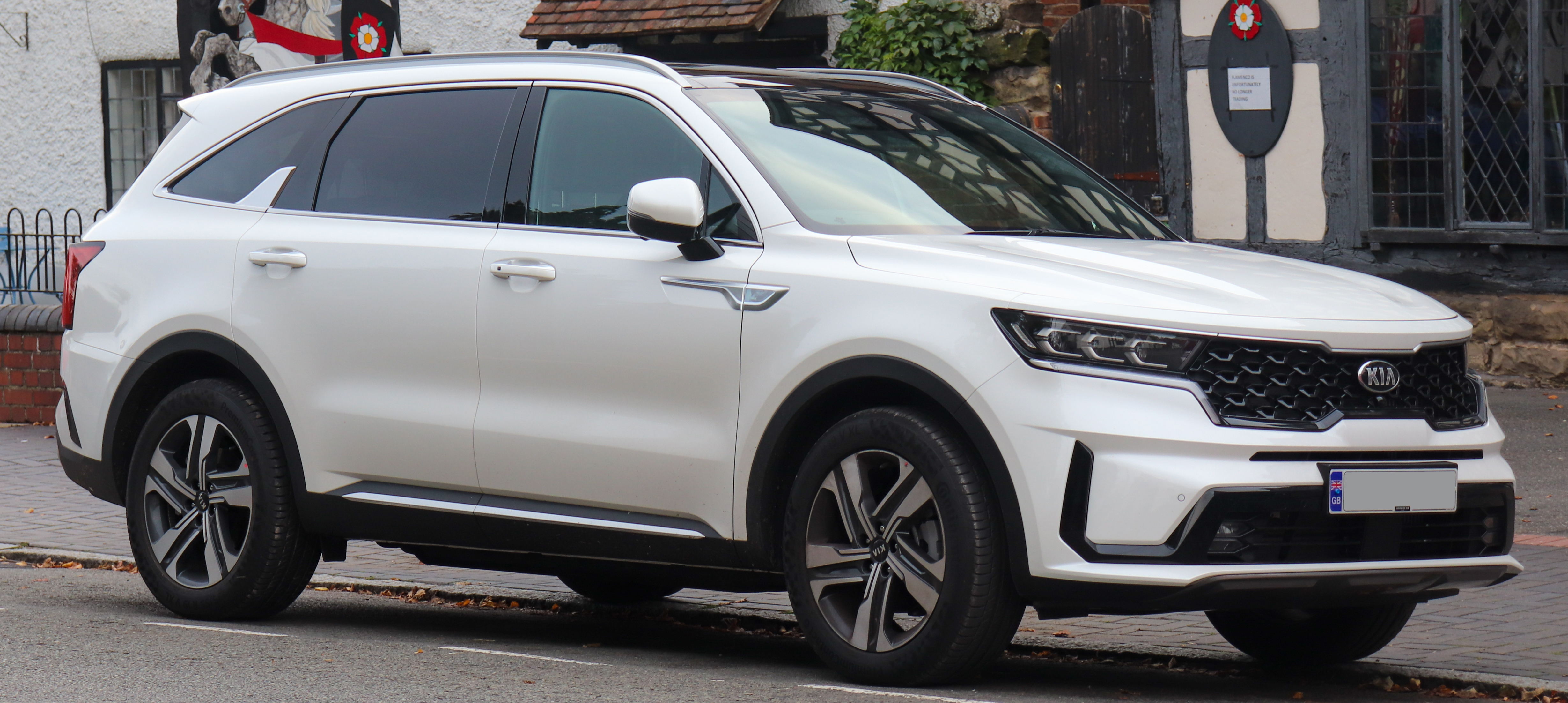
Welcome to another In Wheel Time podcast, a 30 minute mini version of the In Wheel Time car show that airs live every Saturday morning 8 to 11am, central Peaming around the globe from the Sugar Shack Studios in Texas, usa.
It's the In Wheel Time car talk show.
Just ahead, mars gives us an in depth review of his 2024 Cadillac XT4 that he borrowed from Cadillac.
And we're also going to have an interview with a guy that has helped develop several autonomous vehicles across multiple operational design domains.
Not quite sure exactly what that means, but we're going to find out.
I'll audio along with Mike out of this world Mars.
We always need more.
Jeff Zeekin, I'm Don Armstrong, glad that you could join us for our live broadcast here on Saturday morning.
It's currently 10 o'clock.
You know where your?
package is.
Yes, it's at my front door, is it I?
think so, all right, mine is in the Boondocks.
Okay, never quite figured out what the Boondocks?
really Boondocks restaurant is Is there one 73.
Yeah, it's a place.
It's a dock you can park your boon at.
Your boon.
Okay, there's that, all right.
Our first guest here is Noah.
Noah, I'm sorry, mars tried to Does it.
Trust me.
I don't trust him for your the pronunciation of your last name.
So would you please be our guest and say your last name for us.
Sure thing.
So, noah, get dream us.
No, he did.
Yeah he did.
He says right here the problem is is that he made M A, S, S at the end of the producer, all in caps.
So in my world it would be good dream mass.
See what I'm saying.
The emphasis on that.
So that's where the confusion lies, so we're going to blame it on him again.
Okay, we're like, we're like the husband and he's the wife, and you know, we just got to blame it on her.
And I'm just the innocent school girl.
No, I hope you can appreciate our humor.
Just just don't pay any attention to us, Okay.
No, it sounds like you guys are having a having a great time.
Well, we tried to you know, on this show we won't take it ourselves too seriously.
So first of all, let's find out what GPR is or does.
Yeah, sure, so we'll jump right into it.
So GPR is a.
It's a technology that goes back man 50, 60 years.
It's ground penetrating radar.
Oh, I should have known that, the hub and the.
We use a ground penetrating radar to position autonomous cars in, whether it's on the road or in a mine site or a seaport or something like this, and so we call that technology ground positioning radar.
And that's where we use a ground penetrating radar to position autonomous cars, and so our company name is GPR.
Very nice.
So explain to me how that technology works.
So you're not looking at the stripes on the road.
That's exactly right.
So if you're trying to use a camera to see lane markings on the road, let's say the lane markings, they wear off the road, they get covered up with snow or dirt or debris.
I'm sure you've driven into the sun when it's raining and you can't really see so well.
There's a lot of glare, yep.
These are all reasons that looking at lane markings or really anything above the ground to position your car can be a challenge.
So we use data from up to 10 feet beneath the surface of the asphalt so we can actually penetrate our radar straight through the ground and create a signature or a map of what's underneath the road.
And that map is extremely unique and it's almost like a fingerprint.
So what the ground looks like under the road for a given position is unique to that position, and so we can use that to drive cars autonomously, even if there's, you know, snow or debris on the surface of the road.
So I can see this working for something that like, for instance, a concrete roadway where you've got rebar underneath the surface of the concrete.
But what do you do for something like, for instance, an asphalt road that only has really an underlayment between it and the dirt?
Yeah, it's interesting.
So we're not picking up on specific physical features, we're not saying we need rebar or we need infrastructure under the road.
It'll work on a dirt road, it works in areas that have never been driven on before, so sort of how in a wooded environment or an environment like that, and it's really the character of the ground itself.
One of the most interesting places that we've used the GPR is in parking garages, so multi-level parking garages, and in that case you might only have 10 inches of concrete on level three underneath the vehicle, and even just that 10 inches has enough character in the radar return from that concrete that we can position the vehicle accurately.
So it's really quite robust to whatever is under the road that we can use.
This is fascinating.
So let me ask you this, so I understand what you're talking about from the imaging perspective, what you're getting back from your radar Do you have to go map, for example, interstate 10 out here that I run on?
Do you have to map it ahead of time, or is this something you're trying to do in real time?
Yeah, yeah, so we're mapping ahead of time, and the reason we're doing that is we're creating a well, a map of the signature of what's under the road relative to the position of where the center of the lane is and where the edge of the road is, and we only need to drive each lane once and then we have that subterranean environment mapped out and we can position on it.
This is pretty standard for autonomous vehicles, so almost all automated vehicles operate on a map and usually that map has lots and lots of data, so, from lidars and cameras and surface radars, to really map out exactly everything that's in the environment before you let an autonomous car operate on it.
Well, I did a story a while ago about phosphorescent lanes, lane dividers and painted stripes and things that they put an additive into that.
Could that be adapted to that, because you see these people like on a beach with these little metal detectors that pick up certain coppers and gold and different phosphorus materials.
Couldn't that be incorporated, that material into a lane and then that computer pick up that lanes?
signature.
Absolutely yeah, and that technology actually goes back even farther.
So there were, there were designs of.
I think GM did something back in maybe even the 80s.
Yeah, that's right.
That, that magnetic tape, or they would invent something in the road.
Actually, a lot of seaports now where they unload containers, they install these transponders.
They drill holes in the asphalt, put transponders in.
They can detect and actually our GPR can detect all of those metallic stripes.
But, excuse me, the big advantage of our technology is we don't have to add infrastructure.
So you know, if you put a magnetic stripe down on the road, that can get worn off by a snowplow or by anything else and you have to install of those, which can be quite a challenge.
So with our GPR we don't have to add anything to the road.
We can map it exactly as it is and use it.
OK, they also do stuff like that in factories, when they have the, the unmanned robots that are delivering product at different stations in a factory.
They like Amazon.
They have them just running up and down the aisles.
Very similar, or is that the that technology?
That's another technology that GPR will likely replace in the coming years.
So, like AMRs or automated mobile robots that operate in factories and plants, they put down the magnetic tape and then those vehicles you know the vehicle that carries the body and white in a car factory will follow that magnetic tape and that can be limiting sometimes because maybe they want to change the route.
You know they want it to go somewhere else, because they're changing the plant design or they're moving something.
They have to tear up the tape and put down a new tape or you get a GPR.
They don't need to do that.
Discretional deploy that makes the tape go zigzag, yeah, circles.
So you've got a road, you've gone out, you've mapped it in its asphalt and your my vehicle is going down.
We use your technology, everything's great.
Now they come in and decide well, we're going to concrete this road, so they're going to dig up the asphalt and put concrete down.
Do you have to remap it, or are you down deep enough that you're not having to?
Yeah, it's kind of a we haven't tested it right, so we do see 10 feet deep, but if you tore up the first foot of asphalt and then repaved it, we would likely want to remap.
But what's important, though, is that the map it doesn't just contain the GPR data, it also contains the position of the center of the lane Right.
So if you tore up the asphalt, you would want to remap the position of the center of the lane anyway.
Yeah, that makes sense, because the concrete's going to be a little bit wider.
Anyway, it could be right.
So we might if we had the vehicle drive in the same place.
The old asphalt was and they built a new road.
Well, maybe they, maybe it's moved over 10 inches to the right and now your car is driving on the shoulder.
So that's kind of the you know.
We say we just we remap anyway.
Yeah, so what is the advantage of doing it this way as opposed to GPS?
Yeah Well, gps is can be limited in a few ways.
So one is what's called multi-path or urban canyon.
So if you've noticed, if you went into a dense city or urban environment so like Times Square, gps works really really poorly.
And the reason is because GPS is bouncing off of buildings and so it's a time of flight sensor, meaning you're sort of measuring how long it takes your signals to get to the satellites, and if it bounces off a building it screws everything up.
So GPS does not work well in urban environments, it doesn't work well in tunnels and maybe most importantly, you can't rely on it for safety critical applications.
So when you talk about moving from the level to automated cars which is, like you know what we get now with GM Super Cruise, to a level four, where there's nobody in the truck or in the car, you cannot rely on GPS alone to position because there can be conditions where it's wrong and that can be really dangerous.
So we needed another alternative.
Yeah, besides just GPS.
Okay what?
about a bridge, or does it back the same way?
Yeah, it operates on bridges, the one bridge case that I haven't tested yet, and I see your U-Pers sticker there it's the.
Manecano Bridge in the upper peninsula of Michigan, which has that steel grating.
We just haven't had the opportunity yet to drive a GPR over it.
That's what brought it to mind.
But half the bridges it works great on yeah.
Scary bridge.
But theoretically it should be the same.
Theoretically it does yeah.
And actually a lot of the places we're playing the technology now are off-road, so they're not.
It's not on-road focused technology, it's technology.
So, for example, we have a big partnership we just started out with a company out of the Netherlands called BTG, for positioning the seaport vehicles.
These are these when they unload the containers off of ships, they put them on these vehicles called AGVs, and then these drive autonomously around seaports to autonomous cranes that pick up the containers and stack them and that automated system.
We're moving to GPR for that.
Another big use case is for mining, so both above ground and underground mining.
So for above ground mining, a lot of those automated truck systems are heavily reliant on GPS, and GPS I mentioned.
It can be affected by buildings and, of course, by tunnels.
It can also be affected by solar events and so, specifically in South America, they have a lot of problems with what's called ionic scintillation, which is where solar storms or sort of cause disturbances in the atmosphere and the GPS stops working for hours at a time and brings down all their vehicles.
And so applying GPR to solve that case is another big use case for above ground mining.
And then even things like electric shuttles and passenger shuttles that move people around airports or like college campuses, things like this, so it's not all on-road focused, and the GPR technology is very flexible in that it can work in a lot of different spaces.
Speaking of colleges, where did you get to all of that knowledge?
Well, so I personally went to a school in New Jersey called Rowan it's a small state school, a good engineering school and then got my masters from Oakland in Oakland University in Michigan.
But this technology actually came out of MIT's Lincoln laboratories in Massachusetts, and so our co-founder was one of the inventors of this GPR technology and came out of MIT and created this company.
Absolutely fascinating.
I mean, I had absolutely no clue.
So did you sign up for this job or did they recruit you?
How did that work?
Yeah, so I'd been working on autonomous driving a continental automotive for about seven years and I did lots of different.
Wait a minute.
Seven years, you're not old enough to use that.
She whizzed.
I've been an autonomous driver in one form or another for almost a decade now, but I know I look young.
Yeah, I'm thinking here Doogie Hauser.
He did it with his hot wheels, donovan Hot Wheels.
Where are you right now, or are you located right now?
Michigan, so an hour north of Detroit.
Oh, okay yeah, I grew up in the Dearborn area.
Okay yeah, we just spent the U-Per-Time.
Don was up there a week before I was.
That's true.
Yeah, I love it here in Michigan.
So our company's based out of Boston, but I work remote from Michigan.
Good, good for you.
So are you north of Auburn Hills.
Yep, yeah, I'm about 20 minutes north of Auburn Hills.
I used to work in Auburn Hills at that continental automotive tech center.
Very nice.
Well, listen, we're in awe.
We're in awe of what you do, your job, the technology, the whole nine yards.
Who was to know?
I'm going to go actually in my driveway, so I understand that there is an autonomous highway and I think it may be I-45, not sure here in the state of Texas.
It goes between here and Dallas.
It's a major artery north south and I understand that there are autonomous vehicles that do run that road.
Are you familiar with that at?
all?
Yeah, absolutely so.
I think Aurora is operating trucks Either on that stretch or another stretch in Texas.
I'm familiar with them as well.
So Continental has a partnership with Aurora and I got to see the beginnings of that before I left.
They're doing great work.
Yeah, there's also a lot of autonomous vehicles operating in Michigan as well.
Testing on I think might be called Automation Alley or the I-75 is a stretch of I-75 in Michigan sort of set aside by the DOT for testing not just autonomous vehicles but other types of automotive technologies.
Now would your company have already mapped I-45 between here in Dallas?
We haven't mapped that stretch specifically, but we certainly could.
And so how would you get paid?
Who would pay you to do that?
Yeah, so it varies a little bit from business case to business case.
But for example, if a company like Aurora were to use it, we would add the GPR system to their mapping fleet.
So Aurora is building maps of everywhere they operate and so in that case we would add a GPR so they can add the GPR layer to their other map layers that detect things like lane centers and so forth, and in that case they would pay for hardware and software.
For other cases, for bigger automotive cases, we're building out a network of GPR road layer or map layers and then companies can subscribe to use those map layers wherever they operate.
Right.
So if I was running a delivery service and I found out you had mapped some of the roads, I could subscribe or I could utilize you for my autonomous vehicle.
Yeah, that's right.
Just this past week I saw the Google mapping guy in a little car and he had the cameras on the top.
He was zipping in and out of streets.
Were you the guy that moved?
him?
No, I waved, I stuck my tongue out.
Is it very similar to that?
When you're doing the the ground radar, you just drive along.
How does that work?
Yeah, right now we're very focused on the technology itself of not just the creating of the maps but then the positioning of the automated vehicles on the maps using our sensors, our hardware and our software, and so most of the off highway not all of the off highway cases.
So if we took the seaport case, we're giving the seaport the ability to build their own map, maintain their own map and then utilize it.
So it's really we're creating tools to achieve that, and that applies for the mining as well and to some of the on road.
But when we talk about higher volume automotive so, say, gm wanted to use it on supercruise or for it on their blue cruise system that becomes more of a subscription model.
Where it's, we want to utilize the GPR map layer for all interstates in the US, let's say, and have multiple companies be able to access that and benefit from that GPR layer.
So we haven't really started to scale the mapping of, you know, the large scale areas.
So let's say it would your vision be that eventually my truck that's going from Houston to Dallas using your TPR and there's a detour or there's some road construction or there's a major crash, that if I found out about that and wanted to go around it, I could use your software to tell my truck to take a different route that was mapped?
I mean, I'm thinking remote control is basically what I'm talking about.
Yeah, so the piece of the technology that we bring at GPR is we position a vehicle on the map, which is called localization.
Okay, so then the routing of the vehicle, like what path your truck would take if it takes a detour, that would be handled by another layer.
So that might be from, say, google Maps that says there's construction here, you should go this way.
And the GPR portion.
What we bring is we position your truck on the map, regardless of the weather and the you know, gps issues or so forth.
So the routing that's going to be handled by a different mapping system.
But again that, okay, yeah, we're on the same page.
I'm just thinking out loud.
Okay, at least you're thinking yeah.
I'm thinking that could be fun.
Very cool stuff.
I like it.
Well, I'll tell you what I'm blown away.
I'm impressed by your knowledge and understanding and expertise in this.
I never knew any of this even existed, and to find out what you do is like Wow, that really exists.
So congratulations, and it is a true honor and pleasure to talk to you this morning, despite your confusing last name.
I really appreciate you guys having me.
I think it's a great show.
Well, thanks so much, and let's stay in touch and be sure and let us know about any advances, anything going on with you and your company, because we want to know.
we find it fascinating, Let me know when you do the Mac and I'll come up and watch you.
All right, sounds good, we'll do it Noah.
thank you so much.
Vice President of Strategy at GPR.
All right we're going to take a quick break.
The Inwheel Time Car Talk Show is available 24-7.
Through the iHeart radio app just look for Inwheel Time Car Talk.
We also video stream our three hour weekly show on Facebook, youtube and InwheelTimecom, and podcasts are at your favorite podcast provider.
The Inwheel Time Car Talk Show is going to continue right after this Fast and Furious Break.
Pro Am Auto Accessories has been serving Houston's auto enthusiasts since 1984, providing world-class products for sports cars, european sedans and American muscle.
Pro Am is known as the place to go to find exclusive and hard to find parts of the accessories.
Pro Am is one of the very first distributors in the USA for brands such as Rekaro, redline, momo Corbo and Simpson.
Located in the heart of Houston's premier retail and service corridor, the Galleria area, pro Am's walk-in storefront includes an 8,000 square foot warehouse, showroom and installation base.
Pro Am not only sells parts and accessories, but also offers installation and service.
Pro Am is now reaching a worldwide audience through ProAmcom, taking its local reputation to the rest of the world.
At Pro Am Auto, you'll be dealing with a small group of professionals who truly want to help you with your automotive needs.
If you don't see what you're looking for on the website, call and Pro Am will lend you a hand.
Pro Am Auto 61, 25 rich men at Green Ridge and Houston's Galleria area.
Call them at 713-781-7755.
Want to feel good about something special you did for some?
One special In-wheel time and the original Loupi Tortilla Group of Tex-Mex restaurants have joined together to help a very worthy cause God's Garage, a Christian-based 501C3 charity.
We know there are lots of places and organizations out there where you can donate a car, truck or SUV, but we're asking you, our car enthusiast family, to consider donating to God's Garage.
Visit godsgarageorg and learn about its mission, the women that have been helped, how each one is screened and about their Restore you program.
A car donation is an easy way to make a difference in the lives of others.
God's Garage needs good operating vehicles but will take all types in working and non-working condition.
Make your heart and soul feel good by donating your gently used vehicle and help support single mothers, widows and wives of deployed military at godsgarageorg.
Meekum Auctions, the world's largest collector car auction company, returns to Houston, texas, april 4th through the 6th at NRG Center, featuring 1,000 muscle cars, corvettes, trucks, customs and more.
Broadcast on Motor Trend TV and streaming live on Max From Avid Collectors to those new to the Meekum Experience.
We welcome everyone registered to build now at Meekumcom.
Welcome back to the In Wheel Time car talk show and we're so glad you could join us today.
Time now for the racing calendar.
Yep Jeffrey is sponsored by the Texas Muscle Car Club Challenge.
Okay, well, we've got NASCAR going on.
We did the truck race last night.
I didn't see it, we were at dinner.
Good for them.
You've got the, you've got the Xfinity and then you got Cup Tomorrow and it is in Las Vegas.
Baby, tickets are available.
It will be on Fox.
So Formula One actually is started yesterday.
They're in Bahrain.
That's why I talked to that guest whether he's there watching Formula One.
They go all weekend.
There's testing and then, of course, the race is this afternoon.
Indy hasn't started yet.
Indy Car Series has not started March 10th, which is about a week away.
They will be in St Petersburg, florida, and NBC is the host.
Tv spot and tickets are available.
Nhra is coming up March 9th Pet Boys, nhra, top Fuel All-Star Callout and we've talked to some people about that already and it's very exciting and it's going to be a good season for everyone.
There you go.
Oh well, you're done with that already.
Yeah, done with that already.
Just the basics.
Okay, mr Mars now has a review of the 2024 Cadillac XT4.
And I will say right up front my wife likes this car and you know what you need to buy that for her.
Well, that's almost where she was until she realized it's a little bit smaller than the one she has, so we're kind of got what does she have?
On that.
She's got a Sorento.
You can't tell A Sorento and a.
Cadillac, I'm with you on that.
She's looking at the dimensions.
She's looking at the dimensions.
I parked them side by side, so she got to see what they were, so get her an XT5.
Well, I ain't got that far.
I haven't really reviewed one of those, but we are talking about it.
Xt4, introduced in 2019.
So this is the sixth year for the vehicle and it has not had a major update.
They keep tweaking it a little bit, adding a few things in here, so it's kind of long in the tooth, but you really can't tell it by looking at it.
There's three trim levels luxury, premium luxury and sport.
We had the sport with the optional all wheel drive.
Now this is a subcompact luxury SUV.
Now this year they've updated the front and rear designs on it.
It's got how do you, how do you make this a?
subcompact.
A compact, okay, but not a subcompact.
And their lineup.
I think that's where it fits in.
Okay, Because you got the X-T5 in there, Okay.
So they put new LED lighting headlights and tail lights all the way around on it, including the Auto High beam, which I really like that part of it.
It's got a new black grill and a window trim on it and we had the crystal white tricote paint, so it's a bright white and it's got all this black trim on it, so it's a really nice contrasting color scheme.
On it we had the optional sunroof, had the heated folding side mirrors, hands-free power lift gate and we were rolling on some optional dark-finished 20-inch wheels that really go to that black and white contrast.
That looks really good on it.
Inside we had leather seating surfaces.
The front seats are heated and ventilated and have massage.
The rear seats are heated.
On the outboard positions of it it's got a lot of updated technology.
In fact, it's got a 33-inch touchscreen that's curved across the dash so that takes out the driver's view, all the gauge packages, all the way across to your convenience controls.
It's really a nice layout because it flows together.
It's not like here it is, here it is and it just all happens to show up and screen side by side.
It is one nice screen.
It's done really well.
We also had the heads-up display.
We had the surround view camera system on it.
That worked really really well.
Wireless charging, Apple CarPlay, Android Auto and we had the Google infotainment system.
That went along with that.
I like the Cinerama.
Yeah, yeah.
But it was really Shot in Cinerama, it was really done nice because it's curved.
I mean it's made for the driver.
So to make all this go up under the hood, all the X-T4s the amount of the trim level has a 2.0-liter
inline-4 cylinder, regardless if you have the front-wheel drive, which is standard, or the optional all-wheel drive 235 horsepower, 258 pound-feet of torque, backed by a nine-speed automatic transmission.
Now this vehicle will tow 3,500 pounds.
I was impressed to see that it was rated for that.
The EPA says you should be looking for 23 in the city, 28 on the highway, 25 combined.
The time I had it I got 24 out of it and what I really liked it was it does have a Cadillac style.
It's got plenty of power.
It's not a race car.
It's very quiet to drive out on the road.
The passengers in the rear seat could actually have a conversation with the people in the front seat.
There's one thing I learned to do when my wife was shopping cars.
I would ride in the back seat to see if I could talk to her and Just what she wanted you.
Yeah, well, that's right.
So it depends on which cars you bought.
So, and it's a nice driving car.
It's got a responsive steering.
But again, it's not a race car, but if you want to turn, you turn and it will do that and it's a very comfortable, very, very secure driver experience.
Now, the base model on this rig is $39,090.
The base trim price that we had was $43,190.
Wow.
However, the ass tested MSRP is $57,815 with all the options that we had on it.
You're looking for something to compare it to, possibly a BMW X1 at $40,500 for the base.
Audi Q3 is $37,400 at the base, so it's the cheaper one in this group.
I found the Audi I mean the Acura RDX is $44,350.
And the Volvo XC40, which is a hybrid, starts at $40,500.
And, as I said this, if it has everything that Cadillac has been known to do, it's got looks, it's got nice styling, it's got a little bit of performance.
It's just a very nice vehicle, in my opinion, and for an extra charge, don will dance on the hood.
Oh man.
Got that, as long as you're not wearing your golf suit.
Xt4, xt5, xt6, and then the Escalade, escalade.
Yeah, Thank you.
Hey.
If you'd like to get in touch with us, shoot us an email, the address info at inwheeltimecom and be sure to follow us on Facebook.
Back here on the In Wheel Time Car Talk Show.
In just a couple of minutes, the original group of loopy tortilla restaurants will have you telling your family and friends just what the original recipes mean when it comes to the best fajitas in Southeast Texas.
Founder Stan Holt invited you to visit the original loopy tortilla near I-10 in Highway 6.
The original house that inspired the design of all the rest and the original charm that helped make loopy tortilla the go-to destination for Houston Tex-Mex.
Speaking of original, nothing can compete with the original lime pepper marinade.
That everyone will agree makes loopy tortilla award-winning beef fajitas the best anywhere.
Loopy Tortilla Katie is another location that gives you the same quality and service Historians have come to expect at loopies.
It's located just off I-10 of the Grand Parkway.
At Kingsland Boulevard in Katie, Find yourself an ackee land.
Enter the loopy tortilla college station, located just around the corner from Kyle Field.
It's a great place to enjoy those famous frozen margaritas before or after the game.
Headed east to Louisiana, stop in at the loopy tortilla in Beaumont.
It twos on I-10.
You can't miss it.
The original group of loopy tortilla restaurants invites you in for the best Tex-Mex.
Anywhere you own a car you love, why not let Gulf Coast Auto Shield protect it?
Houstonian John Gray invites you to his state of the art facility to introduce you to his specialist team of auto enthusiasts.
We promise you'll be impressed.
Whether you're looking to massage your original paint to a like new appearance, apply a ceramic coating, install a paint protection film, nanoceramic window tint or new windshield protection called ExoShield, Gulf Coast Auto Shield is where Houston's car people go.
Curved your wheels Instead of buying new one.
I'd have them repaired.
How about a professionally installed radar detector?
Gulf Coast Auto Shield does that too.
Get a peek inside the shop and look at the services offered by getting online and heading to GCautoshieldcom.
Better yet, stop by their facility at 11275 South Sam Houston Tullway, just south of the Southwest Freeway, and get a personal tour.
Gulf Coast Auto Shield is your place to go for all things exterior.
Call them today 832-930-5655, or GCautoshieldcom.
That's it for this podcast episode of the In Wheel Time Car Show.
I'm Don Armstrong, inviting you to join us for our live show every Saturday morning 8 to 11 am, Central on Facebook, YouTube, Twitch and our InWheelTimecom website.
Podcasts are available on Apple Podcasts, Spotify Stitcher, iHeart Podcast Podcast Addict Tune In Pandora and Amazon Music.
Keep listening and we'll see you soon.
About this episode
Innovative GPR technology is at the forefront of autonomous vehicle positioning, as discussed by Noah Getremas, VP of Strategy at GPR. The technology utilizes ground penetrating radar to create unique subterranean maps, allowing vehicles to navigate accurately even in adverse conditions. The episode also features a review of the 2024 Cadillac XT4, highlighting its luxury features, performance, and competitive pricing. The hosts maintain a light-hearted banter throughout, making complex topics accessible and engaging.
Prepare to be navigated through the undercurrents of innovation as we introduce Noah Gedrimas, an autonomous vehicle technology maestro, who unveils the groundbreaking integration of Ground Positioning Radar (GPR) in self-driving cars. Discover the bedrock of this revolution as we traverse the capabilities of the 2024 Cadillac XT4 in a hands-on review, and explore the precision mapping enabled by GPR systems. These subterranean radar signatures offer accuracy immune to the whims of weather and time, steering us towards a destination where tech-savvy roads are as commonplace as the vehicles that cruise above them.
Shift gears and join us on a tour of Michigan's bustling hubs of autonomous tech where mapping roads is not just a task but a synergistic dance of partnerships and innovation. The episode maps out how companies, including the likes of Aurora, are subscribing to GPR-enriched data, revolutionizing fleet navigation, and re-routing the future of transportation as we know it. We'll also shine the headlights on the impact this is having across the board, from automotive enthusiasts hunting for exclusive parts at Pro Am Auto Accessories to charitable souls at God's Garage. Fasten your seatbelts for this episode—it's not just a ride; it's the journey into tomorrow's tech terrain.
Disclaimer: This post contains affiliate links. If you make a purchase, I may receive a commission at no extra cost to you.
---- ----- Want more In Wheel Time car talk any time?
In Wheel Time is now available on Audacy!
Just go to Audacy.com/InWheelTime where ever you are. ----- ----- Be sure to subscribe on your favorite podcast provider for the next episode of In Wheel Time Podcast and check out our live multiplatform broadcast every Saturday, 10a - 12nCT simulcasting on Audacy, YouTube, Facebook, Twitter, Twitch and InWheelTime.com.
In Wheel Time Podcast can be heard on you mobile device from providers such as:
Apple Podcasts, Amazon Music Podcast, Spotify, SiriusXM Podcast, iHeartRadio podcast, TuneIn + Alexa, Podcast Addict, Castro, Castbox, YouTube Podcast and more on your mobile device.
Follow InWheelTime.com for the latest updates!
Twitter: https://twitter.com/InWheelTime
Instagram: https://www.instagram.com/inwheeltime/
https://www.youtube.com/inwheeltime
https://www.Facebook.com/InWheelTime
For more information about In Wheel Time Podcast, email us at