PSI means pounds per square inch, which is how we measure the air pressure in tires. It's important to know this number to keep your tires safe and working well.
The Chevy Equinox is a type of SUV that is popular for its roomy interior and smooth driving experience. The 2015 version is one of the models that people often talk about.
Oil sludge is a gooey buildup that can happen in your engine when oil gets old and dirty. If it builds up too much, it can cause problems by blocking oil flow, which is bad for your engine.
Gasoline blends are types of fuel that are mixed differently for summer and winter. The summer blend helps reduce pollution in hot weather, while the winter blend makes it easier for cars to start in the cold.
Ethanol is a kind of alcohol made from plants, and it's added to fuel to help cars run better and produce less pollution.
Term
E85
E85 is a special kind of fuel that has a lot of alcohol in it, which can be better for some cars. Cars that can use this fuel are called flex-fuel vehicles.
A hybrid car uses both a gas engine and an electric motor to run. This helps save fuel and is better for the environment than regular cars that only use gas.
A 12V battery is a type of battery used in cars to start the engine and power things like lights and radio when the engine is off. In hybrid cars, it might be placed in different spots compared to regular cars.
The high voltage battery is a large battery found in hybrid and electric cars that powers the motor. It's much more powerful than the regular car battery and can be dangerous if not handled properly.
The Toyota RAV4 is a small SUV that many people like because it's reliable and has a lot of space inside. It's good for families and for carrying things around.
The alternator is a part of the car that helps keep the battery charged while the engine is running. It makes sure that all the electrical parts of the car, like the lights and radio, have power.
When you warm up a car, you're letting the engine run for a little while before you start driving. This helps the oil and other fluids get warm enough to work properly, especially when it's really cold outside.
Subzero weather means it's really, really cold—below zero degrees. When it's this cold, cars can have trouble starting and running well unless they're warmed up first.
Thickened oil is oil that gets thicker when it's really cold outside. This makes it harder for the oil to flow and do its job of keeping the engine parts moving smoothly.
A battery tender is a tool that helps keep your car's battery charged when you're not using the car often. It makes sure the battery doesn't run out of power, especially in cold weather.
A battery maintainer is a tool that keeps your car battery charged when you're not using the car often. It makes sure the battery doesn't run out of power while it's sitting unused.
A float charger is a special charger that stops charging once the battery is full. It helps keep the battery charged without hurting it, which is great for cars that aren't used often.
The Ford F-150 is a popular pickup truck that can be used for work or personal use. The 2000 version is part of a series that has been known for being strong and reliable.
Oil pressure is how much pressure the oil has in the engine. It's important because it helps keep the engine parts moving smoothly. If the pressure is too low, it can hurt the engine.
Winter gas is a type of fuel designed to work better in cold weather. It has special ingredients that help cars start more easily when it's cold outside, but it doesn't provide as much energy as summer gas.
Summer gas is a type of fuel made for warmer weather. It has different ingredients than winter gas, which helps cars run better and use less fuel when it's hot outside.
Volatiles are parts of gasoline that turn into gas easily. They help the fuel work better, especially when it's cold outside, so the car can start more easily.
The Pontiac Grand Prix is a car made by the Pontiac brand. The 2008 version is known for being a mid-size sedan that offers a balance of comfort and sportiness.
The GMC Envoy is a type of SUV made by GMC, which is a division of General Motors. It was made from 2002 to 2009 and is known for being roomy and comfortable.
A block heater is a device that helps warm up your car's engine when it's really cold outside. It makes it easier to start the car and helps it run better in winter.
Coolant is a liquid that helps keep your car's engine from getting too hot. It moves around the engine and carries away heat, which is important for keeping everything running smoothly.
Antifreeze is a special liquid that helps keep your car's engine from freezing in winter and overheating in summer. It's mixed with water to help the engine stay at the right temperature.
LIVE
On this cold Saturday morning, we'll keep it running for you. All you have to do is call or text Nick Stalfell from Lloyd's Automotive in St. Paul.
He is an ASU certified technician there. In fact, he kind of is the boss there.
And he shows up every Saturday here on CCOR to help you out with any kind of a car care question you may have.
Good morning to you, Nick.
Good morning, Danny. I'm calling you from Moorhead, Minnesota.
A little chilly there, too, I would imagine.
I think it might be a little chilly here than it is there, but it is Minnesota and it is winter, so this is what we have.
All right. Well, it's good to glad you're nice and warm and cozy there, getting ready to answer a few car care questions.
We already have a few to begin with.
But yeah, just a note to our listeners, especially new listeners. Our time goes by so quickly.
Nick will take his leave about 7.45 this morning, making a way for Ted Ferrell's wine chat.
So don't wait. If you have any kind of a car care question, we'd love to hear from you sooner rather than later, as we like to say.
Call or text. Yeah, if you want to call and chat with Nick or if it's easier just to send a text, they both work.
6-5-1-4-6-1-9-2-2-6.
Of course, we're going to be getting cold related questions this morning, naturally so.
Here's one that came in earlier. Does it matter how full your gas tank is in cold weather?
We get this from time I think we had something similar last week.
What about that? We talk about the fuel pumps inside the gas tank itself, but as far as I assume this listener is talking about line freezing or something like that.
Tell us about that.
Yeah, that doesn't happen. Not with ethanol in the fuel. That'll absorb all that water. So you have no risk of anything freezing.
But I think the biggest issue is not really with the vehicle, but if unfortunately or unevently, if you end up stranded or stuck,
it'd be nice to have a full tank to be able to keep that car running to keep you warm in the event that you're waiting for someone to come pull you out or pick you up.
So I would, I think always, whether it's summer or winter, try to keep the tank above half would be ideal.
I know it's not always reality, but if you can do that, that'd be best practice.
You know, I was talking to somebody just the other day about tire pressure, and I'm looking at a text that came in a bit ago.
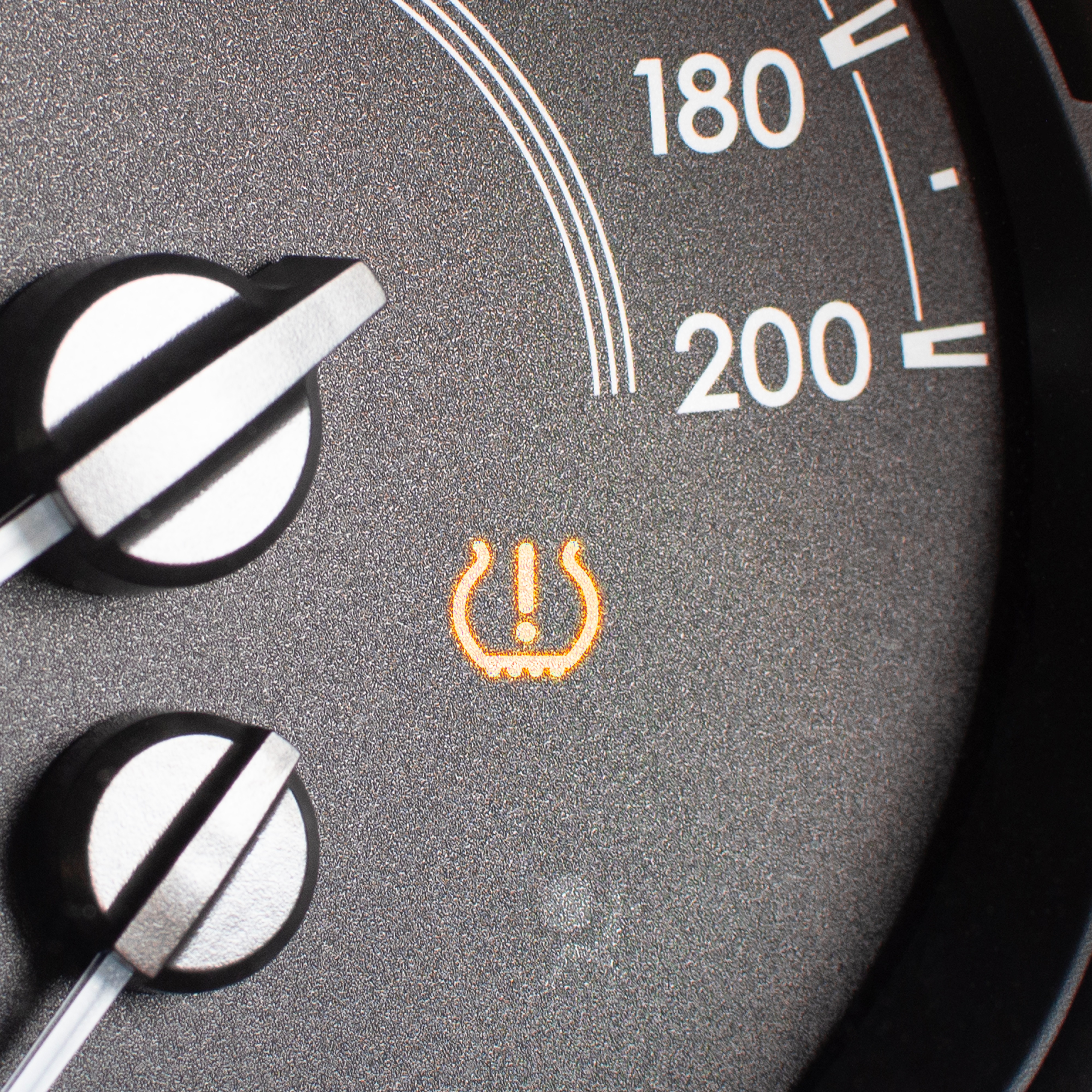
Good morning, Texas. How long can you drive once your tire pressure light comes on? The light is not flashing.
That's why I really love the cars that have the actual PSI on your dash. You can check out, you know, and again, you've told me they're relatively accurate, right?
They are, and that is a good point. It is nice when it gives you the actual PSI versus just that it's low.
And to that, you know, answer that question, how long can you drive?
Well, that depends on if it actually has an active leak or if it's just like that winter adjustment that we talk about every fall where as temperatures start to dip,
those tire pressures will adjust a little bit because the air is colder, it's a little bit lighter.
The PSI will drop just a few PSI, not significant, but just a couple, oftentimes enough to turn that light on.
So if you top those tires back up, look inside the driver's door, there's a little placard there that gives you the PSI setting.
Put the tires back to that or maybe go one or two PSI higher than that and you should be just fine.
If the light comes back on, that tells me that we have a leak and you should probably have that repaired before you end up with a flat and stuck somewhere.
I'm thinking about if you need to go out and get a tire pressure gauge and at five below zero, that's not fun because if you don't have that exact PSI,
yeah, again, it's really a handy feature on some cars. I wish they would make it for all cars.
Let's grab a phone call this morning, Joan checking in from Roseville this morning, this chilly morning.
Hi Joan, what's your question for Nick?
Oh good morning, I love your show.
Thank you.
I have a 2015 Chevy Equinox and I understand that there was an engine recall on it.
If the engine burns so much oil and I guess mine wasn't eligible, but now I have a mechanic that says that a week before I get an oil change,
I should switch the form, pass into the oil and pass into the tank and I'm just wondering if that makes sense to you.
What do you think about those additives?
So additives, first of all, always use as it's described on the can. There's a lot of opinions and thoughts out there.
That's a good detergent. It can help if it's following the directions on the can, if it wants you to run that through the engine for a period of time before you change it.
I think that's probably okay, but make sure you don't go longer as advertised or don't do more than it says because that's often the problem where people think,
well, a little is good, a lot might be better and that's probably not the case.
You don't want to create any damage internally and that seafoam is going to kind of help with that oil sludge cleaning out,
some of the build up that's happened over the course of thousands of miles.
So if you follow the can's directions as ordered, I think that's a fine product.
Very good. Again, our phone number is also our text number 6514619226.
Here's an interesting question. I know we talk about gasoline blends.
Can you explain the difference between the summer blend of gas and the winter blend?
Is the winter blend designated to reduce emissions or to help the engine run better and do you know when that switch takes place?
What's the deal with that?
To be honest, I'm not sure if they change it much anymore.
I know that there's ethanol in the fuel year round which absorbs the moisture.
Ethanol is alcohol comes from the grain that they produce.
It's a good product. Some vehicles can use a higher percentage of ethanol.
There's E85 vehicles and such.
I think it's a good part of the fuel or a good additive of the fuel now because it really helps keep the moisture down,
keeps from the condensation, keeps from water, keeps from freezing.
So I honestly, I know they used to change it fall and spring but I think the ethanol is in the fuel year round now.
I'm not sure if they changed the mix of it or not to be honest.
Yeah, that's maybe somebody who knows will let us know but that's a good question.
But you're probably right. It's in year round.
I was talking to my daughter the other day and she drives a hybrid as my son does
and I never really thought about this before.
We talked about jump-starting a hybrid and I was looking at some video about that very thing.
We're talking about the 12V battery that most of us have in our regular cars.
There's a difference at least in this particular Toyota model but I find it very interesting.
The 12V battery is not generally in the engine compartment.
It's like in the trunk with a back seat or something, right?
Yes, there's, well, the 12V battery can be hidden now too.
It used to always be under the hood.
Sometimes it can be under the passenger seat of the vehicle or even in the trunk.
So you need to do a little research to see where your 12V battery is.
The hybrid battery is pretty well protected.
You won't be able to gain access to it very easily without a lot of disassembly.
So when you jump-start in any vehicle, they're referring to the 12V battery,
you do not mess around with the high voltage battery.
It has nothing to do with jump-starting a vehicle.
It doesn't have anything to do with the gasoline portion of that system.
But it's the same old tell.
When you do a jump-start a vehicle, make sure you know what you're doing.
If you're uncomfortable, unsure, don't do it, especially with electronics and cars today.
If you get those cables backwards, you can short something out and create a very significant cost and repair.
So don't try to jump-start a car unless you've done it many, many times.
Do your research.
And that's my best advice on that.
Very good.
Nick, we're going to take a break.
We're going to see if we can't iron out some technical problems here with this echo situation here.
But if you have any kind of a car care question, now's your chance.
The information is free.
Just call the Technic 6514619226.
Right now in the Twin Cities, we're at a minus five.
Five below zero.
The wind chill at 21 below.
We have more car care talk coming up here.
Newstalk 830W CCO.
It's a Saturday morning in CCO land on this really chilly five below Saturday.
It's the 13th of December.
Denny Long here along with ASC certified technician Nick Stoffer from Lloyds Automotive.
Answering any kind of a car care question you may have can be cold related.
It could be any kind of a car care question.
Nick, for those that maybe need some help with Lloyds, tell us where you're located there on Grand Avenue.
Absolutely.
If you are in St. Paul, we're at 982 Grand Avenue, which is on the corner of Grand and Chatsworth.
Stop and say hi.
However, if you do have a question, we will always help you.
Feel free to call 651-228-1316.
And if you're looking for more information or more of that information, you can find on our website, which is LloydsAutomotive.net.
Very good, Nick.
We'll get you that information before Nick leaves.
The switch is about 745 this morning.
Call us or text us.
Love to hear from you.
Any kind of a car care question, you don't have to be a motorhead or a gearhead either.
651-4619-226.
Let's see.
Where do we leave off here?
Can you jumpstart a hybrid like a gas-powered car?
Clarify, please.
You can, right?
Correct.
The 12-volt system, the combustion engine systems are the same.
You're not doing anything with the hybrid portion of it.
You know, it's the positive, positive, negative, negative.
Watch some videos.
If you do need to do that, ask a friend, a neighbor, a relative.
Just make sure you have the process down full-proof because you don't want to mix up those cables
that will create significant, or could create significant damage.
Well, again, this was, I'm not sure how many other manufacturers make this,
but in this video I was looking at, which is specifically a Toyota RAV4.
You would place the jumper cable on the one battery post,
and then they have made, on the other side of the engine, an actual metal block or portion
where you could put that other cable.
And it's kind of slick.
Somebody thought ahead from once.
That's very true.
So you do check your owner's manual.
It will talk about the spots where you're supposed to jump.
You know, because, like you said, oftentimes you can't reach that negative cable.
A lot of times there's an access port even for the positive.
So to make sure you do your research, you know, I can't stress enough because we see
several cars get towed in where they attempted to jumpstart,
and now a modular computer has been shorted out, and it's very expensive.
So make sure you know exactly what you're doing before you head down that path.
Interesting topic.
I told my daughter, I said, this is news to me, and a lot of people drive hybrids,
and I think it's good information to have.
We're getting more questions about that.
And you just suggested, always a good suggestion,
read the owner's manual, or you can find some great videos about that very thing
on the Google or other search engines.
I'm looking at another text, Nick.
If we park outside how many times during the day, like today,
do we need to warm up our cars?
What's your thought about warming up cars in cool days like this?
Well, I think the car doesn't necessarily care.
Once it's been running for a few moments, most of the fluids are flowing.
The car's fine.
It's usually our comfort.
We want to let the vehicle warm up to get some heat going.
If you're concerned about the battery, you really need to drive the car.
If you start the vehicle, let it idle.
The alternator's not spinning fast enough, so therefore I can't create enough current
to recharge that battery, so you're kind of breaking even at best.
And if you do that too many times, you're really kind of wearing the battery down.
So if you need to run an errand on a cold day and the roads are clear
and you feel good about it, take the long route if you need to.
So you can get a few extra minutes in there to allow that alternator to charge that battery
and keep it fully charged.
But starting the vehicle, let it idle, other than for a few moments to get a little bit
of heat in our comfort, the vehicle doesn't need it necessarily.
Nick, getting a couple of text messages about, and we get this all the time,
about how long should you warm up a car.
And I was looking at a text, another text, information about that very thing an hour or two ago.
And this advice said 30 to 60 seconds is fine.
Well, I'm thinking five below, or maybe it's 20 below.
To me, 30, I need more time for me to warm up.
I'm thinking about a car that's been sitting out in subzero weather for hours.
30 seconds doesn't seem to be long enough, but you're the mechanic.
Can the fluids and the thickened oil, can that all be warmed up that quickly?
Well, I wouldn't say it's necessarily warmed up until everything's up to running temperature.
It'll take several minutes.
But I think as far as the functionality of the vehicle, it is fine after just a minute.
Back to, I think it's more of our comfort.
Make sure the windows are cleared.
Take that moment, scrape your windshield and do as such.
And I think in that time it takes to do those tasks that the vehicle will be warmed up enough
for you to hop on and head down the road.
I'm looking at a text.
By the way, if you have a car care question, 6514619226,
you can make it either a phone call or a text.
This text says this,
I keep a battery tender on my vehicle in this extremely cold weather in my garage,
mainly because I don't drive every day.
It's basically a comment.
But I'm thinking about one of your mechanics.
I can't remember who, maybe it was Mike that told me,
don't leave, the battery tenders are great,
but don't just plug it in and leave it there for a long time, for hours,
maybe four or five hours at a time if you're not driving.
And why was he saying that?
What can that do to your battery?
Well, depending on what you have, a battery charger for sure,
a lot of times the newer battery tenders have a float.
So when it sees the voltage hit the correct level,
it'll kind of float, meaning shutting that off.
So it's not continuing to overcharge in the battery.
And also a battery tender is just that it's a maintainer,
where it is giving it maybe an amp or so of current.
So it's just topping the battery off.
If your battery is dead, it's not going to charge the battery.
So it is just a maintainer.
If you have a vehicle stored to run the maintainer to keep the battery topped up,
is it probably a good idea?
Obviously, we're not going to remember every other day to go out and unplug it.
So if it's the newer one that has the float built into it,
it'll shut itself off and it's probably just fine.
Maybe that's what, on my battery tender that I've had for a few years,
maybe that's, it's got an abbreviation after it reaches a certain point,
it's FLO.
Is that what that means?
Yeah, it would mean float.
So it's like, you'll see the little, the light toggle where it'll come on,
it'll be like red or green, depending on, depending on the piece of equipment.
But yeah, the float would mean that it's no longer adding current to the battery
because it sees the voltage at the necessary level.
So that's kind of a safety feature.
I like that.
I did not know that.
Absolutely.
I should read the manual.
Okay.
Any advice, I'm looking at a text,
where to buy an aftermarket car starter and where to have it installed.
You guys getting requests for that?
We do.
We're not in that realm.
Be very, very careful, especially where there's some of them that need to be wired in.
And if somebody doesn't know exactly what they're doing and they're in a,
in the harness, they could create more problems for you.
Some of them are plug and play, which is preferred, obviously.
So do your research.
There are some outfits around town that do offer that.
So maybe get online and read some reviews and make sure before you go on,
you know what you're getting and who's working on it.
Cause like I said, you don't want to create a bigger problem for you and your vehicle.
All right.
Another text says this, when I first start my vehicle,
the oil pressure gauge reads zero, even though it's full of oil,
the vehicle seems to run okay.
And after about five minutes when it warms up,
the gauge reads normally for the rest of the time, the cars warm.
What are your thoughts about that?
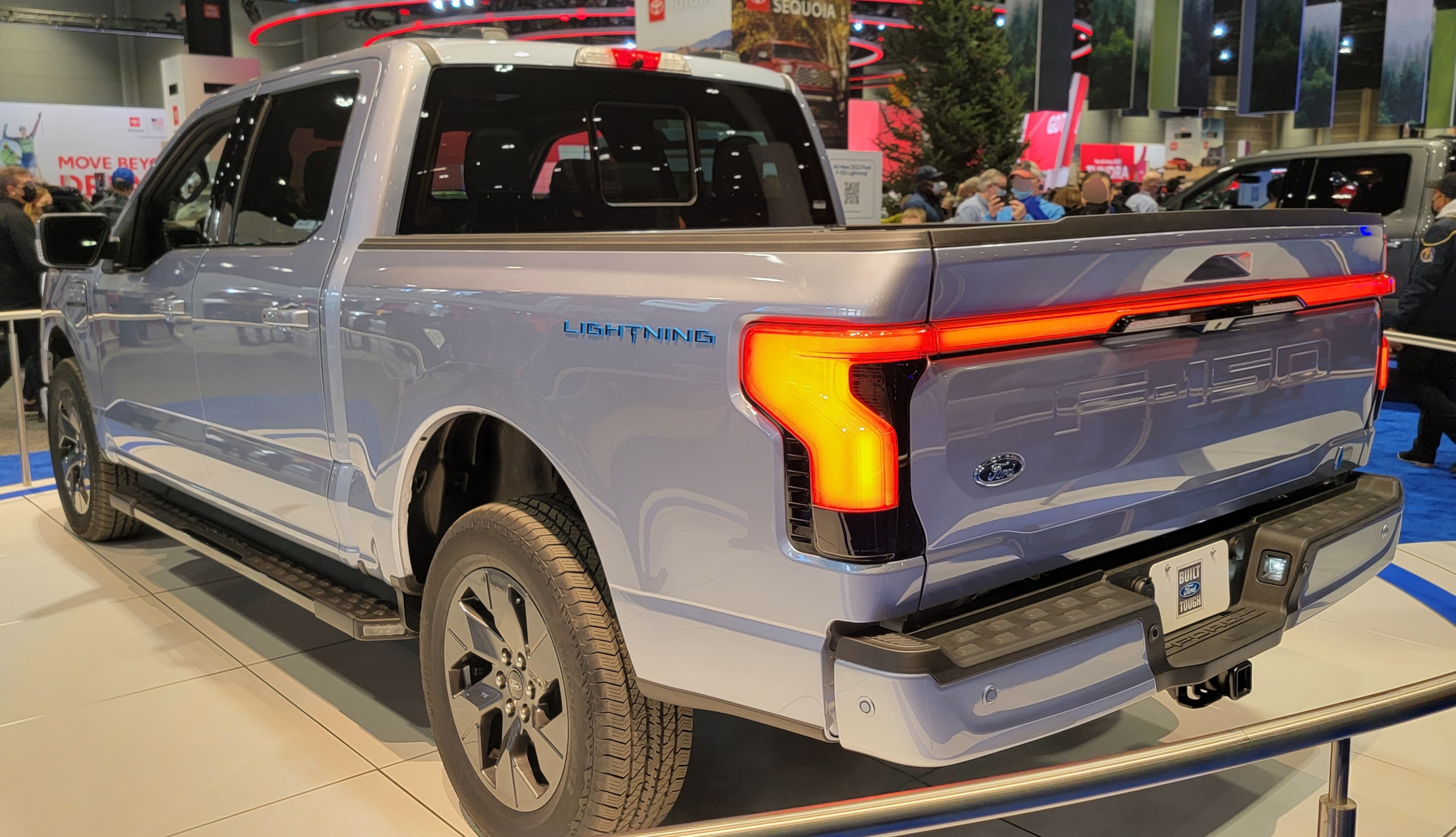
The vehicle is a 2000 F 150.
Well, I'm suspecting there's something wrong with either the gauge,
the sending unit or the wiring in between.
If there is truly zero oil pressure, that's not good for the engine.
So I would confirm that that's not the fact.
You say it warms up and then it seems to be reading fine,
which makes me think there's something wrong with that sending unit.
So maybe next time you're in for service or next time you make an appointment,
maybe it's best practice to drop it off the night before let the shop or the dealership be the first ones
to see that in the morning and they can maybe do a couple of tests to figure out what's going on.
Very good.
It'd be nice to have an oil pressure gauge.
How many vehicles still have oil pressure gauges?
Either a gauge or a light.
They're still there.
A red looks like an oil can oftentimes.
So if you see that coming out, that tells you the engine's not getting lubricated like it should,
so that could be a big warning and get that looked at right away.
Before we break for that chilling forecast, but it's a warm-up,
let's grab a phone call.
Kelly calling in from West St. Paul this morning.
Kelly, thank you.
What's your question for Nick?
I have an answer about winter gas versus summer gas.
Oh, sure.
Okay.
It's 10% ethanol year-round, but the gasoline component does change.
In the wintertime, it has more volatiles in it like butane and propane to ease cold weather starting,
and those volatile components have less energy.
So that's one of the many reasons why your fuel mileage will go down in the winter,
because winter gas has more volatiles in it and therefore less energy and mileage is related to energy.
And then a note on warming up cars.
You let it run a few seconds and the oil is circulating and you can slowly drive off.
When an engine is idling, particularly in cold weather, it's very dirty,
so please don't just sit there and let your car idle.
Drive it.
All right, Kelly.
Great.
Great insight.
Hey, Nick.
Good to have Kelly on the show.
Absolutely.
Like we always say, we have absolutely the best listeners around.
Absolutely.
Kelly, thank you so much.
Great information.
We're going to take a break and see when that warm-up is happening and it will happen.
Then we have a few more minutes to answer any kind of a car care question you may have.
Call us.
Text us.
6514619226 right here on News Talk 830.
This is WCCO.
And welcome back to CCS Car Care Show.
Denny Long here along with Nick Stoffel, AOC Certified Technician
at Lloyd's Automotive on Beautiful Grand Avenue in St. Paul, Chilly Grand Avenue this morning.
Nick, let's grab a phone call.
Bob is checking in from Painesville this morning.
Bob, thank you.
What is your question for Nick?
Yeah, I have a 2008 Pontiac Grand Prix and it's got that end dash air pressure like we were talking about before.
Right.
Anyway, when the tires get rotated, does that mix up the correct reading as far as left
or right, left, front, et cetera?
That is a great question.
And yes, it does.
You need to reinitialize those locations.
Sometimes it's within the vehicle.
Sometimes you need a scan tool to do that.
But that will happen where some will have their tires rotated.
Then they'll end up with a low tire and they'll say it's the passenger front tire that's low.
And they keep adding air and checking the pressure like, well, there's nothing wrong here.
Well, here it's on the other side of the vehicle and they didn't notice that.
So if you're having a problem, make sure you check all four tires.
If you do have your tires rotated, make sure they do reinitialize those locations so you have an accurate reading in location.
That's a great question.
I never really thought about that before.
Thank you for the call.
Again, 6514619226.
Nick will be with us for a little less than 10 minutes or so, 8 minutes or so from right here, just for your information.
Texture says this, my check engine light is on a GMC 2007 Envoy.
Coding says something about a cooling slash heat sensor.
Is this something to be concerned about running the vehicle safely?
I guess I'd have to see it to be totally honest.
Not necessarily, I guess I'd want a little more information before I give you my final opinion there.
Yeah, okay. I guess you need more information. It needs to be checked out.
Here's a question. I haven't thought about this for years.
A listener wants to know, basically, do they still make block heaters?
Is that something that we can still add to our vehicles or do they ever come standard?
That's a great question. Some vehicles are equipped with them.
Oftentimes, the old ones used to be like a magnet that you would stick onto the engine block.
Engine blocks are now aluminum, which the magnet won't stick to.
It isn't necessarily something that's easily installed and be totally honest.
I don't think it's necessary.
If you keep a full tank of fuel, you have a good battery, you're up to speed on oil changes.
Even on the coldest of days, the vehicle should start and run.
It's usually when we have some maintenance that's been neglected that we run into trouble with vehicles flooding out or not starting and running properly.
What's the issue with, you know, we talk about summer weather sometimes being worse on a car's battery than winter.
But what happens, and you've addressed it before, that if it's really frozen,
if you haven't driven this vehicle for a long time and it's sub-zero temperature and the battery freezes,
is that always, does that mean the death of that battery always?
It does. You know, if a battery freezes, the water separates, the battery's no longer going to work.
Oftentimes, they'll swell up and freeze like a rock, quite honestly.
So if your car sits for an extended period of time and it's extremely cold out,
you do run the risk of the battery freezing and once it freezes, that's unfortunate the end of it.
And like you mentioned this summer, the heat is also very hard on the battery.
But I think we notice it in the wintertime because as things get colder, the engines turn over slower, the oil's thicker,
we need more demand from that battery.
If the battery doesn't have that reserve, it's not going to start the vehicle.
So I think we notice the problems in the winter months, but oftentimes the wear and tear happens in the summer.
Texture wants to know, given newer cars, what do you recommend to changing the coolant in cars, these newer cars?
And a follow-up question is, what's the blend?
Is there a 50-50 mixture, antifreeze and water?
How often should one, first of all, that's the first question.
How often does generally these newer cars need a coolant change?
You know, once again, back to the owner's manual, but as a general number, it's usually around 100,000 miles.
The cooling systems have really evolved.
The engines have evolved where you don't have as much combustion sneaking its way from the mechanics of the engine into the cooling system,
so it allows that coolant to do its job longer.
Obviously, the coolant protects, but also lubricates things like the water pump and other internal items.
So 100,000 miles is typically the world that the coolant lives in.
Check the owner's manual, and then it is a mix when we do refill it or exchange it.
Oftentimes it'll come pre-mixed, so make sure you read the bottle very carefully.
You don't want to dilute it too far and have problems with something freezing, so make sure you read the bottle.
Make sure you also bind the correct product for your vehicle.
A lot of times there's different additives in the cooling systems, so each make might be a little bit different.
So do a little research before you head down to the store and buy it.
Nick, you and I talked for years about how well these are cars of ours.
Treatise.
I mean, we kind of get lulled into this complacency that...
I mean, I wonder how many of us...
I don't think...
Hmm, let me check my coolant level or wonder how it's cleaned or maybe I'll check the owner's manual.
They take pretty good care of us, and we do kind of forget things, don't we?
We absolutely do.
If you're old enough, you can remember you would go to the filling station to get gas and you'd pop the hood and check your oil.
You had a tire pressure gauge in your glovebox, you'd check your tires,
and we used to do a lot more of that ourselves, top off the washer fluid.
Now, if you can get the hood open, number one, you look under there and you can't find anything
because there's a lot of these plastic noise dampening features there that make it almost impossible to even check those items.
So do familiar yourself, you know, maybe not today on the coldest day of the year,
but on a nice spring day, you know, open the hood, get familiar with some of the working parts of your vehicle.
In the event you have some trouble, you have a little bit of knowledge to help yourself out.
I was...
I'm looking at a text and I was wondering if we were going to get any...
receiving any text messages like this today.
What's the best approach for a car lock that freezes?
Well, hopefully, times have changed.
You know, I used to have, you know, use the key to open the car and the cylinder would freeze as such.
But, you know, to be honest, like the electric block shouldn't freeze unless, you know,
a significant amount of moisture got in there, which isn't likely.
If it's a tumble that's frozen, a day like today, I would probably tell you to don't, you know,
be very careful spraying anything in there and I know there's a lot of opinions, you know,
it's to be graphite or something that would absorb or de-thaw, warm up the key.
We've heard a lot of things that people have used in the past.
Just be very careful. Anything you try, use a moderation.
You don't want to make a bigger problem for yourself.
You and I have talked about exercising during warmer days, those door locks,
with actually the key that comes out of your fob, is kind of working out a little bit.
Absolutely.
All the features in our vehicle that are there to help us when we're in trouble,
we need to try them out when we're not in trouble to make sure they're going to work when we do need them.
Absolutely. All right, I'm looking at the clock.
It looks like we're pretty much out of time.
So, again, for those folks that maybe need help from Lloyd's Automotive, Nick,
before we let you go, how do we find you guys?
Yes, sir.
So, if you have any questions, please don't hesitate.
We'll always answer 651-228-1316.
If you're in St. Paul, we're at 982 Grand Avenue, two blocks east of Lexington Parkway.
You can find all that information more at our website, which you know Danny is LloydsAutomotive.net.
Got to get in for another oil change one of these days. Excellent.
All right, Nick, thank you so much.
Nick, let's do this again next week.
Sounds like a date.
Very good.
Next outfit from Lloyd's Automotive.
Get ready for Ted Ferrell from Haskell's Wine Chat and then get, yes, I know it's five below.
We're going to talk lawns and gardens in the next hour with Master Gardener, Terri Saruni here on Newstalk A3O WCCO.
Stay with us.
About this episode
Cold weather car care takes center stage as Nick Stalfell from Lloyd's Automotive tackles listener questions about tire pressure, winter gas, and warming up vehicles. He emphasizes the importance of keeping a full gas tank in winter for safety and discusses how tire pressure can drop in colder temperatures. The episode also covers the nuances of jump-starting hybrids, the effectiveness of battery tenders, and the significance of coolant changes in modern cars. With practical advice and insights, this episode is packed with essential tips for winter vehicle maintenance.
Does it matter how much fuel is in your vehicle in the winter time? How long can you drive on tires with low pressure. How big of a difference do engine additives like Seafoam make? Is there still a difference between summer and winter gas? Jump starting a hybrid. What to know if you want to warm up your car in the winter. Battery tender basics. Tire rotation information. What happens when a battery freezes. Ask our car care expert Nick Stoffel of Lloyds Automotive. Visit lloydsautomotive.net 651-228-1316.