The Porsche 914 is a sports car made by Porsche that was popular in the 1970s. It's known for its unique design and is often seen as an entry-level Porsche, making it more affordable than other models.
SCCA championships are awards given to drivers in car races organized by the Sports Car Club of America. Winning one means you are one of the best drivers in those races.
Autocrossing is a type of car racing where drivers take turns driving through a course marked by cones. It’s a fun way to test driving skills without racing against other cars directly.
Autosport technology is a business that helps improve race cars and make them faster. They offer services to prepare cars for racing and enhance their performance.
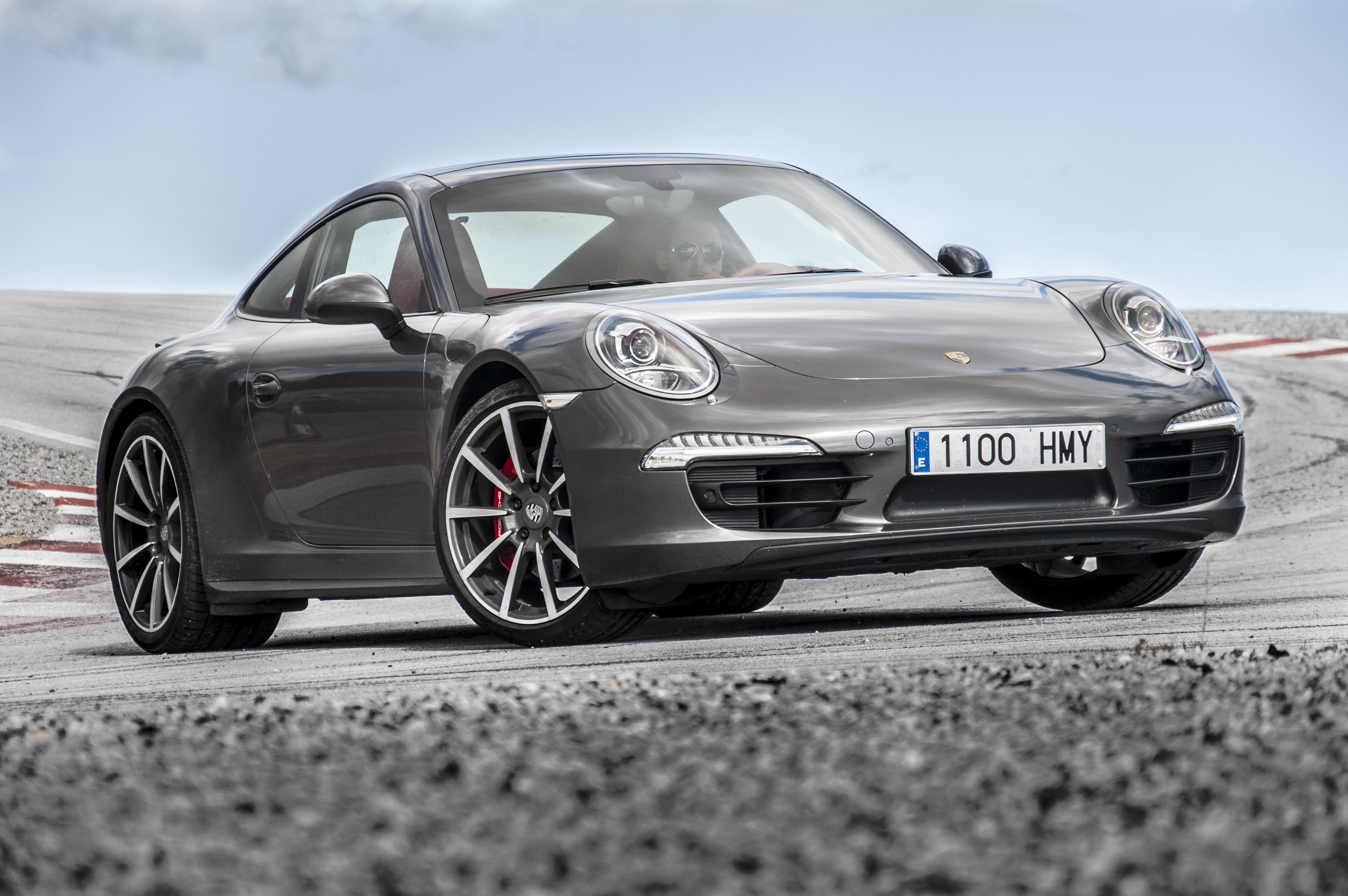
The Porsche 911 is a famous sports car that many people recognize. It's known for being fast and having a unique shape, and it's been around for a long time, making it very popular among car enthusiasts.
Zoning is a set of rules that tells people what they can build or do on a piece of land. For example, some areas are only for homes, while others can have businesses like car shops.
The camshaft is a part of the engine that helps control when the valves open and close. This affects how well the engine runs and how much power it can produce.
The transmission shifter is the part of the car that you use to change gears, like going from park to drive. If it breaks, you can't change gears properly.
SCCA Solo II is a racing event where drivers take turns driving on a course marked by cones. The goal is to complete the course in the fastest time without hitting any cones.
SCCA solo events are car competitions where drivers race against the clock on a course set up with cones. It's all about how quickly you can navigate the course without hitting the cones.
Car
Porsche
Porsche is a famous car brand from Germany that makes fast and sporty cars. The mention of the Porsche family refers to the people behind the brand, who have a long history in car racing and making great cars.
These are parts you can buy to change how your car's suspension works, making it handle better or ride smoother. They are not the original parts that came with the car.
When cars race, they usually have numbers and logos on them. The numbers help identify the cars, and the logos show which companies support the drivers.
BF Goodrich is another tire company that makes tires for racing and off-road driving. They are known for helping cars perform better in competitions.
Term
1G
1G is a way to measure how well a car can turn without sliding. It means the car can handle turns as well as its own weight.
LIVE
Welcome to Porsche Patter with Bracken Helms, the show where we hear Bracken and his distinguished
guests from the Porsche community patter on about Porsches and all things automotive.
Porsche Patter is sponsored by Circuits Explore.
Circuits Explore creates authentic automotive apparel made for life-minded automotive enthusiasts.
The links for Circuits Explore are in the shown notes.
Okay, let's get to it.
Dwight Mitchell, part two.
All right, and this one we go through his timeline a little bit because he was going from
Autocross to Road Racing back to Autocross.
And I was wondering, why are you bouncing back and forth?
And it had to do with Autosport, his company.
You know, he went from driving his own cars to weaves driving other people's cars.
And so it was just he was driving whatever car was available.
That and also he talks about like the money that it takes and stuff like that and sponsorship.
He also goes into how he started Autosport Technology.
We talk about the dealer sponsor 914 for that he got to race.
Okay.
And when I first contacted him due to the interview tell, we actually did the interview.
There was a little bit of time gap there that we'll probably get into later in episodes.
But my notes were a little bit haywire.
You can see because I asked I asked him about winning the 12 hours of seabring.
And he's like, yeah, I didn't win it, but he tells the story.
So I don't know what my notes said right there.
But I do know that my notes said five straight SCCA champions, championships.
But I said 15 when clearly I even have the dates of each one of them.
So there's five dates sitting there.
So there's no way it was 15.
There must have been a mark in front of the five or something.
But anyway, here's Dwight Mitchell part two.
In 1970, you won the most improved driver.
Okay.
And then started winning races.
So you decided to go to the SCC national championship.
That's on a crossing.
So 19, because I wrote down 1971, one, you won the most improved driver and started winning races.
So you decided to go to SCCA national championship.
No, there's a conflict there.
The 71.0 was road racing in the speech here.
The exchange SCCA is autocrossing.
I started a number of years later than that.
So let's go over the timeline.
So it kind of gets confusing.
So you did autocross, then road racing, then autocross, then road racing, then autocross.
Like, why did you jump back and forth?
Or why?
What was the timeline on the autocross to road racing back and forth?
Money and sponsorship availability.
Anybody who goes racing, the amount of money you have is what's the important driver.
I on across sometimes and raised both in the same year somewhere in during the 70s, maybe in the 80s too.
We started our shop, Autosport.
Officially started late 78, but in 79 is when we got the shop open and running.
And sometime around there is when I started doing race cars.
People and trading races for a billion times.
But there were times then when I was one weekend of be autocrossing next weekend on the road racing.
Your company was Autosport?
I didn't write it down.
I'm just going off memory.
Autosport technology.
Okay.
Autosport technology.
And did that come about because you were like, oh, we should start our own business or you were just racing so much that you were developing things that you just started selling and then it became a business.
The true story is it happened almost by accident.
We were living in Silicon Valley.
I was in the insurance business as an insurance broker.
I did not like the profession and my wife and I went out to Stockton to speak at a dinner meeting at the portion region out there.
And it was like in October or something like that.
The weather was beautiful.
It was just a magnificent day.
And we were sitting in the back.
I think in the backseat of a 9-11.
I'm not sure, but anyway, with this couple out there.
And I turned to Linus, but why do we still sell everything in the Bay Area?
Come out to the valley and start a Porsche business.
Ah, it was literally just like that.
And as we're driving home, I forget which car we were in, driving home.
And I turned to Linus and said, I wasn't kidding.
You could kidding about what?
Let's sell everything in the Bay Area, move out to Sacramento and open a Porsche business.
And that's how it started originally.
Millage was going to be part of it, but the building, the location we had to pick out turned out to be not zoned correctly.
And so we started trying to repair stuff out of our out of my house, which of course, the law enforcement caught up with that real quick.
I bought him back out.
I just said, okay, whatever money they didn't put in started.
Here's your money back.
I'll just go on my own and John went back down the Bay Area.
And I think he opened a small shop of his or something like that.
So that's how I got in.
It was just a spur of the moment.
I'm not happy.
Let's try it.
And what it really was is I was able to do something where I as a person was responsible for making something work.
We're in the insurance business.
You're dependent upon many other people making decisions on what you could or could not do.
Yeah, I mean, that took balls.
Oh, incidentally, I was in business.
I was in business for seven years with a former NFL Hall of Fame quarterback Y. A. Tittle.
And he probably never heard of me played for the 49ers in the 60s.
And then he was treated as a Giants where he became well known.
But we had clients over the United States because of his door opening capabilities.
And he was quite a very interesting individual.
And I met a lot of people when he traveled who were his contemporary NFL players.
I learned that I didn't know much about football because Frankie Albert,
who was the original T formation quarterback and was the first coach of the San Francisco 49ers had the office next to us.
And a guy named Matt Hazeltine, who was a linebacker for 49ers.
I had another house.
Now I wrote it.
The three of them would get together on Monday after the football game and talk about it.
And I would sit there and just keep my mouth shut.
I watched the same game they watched, but they saw stuff that I never noticed.
And it was really interesting.
So when I started watching racing and having raced at certain tracks,
where I was watching an event going in car camera, Sebring was one good example.
I could tell exactly where they were on the course,
the camera that was in a car that was not showing the course,
just by how they were driving, braking, shifting and so forth.
So it was kind of a little off the subject.
I apologize for making that distraction,
but it was something I thought was pretty cool.
Well, there's an epilogue to that story,
which I wrote down because it's an expression that has done me good over the years.
And when I was pulled out in 914, I was really bummed out.
And I went in the office and told YA and he put his arm around me.
He says, Dwight, just remember one thing.
It's always better to be a has been than it never was.
Yeah.
That attitude has stayed with me all my life.
So I bet nobody else ever told you that one.
No.
Better to be a has been than it ever was.
Yeah.
And why did you go to Sacramento for auto sport and not just stay in the Bay Area?
Well, at the time, knowing a number of Porsche friends in Sacramento,
and they were encouraging me to start a shop there instead of in Stockton.
And I did some checking records and seeing how many Porsches were in the Sacramento area,
how many in the Stockton area and everything I looked at pointed to Sacramento.
But it was mostly all emotion.
You kind of got into the dealer sponsored 914 for with the help of Gary Evans.
Correct.
And then it was prepared by Richard Richie Ginther shop.
The car was originally built for us by Ginther.
And then it was taken over by Garrett's and Enterprise.
I clarified, Ginther built the car originally.
It was not very fast.
And I took over doing the preparation myself with a couple of local guides all the way through the first year.
Garrett's and didn't come on board until the following year, which would have been about 75 something like that.
Of course, 75.
But.
And the dealers in the West Coast had three cars went up in Seattle.
Our car in the variant and then it was Robinson had one in Southern California.
Ginther built the car and in the proposal we gave to the dealers is don't do anything with the car.
Give me a motor with an X minus horsepower.
I forget what it was.
And if we can't get to that horse power, let's not do it.
So Ginther built it.
He said, oh, yeah, we hit.
I think it was 145.
Terrain horsepower, something like that.
And went down for the first race.
And I was middle of the pack.
So I then took the engine out, took it to the shop that was doing all my dyno work.
And it had like 115 horsepower or something like that.
So we tore it apart.
Main thing we did is we changed from the long things.
Whatever the camshaft was that Ginther put in and put in one by this elegance machine shop.
Went down the Riverside the next time and I had a qualified Elliott.
Unfortunately engine blew up in the first six laps of the race, but it was definitely a lot faster.
And then why did Garrett's and Enterprise start preparing the car?
You know, back in those days, I was winning races.
So I thought I knew everything.
And well, there isn't that much you could do to this feature, but I thought of the 914.
It's a Volkswagen.
It was built in a Volkswagen store.
And I did not have enough knowledge, particularly in the area of the suspension and in the engine that I was getting the maximum out of it.
Don Wester, who had a dealership, knew Gep Gerritsen because Gerritsen was doing some racing too and had a shop.
So he says, well, let's take the car away from Doyle.
Let's not have him worry about preparing it and driving it.
Let's get it down to Gerritsen's and let them do the preparation on it.
Don Wester, who was in Monterey, was actually in charge of the program.
He was the manager, the final word on what was going to happen to the car.
So it was his decision to do that.
Is it the same thing that Walt Moss drove, or that was a different car by Gerritsen?
He drove the 914-6 in the GTU.
What happened was that halfway through the second year, the last race I drove, the transmission shifter broke.
The old-style shifter.
Anyway, Wester decided, let's put EFR in the car and see what he can do.
I watched the race with the car that I used to drive and watched EFR drive it.
And it was somewhere in the middle of the pack also.
And I talked to one of the fellows that was a mechanic on the car.
And he told me, he said, and Ellie got out of the car and he said, is that all there is?
So at that point, the dealership, dealers decided to retire the car.
And I don't know what happened after that.
So Clark Anderson crewed your car, right?
At some point, yes.
It was one of the remembers.
Okay.
I wrote these questions a while ago.
I wrote down, you won the 12 Hours of Sebring.
I mean, it must be.
I wrote down 12 Hours of Sebring.
Well, we were leading with 35 minutes to go in GTU and a part inside the transmission broke.
And Bill Cooper, who was a former driver instructor for Vonderon, was driving into the car at the time.
And we just made a big mistake.
I had driven the car just before him.
Bill was probably switched faster than I was.
And the monitors were very popular in GTU at the same time.
And the leading monitor dropped out.
And we had been in second place.
I just heard this announcement over the PA and the blah, blah, blah number.
I think we're, I forget the numbers of car just went into the lead in GTU.
And we go away.
And over the radio, this Cooper said, the transmission just broke.
And what we should have done, which was really stupid, I should have kept my driver's suit on and jumped in the car because what it was, was it had this gear in reverse, which was in the same section of the transmission.
And I'm sure I could have gotten in the car and had a big lead.
I could have finished the car, but I've put street clothes on and Bill got it and tried to get it going again with just his gear.
And he just fried the clutch and flywheel.
He never made it out of the pit lane.
So we might have won the class in that year.
I think that was 81 or 82 if I'm not mistaken, but it was not to be so we had to go out and rescue the car to it in behind a tow rope.
So 1982 less road racing started to auto across again because of the cost and lack of sponsorship bought a 1971 911 T which at first wasn't as fast as the 914.
It took you a while to get the 911 as fast as the 914 you had had.
Well, I had a good friend of mine who was an auto crosser and the first year I had it, I let him drive the car because I was when I bought the car.
I can't remember what month it was, but I want to say I would do it, but I was I was focused on the 9 running the 914 because I had great pleasure beating all the 911s with the 914.
Can I say one thing that you might not have written down?
I think it was kind of interesting that I was proud of this is when I was running our 911 in SCCA solo two.
I had won the pro solo championship and we had there's a parade in San Diego and the auto cross was at Jack Murphy Stadium and these were very high.
A lot of third year stuff up and downhill and so forth.
And one of the members of the Porsche family, one of the I think this is a third generation Porsche family.
And he was there representing the factory and so forth and Hank Malzer who was president of the time was showing them around as I went out and took my run.
And and came up to me at the dinner meeting of that evening.
And I just I have to tell you what it wasn't Dr. Porsche, but it was what it was a person was said about you when you saw you drive around.
So was that he says now and he tried to imitate a German accent.
And he said now that man knows how to drive a 911 and there was like several hundred nine elevens out there.
And I was running running on what was the time a street prepared in SCCA, which did not use race tires.
I had the fastest nine eleven of everybody included all of them on race tires.
And the guy who was the chair of the Otacross had been badmouthing me and he was running nine fourteen six on race tires.
And I beat him. I beat all of the.
There were only a fair few cars overall.
There were all full on race cars that beat me and the guy from that had been the chairman was teasing me came up to me said, I guess you can really drive pretty well.
Can't you.
So between the comment from the Porsche family and this guy said that was I guess one of the things that put my name out there a lot of people.
And my wife won the best time in a women's class because there was a section of the course that was downhill well up in third gear and you could take it flat.
And obviously track experience allowed me to realize that you could take it flat.
And I told my wife when she drove after I did, I said, go through whatever the turn number was, you can go through flat, go through flat.
So she did.
And she told me afterwards, he says, I didn't believe I could do it, but I did it and I did it.
And I loved it.
And she won the top prize for the fastest woman at the parade.
So that was pretty, pretty cool.
Yeah, I was going to ask you, I knew there was one event where you'd won and she'd won in the same event.
That was not there.
That was at a pro solo in Wendover, Nevada.
Not just the class, but we won the overall open class and the women's class in the same car that day.
That's pretty cool.
Because of the road racing experience I had, the faster the course was, the better I would do because there were a lot of folks.
They were out of crossing the weren't driving courses over quite as fast.
But when you get out there in an eight port and airport and you're going well up in third gear and then I 11, which is up 78 miles an hour, there was a big difference.
So that was a definite aid to me in doing well in the SCA solo events.
Yeah.
What year was it that you were talking about a minute ago where the Porsche family was there?
It was in the 90s.
It was 90, I think 92 or 93, something like that.
And your 911 was at the 71?
Yeah.
Okay.
I've written down 15 straight SCCA national titles starting in 1990.
Say 15.
Yeah.
Did I write that down wrong?
I tell people it's five.
It was five.
It was several solo two, couple of solo two championships, one overall pro solo and two class pro solo SCCA solo two.
When did I start running down?
I didn't run it that long, maybe four or five years is the most.
Okay.
So I was looking at, there's an article that road scholars wrote or something and it says in your 71 911, it is thought that you had more wins than any others in autocross.
I think that's probably true, probably because I ran that same car for probably a longer period of time than other, maybe other people did.
But I think that might be true.
And in Porsche Club, I don't think I was ever beaten by another 911 Porsche Club.
Oh, cool.
Also, supposedly it was the first 911 on streak tires to hit 1G.
I mean, I don't know how they measured that.
That's correct.
Well, it's a very simple thing.
There's a mathematical formula.
It was like any other speed calculation.
That's how it's done.
And Yokohama was our tire sponsor at the time.
And Automotion was the company that sort of got the promotion done by running all of their aftermarket suspension parts.
It was the same 911 that I ran at SCCA.
At that time, I had put some fender flares on the back so I could run the legal street tires in solo two.
But in PCA, you couldn't do that.
So the car looked a lot more original, but underneath it was very, very trick.
Yeah.
When you went to the SCCA solo two, you kind of thought it was just going to be kind of amateurish.
And then when you got there, you were like, OK, these guys are a lot better than I anticipated.
Bingo.
Absolutely.
I have not seen an SCCA solo two event at that time.
I had some friends who were running it or competing in it.
But the first one where I showed up, the cars were emblazoned with numbers and sponsors names and so forth.
And Porsche Club, you just took a some white shoe polish and put it on one of the side windows.
The Porsche Club was actually far more amateurish than SCCA was.
I was very, very surprised and pleasantly surprised at the difference.
And then it said, like a year or so later, you started doing the SCCA solo two and also the SCCA pro solo.
And you were a little bit surprised again because the guys you had beat pretty handedly a year before starting beating you again.
No, I think that there's something wrong there.
OK.
SCCA ran both solo two and the pro solo.
The first pro solo I ran, which was in Las Vegas, I actually won it.
They were separate series and I ran both of them, whatever the solo two was.
And then the pro solo edit at different events.
And the national SCCA nationals, they had solo two nationals and the pro solo nationals.
And then at one point you felt like the BF Goodrich tire was giving them the upper hand.
And so even though you had a Yokohama sponsorship, you left Yokohama because you needed those BF Goodrich tires.
Well, OK, the story was I was sponsored by Yokohama.
In fact, one of the things we did, we got the 911 set up.
And at that time we recorded the first 1G on a skid pad in a production car.
So Yokohama liked us for a while, but we went to an event at Salt Lake City.
You know, Yokohama was supposed to be there and bring tires and so forth.
And I always stayed in touch with potential sponsors, let's say.
Anyway, at this event in Salt Lake City, no Yokohama tires, they didn't show up.
So I went over the BF Goodrich truck, said, could I buy any chance to get some tires from you?
And they gave me a set. I won that event and then I signed an agreement for them to be my complete sponsor.
And the next pro solo event, I won that overall on the first event there.
So I know the entry into the pro solo I would call successful.
Thanks for joining us for today's episode. If you enjoyed the show, please subscribe, comment, like and share with your friends.
Feel free to send questions or suggestions to the email in the description of the show.
Special thanks to our sponsor, Circuit64. Goodbye for now. We hope we can get together again for our next episode.
Now get out there and enjoy the cars and the people.
About this episode
Dwight Mitchell shares his journey through autocross and road racing, detailing the evolution of his career and the founding of Autosport Technology. He discusses the financial challenges of racing, the significance of sponsorships, and memorable moments, including his near-win at the 12 Hours of Sebring. The conversation also touches on the impact of tire choices on performance and the surprising competitiveness of SCCA events compared to Porsche Club. Mitchell's anecdotes provide a unique glimpse into the racing world and the passion that drives automotive enthusiasts.
Dwight Mitchell is known in Porsche circles for his dominance in PCA AX and as a 5 time SCCA Champion. 2 ASP Solo 2 National titles. 2 Class SPI Pro Solo Championships.
In this episode we talk about: -Winning most improved driver. -Starting Autosport Technologies. -Driving the dealer sponsored 914-4. -5 time SCCA Champion. -Most winning AX car.