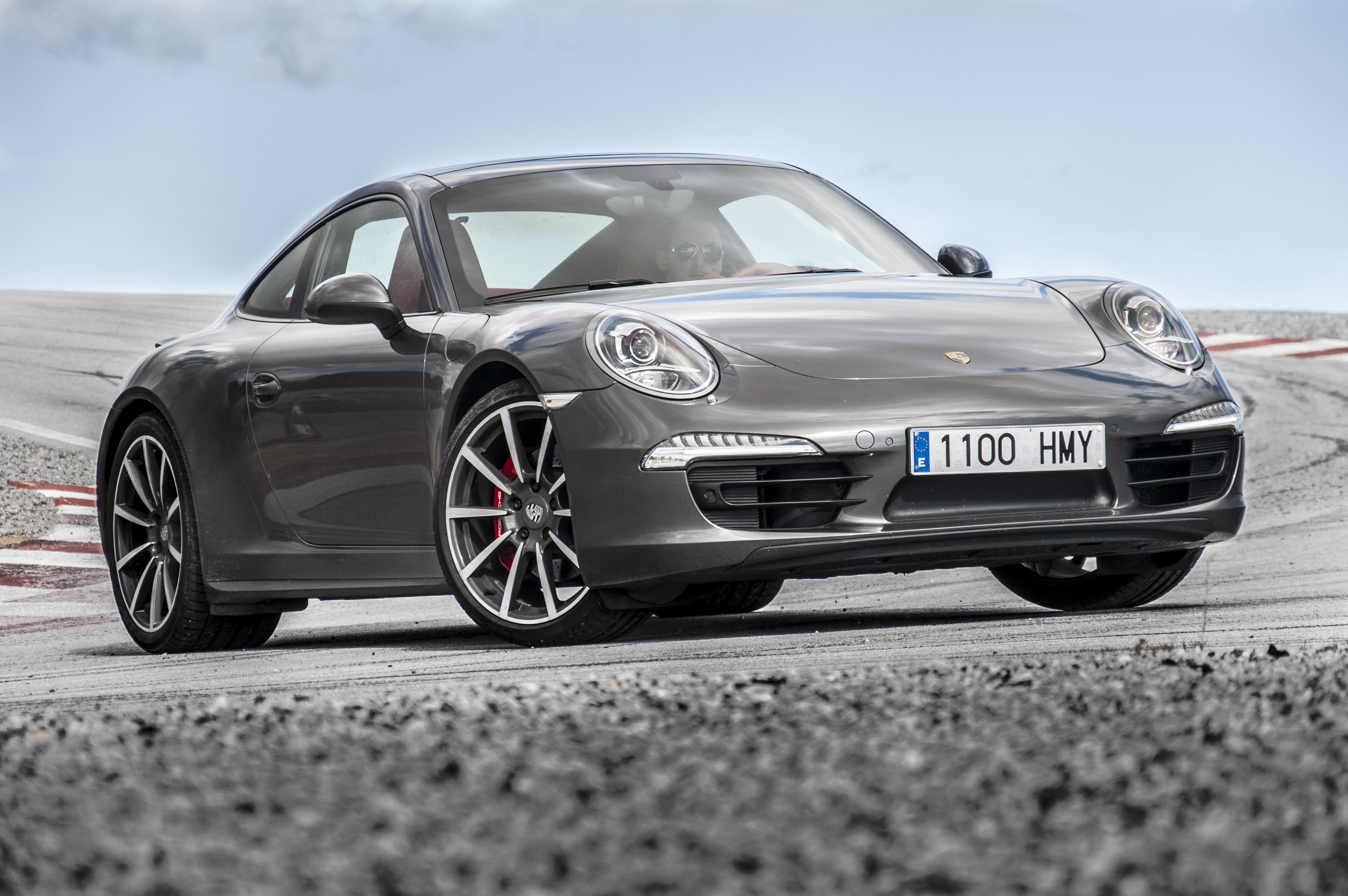
The Porsche 911 is a famous sports car that many people recognize. It's known for its unique shape and powerful performance, making it a favorite among car enthusiasts.
Suspension bushings are rubber or plastic parts that connect different parts of a car's suspension. They help the car ride smoothly and reduce noise from bumps in the road.
Turcite is a special kind of plastic that helps parts move smoothly against each other. It's often used in cars to make certain parts last longer and work better.
Turkite is a special material used in some car parts that need to withstand very high or low temperatures. It was first used in space technology because it can handle tough conditions.
Autocrossing is a type of car racing where drivers take turns driving through a course marked by cones. It's more about how well you can control your car than how fast you can go.
Corner weighting means adjusting the weight on each wheel of a car to make sure they all have the same amount of pressure. This helps the car handle better when turning.
The Chevrolet Corvette is a fast and stylish sports car that people love for its speed and looks. It's been around for a long time and is famous for being one of the best American-made sports cars. People often talk about it when comparing it to other high-performance cars.
The SCCA is a club in the U.S. that organizes car races and events for people who love motorsports. They help both beginners and experienced drivers compete in different types of racing.
Lap time is how long it takes a driver to go around a racetrack one time. It's important because it shows how fast a driver and their car can go.
Car
Porsche Speedster
The Porsche Speedster is a special version of an older Porsche model that is lighter and designed for better performance. It's popular with car fans for its classic look and fun to drive nature.
A big block engine is a type of car engine that is larger than most others, which usually means it can produce more power. It's often found in fast cars.
Car
Chevrolet 348
The Chevrolet 348 is a type of engine that was popular in some older Chevrolet cars. It was known for being powerful and was used in many models during the late 1950s and early 1960s.
The Lexus LX 350 F Sport is a luxury SUV that is designed for both comfort and off-road driving. It's a high-end vehicle that comes with many features and a powerful engine.
The Porsche 914 is a small sports car made by Porsche that is known for being fun to drive and having a unique design. It was made in the 1970s and is popular among car enthusiasts.
Can-Am is a type of car racing that happened in North America. It included really fast cars with big wings that helped them go faster around the track.
IMSA is a group that organizes car races, especially for sports cars. They have different types of races and are known for big events where fast cars compete.
Formula One is a type of car racing that features very fast cars and skilled drivers. They race on special tracks, and it's one of the most popular motorsports globally.
Formula Ford is a type of race car that is the same for all drivers, making it easier to see who is the best driver. It's often where new racers start before moving to faster cars.
LIVE
Welcome to Porsche Patter with Bracken Helms, the show where we hear Bracken and his distinguished
guests from the Porsche community patter on about Porsches and all things automotive.
Porsche Patter is sponsored by Circuits Explore.
Circuits Explore creates authentic automotive apparel made for like-minded automotive enthusiasts.
The links for Circuits Explore are in the shown notes.
Okay, let's get to it.
Dwight Mitchell, part three.
All right, so this last weekend was the Toy Drive 4.
I think it's R-group.
Is R-group easy?
I don't know.
There's the Toy Drive I talk about every year.
This is the first time I haven't gone and like, God, I don't know, a really long time.
It just didn't work out.
But one thing I've noticed about Easy is up until recently, and maybe this is just the Toy Drive thing.
I don't know.
Maybe I'm like reading too much into it, but I'm just noticing that like I used to not really be like
thing that people would post on like PCA type of things, but now they are.
All right.
And this one I asked Dwight about some of the parts and concepts he kind of developed when he owned Autosport.
Trying things out when he was racing and then developing parts.
I also asked him about cars he's owned or been associated with.
I get his opinion on racing today or racing that goes on today and some of the things that may have changed.
But anyway, so here's Dwight Mitchell, part three.
So when you were racing, you were trying to find the edge.
So you were developing like a lot of parts or different things to try on the 9-11.
A lot of the stuff you developed, people are still doing today.
Some stuff, yeah.
Adjustable sway bars is still being advertised today.
That was probably that's the thing that easy to change and adjust and so forth.
So the other thing we developed was material to make bushings out of suspension bushings.
I mean, we're made out of some kind of plastic that were out.
I had a customer when the Sacramento had an atomic power plant.
He was there and he was a scientist and he came up to me and he said,
I've got this material here.
I'd like you to put the machine and put it in my suspension.
It's called turkite, T-D-U-R-C-I-T-E.
And put some on our car and probably one of the first things I ever did to it back in the 90s.
And when I did that article for the magazine, you mentioned road scholars.
There was a way you can externally, you can look to see if the rear suspension bushings were worn out or not.
And I looked down at them and the measurement I took, it looked like it was brand new.
And I said to the guy that bought the cart, do you ever replace the bushings?
No, never had to.
And this material called turkite was used in space capsules in rockets that went out into space.
Because the temperatures out there were so cold that regular bushings wouldn't hold up.
And so they knew about this because of how they'd made bushings for space race.
Another quick story is in the Porsche Club autocrossing, the category I ran in,
there was a gentleman who became very close friends of ours.
He was finished so far back in the pack to begin with.
I didn't even know his name, literally.
And he had gone to another shop, basically done all the same stuff I had done.
Only the cart just didn't work.
It was terrible.
So a mutual friend of both of ours talked him into bringing the cart to me or to Autosport
to find out why was this car working.
And none of the suspension bushings were installed correctly.
They were just slammed in.
There were some cheap old plastic stuff.
We took everything off the, all the suspension off the cart, completely redid it with the same parts.
We didn't even replace any parts.
We just put it together properly.
And the next event, it took me three runs to beat the guy just by putting the parts in the car in the proper manner.
So that was something else I was really proud of.
You said it took three runs to beat him.
What do you mean?
Well, Autocrossing was against the cloth.
Oh, so he was competitive enough to wear like you didn't just blow him out of the water.
We were running in the same class and there were probably 10 or 15 cars in the class, I guess.
And he literally was so far down the line did not even know his name.
The next event, it took me three runs to go faster than he went in the car that had the same parts in it just were assembled and set up properly.
We definitely ended up telling a lot of people about that and got us a lot of business from other people that wanted to modify their cars in a certain way.
And we were one of the few cars were very early on that knew how to weight balance the car.
And we ran a lot of cars until people found out, oh, you corner balance it, do you?
Oh, yeah.
All the cars we did, even street cars that we lowered in line, we did corner waiting on to make sure they drove right.
You know what I mean by corner waiting?
Not really.
When a car sits on the ground, the amount of force the tire can put down on the ground allows you to corner fast.
Well, the amount of weight that is on the tire is based on how much weight is on from the car.
And so we made sure that across the car front and rear and across the car from one side to the other, the weights were all the same.
So the two front weights were the same and the two wheel weights in the back were the same ones themselves.
And mathematically, that automatically meant the cross weights were the same.
If you saw sometimes somebody would lock up a front brake, come in and smoke a tire.
That was usually because the car was not corner waited.
And eventually everybody learned how to do it.
But when we started the shop, it was the only one that did it.
And how is he going to so fast?
It was corner waited.
There was a book put out how to make your car handle.
And it was a large paperback book.
And I was to read that book 15 or 20 times.
And it was my Bible.
And that's how I learned how to corner wait a car.
And that was written probably in the late 70s, early 80s.
Eventually everybody read it.
I can't remember the name of the fellow that wrote it, but it was very, very popular.
So besides just that one race that you and your wife both won at the same time,
she raced pretty successfully, right?
I'll tell you a story about that.
She did not do any wheel-to-wheel racing, but she ought to cross turns enthusiastically.
And she ran pro solos in SCCA and won a lot of them.
Anyway, we went to an event down somewhere at one of the naval air stations
down in Los Angeles area.
And I had very bad eyesight, and my ophthalmologist told me
that I was prone to getting a detached retina.
And a couple of weeks before we were supposed to go down,
I suffered a detached retina.
And the first thing the ophthalmologist says,
you can't drive that car anymore until this thing is prepared and healed.
So I put a good friend of mine in the car.
It was a go-kart racer.
He had a 911, and he drove it at a local event, and he didn't do any good in it.
So pro solos was my race.
And so I said, let's put Linda in the car and run it in the open class,
not in the women's class.
And so a couple of guys were running stock Corvettes,
and Lotus was our primary competition.
And there's a couple of guys that run.
I won't say they were true Corvettes.
I won't say that.
But anyway, they switched over to run street pair because they thought,
oh, I can be Linda any time.
Anyway, she won the class.
She beat all the guys.
And you showed us some PO people that said, I got beat by a damn woman.
And she was really good.
And it was a course that was not very fast.
A lot of slow corners.
And we knew how to set the car up from one course to the next.
And she just nailed it.
And that was really something.
Again, I was proud of not so much from not for me, but for her.
A couple of guys came over and said, damn, I apologize.
I shouldn't have bad mouthed you before you ran.
So that was probably in the same year in which we both won that one solo two.
OK.
What is the coolest car that you feel like you've been associated with?
Well, as far as reputation, I'd say the 9-11.
Or do you mean when you say associated with work gone and help set up and stuff like that?
Yeah, it could not.
It doesn't have to just be your car that you owned, but it could have been.
I was asked to drive.
I think it was a B sports racer at Laguna Second.
SCCA, San Francisco region did a four hour race once a year.
And you had to have two drivers.
We went up to Sierra's point to test.
So this is a full sports racer.
And it was probably, I'm going to say, at least 10 seconds of lap faster than the production car was driving.
And the first four or five laps I drove the car, I go, I don't belong in this car.
This is scary fast.
All of a sudden something came together in my brain and everything got vibrating.
I started driving it and I was about three seconds of lap faster than the guy that owned it and had been driving it.
So we went to run the race at Laguna Second.
I think I qualified on the pole, something like that.
But he started to, it was like the school guard story I told you earlier anyway.
We were on the pole, went out and halfway through the first lap, he blew the motor up.
And of course I got blamed for blowing the motor up then when I was doing the testing.
My lap time in a Speedster, whether it was Speedster or something like 114, was I think I 119.
This was before they put the infields again.
And then in the sports racer, it was I think 110 or 119, something like a good 10 seconds faster.
I mean, I was blowing by Corvettes and stuff like that.
I go, this is really fun.
And so I figured, you know, we're going to have a good time from the pits.
You could see the cars go through turns one, two and three and track between two and three is where the engine blew up on the first lap.
That was during the old setup, which they did not have the infield section.
I never, I never raced on it when it had the infield section on it.
Okay. Yeah, because I was, I was going to clarify that when you told the 356 story going flat out through turn two.
That was the old course.
Right after the Can-Am was closed down.
I can't remember where they called it.
They used five liter motors in single seat cars that were kind of like, but they had full bodies on them.
And a lot of people drove it.
And I remember the look on EFR's face when he realized that he was supposed to go in a sports racer.
I'm a very, very fast car.
He was supposed to go through turn two flat out and he did.
He made it.
And he said it was most terrifying thing he ever did.
If somebody hadn't told it to try it and he was a professional driver at that time and the number of guys were going faster than he was even at that.
So sometimes the outside helps.
Yeah.
What cool cars have you owned?
The coolest car they own.
Well, that had to do with the time of the year.
I actually had a 1954 convertible with a 54 Cadillac engine and 37L transmission and a Lincoln Mirand.
And it looked on the outside, dead stock.
I did not do anything.
It was lowered a little bit, but that was it.
But nothing on the outside of your grand stock mufflers.
I didn't make a lot of noise, but the sitting was bloody fast.
The story about that.
Are you familiar with San Francisco at all?
It's a great highway in San Francisco.
It's a three lane wide road that goes right along the Pacific Ocean for, I think it's three or four miles, maybe five miles long.
No intersection.
Nothing.
Just dead straight road separated between the two lanes.
Two directions were separated by a big center section of grass and so forth.
This is where a lot of the kids used to drag race, you know, just in street cars.
And this was in 1968 when Sierra Lea first brought out the big block of 348 engine.
Is this road still there?
I wouldn't be surprised to look it up on Google Maps.
I don't know why it would have not been there.
And it goes along the coast.
It's right on the beach.
Oh, it's called Great Highway.
Great Highway, yeah.
Yeah, it's right off Lincoln.
You go alongside Ocean Beach and stuff.
Correct.
Anyway, I was putting along mine and my own business and this guy came off alongside me and one of these brand new 348 Chevrolets.
And there was kind of a signal you'd make.
He kind of, you know, rode the motor a little bit and the guy looked at me and he had two friends in his car and not Adam.
He's like, okay.
And I saw him turn and look at the two people in the car.
They laughed and he turned back and looked at me with a sneer on his face.
Well, put the car in second gear and I blew him away.
And I watched his look on his face.
Went from the sneer to his eyes, pulling away to this matter of complete shot.
How could this stock 54 beat my new brand new Chevrolet 348?
And if it'd been all hot up and looked all tricked, he wouldn't have said something.
But the fact it was outside, it was dead stock and it was worth the price of doing putting the engine in the car.
And the car that I now own, which is a dead stock car, I love, but it was built so well by the factory.
Never need to change anything.
Lexus LX 350 F Sport.
But for my age, it was perfect car.
Wait, wait, let me think back for a minute.
There are several racing 914s that I drove for other people.
I held track records with them so forth.
They were all out of race cars, but I don't know that I could pull one out as it had been anymore.
But it was the word you used, not radical.
Coolest.
No, I'll stay with my 54.
Okay.
For its day, it was really a cool car.
Okay.
Any regrets selling?
Yes.
So 356.
I bought it for 4,200.
And if I'd kept it in the condition it was in when I sell it, it'd be worth six figures right now.
Any you regret not buying?
Yes.
I'm glad you reminded me that.
Do you remember the name Lance Revenlow?
Lance Revenlow?
Remember that name?
No.
He aired it as a whole earth fortune.
Remember the scarab?
The sports race car?
Yeah.
Lance Revenlow was the guy that started the scarab.
And he built these cars with the big wings on them and so forth in the early days of the Can-Am.
I don't think it was even the Can-Am.
Anyway, he was starting to race and he had a red-caged baserati.
Remember red-caged baserati?
This was back in the 60s somewhere.
I was at a race spectating.
And I remember I was in this feature.
Anyway, he announced that he wanted to sell the car and because he was starting the scarab and he was only going to charge $20,000.
In those years, $20,000 was a lot of money.
I got to thinking about it.
I said, I know it was supposed to be at the time.
We thought maybe we should pull our money and go ahead and buy that car.
And we never did.
But if we had bought that car and kept it till today, it had been a seven-figure car.
And it was just a plain old birdcaged baserati.
Do you remember the birdcaged baserati?
No, but it's funny that you say this because John Morton raced the scarab car.
And one of the questions I asked him is, is there any race car that you wish you could have driven that you didn't?
And he said, birdcage.
It was built before a monocoque.
It's a normal way to build a race car.
So the tube frame guard, the tube is running everywhere.
Those two cars were ones that couldn't have been the best money makers.
Yeah.
If you could have any car today, what would it be?
Oh, that's a tough question.
You say a race car or any car of any type.
Yeah, let's just get crazy with it.
That I had to drive.
At my age, this Lexus that I have, I don't know that I would any other car that I would like anymore because it's saying to drive.
But it's got whoever the engineers were that set up the suspension and did the development on that car nailed it.
That car is just and it's a version of it is currently running in the IMSA races.
I never drove other than this one sports racer.
I never drove cars with extreme horsepower.
I had to cross a couple of Corvettes ought to cross.
I never drove them.
And when you getting used to speed is something that takes time.
People say, how fast did you go?
I said, well, speed is a relative term.
You get used to fast speeds.
If you take if a current Formula One driver like the goat, who was Hamilton, and you put him in a Porsche to an autocross, I don't know if he would go much faster than I would have gone.
But you put me in a Formula One car to go three times as fast.
I'd kill myself.
But I remember when I was through the sports racer, the first five laps I go, I don't belong in this car.
And all of a sudden, everything seemed to start to start to click and the speed became relative.
My brain got to the point where, OK, that's supposed to be through this corner.
And that's why you got the Formula One champ right now.
He's unreal.
He's a superman.
He has some ability that nobody else has to be able to go fast through corners.
It's a relative thing.
Yeah.
And why did you move to Florida?
Retire.
Groceries weren't made different.
What's different?
But real estate was huge.
Difference.
OK.
What do you find troublesome in the car or racing world today?
I raced in the days when I think the only Formula Car was a Formula Ford.
All the Formula Fords in Formula V, they had to be identical.
And other things, a lot of it was how clever could you be in building the car?
Well, nowadays, Formula One is basically like Formula Ford.
The cars have to be all the same.
And any car is the same way.
In fact, any cars, everybody has to buy the same chassis.
So they say, well, the racing is better because it's closer.
And if you're a good driver, you're going to show.
And that's true.
But the fact that everything has to be the same.
NASCAR is the same way.
I forget.
Some of you got dequeued from one race this year for some totally what I call Mickey Mouse
change that they made that probably didn't make a mile an hour difference.
That's one thing I think I'd like to see a little bit or run with your brown racing.
Yeah.
What race do you wish you would have won?
The Sebring race, where the transmission broke.
What do you consider your biggest win?
The one is Laguna Seca, where I set the new lap record, beat all the factory cars.
That was an interview.
They didn't do a TV at the time, but they did put in the radio.
There was a radio broadcast of it.
And I got a copy of the recording that I could play later on.
So I would say those are the races that I won for Rudin.
When I drove in, that was the most meaningful to me.
And that was the one where you went flat out for the first time?
Yes, to a turn two.
Okay.
And beat some guys that nationally were well-known and one accused me of cheating and wasn't.
That was kind of fun too.
Yeah.
Favorite race car?
That I drove or that I wish I could have driven.
I guess we could do both.
Well, race cars today are far safer.
In fact, the gentleman that bought my speedster had a terrible crash in the car at the steering
point and was hurt very badly.
And there was no guard rail down through the yeses and he got punted by another car and
went over a berm and down into a ditch at about 80 miles an hour and was very, very badly hurt.
In fact, I just talked to him a few days ago.
Anyway, ask me the question again.
Favorite race car?
I think the scarabs, it was all the wings and I'm sorry, the chaper ales.
The sports cars, any cars were good too.
But the development that Jim Hall did with that car and I was at races where it was at
when Phil Hill was driving it, I go, man, that guy is smart.
One of the things that I was proud of and was millage, millage was brilliant on understanding
how to set up cars.
He was way ahead of his time and I learned a lot from him.
And Jim Hall was way ahead of his time.
And the chaper al with the little wing was way ahead of his time.
And that was probably of all the race cars out there.
That was the problem that I think was most noteworthy as the greatest impact on racing.
The sector car, which Hall tried, which I watch for race, and that was pretty much the same.
It was not near as innovative, I think, as first of the chaper ales.
Okay.
Lease favorite race car?
Some of the garbage that ran in SCCA.
That's hard to say because a lot of cars that started out of garbage was because people were,
there are so many amateurs in the sport.
An amateur can't run road racing anymore.
When I was there, my first year racing, I spent $5,000, including going to the national championships.
And there wasn't anything I wanted to have, $5,000.
You can't buy a weekend's worth of tires for $5,000 nowadays.
I think Max Belchowsky's car looked horrible, but it was an amazingly good car.
There was a few lotuses that Colin Chetland designed that did not work,
one of which Mary Andre drove, it missed the mark.
And I forget which number it was.
It was a disaster.
Thanks for joining us for today's episode.
If you enjoyed the show, please subscribe, comment, like, and share with your friends.
Feel free to send questions or suggestions to the email in the description of the show.
Special thanks to our sponsor, Circuit64.
Goodbye for now.
We hope we can get together again for our next episode.
Now get out there and enjoy the cars and the people.
Thank you.
About this episode
Dwight Mitchell shares insights from his extensive racing career and his time at Autosport, discussing innovative parts he developed for Porsches, including adjustable sway bars and advanced suspension bushings. He recounts memorable racing experiences, including a notable autocross victory by his wife and the importance of proper car setup. The conversation touches on the evolution of racing, the significance of corner weighting, and his reflections on the current state of motorsport. Dwight also shares stories about cars he's owned and regrets about missed opportunities in the automotive world.
Dwight Mitchell is known in Porsche circles for his dominance in PCA AX and as a 5 time SCCA Champion. 2 ASP Solo 2 National titles. 2 Class SPI Pro Solo Championships.
In this episode we talk about: -Developing parts and setups at Autosport Technologies. -His wife also racing. -Cars he has been associated with. -Favorite cars. -Wins that meant the most to him.