Total cost of ownership is how much money you will spend on a car over time, not just the price you pay to buy it. It includes things like fuel, insurance, and repairs, so you get a better idea of what owning the car will really cost you.
Car insurance is a way to protect yourself financially if something happens to your car, like an accident or theft. You pay a monthly fee, and if something goes wrong, the insurance company helps cover the costs.
The average monthly payment is how much people usually pay each month when they buy a new car with a loan. It can change depending on how much the car costs and the interest rates.
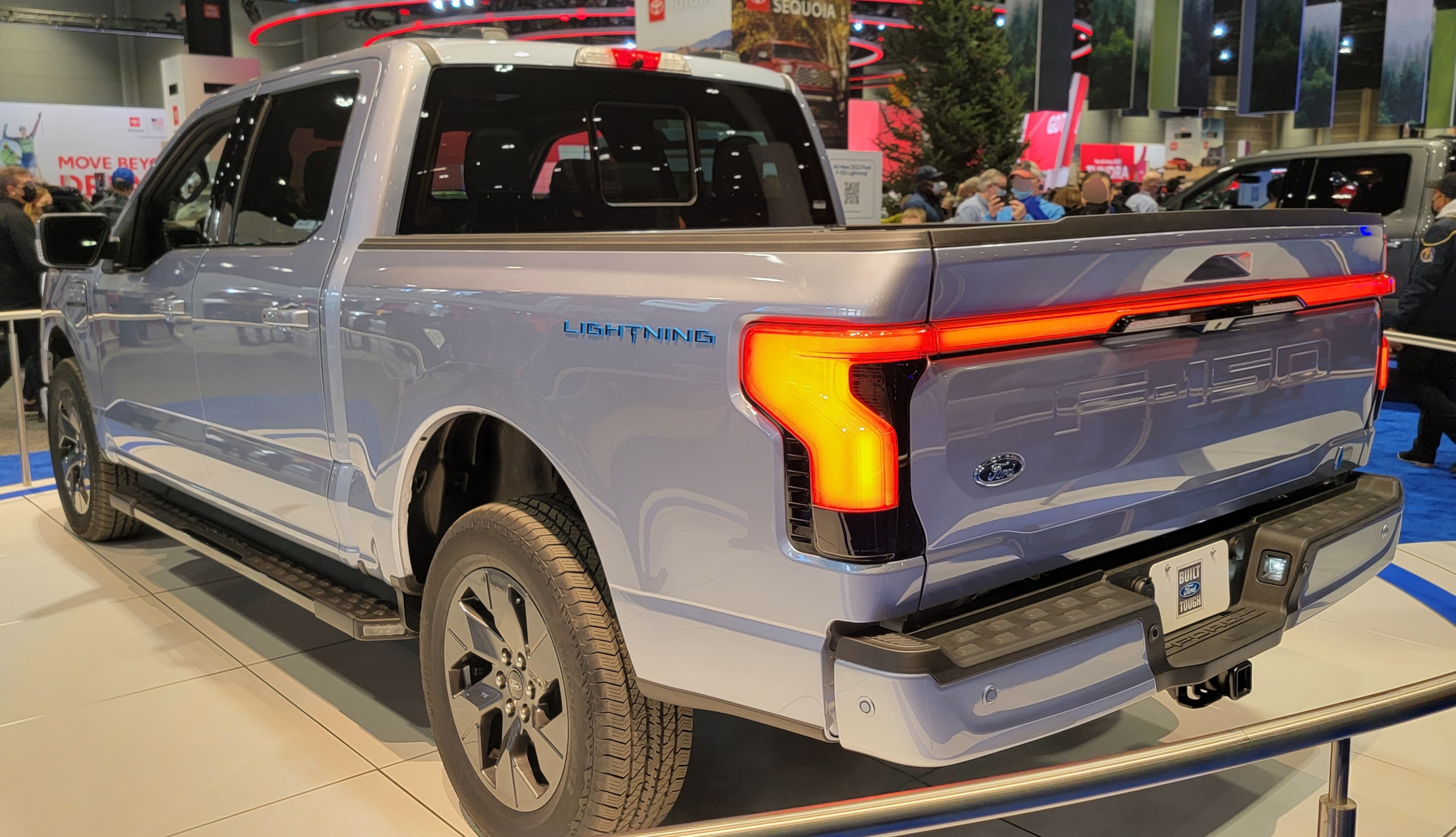
The Ford F-150 is a popular pickup truck that can be used for work or personal use. It comes in different styles and features, making it suitable for many drivers.
Trim is a way to describe the different versions of a car model that come with various features. For example, a car might have a basic version and a fancier version with more options.
Bed length is how long the truck's cargo area is. It affects how much stuff you can fit in the back of the truck, which is important for people who use trucks for work or hauling.
The out-the-door price is the total amount you pay for a car, including the car price, taxes, and any extra fees, so you know exactly what you'll spend.
APR means Annual Percentage Rate, and it's the interest rate you pay on a loan each year, including any extra fees, helping you understand the total cost of borrowing.
Basis points are a way to talk about small changes in interest rates. One basis point is just one-hundredth of a percent, so it helps when discussing tiny adjustments.
0% financing means you can borrow money to buy a car without paying any interest. This makes your monthly payments lower and can save you money overall.
0% interest means you won't have to pay extra money on top of the price of the car when you borrow money to buy it. This makes your monthly payments cheaper.
Zero percent financing means you can borrow money to buy a car without having to pay any interest. This makes the car cheaper in the long run because you only pay back what you borrowed.
A lease incentive is a deal that makes it cheaper to rent a car for a certain period. It can mean lower monthly payments or cash back to help you get the car.
Hyundai is a car company from South Korea that makes many different types of vehicles. They are known for providing good value and have a strong warranty on their cars.
Dealer fees are extra costs that car dealerships might add when you buy a car. These fees can cover things like paperwork and preparing the car for sale.
Lexus is a brand of luxury cars made by Toyota. They are known for being high-quality and comfortable.
LIVE
Whether you're walking barefoot in the snow, escaping for a walk on your lunch break,
or trekking halfway across the world for a lush view,
it feels good when we unplug and connect to our simpler side.
If only our everyday nutrition were that simple.
It's time to simplify your wellness routine with kachava.
Getting the nutrition we need from that graveyard of supplements in our cupboards
is often over-complicated.
Just two scoops of kachavas all-in-one nutrition shake,
and you've got 25 grams of protein, 6 grams of fiber,
greens, adaptogens, and so much more.
Plus, it actually tastes delicious.
No fillers, no nonsense.
Just the good stuff your body craves.
So instead of adding to your back stock of supplements that over-promise and under-deliver,
keep it simple with just two scoops that have the highest quality ingredients.
Simplify your nutrition at kachava.com and use code NEWS.
New customers get $20 off in order of two bags or more, now through January 31st.
That's kachava, k-a-c-h-a-v-a.com, code NEWS.
It is noon here in Venture City, New Jersey, and our nation's capital, Washington, D.C.
And this is Car Edge Live for Monday, January 5th, and damn, it is good to be back
with your host, me, Ray here in Venture City, New Jersey, with a fresh haircut.
And Zach, well, he's sitting there in Washington, D.C.,
but I think you'll see he has his Jalen Green nails on.
For those of you who are Phoenix Suns fans, you'll get it.
For those of you who are not, you won't.
All good.
Happy 2026, y'all.
It's good to be back here with everyone in our humble abode's dad today's show.
It's brought to you by caredge.com.
We are officially in year six of educating, empowering, and informing car shoppers nationwide.
Our website is caredge.com.
We continue to take strides in the right direction to help you navigate the car buying process.
Please go check out caredge.com and learn more about our car buying service
and how we can get you at the real price when you go to buy a vehicle.
Now, dad, today's show, Edmonds came out with a bang to start 2026.
We have the latest Q4 2025 data for new and used vehicle sales.
Holy cow, the lead is insanity.
I'm not just saying that.
I'm not trying to start off the year with more hyperbole.
I'm going to read it verbatim, and then we're going to break it down.
More than one in five new car shoppers committed $2,000 or more monthly payments in Q4 2025.
According to Edmonds, Edmonds data shows the share of $1,000 or more monthly payments,
average monthly payments, and average amount financed for new car purchases
all reached record highs in the fourth quarter of 2025.
This is what we're going to be breaking down on today's show.
Dad, Edmonds shocks the car market that they did.
Indeed, they did, and my guess is it ain't getting any better in 2026.
We have talked about an affordability crisis for the last four or five years,
and I am thoroughly convinced, thoroughly 100% convinced,
that none of the automobile manufacturers give a damn that there is an affordability crisis,
and they're not going to do anything about it other than speak about it,
but there will be no actions that match those words.
If we think that the numbers that we're about to review are hard to swallow,
maybe you see what happens during the course of this year, in my opinion.
All right, so we're getting some 2026 projections right off the bat here,
which is you're saying the affordability crisis will worsen.
I think we can look to $1,000 or higher car payments as an indication of an affordability
crisis. It's not like most people wake up and say, at least my friends, Dad, I'm 30 years old.
A lot of my friends, I live here in Washington, DC, they're software engineers,
they're mechanical engineers, they work in the government, they make decent salaries.
None of them, I think, are raking up saying, yeah, we want to spend $1,000 a month just on our
car payment. Me and my friends here in the city, we all kind of complained about the fact that
insurance costs so much, not to mention the car payment, the insurance, all that, so I don't
think it's normal for one out of every five new car shopper to take on a $1,000 or more car payment
and again, that's not the only record setting number we have here. The average monthly payment
is record setting and the amount of cash down is record setting.
It is not normal for the vast majority of people. It however seems to be comfortably normal for those
who can afford to be in the market. The only thing that would drive monthly payments down
and pricing down is if people stopped buying cars and well, that doesn't seem to really be
happening. There seems to be a large enough subset of people who can actually afford to
participate and they are participating and over 20% of them have agreed to have an automobile
payment in excess of $1,000 a month and that doesn't bother them. That doesn't scare them.
That is not an issue for them. Now, would that be an issue for you? Would that be an issue
for me? Would that be an issue say for 85, 86, 87% of the population out there? You bet your
butt it would be but there is enough profit to be had and enough customers to sell cars to
that the manufacturers don't care. They are perfectly contended with this. You can see it
in their actions. You can see it in the vehicles that they keep pushing. They talk but the actions
never match their words. Let's take a deeper dive into the data here from Edmunds. Again,
this is from Edmunds. They're Q4 market update. More car shoppers are opting into $1,000 plus
monthly payments than ever before. The share of new car buyers committing to monthly payments
of $1,000 or more reached a record high of 20.3% of all financed new vehicle purchases in Q4 2025
up from 19.1% in the quarter before that and 18.9% in Q4 of the prior year. Used vehicle buyers
also reached a new record with 6.3% of used car shoppers committing to $1,000 or a month higher
payments during the quarter compared to 6.1% in Q3 of 2025 and 5.4% in Q4 of 2024. We're focusing
on the new car market because it is alarming to say 20%, one out of every five new car shoppers
are taking on $1,000 or more monthly payment. The fact that it's 6.3% so we have record setting
used car shoppers taking on $1,000 or more monthly payment, that is also shocking to me.
Absolutely it is. The reason for it is that prices of used cars have not fallen enough.
So even for those who might have wanted to get a new car but could not afford them so they
find themselves shopping for used cars, the price of the used cars that they're shopping for
are still too expensive and 6.3% of those people have opted to have a payment of $1,000 or more
a month. It seems silly if you were to ask me that you would buy a used car, one that has a
little less warranty than say a brand new car, and agree to have a payment in excess of $1,000,
I mean what could possibly go wrong? And we know total cost of ownership obviously is
significantly higher than just your car payment. We don't even talk about fuel on this channel but
obviously fuels a component. Insurance, I mean we were talking all December about how you need to
shop your insurance, it's January, you still need to shop your insurance. We have a resource back
on the website, I am going to plug it really quickly here because it doesn't matter what month
it is, what type of the year it is, go to CarEdge.com, click on insurance up here,
and use the insurance marketplace to save money because it doesn't matter, it absolutely doesn't
matter when you're spending a thousand plus dollars on the car payment, every other dollar
does count. Obviously we have more and more people spending that thousand dollar plus. Now the
average monthly payments have the second bullet there. Monthly payments for new vehicles climb
to the highest levels ever recorded. Edmunds has been around for a while, last time I checked,
the average monthly payment on a financed new vehicle purchase reached a new all-time high of
$772 in Q4 of 2025 compared to $754 in Q3 of 2025 and $754 in Q4 of last year, 2024 excuse me,
two years ago now. We're up to $772 is the average monthly payment for a new car. How does that
sit with you, Ed? Well, think about that for a second. The whole concept was well we need to
Fed to lower the Fed rates so that interest rates on car loans could go down. And so if interest rates
on car loans go down, well then monthly payments will go down. Not really. Monthly payments have
gone up, okay, even though interest rates have come down. So what does that say to me? It says to
me that the manufacturers looked at it as a way to continue to produce and sell the highly expensive
vehicles that they are and that whatever monthly savings people had hoped to find with the lowering
of interest rates, it is not happening. It's not translating into the real world. And in order to
get payments down to what you or I or most people would consider to be an affordable level,
I don't know, interest rates might have to drop back down to zero again. And even at zero,
if you weren't paying back any interest on a $50,000 loan, it's still expensive. So it is
it's staggering when you look at the numbers and we all say, oh well, we need the Fed to lower the
rate. That's not impacting the payments in a positive way. It's still negative.
This actually continues to build on your point, Dad. You can see there it says shoppers financed
more money than ever to buy new vehicles. The average amount financed for new vehicle purchases
climbed to a record high of $43,759 in the fourth quarter of 2025 compared to $42,647
in the third quarter, one quarter earlier, and $42,113 in Q4 of 2024. So to your point, Dad,
even if the rate does go down, we're financing more than ever before. We have a record setting
$43,759 in debt being taken on to finance the purchase of a new vehicle right now.
Yes. And that increased from the third quarter to the fourth quarter by over a thousand dollars.
So either people didn't have money to put down in order to be financing less,
or because the interest rates came down a little bit, they were comfortable with financing a little
more. And say they didn't really want to go over $750 a month. Well, I guess I could finance a
back to what salespeople always say to a customer. Where do you want your monthly payment to fall?
Oh, I want to be no more than $750 a month. And the next line out of the salesperson's
mouth is up two. Well, up two? Yeah, up two. I mean, if you had to push up two. Oh, I guess I could
do $775, maybe $800. You know, people will always push themselves. And we say it in this data
that they continue to push themselves. And these apparently, these are people that are
wealthy enough to be able to afford it, where the vast majority of the population would look at it
and go, I'm done. I can't do this anymore. And the vast majority are saying, I am done. And I can't
do this anymore. And they're even struggling to be able to do it on pre-owned cars. And the
average price of pre-owned cars is higher than it should be. And the average miles are in the
70,000 mile range, which is higher than it used to be. It is, in my mind, all of this is a recipe
for disaster for the vast majority of folks out there. And ultimately, it very well might even
bite the people who think they can afford it. Now, let's go into the length of the loan term.
Longer loan terms continue to play a major role in managing, that's an interesting word to use here,
managing new car financing costs. Edmunds data shows that 84 month or longer loans made up 20.8%
of financed new car purchases in Q4 of 2025. Now, this is actually good news because that had been
22% in Q3 of 2025. Edmunds analysts note that it remained well above the 17.9% share seen in Q4
of 2024, underscoring consumers continued reliance on extended loan terms as an affordability tool.
What more proof do we need, Ed, that we are normalizing longer loan terms as a justification
to finance the purchase of a vehicle? There's no more proof needed. I noticed that Edmunds
didn't really talk about leasing in here. No. And my suspicion, and this is strictly a suspicion,
is that we will see more lease programs in the future in order to help mitigate some of these
payment issues and shorten the term. Because let's face it, if you're putting the vast majority of
your customers into 72 and 84 month loans, those people can't get back into the market
before five or six years. Well, if these are the only damn people who can afford to buy the cars,
well, I don't think you want to keep them out of the market for five or six years.
So the way to get them into the market more frequently would be able to come, you would
need to be able to come up with programs, leasing programs, that would encourage people to do a
shorter term at a lower payment so that, well, you can continue to sell cars two, three, four years
from now as opposed to having the vast majority of these customers remain out of the market for
five or six years. Well, and we also know that Edmunds does a quarterly negative equity study,
and we do it here at CarEdge as well. And it shows that these people who do end up in these longer
loan terms, they end up underwater on their vehicles for a longer period of time as well.
And so if they do want to get back in the market in two years or three years, and they have that
eight-year auto loan, that seven-year auto loan, they're going to be underwater. You as the customer
are going to owe more than what that vehicle is actually worth, which ultimately makes it even more
difficult to get approved for your next auto loan and into that new vehicle. So it really does take
customers out of the market unless they show up with a boatload of cash to try and keep them
on the payment the same, but we have data that shows that the down payment and not going up
significantly. Yeah, it would seem to me that, yeah, what's the average negative equity today?
$65, $6600? Yeah, which is, you know, if you figure that for every $1,000 it impacts your
payment $20. Well, you've got at $6,500, you've got what $130 worth of your next payment just
covering what you still owe on your current car. So, yeah, it seems to me we're no closer to
solving this affordability crisis for automobiles today than we were five years ago when this all
started. But interest rates could come to the rescue. Let's get a little update there. Interest
rates eased modestly, but remained elevated for new car shoppers. The average APR for new vehicle
purchases dipped to 6.7% in Q4 2025. That's down from 7% in Q3 2025 and 6.8% from Q4 2024,
but still near historically high levels. Edmunds analysts note that promotional financing continued
to be limited. In Q4, just 3.1% of new vehicle loans carried a 0% rate down from 3.3% in Q3 2025
and up from 2.4% in Q4 2024, which is interesting because we actually had 440% financing offers
that actually some of them end today. Today is kind of the last day of the month
for many of the incentive programs. And so I'm a little bit surprised here, dad, to see that there
are fewer, a quarter of a quarter, excuse me, fewer new vehicle loans with 0% financing, but
we do have some good news when it comes to interest rates going down a little bit.
News there, but my suspicion is that the reason it's just 3.1% is because the vast majority of
people don't qualify for the 0% interest loan. Your credit score needs to be 740 and above,
in most cases, to be top tier and to qualify for those specialized programs. So it's easy for the
manufacturer to advertise it. It is difficult for most buyers to qualify for it. There are two
different aspects here. You can offer something that nobody qualifies for, but they offer sounds
great and it generates floor traffic and it gets people in. But as you can see, only 3.1%
of people opted or were qualified for or utilized the 0% interest. So even though
new car interest rates were down three basis points or three tenths, that's not enough to impact
the payment. We did that one day on the live program where we looked at it with a 25 basis
point drop and it impacted the payment like 8 or 10 bucks. I mean, what the hell is the
difference between 772 and 762? So at 772, you do without one Starbucks a month.
Okay? And most people, they're not even giving up that stuff. It's my mind.
That we do have the latest data from Cox Automotive on interest rates as well. So I'll
read this out quickly here. The average Fed fund rate in December fills 16 Bips from November
following the Fed rates cut earlier in the month. Though the 10-year treasury yield remained
relatively flat, auto financing rates improved, new vehicle APRs declined 13 Bips and used rates
dropped 25 Bips. So that's a quarter of a percentage point. That's almost like a tenth
of a percentage point bringing both to their lowest levels in a year. So to your point though,
we've got good news and let's actually look at it. Let's do it together here because I do think
it is illustrative of the broader affordability challenge that Edmunds makes so clear. Let's
shop for a new car really quickly. What do you want to look at, Deb? Let's do a truck. I want to
do a truck because we added some new filters. So I want to show how that works. Oh, okay, cool.
I've always wanted a new F-150. Okay. So I'm going to do Ford. Yes. And I'm going to do F-150.
Yes. And now you'll notice here, y'all, trim is right below the model. All right. So we've got
the trim right there. So let's look at an expensive one. Let's look at a wrapped one. I want a fancy
one. And then bed length will also show up right here for your pickup trucks as well. So you can
choose your bed length right there. So, Deb, we're looking at an expensive... We don't need to do
this expensive. We'll do this one right here. First one. A $94,960. And the reason to do an
expensive one is because the change in the interest rate on a more expensive on a higher
amount of finance should materialize as more of an impact because we've just got a bigger principle.
So I'm going to come all the way down here and I want to go to my monthly payment calculator. Here
we go. All right. So we've got a $95,000 out the door price. That's great. Loan term, 60 months.
Let's say it's an 8% interest rate. We're at $1,944 a month for this Ford Raptor. Yippee!
Okay. And what did we get? Baby, sign me up. We just learned that new vehicle APRs declined
.13%. Let's come back over here. So let's do... What has that been? 7.8? 7.87?
We're at 1,903. What was it a second ago? I don't remember. All right. So at 1938,
1944. Six bucks. Six bucks, baby. If that six bucks is the difference between you being able
to afford that vehicle or not being able to afford that vehicle, let me suggest to you,
you can't afford it. Period. Period. Let's do it with an example that's a little bit less of
like a specialty vehicle. So let's look at something less specialty. So what about that?
Doesn't have to be a pickup truck this time. Let's do what? Like Nissan. We know Nissan's got
a dramatic... Let me go back here. Let me clear out my filters. We know Nissan's got a dramatic
oversupply of inventory, right? We've heard, yeah. So let's do a Nissan. Let's just see whatever
comes up. Let's do... We'll do a Kix. So we're at $28,890 here. Come down to the payment calculator.
Here we go. So we're at $609 a month. Yes. $609. Remember that. $609. The area code where I
live. $609. We're at $608 now. $608. Not the area code where I live. $608. So our interest rate is
going to be the saving grace? I don't think so. Okay. So that dollar a month you just saved won't
even buy you parking. Okay. At the cafe that you want to go to for lunch. It's fool's gold
at this point to think that the lowering of interest rates is really going to be the saving
grace for most people out there. It is not. And I will take exception with one of the things that
Edmund said in the article that the interest rates are historically high.
They are not. Okay. They are what I would suggest to you are historically normal.
What was abnormal was when interest rates were reduced because of the great recession to near
zero and they stayed at those artificially below normal levels for a dozen years or 10 years or so.
Just because we went through that 10-year period of time doesn't mean that that was
the historic normal. It was abnormal. And so to suggest that a 6.7% interest rate on a new
car loan is historically high is a misrepresentation of the truth and the facts. I lived through the
days in the 80s where we had interest rates 17, 18%. Those were normal rates at that time.
But they didn't remain that high for a dozen years or so. But a 6.7% interest rate is not
historically high. Let's actually first, I can hear that because again what we're demonstrating here
is Cox Automotive. They put out their weekly auto market update and they showed that new
vehicle APRs declined 13 basis points, 0.13. Now at the same time we know from the Edmunds data
what was it? It was 3.1% of new vehicle loans in Q4 had 0%. Let's come here and we've just
demonstrated that 0.13% decrease, the 13 basis point decrease, dropped some payment on a Nissan
kicks here by a dollar a month over a 16 month loan term. Let's see what happens however, Dad,
when we make it 0%. So when the manufacturer steps up and says, oh crap, we got to sell these things,
we're going to go from $609 a month to 501. So now let's talk about this. What type of impact?
Which again, we know that manufacturers only stepped up for 0% financing for 3.1% of new
vehicle purchases last quarter. But what type of impact does a $100 plus a month swing in payment
on in this case a $30,000 vehicle half? That to me starts to indicate, okay, this could help move
the metal. Oh, absolutely. And here's the really funny part about that. When Nissan offers 0%
interest, they know that the vast, vast, vast majority of their customers are never going to
qualify for it. They just aren't. I'm sorry. For sure. Nissan might not be the best example here,
but in general, when these manufacturers offer 0% or 0.9%, that is really where they can move the
metal. If you're talking about saving somebody $107 a month over 60 months, that's significant.
That's enough where somebody could say, okay, I can now afford it.
I mean, you know, $107 a month difference in your payment is huge. So, you know, that might
actually might help you cover your automobile insurance and some of your maintenance costs.
So, yeah, but a 13 basis point drop, even a 1% drop is not going to move the needle
significantly enough to wear these high priced vehicles. And I read the comments and many people
believe them to be well overpriced vehicles. Even a 1% interest rate drop is not going to
significantly impact the payment enough to bring the vast majority of people back into the market.
It's just not. Which is why I say the manufacturers don't really care and that their actions don't
match their words when they talk to you about, we're very concerned about affordability. We have
to address the affordability crisis. We have to address our affordability issues and then they
turn around and they keep producing the 60, 70, 80, 90 thousand dollar vehicles and they are not
addressing it and they have no intentions of addressing it. And it is a small subset of the
American public that can afford to buy these cars and they're the only people that these manufacturers
are truly interested in. Here at Unclear, but I come back to it all the time, the first viral video
we ever had on YouTube was my dad explaining what happens to unsold new cars and you don't have to
go watch the video to get the answer. It's right here. There is no such thing as an unsold new car.
All new cars eventually get sold, whether it be to a retail customer or they get sold at dealer
auctions behind the scenes and obviously dealers lose money on vehicles that don't sell. And the
reason I bring that up in this context, dad, is because eventually what will happen here is these
manufacturers will either have to step up, do zero percent financing and things like that, which
for instance here on this Kix, Nissan's offering right now a lease incentive that is effectively
7.44 percent APR or $300 in customer cash. So they are not stepping up. I want to be very clear
here. Neither of these incentives from Nissan say we're feeling the pain enough to have to step up,
but eventually, dad, if what you're describing stays true and customers stop buying these vehicles,
we know the incentives have to increase or the manufacturers have to produce more affordable
vehicles. Well, and I don't know if you noticed, but the end dates for both of those programs are
today. Can you imagine the rush at these Nissan dealerships so that the people can get that $300
lease cash or that 7.24 percent interest rate on that? Who the hell is running in for that?
But Nissan's putting all their money in their stair step programs.
That's a bad save. We're going to talk about that tomorrow and the next day. And we are also going
to get the national data on new and used car inventory this week or next week. And obviously,
we'll be covering that here on the channel as well, because there are already supply and
demand imbalances here in the United States. There are many dealerships that are dramatically
oversupplied with vehicles. It seems like the early indications are that December was not as
strong as the industry had wanted it to be. And so that's good news for shoppers, continues to be
good news for shoppers. The more the industry has buried an inventory, the more opportunity,
the more leverage we have as shoppers. The best leverage we have at shoppers
as shoppers right now with the automobile industry is to stop shopping. I know that impacts our
business, okay? But if people just stop buying cars, and I believe we own that website or maybe
we've given up that domain name, but stopbuyingcars.com, if people en masse stop buying cars
and at that point, the manufacturers would have to look at what they're doing. But as long as that
subset of people who can actually afford to participate, keep participating,
we're not going to see any change. We're just not. I believe that to be the reality of the
situation. I believe the manufacturers have been proving that to us on a daily basis for the last
five years. I hear you loud and clear. And I continue to reiterate that there are pockets of
opportunity out there. So while it would be great if everyone stopped buying cars for a few months,
the whole auto industry, I think, would reset. I do not think that's rational or realistic.
Where are our pockets of the auto industry? And brands in particular, I'm looking here at Hyundai
Dad, who actually, they saw their prices go up significantly in here. We've got a Santa Fe
calligraphy. It's a $53,000 vehicle. Where else? I want, where is it? Yeah, Ionic 9 here, Dad,
$68,000 vehicle. There are some of these vehicles pops. Yeah, moderate leverage, which makes sense
because 211 days on the lot, there's 12 for sale. None have sold in the last 45 days near this
dealership. That's an example. Yeah. Do me a favor. Okay, scroll down to your payment machine.
On that $68,000 car that you should be able to buy for $64,000 plus fees.
Yeah. Oh yeah, boy, that's a reasonable payment for most people. Where there's pockets of savings,
that savings is never making it into most people's pockets.
Totally. I hear you, Dad, but it goes for me back to supply and demand. And I hear you that if there
was less demand and the same amount of supply would have a bigger impact on the market and for
particular makes and models, we're compiling the fastest and slowest selling cars here for the
month of January. And that'll also indicate where there are pockets of opportunity and obviously
which brands, Cough, Lexus, Cough, Toyota have an imbalance when it comes to supply and demand.
From our dear friend Rich, thank you for this, Rich. I don't want to say the Norman Tim special
screams Ray, but only because I don't want him screaming at me. What is the Norman Tim special
pops? Well, I can honestly say I have no idea what Rich is referring to. It's not often I can
say that. It's not often that I will admit my ignorance, but I don't remember who Norman Tim's
is and I certainly have no idea what was special about him. Let's see. Give me a second here.
You're going to look it up in the Google machine. Yeah, look at this. It looks like it's a cart.
And what the heck? Oh, wow. Whoa. What? That's an interesting vehicle now, isn't it?
I don't know if it screams pops, but it screams something.
I kind of like that. I mean, I only wish my ass was that long and that big, but
because I just remember you kids, you and your sister wanting to call the police and reporting
that somebody stole my ass, but because it was missing. So that's a unique looking automobile.
Folks, if we can help you out with anything, please check out the website, caredge.com.
As a friend of reminder, we have the car search there. We also have our research center. We
have a car buying service where we can do it all for you. I encourage you to learn more about how
it works, get a free consultation and meet the incredible team that busted their butts through
December to serve our customers. We also have Car Edge Pro warranty solutions, insurance, and
you should be tracking your vehicle value back on caredge.com as well. Please check it out.
And so much more caredge.com. We're back tomorrow with more Car Edge lives, so tune in for that.
There's plenty of news stories as we've entered 2026, so we'll have plenty to share with you.
Dad, grateful to be here with you to start the new year and I hope you enjoy your afternoon.
Well, thank you so much. And yes, I'm looking forward to tomorrow. We might actually
have a breakdown from most of the manufacturers as to what their third quarter sales look like
and what their December sales look like. Yeah, can't wait to look at it. All right,
Dad, I love you. Enjoy the afternoon. I love you too. See you all back here tomorrow.
And remember, tell a friend to tell a friend to tell a friend and tell everybody to use a separate
advice. Damn it. Looking for the ultimate car talk, buckle up for Car Cast, the podcast that
blends horsepower, insider knowledge, and big personalities. Join me, Motorator Matt DeAndrea,
along with Edmunds.com, Editor-in-Chief Alistair Weaver and WWE Hall of Famer Bill Goldberg.
As we dive into the latest rides, car culture, and behind the scenes stories, you won't hear
anywhere else. From track tested reviews to legendary car collections, this is where passion
meets performance. Subscribe to Car Cast Now on Apple Podcasts, Spotify, or wherever you get your podcast.
If you liked the show, please take a moment to rate, review, and subscribe. It really does
help the show to grow. Thank you for listening.
About this episode
The latest data from Edmunds reveals alarming trends in the car market, with over 20% of new car buyers committing to monthly payments of $1,000 or more. The average monthly payment for new vehicles has reached a record high of $772, while the average amount financed has also surged to over $43,000. The hosts discuss the implications of these figures, highlighting a growing affordability crisis in the automotive industry. They express skepticism about manufacturers' commitment to addressing these issues, suggesting that extended loan terms and rising prices are becoming the norm, leaving many potential buyers priced out of the market.
Today on CarEdge Live, Ray and Zach discuss the latest data from Edmunds. Tune in to learn more! Hosted by Simplecast, an AdsWizz company. See https://pcm.adswizz.com
for information about our collection and use of personal data for
advertising.