The LA Auto Show is a big event in Los Angeles where car companies display their latest cars and technologies. It's a fun place to see new models and learn about what's coming in the car world.
SEMA is a big car show where companies show off new parts and accessories for cars. It's a place for people who love cars to see what's new and exciting in the automotive world.
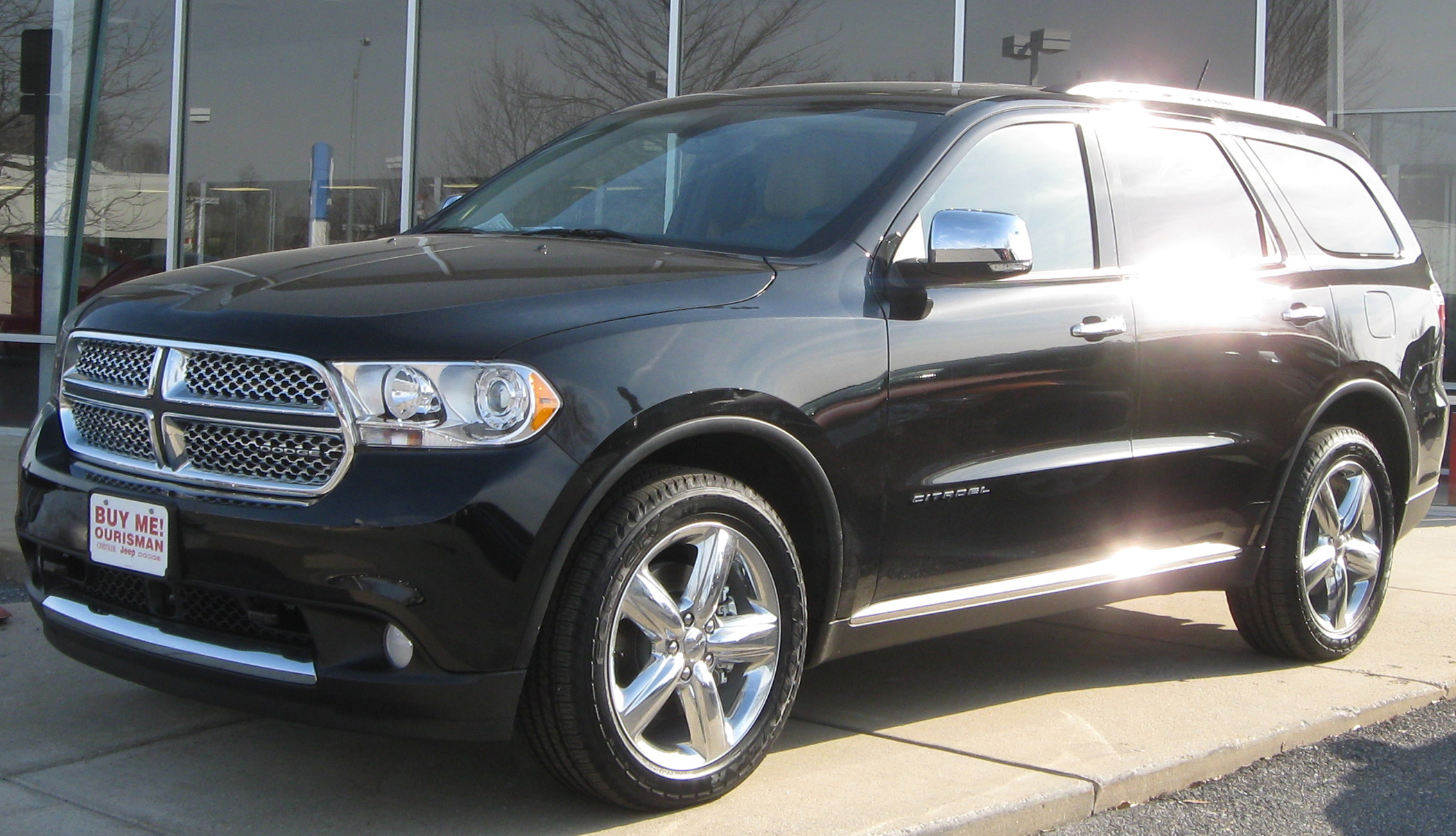
The Dodge Durango is a large SUV that can carry many passengers and has a lot of space for cargo. It's good for families and can pull heavy things like trailers.
A bedliner is something you put in the back of a pickup truck to protect it from scratches and damage. It helps keep the truck looking good and can be made from different materials like rubber or plastic.
A painted steel finish is when the metal of the truck bed is covered in paint to protect it. This type can be slippery when wet, making it harder to stand on.
The Toyota Tacoma is a popular small truck that can handle rough terrain and is often used for work or outdoor activities. It's known for being tough and reliable.
The Nissan Leaf is a car that runs on electricity instead of gas, which makes it better for the environment. It's popular because it helps people save money on fuel and is easy to drive.
MSRP is the price that the car maker suggests you should pay for a new car. It's like a starting point for how much a car should cost.
Car
Ford OBS
OBS stands for 'Old Body Style', which describes a certain look of Ford trucks made between 1980 and 1997. People like these trucks for their classic style.
Car
Ram Rebel
The Ram Rebel is a type of pickup truck made by Ram that is built for off-road driving and has a tough look.
Car
Ram Warlock
The Ram Warlock is another type of pickup truck from Ram that has a special look and features for off-road driving.
An impact driver is a power tool that helps you loosen or tighten screws and bolts. It works by giving a strong push, making it easier to turn stubborn fasteners.
Touch points are parts of the car that you touch often, like the door handle and steering wheel. They are important because they affect how you feel about the car's quality.
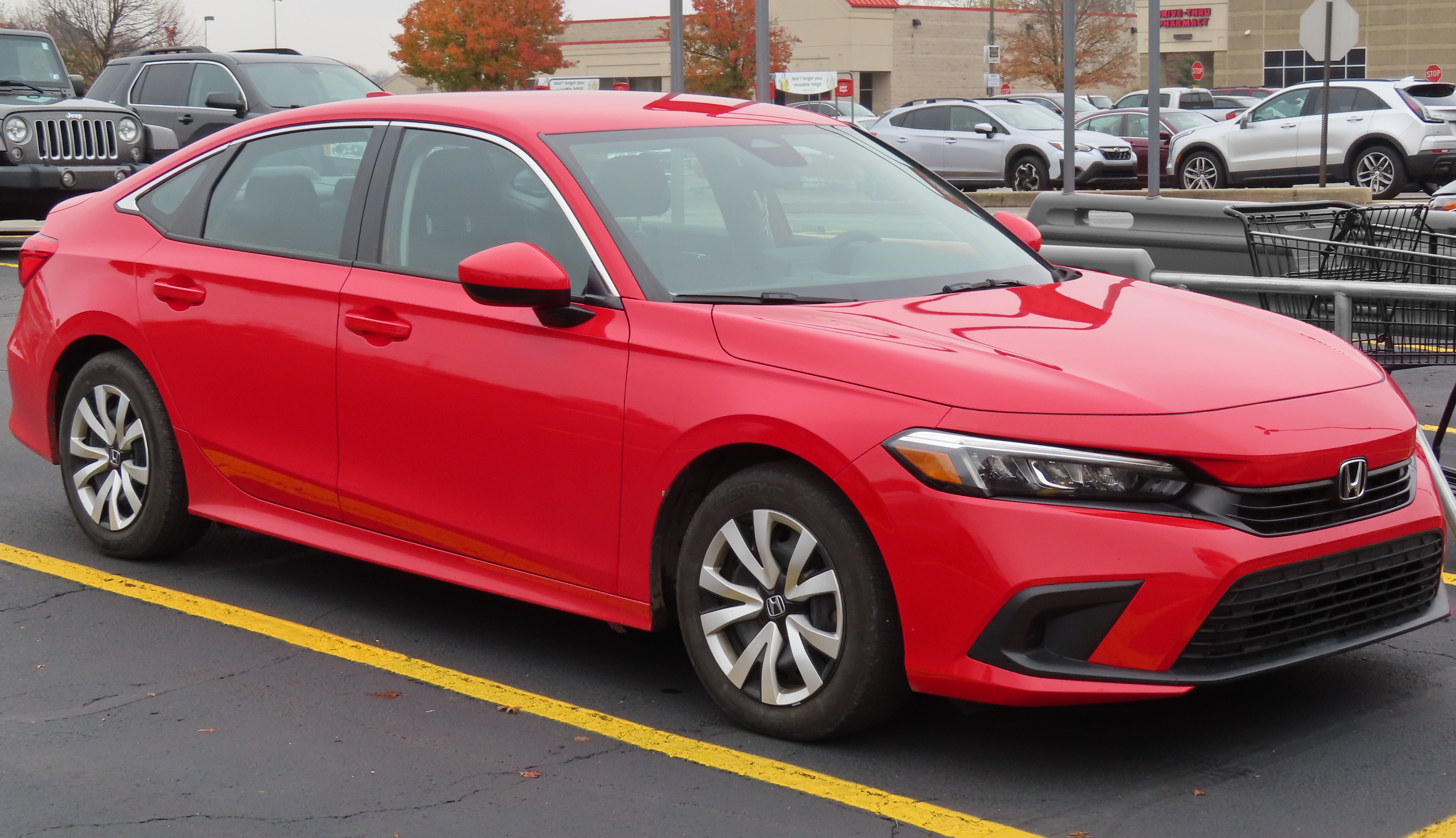
The Honda Civic is a small car that many people buy because it's dependable and gets good gas mileage. It's been around for a long time and has many different versions.
NHTSA stands for the National Highway Traffic Safety Administration, which is a U.S. government agency that focuses on vehicle safety. They check how safe cars are and publish reports about things like headlights.
The Dodge Ram is a big truck that's really good for carrying heavy things and towing trailers. It's also comfortable inside, making it a good choice for work or everyday driving.
The Toyota RAV4 is a small SUV that is great for families. It has a lot of space inside and comes with many safety features to keep you safe while driving.
Autonomous braking is a system that helps stop the car automatically if it senses that a crash is about to happen. It uses special sensors to see what's around the car and can react quickly to avoid accidents.
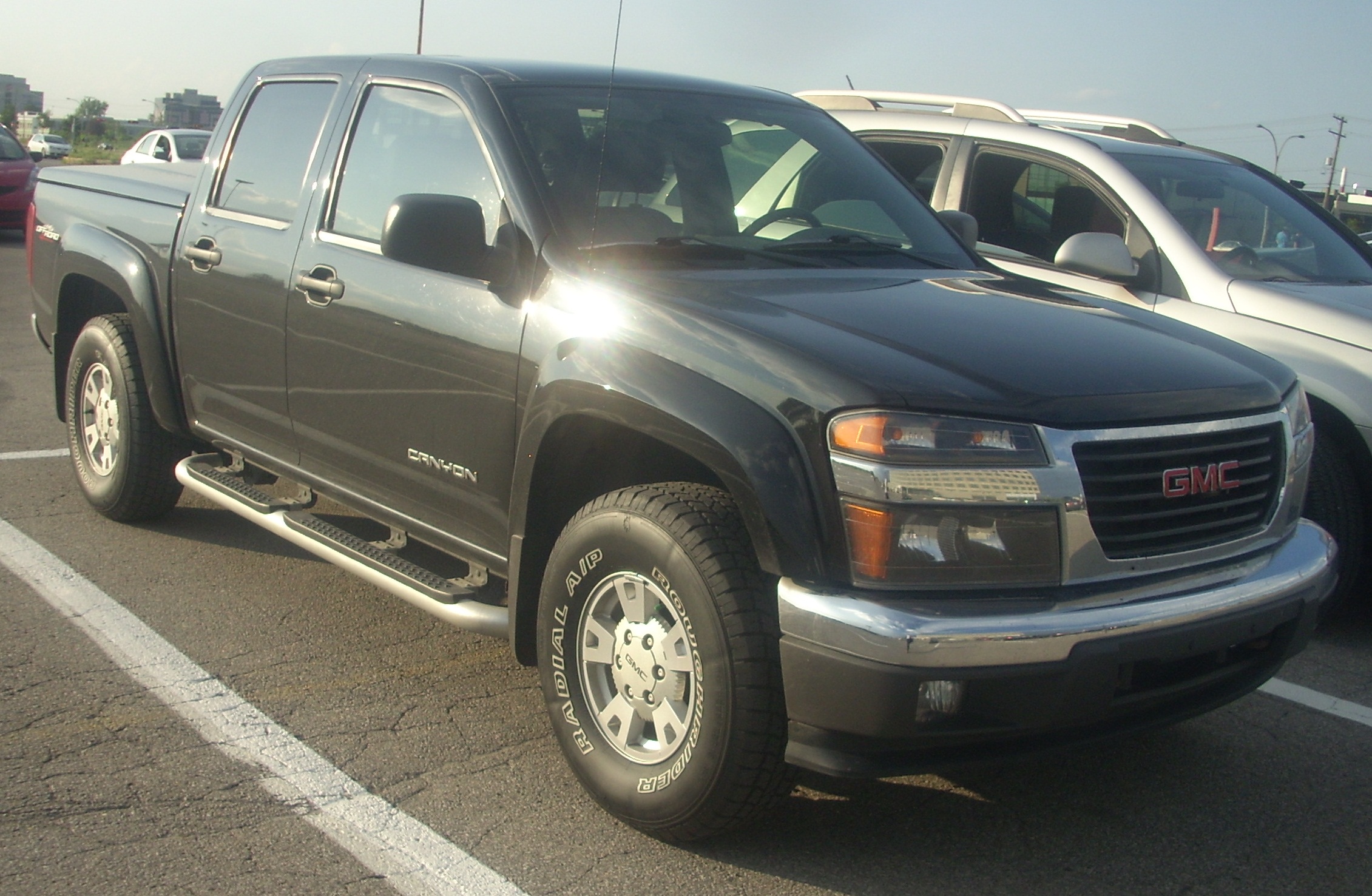
The GMC Canyon Crew Cab is a smaller truck that has room for people and stuff in the back. It's good for both work and everyday driving, making it a versatile choice.
The Jeep Wagoneer is a big SUV that can carry a lot of people and gear. It's nice inside and can handle rough roads, making it great for family trips and adventures.
The Chevrolet Corvette is a fast and stylish sports car that many people love. The C8 version is special because it has a unique design and really powerful engine that makes it fun to drive.
A brake controller helps control the brakes on a trailer when you're towing it with a truck. It's important for safety, especially when the trailer is heavy, so that both the truck and trailer stop together.
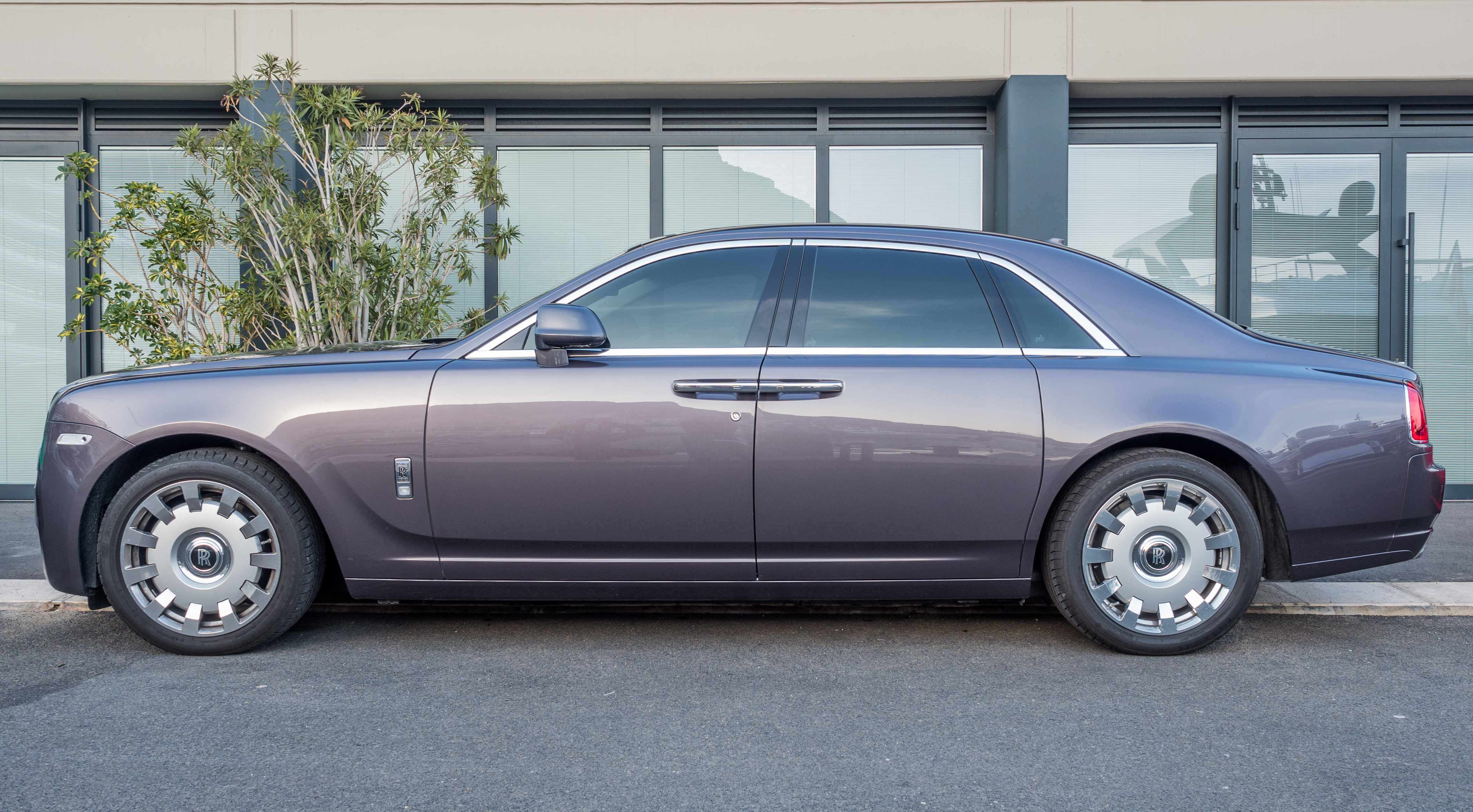
The Rolls-Royce Ghost is a super fancy car that's really expensive and luxurious. It's made with the best materials and is known for being very comfortable and powerful.
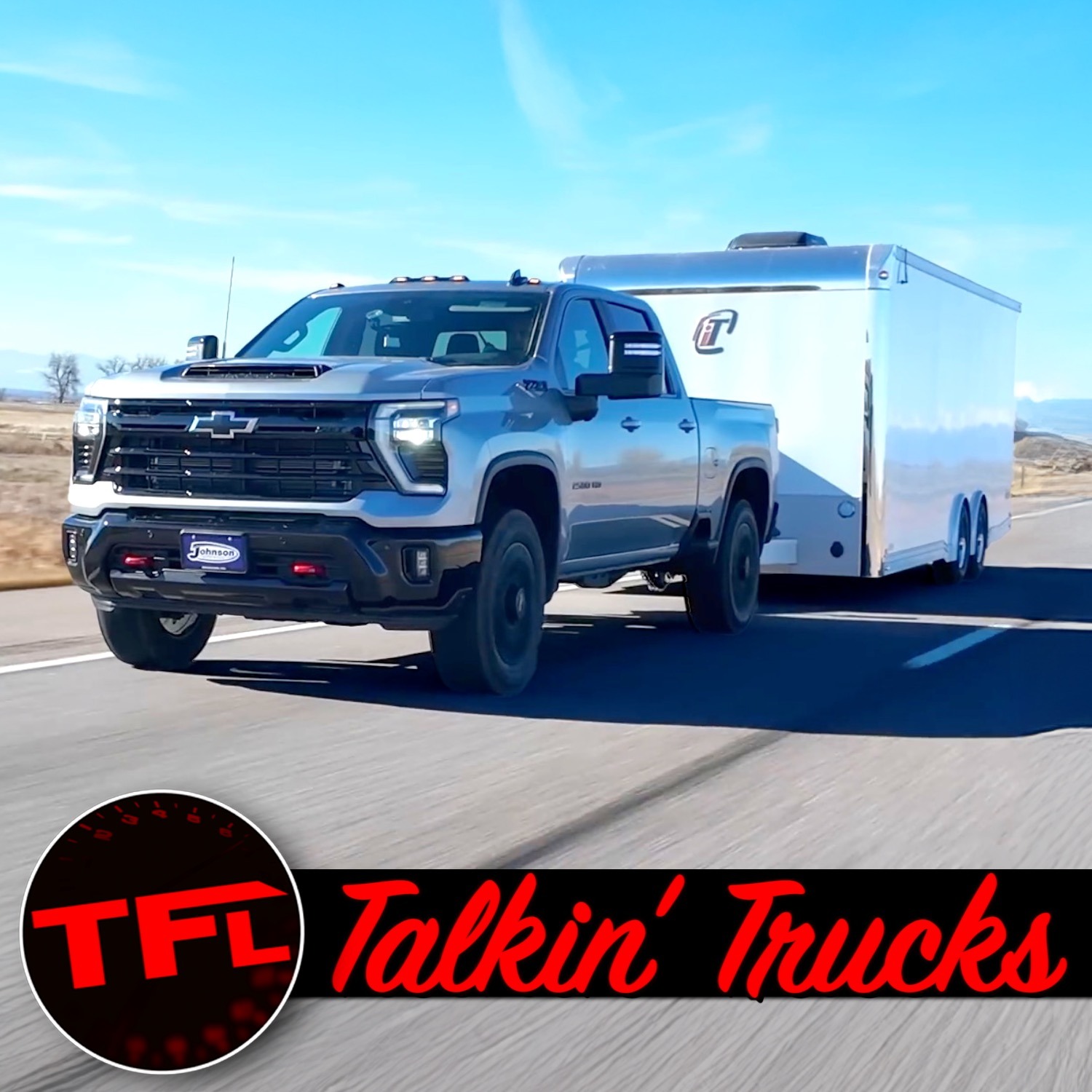
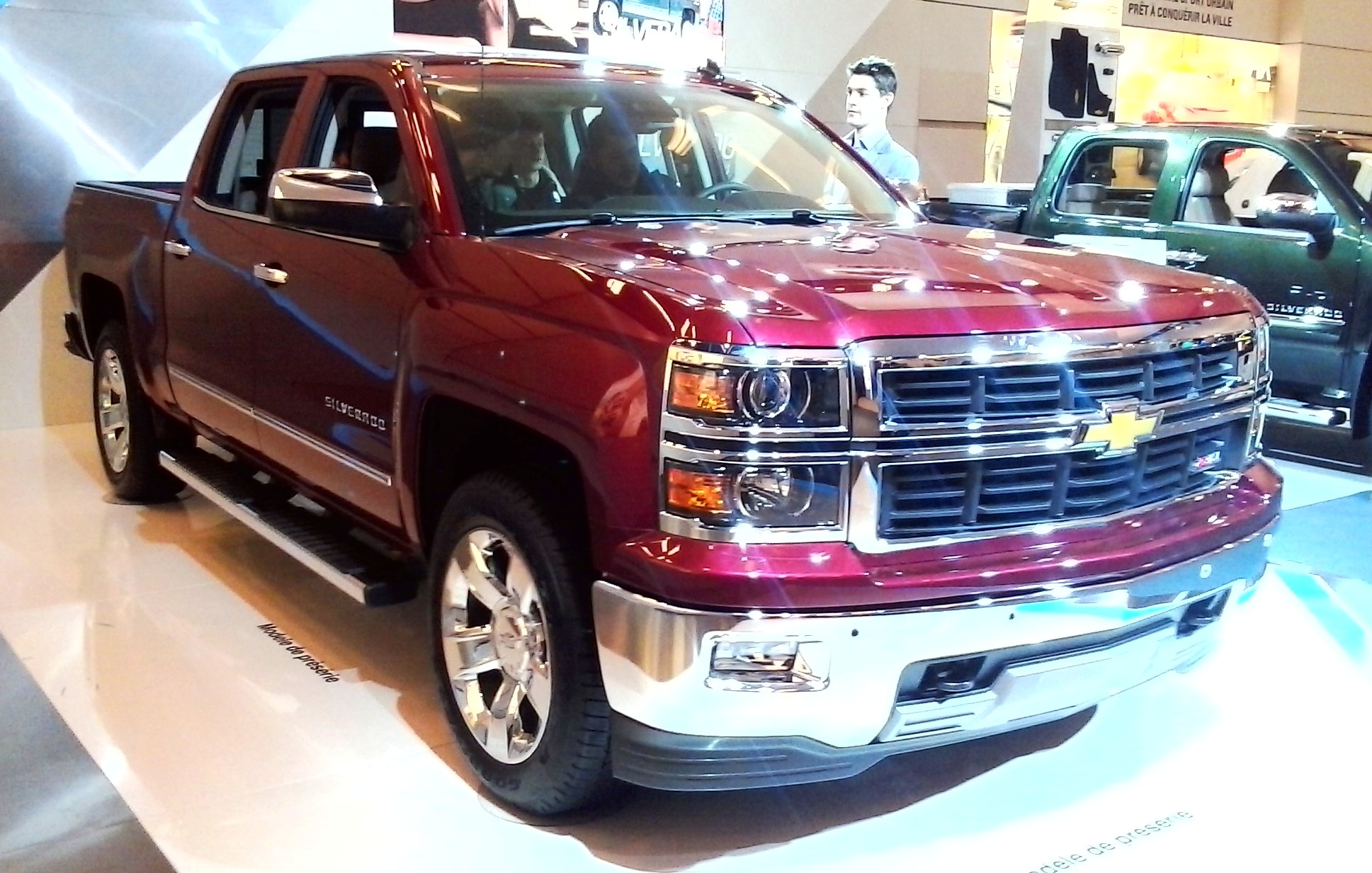
The Chevrolet Silverado is a big truck that can carry heavy loads and is great for work or family use. The 2500 HD version is even stronger and can tow more weight, which is why it's often more expensive.
The Ford Bronco is a tough SUV that can handle rough roads and off-road adventures. It's popular with people who like to explore nature and need a vehicle that can go anywhere.
The Dodge Challenger is a powerful car that looks like the classic muscle cars from the past. It's known for being fast and fun to drive, making it a favorite for people who love cars.
The GMC Sierra EV is a big electric truck that can do many of the same things as regular trucks but without using gas. It's part of a new trend of making trucks that are better for the environment.
The Fiat 500 is a tiny car that's cute and easy to drive around the city. It's perfect for people who need a small vehicle that can fit into tight parking spots.
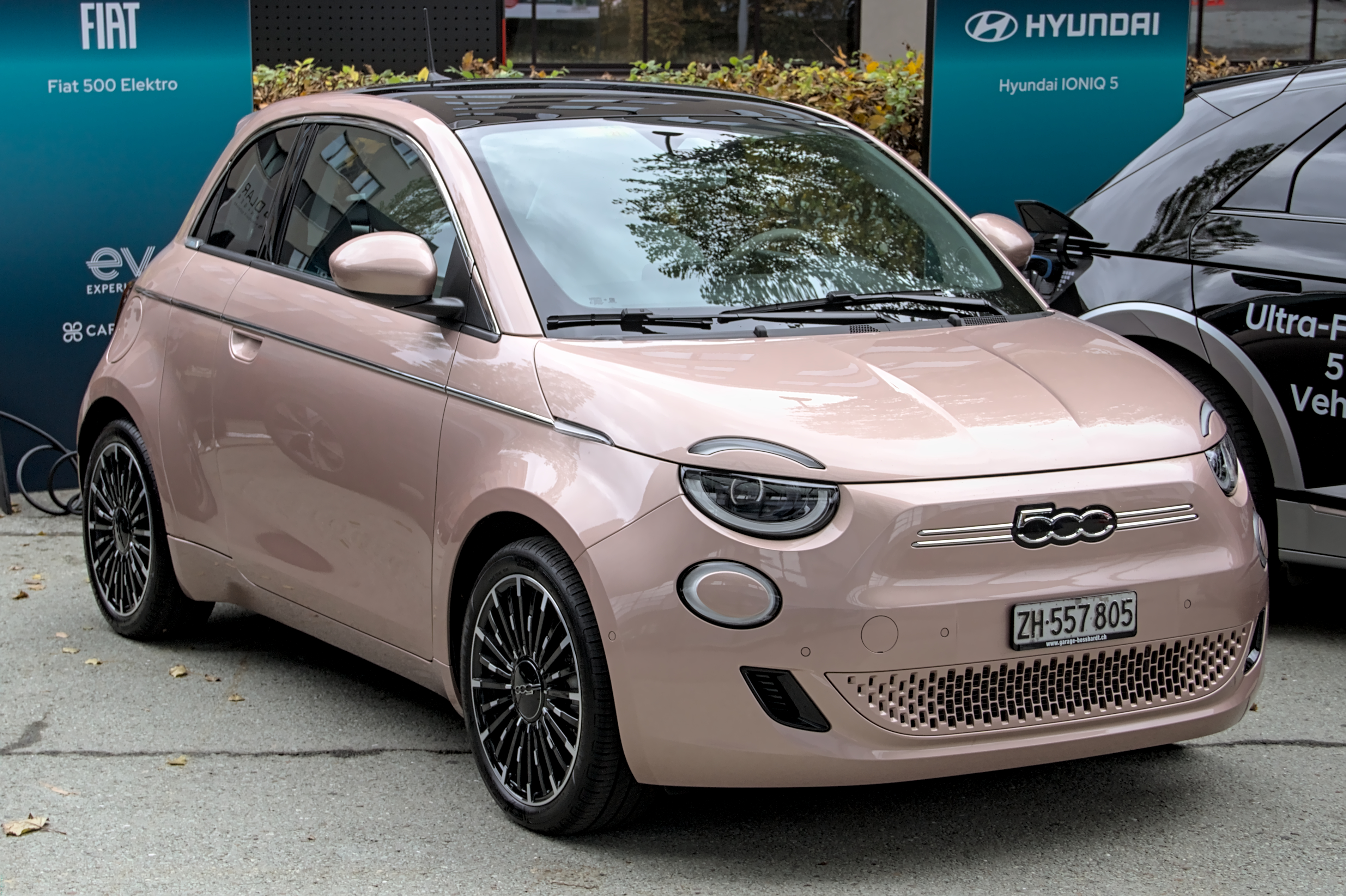
The Fiat 500e is the electric version of the small Fiat 500 car. It runs on electricity instead of gas, making it better for the environment and great for city driving.
The Tesla Semi is a big electric truck that companies can use to transport goods. It's designed to be more efficient and better for the environment than regular diesel trucks.
The Honda Passport is a roomy SUV that's great for families and trips. It has enough space for everyone and can handle rough roads if you want to go on adventures.
LIVE
All right, we've got our most recent episode of Truck Podcasts, 301.
Wow.
You missed last week, Case.
I'm sorry you missed it.
We had a bit of a celebration.
Mr. Truck was here as kind of a special return host, but you were out shooting a video.
So today, Andre's gone.
Where's Andre?
Yeah, now he's out on vacation in the UK, hopefully having a good trip with his family.
But yeah, 301 episodes of Talking Trucks is pretty cool.
It is pretty cool.
And today we're going to be talking about annoying ways truck manufacturers cut costs.
And we've got a list of different things that truck manufacturers do that kind of annoy me
because it just seems petty and silly.
But before we get to that, let's talk about Truck of the Year competition.
Yeah, so we're doing a big competition, testing out trucks to figure out what's going to be the Truck of the Year
because this is something that we've done a little bit in the past,
but we're trying to formalize it and make it a more standardized test.
There's going to be a lot of components going into it, although for this test,
we're not going to be doing any off-road testing, right?
No, so in the past, what we did was the Golden Hitch, which was kind of the best towing truck.
And then we also did kind of an off-road component to it.
But this time, we're just going to do a very straightforward Truck of the Year competition.
So what we're going to do is combine all the tests that we do individually into one big overarching test
to pick the best.
And this year, we're going to go with full-size truck.
So the best full-size truck.
So we're going to be towing, of course, up the Ike.
We're going to be doing an MPG run.
And we're going to be doing, what else are we going to do?
There's one other component to it.
Well, I would hope that at some point, we're going to do a little bit of testing with hauling stuff in the back.
Yeah, so we're going to basically, the stuff that people use trucks for and then they'll,
I think we'll do what kind of motor trend does, and that is we'll quantify the numbers
and then based not just solely on numbers, but maybe on our input as well, we'll pick the winner.
And as you can probably tell, this is Andre's area because he's the numbers guy.
He's the numbers guy.
And we're doing a bad job of explaining his test.
Yes, we are.
So we'll let him do it when he gets back.
Yeah.
But it's going to be cool.
It's going to be a big video, a big test.
But I kind of feel it'll be me and you again next week because Andre is off to Germany next week to test a Mercedes van.
So he's kind of out of the office for two weeks now.
Yeah, he's doing a lot of traveling.
He is.
And actually everybody's doing a lot of traveling.
Yeah, there's a bunch of stuff coming up.
SEMA is coming up, LA Auto Show is coming up.
And then there's a lot of individual vehicle programs as well.
Yeah, Nathan was just driving the new Frontier in Michigan on the sand dunes.
I should say new.
It's not that newish.
So that video is coming up very soon.
Where are you going?
You got a lot on your play too.
Yeah, I'm going with Andre to SEMA.
So we'll have some videos coming from that of some of the really cool vehicles that are always there.
I'm not going to LA.
I'm going to be at SEMA too.
Are you?
Yeah, I'll be at SEMA.
So I'm there with Nissan, actually I'm there with Infinity.
And we'll meet up at the show.
And so we'll have wall-to-wall TFL coverage because it'll be me and Andre from SEMA.
I gotta say I'm dreading it.
SEMA?
Yeah, it's a lot of walking.
Just dread SEMA.
But it's cool.
It's like, this is coming my what now, I don't know, 10th year going, something like that.
And by the end of day two, I'm covering things not based on how interesting they are,
but how close they are to the media room.
Well, to be fair too, you and I are kind of on opposite ends of the spectrum where I really like modified customized vehicles.
And I know you and Tommy, not as much fans.
Oh, I love modified vehicles.
I just don't love modified vehicles for our channel.
Yeah, that's fair.
Because they lose a lot of money.
Yeah.
And to be also fair, you're good at modifying vehicles and I am not good at modifying vehicles.
And so, hopefully, we can come somewhere in the middle.
The thing about SEMA, here's the thing about SEMA is it's just hard to get your arms around it.
It's hard to figure out what is interesting above all the noise.
Yeah.
Because there's so much there.
There's so much there.
Yeah, it's huge.
And on your way to go film something that you know is cool, that you know you want to film,
you walk by five other things that you genuinely do not even have the time to look at.
So, yeah, it would be cool to walk around the show and enjoy it as kind of a spectator when we're there working.
We're on a mission.
Yeah.
And we are.
And then a lot of people, and I'm very grateful for this, come up and say hi to us.
But it's also a little bit daunting because, you know, you've got only so much time and then you're trying to get to these different things you're covering.
And then, you know, we don't want to be rude to people, so we always stop and chat with them.
But that also makes it hard.
And then, of course, there is the Vegas component of it where you have a bunch of like pre-drunk or post-drunk Germans wandering around.
Yeah.
Yeah, so it's a lot going on.
But if any of you are at SEMA, don't be surprised.
Yeah, come up to us.
Sprinting from hall to hall.
And we always love to say hi.
And it'll be an interesting year because, you know, obviously the landscape politically has changed.
And so a lot of the EPA stuff, while it's still in place, the penalties for it have gone away.
Yeah.
So that may free up people to do a lot more craziness.
I don't know.
We'll see.
Yeah, so we'll see what's at the show.
It's something that I look forward to for sure.
It is kind of daunting, but that's coming up and a lot of other trips.
I've got two Dodge trips coming up as well.
What are you doing with Dodge?
Durango and then a Charger event.
Those are pretty cool.
Yeah.
Yeah, that's all right.
Yeah, that's not my least favorite.
Yeah, yeah.
All right.
Well, so let's talk about these annoying ways of manufacturers cut costs on trucks specifically.
And number 10 on our list, we'll do it.
The TFL way we'll start at number 10 is bedliners or the lack thereof.
It always really gets me.
It happened to us this year.
Usually Ford has done this where you go and buy a new truck and I kind of fall in love
with the truck and I'm walking around the truck.
And then at the very end, I kind of look in the bed and I'm like, ah, because there's
no bedliner because basically you have to have it either ordered or done at the factory
because many dealers don't actually order it with the bedliner.
And the cost of bedlining has also gone up dramatically because when we started this,
you could do a full-size truck for like 400 bucks.
I want to say now when we take our truck to Linux, I want to say it's a thousand bucks
or close to it, maybe $800, $900 to do a full-size truck bed in bedlining.
And then what's especially daunting is there is competition there, right?
Yeah.
Because like most of the Japanese trucks either...
Well, anything with a composite bed is already going to have a textured finish.
And especially for us where we live in Colorado and we get snow, you get snow in the bed.
And God forbid the bed of your truck is wet and it's unbedlined.
It's just the painted steel finish.
You're going to lose your footing and slam your head into the bed rail.
So we always like to bedline our trucks so that to us they feel kind of unfinished
until you get them bedlined.
And it is something that you can spec from the factory.
But to your point, a lot of trucks when you go to the dealer don't have it.
So I understand where you're coming from that they sometimes feel a little unfinished
before they have bedliner in them.
But I also understand why a lot of trucks don't come with bedliner from the factory
because that is how it was going back a long, long time.
Well, for me, it's also like the second you throw anything in the bike
and it doesn't have to be rocks or heavy landscaping equipment.
It could just be a bicycle and you scratch the bed.
Then next time it rains, it's going to start to rust.
Yeah, depending on the material that the truck is made out of.
If it's a steel bed, you'll get some surface.
I always hate seeing five, ten-year-old trucks where the bed is just a god-awful mess.
There's something, maybe it's my OCD, but I just like to keep it neat and clean.
And so you do have to have something to protect it.
And like I said, the other issue we ran into is this year we wanted to get the Maverick all-wheel drive hybrid first.
And oftentimes, if you specify a truck with a bedliner, it takes longer for it to be delivered.
Yeah, which is a bummer because of everything in the manufacturing process to build a truck,
you wouldn't think that something you can also do at home would be the thing to delay it.
Yeah, and then we ended up taking it to Lynex here in Boulder and the guy's great.
But like I say, the price of that has gone up from like 400,
that's probably doubled in the last five years.
And that's not the fancy, because you can choose different kinds of aftermarket bedliner.
You could have the black or you could have it colored, which costs more.
You could have it like protected from the sun, which costs more.
Yeah, the UV protection.
Or I guess you could do it yourself. Have you done it yourself?
Yeah, so I've bedlined the entire exterior of a Tacoma and a Dodge Van.
And then I've done the beds of Baby Yoda or Toyota pickup that we used to have and of my personal 12 valve Cummins.
And it's not bad. The kits that I used were from a company called Raptor Liner.
And you've got a little container that you mix together.
You thread it onto the bottom of a little spray gun that hooks up to your compressor.
And it's actually a lot of fun to spray it.
Yeah, because it comes out pretty thick. It makes a nice textured finish.
So all you got to do is scuff it, tape it off, spray it.
And it's not bad. That bedliner has been on my truck for four or five years and it's not as tough as the Line X.
And the Line X comes with a warranty and everything.
But it's a pretty good finish.
Yeah, I have to say, I'm not a big fan of bedlining vehicles outside of the bed.
No, me neither. Neither of those vehicles were my vehicles nor my choice.
And both of them have pretty bad body work, which is I think part of the reason for the owners.
It covers up a lot of sins.
Yeah, but it also makes a vehicle look like it has a skin condition.
It does. It's an ACME vehicle.
Whenever I see a bedline, there's two things.
Whenever I see a bedlined vehicle or if it's a Jeep and I see that diamond plate,
I just immediately think a rust, right?
Because that's what a lot of people are using this for.
Cover it, yeah.
Cover the rust up. And so when I see diamond plate or a bedline, I'm like, yeah, there's probably a lot of rot under there.
Yeah, I'm with you. It's not my favorite thing, but I have done it.
And for a while, it was like the thing to do.
Speaking of SEMA, you go to SEMA, and I remember being there, this is a few years ago,
and this was like the way that you look cool off-roading because it does make it rugged.
It is. It's a tough finish.
Yeah, if you're going through, you're not going to get trail damage, at least not light trail damage.
All right, let's go to number nine.
And this is something we had to have done once again in our F-150 Tremor, and that is...
The interfender liners, yeah.
Yeah, the interfender liners, yeah.
I hate when you can look at it. It's like looking under someone's bed.
I don't want to see what's under your bed. I don't want to see what's under your truck.
Yeah, it's interesting because it does look unfinished when you can see semi-painted sheet metal underneath.
Or suspension bids or leaf spring.
Yeah, so it's another one of those things that you find on a lot of new trucks that make it look unfinished.
Here we've got some images of our truck with the fender liner in it.
Yes, I had it done at Linux. That was 300 bucks.
Was it?
Yeah, 300 bucks to do that.
So was it just unpainted or it didn't have the liner at all?
It didn't have the liners.
And the material that they're made of is kind of this like, it's like hard felt.
It's not even all that like impressive, like you're not putting anything that really does much.
It's just a barrier to allow like the mud not to collect on the underside of the bed or on the...
You wouldn't think there would be much cost associated with that.
You know, it seems pretty reasonable to include that in a vehicle.
Because again, that's one of those things that makes a vehicle seem pretty unfinished,
especially when you're spending over $60,000.
The MSRP on this tremor was nearly, what, $70,000?
Yeah, it was over 68.
Yeah, so you would think on a truck that has a sticker price hovering around 70 grand
that they would give you an inner fender liner.
That seems reasonable, right?
Yeah, the Linux owner was saying that this is the goose that laid the golden egg
because people come in and everybody has it done.
And he didn't tell me how much he buys it for, but he charges 300 bucks to do it.
And I'm thinking it's like 30 bucks to buy this stuff.
Yeah, I can't imagine that the material is very expensive.
No, and I suppose you could probably do it yourself.
I mean, it just looks like the way it's attached.
There's just those little like, you know, little rivet kind of things, little plastic.
Yeah.
Doesn't look like it's a Christmas tree.
Yeah.
Clips.
Yeah, and the holes are there.
Yeah.
So they're in the truck.
It's just the manufacturers don't put it in.
I kind of feel like it's one of those things where bean counters are like,
yeah, if we can save 30 bucks a truck, multiply that by 200,000, then it's a big number.
Yeah.
But it feels cheap and it feels petty to me.
Yeah.
And then we, so we're also live on Patreon right now for anybody who's watching on Patreon
and we appreciate your support.
And we've got a comment.
So anyone who's watching on Patreon will answer some of your questions and your comments live.
And Jonathan is mentioning that we should make a bedliner installation tutorial video
a long time ago when we did the bedliner.
Oh, actually, I lied.
I've, I've, we've done bedliner or I've, I've done it in the beds of three trucks because
we did a video when we bedlined the bed of a gun smoke.
Yeah.
The old diesel OBS Ford that we had, that was on the classics channel.
And then I believe that we did a video as well when we did the bedliner in Baby Yoda in the Tacoma.
Both of those videos, that was a while ago and obviously they're buried.
That was one of them.
This is one of the Tacomas that I bedlined the exterior of something, you know, on day one,
that's the best it's ever going to look after that starts a whole dirt.
But you're showing how to do it.
Yeah.
So Raptors not our, is not a, not a sponsor.
No, that's just what you use.
Yeah.
But it is kind of a fun, fun process.
And it is pretty straightforward.
We've done a couple of videos.
We could, we could dig those up, but that was a long time ago.
Let me ask you this.
Is, is bedlining something like painting something where most of the work is in the prep?
A little bit.
I saw you took out, you took out the lights there.
You're covering up the wheels there to cover up the glass.
And you have to scuff the exterior, but it's really not that much prep compared to shooting actual paint.
Yeah.
For the, on the exterior of a vehicle, like when we painted the exterior of a gun smoke
or when I painted the exterior of, of my truck, even doing a simple single stage paint.
That's a lot more prep than what you have to do if you're just shooting Raptor liner.
Since it's that textured finish, it doesn't have to be quite perfect.
And it's, it's a pretty tough coating.
So generally not as worried about it chipping or flaking off.
So, um, yeah, it's more work in prep than the actual spraying, but it's not tons of work.
You know, when they do the bed, there is more prep to it than just spraying it, right?
Cause you got to take the plastic top rails off.
Well, especially on newer trucks that have a lot of lights, they've got outlets in their beds.
If you're doing something older, it's going to be a lot easier because it's just going to be metal.
And you're mostly going to need to scuff it, wipe it down so that it's clean,
tape off the things that you don't want bedliner on and go to town.
And then there's also those access panels in the bed that they, I think if you just bedline them,
then you'll never access anything inside the truck.
So I think they pull those off as well.
Yeah.
But again, that's mostly newer trucks.
Nothing that I've sprayed was ever that new.
All right.
Number eight on our list is, um, this is yours.
So you go for it.
Yeah.
These are, so this was a particular pet peeve of mine.
But recently we had a Ram Rebel and it was a more basic truck to be fair.
Had cloth seats.
It had the, the simpler interior, small screen.
It was lacking a lot of features.
But one thing that it was, uh, yeah, maybe not a rebel.
Maybe it was a warlock.
I think you're right.
It was a relatively inexpensive truck, but it was still 60 grand.
And one of the ways where they cut costs on it were the volume switches on the back of the steering wheel,
which is one of the volume switches that people use most often.
One of the switches that people use most often period.
So there are some items like that, that I have to imagine.
You're not saving enough money to warrant getting rid of one of the switches that you use the most.
Yeah.
So Ram does that.
Stalantis, of course.
And GM does that.
Ford doesn't do those switches in the back of the steering wheel.
Yeah.
Yeah.
There's around the front of the wheel.
Yeah.
But with a Stalantis and with Ram, obviously in GM, they do have those buttons.
And I kind of like them.
Like once you get used to them and once you know they're back there.
Yeah.
Initially when I started this job, I kind of forgot about them, but then I started using them.
And now I kind of miss them if they're not there.
Yeah.
I know you go to reach for them and it's a little bit of a let down when you find that they're not there.
Because you get so used to them and it's a switch that you use all the time when you're driving.
And some of the high performance trucks have paddle shifters.
So that's a problem because they would be kind of behind in the way.
But if they don't have them, they're really nice.
And once again, they're little plasticky buttons and I can't think that they're very expensive.
All right.
Number seven is a pet peeve of mine and it's both on trucks and on cars.
And that is, I hate it when the driver has fully adjustable electric seat and the passenger has manual seat.
It just feels like you get in the car with your significant other and you're like lap of luxury, right?
And then the person's like looking around and then you're like, oh, it's between your legs, right?
You have to reach for that bracket that they have to lift to move the seat and then they have to reach for the back adjustment.
It just becomes awkward.
Yeah.
And the sound of it is jarring too.
Anytime someone pulls up on that bar and shook, it slides the seat.
Because you never slide it perfectly, right?
Yeah.
You slide all the way forward or all the way back.
And then some vehicles, the actual back seat rest adjustment is kind of hard to find.
Yeah.
You know what I mean?
Yeah.
Sometimes there's a lumbar and the actual back rest adjustment separately.
Yeah.
I get where you're coming from.
My truck is pretty old, so it's got fully manual seat controls, which I almost prefer.
You know, driver and passenger in the same boat.
So I did something similar this last weekend and I feel bad about it.
But I didn't have a choice.
I'll tell you what I did.
So we just bought this Fiat 124.
Yeah.
And it had an issue with the driver side seat belt where the thing is so worn out that you can't pull it out.
It kind of stops.
So you got to slowly pull it and then it'll slop and you go back and pull it and it does that little click thing, right?
Yeah.
So basically, the mechanism that keeps you from flying forward in the case of an accident is broken.
And it's too sensitive.
You can't really pull it.
Yeah.
But the passenger one is fine.
And so I was like, hmm.
Don't tell me you used the passenger one.
I switched them, yeah.
Oh, you switched them around.
Yeah, I switched them.
But basically, I made the passenger one on the driver side.
The annoying one.
Yeah, exactly.
So now the passenger has to slowly pull it or as a driver.
And I did that because I think I was thinking the way that the engineers at the truck companies think in that is that's the one that's going to get used the most.
Yeah.
So to be fair, we understand why they cut costs by making passenger seat controls manual.
But it can be a little bit jarring and a pretty clear indicator that the vehicle you're driving has had those costs cut.
I was trying to save some money and then I got into it.
And when they did those seatbelts had been removed, the Fiat's from 1979.
Yeah.
And when they did it, they used like, you can tell because they use like Loctite on those bolts that hold the seatbelts in place.
Which is probably a good thing.
It's probably a good thing.
And I literally could not undo those bolts.
I was almost standing on, you know, I would have had to have like an extension that would have been like the size of a broom handle.
Yeah.
To get enough leverage.
So then I was like, ah, fudge.
So I had to go get, what are those things called, the driver?
An impact.
An impact driver.
This is important.
Well, what do you think I got?
I hope you're going to say Milwaukee.
No, I didn't get Milwaukee because I don't say Ryobi.
I got Ryobi.
Oh, no.
I'll tell you why I got Ryobi because I'm like, okay, I don't want to spend a lot of money on this Fiat.
And we have, we had a Ryobi impact driver, but it's a little tiny one.
Yeah, it's off.
It's like a little tiny thing, right?
And so I went to Harbor Freight as one does and their impact driver was 200 and like 50 bucks, which is a lot.
And that's without the charger and without the battery.
Yeah, the batteries are where they get you.
Yeah.
This is coming from a Milwaukee user.
So yeah.
And so I have all the Ryobi batteries.
Yeah.
So I knew I was going to get the battery.
I have all the chargers.
So I got the biggest Ryobi impact driver that I could.
Yeah.
Yeah.
I have, if it's not abundantly clear, I have bought into all the internet propaganda about Milwaukee.
Yeah.
Yeah.
Look, I'm going to stand by it too.
Look, I agree.
I screwed up initially when, you know, the battery powered stuff came out.
I should have gone with Milwaukee because you're kind of locked into it, right?
Because Ryobi now, this is,
You're not in too deep with the Ryobi stuff.
We've got like three pieces of power.
No, we've got more than that.
We've got two impact now, right?
We have obviously a screwdriver, right?
A drill.
Oh, sure.
Yeah.
Power drill.
Yeah.
I have a long leaf blower.
I have a two chain sauce.
We can still come back from it.
Two chain sauce.
I have a rotor router.
I'm pretty deep, dude.
I am pretty deep into Ryobi.
That's unfortunate.
I know it's kind of like their budget brand, right?
It's Home Depot's budget brand.
But I also have like literally like nine or 10 batteries.
Yeah.
And not just the little tiny ones, the big ones.
And I was using the leaf blower yesterday to blow out all the dust out of the new barn that we built.
Yeah.
And it works well.
I'm sure it makes air come out of the end.
It makes a lot of air.
Ultimately, they're all power tools.
I'm not sponsored.
I'm just horrifically heavily biased.
So it's a good thing that we don't review tools because I would be really bad.
All right.
Ryobi or Milwaukee or anybody else who makes battery powered equipment.
What if we got a Milwaukee sponsor?
Exactly.
We're open to sponsorship.
Yeah.
I'm very open to Milwaukee sponsorship.
Yeah.
So if you guys are out there listening, if you want me to get rid of all the Ryobi Milwaukee,
just ask tfltruck.com.
Yeah.
She does an email.
Lovely.
All right.
Let's keep going then.
Number six.
What's number six?
Number six on the list.
Oh, yeah.
I hate this.
This is another one of Ronald's big ones.
Yeah.
It's a plasticky steering wheel.
I understand because you use the steering wheel obviously every single time you're driving the truck.
So the first thing that you do is grab the steering wheel and feel that you're driving something that they've cheaped out on.
Yeah.
Yeah.
I mean, there used to be a saying that I guess this is a Japanese thing and I've repeated
a number of times and I don't know if it's true.
You can Google it.
But the Japanese say the most important part of a car is...
Touch points.
Is the door handle because it's the first thing you touch.
Yeah.
And I kind of buy into that.
So the door handle is important and the steering wheel is important and nothing says to me like I have not succeeded in life.
Like getting behind the wheel of a truck and putting my hands around it like crappy, rubbery, plasticky steering wheel.
And I know that's coming from somebody who is very fortunate and has owned Raptor R's and TRX's here at the company.
But still, it seems like that's the one thing you don't want to cut costs on.
You don't have to have a big ass fancy stitch steering wheel.
Just don't make it feel like...
Plastic.
Yeah, you can feel the line where the two halves came together.
Yeah, there's like a little bit of a hard edge there.
Exactly, yeah.
I hate that.
Yeah, I get that because it's one thing if you've got cheap plastics underneath the dash or maybe at the very top of the dash where you're realistically not going to interact with it that much.
Maybe the binnacle is kind of a cheap plastic or parts of the door cards.
I get it.
But to your point, touch points, if the door handle and the steering wheel and the key are all cheap, flimsy feeling plastics.
That's going to be a lot of your impression of the vehicle itself is that it's cheap, flimsy and plastic.
I do have a confession case.
So you'll understand where this is coming from.
So when I was a young man, my very first car that my dad bought for himself because he knew I was going to drive was the first Honda Civic.
Nice.
So I got that car from my dad and it was $2,500.
It was the cheapest car you could buy in America.
And back then, the way that you would fix these plastic steering wheels and I don't know if people still do this is you would get this like the leather steering wheel cover and then you would kind of stitch it.
Yeah.
So I did that.
But this is where it gets embarrassing.
I also wore driving gloves.
For the Civic.
No way.
With no fingers.
Fingerless gloves?
Do you still have these gloves?
No, they look like bicycling gloves almost.
Actually, those gloves would be.
I took driving very seriously in high school.
They would be much more at home in your Fiat, in your 1979 Fiat.
Yes.
Driving gloves in that makes a lot more sense than in a Civic.
And the scary part was like, you know, I was trying to like get a girlfriend and I remember I said, I had the car.
Exactly.
Like junior year, you got the park at the high school.
Yeah.
So I'd be like, hey, can I give you a ride home and then I get in the car and put on my driving gloves.
That's tough.
I'm sure the girl was thinking like, this guy is such a loser.
Yeah.
And I was thinking, look at me, babe, I'm putting on driving gloves.
Until she heard the Civic fire up.
I'll bet.
It was loud because I punched the hole in the muffler.
Good.
You just took a bottle opener and peeled it open.
I just took a screwdriver and boom, right through it.
Wow.
I'm impressed.
I'm sure she was impressed as well.
And these giant driving lights on the front.
Yeah.
Yeah.
Okay.
The driving lights are cool.
Yeah.
Except they were so big.
They were KC's.
They were the biggest, most massive KC's I could find.
So when you turned them on, it actually drew so much power that the engine going...
So it made the car slower.
Well, you'd have to give it a little bit of throttle.
Yeah.
Oof.
What are you going to do?
I also pinstriped it.
Well, that's cool.
Yeah.
Did you do it by hand?
Yeah.
You could buy these little kits.
Wow.
They were cheap.
They were like $9 and then you would just, you know, put the pinstripe on and then it
had like a little arrow in the front.
It was kind of fun.
I got to say, I've watched you put stickers on cars.
I'd be very interested to see those pinstripes.
It probably wasn't all that straight.
Yeah.
I don't know how guys used to do it by hand.
Yeah.
No.
It's really impressive the people that are really good at it, but I would pay to see that.
Okay.
So the pinstripe, the trick there is you don't glue it.
You know, there are long sections, right?
Yeah.
One for each door.
Oh, so not a brush.
No, no, no.
It's a piece of plastic.
And so you stick it at the front and then you kind of line it up.
Okay.
You line it up and then you stick it down.
That's better.
So you can see it straight.
I was envisioning you like that guy at Rolls Royce hand painting.
No, no, no.
That would be a squiggly line.
Yeah.
All right.
What's number five, dude?
Number five is really getting into the meat of some of the more important things.
Yes.
This is a safety issue.
That we think are lacking on some cheaper trucks and what we're talking about for number
five is cheap headlights because a lot of base model trucks really cheap out on the headlights,
old school halogens on base models.
And you see it in the, in the NHTSA safety reports that the headlight performance on
a lot of those base trucks is pretty poor.
Some of the upgraded headlights are like that.
The big, we had a Ram 2500 big horn, right?
Yeah.
The first one I think was a truck model year.
Yeah.
That thing had the little, you know, little crappy candles basically.
And you bring up a good point.
The Japanese do something which I really respect and that is they have kind of a war going
on with safety equipment.
So Tommy and I were just reviewing the new RAV4 and Tert is up to their safety sense for
what do they call it?
Their safety.
Is the Tert of Safety sense cold?
Do we know?
Yeah.
Yeah.
Yeah.
And so the Japanese have this arms race where, you know, Tert, Honda, Mazda, they basically
give you most of the safety equipment automatically.
So you get autonomous braking, blindside.
Blind spot avoidance even.
And a lot of those features are really cool and helpful for the majority of drivers out
there.
But what I will say is that some of them go a little too far.
We've had a couple vehicles recently that have been pretty annoying.
I think that that highlighter yellow Volvo was at an EX-30.
Yep.
EX-30.
That one that we had by the office did something.
That was Swedish lichen.
That was the name of the color.
I doubt lichen is that color.
It was like a, or a monster something.
It was basically a color based on whatever grows on rocks and trees.
This Volvo is definitely not the color of anything that grows in nature.
It was a highlighter yellow.
It was Swedish lichen or a monster something.
Seriously, that's what the name of the color was.
I think that's a bit of a leap.
Or that's what they were inspired by.
All right.
But anyway, this Volvo as I was cruising, it's bad.
It stands out.
That's the most diplomatic way I can describe it.
But I was driving this car.
I left the office, had gone about two thirds of a mile, and I dared to yawn as I was driving the car.
Oh, I hate that.
And a little message popped up that said, maybe you should think about pulling over and resting for a while.
Yeah.
After I had been driving for three minutes and 15 seconds.
All right.
To be fair, so what the Japanese give you is they give you the standard stuff.
Like I said, blind spot, monitoring, autonomous, which can also be problematic, autonomous braking.
But they don't go into like lane keep stuff, which is super annoying.
Yeah.
So some of it can be a little over the top.
But I think we can all agree that headlights that actually work are a big deal.
That's something that you want to have on any vehicle, even base models.
I don't think that that should be a negotiable.
No, I agree.
Especially if you're putting your loved ones into that vehicle.
Yeah.
And a lot of that safety stuff.
Look, anytime I see a car with like autonomous lane, whatever that is, keep, I hate it, right?
Yeah, for sure.
Whether it buzzes my seat or it pulls on the steering wheel.
We're on the same page about that.
Yeah.
And that's a good thing about trucks.
Trucks aren't that autonomous yet.
But at the same time we live in Colorado, if we go up in the mountains, you hit inclement weather.
There's not going to be street lights.
There's plenty of wildlife.
So having really poor headlights when you're driving at night in the mountains on these pretty fast roads is not comforting.
It's not a great thing.
So better headlights is something that we would want to see on every truck.
Well, the good thing about trucks often though is they're kind of the last in the automotive world to get some of the latest, I'm going to call it cost cutting.
So like for instance, obviously everybody's gone to massive screens, but most trucks still have traditional knobs for volume, traditional buttons for HVAC.
Yeah, at least on some lower trim levels.
Even on the upper ones.
Like we got that, the Ford still has HVAC real buttons.
And so does the GMC.
But our Ford's not the biggest screen, is it?
It's not a platinum.
Yeah.
I don't know.
There might be a bigger one.
But for the most part, I think that the manufacturers understand that people might be wearing gloves.
Yeah.
And so if you go and do it everything in the screen.
So that's why I love trucks because they still, and even other things that I love like metal bumpers, right?
Yeah.
Real metal bumpers.
Where are you going to get that on a car?
Yeah.
Forget it.
At least still trucks have them.
And I think that's a large reason why people love trucks because they're kind of back to the basics, except the cyber truck.
And people don't love the cyber truck so much.
But there are some exceptions to that even in trucks, which brings us to number four on this list.
This one a little bit specifically calling out Chevy.
But Chevy's not the only offender.
This is a cyber truck the same way.
That's moving buttons into the screen for very essential things like the headlights.
Chevy, Chevy, Chevy.
Why did you do that?
The Chevy Colorado that Andre had in our GMC Canyon, the headlight switch is built into the screen, which once you get used to it works.
But that's the kind of thing that why is that really an area where we need to cut costs?
So I think I don't want to have engineers call switches buttons.
They call mushrooms because the parts you see is small, but the part underneath the ground is big or behind the firewall.
And so apparently those things are more expensive than you might believe.
But just from a safety standpoint, if your screen goes out, how do you turn on the headlights?
Yeah, if you're having some kind of glitch because we've driven enough vehicles for enough time to know that that happens.
You know, it's kind of like the stupidity that has happened with those electronic door switches.
I don't know if you've been in a Rivian recently, but a Rivian has the electronic door switch and then right in front of it is the mechanical one.
Because you have to have a backup so people can get out of it.
Why not just have the regular one, the mechanical one?
Why even have that electronic one?
It's just like a styling thing that is a, silly and be dangerous because people have gotten trapped in these cars.
Yeah, that's true. There are a few vehicles that exist that have their mechanical door handle backups underneath panels.
Test those especially in the door cards.
So you actually have to remove a panel to get to the mechanical lever to open up the door if the electric door poppers aren't working.
And in an emergency, even not in an emergency, it might take you a while to figure that out.
So I was just in the new Jeep Wagoneer S. I was visiting my friend, Steve in Chicago, and he was riding along with me.
And it's very similar to the Rivian where there's like a little door handle that is just ahead of the little popper switch.
And Steve, I just noticed that he was opening up the car with the little door handle because it's so much more intuitive.
And then the begs the question, why bother it?
Why not just have the little door handle? Why do you have to have the little popper switch?
Yeah, I don't get it. We have also a Corvette C8. It's also got the electronic doors.
And sometimes it doesn't work. I don't know why. Sometimes you'll like clip it and it's like something in the car's brain.
And it doesn't work. And you hit it again. It works. But once again, it just seems like needless tech just for tech's sake.
So I'm with you. I think that that is certainly something that I'm glad the truck manufacturers aren't hopefully going to.
But who knows, you know, five years from now, maybe every headlight switch will be in the screen.
Now, number three on the list, this is one that you picked up on that I think is a really good addition to the list.
And that is that some base model trucks don't come with brake controllers.
And I think we both agree that any pickup truck should have a brake controller if it's rated to tow.
So here in Colorado, if you're towing more than 3000 pounds, you need to have some kind of trailer brakes hooked up.
And why would any truck that's able to tow any significant amount of weight not have an integrated brake controller?
Because we've used some other systems that you can plug into the cigarette lighter and will work with a truck that doesn't have it integrated.
Yeah, they're remote brake controllers.
Yeah, it's such a clunky system. And sometimes they have faults at the worst of times.
I'm going to tell you a story and I'm not going to mention the name of the company because I don't want to shame anybody.
But I was recently at a launch of a truck based SUV.
And the manufacturer went up in the press conference and said this truck can tow, I want to say this SUV can tow seven or eight thousand pounds.
And then I raised my hand and I said, does it have a brake controller?
And they said, no, it doesn't have a brake controller.
And I said, that means it can tow three thousand.
And they're like, what do you mean?
It's capable of towing whatever it is, eight thousand.
And I'm like, no, without a brake controller, the heaviest you can go is at least in the state of Colorado.
And these rules are different for each state is 3000 pounds.
So it's capable of towing 3000 pounds because if you can't break the load with a brake on the trailer, you can't tow it above 3000 pounds.
And the representative there was like, no, no.
And then finally the engineer stepped in and said, he's right.
You can only tow 3000.
So I'm like, guys, it can only tow 3000.
And these things are not expensive case.
It's a little, you know, it's not, it's a little bit of wiring and it's a little bit of plastic.
And I don't understand why specifically truck and especially truck based SUVs just don't come standing with him.
Especially if you're going to pour the R&D into engineering a vehicle that can tow, like you said, you know, close to 10,000 pounds.
Why not give it that little switch to make the whole process seamless and make it seem like the vehicle is actually intended for that use?
Because we have to do that all the time, get our remote brake controller and it works, but it's so much clunkier of a system.
Well, the other part problem is you have to have it.
There's two parts to it, right?
There's a part that you basically the controller part that you plug into the passenger compartment of the vehicle cab of the truck.
And then there's a part that goes in the trailer.
We have multiple trailers.
And if you want to tow different trailers, then you got to move the part that and then you got to figure out a way to attach it.
And then, you know, we've been using zip ties and zip ties go bad.
And it's just a really clunky way of doing it.
And they're expensive.
I think our remote brake control was like 500 bucks.
And it doesn't have to be, you know, if the manufacturer puts in this like $20 part, you're golden.
One of the first things I look when I get into a truck is does it have a brake control?
And if it doesn't, I'm like, it's just not a real truck.
Yeah.
And especially when you get smaller trucks, right?
So like midsize trucks often don't have them.
And in our Maverick, we actually had to pay for the but but then which happens a lot.
Yeah.
But if you want max, you know, trailering, as Jim would say, then you'd usually do have to pay for the trailer package.
And to be fair, the Maverick, even with our max trailering package towed 4,000.
So, you know, it's kind of right on on that on that limit.
It wasn't happy.
So it's only 4,000.
Yeah.
It did OK.
Yeah.
But yeah.
Yeah.
So it makes a little bit more sense for that something like that that's towing right on the verge of what you need a trailer brake controller for.
But anything above and beyond that, if you're tow rating is five, six, seven, eight thousand pounds should have a brake controller.
Yeah.
I'll give you another one that's not on the list.
And this is just this is a personal one of mine and four does this.
They have these like really tall clunky antennas that they put on their trucks and some of their SUVs.
They're kind of the whip antennas.
And the first thing a lot of people do is they replace them with like either bullet shaped short ones.
Have you seen those a little shorty?
I have.
Yeah.
But those.
I just threw a lot of those to find the OEM style whip antenna to put on on my 94 Ram.
I mean, look, who listens to AMRFM, right?
So it's not that it's not that important.
But but here's the but they do kind of whip around when you're off roading, especially if you're if you're going through some trees and they kind of whip around if you're on the highway because they bend.
And the only good thing about those in my mind is that when you're pulling into a garage that's just a little too short.
The antenna is the first thing that hits and lets you know that you might not fit at the top of the cab.
Yeah.
And then the other one that they do, which I kind of like are the little ones that they put on the shark fin.
The shark fin.
Yeah.
But the same problem like if you go into a car wash because they're not straight up, they're kind of bent backwards.
And I don't know what happens when that giant roller in the car wash goes the other way.
Right?
Yeah.
When it goes backwards across the truck, it's fine.
But what happens when it goes forward and hits that little antenna that's sticking like.
Yeah.
It's a good question.
I don't go through a lot of those washes.
I've gone through them.
I always take the little antenna off just to be on the safe side.
I've always worried about it.
Yeah.
That's fair.
I'm sure it's an expensive thing to replace.
You know, there was a big to-do up in Washington because the manufacturers were going to take out AM and FM radio.
But no, AM.
They're going to take, they remove AM.
And so a lot of the Republican folk got angry because a lot of AM, most of AM is now very conservative.
And I remember I was, this is a while ago, like 10 years ago, I was sitting having dinner with the CEO of, it was Jeep at the time, Jim Morrison.
And he asked me, should we keep CD players in our Jeeps?
And I was like, I haven't listened to a CD in five years.
Yeah, in ages.
I wonder how they determine that.
Like when do they decide that like AM radio is no longer, do they have actual like statistics where they listen to people or customers?
Or do they just kind of like Jim was like, hey, I don't know, the team says I should get rid of it.
So should I?
Well, it's tough because there are some, there is some useful information, some emergency broadcasts that go over AM.
But the other tough thing on the flip side about AM is especially with a lot of electric vehicles, it has some unwanted interactions with the electronics.
So it's a more challenging thing to integrate into EVs.
I don't remember the last time I listened to AM.
I think I listened to AM when I was a kid.
I listened to this ghost hunter guy in Chicago.
Or before I go to bed, he would go and he would hunt for ghosts in different like haunted places in Chicago.
Yeah, that was a really cool show.
But I don't think I've listened to AM since then.
It's not political.
It's just there's nothing there.
And even FM is dying.
Yeah.
But yeah, I mean with Spotify and with Apple Music, right?
You can pick your own music and get exactly what you want and best of all, not get commercials.
Yeah.
I would have to disagree with, isn't it, Steely Dan that says no static at all?
There's a lot of static.
There's a bit.
And then the cutting thing I've noticed, because sometimes, you know, we don't keep vehicles very long.
And so we don't usually pay for a serious XM.
So if I do have to listen to FM, I've got like like the Hard Rock stations programmed in.
Yeah.
And oftentimes when one goes to commercial, they all go to commercial.
Yeah.
You'll let go from one station to another to another.
And they'll all be playing commercials.
Yeah.
Very infuriating.
Yeah.
It's not a great experience.
I don't think they have a lot of budgets.
So their music library is pretty small too.
And they play the same music.
Same four songs.
Yeah.
But number two on the list.
Yes, what is number two?
Get back to our list.
This is one that I've actually had people, even other journalists, ask me why.
Why I think this is a useful feature.
And it might be slightly based on geography.
But what we're talking about is the four auto setting on a lot of transfer cases, which
is really useful here in Colorado, because all the time we'll get a snowstorm and then
it'll warm up.
That snow will start to melt.
But in any shady spots, you'll still have patches of snow and ice.
So you don't necessarily want to be in two-wheel drive, especially in a truck, because you've
got no weight over the back tires.
So anytime you hit one of those patches of ice, you're just not going to be doing anything.
But on a lot of trucks, if you're locked into four high, you're going to be crabbing in
a tight parking lot.
So four auto settings are really nice in between.
And it would be a really cool thing to see made more standard across more trucks.
You know, the other thing about that four auto is it doesn't seem to necessarily be based
on like how much a truck costs, because we have our Silverado 2500 HD, which was a very
expensive truck.
It was a $73,000 truck.
No four auto, whereas our GMC Canyon has four auto.
And our Bronco has four auto.
So I don't understand the logic of why some trucks have it and some trucks don't.
Yeah.
Yeah.
And I'm sure there's certain applications that it's harder to engineer that into.
But it's a really nice feature to have when you have it.
And on a lot of vehicles where it's an option, it's a couple hundred bucks that option.
It's not that much more expensive to add on.
But it is very convenient.
It's something that we love having around.
The $50,000 Bronco has it, but the $70,000 F-150 doesn't.
Yeah.
It's weird.
Yeah.
Yeah.
Which is strange.
And it's not anything new.
It's been around for a long time.
Like I love old GMT 800, Yukon.
It's been around for a long, long time.
And the majority, this is anecdotally, but the majority of those old GMT 800s that I look at have four auto, which is awesome.
Yeah.
It's a great thing to have around.
Yeah.
I don't get to hate.
Cole, can you go back to the patrons, please, before we get to number one?
There were a lot of comments and maybe you could read some of them because I don't have my glasses on.
Yeah.
Let's see.
So also Jonathan is adding to the list.
He said the front ends of new trucks are way too low.
Bumpers are too close to the ground, which I get that's a fuel economy thing, an EPA rating kind of thing.
But yeah, there are some front ends of trucks with air dams that look like they'd have a hard time clearing an average speed bump.
Well, you have that warlock had a little deployable air dam.
So when you reach a certain speed, the air dam would actually extend down, which would improve the arrow of the truck.
Now, a lot of that was driven by cafe numbers.
And since cafe is kind of crashed and burned now, maybe all that stuff's going to go away.
I know Andre hates when you've got that kind of weird stance where the back end is kind of up in the air.
And so does Mr. Truck.
Yeah, you got a lot of rake to it.
Yeah, which I get.
We did do a test and I forget the exact numbers, but we did a test removing one of those air dams and running an MPG loop.
We did it with a forerunner.
Yeah, comparing it.
We did it.
Was it a forerunner or Tacoma?
It was a limited that had the really big air dam.
It was a Tacoma.
You're right.
It was a Tacoma.
And I think we did it as well with stubby, our old single cab.
Yeah, we did it.
And I don't remember what happened.
We've done it a couple of times, but it didn't make a massive difference.
Granted, added up over tens of thousands of miles.
It would be a difference, but it wasn't a night and day difference with and without.
Well, the one thing I do remember is that we did lose the bolts.
Oh, did you?
Okay.
It happens.
Number two, it was like easy to take off until we did it.
And then I'm like, where are the bolts?
They were gone.
Any other comments up there we should address?
Yeah, you also mentioned that he feels like trucks in the 90s had some more, more front end ground clearance, which definitely it depends on the truck.
It depends on the model, something like those, those limited forerunners and Tacomas.
Look, the great thing about cars have anywhere from, let's say on the low end, six inches of ground clearance to maybe if you've got a Subaru up to almost 10 inches.
Yeah.
But most trucks have at least eight, maybe nine inches of ground clearance.
So just inherently trucks have a lot more ground clearance and a lot of that has to do with the tires.
But on the front end of a Tacoma Limited, that air dam is.
It's way down.
Yeah, it's kind of looks silly.
It looks like a snow plow.
Yeah.
And I bet on a heavy snow day here in Colorado, it would, it would push around some snow.
Anything else or is that, is that pretty much it?
Oh, that's, that's the majority.
Yeah.
Thanks, Jonathan, for commenting.
All right.
Number one, this is yours.
Yeah.
So these are bad shifter designs, not bad in that they don't work, but bad in that we don't like using them.
So it's the push button shifters.
Oh, a Honda, please.
Just move away from that.
A rotary dial shifter placed right next to your volume knob.
Yeah.
You got to turn the music down to put your truck in part.
I mean, the reason they give you is it clears up like space, right?
So you have more space to have bigger cup holders, yada, yada, yada.
But it also makes like, especially like four or five point turns really painful.
Yeah.
But once again, compared to a big old school traditional column shifter, it's going to be,
it's going to be a simpler and cheaper mechanism to do some of those buttons or dials than it will for a column mounted shifter.
But that's the, it's, it's another thing that you use on the truck every single time you get in it and drive it.
So I think it, you know, I was saying, we just did this RAV4 and I can't talk about how it drives or any of the facts.
But I can tell you from the previous launch that like they had the RAV4 now has two different shifters.
There's like a more traditional one, you know, a big one.
And then there's like this little stubby paddle on the limited, you know, why the limited has this little stubby paddle,
whereas the less expensive ones have a more traditional, you know, bulky kind of shift handle.
I don't understand.
But, you know, I think in that case, less is more.
Yeah.
You know, I don't mean less money.
I don't mean less paddle is more.
I mean, less money is more because you get the traditional shifter.
There's just something very gratifying about putting a car in shift where you don't push a button or don't squeeze a, you know, nipple or whatever the hell it is.
Right.
It's just, there's just something very gratifying, especially the truck where you're actually moving.
The one thing that something very mechanical, the one thing that always I hated on the new electric Challenger is they had a big shifter.
Yeah.
But it doesn't do anything.
Yeah.
So it doesn't really give you that positive feedback of what's happening.
Moving any metal.
You're just moving this piece of plastic through a piece of plastic.
That's something they can create artificially.
They could, but they tried with the sound and it didn't exactly work.
So we're kind of running out of time, but we actually contacted Andre.
Yeah.
And he had a couple of things that he wanted to add to the list.
So he's still a part of the podcast in a way.
And yeah, hopefully in a couple of weeks, you'll get Andre back because I'm sure that's what the people want.
Andre, thank you from, you know, on your vacation for actually sending in your annoying cost-cutting feature.
Yeah.
So what did he add to this list?
I haven't heard these, so I'm going to be surprised just like you.
So he had a couple of interesting things that he mentioned, a few ways that truck lineups are structured, really.
So a little different from some of the things we were talking about.
One of the things that irritates him is that a lot of manufacturers are simplifying their truck lineups to only the models that people buy the most in order to cut costs in manufacturing.
But that means getting rid of some of the really base trucks like two-door trucks.
A lot of two-door single cab trucks are going away, which granted, again, not as many people buy.
And so they're simplifying their lineup and simplifying manufacturing and cutting costs that way.
But for those people that want a single cab truck with a long bed in a lot of vehicles, it's just not an option.
I want a single cab truck with a short bed.
Yeah.
Yeah, that's the off-road truck right there.
Yeah, that's true.
Like when the Raptor first came out.
Yeah, we were on our, you know, Johnson's.
Cole, can you go to Johnson's website?
So you can find this truck.
I was very close to buying this truck.
We were, meantime, we were flying down to do the RAV4 and we were kind of just at the airport waiting to get on the plane.
So we decided to kind of hunt around for trucks.
And so do a search for GMC.
It's GMC 2026 trucks.
And there should be a two-door short bed.
Let's see if we can pull it up that I thought was super nice.
And it wasn't actually that expensive.
It was $5,000 below MSRP.
Which model?
It was a Sierra.
Sierra.
So it's a short bed Sierra GMC.
Is it $1,500 or $2,500?
$2,500.
Yeah, cool.
So let's see if it comes up.
Is that the one?
Bright red.
Yeah, that's it.
Show the pictures.
If you're not on YouTube watching this, we've got this little shorty truck pulled up.
So it's a four-wheel drive, two-door GMC with a short bed.
I like it.
You like it.
Isn't it a good-looking truck?
It is.
Yeah.
Yeah, and it's interesting because it seems a little more specked out than the average.
It's got a multi-pro tailgate.
It does.
It has some interesting spec.
Go on the inside.
So multi-pro tailgate.
It's a really interesting spec.
$5,300.
Oh, go back again.
Let's see if it's got wheel...
Yeah, no fender liners.
No fender liners, of course.
Yeah.
It's got the little four-cylinder.
Oh, interesting, 2.7.
It's got the little turbo, yeah.
Yeah.
So basic controls.
But it's got four-auto.
And it's got four-auto.
Isn't that crazy?
Yeah.
How much is this, bad boy?
$44.
What do you think?
You know, I think it's cool.
It's like stubby.
I like it, actually.
It's much nicer than our little single cab Ram was.
Yeah.
Yeah, and it's got a bench seat up front.
It's got a bench seat up front.
I think it's pretty cool.
Yeah, I was tempted to buy it.
Yeah.
Yeah, see, trucks like that are neat.
I like single cab trucks.
There are still people out there that like single cab trucks.
So it's the kind of thing that we want Andre included to see
maintained in truck lineups.
We don't want them to cut costs by getting rid of those very base models
that a lot of people actually want.
Hey, if you're in the comments, let us know if we should buy a stubby.
Another stubby?
No, I was going to say, oh, I hadn't even had a name for it.
Two stubby.
Two stubby.
Yeah.
Instead of stubby, two.
I like it.
See, I was that close.
I was so close to picking up the phone and getting another stubby truck.
You even came up with a name for it.
It's a stubby.
Yeah, we're right on the verge.
It's not going to take much.
The problem is, what do you do with it?
Because we've never had that little, we've never had that four cylinder, right?
We've never actually owned a full size.
Well, I guess not in a full size.
Yeah.
Yeah, but we could find things to do with it.
We did a bunch with stubby.
We did so many videos with that truck.
So we could do something similar.
Let us know in the comments below if we should get a little stubby GMC.
The other problem is we already have a GMC and we like to spread around the fleet
to make sure that, you know, we don't have a ram.
GM trucks from different brands.
Yeah, we don't have a ram right now.
Maybe what we do, yeah, actually, because we have a lot of GM trucks.
We've got the Duramax.
We've got the Canyon.
Yeah, we've got too many.
So if we get that GMC, maybe what we do is we trade the Duramax for a Cummins.
Yeah.
You really want a Cummins.
I do, yeah.
This guy really wants a Cummins.
We were talking about it yesterday.
He really wants me to get that Cummins.
Oh, Jonathan says go for it.
Thank you, Jonathan.
There we go.
That's all the convincing he needs.
Was it 44 or was it less?
It was 44.
Yeah.
Was there any discounts?
Yeah, the discounts brought it down to 44.
Yeah, still sounds like a lot, but you know, I think our stubby was like 38.
Yeah.
Yeah.
And that was a few years ago.
So we can't expect that 44, 434.
But that's a pretty cool truck.
So maybe that'll help us also trade out a GM truck for Cummins, which would be cool.
So another thing that Andre mentioned is a way that features on trucks are packaged together.
And I 100% understand where he's coming from with this.
This is another way that manufacturers cut costs by packaging features together.
They cut costs that way because there's less differences between trucks and how they're specced.
If you lump a lot of things together, then it simplifies the lineup.
You know what it's like.
It's like when you...
I'll give you a good analogy.
I was just at Sam's Club buying Christmas candy.
I mean, Halloween candy, right?
Yeah.
It's like when you buy Halloween candy and you want like...
Oh, you just want the Reese's Cups.
Exactly.
And then you got to get like the Milk Duds with it.
Yeah.
Because people know, or the candy makers know that people want the Reese's.
Yeah.
Peanut Butter Cups, but they don't want, at least for me, the Milk Duds or the Twix or whatever the hell it is.
In order to get the Hershey's, you also have to get the Red Hots that no one wants.
Yeah.
And so this is what the truck manufacturers do, right?
They know that you want four-wheel drive, but in order to get four-wheel drive, you have to get whatever it is.
Yeah.
And it both simplifies how many different SKUs, if you want to call it that, how many different versions of the truck there are.
But it also talks you into getting a more expensive package.
I remember being on a configurator a few years back, speccing out a Tacoma,
and in order to get heated seats from the factory, that was part of a $7,000 or $8,000 package.
Yeah.
It's like a part of a tech package.
Ford does that with the Raptor, that 801 package, right?
Yeah.
Which is eight grand, nine grand, something like that.
Which gets you everything you want.
So it's like, either you have everything you want or you have nothing.
Or it gets you the three things you want and 14 others that you don't care about.
Yes, exactly.
So, yeah, I'm with Andre on that as well.
And then he had one other.
Okay.
And his one other is actually another really good one.
He said lack of real analog speedo and Tac gauges.
And that, I understand as well, because we're definitely deep into the golden era of screens right now,
if you want to call it a golden age, because they're everywhere and they're replacing everything.
And I do miss the times when we had actual mechanical, nicely made, beautifully designed mechanical gauges, analog gauges.
I think we're going to go back to analog gauges, because I think we've gotten past the point of screens looking expensive.
I think now we're over that hump and screens just look cheap.
I know the manufacturers, especially in the automotive world, car world, are trying to make them fancy by making them curved.
Or, you know, hiding them somehow so that they come to life.
I've seen haptic controls on steering wheels in the Audi that we had where you don't see them until they backlight themselves.
But I think most people are getting to the point or to the realization that screens just look cheap.
And the other problem with screens is that you no longer have any kind of dashboard design because it's all screen.
Yes, there's a slab of screen.
It all looks the same, right?
I mean, you could do the screen this way or that way, what I'm talking about is horizontal versus vertical, but it's just a screen.
And so all the cool design has now gone away.
And that's why I think like the latest Bugatti, right?
The Tourbillon.
A car that no one would ever let us touch.
But that is a car that has real and beautifully designed gauges.
Physical gauges is not a screen.
So even at the very, very tip top of the most expensive, fanciest cars that you could buy are going in that direction.
I think that means, to your point, maybe others will start to follow.
Yeah, yeah.
If they're kind of the, let's call it the thought leader in the car world, maybe others will follow.
It's got this really expensive looking, see, you can see it right there.
And those are almost, a Tourbillon is a watch term, right?
So it comes from the watch world.
Yeah, so it makes sense that they made a very mechanical gauge cluster, which is cool.
You know what I mean?
In the last few minutes that we have before we wrap this up, you know what I was thinking about last night, actually, you know what I miss?
And when it was happening, I was kind of like, this is silly.
And now I kind of miss it.
Do you remember when like truck manufacturers would do specialty trucks based on like the other products that people were buying or using?
Like a Harley-Davidson.
Yeah, yeah, yeah.
Or like an Eddie Bauer.
Remember that?
I kind of miss those days.
I was thinking, the perfect Michigan manufacturer to have a truck brand, co-brand, whatever you want to call it, would be Carhart.
Yeah.
Wouldn't that be great?
Like a Carhart edition of a Silverado?
People would love that.
Carhart's super popular right now.
I guess, you know, you've got brands that are working with companies like AEV.
So, you know, that's kind of a combination, but that's still a very automotive company to your point.
It's been a while since I can think of seeing a truck around.
Maybe drop us a comment if you're watching this podcast on YouTube.
What are some of the most recent?
I had some ideas.
I don't remember, like, there's Harley.
Yeah, yeah.
I mean, the old ones were.
And the Ford Eddie Bowers.
Yeah.
And there were a lot, like Lincoln did a lot with, like, LL Bean.
LL Bean.
Who did an LL Bean?
I think Subaru.
Subaru did an LL Bean.
Oh, that's why I don't know.
Yeah.
But like back in the day when I was young, Lincoln did a lot with designers.
Like there was a, God, Borrome edition.
Oh, yeah.
I don't know.
Right.
Like, you know, like high-end designers.
Let us know in the comments below.
I can't think of them right now.
But for trucks, I was thinking another one.
My wife's sister's brother worked there for his entire career.
How about a caterpillar?
Yeah, that'd be cool.
People would love a truck.
Yeah.
People would love a truck with a caterpillar logo on the side.
That was easy, right?
You make the truck yellow and black.
Yeah.
Yeah.
100%.
So when you tell your cats, get steer.
It all matches.
Yeah.
Yeah.
So I don't know why they're not doing that.
Cole is pulling up the Gucci Fiat 500.
Oh, God, not the Gucci Fiat 500.
Thank you, Cole.
Nice.
Good, good, good.
Nice.
Good call, Cole.
I did a video on this.
They had like four versions of this Fiat 500e.
Your car, by the way.
That's our producer showing up right there.
Yeah.
That's your car.
Not that one exactly.
Mine's not a Gucci.
But they had like four of those, Cole.
Four different designers.
But that's just like not good.
It's so Italian, though.
It's awesome.
It's not good.
Look at the one with the fabric top.
It's got the Gucci stripes or whatever you call them on the top.
Look at that.
Look, I don't think it works when you're trying to take what is basically a cheap runabout.
That's a handsome car.
It's so stylish.
And you're trying to like jazz it up by calling it, you know, like Hermes or whatever the hell
it is version.
It works for me.
I think it hurts both Fiat and Gucci when they do this because it brings Gucci down
and it certainly doesn't bring Fiat up.
No, we're in agreement.
It's an awesome design.
Yeah, it's pretty cool.
Oh, look at that.
You can get your own Gucci stripe so you can make a fake one.
Maybe I'll turn mine into a Gucci 500.
We have left the truck world.
Yeah, in a big way.
I'll give you a hot take.
You're going to hate this.
Yeah, I'm sure.
You know, you're definitely going to hate this.
I was coming back to the office the other day and I saw this old Ford.
It must have been like a 70s Ford and it was driving down the road.
It was driving kind of crooked.
You know how that happened?
Oh yeah, it was crabbing.
Yeah, where it's kind of crabbing and like the panels were all rusted and falling off
and it had like the Indian blanket for the seat and people romanticize those things.
Those are pretty crappy trucks.
They're pretty miserable.
Wow.
They're running.
If it's been rolled down a hill and it's full of holes and it's got no paint left on it,
it's not.
But like Hollywood makes those trucks like, you know, you're gritty and you're, you know,
salt of the earth if you drive one of those old like 70s Ford or Chevy's, but they're
pretty miserable to drive and live with.
They're not refined.
I mean, also the other thing about them was like the wheels were like 15 feet into the
body and they were like, you know, four inches wide.
That's how they're supposed to be.
It's just like really silly.
Yeah.
I'm not sure that looks any sillier than trucks that have wheels.
Yeah, go the other way.
Yeah, three feet outside of the fenders.
But like I said, Hollywood romanticizes those old trucks and that's a way of virtue signaling
that the main character is salt of the earth and, you know, they might be on as traditional
values and I'm like, all he has is no money in a crappy truck that gets like four gallons
to the mile.
Well, there's, there's only one time my truck has been romanticized and that was Twisters.
I'm not talking about yours.
So Twisters.
Which is a great movie.
If you tell me what your old truck is because you've got to.
Oh, I got a second gen.
Exactly.
I think people know.
Yeah.
Or they better.
Yeah.
The second gen was really the hero of the movie.
Go back and watch Twisters and tell me.
Oh, it saves the day at the end of the movie.
Because of.
Sacrifice.
Well, none of the trucks in the movie were Cummins powered because it messed with their
audio equipment.
They were too loud.
I've filmed my truck.
So I don't know what their problem was.
This is a good era for Ram.
This is this is when they copied big truck design.
Yeah.
Right.
It looked like a big, like a big semi truck.
It's been a bit since I watched this movie, but I think at the end of the movie, they
jump out of the truck and they send it off into the storm with the with Dorothy, the
measuring equipment in the bed of it.
Yes.
And that's how they map the inside of the tornado.
And so basically the truck sacrifices itself to save the day.
Is that how the whatever that guy's name is scale, the tornado scale, the Fuji, something
scale.
Oh.
Fujiyama.
What is that scale?
Well, I don't know this.
These are the events of a.
No, that's tornadoes.
Look up the scale.
Look up the way.
Yeah.
Well, because f like an f five f stands for something.
Yeah.
Yeah.
Yeah.
I don't think Japanese dude, where was he at?
I don't think twisters was a documentary to be fair.
Yeah.
All right, guys.
Well, thank you for joining us for another fun hour of talking trucks.
Yeah, absolutely.
And again, soon enough, Andre is going to be back in town.
Maybe not next week.
He'll be back for one day before he flies back to Europe.
Okay.
That's that is a man on a mission.
Yeah.
Yeah.
Thank you, Andre.
And then where should they go if they want to see all of our latest truck videos?
That would be all tfl.com where you can find all of our videos.
Yeah, you did an interesting video.
And when when actually you're listening to this, I think the video won't be published
yet, or maybe it would have just been published.
And that is we have this long term Honda passport.
Yeah.
In the studio here behind us.
And we were wondering, does actually eco versus sport versus normal mode make a difference?
And so you ran the tumbleweed 50 to find out if you can actually get better fuel economy
by putting your crossover into normal versus sport versus eco mode.
I believe that video went up this morning as of the filming of this.
That was when we had it on the board.
So it should be up by the time you're watching this podcast.
Yeah.
And then thank you to all of our patrons.
If you want to help support this podcast or any of the stuff, you can be live with us
when we record it.
We also put special videos up and you get videos first.
And that is TFL, patreon slash TFL car.
Yeah, absolutely.
And we'll see you next episode all TFL.com for everything.
See you guys.
Ciao.
About this episode
Cost-cutting measures by truck manufacturers can often lead to frustrating compromises for buyers. This episode dives into the top ten annoying ways manufacturers save money, from eliminating bedliners to using cheap headlights. The hosts discuss their experiences with various trucks and the impact of these decisions on functionality and aesthetics. They also touch on upcoming events like SEMA and the Truck of the Year competition, while sharing personal anecdotes that highlight the quirks of truck ownership. Andre contributes additional insights from his travels, adding depth to the conversation.
( https://www.alltfl.com/ ) Check out our new spot to find ALL our content, from news to videos and our podcasts! In this episode of TFL Talkin’ Trucks, Roman and Kase sound off on the most annoying ways manufacturers are cutting costs. From replacing physical buttons with touchscreens to leaving out trail brake controllers, ditching affordable base trims, and removing handy features like 4-Auto, the guys break down how modern trucks are losing practicality in the name of profits.
( http://www.patreon.com/tflcar ) Visit our Patreon page to support the TFL team!