The Mercedes Sprinter is a large van that's great for transporting goods or people. It's popular for businesses and can also be turned into a camper for road trips.
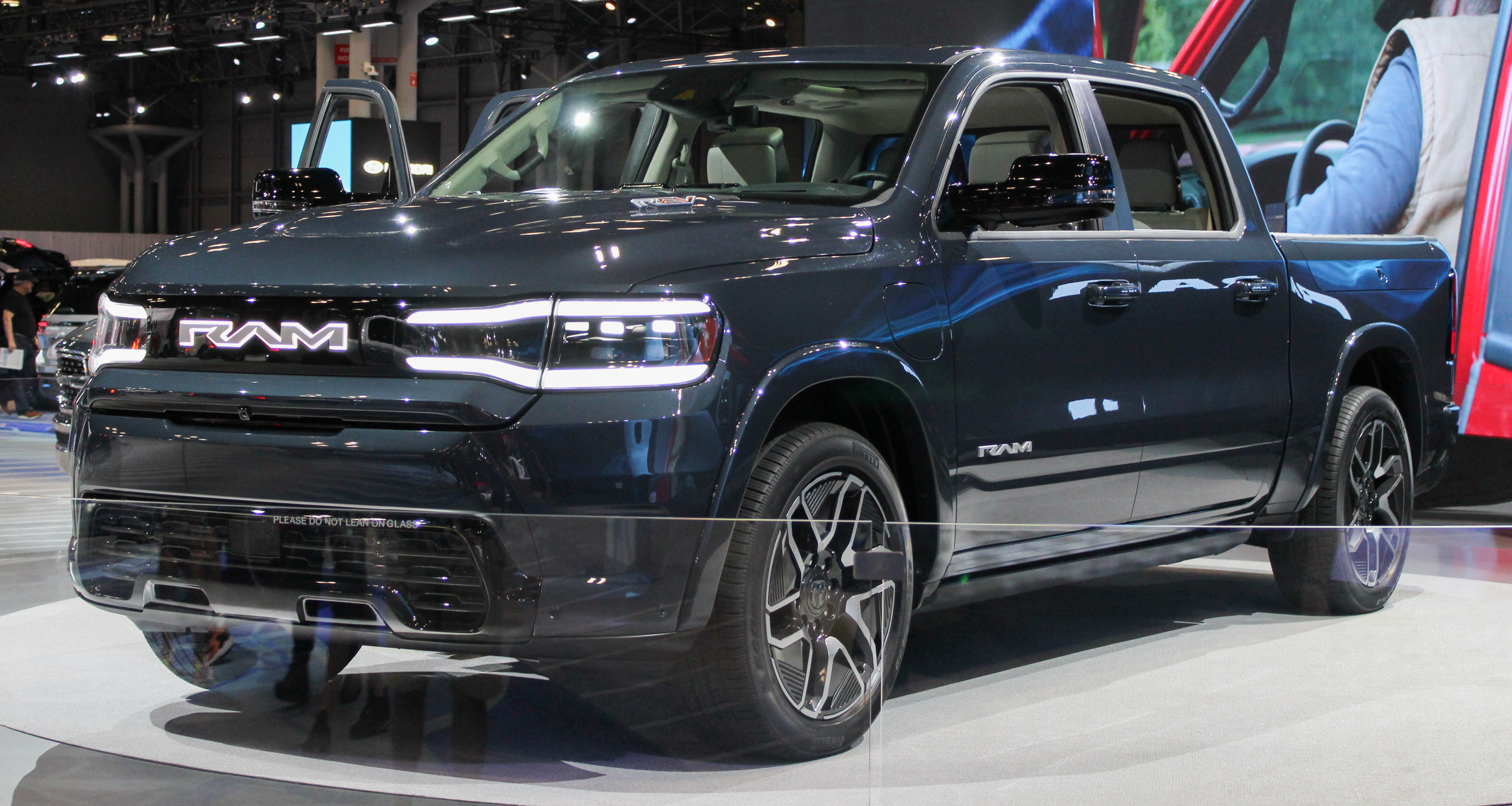
The Ram 1500 is a large truck that many people use for towing, hauling, or just driving around. It's known for being comfortable and having lots of features.
Cummins is a brand that makes powerful diesel engines used in many trucks. They're known for being strong and lasting a long time.
Car
12-valve Cummins
The 12-valve Cummins is a type of diesel engine that many truck owners love because it's simple and very reliable. It was often used in older Dodge trucks.
A rebuilt transmission is when a mechanic takes apart a car's transmission, fixes any problems, and puts it back together. This can help the truck run better and last longer.
A rebuilt transfer case is when a mechanic fixes the part of the truck that helps send power to the front and back wheels. This is important for trucks that can drive on all four wheels.
Wheel bearings are small parts that help the wheels spin easily. They support the weight of the vehicle and make sure the wheels can turn without getting stuck.
The Ford Model T was one of the first cars that many people could buy. It changed how cars were made and made them cheaper and more available to everyone.
Automatic stop start is a system that turns off the engine when you're not moving, like at a red light, and turns it back on when you want to go. It's meant to save gas and help the environment.
The Honda Passport is a type of SUV that has a lot of space inside for passengers and cargo. It's good for families and can handle off-road driving well.
CAFE stands for Corporate Average Fuel Economy. It's a set of rules that requires car companies to make their vehicles more fuel-efficient, helping to save gas and reduce pollution.
The EPA is a government agency that helps protect the environment. They set rules for how much pollution cars can produce and how efficient they should be with fuel.
Auto stop-start is a system that turns off the car's engine when you stop, like at a red light, and turns it back on when you start driving again. It helps save fuel and is better for the environment.
Car
Honda That Honda
The Honda That's is a small car that is great for city driving because it's easy to park and uses less gas. It's designed to be practical and efficient.
A speed limit warning is a system in cars that tells you when you're driving faster than the speed limit. It usually makes a sound or shows a message on the screen to remind you to slow down.
The Ineos Grenadier is a tough, off-road vehicle made for people who need a reliable car for rough terrains. It's built to be simple and strong, similar to older utility vehicles.
Pop out door handles are handles that hide away when not being used, making the car look smoother. Tesla made these popular, but some people find them annoying because they can be tricky to use.
The Tesla Model S is a high-end electric car that can go very far on a single charge. It has a simple design inside with a big screen to control everything.
The Tesla Cybertruck is a new type of electric truck from Tesla. It has a very different look and doesn't use traditional door handles, which makes it stand out.
Electronic doors are doors that open and close using electricity instead of just a handle. If the power goes out, these doors might not work, which can be a problem.
The GMC Hummer EV is a big electric truck that can go anywhere, even off-road. It's part of a new trend of electric cars that are good for the environment.
The Hummer EV is a new electric truck from the Hummer brand. Unlike traditional trucks, it uses electricity instead of gasoline and has some modern features like electronic door handles.
The Ford Edge is a medium-sized SUV that has a lot of room inside and comes with modern tech features. It's a good choice for families who need space and comfort.
Android Auto is a feature that lets you connect your Android phone to your car, allowing you to use apps and get directions on the car's screen. It's designed to help you stay connected while driving safely.
The Honda Ridgeline is a truck that drives more like a car, making it comfortable and easy to handle. It has some clever storage spaces, which is handy for carrying things.
The Hyundai Santa Cruz is a smaller truck that feels more like an SUV, making it comfortable to drive. It's useful for carrying things while still being easy to handle.
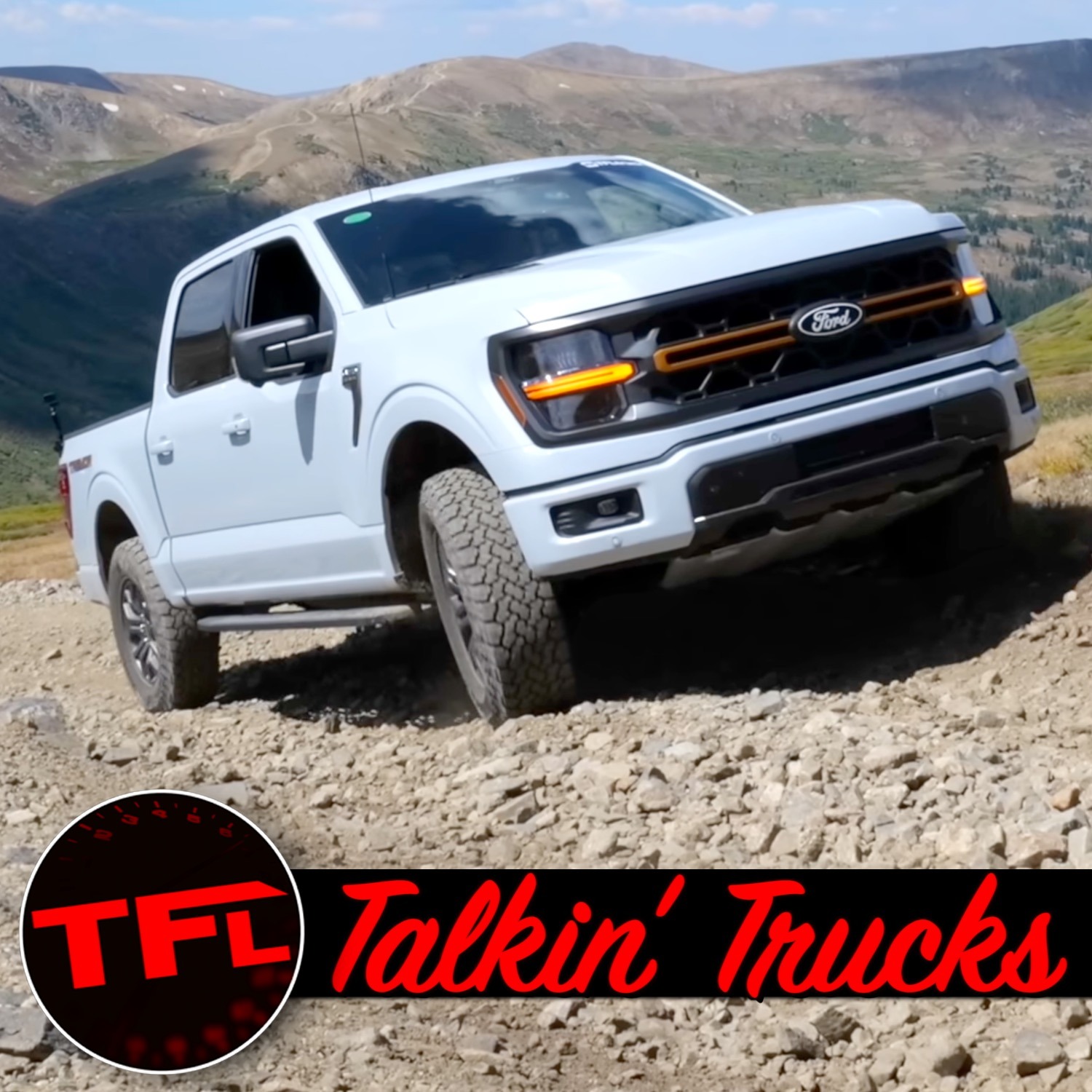
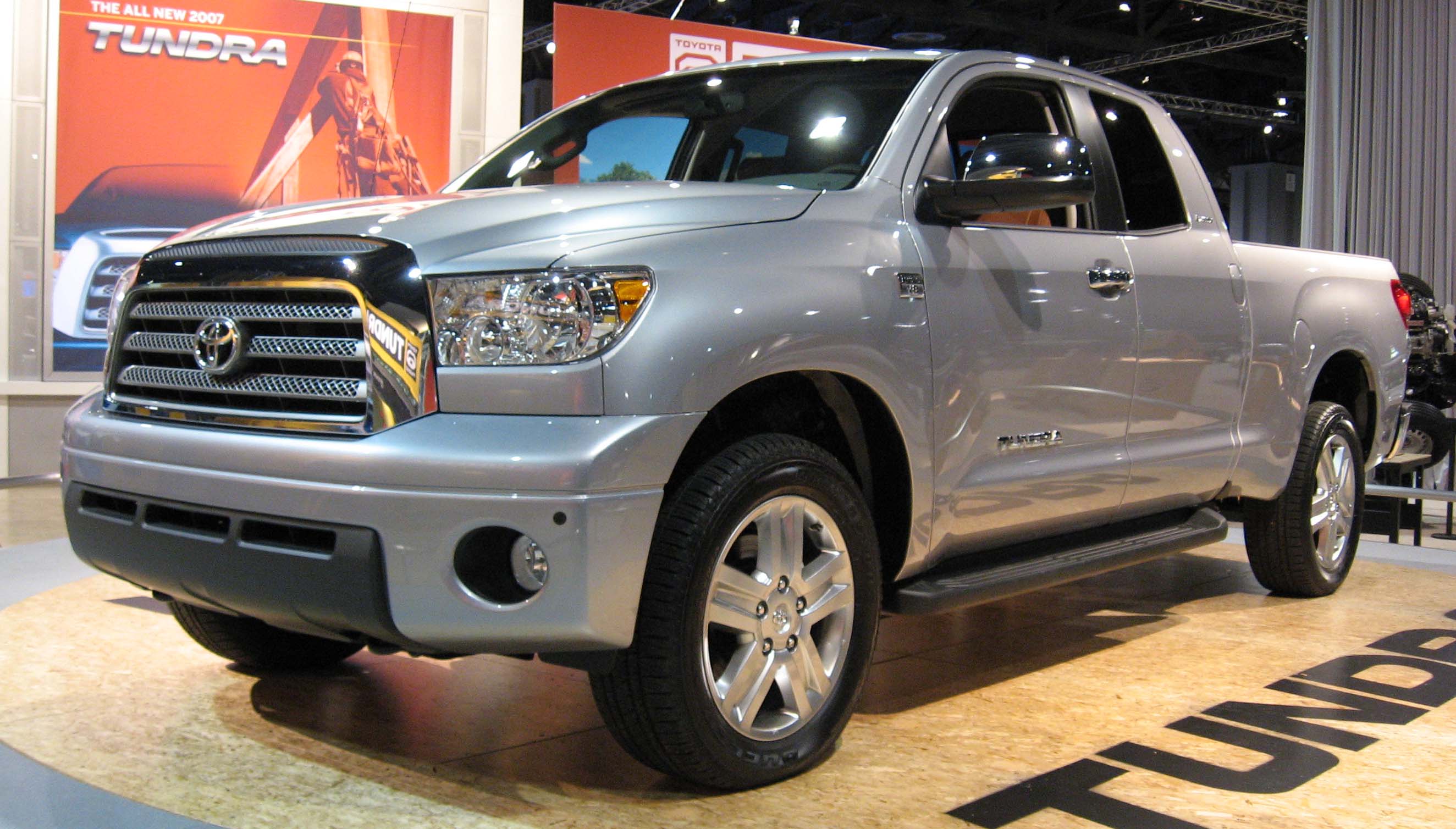
The Toyota Tundra is a big truck that people use for heavy work or outdoor activities. It's known for being tough and lasting a long time, which is why many people like to drive it.
The BMW M3 is a fast and fancy car that many people love to drive because it handles really well. It's like a sportier version of a regular BMW, designed for people who enjoy driving.
The Jeep Gladiator is a truck that can go off-road easily, like a Jeep. It has a bed in the back for carrying stuff, making it great for both work and play.
The Toyota Tacoma is a smaller truck that people use for work and fun. It's known for being dependable and can handle rough terrains, which is great for outdoor adventures.
LIVE
Hey, Kase, welcome back to TFL Talking Trucks, and today you've got me instead of Andre.
Yeah, likewise.
So it's the two of us again, at least for this week, next week, Andre should be back.
Back to the A team.
Yeah, exactly.
Back to the guys out there having Andre on the podcast.
But for today's podcast, you and I are going to be talking about something a little similar
to last week, but different.
This is going to be the most unwanted truck tech, truck tech that nobody asked for.
And this is a list that I understand you agree with very much, but I might try and play devil's
advocate here a little bit, even though my truck is 30 years old.
So a lot of the things on this list are things that I probably mostly agree with as well.
So before we get into it, let's talk about Andre.
Andre, he's flying back from Germany.
He was just doing a Mercedes Sprinter van program.
So he's going to have some Sprinter videos to share.
But more excitedly, he's on his way to Detroit, where he's, what's he picking up at Ram, right?
Yeah, exactly.
They are going to get him a more affordable trim of a Ram pickup to drive back here to
Colorado to test out so that we can show what that looks like, because a lot of the
trucks that we get in the press fleet, they're not trucks that we get to spec out ourselves.
So a lot of times people are watching the videos on these trucks and they've got all
the options.
They're the highest trim level.
And I understand why the manufacturers do that.
They want to show off the nicest features you can get on those trucks.
But a lot of people out there, our audience and us ourselves, we would like to test out
trucks that are a little more affordable.
So that's what they're sending us.
Yeah, I think Ram was kind enough to actually build, because we've been whining and whinging
about how expensive trucks are.
And so they actually built out a full size Ram.
Is it going to be the, is it a 1500?
It's a 1500, right?
Yeah.
So it's a full size 1500.
And it's going to be, I think it's penistar powered.
Yeah.
Well, no, I think it's a hurricane.
It's a hurricane.
I want to say it's a hurricane.
Anyway, you will figure it out when he comes back with the truck, but it's exciting that
we're actually going to have a truck that isn't like $800 million, but is relatively
affordable and is something that you guys have been asking for for a very long time.
Now, before we get to kind of unwanted truck tech, let me ask you about your Cummins.
I don't know if people know out there, but you have an old school Cummins, so tell me
about your truck.
Yeah, I've still got my same 12-off Cummins that we've done a bunch of videos with.
I've had it for the entire time that I've been working here.
So for the last five years, and it's a great truck.
So recently I went through and did a couple upgrades, a little bit of maintenance on it.
So it's got a rebuilt transmission as Rams do.
As Rams do?
Yes.
It's something they like.
So a rebuilt transmission.
I also put a rebuilt transfer case in it as well.
Wow, that's an old video.
Yeah, it is an old video because you've got a topper on that thing now.
Yeah.
And I take the topper off in the winter a lot, but I was mostly looking at my hairdo.
I guess that hasn't actually changed that much.
But yeah, if you're watching this podcast, Cole is pulling up some footage of my truck
on prior videos that we've done.
And it's driving really well.
I did a bunch of steering parts on it and brake parts, hub assemblies with the wheel bearings,
all kind of stuff.
So it's driving great.
Now, the reason I brought this up because this truck has none of the unwanted truck
tick that we're talking about.
Yeah.
It doesn't even have back seats.
And of course, if you, if you are an old school truck lover, then you can always get
an old truck.
Yeah.
And you can always.
They're still out there.
They're still out there and they're relatively affordable and you can always make it your
own.
But so let's get to this list.
So I found this list on Top Gear and it was a list basically that was meant for car tech.
But we can certainly adapt it to truck tech because it's very similar.
I have to say something that I think is a hot take case, but I think I'm not that far
off on this.
I have never lived through a time where manufacturers seem to care less about what the buyer wants
than now.
They, you know, everybody is out there talking about the stuff that the manufacturers are
putting on their trucks, on their cars, they're hating on it.
And yet the manufacturers just kind of ignore what people want and keep going down this
road.
And then they blame, they either blame governments or they blame, you know, competition.
But like I said, I have never lived in a time where the manufacturer cares less about what
the actual customer wants.
And I'm going to blame Tesla on this, right?
Right.
You know, there's this, there's this call.
Is there there's like a Steve Jobs, famous Steve Jobs saying maybe you could find it
where he basically said, don't ask what the customer wants because they don't know what
they want.
It's something like that.
Right.
It's a famous quote.
Basically, like when the iPhone came out, he made the, he made the, did you find it?
Yeah, let's see.
Steve Jobs famously said, you can't just ask customers what they want and try to give that
to them by the time you get it built, they want something new.
Yeah.
Yeah.
And so, so there's this pervasive ideology, I think in Silicon Valley, where basically
the customer doesn't know what they want because they're not, you know, at the forefront
of new technology.
So you give them what they want from your perspective because they don't know what they
want.
And the problem with that, and it's pervasive now in the car and truck industry and all
kinds of places.
The problem with that is, you know, when the iPhone came out, everybody was like, oh my
god, that is so, you know, perfect.
This is what I've been looking for.
Because before the iPhone, I remember there were like those Motorola flip phones, right?
There were those Nokia phones, but I knew exactly what I wanted.
There was no doubt that I knew what I wanted.
I knew I wanted a phone that would not only work as a phone, but that in fact, you know,
you could not only text on by column, but you could actually, you know, cruise the internet
on.
Yeah.
It had games on it, right?
I knew exactly what I wanted.
And it wasn't that, I don't think that revolutionary that Apple came along and just put all the
stuff that I wanted, basically my computer on my phone.
And I think that that quote of Steve Jobs, that quote of his works better with technology
because technology always has to be on the bleeding edge of what's possible and what's
new.
And it's hard for us who are just regular consumers, we don't live in that world to
see what that next step is going to be.
So we can't necessarily say what we want.
And that in the auto industry might even be true of some luxury cars, of some super cars,
things like that, where they are also at the bleeding edge of technology, but for trucks
and for four by fours, the formula for what works really hasn't changed that much over
time.
So you don't necessarily, I don't think you really need to reinvent the wheel to make
trucks that people want because what makes a truck functional is the same things that
have made trucks good and trucks functional for the last hundred years.
Back to the Model T.
When the first consumer truck came out, let's call it the Model T truck, which we have by
the way in our fleet.
So usually at TFL, we do this list and we start at number 10 and we go number one, but
I will jump to number one right now because I think this is undoubtedly the most unwanted
truck tech that I have yet to see anybody saying that they would actually like.
And that is automatic stop start.
I think that is universally hated.
Yeah, yeah, which is fair enough.
It's definitely frustrating.
Like I said, I think I'm going to try and take a little bit of the devil's advocate
position so that this is not such a one note kind of podcast.
So what I will say to its credit, we just recently did an MPG test in different driving
modes on Honda Passport.
And on that passport, the biggest difference between sport mode and normal mode was a little
bit what Gira was holding, but also using stop start.
And the difference we saw in MPG was five, five miles per gallon, which is a good amount.
The other thing with stop start is, yeah, it feels a little funky.
Your AC is not running while the engine is stopped.
So it might get a little hot in the vents.
But people talk a lot about all the wear on your starter motors, but these these vehicles
go through such rigorous testing and they've beefed up those starter motors to be able
to handle that.
So I'm going to take the position that it's you're the first one case.
Not all that bad.
Yeah, I don't think I'm going to get a lot of people agreeing with me.
I don't think you're going to have many people agreeing with you.
No, the reason for that, of course, is because of EPA and cafe numbers, which now are relevant
because the Trump administration still has the cafe numbers in place, but they've gotten
rid of all the penalties.
So it's a toothless regulation right now.
And back then, when the penalties were still in place and when corporate average, whatever
cafe stands for were important, every not even mile, but every added half MPG was super
important.
And so what that allowed you to do was on that little Minroni sticker, maybe put down
20 MPG versus 18 MPG or 19 MPG, because it does actually make a difference.
The downside, of course, you said is that the air conditioning doesn't work.
And the bigger downside for truck people is that when you put in a car, you put in a four
cylinder when that engine shuts off, you probably can't feel it because it's a little
tiny thing.
But when you're, you know, and you've got a big old V8 under the hood, every time that
thing comes to life, the whole truck kind of, yeah, so it's a strange feeling.
It is.
Yeah, it's like I understand.
And I kind of equated to a golf cart, which is not a good thing coming from a trucker
world.
Yeah, because that's how golf cart works.
They kind of they do the same thing.
They spring to life, the gas ones, at least when you when you when you put the accelerator.
Now to some extent, this issue has been solved with the latest hybrids, because the hybrids
allow you to maintain air conditioning and maintain all the functions without the engine
running.
And often they're a little bit smoother on startup, or they can start up once it doesn't
with the hybrid.
What can happen is you can roll a little bit before the engine comes on.
Yeah, so you're not actually every time you press the accelerator on like a golf cart
doesn't snap the engine on.
And I think that especially with Toyota, with Ford's hybrid, I kind of alleviates that.
But I still think what especially I think irks people is that you have to turn it off
every time you turn the truck on and off.
Yeah, and for the auto stop start to have a bearing over the fuel economy figures like
the EPA figure, it has to reset to being on every key cycle.
Otherwise they wouldn't be able to include it in that number.
So that's the reason that a key cycles back on all the time, which I agree is annoying
because in general, you want a vehicle to start back up with whatever settings you left
it with.
So that that would make the feature a lot less annoying.
Again, my personal feeling is the same as as what's being expressed here on.
It's not my favorite piece of technology, but there is an argument to be made for it.
All right, let's go to Top Gear's list and number 10 on their list.
So now we're going from one back to 10 that will come down is a lane keep assist.
What do you think of lane keep assist?
Yeah, that pretty much universally I don't like.
I'm sure statistically, you can you can reflect the benefits of it.
You can show that it helps people stay on the road.
But here's where it really irritates me.
When we drive out to our company ranch, we store a lot of vehicles, do a lot of videos.
There are so many people on bicycles.
There are.
And legally, it's a big bike path for boulder cyclists.
Massive.
There's as many bikes as cars on this stretch of road.
Yeah, there are.
And you legally have to give them space three feet.
Yep.
And they're out there in the shoulder.
They're not on the bike path.
They're exactly.
So in order for you to do that, you got to move across the lane a little bit.
And I've had in several vehicles, the steering wheel take over and steer me back
toward the cyclist, thinking that I'm doing that by accident when it's very much intentional.
And and me moving out of the way to give a cyclist room and the steering wheel
taking over control and steering back toward them.
That is not fun.
I really, really don't like that.
Yeah.
And then, you know, GM even makes it more annoying because they vibrate your seat sometimes.
So you got with a GM vehicle, I got the seat vibration in a lot of cars.
You have the steering wheel vibration in the most annoying cases that the wheel actually
jerks out of your hand.
Yeah.
And by far what makes it super, super annoying, beside the fact that the truck thinks like it's
trying to outsmart you.
So it's actually, you know, driving versus you driving, which is kind of stupid.
We'll get to that later.
But the thing that really pisses me off is it's impossible to find out where you turn it off.
I'll give you an example of that.
We've got that Honda Passport Trail Sport sitting right on front of these doors at Honda Lentas.
I don't know how to turn that off.
I've now spent at least 20 minutes trying to figure out some cars.
There's a little button.
Yeah.
There is a little button on the Honda, but it's only for when you're using cruise control.
Right.
But I don't know.
I don't know where inside all the menus you actually disengage that.
And the other frustrating thing is on some vehicles, it's in the center dashboard, right?
Yeah, in the screen.
Yeah.
And sometimes it's in the big screen.
It varies based on manufacturer.
And of course, if it's your own vehicle, you're not necessarily going to have this problem.
But it's super annoying just figuring out where to turn it off.
And it's even more annoying if it turns back on now.
In Europe, they've got these rules where I think it has to turn on every time you cycle the engine
along with the dinghy when you exceed the speed limit.
I don't know how you guys do it in Europe.
I think I would take a screwdriver and stick it in my ear every time I went in the car.
The first thing I had to do was turn lane keep off and turn that speed warning.
Yeah, because we used to have the Ineos Grenadier.
And every time you key-cycled that, you had to do the over-the-speed limit warning.
And that alone was one of the worst things about owning that vehicle.
It just makes, you know, I think me and you love to drive.
Yeah.
And it just makes driving crap.
It just makes it no fun.
And it just makes it annoying.
And you start to dread it instead of start to look forward to it.
Yeah, one of the reasons, this is maybe sounds weird and abstract,
but follow me for a second here.
One of the reasons I like cars and not horses is because cars don't make decisions for themselves,
right?
Until now.
Yeah, until now.
So I'm not, to me, that doesn't feel like progress.
All right.
Number two, or number, sorry, that was number 10.
Number nine on the list here is pop out door handles.
Now, this is the thing that has been around a long time,
but Tesla really brought it into the mainstream.
And this is exactly where we get to this moment in time
where the manufacturers are doing stuff that people hate.
There are all kinds of issues with pop out door handles.
Luckily, most trucks don't have them.
True.
But there are some.
Cole, would you be so kind and Google, does Rivian have pop out door handles?
It's been a while since we've driven a Rivian.
So the problem with pop out door handles is first and foremost.
Yeah, it's like the Aston Martin style.
Yeah, it's got the ones where you push on it, which is less annoying than the ones that
actually pop out.
But I always worry about, you know, we just had a Tesla Model S from 2014
and we just sold it's got pop out door handle.
It's got a hundred and four thousand miles.
But I just worry that that's going to fail.
Yeah.
And they do, especially those those old Tesla pop out door handles fail.
Yeah, a hundred percent.
They do now.
Now to make it more annoying, Tesla took another step further down this road.
They got rid of like actual door handles period in the Cybertruck.
Remember how that work?
Yeah, if only that was if only that was the worst thing about this horrible.
Yeah, I agree.
So on the Cybertruck, the way that it works is you've got these like hidden black panels
that you have to push.
And then then the you know, then the door pops open.
Well, you'd hate to ruin the sleek lines.
Yeah, lines of the thing.
Yeah.
Yeah.
And of course, the biggest issue with with those little hidden buttons is unless you know
they're there, most people just walk up to it and are like confounded by how you get into the thing.
I mean, imagine imagine trying to get your your parents or grandparents or somebody
into that vehicle and explaining that to them.
You'd have to do a lap around the truck every single time to open it for them.
Yeah.
And then the other part that that kind of goes along with that is electronic doors period.
So in order to make these things work, you can no longer just have a mechanical mechanism
that opens up the door the way that, you know, we've had it forever that that works,
you know, on vehicles that are three, four, five or thousand miles into their life cycle.
Now you have to have electronic ones where obviously if there's no power, you can't open the door.
There usually are manual handles.
Yeah, backups.
Yeah, like in the in the Cybertruck, they're very hard to find.
And if there's an emergency, let's say a fire or something, it's very dangerous.
And I just don't understand why we need electronic door handles.
And I'm so grateful that in the truck world, we stuck to mechanical ones for the most part.
For the most part, it hasn't infected the truck market too much.
But there are some offenders.
We have the Hummer EV right now.
What's a door handle like that?
I think look up Hummer EV.
I think if I don't if I don't like if it doesn't stick out in my brain,
I think it's just a regular door.
Yeah, it's a regular door handle.
Thank God shows how much we're actually paying attention to these door handles.
Yeah.
Maybe we should more.
Yeah.
Yeah.
If you have to think about it, you're not making it better designers.
You're not.
You're making it worse.
Yeah.
That is the kind of thing that ideally should just blend in the background and not be memorable
at all because it just works.
Yeah.
And then I was I was talking to a friend of ours who's an engineer and a lot of the companies
will use the fact that because they're electric, a lot of these vehicles,
they have to have very good aero.
In other words, you don't want to have anything that creates bad wind flow.
But the percentage of like wind disruption that a door handle versus a sleek door makes
is so minuscule that you could you couldn't even measure it in terms of fuel economy.
It's not like, hey, if we if we make the door handles flush and electric with the door,
then we're going to get two MPG better.
It's not measurable.
It's that much.
It's that little of a thing.
So it's just a style thing that, you know, Tesla started and everybody jumped on the bandwagon.
People aren't aren't like, okay, paying attention to number.
Eight bad touchscreens.
What do you think a touchscreens case?
I definitely think they're being overused.
Yeah.
That's not really a controversial take.
There are some upsides.
So for example, on some of the newer Ford trucks, you can go in and set up your instrument
cluster to show you in great detail all of the temperatures.
Yeah, that is a good point.
All of the fluids on the truck, which is awesome.
That's that's a huge amount of information that you could program into the display and
you can reconfigure that display depending on what it is you're doing.
If you're maybe on a light off-road trail or if you're hooked up to a trailer.
So the modularity of a screen can be good.
Look at all the fingerprints on that one on the screen though.
That, yeah, that doesn't look great.
Okay.
The good news once again, the truck world is a little bit inoculated from all the silliness
in the car world in that the trucks aren't always on the bleeding edge of technology
in a lot of ways, which is I'm thankful for.
So I'll give you an example of that.
Many of the trucks that we have have screens, but they still keep the HVAC controls as real
buttons and levers and that's nice.
Yeah, especially if you're getting in and out of a truck, you got gloves on.
It's nice to have actual physical buttons for things.
So I appreciate that.
Yeah, at this point and in this day and age, I think a lot of screens in place of physical
buttons or actual physical analog gauges feels more like cost cutting than a luxury feature.
So there's definitely, there's downsides.
And to be fair, you can take that instrument cluster that's in front of you, the old,
you know, driver-centric dashboard and you can configure that and a lot of truck manufacturers
do to show your temperature gauges.
You don't have to have it in the big screen.
It can be in the small screen that's right in front of you.
Yeah, like on the Fords, it is in your instrument cluster screen.
So yeah, I think there are some perks to how much you can, you can kind of change up the
displays on the screens depending on how you want it to be set up.
So at times it's cool.
It's not all bad.
And I'll tell you where it's gone really into the deep end.
This is GM, of course, where they put their light switch in the screen now.
Where they, yeah, we're going to get rid of the physical light switch.
And there's, I don't know what it is about that, but that to me is just like one bridge too far.
That, that we talked about last week because that's, that's just a glaring example of cost cutting.
So that, that much is pretty irritating.
And then the other thing that really irritated me was when we had the RAM,
not the warlock, the one that we had before them with the new hurricane, the 1500,
it had a passenger screen.
What do you think of passenger screens?
Not strictly necessary, is it?
It's not, I mean, you've got, I've only got my phone.
I think every passenger has this in their pocket.
Yeah, I don't, I don't think it's needed.
Yeah.
And it really annoyed me because, and this is a Roman thing, I suppose,
you might feel different about it because you're in much better shape than I am.
But when you turned it off, it actually reflected an image of myself.
So what I was looking at when I was in the passenger seat was my overflowing
belly over the seat belt.
And I was like, I can't sit here because I'm feeling so bad about myself.
Right.
Looking down on this now mirror that is reflecting the, you know,
my belly fat and the way the seat belt is squishing me.
I'm sure it's an unintended consequence.
But yeah, it.
Don't need that reminder.
At best it feels like an unnecessary gimmick because I'm not sure it's anything that anybody
was asking for.
It's something that they threw in there just to add something to it that wasn't there before.
But it's not the kind of thing that I really think is going to get people
going to dealers in droves to buy those trucks.
Yeah.
So I mean, initially when that, the first time I saw one of those passenger screens
was like on a Ferrari and what you could do there is you could like see how fast you were going,
which is kind of cool in a Ferrari, I guess.
But what do you need that screen for in the truck?
I guess you can have the passenger control the music, maybe do the navigation,
but you've got that screen in the center where you could do that anyway.
It just seems like an erroneous and extraneous bit of screen there just for the sake of having it.
Do you remember when like a lot of high end SUVs used to have the screens in the back of
the headrest so that the kids could play video games?
You don't need that anymore.
No.
Everybody's got a phone.
Even back then people had like iPads and it just felt like it was just there.
And whenever I'm looking at like used cars that have those things,
I'm like, why?
Why?
Why?
There was there was a brief moment in time before the tablet that those screens in the
backs of vehicles were great and that moment passed.
Yeah.
All right.
Number I believe we're at number seven.
If I'm wrong at number six, feel free to correct me, but it's voice control,
which now for we've been doing this for like 15 years, 16 years.
Yeah.
Never worked.
Yeah.
Siri, Siri works.
So if you're hooked up to Apple CarPlay, that works great.
But any, any kind of native voice control system that comes with the car,
not usually good, especially in the truck world.
You could maybe make an argument that some of the Mercedes systems or.
It's also annoying because it's always like, hey Mercedes or, you know what I mean?
They always use the name of the manufacturer and then you're talking about the vehicle.
And you might have just.
Cued.
Sorry.
That in someone's Mercedes.
Sorry about that.
I forgot.
Yeah.
You can't say those words.
What was going to say about this?
The other issue with it is, no, this is what I was going to say.
So this week we've had some news regarding this and you just said Siri GM announced that
they're actually removing Apple CarPlay and Android Auto, not just out of the electric cars,
but out of all their vehicles that includes their gas and electric, everything they build
is going to not now have that.
And yeah, which is unfortunate because that's a system that the majority of people use.
This is what I mean when I say that manufacturers are doing exactly what people don't want.
And I understand that there are issues with data and that there is money to be made.
But the funny, yeah, so the funny thing about that, because if I remember right,
it was a while ago that this news was initially coming out and that I was reading about it.
But if I remember right, I believe that GM was saying they didn't want to continue
using Apple CarPlay because they wanted to protect that data from their customers and everything.
Which they got accused for selling to.
Yeah, with the on-star systems.
So and Apple for, you know, say what you will about the company.
In general, historically, they've been very protective of their customers information,
more so than General Motors.
So for General Motors to make that claim that they're trying to protect.
Is bold.
That is bold.
And for me, oftentimes, if I'm driving a vehicle that I'm not driving just to get to some place,
right?
If I'm driving a vehicle that is fun to drive, I don't really care that much about that.
If it's like, you know, like we have this old Fiat now that's a hood to drive.
And I don't even have the radio going when I'm driving that because it's so much.
It's so engaging.
Or if you're driving this, let's put it in the truck world.
Let's say you're driving a TRX or a Raptor R or something that's got a lot of, you know,
lead in the pencil, as Nathan would say.
I don't care.
But let's say I'm driving either a vehicle, car or truck that is just a commuter thing.
In the morning, I take our dog, Blazy, for a walk.
And the one thing I do is listen to podcasts.
And then my favorite thing is I just get in the car when I come to work.
And with the Apple CarPlay, it just jumps right over.
And I'm listening to exactly where I left off.
And to me, at this point, I choose, you know, we have a large fleet of vehicles.
And if I'm just commuting, I choose the vehicle based on if it has CarPlay or not.
And that's also true for like long road trips when you're using navigation,
because I like using Waze.
And it runs off the phone usually.
And so Toyota tried this.
So Toyota was the last company that held out not having Android Auto or Apple CarPlay
and eventually even they gave in because they realized that the market demand was so strong
for these two products that they could no longer say no to their customers.
And yet here we are with GM going the exact opposite direction.
So I guess I'm just going to say good luck, you know, good luck with that GM.
I hope it works out for you.
But I think a lot of people are going to turn away from your vehicles because
those are, there's this thing, right?
Like what's it called?
It's technology derived cars, something like that.
You know what I'm talking about?
I'm not sure I do.
Where the vehicle is defined by the technology and not by the engine or not by the,
and that's what's happening to cars, right?
They're basically becoming phones with wheels.
And so GM is kind of-
Sounds tragic when you say it like that.
Yeah, but yeah, it is.
Software defined vehicles.
Right.
And so when you take software out of it, especially popular software,
and it's something that people have learned to live with and have learned to love,
I think you're, you know, you're treading on thin ice.
Yeah, yeah, it's not a good development, but in general for voice control on vehicles,
most of the native systems are not very good.
So that's one area where I mostly agree with this article.
And I think we've gotten to the point now with voice control,
where people have given it, you know, one chance and then another chance,
and now we're at three strikes and people don't even try it.
You know, we used to do this thing called where Snarfs,
where we would try to have it take us to Snarfs.
Remember, we would do this for people and we would have it, we would be like,
Hey, you'd tell the navigation, take me to Snarfs,
which is a sandwich shop out there.
Yeah, yeah.
And like nine out of 10 times, it didn't work.
Yeah.
And I think people just got frustrated with it.
Yeah.
So all right, let's keep going.
I think we're at number six or number five and that is touch sensitive controls.
In other words, haptic controls, hate them, hate them with a passion.
Yeah.
Yeah.
And not only a steering wheel is the worst case scenario for them
because your hands are obviously constantly moving around the steering wheel
and it's easy to accidentally brush up against them.
But even in other areas of the vehicle, whether you have a climate panel
that has touch sensitive controls or any other buttons on the car or the truck,
it just makes them less engaging, less,
you don't get that feedback of an actual physical button.
Yeah.
And that's why I thank God for trucks because for the most part,
truck manufacturers, at least the big three American ones,
have not gone to these haptic controls, even though they have done so in their cars.
Yeah.
I think there's a realization with trucks that people are using them as work tools
and you're sometimes wearing gloves or you're sometimes, you know,
covered in dirt, right?
And so having haptic control seems like the exact opposite thing that you would want in a truck.
Yeah.
Yeah.
Which is, again, to your point, in general, why it's good that for the most part,
they're keeping these out of trucks.
And I think it should stay that way because there's even manufacturers
that have put these touch sensitive controls in their cars and they're walking that back
because they realize that most of their customers don't want that,
even though they might look nice and photograph well.
It's not something that most people actually enjoy interacting with.
And yeah, not as much in pickup trucks, but we also, on this channel,
we talk a lot about and tow a lot with SUVs.
And there are several SUVs that use these kinds of controls.
And this isn't on the list, but I'm going to add it to it because it's just as annoying.
And once again, Tesla is to blame for this because they pioneered it.
And that is vent controls that are electronic, right?
Where you can't just reach over and like, oh, I'm hot.
So I'm going to point the vent at my face.
You have to go into the screen and then you have to manipulate the magic screen
so that the airflow is just right so that it hits your face.
And while you're doing that, you're about to hit a telephone pole.
It's one way to make an otherwise very easy thing.
Very difficult.
More difficult.
I had this really embarrassing moment where I was driving.
I don't want to name names, so I don't want to shame people,
but I was driving a car and this was a car that had just gone to these kinds of vents.
It was actually an SUV.
I was driving an SUV that went to this and I was having dinner with the designer.
And I asked him, I said, what are you the proudest of?
And he said, I'm so proud that we were able to get the money to incorporate the screen-controlled vents.
And I just looked at him and I'm like, is that the hill you want to die on?
Really? That's the hill you want to die on?
And I like the guy.
We got along really well.
But I just like, we are in two different worlds, my man.
I don't understand why you think this is good,
how you think this is good, or how this makes my life any better when I'm driving around.
Yeah, because it doesn't make it easier.
No.
It doesn't make it less expensive.
No.
It doesn't make it more reliable.
Yeah, exactly.
It's not more durable.
And the crazy thing is you don't realize just how many times you mess with those things.
Oh, yeah.
Right, the idea is like, well, I'll just set it.
But no, I'm always, you know, the sun comes out, the cloud goes over the sun, it comes back out.
I'm always changing them around.
And to do it electronically is such a pain in the butt.
And I know that I'm sure there are a lot of Tesla lovers out there who'll hate that.
Because they love that.
Not on this podcast.
Not on this podcast.
You're good.
You're in a different podcast.
All right, next on our list case is, this is not a problem that trucks have, but
some do hidden glove box releases.
Yeah, well, we could keep harping on the Cybertruck if we need to.
We'll just skip over that one.
That's not a big deal breaker when it comes to trucks.
But this next one is, and this also bugs me, volume down while reversing.
Have you seen that?
You put in reverse and you're listening to a favorite part of your song or good part of
a podcast and all of a sudden it goes quiet because you put the car or truck in reverse.
Yeah, which is irritating, but I've got even one better.
What's that?
So I'm sure you've noticed in many of the Ford trucks that we've had here at the office recently,
behind our parking spaces.
If you're backing up to one of those parking spaces, there's a slight curb.
There is a slight curb.
Yeah, slight curb.
It's one that the rear bumper of the truck can clear just fine.
We know that because we've backed up to this curb many, many times.
But if you back up to that curb and you try and get the bumper to shoot over the curb so that
you're not sticking way the hell out of the parking space, it jams on the brakes.
Oh, I hate that.
Oh my gosh.
Yeah, you know this Honda here?
Yeah.
It won't let you go into reverse and it won't release a parking brake unless you have your seat belt on.
Yeah, yeah, that's irritating as well.
Any time the vehicle thinks for you or tries to outthink you, it's so irritating.
I've got another similar one.
We just had a GM truck that we had a Duramax just like the Duramax that we own,
but it was one from a dealership that we used to do a side by side MPG loop.
In that truck, until you buckled your seat belt, you couldn't pull it out of park.
So if you just had to move it forward two feet, which we do a lot when we're shooting because
maybe you park it, you get out, you look at where the truck is and you want to move it just
slightly to get a different shot of it.
You can't do that until you get in, put on your seat belt, move it into drive,
and then you can put it back in a park, take your seat belt off and get out again.
So there's just more nannies, there's more ways in which they're telling you
that you're being too dangerous.
Yeah, yeah, and it's slowly creeping in and it's becoming more and more pervasive
and making just owning a vehicle less and less fun.
And I think that's why there's this, I think, increased interest in your truck.
People want to go back to the good old days when trucks were just honest.
Yeah, and my truck trusts me, which is a good feeling.
Your truck is stupid, but it's great.
Yeah, yeah, exactly.
It doesn't try to overthink you.
All right, next on this list is, this is interesting.
So they said slow electric tailgates, they have a range over here, but trucks also now
have electric tailgates.
What do you, do you like electric tailgates on trucks?
I don't mind tailgates at lock.
I think that's nice.
Dampened tailgates, that doesn't bother me.
But do you don't like the full electric ones?
The thing that I, I really don't like that much are the incredibly heavy tailgates that
open six different ways and have speakers built into them and everything, because ultimately,
what's probably the first part of your truck that's going to get beat up and abused?
Tailgate.
That's tailgate.
Yeah.
Tailgate on my truck, if I beat that thing up and need to replace it, I got to shoot paint at it
and paint can be expensive, but the tailgate itself primed and ready for paint on my truck
is a hundred, 140 bucks.
And for a while there, there was a ring of thieves, I guess, somewhere that were stealing,
maybe they still are, but especially Fords had their tailgate stolen.
Because like you said, they're the most easily damaged part of the truck.
And so they have to give replaced.
There is a market for replacements and the more stuff the tailgate does,
whether it's a barn door style or whether it's like you said, the multi-pro that opens up,
the more expensive it is to replace that and the more expensive it is to replace when it gets
stolen.
So, you know, you've got this part that's easily removable, fits every vehicle in that same category.
So it's going to have a big market and yeah, you're right.
It's just another one of those parts that feels gimmicky because I'm really, I'm not, I don't,
I'm not convinced that the tailgate needs to be innovated any more than I think a tailgate that
locks again.
That's great because if you have a tonneau cover, especially a hard tonneau cover and a tailgate
that locks and you can keep things in your bed pretty secure and that's, that's great.
So we're looking at this forward to tailgate.
How about like all the bottle openers and all the measuring tape?
You care about that or are you not like?
If you're going to put, I don't, I don't think that's bad.
If you're going to put some kind of texture or pattern on the inside of the tailgate,
it might as well be something you can use to measure.
Why not?
And in a bottle opener, it's not like that takes up tons of material.
So sure, but yeah, it's the ones that open a bunch of different ways and have speakers put
into them and you're just making it more complicated, more heavy and expensive for
really no added benefit that I can see.
The ones that open up in two different ways, right?
The GM one where it opens up halfway, basically the top part opens.
Yeah, or the RAM ones that can split.
Yeah, but I'm talking open.
Now I'm talking about the or drop down.
Multi-pro where there's two buttons on it and I never know which button to hit.
I don't know if it's the wrong button.
Yeah, hit the wrong button and then the top part opens, but not the whole thing.
Well, if you have both sections open, it's kind of an awkward process closing the tailgate.
Yeah, I know what you mean.
All right, you're lifting up on the bottom middle section and it closes the whole thing.
It's weird.
All right.
And this last one that Top Gear had was pointless bongs.
Toyota is especially meaning like chimes, chimes and dings and dogs.
And you don't know what the heck the truck is angry at you for.
And we kind of touched upon it before when we said like when you're backing up now,
of course, a lot of trucks have the backup sensors.
Yeah, which are pretty useful.
I'm not I'm not sure.
Sure.
Yeah, yeah.
But there are some vehicles, like I said, especially Toyota, where, oh my god, the
especially in trucks, the incessant beeping or gonging or bonging when you don't have your
seatbelt on, especially when you're like driving around the ranch where you're not the only thing
you're going to hit, you know, is maybe a crazed prairie dog.
And you're just trying to do work with a thing.
And now you have to put your seatbelt on every time you want to pull it into the garage.
How cool would it be this?
This is actually a Tommy point.
This is something he said in the past, but how cool would it be if you could go to a
dealership and buy a vehicle where you sign a contract to say, I realize that this is not
going to beep at me and warn me if my door is open and my seatbelt is off.
And I know what I'm doing.
And if anything happens, it's on me and me alone.
Sign that contract.
And then you get a truck that, like you said, allows you to drive around your ranch without
your seatbelt on because you're driving around a ranch and you're going to be getting in and
out of it all the time.
Yeah, doing work, which is what trucks.
Yeah.
Obviously, we're not against seatbelts.
No, no, no, we're not.
Of course, when you're on the road.
If you're driving around the ranch, you're getting in and out constantly.
Yeah.
Yeah.
I mean, I mean, the way that people do that right now is they buckle the seatbelt behind them.
Yeah, or, or again, like on that Duramax, I was talking about that doesn't let you throw it into
reverse or drive unless you have your seatbelt buckled up.
What if you're getting in and out because you're hitching up a trailer?
So you go to drop it into drive to pull forward so you can get the hitch out of the hitch receiver.
You got to buckle up your seatbelt just so you can move it forward a foot so you can
take your seatbelt off, put it back in park and then walk back there.
It just adds more steps.
Yep.
Yep.
Now I want to talk about some, actually, what other thing I want to talk about that is kind of unwanted.
And this is a really insider thing.
So remember when we had the Tacoma and we were trying to tow with it?
And it wouldn't, it wouldn't see the brake controller.
Do you remember that issue?
Yeah.
You remember why?
Because you had to select what kind of a, what kind of a trailer you had, whether it was electric over.
Hydraulic.
Hydraulic.
And you had to select, and if you didn't select the right one, the brake controller would not
function.
And we had the darnedest time, that seems like an unwanted level of technology as well,
where you're actually having to tell the truck.
I like, I like, this is, this is what I'm trying to transition to.
I kind of, we just spent 45 minutes, kind of whinging and whining.
But there is some really cool new truck tech that I think is actually very beneficial.
So I want to kind of highlight some of those things.
Sure.
I don't want to ask you if you like them.
So let's start with the trailer stuff, the towing stuff.
A lot of trucks now have a screen that allows you to actually configure the kind of trailer
that you're working with.
And then it keeps track of like how many hours you've put,
how much you've towed with that thing.
Do you like that?
It keeps track of the braking on it?
It's nice to have metrics for how many miles you've pulled your trailer,
because that gives you a better idea of what your maintenance intervals actually need to be,
rather than estimating how many miles that you've driven a trailer.
So I think, especially for hot shotters or people that are towing long distances,
that that could be really helpful information to have.
Because again, it's just a hard thing to try and memorize every time that you're pulling a trailer.
So yeah, I would say that's pretty helpful.
I mean, you can go in there, you can name the trailer.
And we have, well, we have two different trailers that we use to tow with.
Yep.
If you don't count the motorcycle trailer.
And it's nice because you can store the braking on it.
So it knows exactly, and you could store how many hours,
how many miles you've put on it, so you know when it's time to change the tires.
You know what I don't love though, is that a lot of trucks, when you key cycle them,
they go out of tow haul mode automatically.
Which is strange because the truck still realizes that there is a trailer plugged into it.
So you would think that it would start back up and stay in tow haul mode.
For a lot of people, so what, you know, you press one button.
But again, a lot of times when we're towing, we're in and out a lot of the time.
It's like when you turn off the start stop, it should just stay turned off.
It'd be one thing if you disconnected the trailer, the truck sense that you disconnected the trailer,
which it does, if you do.
And then turned off tow haul mode, but the fact that every time you get in and out,
you gotta turn that back on.
I also love when the new trucks know that there's a trailer attached.
That's also great.
So it knows.
My favorite feature that actually when it comes to towing is the RAM feature,
where not only does it know that you're towing, but it asks you to make a quick right, quick left
turn and then it identifies the blind spot and it extends it to cover the trailer,
which is really cool.
Yeah, it is.
You know, and obviously I was just driving our disco and that has big ass mirrors,
but for some reason mirrors over the last five years have gotten smaller.
I don't know why, maybe because of Arrow or something like that.
But if you don't have adequate mirrors, it's really nice to have blind spot monitoring that
only covers a truck, but also covers the trailer.
And when the truck does it on its own, like with the Ford,
you have to tell it how long the trailer is.
Yeah.
Whereas with the RAM, it figures it out.
I think that's also very clever tech.
It is.
Luckily mirrors on most trucks, at least there's a towing option, towing mirror option available,
which still gives you a good, good amount of mirror.
Yes.
Yes.
Other thing that I love on new trucks when it comes to like things, trends or technology,
now a lot of the truck makers are basically building off-road trucks.
A lot of the trims are, you know, there's like three or four different off-road trims,
which is great because in the past, you used to have like you could get the FX4 or not.
Yeah.
But now you've got the FX, in the Ford line, FX4, the two different tremors, right?
The Raptor, the Raptor R.
And one of the benefits of that is that you're getting like all terrain tires.
In the past trucks came with basically street tires, which were great.
But then when you took them off-road or you take them into the snow, they weren't so good.
Now with these ATs that are standard on many trucks, not only do you get good snow performance
and off-road performance, but you get a kind of a cool look too.
Yeah, I agree.
I would say as time goes on, off-road trucks are just getting better and better because they're
extremely popular.
Lots of people, lots of people buy them, so it makes sense for manufacturers to lean into that,
make more of those models, offer more features.
So off-road trucks just getting better.
And the other thing where there's a renaissance, and I think this is where a
electric truck, actually Rivian has done a good job, is storage.
So in the past, you know, your truck, right?
If you wanted to store something, you put it in the bed.
Pretty much.
That's it.
But now you've got underseat storage with like compartments that are there.
So if you need to store some emergency equipment or if you need to put something that's hidden,
you could put it in there.
There is, there's nothing under my seat, so I could, I can.
Yes, but it also rolls out.
Yeah, oh yeah, it does.
Every time you accelerate and stop, it rolls out.
Cubbies behind my seats, and a net.
Yes, yes.
I know you're old school, but I'm saying it's nice, especially with Rivian, like that little
passage that goes through the tunnel.
Yeah, the gear tunnel.
Yeah, I mean, this is nice.
This is good stuff to have.
Or like, like Ford, where they do the big center, you know, cubby in between.
And then the shift lever goes down, tucks away, and then you can fold out the top of it,
and actually put like a laptop on it.
One of the vehicles I learned how to drive on.
How to gear tunnel.
Really?
Yeah.
What was that?
1952 Dodge M37.
That was a military truck?
Yep, it's got a, it's got a little gear tunnel under the bed.
Yeah, Dodge M37.
Wonderful.
But also, see if we can find a picture of the bed.
Okay, let's see, and then we'll talk about other stories.
I don't know if they called it the gear tunnel, I think that's,
yeah, yeah, maybe find a picture of the.
Didn't it have like, like an ammo box, basically?
Basically, yeah, I think it was more for munitions than camping stoves.
But, but yeah, if you look at a picture of just the side of the truck,
you'll probably be able to see if you're watching this as a podcast.
It's a cool looking truck, yeah.
Yeah, it's got right behind the cab.
Yeah, I see it, there it is.
It's got a little door that opens, it goes all the way through the other side,
just like a Rivian.
Virtually this truck indistinguishable from a Rivian.
If, you know, if Rivian was green and had big fenders.
And only straight lines.
Only straight lines.
The other thing where you're getting much more storage is now,
of course, RAM does the RAM box in the bed.
That's just trading bed storage for different kinds of storage.
It might be, but it's lockable.
Yeah, it is lockable, or you could get a ton of cover.
Yeah, it is lockable.
Because the thing with the RAM boxes is then,
then it's just four feet the bed all the way.
So, so like the, the, how narrow the wheel wells would be, it's that narrow.
But you could put a rifle back there.
You don't have to, you don't have to hang it, you know, in front of the headache rack.
Or you could just do a ton of cover.
Or you could do a ton of cover.
Our canyon also has storage in the, what's it called?
I'm spacing out.
Under the seat?
No, no, no.
Tailgate, in the tailgate.
Oh, sure.
There's a little storage compartment in the tailgate.
Which is kind of a weird place to store stuff.
It is a kind of weird place to store stuff.
What would you put in there?
I have a jumper cable.
Change.
Oh, jumper cables.
Jumper cables in.
Yeah, there you go.
Yeah, I just, I just think that there has been a renaissance of storage in trucks.
A little bit, a little bit.
Some smaller midsize trucks do a pretty good job with storage.
And the, while the Honda Ridgeline going all the way back has had that cubby that's
underneath the bed floor, which is great unless you have a bunch of stuff in your bed.
Yeah, the Santa Cruz is the same thing.
Yeah, Santa Cruz so.
Yeah, yeah, it's good, it's good and it's bad.
It's good for like tailgating.
It's bad for like, because your spare is there as well.
Yeah, so if you get a flat and you got a bed full of rocks, you're not getting at it.
You're going to be scooping rocks out of there until you can get to it.
And then of course Honda has done the cleverest thing with tailgate in that it makes it open
both ways.
So it slows down and it opens sideways.
Yeah, I was saying bad things about tailgates that open several different ways.
I don't feel as much that way with the Ridgeline tailgate.
I think the Ridgeline tailgate is still relatively simple, but it's just a cool hinge mechanism.
Whereas, yeah, there's other tailgates that like a lot less.
Now, this is kind of a controversial one, but I actually like it.
So of course, we have gone from no off-road modes, right?
From like, if you want to go off-road, you put it in four high or four low.
Yeah.
Or if, you know, four out of has been around a while as well.
But now, of course, you've got like to do this is weird thing where you have like two sets of
off-road modes.
You've got the on-road modes and you got the off-road modes and not they're not together.
But like, you have to be in like four low to get the off-road modes.
And then the off-road modes are like, you know, like rock, sand, gravel.
And to your point, sometimes there's too many off-road modes because there's,
you know, there might be a rock crawl mode and a snow and ice mode.
But what if you're rock crawling in snow and ice?
We've done that.
Rock crawl instead of snow and ice.
And you break the front diff.
And then the truck grabs the brakes and breaks a front diff.
And then another YouTuber tries to make it seem like that was your fault.
Yes, that's been known to happen.
Could you imagine if that were a situation?
No, I can't imagine that.
What I do like.
We were rock crawling.
You were in, I'm on your side with this.
You were rock crawling, even though it was in the snow.
So I think you were in a fine mode.
Yeah, here you go.
Cole, you're gonna make me relive this, huh?
Yeah, the truck didn't like it.
So that's too many off-road modes, perhaps.
What I do like is the way Ford does it now, where you select the off-road mode that you want,
and then it puts the truck into whatever it needs to be, right?
So it automatically puts it in for low.
It automatically locks the diffs.
I really like that.
I think that is smart.
I do too, although sometimes it goes a little too far because a lot of the Ford programs,
if you put it in a rock crawl mode, it automatically locks the rear diff.
And if I need to still make tight turns, I don't want the diff locked up until I need it.
So there's a lot of times that I'll go in a rock crawl mode on a Ford product,
but then immediately unlock the rear diff because it's not quite necessary yet.
And the other thing that's happened in trucks, picking up off-road stuff, which is nice,
and we were just off-roading the two, we have two canyons here.
We've got the AT4X and then we've got the AEV edition of that.
It's become very easy to lock and unlock diffs.
With Toyota, remember, you've got to put in a neutral and then you've got to unlock it,
and then it won't unlock.
The tundra is guilty of this.
And then you've got to drive it, and then finally you're like, oh, there, it just unlocked.
Whereas with the GM products now, they've kind of gone away from the G80,
and it's just like, boop, or the Ford product, boop, lock, boop, unlock, and it just does it.
Same thing with a Jeep Gladiator, great engagement.
Jeep's got the problem with that lever, so you've got to pull that lever down,
and that lever can be hard to sometimes move.
For a four-wheel drive?
For a four-wheel drive.
Oh, I love the lever.
You like the lever?
You don't like the lever?
You know what I don't like on the Jeep?
Unlocking and locking the sway bar.
Yeah, the sway bar is a little tricky.
But the locker engagement is pretty good.
Yeah, lockers.
I mean, Jeep will say that the lever is there on purpose, so that it's very mechanical.
It's very badly.
Yeah.
Agreed.
What do you think of the trend to turbify everything?
Is that good or bad?
I know a lot of people hate the fact that mid-sized trucks have four-cylinder turbos.
For us here up in the mountains, it is objectively good, because a turbo four-cylinder
versus a naturally aspirated V6, the character of those engines pulling a trailer in the mountain,
in a mid-sized truck, world of difference.
Yeah, I mean, compare the Panistar to like the Tacoma, the Gladiators of Tacoma.
Or like a third dude screams.
I mean, people aren't going to want to hear this, but a third gen Tacoma versus a fourth
gen Tacoma pulling a trailer up here in the mountains.
World of difference.
In big part because of the eight-speed, but the V6 makes all its power up high, whereas the 2.7
has a lot of power, a lot of torque down low.
So that truck is just effortless, whereas the V6, you're screaming.
Especially the Panistar in the Gladiator.
I'm just expecting a soldier to put flying through the hood any moment when we're doing
the Ike. It's just, it's like 6,000 RPM all the way up the Ike.
Whenever we have a video where I have to pull a trailer to the Ike with a naturally aspirated
V6 mid-sized truck, it's not good news.
Let's go back to what people hate, and this is in the GM products.
They hate the cylinder deactivation.
It has been nothing but trouble for...
No, it was never.
Never good.
Yeah, nothing but trouble.
I mean, part of having the V8 is the fact that you have a V8,
and I get that you're trying to save fuel, but...
Why bother?
Yeah, exactly.
If you're going to have a V8, just have a V8.
Did we make it all the way through the list?
Yeah, we made it through the list.
Oh, wow.
Look at that.
I was just trying to come up with some positive things,
because we were so negative for so long.
So I wanted to talk about some good stuff as opposed to some bad stuff.
One, ultimately too.
Capability.
I'm going to look at where even mid-sized truck towing figures are.
Oh my God.
Oh, yeah.
You know, it's funny.
Here's probably the biggest one that people aren't going to want to hear,
but it's absolutely true.
People hate death.
They do.
The first thing they do is they pull it off,
because they think that it robs them of power and fuel economy,
which it does.
But, but case, the technology has come so far.
Take like a 1980s diesel without death.
And it's probably making 400 pounds of torque
and probably putting out like 300 horsepower,
something like that.
Right.
Today you can buy a truck with death
that is making a thousand pounds of torque
and like 500 horsepower.
I agree.
Power figures on diesel trucks these days.
You can make more by pulling it out, of course.
But I'm saying that the advances in technology
and how good it has gotten over the last,
let's say 20 or 30 years are astounding.
Diesel engine power figures are insane over the top.
There's no diesel truck that you would go buy
from the dealership today, an HD diesel truck
that's underpowered, not nearly.
I'm saying that because a lot of people
are pulling the death systems off
because they're thinking of those first gen diesels,
right, where it robbed the truck of efficiency
and robbed them of power.
But the technology has gotten so far from where it started
that you can have your cake and eat it to today.
And if you really want to pull off the death system,
you're doing it, you know, for other reasons
than the reasons that the guys and gals
were doing it back in the 80s.
Yeah, I mean, ultimately, a lot of that's still
about longevity and especially EGR systems.
Yeah, they're a pain in the ass.
You're right.
They're expensive to maintain.
They cause issues, remember, Alex with his?
Uh-huh.
Yeah, his death injector crystallized.
Yeah, his Cummins had all kinds of problems.
And he had to go pull it out and soak it into water
so that his truck wouldn't be in limp mode.
I agree.
I don't know how many times, too many times.
But maybe he got a bad one because we had,
we never had that issue with the exact same truck
that we had the same RAM.
Yeah, yeah.
And we put like 35,000 miles on it.
So not a huge amount, but we did enough,
but we never had issues with it.
Yeah, so it depends.
Yeah, yeah.
I got a sneeze.
Go sneeze.
So but yeah, I would say that the, like you said,
the improvements in torque, in horsepower,
in towing are just through the roof.
I, you know, you could take a full-size truck
and now easily tow 10,000 pounds or more.
If you really want to push it,
you could tow 14,000 with the thing.
And you could take a heavy-duty truck
and tow 30 plus thousand pounds,
which would be terrifying.
These are like numbers that semis used to do.
Yeah, yeah.
In the Ford Superduties, theoretically,
as much as 40,000,
even though that number was set with a truck
that didn't have like a passenger seat or a spare tire.
So it doesn't really exist.
They take all the weight out of it, yeah.
But yeah, no, insane towing figures on trucks these days.
So tons of capability, tons of power and torque,
transmissions that have tons of gear ratios,
which is great, especially when you're pulling in the mountain,
you know, 10 speed or an eight speed versus back in the day.
And tons of comfort.
Trucks are so much more comfortable.
As much as I love your truck, the thing is pretty raw.
It is pretty raw.
Tread lightly.
Well, you don't tread lightly with a truck.
But it is pretty raw, right?
I mean, you are the master of your own ship
when you're driving that thing.
And it engages all the senses.
Well, yeah, you got to remain aware as well,
because it doesn't stop very quickly, I've noticed.
Yeah.
It's a little sticky when it starts up.
Panic stop in that truck.
It smells like a diesel the whole time it's running.
Yes, yes.
But today's trucks, you know,
there's nothing that a Mercedes or a BMW has
that a modern truck can't have.
Nothing important anyway.
All right.
Yeah, except for towing and hauling capability.
You can't change your volume like this.
No, you can't do that.
Thank God.
But everything else, in terms of heated and vented seats,
in terms of massaging seats, in terms of stereos,
all that stuff is in a truck today, which is also wonderful.
But you're paying for it.
So guys, next week on Drew Lee Beck.
Yeah, exactly.
And look forward to seeing that affordable truck
that he's bringing back from.
Should be interesting.
Maybe we should do the podcast walking around that truck.
See what people think.
If you want to see it.
Yeah, that's not a bad idea.
I'll let you guys do it.
Thank you for putting up with me for being here
for these two weeks.
I appreciate it.
And appreciate being on the truck show.
And myself.
And remember, if you want to go to some of our other podcasts,
check out our car chat channel as well.
At AltTFL and of course, Tommy and you and Mary and Jan,
eventually, are doing.
Jan is back.
Yeah, absolutely.
And there's a great episode where you guys did the scariest cars.
So if you want to see some scary car stuff.
Seasonal.
Head on over to AltTFL.com and we'll see you guys next time.
Ciao.
About this episode
A lively discussion about the most unwanted truck technologies, highlighting features that frustrate drivers. The hosts share their personal experiences with automatic stop-start systems, lane keep assist, and pop-out door handles, debating their practicality and user-friendliness. They also touch on the evolving truck market, including the need for more affordable options and the benefits of modern towing technology. With a mix of humor and critical analysis, this episode offers insights into what truck enthusiasts really want versus what manufacturers are providing.
( https://www.alltfl.com/ ) Check out our new spot to find ALL our content, from news to videos and our podcasts! In this episode of TFL Talkin’ Trucks, Roman and Kase dive into the worst truck tech that nobody asked for. From overly complicated multi-function electric tailgates to intrusive lane-keep assist systems and nonstop warning beeps, the guys rant about the frustrating features that make modern trucks less enjoyable to drive. Sometimes “innovation” just gets in the way — and they’re here to call it out.
They also share which tech features they actually like, how manufacturers could fix the most annoying ones, and what truck owners really want instead. It’s an honest, funny, and relatable episode that every frustrated truck owner will appreciate — especially if your rig won’t stop yelling at you for not wearing your seatbelt in the driveway.
( http://www.patreon.com/tflcar ) Visit our Patreon page to support the TFL team!