The Mitsubishi i-MiEV is a small electric car that was made by Mitsubishi. It didn't have a very long driving range, which means it couldn't go very far on a single charge.
An electric car is a type of vehicle that runs on electricity instead of gas. This means it doesn't produce exhaust fumes and is often better for the environment.
The GM EV1 was an early electric car made by General Motors. It was special because it was one of the first cars designed to run entirely on electricity, but it didn't last long on the market.
The Nissan Leaf is a popular electric car made by Nissan that has been around since 2010. It's known for being a good choice for people looking for an affordable electric vehicle.
The General Motors EV1 was one of the first electric cars made by a big car company. It's important because it helped start the trend of electric vehicles we see today.
When you buy something at an auction, you often have to pay extra money on top of the price you bid. This extra money is called a buyer's premium and is usually a percentage of the final price.
In electric cars, a high-voltage system is the part that powers the car's motor and other important functions. If it fails, it can cause serious problems for the car.
Internal combustion is a type of engine that uses fuel like gasoline to make the car go. Most cars have used this kind of engine for a long time, but electric cars are becoming more popular.
The Turbine car was a special type of car made by Chrysler that used a jet engine instead of a regular engine. Only a few were made, and most were destroyed after testing.
Electric vehicle history is about how electric cars have been made and used over the years. The EV1 is an important part of this story because it was one of the first electric cars that people could buy.
The Lexus LS is a high-end luxury car made by Lexus, which is Toyota's luxury division. It's known for being very comfortable and packed with features.
The Hyundai Genesis was a luxury car made by Hyundai before they created a separate luxury brand called Genesis. It was designed to compete with other high-end cars but at a more affordable price.
The Hyundai Equus was another luxury car from Hyundai that was meant to compete with high-end brands. However, many people didn't want to buy a luxury car with the Hyundai name on it.
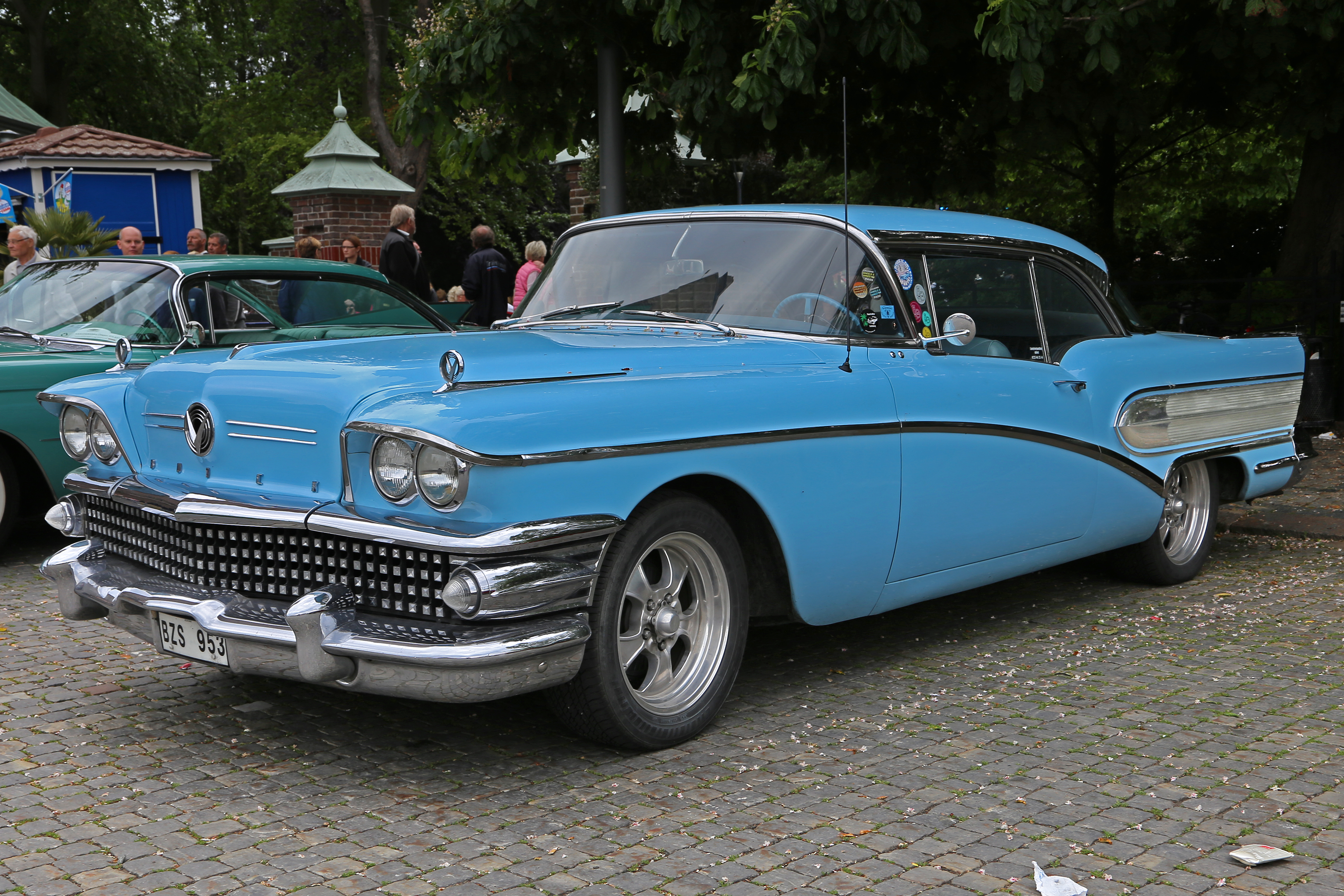
The Buick Century was a comfortable car that many people liked for its smooth ride. It's no longer made, but it was an important part of Buick's history.
The Rolls-Royce Cullinan is a super fancy SUV that is very luxurious and expensive. It's known for its beautiful interior and smooth driving experience.
Ultra luxury SUVs are very expensive and fancy SUVs that have a lot of high-quality features and comfort. They're made for people who want the best of both worlds: luxury and practicality.
A plug-in hybrid is a type of car that can run on electricity and gasoline. You can charge it by plugging it into a power outlet, which helps it drive longer distances on electric power alone.
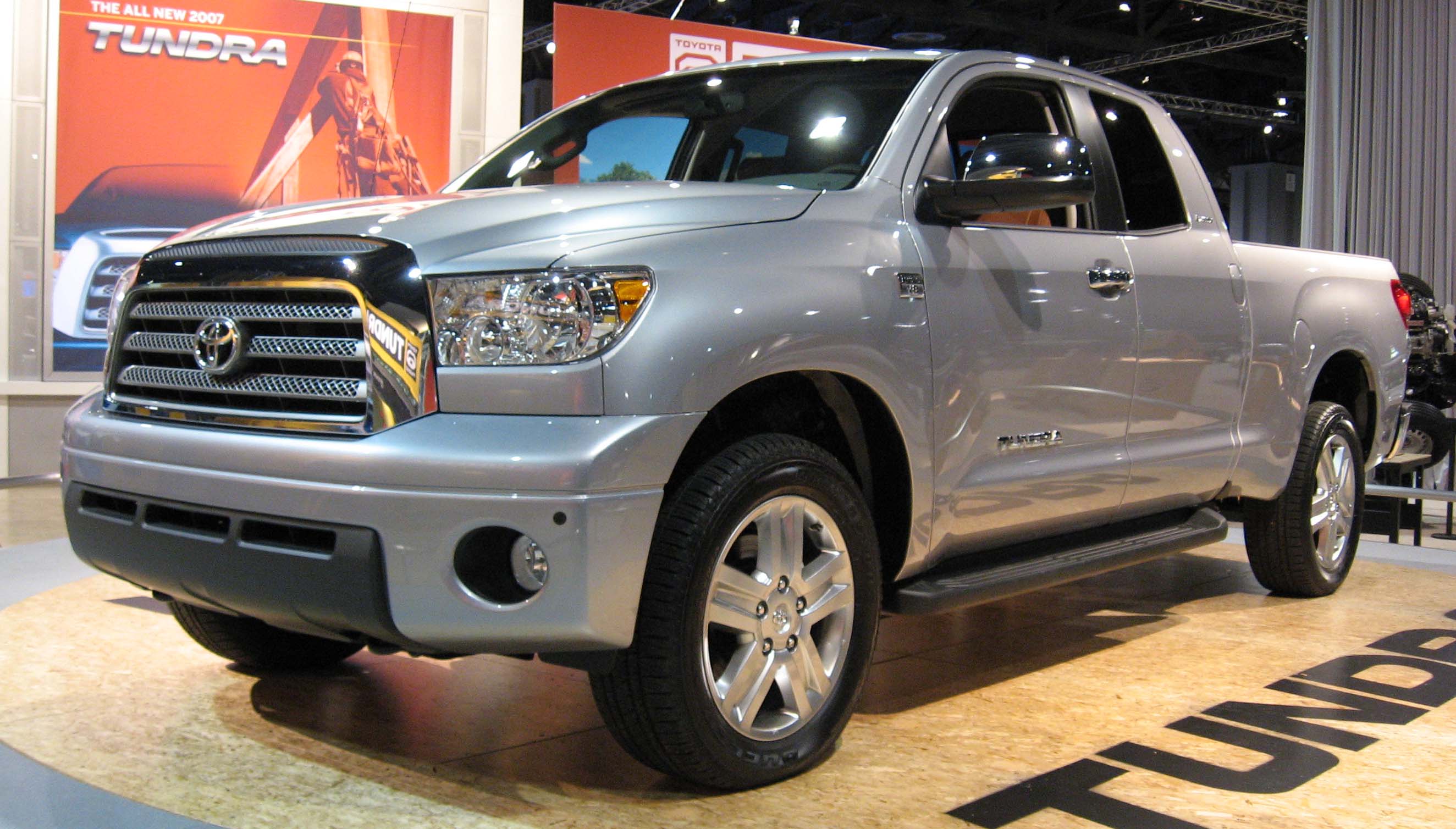
The Toyota Tundra is a large truck that can carry heavy loads and tow trailers. It also comes with a hybrid engine option, which helps save fuel while driving.
The Porsche 911 is a famous sports car that many people admire for its speed and style. It's been around for a long time and is often seen as one of the best cars for driving enthusiasts.
The Toyota Hilux is a tough pickup truck that can handle rough roads and heavy loads. It's known for being very reliable and is popular in many places.
The Toyota RAV4 is a popular SUV that many families use because it's spacious and reliable. While it can handle some rough roads, it's not designed for serious off-roading.
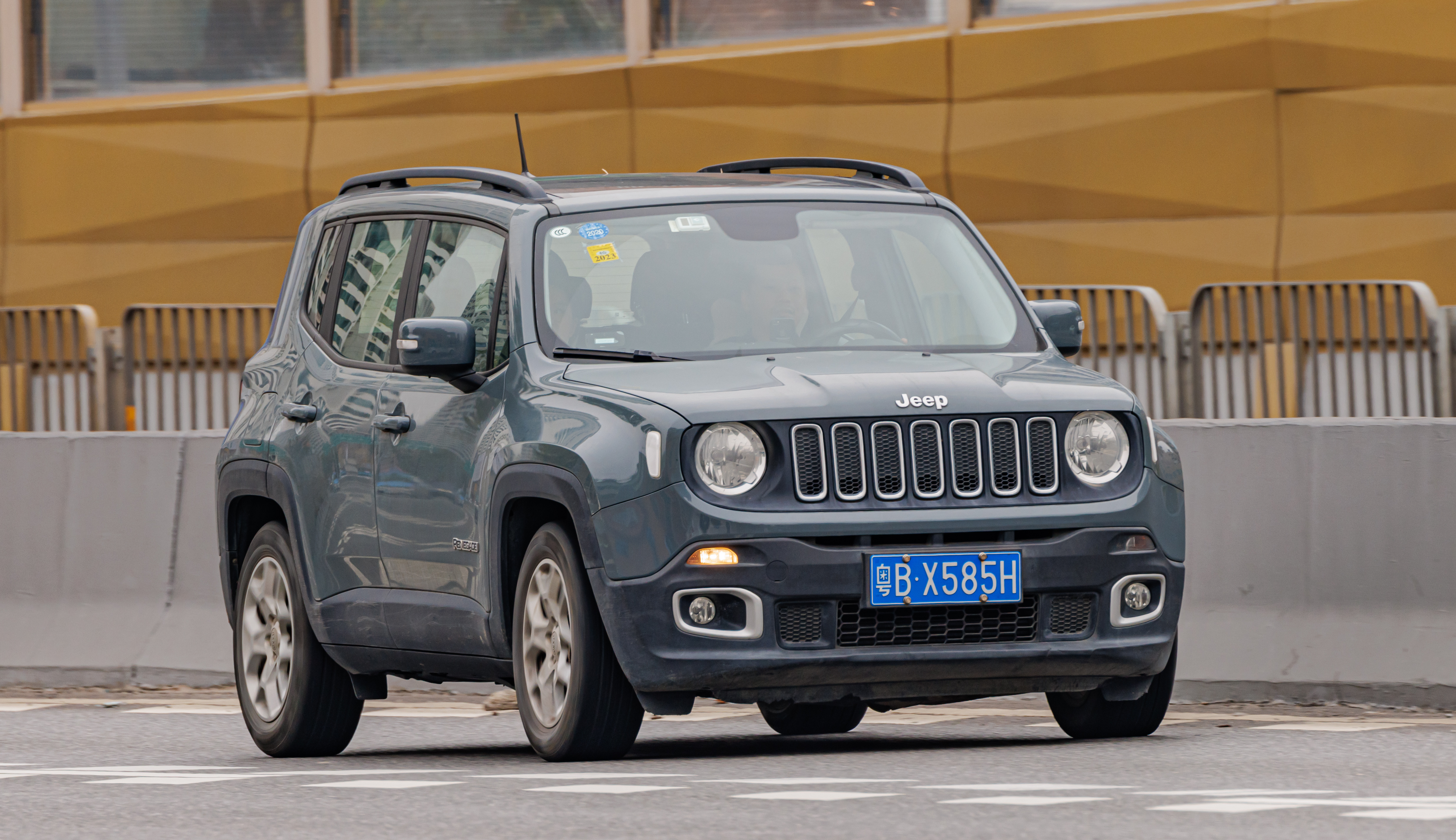
The Jeep Renegade is a small SUV that can handle rough roads and is good for city driving too. It's known for its fun design and ability to go on adventures.
The Lucid Air is a fancy electric car that can go really far on a single charge. It's designed to compete with other high-end electric cars and has many cool features.
The Chevrolet Corvette is a fast sports car that many people love for its sleek design and powerful engine. The newest version has a unique engine placement that makes it even more exciting to drive.
The Cadillac Escalade is a big luxury SUV that many people love for its comfort and fancy features. It's known for having a lot of space inside and high-tech gadgets.
The Ford Ranger is a smaller pickup truck that can carry heavy loads and is great for outdoor activities. The latest version has more power and modern features, making it a good choice for truck buyers.
The Ford Mustang is a classic American car that's famous for being fast and stylish. It's been around for a long time and is loved by many car fans for its powerful engines.
The Infiniti QX80 is a large luxury SUV that is very comfortable and has lots of space. It's great for families and has many high-tech safety features.
The Infiniti Q50 is a fancy car that is known for being fast and having lots of technology. It's designed for people who want a nice and comfortable ride.
The Ford F-150 Raptor is a tough pickup truck made for off-roading. It has a powerful engine and special features that help it drive on rough trails and in challenging conditions.
The Ford Raptor Ranger is a special version of the Ford Ranger that is made for off-roading. It has better features and more power for driving on tough trails.
The Toyota Tacoma is a smaller pickup truck that is strong and reliable. It's great for both work and fun activities, especially if you like going off-road.
The Ford Expedition is a big SUV that can carry a lot of people and stuff. It's great for families and has features that make it easy to drive and use.
LIVE
Hey Tommy, what's going on?
Well we got an interesting podcast slash video today because we've been traveling our you
know what off.
Yeah, that's right.
So, we've done so many things in a short period of time including the Japan Mobility
Show which is big news for a lot of people because we not only saw some new cars, some
future cars, but some really big news regarding brands which is something that doesn't happen
very often.
And then you were just in Vegas.
Yeah, I highly recommend Fly From Tokyo right to SEMA.
That is, I never thought I could make SEMA worse but I did.
You gotta be less grumpy about SEMA.
Why are you so grumpy about SEMA?
Because SEMA is just so big, so huge.
Literally it could take you 20 minutes or half hour to go from one side to the other
but there was big news there so we got a lot to discuss.
We've got a lot of actually interesting stuff that has happened in the last two weeks and
we're going to get to that.
And at the end Tommy, while I was on the plane I was contemplating names of vehicles that
don't mean anything.
Yeah, good and we've got a couple of cars we're thinking about buying and we should
talk about that in this podcast as well.
You know, Zach told me yesterday that we have bought and sold the most cars in a year.
Yeah, because you won't stop buying them.
Well, I'm done buying.
But you're not done buying.
You keep buying them like left and right.
I did not buy an iMeave yesterday.
Yeah, you almost bought an iMeave yesterday though.
It was at our donated car auction and I thought I'd make a great headline.
We just bought the worst electric car ever made.
Yeah, and?
I went up to 2000 and after that I was like, I tapped out of it because look, the thing
had like 60 miles of range and it was new probably now 10 years later it was a 2014.
How many miles of range you think it has like 25 15 kilowatt hour battery?
It's not worth 2000.
But we also tried to buy this past week one of the rarest cars that that's never been
allowed to be sold.
You know what I'm talking about?
You want to tell me that story?
So I this was also in Japan at two in the morning.
You called me to wake me up and then didn't buy the car at 1 30 in the morning.
I woke you up at two in the morning because let's let's take a huge step back.
So about maybe four years ago, one of our viewers sent us an email with a real estate
listing of all things in Atlanta.
It was a house for sale and it was a house for sale that was in a relatively bad part
of Atlanta.
So the house had been turned into kind of a and we know this because we actually talked
to the realtor had been turned into a little bit of like a drug den.
And people were using it to like shoot up drugs.
And at one point it was in a good neighborhood and it belonged to, I believe, one of the
least, one of the presidents of one of the historically black colleges in Atlanta.
It's Clark University.
Clark live in that house.
Anyway, the interesting thing about that listing was not the house.
It was what was parked in the garage.
What was parked in the garage?
So someone sent us this because they thought they saw a GM EV one stashed away in the garage
and they did.
So the EV one is a really weird, small, quirky subset of automotive history.
So back in the 1990s, General Motors was incredibly pioneering in their EV program.
So long before Tesla came out with the Roadster, long before Nissan came out with the Leaf,
General Motors tried this pilot project to lease out a very futuristic, all-electric
streamlined coupe to people in Arizona, California, only a couple of states.
Now, this car story is best told by a documentary called Who Killed the Electric Car?
Remember that?
Yeah, I remember that.
Really popular documentary.
There was actually a sequel to it as well.
And the EV one was quite famous not for its technological innovation, which it was pretty
innovative.
Not because it could go 300 miles on a charge, it couldn't.
But because the way GM handled the closeout of the EV one program.
So basically, you had a select group of people that got these cars on lease, they were incredibly
passionate about it.
And then GM, for whatever reason, this is what the documentary is about, decided to cancel
the program altogether.
They took about all the cars, owners tried to track them down, they tried to chase them.
They were literally following transport trucks to wrecking yards where GM was squishing these
EV ones.
I don't remember how many they made.
I think it was somewhere around 1,000, maybe 2,000.
98% of them were turned into plastic cans, right?
They were all squished, ruined, dead.
But what General Motors did.
Hold on a second.
I'm going to interrupt.
Cole, I just texted you the link to this auction, which is going to be a very interesting
part of the story.
So if you could get that up on the computer at some point, I'd appreciate it.
So people can actually see why I woke Tommy up at 2.30 in the morning.
All right, keep going.
What GM did is they crushed 99% of these cars, but there's a handful of them that they preserved
and donated to universities for future study, right?
Because it was a groundbreaking car.
But there's a catch.
There's never been a private sale.
So they decommissioned these cars, they removed the battery packs, they chopped through a
lot of the electronics and then made sure that they could essentially never go on the
road again.
Yeah, so if you were a university, you got two things.
You got the car and then you got a box that had all the innards of the car, basically.
Yes, but those were also decommissioned.
That's the key.
Yeah, yeah.
It'd be hard to recreate circuit boards.
And the batteries were gone.
So GM got rid of the batteries.
Essentially, they don't want, these companies are so risk-adverse.
They don't want any liability when it comes to vehicles that shouldn't be on the road.
So like prototypes, concepts, they all get crushed.
These cars, they all got crushed except for a hand fuel fill that went to universities
to never see the road again.
So there's this listing and there's a picture of the garage, which is all falling down.
And in the corner of the garage is this green EV1 with a box next to it.
Yeah, so this was one of the cars that was donated to Clark University for research study
and ultimately fell into disrepair that the university stashed it in the back of this
Dean's garage or whatever, then the house kind of went into disrepair.
Ultimately, like you said, it kind of became a drug den, got forgotten about.
And then our viewer was looking for a house in Atlanta, stumbled upon this house, stumbled
upon what he thought was an EV1 and emailed it to us.
We almost fell off our chairs because he was right.
There was a blurry photo and in the corner was this green EV1.
Full of like covered in bird poop, the garage is falling apart.
It was just in a terrible state, but both the car and the box with the basically the
components of the car were in the garage.
So that's when the massive hunt became started for me because first thing I did, of course,
was pick up the phone and try to find the realtor.
And then I have a friend who's in kind of the automotive journalism business who also
knows Clark.
I think he either went to Clark University or knows people like Clark.
So I called him up and we went on this massive hunt to try to find out what that car was
and what was it doing there and could we acquire it.
I was ready to buy that car.
Unfortunately, by the time that we actually got ahold of anybody, the car had disappeared
from the garage.
And nobody knows where.
Nobody knew where it went.
It was just gone.
It was towed out of there.
We didn't know where it went.
Yeah.
So, you know, I talked to the realtor.
I'm like, hey, you know, I don't want to buy the house, but I'm interested in the car.
And then he's like, yeah, the car is gone.
So this is where things get interesting.
That kind of went cold there.
Although I did talk to a couple of people who are really in the know in the EV1 community.
They did confirm this was the car that belonged to Clark University.
Makes sense, right?
Yeah.
Anyway, that went cold.
And then that's when you called me.
Now, fast forward to last week.
I'm in Japan.
It's 2.30 in the morning and there's a story that pops up on drive.
I'm jet lag.
I can't sleep.
I pick on the story and lo and behold, there is this green EV1 for sale in using the auctions
that we buy from.
You know, we use the peak auto auction, which is the donated car auction.
It's a Denver based company, but basically they sell cars around the country for companies
that are like tow trucks and wreckers.
Yeah.
So if you run a tow lot, someone abandoned the car, go to peak auto auction, they have
a local auction, people can bid and then you end up with, in often cases, a pretty bad
car.
Yeah.
But somehow this car ended up at this lot.
There was a court order.
So if I recall the atopian, they actually did a really interesting story where they followed
up and figured out what went on.
There's a little bit of like a legal situation going on.
I figured that that what happened was it got towed from the house and then it sat in some
tow yard somewhere.
And the university didn't want to pay to get it released, is what I bet.
Or the people who knew what it was were gone.
Yes.
And eventually the tow company got a court order to sell it and they were auctioning
it off.
And when I clicked, this was like 36 minutes before the end of the auction.
And when I clicked on the auction, this is a car that we're talking about.
And it's the same car that I believe that was in the house.
Yeah, it's got to be.
It's got to be.
There's not a lot of these things in the wild.
It was like, I think that it was $36,000.
Yeah, that's what the bidding was up to.
That's what the bidding was up to.
And I was willing to go show the interior, Cole, would you?
You just went past it.
Yeah, I was willing to go to about $50,000 because I figured that this would be an incredible
story.
We could tell the story of the EV1.
We could actually, you know, maybe, you know, go pick up the car, do a bunch of videos around
it and just, you know, have a piece of American electric car history.
It's something that as an automotive journalist, I would be honored to tell.
And back in the day, of course, GM did crush all these cars, but we do have contact with
GM.
So I thought that maybe if we buy the car and even actually call up GM, they now might
be proud of the heritage that they were one of the first companies to come out with an
electric car and that they actually might work with us instead of suing us, because
obviously a lot of the people who had these cars, you know, didn't want to give them up
and there was a lot of conflict between GM and the owners and I thought maybe now there's
enough water under the bridge that they may actually want to tell their story.
This is interesting you say that.
I was just on another press trip and I was talking to a gentleman who was really involved
with this program when it was new, long, long time EV journalist.
And he was saying that GM's relationship with the EV1 has gone back and forth a lot over
the years.
So in certain areas of GM, they want to honor the heritage.
Yes, we were really pioneering.
We did this and then other management's like we never want to acknowledge this exists.
We never want to see this thing ever again.
So depending on what area of GM you contact, you get very different results.
Well, and you can also play it out legally in your head.
So I'm assuming that when GM donated these cars to the different universities that there
was a clause in there saying that they probably can't sell it.
They never could be sold.
Yeah, they were supposed to be crushed, I believe.
Yes, and so technically GM still owns these cars.
There's an argument to be made.
Now, I was just talking to the head of PR at another company about this to get his opinion.
His thought was like if a media outlet got a hold of this, GM wouldn't want to create
the bad blood of trying to sue them again.
That's what I figured.
We have a good relationship with the PR team they'd probably want to work with.
So I thought this would be a really interesting opportunity to tell the story of the first
significant electric vehicle and put kind of like a period on the end of the story in
a TFO way.
So I was willing to go up to about $50,000 to buy this.
And of course, I'm jet-lagged.
It's 2.30 in the morning and that's a lot of money.
We're not that wealthy as a company and we're betting a significant portion of our monthly
revenue on making this video.
Monthly.
That's what I'm saying.
Yearly.
Monthly.
How much do you think we make in a month?
I know.
We're not hoovy.
We're not the strand man.
We're not buying Bugatti's, Lamborghini's or Veyron's for that matter.
And so that was a significant number.
And you don't know if you can even get into a legal fight with GM, right?
And then you got to pay attorneys.
It could quickly spiral into quite the mess.
So it ended up selling for $104,000.
Yeah, I tapped out at $50,000.
And I think a big problem was that it did end up on some of these big sites right at the
end.
Getting a call.
Okay, go get it.
I'll keep telling the story.
You got to get that sorted.
So yeah, so what ended up happening, of course, was that there were a lot of enthusiasts who
love electric vehicles.
Obviously, there's a whole world around electric vehicles and this being kind of the holy grail
of electric vehicles.
I mean, think about the fact that you often, you know, want the one of one if you're a
collector.
Well, this is the holiest of holies when it comes to one of one electric vehicles.
I think like Tommy said originally, it's the only one that's actually been publicly for sale.
The rumor is that there are people who own these things and I think those rumors are
right.
They don't want to acknowledge that they own them because they could get into a spat with
GM.
So they're out there, but this one was being publicly sold.
There was also, I think, a 13% buyer's premium on this.
So when it's sold for $104,000, you got to figure, what, another $15,000 on top of that.
So it went for about $120,000.
And then if you want to, you know, kind of read who bought it, that story is up on the
Utopian.
They kind of tracked down, well, maybe Tommy, now that he's back, you want to tell the story
about who bought it?
I'm getting a bad part of it because that story was on the Utopian.
They tracked down the guy who bought it and he didn't want to use his name, obviously.
Right.
I mean, I think, so he had, he had planned to spend up to like, he put a bid in of up
to $156,000.
So he would have to go be in $156,000.
Plus, I think 13% auction fees.
Yeah, 13%.
So another $20,000.
But here's what's crazy about this car is I accidentally, and the Utopian did a much
better job than I did, but I know the person who owned this car.
Yeah.
When it was new.
Okay.
So I had a friend in high school and her dad was the original owner of this car back
in the late 90s.
This is Vin 212.
And he knows the Vin because he's really passionate about this car.
Easy number.
Easy number, right?
It's not a big long ass.
No, no.
His story is crazy.
So he lived in Colorado where we live and he lives in Boulder where we live.
The problem is that GM never leased these cars to Colorado, right?
It's supposed to be California, Arizona.
But if I remember right, he had a sister or cousin that lived in Tempe.
So he had her lease the car and then he had it shipped up to Boulder so we could drive
it around.
There it is.
Sawyer.
That's the guy's name, Mr. Sawyer.
Okay.
Now when GM learned that this guy had taken it out of the intended area, they were really,
really upset.
They're like, this car shouldn't be in Colorado.
It was not intended to be, but he's like, what are you going to do about it?
Right?
The problem is he had a ton of issues with it as you'd expect from an early generation
electric car.
These were basically hand-built one-offs, all these EV ones.
They were not intended to last a long time because it was a lease-only project, right?
Right.
So he kept having to have the car shipped back and forth from Arizona and after one
of the failures of the high-voltage system, GM said, we're done.
Your car's done.
We're not giving it back to you.
So there was this big legal fight that ensued.
He tried to get the police involved and at one point even the FBI involved and ultimately
he didn't get the car back, right?
GM won.
But GM didn't destroy this car purpose.
They donated it to Clark.
The argument that the Atopian and that Sawyer had was they probably didn't destroy it because
it was a court case.
They were going to be destroying evidence.
So this car ended up at Clark University and then it was the one that ended up in the barn
and now it's in this private person's hand.
But you can actually see what it looks like now.
So it's at a shop.
There's a giant hole in the windshield.
If you scroll up, you can see where the battery should have been.
That's where the battery used to live in an EV one.
This is why I wanted to buy it.
There were all these, like sometimes a car finds you.
You know what I'm saying?
Sometimes you find a car and sometimes a car finds you and when I woke up at 2.30 and saw
this story, I knew all this background information.
I'm like, this car has found me and so we should be buying it.
That was another reason for it, but it was just too expensive.
It's kind of in a rough shape.
It's in terrible shape.
It's going to be really hard to recommission, but luckily people are really smart and I'm
sure someone's going to get the signal.
How long before it ends up unbring a trailer?
I think never.
You think that this person's going to actually keep it?
There's some really secretive EV collections I know of that have cars that they shouldn't
have and they never get sold publicly.
They get traded hands like within this community.
So it's like initially there were something like a hundred copies made of the U.S. Constitution,
that were like...
I didn't know that.
Real copies.
I mean, there is a Constitution that was signed, but of course the founding fathers had to
let the other states know, so they had copies of it made and those copies are extremely
valuable.
And so if you have one of those and you're like Bill Gates, then it's very secretive
because obviously they're so unique and so unusual.
You think this is the same thing with this one, where it's something that's so contentious
and so one of one that people aren't going to want to sell it publicly and they'll trade
hands privately and surreptitiously.
I mean, I'm sure you're going to see this car make it.
I'm sure it'll be a pebble beach, right?
Even though it's been decommissioned, people are smart enough to recommission.
I don't feel like the pebble beach crowd would appreciate this.
Not now, but in 25 years.
Yeah, maybe in 25 years.
Yeah, this car will end up at Pebble Beach.
I'm sure it'll end up at the Peterson.
I mean, it's kind of like the first Mercedes.
You drove the first Mercedes.
I drove a copy of the first Mercedes.
Yeah, I don't think the first Mercedes exists.
No, it doesn't exist.
But it's kind of like if you actually had the first Mercedes, the first car, won electric
cars and I'm going to say something, hot take here, Cole.
Electric cars are going to take over, over internal combustion.
They are.
It's just going to happen because they're just much more convenient and easier and your
house is your gas station.
There's just a ton of reasons.
So at one point, this will be like the holy grail of electric cars.
This will be the first one that was mass produced and commercially sold.
Yeah, for sure.
But I'm sure there were others that were mass produced and commercially sold back in the
30s.
I mean, I've no doubt.
But it's also kind of like this car is very, very, very, it's actually very, very similar
to the Turbine car, right?
In that it was leased out to people in very short quantities, the price of Turbine car.
Then the majority of them were crushed.
A few were donated to the decommission.
Yeah.
And they're probably worth nine or $10 million.
The problem is fundamentally the Turbine car is just much cooler, right?
That's a car with the jet engine that was designed by, I think it was Gia.
Did the body on that or pin and free or someone?
So it's a beautiful design.
The EV1 famously looks like a snake trapped under a rock, right?
Goes 70 miles on a charge and was just kind of a little footnote in EV history.
No doubt it's going to be really valuable, but I mean, I'm sure when I'm your age, I'm
going to be kicking myself.
Why didn't we spend $150,000?
Because we don't have $150,000.
I know.
But when it's worth five million, we're going to be like, dang, I wish we did.
But yeah, it was a really interesting story.
I wish it hadn't happened at 2 a.m. because then I didn't sleep that night at all.
Yeah, neither did I.
So that didn't matter.
I wasn't sleeping that night.
So neither of us slept that night.
But that one got away, Tommy, and then you could think back to this podcast 20 years
from now.
And your IMEV got away, too.
Yeah, we almost bought an IMEV yesterday, but that's a whole different, that was $2,000.
That's more TFL money.
Yeah.
So should we get to the headline of this?
Well, I think this is our headline because it's such an interesting story.
And no one's going to click on this one.
Yeah, they will.
Yeah, we almost here's the headline call for this for this podcast.
We almost bought the world's most famous electric car.
Oh, geez.
And then we'll get like no one's going to click on that.
We'll get we'll get a picture from the auction and we'll have like us doing goofy faces.
And I bet you people will click on it.
It's a good story.
But we're we're kind of we're kind of part of it.
The other problem.
It is a good story.
The story is very interesting.
No one's going to click on it.
You know why?
Got electric in it.
That's fine.
Somebody at some point we can do one electric story without.
Well, if you're one of the 60 people watching this podcast, I think.
Thank you for looking at people.
I think there's a difference between electric cars and the EV one.
People understand what it is.
There have been two movies about it at this point.
Not just one, right?
Who killed the EV one, but there's a follow up movie on it.
And so people it's it's kind of in the zeitgeist.
Oh, Shafi says this EV one story is incredible.
Chris says the Sacramento Airport still is EV one chargers.
Yeah.
Oh, wow.
Look at that.
Yeah.
So I'm telling you, that's crazy.
So EV ones use an inductive paddle to charge them, which is kind of the closest to to describe
it is kind of more or less like 50% went to heat.
It's yeah, it's more like like charging a wireless charging so ahead of its time.
So this was a terrible system, but it was 50% efficient, but it was an inductive panel.
It's like driving on a pad.
Sure.
Yeah.
Anyway, you're right, Tommy.
I mean, these are so inefficient, by the way, you couldn't charge them on 120 volts because
they wouldn't charge.
I had to.
You had to charge them on two.
I mean, with 36 minutes left in the auction at 2 30 in the morning in Japan, I wasn't
about to get a loan for an electric car.
Yeah, exactly.
Right.
And I think even at 150,000, it probably you're right.
Probably at some point it will be.
It might be worth more.
I have a feeling because I hope you know, so talk to the guy that bought it.
Yeah.
I think he wouldn't have stopped at 150.
That guy was buying that car.
I think you would have paid a quarter million dollars for a shell of an electric car.
Well, we should have bought it when it was, you know, in the house.
I know.
Pay them like 20 bucks to tow it out of there or just, they would have paid you 50 bucks
to get it out of there so they could sell the house.
That would have been, that would have been the way to do it.
100%.
All right.
Well, let's keep going.
So we were in Tokyo for the Tokyo auto mobility show kind of hate the word, but do you like
the word ability?
Japan mobility.
Do you like that word?
It's the worst word in the world because it takes what I love with a dear passion.
I love cars.
To me, they have always represented more than just a way to get around.
They have represented like, you know, freedom and sex and speed.
And when you take that and just fill it down to mobility, it's like, it's like it takes
everything I love about cars and just makes it boring and bland.
So I, but to be fair, there is a lot of mobility stuff at the Tokyo auto show.
Probably the most interesting one was this little stool that has like three legs that
is meant for people who have a hard time getting around and you can sit in the stool and the
stool walks around Abdullah from pushing pistons did a pretty good video on it.
Yeah.
Instagram.
I think it was an Instagram reel.
Okay.
Let's talk about the century.
All right.
So before we talk about the orange one coal, fast forward the video to the black one.
No, sorry.
Rewind the video.
I apologize.
So century is an interesting car, but now it's an interesting brand.
So in Japan in 1960, they came out with the luxury brand to rival Rolls Royce and Bentley.
So this is a 1964.
This is the first model of your favorite call to a century.
And you say to rival Rolls Royce and Bentley, but that's not really the case.
Well, it was, it was a brand that lived in the Japanese culture as something that like
executives of companies would drive.
Right.
If you were successful and you were wealthy and you wanted a Japanese car to be driven
in, I shouldn't say drive, then the century was your choice because it was built by Toyota,
but it was kind of like the Cadillac or well, it's more like the Packard.
So these are ultimate luxury luxury, yeah, kind of like limousines.
Yeah, that's a good way to put it.
And the reason I don't say they compete with Bentley and Rolls Royce is because they were
never, for the most part, sold outside of the Japanese market.
Let me just cut to the chase real quick so you understand why we're talking about this.
This car, not that one, is coming to a Lexus dealership near you.
Now, Toyota has not confirmed this.
We don't have this officially, but we're, I think, there were lots of wings and nudges
happening.
Yeah, I think we're saying that the century brand is coming to a Lexus dealership near
you.
So think about this when you're watching this podcast slash video.
This is a car that you could within the next year potentially go and get.
So let's go to that white one before go back to the white one.
So I heard it described best.
There's two people that buy centuries in Japan.
Yes.
This is a modern century.
Yeah.
This looks a lot like a Rolls Royce.
Two people that buy centuries.
Yeah.
The CEOs of companies in the Yakuza.
Oh, those are the only two people that buy centuries.
So gangsters and CEOs.
Yeah, exactly.
So this is not intended to be like a Bentley look at my money.
I'm all flashy.
This is like very understated.
Japanese.
Yes.
So this is this is the new century.
Interesting fact about the old one.
It was the only factory mass produced V12 Japanese car ever sold.
What's what's you like that logo?
Yeah, I think it's fine.
It's a Phoenix.
It looks like a chicken.
It's not a chicken.
It's a phoenix.
Go back again.
So the funniest comment in my video, okay, I said it looks like a flatulent chicken because
of those feathers, but somebody actually had a better comment in our video.
You know what they said?
What?
They said it looks like a chicken that's being held up, being robbed.
Yeah, a little.
It's a phoenix though.
I think is what it's supposed to be.
If you're not watching this, it's like a phoenix with these feathers and its feathers and
its hands slash wings up in the air like it's being, you know, robbed.
So the interesting thing about century and the way that we're likely to see it, it's
not going to be like a Lexus LS competitor.
This is going to be well above this.
So you know how a Hyundai had the Genesis, right?
They called it the Hyundai Genesis.
Then there was a Hyundai Equus and Hyundai realized that people weren't going to buy
a hundred thousand dollars sedan with the Hyundai logo.
So then they separated it into its own brand called Genesis.
This is likely what, well, we know, actually, this is what Toyota is doing with Century
and they're breaking it off into its own brand.
Now the thing about these centuries is they're not 80 or 90 thousand dollars.
I think the sedan starts at 140 in Japan and I think that the SUV starts at 200 thousand
dollars.
It starts though, starts.
So you can see the similarities to a Rolls Royce.
They're obviously sedan.
And then if you go, if you go fast, if you forward a little bit more to the black one
Cole, so that they just started selling this, I think last year, the SUV is relatively new.
It looks a little bit like a Cullinan, a lot like a Cullinan, but this is a matte exterior.
They only, I think these are hand built to some extent and they only build like 30 a
month.
So they don't, it's very low volume and you said what, these are like 300 K.
No, I think they started 200 is what they told me, but the key is they start when you
start adding options and stuff.
I think easily 250, 300.
Yeah.
This one was at the auto show, but we also saw one when we were back in Japan.
I think it was in February and they have some really cool stuff on this car.
Like for instance, the windows are those luminescent windows.
Yeah, you can see it there.
It's opaque.
The windows go opaque.
At a switch.
And from this angle, it does look a lot like a Cullinan.
Yeah, for sure.
There's a lot of bentag here.
Yeah.
But I think what Toyota Lexus brand is realizing is that there's a ton of interest and maybe
not a ton, but there's enough interest in ultra luxury, especially in the SUV space.
And it's a market they're just missing out on, right?
So the Lexus LX, that's the most expensive SUV that Lexus makes.
Which is 120.
Yeah, 120, but people are buying bentagas at 300.
People are buying Cullinans at 400 plus.
What's under the hood of this thing?
Is it a 12 cylinder?
No.
So this is the only kind of disappointing part is the old ones were V8s and 12 cylinders.
All the new ones are the twin turbo V6.
The one that's in the...
And the hybrid.
And I think the SUV is a plug-in hybrid.
The Tundra powertrain?
More like the LX powertrain, because it's a hybrid.
Yeah, I guess the Tundra is a hybrid too.
Tundra is also a hybrid.
All right, so this is the concept.
This is the Century Coupe, right, that they came up with.
Look at those crazy sliding doors.
If you're listening to this, what makes it super unique is that the doors slide left
and right like a minivan.
They don't open up or down or out like a car.
They're sliding doors.
Yeah, kind of like a minivan.
And this is really an interesting concept because it's a three-seater, Tommy.
Yeah, so once again, Century is kind of a bit more about being driven around than driving.
So it's a coupe profile.
There's a driver's seat.
Which is kind of separated.
Yeah, there's like a divider and then the passenger seat extends all the way to the
back of the car.
When you say divider, it's more than that, right?
It's basically a divider made up of like, I think there are lights.
So the lights basically kind of hide.
You can see them there.
The strands of, I think the fiber, maybe it might be illuminated fiber, hide the driver.
And then the seat next to the driver goes all the way back and then swivels forward so
you can get in and out of it.
So basically it's like a first class or maybe a private jet seat that's next to the driver
that's way in the back.
And then there's another seat behind the driver, but the passenger has all the space that normally
is reserved for two seats.
Yeah.
And then, of course, as is the way it has to have a yoke.
Yeah, but it like, this is still a concept, but the concept is interesting because it's
a very, very large and imposing.
I mean, the best way to describe this would be like a 1970s El Dorado.
Can I just, just take a pause here and do a little bit of a Roman rant?
No, I'm not done.
Let me finish describing it and then you can rant.
So the concept of this is kind of like the return of the personal luxury coupe, the PLC.
So it's really big in the 50s and the 60s and the 70s, but essentially you have like
a 25 foot long car with a huge hood and a very simple kind of profile on how it looks.
It's a beautiful design.
I know exactly what your rant's going to be like.
What's my rant?
You're going to rant about how this is the same design as a Jaguar and double zero and
the Mercedes long hood thing.
Is that your rant?
No, no, that's not my rant.
That is just, that is kind of the thing that's happening right now where designers come
up with one concept and then a year later there's three versions of that concept.
My rant is that I'm sick and tired of designers taking really bad ideas that basically Tesla
has pioneered and then either implementing them in their cars or actually following up
with worse ideas and this car has both of those.
So I hate yokes.
I don't think that they're very comfortable.
I'm sure they're great in the plane.
I don't think that they're actually very good in a car unless you're like in a cyber
truck and then you have a steer by wire, which Lexus does, but still I like to rest my arm
on top of the steering wheel, especially on long trips and that is impossible with the
yoke and then Polestar took this idea to the worst next level and they got rid of the
rear window and this also doesn't have a rear window and I don't understand why you wouldn't
want to have a rear window in a car that you're driving that lets you see out the back and
see what's behind you.
Now you have to have a camera.
So it's like making things sleek and modern, not for the sake of functionality, but just
for the sake of making them sleek and modern even though it makes the driving experience
worse.
Yeah, for once I do agree with your rant.
Yeah.
No, I think you're pretty much spot on there.
There's the front end too.
You got these kind of four headlight pods, which is kind of a century design cue now.
We don't know what the engine is, what the powertrain is going to be, but what's crazy
about this, and this is not the first I've seen of this, you know what's unique about
this coupe is when you think coupe, you think low to the ground sports car, it's actually
pretty tall.
This has got like eight, 10 inches of ground clearance.
Yeah, it's riding on like 30s.
So they're going, yeah, it's got a little bit of a dock look, but they're kind of clearly
they know that people are buying SUVs or not buying coupes, but they like the look of a
coupe so they've built like a two door coupe SUV.
This is something that the Japanese have been doing for quite a while.
So their demographics are much older than ours.
And so like with the crown, basically they're coupes that are raised, right?
So it's a coupe, but it makes entry and exit much easier when you're older because you
don't necessarily have to stoop down or squat down as much to get into it.
So the Japanese have been doing this where they've been making tall coupes because their
population is aging and now they started bringing them into America because let's face it,
Toyota's population is also, or Toyota's buyers are also probably on the older side.
But yeah, it's exciting.
I mean, my, I have some problems with this.
I have some, I shouldn't say problems.
I have some questions, Tommy.
First and foremost, I'm going to get, I get, there's somebody who comments every time I
say this word and they say I use it wrong, but I don't think I'm using it wrong.
The word bespoke where you build something that is unique to whoever the buyer is, right?
It's personalized.
The problem that I have with it is that in America, and if you're not aware of this,
this is interesting.
Most car dealers order car, so the customer for any car from the manufacturer isn't you
or me, Tommy.
It's a dealer.
So the dealer goes and orders the cars.
That's why we've got such a boring color palette because they're very unadventurous
when it comes to like what color palette they choose.
To their credit, when you talk to dealers about that, they say when they do order fun
colors like greens and blues, people don't buy them.
Yeah, I'm sure.
They sit on the lot forever.
Yeah, I'm sure that's probably, but what happens is colors come and go in style.
Like right now, orange is the hottest color.
You see it in everything, including the iPhone that I'm holding up here, and what they're
doing is they're missing those trends by sticking to these really boring colors.
So what that means is that the end customer is a dealer, and then what that means in terms
of retail sales is that the dealer knows what cars are coming, and then they can put those
cars on their website, and then they have control over their inventory to a larger and
greater extent.
There are incentives for dealers to buy certain cars and not buy others.
There are, especially like with Porsche, you have to sell so many like boring cars to get
911 STs.
There's a lot of that going on.
Are you good there?
What's going on?
Andre's blowing up my text.
Just take the watch off.
Yeah.
You're going to be crazy over there.
I know.
I hate when text blow up.
Don't you hate that?
Well, yeah, but then I just silence them.
How do you do that?
I don't know.
How do you silence it?
How do you silence it, Cole?
That's why I don't like the watch.
No, I mean, I could silence it.
There's a way to silence it.
Hold on.
I'm sure.
Here, do this.
Just go mute.
Yeah, that's what I'm saying.
How do you mute it?
Yeah, but I don't think it mutes it on the watch.
It does mute on the watch.
Thank you for doing that.
I hate that when it happens when the text blow up, especially when I'm trying to do a podcast.
All right, so Toyota doesn't work that way.
Toyota ever since Toyota came to America has had regions, so there are different regions
in the country and the regions basically assign the vehicles to the dealers.
So a dealer doesn't necessarily control the inventory that he's gotten.
So this is where it ties back to the Century brand.
So at Toyota, you can't really order your car.
You can't go to a Toyota dealership and you can't say to them, I want a pick, a car or
a truck.
Let's say you want a, or Lexus, you want, let's say you want a GX, a Corolla, let's say you
want a Corolla and you want it in dark, whatever color blue and you want it with this interior.
You can't do that because the dealer doesn't order the car from the factory.
The dealer gets it assigned to him from the region.
And the other thing that happens is that they don't necessarily have the ability to put
whatever cars are either on their lot or coming on their website.
So if you go to the dealership and you click on the cars that are on their, on their lots,
a lot of those cars aren't there because they're either coming or they hope that they're coming.
And the only way that the Toyota dealer can get you, and I'm not sure if this is Lexus,
but I assume it is too.
So if I'm wrong about that, just correct me in the comments.
But if you want to get a car bespoke at a two dealership, they have to trade for it with
another dealer.
And that, that is a.
Well, now you are using the word bespoke raw.
OK, if you want to get, if you want to order a specific trim, yeah, you got to get it from
the dealer.
Well, but the dealer has to then trade for.
Yes, exactly.
Yeah. And that's, that's problematic because then, you know, it's, it's a much more
convoluted process than just actually going to the factory and saying, I want a car with
this color, with this interior, with this trim, right?
And, and, and even Lexus, the only car, I think right now that can be under Lexus brand
bespoke is there's a LC.
There's, I think it's called the inspiration that you can somehow customize.
I don't know what I know.
My friend James was telling me about this, but that's the only car in the Lexus lineup
that you can kind of sort of customize.
And when you think about Bentley and you think about Rolls Royce, these are cars that
are ultimately customizable, right?
When people spend three, four, $500,000 or more, they want what they want.
And if what they want is, you know, a purple interior with a pink exterior, that's what
they're going to get.
And I'm not sure that the Toyota is set up to do that even under the Century brand.
My other concern is that I think they are going to bring it into the Lexus dealership.
And as much as Lexus does have some of the more high end dealerships and it's a very
curated experience, I've also been at Lexus dealerships where you get the guy who's
like, what can I do today to get you into this car?
Right. And this is not, this is not the kind of sales process that somebody buying a
four, $500,000 car once.
And we don't know how much a century is going to cost.
Listen, I would also pitch to you.
If you're buying a $400,000 car, you're never going to the dealership.
Maybe.
Yeah, you probably don't even buy the car in a dealership.
You send somebody with your preferences to go buy the car for you.
That's the difference.
Right.
And there is a cautionary note here.
Volkswagen Mercedes tried this like 10 years ago with the Mybach brand.
That's like 20 years ago.
Maybe 20 years ago.
So Mybach originally, Mr. Mybach was one of the Mercedes owners, right?
One of the guys who started at Mercedes.
And so it was a pre-war brand in Germany that was very famous, a high end brand.
And what they decided to do was create this brand that sat above Mercedes where you
would basically go and order the Mybach like you would order a private jet.
So there were showrooms where you would go and you would pick the interior colors right there.
It's like the celestic.
Yeah, like that.
Exactly.
So they tried it and it didn't work.
And now Mybach, you can still get Mybach, but it's kind of a trim level.
It's like an AMG instead of being like its own separate bespoke brand.
It's not like the highest trim level on a Mercedes.
So it didn't work for Mercedes.
Maybe it'll work for Toyota and Lexus.
We'll see.
I mean, I don't think that first of all, the Mybachs were just ugly.
That was a big problem.
And they were all sort of confusing.
You saw that.
Yeah, but look at the look of a Mybach 57.
So they were their own, to your point, they were their own vehicles.
I mean, it's just hideous.
You know, look at that thing.
That's not a good looking car.
Well, it was, you know, I mean, I mean, they're really interesting.
Yeah, but I don't think people back in the day even thought they were very good looking.
The concept was awesome.
Kind of the one that's green with their line through it.
The one below that one.
Look at that one.
Yeah, that's really bad.
No, I mean, I do you can pick up a Mybach now for like 50 grand.
Yeah, but that's still a lot of money.
I mean, considering a Bentley of the era is 20.
Yeah, but Bentley's have much, much higher, I think, brand recognition in Mybachs.
Why are they cheaper then?
Because of the name.
At some point, luxury brands are all about recognition, right?
Yeah, but that then they should be more expensive.
No, Bentley has a much more, much higher brand recognition.
When you say Bentley, people know what it is.
I think when you say Mybach, a lot of people still don't know.
So why is a Mybach 50, but a Bentley is $20,000?
Because everybody knows what a Bentley is.
Yes, that's what I'm saying.
It has a much higher brand recognition.
Is that a good thing?
Yes.
But why is it cheaper?
Why is a Bentley $20,000 in 2005 and a Mybach is 50?
Bentley's are more expensive than Mybach.
Not a 2004.
They're way cheaper.
I'm not sure about that.
A whole way cheaper.
Try finding a Mybach for under 40.
You're not going to do it.
Mybachs hold their value pretty well compared to Bentley's or even some of the
world's Royce's of the era.
Well, it could also be supplying demand.
Yeah, there's a lot fewer Mybachs for sure.
No, there's no doubt that the Mybach was not a success.
And I do think you're right.
I think that has a real potential for century to fall into a similar trap, you
know, but there's a couple of things going for it.
I do think fundamentally the Toyota Lexus umbrella holds a lot of weight to people,
right?
Because, you know, not only are you buying an exclusively crafted car, you're
going to buy a car that's built to last.
And I think that's something that maybe doesn't prevent people from buying
Bentley and Rolls Royce's, but it is a stigma around them that the British
bands still build cars that are not very high lasting in terms of reliability.
But I would not bet against Toyota.
So, you know, yeah, and it also comes down to, I don't think, I don't know
the full story because I was seven, but Mybach, I don't think they put the money
into marketing it.
I just, I just think it was confusing.
I just think, I just think people didn't know what it was.
They tried to kind of turn like, you know, a brand that meant something in
Germany during a really bad time for Germany in the 30s into a luxury brand
today.
And I think it was just a wrong working now, though.
Yeah.
As a kind of, like I said, as a model class, yeah, like, but I wouldn't
before you were born, right?
The Japanese decided that they wanted to have luxury brands in America.
And there were three that came in.
There was Acura, there was Acura, which is part of Honda, Infinity, which is part
of Nissan, and of course, Lexus, which is part of.
What about millennia?
Yeah, Mazda's.
So four.
But out of those four, really one succeeded.
Seriously.
Well, that's a bold move.
Lexus succeeded.
Acura succeeded.
Like Acura did really well.
Infinity did really well for a while, too.
Today.
Today.
Today Acura is struggling.
They have two cars that sell two MDX and RDX.
They do sell a lot of them, though.
They do, but they have two.
Infinity has one, which is a QX.
We'll talk about that in a second, because there was a really cool QX I saw
at SEMA with, get this.
Well, I'll hint at it.
It had a really cool powertrain.
I won't tell you what it is because we'll show it to you in a second.
And the only one that's like rocking and rolling in terms of, you know, having
a lot of cachet and a lot of, they don't have a lot of dealers.
They specifically don't have a lot of dealers as Lexus, I would say.
I'm not trying to disaggregate or infinity.
They're just having a harder time than Lexus is.
So I think if anybody can do it, Toyota can do it.
But once again, the same problem.
You know, if you're a JDM fan, then you know what Century is.
But I think 99% of Americans have no idea what Century is.
And you know, that chicken being robbed is not going to help with that matter.
Yeah, for sure.
Do you want to talk about SEMA really quick?
Well, let's talk about one more thing, because I think this is important that
we saw in Japan and we did a video on this, but maybe you guys didn't see it.
Cole, can you go to the Land Cruiser FJ?
Notice I didn't say FJ.
You don't want to do the Corolla?
Yeah, we'll do the Corolla too.
But I think we should talk about this very quickly.
So we've kind of following the story, Toyota unveiled the Land Cruiser FJ,
which is this really kind of cartoonish, but really cool and in some ways
affordable, serious off-roader.
And what I mean by serious, it's not a soft road or its body on frame.
It's got actually the other one that we profiled has snorkel.
It has rock rails.
It has locking diffs.
It's got skid plates.
It's got a solid axle.
It's a real off-roader.
The biggest bummer is it's built on the Hilux platform.
And we assume that it will be sold where the Hilux is sold.
And if you know anything about the Hilux, you know, it's not sold here in America.
We get the Tacoma.
So I think this may be the next and in some ways for off-roaders, ultimate forbidden
fruit. That's why I wanted to bring it up.
I was so excited when I got there, because I think that there's a huge market for
let's face it, the current 400 hours was 57,000.
It starts at over 40,000.
We just drove the new Woodster, Woodman, Woodland, whatever the heck they're
calling it now.
We'll get to that in a second as well.
These stupid names, RAV4, but that is not an off-roader.
And so in Japan, they have this or we'll have this.
They have the Suzuki.
Jimmy, yeah, and we won't get this.
And I think Toyota should bring this to America.
I don't think they will, because I'm sure it probably doesn't doesn't really meet
our crash standards or maybe even our powertrain standards, because the engine
is normally aspirated.
What is the 2.7?
Yeah, four cylinder, but they should bring it.
And it would sell like hotcakes.
That's what I'm saying, Toyota, bring it.
Don't make this a fruit.
Bring this instead of that van that you want to bring in as a Lexus.
Bring them. Bring this in.
What's your take on this?
I mean, I didn't like it in the pictures.
I think it looked pretty dumpy.
In person, it's a lot cooler.
I do think that people are on to look how popular it was.
Yeah, for sure.
I mean, anytime you put Land Cruiser in anything, I think it's going to blow up.
I do appreciate that it does have some real off-road cred.
That's what got me excited seeing it in person.
And I think that it's an interesting platform for modification.
And when we first saw it, we thought it was like a K car.
It's not. It's big.
It's a few inches shorter than the old FJ.
Yeah, it's about the same.
I think it's pretty much James with the same exact size as an FJ Cruiser.
Yeah, it's big.
So it's pretty large vehicle.
It's very narrow, which is be a problem, I think, for the US market.
Like you do sit very close to the person next to you.
What's good for off-roading?
Sort of.
What do you mean? It's good.
A narrow vehicles are good.
You know, people say that.
But if you're off-roaded like an early G-Wagon, they're pretty scary.
You think they're more tippy?
Yeah, they do. They do feel a little tippy.
But regardless. Recovery points look.
Yeah, the platform is cool.
It's like you said, based on the Hilux platform.
So I think that there certainly is a market in the US.
Any kind of Toyota 4WD is going to have a market.
Would the market be big enough to, you know, warrant federalizing this?
Dealing with potential crash standards.
They sound like Toyota.
Yeah, but that's the reality of the situation, right?
When you already have Land Cruiser 250, which is selling.
When you already have 4WD, which is selling.
And then this kind of cannibalizes from that market a little bit.
I'm not sure.
I don't think it would cannibalize from that.
I think I think the other thing that people said is that that vehicle
is very similar to the Renegade and the rent.
This is nothing like the Renegade.
So the Renegade started out as a Fiat and then they try to make a Fiat
off road where the this they started out as an off road.
I think people mean the design looks like a Renegade.
I think they meant like the whole thing is like the right like the Renegade.
No, I mean, you're right.
The platform is not at all like Renegade.
It's got a real low range.
It's got a real locker.
But the design is very Renegade.
It's very kind of bubbly.
It's much bigger.
Yeah, but you can't see that on the screen.
I'm just saying the problem with the Renegade is first year was out.
They sold 100,000 and sold a lot of Renegades.
A long time back last year, it was down to 20,000.
And the problem with the Renegade was they built on the Fiat 500 platform,
which was never meant to be an off roader.
And I think people here in America seek authenticity and that was never
an authentic off roader.
We owned one for a while.
It was fine.
It had a lot of utility, actually.
The most surprising thing about it was just how much stuff you could slap
in the back of it, but it was not a good off roader.
All right, last one.
Let's look at the Corolla before we get out of that.
If you guys want to ask questions, comment while we do this,
we live streams every week on patreon, patreon.com, slash dfo car.
Huge thank you to all of our patrons that make this podcast possible.
Anyway, trading the live stream, you said the FJ was unveiled years ago in the EV lineup.
Is it possible this FJ version isn't coming here, but once the EV version is made, it will be.
Yeah, that's an interesting point because we did see kind of like some renderings
of a vehicle very similar to this.
That is a potential trade.
You might be honest something.
I think it would be tough to turn this into an EV based on the architectures on.
I don't think it's very accommodating to electrification.
This is the IMV.
I think it's called architecture, but I think that there is a potential.
We might see an electrified version.
I don't think so because I think that when we were in Tokyo in 2023,
most interesting thing they unveiled at that time was an electric truck.
Do you remember that?
Yeah, this week the news is that Toyota is actually going to be building that.
There's been some like news dropped about the small electric Toyota pickup truck.
And I think that is coming.
I think that's real.
I think there will be an electric.
And I think I think that's what's going to take up a lot of the pickup, not not an issue.
Yeah, but I think that's the that's what's going to take up a lot of the air in the room and not this thing.
I think this thing, you know, is going to go to anywhere else where anywhere,
where they basically where they where you get the Hilux, Australia, Malaysia,
Southeast Asia, places like that, India, they're going to get this.
We're not going to get it.
We're going to get this electric truck.
But that's another podcast.
Cole, can you go to the Corolla concept, which blew our mind?
Because it's also we'll talk about it and then I'll tell you the bummer about it.
Yeah, so this was kind of the biggest news of the show is this very futuristic looking Corolla concept.
So Corolla, of course, best selling nameplate ever.
They've sold tens of millions of Corollas, a vehicle that's known for its longevity,
its affordability, but not necessarily its design prowess.
However, this new one's crazy.
It's got a lot of C8 Corvette in the front end with these very angular headlights.
It's very low.
It's very wide, still clearly a concept, but not as concept as you might expect.
Yeah, the most concept part about it.
And if you kind of fast forward to when we show the interior,
the passenger seat and the driver's seat are completely different.
Yeah, a little mismatched.
And the idea is that the passenger seat, you can look at the headrest on them.
They're very different.
The passenger seat is meant for comfort, whereas the driver's seat is meant for driving.
So that's meant to hold you in place, whereas the passenger seat is meant to keep you comfortable.
It's kind of an interesting concept.
I was also in the century concept that we showed earlier where the seats were different.
I don't think this will ever make any production.
Thank God it's got a regular steering wheel.
And the big news about this, besides the fact that it was just low and sexy and just really very modern,
is the fact that it can come with any powertrain you like.
I mean, the reason I think that this is closer to production than you might expect is
true concept cars don't have turn signal stocks.
They don't have seat belts.
A lot of them don't have mirrors, right?
This has all of that.
It looks like a Lexus and a Corolla.
Yeah, yeah.
And I think the design is brilliant.
And like you said, it's really great that maybe you can get an electric,
maybe you can get it in gas, maybe you can get in hybrid.
So I have no doubt that a production version of this is going to be toned down.
But I think the overall shape of some of the design concepts may persist into reality.
So the, no, that's the problem.
So my dream was that, you know, come LA, they're going to unveil this thing.
And they're going to say, meet the new Corolla.
And I'm going to be wild and we're going to get this cool futuristic,
much more modern car that is more akin to a Lexus than it is to a Toyota.
I think the fact is I talked to some people at Toyota and the word I think is that this is going
to be a Toyota for China.
It's not going to be a Corolla.
I should say a Corolla for China.
It's not going to be a Corolla in the U.S.
And we're going to sold drawn with a much more pedestrian,
maybe even mundane version of Corolla as opposed to this badass cool, you know,
because in America, apparently we don't like new technology because gosh darn it.
It's bad.
I don't think that's what it is.
No, I don't think this is going.
No, I don't think that's the case.
I think the Corolla brand is very different in China than it is here.
I'm telling you, I've got a good authority.
This is going to China.
No, I believe it.
But I think I don't think it's fair that we don't get good stuff and China.
I said, no, we don't like, we don't like modern technology.
No, that's not the case at all.
Of course it is the case.
We don't like modern technology is electric tech.
And and we just rolled everything back on on tech.
The rest of the world is going to go electric and we're going to be soldering on with, you know,
the engine that was, you know, discovered 100 years ago.
Modern technology doesn't mean it's only electric tech.
You can bring modern technology to gasoline engines.
That is not that I will make you a bad time.
That car will unveil in China as a pure EV and will never come here.
That's fine.
But I'm saying it's not fair to say that Americans don't like modern tech.
Apparently we don't.
I mean, I'm just going with what's happening politically.
Why do you associate elect?
You just said when we make the headline of this vehicle of this video that we can't
base it around an electric car and electricity is the modern is the most interesting is the
newest tech right now in the automotive world.
And you just told me at the beginning of this podcast that we can't because because people
don't want to listen.
I think there's a fundamental difference between liking modern tech and not liking electricity.
I think you that can very much coexist.
I can like the 53 inch screen in an escalade and like the over the year updates.
And I can like all of the modern materials and also like a supercharged V8.
I think those two you can have modern tech and I don't think you can separate the two Tommy.
I know I know you're you like to be right and you're trying to know that that hair.
But I don't think you can separate the two.
The fact that all this modern technology over the updates big screens.
All that was introduced by Tesla in an electric car.
The two are synonymous.
I don't think so.
I disagree.
Well, they aren't there.
Well, then why can I get over the updates in a gas car?
Because they're synonymous.
I just you just broke them apart over the updates.
Don't do the same thing in a gas car that truly do.
No, they don't.
Can you increase horsepower in a gas car with over the yes.
Absolutely.
You can't not exist.
Absolutely.
You can't exist.
Tommy, you can tell me one car where you can get over the update and increase the horsepower.
Well, that's based Ford.
Which car like the Ranger.
That's an update and you get more power over their update.
Yeah, but it could be.
There's no reason it couldn't be.
He always has to be.
No, it's true.
You can update a car and I asked you a simple question.
Give me one over there.
Update where you where you can update where you can update the car and get more horsepower.
I bet there's I bet that exists.
I bet she doesn't.
I bet you'd exist in a lot of electric cars.
But what about beyond just horsepower?
All the stuff you can do.
Well, that I'm picking the most meaningful thing.
Sure, you could you could you could patch thing.
You know, you could do you could do different screens.
You could make like in a Mustang.
You could make the dashboard look like a 1965 Mustang.
Yes, you can do all that.
But the significant things like increasing range or changing the like the important dynamics of
the car, the way that it accelerates, how far it can go.
You can't do any of that in an internal combustion engine because it's made of,
you know, it's made of hardware, not software.
Whereas a battery, you can change the parameters of how much electricity comes out,
when it comes out, all that.
There's more you can do with an electric car,
but you can absolutely change parameters on a gas car to give it more power.
Not over the age doesn't exist.
Not yet, but it will with that.
But because fundamentally, software, software, right?
Do you agree?
I don't I don't I think it's interesting.
I mean, I'm not arguing.
I think fundamentally, if you can change the software in a ranger,
I just don't want to bicker.
Okay, fine.
You're right.
No, I'm not trying to be right that.
Okay, let's be mature about this.
I just think it's an interesting conversation that doesn't get said a lot.
Like, yeah, electric is synonymous with technology,
but I don't think it has to be.
Right?
I think what powers the vehicle is sort of irrelevant.
It's what you do with what powers the vehicle that makes it interesting.
Can we move on to SEMA?
Sure.
Okay, let's move on to SEMA.
So I went to SEMA and I was there with Nissan.
So thank you Nissan for hosting me.
I really appreciate it with it.
Once again, without, you know, these manufacturers helping us go to shows
like this would be hard for us to do it,
because as YouTube revenue falls, it gets very expensive to go to these shows.
So it's very nice that they bring an exchange.
Of course, we profile their cars.
No money is exchanged.
No one's giving us money to do these videos.
In fact, I enjoy doing it.
But my favorite video I did was this Godzilla QX80.
What Nissan did was they worked with the California company.
Okay.
And they retrofitted this QX80.
There's a little hint here.
It's called the R spec.
And look at those quad exhausts on it.
What do you think they put under the hood, Tommy?
And you know, it's got the GTR engine under the hood.
Yeah.
It's got a massage GTR engine.
So they put the massage GTR engine under the hood pumping out.
Get this a thousand horsepower.
How cool is that?
If you fast forward, you can get to the engine cold.
I mean, that's a spoiler.
Shea shift in color.
This engine would be much cooler in a sedan.
I don't know why they put it in the QX80.
Well, actually, that's a really good question.
You know, they actually did put it in a sedan.
You know that?
Yeah.
You know why they put a QX80.
Why?
Well, because at Japan, they unveiled a six wheel van.
We want to talk about like what's happening with luxury in Japan.
And that was Lexus unveiled.
But this is Nissan.
So it's a Japanese company.
And so, of course, they're going to put this in a van because in Japan,
what we're finding out is that if you're going to be driven,
you'd rather be driven in a van than in a sedan because a van has much more room.
So the ultimate luxury in Japan in a lot of ways is a van.
Not a sedan.
And so it makes sense for them to put this in a van.
Well, it's not a van, but it's a big SUV.
Well, they put it in this because this is what people are buying.
Yeah.
But it'd be much cooler in a sedan.
I don't know.
I think it's cooler in this thing.
Okay.
Yeah.
Yeah.
But I mean, I mean, 1000 horsepower and they did a really good job.
It looks it looks like it's factory.
So they did a Q50, I think it was a while back with the GTR engine.
That was really cool because then you can kind of take the most of that
of that powertrain.
I think that this is an interesting idea, but you're still you're putting,
what is this?
500, 600 horsepower?
A thousand.
A thousand.
So it's a it's a beef.
It's a massage.
It's a thousand horsepower and QX80.
I mean, I just think like these high performance SUVs, they just don't do much for me.
Like, why would you want to make a brick go fast when you can make something that's
designed to go fast, go fast?
I don't know.
It's just look at that.
Look at those air intakes.
It's just cool.
It's just really cool.
Yeah.
Integration, the fact that this shop was able to make this happen.
I think that is really, really cool.
Also, they're trying to make it, you know, like a JDM, almost, you know, Liberty Walk.
You know, sure.
Yeah.
I see the body kit and the body kit.
This is very purple.
Yeah.
I mean, it's not just a big engine.
I think it's a very interesting car.
It's just it's not for me.
Okay, fair fair.
I just very it's very JDM and it's very kind of Japanese approach.
So in America, when we do a muscle car, right, the ultimate test of that, and you can look
at the Hellcat is on the drag strip.
The Japanese don't don't think that way.
They just want, I think, if they want a fast, they want the car to look extremely fast.
Think of Liberty Walk, wide body, lots of fender flares.
It's never understated.
It's exact opposite of the luxury.
It's always overstated.
And they don't care as much about going fast.
I don't think they care.
Why do they give us a thousand horsepower?
I don't think they care about going to the drag strip.
I think they still want to go fast, but I don't think drag race.
And I'm guessing at this, if you know Japanese culture more than I do, please,
you know, leave it in the comments.
I mean, the way the car looks is more important than how it performs.
Well, all those 2000 horsepower cars are Japanese, like those 2JZ cars that you saw.
That's all Japanese, but they're more likely to drift them than they are to drag them.
Yeah, I think that Japanese love horsepower just like we do.
Now, I'm not saying they don't love horsepower.
I'm just saying their approach is more drift and drag.
Sure.
And you need a lot of wheel spin, right, to get drift.
Yeah, for sure.
To get a lot of wheel speed, you need a lot of horsepower.
Right, but you're not going to be drifting this thing.
Well, it's a four-wheel drive.
Yeah.
It could, but it'd be badass if you did.
Yeah, I just don't.
I think it's interesting.
I appreciate that they did it.
But like, where's the G37 competitor, right?
That's what would be really cool.
No, no.
Where's the G35 replacement, right?
That's what would be really cool if Infinity did.
We're going to kind of walk on Andre Turf here
because we're going to talk about trucks for a little bit.
Yeah.
So let's go over to the Roush frontier.
That's another one that I did.
So as you know, Roush is best known for working with Ford
and building high horsepower.
That's not it.
It's a separate video.
It's no down.
Scroll down.
Just scroll down.
It's in there.
There it is.
Yeah, that's it.
Yeah.
So it's interesting because, like I said, Roush is more known
for beefing up Fords with high horsepower mustangs.
What they've done here is they have massaged a frontier.
But there's no additional horsepower.
What they do is they give it all in shocks.
They give it separate and unique wheels,
a little bit more aggressive tire,
and a little bit change of design and a Roush badge.
And then it's factory because the frontier,
this is the, I'm talking with the head of marketing,
I think, or product for Roush.
I forgot his name.
Sorry.
But they build it at the frontier factory.
I think that's in Smyrna.
And then Roush just set up a separate facility next to it.
So it comes off the line.
It goes to Roush.
They do the shocks, wheels, tires, the cosmetics.
And then it goes back to Nissan.
Then it goes to the dealership.
I mean, I think the obvious question here,
though, question to see online.
47,000.
No, that's not a question.
If Roush is known for supercharging.
I know.
I don't know why.
Why didn't they supercharge it?
I don't know why.
He used to work at Nissan.
Maybe there's one coming.
I feel like, I feel like, you know,
they're trying to compete with the Raptor R in some ways, right?
This is like, let's call it like the tremor version
of a frontier, if you were in, or the high country version
of a Chevy.
They're trying to compete with like the Ranger Raptor, right?
Yeah, Ranger, yeah.
Yeah, yeah.
Not Raptor R, Ranger Raptor.
No, Ranger Raptor, sorry.
Yeah, Ranger Raptor, or, except it's not quite that.
QD Pro.
Yeah, not even that.
84X.
Yeah.
OK, let's talk about something more interesting.
What about the Ford already?
I actually think that Ford did something really cool,
and I hope they put this in the mass production.
The, that guy is really interesting to me.
So the Maverick is, you know, they launched the Lobo,
which was kind of this, they called it a street truck,
but really it was just some suspension changes,
wheels and tires.
Kind of like the Roush Frontier.
Exactly.
But finally, Ford did something neat.
This is going to be, sounds like it's going to be offered
from Ford through their performance catalog.
It's actually offered from Ford through their performance
catalog.
And so what they've done is they've taken not the hybrid,
you can't do it with a hybrid, but the regular aspirated one,
they've basically breathed on it with a bigger turbo
and an intercooler to raise the horsepower from 250 to 500.
No, no.
Yeah.
Oh, sorry, 300.
250 would be awesome.
250 to 300.
So they've increased horsepower by 50.
Yeah.
And, you know, different wheels, different tires.
They call it, Ford calls it the 300T.
Yeah, I think that this is a really good idea.
So it's got bigger impeller in the turbo.
I think it's largely similar turbo to the 2.3-liter Mustang,
but of course, this is a 2-liter.
You talked about some of the cooling differences.
But this is what, this is what the-
There's also shocks.
You also lowered it a little bit.
Yeah, this is what the Lobo needed, right?
This is kind of what it should have been from the factory.
And it's going to be 50-state compliant.
It's going to be covered with, I think, a 36,000 mile warranty
if you get it done through your Ford dealer.
Or a certified Ford shop.
True.
Yeah.
Or a certified shop.
But I think Ford should just offer this straight from the factory, right?
This is what people want out of the Lobo.
They want more power.
They want it to be more differentiated than the standard turbo truck.
Yeah, it's got exhaust on it, too, with the little Ford emblems there.
So this is a really cool truck.
And I think that you can't have a sport truck without increasing the power.
Ford finally increases power.
That's pretty cool.
Yeah, and there's no pricing on it yet.
Yeah, so maybe it'll be expensive.
And certainly, their tunes have been really impressive.
Like we talked about on the Ranger Raptor, on the Broncos.
Those create a lot of power.
A little spoiler.
Yeah, so this is neat.
I think they did a really good job with this.
Then it's realistically something that might come into production.
You can't get it on the all-wheel drive hybrid though.
Which is fine.
Which is the one that we had.
Yeah, that's fine.
This is a turbo.
Still toast 4,000.
Yeah, they recommended, I saw in the press release,
do it including the 4K towing package when you go with this.
Because it has better cooling.
So this was awesome.
I think that this is realistically something that a lot of people might do with their
Mavericks to tune them up a little bit and make them fast.
Well, they did this with three vehicles.
So in the background, you can see a Mustang.
That's also interesting.
So that's a 800 horsepower manual.
Right, and the Raptor was a 900 horsepower.
Yeah, in the Raptor R, what they're doing is they're changing the,
I think they're going from an Eaton to a Whipple.
So it's a charger.
But I think those are a little further from production.
He said the summer.
Okay.
So that's going to go from 700 to 900.
And no additional changes downstream,
which is interesting in the Raptor.
Now you're going 200 horsepower more.
Raptor R, sorry.
So you're swapping turbochargers from, like I said, Eaton to...
Superchargers.
Superchargers from Eaton to Whipple.
You're getting 200 more horsepower.
Basically, you don't have to do anything downstream,
which is unusual, and it's still a warranty by Ford.
So this was, I think, one of the more fun things that Ford had cooked up for SEMA.
Yeah, and then the last thing I think we should talk about before we end is the Toyota.
This is not a Tiffel Offroad call.
This is side by side.
Of all the things for Toyota launch at SEMA,
what they debuted was pretty crazy.
It's a side by side, badged by Scion.
So do you remember the Scion brand from back in the day?
I do. Yeah, I remember.
So they seem to have brought that name back
in this pretty crazy turbo hybrid 300 horsepower side by side.
Now I actually do think...
Eat your hot off maverick.
Yeah, this seems kind of like a crazy choice,
but potentially I could actually see Toyota doing this
because of the huge success of the side by side industry, K&M, Polaris,
but also Honda, which historically has been one of the chief rivals.
Was it paved with the tail end?
Yep, this is called the Scion 01 concept.
So 300 horsepower, it's got the same shifter as its Tacoma.
It's got the same four-wheel drive knob as its Tacoma.
It's got a lot of the truck-inspired interior choices,
but what an insane idea.
35-inch tall tires, four-door design.
Now interestingly enough, at one of the auto shows recently I saw,
I think it was at maybe Japan Mobility Show two years ago,
they had a Lexus side by side,
but that was really just a rebodied Yamaha.
This seems like, and I'd love to know, is this...
It's not like a Polaris or a K&M underneath.
Yeah, and they didn't tell us,
but is this actually a K&M or a Yamaha underneath?
What's the powertrain?
It's a hybrid, I think it's a 2.4-liter turbo hybrid.
So the reason that all side by sides are 1,000 cc or less
is because it allows them to get past emissions.
Oh really?
Yeah, and so that's why you don't see over 1,000 cc,
so this would have emission.
But it's a hybrid.
Yeah, and who knows what the current EPA and the current legislation,
if that even comes into play.
But it would certainly make for an interesting ride, I gotta tell you that.
But interesting, like Scion coming back as a side by side brand,
that'd be pretty cool.
Yeah, or it might just be them polishing off the brand name
and putting it as something that's unusually different.
And I think people really cotton to this.
Yeah, for sure.
So would you actually be genuinely interested?
I'd love to hear your feedback in like a Toyota side by side.
It's a really interesting idea though.
Well, Toyota doesn't have a power sports division.
But maybe they should.
So I don't know where you sell it.
Like Honda does and Honda has, of course, for a long time.
So it becomes a question of how do you sell it?
Do you sell it out, you know, Toyota dealers?
Sure, why not?
I guess you could.
I mean, it's a different world in a lot of ways, right?
People who are buying cars and people who are buying side by side
are looking for very different things.
I mean, this thing would be like 60, 70 grand.
But what a beast.
It looks really cool too, except for the winch mounts.
Expeditions are 60 grand, hilarious expeditions.
The winch mount's terrible.
It's kind of just plopped out on the front of it.
Oh, it's just a can of maverick now.
It's got to be close to 50.
Yeah, yeah.
All right, guys.
Well, let us know what you think of SEMA.
We've got a whole bunch of coverage that you guys did over at TFL Now.
Yeah.
And we also have full walk arounds over at TFL Talks,
if you want to kind of an in-person walk around, check that out.
We should especially thank our friends on Patreon.
Yep.
Big thank you to everyone on Patreon.
Any questions there?
Any other comments that we missed before we...
Any answers to questions that we might give to people?
I don't have my glasses on, so I can't read it.
Nope, we answered them all already.
Yeah, talking about EV1 and also some other things.
Yeah, thanks for joining us for another fun episode of Car Chat.
Yeah, and we'll see you in the next one.
Ciao.
About this episode
Traveling through automotive events, the hosts share their experiences from the Japan Mobility Show and SEMA, discussing new car reveals and industry trends. A highlight includes their near purchase of a rare GM EV1, a car with a controversial history, which they tracked down but ultimately lost in an auction. They also dive into the potential of Toyota's Century brand entering the luxury market and the unveiling of exciting new vehicles, including a turbocharged side-by-side concept. The episode is packed with insights into the evolving automotive landscape.
( https://www.alltfl.com/ ) Check out our new spot to find ALL our content, from news to videos and our podcasts! In this episode of TFL Car Chat, Roman and Tommy reveal how they almost bought the world’s most famous electric car — the GM EV1! They share the wild story behind trying to get their hands on one of the most historically significant (and famously illegal-to-own) EVs ever built.
The guys also talk about their recent trips to the Japan Mobility Show and SEMA in Las Vegas, highlighting the coolest and craziest cars they saw — including the luxurious Toyota Century, which looks nearly confirmed to be heading to the U.S. market.
( http://www.patreon.com/tflcar ) Visit our Patreon page to support the TFL team!