Autocross is a safe, entry-level motorsport where you drive your car one-at-a-time through a twisty course made of traffic cones in a large parking lot, trying to get the fastest time.
C Street Touring is a racing class for small, sporty rear-wheel-drive cars that have been upgraded with better suspension and tires for faster cornering.
D Street is a specific competition category in amateur racing designed for mostly unmodified, everyday sports cars so they can race against similar vehicles fairly.
This is a high-end mechanical part inside the car's axle that helps distribute power evenly to both drive wheels, preventing the tires from spinning uselessly when accelerating out of tight corners.
The C8 is the modern version of the famous Chevrolet Corvette sports car. It is unique because the engine is placed behind the seats instead of under the hood, making it handle more like an exotic European supercar.
The Bus Stop is a quick left-right-left-right detour on a long straightaway at Watkins Glen, designed to slow race cars down so they don't crash at extreme speeds.
GTP is the fastest class of race cars in North American sports car racing, featuring futuristic, spaceship-looking hybrid cars built by major manufacturers.
GTD Pro is a professional racing class where factory-backed teams race modified versions of real sports cars, like the Porsche 911 or Corvette, driven by top-tier professional drivers.
Force feedback is the feature in gaming steering wheels that physically resists your hands and shakes, mimicking the real-world feel of a car's tires gripping or sliding on the road.
Unlike cheap gaming pedals that measure how far you push them down, a load cell pedal measures how hard you squeeze it, which feels much more like a real car's stiff brake pedal.
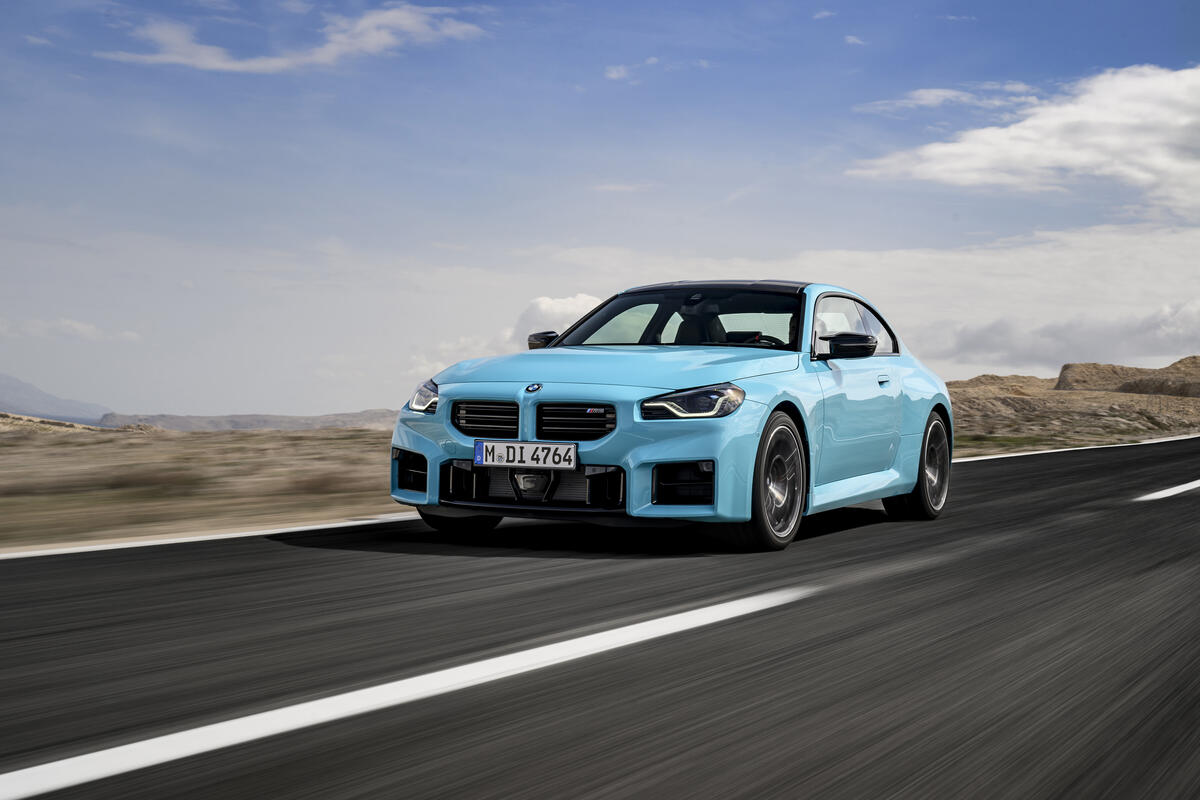
The BMW M2 is a small, two-door luxury sports car made by the German manufacturer BMW. It is a high-performance version of their standard compact coupe, designed to be fast, agile, and responsive. It is built for drivers who want a sporty and exciting driving experience in a relatively small vehicle.
Bathurst is a legendary Australian race track that runs on public mountain roads. It is incredibly narrow, lined with concrete walls, and features terrifyingly fast downhill sections.
Shuffle steering is a way of turning the wheel by sliding your hands along it rather than crossing your arms over, helping you keep better control in tight turns.
The S2000 is a famous two-seat convertible sports car made by Honda. It is beloved by enthusiasts because its engine screams to an incredibly high redline and it handles beautifully on twisty roads.
GLTC is a highly competitive amateur racing series where different types of modified sports cars are balanced using weight and horsepower rules to keep the racing close and exciting.
This is a factory-built, stripped-out race car version of the famous Porsche 911. It has no passenger seats, a loud racing exhaust, and is built purely to go as fast as possible on race tracks.
Sway bars are metal bars that connect the left and right sides of a car's suspension. They keep the car from leaning too much in corners, helping it stay flat and stable.
Weight transfer is how a car's weight shifts around when you drive. When you brake, weight moves to the front tires; when you turn, it moves to the outside tires, changing how much grip each tire has.
This is a very sticky, high-performance tire designed for track racing and autocross, offering maximum grip on dry pavement.
LIVE
Hello, everyone, and welcome to the Lizard Brains podcast.
I'm your host, DJ Alison Drini.
I'm joined by my co-host, Tom O'Gorman.
Tom, how's it going?
I'm good. It's hot.
I haven't been outside. News flash.
Dude, I have the people who are already at Bristol
for the autocrossing this weekend.
Have fun. Look, literally, if you listen to this before,
if you hear this, like when you're on your way there,
whatever, you're already, you're already there.
Yeah. Start drinking water.
Holy crap.
Yeah. You need to preload, preload the water.
You need to start drinking water like tomorrow for your trip down there.
Yeah. Well, I've, um, well, today's Wednesday
when we're recording this, I'm not leaving till Friday.
So like, I'll be, I'll be okay.
But I'm okay though. How are you?
I'm good. I'm going to have an advantage come this weekend
just to skip to the end of the show or what we're doing.
Everyone's like, everyone there right now.
They're all like, you know, slumming it with this four day,
like a hundred degree heat.
I'm just going to show up on Friday evening
and just do a normal two day weekend autocross.
I'm going to be so fresh.
It's going to be great.
They're all going to be like sun burnt dehydrated puddles.
And you're going to show up with this, with a little spring in your step.
You guys ready to autocross? I'm ready to autocross.
Let's go.
Yep. That's exactly how I'll show up.
And I'll probably be just as annoying as that sounds.
So yeah, speaking of autocross, you autocross this weekend.
I did twice, twice.
Right. Yeah.
So I went to a, an event in the middle of Pennsylvania.
It's like four hours away from me and it was raining the whole time.
And you know what, Tom?
I think I like rain events not because it's more fun to drive in,
but just the camaraderie of everyone being like,
we're hanging out in our frog talks and we're getting rained on.
Woo, like that.
I kind of, I kind of dig that.
Like we're all in this together kind of like thing.
It's sir.
I kind of dig it.
I think driving autocross in the dry is more fun,
but the events are just as enjoyable in my own opinion.
Is my head shiny? Look at this.
It's just you're glowing.
Yeah. OK. It's sorry.
I don't sweat. I glisten.
I got distracted on the webcam.
I just my head looked extra shiny today.
I don't think I like autocrossing in the rain.
I haven't done it a whole lot, to be honest,
because it's just it's not like I like track driving in the rain is
different, like driving a whole different race track.
Yeah.
And that's part of the fun.
And you like there's grip in different places than usual.
But I guess I don't know when I think about autocrossing in the rain,
I think about like doing time attack in the rain in a way.
So I don't get the.
Well, no, that's not a good analogy because driving on a race track.
You're kind of just like driving slowly around.
Yeah, like you're still trying to maximize like what's available.
But I think what makes driving on the in the rain on a race track
like so enjoyable is that it's like a little puzzle to figure out.
And in autocross, you don't have enough like time to figure out the puzzle.
So it always leaves you feeling like there was more
because you like didn't have enough reps to like fully figure out what
like puzzle laid out in front of you.
Yeah. I'm in it for the I'm in it for like the rapid fire shotgun, not shotgun
machine gun pace with like lots of G forces.
That's what I'm in autocross for, and that takes it all away.
Yeah. You're still executing on the thing.
Like it's it's still better than sitting at home, but I think the camaraderie
of like we're all standing around in our frog talks more than makes up for it.
And it's a good time. Sure.
Well, that sounds fun.
I hope it was worth the trip.
And then you went to Toledo as well.
Yep. And then I drove four hours home and then two hours in the other
direction after I slept at home and did an event on Toledo.
And that was a lot of fun, too.
What about you?
You were complaining about the car that you've been driving being difficult
to lock down with like setup and stuff.
Did you like this other one that you drove better?
So I did it help you like did it help you driving two different cars set up separately?
It's tough because it was wet.
And it was you drove that one on the wet the wet day.
Yeah. Yeah.
I drove a D street car on Sunday and then the CST car on on Saturday.
And the CST car was mostly the same as Peter's had had a shaft work shocks.
Guy can diff, but the spring rates were a little different and he had less rake.
So he had like a stiffer rear rate, but less rake.
And I think that was like good in the wet.
It felt I mean, it felt fine.
And actually, it took me a little bit to come up to pace.
And normally, Tom, normally that doesn't happen.
And there was something about the frickin runway lights that was like in my head.
Oh, because it was on a runway and it's very, it's very cambered.
It has like a large crest in the middle of it.
And I think the off camber was having me feel a little less comfortable than I
normally would.
And in the drivers meeting, they talked about how expensive these runway lights
were and that just like, and you know, I just bought this mountain bike.
Shout out to Adam.
Adam, I forgot to name your company.
If you want to post it in the chat, it's like a shed built or something like that.
But I can actually actually send people to the Instagram at least.
Cool.
He's typing.
So, you know, I just, I just bought that mountain bike.
I'm like, I really don't want to have to replace like a thousand dollars worth
of let, let alone the damage to the car.
If I went like sliding sideways into one of these runway lights, like,
cause I'm sure they said it was going to be on you.
If you hit one that you would have to pay to replace it.
It was an SCCA club.
That doesn't sound like how SCCA events are supposed to work.
Whatever region that is, is kind of BS.
Okay.
The mountain bike is coming from shed built.
So S H E D built all one word.
So yeah, Adam knows the stuff.
Tom, he like completely stripped the bike down and did like a full
refresh on it and it's in the mail and it gets here tomorrow.
I'm super pumped.
Nice.
So, uh, anyways, that was kind of in my head during like the first run heat.
And I only walked the course once.
I only had time to walk it once.
Christine actually woke me up.
I, my alarm said it went off, but I know I saw no evidence of that.
I think.
So I normally have my alarm play like a Spotify playlist of like cerebral,
like, like cerebral.
Yeah.
Like it's, I didn't use a ring.
Hmm.
It's no, cause that would sound different.
It's just like sounds and like chords.
And it's just like, it's a very, it's like not music.
And so I have like a, like a playlist of that.
And that's normally what I would wake up to.
But twice now it has said an alarm has happened and it didn't wake me up.
So I think sometimes Spotify gets a little confused and then it just doesn't play
any sound.
So the alarm's going off, but it like didn't actually play any songs or anything.
So I've switched to an obnoxious, sorry, Christine, in the future.
This is a new development.
Um, Christine's on a trip on the upper peninsula of Michigan.
Um, so Christine, when you come back, uh, there will be
a loud alarm now playing in the morning when, when I have to wake up, um,
and that will totally wake you up.
So I apologize in advance.
You could get this.
Uh, I had an alarm clock in high school because I was so difficult to get out of
bed that had this little puck that plugged into it and the puck vibrated and it went
under your mattress.
So when the, when the alarm went off, it would also like vibrate the bed and you
could hear it throughout the entire house when it was, it was like, and my parents
would try to get me up.
You could get one of those.
Christine would love that.
No, no, I don't think she would.
Um, I'm still stuck on this.
That's not how that's supposed to work with the payment thing.
There's supposed to be like supplemental insurance for damages and, and
yeah, medical.
It turns out it was all for nothing anyways, because when I went out there to
work the course, the only places that I felt like, Ooh, if I mess this up, like,
I could just go for a large safari and just go flying in the dirt.
Uh, that's those spots of the runway didn't have any lights.
So I was like, wait a second, I'm over here being in my own head for no reason.
Like I could just fricking go out there and send it.
So I was actually really, really proud of my run that I did on Saturday.
Peter, uh, Schnorr, who was driving a different CST car, he was actually
beating me after morning runs.
Uh, and then the conditions were worse in the afternoon and I went like, like
1.2 seconds faster.
Like I put together a run where it felt like I was barely touching the steering
wheel and the car was just floating and I was just getting away with everything.
Like the whole time.
And then I like, I was like, surely I can't get away with everything that I'm
trying in this run.
And then by the time I got to them, that was like, I did and it was great.
Were you on bridge stones or continental bridge stones?
Interesting.
Continentals would have been much more, uh, confidence inspiring.
There was definitely some hydroplaning going on, but you had to like get the
angle right right before you hit the puddle and I don't know, it was kind of
entertaining, even though after we just said it's not as entertaining as dry,
but I would have liked to drive the course in the dry, but, uh, but that didn't
happen.
Uh, but yeah, there was a little bit of a mental hurdle to get over, uh, and
normally, normally when I'm driving, I don't feel like, like I'm going to like
imminently lose control of the car or whatever.
Like I feel like normally I'm pretty methodical with that.
I think that one spin I had in your car in the wet where I wasn't like fully
familiar with the car.
I think that was living somewhere in the back of my head, Tom.
That one spin made me slower.
Like two years later.
Yeah, it happens.
Yeah.
Uh, every, anytime I drive a car that kind of translates to me via whatever
it's doing, that it's maybe not going to a hundred percent do what I ask for.
I think of my crash.
Yeah.
Back in 2020.
Yep.
And that stuff sticks with you.
I think, I think we'd be kind of dumb if it didn't stick with us.
Can you imagine if you're just like, Oh, big mistake that could have cost a lot
of money in and, and maybe impacted me and Tom's friendship.
Uh, Oh, well, and it's out of my head and I never think about it again.
That would be dumb.
Right.
Yeah.
I wonder, I mean, I guarantee every time I get in a C eight from now on,
I'm going to be paying attention to the edge of the track or every time I drive
gingerman, I'm going to be paying attention to the edge of that track.
Yeah.
At least in that spot, you might leave a little bit of margin until like you
build enough like, okay, the car's ending up where I want, where I, I feel
confident there's no mistake.
And then, then maybe you'll be like at the very last inch again.
But yeah, I think that's just, uh, that's just part of it.
Sometimes when I co-drive with people, uh, or when I coach them, uh, I can like,
I like see PTSD, I'll be like, I know why they're, they have this tendency.
And I'd be, I ask, Oh, do you, do you used to spin a lot on corner entry?
And they'd be like, Oh, how did you know?
And I'm like, cause you're overcompensating like I can see it.
Dang, I can't remember that happening with me and working with anybody before.
It's a good thing to look out for though.
Yeah.
You just see it like the way that they come off the brakes and like the way
they get into throttle is like ultimate stability.
It's like, to the point where it's like, there's no part, like any part of them
driving that car, they can't actually think that's optimal unless that is the
way they figured out how to never spin on, on entry of corners.
It mostly happens on racetrack.
I've never noticed it in like an autocross because people generally aren't
scared if they spin on an autocross because correct, like whatever, you hit
some cones, right, uh, but on racetracks and definitely sim racing
because sim racing is way spinnier than real life.
You'll, you'll see it.
You'll see it for sure.
For sure.
Uh, I didn't do anything fun motorsports this weekend.
I was still dog sitting and, uh, I got home Sunday.
Honestly, uh, for Friday through Sunday, I watched a whole bunch of racing again.
I had one of those weekends because it was Watkins Glen, IMSA F1 was in Austria.
What else did I watch?
Something else and I just, uh, I mean, yeah, some of the racing was good.
Oh, spa.
I didn't really watch spa though.
I think that a 24 hour race is really difficult to watch.
I would turn it on every once in a while, the spa 24 hour and just be like,
where are we watching and be like, I have no idea what's happening.
I'm not invested, turn it right back off.
Um, but, uh, F1 qualifying was pretty entertaining.
Uh, they wrecked.
I mean, DJ, I think they probably genuinely know, no exaggeration.
Who was that somewhere between five and $10 million of race cars at Watkins
Glen this weekend, they wrecked so many cars at Watkins Glen.
It was like, I was texting some of the people who work for IMSA operations.
Like, I hope you go like, go enjoy your night or something like, oh my God,
that was had to be one of the worst weekends for them from just, just
watching people crash and crash.
I saw a couple clips of people just like loosening, losing it on their own in
the bus stop, which in their defense, I've done that in eye racing, especially
in the Lambo, I, me and the Lambo don't get along with Watkins Glen.
I never drive the Lamborghini ever anymore at Watkins Glen cause I literally
just crash every time in the bus stop without fail.
I, there's nothing I can do about it.
It's just going to happen.
But, um, uh, yeah, I saw a lot of people just like losing it on their own in the
bus stop, but not like, like not on entry, like on an exit, which like,
I found super weird cause I know you don't have like all the space on the
exit in the bus stop, but like you do, you can cut through the grass.
Like you don't, you don't have to make it, but they would just get in these
like long slides, just totally committed to stay on pavement.
And then that would literally just send them into the wall.
I think there's a reason why.
So during the pilot challenge race on.
Saturday, the curbing, that first curbing that's on your right, when you jump
into the bus stop, yeah, started coming up.
Oh, so it, the one panel came up and it took like two people to carry it.
So it's obviously like at least probably a hundred pounds.
I don't know.
So like two guys carrying it to like lift it up into a truck.
Did it start separating from the, the spikes?
Cause it has like, like basically like nails or something that like holds it
into the normal pay because they can remove it and put it down, right?
Like that's okay.
Correct.
So the spikes came up.
So it was like actually like floating around and like wiggling and do, and
ending up in different spots or no, it, it, it flew off of where it was supposed
to be and was sitting in the middle of the race track.
So, so that happened at like maybe 20 minutes ago.
They restarted the race without fixing it.
And then the first lap through, somebody hit a different part of the curb that
was now exposed and like tore the left front off the car and they ended up,
ended up under yellow because the track was damaged and they ended up having
like a three hour track repair.
So the, the long term, the answer to why this kept happening, I think, is
because they ended up just pulling that curb up.
And I don't know if they put something shallower down or just didn't put
anything down, but if you listened, uh, there were a bunch of drivers talking
about how it completely changed the entry.
You could carry more speed in because there was no curb to jump.
The car would be more stable, but then it would create a problem as soon as
they turned back to the left for the second part of the stop.
Because they have more speed, run out of space.
Uh-huh. Yep.
Yep. Okay.
So I think that's why that was happening, but, um, I mean, the six hour was really
fun. I think IMSA is so impressive, especially with, I mean, the GTP drivers
are fricking animals.
Like they, they don't even have a sense of self-preservation level of animals.
They are real, they're like willing to crash those cars and write them off at
any given moment.
And they like, they're bumping and rubbing and like jockeying with the, and
then the GTD pro drivers are the same.
Like the all, all pro lineups in those cars.
I generally think GT race GT three racing is pretty lame, but somehow they're
all, I don't know if it's that they're good enough or what they're all even
enough.
They end up with really good racing and GTD pro as well.
Um, so I enjoyed watching that.
All right.
So maybe I should check out the highlights to the Walkins Glenn six hour.
Is that what I'm hearing?
Maybe I feel it.
Yeah.
Maybe I, uh, it's yeah.
Yeah.
We're like, when you had nothing to do on Sunday, watching it for, you know,
kind of paying attention off and on for six hours between petting dogs and letting
them inside and outside and inside and outside.
As you do when you dox it.
Yeah, yeah.
Uh, and then we came home and we ended up commentating a race for the Liberty
bell league that was, uh, it was going to be probably like four or five people.
So Amy, how seal agreed to open it up to everybody and we just put it out in a
couple of different group chats and discords and we ended up with like 30
people in the race and I was itching to like commentator race after watching
all this racing all weekend and ended up being perfect.
I had so much fun.
I did feel rusty though, because I haven't been doing the sim leagues on week
nights anymore.
Okay.
Those, those wrapped up like three weeks ago now.
And I definitely felt a little like, especially leading it.
I was like, uh, uh, I'm a little slow, off, behind.
Oh, I didn't even notice.
I didn't notice it just happened so fast.
I want to be ahead of it more.
Um, but anyway, it's kind of fun to think about that.
Anyway, I didn't notice.
So, and that was your co commentator.
So if I didn't notice, then cool, I'm sure it was fine.
Uh, and then I had the itch to sim race and I tried to get to sim racing and I
had a horrible 24 hours of iracing that made me want to quit motor sports entirely.
But then I kind of pushed through it.
All of my genuine, genuine, I just get so mad getting crashed out.
Like it's just not fun.
The one, the one that you got crashed on the WDCR league, I don't know if you
heard, but Colin apologized to you because that one was just dumb.
Did you even watch the replay?
He literally, no, I was, dude, I was so fed up with getting crashed into that.
I don't even care how it happened.
I was, I didn't care who did it.
I don't, it's like, I literally don't care.
I just, I'm so sick of this stupid game, but then I slept on it and I tried it
again the next day and I was feeling much better.
And I had some good driving since then.
I'm going to paint the picture of how you died in the WGCR league.
You know how, like, if you have, maybe not even overlap, but you're like, I'm
going to make a move on this person or at least I'm going to try to, and you
break like a split second later to them to make overlap before you turn in.
He did that, but he wasn't next to you.
He was just behind you.
So he just ran into you.
Right.
Yeah.
I was so silly.
I was like, I don't even, I'm not even sure what the plan was, but yep.
It just ended up with you, uh, on the side of the road at four, uh, ult at
four ring and getting out of the same, like as quick as possible.
So yeah.
Yep.
So sorry, Tom.
Actually, no, I didn't get out of the sim.
I went and played with a, uh, a group of like just buddy league people that
wait up for each other and, and kind of hang out and whatever, and that was
better damage, damage off.
It was perfect.
It was the exact experience that I want.
So I kind of determine like that needs to be the core of eye racing for me.
It was like damage off buddy leagues.
All right.
Just and then be willing to quit the, the other stuff, the weight, the
weighting up for each other thing works when it's only like 10 people.
If it gets anything more than that, then it just gets a little tedious.
It's like, guys, can we just do some freaking laps here?
Like, what are we doing?
Yeah.
So totally.
Yeah.
All right.
Uh, well, that sounds fun.
I'm glad you're eye racing again.
I dusted off the rig after like what one lap, how long ago was that?
That was like, that was, I played, I played the week before I went for my
brother's house for a week, but then before that had, it had been April.
Yeah.
For, yeah, right before one lap.
Um, what was I going to say about this other part?
Hmm.
Sam, oh, I had some funny things happen with, I don't know if it's the
hardware or the software or the whatever, but some of the settings had been changed.
So I, I got on to play for the first time and everything just felt really like
mushy and muddy and icky.
Like I couldn't feel the force feedback.
Well, the breaks were really difficult.
So I went finally into the settings.
I was trying to pay attention and I noticed that my break pedal would drop
from like 25% break pressure to zero with like, no matter how perfect I tried
to release the last bit, the force factor was all messed up for some reason.
The force factor had defaulted back to just force, uh, what do they call it?
Load cell pedal.
So the force factor was not a factor at all.
It was just defaulted to load cell pedal, which is like a toggle on or off.
Yeah.
And, um, wait, do you know, as I toggled, huh, do you not use that?
You have a load cell pedal.
Do you, do you want, do you want to use the force factor with your pedals?
With it, with it toggled on to match my load cell pedal, it would drop the
break pressure at the last second.
So it's probably in the drivers of the logitech software rather than
erasing, but I turned, I turned the toggle off and then all of a sudden it was fine.
And the other thing I noticed is if for the computer has been like reset, I have
to go to the black box where you, well, we're real, this is like autocross
dorks, but for iris, I have to go to black box where you can adjust your force
feedback on the fly and just click it like up and down once.
And it wakes the force feedback from that muddiness to like right back on.
And it's fine.
What?
And it's done that to me twice now after I reset the computer.
So now I have to like either make sure that I do that every time or I don't care
to troubleshoot it.
It's just stupid.
Maybe update the, maybe update the drivers on the, the hardware that you have.
Cause that sounds like a communication issue.
Somebody said, I had this happen the same time you did in the M2 and,
and Anthony said, I don't have a logitech wheel.
I don't know.
Maybe it's an eye racing problem.
Kevin, but when I found those, I honestly felt like I was driving some of the,
I'm like, I feel like I'm driving really well in the sim and I've been, you know,
fast enough.
I want a GT three fixed race even.
Whoa.
Well, right in the middle of the day.
Uh, yeah.
Today at like one o'clock dang taken down the euros that means that's whatever.
Oh, well, I guess you didn't wait one PM.
What time is it in Australia?
Somebody let me know one PM Eastern to Australian time.
Cause that's, that's when you need to drive Bathurst.
If you want to go against like the actual Bathurst wizards, because something
about Australians and Bathurst, it's the only track they drive.
It's like, it's like the rest of the world in Nürburgring, but it's just Bathurst.
Uh, I, I mean, I think I'm a Bathurst specialist.
That's like one of the tracks I plug into and can run at the front,
no matter what the crowd is, just like clicks.
You just got to, I said this once, you got to fall down the mountain,
just right.
Yeah.
Yeah.
Oh, the next lizard brains event.
Are we going to do it on Bathurst?
I'm down.
Me, maybe.
Okay.
Well, but then I got to drive.
Hmm.
That's fine.
I'm going to back up my statement that I just made there.
I'll, uh, I'll commentate it.
Watch me beat seven.
Yeah.
I'll commentate it with Christine.
You ready, Christine?
Ooh, I'd love that.
I don't think she would.
Um, but the, the motivation to sim race is because I'm doing that.
Road America, Zenith endurance race and I'm not going to be in a real car
between now and then.
So I just, I just want to be having driven a bunch in something.
It, when is that race again?
Remind me, is it in July?
I thought it was this weekend.
It's next weekend.
So it's like July 10, 10, 11, something like that.
Okay.
Okay.
Okay.
Uh, you want to come to Bristol, Tom?
No, I don't.
Okay.
I'm driving right by you.
It sounds absolutely miserable.
No offense.
I'm driving right by you though.
We could, we could split a, a hotel.
It'll be fun.
Come on.
No.
Okay.
Okay.
I might sleep in a tent.
I don't know.
Just do it full on just fricking grueling crush mode.
No, I'm getting a hotel.
Let's be honest.
I want to shower.
I've heard this, I've heard this thing.
Someone said it to me once and it stuck with me that the older you get, it's
not that you get slower in a race car.
It's not that you forget how to drive.
It's not that your body works less for you.
It's that you're less willing to be uncomfortable.
Yeah.
I agree with that.
And I definitely, I feel that a little bit, but it's not even, it's not the
in the car stuff.
It's the events that I choose.
It's like, if I know it's going to be the surface of the sun at Bristol, I'm okay.
I don't need to go 10 years ago.
Even five years ago, I might have gone.
Christy calls me out in the chat.
You couldn't handle that in a tent.
DJ, she's right.
I can't sleep.
I can't sleep when I'm sweaty.
Like I just, I can't.
Remember like as a kid, before we got air conditioning, like trying to sleep in
the middle of the summer with like, with just a fan.
Yeah.
What is, is this just a meme memory?
Did I just out myself before you got air conditioning?
There was a point where we didn't have air conditioning.
It was just like, that's crazy.
Dude, I remember when we got, when we got air conditioning, uh, like it was a big,
it was a big house upgrade.
My, uh, my mom and my stepdad were real proud.
Yeah.
So Liam says, I'm with you on this one DJ.
I remember when we, when we finally got air conditioning, it was like, uh, like
we had the neighbors over and stuff.
It was like, oh, come check it out.
Really?
Yeah.
Maybe my, maybe I have some privilege.
I didn't realize, but air conditioning was like a basic factor of life since,
since I was a kid, I guess I don't know.
I think you might be exposing your privilege, Tom.
AC privilege is wild.
Yeah.
Yeah.
Phil, Phil said that in the chat.
That's pretty funny.
I don't think that's a thing.
Maybe it's a thing.
Well, in the, in the Midwest, I bet it's probably a little bit more common, but
like, you know, like in a Pacific Northwest and stuff like that, like a lot,
a lot of those houses still don't have air conditioning because up until recently,
they really haven't needed air conditioning.
Sure.
I guess I can see that.
Well, I mean, most of Europe had no AC when I was over there, but it was a thing
when we were shopping for apartments in Chicago.
When Kyle and I moved there to find central air was a little difficult.
Yeah.
Couldn't you just do a window unit at that point?
Yes.
I remember I'd go play video games with my friend's house because they had a
in window thing and their house was just so much more comfortable than mine.
So like, I would literally just like bring my Nintendo 64 over there and we'd
play video games.
Hmm.
Yeah.
Interesting.
Hmm.
Uh, I learned something new today.
Yep.
Uh, uh, Christine says, Oh,
Tom has that AC as a kid and going to Europe privilege.
Damn it.
Not wrong.
I slept on a couch when I was over there, but you're not wrong.
Yeah.
Yeah.
I, I'm, I'm willing to sleep on the ground at Bristol almost.
Uh, so anyways, a rant that I wanted to go on was the difference between needing
to, uh, and having to, and I see this, I see this a lot with like the, the very
top performers in anything, they have a sense of having to do something.
Like there is no other option instead of like, Oh, I should do that thing.
All right.
Oh, I need to, I need to like put on the practice or I need to get, uh, you know,
Oh, I, I should log on to the, the SIM rig or whatever and like, Oh,
that's something I'm needing to do, whatever.
Instead of like, I have to like, there is no choice.
It's just something that you are, that you are going to do because in your mind,
it's not work.
It's not, uh, there is no choice.
It's something that you just have to do just like breathing.
Like you don't make a choice to breathe.
It's just something you have to do.
Right.
That's basically what I'm saying.
So I don't know how to get somebody from needing or like, or like, uh, you know,
wanting to do something to having to do it.
And I think if I could figure that out, like really like ignite the fire, I think
I'd be a more effective coach because I've, I've tried to ignite the fires before
and I get like temporary, uh, I get like a temporary like boost in like practice
and the effort that's being put in, but it's not, it's not sustainable.
So I wanted to ask you, and I know it's a little different because you got like
most of your muscle memory down as like a child, just like playing SIM racing
games and not understanding like how, how good you were getting like just from
like the playing of it.
But did you have the feeling like after school, like, oh, I have to, I have
to do the race that's later tonight or I have to do this or whatever.
Are you understanding like the difference of what I'm talking about?
We're like, it, it doesn't feel like, like you can't not do it.
Yeah.
Yeah.
Kind of, I guess I'm, can you maybe give me this scenario that made you think
of this so I can understand where you're thinking, like why this came up?
Um, it's just been something I've been thinking about, just like trying
to maximize the performance of, of coaching clients.
Uh, okay.
Cause a lot of times like their motivation comes from my motivation, but really
like what my end goal is with anybody I'm coaching is I want them.
I want them to like, like not need me at some point.
Like I don't want, I don't want to be, I can be, but I don't want to be like
the source of motivation forever.
I want like that fire to be ignited and then them to just like run with that
obsession, but there is some, there's some part of me that like understands
that we can't pick.
We, we can't pick the thing that we're obsessed with, but we just can't.
Um, and I consider myself very lucky that.
Like racing has grabbed onto me in this manner.
Um, and I'm just wondering, uh, like, what does that mean for the people
that don't have to do the thing?
Like right now you're in that state, you don't feel the need to have to go drive.
Correct.
Yeah, that, that's hard.
Cause I, I don't, I don't have a lot of experience in life.
I'm trying to figure out the best way to say this without just sounding like
an absolute ridiculous person, but I like my motivations have always been
what I'm chasing.
Like I'm, I'm not, I was never the type of person.
I wasn't the type of kid that could like, uh, school was relatively easy
for me until it started to get difficult more towards like higher grade
school and high school.
And as soon as it started to push back on me and I didn't see the reason why
to do it, I was not, I was out.
Like I, I could have stopped school at like freshman or sophomore year of high
school if I had the choice, you need the Y then like the Y needs to be like,
that's really important for like your motivation, right?
Correct.
Versus like when I would come home from school in the same, same exact timeline
and I would have my sim, you know, I had sim leagues in the European time zones
that I would come home from school and I would race those and then we'd have
dinners of family and then I'd have my US time zone leagues.
And that would be like almost every day.
And if it wasn't a league, it was just friends getting on to play together.
And that never felt like a thing that I had to do.
Maybe I'm stuck on your words a little bit.
It was the thing that I wanted to do.
So not doing it didn't seem like an option.
It was like, I'm just, that's what I'm going to do it.
And I'm not going to do my homework because I don't get why the, why,
why does this math or why does this study matter?
But I'm going to, I'm going to go race the sim late or the sim leagues.
All right.
I don't want to lose the audience on like my chosen words for it.
I think more what I'm going for is like the feeling of like, like there was no,
like there was no choice.
That was just going to be the thing that you did because like what else would
you do?
Like you, you, in your mind, like you had to do that race.
Like if all of a sudden your parents like pulled the quarter, whatever,
you'd be really upset because you're like, what the heck?
Like I, I have a league race.
Like I have to do that race, right?
That's, that's, that's kind of where I'm like sitting from and set up.
Like there was no point where you're like, well, I really should log on tonight
because there's a race tonight and you know, the season, this and the points
and the whatever and the blah, blah, blah.
No, you were just like, I'm, I'm going to be there because like that, there's
literally no other option.
Right.
Yeah.
And I didn't even think about it in all those words.
It was just what I did.
Yep.
Uh, I just thought of something.
That I lost it.
Uh, so something about that timeline, uh, parents pull in the plug, uh, oh,
that I, you know, I watched my peers around me.
I don't, I, I felt a little bit like I was on an island a lot of the time when
I was a kid, because I did feel this way.
Like that was the, the mentality that I had and I would watch, especially
into high school and especially college.
Once we were like adults, so many of my peers were able to either buckle down
and do things that they didn't want to do, or they were able to like know
that the goal they wanted was important enough to get through the stuff
they didn't want to do.
So let's say I've, I had friends that wanted to become like doctors or whatever.
It's like the amount of schooling you're, you're signing up for to do that.
And the amount of, the amount of stuff you don't want to do.
And they would talk about their homework.
They don't want to do it all this.
I'm like, well, why are you doing it?
You know, I just like, I can't really relate to that mentality, but I
respect it so much.
And I think some people are capable of that.
Um, and I'm, I'm so impressed by people like that.
I do think that there are people who I'm trying to think of it through
the lens of coaching when you're, you're trying to instill that.
I don't know how to create it because I've not, I've never been able to
create it for myself.
I think I have some ideas about like setting a goal where you have to do
this thing in order to attain this goal, right?
Okay.
So if you have the lofty like expectation or whatever that exists, then
maybe the feeling of having to do it, like there is no other option because
you've fallen in love with this goal that exists, that you have set your
mind on that you are going to do no matter what.
So you have to do this because that helps you attain whatever the goal is.
Uh, I have, I didn't really follow that site again.
Okay.
I got you.
So I'm thinking maybe as like the coach, if I can have conversations with
my clients that helps them figure out a goal that like really motivates them,
that's attainable and it has to be attainable.
So they feel like they have within their own power to go after it.
That helps create the motivation and the drive to, to go after that feeling that
I'm, I'm trying to instill in my clients where it's, they don't, they, they,
they aren't having to drag themselves to get on the same rig or go to the,
you know, weekend autocross or like go to the event when it's WAD or whatever,
because in order to achieve their goal, yeah, or if it's hot, so because in
order to achieve their goal, they have to do those things.
If they don't do those things, then that, this thing, that goal that they've
fallen in love with, they can't do.
Yeah.
The hard part about it is getting them to fall in love with the goal.
No, the hard part is there's no guarantee that you're going to reach
your goal by doing those things.
Right.
Well, what if unfair to say, I guess it's not, it's not fair to say that
because eventually you will eventually you will.
Yeah.
I, I think it may be something that, and this might just be like a me thing,
but I, I feel like I'm like really good at convincing myself that if I do
these things, I get closer to this, right?
Yeah.
So by doing those things, it definitely doesn't move me in the wrong
direction of whatever that goal is.
It's just another step to get to that, right?
Yeah.
So what you're, you're saying that when you're coaching somebody to create
that motivation, you are what you're, you're telling them the things that
they have to do to do it.
I guess I'm still kind of lost.
It's, it's more like, so here, here's an example.
So Taylor, Taylor puts in the chat, but will the SIM be the reason I get a jacket?
Okay.
So what if you convinced yourself that if you got to a certain level in
SIM racing, that it would help you get the jacket, that you have convinced
yourself fully of that, of like that.
I look, I get to whatever a thousand I rating and that should be a proficiency
enough of, of like having like that goal will force me to get on the rig,
build in the fundamentals, muscle memory, build in all these skills
and iron them out.
So when it comes time for sell the nationals, I have a better shot of achieving
that goal, right?
But you have to convince yourself that it actually pertains.
If you have the question like Taylor does, but will this actually be the reason I
get the jacket?
It's not enough.
You have to convince yourself that it's necessary, that if you do not do the
thing, then what you're going after will not happen.
Right.
So to boil it back down to what you started with, you're saying that you're,
you're trying to figure out the, the tricks to someone comes home from work
and it's not even a thought of whether they should or not practice.
Exactly.
They come home.
It's, it's the routine.
It's like they, but how do you instill the want to do that?
I don't know.
That's the hard part.
Yeah.
That is the hard part.
Like I remember, I think some people realize, some people, uh,
struggle to admit that they don't really want it that much.
Yeah.
That one's hard.
I think you're right.
I don't know.
There are people who, I don't know if it's helpful to like say that to them.
I've never said that to anybody.
I've never been like, I just don't think you're really that motivated.
But I think give it longer, like give it a couple of months or years or whatever.
People come to those conclusions on their own.
I think maybe it's not fair to even think of that as your role.
I've had that conversation with friends, like I'm not the one that told them,
but they've realized it all on their own.
They just go, well, I'm just not willing to put in the level of effort that, uh,
that is necessary to achieve the thing I want to achieve.
Like they can't find happiness in the level of effort that's required to achieve
the thing.
Do they still want to achieve the thing?
Yeah.
But like if it's, if it's a detriment to their own happiness in a way that is
like not, uh, uh, sustainable for them, then I think that's a healthy thing to
recognize.
You don't, don't want to drive yourself from the ground.
That's how you, that's how you burn out.
And then you just like move away from motor sports forever.
But is there a way like that, that scenario, is there a way that I can help
somebody go further than they would like all on their own, like to, to want to
put in extra effort than they would all on their own.
If they were just by themselves.
Cause I feel like that would be like the sign of an effective coach.
Right.
Does that make sense?
Yeah.
Do you think it's better to want it or to need it to do the, the activity that,
you know, the, the practice, the event, the whatever.
I think if we're looking at just pure results, needing it,
I would argue the opposite.
I would say it's better to want to do it because if you need to do it, it's a task.
And I don't think people are always task driven.
Okay.
At least I think we're getting caught up in words again.
Like, well, that's why I'm wondering, okay.
So the root of where I'm going is, do you think maybe that shifting the
verbiage almost can like manifest the, the mentality?
So like, I want to get on the Simrigan practice or like, I want to get on the
Simrigan drive for an hour.
I, like, I just, there have been times where maybe, um, like self-talk is
where my mind's at.
And, um, there was a period where I noticed, I would say to myself, like,
oh, I'm stupid or I was stupid.
I forget what I was saying, but I remembered noticing it, observing it in
my brain, saying something negative in self-talk.
Yeah.
And shifting it to being like, I, I am not stupid.
That was stupid or whatever.
Right.
So I'm extrapolating that out to like, I can do better than that.
Right.
Do you think of the assignment and you like, if you've assigned this person
10 hours of practice a week, um, they have to want to, if they think of like,
I, I need to get on the Simrigan, then they don't like,
yeah, I think in that context, yeah, I would be want, but I, I don't know.
I'm spitball in here, but I'm, I'm, I'm on the same page as you look like,
Tom, I want you to imagine the time where you were just going to the gym,
like every single day.
It, at some point, it just felt like you didn't have an option to not go.
It was just something that you're going to do.
Kind of.
But the, the reality is I wanted to go.
Yeah.
Like there were times I was thinking about this the other day.
I was watching IMSA.
I was like, man, I can't believe I got, I used to do this, you know?
And that, that took me on this little like journey of memories and whatever.
And I remember racing IMSA weekends and like, we would finish the day and I
would leave the track and go to the gym.
I'm like, that's crazy behavior.
Why was I doing that?
But at the time, like that, I knew that I wanted to do that.
That was the way that I've regulated.
Why did, why did you want like, where did that come from?
Where did it come from?
That's, that's, that's like what I'm trying to figure out.
Cause like, when I first started eye racing, I think in my first year, I did
like 190 some officials and then the next year I did like over 300.
And the next year after that, I did over 300.
And it was just, and all the league races, and it was just like, I, I would
be figuring out what race I'm going to do when I was driving home from work.
So when I jumped on the SIM rig, like there was no like perusing through the
menus and like, what am I going to drive?
It was just like, like, I would almost be like, oh crap.
Okay.
If I stopped for food, I won't have enough time for the race.
I guess I'll just eat after the race.
Right.
Like, like I, it felt like I needed to get home to do the thing.
Uh, and I, I didn't want to wait.
Like, I just, I, like, I wanted to do the thing so terribly badly that it didn't
feel like work.
It was work, uh, like in hindsight, but it didn't feel like it because I wanted
to do it so badly and it didn't feel like I had an option to not do it.
Yeah.
So like, it's stealing that and somebody else is so hard though.
Like with you in the, in the gym, when you were in IMSA, you wanted to do it,
but it also probably felt like you didn't have the option to not do it.
Yeah.
Yeah.
I guess those are the same thing.
Um,
Hmm.
If anybody, if anybody, um, has any ideas or thoughts on
basically this entire discussion, like, please chime in because I'm just,
I'm like really curious how the human mind, because I think there's just such
a large spectrum on how different people approach this.
And I think the more perspectives I can have on how people approach motivation,
uh, you know, a grinding through something, uh, getting better at something.
Um, what's, what's worked for you?
What's like a, like a turnoff.
What's, uh, right?
Like all these, all these things where it's like, Oh, I was really motivated
and tell this, right?
Like, yeah, I want, I want to hear it.
I want to, I'm like, I'm really curious about this aspect of the human
experience, um, cause I only experience my experience and Tom, you only
experience your experience.
I, I'm curious what other people's experiences are.
Sure.
Yeah.
I mean, I like, if you could figure out as a coach how to make somebody like me
tick, then sorry, if you could figure out a way to make somebody like me tick
or, you know, find that motivation without, that's so difficult.
I don't really know.
Um, but yeah, I agree.
I, uh, Raul said, if it starts to feel like a job and it's not just a habit,
it's going to go downhill.
I agree.
Christian said, when you're with something and getting a lot of dopamine return,
it's easier to keep wanting to do it.
I agree.
I think that I actually think that's probably the most concise way to sum that
up.
I think the dopamine is important.
Yeah.
That's, that's, that's like the brain's natural reward system.
So if you're getting dopamine hits on the thing that's making you better,
and more likely to achieve whatever the goal is, then you're like, you're almost
tricked into, into wanting to do it.
Yeah.
How much do you know about, um, like dopamine burnout?
Have you ever read anything about this?
Or do you know what I'm talking about with this?
No, I, I mean, I, I definitely know that's a thing, but yeah, maybe that's actually,
maybe that's where I want to narrow my focus on trying to like get deeper into
this, this like aspect of, uh, of like human nature.
Yeah.
That I'm going way into speculation territory.
I don't know much about it, but I know that there's, there's science behind,
you know, a dopamine overload.
For example, scrolling on your phone can be a thing that really like you're just
drained all the time because you're getting dopamine all the time by doing
what you want in a way.
So I kind of wonder if there's a way to pay attention to external factors.
If someone's focused on motor sports, but they're struggling for the
motivation to like really put in the effort that you're talking about.
If they're like a habitual scroller, then maybe it's hard to find that
motivation because the dopamine is depleted and they don't feel like,
like they're like, yeah, some, I'm not, I don't even, I'm not craving
dopamine at this point.
I've dopamine to all day.
Correct.
And it could be from work.
It could be from fan.
Like we always talk about external factors can influence your performance as a
driver.
I wonder if there's something to that you could sort of maybe ask some questions
up that alley or I don't know.
There's so many different things you could have to pay attention to.
I remember some, some podcast questions that we've gotten to in the past and you
know, they've talked about how they've plateaued and this and that.
And then we predict that it sounds like there's probably a lot of chaos going
on in the background of their life.
And then they write back in and they're like, yeah, actually it has been
fricking hectic and crazy.
And I think, I think like a lot of life chaos detracts from the ability to learn
at the, like, you know, the side project, which would be racing if the life, you
know, if your life is chaos.
Right.
Uh, I'm trying to read this comment that was very long.
What?
Lugans?
Yeah.
We can just read it.
And then if it's, if it's a miss, I spent separate times of my driving career
improving areas that I know that had issues just reviewing areas that I knew
had issues just reviewing video.
I used to shuffle steer.
I spent about a year obsessing over it to get rid of it.
I used to double input.
I spent a time getting rid of that.
I've used multiple throttle applications.
I obsessed over it to get rid of it, uh, to commit to one throttle tip in over
time, the overall driving improves, but spent time to correct the small things.
Yeah.
I mean, I, I agree with that approach when it comes to improving.
You just recognize the, like the low hanging fruit and you troubleshoot a way
to get rid of it, noticing it is 5% of the battle.
Maybe that's another way to contextualize it for someone who's struggling
with the motivation or the, the need or the want to cares.
What word, uh, is maybe the bites are too big.
Like for example, I don't feel, I don't feel compelled to get as good as you are
at iracing specifically.
And I don't think that that holds me back in real life.
Like I don't think I'm at a disadvantage because of it.
And I've like gone all through all the little coping mechanisms to like, I don't,
I'm not interested in doing that.
But if I, cause it does feel like a giant bite, it feels like a massive,
crazy bite because I know how much time it takes.
I know how much effort it takes.
And I don't see why I want that for myself in my life.
Whereas you do absolutely.
And you, like your perspective of it is different, but it all does boil down to
like, I just know the bite is way too big.
Yeah.
Small bites.
I like that.
I like that a lot because maybe, and maybe that will help with the motivation
thing too, where if the bites, first of all, if the bites have almost like a,
uh, like a, a path, like, you know, the path of the small bites, then you're
want way more likely to like, okay, I'm going to bite this.
And I'm going to go over here and I'm going to bite that.
And, but if it's like, you know, keeping with the metaphor, the bites
larger than your mouth, then you're like, well, why am I even going to try?
Yeah.
And then that kills motivation, right?
Yeah.
For sure.
There's this, uh, there's a thing that's popped up in the last, what, what's today,
Wednesday, so four days of iracing the last three or four days, you know, how
they added the little throttle and brake trace, um, tracker, it shows like the
last five seconds of your pedal inputs.
So paying attention to the brake pedal to notice, to go back to my settings and
to like fix that problem, noticing that I couldn't, literally couldn't break
somewhere from zero to 20%.
As soon as I fixed that, I was paying attention to that little histogram of
your pedal trace.
Yep.
And every time I would see the little like 20 to 0% trail being what it was supposed
to be, it was like, I knew it felt good.
Exactly.
It's dopamine and that you explained it and I got a dopamine hit.
I saw it in my head and was like, yes.
Yeah, right.
And then, so now I'm, I'm a little like, I'm definitely obsessing over that
little thing.
I like to look down on my bottom left of my screen, like basically every corner.
Did you know you can make it a little bit longer?
It doesn't have to be five seconds.
You can make it up to like 15.
Okay.
So sometimes you come out of a corner and you look down and you're like, shit,
I didn't look quick enough.
Yeah.
You can, you can make it a little bit longer.
So you can always see it.
But there have been times where I maybe looked too late, but I know it was good
anyway, and I just wanted to see how good it was.
Does that make sense?
Yeah, I know what you're talking about.
You're like, I want to see how even like that little break release was.
Damn.
Um, to me, that's just, that's a tinier bite than, you know, putting in an hour.
Okay.
So then bringing this back to me coaching, maybe the way I can help them is to
identify the tiny bites and then just give them, give them that thing to chew on.
Like the tiniest, like if whatever bites I'm giving them, because I do try to give
them bites, it's not like I'm like, look at all these things you're messing up.
I try to give them like a, a tiny bite, but if it looks like maybe they need smaller
bites than what I've been giving them, maybe that's the feedback.
Like from this conversation is I need to cut the, I need to cut the food up even more.
Right.
Like I need to go like more granular on like the singular thing they can change
about this thing that maybe to me wasn't too big of a bite, but it's not up to
whatever it is for me.
It's, it's what it is for them.
So maybe I figure out how to chop that thing into a smaller bite.
I think that's a great analogy.
And I also think it's, I liked, especially when I was coaching a lot, I liked to
verbalize the trick I was using.
I was trying to say, I liked to, to give them the context.
I guess context is what I'm talking about.
I liked to say like, this is not going to be a one, a one day work job.
This isn't going to be, you know, this isn't going to be one bite.
We need to chop the bites up into smaller pieces.
And here's the, you know, whatever analogy you're going to use, I like to
verbalize that for them so that they don't have expectations of it that aren't
true, that aren't real.
Right.
I, I try to, I try to set the expectations when I first start working with
somebody, it's like, look, you're, you're, you're going to go slower.
Like there's like very, very rarely, like, we just like work together.
And I like, yeah, like, and I'm just like, look, all these things you're doing,
like try this instead.
And then you're like, wow, I'm wildly faster.
It's like, that's not how it works.
Like most of the time, sometimes, sometimes somebody just puts it together
and you're like, am I getting punked?
Like, like, is this person actually way better than, than they let on?
Is this like, like, is this just somebody else on their account?
Just fricking doing like, just like, oh, so you're just telling me, I need to
roll the weight around the outside.
And then fricking like beat me by like a second in a lap.
And I'm like, obviously playing it up like I'm getting punked.
But yeah, that just doesn't happen.
That just doesn't happen.
A lot of times is you're like changing your golf swing and you're going to
miss the ball a couple of times because it's not what you're used to.
Yeah.
I thought I'm still stuck on.
I'm thinking about like the, the, the way to feel the progress then,
if you're cutting the bites up so small, I think the, the, the break
pedal thing I just described with the SIM is like a perfect visual that
translates to a sensation that translates to a result.
Like there's a, there's a full on step, but I'm thinking about now,
since I told the story, the gym analogy, you didn't see progress every day,
but I still wanted to do it.
I still felt good about it every day when I would work out or whatever.
Yeah, but there's then all of a sudden over time, you know, I was in
the best shape of my life and I was really proud of how I looked and
everything that that's part of what kept me going.
But it wasn't like a quick, like that felt better.
It wasn't the same like staged process, I guess.
There is like a, there is like a dopamine hit after a workout though.
Like the, the immediate feeling after like during, but what I'm saying is
there's no, there's no step by step, like progress or correlation between that,
you know,
visualization, which I think is what people struggle with because there's not
like a, yeah, I did that right, which means this went right, which means this
went right.
It's like, how do you, it's harder to work on that kind of stuff
when there's not a real time feedback?
Yeah.
I guess what the, the analogy I used with the SIM is probably like the
easy mode analogy, because there's literally real time feedback in multiple
ways you can see the, the break trace.
You can see the predictive timer and you can feel what the car did.
And yeah, yeah.
And like then you said a faster lap and you're like, oh yeah, all the dopamine
is just firing everywhere.
Correct.
And maybe that's, maybe it's, maybe like I said, maybe that's like the easiest
version of this problem ever, or maybe it's because I'm experienced enough that
I can kind of like pull from all those different reference points and it all
makes sense, whereas a newer person or meet 15 years ago, wouldn't have been
able to do that.
Yeah.
And then the shit's hard.
Yeah, it is, it is.
Then you'd have to make it more bite sized because really like somebody
could make, I could make the break trace that looks like it is in data and
still go slower, like, because there's so many, there's so many other things
going on than just literally just the break release.
It's, it's like how the car is balanced and how that break release is affecting
it and like the shape of the corner that you created by like manipulating the
weight with the break release, like you can know what the proper shape of it
looks like, but just aiming for just the shape.
That's, that's not really going to get you anywhere.
The shape is like a product of, of all these other things going well and
there's all these like layering variables.
So yeah, it is, it is pretty tough to, to actually nail down.
Yep.
But it's, it's about finding those wins.
The point of all that was to say the point, the finding those wins for
people when you're working with them so that they realize that they're like
doing the right.
Yes.
Little bites, the little bites are there.
Or that, that the, that they're improving, right?
So I think Raoul said, um, yeah, good.
It's still here.
Uh, Raoul said seeing progress has to rank high.
So if maybe, maybe the clients isn't noticing the progress, but I am, and I,
in those, in those instances, I try to do my best to be like, like the cheerleader
for that, like, oh, like, you know, a month ago, like, like this is what was happening,
but like, look what's happening now.
Like look at the progress, right?
Yep.
So, uh, you want to do some questions, Tom?
Sure.
That was a good little impromptu topic.
We're not experts on some of the stuff we just talked about, but if it helped
you think about it, this is like, yeah, this is like the solo.
This is like the autocross announced vehicle.
Everything we say is not official.
Right.
We don't know anything about brain chemistry.
We're not experts or scientists, but we have gotten pretty good at driving.
Yep.
Yep.
Okay.
Uh, I'm going to play the jingle.
The males.
All right.
We got some podcast questions.
I really like this one.
This is super cerebral.
This is from Derp Puckett, one of our favorite listeners.
Okay.
His screen name.
How much, how much helpful information is, now bear with this question
because it goes on a bit of a journey.
How much helpful information is there to get on track via the sense of smell?
I have a really sensitive sniffer and pay close attention.
If I can smell my breaks beyond being a signal that your breaks are hot, could
your nose help you perform better?
Could you potentially determine the competitor in front of you is cooking
their breaks and adjust your approach to overtake them as a result?
Are there a sense in the paddock other than warm breaks that might tell you
something about your car or other people's cars?
Should I be wandering around the paddock sniffing things?
That's the question.
I, I'm a little mad that I'm like thinking about this one this much because
it's obviously like a joke, but like I'm over here thinking, hmm, has my nose
over alerted me to like, like, has my nose ever been an advantage on the race
track or at an autocross or definitely not in sim racing.
Um, it's always just a disadvantage in sim racing.
Like, is it like, oh, I, I smell kind of bad.
I need to get out of the sim rick and go shower.
Sometimes it's that sometimes that will take pace away.
Uh, but, uh, most of the, the one that I could think of the most is if Christine's
cooking something that smells delicious and I'm hungry instantly, I lost like a
10th at least.
You don't drive faster.
So you can go eat sooner.
No, it's, it's a timed race.
Me going faster is not going to change anything.
Uh, I can't tell if this is a silly question or not, but I definitely think
that there's, you know, I don't think ignoring smells at the racetrack is a
good idea.
No, you know, so being able, you know, so I'm in the car and I can smell
something that's not been there before I'm immediately wrote like shuffling
through my Rolodex of like, what is that smell?
What could it be?
Is it me?
Is it somebody else?
I don't think I've ever gotten a competitive disadvantage because I've
noticed a smell.
Um, maybe I've saved some self preservation because of smells.
Like you smell oil and you're following this car and then I'll, you know,
yeah, yeah.
Yeah, I could see that where you're like, Oh, they must be leaking oil all of a
sudden because I smell it, but normally you see it too.
Like you would see smoke or whatever.
It's, I think the smoke would be the first, first thing that I'd noticed.
And then I'd be like, Oh, yep, that's definitely oil.
Cause now I smelt it.
Right.
Um, I'm like, maybe to save the car.
Like you could smell like, is that an elect, electrical like burning
smell that I smell?
Like maybe stuff like that.
Like I could see that coming into play.
Uh, as far as breaks, I don't know.
You always just kind of smell breaks.
Like I don't, I don't know if it's like, Oh, those breaks smell like they're
extra crispy.
Like, you know what I mean?
It's like, I don't, I don't smell breaks.
Like being burnt, like you would like, Oh crap.
I forgot to take the pizza out of the oven.
Like I, it's not like, uh, you, you smell a certain smell and
you're like, their brakes are fading.
Now is my time to make a move.
Like, yeah, that would be such a racing movie thing to do though.
It would be, it would be.
I'm surprised that wasn't in Ford versus Ferrari.
Let's be honest.
And then they have a slow motion shot of him passing and the first slow
motion shot would be like the nose flare, just like barely like a, yeah.
Yep.
Yeah, exactly.
Yeah.
And it'd be like super close up, maybe even like a one nose hair hanging out.
Yep.
And then blue God says, yep, of course, shifting 12 times.
Yep.
This has to be a scene in initial D or something.
It has to be.
He's like, you smell the morning dew and you're like, there's
less grip on the hairpin.
Um, the other one, I think about it, that maybe you're taking this too seriously.
Tire smell, like tire rubbing.
I remember basically every time at AMP in turn 10, which is the big
compression where you're like 30 degrees downhill through a compression and 30
degrees uphill, you get a little like with a tire every once in a while.
I could see, you know, stuff like that.
You have to be able to, you have to learn what they are and then be able
to like rule them out or pay attention to them as your self sense of self preservation.
Yeah.
But also if I smell the tire every time I go through a compression, I also adjust
how am I making sure I'm not like just destroying this tire.
Yeah.
I guess depending on the, the veracity of the smell.
Yeah.
Uh, Lime Rock uphill, especially the S 2000, the, the GLTC car, just
every time through the compression, I would just get this big whiff of, so
that told me to like go check the sidewall of the tire and the first
surface of the tire after the session.
All right.
Damn.
I don't know if I've ever, look at Tom over here, just being like a fricking,
uh, what's the, what are the dogs called that like find people in avalanches?
I am not a bass and how, oh, I got avalanche.
I'll be a bass and how this is what I was going for.
Yeah.
That's what I was going for.
A Bernie's mountain dog.
Tom, the mountain dog racer.
That's what they're going to call it.
When you get the NASCAR, you're the mountain dog racer.
That's a, that's what, that's what we're calling it.
Hey, whatever happened with the, the Lime Rock truck thing?
Did they just never reach out to you?
No, never heard.
Dang it.
Guys, we didn't, we didn't explode that Facebook page enough.
Apparently when we were 75% of the comments, that wasn't enough.
Nope.
Nope.
Cause those are worth zero money.
Um, but also I did have Lime Rock social media person message me about it.
Okay.
Cause it's a person I've worked with in the past.
They're like, what did you do to get all these comments?
I'm like, literally nothing.
That's all my friends just running with this.
Uh, that was great.
I did feel special.
Okay.
So there you go.
A productive answer from a silly question.
There you go.
Learn the smells and use them as a sense of self preservation.
Uh, and then Billy, yeah, Billy D had a follow up to that question.
And he said, why limit it to smell?
Should I be licking my competitors to see if I can taste beer?
Yeah.
You look, he smelled a little clammy and nervous.
That smells like stress.
I know I got you into turn one.
All right.
Let's just keep going down the list.
The Devin writes in, uh, most people have a last meal.
What would your last drive be?
Oh, I like this one last drive.
I like this one too.
You're terminally ill, Tom, and it will be your last time ever driving anything.
What track or is it autocross and what car?
Damn, that's hard.
I always said, if there's like, if you knew you had 24 hours to live,
what would you do?
I think I would do like real life grand theft auto, but I would steal the most
fun car I could get my hands on and then just like,
see how long you can run from the cops.
Kind of, but not like I'm trying to run from the cops.
I just get to like, I would go somewhere with fun roads.
I would drive how I want, you know, I would be down for that.
But then I, I can't imagine how ridiculously stressful my last 24 hours
would get if I like ran into somebody in a bike or no, that if screw
breaking the law, whatever, I don't care about that.
But like, if I like, like ran off the side of the road and like ran over
a child or something, and then it's like, oh crap, I only got 24 hours to live.
And I took this kid with me.
Oh, that is not ideal.
You know what I mean?
Like that, that would be like, what a terrible way to spend your last 24
hours turning into a murderer.
I'd rather like lay around in my pajamas for my last 24 hours, obviously.
Right.
I'm thinking the most fun cars I've driven or is what I'm thinking of.
Honestly, the first one that came to mind was an, an SCC, an autocross BSP
S 2000, which is like, yeah, like probably one of the best, well, I've
driven three now and they were all incredible.
Okay.
So it's like an S 2000 on really good suspension, very tiny little bits of
like arrow, but lighter weight with like 11 inch wide wheels and like 315
Hoosiers, maybe probably the best car I've ever autocrossed.
What else has been so fun that I would want to make it my last car?
Weirdly, I'm not compelled to say any of the pro cars I've driven, except no,
not really.
What about you?
I've been rambling.
I think I'd want to do something new.
Something new.
Okay.
I think I would want to do something that like I always wanted to do.
So, okay.
G, I GT three or like a Porsche cup around Bathurst.
Like that is like, that, that's like to me, like the ultimate like, man, I
don't know how this would ever happen.
But like, if I got the chance to like, I would literally do anything to
make that happen kind of thing, right?
Sure.
Like even more than Nurburgring, like I just, cause you could just go if
it was a let down though, whatever, then I knew, then I knew.
I'm like, okay, I'm glad sitting on my deathbed now that like, I know that
Bathurst is kind of like, it's a little overblown everyone.
It's not as cool as I thought it was.
Sure.
Um, the TCR car at most sport is the other one that I just thought of.
Yeah.
That was absolutely incredible.
I don't know if I would pick something.
I mean, if I could pick something new, of course, that'd be fun to go to
Bathurst, I think that's, or, or Macau.
Hmm.
I think the layer of it, you didn't think about it.
I'm surprised you didn't say this, that you, uh, you get to spend your last
drive, like mastering something new.
Is that why you said that there's like, there's like a special feeling of,
well, that, that would be nice too, but there's like, it's been a while since
I've done a ton of laps in, in a track on the SIM and then I get to it in real
life and I'm like, oh my God, look, oh, there's turn one.
Oh, look, there's turn 11 over there.
And, uh, this and like, and you like see it and then you like, pull out of the
pits and you've seen it a million times in the same.
And then like, all of a sudden you're there.
I'm just imagining that in like a GT three Porsche, I've seen the interior
of your like hundreds of hours at this point and I'm going on the track that
I've probably done more like, like thousands and thousands of laps on in
the SIM that's always just such a cool feeling.
Mix that together with like, it's fricking bathurst.
And that would be in like, like a super sick car, like ripping laps on it.
I think that'd be pretty, I don't know.
I don't know if I could, I don't know if I would be able to like beat
whatever that peak would be.
Yeah.
Yeah.
Um, let us know yours.
Yeah, everybody listening, they are got some, yeah, they are.
Yeah, yeah, the live ones are.
Yeah, uh, gtp car at spa, scowdower, it said, uh, I don't know what row.
What is, what is that for Raoul?
Make murdy spearling upside down.
That's that fan car, the little tiny single, single cockpit.
Okay.
Okay.
Okay.
Uh, Chris Mayfield says early 2000s F1 car at spa and then Diego says
Cadillac gtp at Sebring.
Hmm.
Gtp car would be kind of fun, huh?
Now I'd want, I'd want to do a track that I would have like no chance
at driving at some point in real life.
Spa like, or not spa, uh, bathurst is only a race track, like some of the time,
right?
Yeah.
Yeah.
It's a public road.
Yeah.
So like you wouldn't just to get to like drive in anger on that track is so rare
that like, like that's why it's not Nurburgring.
Cause I really realistically, if I just spent enough money, I could go drive
around Nurburgring, but there's no version of reality where I could spend
enough money to go drive around bathurst.
Yeah.
True.
So fun exercise.
I like that.
Hopefully it doesn't happen, but if it doesn't be living it up, let's go.
All right.
And then, uh, the last question from, uh, Liam P.
You want to read it, Tom?
Oh, is this, are we wrapping up?
Oh, I didn't realize this question was completely Mimi.
Yeah, it is.
Okay.
Well, he said, why would it, like, what would your last meal be?
And why would it be sour cream?
Um, yeah, but if you had to do a last meal, Tom, what would it be?
Oh.
It would be huge.
It'd be all the stuff.
It'd be all the things.
Sushi, Mexican restaurant, margarita with free chips and sauce on the table.
Um, you, you've had this thought out.
You were doing this so quickly.
What are all of my other favorite things to eat?
I had some sort of noodle dish.
I'd have like a, all the genres, all the variables, all of it.
Dang, uh, damn, you did that too quick.
Uh, there's to be Taco Bell.
I would start off with a Caesar salad, uh, cause I really do like Caesar salads.
Uh, and then I'm trying to think of like what my favorite thing is at the moment.
I think I would just do chicken wings.
I think that's literally what I would do while pouring.
Uh, dude, how long have we been going?
Should we do a real final one or no?
Yeah, we can do a real final one if you want.
Okay.
This is about a rain setup and rain driving.
I guess from Matt, uh, question about rain setup DJ.
Sometime you mentioned reading think fast, which has a section on this topic.
Traditional wisdom dictates that we disconnect sway bars for wet sessions and
raises, but I'm realizing I don't actually understand why I understood this would
allow for less weight transfer to the outside tires, uh, keeping more on the
inside because there is overall less lateral grip, but wait, wouldn't you want
to maximize load transfer to the outside to help clear water from the tread and
minimize hydroplaning?
My brain is on the struggle bus here.
Help.
Okay.
One, I don't think he described sway bars accurately.
Did he?
I'm, I'm moving past that for now.
I can, I can analyze that a little bit more.
Uh, if you're hydroplaning mid corner in any capacity, uh, something's really
like you shouldn't hit that puddle.
Yeah.
Don't go on over that puddle.
Like hydroplaning on the racetrack is not the reason why like you're going slow.
It's literally just like the lack of grip, the tire.
Yeah.
Yeah.
Uh, so the whatever springs or, uh, whatever setup changes you make is not
going to change whether the car, whether the tire hydroplanes or not.
But I know that there is like traditional wisdom of like disconnecting the
bars or softening stuff or that or whatever.
And I, all of that is connected to the fact that there is less grip.
So you're not loading the car in the same capacity that, that it has been loaded.
So you, like by softening the bar or even disconnecting it, you're just like
reducing, uh, essentially the spring rates.
Uh, so when the car's loading less, it's, it's like, you're not able to load
the car with the same amount of force.
So the spring, uh, like being stiff doesn't necessarily, uh, it's not having
the same effect.
So if you just imagine, like, like, let's say you just do like, like, let's
say you had really sticky tires in the car, the car will probably handle more
spring, right?
Now, all of a sudden you put like frigging all seasons or like snow tires on the car.
If you really wanted to optimize that tire, I'm willing the bet that the tire
would, or like the car would get softened up, right?
It's kind of the same thing in the wet.
You're just softening up the car.
So the tire doesn't get overloaded on the surfaces as easily.
Yep.
Uh, the other, the other funky part about rain or wet driving is tire pressures.
I always, I feel like people have such different opinions, but my standard, my
standard that I've just found from over the years, I'm pretty sure Andy Hollis
started with me on this track with, uh, maybe it's probably came from one lab
really is to just, uh, have the tire pressures higher.
So the tires stiffer, which is the opposite theory of this, but it does seem to
work and I'm not going to pretend like I understand this well enough to like
say that as an authority, but in my experience, it is accurate to say
disconnecting bars makes the car faster and having higher tire pressures
makes the car faster.
You think that's cause there's less like deformation of the tire.
So it treads through water, but I mean, now we're back to the hydrogen thing.
I, I see, I hear conflicting, uh, and I've never tested it in the wet.
Like I run low tire pressures and I crank them up and then I go run high.
Like what's the difference?
I've never done like a AB or even an ABA test on this.
Uh, so I don't know.
I honestly don't know.
I kind of don't mess with tire pressures at all.
I just kind of keep them the same as where I found out the tires were happy in
like in the dry.
Like it's, I don't, I don't know if it's that I think when there's water on the
ground, there's so many other factors at play that whatever my tire pressure is,
as long as it's not completely out of the window, it's probably fine.
Tom, did you happen to see the tire act test on tire pressures?
They just released a video like a week ago.
You know what they found?
Uh, all the tire pressures are basically the same.
It comes down to driver preference and obviously there's like a low point where
it just like completely falls off a cliff.
And then there's a high point where it completely falls off the cliff.
And then everything in between there, which was like a 10 PSI range was the
same time wise, but the, the feel of the car was different.
So there could be subjective, uh, like what, what's faster per the,
what the driver wants.
They did a, they did a skid pad tests, uh, where they just like tested the
like overall grip of the tire on just like a static skid pad.
So there's no unloading and loading of the tire.
It's just what the grip it can create.
Yeah, just the grip.
So then the way that grip loads in is obviously going to be dictated by the
tire pressure and that could be subjective, like how you want the tire to
like get to that maximum grip.
Yeah, I guess that makes sense.
If you're, if you're removing the factor of the load and unloading of the tire
and you're just, what's the, I mean that at that point, you're basically
just dealing with compound.
Yeah.
Yep.
So I'm on an impression that it doesn't feel like a very practical test.
Uh, they were a little bit more, they were a little go on, go check out the
video, just literally searching like tire rack, tire pressure, and you'll
probably find it, uh, they were a little bit more analytical than my 15
second synopsis of the video, but, but that, that was my takeaway is that the
tire pressure literally doesn't matter.
Um, so all you freaking nerd ass auto crossers, like worrying about like, well,
I won't, I run 26 while I run 25 while I run, I run 27.
Oh my God, what's the wrong tire pressure?
It doesn't, it, it doesn't matter.
It's all the same.
Just run what you run, like run, what like makes sense to you.
I guess I don't, I don't like when tests like this that are supposed to be
scientific, don't agree with my lived experience and my lived experience.
Not accurate with this.
Like for example, the most recent one I can tell you for sure, Akumo V seven
30 on a GLTCS 2000 on a 18 by 10 and a half in a 255 18 fitment.
If it's above 30 PSI, it feels actively more terrible.
It feels actively worse than if it's at 29 PSI.
It's literally like a, it's a step, it's a step.
And I've got to the point with that car that I could tell you by this lap in
practice, that the pressures had gone above 30 PSI and I would come in the
pit lane, they'd be at 31 or 32 with Kirsten would bleed me right back down
into the 28th and then the car would feel good the rest of the session.
But this test doesn't say that, but I'm like, my, my lived experience is more
accurate than some tests telling me it's science.
I look a car on like suspension and stuff is obviously going to be a little
bit more sensitive.
This was like a stock M two.
That's what I'm saying is it just seems like such a small little niche.
Thing Chris after the lap times follow the pressure change.
Yes, the car would get pushier and slipperier and it would be way, okay,
to your point, to the parent point about this conversation, it would be way
more difficult for me to rep, to create a lap time when it was above 30 PSI.
You might have still been in that subjective range, but like how you
wanted to drive the car wasn't going to necessarily get along with that,
whatever that tire pressure was, right?
But like that, the actual maximum capabilities of tires maybe weren't
that different, but to extract that maximum capability, maybe the window
was smaller than it, than it necessarily needed to be.
Yeah.
Anyway, I guess interesting, interesting test.
I don't know.
It's just seems really left field.
What, what an episode.
We talked about sim racing.
We talked about brains.
We talked about tires.
Oh my God, smells.
I, where, I forget how long ago it was.
Diego said, man, this is a hell of a podcast.
Did he say that?
This podcast is something else, man.
Yeah.
Tell your friends, everyone.
Hold on.
Let's see.
Is Diego still in the audience?
Oh, dang it.
He left.
Oh, no, he's still, still here.
Never mind.
Okay.
I was like, oh, we lost them.
Like imagine if somebody typed that in and then we just saw their name
disappear in the audience.
It'd be like, oh, was it something we said?
All right.
What are you doing this weekend, Tom?
I don't have a lot of plans other than,
I think we're doing a family grill out on Sunday.
And there's something else I'm forgetting that's not going to Bristol.
You're going to Bristol.
So that's Saturday, Sunday, right?
It's a Thursday through Sunday double.
Okay.
Yeah.
So you're driving down Friday after work.
I don't work on Friday.
So I'm just leaving like Friday morning.
All right.
Cause that's fourth July day.
Okay.
Yeah.
Yeah.
I have Friday off because fourth of July falls on Saturday.
Sure.
Yeah.
I guess kind of it's, this is one of the, one of the few like summer weekends.
I didn't really plan anything and I'm completely fine with that
based on, based on how hot it is everywhere.
Fine.
I'll be at Bristol.
I'm going to be driving with Peter in CST.
I think the class was pretty big the last time I looked at it.
I forget, forget who's there.
I think Luster's going to be there.
So that'll be fun.
I get another shot at Luster.
He beat me last time I saw him.
So hopefully I, hopefully I can take him down.
Luster turns out it's pretty good.
So we'll see how, we'll see how it goes.
Yep.
Good luck.
So thanks, Tom.
To everyone that joined us today, thank you.
And Tom, do you want to send us out?
Yeah.
So this weekend, no matter where you are in the country, I guess,
make sure you hydrate.
I love your hair and I hope you win.
About this episode
Hosts DJ Alison Drini and Tom O'Gorman dive into the mental side of performance driving, sharing recent autocross experiences in the rain. They debate the unique camaraderie of wet-weather events versus the precision of dry runs, while exploring how past crashes and spins create long-lasting mental hurdles. From navigating expensive runway lights on a course to recognizing "driving PTSD" in coaching students, this conversation offers a candid look at the psychological barriers racers must overcome to find their flow state on the track.