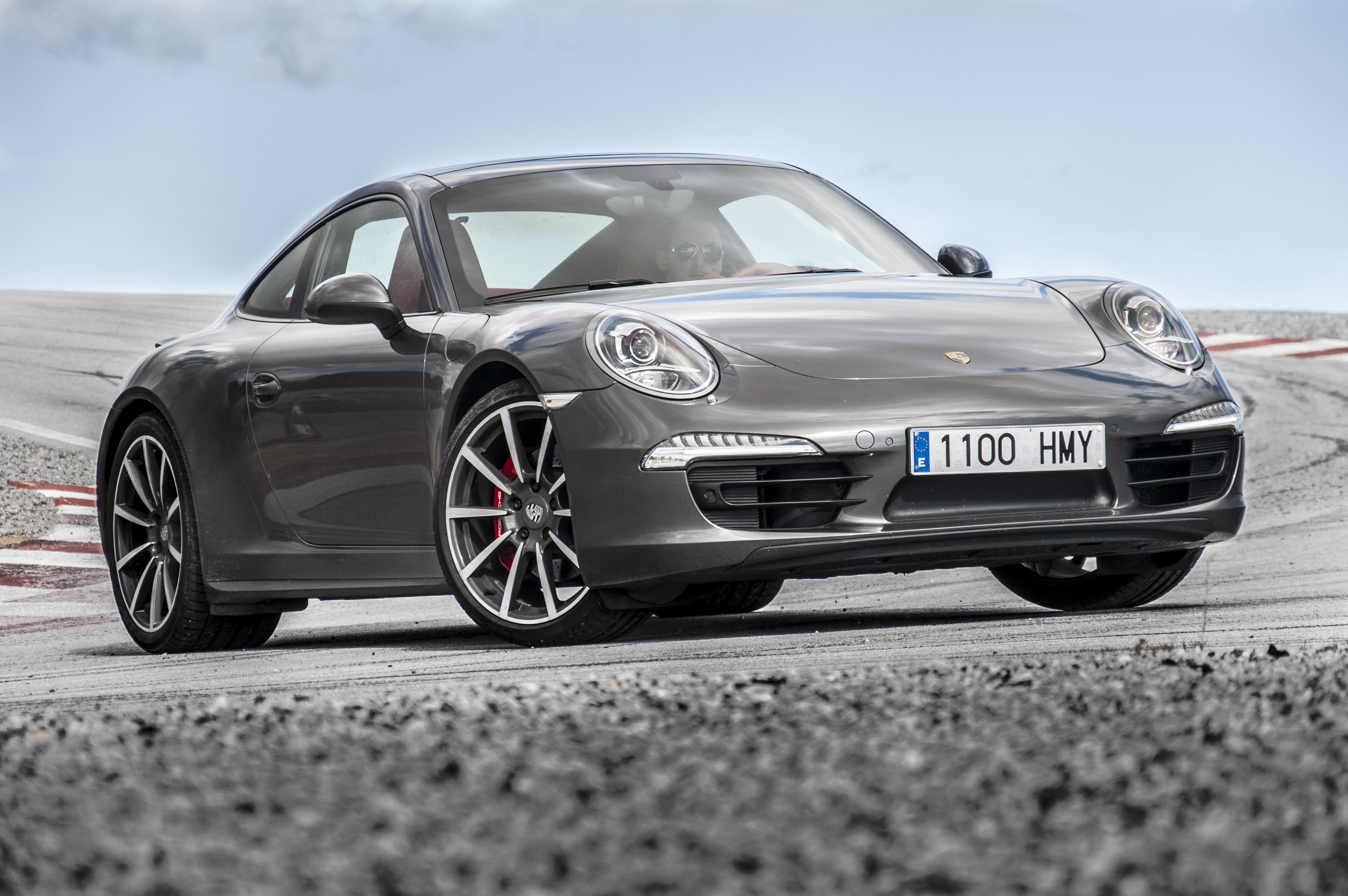
The Porsche 911 is a famous sports car that has been around since the 1960s. It's well-loved for its unique shape and fast speed, making it a popular topic among car enthusiasts.
Willow Springs Raceway is a famous racetrack in California where many car races and track days take place. It's known for its long history and is a favorite among car lovers.
Singer is a company that takes old Porsche cars and makes them look and perform like new, but with a luxury twist. They customize each car to be unique and special for the owner.
A naturally aspirated engine gets air into the engine without any extra help, like a turbo. This means it works based on the air pressure around it, which can make it feel smooth and predictable when you drive.
Restomod means taking an old car and fixing it up with new parts and technology. This way, you get the classic look but with better performance and safety.
The Dodge Journey is a family-friendly SUV that offers a lot of space for passengers and cargo. It's designed to be comfortable and practical for everyday use.
Carbon fiber is a strong and light material used in cars to make them faster and more efficient. It's often used for parts like body panels to help reduce weight.
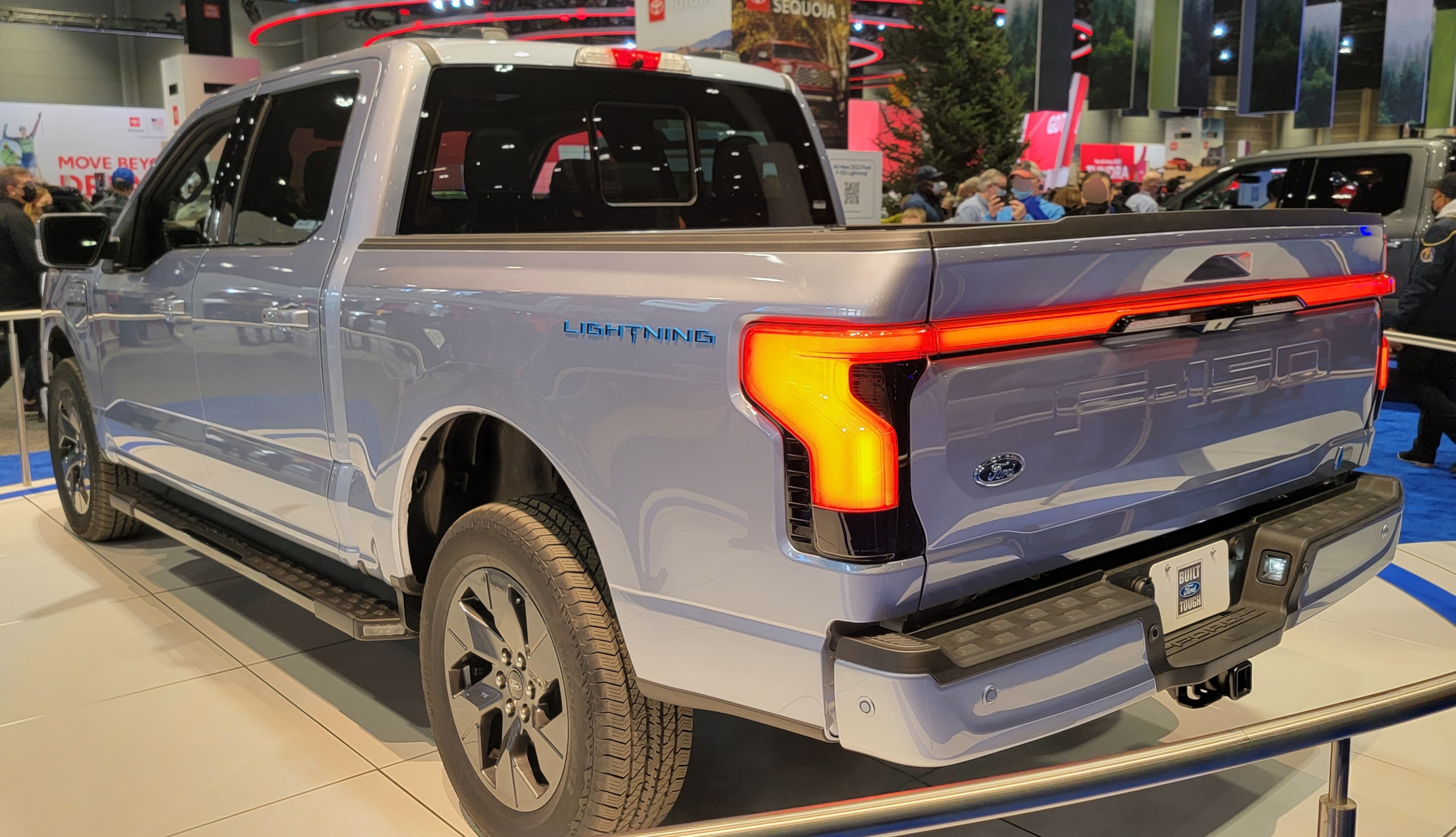
The Ford F-150 is a popular pickup truck that many people use for work and everyday tasks. It's known for being tough and reliable, which is why so many people choose it.
EVs are cars that run on electricity instead of gasoline or diesel. They are becoming more common because they are better for the environment and can save money on fuel.
The Shelby Cobra is a classic sports car that was made in the 1960s. It's famous for being very fast and powerful, and many car lovers admire it for its history and design.
Formula One is a top-level car racing series where the best drivers in the world compete in very fast cars. It's known for its exciting races and advanced technology.
SVO is a special division of Ford that makes high-performance cars. The Mustang SVO was a version of the Mustang that had a turbocharged engine for better speed and power.
The Dodge Viper is a super-fast sports car that stands out because of its big engine and bold design. It's loved by car fans for its speed and thrilling driving experience.
The Audi S7 is a fancy car that is both fast and comfortable. It looks great and has lots of cool features, making it a popular choice for those who want a luxury experience.
Tesla is a car company that makes electric cars, which means they run on batteries instead of gasoline.
LIVE
The automobile is one of the most important inventions that revolutionize the modern world.
In America, the rich history of car culture runs deep as technology continues to shape
the future of the industry. Jason Stein is here to share the stories of people passionate about
cars from industry leaders and innovators to car obsessed celebrities. Buckle up as Jason takes
you inside the boardroom onto the track and around the bend on Cars and Culture on SiriusXM
Business Radio. Welcome to Cars and Culture with Jason Stein here on SiriusXM Business
Channel 132. I'm your host Jason Stein. Thanks for listening. It's been an incredible 2025 on the
show. We hit our 200th episode this year, edging closer to 250. What a year, what a collection
of cars and culture as we move toward our fifth year together. If anything, our introduction to
these guests, actors, CEOs, comedians, movie producers, racers has highlighted what we thought
to be true. The car world is filled with fascinating people from all walks of life,
and they all have one thing in common. They care about the automobile. Throughout this journey,
the stories have been rich and the personalities have been dynamic. For the next two weeks,
we'll highlight several key interviews from this past year, pulling together clips from some of the
best. As we close out the year, this Best of Cars and Culture episode explores what happens when
engineering ambition meets entrepreneurial courage. You'll hear from Raj Nair, a world-class
engineer and former global product leader whose fingerprints are on some of the most
consequential vehicles of the modern era. Raj is now its singer and he brings perspective on
leadership, electrification, and how product decisions ripple through culture and brand.
And you'll hear from Steve Selene, racer, manufacturer and founder, whose career is built
on the belief that performance, risk, and individuality still matter in an industry
increasingly shaped by scale and software. Two builders, two distinct paths, one shared belief
that cars are still emotional machines. This is Cars and Culture, the best of,
featuring Raj Nair and Steve Selene. And now my conversation with singer Raj Nair.
I started by asking him about the biggest adjustment in moving to a company like Singer.
Well, I think California is the biggest adjustment.
And the California vibe. And Singer definitely is at the center of California car culture,
which I obviously was exposed to. And at Ford, we had our studio in California, but just being
there and feeling it, it's a real thing. And there's a special and different way the Californians
love their cars. And that is imbibed into Singer. The 911 is so iconic, and without a doubt, it's
so German, right? I mean, Porsche is that iconic German company. And their approach to the iterations
of that vehicle are very Germanic in their attention detail. And applying California car
culture to a 911 and seeing how that happened, and is happening, is, yeah, it's definitely
just because, you know, as you said, I, you know, I really am a Midwest boy at heart. I mean,
I look it, but, you know, born and raised in St. Louis. And then, you know, most of my career
in the Michigan area, although I was lucky with Ford to be, you know, working in Europe twice.
And in Thailand and China, it was always coming back to Dearborn eventually.
Ultimatic is a Canadian company. But, you know, obviously big presence in Canada and Toronto,
but global, big presence in Detroit. Ford, GM, slanders are their biggest customers. There's
still a very Midwestern based approach to the business. And the California approach is a little
bit different. And it's a little bit more artistic. It's a little bit, a little bit more free flow.
And I used to say I went from being, you know, one of the rebels and maybe, you know,
certainly one of the more rebellious executives at Ford to being the most conservative guy at
Ultimatic. And I am definitely the most conservative guy at Singer, even on another scale.
But it's a great, it's a great team. And we really enjoy each other. And to me, I've just been very
lucky, whether it was at Ford or Ultimatic, to be surrounded by great people and just enjoying
going to work and working with them. What's your mission at Singer? What are you trying to do?
So, you know, obviously, we're so focused on reimaginations of 9-Elevens. And on a day-to-day
basis, we just spend all day on how can we do that better? And how can we build it with higher
quality? How can we really knock their socks out with an emotional design reimagination of 9-Eleven?
But I do think that the company is also moving to the brand is really starting to stand for something.
The Singer approach is starting to stand for something. And maybe even going beyond just,
you know, the reimagination of 9-Elevens. So, we recently, you know, announced the partnership
with Willow Springs and Harbor Capital, who's now bought the Willow Springs Raceway. And, you know,
iconic track, you know, the oldest track in the West, but certainly needed some investment. And so,
we obviously have a California reputation. The grassroots, the development of the cars that Rob
and Maz have done have been because of miles and miles spent at Willow Springs. But also, our luxury
brand reputation and be able to bring that to an opportunity at Willow Springs. So,
you know, we have a vision of that being still incredibly accessible for grassroots racing and
grassroots track days and, you know, the whole greater Los Angeles or West Coast California
area being able to continue to use Willow Springs while at the same time creating a club and a true
luxury experience that, you know, eventually residents there could enjoy. And so, that's almost
Singer, right, this ultra luxury reimagination of an icon that still is incredibly accessible and
understandable by any car aficionado. And I think our brand stands for that a little bit. And I think
there's a lot of opportunities beyond just reimagination of Line 11 that could be in our
future with that approach. And I know that the desire is, I've talked to Maz on this program,
I've talked to Rob a few years ago even. I know that the desire is to keep it very bespoke,
very contained, very small, very exclusive. There's a fine line, right? Back to my earlier
comment about how many units that you used to oversee. There is the desire in the auto industry
repeatedly make more and more because the measurement of success is based on volume,
scale, and more. But you've got to fight that while satisfying the public so that the wait
time doesn't get too long, right? And also by not diluting the brand. Like that balance has
got to be in your head at all times. Yeah. And I think even more so in our heads, I think
the end of the rule always is build one less than the demand.
The fraud example. But I think our approach has to be even more restrictive on that and stay
true to that. In some ways, it's more a matter of how many of a specific vehicle are you going to
build. And so I see our volumes. I think our new announcement on a 911 Carrera with a naturally
aspirated engine back in the day Porsche offered that iconic turbo bodywork but with a naturally
aspirated engine. That was the Carrera. And we're reimagining that now. That'll be 100 units.
So our production capability, wanting to ramp that up a little bit to that 200, 250 units a year
eventually is probably going to be a good sweet spot for us. But probably more importantly within
that, the models that we would build, maintaining that we're really talking about lifetime volumes
in the hundreds. Certainly not ever getting to a thousand or anything like that. So that bespoke
aspect, the ultra high luxury aspect, the exclusivity aspect, the pricing discipline aspect.
It's important for us that we obviously sell the vehicles at a fair price, but they're not
going to depreciate as soon as you accept delivery. They're going to maintain or even appreciate on
volumes. And so you probably are not buying a singer for an investment, but if you have to
convince your significant other to buy a singer, a 911 reimagined by singer, you can certainly
say that you're not going to lose money on that on a reimagination by singer.
You've said the word reimagined a number of times. It's more than just branding,
isn't it, Rash? It's kind of a global worldview. What does it mean internally?
So obviously there's an aspect of renovation that's been in the industry for a long time,
just bring the car back to original. There's been a more recent trend to Rustamotting of
taking these classic vehicles, but putting new technology in them where it's a new
crate engine or new suspension. I think what Singer does is the next level of beyond that,
which is why we call it reimagination. It's still a 911. We strip it down to its bare metal,
but then we do to some extent re-imagine that body with entirely new body work,
sometimes carbon fiber body work to reduce the weight. But for example, we're taking a
Type 964 911, which most people will be familiar with as the last swing axle 911,
but as we're re-imagining that, we're actually bringing it closer in shape to the original G body
911, because that was an appearance that Porsche files really loved,
but optimizing the proportions of that. And Rob is the master of this. His eye for optimizing
what's unmistakably a 911, but finessing it and optimizing it so it's even more beautiful than
the original. Underneath the car, we spent a lot of time improving the dynamics of the vehicle.
And not for lap times, we're not out there to set a new lap record anywhere, but we are
there to make a real emotional connection with the driver and a real pure positive emotional
response in driving this vehicle that the best test is, does it bring a smile to your face?
So that we'll never measure on a stopwatch. And so that's why it's certainly much more
than just renovating the car. It's actually much more than restomating a car. That's why we use
that term re-imagination of what a 911 can be. And it's an homage to that iconic car, the 911,
and that iconic company, Porsche. But with our approach and our really low volumes and frankly,
a price point that's significantly higher, it's what could be with that vehicle.
And I imagine that storytelling is just as important as metal and mechanics, isn't it?
Yeah, yeah. Both the story and I would say the journey that we go through with our customers as
well. Obviously, our customers are 911 fans, right? So they know the vehicles. A lot of them,
the one that resonates with them is when they were a certain age, when they were the teenager,
and what poster do they have up on their wall? And so that storytelling of where we want to go
together, re-imagining their particular vehicle, when we take their donor vehicle and start the
path of what should we do? And how can we make this your vehicle and your commission? And many,
many of our owners, our clients, who provide services to tell you that the day that that
two to three year wait in finally getting their vehicle is a fantastic day, but it's also a little
bit bittersweet because it's the end of the journey that they really enjoyed with us so much.
So that's why so many of them come back and say, let's do another journey. Let's do another.
I love my classic. Now let's do that with the turbo. I love my turbo. Now let's do that with
a DLST or let's do that with our newest offering, a 911 Carrera coupe. So it really is the story
that we're telling together and the journey that we go on together with our clients.
And can you take us through that client journey? What does it look like when I raise my hand and
say, okay, I'd like to be part of that journey? And what are the nuances and changes and subtleties
that exist along that path? Yeah, so one of the subtleties is we actually don't sell cars,
we sell services, right? Right. So some of our customers have a 911, a Type 964 911,
that's what we work on. And so we'll take that as what we call the donor car. Some of them don't
have that. So we obviously have a good expertise in finding a good donor car for them. And so we'll
work them to get that donor car. Unfortunately, the next period is a wait. So because we have that
very big order bank and we want to keep our volumes at that right level, we want to have the right
people and the right technicians and the right artist to be working on the car and don't want
to fall into the trap of growing bigger in the car being sacrificed because of the quality
or the workmanship around it. So yeah, there is a wait and we are trying to reduce that,
but it does come with the territory a little bit. Then at point in time, we'll start discussing
the spec of the vehicle. And one of the things about a 911 by Singer is there's literally no two
alike. Right, right. There is a limit to what we can customize, but there's not much of one,
certainly not in colors, not in trim, certain options that we can do. But those aspects become
very personal. That's what we call them commissions. And particularly on, and you'll know this,
Jason, certainly from the exterior, the cars are gorgeous. You open up the door and then look at
the interior and it's another aha moment. And so it's not just artists on the exterior, they're
working on the bodies, but it's artists on the seats and artists on the consoles and artists on
the steering wheels. And I don't say anything goes because we still do want to stay true
to it being a 911. But some of the things that have been done on the interiors of the vehicles
to make it a client's own is pretty special. We can phase that spec process. We can obviously,
you know, we start obviously with the paint color first while we could still be working on the
interior with the client refining that. But at a point in time, we'll freeze that down as well.
While this is all happening, we're disassembling that donor car, stripping it down to bare metal,
bringing it into our fabrication shop, stitch welding the entire vehicle to improve the weld
integrity. In many cases, adding reinforcements improve the torsional capability of the body
and white. Then it moves into our body fabrication shop where, as I said, the panels, many of them
carbon fiber are custom fitted to each individual body. And to a level of detail on flushness and
margins that are level beyond anything you'll see anywhere else in my opinion. Into our paint shop
with custom paints, custom tri-coats, the number of coats is significantly higher than what you'll
see in any other vehicle. We've been known to have some vehicles with up to eight coats or more
of paint to achieve the effects that we want. We then, because of that level, we actually let
that car cure for a longer period of time than most, that adds to the sweet time. And so we're
talking about weeks of curing, whereas other places may wait a day or a week. And then coming
into our general assembly where the real magic is happening on installation of all those improvements
to the powertrain, improvements to the gearbox, as well as all of these custom interiors.
And then a pretty significant quality check process, full drive of the vehicles, full
shakedown of the vehicles, and then eventual delivery to the customer. Depending on what
vehicle we're talking about, just even from beyond the point of committing a vehicle to you,
commission to you, your process where you're actually engaging with us on what the vehicle
wants to be can easily be a two-year process. And so you can imagine the excitement that builds up
during that timeframe until the final delivery of the dream that you had imagined and our privilege
in being able to provide that to you. It's a little different than one vehicle a minute.
It is. It is. But I don't want to discount the passion that those guys
Louisville have for that as well. They have a passion to make that
available to everyone. And so the amount of heart that goes into an F-150
does don't discount. There's a lot of heart that goes into a 911 rematch by Singer, but
there's a lot of heart that goes into an F-150 as well. There's a lot of heart that goes into a
Ford GT and a Mustang GTD and all of that. So between Ford and Multimatic and Singer, I would say
that's one thing that I've been privileged to be around people that had a passion for the business.
But you're in the sweet spot of exactly where you need to be, Rash. I mean, what you just described
to me in the customer journey is an engineer's dream. It is. And like I said, those few moments
that I get to take a step back, I am incredibly lucky that I was trained by the best at Ford
on what high volume and processes look like. I was trained by Peter Chapka at Multimatic,
the founder of Multimatic, of how you run a company that size and how to stay nimble and hungry
and decentralize and have the lowest possible level, making decisions, have them feel accountable
for the business. I was lucky to be with Multimatic while we learned this process of how to build
at one a day, which is different than one a minute, but I was also different than one a year.
And just feel lucky to be able to bring that to Singer with my experience, but also be able to
work with people like Maz and Rob. And I am definitely one of those guys. Some guys will say,
I obviously had the talent and the brains and all of that. I didn't have any of that. I was just
really lucky to be working with a lot of great people and mentors and that taught me a lot,
and I'm now lucky enough to be able to share that knowledge with some great people.
You and I haven't seen each other in a while, and since you are no longer working for a large OEM,
I have to ask you a couple of industry questions if that's okay.
What is going on in the EV world right now? There has been such an enormous push,
and this is not a political question, but it is a product question because you're a product guy.
Do consumers just not appreciate EVs yet? Is the chicken and the egg with infrastructure,
what's your view on it? And if you were sitting in your former role,
would you be scratching your head going, well, I guess we'll switch out to hybrids now?
Well, I mean, as you know, Dishon, I'm a big hybrid fan, and hybrids plug-in hybrids,
NEVs. I don't know if my hindsight is 20-20 on this, but from an engineering point of view,
the first thing I will say, and this isn't from Singer or from Ford or Multimagnus,
it's just Raj, I personally do believe that climate change is a very real threat,
and there's a lot of good scientists at Ford that did a lot of good work and came to the same
conclusion. A lot of good scientists everywhere come back to that conclusion. The need to reduce
greenhouse gases is real. The automotive industry's responsibility within that is real,
but it's a very complex equation on how to get there, and consumer tastes is one aspect,
engineering capabilities is another aspect, and the economics is certainly an aspect.
I always felt like the consumer acceptance of an EV, that challenge was never about how the
vehicles drove, anyone who's been an EV. I've yet to hear someone, first time they've gotten an EV,
that said that was worse than I expected, right? Most are surprised how well they drive,
how fun they are to drive, how quiet they are, so the acceptance of an EV by the consumer,
just on the attributes of what a vehicle needs to do, I think was always overstated.
The range aspect is real, and particularly for those who are not just doing a daily commute,
the range is fine for the daily commutes, and if you have somewhere to charge,
you know, it's no more inconvenient than charging your phone, right? If you don't,
if you're parking on the sidewalk or the street, then it's a different challenge,
but those aspects of range anxiety on long trips and the recharge time is real,
and so that's the aspect of what engineers need to figure out and how to improve,
but the economic aspect is also real in that still, you know, the batteries are still much
cheaper, or are becoming much cheaper than they were, but the economics for the consumer of what
you save on fuel, on gas per week versus the incremental cost of the EV, you know, still
doesn't make sense. Now, do I think consumers are doing that math? Probably not, but do I think,
in a secondary way, they get it, and they've been able to figure out this doesn't quite make
economic sense for me? Yeah, in the end, the economics never goes away.
More than 2000 videos.
Back into the best of cars and culture. I'm your host, Jason Stein. Now, a continuation of our
look back on 2025 on cars and culture. In October, I sat down with legendary car builder, Steve
Saleen. Now, here's a portion of my interview with Steve, which begins with me asking where his
fascination with cars first began. Well, actually, probably the speed part of it, I can say was
almost preschool, is that we had a, where I grew up in Southern California, we lived across from a
park, and there was a very steep hill. And on my tricycle, which was to my, my parents'
grief on that, I was a terror going down that at speeds that they couldn't understand how I could
actually go that fast and stay on, on, on top of the tricycle. So I guess I've always liked the
speed part of it from, from a tricycle standpoint. Yeah, on a tricycle. So I'm going back to preschool
on this hill. But when I would say when, when I got into, at the beginning, end of junior high
school and into high school is when cars became, and living in Southern California was a big deal
with a car culture on it became a big deal. And then my dad ended up from a friend, purchased a
56, 1956 Porsche 356 European model. And I got to drive that when I got my driver's license. And then
I then
received it after I graduated, very fortunate. I received it after graduating from high school.
And then I started fixing it up. And then I joined the Porsche owners club, which is different
than the Porsche Club of America. And the Porsche owners club was a bunch of professional and amateur
Porsche racers. And going to those meetings on this day was when you realize, well, being a race
car driver probably would be pretty cool. So I would say that that's kind of where in my late teens
is when I really, really got the urge to follow racing.
Who was it that influenced you the most? Was it Carroll Shelby?
No, at the, at the time, because it was more on the Porsche side of life, I would say that there
was a, in Southern California, a gentleman by the name of
Alan, and I can't remember his right name here in a second, which I will in a second. And Milch
Minter and Vic Elfer are professional Alan Johnson. And Alan wrote the book, one of the first books
on how to race a car in the, in the B. And so I would say that they were very influential
with me on doing it. And then I sold the Porsche because I wanted to get a newer one, a 911 S.
And then I realized it was going to take a long time to save up for that. So I didn't want to
wait that long. So I saw an ad to buy a used Shelby Mustang in Southern California. So I ended
up buying that and fixing that up. And that's what introduced me to the world, if you will,
Ford performance. And the, so that had a big and watching the Shelby Mustangs, the Cobras, and of
course the Ford GT 40s on this deal. I fell in love with all of that, that type of sports car racing.
The Celine Mustang debuted in 1983, right? Yeah, we started the company in 83. It was actually a
1984 model that we debuted in June of 1984 at Sears Point racetrack.
And what gave you the confidence to launch a company around modifying Mustangs?
Well, the a little bit on my background is that after I had the Mustang, I fixed that up to go
racing. And the I entered 1973, I entered my first race at Riverside, California. And the worst
possible thing happened is I won. And I realized, wow, this is how hard can this be? But I also,
then I'll just say it's been downhill ever since, I'll get that. But the, I realized though that
if you wanted a professional career, that driving sedans wasn't necessarily or production cars,
wasn't necessarily the best path you needed to be in formula cars. And so I ended up selling my
house at the time I was not married and bought a Formula Atlantic. And that is when I started my
professional racing. And that I still didn't have a lot of money, but we raced against the era of
drivers. I competed wheel to wheel on that on the Formula One side was Jills Villanue. And of
course, and KK Rosberg, who won the Formula One championship in the sun, wanted a few years back.
And then on the Indy cars side, it was a Bobby Ray Hall and Danny Sullivan on this. And then I
also with our with one of the car programs I had, I was also teammate with Rick Mears. So that's the
era I grew up. And then from Atlantic, you either went in the Formula One or into the car, neither
one open for me, but I was offered a pain drive with Pontiac Motor Company. And I debated if I
would lower my standards to go back and drive a sedan or a production car, I ended up doing that.
And then that's what introduced me to Detroit. And then 1982, I was with the team,
the Pontiac team that won the championship for Pontiac. And Ford Motor Company was just coming
back into racing. And I got to know the guys at Ford and they were going to build a special
edition Mustang. And that was going to be a four cylinder single turbo, the SVO. And I said,
ooh, I think the American public would rather have a V8 version of it. And they said, well,
we're committed on the four cylinder, but Steve, if you had interest, we might support you doing a
V8 version. So I left my position in at the end of the racing season in 1983, and started the company
to build special edition V8 version Mustangs that would strictly support our racing endeavors.
It wasn't to build street cars, but somewhere along the line, the street car and building
your own cars got way involved. So we still pursued racing, but we also then got heavily
involved in building ground ups in street cars. When you eventually you expanded into SUVs,
even the Focus, were you chasing opportunities in the market, or were you simply following
your own curiosity? Well, it was a combination of both. I would say that there was certainly the
Mustang as an American muscle car, sports car on this was the right platform has turned out to be
a very good platform for us to do this. But then the other opportunities and the other market segments,
we got into truck racing in the late 80s, early 90s on this, and I've won actually I've won the
most races as a as a race truck driver on doing it. So we then started doing trucks during that
period of time as well. And I looked at different opportunities that I felt that it could take
our expertise on the track and apply that, if you will, on vehicles that can be driven every day
for the street. So that's kind of what what has been a little bit of the genesis of this driven
us. Well, on many may not realize that you built the mid 2000s for GT, right? And the late 2000s
Dodge Viper. How did those opportunities come about? I mean, here you were, you were building
now on someone else's badge versus your own. Those were both were great, great opportunities.
When we came out with the S7 is I kept Ford top management of Ford Motor Company
informed of what we were doing and what we were about to debut and what our intentions
with the vehicle were. And so we came out with it. And then that was ended up being very successful.
In addition to that, then a couple years later, Ford was looking at doing their own ground up
sports car. And they went through several iterations under what they called the code
name Petunia. And then the Petunia project turned into being the Ford GT slash 40 on it that they
debuted at the Detroit Auto Show in 2002. And Ford was looking at it as strictly as a show car,
but the reception that they had was so great that they wanted to look at see what would be involved
in taking that into production. And that's where we were then, because of my relationship with Ford
on this, we were then asked to get involved with helping deal with the engineering aspect of it
and also the limited bill. And we ended up with two separate contracts with Ford. One was overseeing
the engineering and the certification with it. I moved a fellow by the name of Neil Hannahman,
who was one of our main guys on the S seven, relocated them back to Detroit to work with
SVT and John Coletti and Ford to engineer the vehicle. And then the other contract I had was
the complete build and assembly and paint of the vehicle. And I had to set up a facility back in
Detroit, Troy, Michigan to be specifically, and we manufactured as private label all of the vehicles
and shipped them directly to the Ford dealer with the Ford bad gene in the window stickers
for the Ford dealers. And then after that, the next project we ended up doing is because I had a
first class automotive assembly in the Detroit area is we got involved with Dodge and the Viper
to do all of the sub assemblies and the paint or for them on the Viper program. And then we also
did the supercharged version of Ford for the F 150 Harley Davidson edition as well. And so
that's what really kind of got me more in the OEM. What is the large OEM bill?
What did you learn from producing halo cars for major OEMs?
Well, it's again, when you're dealing with very large companies, you need to be very nimble
and focus on your role and the aspects that you on doing that. But it also offered
a whole litany to elevate, if you will, our production, our just in time, our quality controls,
the manufacturing skill sets that are used to do those type of vehicles. And so I would say that
those experiences are always ongoing and are always
very educational as well as as great building blocks for what we do with our own vehicles.
Is there more pressure, Steve, when you're involved with something like that than when it's your own?
Well, I think I would say it's I'll use this as an analogy whether it doesn't have to be cars.
If someone has entrusted you for some aspect of doing something for them, I would say there's
always pressure that you have to do a better job that you've been entrusted to it than if it was
your own that you have to do it on yourself because you can modify your own expectations or
timetable or whatever. But when someone else asks you to do a job, it is a lot more
scrutinized and you have a lot more responsibilities to deliver.
Yeah, well, Will said. So many other manufacturers, we mentioned the Viper, but there have been others
who have benefited from the saline treatment. You did challengers before there were Hellcats,
you did Camaros, you even did Tesla. So do you approach each brand differently,
or is there a saline DNA that applies across all of those cars?
Well, I think, well, first of all, I guess there's a basic DNA. This is because I'm heavily
involved in the development of all of those both as from a racing background into the product
development cycle on this is the one thing that has served me well is to be able to translate
what I learned on vehicle dynamics and everything from power trains, suspension, aerodynamics,
ergonomics on this. I'm able to translate that from both a high performance driving racing
into street driving, and that has always served me very well in the
evaluation of a whole vehicle. The other thing, though, that I would say is that we've also,
since we've been doing it for 43, 44 years now, we have also been able to really learn
what should or could not get done both from a commercial standpoint, from a cost effective
standpoint, from a physical standpoint, has served us well in the development of the vehicles.
And we're able to, I think, apply that much more effectively and much more cost effectively.
And that's where our current lineup of our mustangs in a truck benefit that not that they're
inexpensive cars, because they're not they're premium cars, but the cost effectiveness and our
cure and offering them through a established dealer network on this deal has given us, if you
will, a pretty good advantage from a competition standpoint to be offering a product that the
consumer can purchase complete to have a higher level of performance, safety, features,
exclusivity, which helps the collectability of it at a price point that is more within reach with
a lot of people, even though it's a premium brand. Well, you know, just on the DNA subject,
I mean, you've shared that DNA across so many interesting projects. But while I would venture
to say that let's take the challenger, and as I said, that came before the Hellcat era,
I think the I think that Celine helped prove maybe the appetite for high performance muscle
cars was still very much alive. Well, I won't I won't disagree with you on this deal. I had
a little bit of a disappointment, I will just say
on this is that I had at our facility in California, when we were developing a supercharger,
for I had a lot of the senior engineers from Chrysler and Dodge out looking at how we were
adapting all of that to to our our challenger, why we were using a twin screw supercharger as
opposed to a a centrifugal or to a root style is how we were using the male and the female
rotors in there, and how that was working, and why that was a better application for
and then I really kind of took took them behind the curtain and show that because I thought
at the time that we would be subset to where we would do that, they chose to go down in a
different direction, but they they have, I won't say copy, but they've initiated and imitated a lot
of the stuff, especially down to the twin screw supercharger of what a big and that their car is
that the Dodge was a much heavier car, it's a much larger car, so the amount of torque and
the way that that has to drive has to be applied differently than let's say how we would oppose
tackle the Mustang or a Camaro, and so all of these get into the very specific aspects of
being able to do it. So the core the core DNA so to speak is is taking and looking at the base
vehicle if I'm taking a base vehicle and looking at its strength and weaknesses and how we can
minimize the weaknesses and accentuate the strengths from both a performance, a safety,
aerodynamic, and a full driving experience is what I think has served us well in doing it,
and and I will just say that that at the what's kind of going back in time with the
Fox body Mustang is at the time, even though it wasn't by the day standards much horsepower,
the power to weight ratio because of Fox body Mustang was fairly lightweight, which meant
that there was a lot of flex in the chassis, so we spent more time with the aerodynamic and the
chassis than we did worrying about the horsepower aspect on initially as we developed that the
we then went on to the as the next generation of Mustang they increased the
chassis rigidity which added more weight and that's where then I realized well we need to add
and accentuate more torque and horsepower to augment where the to give it a better all around
field so those are the type of approaches that we end up doing and looking at the base vehicle.
The Tesla is the same way is that range and anxiety was at the time in 2014 the big thing so I didn't
really look at putting more more if you will juice to the to accelerate I did change the
acceleration rate by changing the gear ratios but I didn't want to take the batteries but one of
the problems with the electric cars is your first lap is always your fastest and after that you have
a tremendous deterioration on the batteries so what we concentrated on was improving the cooling
for the batteries so that I would stay at peak power longer so I could have better acceleration
and better performance for a longer period of time. These are the approaches that we've always
taken when we've been dealing with existing platforms that's our brief look back at some
of the personalities that made cars and culture this year to see my interviews from this year go
to the cars and culture youtube channel like and subscribe to see more than 200 interviews and more
than 2000 videos thanks for listening I'm your host Jason Stein we'll see it on the road in 2026
About this episode
Exploring the intersection of engineering and entrepreneurship, this episode features insights from Raj Nair of Singer Vehicle Design and Steve Saleen, the legendary car builder. Nair discusses the unique California car culture and how Singer reimagines the iconic Porsche 911 while maintaining exclusivity and high quality. Saleen shares his journey from racing to founding his own company, emphasizing the importance of performance and individuality in a market dominated by mass production. Their stories highlight the emotional connection enthusiasts have with cars.