The Grand Wagoneer is a big Jeep SUV designed to feel more luxurious than a basic model. It’s meant for comfortable family travel. The host mentions it because they want to review it.
The hood release cable is what pulls the latch when you pull the lever inside the car. If it’s worn out, the hood might not open easily, so replacing it fixes that problem.
Hankook Ventus A.S. is a model of all-season tires. The host is saying they’ve driven on them enough to share real-world impressions like how they wear and how they handle in different weather.
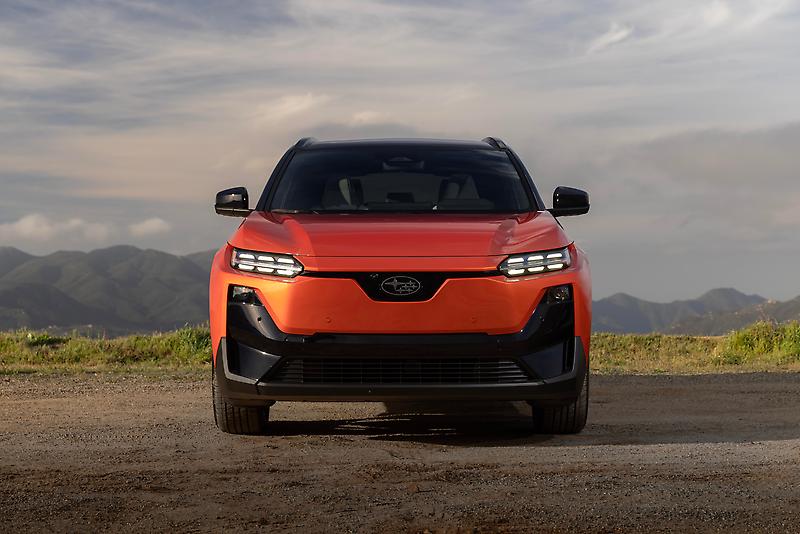
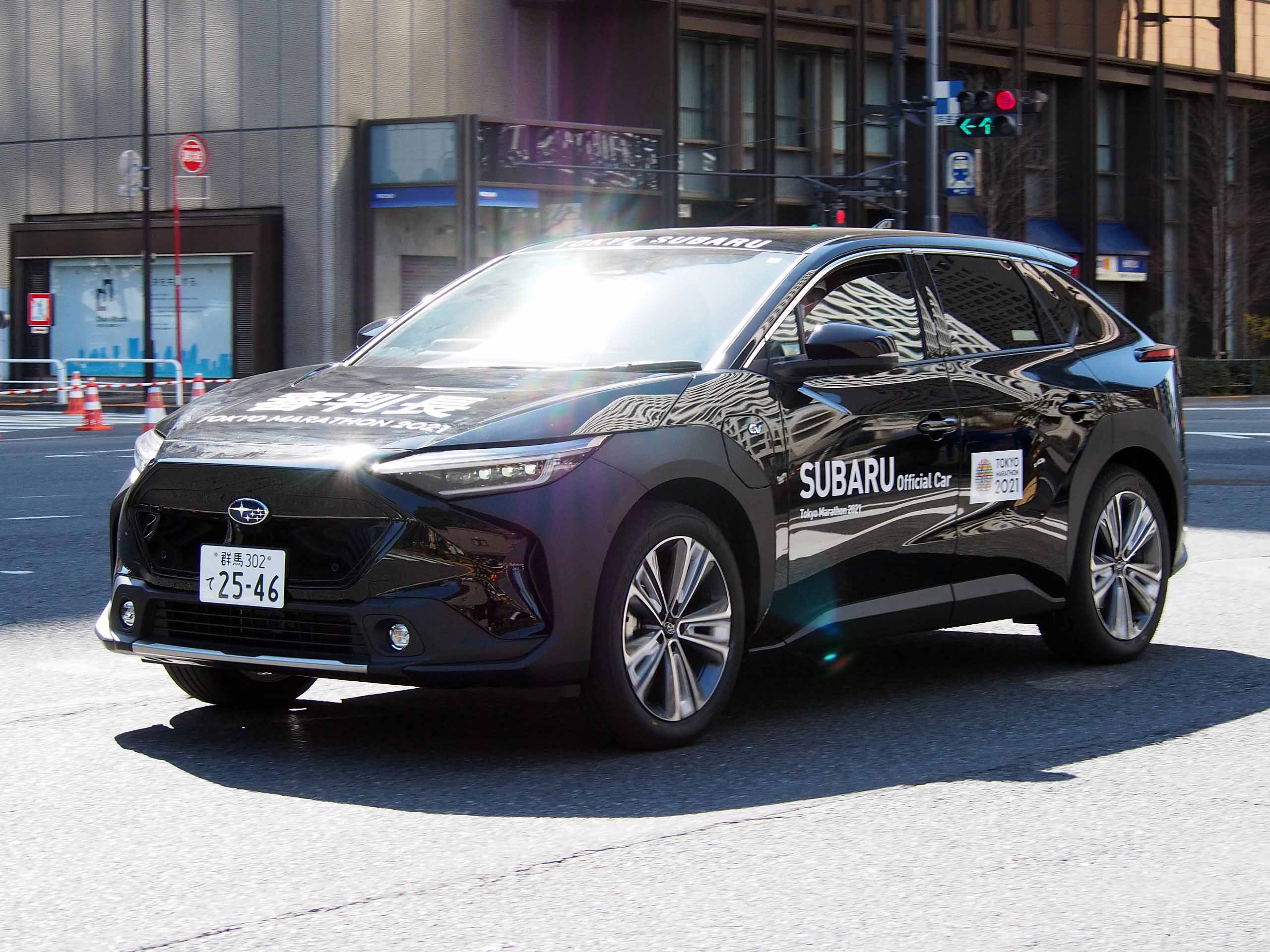
This is the 2026 Subaru Trail Seeker that the host says they’ve been driving. They’re also talking about how Subaru is changing the names of its newer vehicles, especially the electric ones.
“Alphanumeric names” are car model names that use a mix of letters and numbers. The host is saying those kinds of codes are harder for people to remember than normal names.
The host mentions “B9 Tribeca” as an example of a confusing Subaru name. They say it later got simplified, which shows how hard these kinds of names can be to follow.
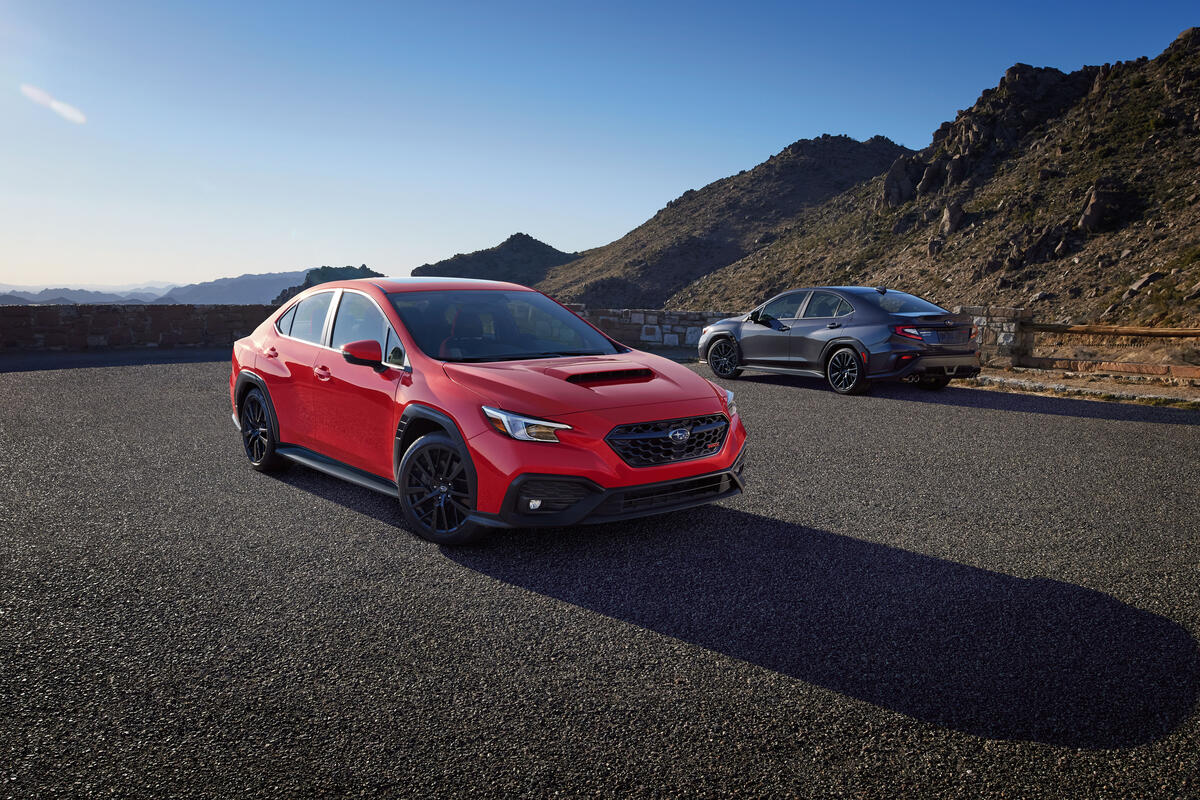
The WRX is a Subaru model built to be faster and more fun than a regular everyday car. It’s known for having all-wheel drive, which helps it grip the road. People talk about it a lot because it has a strong performance reputation.
The World Rally Championship is a major global series of rally races. It’s the kind of racing Subaru is referencing when it talks about rally-related names and branding.
The Uncharted is an electric Subaru that the podcast describes as an entry-level option. “Entry level” usually means it’s meant to be the more affordable starting point. The episode mentions it as part of a lineup overview.
“Packaging and equipment” refers to how much space the vehicle provides and what features it includes (like infotainment, driver-assist tech, and interior amenities). The host is questioning whether EVs that are closely related should be reviewed mainly by these practical differences.
The Highlander is a larger Toyota SUV meant for families and daily errands. It’s designed to carry people comfortably. The podcast mentions it mainly because of the way the name sounds compared to another model.
Topic
why I'm so excited to drive this car
They’re about to talk about what they’re excited about with the car they drove. It’s more about the driving experience and personal reasons than just numbers.
The Subaru Outback is Subaru’s popular “adventure” model. Here, the hosts are saying the newest Outback feels less like the old wagon-based version and more like a bigger SUV.
“Wagon on stilts” is a nickname for a car that looks like a wagon but sits higher, kind of like an SUV. The hosts are saying the Outback used to have that look, but the newer one has moved further toward a true SUV style.
Concept
SUV focused
“SUV focused” means the car is being designed more like an SUV—bigger feel, higher stance, and SUV-style priorities. The hosts are saying the Outback has shifted in that direction.
“e-Boxer” is Subaru’s name for a hybrid system that uses a gas engine plus a small electric motor. It helps the car move more efficiently, but it’s not the same as a fully electric car.
Ground clearance is how much space there is between the ground and the bottom of the car. More ground clearance can help when driving on rough roads or trails so you don’t hit the underside.
Wheelbase is the spacing between the front and rear wheels. A longer wheelbase often means more room inside, particularly for people sitting in the back.
“18s” means the wheels are 18 inches across. Changing wheel size usually forces a different tire size, which can change how smooth or firm the ride feels.
Sidewall height is how thick the tire’s “cushion” is between the rim and the road. Bigger wheels usually mean a shorter sidewall, which often makes the ride feel less cushy over bumps.
“20 inch wheels” are bigger wheels than something like 18s. Bigger wheels usually come with shorter tire sidewalls, which can make the ride feel less soft over bumps.
Term
235.50
“235.50” is part of the tire size written on the tire. It helps determine how wide the tire is and how tall the sidewall is, which changes how the car feels and grips.
Concept
off-road setting
An off-road setting means rough terrain like dirt or rocks. The host is saying that EVs can be riskier there because parts under the car—especially the battery area—can get hit.
In an EV, the battery pack is the big set of batteries that powers the car. The host’s concern is that off-roading can hit rocks under the car, and since the battery is under the floor, that damage can be costly.
The Wrangler is a Jeep SUV made for off-road driving. The “Unlimited” version is longer, which usually means more room inside. People may mention hybrid versions because the model line can come in different powertrain options.
The Hyundai Ioniq 5 is an electric crossover. The host is pointing out that Hyundai offers a more rugged trim (XRT) and using it as an example of how EVs are being marketed for rougher use.
An EV platform is the main design foundation for an electric car—where the battery and key parts fit. “Bespoke” means the company built that foundation specifically for itself, not by reusing someone else’s design.
A co-developed vehicle is a car that two companies work on together. They share a lot of the underlying engineering, and then each brand may make its own styling or tuning choices.
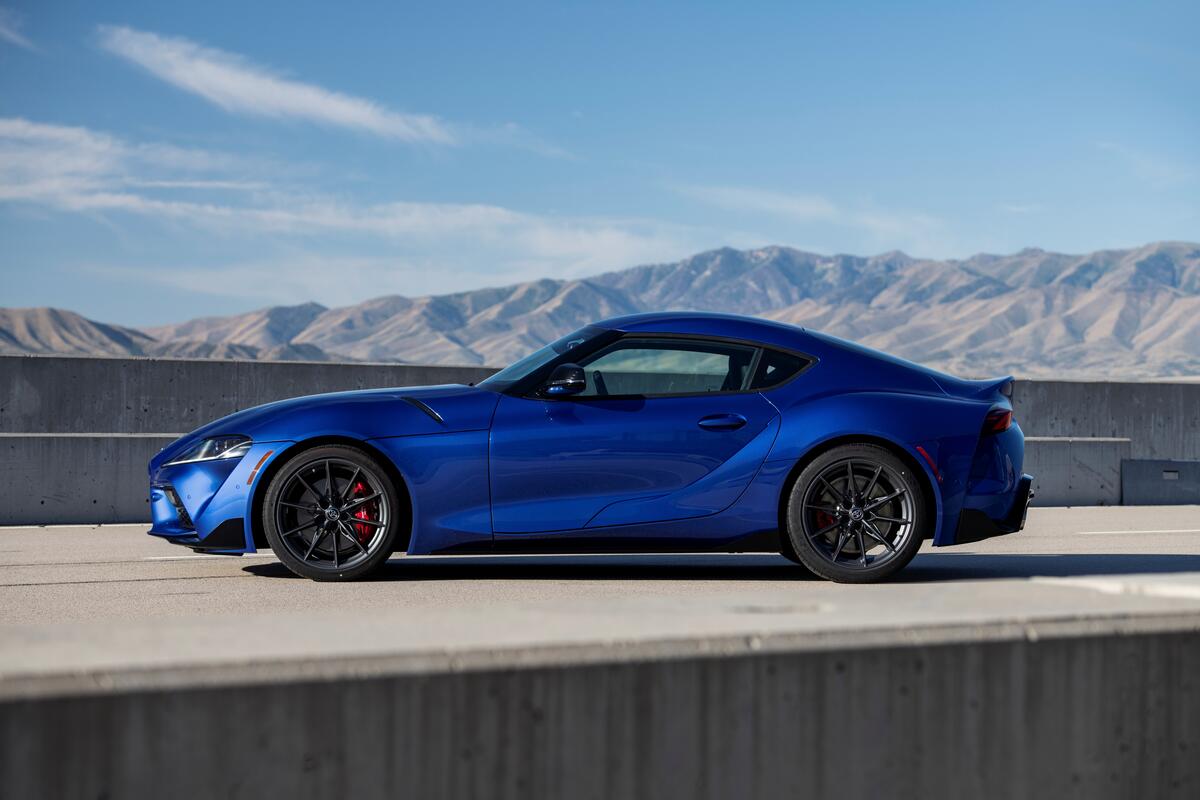
The Toyota Supra is a famous sports car people associate with fast driving and strong performance. The point here is that even big companies sometimes don’t build certain cars if it’s too costly or not worth it for them.
That “74 kilowatt-hour” number is how big the electric battery is. A bigger battery can store more energy, which often helps the car go farther before needing to recharge.
The Solterra is Subaru’s electric SUV. They’re comparing it to another EV to say the other car’s battery is smaller, which can affect how far it can drive.
“274 miles” is the rated range for the other versions of the car. The host suggests differences like wheel size or drivetrain can affect how far you actually get.
Horsepower is a way to describe how strong the engine is. More horsepower usually means the car can speed up faster, as long as the tires can grip.
Car
Subaru STI
STI is Subaru’s performance version. It’s known for being quicker and more rally-inspired than a regular Subaru, and the host is saying it used to be limited to around 300 horsepower for years.
A public charging station is an EV charger you use outside your home, like at a store or parking lot. Different chargers can use different plug types, so you may need an adapter depending on your car.
CCS is a common fast-charging plug used for many electric cars. An adapter is a piece you use so your car can connect to a charger that uses a different plug shape. If the adapter connection is loose or finicky, charging can be slower or stop starting.
Charging speed is measured in kilowatts (kW). Around 120 kW is considered fast charging, but your car and the charger both have limits, so you might not reach the highest possible speed.
The Ford Mustang Mach-E is an electric SUV. Here it’s mentioned just to compare timing—basically, the host is saying this charging conversation has been around for a while.
A “400 volt platform” is the EV’s electrical system design level. It can affect how efficiently the car can take in fast-charging power from a charger.
“800 volt” means the EV uses a higher-voltage electrical setup. That can make fast charging easier because the car can handle high power more efficiently.
“Proprietary 400 volt” means Tesla’s EV electrical setup is its own design rather than the common industry approach. That can change how well it matches up with certain charging systems.
“Max chargers” are the very fastest public charging stations. The point here is that if most chargers aren’t truly “max” or aren’t 800V-ready, the car’s theoretical fast-charging advantage may not show up everywhere.
Concept
standards
“Standards” here means the rules that determine how a charger and an EV talk to each other and share power. If the industry is changing standards, it can be confusing or less efficient during the transition.
Solterra is Subaru’s electric car model. The podcast says it was Subaru’s first EV. It’s mentioned because the speaker is comparing it to a newer or different version.
“Fast charging” means using a high-power charger to refill the battery quickly. Charging too fast for too long can be harder on the battery, so some cars limit it to protect battery life.
“Peak rate” means the fastest charging speed the car can reach. The host is saying the car didn’t stay at that top speed all the time—it limited how often it could hit it.
Eco mode is the car’s “save energy” setting. It usually makes the car less aggressive and may reduce things like power use from the climate system to help you get more range.
Regenerative braking is a feature where the car slows down and also charges its battery at the same time. Instead of wasting all that speed as heat, it turns part of it into electricity.
A driver profile is like a saved “personal settings” mode for the car. If the regen setting keeps resetting, it means the car isn’t saving or applying that preference for you.
EPA testing is a standardized government test used to estimate how efficient a car is. The point here is that the car may behave differently during the test than it does in normal driving.
AC off mode means the car turns off the air conditioning. Since running AC uses battery power, turning it off can help the car go farther—especially in efficiency tests.
Drive modes are preset settings that change how the car feels. Eco usually focuses on saving energy, while sport usually makes the car respond more quickly.
The infotainment system is the screen and controls in the car for things like music, maps, and phone features. If it’s confusing or feels disconnected, the whole cabin experience feels worse.
Toyota Connect is Toyota’s name for its connected features and the way the car’s screen/app services work. The host is saying this Subaru’s system feels like Toyota’s.
A squircle steering wheel is a steering wheel that’s not truly round—it’s more like a rounded square. The concern is that it can feel weird to use and may block your view.
A digital dashboard is the driver’s gauges shown on a screen instead of dials. Where it’s placed can change what you can see and how the steering wheel setup feels.
“Driver focus” is a safety feature that tries to tell whether you’re paying attention. If it thinks you’re distracted, it will warn you with messages or beeps.
Beeping and chiming are the warning sounds your car makes. The host is saying the car keeps making these noises all the time, which becomes distracting and annoying.
Safety features are the car’s driver-assist functions meant to help prevent accidents. The host is frustrated because, even though they’re supposed to make the car safer, they’re distracting or annoying enough that they want to disable them.
A Level 2 charger is a faster EV charger you can install at home or find at public places. Using one usually means you can charge more quickly and don’t have to stress about whether you’ll run out of battery.
A “dongle” is a little device or adapter you might need to use some public EV chargers. The point here is that it can be a hassle if you don’t have the right access for that charger network.
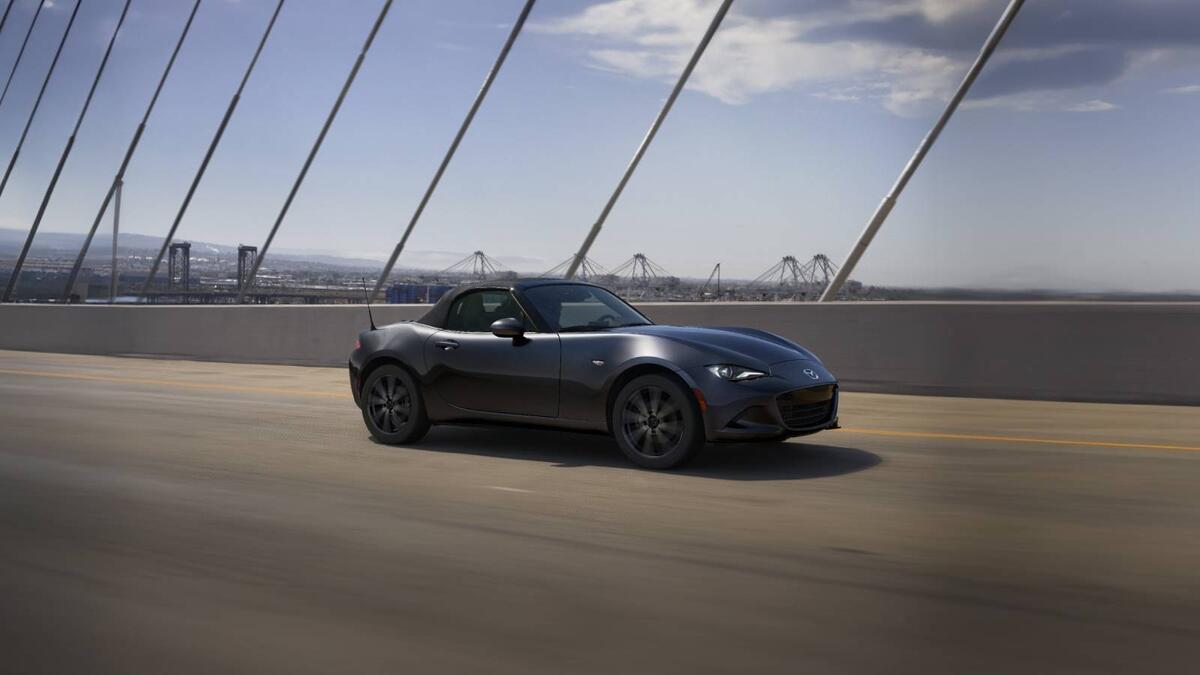
Cabin comfort means how nice and relaxing the inside of the car feels. The host is saying the Miata hasn’t grown bigger just to be more comfortable. Instead, it stays focused on being fun to drive, even if that means more noise.
Wind noise is the annoying sound you hear from air moving around the car. The host is saying the Miata doesn’t try to make the cabin super quiet by adding extra weight to block sound. So you may hear more wind than you would in a more comfort-oriented car.
Insulating the cabin means adding sound-deadening materials so you hear less road and wind noise inside. The host is saying the Miata doesn’t do that as much, so it can feel louder. That’s part of why it feels more “raw” than a comfort-first car.
Brembo makes performance brakes. When the host says they could smell the Brembo brakes, they mean the brakes got really hot from hard stops on the downhill.
Traction control is a computer system that helps prevent the tires from spinning when you accelerate or lose grip. The host turned it off, so the car could slide more than it normally would.
Term
under throttle
“Under throttle” just means you’re pressing the gas. The host is saying the car could start sliding sideways when they were applying power.
“Under braking” means you’re slowing down with the brakes. The host is saying the car could slide sideways when braking too, not just when accelerating.
Weight balance is where the car’s weight is sitting—front vs rear and side to side. When it shifts (like braking or hitting bumps), the tires can grip differently and the car can feel like it’s moving around more.
Term
AC
AC means the car’s air conditioning. The host is saying that when they turned it on while idling, the engine sounded rougher because the AC compressor adds load.
The FR-S is a small sports car meant to be fun to drive. In the episode, the speaker talks about a small part of the car that doesn’t help much in their situation. It’s an example of how even sports cars have practical quirks.
Electric power steering uses a motor to help you turn the wheel. Some drivers feel it doesn’t give the same “road feel” as older steering setups, even though it’s common in modern cars.
The infotainment screen is the big touchscreen in the center of the dash for things like music and navigation. The host is saying they’d rather not rely on that screen as much.
Analog gauges are the classic instrument dials with needles. The host likes them because they’re simpler and feel more connected than digital displays.
An SD card is a small memory card you can put into a device. The car’s navigation is telling them it needs a card with map data to work when the phone-based system isn’t running.
Android Auto is a way to show your phone’s apps—like maps and music—on your car’s screen. If it doesn’t connect right, you may lose the navigation features you expected.
Bluetooth is the wireless connection your phone uses to talk to your car. They’re discussing whether Android Auto can work over Bluetooth or if it needs a different connection to start up properly.
A navigation system is the built-in GPS in the car that can show maps and tell you how to get somewhere. The host is saying it’s odd when the car has the navigation hardware but doesn’t give you the maps right away.
Here, “account” means a login you have to create or use to access certain car features. The host is saying it’s different from the car simply lacking the navigation feature.
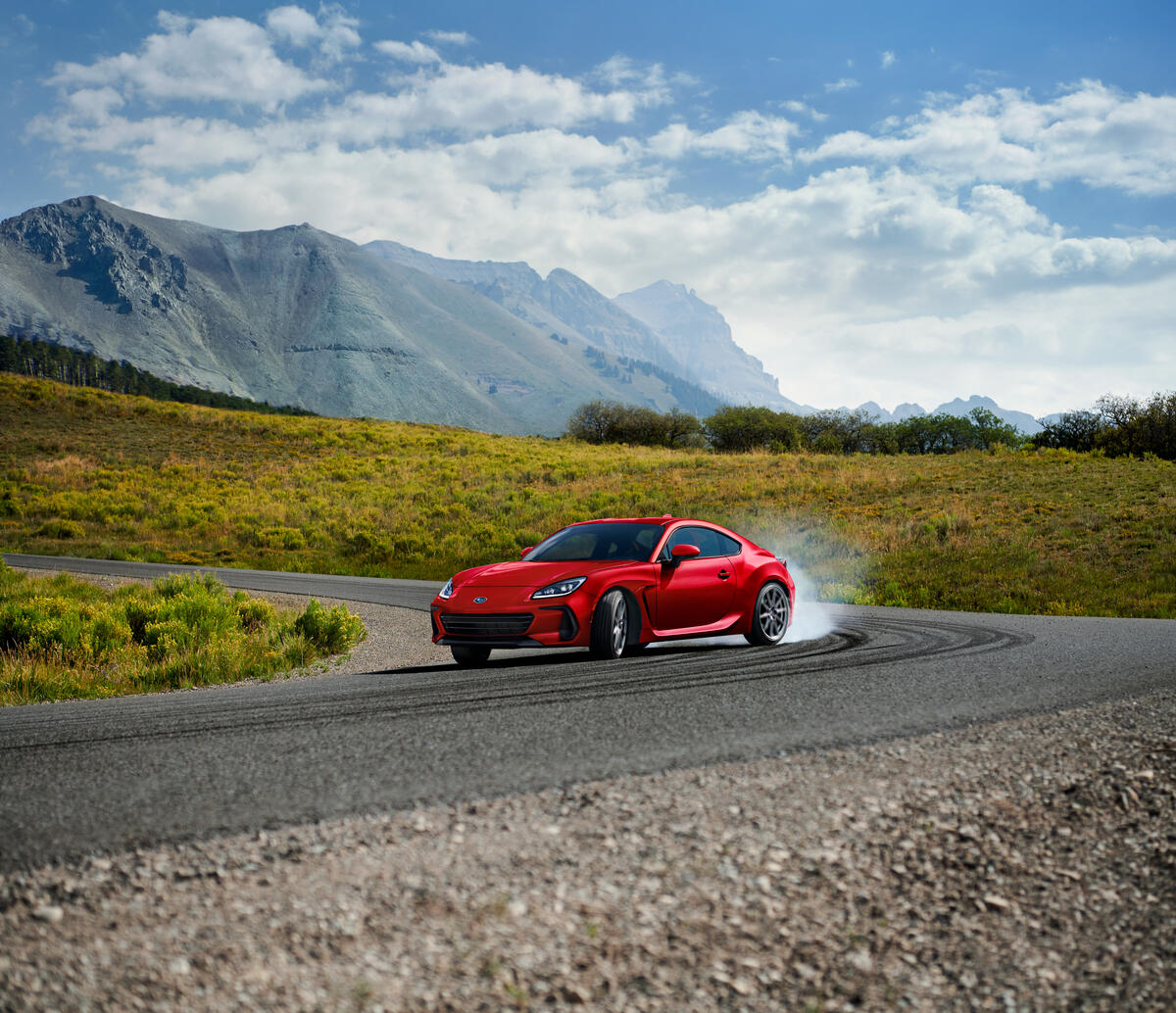
Rear-wheel drive means the back wheels are the ones that get the engine’s power. Many enthusiasts like it because it can make the car feel more balanced and fun to steer.
The Fiero is a Pontiac sports car that was designed to be compact and sporty. It’s known for having the engine placed in a different spot than many cars. The episode brings it up as part of a comparison to other sports cars from the same general era.
The Honda S2000 is a classic small roadster that’s known for feeling exciting to drive. The host brings it up to show that there used to be more cars like this that were simpler and more attainable.
The Solstice is a sports car made by Pontiac that was designed to be fun to drive. It’s the kind of car people talk about when they remember older, simpler sports cars. In the episode, it’s mentioned as part of a comparison to a similar GM sports car.
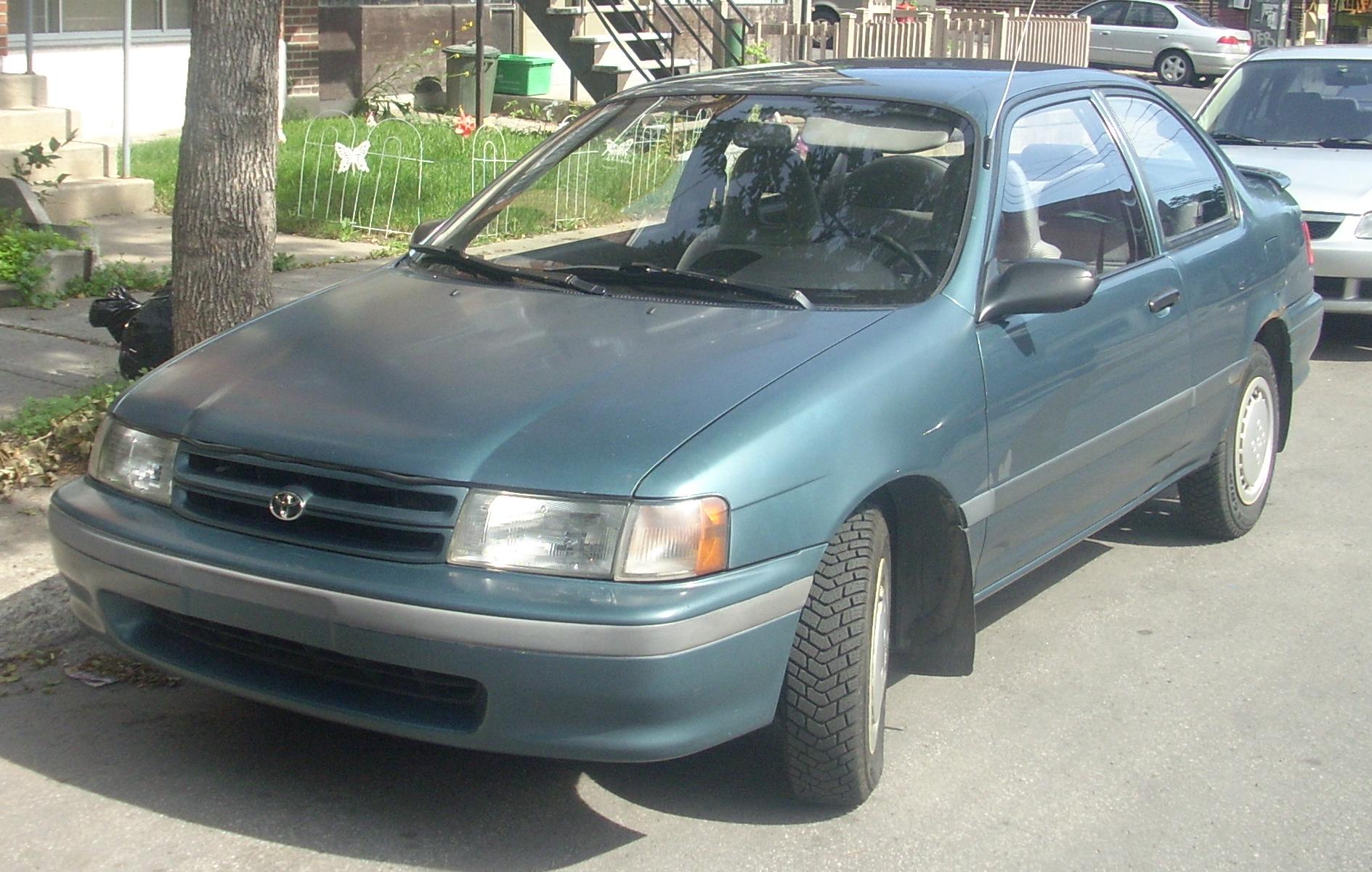
The Toyota Tercel is an older, budget-friendly compact car. The host is using it to explain that some fun sports cars used to come from regular, affordable models.
A mid-engine sports car has the engine placed closer to the middle of the car. That can help the car feel more balanced and fun to drive, which is why people like this layout.
Concept
third gen was a step back
They’re talking about the Miata’s third generation and saying some car fans thought it wasn’t as good as earlier ones. It’s basically a “some people didn’t like the changes” discussion.
The Miata is a Mazda roadster (the MX-5). It’s famous for being light and fun to drive. The hosts are saying different Miata generations—and even early years within a generation—had different problems and characteristics.
LIVE
Hello and welcome to the Unnamed Automotive Podcast. My name is Sammy Hajafad and with
me as always is my good friend and fellow automotive journalist, Benjamin Hunting. Say
hi to the people, Ben.
Sammy, do you think we all participate in a shared common reality or do you think that
our perceptions are colored to the degree that what I perceive in the world is not necessarily
what you perceive?
I will answer that question as soon as you say hi to the people, Ben. We can't start
the show. We can't answer each other's questions until that happens.
You know, greetings, greetings, corporeal and non corporeal listeners.
We are who we are governed by a pact we made with some witches and we need to do the podcast
like this in a specific way.
So I very convincing witches.
Do you think that we I think the majority of us have a shared reality, but I think others
exist in their own reality, which is detached.
And what's the word I'm looking for? Altered.
Like a freestanding reality?
More like a distorted reality.
All right. OK. Controversial, but OK.
What were your thoughts on the subject?
Oh, I have no thoughts at all. Let's move on.
I wish I could have said that.
Ben is my very good friend and he's also an automotive journalist.
I would like Ben to plug a couple of the recent publications that he's written for
and then we'll get on to the real juice of this episode, right, Ben?
You can find my work juicy or dry at Motor Trend, at Hagerty and at Auto Trader.
I don't want your dry work.
Well, you're the one who brought up the juicy factor.
I want the wet work and only the wet work.
I'm sure I don't think that means what you think it means.
I think your CIA days are starting to leak into this current shared reality.
That would be a concern.
You can find my work at AutoTrader.ca and Driving.ca as well as Driving.ca's YouTube channel.
We've got some videos coming out there.
I think there should be a review of the Grand Wagoneer.
I probably said that in the last like four episodes, but they haven't published it.
And I'm not in control of that.
So you love the Grand Wagoneer video coming.
Speaking of Grand Wagoneer.
I'm just going to say that for the rest of the year.
Just keep telling people that the Grand Wagoneer video is coming.
I've been putting off my own Grand Wagoneer project, which is to take apart the steering column
and fix the little piece of metal that clicks onto the high beam switch
at the base of the column, because my high beams are permanently on.
And wait, wait, wait, wait.
If this is the first time listener, they should understand that I was talking
about a 2026 model Grand Wagoneer and you're talking about a 20.
I don't know. I mean, sorry, a 1919 version of the.
Yeah. 1919.
It's powered by steam and it has like those funky like like a Leonardo da Vinci style
like rotary copter wings on it.
Yeah. Yeah. What year's yours again?
20 1987.
So I want to put in new headlights.
There's a Holly makes some headlights that are LED, but look exactly like the stock headlights.
And it's very dark out here in the country and there's a lot of deer in my life and stuff.
So I've been driving it less at night because my brights are always on,
but they're not that bright.
They kind of suck.
But the problem is I can't put in new headlights until the brights are off
because if I put in like LEDs that are always on bright,
I will literally be murdering people as I drive down the road because that is a blinding offense.
So there's that.
And I ordered a new hood release cable that I have to install.
So the pilot, the projects just keep piling up, but it's been really hot here lately.
I'm going to go with that's why I haven't replaced.
I haven't worked on my Jeep in like a year on those on those particular projects.
And it's been so hot that I go in my garage and I come out and immediately have to change my clothes
just because of how humid it is.
Yeah, the he has been killer and I think it impacted one of my car reviews this week.
There was something else you wanted to talk about with your tires, wasn't there?
Well, I wanted to do a tire review, but we don't have to do that at the top of the show.
I'm still driving the the Hancock Ventus A.S.
ones and I've had the chance to put some pretty decent mileage on them now.
So I have some thoughts. Excellent.
OK, let's get into my review first and then we'll get into yours
and we'll talk about the tires right after. OK.
And we also have some listener questions to talk about.
Feedback questions or feedback?
I think it's a little bit of both. OK.
The car I've been driving this week and I've been very excited to drive it
and talk to you about it is the 2026 Subaru Trail Seeker.
It's important to note that Subaru has a whole new
like lineup of electric vehicles with new names that we're going to have to get used to.
But these are easier to remember than a bunch of alphanumeric names
that other automakers are pulling off.
Remember when they tried to go alphanumeric alphanumeric
and we had the Cross Trek XV Cross Trek or Cross Trek XV.
I you know what?
The fact that we can't remember is shows how problematic it is to have nonsense
characters B9 Tribeca, which eventually just became the B9.
So they went in one direction.
It really only becomes.
Yeah, they went in one direction and then the opposite direction.
So I'm glad that the B9 was the last of these.
Although, you know, and where did their failure land them?
Right back here, where there's just words and I have to say,
there is still one nonsense name in the Subaru one.
I think 22
Well, there's the BRZ.
Yes, that's one.
And what's the other one out?
WRX.
Ah, so the WRX is not a nonsense name.
Oh, come at me with this.
I'll defend it because originally it was the Impreza WRX, which is a modifier.
And WRX stood for World Rally Experimental or whatever.
Like in tying it to the World Rally Championship.
It wasn't just a random Z stands for something.
No, it does not.
Absolutely.
Venus.
OK, those are just words in sequence that doesn't give them meaning.
I feel like that's the problem.
Oh, yes. OK.
So what's the other nonsense name?
There isn't one.
There's just one.
You're the one who said they were.
Oh, I said those two.
BRC and WRX, but you've you've decided to defend.
So the WRX was it's become nonsense by default
because it's lost its Impreza aspect.
OK, through no fault of its own.
But when we get back to their E.V.
lineup, they've got these three cars and a fourth one coming.
I'm going to describe them to you really quickly.
One is called the Uncharted is known as their sort of like
entry level E.V. Shout out, Marky Mark.
There is their next level from there is called the Soul Terra.
And that's more of like a mid range E.V.
And that's the one they've had for a long time, right?
Yes. And the first time they had it out,
it was not exactly competitive.
Then it got an update or a refresh and became a little bit better.
And I'll explain why in a moment.
And then we've got the Trailseeker, which is there.
It is probably their most like mid sized.
It's the closest to a mid sized crossover.
And the reason we have to talk about these three cars,
because if you go over to a Toyota website or dealership,
you will see three very similar cars here.
They're just named different things instead of the Uncharted Toyota
sells the CHR, instead of the Soul Terra, Toyota will sell you a BZ.
And instead of the Trailseeker, Toyota will sell you something
called the BZ Woodland or maybe just the Woodland for short.
Toyota and Subaru have been working really closely on all of their E.V.s.
So much of the point that it makes me question why we should even
like, should we how do we review them?
Do we say what do what does one have over the other in terms of packaging and
equipment, because that's more or less the major difference here,
because technically speaking, the two when we're talking specifically
about the Trailseeker that I tested and the BZ Woodland,
technically speaking, they're pretty much the same.
I thought the BZ Woodland was a larger vehicle.
Then the Trailseeker. Yes. No, same car.
I are you 100% sure about that?
I am one. I am 99% sure.
But now every time we think about it and there's a gap of
no speaking on the podcast, I'm losing faith every now, every second.
Can you confirm? Are you confirming?
Oh, I'm sorry. I'm going to add one more car to this list of twins
that Toyota and Subaru are working on.
It's the Toyota Highlander and the Subaru Getaway.
What a name. Getaway.
Sorry, I was wrong.
I thought you were talking about the difference between the BZ and the BZ Woodland.
Not the Trailseeker and the BZ Woodland.
So I retract my my objection.
And I think the specifications of these two cars, those two cars.
So let's talk about this.
We'll stay on the Subaru side of things for from now on.
Yeah, let's just talk about the car we're reviewing.
That sounds like a good idea.
The Trailseeker and the Solterra should have a lot in common.
Let me make sure that that is true.
They don't really.
Let's be clear here.
I saw. So when you came to the race track last week, you were driving the Trailseeker.
Yeah, yeah, yeah.
Yeah, and it was a car.
It was a car.
I want to talk to you about why I'm so excited to drive this car.
First of all, we need to make it clear to the listeners that
although we are not like brand ambassadors of Subaru's,
both of us have owned Subaru's and still own Subaru's in our driveways and our
and our garages and specifically outbacks.
We seem to have a preference for the outback.
Well, I've had a couple.
I've had a couple of bucks.
I think you've had more outbacks than I have.
I've had two.
OK, then I guess I only had two.
OK, we've had.
So we've we've we're so that is to say something, though.
And to me, I'm going to express myself.
I'm not going to speak for you.
I'll let you do that in a minute.
In a minute, yes, very gracious of you.
I believe that the outback is a.
I will say a flagship vehicle for Subaru.
It is almost an iconic tent pole for the or flagpole for the brand in a way
that I expect when I drive an outback, all of their cars to have some kind
of that that that personality that is in an outback.
However, the automaker has currently changed what the outback is,
because in the past, the outback used to be based on a legacy wagon or a legacy
and became a wagon on stilts and now the wagon version of a legacy.
In fact, the legacy in in in every way doesn't exist.
And that has allowed the outback to take on a more SUV focused
design, engineering and approach.
And I think that has made me feel a little bit icky about what the current
outback is, and I don't like using the word key, but you caught me doing it.
And that's how we're going to go from now on.
Now, look, I want to interrupt you for a second,
because when you rolled up in the trail seeker,
I did not at any point think that's like an outback.
And I'm worried that's where you're going with this.
I am going to stop myself and go on there because I agree with you.
And the reason I wanted to go there is because in Europe,
this car is called the outback and a part of me believed in the back of my head,
a little conspiracy theory part of me believed that Subaru probably
was intending for this to be a successor to the last generation outback.
Until something happened and they and they saw that maybe easy sales
are not what they're going to what an outback sale like seller would normally be.
And they probably pivoted to something much bigger,
which is what we see in the new outback.
I'm not so sure about that.
I feel like Subaru would not have, as you mentioned,
the upback is so important to them.
I can't see them just like making it electric and not having a gas model also available.
So maybe they would have had them sold side by side as like,
here's your electric outback and here's your non electric outback.
But I'm not sure they would have wiped the slate clean,
especially the amount of development that's clearly gone into the very
different outback that we got.
And I will add that I believe that the outback is more of a North American
and maybe Japanese thing than it is a European thing.
So attaching an e outback name to this car in Europe.
Isn't that big of a deal?
So instead, we got e-boxer.
Yes. So with that out of the way, I'm going to be blunt.
This is not an outback.
It does not look.
It looks maybe like an outback, but it is surprisingly to me lower than an outback.
It has the same ground clearance.
I have eight point five inches.
Is it eight point four?
I guess outbacks have eight point six.
I thought they had eight point seven.
Or a fine eight point seven.
OK, so what surprises me about the trail seeker the most, having seen you drive it
is that when I saw it, it looked much smaller than an outback.
Yeah, in reality, they're the same length and the trail seeker has four inches
of additional wheelbase, which does not at all appear when you look at the design.
It looks smaller.
I found to me, the height must be different between these two cars
because I could not believe that that's.
Yeah, the the outback is an inch and a half taller.
Yeah. And seeing it next to my last generation outback,
it very clearly looked like a smaller car, like the trail seeker looks like a smaller car.
And yet it's not.
It is the the outback.
Your generation outback is 192 inches long.
And the trail seeker is 191 inches long.
So the difference is minuscule.
And but there's a huge difference in wheelbase.
And I want to ask you, it does the second row seat feel bigger because of that?
Like literally, it's four and a half inches of more of a wheelbase
that you get in the electric model.
I will say that the second row is pretty spacious in this car.
It's not amazing.
And it is definitely feeling more spacious than my outback, for sure.
OK, and I'll double check on what it is compared to.
I'm looking right now.
It's very I think it's the same between the two.
Yeah, 897 millimeters of rear leg room.
Millimeters, that's totally useful measurement.
I'm glad when they provide that.
Um, my biggest thing was it was significantly lower than my outback.
I also found you think that was do you think that was seating position as well?
Yeah, I think so.
Yeah, it felt like it was lower to the ground.
This felt like a wagon.
I'm going to be blunt.
I'm going to say that this part out loud.
Make sure everyone hears it.
This is an electric wagon.
And I think that people should get that get that out of the way
because a number of things turned me off about about this thing turned me off.
The wheels, all they're these really like simple all season all season tires.
And when I say turn me off, it makes me believe that it was not an outback.
It's not even close to an outback.
And I think that's a problem because as I mentioned before,
I think the outback should influence almost all the other SUVs in the in the Subaru line.
I really do.
That's the way I think if you don't, if you disagree with me, that's fine.
Um, but in a way, it's missing a lot of the personality that the outback has
because it feels smaller than an outback.
It has different tire tires than the outback coming in with 18 or 20 inch wheels
with very limited amount of rubber on the twenties,
which makes it not feel like a sort of like adventurey kind of,
you know, lifestyle vehicle.
But it sounds like it was kind of known for.
It sounds like you're complaining that this isn't a wilderness version.
Yeah, even then, the base version, like your outback doesn't have,
you know, aggressive tires from the factory either.
No, but they have lots of rubber on them for sure.
What size are your wheels?
I have 18s on mine.
Okay. I mean, 18s to 20s is a huge difference.
Yeah.
Right.
Like just in terms of sidewall height.
Yeah, that's what I'm saying.
Yeah. So I don't think that's unique to the, to the outback though.
Like I think if you were to get, can you get 20 inch wheels on the new outback?
Uh, I think so. Let me double check.
I'm here with it.
I'm looking at it.
You can get twenties on the new outback.
Okay. And I'm sure they're the same diameter.
So I don't know.
I just interjecting my own.
Um, they are 235.50 on the outback with the twenties.
And let me see what they are on the,
yeah, 235.50.
So they're both that same, like 235.50, 235.50.
And then 235.60 on the, yeah, fine.
You're saying you've been, you've been Wilderness Pilled.
That's what's happening.
Yeah, that's right. I have been.
Um, I will also add that the extended, the larger, the longer wheelbase is probably where
you feel this car's, um, difference the most.
It feels like a more refined stable and, um, sort of city driving or, or highway driving kind of car.
I don't know how much I would trust it on a off-road setting.
I don't understand why anyone would take an EV off-roading for the sole reason that
battery packs are built into the floorboards.
And if you meet the wrong rock in the wrong place, you've made a very expensive mistake.
Like that's, that's a big part of why I never really got the whole Wrangler Unlimited, um,
uh, hybrid thing.
Like it seemed like those Rivians and the, and the hummers and trucks and all that stuff.
Until we have armoring that is, you know, sure, but like it's, it's really,
I don't know if I would think about it so much with things like the Rivian or the Hummer,
because those are extremely high off the ground.
But if we're talking about, I know that Hyundai makes like an XRT version of the, uh, Ioniq 5,
for example.
And we have this trail seeker.
Theoretically, there's going to be a Wilderness version, right?
So I don't want to do that.
Like I don't want to, it feels like too much of a risk.
Okay.
Um, but I mean, I think that that's part of like the Subaru marketing spiel, right?
Like they're kind of like rugged.
Yeah, but these aren't Subaru's.
And I think that's something also that we need to talk about.
You want to talk about how they're more Toyota than they are Subaru's?
Well, I'm pretty sure that Subaru does not have the money to develop its own bespoke EV platform.
And so the majority of what we're seeing in Subaru showrooms that has a battery has
been brought over from Toyota and then, you know, lightly blessed by Subaru's engineering team
and given new styling.
And that's fine.
But it's also, I think it's compromised, right?
Like it's a compromise solution.
It changes your expectations or at least it changes mine.
And I think that's what I was, I think that's where I'm coming at this.
Like with the wrong angle, because I do want to, I feel like I'm ignoring the fact you're
right. I am ignoring the fact that this is either a co-developed vehicle or a vehicle
that was solely built by one of the two companies and like the Toyota and then,
you know, forced to fit into the Subaru lineup.
And there's nothing wrong with that.
I mean, smaller companies are not going to have the resources they need to do certain
things technologically.
And everywhere across the automotive industry, we see this happen.
I mean, Toyota itself didn't want to build a Supra, you know?
Like, yeah.
Or there's other sports car, right?
And we see other automakers borrowing.
I mean, BMW will sell Land Rover an engine or two.
And BMW will sell anyone that engine.
That engine's been around.
So then let me get to some other parts about this vehicle that I think are worth mentioning.
Between the two axles is a 74 kilowatt hour battery.
This is actually surprisingly smaller than what you'd find in the Solterra.
It is rated for, get this, get this Ben.
I'm getting it.
Are you?
Because I don't have it anymore.
I lost it.
I'm here.
It's rated for, how did I blow this?
I don't know.
Valuable advertising time ticking away.
200, 200.
At its best, 281 miles.
More often, all the other models are rated for 274 miles.
What are all the other, what models are you talking about?
The entry level model is the premium.
It gets, for whatever reason, it has 281 miles.
It's probably the wheel size and everything.
Yes.
Are they all all-wheel drive?
Yes.
Okay.
They are all all-wheel drive.
And I think it's really important to talk about this all-wheel drive system because
it's really powerful.
It's 375 horsepower, which is, I think, makes it the most powerful Subaru in the portfolio.
Ever, I think.
Ever?
Yeah.
Did a, oh yeah, I forgot that the STI was like stuck at 300 horsepower for like three decades.
Excuse me, 305.
I think there were special models that had 315 or something.
Maybe, I don't know.
Those are but legends.
That's true.
And there was like the, what is it?
22B must have had a secret amount of horsepower.
No, I don't think so.
That was in my, that was the 90s.
So, so 375 horsepower means that this thing can hit highway speeds in like four and a half
seconds or five seconds, something like that, under five seconds, which is really fast,
which is really fast for a Subaru.
It's really fast for a crossover.
It's really fast in general.
The other thing that's worth pointing out is that if it uses a, the Tesla style NACS
charging port, I had to use an adapter at a public charging station.
I did not enjoy using the adapter.
It felt like the worst experience I've had yet with an adapter.
Welcome to my world.
It is like, well, because I'm using that massive CCS adapter.
I know I don't have a level two charger at home yet,
but that massive CCS adapter I feel is putting some strain maybe on the port or something.
And I just haven't figured it out because there were so many moments when that connection
was not being received by either the car or the charger.
So I didn't really have a great time with that whole thing.
It did have some pretty good charging rates though.
There was, I think, in the 120 kilowatt charging range.
I'm going to double check because I might have had it maybe even faster than that.
But that's faster than it used to be, but it's clearly not as fast as it has ever been.
What's it rated at?
One second.
Because the Mustang Mach-E was like 156 years ago, right?
One.
Or whenever it came out.
Yeah.
Yeah.
I don't have, I have 150 of the max.
Okay.
So that's a little weird.
Because you see other automakers just pushing the boundaries on that?
Well, whenever I see a new platform or one that claims to be new,
that lags behind older platforms, I have questions.
And I'm going to assume that for the Trailseeker, it's because it's a 400 volt platform.
Is that correct?
I am double checking the, I don't have the platform, do I?
No.
Because almost every EV that charges at a high rate of speed is 800 volt, except for Tesla,
which uses its own proprietary 400 volt thing.
And they're trying to move those cars to a different type of charging system from what I
understand.
But anyway, I think if you want to be competitive on charging time,
you really have to get with the 800 volt program.
Although if we're in a world where everyone's using max chargers,
almost none of those are 800 volts.
So we're entering into this strange kind of twilight zone, not twilight zone,
but twilight world where we're in between a whole bunch of standards,
which we weren't before because we had a standard.
It's annoying.
Yeah, I agree with you.
Sorry, there was one more thing to talk about because the previous version,
sorry, the Soltera was their automakers first EV that they made with Toyota.
And in the past, it was limited to its charging speed, whatever it was.
I think it was like 50 or 75 or something like that.
And could only hit that peak rate twice in a day or something like that
because they felt that too much fast charging could seriously damage the battery.
And that was a Toyota thing that or that was a decision that was made by the two Japanese
automakers that I think really impacted the appeal of these.
It's almost like you shouldn't sell a product that can't be competitive.
Like if you if you have a product that's going to be damaged by how everyone uses their EVs,
then you have a problem.
Yeah, I agree.
I mean, people go on long road trips often.
I will also add that the summer time for sure.
I will add that the 200 and the expected 274 miles of range did not happen for me at all.
In fact, I got under 250 frequently during my test, my test on a full battery.
And was it very hot?
And were you extremely hot?
Yeah, the heat is going to kill you extremely, extremely hot.
And no, I wasn't always in stop and go this time around.
As you know, as you mentioned, I came out to see you.
I came out and left that that trip as well.
It was extremely hot.
I was riding on I was rolling with air conditioning often.
And the car also had all sorts of very bizarre features that like changed every time I turned
on to the car.
So I would turn out I would get in the car.
It's extremely hot.
I turn on the air conditioning, get the car cool, get out of the car, do like run an errand,
do some groceries, whatever it is, get back in the car, and it would turn off air conditioning.
It would it would default to some sort of climate control system that was AC free.
Okay.
And that was always weirding me out because I would look at I would get in the car.
I would notice that it now has more range than when I left it, which is weird.
And then I'd notice that the air coming in wasn't as cold as when I left it, which is also weird.
I noticed the air conditioning button is is no longer turned on.
Have to turn that were you in like an eco mode?
It just defaults to this every single time.
And I will talk about this default settings.
Again, the the paddle chargers, constant like those paddle regen settings.
Sorry, I should be more specific about what this is on the steering wheel are two paddles
that adjust the regenerative braking on the vehicle.
Every time you get into it, they are reset to the least amount of regen
every single time.
Is that right?
Regen is there a driver profile or something that you can work with?
I couldn't find something like that.
But the person who I who I report to for the fleet, like I pick it up from from like a fleet
company, they suggested that it might have been in order for them to reach that.
That you know, they what is it called the EPA testing is made to be done through like the most
default settings, they don't put the car in any specific modes or anything like that.
So they believe that it goes into this like AC off mode and regen mode to try to maximize
the testing procedure that is used by the or that is used for the EPA.
Again, a problem that's been solved by every other automaker, right?
Very strange.
It has three drive modes, eco, normal and sport.
Again, sport really pushes you back with that 375 horsepower.
I was really impressed by how much performance this thing offers.
But I truly struggled to figure out how to meet the 270 miles of range or 444 kilometers of range
for a Canadian listeners.
It was really the most frustrating aspect of this car because I wanted to like it for so many reasons
and I thought that would have been a redeeming factor for me and it really wasn't.
I'll also add the interior designed also lacks the sort of like Subaru appeal that I've come to
know.
It totally feels like a different car because it is the infotainment system is unfamiliar.
It reeks of that Toyota connect system, which is nice.
It's responsive, but it just has no engagement or interaction within it.
I also have a bizarre feeling for the squircle steering wheel.
It's not a circle in any way or form.
It is like a squared off circle.
Nobody wants that.
I think it's done that way to accommodate the propped up digital dashboard at the end of the
dash basically.
Again, that's another Toyota design cue.
Awful, right?
Not awful, but like it is weird.
It's compromised and I think in the past the round steering wheel would cut into the view of that.
What I don't get about it is no one's asking for it.
We've had gauge clusters in the line of sight for, I don't know, 100 years and now car companies
are specifically Toyota are like, what if we put it all the way in front of the windshield?
Is that convenient for you?
Do you want to drive?
Do you want to wear a third set of glasses while you're driving?
And what's worse is yeah, as I said, typically you have to adjust the steering wheel to accommodate
being able to see over or under your top loop to see that gauge.
And it just, I think Subaru tried to figure that out with these squared off steering wheels.
I don't like it.
It's a very strange feeling.
And then finally, I used to be a robot apologist, but the Subaru I seeking robot,
I think has been replaced by a Toyota one.
And the Toyota like nag is really bad.
It's really, really bad.
I did not know it could be this bad.
Every single thing I do, the car has feedback for it.
Sounds like my mother.
It's insane.
It is like, if you close the door and don't put on your seat belt fast enough, it chimes at you.
If you go to check out the infotainment screen, it says you're not paying attention to the road ahead.
If you've got your hand lightly on the steering wheel, it is insistent that you need to be holding
onto the steering wheel with both hands, this awkwardly shaped steering wheel.
Do you want to maybe go back a little bit and talk about your feelings towards your mother?
Yeah, she's always got something to say.
I am so unimpressed by the sensitivity of this safety system.
And that is something that I did not feel in the past.
I didn't think that Subaru's, I can't believe it's called driver, driver focus?
No one knows.
Something like that.
It doesn't matter.
I remember being on the launch program for that and not having that same frustration with it.
And I found it to be fine.
It wasn't as much of a nag as this, but this is absolutely infuriating.
Every time you do anything, I'm looking for a parking spot.
It's mad at me.
I'm looking at the infotainment system.
It's mad at me.
I'm looking out the window.
It's mad at me.
I'm checking on my son.
It's mad at me.
It is constantly beeping and chiming.
This is a feature that needs to be turned off and I do not like that.
You know, you're paying for a car that's supposed to be really safe
and you're now being forced to turn off safety safety features
because they're they have an inadvertently annoying result.
Anything else you want to wrap up with on?
Yeah, pricing wise, this thing starts at $40,000 and tops out at $47,000.
That's in the U.S.
That pricing lines up and overlaps with the Outback.
So it's very clear to me that these two cars are like they're different.
They're just different places in the in the lineup.
They really do overlap each other.
And I think that's very strange.
Most automakers try to try to find a way to bookend pricing spectrums
with other vehicles, not directly have them sit on top of each other,
which is I think they probably feel it's a different customer.
Yeah, I think that's fair.
I think that's now after driving it.
It is a totally different car than a Subaru than every other Subaru that I've driven
because it is more of a Toyota in many ways.
So many things about this thing are frustrating.
I don't I don't necessarily think it's a bad car.
I think it's a car that people have to drive, have to understand.
And like because there's a lot of space, there's good performance.
If you've got that level two charger at home, you'll never have to worry
about the dongle or anything silly like that.
Well, you probably have to worry about the dongle
because not many people have a next charger at home.
Sure, but I mean, it's not in the dongle the same way that massive CCS dongle is.
And you might not have to be worried about the range every single day as I was.
So in those in those ways, I think those compromises are manageable.
Those those like negatives are manageable, manageable by the right buyer.
And I think it's an OK car in the long run.
It is not just do not expect your traditional Subaru.
That's it.
OK, so I drove a car that's much more than OK.
Every once in a while, I try to get behind the wheel of a Mazda Miata
because I want to remember that there are vehicles out there that are still built by people who
are less focused on volume sales and more focused on maintaining a connection with the driver
and offering a legitimately fun vehicle that is reasonably affordable,
but not focused on the playing the same power games that most sports cars have
subscribed to over the past few past decade or so.
OK, I'm happy to report that the Miata and this won't surprise nobody
remains a very good vehicle.
Although when I first picked it up and drove it home, I it was the middle of the day.
I had the top up.
I was driving on the highway for like two hours, so I didn't want to get sunbaked.
I'm a very pale human being and I tend not to do well in the sun.
So I didn't want to just be sunscreened and whatever.
And driving at home, it was not a pleasant experience.
It was loud.
It was not super comfortable.
It was pretty basic in its amenities.
And I was thinking like, wow, have I aged out of the Miata or has the Miata changed its character
for this model year or something about it?
And then I got it home and the next day I was able to drive it with the top down on smaller roads.
And it was exactly as I remembered it, exactly how it should be.
And it's just interesting that you have this vehicle
that doesn't try to be everything to everyone in the sense that it hasn't
ballooned in size to give you more cabin comfort.
It hasn't packed the pounds on to insulate the cabin from sound and other annoyances, wind noise,
whatever.
It's remained true to its mission statement.
So that when it's a car that asks you to drive it in situations it was designed for.
And when you do that, it's an absolute blast.
I had so much fun.
It's the kind of car that just it makes you smile inadvertently
in the middle of driving it on a two-lane road.
I have a nice test loop that goes up and down some hills and has a lot of twisty corners.
And in the right car, which is the Miata, I can just peg it in like second or third gear
and leave it there going uphill and then, you know, hit it in fourth gear coming down.
And at the end of the run, I was smelling the Brembo brakes at the bottom of the hill.
And it was perfect.
It was really perfect.
I had a traction control off.
There were a couple of instances where the car moved sideways on me,
unexpectedly under throttle or under braking.
You could trip the tires in second gear, which surprised me.
The coming up hill, I somehow managed to get the rear end to move on throttle
a couple of times on braking too around sharper corners.
I think that it's just very sensitive with the short wheelbase to changes in weight balance and
changes in, you know, sometimes you're on a road that has ruts,
and those ruts can affect the geometry of the suspension.
So that was, it was never out of control, but it was a nice little reminder that I was actually driving.
And the other, the other things about the car, you know, there's like,
when I first picked it up again, I had the AC on and like the engine was like rattling.
It was not happy that the air conditioner was running at idle.
And there's another thing about it where there's a little nook for your cell phone
that is just ahead of the shifter.
And it's, if you have a larger phone, you cannot everybody has now, like, yeah,
you cannot use this nook while you're driving aggressively because your phone will slide over
and it will block the 23 shift at the worst possible moment and you will be stuck.
My FRS has the same little notch there and it's useless.
It's, I don't know what to do with it.
I feel so bad that there's like this slot that I can put my car, my phone into,
but it won't do anything useful.
Yeah, it's, it's, I feel like this is a car that should be celebrated for existing.
It's not perfect, but I feel like the steering in the current cars with the electric power steering,
nowhere near as good as they used to be.
I'm not a big fan of the plastic on the door panels in the interior.
It has this, the Mazda Miata has this motif where it kind of extends the bodywork into the cabin.
And it does that with plastic that does not really feel that great
and is very large and colorful or it can be colorful body colored if you've gone with the
solar red car. It's a little weird. And then your gauges are very, very basic.
I could probably do without the infotainment screen to be honest.
I just have like a analog gauges in front of you, but you know, these are small complaints
for a vehicle that has remained true to itself for like a really long time.
And I think is maybe one of the last few true sports cars that's left on the market.
Interesting.
Has there been anything significantly changed about the 2026 model?
Not that I'm aware of, but I didn't dive that deep into it.
Did you point out that weird navigation thing to me?
What do you mean?
That it asks for an SD card and they didn't happen.
Oh yeah. So when I, I usually use Android Auto, which I was using with the Miata, but
it doesn't always connect quickly or, or at all sometimes.
And at one point I pushed the navigation.
How long has like Android Auto been out now? And it feels like more,
like there are more chances for it to, to let me down.
The real question is how long has Bluetooth been around?
And we haven't perfected that.
I don't think Android Auto works on Bluetooth. I think it works on some weird Wi-Fi thing.
But it requires a, I'm pretty sure it requires a Bluetooth connection to make the initial handshake.
Right, right. Okay.
Anyway, the, when you push the navigation button and you don't have Android Auto loaded up,
it brought up the navigation screen on the Miata.
Okay, that's fine, except it just showed me like basically a big compass and it said,
you need an SD card with maps on it so that you can actually use your navigation.
You can get one of those from a dealer.
First of all, what? Second of all, how did I get the press car that doesn't have a feature activated?
That seems strange to me. That's very unusual in our business.
If a vehicle has a feature, almost all of the time it is available to be tested.
And in fact, some automakers are really good about being proactive.
They reach out and say, Hey, if you want to use the GM in particular,
we have an app for this car and here's how to use it.
And here's the big count in the password. It's very helpful.
So that's, I don't typically test that stuff because I feel like that pushes away from
what the car is and moves into the consumer experience,
which is going to vary depending on the phone you have
and how comfortable you feel with that type of technology.
I don't think it's always useful to talk about that unless it's egregiously weird.
But in the case of this system, it's a hardware system that's in the car.
It's weird that it wasn't active, but it's also weird that Mazda doesn't just give you maps.
I'm trying real hard to understand why a company would offer a navigation system,
but not give you the maps in a brand new car.
Are there other companies to do that, Sammy?
I think Toyota does something similar.
Every time I get in a modern Toyota, it tells me I need to sign into account
to use the navigation system.
But signing into an account is a different thing than not having a feature there.
Yeah, I guess that's true. And I don't have the account, right?
Like I'm just like standing there looking at it, like I don't know what to do now.
So I thought that was strange, but again, who cares?
You know, it doesn't, for this vehicle, it doesn't really matter.
The trunk size doesn't matter. Limited interior storage doesn't matter.
This is a low-powered, funded drive, balanced, well-connected car.
There were almost none of those left.
You know, this is the BRZ, I guess, which is much heavier, but still pretty good.
And is there anything else?
I don't think so. I will say that I love the way you described it in the way that
I have always called my car a pallet cleanser, in the way that I drive,
like every time I get in and out of a press car, I drive my car from one place to another.
And it might be, it's typically a very straightforward shot on the highway and
everything like that. And I feel really happy that this car exists and that I own it.
It's the car that I would spend money on.
And I don't think there are a lot of cars that we test drive this way.
And I think the Miata is one of it, one of those that just goes, oh yeah, I get it.
This is what somebody would actually spend money on and enjoy every aspect of it.
It would accomplish the job.
It would like accomplish the goal of the car, which is to be fun to drive,
to be simple to drive, and no compromises.
It's just sad that there's no competition for it.
In the exact form of a rear wheel drive, two-seater, there really isn't anything
at this level, at this price, at this size. And yeah, I suppose there used to be more.
I mean, there was the S2000, Fiero, there was like going backwards.
We are GM twins, right?
Like the Sky and the Solstice.
There used to be sports cars that didn't have super fast turbocharged engines.
There were vehicles out there that you could affordably buy that would just be...
The value proposition was fun. It wasn't like massive acceleration or crazy grip.
It wasn't... We weren't racing on a spec sheet.
It was like, hey, we know you only have so much money.
So we made a two-door version of the Tercel and then someone later on was like,
we're going to make a convertible version of this or we're going to make an MR2.
It's a mid-engine sports car for some reason that's still pretty affordable.
Just strange stuff like that.
And the market has grown away from that.
It's grown towards SUVs and that's what everyone drives now.
And practicality is apparently what everyone wants and every single vehicle they own.
But it's just strange to me that there's not even this...
Although maybe it's not given a world where everyone has to get a 96-month loan
to buy a new car.
Maybe there is no room for a second car that you can't do everything with.
Maybe that's time has passed.
Maybe the economy has wiped that out.
Enjoy it while it's there.
I don't know how much more time we're going to have with the Miata before it changes dramatically
or ceases to exist.
But really a fun car.
I wish I still owned mine driving it.
Which gen did you have?
I had an NNA.
I had a 95.
You know what?
I'm looking back.
There was a moment when a lot of enthusiasts said that the third gen was a step back.
It was this really like a dud.
And I'm thinking back, if you can find one at a good deal because of all those naysayers,
get it now.
Yeah, there's really no bad Miata.
It's really not that bad compared to everything else you can get, right?
There's really no bad Miata.
There's very, there's different Miata experiences.
Yeah.
And even with the current generation car, there's been like four different generations of it.
Generations within generations.
Is it really at fourth?
I believe so.
I believe so.
And there's been problems with the car.
I know they had a lot of trouble with transmissions.
We had a friend of the show, Stefan talked to us about that.
And the issues that he had with his car.
There are also.
First year model that had like an underpowered engine.
Not just first year.
It's multiple years.
Oh, sorry.
I thought it was fairly early on in the run of this ND, the fourth generation Miata.
Yeah.
And I am not a fan of the power steering, but that's just me.
I honestly, it's very hard to find a good electric power steering system.
Yeah.
I mean, I think, I don't think it's that bad.
I think it's maybe the worst part of the driving experience.
100%.
It's completely lifeless.
But when everything else is pretty good, it stands out.
Yeah.
And it stands out because like, you know, beggars can't be choosers, right?
Like, where else am I going to go?
I'm just nowhere.
Yeah.
You know, you talk about getting into your car after driving modern cars and being like a
pallet cleanser.
For me, it's like any time I drive something with hydraulic power steering.
Yeah.
I'm like, oh, yes, this is what steering feel was like.
I mean, I don't know.
We all have, I don't mean to make it about my personal car or whatever, but
I love that feeling of just I'm going somewhere and occasionally the RPM
scream up to six or 7000 RPM and I'm not breaking the law, but I'm having a ton of fun.
Like, it's cool.
It's yeah.
No, that's a really cool thing.
That's that is an underrated aspect of affordable sports cars.
It's just being able to, I think of it a lot when in my Miata and in the past and in my Z now
on the track where I'll be going uphill through a corner behind a Corvette and I'll have my foot
to the floor, you know?
And I know that that Corvette is like at 25% throttle.
Yeah.
And then I ask myself, who's having more fun here?
And that's, that is a valid perspective when you're looking at momentum style cars,
where the goal is to break as little as possible and maintain your speed through every situation.
It's a different approach to performance and it's neither better or worse than a power-based
approach, but it's, it's, it's different.
And maybe that's what you like.
I know the older I get, I've said it on the show, the lighter I want my cars to be.
It's honestly all I think about when it comes to performance, how light will the car be?
And I, that's my personal taste in vehicles.
And it's part of what's disconnected me in a lot of ways from modern performance cars,
because we're all now about huge power and gobs the mechanical grip.
Yeah.
I mean, the thing is that like, and every car is, it's easy probably to get an electric car
to go fast and to offer that grip, but it just isn't the same fee.
It just isn't.
It is non, it is like, it is 100%.
It's not like apples and oranges.
It's like grapefruits and apples.
Like it's a totally different thing.
So one more thing I want, a couple more things I wanted to talk about on this week's
episode before we say goodbye.
And that's, I've had the chance to drive my, the new tires for our Outback quite a bit more,
put about four or 500 more kilometers on them since we last talked about them.
And I've got some good impressions.
I, so far the tires are really smooth and they've quieted down.
I remember mentioning that they seem like they might have been a little bit louder
than what we had on before, but whatever initial wear has had to happen to change that.
It seems to have happened.
The car is much more confident on the road than it used to be and also comfortable.
So it's a nice mix of comfort and control that is a huge step up from the somewhat worn,
but not too bad kind of generic all season tires we had on it before.
Again, it's an Outback 3.6R.
It's not a performance machine.
It is pretty heavy.
The suspension is a little bit floaty, but the tires have made a difference.
I think to the point where the tires are probably much better than the shocks and the
coils, just in terms of what they have to offer.
So I've been impressed with that.
The only issue that's come up with the tires so far is after a recent trip of about 300 kilometers,
they started, the car started pulling to the right, a little tiny bit,
and the steering wheel is a little bit off center.
Now, I don't remember hitting any potholes in the vehicle,
but we're in Quebec, where potholes lurk at every corner,
where when I close my eyes at night and go to sleep,
I pray that it will not open my eyes and see a pothole hovering over me in my bed,
waiting to destroy my shocks.
It's the breeding grounds of potholes.
It is.
This is Quebec exports more potholes to the rest of the world than any other place.
I think Hamilton's coming up.
It is our number two industry.
Anyway, I'm worried that I've had some kind of alignment issue, and we're going to figure that
out in a couple of weeks when we can get a spot on the aligner alignment machine,
but it also might be a tire problem.
You never know.
These are new tires, maybe one of them's out of round.
I don't have any vibrations or anything,
and you figure something like this would have appeared right away,
but I guess we'll see.
But just as an update on these tires, very happy with them so far,
and they're getting better as time goes on.
Okay, great.
Thank you for the update.
I appreciate that.
Ben, what are we talking about next week?
Well, we have one more thing to talk about.
Oh, yeah, we do have something to talk about.
So, Elizabeth wrote into us about three weeks ago,
and we had a couple of guests on the show,
so we were not able to get to their comments and questions, et cetera,
in a timely manner, and we apologize for that.
We did reply on email, so we hope that we were helpful
and we were able to address some of your questions.
But more comments than questions.
Elizabeth talked about how they have a Cadillac OPTIQ,
and we've complained in the past and recently about backup systems,
backup safety systems that just trigger all the time
for things that aren't there,
or things that are far away enough that they're not a problem
and how terrifying that can be.
And they mentioned that it's so dramatic in their car
that every time it breaks,
they feel like they've actually hit something.
And that is something I can really relate to as well,
but I've said it in the past, but it's so terrifying
when your car stops because you automatically assume
it's made the right decision,
and that suggests that you miss something.
It's like when your passenger goes,
oh, or points at something, I always freak out when that happens,
because I assume they've seen something that I haven't,
and I go into like, okay, I need to react to this mode.
Most of the time, I don't have to react.
Right. I agree.
I believe I used to have the worst experience with
Stellantis vehicles.
Yeah. Jeep was really bad for a long time with this.
And it would be like when you're parking in an underground parking spot
or like a parking structure,
when you're parking next to a pillar,
it would really not like that experience.
It would be beeping, it would be slamming on the brakes,
and I'm just like, it's a pillar, it's not going anywhere.
We're okay here.
Some of these systems were so bad
that some automakers offered like easy offs
where you could very quickly disable them,
because I think they knew they had to have them there,
but they didn't necessarily know how to tune them
so that everyone would be satisfied with them.
So that was kind of funny.
And Elizabeth also asked us if we could review the
2027 Hyundai Santa Fe Hybrid Sammy,
that's very much a U vehicle.
I'm on the case, I'm working on it.
Yeah, I know that you have that in your sites,
and that's something we hope to get on the show
once they become available.
And it's interesting, what I find most interesting
is that Elizabeth is an empty nester, but wants more room.
And this is-
That is a perfect car for that.
Yeah, this is a demographic that we've talked about,
the Santa Fe Hybrid is a three-row vehicle.
And we've talked about how a lot of these three-row vehicles
are intended for people who are going to occasionally use the third row.
And I feel like that is the perfect example.
You know, it's like, they're marketing a vehicle
that you look at it and you're like,
oh, the only person who's going to buy this
is someone who has like four kids
that they need to transport all the time.
But no, it's someone who wants the space,
and maybe they're going to use the seats one day,
but they don't always need them.
And I wonder if we're going to eventually get to a place
where these rows become optional, where we see-
Because if you think about it, if you're a car company-
Optional or removable, like old fans.
I don't know, because removable seats are a sticky wicket.
You have to have enough room to get them in and out of the vehicle,
and you have to have a certain amount of strength and dexterity to do that.
They can be so awkward and really difficult to deal with.
And asking a customer to do that, I think, is sometimes too much.
But if you think about weight savings that you would get
from removing a seat if a buyer truly didn't want it,
that might be something that is appealing to car companies.
Although we've seen that they're perfectly happy
to sell us like a 6,000-pound RS6 wagon.
So who knows, right?
Maybe I'm just fantasizing that car companies actually care about curb weight.
But anyway, thank you, Elizabeth, for writing in.
Sorry it took so long to get back to you on the air, so to speak.
Simmy, if other people wanted to reach out, how can they do that?
I recommend going on to our website, unnamedautomotivepodcast.com.
You fill out the contact form there, and it lands in our inbox.
Or you can send us an email, the old-fashioned way.
It's benjamin, at benjaminhunting.com.
If you really want to, you can reach out to us on social media.
Ben and I are on, you can find us on Instagram, I suppose.
I'm at sammy.com, like you're laughing.
Ben isn't as active on Instagram.
I'm not on Instagram at all.
Don't go, don't find me on Instagram.
Don't even bother him on Instagram.
Maybe Blue Sky.
Blue Sky is a good place at Hunting Benjamin.
There you go.
What are we talking about next week?
I'm going to be talking about the first lotus
that I've ever driven, Sammy.
Ever?
Ever.
Ever.
Ever, ever, like, outcast style, ever, ever.
That's really cool.
I can't wait to hear you, wait a minute.
Isn't it a really big EV?
Tune in next week.
And I'll be driving the Ford Bronco Sport, and I've changed my mind
about the Ford Bronco Sport, and I'll tell you what I mean
about that next week.
All right, bye, everybody.
Bye-bye.
About this episode
Sammy and Ben kick off with a playful debate about shared reality and perception, then jump into car coverage: a 2026 Subaru Trailseeker EV review and a broader discussion of Subaru’s (and Toyota’s) confusingly similar EV naming and platforms. They compare the Trailseeker’s positioning to Subaru’s evolving Outback identity, talk excitement and expectations, and then pivot to Hankook tire testing updates. The show wraps with listener questions, plus more banter about ongoing projects and the practical realities of driving and maintaining cars.
The show starts with Sami's thorough review of the 2026 Subaru Trailseeker, an electric wagon that shares its bones with the Toyota bZ Woodland. Can a Subaru feel like the rest of its family while being so closely related to a Toyota, or does no one actually care if it feels all that different from an Outback or Forester?
Then Benjamin pilots the 2026 Mazda MX-5 Miata around the rural backroads to find his happy place. A focused machine with no true rivals, Benjamin has plenty to say about the latest Miata, with a mostly positive spin.
Finally Benjamin gives us an update on the new Hankook Ventus tires fitted to his Subaru Outback, and responds to some listener feedback. Thanks for listening!