Lamborghini makes very fast, fancy cars that are often seen in movies and on the racetrack. They’re famous for their sharp designs and powerful engines.
These are names of advanced radar and laser systems that help protect against threats. Each number (4, 8, 9) indicates a different version or level of capability.
The GT3 RS is a very fast and powerful version of the Porsche 911. It has a big engine, light parts, and is made to drive very well on race tracks, but it can also be driven on regular roads.
These are tiny speakers built into the seat headrests so you can hear music or navigation right where your ears are, without a big speaker in the dash.
Cars usually use a 12‑volt battery, but newer models are moving to 48 volts. This higher voltage lets the car run more powerful electric parts while using less metal wire, which can lower cost and weight.
Think of a shunt as a tiny, special resistor that lets the car’s computer check how much electricity is flowing. If too much flows, it can shut things off to keep everything safe.
The Prius is a car that runs on both gasoline and electricity, which helps it use less gas and produce fewer pollutants. It’s popular for being very fuel‑efficient.
LIVE
That's life. That's life. That's what all the people say. You're right and higher in April. I'm down and paid. But I know I'm gonna change that too. When I'm back on top, back on top and do.
So boom, I hit go. Matt, we're back. We are back after a very long hiatus. It's been a crazy year. I mean, especially our MO for the last two years. Yeah, I mean, I'd say that you, especially with all the stuff that you got going on at AMP and Stinger and I know tariffs impacted your year.
Which we'll get into this episode. But without further ado, we got one of my best friends in the industry. One of the most beautiful souls in this industry. I'm not sure there's one person that dislikes this person that I've at least talked to. I don't know what they say behind closed doors about your Larry, but I love you. We got Mr. Larry Pan on.
Thank you very much for the invite guys and the feeling is mutual, Mr. Shafer. Yeah, it's been a it's been a long time coming and just to kind of give people a background on Larry from my perspective. I would say for the longest time, you know, I've always been in the in my upbringing. I did a lot of work. A lot of that kind of stuff. Very brand loyal, which I still am very brand loyal.
But my interactions with Larry during this time when we're, you know, two different brands, two different competitors. I'd say Larry always had the generosity to extend invites to events that, you know, even dating back to electric media with you in Audison.
You were just always there as a friend, didn't matter if I was a competitor or not not even dealing with you personally from a business perspective.
But I feel like just your generosity over the years really always made me want to work with you. Right. Just because of how available you always were, how nice you always were and again, you could be doing bigger and better things at the time.
But you know, you're always there to talk and always there to extend invites even to events where I had no business being there. Right. So.
Well, I don't know. I wouldn't say you have no business being there.
Well, thanks for that. I mean, it's been a lot of fun.
My career really is all I've ever done is in the mobile electronics world. Yeah.
The last 25 years, I guess, of that has been dealing in the manufacturing and marketing side in North America.
And that's kind of where I'm where I'm at right now. But it's always been a passion. I father got me into this.
And we lost them a couple of years ago, but one of the things that he always loved was audio.
And he was a mechanic all his life. So we worked on cars and motorcycles and putting audio systems and cars.
And that's where I cut my cut myself for cut my what do they say cut your teeth?
We had a great time. And I miss my dad like crazy, but he was the inspiration for what I what I do for my living.
And he wasn't too excited that that's what I was going to do for my living.
You know, every parent wants you to be something else instead of selling radios for living. But here I am and been successful to the point where I'm comfortable in life.
Not driving Lamborghini's around every day, but it's a it's a good feeling. And I've had a lot of fun and met a lot of good people like the two of you during this time.
So it's been exciting. So I got went through my time in the install bay when I was a young kid, I volunteered my time at the local audio shop sweeping the floor and running wires in the car and making the text.
I'll hate me because I was in their way all the time, but starving for knowledge.
One of my big moments, but I'll always, always remember that really fueled my passion for doing this was when Alpine had first come to market and they were touring around the Lamborghini coup dache.
And they brought it to a little left bridge Alberta. That's where I grew up, about 60,000 people.
And I still remember that day, like, I dream about that day every now and then.
For that coup dache in the back of this glass trailer. So they had a big cover over it.
May unzip the cover. There's that car. And I still remember my hands and face planted into that thing one day, one day. And I have to tell a little side bar to that.
I got my day to experience that car. For those of you don't know, we have a proof of concept retail store in Calgary, Alberta, Canada.
And one of our clients had just bought new to him, 25th anniversary, Kuntash, red with the white interior.
And he phoned me up and said, hey, can you go to the office and pick it up and do your usual radar and audio upgrade to it.
And I run into my wife's office and I said, this is the day. I've driven McLaren's and other Lambos and Farah's and all that stuff.
But I finally get to experience the Kuntash and I'll just leave it as that was one of the worst days in my life because it ruined my image of what a coup dache is.
It was terrible car. Just a terrible car. So I walked into my wife's office because growing up.
But I'm sure you guys had it too. The Farah Fossett poster and the Lamborghini Kuntash poster.
I told my wife that man, it's a good thing I didn't get to date Farah Fossett because she was a let down like that car was my whole life would be a fake.
So yeah, it was cool.
We talk about it all the time about how so many of the old school guys reminisce about how good the car sounded back in the day and all the year.
And I look back at it and I always wonder right like we just we can't go back.
We can't be that to a car today, but I will tell you this about I don't know 15 or 20 years ago.
My wife and I pulled out our old Atari 2600 and hooked it to a TV and you know blew on the cartridge and plugged it in and played video games for about three minutes and went, how did we ever deal with that?
But as kids, it seemed like the greatest thing ever.
And I have a feeling just like you're saying with the Kuntash that if we go back and heard some of those systems, we'd be like,
well, that's what you're supposed to, you know, it was like your reference at the time.
You're just like, wow, it does not get better than this.
And I in a sales technique in our industry, I use the DLP TV all the time, right?
Because like in the mid 90s, dude, we all saw this massive TV, right?
Magnavox, it was like a thousand pounds and it was like eight thousand dollars at Sears.
And that was like the dream.
You look at that and you're like, dude, that is so sick.
Like that is, it's never going to get better than that, right?
And you know, if you were to lock yourself and I kind of use this exact analogy,
if you were to have been locked on the law, law cabin for the last 30 years,
and then you were to like leave your law cabin and venture out and see like 8K laser projection
of like what today's reference and video be, your head would explode, right?
I, I just bought a TV for a presentation I was doing, a 65 inch TV for $299.
And I turn it on and I'm just expecting it to be terrible.
And I'm like, it's pretty good.
I'm like, this blows, this blows my plasma from 20 years ago.
That's way more than that out of the water.
I love talking to people, you know, the old school amp days from Phoenix and Soundstream and all that stuff.
And man, they don't make amps like that anymore.
And I'm like, no, no, they don't.
It's, I always say it's the memory that we remember not because we can't remember exactly how it sounds.
But it was how it made us feel that I still remember a Mazda MX-6 that we did two of the root 66s
with the original Clarion AC DS1 DSP.
That was my first opportunity to work with DSP.
And man, if you ask me now, how did that car sound?
I would tell you as a best thing in the world until I listened to the other shit.
But it was the memory of that.
One of the Alaska Finals with it and all that other stuff that it still drives your memory, but not your ears.
Right, so like that's, again, that's the analogy, right?
Is that people in today's standard of car audio, right?
You buy a S-calade with the AKG system.
You're sitting in there most likely.
That's probably the best thing they've ever heard in a car, right?
And it's probably not even close.
And the problem is is people have to experience better to know what exists, to put it into perspective.
So it's how do you take somebody who's curious or how do you get the message out there that way better exists?
Like I get that you guys, you know, from the mainstream, they're experiencing this stuff and they're like,
dude, why would I ever change this?
But at the end of the day, you AB, compare that to like legitimate equipment, legitimate clean power, same concept of tuning quality that the factory is doing with the factory drivers,
where again, you're not messing up phase and all this other stuff, which you'll find a lot in aftermarket car audio.
And you do that and now you're just like, dude, this is literally incredible, right?
It's coming from your expectation and then now you have a brand new reference.
It's like leaving that law cabin, seeing the DLP TV and thinking that that's your reference.
And then you leave and you're like, oh no.
And then you go back to that law cabin, the first thing you'd replace would be that DLP TV.
It's like that for everything, though.
Whether it's a great stake for the first time or it's, you know, we used to think our cars were fast when we put some headers and exhausts
and then an air filter on it.
And then the first time you take a rip and a twin turbo BMW or twin turbo Mercedes and you're like, oh, that's fast.
It's a totally different world.
I finally found out what I watch, bring a trailer all the time.
You mentioned the cars of our era.
There's a firebird transam, the turbo one that they use, the official pace car looked at the price and it was bid at 65K already.
And I said, okay, we are officially insane when it comes to this old stuff because you couldn't give those things away in our day.
But now they're 65 grand.
Hey, there was time where it was hard to get rid of an 80s air cooled Porsche.
Yes.
But now it's the memory.
It's all guys like us buying that stuff because it was the memory of us wanting it and we could have it.
Yeah, now we can have it.
But I know I couldn't pay 65 grand for that car.
Yeah.
And honestly, like as we're having this conversation, my key demographic of client period is I would say all men 40 to probably 80.
Right.
Who they all have a background in audio.
A lot of people had systems in the 80s and 90s.
You know, they have nice cars today.
They know that not everyone can just install that in their nice car.
Trust a random shop to install it in their car.
And then they also know that there's a lot of tuning behind making the stuff actually work out.
Right.
You know, for instance, I have a guy who's flying up from Florida in a week and a half just to come listen to my cayenne before he makes the investment to do his escalate.
Right.
Because he knows like, hey, I'll spend sure 800 bucks or whatever it's going to cost to fly up there.
But at least I'm going to ensure that my investment's safe.
But again, it's people who at least have education in what we do.
And they have kind of the background.
They've dealt with stuff.
They have references always kind of find it's easy dealing with people like that.
Because again, their references are kind of just the rando aftermarket car audio system without like true staging and, you know, all the things we look for.
Or they could have very expensive home gear that's not dialed in and end up with that same result of having great car gear.
That's not dialed in.
Yeah.
Yeah, but I think the experience of a great home system is usually a little easier to obtain than the car system.
So I always joke around that most most of our clients.
Hey, they have a driver's license because I don't know about you guys, but when I was 16, I was at the MV waiting for the door to open.
So I get my license because I had the 72 road runner with the Pioneer GM 120 and the LTCH voice of the highway speakers on the rear deck ready to go with my journey tape ready to hit the road.
But that doesn't exist anymore.
There's lots of mid 20s people that I see out there that still don't have their license because they don't really desire it.
So for us at the Proof of Concept Retail Store and for Audio Tech Fisher and Blam and the companies that we represent with MSC, that is our target audience is exactly Matt just explained.
The guys that have a reference or believe they have a reference for what they want for good quality audio, they have disposable income, they have a driver's license, they have a car, and they want to bring back memories.
I'm sure we're all that way because when I get into the car, it's my only time where I can listen at the level I want to listen to.
I don't have to answer the phone because I'm not at the office unless it's Matt calling your vehicle.
That's my time to relive what I wish I could have done when I was 20.
The car I wish I had when I was 20 and now it's all happening for me right now.
I think the more that our dealers, our dealer partners focus in on that demographic and it scares me a little for the future, but the reality now is that that is who our client is.
I think those who understand that are still very successful and those that haven't understood that or refused to understand that are finding things a little tough, would you feel that Gary?
Yeah, 100%. I think that the, you know, as the number of consumers that are interested in audio for a multitude of reasons, one, you know, like you touched on with less of the youth being super interested in driving.
Like all my friends were trying to get out of town or get to the beach or whatever they were trying to do as soon as they could escape their parents in a car.
Yeah, music just went right with that, you know, obviously back in the day, you know, we've been saying this for years, but the value proposition and car audio has changed many times.
It went from look, we can pull out that a track and put in a cassette player.
We can pull out that cassette player and put in a CD player. We can pull out that CD player and put in a DVD player.
We can pull out those dual cone speakers and put in some coaxial speakers. We can add a CD changer.
We can add an iPod control, like all of this progression, you know, we're to the point where we can add the features of car play.
You know, we're about the end of adding backup cameras, right? Like all of those things that drove people into a stereo shop that triggered the, oh, yeah, I do like music, right?
Like I bring it up all the time. All of us have a favorite concert experience. All of us have a favorite band. I don't care if you're into car audio or a system at home or not, we all have those favorite musical experiences.
And just the number of consumers that are happy with an OEM system as the OEMs have realized that people are willing to pay for better sound.
Just, you know, we've lost some value propositions there. We've lost some customers there that the OEM is good enough. And so that market shrinking.
And there, there will always be the customers that want better and are going to seek the highly talented people like Matt to do an install and they're going to seek out the best gear they can.
And the days of the stack, I'm high, watch them fly like I could just build anything and people are going to buy it.
Days are just over and shrinking. And if you're not building products that are relevant and innovative, like we see it now with what I mean internally we refer to it as the garage companies, right?
Like we won't say any names, but yeah, you can call up a place in China and slap your name on something and good luck. And let's hope that you could get it warrantied and deal with all that and sell direct consumer and sure it's cheap.
But that's not that's not a great experience, right? Like do you want to buy the used car off the guy in the alley that won't give you his driver's license, right?
Like that's just not a that's not a business that exists. And so I think that the retailers that get it and cater and offer service.
I think they're really the ones that will will will see in 10 years, right? A lot of these shops, you see you go into a lot of shops, Larry, like there's a lot of these shops where you walk in the door.
You're like these guys will not be here in five years. They just won't.
They're they're out of business. They just don't know yet. Yeah. Yeah.
And I still remember the first ad road and track car driver, whatever magazine it was when infinity released the G series cars with the 10 inch woofer in the door.
And it was, I can't remember whether it was a single page or a double page spread of the door panel off the door with a 10 inch woofer in the door.
I don't know if you guys remember that ad. I don't remember it. Now I want to find it.
Yeah, that that was infinity. That was the first time that I remember seeing a car manufactured not the first time because GM's had bows for a long time.
But this was the first direct, I don't want to say attack, but the direct attack on an end use consumer that says, look at what we have in our audio system.
And then it was accurate with the L S system. They just went on and on and on about the L S system.
So that's the standard that we've a lot of people have grown up with. And it's hard as you you are saying Gary.
We have a new share from town and that's with all the online stuff that's going on with direct to consumer products where we're not sure where they come from or who built them or who designed them or whatever that we're faced with now that are that our retailers are retailers are competing with.
But they they have the advantage that if they choose to cater to this demographic that they have a huge advantage and that's that's what we're trying to support.
Yeah, and it's tough because if I look at something as an investment like if if I make a big purchase, let's just say a big purchase is $500 or more in my mind, right.
I don't want to spend $500 on something that I don't think is going to last.
You know, I have a perceived I think we talked about this on one episode or maybe it was at a master tech or something we were we were having the conversation.
How long do you expect an amplifier to last, right. If I'm spending $500 plus on an amplifier, I have an expectation it's going to last five years.
Right. Like I think that that's that's legitimate minimum. Yeah.
In a good quality piece of equipment, well, if you buy something that there's not a company that you're sure is going to be a business in five years to support that product like that's sketchy to me.
If it's a hundred bucks, I get it's a hundred bucks. You're buying your first amp by all means.
I'd rather you spend a hundred bucks and have the experience than not have the experience.
Yes, I get it and rant. Sorry. I do have a question for Larry to get us back on track.
So you you had brought up the Kuntosh story, which I love. It's burned in my memory now. Now I will think about that often.
I do have a great story of I was already gone from circuit city at the time, but the circuit city I used to work at is the one that after Alpine went into circuit city.
They brought the newer Lamborghini there and the guys bypassed the the system that only let it run for a couple minutes and crashed it right in front of a cop.
And then the car got inbounded. That was the circuit city I used to work at back in the day.
And it was my one by all the bosses that was with it. Oh, it's crazy.
Oops. Nobody wants to make that phone call.
So so you were at you were at a shop in the Kuntosh story I get, but what what drove you to that shop? Like what was your first experience with like audio in a car that made you say, oh boy, I love this.
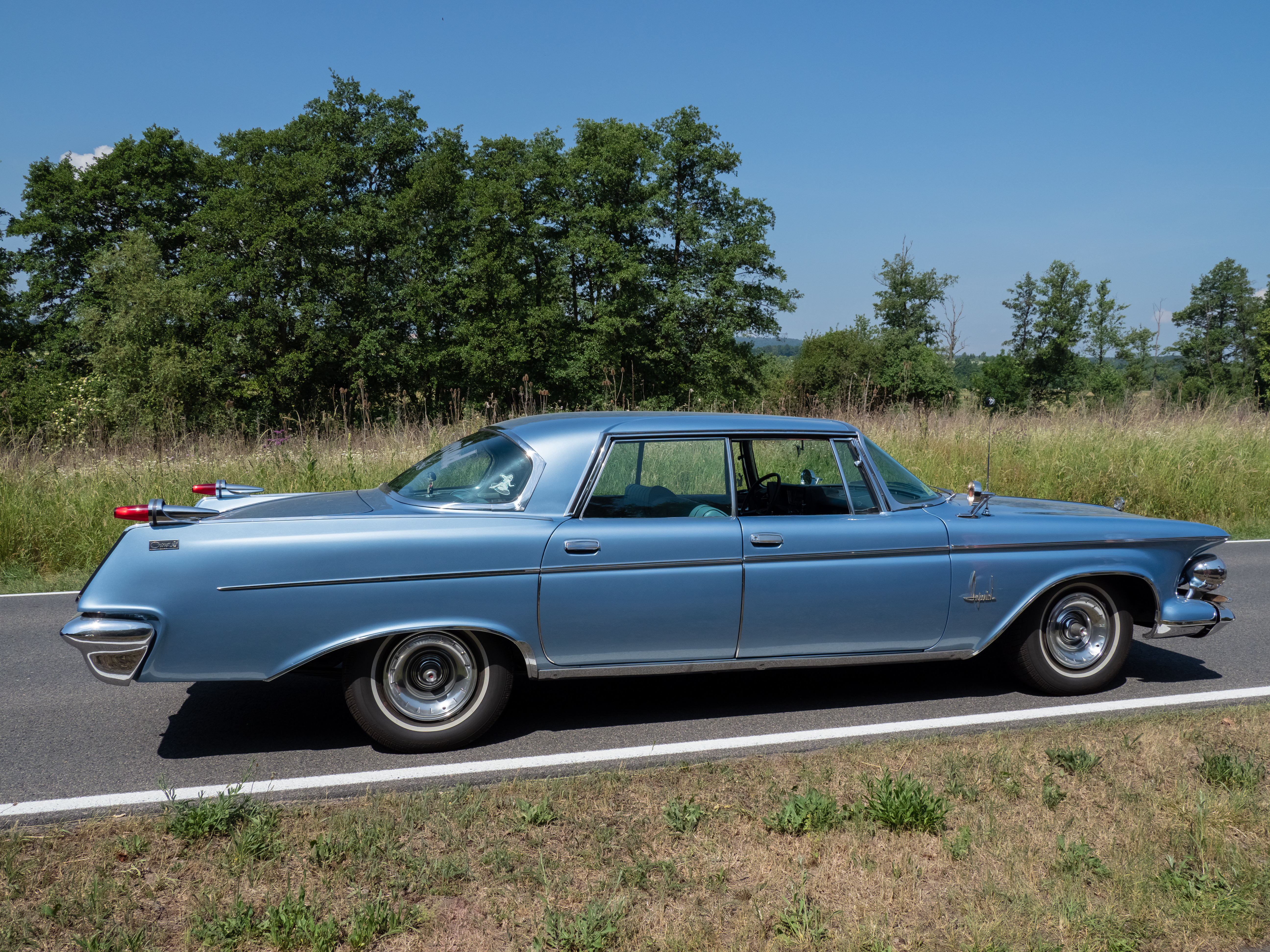
So the real first car that I listened to was my dad's I can't remember what year it was probably 72 imperial.
Chrysler imperial big boat, absolutely the yellowest yellow you can get with leather interior and he bought the original Fosgate PR 2100 amplifier.
And EPI speakers plate speakers in the back and components up front and we welded up an amp rack for the PR 2100 and I forget it was a smaller version of the PR 2100 as well.
No subwoofers at that time, but I listen to that car. Actually, I'm in a backup because cars motivated me because you just said when I was 16, it was a passage to my freedom.
And we drive and listen to music all night left per job where I grew up had the strip. It was called third avenue and memory graph drive and it was about a three mile.
Up and down up and down up and down and we would burn a tank of gas driving that all night just talking about ease and trying to pick up girls and have a good time.
But what really got me from just having a car with some background music and was my dad just purchased a set of JBL L 100s.
And with the L 100s came this.
Final LP and I put it on and it was James Taylor fire and rain. So you got to remember I'm a teenage crazed kid scorpions, Jews, priests, that kind of stuff.
And I put on James Taylor fire and rain. It doesn't get a whole lot malware compared to what I was normally listening to.
Mom and dad were out and I was just listening to these out 100s with that song and they go, wow, this is what real music sounds like. So I got addicted at that point and then we were building that car.
And I just got excited about it. I said, this is just what I love to do and I encourage all the people that I deal with that.
If you look at this industry as a job, you will never, ever, ever get any further. But if you look it as a career and you want to expand your horizons and learn and all that other stuff, that's what that car did to me.
That was my first time where I said, okay, I want to understand how the shit works in real life.
I got to, I coddled up to the Alpine rap and I coddled up to all these people in my early career and just was like a sponge. They probably hated me because I was on them all the time every day.
I'd phone them when I'd phone them a question after question, but it was always to advance my career. And that's the way I've looked at this industry for me is a career because when I told my dad, I'm done.
That's what I'm going to do. Okay, you can't turn back once you've made this decision. You've got to stick with it. So here we are.
And that's where that car is really what drove me to that. And then we started building crazy big shit in Alpine 30502 amplifiers. Alpine was the big dog back then.
So that's really what got me going. And then I wanted to share my knowledge and I just left bridges 60,000 people. So I moved up to Edmonton to start a group of cardio stores, JB's performance, their performance shop they wanted to get an audio.
So I managed that group of four stores to start their audio department with a good associate of mine back then, Phil Nice. Great, great guy. He's in the home audio world now. And then from there I came to Calgary where I live now and managed a very specialty oriented car store.
And then it was my big break to become a rep. And I took Sue and myself and our cat in this U-Haul truck and drove east to Winnipeg, Manitoba where I'd never been before population 900,000 I think at that time with mosquitoes as big as a car.
And drove out there and started my rep career. And at that time there was no guaranteed salaries or anything. It was just all on what I sold I got paid for.
And I still remember Sue coming out with the visa bills every month going, I don't know how you think this is going to work because again the visa bill is bigger than your paycheck.
Chill out, chill out, this is going to work. I know it's going to work. And so developed my rep career. And I had a parcel full of stuff because my territory was geographically large but probably two and a half million population total.
And it was eight hours each way east, west or north to get to the next populous part of the country.
And it was crazy the amount of miles and stuff I put on. But I had everything. I had Nakhmiichi, Phoenix Gold, Bazooka back then, Kustik, Soundstream. You name it, I had it.
And that's where I learned about focus is because mid-serving and grant those from trans electronics, which was one of the companies that worked for, pulled me aside and said, dude, you have an immense talent.
But you're not focusing on anything. You're just driving around, spinning your wheels, and with way too much stuff. And what do you decide you're going to promote or train on? You have all the abilities to do that.
So we're going to assure you for the first six months that we'll pay you what you're making now. But we want you to drop everything else and just focus on our brands.
And that was Phoenix Gold and Bazooka at that time. And so I dropped Nakhmiichi and I dropped all this other products as a rep agency. And within three months I was making more money than I did with the whole suite of products before.
And I referenced that story to all of our dealers that we do dealer work with now or that we supply now is like, whether you choose our brand or somebody else's brand, we hope it's ours.
But please do yourself a favor and just focus on some things so you know it intimately.
You have a great relationship with the supplier and you can get the technical information you need. You can get the marketing support you need.
And you can really set things on fire rather than just shooting in the dark with 50 brands and you don't know where you're going.
I'm assuming that's where the term focus 50 comes from.
You're smart man.
You're not just good looking.
It's a cool backstory to understand that that's where you came up that idea.
Yeah.
Yeah. So what Matt's referring to there is our focus 50 dealer program with MSE where we have a core group of dealers.
It's actually about 72 dealers throughout the US.
But focus 72 doesn't sound nearly as cool.
So those are the dealers that we.
We just give them everything we got.
And it's a culture in our company or a small company, but with a bunch of dedicated guys that just live breathing the stuff and want to be successful.
We want our dealers to be successful and we want our manufacturers.
We thought you'd take Fisher and Germany and Blam and France.
And now our new relationship with unit in USA to really feel that we are an extension of the factory and have our dealers realize that that's how we want to support them.
So that's that's the focus 50.
We just from being on the recipient side of what you do, right?
The level of commitment, support, availability, friendship, all of that stuff, attention.
It's literally unmatched in our industry.
Thank you.
I mean, from what I've seen, it is very, it is very unmatched and it's very special.
And it makes sense because when you have that level of support,
it just makes us want to support you more.
You know what I mean?
Yeah.
I can, I can jump in as an X, MSc dealer, that's small.
X, MSc dealer that, yeah, the, the, the benefit of having a great partner in that that's both sides of that business relationship focusing on the thing.
Same thing.
That's growing together and, yeah, much appreciated through the year.
Thank you very much.
And I, Gary, have you been to Sound Effects store in the short room in there?
I have not.
I've seen lots of pictures, but I have not been there yet.
My God.
You get out there.
Yeah.
Matt.
Yeah, we could drink some whiskey in there.
Hell yeah.
I got some plans in there.
Brian Layton's commitment at Sound Effects and Matt's commitment to what we do.
They have built an unbelievable reference room that I am soon.
I don't have kids.
That, that room is my baby because when we birth that thing together,
I don't want to sound weird that we Matt and I birthed something together.
When that room came to life, it is something truly, truly extraordinary.
And I thank you guys from the bottom of my heart for that because that was a big commitment
from both sides, our company, your company, and your company and our company.
But my God, it's just beautiful.
It's super cool, man.
I mean, product, product irrelevant.
It's just, it's the reference.
Yeah, yeah, yeah.
It's really cool.
I just walk in there in the showroom of Sound Effects because for the people who aren't listening,
maybe you guys can search it out, find me on Facebook, go through my photo albums,
and you'll see the room where I have a YouTube video on my channel of that room.
But essentially, it's like a, the idea behind it, I was thinking of when you go to Vegas
and you're at the Venetian or you're in Paris or wherever and you see a shop within a shop.
You feel like you're outside in a hotel, but then you see a storefront or a restaurant
and it's, it makes you feel like you're outside, right?
So, I had that idea to where it's like you're in just a regular car audio showroom,
but then it looks like there's a Parisian like restaurant or bistro or whatever it is
there, coffee shop.
And that was kind of the idea behind it.
So, like there's a full brick facade, there's windows, there's lanterns, there's coffee tables
outside.
There's even an iron rod fence like before you go into it.
But again, it's set up like a Parisian coffee shop.
So, there's tables on the outside facing outward, just like you'd find in Paris and then you go inside
very, it's simple, it's understated, but like the product does the talking.
You know, it feels luxurious and it's a great place for consultations.
We have our, what I call the Brax Tiny Desk, right?
So, we have like a big 80 inch TV over top of the Brax Matrix sound setup
with the revelation amps at this point.
So, it's a really cool, just place that you can sit that has more of a reference audio sound
that's not in a car.
That way you can kind of compare what you're hearing in a reference room tune for a seat.
And then you can kind of take that information with you, walk into one of our two cars,
and then kind of compare how that translates to a car.
So, it's really a fun demo because I can play at the same Tiny Desk that you'd sit in there
and experience it within the car.
And I'm always going to say that when you take that experience into a car
just based on the sheer less area inside a car, the more dynamic range you're going to achieve.
And if you can achieve the same imaging that you can at a desk in a car
and just make all those speakers disappear, it's going to be a more fun experience, right?
Like, again, you hop in my cayenne and then you go into the Brax Tiny Desk,
it sounds way better in my cayenne, and that's the goal of the demo.
Yeah, but would I always talk to our dealer partners around the country
and because what have we got on the Tiny Desk?
We got three of our revelation amplifiers that are 5 grand each.
So, that's 15 grand.
I think we have four in ours.
Oh, yeah, that's right.
That's right.
Okay, 20 grand and amplifiers, $6,500 in a DSP, 265 plus speakers.
So, you've probably got $30,000 to $33,000 for the stuff on the Tiny Desk in a showroom.
And here's the part that blows me away.
And I would like you to share with the world this.
What's the population of Lewis Delaware?
I mean, it's a thousand.
I'll say it's growing.
Yeah, two people.
Somebody pregnant.
No, it's out.
Is that what I heard?
No, it's actually our where we live is on fire right now.
And it's funny, too, because I got to do this.
There are so many clients.
What is the population of Lewis Delaware?
I got to ask, do you read this?
So, the whole state is 999,000.
But I think when I looked it up, it was 77,000 to 80,000 people.
Yeah.
When I showed pictures, because I use that room all the time.
And I should pay you guys copyright for that, I guess.
But I use that room in our presentations all the time.
And I said, look at this room.
And they're, oh, yeah, but we don't get customers like that.
And they go, it's Lewis Delaware.
There's 70 or 80,000 people that live there.
But those 70 or 80,000 people are getting the best experience of their life
when they walk into that room.
And you are bringing people from all over the United States to the store
and using that room, those guys that actually show up,
because I know you do a lot of stuff just over the phone.
But I'm curious, because we've never really had a sit-down about that.
What is the reaction from the clients that come in there to see that?
Well, it's always fantastic, right?
You want the day, you want a space to also reflect the work that you do, right?
So if anything, even if that room doesn't get a person in there every day,
at the end of the day, it legitimizes your, what's the word that I'm looking for?
It's like a bunch of detail and precision.
Yeah, I mean, yeah.
And your commitment.
Your dedication, your commitment.
I was looking for dedication.
It shows your dedication to what you do.
So when, obviously, a lot of clients, even if we do ship stuff back,
there's a lot of clients that will fly in and then basically I'll give a demo
just so they can understand the full potential of what the system can do.
Because I feel like a lot of people would turn it up and be like,
I don't know if, like, can I keep going?
I really don't know, right?
But, you know, when they come and experience it, they can understand the full detail
of what you can do with the system.
So people will fly in and obviously they come, they see the shop,
and they walk into the room.
And I'll do the whole Brax Tiny desk and just show them around.
And I know that the 12 volt sound effects side, they'll do a lot of demos
with the different, like, Bronco system, the BMW system or Sadies.
Because we did, you know, tune each one of those as well.
So it kind of shows, like, especially, like, with without a sub on a different preset
and, like, what that impact does, you know, to the best of the ability to convey that to a car.
But again, it just, to anybody walking there, it just legitimizes your dedication
to how much you care, right?
Because it's not drywall.
It's not just prefab stuff on a board.
And it builds a lot of intrigue too.
Like, people that walk in there, they're probably like, what the fuck is in that room?
Like, you know what I mean?
Because it's just gated at all times.
You know, it's like, it's like invite only.
It's special.
Yeah, so I mean it's-
It's special past to get in.
It is, it's awesome.
I feel like it's an embodiment to the brand that we've created.
And like I said, it wouldn't have been possible without you, your idea, even bringing up the idea.
But yeah, you saw that room before.
It was a-
It was a broom closet, man.
Literally.
It was back in cleaners and brooms and Christmas decorations.
Yeah.
What is going on?
This is right in the middle of a retail showroom.
It was like that house makeover show they used to do where they're like, move that bus.
And then all of a sudden it's like this crazy broom.
But when you guys got a search out of video, it's Chip Wilson, who was the founder of Lulu Lemmon.
And Tony Robbins is interviewing him.
It's about an hour, hour and a half long.
And Tony was talking about Lulu Lemmon.
I don't know if you guys know the history that but.
Tony Robbins, or sorry, Chip Wilson sold his skateboard ski and skateboard clothing company and was going to retire in Antibank,
or Ireland in Canada.
And did so.
And he said he picked a phone number off of a telephone pole for yoga before yoga was really a thing.
And he said he went to yoga.
And he said, it seemed like it was right a passage to where you're worst clothing to go work out and put your body in places where it never was.
But he said instead of dealing with 18 and 20 year old males on the snowboard arena.
I was the only guy in the place and about eight other girls.
So he said this was cool.
So but what he talked about there back to this focus thing and what you've done with that room is he said we created our client and her name is ocean.
And she's 32 years old.
And she has a high disposable income.
She's about to get married.
She wants to have a family, but she wants to be successful in her career before she winds that up and she wants to be in shape.
And we decided that was our client and we're going to be the best at black Lycra stretch pants.
And he said we chose black because I could have got a good deal on the special fabric, but it was all black.
So he imported all this black Lycra to build these Lululemon stretch pants focusing in on that and then talking about how his stores are set up.
They do yoga demos and there's no 50% off racks.
It's just all all about lifestyle and making people feel like they're special and in shape when they're at the Lululemon store.
And he said if you want to be the best, you have to be the best through the whole chain, the best product, the best showroom, the best staff, the best training, the best shipping, the best warranty, the best of everything.
Because if you're just good at one thing, then your whole average has just come down to good 100%.
What I see with your store when we walk in there now and somebody experiences that room and then they get to talk to your people and you guys have got the whole back, back in support mechanism to support that room.
That is the best, the best, the best, the best and it carries through.
Have you guys visited a Lululemon showroom?
I have not.
I've been in one before.
So you get what I'm saying.
I did, however, because of you, Larry, buy my wife a Dyson hairdryer.
Yes.
But that's the same thing.
I mean, you tell me why you spent $500 or $600 on a hairdryer.
Because there is a hell of a sale for Dyson.
I hope you get a commission.
Speaking of Dyson and nice stuff, I'm so bummed this week because I've had a Dyson canister vacuum for probably 20 some years at this point.
It's like the first vacuum I ever bought as an adult.
And I went to use it just literally two days ago.
And it was, it doesn't power on me.
And I was so depressed because it Dyson is good shit.
Like it is very high engine, well engineered stuff.
It reminds me of like an electro lux vacuum from the 50s and 60s.
Like, they're probably electro lux.
Electro lux was my first vacuum and I'm not that old.
It's probably, it's probably, no, I feel like no.
Electro lux.
Sorry, when electro lux was founded.
All right, let's do that.
When was electro lux founded?
I know it's before the year.
19, 19.
Yeah, but they were still hot in the eights, but they were still hot.
Yeah, my grandparents had an electro lux that was like all just it was beautiful.
It was built, it was built like a 52 Chevy Bel Air, right?
We bought that vacuum cleaner and soon I financed with them because we were 19 years old.
But I had to have the best remembering the best.
I always bought the best shit I could.
Even when we couldn't afford it, we financed the vacuum cleaner.
That's how bad it was.
Yeah, we paid for that sucker for I think six years.
But lasted all those six years.
Yeah.
And that's why I'm mad.
Like I'm the same way.
That's my lifestyle.
I don't buy a lot of shit, but when I buy shit, it is pretty much the best of the best.
Because I will take care of it and it'll last forever.
Does Dyson have a repair center in Louis, Delaware?
Yeah, his name's Matt Schaefer.
He's going to tear that thing apart.
You're going to make it.
You're not spending another six hundred.
No, I'm not spending another six hundred on a vacuum.
Is that a half the money?
More than 600 now.
Dude, it's $600 for their hair dryer.
They're vacuum.
Yeah.
Fuck.
It's crazy.
I just, it's funny you say that Gary, because my wife, we were picking up some hair slop at the local hair supply store.
And they had a Dyson.
Curler, dryer, all in one thing.
I don't know what this had a hair.
I don't have to worry about that shit.
But it was six hundred dollars on sale and my wife had to get it for her sister for Christmas.
Why did I bring all this shit up?
It's too much money.
I was in China not that long ago.
And I got a very nice hotel room upgrade at a Marriott.
And I'm walking through and I'm taking a video to send my mom and my wife, because I'm like,
this is the nicest, inexpensive hotel room I've ever been in.
It's bigger than my condo we used to live in, right?
And I'm walking through and all of a sudden it doesn't really dawn on me.
It's a weird thing sitting on the counter in the bathroom.
I go over to it and I unzip it.
I'm like, oh, that's why it looks familiar.
And there was a Dyson hairdryer sitting in the hotel room.
I'm like, and this place is fancy.
You are fancy.
Pretty.
Or do I get a job like that?
I have to stay at the super eights.
I paid for the cheap room.
That's all I'm saying.
I paid for a cheap room in China and ended up with a little mini mansion.
It was pretty cool.
I had to gnaw on chicken bones for most of that trip, but I got through it.
Did it have one of those little cabinets you opened with the key?
Little cabinets you opened with the key.
There's a home alone reference room December right now.
Sorry, I'm a little slow.
A little credit card.
You got it.
All right, so back to your story.
At some point, when do you make the shift to work from a shop into?
We've got to wrap working for a manufacturer.
Yeah, I was wrapped.
Yeah.
And then I went to work.
That company at that time was called airlex acoustics and the two owners
and split off to go or two management people that split off to go start
trans electronics and distributor in Canada.
And I went to manage airlex acoustics, which was the place where these guys
just took off from.
And we were still doing acoustic and sound stream where they're two main brands.
And that's just the sound stream was going through their chapter 11 stuff
with Donna Haas at the lead.
And did you guys ever get to meet Donna at all?
I do.
That's the old original sound stream when it was USA designed and born and thought of,
you know, class A50s and D100s.
And all those cool amplifiers, but it was interesting.
I've learned so much through this industry and thanks so much people for that.
Because I got to run the sales side of sound stream as they enter chapter 11.
And I'm not going to get into the why they were in chapter 11.
They had tremendous problems with production with the production company that they're using.
But there was a tie with Donna and the owner of this of the production company
that was very, very strong from a health perspective.
They helped each other out anyways.
I still remember calling people and getting orders because during chapter 11,
the bank would release money to sound stream on my sold purchase orders.
So at the end of the day, Donna would come and grab the purchase orders that I had sold.
And I couldn't travel because there was no money to travel.
I had to do it all by phone.
So I'd be on the phone trying to talk to dealers.
And I was just a stupid white Canadian kid at that time.
And here I was in California talking to dealers that I never met in my life,
telling them they need to buy some of the shit from a company that's in chapter 11.
It was a wonderful education.
Got lots of FUs and hung up phone calls.
But it was so eye opening to me to see how the
bad side of our industry works.
And why I say bad side of companies and financial trouble,
but still building a great product and it was amazing time.
So that was my first foray into the wonderful world of manufacturing
and trying to figure that out.
And that was that the company's worst segment.
I did that for about a year and then I came back to Canada.
Then I was working for that manufacturer.
And that's when Focal became available in the US market
through Kimoan Bellas.
We went to a tremendous amount from Kimoan.
Him and I both, I was running the Canadian distribution company
and we were distributing Focal on Canada.
And Kimoan was doing it for the US.
And we hooked up and we worked very closely together.
And I accepted a position with that company to run the US side as well.
And we hooked up with Audison.
And so that was stepping into the US side.
And then I took a job with ElectroMedia,
which was Audison and Hertz, as their America's area manager they called me.
So I was responsible for Canada, US, Mexico, Australia.
And then I was a token English speaking kid that they sent all over the world
for trainings and stuff.
And I was with them for about 15 or 17 years.
And what an experience.
That was a great company, great people.
But at that time, we had started the store here in Calgary.
My wife had started it.
So I was going to pull back and just run the retail store
and stop this international traveling and just chill out.
What, what you're not getting any younger.
That would have been...
Ish.
12, 15 years ago, I guess.
I'm like that.
When I left soy, I had retired all that stuff and we're just running the retail store.
And we're distributing Audison in Canada.
I didn't want to lose me out of the family and I really didn't want to go.
So that's how we stayed together.
But really just with Audison in the small market of Canada,
we got 30 some million people.
It's not really huge.
So it wasn't really enough to build a distribution company on.
And then Goodrin from AudioTech Fisher called me.
I guess it's seven or eight years ago now.
And we, Chris and I and Jason Degos,
who was a big help in getting MSC fired up and going.
We flew out there and they had us at a hello.
We toured the factory.
We saw the amazing things they were doing with there.
They're amazing people.
And we're there for three days and after day one we came back
and started off the meeting in the boardroom the next day.
And I just said, let's do this.
I'd called Sue that night.
Her morning, my night.
And I said, remember that promise I made to you that we're going to settle down and chill out.
Well, I'm actually going to take all of our savings.
And we're going to go all in over here.
And I promise after this gets going, I'm going to settle down.
So we built AudioTech Fisher in the US market.
And we've been very, very successful with that.
And same with Blam.
My history with Focal.
Keith Bonneville, who had been Focal's product development manager
and the car side for 25 some years.
Had left and started Blam, which is our nice matching headphones time.
So they, we partnered up with G as well.
Distributing the Blam products and went, went very strong in the US and Canada.
And we had a group of real dedicated people that helped us get it there.
And I thank each and every one of them and our team for all their efforts.
Because it's, it's easy to be the leader when you got great people that you work with.
And that's, that's really what it is for us.
And then recently last month, we entered into agreement with Uniden.
As they're basically their sales channel for all specialty products, the R4W, R8W, R9W for North America.
So they're going to concentrate on it.
Thanks for all your support with that.
Welcome.
Welcome to this side.
It's great product.
They're great people.
Things that they are going to allow us to do and support us with are going to change the way radar and laser defense systems are sold and marketed in North America.
We are so pumped to get going.
So that officially it's going to be January 1st, but we'll probably, our inventory will be in before then.
And we're, we're working daily with Canyon one and Ed and JJ and all the guys at the factory there to get ready for this.
And get some cool things happening.
So we're, we're going to have fun with that.
So that's, that's kind of where we're at as of today.
And it's been one dealer at a time where, as you saw with your room, we're building smaller experience centers around the US.
We're moved all of our display production in house now.
Actually went out and bought an edge banding machine for building our cool horizontal displays.
It's my, now my new favorite tool hit.
I don't know if you guys have ever seen inside of an edge bander, but there's so much mechanical and shit in there to go wrong.
It needs to be adjusted all the time, but it's so cool.
I have a, I have a terrible edge bander story from when I worked at the display company.
Oh, I got to hear it when I left Alpine.
Oh gosh.
Well, it's bad.
When I left Alpine, I went to work for the display company.
We had a couple of big edge banding machines for doing production.
And apparently one of them was a little older and had a tendency to jam up.
And apparently somebody in the back decided it was a good idea to just basically bypass the safeties that shut the machine down.
So that they could unjam it in the middle of production.
And Matt, if you're not familiar, there is a very sharp blade that comes down and trims on an edge bander.
And somebody lost a finger.
Yeah.
Yeah.
Yeah, I guess it's a mechanical nightmare inside that thing.
Oh yeah.
It's, we bought a brand new machine.
They came down, set it up, trained our guys.
This morning, we went to turn it on.
And it's got two polishing wheels on it that polished the edge of the edge banding.
And one of the motors burnt out on it.
Like day two of life.
So we got that fixed.
Well, we didn't get a fix.
They come and unhooked it.
And so they got another motor coming from the factory.
And I'm like, this is brand new.
Stay one of the use.
I thought they would have taken one off one of the machine and stock and bring it down to us.
There's the part of being the best at everything.
I had a pretty high opinion of this manufacturer and it just stepped down a couple of notches.
And then the next day, do we came in to use it again and blowing breakers again?
Or what is going on and found out that the glue pot where it squirts the glue out,
there was a piece of the casting for the pot itself that dropped into the glue and got caught up and jammed into the where the glue was squirted onto the edge banding.
And smoked smoked that so they have to come in with that.
So it's just a man.
But now it's stable.
We're still waiting for motor, but it's stable.
So yeah, we've brought all that in host now.
I wasn't happy with the display manufacturer we were getting to build the products.
It's a trochiously expensive delay delivery all the time.
And finally, I said, we're just going to do this ourselves.
So yeah, I've got everybody working at about 130%.
As I said, it's wonderful to have the people that thrive on living.
I mean, we're not there at all midnight every night.
It's not a not a sweat factor.
At least not yet.
Working on it.
Working on it.
Yeah, that's right.
Yeah.
So yeah, it's been a great year, challenging year.
I know you had mentioned it, the onset of the show, Matt, about the tariffs.
I'm curious to see what Gary is going through.
I'm very interested for this conversation, which is one of the biggest reasons I wanted to set this up.
Just because I feel like that's kind of the story of 2025.
And I don't know if it's a story or a nightmare.
I would say probably the both of you are probably the two people that I talked to most in this industry, if I'm being honest.
And any time that I've talked to you guys this year, I feel like it's just revolved around tariffs and product.
I've heard a lot of behind the scenes.
Most people listening, they understand the word, they understand what it means.
But I don't think they really understand the impact from a manufacturer.
Because from a manufacturer, you have to make a lot of decisions.
Are you going to pass that down to everybody buying your product?
Are you going to hold tight?
Are you going to...
There's so many things to calculate based on a brand decision.
And those impacts may make or break your entire company.
Right?
So I'd love to hear how this has been for both of you guys.
Is it sucks? Good enough answer?
Are you looking for more than that?
I would just like to start the conversation.
And I'm really curious because I'm very vocal on this side because it's our money.
But what I've been talking to a lot of our dealers, a lot of them aren't completely understanding what's going on.
So every country in the world has different tariff rates on different products from different countries.
And tariffs were originally there to protect an industry from getting chopped off at the knees by a country selling something into another country cheaper than what it should be.
And being ultra competitive.
So the idea would be let's put a tariff on there.
So our home country manufacturer can get back and be competitive and continue to survive.
That's what tariffs started out to be.
This year, every country with every product of the whole world, there's tariffs on it's amazing to me.
The lack of knowledge by people in Canada and the US of understanding the impact that these tariffs have on the price tag that this stuff sells for.
I miss maybe shocking news, but the countries that are sending products into Canada into the USA are not paying the tariffs.
It is the importer that pays the tariffs and passes it on as less as they can.
But in some cases, they have to pass on the whole tariff to the unused consumer.
Ariel, I'll turn that over to you.
And then I'll come back to you and tell informed people of the financial impact that it's had to us this year.
Yeah, I definitely have some questions because I don't fully understand how how that works for you guys.
Because you're bringing product into Canada first and then your distribution is in Canada, into the States.
Yeah, it's got to be a nightmare.
That's got to be a nightmare.
Yeah, so let's just deal with the imported product from China because that's the worst tariffed item or tariffed country, put it that way.
So Canada still has a reciprocal agreement with China on basically 0% tariff.
So we will import amplifiers or speakers from China into Canada at 0%.
The moment that we then ship that to a dealer in the US as soon as it hits that border somebody and that somebody is us because it's built in was built into our pricing.
We pay the tariffs on your behalf.
So as a US dealer, you don't have to deal with any of that stuff.
It would be just like buying from a US distributor.
It's just getting shipped from Canada.
You don't see the paperwork.
You don't have to deal with that stuff.
As everybody knows, we're getting stuff to you in two or three days quicker than most other distributors to get your product.
So we've got a wonderful deal figured out with you.
But in any event, let's rewind to the first quarter of 2025.
So let's go back before then in 2018.
Can't remember what month but 2018 during your president's first term, they imposed a tariff on China made amplifiers of 25% and speakers of 7.5%.
So that was supposed to be a short lived deal.
So it's 2018 and now it's 2025.
So seven years later, that 25% on amplifiers and 7.5% on speakers is still there.
And in earlier on in the year, forgive me if I don't remember the exact month but the tariffs imposed on Chinese made goods went crazy to the tune of 145% plus the original 25%.
So a Chinese made amplifier was 170% tariff for very a couple months, two or three months.
So the disadvantage to us is that when we shipped that amplifier, the day that that tariff was imposed was the day we started paying it.
So I can assure you we don't have 170% margin in our products.
It doesn't exist.
So then as a business owner who is supported our dealers and want to see our dealers exist and survive and not be crazy, it was a very difficult decision for me but a morally correct decision from for me that said, OK, we are not going to touch the pricing because this type of tariff can't exist forever.
It's got to be short term. So we when it was at 110% I called a Zoom meeting for all of our focus 50 dealers so I could explain to them how this was working.
And five minutes before airtime for our Zoom meeting, Chris Van Rai, my right hand guy in the Canadian office comes running up to me with the phone and he goes, dude, it just went from 110% to 145%.
So I was going to announce to everybody that we weren't going to raise prices.
And five minutes before I don't have time to be a math genius and figure out what we're going to do in five minutes as I said, we're sticking to our story.
We are not going to increase prices and I'm going to stick that out.
So it's, it was a tremendous amount of money.
If you think of all of our sales over three months with those tariffs applied that we didn't raise pricing.
And then the end of May, early June again, forgive me, I don't know the exact date.
China, the US came up with a deal.
Tariffs went back to 10% fentanyl, 10% regular tariff plus the 25% that was imposed in 2018.
So it's now 45% on amplifiers and 27.5% on speakers.
So then we normalized our pricing, changed our pricing to reflect the increased tariff, but not the super high tariff.
So we were a nonprofit organization for the first quarter of 2025, but we felt it was the right thing to do to not completely blow up the marketplace.
So that's our story.
And I don't know, Gary, how it affected you or how deep you got involved.
Yeah, I think so for me on the day to day, right?
So I'm pretty focused on new product development and the roadmap and products that are coming in.
So that goes from everything from just laying out like each year.
Here's what we're going to try to do over the next few years.
And here's what the development teams are working on.
And again, I'm focused on AMP speakers, subs, processors.
So, you know, AMP Pro, that kind of stuff is not not.
Not stuff I'm dealing with, but I have a sheet of about 120 items that are in some phase of development.
And it is my job to go get everybody on board for these, right?
So we're having concepts, we're trying to price what these concepts of these products are going to be.
We're working with our contract manufacturers to develop them and stay on these budgets and these timelines.
And in that, those spreadsheets can get pretty large when we're looking at, you know,
our distribution models a little different than yours.
We sell through distribution.
We sell direct to dealers.
We sell direct consumer.
We have all these different chains.
So part of my job is trying to make sure that the pricing structure is going to make sense for everybody along the line.
Like everybody needs their slice of the pie to stay in business and to support their customers.
And so every time one of these prices changes, one of these tariffs changes, I have to,
it's not just you just plug it in and everything changes.
It's like, wait a second.
This all makes sense except for in this scenario, it doesn't make sense for a dealer.
In this case, it doesn't make sense for a distributor.
And then you have to go back and evaluate, okay, is this product heavy and dealer?
Is this heavy and distribution?
Is this heavy and direct to consumer?
So it just becomes this every, it just felt like every three days, I am just so frustrated and want to stab my screen and never look at Excel again.
That's my take on it from a company take.
So imagine this from the different side.
You at least, I'm going to, I'm going to play victim here for a minute.
It sounds like you guys got to bring product into Canada and not pay the tariff on it instantly, right?
You pay it when it ships.
So for us, we have inbound shipments that the second they hit the port, the US government's like, give me my money, right?
And so now from a cash flow standpoint, like I do not envy our finance team that had to deal with all that through the year of trying to forecast what they needed to pay the tariffs.
I guess the good thing from our position is the day that those tariffs are taken off, if that ever happens.
That day, we can stop charging the tariffs and our pricing will immediately go down.
Where people inventorying stuff in the US, they've paid the higher tariff on it and it's sitting in your warehouse.
You have no choice but to sell it at the higher price because you paid a higher price for it.
And so yeah, and a dealer took it on the front end.
Yeah, we took it on the front end.
You're going to take it on the back end.
Yeah, just if there ever is a back end.
Yeah, I thought to explain it to dealers that it's like imagine that when you, when we sell you something, if you're on terms, right?
It's not just like, hey, you've got 30 days to pay for this.
It's like, I know you have 30 days to pay for it, but I need 100% of that as a tariff up front also before you ever get a chance to sell it.
And that can really wreak havoc.
So it's definitely tough to deal with.
We as a company have been moving many products out of China for a few years now.
It's, it could have been worse.
We were, I think that we were in a pretty decent position.
But then as increased tariffs hit other countries, it also became interesting that it's like, well, wait a second.
It might actually make sense to go back to China on something.
Yeah.
So it's, it's not going to ride.
I certainly don't want to get involved on the political side of this because everybody has their, their own opinion on that.
I'm just talking from the financial side.
Yeah.
It has got way more expensive during that first quarter of this year.
It was almost prohibitive.
It was my, I joke with everybody because going back to the beginning of this episode, we talked about my Lamborghini fix.
I said to Sue, I need to have a Lamborghini before I die.
That is my Lamborghini fund gone.
So it was a significant, significant amount of money.
Yeah.
That was yanked.
It was either charge, charge the dealer, which in turn charges the end use consumer or whole tight because we had spent seven or eight years of our life developing the relationship with these dealers and gaining the market share that we had and getting our product on the shelf.
We would have reacted to that 170% tariff on Apple fires.
We would have game over.
I just would have found something else to sell that was in stock in the US that hadn't had those tariffs applied.
But obviously it's reality for everybody during that first quarter because they were all holding their shipments off, hoping that the ship would come in after the tariffs had been pulled back.
And some people got lucky and some people paid the full 170.
Yeah, I heard some really bad horror stories.
I felt bad for a lot of people.
Yeah.
Yeah, it's not as I've always talked to friends and family and stuff.
It's hard enough to run a successful business just dealing with what you do.
Never mind trying to navigate this getting up in the morning and wondering, OK, what happened last night?
And then you find the news it's like, oh my goodness, how do we react to this?
Yeah.
So we made it through. We're all we're all good.
I just had our your end and our account was very happy with how we navigated through that.
So we're solid.
So it's a good feeling to get to find another year.
Yeah, for sure.
We got shit to do.
We got so fun to have.
It's funny a few seasons ago.
We had a like the theme of one season was like a $3,500 system bill.
Right.
That doesn't cover the tariffs now.
Yeah, since then we've had COVID.
We've had inflation and then we didn't have tariffs.
So it's like, let's build a 15 grand system now.
Yeah, what is that 30?
What would that $3,500 system cost today?
I know it's different for other people.
I have a hard time developing a full system done correctly for like under 9K.
I find it very difficult.
What would you say the average ticket is in the main retail store?
I don't know.
I feel like I'm so disconnected from that side.
I asked you the other day, what was the price point at which you got involved?
Right?
Like at what point on the sound effects side do they say,
this is big enough we should grab Matt.
I think your answer to me was like $7,500 is where like it starts to make sense to even have a conversation.
I would say once it gets to the point where they're like,
hey, can you demo this person something at that point?
I become so invested just because it's my passion, right?
I then just take over at that point.
I'm selling them the industry and what we do for a living.
Because at the end of the day, when it comes to sales,
I make this analogy all the time to people is like,
you could be homeless and you still have dispensable income, right?
They're spending it on.
I always see homeless people with cell phones now.
How did that happen?
They have phones and cigarettes.
They have Jordans.
Like I saw a guy in the building sleep on the side of the road.
He's like pretty fresh Jordans on.
He's sleeping.
He had a cardboard box over half his body and it was pretty cold out.
So I'm pretty sure he was actually homeless.
But he had some fresh Jordans on.
That's my point.
Everyone has dispensable income, right?
And it's our job as salesmen to make that audio, right?
Because you might be a lot scarier.
You might be coming in.
You might be really focused on, hey,
my thing is shoes or my thing is watches or my thing is travel
or my thing is clothing or eating out.
Your job as a salesman is to make audio their thing.
Like ignite something in them that says,
holy shit, I could really enjoy myself enjoying this industry.
I feel like you just have to have that experience.
You got to get them in something that so blows them away
with what their expectation was to what the reality was feeling it.
Like when you saw the Lamborghini way back when,
or when you got in your first really nice car,
whatever it is, like when you have that first nice bite of a steak
and you're like, this is way different.
Like I love this.
It's our job as salesman to create that atmosphere.
Okay, so point.
You said counterpoint.
You're saying this what you're asking for?
I'm a, I get it.
I get it.
But as much as yes, I would love to drive a GT3 RS every day
and beat the living crap out of it.
And yes, that is the pinnacle.
I am never going to spend that money on that car.
It's just not going to happen.
Here's the point.
Here's my counterpoint.
And I, if I had to come out a pocket and spend the money that is
in my car audio system, it would never happen.
Right.
So what difference you weren't in.
What would you do?
I'm exposed to it.
Right.
And that's why I didn't have a car audio system for as long as I can remember.
Would you rather go without it?
I'm exposed.
I was without it for 20 years.
But I got my fill because I was exposed to it.
That's true.
But I will say Larry, before you start, I will say,
now that I finally have a system,
I look at it in the eyes of one of my clients,
because there's a lot of times I'll come home,
let's say on a Friday, before I have any commitments,
like I'm just kind of by myself.
I'll make myself a cocktail.
I'll go sit in my car and I'll jam out.
Jam out.
Jam out.
So I need to bring that into perspective,
because Gary, you're talking about GT3RS or GT3,
or whichever step you took there.
But as I talked about,
my father was a mechanical's life and service manager.
My mom was a stay at home mom and we had three kids.
So there was never tons of disposable income there to get rid of.
But we had the best of everything and one of the things was audio.
That's what made my father tick.
We had stacks, electric, static headphones.
We had the Nakamechi 1000 ZXL home cassette deck.
That time was $5,000.
We had a kind of vector tone arm and on the techniques,
SB10 turn tables.
Funny I remember all the exact model numbers of this shit.
That's a sad, sad life, isn't it?
But to add to that story,
I was at AudioArc in Edmonton,
Super high-end home audio store.
And I was saying, who's your number one client?
And he said, did you remember just seeing the guy that walked out?
And I'm like, well, you didn't have a client in here yet,
because it was early morning and he says, no, the mailman.
That guy has the most expensive two-channel system we've ever sold.
He's a mailman.
So to Matt's point,
I never, ever, ever, ever give up the fact that somebody doesn't see
what we do as being the most important thing in their life.
And I just, as Matt said,
I always want to give the best experience we possibly can.
For whatever price point they have.
Yeah, that person is never going to experience that anywhere else.
And once they've lived that reference,
it's much easier to step them down than it is to go from a $1,000 system
to a $7,000.
I completely agree with that.
I just, my, my fear is that I don't ever want to discourage somebody
from taking a step because they don't feel that they're going to be happy
without spending 10 or 20 or 50 grand on an, on an audio system.
And again, in, in the most basic cases,
like you can do a lot.
Like, I'm just, I'm going to take my company, my business,
that side of it out of it.
What, what is a match amp and a set of match speakers, Coslary?
A match, a channel DSP amp is $1,200 and a pair of speakers is $4,500.
And a, and a match wafer to go with it.
And it makes a hell of an upgrade.
And it's, and it's three, four grand in gear.
And you're getting a night and day better experience than you would.
And basically three, four grand in gear, how much in labor?
It's, if you have a plug-and-play harness,
and it's not that involved.
Like you can, what, what I'm trying to get across is that there are ways
to approach audio upgrades that get you substantially better sound.
It's not, and that's, it's not the 30,000-dollar level.
And the awesome part is like, again, this is where people go into the Chevy dealer
and they look at the Xeo6 Corvette and then they walk out with the Camaro, right?
Like, they give them that experience, let them dream, let them have that vision.
But a still Camaro is a bitching car to drive around every day
and it still peels out and, you know, it's still fun.
It's still, it's, it's 60% of the experience for 60% of the cost.
And it's still fun.
I, I got to say to you, Gary, when I saw you at SEMA.
Sorry about that, by the way.
Much as my head was so involved in the unident thing.
I came to your booth and you rattled my soul with that truck years.
And even though I wasn't a big fan of the high frequency,
the low frequency was like unbelievable in that truck.
And I said, what, how much are these woofers?
And I think you told me they were 150 bucks.
Yeah, 159 bucks.
And, yeah, to give somebody that kind of experience with that kind of price point
was shocking.
And I remember you saying to me that you learned from a guy,
and it's funny how these stories get passed
from the person, the person, the generation, the generation,
get them in the damn car, get them in the car.
And that's always been my idea of a twist Larry's arm to get them in the car.
I'm just like, you got to hear this.
You got to hear this.
I knew what was, I knew it was about to happen to me when I saw all the
tweeters and shit and that thing.
I go, this is going to hurt a little bit, a little bit.
But the big thing to me was the base in that car.
It's, it's base is something that people always will remember.
And then as we get older, it changes a little bit,
but we still still love the low frequency.
Oh, yeah.
That's what that's what brings the music life for sure.
Nothing like having your chest tickled a little bit.
Yeah.
That's right.
Well, they're still doing it.
They can do it in live shows.
Oh, yeah.
The show I saw at the red rock,
happy theater and Colorado there, outdoor,
rolling through the Tom Tom drums.
And just boom, boom, boom, boom, boom.
That's all my part.
Let's go there.
Oh, dude, you got to go.
I know.
I know.
I do.
We just got to find the band that we can both live with.
And let's go.
Yeah, let me know.
Let me know.
And we'll rent.
We'll rent some cool cars.
We'll rent some cool cars and do Pike's Peak again,
because that was an experience, too.
Yeah.
I wanted to do that.
I forgot to tell you, Matt.
I have, we, Matt and I were talking last night.
We had a dust off our equipment and make sure it still works.
So we had a little chat last night.
We were talking about concerts and shows.
And I didn't do much this year.
Like, I think the three of us all enjoy having live experiences.
I did do one thing that was totally outside my realm this year.
I am not a Star Wars fan,
but our local college has a really nice,
a really nice room and their orchestra played live
to Star Wars and played all the music.
And it was the cool, we had great seats.
And just, there are parts where you just completely forget
that there's an orchestra there because it's dark.
And then parts where you're like,
I can't believe this is like,
they're actually playing this right there.
It was so good.
So, so good.
Live music is so cool.
Live music is so good.
So good.
I just two and a half weeks ago,
one of my favorite bands.
It's a Hawaiian band called Pepper.
And they're kind of like a,
I'd say kind of like a sublime ish.
Right?
Oh, cool.
Kind of that type of Long Beach area vibes.
Like Reggae Indie Rock type stuff.
But I got to see him.
He basically was doing a solo show.
It's a part of a band,
but there's two singers in the band.
I did like a little solo show,
but he played legitimately in this small bar.
So it was just him, acoustic guitar,
playing in a super small bar.
There might have been a hundred people.
But it's like a dude I've listened to since high school.
And he's like,
their music is my feel good music.
Like when we bike all summer,
we just rip their music all summer.
So like he played all the music
from their band.
And it was in the smallest venue.
And the acoustics were actually really good.
Like you could feel every,
that was right in front of it.
And I told him at the end of it.
I was like,
dude, I've seen some fucking awesome stuff live.
And this is probably one of
what will be my most memorable music experience ever.
Just because of how authentic it was.
It's the stuff you listen to.
It's the stuff you love.
And it's like seeing them.
Nothing like those small venues.
Yeah, the small venues.
Soon I just got back from New Orleans.
And Ace, the one's extreme audio out there,
brought his whole staff out and took us into the French quarter.
And we walked around there from bar to bar to bar,
seeing all these unbelievably talented musicians
that you know will be continuing to play in those bars forever.
I went walk by one place.
And I could a swore.
Toto was playing.
And we walked in there.
And there's like 10 people jammed on this tiny little stage
playing that a three-piece horn section.
They did Toto.
And it did, you know, she's a brick house.
I can't remember who does that song.
Isaac Hayes maybe.
Yeah.
I can't remember.
Anyways, it was so good.
And so dynamic that Ace's whole staff.
And again, I have to thank those guys.
They showed us an incredible time and such good hosts.
Sue and I had just a wonderful time.
But I got so into this music that I turned around.
There was 13 people when we walked into that place from our group.
And when I turned around, it was just Ace and his wife left.
They all just kind of left me alone because I was.
He's gone.
Just leave him alone.
But it's amazing what music can do to the to the soul and the mind.
That's what you can recreate dynamics like that in the car.
It's such a cool experience.
Yeah.
I love what I do.
We're lucky.
Yeah.
Yeah, we are.
I definitely, anytime I go to a show and I'm, you know,
quote-unquote stuck giving demos all day.
I'm like, this is literally my job.
I get paid to sit in a car and jam out to music with people like,
this is really terrible.
Yeah, that's why it's so fun because when you get to build somebody's dream system
in a super dope car.
And then they're experiencing that music like you know they've never experienced it before.
It's just so special, dude.
I've had so many grown men cry in a car.
Yeah.
It's just pretty cool.
Super cool.
And that's why again, I couldn't be a mechanic at Lexus.
Because you spend six hours replacing a leaky cam seal.
And the person didn't want to be there in the first place.
They're still pissed.
They're still pissed even though that seal is not leaking anymore.
Yeah.
That was one of the things grown up that my dad was a service manager.
My brother was his warranty administrator.
And they'd both come home and dad would say that is the toughest job ever.
Because when somebody walks into a service department, they're mad.
Yeah.
And if you can have them smiling on the way out,
you know that you've done your job.
And that was always his goal is to make sure people that came to him as the service manager
with a big complaint left smiling and saying, thank you.
And that's what I get off on art from audio by art in Texas.
He's a one man band in Texas.
And he always takes pictures of his clients arms because the hair is standing up on their arms with cruise pumps on there.
I just love that.
It's such a reward for the job we do.
And every time we deliver a card or a perfect concept retail store and I see a client and they shake my hand.
Thank you.
Thank you.
Thanking us for spending 10 grand.
Right.
It's like no.
The pleasure was a whole lot of seriously.
Yeah.
Yeah.
It's good.
Yeah.
That's awesome.
So where do you think the kind of talked about the key demographic of clients and we touched on kids not wanting to drive.
Today like the Gen Xers.
Wait, Gen Z.
I don't know.
So that we're on now.
I think Gen Z.
Yeah.
My daughter's Gen Z.
Even though I do have a bitch in system to put in her car.
Audio control full set up.
It's kind of a bitch in.
She's going to have the dopest system ever.
But what do you.
What's what is the car audio look like in five, ten years?
Wow.
Factory aftermarket.
It's the ball.
Yeah.
Factory aftermarket.
Both.
Like what.
Obviously everyone has to pivot.
Do you think the in car.
I think we've talked about this on podcasts in the past.
The in car experience is going to become more necessary because there's going to be less.
You're not going to be driving.
Right.
It's going to be automated driving, which means.
You in your living room, enjoying whatever is more necessary.
I think there's going to be a much greater opportunity.
For us to make an impact.
Because manufacturers, you know, are still going to make it as cheap as possible.
But it is acceptable as possible.
They'll do better, of course, because their attention is also going to have to pivot on.
How do we entertain the people in our cars more?
Because that's why people are buying cars is to be entertained.
But again, it's going to make it tougher for.
The shops not.
Wanting to fully integrate into cars or being scared to integrate into new cars.
So it's going to take.
I've kind of said this to people in our shop like.
Every shop is going to have to have like an engineer.
Right.
Or at least one smart dude.
Yeah.
One smart dude.
It's not just going to be a bunch of tax.
It's going to have to be like pretty much like an engineer.
We're going to have to completely change our way of thinking.
Yeah.
I read a post about three months ago.
This was on an F-150 with the being only system.
2023 F-150.
So that's the one with the overhead effect speakers.
Headrest speakers.
The whole nine yards in it.
This dealer was explaining that he was in three way front system.
So six by nine.
Two inch and tweeter.
And he explained that he had the guy came in for an upgrade.
And he put in a six and a half inch component system in the front end.
Rear coaxes.
Absolute killer killer subwoofer system with a five channel amplifier.
And he said this thing jammed.
It was awesome.
And the client picked it up and he took it home and he came in the next morning.
And wanted it all pulled out because he wanted it back to factory.
I just don't get it.
And finally, after all this time with me not responding on that stuff,
because I don't like to go down the rabbit hole.
But I said, OK, I need to say something.
I said, we're not in the business of taking something away.
And did you even listen to that truck before you fired it up?
Because we bought our 23 F-150.
And I listened to that truck two or three months of the factory system on purpose.
Just to get used to what they were doing with their algorithms to do their overhead speakers.
And because it's not it's not a process signal.
They're just doing it.
Upmixing and all that kind of stuff.
And I was giggling myself sometimes because I'd hear my favorite song.
There's shit flying over my head and behind me and I go, this is cool.
I kind of like it.
It's totally at sucks and it has no dynamics and it has no real good low frequency.
But the effects are cool.
How do we recreate that but give the client what they're going to want,
which is more bottom end and more dynamics and more volume and all the rest of it.
But this particular guy had taken that all out and did front rear speakers.
Passive components up front.
Coaxes in the back and a subwoofer and thought that was bitching.
And that was his ticket to success and lost the whole deal because of that.
So when we, Matt, you talk about autonomous driving and we're going to sit there in the lap of luxury and our autonomous driving car,
which I'm just going to shoot myself before I let that happen to me.
But you're right.
This is our opportunity where we can build a absolute killer system in the car.
And I see immersive audio in the car like people are used to in their home system,
joining that kind of experience in their car.
Yeah.
And so we are working more and more towards that and integrating into this stuff.
I think those manufacturers that aren't worried or thinking about or designing stuff that's going to interface with today's new cars,
which are tomorrow's use cars.
The stuff we're going to see come down the pipe on the factory side, the OEM side is going to.
They're getting clever.
So we're doing a Mercedes GT 63 AMG right now.
And I don't know if you've broken one of those down yet.
But in the rear hatch, there is what I would make the analogy of like a big exciter speaker.
So it's basically like a resonator speaker that's bolted to the rear hatch that is the subwoofer.
And then it has the rear panel that goes over top of it.
And again, it works just like your exciter speaker.
And it sounds like great.
Just that little thing, you know, resonating that whole area.
You're talking about the two seat coup?
Yes.
Yeah.
So their subwoofer is basically a little exciter speaker that is in the hatch that is basically just vibrating that whole area to create the lower frequencies.
You know, you're just looking at how they're designing things with no space.
And you're just like, oh, it's very clever and it does sound good.
Like it's engineered well, which I'm very excited for because once we put a sub in there and it, you know, it's a hatch back.
And it's going to, it's going to rip.
But you're looking at how the factory is doing it with super cheap equipment.
And you're just like, wow, it's so smart.
Yeah, the engineering wins every time. That's for sure.
Yes.
My biggest concern as we go autonomous is that people are going to be more interested with varying their face and their phone while the car drives them around than they are getting a great audio experience that they could have.
One Gary think positive.
So I think like obviously we spend a lot of development dollars right now on the pack side making ant pros, which is an integration piece that allows you to grab signal and in the cars that have digital volume control.
We interface with that and we get that.
We're not the only ones that make it Larry.
You carry everybody's device because they work well with your products.
But I think that that's really where you guys do a hell of a good job on your stuff.
Thank you. Thank you. Thank you.
It works.
If we try to get as reliable as possible, that that that's a tricky world.
Just like we all deal with phone updates and computer updates and car play updates.
And you know, there's a lot of technology that's reliant on multiple people factories, companies, whatever you want to call them.
And getting all that stuff to work together consistently is sometimes a struggle.
But we're pretty committed to it as we go down the path and into the future.
And those devices have really become what a radio was back in the day there.
I always that it's tough.
It's a tough piece for us to market.
I don't know how you guys deal with it Larry and trying to explain the dealers the benefit of using one of those types of devices.
Like if we could just like take a picture of an amp pro and then take a picture of like a cool Macintosh receiver and say we're turning your factory radio into this.
And you want to start with really good signal.
And this is the way to do it.
Like that's the message that needs to out there.
It usually starts.
We've got an 18 channel amplifier.
So that's 36 wires that you need to connect.
And I'm sure none of you guys have ever hooked a speaker out of polarity growing up.
But now we have 36 chances to do that.
So let's all just and times two because you got input and output if you're going channel for channel.
So now we have 72 channels.
Good luck.
Right.
It's it's it's going to fail.
And then it's beer.
It's beer clock on Friday and you're trying to tune the car and you find that one of your inputs is out of polarity.
And with our software, you can go in and reverse the polarity.
But do you leave it like that?
Do you do you leave it corrected in the software or do you take it all apart again and fix it correctly?
I know the right answer to that.
But we've seen a lot of systems where we'll go to and we're we're training dealers like, oh, I see the quick shortcut from last day care.
But that's really how we explain it is.
Our main deal is if there's a pre-amp device available, use it.
And then we give you all the tools in our software to recreate that F-150 unleashed experience, doing what we do.
And you can't take that away from the customer.
You want to make your life easier, quicker, profitable, repeatable, being the key factor.
So those are some of the things that we work really hard on.
Between the two of you, you guys pretty much have the whole entire pre-amp market cover.
Well, I mean, we're not the only ones that make those devices. Larry carries everybody's because, you know, we don't cover every application.
We are focused on that biggest chunk of the market and providing value.
Everything we do is value oriented. We're going to still give you the toss link output and clean digital signal.
Could we spend more building ours? Could we put it in an aluminum housing? Could we, like, could we do all these things? Yes, we could.
We could make it more expensive. But the goal is to have some volume behind the products. I mean, we are a pretty big company.
It is a pretty big expense to develop one of those devices and validate it.
Just the hours of validation and software revisions and that kind of stuff is huge.
So you're never going to see us make the niche market.
Hey, we can sell 200 of these a year type of products.
But at the same point from a shop perspective, it's all about reliability.
I don't care what your interface looks like, right?
It's got work.
AMP Pro has its place. Nav TV has its place.
Whatever is available for the car that I know is going to be reliable, that's what I'm going to use every time.
And I don't know your engineering team on the AMP Pro side, Gary, but give them a big hug from MSCE because they're doing a great job in Frazier.
Yeah, AMP Pro is always so reliable.
Yeah, without you guys, our job would be way more difficult.
Yeah, yeah. I'm super stoked and I'm glad that our leadership sees the value in that and that we can help out the whole industry with that stuff.
And I'll tell you the road map.
The road map is robust. We have we have big eyes on the future for that product.
So awesome.
Well, say it makes our life easier.
So I was going to say one more thing to add.
You were asking about the future in vehicles, Matt.
And it does seem that we are at my best guess six to eight years out from seeing 48 volt be pretty standard in cars.
As that happens, we'll see a huge shift in amplifiers and just the power that can be created off of that 48 volts without having to step voltage up inside an amplifier.
And so that it's going to create a bunch of really cool, you know, small amplifiers in the future and that side of things, they probably won't be the ultra high end amplifiers.
I'll probably be more, you know, these, you know, hey, we have, you know, 16 18 24 channels in an amplifier that's compact.
What will be up against though is that it will also be easy and inexpensive for the manufacturers to do that.
So I think like Larry was saying a lot of these immersive experiences.
I'm sure those, though, either be licensing or creating their own algorithms to do some pretty cool effects and as seating positions and cars change.
I'm sure that we'll see all sorts of new arrays and interesting ways to use that and use that power and those added channels and that inexpensive power.
You know, that's the biggest difference today versus what we were talking about of the audio of 30 years in the past is that the dollar per watt has come way, way down.
The class D's technology has gotten better and better and more reliable and again, we always, we always talk about this.
There's, there's only so many class D chip manufacturers and it's all about implementation and we've had years and years and years of research now and we all know a lot of ways that it doesn't work.
And we've all found good ways to make them work and make some really efficient amplifiers and at price points that are, you know, way better than they used to be and and wherever you fall in that spectrum of sound quality and reliability.
Power has gotten cheap and it's only going to get cheaper as we get to that 48 volts.
It's pretty, pretty exciting too because we're making entry level products that sound real good.
And then with things like the Purify eigentack circuit that we're using in the Rx2 Pro.
That's super expensive switching type amplifier.
That Heinz Fisher, the founder of AudioTech Fisher with the big MX4 Pro monster amplifier class AB with a Toroid this about the size of a revelation.
That's entirety has publicly spoken that this is the this Rx2 is significantly better than what we could have done after years and years and years of development on the MX4 Pro.
So the class D is no, I won't use class D. Let's just call it a switching output device is not the anti anti amplifier anymore.
We've building stuff at the entry level price point that sounds good and on the extreme high-end side.
Yeah, I mean all the amplifiers, if you just I would love to see a graph of the number of audio car audio amplifiers built per year.
And I feel like as much as this industry feels like it's shrinking, I think the number of amplifiers built each year just climbing and climbing and climbing.
That's because there's so many companies building really cheap amplifiers that break and get replaced three times a year or how that's working out.
Yeah, it definitely is.
And even the chip amp stuff is absolutely amazing in what can be done these days where we used to always think chip amp and think radio or head unit power and 20 watts per channel.
And like there's some really exciting stuff and some really good quality stuff coming.
So it's pretty cool.
And I think to piggyback on your statement, just talking about, you know, a lot of the shift is going to be to 48 volt higher voltage.
Just for like the enthusiast out there or the DIYers because again, everyone listens like a bunch of different demographics listen to this podcast.
The big shift to that, I mean, if you look at the cyber truck, the reason they do that is because one, it's more efficient.
There's less amperage, which means there's less wiring in a car, which means it's cheaper to manufacture.
In a cyber truck, you don't have these massive harnesses running the full length of the vehicle.
You have four computers that are based in the four corners of the car that basically use data to communicate.
And then those computers are going to run the outputs for things in that area of the vehicle.
So it's from an engineering standpoint, it's way better.
You have way less stuff that can actually go wrong because it's more secluded to different sectors of a vehicle.
And that's why things are going to start shifting more towards 48 volts or higher voltage, maybe in the future.
But it's less copper in a car.
It's reducing their costs.
Yeah, those modules that go in the corner are pretty, pretty amazing pieces as they can monitor current and, you know, shunt and turn off current.
Protect everything.
Yeah.
Without having standard fuses, I guess it makes it a little more frustrating from the old school.
Hey, Matt wants to repair his vacuum cleaner scenario.
But like, if you lose power and you don't know why now you're trying to, hey, I need another one of those modules to test.
And it might need to be programmed with a car like that, that part scares me a little bit.
But I do love the idea of it, of it getting there.
My understanding right now is that the slowest point for them is just to develop all the auxiliary controls.
We've had this, it's kind of like having cat files Matt and being able to grab.
Oh, I know this speaker has this ID and this OD and I can just drag it and drop it in.
And that's how a lot of things for car manufacturers are now from the partspin of like, hey, I'm just going to grab these window switches and this circuit.
And I'm just dropping it into the car.
And this is the background of my AC controls.
Yeah.
And even the way that was right.
Yeah.
You know, I've done a lot of videos on this where there's a lot of speakers out there that are different manufacturers.
Like coin, like Burmester, B&O, Bowers and like some of these speakers are kind of the same speaker.
Right.
It's, it's made in the same factory.
It's just the reason that they're getting that name Burmester B&O is because it's tuned by that company for their signature sound.
Right.
That's manufacturing.
Yeah.
Yeah.
So the client buying the car doesn't understand that.
And I've been trying to do a better job this year of looking at how do I reach somebody who's not even interested in audio.
How do I create content that makes them be like, oh shit, is that what I have?
Like it's really not that good.
And this is why.
And this is like proof because you can see it.
I'm just trying to build curiosity for people to be like, maybe I should go to like my random car audio shop and listen to one of their cars and see if.
Yeah.
Whatever this is is really that much better than the B&O in my audio or whatever it may be.
And it's, it's, it's crazy when you know the behind the scenes of everything.
But also at the end of the day, even eight years from now, manufacturers are still going to have the most margin on their product, which means they're never going to have anywhere close to the same product that we have.
But at the end of the day, the engineering side is going to be better because of AI and all the stuff available.
So that's why us as techs, if we want to survive this industry, we need to become engineer level.
We need to understand how to use AI.
We need to understand how to measure like they measure because we need at least meet what they're doing in their car.
And again, that's why you see a lot of car audio companies starting to like fade because they can't make the.
A random modern car sound better by removing everything and then retuning it.
That's my result.
That's my point, Matt, is that you're going to have to have partners that elevate themselves as well.
We just had a quick product development meeting with Julian, the CEO of AudioTech Fisher, Monday or Tuesday this week.
And some of the things that they're working on is just like, my gosh, this feels so good that we're still pushing the envelope of what's being done and being able to work with the newer cars and work with the new power supplies in the car.
And we first found that with the 16 bolts in the Model Y Model 3 and we're ready for 48 volts when we start to see that because of the design of our power supplies.
It's not a push pull power supply and let's not jump down that rabbit hole because it'll be another hour.
It's very interesting to see how easy it is to get better sound now.
It's more complicated, but it's easier.
We're trying to make it easier for the our dealers to get great sound in these cars.
And that's one of the things that we're going to demonstrate at MasterTech this year.
Care, you brought up a great topic a bit ago about really how much do you have to spend to get good sound because you can do it really affordably.
So we're going to show three levels of system in the same car from an OEM upgrade to a mid level system to a high level system in the same car with step up in product and have listen all three cars and you tell me where you see value.
I think you can lease three cars and it doesn't have to be porches or anything like that.
You could lease three cars for twelve hundred to fifteen hundred dollars a month and have them available at your store and what a demonstration that would be to take somebody out.
Well, this is our fifteen hundred dollar three thousand dollar OEM upgrade.
This is our seven thousand dollar mid level system.
This is our ten thousand dollar not your socks off system.
You have a listen and tell me where you see value instead of trying to sell somebody something you let them experience it and tell you where they're comfortable with.
So we're going to demonstrate that at MasterTech this year is kind of an idea for dealers to present a best better good type scenario.
I love that.
You know, I love a good.
Well, I saw the absolute smile on your face when you were over there beating my body to death because we're going to be away from you.
I could still experience the demo.
That was awesome.
It's definitely fun.
I prefer the Prius still, but I did get in the Prius to drive home and I was like,
man, I thought this thing was louder.
Well, maybe it wasn't loud.
It's just the years were accustomed to the hundred ninety thousand.
Yeah, I was a little desensitized.
I only made a couple people tap out.
It wasn't that bad.
No, but those AB comparisons, like you were saying with your three different systems at our shop,
we kind of have something similar because our Tesla model three is pretty much the same exact equipment that I have my cayenne.
But one's a very compact small sedan.
And then you go to like a big large open SUV.
And it's a very different experience just across the board.
So I think it's a great demo to show that like the atmosphere of your car is going to make a pretty large impact.
If you're sitting a lot further away from the dash versus being all condensed in a very narrow car,
it's going to sound completely different.
I do, I do have a couple questions there.
You have raised questions in my mind now.
A, did you tune them to the same targets?
And did you put the same amount of work into each tune?
The answer to that first question, part A and part B is, they're not built yet.
Oh, I'm asking Matt.
Oh, yeah, yeah.
It's two shop cars.
Oh, okay.
I assume you will.
I assume you'll go for this.
That's a good question.
I do want to know the answer between all of them, too, for you.
I'll say Matt, who says the two cars with similar equipment sound significantly different.
So for me, the only thing that's different between the two is the DSP.
Okay.
Which the Tesla has one DSP.
And then my cayenne has a different DSP.
Okay.
So for me, you ask, is there the same time tuning?
One is a little bit more difficult to get the end result.
Okay.
And then one is a lot quicker.
I mean, honestly, I, the amount of time I have in my cayenne tune might be an hour tops for like what you hear.
And it sounds terrific.
So not a lot of time.
Yeah.
Same target, same expectations.
But again, that's why we choose the different types of products because some things allow you
to see a little bit more detail or data that you know things are as good as you can get them.
Yeah.
And the Tesla is a pillars or it's dash location stock dash locations.
Yeah.
It's kind of the same as mine.
So it's kind of similar in my Porsche.
So there's pillars with mid range.
Both of them are somewhat on axis for the mid range.
And then the tweeters are in custom sale panels.
So kind of like the widest part of the car.
Eight inch mid base woofers.
Obviously, my cayenne has way more sound treatment than the Tesla.
Pretty necessary with those doors.
I mean, the doors of my cayenne probably weigh a hundred pounds apiece.
Because that's what was needed to like not have any resonance period within those door panels.
Yeah.
But both have two ten inch utopia subs.
One of those is playing venting through a rear deck versus being completely open in my cayenne.
So again, it's good to really show what to expect in certain situations, right?
Because at the end of the day, the cars.
The car is always going to dictate the potential of what the system ultimately can be, right?
You have some cars where like things are going to resonate super quick.
And you either fix it to the best of your ability.
And then it's still kind of capped to where you can't make it even more dynamic because you're capped to where the car is just ultimately going to resonate.
There's nothing you can do about it, right?
So you can't get the full potential out of what's possible without hearing some sort of resonance.
And you and I have had this talk in the past about like,
do you ever go to like the just fun, fun, fun knowing shit resonates type shit, you know?
You know, we've talked about that.
The answer is yes.
Turns out I might be known for it.
Yeah.
Yeah, but that's like it master tech when we did the Prius, like that demo,
the initial sound quality demo is set up to where, you know, nothing resonates unless the stupid sun visors are up in the closed position.
And then they rattles, they get the fold them down.
But then yeah, then you give them the full tilt with the bass knob.
It's funny how you know where all those little sounds are.
I had to take off all my cayenne.
I had to take off the out outside black trim on like the rear drawer on the rear passenger door,
because that thing would just rot on resonate and you could hear from the inside.
So it's like you take apart every little piece to the point where like,
now there's not one thing in there that resonate.
So Larry, the cars you're going to do for master tech is the idea of like something's factory.
Like is it factory locations and a basic amp and then, you know, maybe custom stuff.
Yeah, from, from OEM upgrade day in day out to something pretty, pretty crazy.
Yeah.
Not over the top crazy.
Yeah.
But just, just so you can see the difference.
Cool.
Got to come to master tech to find out.
I will, I'll be there.
Matt.
That's going to be a great show.
Yeah, we're got a lot of cool demos and displays and things that we're planning this year to kind of elevate what we've done in the past.
That's good.
That's good.
It's been a good good show.
Well, it's been a great evening.
It's special to spend that with you guys and great friends and talking about the things we do for our income and also our hobby.
It's a, it's a love of what we do and I love sharing it with everybody.
Yeah.
Well, we appreciate you coming up.
Hopefully in the future, we can have on possibly Julian.
Oh, yeah, for sure.
Yeah.
I'd love to get their perspective and.
Yeah.
That whole story.
And yeah, man.
Really Frenchman on here too.
Yeah.
Yeah, for sure.
Great.
Yeah.
Thank you for everything that you do personally, Larry.
They don't make them like you.
You know, you're a, you're a one of one and you've been that same.
The same person.
And you've never taken a day off since probably the, the day that I met you.
That's a long time.
That's true.
I get reminded by my wife enough of that.
It's hard when you enjoy doing what you're doing every day when I go to work.
It's kind of like a day off because I just, I'm not going to bullshit you in that.
Say we don't have bad days.
But it's pretty cool.
We get to deal with cool people with cool cars and music.
Life sucks, doesn't it?
Yeah.
A difficult job.
Yeah.
Yeah, I think that's the, the biggest struggle is people who like my wife who don't understand why I would work so much and it's because you don't see it as work when you're.
Enjoying what you do.
Yeah.
Well, the good thing is soon I work together.
So she's, she sees what gets me fired up and always supports me with that.
So she, she allows me to be this crazy guy.
It's awesome, but Matt, thanks for supporting our products.
Thanks for doing what you do and protecting people from the long arm of the law.
And Gary, thanks for sharing, sharing the industry with me and having fun doing what we do here.
I always get a, get off talking to you.
Yeah.
Yeah.
Good, dude.
Love hanging out.
Congratulations on the acquisition of Uniden.
I guess just real quick, just name all the brands that you deal with.
So audio tech Fisher, Blam, Uniden.
And then as Gary said, we do all the interface products.
We just want to be the, we want to be the first call and the only call that you need to make.
So, hey, I got this car in the bay.
What, what goes in it and how do I interface with it?
And if we have a preamp available, if there's a preamp available for it, we can get it to you.
If it's one to one channel routing, we have the products that can do that.
And we get on, as I think we have done with a couple of your guys, Matt,
we get on quick assist or team viewer, whatever we need to do.
And guide your, guide your text through the advanced input signal analysis and try and get the car working the way we all want it to sound and make it.
So, so that's, that's basically about it.
We're pretty dedicated to our craft and radar has always been a passion for me.
It represents gosh, almost 50% of what we do in our proof of concept retail store.
And so I like to share as much of that knowledge and passion we have for the radar side and for other dealers as well.
And I know you've been absolutely kicking butt lately with radar installs at your place.
Looks like he's been mostly goofing off with the radar stuff to me.
Yeah, I boo goofing.
Yeah, I was going to comment on that, but I was going to leave that alone.
But yeah, yeah, that is damn funny.
Well, I mean, there was definitely an opportunity there, right?
Because like, I, I knew I had to shave for my Halloween outfit.
So I knew it was a good opportunity.
Is this what they call too much information?
Yeah.
Yeah, I was baby Billy from righteous gemstones for Halloween.
So I had to fully shave, which means there was an opportunity to just go mustache and get like a Reno 9-1-1 cop outfit.
And just I mean, I'm doing videos all the time.
I feel like that's just been such a good niche on TikTok and Instagram.
Because again, it's just so controversial because nobody knows what the laws are.
Everyone argues they see jammer, they associate radar jammer.
And then it's just, it's chaos in the comments.
So that just creates viral videos every time.
Looking at my analytics.
And again, I mean, I, I would, I would love to know how much unity would actually have to pay to get this many views from like a paid promotional standpoint.
But over the past four and a half months, we have 25 million views just on radar laser stuff.
25 million.
Crazy.
That's good.
And it's, at that point, it pretty much all that's a unit and that's awesome.
Just me and silly.
Thank you for that.
We got it.
We got a bust out that costume in real life sometime.
Yeah, I think I sent you both pictures of me in that outfit that I never posted.
Playing next to a Camaro.
Yeah, on the ground.
Sometimes I worry about you sometimes I worry about you.
I changed my picture and my phone for you to the.
Yeah, no.
That's fitting.
All good.
All right, I think it's night.
Thank you for coming on.
Thank you for coming on.
Again, it's been a long time coming.
And yeah, dude, I love, I love working alongside you.
I love the support.
Good people make good people better.
They always say find yourself in a room with smart people.
And you're definitely one of those people in my career that was obvious.
Anytime I was in a room with you, I'd leave smarter.
So I appreciate you.
Well, thank you very much.
Making the old dude feel special tonight.
Thanks.
Thank you for that.
And you're all right, too, Karen.
Yeah, whatever.
I'm just here.
Hang it out in the corner.
All right, guys.
All right.
Have a great evening.
That's good.
All right.
I'm sick.
Lies.
I'm sick.
I'm dying.
died
About this episode
Larry Penn joins the podcast to share his extensive experience in the car audio industry, discussing the evolution of audio systems and the impact of tariffs on manufacturers and retailers. The conversation dives into the importance of creating immersive audio experiences in vehicles, the challenges of integrating modern technology, and the future of car audio as vehicles shift towards higher voltage systems. Larry emphasizes the need for retailers to adapt and innovate, while also reflecting on memorable moments in his career and the significance of building strong relationships within the industry.
We sit down with Larry Penn of Mobile Solutions Canada (MSC) to talk shop and big picture. Larry shares his journey in car audio, his perspective on where the industry stands today, where it’s headed, and how tariffs and global pressures are shaping the business. A thoughtful, insight-driven conversation with one of car audio’s most respected voices.