The Chevrolet Corvette is a fast and sporty car that many people love because it looks cool and drives really well. It's been around for a long time and is famous for being one of America's best sports cars.
Cold cranking amps tell you how well a car battery can start the engine in cold weather. If the number is low, it means the battery might not be strong enough to start the car, especially when it's cold outside.
An alternator is a part in a car that makes electricity while the engine is running. If it stops working, the car's battery can die, and the electrical parts won't work properly.
The Jeep Grand Cherokee is a popular SUV that can handle both city driving and off-road adventures. The 1999 version is known for being comfortable and capable.
The Ford Taurus is a popular family car known for being roomy and comfortable. The 2005 version is one of the models made during its long production run.
OBD2 is a system that helps mechanics check how well a car is running. It connects to the car's computer to find out if there are any problems with the engine or emissions.
The EV tax credit is money the government gives back to you when you buy an electric car. It helps lower the overall cost of the car by reducing your taxes.
Term
$7,500 tax credit
The $7,500 tax credit is a discount you can get from the government when you buy an electric car. It helps make the car cheaper by lowering how much you owe in taxes.
A federal tax credit helps you pay less in taxes. For electric cars, it can make buying one cheaper by giving you money back when you file your taxes.
Car
Tesla
Tesla is a company that makes electric cars. They are popular and have a lot of technology in them, which can affect how much they are worth after you buy them.
Steel wheels are made from heavy metal and are very strong. They're often used on cheaper cars or for winter tires because they can handle rough conditions.
The heater core is like a mini radiator that helps warm up the inside of your car by using hot liquid from the engine. It's important for keeping the cabin comfortable in cold weather.
The thermostat housing is a part of the engine that keeps the thermostat secure and helps control the flow of coolant. It ensures the engine stays at the right temperature.
The radiator is a part of your car that cools down the hot liquid from the engine. It helps keep the engine from overheating by releasing heat into the air.
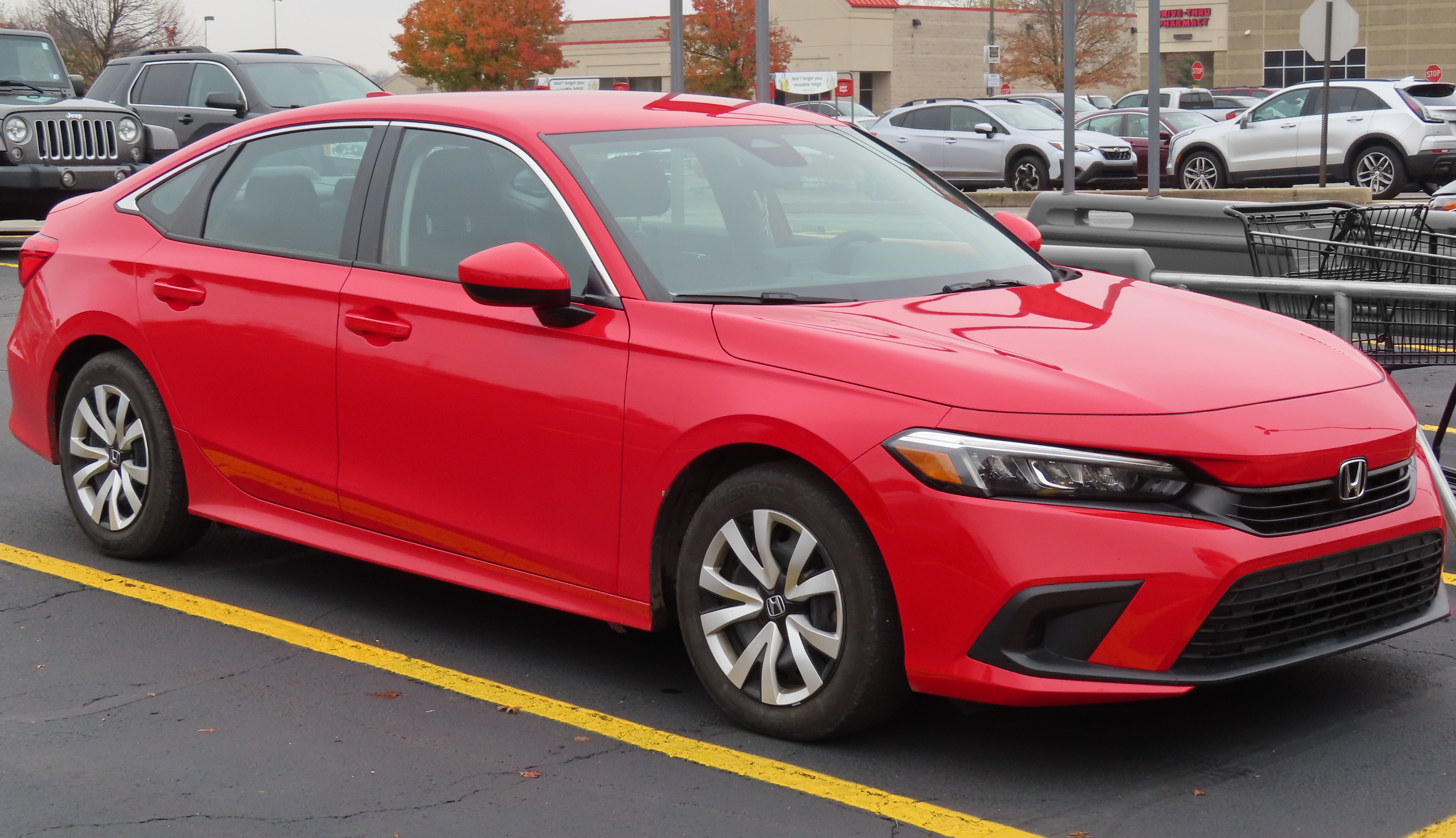
The Honda Civic is a small car that many people like because it's reliable and good on gas. It's been around for a long time and has many different versions.
Spark plugs are small parts in a car's engine that help start the engine by creating a spark. They need to be changed sometimes to keep the engine working well.
An air filter helps keep your car's engine clean by blocking dirt and dust. There are different kinds, some you can wash and reuse, while others need to be replaced.
Car
John Deere 2520
The John Deere 2520 is a small tractor that can help with farming and yard work. It's powered by diesel fuel, which is different from regular gasoline.
Justice Brothers makes special products that help clean car engines and fuel systems, making them run better.
LIVE
Welcome to the Under the Hood Show podcast. If you haven't checked us out on our YouTube
channel or seen our Facebook live videos, we'd love for you to go check us out there.
Who brings us the Under the Hood Show podcast?
Like Berkeley One Classics, your key to collector car insurance.
And road ready wheels. Replica OEM wheels add huge savings. Use the offer code hoodie
for even more. And by car dash part, over 200 million used parts ready to ship to you
fast.
Thanks for listening to the Under the Hood Show podcast and subscribing to the podcast
and downloading the podcast and disseminating the podcast amongst your loved ones and your
not so loved ones. Your brother, you know, you're in-laws, I mean, they're fine.
Thanks for all of you that have, uh, subscribed them to, yeah, but you know, they're fine.
And don't forget, yeah, YouTube and Facebook.
Thanks for subscribing to that. The numbers keep going up. I love it.
Here is the Under the Hood Show podcast.
This is Under the Hood.
Welcome to the Under the Hood Show. We are glad to have you with us. Russ Evans is here
to answer your automotive questions.
Thanks for joining us under the hood.
Shannon Nordstrom is here to do the same.
Welcome hoodies. Thanks for tuning in so we can help you tune up.
I realize I make motions towards you guys when I introduce you and when I introduce
you. So now I'm going to do that to me too.
I'm Chris Carter here to answer your calls at 866-594-4150. You can watch the show on
our social media channels.
Welcome to our big, a Greek wedding.
There you go. That's, I like to make the hopa.
Yeah.
And Chris Carter, I'm glad you're here.
Yeah. Thank you.
It's good to see you.
And motions.
Chris Carter.
I have a question for you, a business question.
Oh my.
I got an opportunity for you. No, uh, we talked recently on a show about, uh, you said something
about crushing a car.
Oh.
And, uh, I really have not been able to think about anything else since.
So let me get this one out of my head.
And do you have a, there's in the past, you didn't have a crusher.
You hired a crusher to come in certain times of year.
Is that right? Am I right on that?
Okay. Tell me, do you have a crusher now?
Okay. I will get it right to it.
Okay.
We have on site at our facility, a vehicle crusher, flattener.
Okay.
And we have a baler that, that, uh, compacts it with a radio press and a sideways press.
And those aren't the same.
And it compresses it into a, like a rectangle bail, a cube that I could attach air jets to
at the science museum and you can move a car around by, I'm familiar.
Sure. Yeah.
It's, it's a, it's a cube that's probably three and a half feet by four and a half
feet or something.
And I'd go to the fair and I guess the make and model of the,
Yeah.
Then when they cubed it.
Yeah.
And I think we had cubed bicycles at the Corvette.
And those aren't, those aren't the same machine?
Absolutely not.
And the machines that are here currently, we do not own.
Okay.
We contract with a gentleman that has had a piece of equipment at our facility for well
over 20 years.
Okay.
He is also contracted with one of the steel mills that has a shredder.
And so it's a co-op, there's a big cooperative effort there.
I know that I'm giving up dollars to let them have that piece of the business that
they take out of it, but I do not own that equipment and that can be equipment that
is challenging.
If you, if you don't have a dedicated operator to that kind of equipment,
which I've never, our, okay, I'm, I'm rambling a little bit here.
For what we do at Nordstrom's scrap metal is very important to us, but it is a
single digit percentage of our overall revenue.
Gotcha.
Okay.
So I know that I could dig into scrap metal and potentially generate more profit in
the end, but it's not the priority for us based on the way the flow of, of revenue
comes into our company.
Okay.
So we've made a choice over the years to work with good partners, let them have their
piece.
They are able to leave equipment here that we are generating material for them every
single day.
So when they're out doing other jobs, they can always come back to our place and they
have items ready to crush because like at our self-service, we're constantly pulling
cars out of the self-service and switching them out.
So we're generating material for them to cube all the time.
The cube or the Baylor for the operator, the tier works really good for him because
it cuts down on some of his transportation challenges.
They can make the cubes and put a similar amount of weight into a, um, like a belly
dump, but it's, you know, type trailer and they don't have as many challenges as they
do loading it.
They can load that load so much quicker.
Right.
He has beautiful trailers that have stacking accordion sides that cover up the sides.
So when our crushed cars go down the road, you'd never know, you'd never know, but to
get that operation done and to ratchet those cars tight and get all the little pieces that
are sticking out pushed in so that you can run those sides back.
It takes, it's a, it's an art and it takes time and that's really, really expensive trailers.
And so they can turn more loads and well, it's not so much loads.
They can turn more tons material doing it the way they're doing it.
And also they can clean up a lot easier with a Baylor than a crusher.
When you have a crusher, it works great.
You can stick things inside the cars and you can use it, you know, for your cleanup, because
you've always got broken pieces, shred pieces that have come off of wrecks with the Baylor.
They can grapple that stuff up and put it in there and it just kind of all gets compacted
into that cube a lot easier.
They just throw it in the hopper.
And so that works a lot better.
My friends that are, are deep in the weeds on scrap, like when we went to Europe and
toured, they have nibblers or I guess there's one way to put them, but they're, they're
basically a machine that allows them to hold the car in place.
And then off the end of an excavator, they have like a jaw or a, a pincher that they
can just, that operator is so handy.
He can rip out a wiring harness out of the dash.
He can push down and pull the wiring harness out of the dash to get more copper.
He can rip the engine out of the vehicle so they can put the cast iron over in a, a
separate place.
It's basically holding the car and just ripping stuff out of it and so that they can
separate metals and, and, and increase their overall return on the vehicle by getting the
metal separated versus when you go down into a cube or a flattener, you're, once again,
you're compromising a little bit for ease of, in time of, of processing.
But when that goes to the shredder and it gets pulverized and it's coming out, they're
using a, a series of air pressure and magnetics and probably there's just lots of different
things going on when it comes out the shredder to separate those different, different metals
that are in the car and the shred material that doesn't get recycled.
And that is where they're winning is because they're able to say, oh, we got this aluminum
over here.
We got this cast over here.
You know, they've got these different properties of metals.
Here's the copper that we got out of here.
And, and that's the difference between the level of, of processing you do on your scrap
vehicle.
So I went way too far with your question.
Not at all.
But I have two follow up questions that I want to ask after we talk to Mike.
Sounds good.
All right.
Let's talk to Mike.
You're on the end of the hood show.
What can we do for you?
Hi, I got a question about batteries.
I pick up just sitting the battery is 12.2 volts and it seems like it's pretty weak sometimes.
Is that, should that be replaced?
No, that's a, that's normal.
That's about a normal voltage for that.
I mean, it's tiny bit low, but you need to use a battery tester and find out what the
battery state is that deep, not just, uh, right.
Just because you have 12.2 to 12.6 volts does not mean that you have 800 cold cranking
amps or so that's needed to crank that vehicle.
You might have a hundred cold cranking amps and that is a weak battery that needs to be
replaced.
So when you use a tester to find out what the cold cranking amps are, that'll determine
whether you need a new battery for the vehicle or not.
Does that tester change?
It's, is it the same tester, whether the place sells batteries as a main business or not?
Yeah.
You know what I'm getting at.
Conspiracy theories.
Well, come on.
I mean, you know what I mean.
If I, if I go into the parts store and say, Hey, can you test this?
Are they giving me the same test as if I bring it to you?
Yeah.
I think it would, it would be more of the operator than the piece of equipment.
I don't even know how you'd make a piece of equipment to fake it.
You, I suppose you could.
There's probably some.
Well, I'm not insinuating that there is.
No, I remember when we used to have a alternator tester on site and we got all excited to have
this alternator tester and our assistant manager, Benji, he's always wanted to be a contrarian
and think about things that's just a little bit different.
And we were failing a ton of alternators.
We do the test and we do, and this is a similar tester that they had at the parts stores.
I mean, a good friend of ours sold it to us because he had one at their parts store.
And eventually, and I'm not meeting this with any malice, eventually between our
combination of not probably hooking the plugins upright or maybe not having the right lead on
it compared to the one you're supposed to use for that particular alternator.
We were failing a lot of alternators and we eventually decided, all right,
here's our failure rate after we bought the tester.
And here's our failure rate before we had the tester with customers.
We had a less failure rate before we bought the tester.
And it was just a combination of human errors, I believe, that was causing us to get those results.
And so the alternators, we'd sell them to a customer and or the shop would put them on and
we'd tell the guys up there, hey, this should be good.
This car drove to the accident and it's got 12,000 miles on it.
Wrecked in the back end, what's wrong with this alternator?
And it would work just fine.
And so there is something to that.
But not with a battery, huge clamps on there and hit the button.
Yeah, it's pretty.
So, Mike, you just go get a test.
It might be fine, but that will be easy to detect.
Mike, thanks very much for the call.
Good luck.
All right, here's my two follow-ups quick.
All right.
That shredder that you were talking about, is that anywhere near us geographically?
And can you?
There's one an hour and a half away.
The shredder.
Can we maybe someday just go on a field trip?
And two, the Cuber, that's got like a security code on it or something, right?
Cuber.
It's got a lot of something.
There's a process that I don't know.
There's a lock on the cab.
There's a little cab and there's a lock on there.
Yes, right out back if you want to see it.
I do.
I really do.
866-594-4150.
That's the number to reach us here at the end of the hood show.
Let's talk to Brad.
You're on the end of the hood show.
Brad, what can we do for you?
You know, I have a 99 Jeep Grand Cherokee right-hand drive.
I felt a couple weeks ago about the scanner wouldn't recognize my VIN number.
And you said that it wouldn't matter if it was from Japan or not.
Right.
So my mechanic has messed around with his scanner and it says it won't recognize it.
So I went to a different mechanic.
His scanner said the same thing and then I went to a Riley's and their scanner said
the same thing.
It won't recognize the VIN.
But if I type the VIN in on the computer just on a VIN search,
it comes up with a Jeep Grand Cherokee.
But this is an imported vehicle, Russ.
Not a right-hand drive meal.
It shouldn't matter because that's an international standard.
It's all the same.
But so here's the thing.
You're plug the scanner in and you're saying the scanner won't automatically
ID the car.
No, all of them say they don't recognize the VIN.
Can you put the vehicle in manually and read it?
Type in, it's a, you know, a 1999 with this engine code.
Can you do that and then read it?
Is there a way to type in the VIN?
You don't type the VIN in.
All you do is type in the year, the make and model.
And the engine code, that's it.
And we have that with 20% of all the cars that I try to do.
But how do you know what the engine code is if you can't scan it?
The engine code is on your VIN.
It's right on the, it'll say like the fifth digit is a K or whatever it is.
That's your engine code.
That's what you put in the scanner.
Oh, oh, oh.
I was thinking, I was thinking like you were talking like a code like it was an option.
No, like an L87 if it was a GM or something like that.
You just need the VIN off the dash.
You read that and you just put that in the scanner because most, you know,
especially in 99, we have a lot of cars that will not automatically ID.
A Ford Taurus made in the United States and it said, can't use auto ID.
It says, what year is it?
Oh, it's a 2005.
What engine code is it?
It's a C hit the button and it pops up and now you can scan the car, but it won't auto ID it.
And that's very common for many scanners to do.
And it totally makes sense that if your scanner always does notice it and it doesn't all of a
sudden you would think that's a major issue, but in this case.
Unless you got a car that somebody put on a boat and brought over here that had some
kind of different system in it, which is rare because we get a lot of stuff that comes over
here as long as it's OBD2.
That is an international standard through the Society of Automotive Engineers, correct?
Yeah, it's for everything.
It even works on that.
It's the standard SAEJ, whatever the heck it is.
It even works on the Chinese stuff that they're building over there that we don't have in the
United States.
It's one of those they, oh just a second.
It's one of those that they sell after they used it for like 65,000 and it talks Japanese,
it's all in kilometers, blah, blah, blah.
I don't know if that makes a difference.
That shouldn't have a problem with the OBD2 because I mean we have
postal jeeps that are right hand drive, left hand drive,
Subaru's that are right or left hand drive, they come over.
A lot of stuff's been imported over here and never had an issue.
As long as you can enter it manually, you're fine.
But as far as auto ID, you're probably not going to get it, but you're going to get that on a lot
of just straight American cars built here.
Should he get on Timu and buy a Japanese scanner?
Is there such a thing?
Yeah, there you go.
Not that I've ever seen, which would be weird.
But if the only issue is just trying to get it to ID the make and model and the engine code,
you put that in manually and see all that works.
I think you just got to turn it upside down and put it in because the things on the other side,
it's just flipped.
You got to flip it.
That's a good question.
I'm curious, is the OBD port on the passenger side or the driver's side?
It's usually on the side with the same side.
Oh, I'm asking him.
Where's your port at?
It's on the steering wheel.
Steering wheel.
So it's on the passenger side.
That's fun.
Right hand side, yeah.
It makes sense that they try to put it there, but I didn't know if they still just left it
on the left side.
Brad, thanks very much for the call.
The communication is a protocol, a number protocol.
It's a J protocol, so it's a computer protocol.
It's not a car protocol at all.
It's a computer protocol.
Thanks for clarifying that because I said it was a standard, but that's the protocol number.
Yeah, like a J1934.
You are scanning that protocol like saying, I'm scanning a, you're working on your computer,
how it talks on your desk.
You know, it's all, it's a protocol.
It's not where the car is made.
So if it's got a different protocol, look it up.
So in this case, they all talk like an Apple would be iOS, if that was the protocol in
the car, they all talk that same protocol.
Look up and see what the protocol is.
No comparison to iOS.
So just using that example.
If it's like a J1934 and you're looking at an American car and it's the same thing,
then you're like, oh, it's the same protocol.
But if maybe they had some different protocol, which I don't know why that would be.
But if you can type the, if you can type in the engine code and the year and the body code
manually and read the data or go to generic OBD2 and read the data, there's nothing wrong
with the car, you just need to enter it because the scanner you have doesn't have that VIN
programmed into it because the VIN has to be in every person's software of their scanner.
They put the VIN numbers in for every car made.
And it's probably a situation where if that vehicle, well, the first digit of the VIN will
tell you where it was made.
And they probably still made that Jeep here in the United States and exported it to Japan.
Could have.
Because I don't know that they build Jeeps in Japan.
Good point.
866-594-4150.
Country of origin, first digit would be interesting.
What has caught your attention in the automotive world?
You know, right now, the bigger news that's out there for some was the mad dash
to get to the EV tax credit at September 30th.
There's a lot of people went out and that were interested in EVs that went out and
pushed to make sure they got that done before the deadline where that $7,500 tax credit went away.
And so now that is officially gone.
But I did see and I didn't read the news press releases, but a couple of the pickup manufacturers
can't remember which ones they were.
But anyway, they said we're still doing the tax credit.
Well, read the fine print.
They're not doing, they're not getting a tax credit.
I don't think they're just lowering the price by 7,500 bucks.
Right.
Because you wonder why they couldn't have before.
Well, they just know they're not selling them and so they're trying to keep in the market.
I know like with, when we were looking at the Tesla, they were offering a special lease
that had the $7,500 built into it.
But when you got into the paperwork to look at it, it had nothing to do with the federal tax credit.
It had everything to do with the fact that you were doing a lease
and they were able to absorb $7,500 in there to keep the total cost down.
And so it was a, it was a promotional way of still talking about the $7,500.
Like when they say we'll pay the tax.
Yes.
Yeah.
Yeah, it's, it's, it's in there somewhere.
But this is going to be interesting to see what happens with the market without,
I'm guessing there's going to be a hangover.
Yeah.
Where people are used to being able to get that, there'll be a hangover.
And then I think the secondary thing will be, have they done enough manufacturing and enough
building of the market that they can afford to start lowering list prices?
And whether it coincides with the $7,500 or they actually have done it, I don't know,
because most of the manufacturers are coming out and talking about their,
their EV divisions and they're not profitable.
And so this is going to, I just think it's going to be interesting to watch how that unfolds.
What happens to the resale prices of used now that the $7,500 is not there?
Does, does that, you know, because like I'm watching it on Teslas, they,
they already had a pretty good drop from new to first used market.
Right.
What will that do now?
Just all that's going to be interesting to see what happens with when the hangover
starts going away from the EV tax credit.
So that, that's something that definitely caught my eye and because it's a big,
it's a big deal on the market.
It's a really big deal on the market.
And I, the thing that I keep like big picturing, I stepped back when I read about it is,
it's interesting.
It'll be interesting to see how it shakes out because we know it's going to, I,
I mean, I think it's going to shake out where electric comes in no matter what it's going to
over time.
The question is how fast it does.
Cause like in Europe and in Asia, it's-
When I was on my tours at the one recycling place that I went to in Thames or Thames or
however you say that, they had an amazing facility and they were,
very well equipped for handling a lot of batteries.
It had special containers.
They could side load them in that had ventilation in them.
Cause they're, they're electric.
There's a lot of electric is high, but there was a little hot, you know,
it wasn't all just electric, but there was definitely more of it.
They were having to figure out more things for how they were handling them than we have
had to do yet.
For sure.
The end of the hood show podcast is brought to you by exclusive sponsors like Berkeley One
Classics, celebrating 50 years, your key to collector car insurance.
And by car-part.com with over 200 million parts, find them online at car-part.com.
And by road ready wheels, OEM replica wheels at a huge savings, roadreadywheels.com.
Thanks for listening to the under the hood show podcast.
When you need parts for your car, finding them is half the battle.
And we have a great source for you to find those parts you need at great prices.
If you need parts, whether it be for a brand new car or going back about 20 years, it doesn't
matter.
Check out car-part.com.
It's fast and it's easy.
Over 200 million parts strong all across North America.
Over 4,000 recyclers to choose from, giving you the largest selection available.
Whether it's an engine, transmission, doors, seats or wheels,
you can find them on car-part.com.
We even let you know what parts from other models and years fit your car.
Many recyclers supply pictures of their parts too.
We even have a mobile app.
Search US and Canada or buy from your local independent recycler.
Whichever you choose, buying recycled is good for the environment and good for your wallet.
If you're a repair shop, there is a professional version available for you at no charge.
That's car-part.com.
Car-part.com.
Check it out today.
Hey, it's Chris Carter with Russ Evans and Shannon Nordstrom under the hood.
When you need great coverage for your ride, Berkeley One Classics is here for you.
They'll work with you to help determine the amount of coverage a vehicle like yours should have,
and that coverage is agreed value coverage.
So there's no disagreement on what your vehicle is covered for.
They also have discounts for car club members.
For 50 years, Berkeley One Classics has ensured a wide range of vehicles from sports cars and
rare exotic cars to antique vehicles including cars, trucks, tractors, military vehicles and
motorcycles.
Over 50,000 of them a year.
They give you confidence and your vehicle's protection.
Find Berkeley One Classics on the web at BerkeleyClassics.com.
Get a free quote and find out firsthand what they can save you and how well they can cover
your valuable investment.
It takes just a few minutes using their easy online quote tool.
BerkeleyClassics.com or call 1-800-603-3330.
That's 800-603-3330.
We want to tell you about our partner at Road Ready Wheels.
Road Ready Wheels has the very best aftermarket OEM replica wheels available with a direct fit
of the factory center caps and TPMS sensors so you don't need special caps and sensors.
Simply transfer yours over when you replace the wheel.
With near perfect ratings on Google, Amazon and eBay, consumers like you are extremely
satisfied when it comes to Road Ready Wheels.
Maybe your wheels leak air or maybe you want to upgrade from an old rusty steel wheel.
Road Ready Wheels has both aluminum alloy and new steel wheels to fit many cars on the road today.
They stock thousands of wheels ready to ship and have free returns and shipping.
Plus save 10% more when you use the code hoodie at checkout.
Aftermarket wheels can be very expensive and it's so hard to choose what you want.
With Road Ready Wheels you get an OEM looking wheel that fits like it should but costs much less.
Save money today and get yours at RoadReadyWheels.com.
Special discounts apply for large quantities and dealers.
And they have a special electronic data feed and online portal waiting for you.
Find out more by going to RoadReadyWheels.com where you can use their online vehicle selection tool
to find your Road Ready Wheels today. That's RoadReadyWheels.com.
Welcome back everybody. It's time to get back under the hood with our motor medics.
866-594-4150 that's the number to reach us at the Under the Hood show.
Don't forget you can watch the show on our YouTube channel.
If you subscribe there and join the Hoodie Fan Club at UnderTheHoodShow.com you could win a hoodie.
Like David Otterloo, congratulations everybody.
Over at Berkeley One Classic celebrating 50 years of collector car coverage
and Universal Technical Institute, UTI.edu.
Marine Mechanics, Welding, Automotive Repair.
CNC.
About you name it, they got it.
I got to get it. I want to get a CNC machine.
Why don't you just buy one?
I think I'm gonna.
You got a rock tumbler. CNC just seems like that should be the next thing in your version.
I'm gonna start making stuff with it. Like home sweet home signs and
Chris and Carter machine.
The Carter cabin even though we're not in a cabin but that's what I want to make.
Welcome to the cabin sign.
Yeah, yeah.
Y'all have to stop up in our assistant manager Craig. His wife Debbie's gotten all into this
stuff. She's been able to acquire with some program she was at through work,
but she's acquired some pretty nice equipment and can make a lot of things.
Not far from here. Maybe you can get permission to stop in and see what's going on.
All right.
You should just start off with a bedazzler.
And a flowbee.
All right. Have you seen the UV printers?
The UV 3D printers?
Maybe that's my next thing.
I think she might have one.
There's so much.
I know they were talking about it.
Let's go back here. Brad has another question. Brad, you had another question about your Jeep?
Yeah. The feeder core, they said that that might have to get replaced.
And when I was trying to order one, one guy said that it's universal. One guy said it's
right and left. You know, you have to order it right or left.
You happen to know, because when I tried to, I went to different parts houses and
nobody has a right hand option. And I called Rock Auto, their specify right hand drive vehicle.
And they don't even specify a right hand drive in that year. You happen to know.
Well, here's, here's what you got to do. You're going to have to find a picture of one on the
internet and compare it to a picture of a left hand drive, because sometimes they're identical.
If they're a top connection, straight down version with the hoses coming out the front,
but if they're off to the side, no, a lot of times they're different. Sometimes they,
depending on the vehicle, sometimes they'll just flip it over the other direction and they'll
put it down further one way because it's always opposite the steering wheel.
And other times they have a completely different unit, but typically when a company builds two
factory versions, they will use the same core and they'll just mount it the opposite direction.
Instead of the two lines coming out on the right side, they come out on the left side.
You know, meaning you just pull the core out, you flip it over and they come out the other
direction because they don't want to make extra parts for something that's going to be common.
There are certain things they can't get away with. I mean, some of the steering stuff they
have to make for sure. But if they, boy, if they can make it the same, but when you think about it,
if it has any angle to where the outlet is on the heater core, it'd be hard to believe that
they could keep it the same. I suppose if they flipped it, but then the hoses would have to
run in from completely the opposite way too. Yeah, they go on the other side and they use
the same engine. Occasionally they'll have, you know, a different fitting on the engine for
outlets and things like that, but usually not. So on a Jeep like that, they usually have one
fitting on the engine that comes out by the thermostat housing that runs back around to the
heater core and they could point that the other direction easily, different thermostat. But then
the radiator is where that other hose comes back into on most of them. Not sure what this one does.
Does that help you out there, Brad? Gave you the next step.
Would the actuator doors have to be ordered right and left handed into?
That unit is different. The doors are probably the same inside and the motors are probably the
same, but the box is going to be built opposite. The actual housing is going to be 180 degrees off.
They talk to a guy from a radiator shop in Sioux Falls and he said he could just cut it
off and raise it. They could put a new core on them if it's a, if it is a copper core,
if it's two plastic tanks and aluminum, that's a problem. But if it's a full copper radiator,
yeah, radiator shops can do all sorts of miracles. They don't even, they don't care what kind of
cores in it. They just take the thing off the tanks and get a core that fits in that space.
If the heater core is bad, is that, is that accurate? Is it, you know, it's bad, Brad?
Well, the guy thought it was, he thought it was plugged up a
too, too bad that he couldn't have plugged it, but ordering one, I couldn't find a right hand one
anywhere. And everybody says it's because of the pandemic they quit making them.
Sounds like an answer that you could throw out there, but I don't think anybody really knows
that. Right. Right. I mean, who would be the expert on why they didn't make a right hand drive?
An engineer at Jeep. Yeah. They'd have to talk to the right person. But
I like, I like Russell's idea about searching the internet a little bit to look at
what the core looks like in a normal one. Find an image because they'll be,
If there's not a dozen videos on YouTube of right hand drive
Jeeps and some different things, I'd be shocked. They just have the weirdest stuff on there.
It's like, I didn't even know that existed. Brad, thanks very much for the call. Good luck.
This has brought me around on this one. This all makes sense now with the code,
not in the VIN and all of that. And the, I think there's people going at this car and going,
I don't know how to work on it. I've never worked on a right hand. Let me plug in.
That doesn't work. Punt. Exactly. Same with, I mean, I think you're going to owning this car,
Brad. You're going to run into more people who are just going, eh, you can't. It doesn't. I don't.
But that's why he's trying to become his own expert, which that's what we're here for. We're
going to try to help him give, we might not all know these answers, but we're just going to
try to keep the questions pertinent to find out the right answer. Yeah. But doesn't that make
sense that like when you're bringing it to an auto shop and they come out and read it,
the guy comes from behind the counter, he's going to go, eh, it doesn't read it. I don't know what.
The likeliness of that person being an expert on a right hand drive Jeep is slim than none.
Right. Yeah. 866-594-4150. Got a question from the chat here. 2013 Acura ILX and then in parentheses.
Civic. Recently replaced starter due to no starter and spark plugs. It starts now, however,
it takes a couple seconds to start. In the morning, idle is rough. Any ideas?
Oh boy. Hard to start. You got to check your basic tune-up items first. If you got a Civic
and you haven't, you got a rough idle, any Acura ILX, any car you have, if it's got a rough idle,
have you ever checked the tune-up stuff, the basic stuff? Spark plugs, coils.
Well, now it's got starter and plugs. The starter should have nothing to do with it running.
No, the starter. Yeah, right. If it turns, if it's running, it's running.
It starts now, however, it takes a couple seconds to start.
Oh, so he was having a starting problem. Would you read that again?
I'm going to start again. Yeah, let's read that again.
Both of you, look at me. I'm with you. I'm tracking.
2013 Acura ILX recently replaced starter due to no starter and spark plugs.
I don't understand that statement right there.
Recently replaced starter due to no starter. I think they replaced starter and spark plugs,
but if they didn't, it starts now, however, it takes a couple seconds to start.
And in the morning, the idle is rough, any idea. So maybe they just replaced the starter and not
the plugs. Is that what you're getting at? Maybe. Is that what you were getting at that first time
too? Or could be, but it could also be a bigger problem. You can't pin him down.
It could be anything. It could be maybe. Can't read it. Can't read the code. Call me maybe.
No, so if he had a no start, the only reason he would have put a starter in
is because he had a no crank. Otherwise he should have never put a starter in it.
I think the, I think the misprint here is starter. Recently replaced starter due to no start
and spark plugs. I think he replaced the spark plugs too. Maybe he's going to reach at
now that we beat the heck out of this because we can't understand the question.
I was, I was tracking with you, but I was not understanding the question because I,
and we, is it a no crank? No start? Yeah. Or is it a crank? No start?
I'll get out of that one. Here's a different one from the chat.
How do I know if I should replace my Buick's radiator fan or just the control module?
The only information I've found is from you guys. Uh-oh. This is from Jason.
Well, there's some electrical testing here. This is probably a Buick Encore because that's
really the only Buick that has a failed fan that we see. Replace the whole thing.
Durman product sells a complete assembly for that. Yeah. They sell the fan,
it's got the control board, all of it, all in one unit, you know, that just
replace the whole thing because if the, if the control board's bad, it's because the fan's
drawing too many amps and has burned it out. Did some of the old park avenues have a fan
controller too? Yeah, but I, I'll bet you money that's on core. All right. I have one more we can,
we can nail down. What brand of engine air filter do you guys recommend? Are they basically all the
same? Well, our partners would like you to think they're all different, but an air filter, if it
filters air, it's good. I mean, there's different kinds. There's the paper kind and there's the
washable, reusable kind. So, which is basically a filtered gauze, but when you get into paper filters,
you just need to find, you get a good quality one and it depends on how often you're going to
want to change it. How much are your filters now? Anywhere from the, it used to be under 10 bucks,
but typically I'll see them anywhere from about $13 on up to 38 to 40 for a car, like yours,
just a car. But when we get into trucks, diesel trucks can be as high as 120 bucks for a filter.
Okay. Sometimes more. And if you're, if you're a normal person and you're just driving your car,
you don't want to get into the basic filters. Yeah, you don't want to get into any reusable
basic filters, just fine downtown basic filter and usually even every couple years. This viewer
listener was wanting to work on, he had performance and he was putting this thing on a dyno and he's
trying to flow more air through it. Right. You look at intake, you look at, you look at output,
you look at exhaust. I mean, you're trying to flow a bunch of air through a system, but for the,
I would say for 98% of our viewer, viewers, listeners, a standard air filter by any name
brand or maybe even not a name brand is going to be sufficient if you keep an eye on it and
maintain it. If you're driving a lot of gravel roads, you just need to pay attention and switch
it more. We've had some customers that like mail routes that have to change them every two months
because they're, they're affecting performance at that point.
And you'd still, you'd go with the regular. Just put in cheap ones and I tell them here,
look, here's five of them, take it out and replace it every two months.
Because they come in and say, well, the filter's dirty again. You just change it. Is there a
warranty? And I'm like, no. No, it did it. You used it. Good job. You did your job.
866-594-4150. That's the number to reach us here at the end of the hood show.
Let's talk to Matt. You're on the end of the hood show, Matt. What can we do for you?
We've listened to your show now for about a year and we really enjoyed it. And I have a question
about my diesel tractor. I've had a 2010 John Deere 2520 compact
utility tractor I've had for a few years. And it gets seldom used. But I don't really have a lot
of experience with diesel vehicles. This is the only diesel piece of equipment I've ever owned.
And I was reading recently about algae contamination in old diesel fuel.
And so I decided, hey, I've never really changed the fuel filter on this tractor. And so I decided
to check the sediment bowl. And notice what I could only describe as just a little bit of
what looks like algae in the bottom of the sediment bowl. I tend to go ahead and change the
fuel filters, but is there anything I should do to possibly remedy any potential contamination
in the fuel system? I have a question before you answer this question. Having a diesel tractor,
a smaller diesel tractor, that it's the only diesel you've owned and you don't use it very much,
that is about worst case scenario, right? Am I right on that? I mean, not again, this isn't
Matt's problem, but I mean, he's going to have to contend with this. This is about worst case
scenario. Right. Fuel's not going to go through it as often as something that's used every day on
the farm. You've got more of a chance for algae growth in there. People are like, how does anything
live in diesel fuel? Well, it does. There's organisms in the Gulf of America that eat oil.
So when there are leaks and naturally occurring leaks in the bottom, they've adapted and they
eat the oil. I mean, it cleans itself up. The same thing happens with diesel fuel. There are
things in there that it's just weird the way the world is made. You wouldn't think that,
why does God make something that eats oil? Well, it does, probably because we're idiots and we make
it leak, right? So those things happen. Algae and fuel, there are products that treat it. In our
shop, we use a couple of different ones for that. If you've got a professional shop nearby that you
can pick up Justice Brothers, the summer additive, diesel fuel additive, it will kill algae and it
will clean the system. Another product we use is the everyday diesel treat EDT from Hot Shot
Secret and that will do the same thing. Ask your parts counterman at your local John Deere place
and you're definitely going to have one there in Kansas. Plenty of tractors are and that tractor,
they pushed the sale that I remember back in about 09 or so. They really started pushing
those packages for smaller use people that would need them from landscapers to home farmers with
a few acres. I mean, they would sell you the trailer, the tractor and like two attachments and it was,
I can't remember what, 30,000. I mean, they had a package price. I'd see them all over the TV.
They did that for years and they sold a ton of those and there's lots of parts available,
lots of aftermarket stuff available and lots of counter people that are really well versed in.
At our local John Deere dealership in South Dakota here, we've got, there's a lot of them up there on
the lot for sale all the time and they know what they're doing but ask them what they recommend
for that fuel treatment. But I would definitely be using an additive in every tank, not just to
prevent algae, but to keep the system clean and to prevent wear on the pump. In Matt's case,
would you, I mean, right, would you, Matt, when's the last time you had it in for service?
Additive goes in, fuel filter has changed right away. I've always done all the service myself.
I just never really thought about the fuel system that much. Yeah, I would put an additive in there
and change that fuel filter right away. I'd like put the additive in it and run it for,
I'd probably put five hours on it and then I'd put the change of fuel filter.
Maybe I missed this. How modern of a diesel tractor is it?
2010. It's a 25-20, 2010.
It's that little compact. Yeah, so it was made after low, yeah, ultra low software diesel came into
play. I know, but the tractor stuff lagged behind so the fuel treatments I think are very, very important.
Does that help you out there, Matt?
Yeah, so is that something I can just use on every tank or do I need to do anything?
You run it every tank.
Nope, you run that in every single tank, but you need to get that fuel filter changed.
I would, it's going to do a little cleaning when it's running too, so I would put the
filter on, like I said, about five hours after you put it in there.
Clean up a little bit and then.
And then change the fuel filter regularly after that, whatever the hours are stated on that.
Oh yeah. Yeah, there you go. Matt, thanks very much for the call. Good luck.
866-594-4150. Let's talk to Bill. You're on the Under the Hood show, Bill. What can we do for you?
I got a 2019 Chevy 1500. In the display case in the middle,
I can have that set on my audio from my radio station, and then I got on the information
one my miles an hour. All of a sudden, now it starts to go to a multi-channel deal on their
audio and the radio station goes to my information center in between the steering column.
Sounds like a programming error.
And it takes me to go back and put it in the information because it automatically
flips to audio. I manually go back and put it in on the information, put the feedback in,
it'll come back up, then it'll jump right back again to it.
Unless the interface module is going bad.
Yeah. The human interface module.
And they've replaced a few of these and they've done some programming on the 19th.
They had some issues, 1920 and 21. It was they had with over the air programming,
the batteries were going dead when they did certain programming, so they were having to
replace those gateway modules.
I just had to take mine in for programming on my 22 and a half. It's the model year of refresh,
not the same as yours, but we had 22 and a half. It's like a two dollar bill.
They had a problem where when you would, just an annoyance, when you take off out of the garage
in the morning and if you're using the fan on the auto setting, which I believe in quite a bit,
you sure do.
But it would cut the radio out completely as the fan changed speeds.
Yeah.
And so, and it would do the same, I think, if you manually did it, but I never found that out.
Right. Why would you?
Why would I want to find that out?
But so they had to reprogram it and that they had a program update that took care of the problem.
Problem's gone. It was programming.
Did that help you out there, Bill?
Well, I hope so.
Yeah. Well, that would be the question to ask, though.
The interface module, the interface module, do you want to start?
Well, I would ask the dealer, go to the contact the dealership and ask him if they have a bulletin
for the repair of your specific problem because they'll have a list and it'll say,
this issue, program for this, this issue, program for that.
This issue replace human interface module.
No, or this issue, we don't have a clue.
Yeah. No, you're on your own.
That's been out in the market long.
Because you can't do it yourself.
That's been out in the market long enough now.
Now, they should have good information of what the common things are.
They'll have an answer either yes or no.
Right?
Yeah.
And if it's a dealerships, it's not as knowledgeable in that.
Find somebody that's got some good knowledge in that area.
I think that's, isn't that what he's doing now?
I mean, that's why he called us.
No, but we're telling him, but we just don't, we don't have that hands on every day on that.
So, but we've seen these problems, but they've been a combination of different things that go wrong.
Bill, thanks very much for the call.
Good luck.
I wish I would love to get my grandpa in my car now or a new car.
He died, I don't know, a while ago, but up until he died,
like a year before he died, he was still teaching auto mechanics at the Votec.
So he saw it all the way up until then.
I would like to, I wonder what it would be like for him to sit in a car today
and see what they're like.
Cause I mean, vastly different, but he would have seen it progress up to a certain point.
That would have been a neat.
Just all the things going on in the car would just be amazing.
866-594-4150.
Let's see if we can get to Jake quick.
Jake, what do we got?
We got a 2003 Tribal A pickup, D71 5.3.
The first and a half before me for an aftermarket radio in it was a screen.
Now I asked if they did that, the airbag lights on and I got no dash lights.
Did that have something to do with that?
Maybe.
Depends on how they install it.
The dash lights for sure, because often they will take the wire that's the dimmer for the
radio and they'll hook it up as a ground wire and they'll blow that fuse for the dash lights.
So look and see if the fuse for that, there's a tail light fuse and a dash light fuse,
both of them have to be good, make sure that's good.
And then for the other problem with the airbag, you're going to have to plug a scanner into it
and see what it says.
There's nothing in the radio area at all that has anything to do with the airbags.
I'm guessing it says it has a front collision sensor failed,
because almost every one of them did.
That's a super common issue.
They're available at any auto parts store.
You can buy it, bolt it on, it's that simple.
But look for that.
But as far as the radio goes in those dash lights, I bet they just hooked up the wire and blew the
fuse. So if you put another fuse back in there and it pops the fuse right away,
take the radio out, unhook the power and ground wire and make sure you know where they came from
and then see if the fuse works.
If it does, hook the ground to a metal ground and not whatever it was.
Or better yet, put everything back to stock and use a installation kit.
Jake, thanks for the call.
We want to do some after showing.
We got one call coming in.
I'm just going to tell you guys, I'll do what I need to do here,
but I have to take a guy to lunch and be back here by one o'clock.
Is that a euphemism?
I got to take a guy to lunch.
I got to take Eric Solberg for his annual review.
Don't say that on the after show.
No, it's an annual review.
Eric's a great dismantler for us.
I'm ready to go to have lunch with him.
How's his review?
It's going to be good.
Eric, if you're a podcaster and you're listening on our app that we have,
the under the hood show app on either Apple or iPhone, which we've had for,
I don't know, eight years, seven years now.
And there are a number of people that listen that way.
You can listen any other way too on any other device or whatever.
But just if you're specifically listening on that app,
that app is going away in a couple of weeks.
Which one is that the Apple?
The under the hood show app that is on anywhere you find the app itself,
not the podcast that you listen to on iTunes or that app that we made.
50 other places.
Yeah.
Those apps, the place that makes it for us has decided, along with 500 other people,
I think, that they're not going to do apps anymore.
They just said, no, this is podcast wide.
And yes, it's their own personal app.
They said, yeah, we're just not doing it.
It's too much.
Because Apple and Google is starting to be a pain in the butt on this stuff.
Starting to.
Well, and everything's caught up.
On the apps.
Yeah.
So they're just like, no, no, no, we're not going to do this anymore.
Because people get mad when they don't submit the right stuff.
And then there's a new thing.
Oh, every week, it's literally every week.
Oh, this country now has a new thing for things on the app store that you purchase.
For tax rules, you have to comply with this.
Sign this agreement.
Do this form.
And so they just said.
Oh, look at your apps that constantly are being updated.
So they're done.
They just said no more.
Do we know how many people use that app?
There's like over 500 that use that app.
But I don't know.
We know how many downloads we get every week.
They could be listening somewhere else on our system.
But our podcast isn't going anywhere.
It keeps growing every week.
Can we edit the app to put something on there before they take it down?
No.
I'm saying, hey.
No, it's just, it's going away.
If you have it already downloaded, it may,
they said it could work for a while until it doesn't.
And something new that I've noticed too,
apps that are going away, they just say we're going away.
There's no further, because you don't,
generally they're just not necessary.
I don't want people to be confused.
There's so many things that.
It's there.
That's a weird thing.
If you're listening to a show like ours,
it's been around for 35 years, almost 36 years.
And all of a sudden it's not where you listen to it.
Why would you ever think that it's just gone?
You know, it doesn't just go away.
You know, Google it.
It's got to be on 50 other places.
Yeah.
I've had people say, oh, I thought your show wasn't there anymore.
Why?
Well, because I used to listen here and it's not there.
I'm like, well, yeah, that podcast site has been gone for years.
It moved over.
Now it's Google.
Oh, I didn't know that.
Yeah.
Okay.
Well, your show has been playing on my local radio station,
the same show for two years.
Oh, they got rid of the guy who puts the thing in.
All right.
I guess that's it.
We're good, right?
Yep.
All right.
That'll do it for the Under the Hood show.
With Russ Evans, this is Shannon Nortz
from thanking you for tuning into the Nortz from Under the Hood show.
Have a great day and remember PTLA.
The opinions heard on this program,
based on the many years of experience of Russ and Shannon,
are offered for entertainment value only,
and as a guide to your repair needs.
No claim to repair or cause is given or implied.
Always consult with your own certified technician
and follow all safety procedures before attempting any repair.
To be a part of the show, call 866-594-4150.
Find out more by visiting Underthehoodshow.com.
Under the Hood is produced by Prairie House Productions.
All content is the property of Nordstrom's Automotive Incorporated
and may not be used without our permission.
Copyright Nordstrom's Automotive Inc.
About this episode
Listeners dive into the intricacies of automotive repair and maintenance in this episode, with hosts discussing everything from battery testing to the complexities of diesel fuel systems. They tackle listener questions about vehicle issues, including airbag lights, radio malfunctions, and the challenges of working with right-hand drive vehicles. The episode also features insights on the importance of using the right fuel additives for diesel engines and the nuances of aftermarket parts. Engaging anecdotes and practical advice make this episode a valuable resource for DIY mechanics and car enthusiasts alike.