
EVs Win On Lifetime Emissions Again, Chargepoint’s Megawatt Chargers and USA Set For Record Car Sales | 31 Aug 2025
EV News Daily - Technology and Business of EVs
EVs Win On Lifetime Emissions Again, Chargepoint’s Megawatt Chargers and USA Set For Record Car Sales | 31 Aug 2025
EV News Daily - Technology and Business of EVs · Sep 1, 2025
Annotations will appear as you listen
0:00
27:28




LIVE
I didn't realize I was wasting $415 a month until I downloaded RocketMoney.
I thought I had my finances under control until the app laid out all my spending and categorized it for me.
Takeout, shopping, and unused subscriptions were quietly draining my account.
And as a result, my savings took a backseat.
But RocketMoney doesn't just tell you what you're wasting money on, it takes action to save you money.
First, the app looks at your income and monthly expenses,
and calculates how much you can safely spend each day to stay under budget.
RocketMoney also finds and cancels unwanted subscriptions for you,
and even negotiates better rates on your bills, so you have more money in your pocket.
On average, RocketMoney members can save up to $740 a year when using all the app's premium features.
Users love the app with over 186,000 five-star ratings.
It's time to simplify your finances and take control of your money.
Go to rocketmoney.com slash cancel to get started.
Capital One's tech team isn't just talking about multi-agentic AI.
They already deployed one.
It's called Chat Concierge, and it's simplifying car shopping.
Using self-reflection and layered reasoning with live API checks,
it doesn't just help buyers find a car they love.
It helps schedule a test drive, get pre-approved for financing,
and estimate trading value, advanced, intuitive, and deployed.
That's how they stack.
That's technology at Capital One.
The holidays are expensive.
You're paying for gifts, travel, decorations, food,
and before you know it, you've blown way past what you were planning to spend.
Don't start the new year off with bad money vibes.
Download RocketMoney to stay on top of your finances.
The app pulls your income, expenses, and upcoming charges into one place,
so you can get the clearest picture of your money.
It shows how much to set aside for bills,
and how much is safe to spend for the month, so you can spend with confidence.
No guesswork needed.
Get alerts before bills hit, track budgets,
and see every subscription you're paying for.
RocketMoney also finds extra ways to save you money
by canceling subscriptions you're not using and negotiating lower bills for you.
On average, RocketMoney users can save up to $740 a year
when using all the app's premium features.
Start the year off right by taking control of your finances.
Go to rocketmoney.com slash cancel to get started.
That's rocketmoney.com slash cancel.
Rocketmoney.com slash cancel.
Welcome back to EV News Daily.
Coming up today, EV's win on lifetime emissions again.
Charge points, megawatt charges, and the USA sets for record car sales in August.
Plus stay tuned.
Later in the show, I'll tell you why one famous comedian
has had his classic Aston Martin converted to electric power.
Well, good morning, good afternoon, good evening,
wherever you're listening around the world.
Welcome to EV News Daily.
This is your trusted source of EV information.
It is the weekend, Sunday 31st of August.
I'm Martin Lee, and I go through every EV story every day,
so you don't have to.
One little podcast, and you are completely up today.
Patreon supporters get the episode's ad free.
Be like them to get the show's ad free
to fund the podcast, and it's how I earn a living these days, by the way,
and also be part of the EV News Daily community.
Get a Patreon.com slash EV News Daily.
Right, let's start with news of electric vehicles
leading in emissions reductions.
A University of Michigan study in environmental science and technology
found that fully electric vehicles produce much less greenhouse gas
over their lifetime than internal combustion engine vehicles,
or hybrids, or plug-in hybrids.
You've heard this over and over and over again.
It just doesn't seem to be sinking in with certain people.
The study included all stages of a vehicle.
Manufacturing, driving, and disposal.
And regional driving patents as well.
They looked at the United States.
A battery electric vehicle with a 300 mile or 480 kilometer range
creates up to 36% fewer total emissions.
When I say up to 36, I'm not fudging the numbers.
Specifically, they said between 31 and 36% fewer total emissions
than a 50 mile plug-in hybrid.
63 to 65% fewer emissions than a standard mild tame hybrid
like your Toyotas.
And 71 to 73% fewer emissions than a regular ice vehicle.
There's so many of these data points tucked away
inside seven years of research for this podcast.
I'll stick this one on the bottom of the list.
We've seen it over and over again.
Now all the studies, sometimes they'll say how many miles
you've got to drive in an EV before it becomes greener
because there's embedded carbon in how you build
big batteries and things like that.
And the numbers always different around the edges.
I've never ever seen any research that says
it's better to drive a plug-in hybrid or a hybrid.
Bev wins every time.
Bev, by the way, if you're new to the podcast, be EV.
I'm just assuming you know what it means.
Battery electric vehicle.
It's kind of the shorthand that we end up using
for full electric vehicles because EV can stand
for electrified vehicle, which some car makers do use
to try and make their shabby hybrid seem better
than they really are.
So if you're wondering what I mean by Bev,
it's not my friend Beverly, by the way.
It's what we mean by BEV or battery.
Full battery electric vehicle.
Okay, let's move on.
ChargePoint has launched a new DC fast charging system
and this delivers up to 600 kilowatts for passenger EVs
and 3.75 megawatts for heavy duty electric trucks.
Most EVs today can charge, well, up to, say, 350.
There is the new 400 kilowatts DC fast charging Porsche Cayenne
coming soon.
There are some other DC fast charging cars
outside of China that are pretty quick,
but say 270, 300, maybe 350 is kind of the peak
of anything that we can get our hands on.
The CEO of ChargePoint, Rick Wilmer,
says that their new system is built for future EVs
that support more power following trends in China,
where we've seen 800, 900 kilowatt DC fast charging
for just your regular passenger cars.
It's crazy.
Their new express chargers are not just more powerful.
They say they're 30% cheaper to install and operate
than ChargePoint's current DC fast chargers.
They take up 30% less space and the smaller size
means they can be pre-built on a concrete slab.
They're prefabs and they move to the site
by flatbed truck.
The key component is the power block,
a 600 kilowatt cabinet that does both AC to DC
and DC-DC conversion.
According to Wilmer, each block can charge 12 vehicles
at 50 kilowatts.
It would do six vehicles at 100 or four vehicles at 150.
Using three power blocks together,
a site would provide 1.8 megawatts
from a heavy-duty truck pulling in, for instance.
Higher output comes in part from skipping the AC-DC step.
In some cases, not allowing direct DC-DC charging
from micro grids.
One of the reasons, by the way,
I went with the solar-edge system.
It didn't matter that much to me, by the way,
but one of the things with solar-edge
and the optimizers, they're not inverters,
on the back of the panels, they're optimizers,
and then it runs direct to my battery.
And so I generate DC from the sun
and that gets stored as DC in my solar-edge home battery.
So I only ever go through an AC-DC conversion process
or DC-AC when I want to make a cup of tea or something.
And so it's a little bit more efficient.
Solar-edge, perhaps, obviously ago,
they go really big on saying,
you know, it's really the best battery-efficient system
out there.
Like, it's one of the things that I factored into
when I bought the system.
Wasn't a deal breaker.
Does it make a huge amount of difference?
Well, it does save you some losses.
Well, the rollout will start selectively
in the second half of 2026.
The ChargePoint's new hardware,
they're working with Eaton, by the way.
They say they'll also plan a vehicle to everything set up
where power moves between the grid, the EV, and on-site batteries.
Mr. Wilmer's saying it's very elegant with this DC architecture
to move energy around to where it's needed on the site
and then into the fixed battery
and then back to the grid when it's needed by the grid.
Let's move on.
Let's talk about U.S. car sales in August.
I know we've still got a few hours to go
until the end of the month wraps up.
But Cox Automotive have been looking at the month-to-date data so far.
Now, they expect U.S. new vehicle sales.
And we're not specifically EV here.
New vehicle sales for August to be 1.46 million vehicles
up 4% from July and 2.3% on August last year.
EVs are driving the growth, though.
Let's be specific.
In July, new EV sales were 130,000 units in the USA,
up 26% from the month before June
and 20% on July last year.
11 brands had their best EV sales of the year in July
and they're lining up to have another great August.
Cox Automotive expects new vehicle demand growth to slow in Q4,
the end of the EV tax credit,
inventory dropping, prices rising.
Of course, we do have the update though from the IRS
that as long as you have signed the contract
to buy that new EV, you can take delivery any time.
So that would probably be some time in Q4, realistically.
So yeah, I mean, it won't count as a sale.
I suppose, or does it?
I don't know.
I mean, you've got to pay a deposit in Q3,
but the vehicle won't be delivered until Q4.
And obviously Tesla only report deliveries
and so that does provide, it's not great
that the tax credits going away,
but it does provide maybe three months leeway.
I don't see too many EVs having more
than a three month waiting list.
Some popular trims of Teslas
and stuff have been selling out as it were.
Now the Federal Reserve chair, Jerome Powell,
hinted at a possible rate cut in September,
but Cox point out that even if the Fed cuts
rates in September, they only control short-term rates.
Auto loan rates follow the longer-term treasury yields,
like the 10 year yields, and they're not likely to change.
So auto loan rates should fall slowly
as loan performance improves, the economy gets stronger,
and that'll be a big relief for dealers next year
without the EV tax credit.
Now let's talk about media misinformation
hampering UK EV adoption.
If you've seen more headlines recently
that have been strangely anti-EV,
and I say recently, I mean probably the last year to 18 months,
if you've seen stuff about EV sales are falling
and the EV boom is over and some of the carmakers have been,
they went very early with saying,
oh, we're gonna be all EV by pick a date, 20, 28, 20, 30, whatever.
And some of them are changing their timelines
and that's absolutely fine.
All businesses need to do housekeeping, don't they?
EV adoption rates might be different in some parts of the world.
There's not a problem, but the way they get reported
has been extremely negative lately.
And if you thought the same as me,
that actually there's a lot of this going around,
well, someone's actually sat down
and done the hard yards on this.
This is a new piece of analysis.
Great PDF, by the way, I downloaded.
Very many, many pages.
It's an academic piece of research, it's a piece of analysis.
And it looks at specifically the UK's national newspapers.
And they found very high levels of misinformation
about electric vehicles.
Over the last six months, 25% of EV related articles
contained at least one misleading claim.
That's a quarter of all articles being,
well, it's a coin of phrase, fake news.
This comes just over a year after the House of Lords
called misinformation a main barrier to EV adoption
in this country.
The study found misleading statements on several topics.
Many articles claimed UK demand for EVs is shrinking.
It's not.
EV sales are rising.
Others said that EVs cost more,
but refused to talk about ongoing maintenance costs
and running costs and things like that.
That will save you, well, hundreds,
thousands of pounds a year,
depending on the mileage that you do.
This time of year, we're getting to the end of our summer here.
We've certainly had a lot of rain lately.
The last four, five days, it's felt like summer's over.
But still, I haven't paid to fill my EV up day to day.
That couple of long journeys that we did plug into the grid.
But I've been driving for free on the sunshine.
Okay, my panels weren't free.
And so, yeah, we amortized that over the cost.
You know, we're going to be here
because the school system's brilliant.
We love this little house.
Touch wood, fingers crossed.
We're not moving for, who knows, 10, 15 years.
I don't know, like my little girl's three.
And so she's got three years of infant school,
the way we do our school system here.
Three years of infant and then four years of junior school.
And so like, at least seven years, right?
And so we amortized the solar panels
over the cost of that.
It gets factored into the price of the house.
And so, yeah, they're not free,
but charging my car day in, day out
feels like it's free.
And that's great, isn't it?
Some reports suggested EVs are more likely to catch fire than not.
EV fires are 80 times less than a combustion car.
We're just used to combustion cars
setting themselves on fire.
That when it so rarely happens with an EV, it makes the news.
Now, this was done by the University of Oxford.
Simon Cox was the researcher and the report's author.
And he said a lot of this misinformation is
pultery using selective facts or anecdotes
designed to give a false impression.
Stories about someone's EV running out of battery
might have been a true story,
but they use a single story to suggest that all EVs
have very short ranges
and we're all driving around running out of electricity.
Colin Walker is the head of transport
at the Energy and Climate Intelligent Unit.
He said it's important for the public
to get accurate information about electric vehicles,
noting that most EV drivers have positive experiences,
but articles in the news don't reflect this.
Surveys show that more misinformation,
the more they believe, the less likely they would go EV.
This misinformation causes people to miss out
on savings of hundreds of pounds a year.
I've said this like many times on the podcast
over the years.
Apologies if you've heard this speech before,
but I'm really passionate about it.
The type of people who could really do
with an electric car with very, very low running costs
and very low maintenance.
I can't think of the last maintenance I did,
apart from tires.
I think I got a nail in the Polestar's tire.
I can't think of the...
Oh, and the MG had a yearly service schedule.
Thanks, MG.
They did nothing for that.
They did, obviously.
They sent me a video of the underneath of the car
going, your car looks lovely, sir.
Please give us some money,
but you know how to do that for the warranty.
And so, apart from that,
the people that need it most,
safe, reliable transport that's so cheap to run,
day in, day out,
are the people locked into buying cheap,
crappy combustion cars that cost a lot of money
in maintenance to keep going,
that are going to cost a lot of money at the pump.
And these are people who probably economically
as advantaged,
but they're spending money on transport
when if they could get into an EV,
it would make so much of a difference.
And so, this misinformation about EVs being more expensive is,
like, it's really dangerous.
And go and look at some lease prices
and finance deals on EVs versus the combustion cars,
like the equivalent.
Like, go find a Peugeot E308,
you know, and have a look at what it cost to buy
the petrol hybrid version.
You'll be surprised at some of the deals
on the electric cars.
Now, they're cheaper than the petrol ones.
Now, Colin Walker also criticized the mixed messages
in media reports pointing out the one newspapers
claim EV demand is dropping.
Sales figures so the opposite.
Articles say this means the government
will miss their EV sales targets,
but ignoring the rules in those targets,
which are flexible.
The same reports note that when car makers
get more flexibility to meet the targets,
that creates inconsistency.
Walker wanted a warned that as global EV production grows,
the UK, where we export 80% of the cars we make,
by the way,
the UK needs to keep up to protect our car industry.
He concluded that spreading misinformation,
lowers domestic EV demand,
hurting the car industry and jobs as well,
but there's nothing being done about it
apart from little old me making a podcast every day
to try and hopefully let you know
exactly what's going on in the EV industry.
So just to wrap up,
this analysis found that at 38% of articles
were negative, just 26% were positive articles
that they found in the last six months.
And survey show, again, the numbers change on this,
but it's anywhere between 95% and 98% of people
who drive an EV, I'm not going back.
Which is incredible.
Like you ask, I don't know,
someone who used to have an Android phone,
they've now got an iPhone,
you know, would you ever go back to Android?
You're not gonna get 98% of people saying,
no, maybe I will one day, I don't know.
Like, but when it comes to
will you go and drive a petrol car again,
EV drivers are genuinely,
genuinely, no, I'm not doing it.
This is much better.
All right, let's take a break after that.
I was gonna say mini rant.
I don't really do, I'm too old to do rants,
but or maybe I need to be older
to be a proper grumpy old man.
I don't know, but hopefully it wasn't a rant.
We'll talk about Norway and public EV charging costs.
Are they going up or down or just the same?
We'll tell you, stick around back in a moment.
The holidays are expensive.
You're paying for gifts, travel,
decorations, food, and before you know it,
you've blown way past what you were planning to spend.
Don't start the new year off with bad money vibes.
Download rocket money to stay on top of your finances.
The app pulls your income, expenses,
and upcoming charges into one place
so you can get the clearest picture of your money.
It shows how much to set aside for bills
and how much is safe to spend for the month
so you can spend with confidence.
No guesswork needed.
Get alerts before bills hit,
track budgets, and see every subscription
you're paying for.
Rocket money also finds extra ways
to save you money by cancelling subscriptions you're not using
and negotiating lower bills for you.
On average, rocket money users can save up to $740 a year
when using all the app's premium features.
Start the year off right by taking control of your finances.
Go to rocketmoney.com slash cancel to get started.
That's rocketmoney.com slash cancel.
Rocketmoney.com slash cancel.
Design your signature space for less
with the custom order sale at Dania Furniture.
For a limited time, save 15% on your custom order
and choose from an assortment of leathers, fabrics,
and features made to suit your style.
Just visit a local showroom to get started.
Dania Furniture.
We make it simple.
You make it home.
The number one resolution for people last year was to save more money,
but nearly half gave up by February.
Don't let that be you.
Download rocket money to reach your financial goals this year.
Track your spending, cut waste,
and automate savings in one simple app.
Rocket money shows you all your expenses
and categorizes them so you know exactly where your money's going
and where you're overspending.
From there, the app cuts waste
by cancelling your unpaid payment.
The app cuts waste by cancelling your unused subscriptions
and lowering your bills.
No customer service needed.
With that money freed up,
the app will automatically set some cash aside for your goals.
Whether it's an emergency fund, paying off debt,
or saving for vacation, rocket money's got you covered.
Users love the app with over 186,000 five-star ratings.
And on average, users can save up to $740 a year
when using all of the app's premium features.
Make saving money a priority this year.
Go to rocketmoney.com slash cancel to get started.
That's rocketmoney.com slash cancel.
Rocketmoney.com slash cancel.
Well, the holidays have come and gone once again,
but if you've forgotten to get that special someone in your life a gift,
well, Mint Mobile is extending their holiday offer
of half-off unlimited wireless.
So here's the idea.
You get it now.
You call it an early present for next year.
What do you have to lose?
Give it a try at mintmobile.com slash switch.
Limited time, 50% off regular price for new customers,
upfront payment required $45 for three months,
$90 for six months, or $180 for 12-month plan.
Taxes and fees extra, speeds may slow after 50 gigabytes per month
when network is busy.
See terms.
All right, welcome back to the podcast.
Now, let's go to Norway.
Well, I am.
The trip is booked.
I'm going in spring next year to go and check out
how EVs are doing in Norway.
But let's go to Norway and let's talk about the grid there
because one of those things that the newspaper articles
throwing back to our previous segment talk about,
one of the common, I don't know, things they hit EVs with is,
oh, when we all drive EV, the grid's going to melt.
And certainly that's something that somebody in the pub
might have said to you, your crazy uncle who's still on Facebook,
might have said, oh, well, I read, you know, on social media,
that when everyone drives EVs, the grid's going to melt.
Okay, that's good.
Let's stick with that crazy uncle on Facebook.
Let's examine that.
Let's go to a country like Norway that's gone from zero
to 100% EV, I mean 95% or so in July,
but basically all new cars sold EV in Norway now, right?
So in 15 years, they've gone EV, surely the grid has melted, right?
Norwegians are just living in darkness
and eating dirt all the time, right?
Well, no, obviously.
But this is because that's another myth, another fallacy.
According to the Norwegian EV Association,
81% of BEV owners in Norway charge at home overnight.
And each BEV uses about as much as a hot water heater.
Norway generates 157 terawatt hours of electricity every year.
Okay, so now we know that, 157 terawatt hours a year.
They use 138 because they export some electricity.
And BEVs, bearing in mind, Norway is pretty much done.
BEVs use just 1.6 terawatt hours all year long.
If every passenger car in Norway turned electric overnight,
and obviously there's a lot of cars still on the road that are using combustion,
and a lot of those combustion fuels also require electricity by the way to refine,
but either way, if all passengers, I click my fingers and overnight,
they all went BEV, it would use between six and seven terawatt hours
out of a country that generates 157 terawatt hours every single year.
Ah, but what about buses and commercial vehicles?
All right, I can do the math on that.
We'll wrap them in, and that goes to another six to seven terawatt hours.
All of these amounts are tiny compared to Norway's total electricity.
Norway currently has 905,000 BEVs on the road.
About 30% of the car park is electric already,
so a lot of cars still to be replaced.
Electrification rates are 8.1% for small commercial vehicles,
14% for buses, 3% for trucks.
The government wants all new heavy-duty vehicles sold by the end of the decade
to be pure electric, and they're gonna get there,
led by the likes of Volvo and Scania, and guess what?
The grid ain't meltin' down.
The grid's doin' just fine, because BEVs don't melt the grid.
Woo, okay, this has been a good episode for a weekend podcast, hasn't it?
We're getting some stuff straight between us,
but you knew this already and I knew it already,
and that's not to say, by the way,
because I know that we can think about some interesting nuance things.
That's not to say the way you live,
and at the end of your road, or maybe in your town or wherever,
there might need to be some local electrical work going on,
and that's not to say that the grid hasn't,
you know, so here we have the national grid, for instance,
and then we have a bunch of entities around our electricity supply
that they haven't very, very clever people
been thinking about this for a very, very long time.
It's not like they've gone,
oh, we probably should have had a meeting about this.
They're on it.
They're on it.
Let's move on.
Now, let's talk about public charging costs.
Then the July numbers are out from the AA.
They call it the recharge report showing public charging
is getting cheaper here in the UK.
The average flat rate slow charging
dropped by a penny to 49 pence per kilowatt hour,
and peak slow charging fell by two pence.
These drops follow the recent
off-gem domestic energy price cap reduction,
giving some relief to those using on-street charges.
Home charging, according to the AA's report,
home charging costs on average 26 pence per kilowatt hour.
What?
What are you doing spending 26 pence per kilowatt hour
charging at home if you're not on Octopus Intelligent Go,
and I've got a friend's link somewhere,
somewhere, probably I haven't been on Twitter for years,
but it's probably pinned still to the top of my Twitter feed
with my referral link to Octopus.
So how are you spending 26 pence on home charging?
Gosh, whoever you go with,
and I'm with Octopus, they sponsor the podcast,
then please don't pay more than seven pence
for most of your EV charging.
Now, key charging rates, slow charging about 50p,
fast charging 62, rapid charging,
which is anything under 150 is 74,
and ultra rapid 78.
Yes, there are many of my American listeners going,
you pay 78 pence a unit.
For yes, we do.
Yes, it's a lot of money to have electricity,
DC fast charging here.
Okay, let's move on.
Porsche is considering simulated gear shifts
and fake engine noises in their EVs
a year after something they weren't going to do it.
The news came from the Drive website,
and Kyle Chiromcha was riding in a Porsche Cayenne EV prototype
alongside the program's manager, Sasha Nielsen,
engineers have recorded the Cayenne's V8 interior
and exterior sounds,
and might use them in electric mode.
Mr. Nielsen said,
we recorded noises from both the sound
it's making on the inside for the interior
and for the outside,
the sound coming out of the exhaust,
explaining they're combining classic V8 sounds
with the EV experience as well.
He also said that in theory,
if you introduce virtual gear shifts,
you could use the whole thing,
depending on how many virtual gears you introduced,
confirming it's in consideration at Porsche.
This was not an official press release,
this was the program manager talking to a journalist
on a ride along in the new Cayenne.
So, whether that was meant to come out or not,
maybe it was presumed to be on or off the record,
I don't know,
but it made the news reports in the Drive anyway.
And so, well, we'll wait and see.
Works really well in the Hyundai cars,
by the way,
they're kind of the virtual shifting,
it's a nice little party trick.
So, EVs are often synonymous with high technology.
Dr. Frank Stephan Wallace, Bentley CEO,
says that digital features,
no matter how advanced,
don't equal luxury.
And I've been saying this for a very long time.
Big screens are not luxurious.
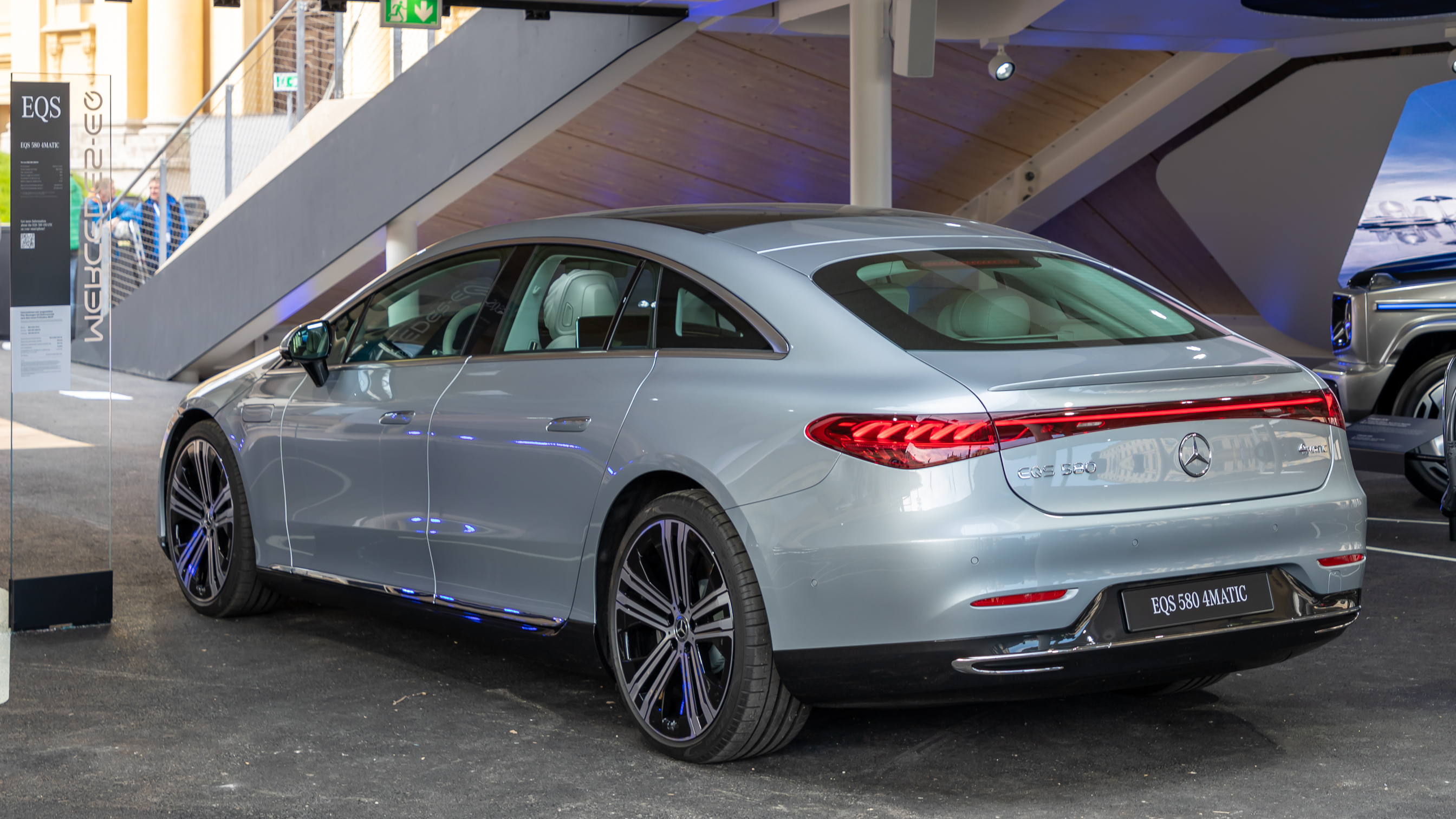
Now, Mercedes-Benz, obviously,
with things like the EQS and the Hyperscreen,
which is like a massive slab of glass,
to me, doesn't feel luxury.
All cars have got to have some screens at some point.
But I don't know, the very, very top end,
high tech doesn't always equal luxury.
I'm hoping this trend of massive screens
goes away at some point,
and the screens become a little more sensibly sized,
and we, I don't know, use a voice or something more.
Speaking to Newsweek, the CEO of Bentley,
said it will be maybe expensive,
but not luxury.
We have the importance of craftsmanship,
comparing luxury cars to art,
saying that digital art hasn't achieved
a breakthrough status.
Digital art is not so successful.
Obviously, real art is.
The auto industry is going digital,
especially for Gen Z and millennials
who make up 70% of luxury spending.
They are looking for things like AI,
virtual reality, the latest technology.
But the CEO of Bentley insisting
that real luxury is about quality and craftsmanship.
He reinforced this view as Bentley
gets ready to launch their first EV.
Probably next year, we think.
Luxury brands rely on these methods.
Market changes, though, in some places
are really obviously causing some concern
in boardrooms around the world.
China shifted the landscape.
Chinese buyers, once big buyers
of Rolls Royces and Bentley's,
are now buying less of those
and going for homegrown EVs
that are full of technology.
So should the Germans copy
the Chinese and go high tech,
or stick to the guns, stick to what they know works,
but those sales numbers in China
are in decline, and so it's a tough one.
Now, summer car rentals are strong
with electric vehicles,
according to the company Liquid Fleet.
They say that they've reported
more customers trying EVs for the first time.
Businesses are going for short-term leases
because of economic uncertainty,
instead of the usual three to six-month agreements.
They're now nine to 15 months.
This covers more seasonal rental peaks as well.
Commercial director there, Martin Potter,
saying the summer rental market is buoyant.
We're supplying vehicles into the sector
at a time when we see EVs growing in interest.
Rentals have been slow to adopt EVs,
but new models with longer ranges
are changing this, according to him.
Now, garages need three key strategies
to stay competitive in the changing EV aftersales market.
Excellent service, creative pricing,
and investment in technology,
according to Fleet Assist.
Their recent analysis shows the cost differences
between combustion and electric minus service parts
for EVs are 18% cheaper than combustion.
EV fluids are 70% less expensive.
EV parts are 58% cheaper.
As more EVs are adopted,
service maintenance and repair businesses
face lower values for EV work.
This happens while costs like higher wages,
rising property rents,
and the need for specialist training are all increasing.
And finally, let's talk about the famous
comedian Jimmy Carr.
He has a classic Aston Martin DB6,
and he's had it converted by Electrogenic,
the Oxfordshire company turning an Aston Martin DB6
into a fully electric car.
From the outside, entirely original,
but now with no emissions and obviously reliability,
it's much better.
The electric motor is 197 horsepower,
0-66.5 seconds.
It'll do 90 miles an hour,
and that's faster than it used to be.
60 kilowatt-hour battery inside,
150 miles of range it charges on CCS,
and Electrogenics conversions are interesting
because they're all fully reversible.
They don't cut a thing,
they don't weld anything,
and they don't drill anything.
So, if you wanted to return that Aston Martin DB6
to its completely original condition,
you could do.
And again, I've seen, particularly on
things like Reddit forums and social media,
classic car enthusiasts bemoaning electric vehicles,
saying, I'm never going to put,
you know, change my electric,
my classic car to electric.
And firstly, why should you?
Because what's wrong with having an old engine?
If it's your hobby, we have horses still,
but it ride them to work.
But also if you do, then this company say,
it's fully reversible.
Modern features include one-pedal driving,
regen braking,
and they also make electric conversion kits
for classic Land Rover defenders,
Jagi types, even DeLorean's and Mini's.
They use full in-house CAD modeling
and their own engineering as well.
That's a very, very cool thing to do.
If you can afford it, Jimmy Carr's
enormously successful.
I think you can afford it.
And that's your podcast for today.
Thanks for listening,
and thanks to our premium partners,
Porsche of the Village in Cincinnati,
Audi of Cincinnati,
East and Volvo cars of Cincinnati East,
National Car Charging on the US mainland
and the Low Heart Charge in Hawaii,
and Octopus Electroverse Global Public Charging
made simple with one app and one map.
Have a good one.
See you tomorrow.
And remember, there's no such thing
as a self-charging hybrid.
That's money back every month.
If you're an HVAC technician and a call comes in,
Granger knows that you need a partner
that helps you find the right product,
fast and hassle-free.
And you know that when the first problem of the day
is a clanking blower motor,
there's no need to break a sweat.
With Granger's easy-to-use website and product details,
you're confident you'll soon have
everything humming right along.
Call 1-800-GRANGER,
click Granger.com or just stop by.
Granger, for the ones who get it done.
If you're the purchasing manager
at a manufacturing plant,
you know having a trusted partner
makes all the difference.
That's why hands down,
you count on Granger for auto-reordering.
With on-time restocks,
your team will have the cut-resistant gloves
they need at the start of their shift.
And you can end your day knowing
they've got safety well in hand.
Call 1-800-GRANGER,
click Granger.com or just stop by.
Granger, for the ones who get it done.
If you're the purchasing manager
at a manufacturing plant,
you know having a trusted partner
makes all the difference.
That's why hands down,
you count on Granger for auto-reordering.
With on-time restocks,
your team will have the cut-resistant gloves
they need at the start of their shift.
And you can end your day knowing
they've got safety well in hand.
Call 1-800-GRANGER,
click Granger.com or just stop by.
Granger, for the ones who get it done.
If you're the purchasing manager
at a manufacturing plant,
you know having a trusted partner
makes all the difference.
That's why hands down,
you count on Granger for auto-reordering.
With on-time restocks,
your team will have the cut-resistant gloves
they need at the start of their shift.
And you can end your day knowing
they've got safety well in hand.
Call 1-800-GRANGER,
click Granger.com or just stop by.
Granger, for the ones who get it done.
About this episode
Electric vehicles are once again shown to have lower lifetime emissions compared to traditional vehicles, with a recent study revealing up to 73% fewer emissions for battery electric vehicles. ChargePoint introduces powerful new DC fast chargers, and the U.S. is on track for record car sales, driven largely by EV demand. The episode also tackles misinformation affecting EV adoption in the UK and discusses comedian Jimmy Carr's conversion of a classic Aston Martin to electric. Insights on public charging costs and the future of luxury EVs round out the discussion.
Original notes
Can you help me make more podcasts? Consider supporting me on Patreon as the service is 100% funded by you: https://EVne.ws/patreon
You can read all the latest news on the blog here: https://EVne.ws/blog
Subscribe for free and listen to the podcast on audio platforms:
➤ Apple: https://EVne.ws/apple
➤ YouTube Music: https://EVne.ws/youtubemusic
➤ Spotify: https://EVne.ws/spotify
➤ TuneIn: https://EVne.ws/tunein
➤ iHeart: https://EVne.ws/iheart
ELECTRIC VEHICLES LEAD IN EMISSIONS REDUCTION https://evne.ws/46gJILu
CHARGEPOINT UNVEILS 3.75 MW ULTRA-FAST EV CHARGERS https://evne.ws/41yCTlU
U.S. AUGUST NEW-CAR SALES RISE AS EVS SURGE https://evne.ws/4n630sz
MEDIA MISINFORMATION HAMPERS UK EV ADOPTION https://evne.ws/46fQykj
NORWAY’S 94% EV ADOPTION HASN’T MELTED GRID https://evne.ws/45KakUY
PUBLIC EV CHARGING COSTS SHOW MIXED CHANGES https://evne.ws/4pftzh0
PORSCHE CONSIDERS VIRTUAL GEAR SHIFTING FOR EVS https://evne.ws/3UPKDw2
BENTLEY CEO SAYS CRAFTSMANSHIP, NOT DIGITAL TECH, DEFINES LUXURY EVS https://evne.ws/4mH4eLh
SUMMER RENTAL DEMAND BOOSTS EV TRIALS https://evne.ws/41tRKhn
SURVIVING THE EV AFTERSALES TRANSITION https://evne.ws/4oZSg0L
CLASSIC ASTON MARTIN DB6 CONVERTED TO ELECTRIC https://evne.ws/46eOxVE
You can read all the latest news on the blog here: https://EVne.ws/blog
Subscribe for free and listen to the podcast on audio platforms:
➤ Apple: https://EVne.ws/apple
➤ YouTube Music: https://EVne.ws/youtubemusic
➤ Spotify: https://EVne.ws/spotify
➤ TuneIn: https://EVne.ws/tunein
➤ iHeart: https://EVne.ws/iheart
ELECTRIC VEHICLES LEAD IN EMISSIONS REDUCTION https://evne.ws/46gJILu
CHARGEPOINT UNVEILS 3.75 MW ULTRA-FAST EV CHARGERS https://evne.ws/41yCTlU
U.S. AUGUST NEW-CAR SALES RISE AS EVS SURGE https://evne.ws/4n630sz
MEDIA MISINFORMATION HAMPERS UK EV ADOPTION https://evne.ws/46fQykj
NORWAY’S 94% EV ADOPTION HASN’T MELTED GRID https://evne.ws/45KakUY
PUBLIC EV CHARGING COSTS SHOW MIXED CHANGES https://evne.ws/4pftzh0
PORSCHE CONSIDERS VIRTUAL GEAR SHIFTING FOR EVS https://evne.ws/3UPKDw2
BENTLEY CEO SAYS CRAFTSMANSHIP, NOT DIGITAL TECH, DEFINES LUXURY EVS https://evne.ws/4mH4eLh
SUMMER RENTAL DEMAND BOOSTS EV TRIALS https://evne.ws/41tRKhn
SURVIVING THE EV AFTERSALES TRANSITION https://evne.ws/4oZSg0L
CLASSIC ASTON MARTIN DB6 CONVERTED TO ELECTRIC https://evne.ws/46eOxVE
0:00
27:28