Restoration is when you fix up an old car to make it look and work like it did when it was new. This can mean painting it, fixing parts, and making sure everything runs well again.
The Ford Bronco is a well-known SUV that started being made in the 1960s. The first version is smaller and great for off-roading, which is why many people love it today.
The Chevy Heavy Duty 3100 is an older pickup truck that many people find attractive and collectible. It's known for being strong and has a classic look that appeals to car enthusiasts.
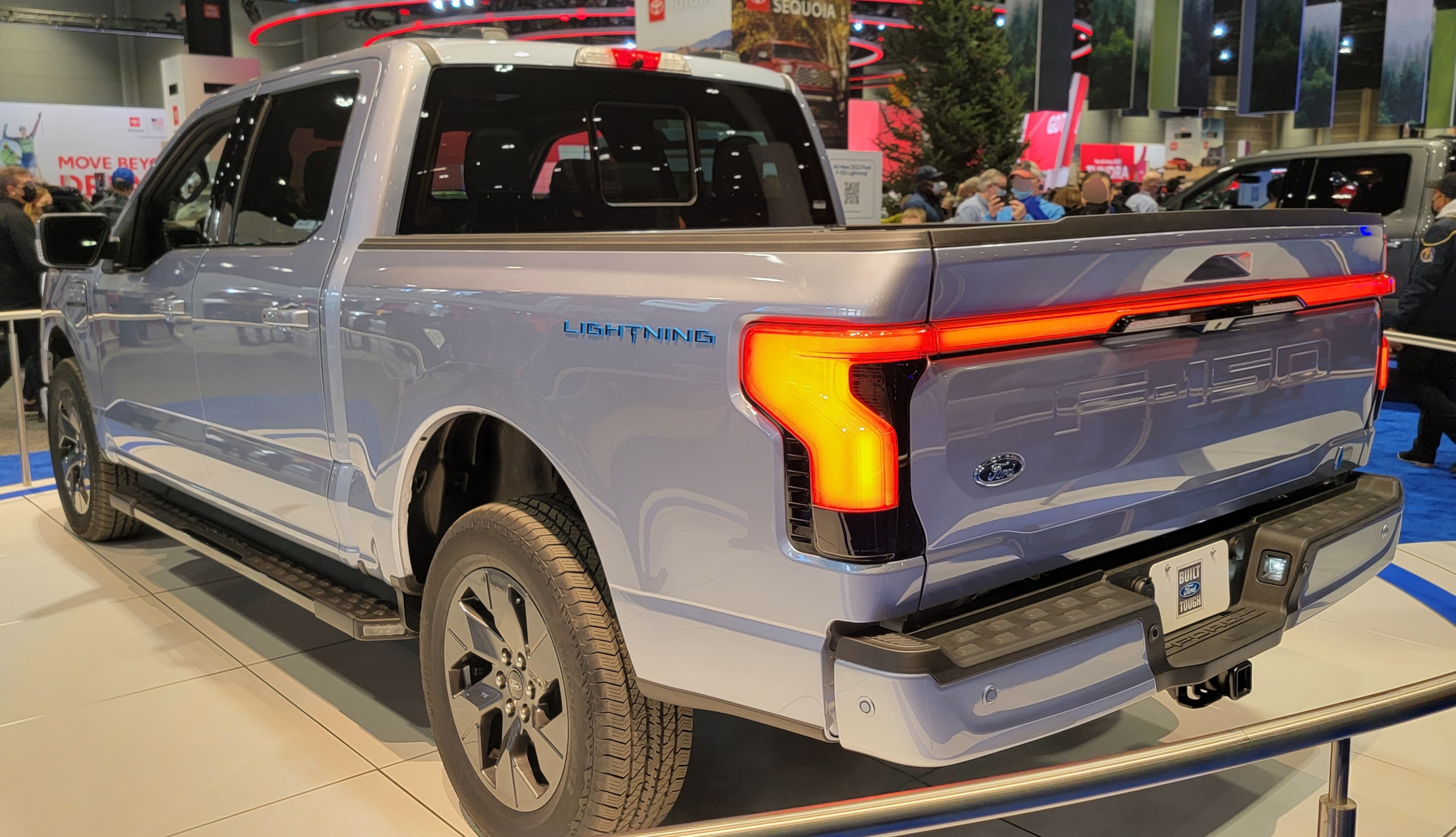
The Ford F-150 Lightning is a new electric truck from Ford. It's meant to be a more eco-friendly version of their popular F-150, which is a well-known pickup truck.
Stellantis is a big car company that makes many different brands of cars. It was created when two companies, Fiat Chrysler and PSA Group, combined their businesses.
A plug-in hybrid is a car that can use both electricity and gasoline. You can charge it by plugging it in, and it can drive on electricity for a while before it needs to use gas.
Tesla charging cables are the cords used to charge Tesla cars. They are usually shorter than the cables used for other electric cars, which can make it hard for some cars to reach the charging station.
Kia is another car company from South Korea that makes different kinds of cars, including electric ones. They are working on making charging easier for electric vehicles.
The Volkswagen ID. Buzz is a new electric version of the classic Volkswagen bus. It's designed to be eco-friendly and has a nostalgic look while using modern electric technology.
The Chrysler Pacifica is a family van that has a lot of room and nice features. It's designed to be comfortable for families traveling together and has lots of tech to make driving easier.
Car
Chevy Tornado
The Chevy Tornado is a small pickup truck made by Chevrolet. It's known for being compact and easy to drive, making it a good choice for people who need a truck but want something smaller.
The Ford Maverick is a small pickup truck made by Ford. It's designed to be affordable and practical, making it a great option for people who need a truck for everyday use.
EPA estimated fuel economy is a number that shows how far a car can go on a gallon of gas. It helps you understand how much gas you might need for a trip.
The Ford Lobo is a tough pickup truck that is popular in Mexico. It's similar to the Ford F-150 and is known for being strong and useful for many tasks.
EcoBoost is a type of engine made by Ford that uses turbocharging to give you more power while using less fuel. It's designed to be efficient and perform well.
Wireless Apple CarPlay and Android Auto let you connect your phone to your car without any wires. You can use apps and features from your phone on the car's screen.
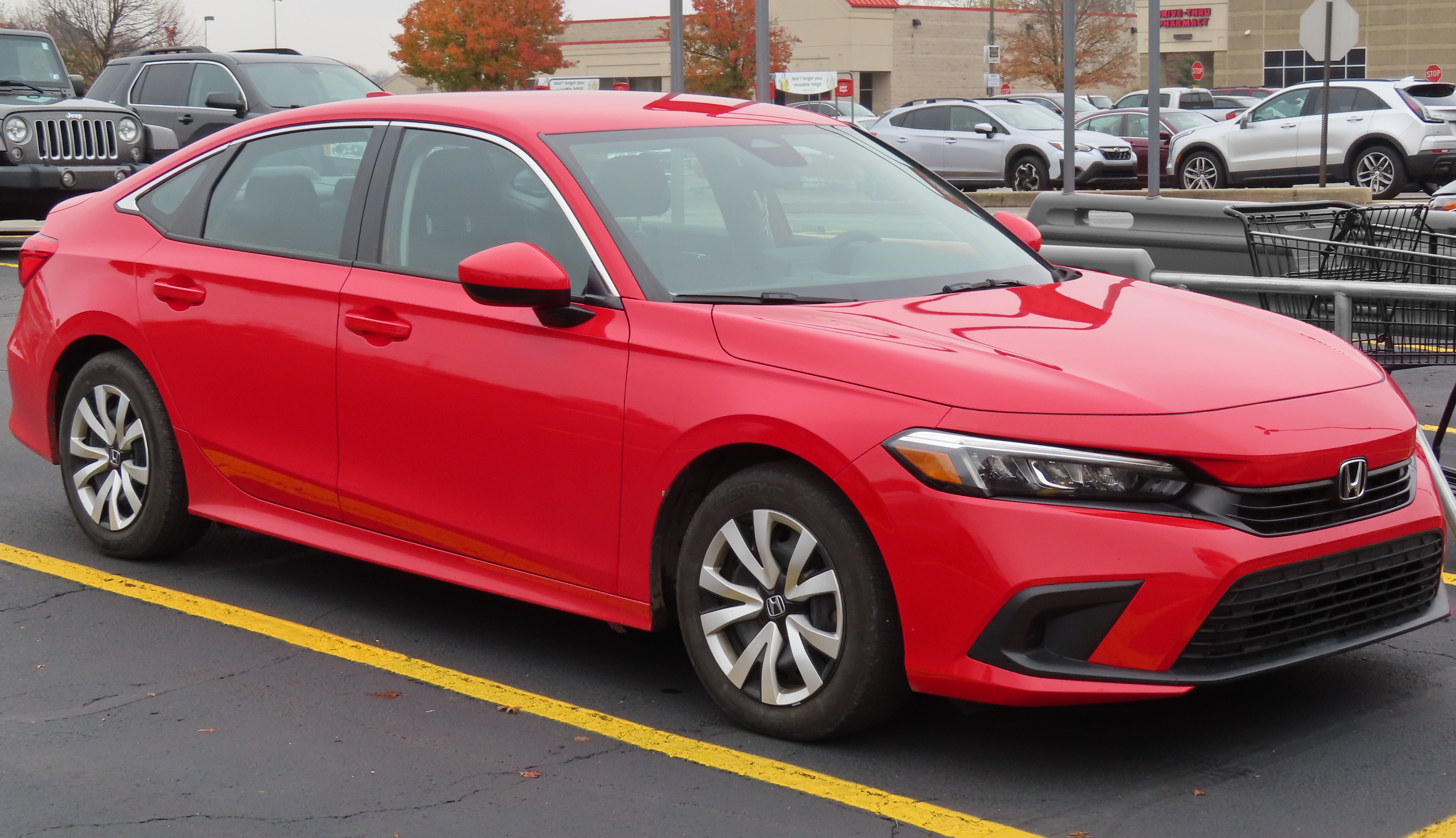
The Honda Civic is a small car that many people like to drive because it's dependable and saves on gas. Some fans even like to customize it to make it look or drive differently.
The Acura Integra is a small car that many people liked in the 1990s. It was known for being fun to drive and was often used to make other cars faster.
Electrifying a car means changing it so that it runs on electricity instead of gasoline. This makes the car cleaner for the environment because it doesn't produce harmful emissions.
The Tesla Model Y is a modern electric SUV that has a lot of space inside and cool tech features. It's popular because it combines being eco-friendly with being fun to drive.
The Ford Mustang is a classic sports car that many people love because it's fast and has a cool look. It's been around for a long time and is often seen as a symbol of American cars.
The Chrysler Aspen is a big SUV that has a lot of room for families and their stuff. It's designed to be comfortable and has many features to help with driving.
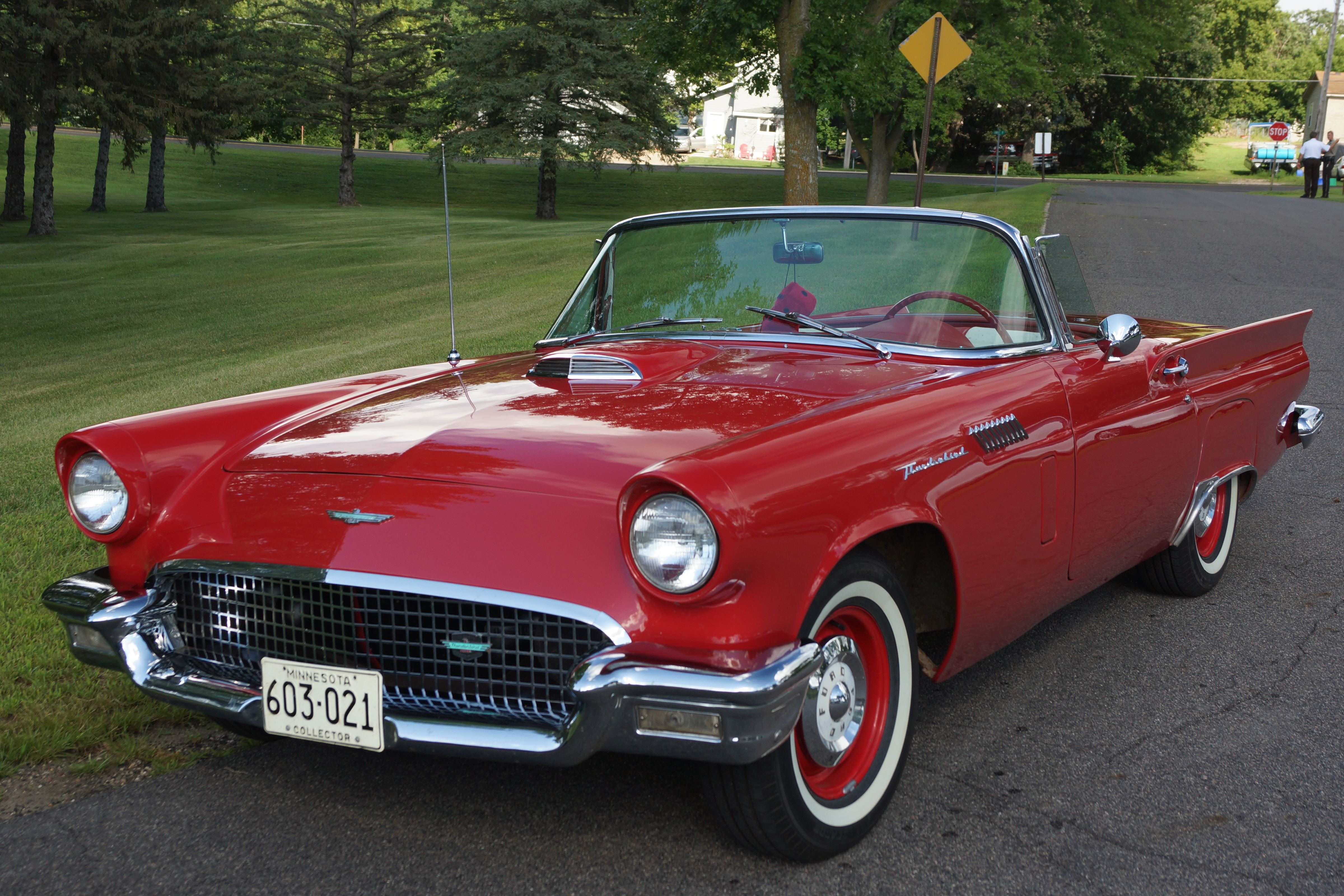
The Ford Thunderbird is a vintage car that many people remember for its stylish look and smooth ride. It was popular in the past and is often seen as a symbol of luxury.
The AMC Pacer is a funny-looking small car from the 1970s that people remember for its unusual shape. It has a special place in car history because of its unique style.
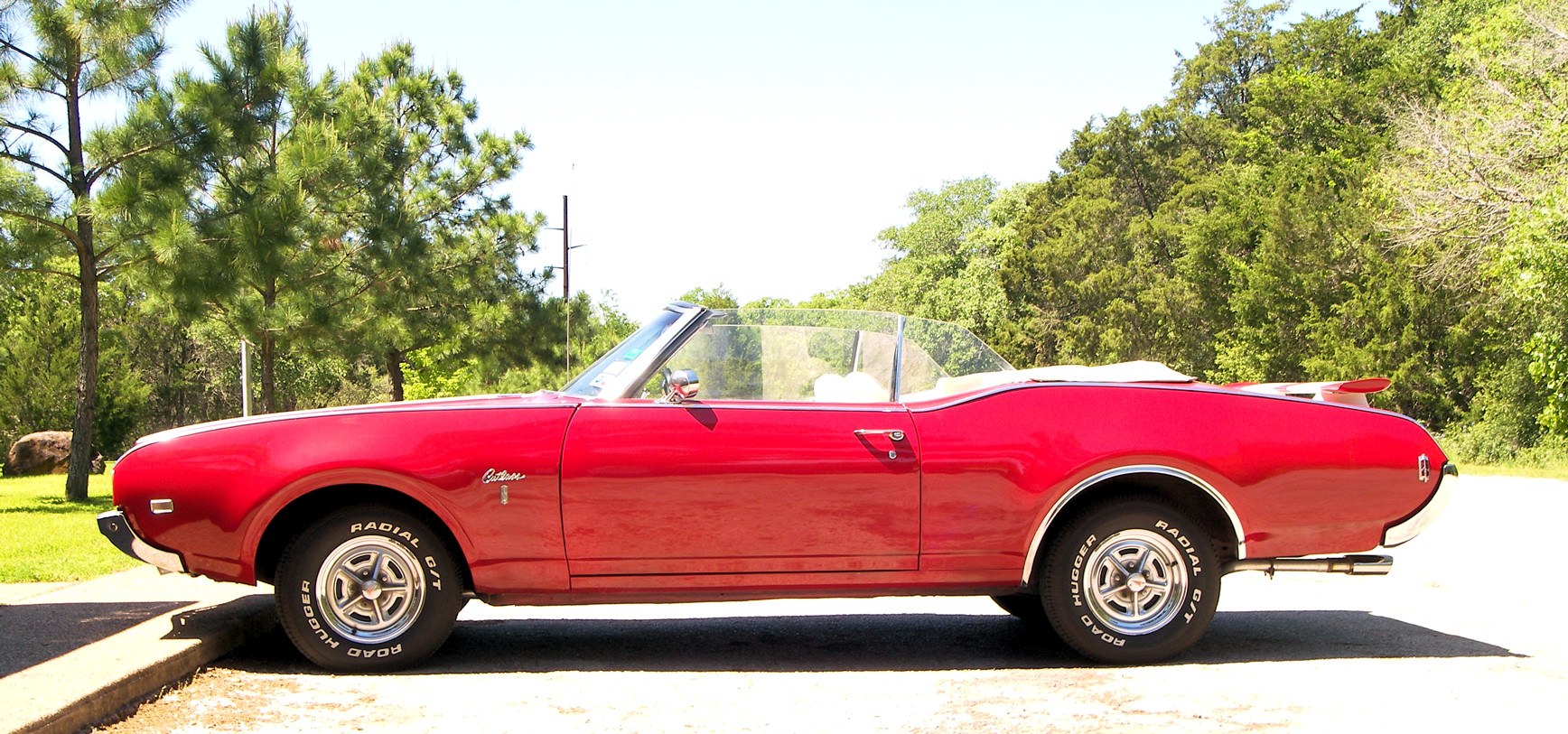
The Oldsmobile Cutlass is a classic car that many people remember because it was very popular and came in different styles. It was known for being dependable.
The Pontiac Fiero is a small sports car from the 1980s that people liked for its different design. It was special because it had the engine in the middle, which is not common for most cars.
The Chevrolet TrailBlazer is a small SUV that has room for passengers and cargo. It's a good choice for people who need a versatile car for everyday use.
The Lucid Gravity is a new electric SUV that promises to be fancy and high-tech. It's designed to be a comfortable and eco-friendly option for people who want a stylish car.
The Lucid Air is a fancy electric car that can go really far on a single charge. It's designed to compete with high-end cars while being better for the environment.
The Nissan Leaf is a car that runs on electricity instead of gas, which is better for the environment. It's a practical choice for people who want to save money on fuel and reduce pollution.
LIVE
Whether you drive a car, need a car, or just occasionally, bummer ride with friends, you've come to the right place. Join Gelan Thomas, they break down everything that's going on in the auto world, new car reviews, shopping tips, driving green, electric cars, classic cars, and plenty of great guests. This is the Consumer Guide Car Stuff Podcast. Alright, this is the Consumer Guide Car Stuff Podcast. I am Tom Appell, publisher of Consumer Guide Automotive.
Thank you for dropping by today. When you have a chance, check us out at ConsumerGuide.com, our 2026 Best Buy Pigs are up there. Plus, what did I just review? The Wagon Air S and my review of the Escalade IQ, that's the electric Cadillac Escalade goes live. It should be live now, I'm behind schedule. But it'll be live by end of day tomorrow. That Giggle, that smirk, that audio smirk, was Jill Simonello, Contributing Editor here at ConsumerGuide.com.
Prolific, freelancer, and North American Car of the Year, juror. Hey, hey, we're getting very close to our last episode of the year. We are super, super close.
So you know what happens, because we don't skip episodes for the holidays, we find new listeners at about this time of the year.
Yeah, because other people are taking hiatuses. No, no hiatus here, so hi and welcome. We appreciate you.
Thanks for joining us this week and next week, next week's special treat, Sam Fiarani is on.
I still don't 100% know what Sam wants to talk about, but I'm excited about it.
He's knowledgeable and he talks about cool things, so I'm not worried.
It's more or less a car guy bucket list, like things you should do.
Okay.
And I'm not necessarily bucket listeners, probably not that intense, but stuff you should do.
Okay.
And I made my own stuff too, so we're good there.
Later in the show, this isn't it. I lost my notes again.
Oh, here we go.
Well, I want to say we're both a little bit out of breath at the moment.
I literally swapped cars at 257, which is three minutes before the show starts.
And the guys pulled up and I was just, you know, I thought we were going to do it during the break.
And they literally pulled up right as I was getting ready to run up the stairs.
And I was like, oh, we're doing this now. Got it.
Okay, so I like swapped the keys and I was like, bye, happy holidays.
Those guys, those guys, that particular group of auto distributor, always early.
Yeah.
They're always early.
Yeah.
And they were like 45 minutes early, have an hour or really.
And they are nice as heck.
They really are.
And every vehicle smells like Windex.
Yeah.
Like it is just spotless.
It's got that just detailed thing going on.
Yes.
Later in the show, we're going to talk to Rob Howard, CEO of Kindred Motorworks.
Yes.
And we're going to talk to Justin Lutty.
So he was converting old cars into electric cars.
Ron Howard's group here is doing a similar thing.
Yes.
Different vehicles.
But they're also selling full restorations of vehicles with gas engines.
Yes.
So mostly focusing on classic Ford Broncos.
Yes.
That's that small first generation of the Broncos.
And they look so good.
So darn compelling.
I love those.
I love those.
As well as micro buses.
I know.
And then an interesting car that I don't fully understand why it's collectible,
it's great looking.
And that's the Chevy Heavy Duty 3100.
But you know what I have to say?
Like I thought that was really clever.
What's that?
The Chevy.
Oh, it's good looking too.
It's super good looking and just very clever.
So we'll talk about that.
But their Facebook page, Kindred Motorworks is worth checking out.
Yep.
And their web page is too.
And this is one of those things.
It's a startup but they're not fly by night.
By any means.
The stuff looks good.
The cars look great.
And they have cars to sell now.
Yes.
All right.
We'll talk more about that later.
A lot of stories and they're all really darn depressing.
Yeah.
No.
I was skimming through my email inbox this morning and saw some stuff coming out from automotive news.
And I was just like, well, well.
I lost my nose but I don't need notes for this.
Two vehicles.
Two very promising electric vehicles.
Dead.
Dead.
The second one's not officially dead but it's probably dead.
It's probably dead.
So the Ford F-150 Lightning.
Yeah.
After a very brief run.
2022.
Yeah.
In 2022.
I think it has a 2022.
Where do we start?
I mean, when they launched that vehicle in 2021.
And there was a big event, Dearborn.
Mm-hmm.
And you could go there and be in the crowd and be excited about it.
And they're like UAW workers everywhere.
And everyone was super excited.
And there was a huge streaming audience.
They're like, yeah.
All right.
A full-size electric pickup.
This is interesting.
Two days after the launch.
Not the launch but the official reveal.
Mm-hmm.
Two days after that.
Jim Farley CEO of Ford announced that they had nearly 45,000 hand razors.
Right.
People who put down a refundable $100 deposit.
By December, they had 200,000 hand razors.
Since that time, they have not sold 100,000.
No.
Well, you know, so here's the thing.
And I may be a party of one here.
But I never thought that this was a good idea.
It was a great truck.
I thought it was an interesting electric vehicle.
But doing a full-size electric truck out of the gate was just.
I found my notes.
Not the best idea.
Because truck guys who are going to buy a truck that looks like a truck and, you know, should do truck things.
And it didn't have the range.
And it didn't have necessarily the capability with the range to do truck things.
It did not.
It did not.
It was the truck I drove was supposed to have 320 miles of range.
Yeah.
I only got 160 miles out of it.
I had, I had not the range.
I had far better experiences with that.
I think the problem with range was towing.
Yeah.
And this was true of everything.
This is true of the Rivian.
Yeah.
This is true of the side of the truck.
But people aren't necessarily going to tow with the Rivian.
The Rivian is positioned as a lifestyle truck.
And I think that if Ford had positioned this more as a lifestyle truck instead of a work truck,
it would have been much more successful.
Maybe, and that was a point I was just going to get to.
I'm not entirely sure that people who bought into this early weren't lifestyle people.
Yeah.
I think that people doing the business thing are going to be a little bit more cautious about it.
But I'm still surprised by the terrible sales.
I had a chart here someplace that I lost.
You just cannot find your notes today.
But one of the interesting thing was that it didn't sell terribly.
Like compared to the cyber truck or the Rivian, it's selling better.
Compared to electric trucks, yes.
But on the other hand, as a percentage of total F-series sales,
Dysmal.
Yes.
Dysmal.
And the best years last year, this was about 35,000.
Looks like this year's going to sell 25,000.
So, not dropping the bucket stuff.
No.
But also not enough to open a brand new factory like they were going to be.
And to keep going.
Yeah.
So the plan seems to be to skip a couple of years.
And then for the 2028 model year maybe they've got a new vehicle coming out that will be an extended range electric vehicle.
So does this mean that Stellantis was right?
With their RAM revolution and their extended range vehicle.
They didn't come out with an electric truck.
Didn't come out with an electric truck.
Didn't come out with an electric truck.
Well, there were steps to that.
They didn't come out with an electric truck with high range.
Then they didn't come out with the electric truck at all.
And then they're going to rename their RAM structure to the RAM rev.
To the RAM rev.
So that's where they're at.
And here's my question to you about that.
So now instead of electric pickups, both Stellantis and Ford have committed to these extended range electric.
And for people who don't know where we're talking about.
If you think plug-in hybrid you're really, really close.
Yeah.
It's just a slightly different mechanical situation.
But they are basically plug-in hybrids generally with more range.
And there's some things that are for added efficiency.
But we should probably have someone come on one day and just talk about how those work.
Yes.
And that's one of those things I say that I will not follow up on.
So hashtag Jill needs to follow up on that.
Got it.
Exactly.
Exactly.
But I'm wondering if there's actually a market there for that.
I think there is because if a truck can do truck things and you don't have to worry.
So like another problem with an electric truck is if you're going to do truck things like tow with it.
The current electric infrastructure is not set up to do a pull-through.
So like then you have to ditch your trailer or whatever it is you're towing in the parking lot.
Then go hook up to your electric thing.
So with this you can charge at home.
You can fill the gas tank with your extended range, whatever.
And then you don't need to rely on the electric infrastructure.
So yeah, I think it has potential to work.
The infrastructure does not support truckings.
So trucking needs to support the infrastructure.
And with that I mean you probably need a relatively expensive cable and extender cable.
Which I don't think are made yet.
We have adapters.
Yeah, but even so like if you don't have a pull-through like what are you going to do with your trailer when you pull up to the you know it's going to stick out into the parking lot?
Who were we just talking to about this?
And this was about people with regular, not regular, but non pickup truck electric vehicles pulling up to Tesla.
And that the Tesla charging cables are too short.
Oh yeah, yeah.
And that's the thing that needs to be fixed.
And for people who don't know, Tesla's are designed to be backed up into the charging station and they need a very short cable.
Right.
And so now with all of the other automakers going next.
So Hyundai, you know, I think Ford, Kia, Stellantis, they've all got, you know, agreed to move to North American charging standard.
And they all have ports in very odd locations.
And they're all different from the back.
Some are on the right.
Some are on the left.
I think by far the best location is front driver side fender.
Okay.
I like that one best.
Okay.
And that can get you pretty close to stuff.
Yeah.
So you're not backing up.
Yeah.
Which you don't want a lot of people doing.
That's fair.
So the F-150 Lightning, we hardly knew you.
About 100,000 of those are going to be built.
Yes.
And that's it.
Future collectible.
Possibly.
It depends how well they're used and beat up.
Right.
Speaking of that, the Volkswagen ID buzz.
Yeah.
Here's a thing that we need to learn.
If journalists are screaming for something, ignore them.
Yeah.
That would be fair.
Brown station wagon with a manual transmission.
Don't do it.
Yeah.
Don't do it.
That's an old Volvo story we have.
I have to retell the Dan Johnston.
Yeah.
That story.
Yeah.
About journalists wanting crazy stuff that no one else will buy.
Yes.
But the ID buzz, Volkswagen's delightfully plucky.
All electric minivan.
Which looks like an old-school Microbus has already been discontinued.
Or put on hiatus.
There's not going to be a 2026 model here.
Yeah.
But there's word coming from dealers.
And I haven't been able to get better source than that.
Just dealers are saying it ain't coming back at all.
Yeah.
And I mean, there were a couple of problems with that.
And we had.
I think there were three problems.
There were two big problems.
So I love the vehicle.
And I think there was a third one that cropped up this year.
But the first two problems were range and price.
The range wasn't as good as people wanted.
And the price was a little bit higher than people were willing to pay.
Well, that was a lot higher.
And while I was being kind.
And I think the third problem was with tariffs coming in.
Like the price has got even higher.
Oh, I wasn't thinking about the tariffs.
Yeah.
I was thinking about the fact that there's really no space.
No storage space behind the third row.
I like the sound.
But it's grocery space.
It's not taking a family on vacation space.
You could not use that vehicle to take a family of six on a week-long vacation.
Well, you wouldn't anyway because the range is abysmal.
Because the range was a problem.
All of this is a current shame because the vehicle was delightful.
It is delightful in so many ways from the colors to the interior features.
The movable center console.
Yes.
It looked great.
It was fun to drive.
It was quick.
The range was actually the range.
Like I was doing pretty good in driving that thing.
There's nothing about that vehicle I didn't like actually dynamically.
But the price was a pain and there was two levels to that price problem.
First, 62K, a lot of money for a minivan.
Yes.
You can get a seriously loaded Cadillac quality luxury Pacifica for less than that money.
Yeah.
I think in hybrid, actually.
Maybe.
I think you can get the plug.
So you can get an awful lot of other minivan for that money.
And the other price point was that at the base price point of $62,000,
you couldn't get the fun colors.
Right.
We restricted the color availability.
Yeah.
And I think if you were drawn to this vehicle.
You want the colors.
You want the day in green or the orange or the yellow.
Yeah.
The bright yellow and the blue.
Yeah.
It's a great color.
You wanted those.
You wanted those.
Your neighbors wanted you to have those.
Yeah.
They brightened up a neighborhood.
They really did.
They made you happy.
And the thing about this that was so tragic too,
and people don't really know this unless you really follow the industry.
And that's that Volkswagen headquarters in Germany doesn't always play ball
with Volkswagen North America.
Right.
And North America wanted, I believe, the short wheelbase version
and less expensive versions.
And none of that made it here.
Yeah.
And there was some really complicated thing about getting the short wheelbase version
and they dragged their feet.
And a lot of the, I think a lot of the interest in the vehicle may have died
in like the three years we waited to get it to the rest shores.
Yeah, I feel like we've been seeing that it auto shows for a really long time.
Yeah.
So that was crazy.
Yeah.
That makes me sad, but it's not entirely unexpected.
Last week we forgot to say happy Hanukkah.
You know what?
And now it's over.
It is last night was the eighth night.
Yeah.
It always dances sometime around Christmas.
Yeah.
And I never quite follow it.
I had it in my notes to wish people happy Hanukkah and then forgot.
But this is the Christmas episode.
Yes.
So Merry Christmas.
Yeah.
I mean, so my husband is Jewish.
And so I could say, you know, happy Christmas.
Uh-huh.
Yeah.
Christmas and Hanukkah.
We celebrate both.
As you should.
Yes.
More stuff.
Yes.
Better food.
Actually, yes.
Speaking of food, and this is 100% off topic.
Okay.
Yesterday was my daughter's birthday.
Happy birthday.
Happy 26 to my kids.
Yes.
And we went to a place called Bombay Chopsticks.
I saw photos on Facebook.
Oh, we've been there before.
Yes.
No, I saw the ones you posted yesterday.
And someone asked me if this was like a, like an Indian Asian fusion thing.
And it's not.
Okay.
It's a restaurant that has two distinct menus, two actual different physical menus.
Mm-hmm.
One Indian, one Chinese.
Here's the thing about that.
The Indian menu is fantastic and pretty traditional.
The Chinese menu is entirely Indian versions of all Chinese things.
Oh, that's funny.
My mother ordered Chop Sui.
I think it was.
And it was red.
Like, that's wrong.
It should not be.
That's wrong.
That's not be.
It was, but it was delicious.
That's, that's good.
So anyway.
Um, I think I want a bet.
You did.
Um, the, the ran mid-sized truck will be called Dakota.
Oh, okay.
I didn't know that was a bet.
So that's the first.
I was talking about the fact that I ate lunch.
No, no, not that.
Actually, I don't think it was much of a bet.
I think it was just a prediction.
I, I was, I, I had hoped they would call it Dakota, but I didn't know,
because like Dodge Dakota rings, but like Ram Dakota doesn't necessarily.
Right.
It's actually a different brand.
And there's never been a ram Dakota.
And so I thought they would do like rampage or something like that.
Yeah.
Which is a perfectly good name.
And a name they already use.
Yeah.
There's history there.
Yeah.
Also, I think rampage is, is used south of the border.
Is that currently Mexico or Brazil?
I think it's Brazil.
Yeah.
So lots of these fun, cool body, not body and frame, unibody, small trucks running around,
south of our border.
Yeah.
They would never pass crash testing.
You.
Um, there was a Chevy tornado too, which is a cool little two door pickup.
All right.
You recently drove the Ford Maverick logo.
I forgot which car we were going to go to.
No, and that's literally the vehicle that I was swapping out three minutes before the show started.
I want to drive that and tell me I'm right.
You were right.
Yeah.
It is a thoroughly enjoyable little truck.
So this, if you're not familiar, you know, the Ford Maverick compact truck from Ford,
the smallest truck that they make, unibody.
I think if you're Mexican, you're confused right now.
Yes, because the Ford F-150 in Mexico is called the logo.
In some trim levels.
Yes.
No, no.
The actual F-150 is called the logo.
Oh, well, I thought there was like a higher end line of the F-150s up there.
No, so to make things even further confusing, they came out in the United States with a Ford F-150
logo this year.
Yes.
Trim in the United States.
And is it the same kind of sporty upgrade?
Uh, I think so.
Yeah.
I'll go back to explaining what this is.
Okay.
So the Maverick compact pickup truck and the logo is a street truck.
We lowered suspension, you know, throttier exhaust, you know, some fun twerk vectoring, you
know, kind of a fun-to-drive vehicle.
I was at the vehicle launch, um, a couple of, probably about six months ago now, and they
actually had us auto crossing this truck, and it was so much fun.
And so this time around, I took a road trip at it, and I was like, okay, it's a fun-to-drive,
but how does it stand the test of time in terms of, you know, driving 400 miles?
And it does really well also in a road trip situation in terms of fuel economy, like highway
fuel economy, EPA estimated is 30, and I was getting 29, which is really good considering
the fact that I drive 70 miles per hour because that's the speed limit on I-65 heading, you
know, to and from Indianapolis.
So fuel economy was good, and the seats were really comfortable, and visibility is really
good.
And you know, it just, it drive, you know, I think in most cases, it is the most, it is
the truck that most people need.
You've got, I want to say to you, like, there are four or five foot bed, you know, so plenty
of space for if you need to go to home depot or the gardeners and, you know, get some
mulch and things like that, but it's still small enough that it fits in tight city spaces,
and it's very maneuverable and just easy to drive.
So the price point is interesting, because there's two lobo's, there's a lobo standard
and a lobo high, they just call it high, is that right?
I was like, which one did I, because I had the, I mean, they didn't make the distinction
on this sticker sheet, it's just the lobo all-wheel drive and it has the 2.0 liter EcoBoost
engine.
So maybe that's the base, but there's a lobo standard that starts around 37 grand and
a lobo high that starts around 43 grand.
43 grand sort of annoys me a lot of money for a maverick, but you get the fun stuff.
Car and driver got the car to 0 to 16, 5.8 seconds, which is pretty quick, and you get
a bunch of fun stuff with it, the lowered suspension, the body, the kit, the blacked
out trim, the LED headlights, special grille, yeah, and this one's interesting, Mach-E steering.
So they took the steering system from the Mach-E to play it here, which is supposed to get
you a tighter, more accurate, sportier-feeling steering system.
So that's cool.
Yeah, and it includes a lot of the high-end features that you like options, like, so the vehicle
I had must be the high option because it was 42,445 as tested, no options.
And you know, and it includes things like wireless charger, the really large infotainment
screen, wireless Apple CarPlay and Android Auto.
And so, you know, it's one of those things, and it has the, I mean, the vehicle I drove
was black, but it had like the black painted roof, so you couldn't tell, but that was, you
know, one of the nice features on it.
And so it just has like all of the things that you, like heated seats, heated steering
wheel.
You know, the things that you would want on a vehicle that is going to be comfortable
in kind of high-end.
I'm hoping these sell well.
I mean, a lot of the car culture that I used to enjoy as a younger man is gone.
Yeah.
But one of the things that came out of the 80s, in the 70s too, but more so the 80s because
it got better engines, were things like the Chevy S10, which was the compact pickup truck.
People were lowering these things, throwing great wheels and tires on them, and it was
a great culture.
That was mostly California.
You saw less of it here, but it's really cool.
And I hope people enjoy driving these because these are supposed to be fun to drive.
Yeah.
And that was the genesis of this, is they were kind of looking at how people were
modifying their trucks, and what they were doing to it, and they were like, why don't we
make this a factory thing?
There was so much that came out of Los Angeles, mostly in the 60s and into the 70s and 80s,
but like lowering cars, and then doing fun things with the suspension, and it'd be great
to see that happening again.
And I don't think LA is any more like a center of that kind of fun stuff.
But you remember here, 90s and into when we started writing about cars where like the Honda
tuner movement was ridiculous, and people were just doing crazy stuff with civics, and
one of the things that people used to do was scout around for wrecked acueros, pluck the
engines from those, and slam them into their civics, and it's so cool.
And then they had the ridiculous exhaust that made you want to call the police, but still,
someone was having fun with the car, so that was cool.
Yeah.
But this is just, it's a really well-appointed, well-designed, you know, the interior appointments
are really well done with like the blue and the like lime green stitching and accents.
And I just, there wasn't much that I didn't like about this truck.
I thoroughly enjoyed it.
I want to drive that.
Yes.
I need to do that.
All right, we're going to take a break.
We're going to talk to Ron Howard, CEO of Kendrick Motorworks in just a moment.
Awesome.
Stick around.
Questions or comments?
Drop us a line at carstuffatconsumerguide.com.
That's carstuffatconsumerguide.com.
Welcome back to the carstuff podcast.
And we're back.
This is the consumer guide carstuff podcast.
I'm Tom.
She is Jill.
Hi.
Hi.
And we're talking electric stuff today.
We are.
A little bit.
A little bit.
Yeah.
Morning, the loss of the F-150.
Lightning and the VW ID buzz.
Yes.
Stephen Johnny.
I was on with them Saturday night.
Chicago Radio here at WGN Radio, and they couldn't get past the dot in ID.
It is a little bit annoying.
ID dot buzz.
Yeah.
It's an editor's nightmare.
It is.
It's very e-e-coming.
All right.
On the phone with us is Rob Howard.
He is the CEO of Kendrick Motorworks, and this is a very cool company that is taking old
cars, making them new cars, and in some cases, electrifying them.
Yes.
Very excited to have this conversation.
Today Rob, how are you?
Doing well.
Thanks for having me, guys.
Thanks for being here.
You are, let's talk a little bit about your past before we get into Kendrick Motorworks.
You are supposed to be something of a logistics expert, a supply chain guy.
Well, yeah.
I'm pretty lucky to be in the spot I am to start this company.
Yeah.
I found that a company was a big supply chain company, so I learned a lot about that.
That's really important for Kendrick, and then I also found that a company was a pure
technology company.
You know, it's not afraid to build technology.
But more importantly, I've been restoring cars in my garage for the last 30 years.
That night when my wife and kids go to bed, so I really, really kind of had that all
line up for me.
And we're going to talk a little bit about that in a moment, because one of the vehicles
you guys are working with is something that you were restoring in your garage, correct?
Yeah.
I mean, I've been through a cycle, I'm a Mustang guy, and I was a station wagon guy, and
a Bronco guy, kind of all the way through.
So to some degree, are you lucky that you're out of the mainstream automotive business right
now during supply chain nightmares?
I understand that Mary Barra, for example, is a big supply chain person before she
climbed the ladder at GM, but it just seems like supply chain people right now are just
losing their hair and not sleeping at night.
Yeah, I mean, it's just the uncertainty, you know, if there is a kind of a solid policy
with a date in the future to get in line around, that's manageable.
But when it's kind of a moving target, it's hard for everybody.
Yeah.
Certainty kind of makes it a little uncomfortable for the supply chain part of what we do for
sure.
Well, on behalf of enthusiasts and people who just like gold cars, I want to thank you for
doing what you're doing right now.
Tell us about Kiddred Motorworks.
Yeah, for us, I mean, these old cars are so beautiful and they're frankly immortal, but
yeah.
It's hard to have joy around them sometimes.
I've experienced this a lot where you kind of find reasons not to drive that old car.
Is it going to start?
Is it going to stop?
Is it going to smell my garage up?
And I think that's the real motion behind Kiddred is how do we get these cars at the point
where you just want to drive them and you want to enjoy the ownership experience and the
driving experience?
So that worrying about all those challenges that these old cars have.
So we put a ton of work model by model, figuring out that model, setting it so it's a standard
build and then rebuilding that same car, modernizing it the same way every time.
And then we go do additional model, add new models every year so that we kind of expand
our lineup.
Well, the lineup you have now is pretty exciting.
And I recommend that people check out your Facebook page and your website because there's
really great pictures there in some video too.
But you guys started with the Bronco, or did you guys start with the Chevy 3100?
Let me start with the Bronco, yeah, they made half a million of these Broncos, but they
were never that great.
They're cool.
Yeah, they certainly look cool.
Yeah, they leak and they're three on the tree or four speeds and they're a challenge.
They kind of have a death wobble when you get on the highway.
So we put all the work into limited all those problems until they were just perfect.
And then we put them into production and now we build that car, deliver those every week.
And it's system modernized car.
Disc brakes and rear-view camera and a great stereo system.
It has seat belts.
It has headrest.
You're really willing to drive and when you drive it, you really can just enjoy driving
it.
And then we did our EV Bronco.
So it looks really the same, but it's electric, but it is all wheel drive, which is kind of
interesting.
It has independent suspension and all four wheels.
So the drive variance is much more modern in the EV Bronco than it is in that solid axle
kind of older Bronco.
And then we're introducing our EV bus next month.
So we'll deliver our first customer the EV buses.
Those are the 54 to 68 kind of joint machine in the split windows.
Yeah.
I have a feeling you may sell more of yours than Volkswagen sold up there so they brought
their retro version back, but I was wondering if you could talk a little bit about with
the non-electric Bronco, what do you do to the powertrain?
I mean, you'd completely swap out the engine and the transmission and just kind of talk
about in addition to modernizing, you know, the rear-view camera and things like that.
Like, what do you do underneath the hood?
No, that's a great question because I think the original drivetrain in that car is kind
of touch and go.
We go full-on.
We pick an engine right off the Ford Performance line for the Mustang.
So it's the coyote.
It's that five-liter engine and we squeeze it in there and we also do an automatic 10 speed
transmission.
So it's a really smooth driving experience.
So, you know, it's got a nice grout to it and it has enough power to kind of haul that
4,000 pound truck, but it's not stupidly powerful for no reason, you know.
So we tune it.
We can actually call it the Whole Foods Tune.
Whether it's like a reasonable driving experience hidden in there is a more aggressive tune
if you want to get access to that tune as well.
So for customers who want to buy one of the vehicles, oh, you know, let's talk about
all the ones you guys are doing.
So you're doing the Bronco, you're doing the Chevy 3100, which is a beautiful pickup truck
and then the VW bus, are you looking to add anything or is that the full lineup right
now?
We're going to add two models every year.
So in January, we'll announce our next model, the sports car.
And every year, we are essentially kind of like a vehicle development company, you know,
so you have a team of years here and deal to your question.
We engineer the crap out of this thing, right, so that it handles really well.
So there's lots of engineering on the driving dynamics, the braking dynamics.
We take it to death Valley, up to the snow.
So we do much more like OEM level testing instead of just throwing together aftermarket
parts.
And it kind of differentiates us, our engineers.
I tell our customers, ask whoever you're going to buy your car from, how many engineers
they have on staff and that will value the quality of the car that becomes really important
on the EV side.
So this vehicle development is like a flywheel.
We do a new model every six months and spend a ton of time on the testing, build five or
six prototypes of each one of these cars, add tons of miles on it, go through all those
tests before it ever enters in production.
But it keeps kind of very fresh and we grow, not by selling a ton of each individual model,
but by adding new models to the lineup.
Do you intend to keep the Bronco in the lineup as you add new models?
Oh yeah, I think it's the best Bronco in the world.
And it's something that we're really good at.
We've got the supply chain figured out.
We've figured out what not to do and what to do.
You know, we know there's 1,253 parts in that car.
We know the torque on every bolt and the quality of that car is off the charts compared
to how I restore my cars and my garage, for example.
So thinking of the Bronco or just any of the vehicles in your product going, do you guys
source the donor vehicle or do customers bring them to you?
Yeah, we source those.
You know, we have a sourcing program, you know, we buy really Broncos that are in tough
condition.
If you look in our own yard, which is out the back, it's kind of a fun place to check
out.
It's the quality of the vehicle is coming in versus the quality of the vehicle is going
on.
But we really want us to be a seamless experience for the customer so you don't have
to go hunt and peck for the car and then get it registered and ship it and all that
stuff.
We're a lot more like an OEM, you know, where we buy the car, we tear it down, we build
the same way, we curate the design of the car, there's no customization.
You can choose your color, a couple of options here and there.
We offer warranty, we're registered dealers, we do all the transactions.
So the customer experience is a lot like an OEM, really for the first time instead
of just buying them, bring a trailer where you don't know the history of the car, you
know, we've got it fully modernized and rebuilt and warranty behind it.
So different, different, a different experience for the buyer.
Cool.
Do me a favor.
Compare and contrast the gasoline powered version of the Broncos with the electric version,
including price.
Yeah, the price is $199 for the gas and $225 for the electric.
Okay.
From a performance perspective, there's that Coyote engine I believe is about $460 horsepower.
The electric is a little more horsepower.
It's actually capable of 600 horsepower, but we've tuned down to make it a really comfortable
driving experience.
You don't want that thing bucking when you get the accelerator, you know.
So we've tuned it down to actually 403 horsepower for the electric.
But the driving experience is quite different.
I mean, the primary thing is when you go for railroad tracks in the gas Bronco, it drives
like a truck.
We'll base big tires, you know, it kind of bounces a little bit over that thing.
And when you go around turns, you know, it's solid axles.
So you feel a little bit, the turns on that one, on the electric, because of the independence
suspension and all-wheel drive, it drives like a modern car.
So you'll go over those railroad tracks.
You won't even notice them.
Right?
Cool.
They are two different things.
The growl from the gasoline one is really cool.
But the performance and simplicity of the electric one and reliability is also really
cool.
Now, if people want to test drive a motor works vehicle, how do they do that?
Do they have to come out?
Do you guys in California?
They can do that.
We also have a road show kind of bouncing on the country to cool places, kind of continuous
people.
We've also got some dealers now.
Because Kindred is standardized, dealers can actually carry a Kindred car and offer service
because we have all the parts in stock.
We have all the work instructions.
Unlike a kind of one-off, rest of my car, you can actually buy a Kindred from a local dealer
who offers service.
The same place you bought your last car, and so did your dad.
You're starting to be able to buy a Kindred from that same experience.
So you can do test drives in Texas, in New York with our dealers there.
And this year, we're expanding our dealership network.
So just to get the cars close to customers, because I think driving the cars is really important.
We want to make that happen.
You mentioned a road show.
Do you know off the top of your head what your upcoming stops might be?
Well we'll be at CES, which is coming up in early January.
We'll be at NADA, which is the dealer conference in Las Vegas.
We'll be at the Aspen Food and Wine Festival.
We'll be at the Monterey Car Show every year.
Okay.
That's cool.
So how many vehicles have you guys sold so far?
We're at a hundred on the gas Bronco.
And then on the EV Bronco, it went into production last year,
where a couple dozen and the bus starts deliveries next month, as I mentioned.
Well, congratulations.
That's nice.
There's a story about you restoring your own Chevy 3100 pickup.
And that's sort of how this company got started.
Yeah, so it's actually a 57 wagon.
But I was in my garage.
It took me four years to restore that car.
I ended up having to use like five different vendors.
One for the paint, one for the engine, one for the install the glass.
Had to help me install the glass.
It's just a lot of work.
And when I was done, I was disappointed.
It installed all the time because it was not fuel injected.
The brakes were pretty crappy.
This steering column was way too close to my chest.
I was like, oh, everybody else is like, that's a really cool rob.
And I was disappointed.
But I knew that if we standardized it, the way we do it here,
and bring all the in-house that we could do it much, much better.
So we do all the paint in-house, all the poultry in-house,
all the crashmanship is done here.
So that really was one of those found in the garage stories
where in trying to keep track of the parts, I would take a part off.
I'd label it and then find out later,
I couldn't even read what I wrote and couldn't come with the part was.
And I would order a new part and it would come in the wrong part.
And then when I try to go find it, it was a mess.
So we have a lot of technology here
that keeps all the supply chain organized, all the work instructions known.
It's just a very, very beautiful facility
and organized in a way that was informed by working on cars myself.
In the late mid-80s, my father rebuilt
the transmission of his 79th Thunderbird in the driveway.
Car was up on blocks, he walked to work for a month,
but it took him one month to do that.
And I think he just kept losing parts.
Well, that's how I learned to do this when I grew up in Philly.
And when our cars broke down, we had to fix them, right?
So I learned just enough to make me fearless around working on a car.
And these days, it's even possible with the modern cars,
but these cars that we focus on, you can actually work on them.
It's very rewarding experience to work with your hands like that.
That's very cool.
I have one real quick question, but we're running out of time, Rob.
The Volkswagen Microbus.
Are those hard to find?
Are you guys already sourcing some?
And the pictures you have are like of the 21 window units,
which I know are very expensive.
Are there going to be pricing when you guys finally have them done?
Well, we convert these vehicles to elect these VW buses
to electric.
We also convert them to 21 windows, right?
So if you have a window bus, you know,
that's a very valuable piece of equipment.
But we're not trying to trick anybody in anything.
We're converting this to electric and converting it to 21 window.
So we start there.
But they made two million of these buses from 1954 and 1968.
I had no idea there were that many.
Yeah.
So there's there's they're out there.
OK.
They're out of shape, though.
And you see our bone yard for these cars, it's not pretty, right?
I want to come out and just to see your bone yard.
I think that sounds really cool.
It is.
And actually, if you want to get a hint at what the next model is,
you'll come by kind of see what I'm driving.
Oh, all right.
Worth noting.
Rob, how can people find out more about Kindred Motorworks?
So, I know that spicy nacho, I'm pretty sure that is.
Spicy nacho cheese.
Yes.
You're saying that's real?
Yeah, because I feel like we bought that one year accidentally, making my mom's green bean
casserole and it was an abysmal failure, because she puts cheese soup in her green bean
casserole instead of, like, creamy whatever that a lot, most people put in it.
So, I feel like that one's real.
What was the first one?
Double noodle.
And is this just in the United States or is this, like, worldwide?
I don't know the answer to that, but I assume it's US.
Okay.
And I'm going with mutton.
Mutton gumbo?
Yeah.
Saying that's the fake.
That's the fake.
That is the fake.
I know I'm like, I mean, I don't do mutton.
I mean, I don't do mutton.
You got four plus one.
There you go.
I have five.
Here's a question.
The vegetarian vegetable soup.
Yes.
That's actually labeled vegetarian.
It says it wasn't the regular vegetable soup.
It probably used to chicken her bean casserole.
Oh, maybe, yeah.
Maybe, maybe.
All right.
I signed this.
I, so I learned some, like, I go through phases of my, like, food, like, just food cycles
or whatever.
And I went through a vegan phase when I learned that not all sugar is vegan, because they,
I feel like they use animal bones to, like, granularize the sugar or something.
I've never heard of this.
Yeah.
And I, I had never heard it either, and I was just, like, fascinated by it.
Like jello.
Yeah.
Not vegetarian.
No, or vegan.
Yeah.
Yeah.
Yeah.
But, um, but things that you are, are, are, have any kind of animal touching at all is not
vegan, but, you know, like eggs could be vegetarian, even though it's, yeah.
Product of an animal.
You know, I have a complaint about Bombay chopsticks.
Okay.
The menu is carefully labeled for, like, hot and spicy, like, watch out.
Also, I had that thing happen at an Indian restaurant again, where they asked me how hot I
wanted it.
Oh, yeah.
And they, if you are a white guy at an Indian restaurant, can you tell them you want it
hot?
Don't do that.
You will suffer.
You will suffer a lot.
Yeah.
Now, it's good.
It's a wonderful suffering.
Usually medium spicy is, like, the right amount of spicy.
Well, see, my wife and daughter are actually yelling at me.
So, but I went with the hot.
Okay.
This is delightful bread had been here.
Oh, my God.
So good.
But, but halfway through, I did have to pause and just reflect on my choices.
Well, have you ever been to Maharaj?
No.
So, this is in North Brook and it's a really, really good Indian restaurant.
I had dinner there about a week ago and it was, like, the same thing.
The guy was like, what kind of spicy do you want?
And I was just like, we like spicy, but we were essentially saying, but we're white.
What do you think?
I do always feel like I'm being challenged.
Right.
And he was just like, I think medium spicy is probably appropriate.
And he's like, and if that's not good enough for you, I will bring out chili oil sauce.
And we're like perfect.
Yeah, they're just looking at me like middle aged overweight white guy.
Are you really ready for Indian restaurant hot?
Right.
The Spice Room in Chicago, you want to talk about Indian hot?
Like, everything there is like super spicy.
Yeah.
By my old office, there's a place called Taba.
Okay.
Did you and I ever go there?
No.
It's like a little storefront.
I'm just throwing it out there to give them a little, a little plate Taba.
Okay.
Have a little Indian restaurant.
Oh, it just smells so good in the parking lot.
All right.
I did a little thing on X.
Okay.
A little thing.
A little pole.
A little pole.
It was a pole.
Okay.
P-O-L-L.
Not P-O-L-E.
Yeah.
Okay, got it.
Because we were doing a lot of ethnic stuff, so I just wanted to be clear.
Got it.
Anyway.
Which brand has the best looking crossovers?
I'm going to give you four brands.
Okay.
BMW Chevy Land Rover Lincoln.
Can I say none of the above?
Would you say that?
I think Genesis has the best looking crossovers.
Oh, I didn't even think of Genesis.
Okay.
They're a little baroque to me.
Okay.
A little curvy, a little overrod.
I love Genesis vehicles.
They're unique.
I don't know if I love the styling.
BMW Chevy Land Rover Lincoln.
Best looking.
I really don't like any of those.
Maybe Chevy.
That was my pick.
And I've recently, and I don't know if people are even looking at Chevy's yet.
Because it's been a couple of years since they started redesigning stuff.
Yes, since they actually started doing a good job again.
Well, yes.
In design.
I mean, Chevy's were kind of looking plain.
Yeah.
And also, I think the trailblazer.
I think the kick, not the kicks, the tracks.
And especially the blazer.
I think those are great looking tracks.
I agree.
I agree.
Oh, but anyway, Chevy came in last.
Ninety-and-a-half percent.
Number one.
Mm-hmm.
And this isn't wrong, I think.
You know, in my opinion, Lincoln.
Okay.
Forty percent.
And all the Lincoln's look good.
They just look very classic.
Not only that, that look is starting to age, in my opinion.
Yeah.
I think they look great.
And I think they look like Land Rover's.
Land Rover came in second.
And then BMW came in third.
BMW's look okay.
Well, BMW, the downfall there is the grill.
People are just very opposed to the grill.
Yes.
They keep pissing people off with those ridiculous grills.
I had the X-3 a couple of weeks ago.
And I actually didn't not like the grill.
I think they did a better job of not making it look like feverty.
I think they're back and off of that.
Yeah.
Lexus is back and off with a spindle grill.
Yeah, a little bit.
Slowly.
Yeah.
And they're doing body color stuff with it.
Yeah.
Did you grill on the RX?
I really like where it has the body color.
Yeah.
You're looking down into the grill.
You like that?
I do.
It seems indefinite to me.
There's something about it that makes me want to put up borders and walls.
Oh, yeah.
I need to get a straight edge and kind of clean it up.
Nope.
I like it.
Yeah.
But I think that the new Chevy's not getting the love they deserve.
Yeah.
And that they might over time.
Yeah.
You know, I really like a couple of years ago I had the opportunity.
And we had this discussion.
We've had this a couple of times.
I drove the tracks.
And that was like my favorite vehicle.
I want to say of 2024.
I bet I'd driven because I was just like it looked good.
It drove well.
It was priced well.
And I had a friend, you know, last year who was buying a new car.
She was like, what should I buy?
And I'm like Chevy tracks.
And blah, blah, blah.
She actually took my advice and went and bought a Chevy tracks.
I have a question for you.
You just mentioned that was your favorite vehicle of 2024.
I think it was 24.
Are we in any way obliged to have favorite vehicles every year?
No.
Like car stuff podcasts, favorite vehicles.
There's so much of that out there.
There is.
I think that there are always vehicles that strike me as significant or interesting.
But I don't know that they would necessarily be my favorite vehicle.
Like the lucid gravity.
Like that was a very significant and interesting vehicle that I drove.
But I don't know that that was my favorite vehicle of the year.
Well, the lucid air, for example, is my Indian food in a car.
It's spicy.
Kind of.
Like what a wonderful car.
What a great car.
It's beautiful.
It's dynamic.
It's fun to drive.
It's comfortable once you're in it.
But that once you're in it is my problem.
I don't fit into it.
And it's really hard for me to squeeze through the door.
So it pains me to drive it.
Right.
Like eating stuff that's supposed to be medium hot food in an Indian restaurant.
I just brought the whole show around them.
You did.
I tied the thing together.
Like tying a little bow there.
Yeah.
Yeah.
Okay.
So we've got a couple minutes.
Do you have a vehicle off the top of your head that you just think is probably one of the
best vehicles you drove this year?
Maybe the pole star three.
Okay.
What a fantastic vehicle.
Mm-hmm.
Kind of a tidy sized mid-sized crossover that does everything electric right.
The only thing about it is, and it's not, it's not Tesla extreme.
But it does pull way too many controls into the center stack and to the touchscreen.
Yeah.
Yeah.
I don't know how I feel about that.
But what a wonderful vehicle.
Not even crazy money, but it is expensive.
Yeah.
Also, I'm driving the pole star four right now.
4,500 dollar leather package.
Keep the 4,500 bucks.
I'm not feeling it.
Okay.
But I love this vehicle for the five minutes I've driven in.
And can you get into it better than the Lucid Air?
Very easily.
Okay.
Yeah.
No, I had no problem with either of the pole stars.
Yeah.
I would say probably one of the most significant vehicles I think I've driven this year is the Nissan Leaf.
Okay.
Yeah.
I didn't love the Leaf, but I liked it a lot.
And I think it's going to matter a lot because price point became so much more important now in the EV world.
Yeah.
I think the price point and what you get for the vehicle.
And I feel like, and we have a guest who's going to be coming on in a couple of weeks talking about the Easter eggs that are in the Nissan Leaf.
And I just think they did a lot of nice clever things with this vehicle.
Friend of ours, and listener of the show, he's a colleague Marty Dench, is believes that the Leaf's going to be a very big deal.
I think it is.
Hey, Marty, thanks for listening.
But he's very active on X.
Yeah.
So, good guy, Marty.
All right.
We've run out of time.
Okay.
Thanks to Rob Howard of Kindred Motorworks for joining us today.
Thank you, Jill.
Thank you, producer Randy.
Merry Christmas, everyone.
Yes, happy holidays.
We'll talk more about cars again next week.
Remember to check us out at consumerguide.com.
The Car Stuff podcast is produced by JTURN Media.
To advertise on the show, please drop us a line at Car Stuff at consumerguide.com.
Thanks for watching.
About this episode
A lively discussion covers the recent discontinuation of the Ford F-150 Lightning and the Volkswagen ID. Buzz, exploring the challenges faced by these electric vehicles in the market. The hosts debate the viability of electric trucks versus extended-range options, while also highlighting the work of Kindred Motorworks, which specializes in restoring classic vehicles with modern upgrades, including electric conversions. The episode features insights on the automotive landscape, including trends in vehicle design and the importance of consumer preferences.
Jill and Tom open the show addressing two high-profile electric vehicle cancellations announced this past week. First the hosts discuss the end of production for the Ford F-150 Lighting, which came as something of a surprise to both Jill and Tom.
Also covered is news that Volkswagen will not be importing a 2026 edition of the spunky ID. Buzz electric minivan. Will the ID. Buzz be back for 2027? Jill and Tom speculate.
Still in the first segment, Jill reviews the Ford Maverick Lobo. Lobo is a new sporty Maverick variant, and it sounds like fun. Listen in for Jill’s take on the potentially entertaining-to-drive small pickup truck.
In the second segment, the Hosts welcome Rob Howard, CEO of Kindred Motorworks to the podcast. Kindred restores classic cars, some of which become battery powered in the process. Rob talks about the restoration process, and the level of engineering that is invested in each new model the company adds to its lineup. Listen in for details.
In the last segment Jill is subjected to Tom’s “Is it a Mercury?” quiz.