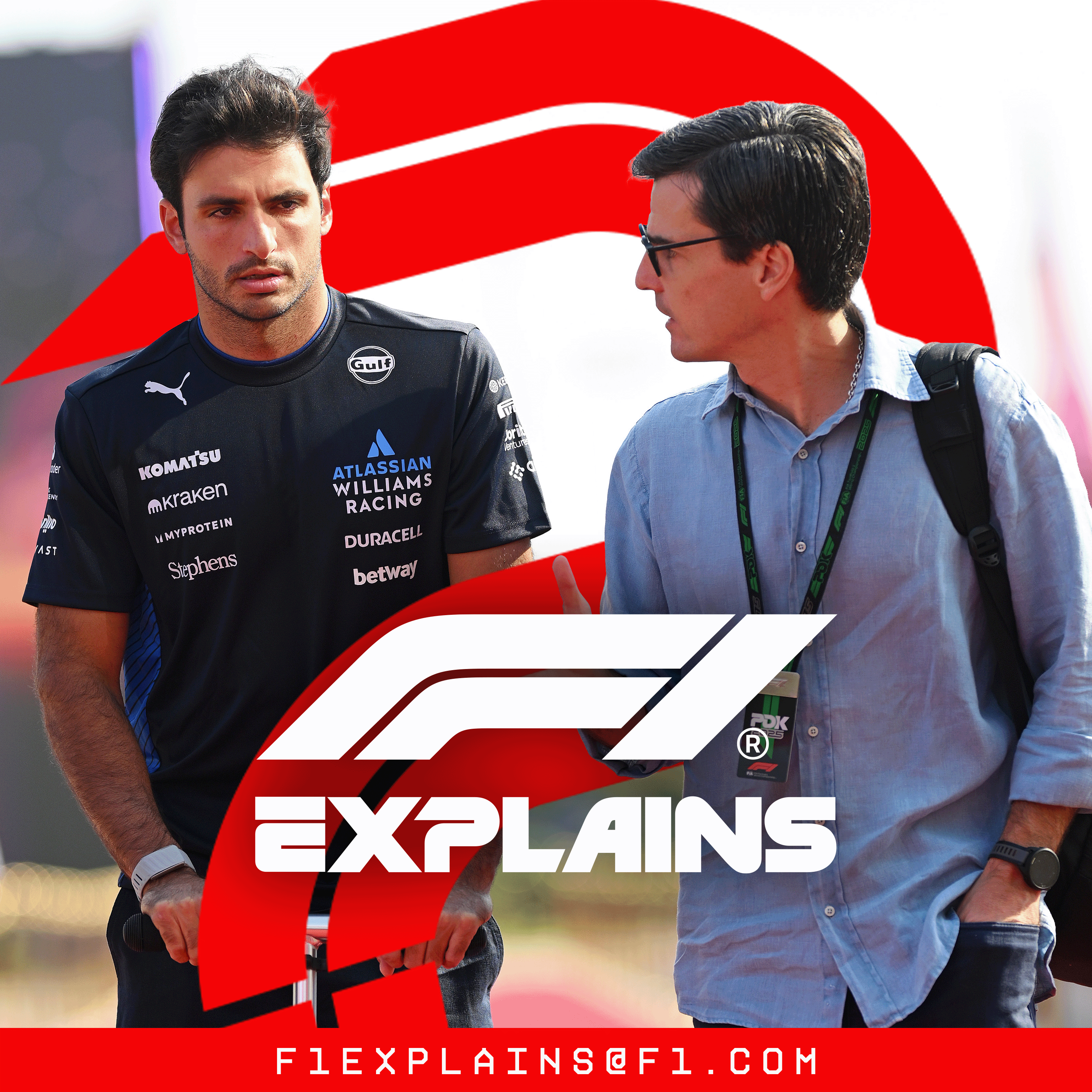
F1 Explains: how driver managers do deals - with Carlos Onoro
F1 Nation
F1 Explains: how driver managers do deals - with Carlos OnoroF1 Nation · Jun 25, 2026
Annotations will appear as you listen
0:00
40:15
Topic
driver managers do deals
They’re talking about how a driver’s manager plans the driver’s time during a race weekend. The point is that management isn’t just contracts—it’s also protecting the driver’s routine so they can focus and perform.
Silverstone is the historic Formula 1 circuit in the UK and hosts the British Grand Prix. It’s a key venue on the calendar, so schedule and media timing around it matters a lot for teams and drivers.
Damon Hill is a former F1 driver who won the World Championship in 1996. He’s being featured as a guest for the live event at Silverstone.
LIVE
For F1 drivers, success comes from being in the right car at the right time.
Moving teams is a career defining decision and we've seen it go both ways.
Lewis Hamilton's move from McLaren to Mercedes rewarded him with six small world championships.
Lewis Hamilton wins the Turkish Grand Prix and is a seven-time champion of the world.
But Fernando Alonso's career is one of what ifs. Several times he moved away from teams just
before they became competitive. Of course drivers don't always choose to move teams.
That's where driver managers come in. They help drivers make the best move available but also
help manage their lives, their schedules, their time. You've got questions about how that all
works and we've got a manager to answer them. Welcome to F1 Explains.
Hello everybody. We have got news about our next live show at the British Grand Prix later in the
episode. Hello, my name is Christian Hugel. Welcome to F1 Explains and our focus today is
exploring the role of an F1 driver manager. They're the people who help F1 drivers cope
with their hugely busy lives. They're also the deal makers who engineer moves from one team or
another. Of course athletes move teams in lots of sports but the F1 driver market is different
because there are so few race seats. There are only 22 Formula One drivers. Compare that with
more than 500 registered players in the NBA, more than 1600 in the NFL, more than 1200 at the FIFA
World Cup this summer. So competition for those 22 seats in F1 is obviously fierce. That's where
managers come in, my friends. They are a mix of advisor and agent, someone the driver trusts to
make decisions on their careers. Sometimes the person the driver trusts the most is actually
a relative. Lewis Hamilton's dad Anthony was his manager for many years and Carlos Sainz manager is
his cousin Carlos Honoro, the ideal person to answer your questions on driver contracts and
organizing a driver's life. Carlos, firstly, a very warm welcome to F1 Explains. Thanks so much
for taking the time to talk to us here in Barcelona and what must be a busy weekend for you?
Well, first of all, thank you for inviting me. It's a pleasure to be here with you guys and
yeah, it's a busy weekend for us but also a special one. So always good to be here in Barcelona.
And you are, as we said in our intro, your Carlos' older cousin, I believe, if I have the family tree
correct. So my first question normally, I think, with a driver manager might be, how did you get to
know the driver? But of course, you must have known Carlos from a very young age. Pretty much
since he was born. So that makes it easier in terms of how we met, let's say. Yeah, since we were
kids really, we've always had a very close relationship. I think our family, and I think this
is a lot to do with Spanish culture. We stick together a lot and family is a big thing in our
culture. And yeah, I've always been next to Carlos. Obviously, I followed his entire career from the
sidelines, let's say, when he was coming up the ranks. And yeah, I ended up here working with him,
which is great. So we know how you got to meet him. And I read a brilliant article about you,
an interview you did for the Formula One official website. I believe it was last year. It's really
good. Actually, we're going to put the link to that in the description of this episode in case
anyone else wants to read it too. And I believe from that that you did, when you were young,
a degree in some form of business related degree. So that's, I guess, where the sort of management
side of your career has come from. Yes, correct. I've always been a massive motorsport fan,
obviously growing up and watching Carlos senior racing in rallying and then obviously Formula
One in our home, I think, even before Fernando started winning races, I think we were one of the
few households in Spain that was watching Formula One every single weekend since I can remember.
So I've always been into motorsport and had a lot of passion for it. But from a study point of
view or from a work point of view, it was never really discussed that I would end up working
with Carlos. So I did my degree in business, studied in uni in Spain. And after that, I
went on to work in a big 41 of the consultancy firms for four years, then moved again,
but always based on finance or finance with real estate, nothing really to do with motorsport.
So there must have been a point where the conversation happens where you said to this
young racing driver and your cousin, and he looked at his older cousin who's got all this
business and management and finance experience. How did the conversation happen?
Yeah, this all started in December 2016. So Carlos had already finished his second season in F1
already. He already had a team of people working with him. But I think that together with Carlos
Sr., they both decided that they needed someone to be more hands-on on a daily basis and someone
that could also, you know, stay with Carlos closely and that had also that maybe business
background that could help. And yeah, that's when they had an internal conversation between them.
And then once they, out of the list of names that they were discussing, mine came up and
they offered me the opportunity and obviously I went back home, slept on it one night and
obviously the next morning I was already confirming that I would love to work with Carlos.
Always sleep on it. That's good advice though. It's something my dad always taught me. Always
sleep on a decision. Still you made that decision and here you are all these years later. Explain
what the role is and I'm imagining you could answer this question all day, but broadly speaking,
summarize the role of being driver manager for Carlos Sainz.
It's funny because the way that I've found it easier to describe in my job is everything that
has to do with a Formula One driver except driving the car. You leave that bit to him.
That's the best summary that I can do of it. But no, but I would like to say that because there are
very few Formula One drivers in the world, I think that each driver has his own setup in terms of
his internal team. So I cannot speak for all the managers of the other drivers in F1 because
each one might do different roles and different stuff. It's not like there's a standardized
management role within F1. Some drivers have one manager and a lawyer. One comes people and a
lawyer, a manager that does everything. In my particular case, I think I am involved in
in pretty much everything, I would say. Not only the sporting side, but also the commercial side,
the comms, even personal stuff that I help Carlos, obviously, with his daily life away from the truck.
So I'm pretty much involved in everything. And then obviously we've got a team of people,
the specialized people for social media, comms, lawyers, fiscal advisors, all that stuff. But
in the end, I like to see myself a bit like the director of the orchestra. But every decision
is made by Carlos, ultimately. In modern Formula One, these drivers are their own big brands now.
I think one of the things that surprised me most when I started working in the sports,
because I was a fan growing up, but now I'm working in it, was just how busy they are,
how much travel, the time in the simulators, the time at the factory. I guess they must need
somebody like you to do things that we don't even think about, like admin or bank accounts,
making sure they've got a food schedule. These drivers would have to do life admin that we all
know if we're busy with work, how difficult that life admin can be. And boy are these guys busy.
The full schedule of a Formula One driver is insane. I actually have a summary of the
summary of the schedule so that I can check it with Carlos quickly, because if we go into the
detailed one that goes pretty much minute by minute, if you see the schedule, for example,
of a Grand Prix weekend, it's insane the level of detail that it gets. So that's why we have
a broader calendar where we see things quicker when I check it with him. But yeah, if you start
adding up 24 race weekends plus the testing, plus other tests that you can do with TPC cars or
older cars, then you start adding all the marketing days that you need to do for the team,
marketing days that you need to do for personal sponsors, interviews.
And obviously, these guys are still athletes and one of the main things that you need to put into
the calendar is some time to recover and also train, which is super important.
Absolutely. And I'm asking the question conscious that we do only have a half an hour interview
based on your previous answer, but what does a typical Grand Prix weekend look like for you?
And I'm imagining it's busier here at Carlos' home race, when it is home race. I guess that he's
got two home races this year. Nowadays, I think that a race week starts on a Wednesday normally,
with marketing activities that happen either at the track or close to the track,
whether it's a filming studio or someplace in the city center with a sponsor or just filming or
shooting. Then Thursday is when we come to the track for the first time. The day starts early,
with a lot of interviews, engineering meetings. And then we also reserve like an hour
or an hour and a half for exercise at the end of the day. Normally, Carlos, you will see him
nowadays cycling a lot around the track. But if it's not cycling, we would go back to the hotel
or find a gym and do obviously a bit of training on the Thursday afternoon. Then Friday starts
always with a good breakfast and mobility exercises. And then we come to a track. And
Fridays are more straightforward normally, unless it's a sprint weekend that gets a bit more hectic.
But like in Barcelona here, which is a normal race week, it's more about the engineering stuff.
Let's say that all the comms and the commercial stuff is ticked away on Thursday. And from Friday
onwards is more based on the performance side of things. You still do or Carlos does
meet and greets, interviews, things like that. But it's, let's say that all of
that part is done primarily on Thursdays. I usually run the track in the evenings at
race weekends. I can't at the moment, I've gotten Killy's injury. But still. Here we go with the
excuses. Yeah, this is it. I know, I know. That is why I'm not on top and have an athlete. But
there are three drivers you always see running the track in the evenings, Oli Behrman.
Cycling the track, I should say. Oli Behrman, Valtteri Bottas and Carlos Sainte. You always see
them a little cycling club. You always see those three bombing in the laps. Yeah. How do you make
sure that Carlos hasn't got too much to do? Because you mentioned how busy it is. I guess it's up to
you to find that line. Yeah, there's obviously after many years working with him, I think I
do understand the dos and don'ts that he prefers. And I know more or less the gaps that he doesn't
mind being busier and the gaps that he normally needs to be left alone and not do anything.
Having said that, I do a lot of the work on the background working with the team on the schedule
and whoever is involved in the schedule. But then I also make sure that he gets a look at it before
I finally confirm anything so that he's happy. And normally we tend to agree. But there must have
been times where I miss something and he points it out and then we reorganize a bit the whole
schedule. But that's more or less how it works. I appreciate there will be things you don't want
to share with us. And of course, don't share those things. But are there any non-negotiables,
things that you've learned that are things that Carlos really likes or really doesn't like when
you're setting up those sorts of schedules? There is one thing which is between FP3 and QOLI.
You don't put any interviews or any meet and greets with sponsors or anything.
Interesting. That's a golden rule that I can share with you guys because I'm pretty sure that
every other driver will also ask for that in their schedule. But between FP3 and QOLI,
that's a bit of a sacred time for Carlos for him to either eat and relax in his room or
eat and go to see his engineers. So it's just for him and for performance.
We've spoken a lot about after race weekends. In just a couple of moments, we're going to talk about
away from the track, away from race weekends. But you mentioned that you've got that degree in
business. Podcasting is a big business too, which is why we must go for a commercial break.
We're back to Carlos and Oro in a moment, but now I want to tell you about our next live show
at the British Grand Prix at Silverstone. We'll be on the main stage in the F1 Fan Zone on Saturday
morning at 10.20 with special guest the 1996 Formula One World Champion Damon Hill. Of course,
British Grand Prix winner F1 legend, huge character and personality. I'm a big fan of Damon Hill.
Can't wait to do a live show with him. Our first live show with Damon, I think that'll be fun.
If you'll be there, send us a question for Damon. We might be able to make you part of the show.
F1 explains at f1.com, please, is the email address. F1 explains at f1.com. Saturday the 4th of July,
10.20 at the British Grand Prix. If you're not there, you'll hear the show right here very soon.
Afterwards, all the details are in the episode description. And by the way, get this F1 explains
fans. If you're at Silverstone on the Thursday at the British Grand Prix, there's another event you
can go to. I'm calling it Producer Chris Live. This isn't a joke. F1 sometimes invites people who
work in the sport to do things on a stage at a race and they've asked Producer Chris to talk
about making podcasts. And why wouldn't they? This is excellent for the Producer Chris brand.
It really is. I'm hoping I can be his agent. That's the drivers in stage on Thursday the
2nd of July at 2.30 in the afternoon. Obviously, 2.30 in the afternoon. 2.30 would be a bit of
a graveyard slot if it was the morning, wouldn't it? I have a quote here from Producer Chris.
He says, I'm not expecting anyone to come, but it'd be nice to see you if you do. Banners are
encouraged. Autographs and selfies are available afterwards. I'm slightly worried he's letting
this get to his head. For that reason, that's enough of Live Show News. Let's get back to the episode.
Welcome back to F1 Explains. I'm Christian Hugel and this week we are discussing the role of
driver managers with Carlos Sainz, driver manager Carlos Anouro. Carlos, we've spoken a lot before
the break about what happens at the track and on race weekends. How much contact do you have with
Carlos away from the track? Because there must be some downtime, but equally we've mentioned how
busy they are. So how much communication do you have with Carlos away from race weekends?
It's a good question and I think there's no straight answer because I think it depends a bit on
whether we are in between races or not or if there's the summer break or the winter break.
So it does change a bit. I would say not daily because I also give him some space to breathe.
I cannot be all over him on a Monday after a race, for example. That's a bit of a day where
we know it's for him to reset and recharge batteries after the entire race weekend.
But apart from Monday, yeah, I would say daily we still, even if it's not a call, we do WhatsApp
quite a lot and he likes to be aware of everything that is going on around his life. So yeah, we're
pretty much, maybe daily is too much, but every couple of days for sure we are in touch.
We were talking before we started recording that we'd had a real flurry of emails around the
role of driver managers. F1explained to f1.com, by the way, if you're listening would like to
send us a question. I speculated that possibly one of the reasons we'd had this influx was because
you played a role in the last series of Drive to Survive and we were aware a lot of our listeners
love Drive to Survive, which is fabulous. We welcome people into F1 in any way. A massive part
of why you popped up so much was a certain move where Carlos moved from Ferrari to Williams because
a certain Lewis Hamilton moved to Ferrari, which lets us just say, shock up the Formula One world.
How did you navigate that? When it first comes into you, you must think, okay, we've got a lot to
do here. Just talk us through how that was handled. Yeah, I think, well, first when we learned about
it, it was a shocker. That's no secret. And I think that Carlos has explained that many times
in a lot of interviews show that it came as a bit of a shock. And I think it also caught everyone
a bit by surprise because we all thought that Lewis had a contract with Mercedes. And I don't
know his contract, but for sure there were some sort of clauses there that we should exit the
contract or that's my understanding of the situation. So nobody was expecting that move.
So at the beginning, as I said, a bit of a shocker. But then the following day, you already start,
like I always say, like setting out the chessboard and placing all the pieces and starting to think
of what can happen and the different strategies and who you need to talk to and in what order.
Because it's not the same thing to speak to this team first, if you don't have information from
that other team. So before you start picking up the phone and doing meetings and so on,
we like to do as a team, also with Carlos senior, because he's also very present in,
when it comes to F1 contracts, to have a good sit down and a good chat and discuss about it and
how we're going to go about the strategy, basically, of how we're going to face the situation.
And from there, you start organizing meetings and trying to get as much in for as possible.
It's been widely reported that Carlos had other options other than just Williams. And of course,
he would do. He's a race winner. He's a phenomenal Formula One driver. What we saw in Drive to
Survive was a lot of you talking to the likes of James Vowell's team principal of Williams,
where of course he signed for. Forgive my question, but how much of what we saw on Drive to Survive
was completely real? Of course, being a television program, sometimes things will be
shot for the purpose of telling a story and that's completely understandable. But were you
right early on going out to talk to other teams when it became obvious that Carlos was going to
be moving? Were you chatting to James? How do you manage all of that? Yeah, conversations were
constant, let's say, since February up until he signed the contract. Because the way I see it is
that our job as his management team is not to decide for him, is to put all available options
on top of the table with the best contract possible in each case. And ultimately, he's the one that
decides what he wants to do with his future. And if he wants my opinion, I would give it to him.
But in my head, my role is just to make sure that I've done my job in the sense that
I've explored every single thing that can be explored and negotiated every single comma of a
contract to put it in front of him and he can take the best decision with the best information.
If you'll allow me a little personal observation, I've been a fan of Formula One since the 90s,
I've been working in it for three or four years now. I don't remember a more amicable driver move
than Carlos leaving Ferrari and going to Williams. Of course, there have been
tense conversations along the way, I'm not naive to that. But I also then think back to a moment
in Abu Dhabi at the end of last season when McLaren had just won the Constructors' Championship
and I was stood outside McLaren and Carlos came in and I took a picture and put it on social media
that Carlos had come in to congratulate Landon, to congratulate the team. It went
wild on social media with people saying, isn't that lovely of Carlos? That doesn't strike me as
coincidence that there seems to be that warm relationship with Ferrari, with McLaren,
another one of Carlos' former teams. Am I right? Is that something you've tried to do with Carlos
and his career with sort of not burning bridges and keeping options open maybe for the future?
Yeah, 100%. I think that that is a bit the way we go about things as a team. When I say as a team,
I'm including obviously Carlos himself, of course, but also senior again, because I think that
there's a big role played by all three of us together when it comes to F1 contracts.
And I think that the philosophy has always been the same since they won, which is to be
straightforward with everyone, to be honest about what we're doing, not to play stupid games that
can then turn back on you. And Carlos has a way of going about the sport and the way he works with
team, that in the end, it leaves... I don't want to put it as leaving a door open for the future,
but it is true that every time he has left a team, he has done it in a way where he's left
good relationships, good bridges, and that brings value in the end for the career of an athlete.
And Carlos has been very intelligent in doing so. And I think that the way we've been going
about contracts from our point of view has always been the same, and with that straightforward
philosophy. I've got a couple of questions from our listeners. I mentioned the email address
f1explains at f1.com. A couple of questions on this from Chris in Canada. Hi, Chris.
Chris says, Hi, Christian. I've been an F1 fan since I was a young kid watching Jack Villeneuve win the
World Championship. That was 1997. My question is around driver contracts. Unlike other sports,
drivers will sign new contracts for the next season during the current season. For example,
as we've been discussing, Lewis Hamilton signing with Ferrari for 2025, ahead of the 2024 season.
So of course, if we cast our minds back, it was announced that Lewis Hamilton was joining Ferrari
in 2025, before the 2024 season had even started, he'd still got another year to do with Mercedes.
Chris goes on to say, why can drivers sign with a new team while still under contract with a current
one? Has this always been the case in F1? Or is this more of a modern day thing? Love the podcast
and learning about all the different things from people so closely involved in the sports.
Thank you very much, Chris. That's a lovely question. Great question, isn't it, Carlos?
Yeah, good question. I think it's an interesting one. And I think that my answer is a bit the same
as when I said that every driver has their own structure and their own team. When it comes to
contract, there's a million things you can put in a Formula 1 contract. So there's no one contract
that looks the same as the other. And depending on the situation and the power of negotiation that
you might have one year to the other, which might change, you are able to introduce clauses that,
in other scenarios, you are not allowed to. And the same goes for the teams. There's no real
standard contract, I would say. Maybe for some clauses, of course, there are. But the juicy part
of the contracts, let's say, are always different and will always depend on the situation that the
driver is at in that moment. And I think to add on, if I may, to answer Chris's question a little
bit from my perspective, and please do correct me if I'm wrong, you know, more about this than me.
But also, it depends on cultures of different sports. I'm a big soccer fan, big football fan,
you more often than not, in that case, see a nearly said driver, a player being bought out of a
contract. And for example, somebody joins Barcelona to join Real Madrid, that would be a controversial
one. But that happens then. There's not too much of an advanced notice. But in Formula 1, it's
always just worked a bit differently. The culture of the sport is a little bit different, where
people tend to nowadays, it's quite rare, isn't it, that a driver gets to the end of the season.
It tends to mean if they don't know what they're doing at the end of one season, they're probably
not going to be there in the next one. There are exceptions to that. But I think it's just the
culture of this sport, isn't it, that it tends to work a little bit further in advance.
Of course, I think there are two things. Obviously, the way the sport works, as you said, is one of
those factors. And then I think that it's how everyone wants to go about it. It's true that,
obviously, I have no clue about other sports, because I've only been involved in F1 so far,
but when you look at the movies from Hollywood, and they picture an NFL player or a baseball
player getting sat down in front of the GM and telling him, you are going to be transferred,
you know, the player has no clue about it. I don't know if that happens like that.
I think for my experience of working in football, it really does happen like that.
It really does. My experience is working, we have a lot of American listeners,
my experience is working in soccer. Don't shout at me, English people, or football.
I don't know about NFL and American football, but yeah, that is definitely how it works in
English football. That could never happen here. At least in our case, there is no way,
or there's no universe in which I would go to Carlos and say, oh, by the way, next year you're
driving for this team. Congrats. That doesn't work like that. Exactly, no, no. I think in our
particular case, Carlos is informed along the way of every conversation, of every negotiation,
even though he might not be part of it, because obviously he has to race.
Yeah, he's got an important job, isn't it? And the contracts are discussed throughout the season,
so he needs to be focused on the racing, of course, but that doesn't mean that he's not
informed of every step that we are taking, and he's very much part of the strategy
and the next steps that we are taking. So in F1, I don't think it works like other sports.
And I don't know, I cannot speak obviously for other drivers, but I know that Carlos likes to
be informed. Yeah, of course. He likes to be part of it. It's his career, it's his ultimate decision,
so the better informed he is, the better decision he can take.
We had a really similar question, actually, from Nell from Cumbria in the UK. She said,
are drivers allowed to speak with their new team and be involved with plans for the future
before they join, or are they shut out of conversations both sides to stop other teams
learning potentially important information? I guess there is an element of keeping
talks confidential, but it sounds like from what you're saying, Carlos, that
your Carlos in this situation would be aware of those talks.
It's a good question, because you do need to understand the project of the team that you are
in theory moving to before you take that decision. So when you're speaking to teams,
they definitely need to explain to you what's the plan, what's their strategy,
how do they see their team evolving in the upcoming 23 years. So they do need to
share that information with you, because if not, how am I going to choose that team if I have no
clue of what they're thinking for the future. But at the same time, they are wary that you might
not sign for them, so they cannot give out too much information. So it's a fun game where you
need to read between the lines a bit as well and make the most of what each team is telling you,
to then obviously make the decision. And of course, another part of Nell's question, Carlos, was
about once that contract is signed, you know, once Carlos has signed for Williams,
but is still racing for Ferrari, how much is he involved in conversations with Ferrari,
because there might be certain information that they don't want Williams to know for
the following season. And can they talk with other teams at that point? It's a minefield,
isn't it? It's a very good point, actually. And it's a weird, a bit of a weird situation,
really, because you are racing for a team until December, but you know already since the summer
break, the following year, you're going to be in another team. So I think that at least what Carlos
does is ultimate respect for the team that he's driving for until the end of his contract. So in
the case of 2024, he gave absolutely everything for Ferrari until the last race and the last checker
flag. Does the team hide certain information for the driver? I guess they do, because they would not
disclose absolutely everything of what is being planned for the following season to a driver
that is leaving at the end of the year. But it's also in their interest that that driver performs
until the end of the season. So again, it's a fine line between keeping the relationship as open as
possible so that the performance is there at the highest level, but also trying to keep the key
points or the secrets for the following season. Carlos, I appreciate you a busy man. We've just
got a couple more than we'll let you go, but I'm fascinated by the dynamic of working within your
family. I think I know a lot of people who are very, very close with their family, but maybe working
with them constantly might be a bit too far. Families can bicker. Families can have arguments.
How is having the family dynamic with the working relationship? I think that the biggest
conversation that we had before I joined Carlos's team is that the golden rule was that
the difference between when we are working and we are at home has to be massive. There needs to be
a very thick wall between what is work and what is downtime. I think that we've done a good job
in doing that and keeping that wall to differentiate both things. He knows perfectly well that when
we are working, I treat him exactly the same way that I would treat my partners when I was working
for a big consultancy firm back in the day. But then if we are having lunch on a Sunday in August
in Mallorca and I run out of coke and I want another one, he's my younger cousin, you know,
stand up and go get me another coke, please. It's funny because he does it and he loves,
you know, and that's the sort of good relationship that we have and we maintain. I think it's key
to the success of working together for so many years in an environment that is very high pressure,
very intense, where we travel together. I think I see Carlos more than I see my wife,
which hopefully she's not listening to this podcast. She's not aware of this comment, but
it is true. It's a very intense relationship and if you don't set the rules and you respect your
own rules, it can get very tough very quickly. And also we've spoken a lot about how this is for
Carlos, but this is an intense role for you. Managing a Formula One driver, the travel,
being away from home so much. What are your favorite parts of the job? What are the trickiest
parts of the job and how do you make sure that you have downtime as well as making sure that your
driver has downtime? You need to sleep as well. Yeah, obviously it's a 24, 7, 365 days a year job.
Even Carlos, I don't think he really disconnects fully throughout the year. You always have an
eye on your phone, on your emails, on your WhatsApp, even on social media, which nowadays
for doing my job, you cannot say, no, I'm going to delete my Instagram account or whatever. You
need to be there. You need to be aware of what's going on. Having said that, of course, you then
have a family, so you do need to find a way to make it work so that you're being a husband and a dad
and also an F1 manager. It's not easy, obviously, it's a challenge. But the key for me is that
you need to be passionate about what you do. And my job might seem very attractive from the outside
and very flashy and very glamorous or whatever it is that comes with F1. But then obviously,
there's the reality of the amount of hours, the traveling, the jet lag, the feeling sore after a
plane and having to connect to three meetings in a row. There's a lot of that going on.
And the key for me is that being involved with F1, if you don't have passion for the sport and for
racing, there's no way in the world that you can do this job. It's impossible because it will eat
you up and it will wear you out very quickly. And I think that passion is what keeps us going and
without that, this job would be impossible. Carlos, we've been doing this podcast. This is our fourth
season. This has been one of my favorite episodes we've done. I really appreciated your insight,
you being so generous with your time. It's a fascinating area of Formula One that we
don't normally get to hear about. So really appreciate your time. Thank you so much for
coming on F1 Explains. Thank you very much for inviting me and keep going because I enjoy a
lot the podcast and I think it brings a lot of insight for the fans that otherwise it's difficult
to get. So yeah, congrats and keep going. You're very kind and do one favor for us. Make sure the
next time you're at a family event and you run out of a drink, make sure Carlos goes to get it
because he owes you that, I think. He will, he will. We follow our own rules. He will. Thank you
very much, guys. Carlos signs as a lovely man. He's a humble man. I think he would make you a drink.
So maybe it's not just his cousin who could get away with that. Thank you to Carlos and Oro for
speaking to us. Fascinating to learn more about what Driver Managers do. I mean, what I said,
that's one of my favorites we've done. He's a lovely, classy man from a very classy family
with Carlos signs senior, of course, a legend in his own right. Carlos and Carlos, all the Carlosers.
It's going to be very interesting to see what happens in the F1 driver market. It tends to go
in waves. We have quieter ones, but that doesn't often last. I think there's going to be quite a
few driver moves this winter. And now we know a little bit about how those negotiations work.
We love meeting people like managers who work away from the on track action in F1 Explained.
If there's anyone else you'd like to hear from, any F1 job you want to know more about,
email us f1explains at f1.com. Speaking of emails, I've said a lot. This is our fourth season
of doing this podcast. I genuinely think I've had the most listener interaction in terms of my
personal social media, my Instagram, my TikTok, and also the podcast's email address, f1explains
at f1.com, after the last episode where we toured Audi's shiny new hospitality unit.
And everything went very well. Producer Chris has written here until we got to the kitchen.
I still think it went well, even in the kitchen. Somebody called Emerites, Christian, I'm a new
listener and big fan. However, you sound like an alien when you talk about food. A few weeks ago,
you asked the difference between Poutine and Chicken. I thought this was an elaborate joke,
but now I've heard the Audi episode that you also didn't know what Fafale is. I'm starting to think
it wasn't sincerely concerned. Producer Chris has also written me a pronunciation guide for
Fafale. Apparently, it's pronounced farfale. And Chris has written emphasis on the first syllable,
same pattern as totally, farfale, totally. Look, you're all giving me so much stick for this.
Producer Chris, producer Jamie, listeners, so many listeners. Rebecca from Sydney. I wanted
to explain something to you since you seem confused about it most in the most recent episode.
Farfale, like totally, is a type of pasta, just like spaghetti is a type of pasta. I hope this
helps. I didn't know. Forgive me. I didn't know. Look, I'll be honest with what I know about. I
know about Formula One. I do podcasts on it, written a book on it. I don't know about pasta.
I'm not doing pasta explains, am I? Nume on Spotify explain further.
Farfale means butterflies in Italian, which makes sense when you look at the shape of them.
Thank you, Nume. Nume, I'm not too... That's fine. She's just said, or they've just said,
some information. They've not patronized me. Kim from California. I know exactly how you feel.
I was once criticized for not knowing what tortellini is. Thank... Kim, thank you. There's
loads of pasta. Not overly cultured, man. I don't know, do I? I genuinely had so many messages on
this. So many messages. Somebody called Mr. T Wood even took the time, I think this was on
Twitter, to send me a graphic showing different types of pasta. By the way, Alan McNish didn't know.
Clearly, he didn't know. You can hear him skirting around it in the episode. Don't all have a go at
me. I expected to be a fit. And the poutine-poutin thing with Alex Jakes the other week. Again,
I didn't know. It's because I was thinking poultry, right? Poultry with chicken. Anyway.
Chris has written me a statement to read out. Apparently, I'm supposed to read this. It says
here, I've heard your concerns and I'd like to read the short statement in response.
You, the listener, rightly expect high standards of information from F1 Explains,
and for me as the presenter. On recent episodes, my knowledge of food has fallen below this
standard. I'd like to formally apologize to you, to Alan McNish, to the nice chef at Audi who was
on the episode, and to F1 official pasta partner Barilla, who's far fully is exceptional, but
also to the entire nation of Canada for my uninformed comments about one of their beloved
national dishes. I will be spending the F1 summer break as a reeducation retreat where F1's favorite
chef Gordon Ramsay will yell facts at me about food for three weeks. I won't. I'm going on holiday.
Thank you for your support, and I seek to become a podcaster who knows the difference between far
fully and fuselage between poutain and poulet. Yeah, very good, Chris. Lovely. Good. I've read it,
right? Fine. I hope we can put this behind us. Keep sending your messages, providing it's not
about pasta. f1explains at f1.com. See you at the British Grand Prix with Damon Hill if you're there.
Don't speak to me about pasta. If not, you'll see it on the podcast feed the Friday after
the British Grand Prix. I'm going now. You've all put me in a bad mood. Bye.
About this episode
Driver managers in F1 do far more than negotiate team moves: they handle everything around a driver except driving, from contracts and confidentiality to the day-to-day logistics of an “insane” schedule. Carlos Honoro explains how he coordinates sporting, commercial, comms, and personal support for Carlos Sainz, including protecting a “sacred” window between FP3 and qualifying. The conversation also breaks down how contract clauses and information sharing work as negotiations unfold and teams manage risk.
For F1 drivers, being in the right team at the right time is crucial. Competition for a seat in a leading car is fierce. Moving teams is career-defining decision, and not always one the driver can fully control.
To negotiate the best deal available, and to organise the rest of their busy lives, drivers have mangers. They're a mix of agent and advisor - someone the driver trusts to help make decisions.
Carlos Onoro, manager and older cousin of Williams driver Carlos Sainz, sits down with Christian Hewgill to explain his role, which involves far more than doing deals. He looks back on negotiating Carlos' move to Williams, and explains why maintaining good relationships are key to success.
F1 Explains LIVE at the Formula 1 British Grand Prix Special guest 1996 F1 World Champion Damon Hill F1 Fanzone Stage | 1020 am | Saturday 4th July Send questions to [email protected] - we could make you part of the show