Aston Martin is a well-known automotive brand that has also been involved in Formula 1 as a team and manufacturer partner. The guest’s communications background with Aston Martin implies familiarity with modern F1 branding, strategy, and stakeholder messaging.
McLaren is a famous racing team in Formula 1. Mentioning McLaren here is a clue that the guest has worked closely with a top-level F1 organization, not just general motorsport media.
“Start line modes” are the car’s programmed settings for how it launches off the grid. They help control how power is delivered so the car gets moving effectively without wasting energy or losing grip.
The car’s battery can only hold a certain amount of energy. If the limit drops from 8 to 7 megajoules, teams have less stored energy to use for acceleration later.
“Super clipping” is a special hybrid operating mode where the car captures energy more aggressively. The idea is to refill the battery faster when you’re driving hard.
Concept
NG can be harvest
This is about the hybrid system that generates electricity while you drive. If the allowed charging rate goes up, the car can build up battery energy faster.
“Deployment level” is how much electric boost the car is allowed to use. If some tracks get a lower limit, the car has less boost available in those areas of the lap.
The “boost button” is how the driver gets extra power from the hybrid system. If the rules cap how much extra power it can give—and when—it changes how often you can use that punch.
They’re talking about how the car can feel very different depending on whether the battery/boost is available. If the boost runs out quickly, the car suddenly feels slower, and that can be intimidating to drive.
They’re talking about how journalists should not just praise the sport—they should point out problems when they matter. The idea is that criticism helps keep the sport honest.
They’re talking about the tires, which are what actually provide grip on the track. In F1, tire condition changes over a stint, so it strongly affects how fast the cars can go and when they pit.
A “regulatory row” refers to a dispute or controversy over the rules—often technical rules that govern how cars can operate. The host argues that even if such topics feel dull, media coverage matters when the rules are harming the racing product.
Concept
algorithmic discrepancy
They’re saying the pass might be caused by a computer/rules system acting in a way it shouldn’t. Instead of the driver choosing to overtake, the car’s behavior (or the regulations) can create a weird situation that leads to a pass.
They’re saying the overtake might be happening mainly to prevent a crash, not because it’s the best racing move. That changes the vibe of racing from competition to emergency avoidance.
Toto Wolff is the top boss behind Mercedes’ Formula 1 team. Here they’re saying he used to argue for rule changes, but later backed off because Mercedes was performing better.
Ground effect is when a race car is shaped so the air under it helps push it down onto the track. That makes it grip harder in turns, so it matters a lot for how fast the car can be.
The Montreal 2022 reference points to a specific Formula 1 race weekend where there was a major technical dispute. It’s used here as context for how teams and officials argued about the new ground-effect rules.
Christian Horner runs Red Bull Racing in Formula 1. In this discussion, he’s portrayed as calling out Mercedes (via Toto) when performance and rule changes were being debated.
Stefano Domenicali is the top executive figure for Formula 1. The hosts mention him because he’s telling drivers to act more respectfully, and they argue drivers shouldn’t have to accept bad rules.
They’re talking about making rules that reward real driving skill, not just exploiting loopholes. The idea is that the rules should be tested so they create fair, meaningful challenges for drivers.
The FIA is the organization that makes the rules for motorsport, including Formula 1. The hosts are questioning whether the FIA’s rulemaking process is thoughtful and appropriate.
They mean the sport is getting more driven by money and business priorities. The point is that even if drivers accept that, they shouldn’t have to accept bad rules.
They’re criticizing the rules themselves—saying some regulations are made without enough thought and then applied in a messy way. The result is that racing can become less fair and less fun.
Racing tires work best within a certain temperature range. If they get too hot (or otherwise lose that ideal range), they wear out faster and grip drops, so the car can’t go as fast as normal.
This describes a situation where tire (or other) limitations prevent a driver from using the car’s true potential. When the gap to “possible pace” grows, the race can become less about pure performance and more about managing constraints like tire temperature and degradation.
Concept
algorithms just being out of phase
They’re saying the car’s computer-controlled performance timing can be mismatched between drivers. If one car’s “boost” or power delivery happens at a different time than another’s, it can make passes look easier or unfair.
The braking zone is where you slow down before turning into a corner. If one car brakes earlier or harder than another (and has the grip to do it), it can set up an overtake.
“Horsepower down” means the engine is making less power than normal. If one car has less punch at the wrong moment, it’s much harder to defend or overtake.
Formula 1 (F1) is the sport being discussed, and the segment focuses on how rule/technology changes can affect racing quality. The speaker argues that current dynamics (overtakes, power delivery timing, tire effects) may not reflect what the sport is “about.”
Max Mosley was a key leader connected to Formula 1’s governing body. The host is using an old story to show that arguments about rules and the press have happened before.
They’re talking about whether journalists should criticize Formula 1 when things aren’t working well. The idea is to balance pointing out problems with also highlighting what’s being done to improve the sport.
The hosts are trying to explain new F1 rule changes in a way that regular viewers can understand. They connect the technical details to what fans will actually notice during the race.
F1 cars use a hybrid system that can store energy and then use it later for extra power. The rules set a maximum amount of energy the car is allowed to charge, so lowering that cap forces teams to be more careful about when they use the stored power.
Harvesting means using the car’s braking and slowing down to generate electricity and refill the battery. If the rules allow less battery charging, teams don’t need to “work” as hard to refill it, so they can focus more on driving normally.
The hybrid system can add extra power when you accelerate, but the rules limit how strong that boost can be. In some parts of the track you can use more of it (350 kW), and in other parts you’re limited to less (250 kW), so teams have to time the boost carefully.
In F1, DRS is a system that makes the car easier to go faster for passing. A DRS zone is a marked part of the track where the driver is allowed to use it.
When the rules change, the car’s settings have to be adjusted too. That means the team changes when and how the car uses its extra power so it works well across the whole lap.
Concept
break-in zone
This is a specific section of the track where the race situation can change—like when passing tools (or extra power) become available. The point is that timing matters: if you get there first, you might have an advantage.
Term
470 horsepower
They’re talking about how much extra power a car can have at certain times. If one driver has more of that extra punch available than another, it can affect who can pass.
Passing often happens because you can get up to speed faster when you leave a turn. If the car accelerates well out of the corner, it’s easier to catch the car ahead and make a move.
F1 cars don’t just use one unlimited power source—they have energy that can be saved and used. If the rules reduce how much energy you spend each lap, you’re less likely to run out before the best passing spots.
“Formula One management” refers to the sport’s governing and operational leadership that works with regulators and teams. When they coordinate on safety issues, it can lead to rule changes, procedures, or track/operational adjustments that affect how races are run.
A “safety implication” means something could be dangerous. If the sport thinks there’s a safety risk, they usually change rules or processes to reduce that danger.
“Mitigate lap time” basically means “make it hurt less.” If something is added for safety, they try to keep it from slowing the cars down too much.
Concept
Barberman crush at Suzuki
They’re talking about a big, scary crash that happened at a Suzuki event. The point is that it made the safety problem impossible to ignore, so people started pushing harder for changes.
Concept
bearman shunt
They’re using “shunt” to mean a crash. The speaker is saying that this crash was scary and may have been influenced by the rules, which is why it matters to the safety debate.
They’re pointing out that drivers and casual fans often want different things. Drivers focus on safety and real racing skill, while some fans may just want more entertainment.
They’re saying the sport should be about real driving skill, not just drama. The rules should help cars race in a way that rewards talent and decision-making.
Car
Honda
Here, “Honda” means Honda’s Formula 1 engine system. The hosts are worried the new rules might make it harder for Honda to get the same performance back quickly.
In F1, the “power unit” is the car’s whole engine-and-energy system. It’s not just one engine—there’s also a hybrid part that stores and reuses energy.
The internal combustion engine is the part that burns fuel to make power. The concern here is whether it can “recharge” the hybrid system fast enough under the new rules.
Term
reverse torque reduction
This is about how the car manages power when slowing down. The idea is that the way it reduces torque can help it capture energy faster, instead of wasting it.
The start line procedure is how the race gets going—where the cars line up and how they’re released. If the rules change, race starts can look and feel different.
They’re talking about upcoming race tracks and how different tracks can make the racing look better or worse. Some venues can hide problems, and others make them obvious.
Overtaking is just passing another car during the race. Some tracks make it easier to pass, while others make it harder, so you might not notice problems until later.
Concept
energy-friendly circuits
“Energy-friendly circuits” refers to tracks that are easier on the car’s energy usage—typically meaning less demand on power deployment and energy recovery systems. In F1, this can change how teams manage power and can influence how overtaking and race pace play out.
They’re saying the argument about F1 changes might calm down at first, then get louder again later. That’s because later tracks will show the real effects more clearly.
Car
Audi Le Mans car
They’re talking about an Audi race car built for endurance racing at Le Mans. These cars are designed to run for hours, not just sprint fast for a few laps. The point here is that Alberetto died while testing that kind of race car.
Lausitzring is a race track in Germany. Teams use tracks like this to test cars and see how they handle at speed. Here, it’s mentioned because that’s where the accident happened.
They’re focusing on the 1985 season and breaking down how close Alberetto was to winning the championship. The key is how results and retirements affected the points.
DNF stands for “Did Not Finish,” meaning the driver failed to complete the race. In championship terms, DNFs can erase otherwise strong performances, especially when they’re caused by mechanical failures rather than driver mistakes.
They’re basically saying: if the car hadn’t broken, he would’ve finished more races and earned more points. In F1, points over the whole season decide the champion.
A naturally aspirated engine makes power without a turbo. When turbos were common, NA cars usually had less top-end punch, but they could still be competitive depending on the track.
A turbo uses exhaust to spin a small turbine that pushes more air into the engine. More air usually means more power, which is why turbo cars often had an advantage.
Street circuits are race tracks made from city streets. Because they’re tight and bumpy, it’s harder to use pure top-end power, so turbo advantages can shrink.
Qualifying decides which cars are allowed to race. If you fail to qualify, you don’t start the race at all, so you can’t score points.
Concept
stealth year
A “stealth year” means a season where someone does really well, but it flies under the radar. Here, it’s describing a strong 1992 performance that wasn’t widely expected.
F1 doesn’t always award points the same way. The host is taking an old season and pretending it used today’s points rules to show how well the driver did.
Car
Porsche V12 engine
They’re talking about a V12 engine made by Porsche. In racing, the engine isn’t just about power—it also changes how the whole car behaves and how easy it is to tune and keep running.
Footwork is the name of an F1 racing team. In F1, teams often rely on different engine and technical partners, and that can strongly affect how competitive the car is.
Car
Williams
Williams here means the Formula 1 team. If you’re in a “quick Williams,” it usually means you have a very competitive car compared to most of the grid.
Car
Silverstone
Silverstone is a famous race track in the UK. When they test there, teams learn how the car feels and how changes will work during real racing.
Alan Jenkins is described as the technical leader for the team. That role is about making sure the car’s engineering direction and development work together effectively.
Concept
testing one day with Alex Caffee and Michele
They’re describing a test where two drivers share the day. Engineers use each driver’s feedback to adjust the car so it handles better and feels right for race conditions.
Maggots Straight is a fast part of the Silverstone track. If something goes wrong there—like a gear mistake—you can crash very hard because you’re going so quickly.
If you accidentally shift into the wrong lower gear, the car can suddenly slow in a way that upsets traction. That can make the wheels lock and the car slide off.
Locked wheels means the tires aren’t rolling—they’re skidding. When that happens, the car loses grip and steering becomes much harder, so it can slide off.
The pit lane is where the team works on the car and where drivers come in and out. Leaving the pit lane is a key transition, and mistakes there can quickly become problems on track.
An H-pattern gearbox is the traditional way you move a gear lever—like an “H” shape. It takes skill to pick the correct gear, especially when you’re braking hard and shifting quickly.
Heel-and-toe is a technique for downshifting while braking. You “blip” the throttle so the engine speed matches the lower gear, which helps the car stay smooth and controlled.
Missing a gear means you don’t land on the gear you meant to. Sometimes a skilled driver can still keep the car under control, but it’s risky because the car’s behavior changes suddenly.
Qualifying is when teams race to set the order for the main race. Faster laps usually mean you start closer to the front, which helps you avoid traffic.
An attack lap is a lap where the driver tries their hardest to go as fast as possible. It’s usually done when conditions are good and the car is ready to perform.
“Sideways” means the car is sliding instead of gripping normally. If the driver keeps the throttle on, they’re trying to control the slide and keep the car moving fast.
“Throttle nailed” means the driver didn’t back off the gas. In a slide, staying on the throttle can help the car keep moving and sometimes helps the driver control how it slips.
The front wing is a key aerodynamic component that helps generate downforce and manage airflow around the front tires. In F1, small changes to the front wing can significantly affect grip, balance, and how the car behaves in corners.
A gearbox is the transmission component that selects gear ratios to keep the engine in its power band. The host contrasts “rougher drivers” who can damage cars with smoother drivers who may preserve components like gearboxes from wear and degradation.
“Power of recall” just means remembering things really well. In racing, that can include remembering specific details about cars and races from years ago.
Cosworth is an engine supplier used in racing. “Engine numbers” here means very specific technical details about the engine, and the host is highlighting that Reutemann remembered those details years later.
Hockenheim is a race track in Germany that hosts major motorsport events. The discussion implies that cars and engine settings can be different depending on the track.
Monza is a famous Italian race track (often known for speed). Here it’s mentioned because the technical details they’re discussing change depending on which track they’re talking about.
Monaco is a famous Formula 1 race held on city streets. It’s known for being difficult and memorable, so it fits the theme of drivers recalling details from their careers.
Renault is mentioned as a former racing success context for René Arnoux. In F1 and endurance racing history, Renault is a major manufacturer brand with periods of strong competitiveness.
They’re talking about how getting dropped from a top Formula One team can be hard to recover from. Even if you’re still good, you may not get another chance unless you keep proving it with wins.
LIVE
Fresh air, longer days, a chance to reset.
This season, let therapy be part of your spring cleaning.
Clearing mental clutter, shaking off stuckness, and building something better.
Grow therapy helps you get there.
Whether it's your first time in therapy or your 50th,
Grow makes it easier to find a therapist who fits you, not the other way around.
You can search by what matters, like insurance, specialty, identity, or availability,
and get started in as little as two days.
And if something comes up, you can cancel up to 24 hours in advance at no cost.
Grow helps you find therapy on your time.
Whatever challenges you're facing, Grow therapy is here to help.
Grow accepts over 100 insurance plans.
Sessions average about $21 with insurance, and some pay as little as $0, depending on their plan.
Visit growtherapy.com slash start now today to get started.
That's growtherapy.com slash start now.
Grow therapy.com slash start now.
Availability and coverage vary by state and insurance plan.
Well, Mark, it's great to see you here. We're getting nearer to a Grand Prix. How's your week been?
I hectic. I've been moving house, but I've been keeping abreast of developments.
In the meantime, as you'd expect.
Expect indeed. Now, this episode is slightly different.
In fact, we've got a third face on the screen.
That third face belongs to Matt Bishop. Matt, very, very happy to have you along.
Delighted, in fact, edited the F1 magazine, worked very closely in communications with McLaren, with Aston Martin as well.
And now you bring your experience, your passion and your love of maybe looking back over the history of motorsport
with a really nice obscure anniversary piece at Motorsport Magazine or in Motorsport Magazine at the moment.
It's a great pleasure to have you along.
Well, thank you very much. It's a great pleasure to be here.
Now, I think we really just start off, Mark and Matt, with what's been going on in Formula One,
because we can stop speculating now for at least a couple of Grand Prix.
Can we, Mark, what's been going on with the regulation changes?
Yeah, so they have now agreed what the tweaks to the regulations would be in time for the Miami Grand Prix.
Apart from the little asterisk against that, because there's a feature which will be tested at the Miami Grand Prix
for incorporation later, that's to do with start line modes.
But in the main, we now know what those tweaks are.
The battery can be charged only to seven megajoules rather than eight,
the rate at which the NG can be harvest during super clipping when the drive is on full throttle
has been increased from 250 kilowatts to 350 so that you fill the battery quicker, essentially.
There are some circuits which run with a lower deployment level
and the number of circuits which have that has been increased from 8 to 12.
The maximum extra power available from the boost button has been capped an extra 150 kilowatts.
And the deployment is, although it's still 350 kilowatts in the key acceleration areas,
on the rest of the lap it's down to 250 so it doesn't run out as quickly.
Those have been done to address the, as we just mentioned, the motivation to not push to the limit of your driving ability during qualifying
and also to lessen the scary speed differential between a car and boost and car out of the battery.
There are tweaks. I don't think anybody's selling them as this is it, problem solved.
But I think in combination with the less energy, hungry tracks that are coming up,
it'll probably look a bit better than two of the first three racers looked at least.
But I think we talk about this in the column.
I think when we criticise these regulations that are coming from a good place
and there's been some, I think, attempts to try and get everyone to not be so critical of them.
I think that's an essential role of the media is to be critical when it's appropriate
and to not have it. You don't want the media to be a PR arm of Formula One.
And I think it's absolutely appropriate that we have to be critical of them.
So yeah, that's the essence of the column and the plenty to talk about, I think.
Yeah, look, very good column as always, Mark, not surprisingly.
But you've always been one of these journalists that really digs down into the technicalities of sport.
That's part of your big skill set, if I may say so, but Formula One has always been technically complex.
It's always been technically complex.
Tires, for instance, have always been key, but they've always been a bit boring.
They've always been a bit boring. This is my opinion, perhaps not yours.
So as a journalist, I've always steered clear of writing about, for instance, tires,
because although they're absolutely critical to the performance of a car, I find them a bit boring.
This regulatory row is also a bit boring, but the difference, the reason why media has to write about it,
even the kind of journalist like me who wouldn't write about tires, is that it's ruining the sport.
It's preventing racing.
Now, there's been lots of controversies about tires and other technicalities in Formula One.
They haven't had the effect that we're now having,
which is an overtake can be performed by an algorithmic discrepancy out of control of the driver,
and the overtaking maneuver is as much a collision avoidance move as anything else.
Now, clearly that's wrong.
Clearly that's wrong.
Now, if you like the Haram-Scaram element of watching motor racing, and we all do, even purists,
like me and you, like that kind of thing,
but if it's happening by accident and the overtake is happening in order to avoid an actual crash,
well, it's a farce. It is a farce, and therefore it is right to speak out.
And, you know, two people I'd like to mention in this is one is Toto Wolff saying,
please don't do that. Please be more positive.
Well, let's cast our minds back to Montreal 2022, when the technical row at that point
was purposing with the new ground effect cars. You remember that, Mark?
And I won't use the word, but it was famous on Drive to Survive,
Christian Horner saying, fix your effing car.
He said to Toto, because Toto was demanding changes.
Well, now he's not demanding changes because his car is fast.
That's one thing that I think we'd have to point out as not necessarily entirely straightforward from Toto.
And also, Stefano Domenicali saying the drivers need to be more respectful.
Well, what about Formula One and the FIA being respectful of motorsports DNA,
which involves the optimising and the testing of driver skill?
And actually, I think the drivers are very respectful.
They placidly tolerate the increasing commercialism of the sport,
but they shouldn't have to tolerate poorly conceived and badly delivered regulations
and neither should the media.
Yeah, I think the touchstone is the drivers.
The drivers are what everybody really wants to see and they want to see them perform.
And yes, it's a technological exercise as well, technological competition,
Formula One always has been, but the drivers are at the heart of it.
And we do not want the drivers to be some sort of spokespeople for the sport.
They are there as individuals and they are there as competitors and we want to hear what their views are
and we don't want to hear them emasculated.
So I think that strikes at the very heart of what this is all about.
And I take your point about the tyres.
The casual spectator might not have noticed, let's say,
that there was a period of racing whereby with thermally degrading tyres,
you were having to drive a long way off the possible pace.
You haven't arrived three or four seconds off the pace and therefore that was artificial.
But because there was no great spotlight upon something unusual happening,
it was just an argument among the cognizantia or the paddock.
But now that you have this massive overtake and repassing and repassing
and sometimes as you say, it's about the algorithms just being out of phase.
Sometimes it's about one guy suddenly being nearly 500 horsepower down
right as he starts the braking zone and the other guy not.
So of course he's going to get past that's not a test of skill.
So it's these things that it's right to point out.
It's in the interest of the sport for us to be pointing out
that this is not consistent with what the sport is about.
And I'd also say something else which I remember once saying to Max Mosley,
the president of the FIA, when he was complaining about,
it's the only time I actually think I managed to make him speechless,
only for about five seconds, but he was complaining about something that I had written
and I said, well, I'm going to share a famous phrase with you, Max,
which is for a politician and you are a politician, Max,
a sporting politician to complain about the press is like a ship's captain complaining about the sea.
And he stared at me and he said, well, I have to say I agree with that.
And the argument moved on to a more civil discussion as a result.
But that applies. That applies now. That applies to Stefano Domenicali and Toto Wolff.
Do you think just devil's advocate on this one, do you think that they,
whilst trying to control their sport as much as they can, are saying that we all know that we're in a mess.
We all know it's a mess. Let's all just say we all know it's a mess.
And let's all try and focus on the fact that there are other things going on within the sport
and hope that if everyone starts reporting the positives, the mess will take care of itself in time.
Everyone hopes that's the case and the sport will be the better place.
Do you think the media, both of you, have a place, a part to play in this where you do have to go,
look, okay, I get that. So when we are being critical, we be critical in the way that is
acknowledging the fact that the sport is doing things to try to right the wrongs it's made.
I think we do. I think we do do that.
I think it's where we're critical is when we're critical about what's wrong with it at the moment.
But also, I think when we analyze how we got here, we've been critical about taking,
being dominated by the wishes of the automotive manufacturers and questioning the wisdom of that.
And that's led us to where we are.
But I do think we do sort of still present the sport in a positive way.
We are still reporting on it because we love it and because it's a, you know, it is still at its core,
the most amazing sport on the planet.
So I don't think we are denigrating it to the extent that people would say,
I'm not going to watch it, although people may be saying that,
but I don't think that that would be as a result of something that we're doing.
I agree with you. And, you know, having sat on both sides of the fence as a journalist,
but also having worked for McLaren for 10 years and Aston Martin for two years,
so therefore having worked team side as well,
I can tell you, and I'm in a very good position to say this,
that in terms of cherishing and loving the sport,
there is no body of men and women who work in it that represent that better than journalists.
Journalists absolutely love the sport. That's why they're in it.
That isn't necessarily the case for people who work in teams.
It can be, some of them, but a vast majority of them are very capable professionals
in things like comms, PR, marketing, IT, law, finance, etc.
Even the engineers are people who, you know, might just as well,
some of them have worked for Airbus or Boeing as McLaren or Red Bull.
That's fair enough. That's fair enough.
Now, I think what we should do is we should move it back to what the regulation changes mean
to the everyday fan that's going to be tuning in and watching the Grand Prix
in a week and a bit of time in Miami when the wheels start turning again in Formula One.
Now, you've mentioned the changes, the regulation changes.
They can be pretty complicated. I think you've given the points there, Mark,
and explained why they are the changes that have been made the way they have been.
So battery charging to only the seven megajoules rather than the previous eight,
that means that there's less onus on trying to recover the battery constant.
Is that the thinking?
Yes, there's only so much recovery you can do. There's a ceiling upon it, and it used to be eight.
It's been lowered to seven. So the lower that is, the less harvesting you need to do
and the less harvesting you need to do, less compromise you're going to be
in terms of pushing through the corners of just what we want to see, obviously.
One area that's maybe confused me somewhat
is the deployment maintained at 350 kilowatts in key acceleration zones
but newly limited to 250 kilowatts in other parts of the lap.
This is to do with what? How they determine the other parts of the lap?
It's to do, well, it'll be defined just as a DRS zone used to be defined.
It'll just be specified, this part of the circuit is this, this part of the circuit, this applies.
There will be calibrated accordingly, but the reason that they have reduced it overall
around the lap is to make that charge that you've got go further
so you don't use it up as quickly.
So it's not the reduced chance of one guy running out of it
just as he reaches the break-in zone and the other guys still have an extra 470 horsepower more
so it reduces the chance of that happening but doesn't eliminate it.
The reason why they've kept certain key areas at 350
is because that's where the overtakes are generated from,
it's from having better acceleration out of the corner.
So you still want the overtakes and so they've tried to maintain that
whilst reducing the overall energy usage per lap.
Fresh air, longer days, a chance to reset.
This season, let therapy be part of your spring cleaning,
clearing a mental clutter, shaking off stuckness and building something better.
Grow therapy helps you get there.
Whether it's your first time in therapy or your 50th,
Grow makes it easier to find a therapist who fits you, not the other way around.
You can search by what matters, like insurance, specialty, identity or availability
and get started in as little as two days.
And if something comes up, you can cancel up to 24 hours in advance at no cost.
Grow helps you find therapy on your time.
Whatever challenges you're facing, Grow therapy is here to help.
Grow accepts over 100 insurance plans.
Sessions average about $21 with insurance and some pay as little as $0 depending on their plan.
Visit growtherapy.com slash start now today to get started.
That's growtherapy.com slash start now.
Growtherapy.com slash start now.
Availability and coverage vary by state and insurance plan.
You're listening to this podcast, so I know you've got a curious mind.
Here's a helpful fact you might not know yet.
Drivers who switch and save with Progressive save over $900 on average.
Pop over to progressive.com, answer some questions,
and you'll get a quick quote with discounts that are easy to come by.
In fact, 99% of their auto customers earn at least one discount.
Visit progressive.com and see if you can enjoy a little cash back.
Progressive casualty insurance company and affiliates.
National average 12-month savings by $946 by new customers surveyed
who saved with Progressive between June 2024 and May 2025.
Potential savings will vary.
Both of you have been in the sport for a number of years.
You've been through the highs and the lows of it.
The fact that the FAA and Formula One management and everybody else have worked together
to deal with something that has a safety implication.
Surely that's something that everyone should say, okay, good.
You know, it does seem to mitigate lap time though.
We're talking about maybe two seconds of lap down.
Is there something to be said in a positive regard
that they've actually taken this on board and have dealt with it?
Well, absolutely.
I mean, that was one of the key concerns of the drivers right from the start
even before the first race.
And it was underlined heavily with the color pint or bearman crush at Suzuki.
But that's just sort of brought it to a head.
So, yeah, it was absolutely right that that was, you know,
that it's still going to be there but not to the same extent
and hopefully not with the same frequency.
Matt, can you remember any sort of time that's been quite so controversial as this?
I asked Matt this question last week and he said he couldn't.
I mean, if you can, somewhere in the back of your brain, there's a moment that sticks.
I think the difference here, which we haven't seen,
is the very stark difference between what the drivers who, by the way,
let's not forget are the main people.
They're the people who are displaying and deploying their skill and risking their lives.
Let's not forget and you talked about the bearman shunt,
scary one that was the result of regulations really.
So that isn't ideal and we have to listen to them.
But I don't think we've ever seen such a discrepancy, such a stark difference
between what the drivers think and what some of the casual fans think.
And that is a new thing. That is a unique thing.
So we have to play it carefully because we want the sport to be exciting,
but we also want it to be a genuine skill contest.
There is a difference between boxing and WWF, or whatever it's called,
World Wrestling Federation.
And one of them is more thrills and spills, if you like.
The other one is probably a purer sporting contest.
And somewhere in between, there is a fine line that we have to settle on and draw better.
Very quickly, Mark, to round off your column,
which as always, I tell the audience to go and read themselves,
go to motorsportmagazine.com, it's the MPH column.
It goes into a lot of detail. The regulation changes,
explains what the regulation changes mean to you and to myself,
to anybody who's an F1 fan tuning in, whether it's the first time or the 150th time,
it'll go into all that detail.
It talks about the Toto Wolf, the Minakali angle of them saying maybe we should be less critical.
What impact, before we move on, what impact will this have on Honda, Mark?
Are they likely to be hampered further?
Can their power unit even charge up to 350 kW or recharge at 350?
Yeah, the fear is that it may not be, because the internal combustion engine
may not be strong enough to recover that quickly.
It's all about the torque reduction, reverse torque reduction on the rear axle,
which determines how quickly you're harvesting.
So, yeah, it may well disadvantage Honda even further.
Now, when we've been discussing this topic, which seems like we've been discussing,
this show has only been going on for about, I think it's the 13th episode,
so 13 weeks, Mark, it seems like we've been talking about this for about 18 weeks somehow.
I wish we didn't after all, but it's not.
It's so frustrating to pull my hair out with it.
But the changes are going to have an effect from Miami.
Okay, start line procedure, that's going to be slightly different,
and we know there's going to be changes coming down the line.
But when will these changes really become apparent, whether they've worked or not?
Because, as you say, there are some circuits coming up, quite a few, in fact,
where they're not really angled towards these problems.
I think it's going to be more of a...
If they work as hoped, you won't notice.
You will just see a normal race with probably still quite a bit of overtaking.
But I think, yeah, there are still going to be some circuits later on in the season
when you look at the calendar, which really expose the underlying problem,
and I suspect we'll still be there.
But, yeah, these changes coming together with the more energy-friendly circuits
that we have coming up, I think we'll probably see this topic die down a little bit
and probably flare up again towards the end of the season.
Oh, good. We look forward to that, then.
Thanks. Well, it ended on a happy note there for this part of the chat.
Thanks there to Mark.
Now, a reminder, go to the MPH column at multiplemagazine.com.
And also, while you're at the website, subscribe to the F1 newsletter.
By doing so, you'll get the F1 newsletter into your email inbox,
and you can keep across all of the latest happenings within Formula One.
Now, Matt, we brought you on to this episode,
and as I said at the very beginning, it's a pleasure to have you here.
You tend to right now, not with nostalgia in mind,
but you like to focus on the history of motorsport.
And your latest column, and this hiatus in the sport for us,
has allowed us to kind of look into some of these columns that you've written.
But your latest one is about Michele Alberetto.
There'll be people watching and listening that go,
oh, Alberetto, I haven't thought about that name for a very, very long time.
And yet you're championing Alberetto and saying he wasn't given the credit he deserves,
and perhaps we need to look at him in a slightly different way.
Give us a bit of an idea on Michele Alberetto as a driver, as a person,
because I know you knew him personally.
And then why you decided to write this article?
Yeah, well, yeah, so I write a weekly column for motorsport,
and it usually looks back, but with some kind of a peg.
Either something's happened in the modern scene,
which reminds me of something from the past, or indeed an anniversary.
And in this case, it's an anniversary because Michele Alberetto was killed
testing an Audi Le Mans car at Lausitzring 25 years ago, exactly 25 years ago.
I think 25 years ago in a day or two after the published, my column was published.
So it's the silver anniversary of his passing.
And that made me think about him.
Because there are many drivers who haven't won a world championship,
who are rightly lionized, who are praised.
And the most famous, obvious example, Sterling Moss,
most people say the greatest driver never to have won a world championship.
By the way, do you agree with that, Mark?
Yeah, absolutely. It's one of the greatest of all time.
One of the greatest of all time, but you can make your own list.
I mean, I made a little list just for the purpose of this.
You know, Tony Brooks, Dan Gurney, Ronnie Peterson, Jill Vilner,
Carlos Reutman, more modern, you know, Juan Pablo Montoya.
Now, should Alberetto be on that list of the greatest who never won a world championship?
Well, that's probably slightly pushing it,
but I put him above the likes of Jackie X, John Watson, Gerhard Berger, David Coulthard, Felipe Massa.
Lots of people can argue the point and there's no right or wrong answer there.
But let's look at the 1985 season.
He finished second in the championship that year,
in a Ferrari that probably wasn't as good as the McLaren in which Alan Prost finished first.
And all credit to Prost for finishing first.
You know, he was very good at finishing first in world championships and he did it four times.
And, you know, one of the greats, Alan Prost.
But look at Alberetto, he won two races, should have won Monaco really,
dominated Monaco as superb performance, you know, with fighting back from a setback to second place.
And he was leading the world championship right up to Zandvoort.
And then in the last five races, he had DNFs did not finish, none of which were driver error,
all of which were mechanical failures in the Ferrari.
Now, of course, we never know whether had his Ferrari been reliable,
he would have managed to score enough points to be champion, but he might have done, he might have done.
And he was still second despite five DNFs at the end of the season.
So that's a statistical look at why he almost was a world champion.
But he also drove with a remarkable finesse.
I mean, his first two Grand Prix victories, I wasn't there in person to see,
because it was Las Vegas 1982 and Detroit 1983.
But it was in the lowly Tyrol team.
I mean, I call it lowly because it was lowly by that point.
It was far from the team that had been a performance powerhouse under Jackie Stewart and Ken Till.
But nonetheless, he won both those races in naturally aspirated,
cost-worth engine cars against turbos.
Okay, he was benefited by the fact that street circuits didn't completely nullify,
but lessened the turbo power advantage.
But he had to do that and he did it elegantly with finesse and successfully twice
in a car that nobody really expected to win.
And then there's a kind of underrated tail end of his career,
because once he got sacked by Ferrari, which you generally do in the end,
and he did, he went on.
He went on racing for very lowly teams and having to be in dignity of not qualifying,
which is why he entered a 215 Grand Prix but only started 194.
That's how many times he failed to qualify in terrible cars,
Guderia, Italia and so on and so forth.
But he did have that one great year, which is very much a stealth year.
Which is 1992 when he was in the footwork and he did score quite a few points.
But if you map the current points scoring system onto that season,
in other words points for the first 10, he would have scored 12 times out of 16.
Pretty good, pretty good in a footwork.
So overall, yes, that's my little thesis of why Michele Alberto, RIP,
deserves to be venerated as a better driver than he most commonly is.
Yeah, he was a wonderful driver.
I did an interview with him in 1991 when he was absolutely the tail end
with that Porsche V12 engine footwork.
And he was just generally written off as someone that is in there long past their prime
and should really be thinking about doing something else, totally unfairly.
And I also did an interview the same year with Riccardo Patresi,
whose career was roughly the same sort of time and they were roughly the same age.
And he was flying high at that time.
He was in 1991 in the really quick Williams and was beating Nigel Mansel on occasion.
And really he was a contender for the world championship in the first part of the season.
And I just sort of contrasted those two situations and said,
look, these two guys, the perception is nothing like what the reality is.
And this guy, Alberto, could easily be doing at least what Patresi is doing.
If it ever happened that he could get back into such a car.
And I was talking to Michele about this.
It was at Silverstone at the test.
And he said, yeah, he said, I'd love to have the opportunity.
In fact, I'd love to have the opportunity of being in the same team as Ayrton.
He said, I want to be in the car alongside Ayrton.
And he still had that drive and ambition at that point.
And as you say, in 1992, he got a decent car.
They ditched the Porsche and put a Morgan in and had McLaren suspension, I believe.
And yeah, he was fantastic.
And the tech director at that time at footwork was Alan Jenkins.
And he told a story about how they were testing one day with Alex Caffee and Michele.
And Michele was doing the morning session at Silverstone and Alex the afternoon.
And he said that, you know, they had a fairly routine morning with Michele.
And Alex gets in the car and has an enormous shunt at maggots straight out.
And they bring the car back and asked Alex what happened.
He said, the gear shifts, the wrong way around.
He said, I thought I was changing up into fifth and I changed down into third.
He said, they locked the wheels and I went off.
And Michele said, oh, yes, I meant to mention that.
So he realized this immediately as he left the pit lane and just incorporated.
He's driving around it.
So now you change it that way for fifth and that way for third.
So he just forgotten all about it and forgotten to mention it.
By the way, gear changing was one of his fortes.
It was always said back in the early, you know, the H-pattern gearbox that he was particularly slick.
In terms of heel and toe down changes.
And the fact that his gearboxes were always in fantastic nick at the end of the race.
Yeah, yeah.
I remember listening to it as a fan at the Grand Prix.
So it was like one, the others were more like step changes.
This was almost like just one smooth blur.
And he was also very adept sometimes when he went breaking into a slow corner.
He was very adept at going from like missing a gear going from fourth to second.
But without the car hardly even seeing the notice.
Yeah, just very cultured really just very cultured in the way that he approached it.
And he was also, he had an incredible recall apparently.
And I sort of saw this a little bit was when I was doing that interview with him.
I said, Oh, back when I was just watching as a fan.
I watched the qualifying for the 83 Grand Prix from cops.
And you came through on an attack lap.
And the car got completely sideways and you just kept the throttle nailed and it was just such a beautiful moment.
And he said, Was this the Friday?
And I said, Yes, it was Friday.
I said, Yes, we tried the new front wing on that day.
This was eight years later.
We tried the new front wing on that you said it worked too well.
So we took it back off.
To find a therapist who fits you, not the other way around.
You can search by what matters like insurance, specialty identity or availability and get started in as little as two days.
And if something comes up, you can cancel up to 24 hours in advance at no cost.
Grow helps you find therapy on your time.
Whatever challenges you're facing, grow therapy is here to help grow except over 100 insurance plans.
Sessions average about $21 with insurance and some pay as little as $0 depending on their plan.
Visit growtherapy.com slash start now today to get started.
That's growtherapy.com slash start now.
Growtherapy.com slash start now.
Availability and coverage vary by state and insurance plan.
Insurance isn't one size fits all.
That's why drivers have enjoyed Progressive's name your price tool for years now.
With the name your price tool, you tell them what you want to pay and they'll show you options that fit your budget.
So whether you're picking out your first policy or just looking for something that works better for you and your family, they make it easy to see your options.
Visit progressive.com, find a rate that works for you with the name your price tool.
Progressive Casualty Insurance Company and Affiliates, price and coverage match limited by state law.
There are parallels with Carlos Reutemann.
In other words, you know, drivers who won quite a few Grand Prix, Reutemann more, but never won the world championship,
but drove with remarkable finesse and culture, the word that you used, Mark,
very, very sympathetic on their cars, gearboxes and the things that some rougher drivers can not destroy but erode.
And also the power of recall.
I mean, I met Reutemann twice, but I knew Alberto a little bit better because he, towards the end of his life, he became a consultant for F1 Racing Italy.
And I was the editor-in-chief of all of F1 Racing, but we had a number of different language versions.
And he was, he helped the editor Barbara Premily as a consultant and he was everything you want him to be.
He was courteous, wise and that wisdom was worn lightly.
He would listen to you, but then he would make very, very intelligent comments and points and advice that he gave about teams, drivers, circuits, everything like that.
But the power of recall was there as well.
And he'd remember things just as when I remember having lunch with Carlos Reutemann and asking him about the 1981 season, which one would,
because he should have won a world championship and didn't.
And he answered it by going into the exact Cosworth engine numbers that Jones had for Hockenheim, for Monza.
And you thought, how can you remember this so many years later?
But they remember the numbers. And Alberto was a bit like that as well.
When he passed away on that fateful day, 25th of April 2001, at that testing event,
his family had already, I think, wanted him to retire from motorsport because it seemed to be extremely dangerous.
Even in the early noughties, it was still being seen as extremely dangerous, less dangerous than it was in the 80s and 70s and before, obviously.
But he passed away having won Le Mans, having some very, very strong results at Le Mans.
And he won Le Mans with Stefan Johansson, who was his teammate when he was Ferrari.
In fact, I've got a picture of Stefan Johansson at Monaco over my shoulder just here.
And Tom Christensen, what a great lineup.
Even though Stefan Johansson could be a bit marmite, couldn't he?
His results weren't as good, maybe, as one would hope, should we say.
Yes, I think, you know, Alberto's first year at Ferrari, his teammate was René Arnoux.
No pushover at all, either, who'd obviously won races for Renault and Ferrari.
And Alberto edged him, but then the next year, Alberto more comfortably edged Johansson.
I think we have to say, with respect to Stefan, who was a very fine driver, but perhaps not quite as fine as Alberto.
So yeah, great lineup for Le Mans, and a lovely thing to happen for him to have won Le Mans
after having gradually been beaten out of Formula One, which happens in the end sometimes.
And it's very interesting to see what happens to drivers who lose their Formula One drives, but continue to want a race.
Anyway, he won that race in a Porsche, but he ended up becoming an Audi man, and of course he died in an Audi.
But just a month before, he'd won the Sebring 12 Hours in an Audi, and he was, okay, he was 44,
but he was becoming a proper force in sports car racing, and I think he would have been able to go on for some time.
His family may have wanted him to stop, and that's often the case.
But Mark, I'm sure you'll agree, he was beginning to become a proper force in sports cars.
Oh yeah, there were probably several Le Mans victories ahead of him, I would imagine.
He's going to be heavily in demand.
I think the way I think his career went, you sort of, you come in and out of fashion in Formula One,
and the problem is if you fall out of fashion and you lose the, you drive in a top team,
you're very unlikely to get back into a top team, and I think even though he was still delivering at a very high level,
the perceptions just, it gets lost when you're not able to prove it by winning races or setting pole positions
or you're challenging to do those things.
We saw it more recently with, and I'm not saying that this is the same level of driver,
but he's a driver I know well, with Kevin Magnussen, drove quite well that year in his rookie year
against a world champion teammate Jensen Button, and then gradually went into lower teams.
And he drove some great races for Haas, but nobody ever noticed.
Yeah, you see it often, and I think really his Ferrari career, well, it started to lose its polish
when Gerhard Berger joined as Jensen's replacement, and unfortunately for McKerley,
not only was Gerhard very quick, but I think under normal circumstances,
we may have seen a more even-sided competition between those two,
because I think they're quite a similar caliber, but at that time Ferrari was split in its management.
There was a bit of a battle going on, and McKerley sided with the Piero Ferrari, Harvey Possethway, Axis,
and the future was John Bernard, and the management that Bernard was aligned with,
and that really was pretty much the end of it, and so all the new developments and the new directions
were very much targeted to Gerhard's car, and I think that McKerley suffered as a result of that.
I think he did, and also the different characters of the two men, Alberetto and Berger,
both fine drivers, and actually I like Gerhard and get on well with him,
but he was a tougher cookie and a more abrasive and audacious man,
and you couldn't use those words about McKerley, he was a gentleman and a gentle man.
And famously raced in Ronnie Peterson's colours on his helmet, didn't he?
He did.
He was a huge fan of Ronnie Peterson.
Well, as we all should be.
Yeah, and he had a decent career in Formula One, 13 years in Formula One,
the Mon winner, a decent career, and it's a really nice piece.
So go to mostportmagazine.com and you can read the entire article from Matt Bishop about McKerley, Alberetto.
It's a really, really good read.
I urge you to go and do that.
Now, Gents, we move on to our audience questions, and I'm going to pick just two now, Mark,
because I'm aware that the time is ticking on and our audience have got things to do.
So question one, and Matt, come in as well with this one.
This is from Dale Lafollette.
Now, I'm sorry if I've completely butchered that pronunciation.
I normally do.
He says, I do not see a fix that does not make the car slower.
Once their times approach F2 times, then what's the point?
Yeah, I take your point.
I think the fixes for the energy split do make the cars slower, significantly slower.
I will do.
But we've still got quite a lot of headroom before we were approaching Formula 2 times.
I think somewhere between 10 and 15 seconds, according to the circuit, was the difference typically.
So we'll see a little bit smaller difference, but we've still got lots of headroom.
I don't think we're in danger of that yet or even close.
I agree, and I also think ultimate lap time is not actually a great contributor to the spectacle.
We've been waxing lyrical about the history of the sport when obviously lap times were much lower.
Nobody watches Senna now and says, oh my God, how boring, how slow.
Nobody says that.
And I don't think many people would necessarily notice the difference.
If Formula 1 cars were as slow as Formula 2 cars, then maybe they'd notice the difference.
But if that gap was halved, we wouldn't lose any spectacle.
Over five kilometers or two seconds, like you say, isn't really noticeable when you break it down like that.
Last question from Steven Pattengale.
Now, I'm pretty sure I've got that name correct.
Is there a acknowledged level of interest among the teams in governing body to return to internal combustion engines only?
And that actually ties into what you were just saying, Matt, that back in the day, no one watches Senna and says this isn't exciting,
but Del was advocate, it was exciting because there was a blistering noise going on behind that told you what he was doing.
You could really feel what was going on with the revs of the car, what was going on with the attitude of the car.
Is there ever going to be a return from the manufacturers, from the teams going back to and the governing body going back to internal combustion engines only?
I don't think it's out of the question in the long term with synthetic sustainable fuel.
I think you can make the case that it's still on message environmentally.
I don't think you need to have this electrical combustion split.
I think that that split has shown itself to be naturally unsuitable for circuit racing with downforce.
Basically, downforce consumes far too much energy to make this electric combustion a comfortable, happy split.
We're just working around the edges of that at the moment.
And I think if there's an acknowledgement of that basic fact and we start looking, going back to combustion only, but with the appropriate fuels,
and we downsized even further and made the cars much lighter and even more agile and saw that they were using less fuel than these cars,
I think you could make the case for that.
And I think that's actually what this formula should have been and was making that point a long time out,
saying why don't we go to something like a three cylinder, one litre, one litre screaming car with 750 horsepower,
tiny little engine, huge horsepower, very demanding power characteristics.
What would be wrong with that? It would make a sensational noise, all those things.
I think that still applies. So yeah, I don't see it, but it does require a little bit of thinking out the box and not being afraid to make a big change.
That is where we leave this episode.
Gents, thank you very much indeed.
As always, thanks very much there to Mark.
Thank you and thank you for your questions and great aviolong as well, Matt.
It's been a great pleasure. Thank you for having me on.
So there you go. If you enjoyed this episode, hopefully you did like and subscribe and tell your friends all about the Motorsport F1 show with Mark Hughes and on this occasion Matt Bishop.
Don't forget as well to get your questions in for next time.
You can do so by leaving the questions in the comments on the YouTube video or by going to motorsportmagazine.com.
And speaking of which, you can still get your hands on the latest copy of the magazine in the shops.
It is your last chance to get hold of the issue in the flesh.
It features Hunt and Sheen, Mario Andretti's against the odds in the 500 win, as well as Matt Bishop's interview with Hickey Kovalainen, who reveals the challenges of being Lewis Hamilton's teammate.
That and plenty more and it's available in the shops available on the website or on the app.
As always, thanks so much for tuning in. We'll see you next time.
You're listening to this podcast, so I know you've got a curious mind.
Here's a helpful fact you might not know yet.
Drivers who switch and save with Progressive save over $900 on average.
Pop over to Progressive.com, answer some questions, and you'll get a quick quote with discounts that are easy to come by.
In fact, 99% of their auto customers earn at least one discount.
Visit Progressive.com and see if you can enjoy a little cash back.
Progressive Casualty Insurance Company and Affiliates.
National average 12 month savings by $946 by new customers surveyed who saved with Progressive between June 2024 and May 2025.
Potential savings will vary.
About this episode
Mark Hughes and Matt Bishop dig into F1’s latest regulation tweaks for Miami, focusing on energy limits (7MJ vs 8), higher harvesting/boost power in key areas, and reduced deployment elsewhere to curb “algorithmic” overtakes and dangerous speed gaps. They argue the media must stay critical when racing becomes collision-avoidance rather than driver skill, while acknowledging safety and lap-time concerns are being addressed. The conversation also pivots to Matt’s anniversary tribute to Michele Alboreto—why he deserves greater legacy—plus Q&A on whether F1 could ever return to combustion-only with sustainable fuels.
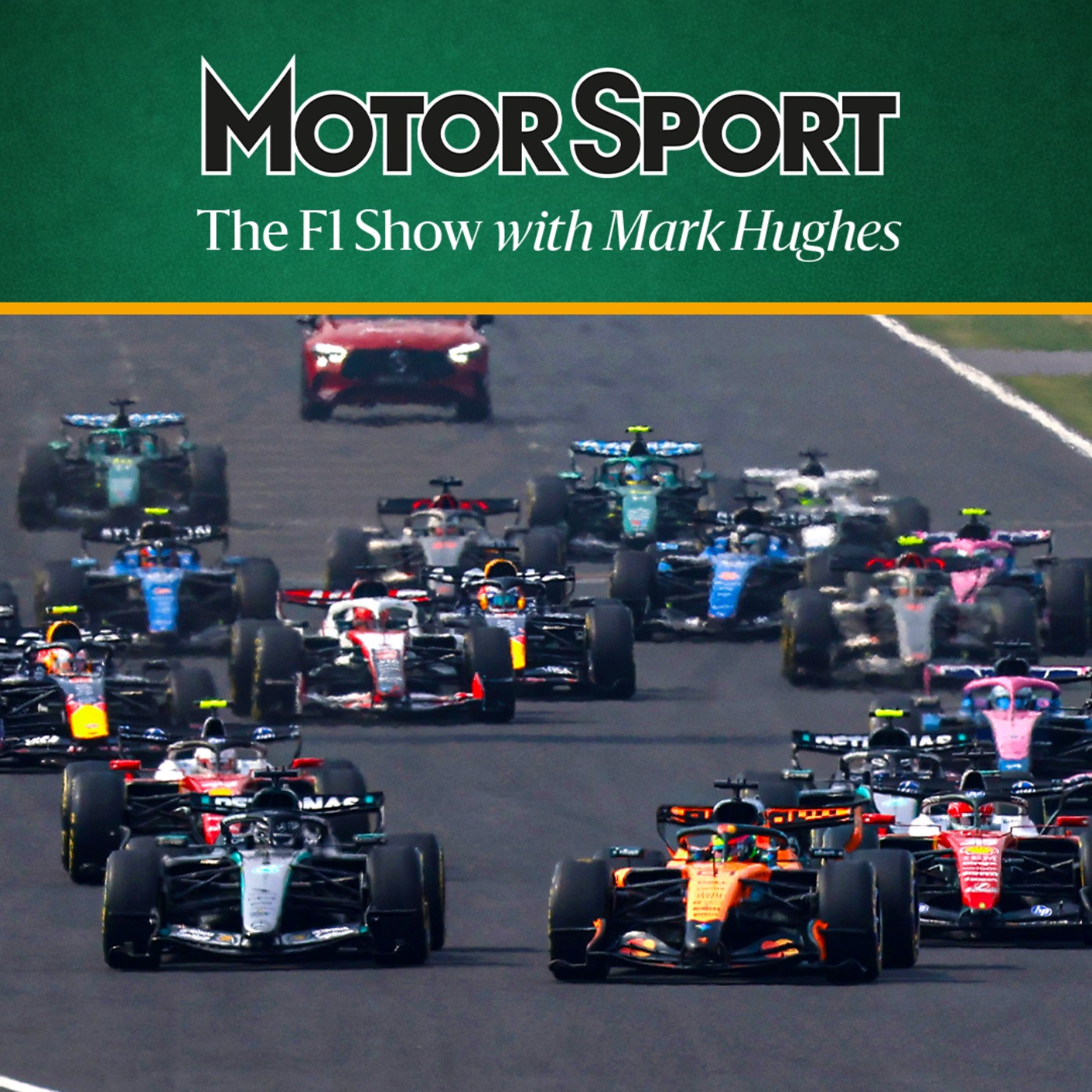
As F1 announces changes to its rules in a bid to improve the racing, Mark Hughes and special guest Matt Bishop explain what changes we're likely to see and why fans should keep criticising the series when it delivers artificial racing.
Plus: Matt explains why former Ferrari driver and Le Mans winner Michele Alboreto should be more highly rated, and Mark answers your questions on whether F1 cars will be as slow as F2 machines, and whether teams want to drop electrical power.
More from Mark Hughes, Bryn Lucas and special guest Matt Bishop on the stories that really matter, in the latest episode of the Motor Sport F1 Show.
Subscribe now for every weekly episode and tell us what you want to know from Mark. Send us a message on social media or find this podcast at https://go.motorsportmagazine.com/4vIv6PK and drop your questions in the comments. He'll answer a selection of the best every week.
Read Mark's column every Wednesday at https://go.motorsportmagazine.com/4vIv6PK