These are numbers showing how many brand-new cars were registered in a certain month. They help you see what types of cars people are buying right now.
A battery electric vehicle is a car that runs on electricity stored in its battery. The podcast is talking about how many of these cars are being registered and how fast that’s growing.
The BMW 1 Series is a small premium car made by BMW. It’s designed for everyday driving but with a more “sporty” driving setup than many basic small cars. The podcast mentions it because it’s one of the most registered models.
The Tesla Model Y is an electric SUV. Instead of using petrol, it runs on a battery and an electric motor. It’s popular enough that it shows up in “most registered” lists.
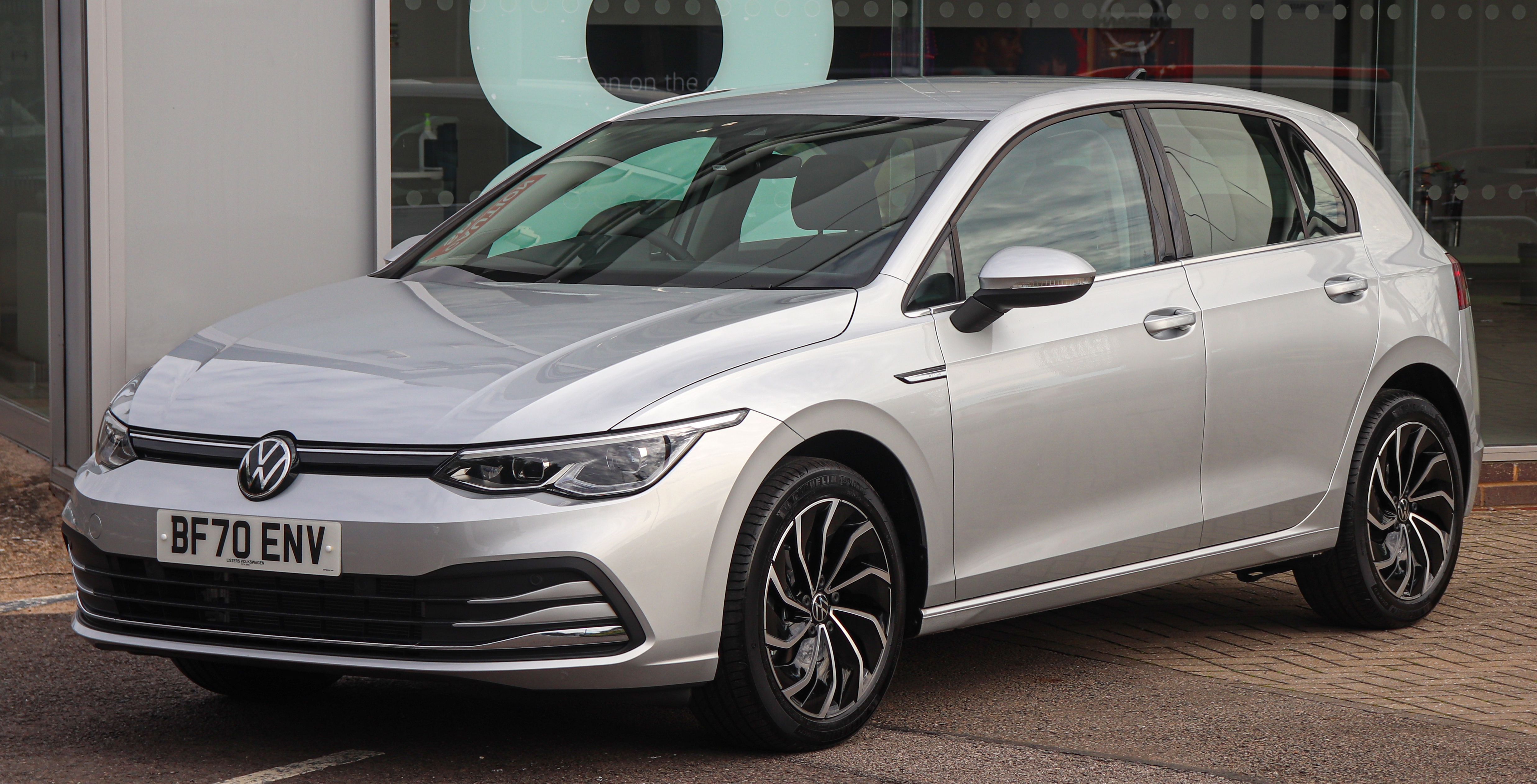
The Volkswagen Golf is a small car, usually a hatchback, made for everyday driving. It’s known for being practical and easy to live with. It’s mentioned because it’s one of the most registered models.
Porsche is a well-known performance car brand. They’re mentioning it because the number of new cars being registered is down, which reflects weaker demand.
Pre-reging means a car gets registered on paper before a real buyer takes it. They’re saying the numbers might not be explained only by that trick, because you don’t see many ultra-low-mile cars.
Mini makes small cars with a sporty personality. They’re mentioning it because Mini registrations are up, meaning sales are improving compared with last year.
Incentives are discounts or government/industry support that make buying a new car cheaper. They’re saying even with big incentives, EV sales still aren’t where they need to be.
Altilia Metals is a company working on recycling battery materials. They’re building a facility to process used EV batteries so the materials can be reused.
Fleet E is a company that sets up charging stations for electric vehicles. Here, they’re building big charging sites so heavy trucks can charge quickly.
Car
Honda Super N EV
This is a Honda electric car aimed at city driving. The hosts are talking about how far it can go on one charge and whether the price makes EVs easier for more people to buy.
The Skoda Superb is a popular practical family car. The host brings it up to show what “normal” estate options look like in this market.
LIVE
Welcome to the motoring podcast, your weekly discussion of motoring news.
This is episode 679 on Tuesday the 14th of April, 2026.
Hello, I'm not Alan, I'm Andrew, and this week, you'll hear us explain what the definition
of sale is.
In new car news, you can join us in hoping the promise is wrapped up in a tiny package
from Japan or backed up in the real world.
And in points of interest, you'll learn what the future looked like in the early 80s.
And we have no follow-up this week, we go straight in to the new news.
And as it's towards the beginning of the month, and unfortunately Alan is not here for this,
but it is the new car registration figures for March 2026.
And they were overall the best figures since 2019, still a long way off 2019 figures,
but good nonetheless, it is a positive move, they are more than they were last year.
Also, this is the best month ever for battery electric vehicles.
With 86,120 registered, that gives them an overall market share of 22.4%.
Full year on year though, for the month, it is up 24.2%.
This should really surprise no one, because as we get closer to the 2030 date, 2035 date,
obviously the manufacturers will be providing or looking to sell fewer internal combustion
engine vehicles to ensure that they hit their mandated figures, although we can get onto that
in a bit. Therefore, as more adoption happens, more people go through the cycle, particularly
if you're on lease and fleet stuff, you will then be renewing your battery electric vehicle,
there's the chances are that you probably will go for a battery electric vehicle again,
or maybe a FEV, because FEVs did astonishingly well. They rose year on year 46.9%.
Petrol was 165,997 registrations, which is down, again this is year on year,
down 6.1%. Diesel was 18,571, which is down 11.4%. Do not forget, last year we were already seeing
diesels dropping quite dramatically. This is just continuing that because less and less,
well there's just less options. And the petrol hybrid for most people can pick up the economy,
which was the side of things that some people needed a diesel for.
Full hybrids registered 60,268, which is up 7.3%, and I've told you the BEV and the FEV.
If we look at where the vehicles were registered, private is up, it was 162,470,
which is a 10% change on 2025. And that means their market share is for 26 is 42.7, which is
up just a fraction on last year, which is a good thing, although it needs to be more to balance
out the inequality, which is fleet, which was 208,853 vehicles registered, their market share now
is 54.9%. Business was 9,304, up from 7,830, so that's 2.4%. The top models, and starting at
number 10, the BMW 1 Series registered 4,936, number 9 was the Tesla Model Y,
number 8 was the Volkswagen Golf, number 7 was the MGHS, number 6 was the Volvo XC40,
number 5 a Vauxhall Corsa, which was 6,315 models. Number 4 is the Kia Sportage,
number 3 is the Nissan Kashkai, and a bit of a shock, the Ford Puma with 9,193 vehicles registered.
Therefore, our new number one most registered vehicle that is most registered, not most sales,
is the JQ7 with 10,064 models registered. We all need to remember this, particularly the UK media,
which seemed to fail on this dramatically this week, is that the only data we can go on is
registrations. A registration does not equal a sale. A sale legally has to involve an exchange of
monies. Registrations do not, in the way that the UK does it, it's different in Europe obviously.
To do a registration you have to actually sell the car. We don't do that system for whatever reason,
therefore it leaves it up for the potential of abuse where companies register more than they
have actually sold. But if I run onto the spreadsheet of Doom, which is about 50-50 actually,
when it comes to colour wise, but numbers wise it's very different.
Starting with the doomy side of things, our bath is down 52%,
Alfa Romeo is down 30%. DS is down 71%, Fiat is down 43%, it's really rough, I'm still on this so far.
Ford is down 19%. What that equates to because these are quite large numbers, last year they
registered 23,634, this year 19,178. Genesis is down 32%, Jaguar is down 100%. Again, like we
talked about last month, should be no surprise, they've got no vehicles to register or they shouldn't
have any left to register and this is the first month where there is zero registered. Lotus is
down 37%, Maxis is down 100%, they registered nothing in March this year, Porsche is down 22%,
Seat is down 29%, Skywell is down 17%, Subaru is down 40% and other Imports is down 52%.
Now if I go back to the top and start with the more positive numbers, Alpine is up a whopping
1,723% winning the Not Sponsored by MG award for most impressive percentage change.
BYD is up 134%, Citroen is up 144%, Coupre up 17%, GWM 224%,
JQ up 574%, they registered this year 12,034 vehicles as opposed to 1,786 last year.
That's a marked turn and if you go on to AutoTrader and put in less than 100 miles
in your search term, you will find the number of JQs that hit that mark is actually quite
limited so this has not been done purely on pre-reging in case anyone was wondering.
However, if you do put that in and you see some of the other brands out there,
there's some scary numbers for some of them. Moving on though, a Leap Motor is up 880%,
Mini is up 32%, a Moda is up 184%, Smart is up 17%, Suzuki is up 67%, Tesla is up 20%
and Schpeng is up 819%. Therefore, we can see that the newer Chinese vehicles have really taken a
hold in the market and they are making massive jumps in the number of vehicles that they are
getting registered. As ever, Mike Hawes gave a statement and he said, the strongest new car
market since 2019 with the highest ever volume of EV registrations is a boost to the industry
and the economy. However, the headline belied, the costs incurred and the challenges involved.
Much of March's performance will be from orders placed before the start of the Iran conflict,
which threatens to raise the cost of living undermining consumer confidence.
Against this backdrop and with the EV market falling further away from the mandated levels
despite record levels of incentives, an urgent review of the transition is required to secure
a sustainable market, economic growth and the UK's net zero ambitions. We've echoed that,
we have said that it needs to be done. We've repeatedly said how the numbers were fantasy
numbers in the first place that didn't reflect reality then and they really, really do not reflect
reality now. Hopefully, the government listens and it doesn't get too late. Okay, let us move on.
Talking of the government and once more, Tata benefit from money from the government as there
is 380 million being invested in the Tata Group's Agritas Battery Factory that is being built in
Bridgewater and Somerset or near Bridgewater and Somerset. This is apparently a full billion
pounds facility and when it opens in 2027, there will be more than 4,000 jobs created to do with
this plant and the expectation is that the 40 gigawatt hour output that this factory will be
able to do should be about half the UK's needs by 2030. The grant came from the modern industrial
strategy delivered from the Department of Business and Trade's Automotive Transformation Fund
via the Advanced Propulsion Center or APC. Wow, how many hands did this go through?
The government has made some estimations on what the economic growth over a 25-year period
as a result of this. Allegedly, and my word, talking of fantasy figures, 43 billion pounds of
economic growth. But one of the good things to see is that there will be 300 apprenticeships
on the site as well connected with the over 4,000 jobs. That is good. Also, they say that there's
going to be over 2,000, there is over 2,200 people who are working on the site's construction
during the coming year before it opens. This wasn't the only automotive side of things that did
got some money from the grant. There is Altilia Metals which make low-carbon recycled battery
materials. They have received 18.5 million to build a new battery recycling facility in Plymouth
Devon. That's great. They expect to be able to process 24,000 EV batteries per year with that,
removing the materials. The technology has been trialled apparently already with tests with JLR
in this sense. That sounds good because that will be supplying the local market. Don't forget,
there's Sunderland as well with their battery factory. Also, there is Surface Transforms which
is working on ultra-low emission brake technologies and they got 3.5 million. As we know, brake and
tires are the next focal point as far as emission goes. The EU's already made that clear and the
UK will just adopt it, I am sure. It's positive. It's being put into the car industry. This is a
good thing. Well done Tata for being on the end of that lion's share of that again.
Right. This is an article that is in AutoCar and it is titled New Stalantis Europe Design Boss
Vows No Clones in Effort to Separate Brands. We've included this because anyone who's listened to us,
I don't know, over the last year or so, has maybe heard us more me than Alan because Alan
tries to be nicer than me. Talking about how Stalantis has liked to make vehicles very similar,
particularly in silhouette and the front and the back are allowed to be changed slightly but
the rest are sharing panels because of economies of scales, etc. However, now that Gilles Vidal is
back from Renault, he's said, nope, that's not going to happen where it's possible because don't
forget they will be sharing underlining platform and hard points and engineering stuff like that
that you just cannot get around. Outside of that, he wants each of the brands to have their own
individuality. He's talking about individuality not just in terms of design but also in how they
feel, how they drive and how they elicit the reaction from people. This is good because he
is very clear that we should stop fighting ourselves and we should be beating the competition,
not beating ourselves. This was the prime point of what we've said, it looked like they're stealing
cells from themselves when it's just the same, virtually the same looking car, just a few elements
swapped out. Some do it more than others and are more successful than others but
it's great to see this and it's also delightful to know that Gilles listens to the show and has
taken on board our feedback. We look forward to the consultancy fee being paid at a later date.
More seriously, do click the link in the show notes because it is a pretty frank, as much as
these things are, a pretty frank interview with Auto Car and it's interesting to hear his perspective
on it. Hopefully, he can pull it off. Hopefully, he's given the backing and so are the engineers,
et cetera, in each of the brands are given the backing to do this because Stalantis need to do
something. They need to do something to arrest the slide in their sales and registrations. They
need to grab the public's interest again and they need to get people really keen in a particular
brand or not and they need to work hard at that. This is one of the easiest ways is to design-wise
but hopefully, it's allowed to follow through because as I keep saying and Alan keeps saying,
more choice we have the better as far as consumers.
Moving on and back in the UK, BYD has confirmed that it is going to be installing 300 in total,
1500 kilowatt charges in the UK under a brand identity called Flash. Very good, well done.
Over the next 12 months, which should bring around 600 charges in total, which would mean
that if the grid can provide it and the environmental conditions are optimum and the
technology on the car charging could take a battery of 123 kilowatt hour battery from 10 to 70% in
five minutes, such as their new to be out Denzer Z9 GT, which we will probably talk about next week.
This network will be open to all car brands as well, so they are doing what Tesla had
belatedly got into. Again, it's something we have banged on and on about for years and years.
Why the manufacturers aren't doing this, I do not understand, but they should have been all over
rolling out charging networks, but they haven't been. This charging looks really impressive
if it can be backed up in the real world on the grid because they're talking about working at places
that already have other charges as well. Now, the maximum capacity that they can charge at
is a problem that other charging networks have found because where they're located may not
necessarily be able to provide that. We are talking the absolute optimum here. What it means in the
real world, we don't know yet until they're installed and until they're up and running,
and if they are busy taking from the same source at the same time. It sounds like it'll be quicker
than most. BYD are making it clear that they understand a bit of this because they are going
to have on-site battery packs, they're going to have solar panels topping up those batteries,
therefore it's not just wiping out what the national grid can provide. However, if those sites become
popular, the ability to recharge those batteries becomes more difficult. Hopefully, this brings
into sharp focus that the grid needs to expand its capabilities very, very quickly. It's not just
about sticking charges everywhere, although that's vital. It's about getting the power and the ability
to provide the power that people need at those particular charges, depending on what they are.
I like this a lot. Like I said, why other manufacturers haven't done this, I have no idea.
To round out the first part of the show, we're going to stick with charging.
The company Fleet E, so that's F-L-E-E-T-E, it's not a spelling mistake, oh dear,
which is a Fleet EV charging service providers has opened the largest electric
HGV commercial charging hub at the port of Tilbury. There are 16 ultra-rapid charges,
allowing 16 fully electric HGVs to charge simultaneously. They are all using the five
megawatt shared facility. This is great because Tilbury also has other charging options as well,
so this is just adding to that, as we've spoken about if you've listened to us for any time.
Whenever we talk about electric HGVs, it really makes a lot of sense if you do hub
and spoke type logistics, although that is improving for longer distance as time goes on.
Fleet E are talking about opening a second 26 bay site at Hams Hall Distribution Park in
Coles Hill near Birmingham. Again, that'd be brilliant. Another key logistic hub, that area.
This is really good to see. There is a link here from EV Powered to click the link that's in the
show notes to have a full read of this because this is great stuff that is happening. The more
of this, the quicker we can get electric HGVs on the road, the better it is for everyone.
The government's seemingly quite serious about this because they are investing a lot of money.
I mean, into this one, they helped put a million pound into the port of Tilbury to install EV charges
for Tilbury. It's not just for this project by Fleet E, but other charges as well. That's good.
That is the end of the first part. And in non-guilt minutes, like to remind you once again,
on Thursday the 23rd of April, so that is a week Thursday, at 8pm British summer time,
on our YouTube channel, we will be having a live Q&A. And in order for us to have a live Q&A,
we would really appreciate some cues from you please. A round automotive and motoring
topics ideally, maybe about the show a little bit as well. We'll open to that. And as Jason
Piper asked on Blue Sky at the back end of last week, and thank you very much for asking this
question, Jason. And I will quote his full post here. Are we talking if Liz Truss were a car,
what car would she be type questions? Or where do you see the FEV market in three years time type
questions? To which both Alan and I replied separately, we'll take either and both. But we
both did love the first one. A word on Jason, you get the special motoring podcast prize for the
social media comment of the week there. Excellent. I heartily laughed out loud when I read that.
Excellent post. If you go into the show notes, there will be a link in the middle of the show
notes in a in bold that takes you directly to our contact page. If you can put in the subject
line Q&A first, please, this stops Alan ignoring it and thinking it is spam. Unfortunately,
does that with important messages to apparently, but there we are. But we are a bit inundated
at the minute with spam promising many things that these people can offer us and none of which
we need or want. If you put Q&A at the start of your subject line, and then put your question in
the contact things, we will then pull all the questions together and we will pick out the,
I don't know how many we're going to do depends how long it's going to take us, but we will put
them into a running order. And then we will go live a week Thursday at 8pm, British summertime,
on our YouTube channel. Looking forward to it, actually. Please get the questions in.
Moving on, it is new, new car news. And this week, we're in for a tiny, lovely surprise.
You've probably heard or seen this because it was all over everywhere. The Honda Super N EV.
This is a small city car with a range of up to 199 miles. But it's under £20,000 apparently and
it's going on sale this summer. All that really sounds good. I know last week or the week before
I was moaning about vehicles being over a certain price and how under 200 miles was just not
acceptable, frankly. Under 20,000, you're doing nearly 200 miles or it has the potential to do
nearly 200 miles. That's spot on. That is actually offering something to customers that enables more
people to take advantage of an EV than other models that are on offer. Some more expensive and some
less expensive. It just takes that a little bit of stress and fear out for people who haven't moved
across yet. Obviously, we've got all our fingers and toes crossed that the real world experience
gets close to this 199 miles in optimum conditions because we have to remember conditions affect
things. But this is great. There's a lot of talk about how it reminds people of the Honda City Turbo
2 from the 80s. There's a link to a Motor and Research article here, but the colour that's
been picked for this looks absolutely superb. The car looks great. Like their E looked great.
Unfortunately, it didn't back it up with the price and the specs. But the car looked great.
This one equally looks great. I can see this just being something that people really want to have
and will meet a load of needs because there's that psychological barrier to get through. Even though
most people don't do many miles, it just gets them over that barrier, especially if they don't have
a home charger or charging at work or whatever. They have to rely on the public network. This
makes such a lot of sense. Do click the link in the show notes. Have a look around it. The full
details will come out in due course. When they do, obviously, we will bring that to you when it gets
closer to launch time. I can't wait to see one. I can't wait to try one. I'm really excited for
this. Genuinely excited for this. This is one of the first cars for years. It feels like years.
I'm genuinely excited because I think this can do so much for so many people, particularly
those who are reluctant to adopt. I think there's a lot to be said for that.
Now, I'm going to move to Cooper. Only last week, I was complaining that
we didn't know what Cooper was going to be coming out with. Obviously, they listened to us and
have rushed out development of their Renault 5 rival, just in a matter of days, obviously.
This is the Cooper Reval, and it is going to start at just under £23,000. With that, you will get a
37-kWh lithium-ion phosphate battery, which will give you a claim range of around 185 miles,
what I was saying before. Previous one, 199 miles under £20,000. That's a bit disappointing, I have
to say. We're using a maximum of a 90-kWh charger. You can get from 10% to 80% refill in 27 minutes.
That's not dreadful. That's the core base trim level. If you go up to the V1 and the V2, you get
the 52-kWh nickel manganese cobalt battery, or you can get that, which then gives you a range of
around 280 miles. There are 133 brake horsepower standard, but when you go up to the 52-kWh nickel
manganese cobalt battery, you can get 208 brake horsepower. There will be a range topping
one to try and rival the Alpine A290. That's going to be priced at around £37,000. That's a bit
spicy, but if you are saying you are rivaling the A290, that's going to have the same 52-kWh battery
pack. Obviously, with the extra performance that they will get from the motor and everything,
that will bring down the 280 miles to nearer 250 miles. Again, that's not too bad.
I think it's a good-looking little car. I quite like the Coupre's style.
Interior, very recognizable from VW Group. It could do with more buttons, but there we go.
Let's see when we get closer to it, what it's like to drive.
That leaves us now with the last vehicle that we're going to discuss this week. That is that
Mitsubishi is bringing back the Outlander Fev. One of the original, if not the original Fev
of the UK market. It's coming back with a £47,000 price tag, which is quite chunky,
especially if you go back and remember who was registering an awful lot of vehicles
this year and what one of their prime market moves is. That is the affordability. This puts
it straight in up against the Hyundai Tucson, the Toyota RAV4 and the Ford Cougar. That's without
going down in terms of thinking of J-Cous, Amodo's, Cheery, that sort of stuff, all those as well.
Just bear that in mind. When it comes to that, again, we've not been given full specifications,
but EV powered have managed to winkle out a little bit of information. It is expected that the
EV only driving from the Fev will be 53 miles. I remember testing one of these back many moons
ago and the range was 20. Well, I physically got 20 something out of it. Not great. It was pretty
good for the time, but fortunately they have updated their technology to do that. The overall
range is expected to beat 500 miles when it's a combination of the 2.4-litre naturally aspirated
petrol engine and then the two electric motors so that it's got four-wheel drive all the time.
In terms of EV only, it's close to the likes of Tucson, the Cougar and the 5008, but it's
way shorter the VW Group and Toyota. Does this offer something significantly different enough?
Does it offer something positive enough to make a dent that the five years they've been gone?
I just worried that it's been a very significant five years because
the incumbents have taken up the slack. You look at the difference in the Hyundai Group
in that time. You look at the difference in the VW Group in what they've now got to offer in that
time. Toyota have always been there and they're about when it comes to hybrids and then they've
gone in for plug-ins as well. Like I said, the Chinese brands, they're offering lots
on paper for less money. I hope it's enough. They're coming over with two cars that we know,
so they're coming over or two vehicles. They're coming over the FEV and the pickup.
We know them in this market, so maybe they're trying to start us off being familiar, but there
are more vehicles to come. Hopefully, they bring some more differentials that help them stand out
a bit. I'm going to now take us to points of interest. We have a lunchtime read from Driven to
Right. SV Robinson has written and it is titled A State of the Market. A brief look into Cummings
and goings in the compact estate market. I picked this because I think it's really interesting,
not only because he explains what he considers the compact market and how that's more affordable
as well. Therefore, that counts out the premium brands, but also things like the Passat and the
Skoda Superb. You're looking at C-segment really. The offerings you have have become less and less
Obviously, SUVs have a lot to be held accountable for that, but equally, people are buying them.
What are you supposed to do? He does run through what some of the options are and what he feels
because he has an Octavia estate, what he feels are the pluses and minuses of what's on the market
at the moment. I just find it interesting because I think the estate still offers more practicality
than the SUV, alleged equivalent. I don't think it uses its footprint as well. The main difference
you can argue is the height of seating position. Therefore, it's easier to get in and out of a
taller car. That's understandable. Other than that, is it actually offering more? Or are we
just being suckered into thinking it does? Or is there a different psychological reason that
people prefer an SUV? I think it's a lovely written article. I found it really fascinating.
It got me thinking as well. Hopefully, it'll do the same for you.
Which moves us on to the list of the week. It is from Top Gear. Once again, Mr. Tom Ford has written
another cracking list of the week. It is called Performance vs Practicality, 12 great concept
cars you need to see. He asked the question, what's better, sporty invention or practical
creativity? That does seem to be how these things go. It's like, here's the practical,
sensible concept or here's the performance sporty thing. Sometimes there's a bit of crossover
and there is a bit of crossover in here. However, out of the 12, I will ask everyone to scroll down
to. I did find this very tough because I thought virtually all of these were very interesting
in their own ways. I think I'm going to go with the Citroen Tubic, which was a nine-seater van,
basically, with a pull-out luggage drawer, it says here, inspired by the Type H Citroen from
Days of Yore. It was back in 2011, a hybrid-drive train, swively seats and
much more complex concept thinking, it says. There's some of the shapes on here, some of the
decals and things like that. I think are very interesting. I love the idea of it. I'm a big
fan of car from van anyway, as you all know. I think that's a much more practical way to go
rather than SUV if you don't want an estate. If you are all just aiming for practicality,
car from van is the ultimate. I remember at the time when this came out, I was just fascinated
by the shapes and everything in the finish on it. There are 11 others, all very interesting in
various ways. I don't know what Alan would pick actually here. I could think of about four that
he might pick, but I don't know. Do click the link in the show notes. Have a look yourself and see
which one you would pick because there are some really interesting cars here, really interesting.
Talking of interesting cars, I'm going to round out the end finally. Think of this as an additional
lunchtime read for you. It is from Anthony Ingram. It's from a while back now. It's from September
last year. On Hagerty, it is the British Leyland ECV3 Eco Special. This is what the future looked
like from British Leyland's perspective in 1982. Now, that sentence may make you laugh. However,
when you see the pictures, you can go, oh, hang on. This was really quite forward thinking at the
time. There was the German vehicle that we talked about six months or so ago, where the project
was very similar to this. You can see elements in today's cars. You can see that with this,
albeit as Anthony says, from the lens of the early 80s, late 70s. It's a fascinating vehicle.
It's amazing the specs and what they achieved in it, even for that time.
Like I say, you look at this and you go, oh, yeah, I can see that today. I can see elements here in
these cars in that car and all the rest of it, maybe not the dashboard. It's a great read. Anthony's
done a fabulous, fabulous research here. Lovely thing to learn about. I didn't know about it.
You can be informed and entertained at the same time. That's what the internet is supposed to be for.
Do click the link in the show notes. Do enjoy that and then tell Anthony that you've read it
and told him and you've enjoyed it. That finishes out the show for this week. Apologies from Alan.
He's really sorry he couldn't make it. Just things outside of his control have overtaken,
so he just could not be here. Hopefully, he's back next week. Hopefully, he's back next Thursday.
That's for sure. Otherwise, it's going to be a very dull Q&A where it's just me.
Don't forget, do get your questions in. Do start on the subject line with Q&A,
and therefore, it will be picked up much easier. Thank you. Looking forward to what you've got
to suggest to us. That could be interesting. I'm looking forward to doing the live stream.
Really, hope you can watch along, even if you don't put any questions in,
because it would be great to have you there. That sort of leaves me now just to say that
between now and next time, you can give us any feedback and share your thoughts with the show
at motrimpodcast.com on Blue Sky, at Motrim Podcast on Instagram or Facebook,
and the contact page of motrimpodcast.com, the hub of all our activities.
Remember, you can support us financially via Patreon, and please leave a review and rating
on Apple Podcasts YouTube or however your podcast app does such a thing. The best way to get in
touch with Alan would be to search on Blue Sky at AJP Bradley, that's B-R-A-D-L-E-Y.
You should find him there. I'm on there as well, if you search for crack windscreen,
although dipping in and out, not there all the time. If not, try LinkedIn. I'm on there a bit
more regularly as well. We'll be back very soon, hopefully we, not just me, but we'll be back very
soon. He's not been Alan, I've been under clues, and safe motoring.
About this episode
March 2026 UK new-car registration figures show the strongest overall market since 2019, with EVs hitting their best month ever: 86,120 BEVs (22.4% share). The hosts break down fuel-type trends (petrol and diesel down, hybrids up) and stress a key debate: registrations aren’t the same as legal sales. They also cover government-backed battery and recycling investment for Tata, Stellantis pushing for more brand individuality, and BYD’s rapid-charging rollout plus new EV HGV charging hubs. New-car highlights include the Honda “Super N” EV, Cooper’s Renault 5 rival, and Mitsubishi’s returning Outlander FEV.
SMMT has revealed the new car registration figures for March 2026. Unsurprisingly, EVs have had their best month yet, in the UK. Unfortunately, the market share is far from the 33% required by the Government. Lots of people and organisations were erroneously using the term “sales” when we only have figures for registrations. The SMMT once again called on the Government to review the ZEV mandate targets, adding the Iran war and it’s knock on effects to the usual, valid, points. Click this link here, from the SMMT, to read more.
TATA RECEIVES MORE GOVERNMENT MONEY
The UK Government is investing £380 million in Tata’s battery factory, being built near Bridgewater in Somerset. The company states that once opened it will employ 4,000 staff on site. The money is coming from the Automotive Transformation Fund. Additionally a Devon based battery recycling facility and low-emission brake manufacturer have also been awarded money from the fund. Click this Autocar link to find out more.
STELLANTIS EUROPE TO STOP FIGHTING ITSELF
Giles Vidal, who is the head of design for Stellantis, gave a frank interview with Autocar after he has spent a few months reacquainting himself with the brand following his time at Renault. His main point was that the group’s brands will be making cars that are distinct from each other, despite the shared underpinnings and restrictions that brings. Music to the ears of us, here at the Motoring Podcast! To read more, click the link here.
BYD TO INSTALL CHARGING NETWORK
BYD will be installing 300 chargers with a maximum capacity of 1500kW, making them the fastest in the UK. BYD claims that this can enable five minute charging of of 10% to 70% for their new 123kWh battery. These sites will be open to all car brands and will be run under the name ‘Flash’. As ever though, what a charger is capable of and what the grid can provide are often two different things, in the UK. For more on this story, click this Autocar article link here.
UK’S LARGEST EHGV CHARGING HUB
Fleete (no, that’s not a spelling mistake), has opened the largest UK eHGV charging hub. Located at the Port of Tilbury , it has 16 ultra-rapid chargers enabling up to 16 eHGVs to charge at the same time. The company plans to open a 26 bay facility near Birmingham too. Click this EV Powered article link here to read more.
On Thursday 23 April at 20:00 BST, we will be going live with a Q&A on our YouTube channel. We need your help though, send us your automotive and motoring related question you would like to hear us answer. To send one in use our Contact Page, linked to here, and put “Q&A” in the Subject Line so it does not get lost in all the spam.NEW NEW CAR NEWS -Honda Super-N
Honda has revealed a small EV, with up to 199 miles range and a price starting under £20,000 which will be coming to the UK this summer. Their previous foray into the small EV market was the Honda-E that was expensive for what it offered, although did look great. The Super-N seems to have addressed that, nearly 200 miles range for under £20,000 sounds great, hopefully real world use backs that up. Click this Motoring Research article link here, for more.
Cupra Raval
Cupra has unveiled their Renault 5 rival, the Raval. Starting price for the Core trim, will be just under £23,000, whilst offering around 185 maximum range. Moving up through the specs increases the prices and capabilities as the V1 and V2 levels can be fitted with a 52kWh battery enabling up to 280 miles maximum range. Top of the range aims to take on the Alpine A290, with an approximately £37,000 price tag and a drop in range to around 250 miles. Click this Autocar article link, for more.
Mitsubishi Outlander PHEV
As we stated a few weeks ago, Mitsubishi is bringing back the Outlander PHEV when they return to the UK market. The price will start at £46,995, but full technical specs are yet to be released. Information that EV Powered has managed to gleam includes an expected EV-only range around 53 miles, with an overall of about 500 miles. Does it bring anything new enough to the market to attract buyer? Time will tell. Click this EV Powered link, for more.
LUNCHTIME READ: ESTATE OF THE MARKET
S.V. Robinson, on Driven to Write, discusses affordable estate cars or the lack of them, more to the point. As he owns one himself he explains how he keeps an eye out, essentially for what he might replace his Octavia with. Pickings are thing. Click this link to read through his thoughts on what is out there now and also to become a little sad at the state of the market.
LIST OF THE WEEK: PERFORMANCE VS PRACTICALITY
Tom Ford has compiled another special list for Top Gear, that we are recommending to you. Often we are shown concepts that are either all about the performance or practicality. Very rarely does these cross over. Click the link here to see what your options are.
AND FINALLY: THE FUTURE FROM BACK IN 1982
Antony Ingram, writing for Hagerty, explains all about the fascinating British Leyland ECV 3, which was an experimental design that incorporates a lot of what we expect in cars today, but were very futuristic in 1982. Click this link to find out more and learn a little about British Leyland and innovation.