
Annotations will appear as you listen
0:00
32:05


LIVE
Hey, Stacey David here with the Tales of the Gearhead podcast.
Now this is a podcast about everything automotive, everything mechanical, you're going to get
advice, you're going to get ideas, you're going to hear guests, you're going to hear
people that are just like you.
Everything is going to be wrapped around the automotive lifestyle so we know you're going
to love it.
Today's podcast is brought to you by Woodward Fabrication.
All right, let's get rolling.
All right, welcome to the Tales of the Gearhead podcast.
I got a special guest here today.
I've got one of the guys from Ford Racing.
Now you're thinking Ford Racing, what's that all about?
Well, Mike is the crate engine guy.
So if you've ever wondered about crate engines and why they exist and why one of the big
three might come out with them, well, you're going to learn some stuff here and if you're
in the market for a crate engine, you will come away with some great information here.
So I got Mike Goodwin here, Mike, welcome to the podcast.
Thanks for having me.
It's good to see you again, man.
Yeah, good to be here.
All right, the first thing that I want to establish here, you're obviously a Gearhead, right?
Did you grow up a Ford guy?
How'd you get to start working at Ford?
I actually grew up a Chevy guy, right?
I used to.
Really?
Yeah, 100% on the same.
I'm surprised you didn't have a Mopar, too.
Well, no, but I grew up racing dirt bikes, right?
And then, you know, concussion here, broken bones there.
I'm like, I should probably use of your hands.
Well, yes, I should probably have something with a cage and, you know, four wheels.
So I got into SCCA racing out across the Corvette and then I really I got into, you know, SCCA
road racing, right?
Yeah, it's kind of like Mission Creep, right?
You start out doing time trials in a parking lot with cones, right?
That's right.
That's why I did the SCCA stuff, yeah, with little Z-cars, yeah?
And then, well, that's not enough of a thrill.
So then you start doing track days, yeah, okay, you know, you put on some good tires
and, you know, you run around Mid-Ohio or wherever.
I hear the money going up.
Yep.
And then, well, I want to go wheel-to-wheel racing, okay, so that means a purpose-built
race car, roll cage, fuel cell, fire system, you know, six-point harnesses, all that stuff.
So, yeah, it kind of became a thing where, you know, chasing the next excitement, the
next high, right, when it comes to cars, yeah.
You know, the cool thing about that sort of background, though, is, and that's one of
the things I noticed talking to you there at SEMA, is that you really understand, you're
a real gearhead.
And I tell you what, for people listening to this might think, well, yeah, obviously,
no, there's a lot of people in this industry that are not gearheads.
They're pencil pushers or they're numbers guys, and that's fine.
But to have somebody that's passionate about it in your position is pretty cool.
Yeah, I mean, I like to think all the experience that I have, you know, racing my own cars,
you know, I also have built more race cars than I can remember, right, in various other
jobs that I've done, right?
I've run professional Mustang road racing teams.
I like to think all those experiences kind of add up, have taken me to where I am now,
right?
Absolutely.
I've been with Ford over 11 years now.
I signed in on the tech line back in 2015 and kind of worked my way up.
And then in 2019, I came over to the Ford, at the time, Ford Performance product side,
right, as the product manager for great engines and power adders and calibrations, and that's
where I am today, right?
The role has evolved and changed over the years, right?
Oh, yeah.
Like everything does, yeah.
Yes, yeah, more responsibilities now, right?
I have a hand in SEMA builds, right?
I do a lot of the, you know, a lot of the marketing work, right?
I'm an SME at SEMA, right?
That's where you and I met.
And I love it.
I, you know, I burn my knuckles and bloodied my hands more times than I can imagine, right?
I love it.
I love it.
You take a hot, huling gearbox out of a Trans-Am car to do a gear ratio change when you have
a session in 45 minutes.
Yeah.
Yeah.
Yeah.
That's when things get serious.
Yes.
Yeah.
Okay.
So tell us what's new at Ford with the Crate Engines.
You were talking about what the Godzilla's and the...
Yep.
We are currently deep in development on our latest 7.3 offering.
It is our, we sell the base 7.3 engine, right, out of the truck rated for 130 horsepower.
And, you know, we have the electronics to run that.
Two, I was about two or three years ago, we came out with Megazilla 1.0, okay?
That is a naturally aspirated 7.3 with a bunch of upgraded bits that kicks the horsepower
up to, I think we're at 612 horsepower right now.
Yeah, that's a lot.
Yeah.
Ported, polished heads, right?
Upgraded valve springs.
We put in a really good mala piston, right?
Forged piston, new ring package, a set of forged rods, and, you know, the stock crankshaft
is pretty robust at reasonable power levels.
It is a forged unit, so I can't keep them in stock, actually.
And so what kind of price is a motor like that run for 630 horse or whatever?
The street price, I want to say, is right around 20,000, 22,000, something like that.
Then it comes with all the computer stuff and all the hookups and the whole thing.
Yeah, all that is available, right?
There's, you know, you can get an air conditioner for it.
You can, we have all those accessories, too, depending on how you want to dress it out
for your particular application.
And it comes with a warranty.
Yeah, well, and that's huge.
And it comes with a Ford name on it, which, you know, and we'll get into that a little
bit, too, because it's not just about the brand.
It's about what the quality of what you guys are building.
As cool as that is, that's not the real reason I had you here.
There's something new that you guys are doing that I don't see any of the other manufacturers
doing to the same level.
And you have a new pushrod engine that I've got one of the crate engines here.
I'm using it on a couple of projects.
And this is based, you have them for the 302s and you also have them for the 351
Windsor's. And let's talk about that.
Yeah, we have a complete lineup of what we call the heritage pushrod engines, right?
And that is the old Cammon block architecture, right?
Yeah.
The Boss 302, right from the 60s, you know, the 289s, the 302s.
And then, you know, the, the 351 Windsor blocks, too, right?
Yeah.
We have invested over the last several years a lot of money to keep these engines alive,
right?
And it's the, the blocks in the heads that we're producing now are far superior to anything
that we did, you know, 20, 30 years ago.
And that's, well, that's the question I want to ask you, because a lot of guys are here
in this and they're going, oh, great, they're just reissuing the old stuff.
And that's what's really important to get across.
You guys have gone in and re-engineered this stuff, correct?
We have the, the 302s and the 351s, they are, all the oil passages are redesigned, right?
For much more, much improved oiling, right?
Over the old, old ways, right?
There's more material in the main webs, right?
Everything now has, is four bolts on 23 and four.
Yeah.
So you fixed issues that were, you know, weak spots and oiling issues and all that stuff that.
Exactly.
That professional engine builders had to deal with.
Exactly.
I mean, the 302 blocks that we used to make in Mexico, right, much more than 300 horsepower,
you're going to have some head gasket issues.
You're going to have some board distortion issues.
You're kind of on borrowed time, right?
But these are much stronger.
Yeah.
I would put 700, 800 horsepower through our eight to deck 302 block without hesitation.
Yeah.
Wow.
That's pretty serious numbers.
Okay.
Let's talk about this.
Okay. So these engines are available both as short blocks and long blocks,
or are they available as a complete assembled engine?
Yeah. We have, we have something for every type of customer.
If you want a block, a bare block, you can buy a bare block.
Comes with the main caps installed, right?
It's line board.
You're going to, you're to hone the cylinder walls
for your particular piston and ring package.
Okay. We also offer it in a short block, right?
Crank rods and pistons.
All, all forged internals, right?
Yeah.
And it's important to note too, all our 302 based engines are internally balanced.
Actually, all our push rod crate engines are internally balanced.
Yeah.
Right. So you don't need to hunt down a 28 or a 50 ounce imbalanced
flywheel or damper, right?
That's how high performance engines should be built.
In addition to the bare block and the short block, we also offer a complete engine
minus induction, right?
Okay.
We do offer a couple of 347s that are fully dressed with either a carburetor or a fuel injection.
And the 347 is based off of the 302, correct?
That is based off the 302 architecture.
Is that your big boy with the 302 block?
No. We actually also offer a big bore stroked version, which makes 363 inches.
363 out of a, out of a 302 block.
Out of an eight to deck 302 block.
And what kind of horsepower?
We rated at the, the complete engine we rated, I believe, 505 horsepower.
Oh my gosh. That is awesome.
And that comes with a warranty.
That comes with a warranty. Yes, sir.
Okay. Let's talk about the 351 Windsor based.
Okay.
What are the sizes you offer in that?
I know I've got a 427 here.
You have a 427.
We offer front and rear sump versions.
Yeah.
We, with the Z2 cylinder head, we also offer a 460 inch version of the 9.5 deck block
with the Z cylinder head.
460 cubes out of a small block.
That's awesome.
Yes. And that one is approaching 600 horsepower.
Yeah. Okay. So, you know, one of the things that we talked about, that's fantastic.
Guys, if you're listening to this, if you need a crate engine in a project,
and that's what I wanted to ask you, these are more for, these are not something that
somebody is putting in a new vehicle. This is something that's going in a vintage Mustang
or a hot rod or a street kit car.
Exactly.
That's specifically for that market, correct?
Exactly. Right. There's a lot of, you know, old Mustangs and, you know, from first gens to
Fox bodies still out there. There's a lot of old Broncos, you know, these can go into
any Ford car you can imagine, right? They'll drop right into, you know, replica Cobras.
You don't, you know, you can put this into a first gen Mustang.
You don't have to cut shock towers out, right? It's a, it's a drop-in idea.
Yeah.
And there's a lot of other support out there as well, right? Headers, right? Off-the-shelf
headers. Oh my gosh, motor mounts, headers, clutches,
Tremac transmissions. Exactly.
You know, you're right there with the small block Chevrolet. You know, there was a time,
you know, when I was growing up, small block Chevy was the cheapest,
and then small block Ford came along and then Mopar, you know. And at that time,
there was quite a difference in cost. If you wanted to run a Ford over a Chevy or,
and of course Mopar was even more expensive. Those prices have gotten really close,
especially Ford and Chevy, as far as just aftermarket availability for air conditioning
units and accessory things and motor mounts and headers.
Yeah. And there's a lot of it out there, right? And which makes it so easy to buy one of our
great engines and put it in that Fox, put it in that, you know, first gen Mustang or that,
that early Bronco, right?
Another thing that we talked about a lot that has been a big discussion that we have had is
a lot of people are starting to struggle with these aftermarket fuel injection units.
And it's not that they're bad and don't misunderstand. I'm not saying that fuel injection's bad,
but it is a very complicated system. And when you start to have issues with an aftermarket fuel
injection, it's not like you can just plug it in and take it down to the mechanic and have him
fix it. You know, a lot of times there's issues and a carburetor is much simpler.
So these engines, these pushrod engines that you're talking about, they will handle a carburetor or
an aftermarket fuel injection equally well, correct?
100%. The, in the way we offer them, you can finish it off how you want, right?
You can get a dual quad setup for it. You could get a single four barrel setup for it.
You could get a fuel injection setup for it as well, right?
You know, on the website, the cam specs are provided, right? So you can kind of begin to
tailor what you want exactly, right? And I should also mention our engine assemblies give you room
to grow as well, right? If you were to say like hot rodders do, right, if you want a tinker,
you want more power, right? You could take out that hydraulic roller and that 363
and upgrade your valve springs and put in a solid roller you want, if you wanted, and twist that
thing to, you know, $7,508 grand, right? Yeah. The pistons, the rods, the crankshaft, the block
are going to handle that. Yeah. We give you room to grow. Yeah. That's nice. With those components.
The question that a lot of people have, let's talk cost. Okay. So say a guy wants a 427,
which is based off of the 351 Windsor block. And, you know, he wants something that's around
500 horsepower. I think it's 530. What's that going to cost him for the long block?
Yeah. The long block package. Just a ballpark. Yeah. I want to say probably the street price
is probably in the $12,000, $13,000 range. Okay. So if a guy looks at that and he goes, well,
you know, I can go to Blueprint Engines. I can get one for $1,000 cheaper, $2,000 cheaper.
What do you say to that? You really need to do a deep dive to be sure you're comparing apples to
apples. Yes. Very well said. Because the components that we use are not cheap. I'm not going to build
a cheap engine just so I can race to the bottom of the price structure of the market.
I want to provide our customers with quality parts that are going to last. And that means
forged pistons. That means forged rods. That means a forged steel crankshaft. That means fully
roller rockers, not a cheap stamp rocker. That means real components that have the Ford name
behind them. We've done the dyno development. We've done the mileage. time.
We know these are proven components. So are you saying you get what you pay for?
Yes. Exactly. You do get what you pay for in the crate engine space 100%.
I tell you what, I try to tell people all the time with that quality never goes out of style.
But quality is not cheap. And unfortunately, car guys, we like to wheel and deal. So people
like to find a deal and they come in. And I see it all the time, whether the guys are buying rear
ends or whatever. And they'll come in and they'll go, well, I got this one cheaper. And cheaper
does not mean better, especially when you start putting horsepower or start putting something
into it. That's right. I'm glad. I know that's a challenge for you, though, when people walk up
to you, especially at SEMA, because everybody's there. And like I said, all of these other crate
engine guys, Blueprint and stuff, they all have their place. But that's why I really wanted to
talk about this, these crate engines. You've come out with this pushrod thing. I think it's going
to be huge for you. Yeah. I mean, this is a space that we've made some real investments in the last
few years, retooling. We're going to be in this space for a long time. Yeah. You kind of own it.
That's the idea. I mean, there's the expression we use in racing, right? Fast, cheap, reliable.
Pick two. Yeah, pick two. No, I like that. Well, listen, man, it's been a pleasure having you here.
You're welcome to come back anytime. We'll talk some motors and stuff.
Excellent. Thanks for having me.
You know, if you've watched my shows very much over the years, you know that I'm
really into metal fabrication and metalwork. And people are always asking, hey, you know,
what's the best tools to use? What do you use? And obviously, I've got a lot of really nice tools,
but most of the stuff that you need to do really quality metalwork is not that sophisticated,
and it's not that expensive. It's body hammers, it's shrinkers and stretchers, it's sheet metal
brakes. And these are all things that you can pick up at Woodward Fab. It's the stuff that I use on
the show. And I'll tell you what, man, it'll get the job done. And you don't have to spend a lot of
money, but you do have to spend time getting to know the tools and understanding how to make metal
work and how to make metal move. And that is what the Woodward Fab tools will do for you.
So if you're looking to get into doing some metalwork, man, check out some of their hammers,
their dollies, their shrinkers, the stretchers, their sheet metal brakes, and get into it because
I'll tell you why. Once you start to make that metal move, you will be hooked, man. I'll tell you,
and you'll love it. And there's nothing like having the freedom to take a panel and go, you know,
I think I'm going to change that panel because now I can. So check out Woodward Fab.
All right, welcome to the Tales of a Gearhead podcast. On this podcast, you're going to hear
all kinds of stuff. I got some special guests back here today, the guys from Retroformance.
If you saw the show last year, you saw the M6 GT replica that they've been putting together,
and we've been building on the show, and I have some updates, not only that, but I have an M6 GT
car sitting here. So guys, welcome to the podcast. Thanks for having us. Thank you.
Good to have you back on here. Okay, so your story is very unique. And I really want to talk
about this because a lot of people want to build a car for themselves. And then some small amount
of crazy people actually want to build cars that other people can build. And that's where you guys
are at. So let's walk through the fact that you've decided to build this M6 GT so people can actually
build one. What kind of journey has that been? And is there anything you would change? First
of all, about how long? It's been about a four-year deal, three years. Yeah, it seems like forever ago
that we've been on this. Well, I think what it stems from is realizing that it is so difficult for
average people my age to get into a classic car. And if you don't have all the tools or
grew up doing it like me and my brothers and my father have done, like having the tools and
expertise to tackle on an old car and do it, we thought, hey, is there a better way? Yeah. And
that was at the time when we were working on a lot of these vintage race cars. And a lot of these
cars that seem like holy grail cars, and those take a whole nother level of money and time and a
whole crew to basically keep them running. And we look at this and we go, we got some background
in manufacturing, fabrication, engineering. How do we take this and make this a little bit more
modular? How can we do this to get this type of car, experience to somebody who
might not have the skills to do it from scratch themselves? Yeah, there is so much to making
a car that people can build because people think of like engine, drivetrain, wheel stires, the big
stuff, but they don't think about fasteners and clips and wiring harnesses and all those little
things. And that's where most kit car manufacturers fall down, is that they don't offer those little
transitional things, which are the big things when you're trying to build it. So how have you
gotten around that? I mean, it's just taken time where you've developed your own stuff.
Yeah, I'm, you're right. I mean, we always say it like, you know, the last 10% is actually the
last 80%. So, you know, everyone thinks that, you know, you got a body, frame,
and you got an engine, you're already there, we'll worry about the other stuff later. And,
you know, in this process, we have realized that since one, these cars were never really built
and they're not that they're not out there is all of that stuff has to be built out of imagination.
But also how it looks is important and whether or not it works, and we can build it and make money
at it so that somebody can actually afford to buy it. And that changes how you approach every
decision on the car. So yeah, that's what takes the time. Yeah. So tell me now, as I'm sitting here
looking at this car with the body on it, when you put that body on the first time and you started
to fit this thing, because every piece and every panel on this has been custom fit. What was it
like when you stepped back and looked at it and you realized an M6 GT was taking place? What was
that like? Well, I fell down in tears. A lot of second guessing. Like what are we getting into?
What are we getting ourselves into? Well, I mean, it's everything's a challenge. Yeah. And it was
a big challenge. But we really wanted, we didn't have a lot of options at the time. So we really
had to dive in and just decided that whatever has to be done done. And everything
that we work on is difficult. The cars we service for people are difficult. The information is not
available. We have to make parts. And when you're servicing something, you always look at it and
say, why do I have to put this here to get to this to that? So everything on this car, Ben,
we go over it. And how are you going to make this? So every decision which takes time. Yeah. And it
just compounds on itself. And so yes, it's a major undertaking. Yeah. But when you finally
see it come together, it has to feel good. Yeah, that was a moment where no one, we had a big
crowd around waiting to roll it out. And it wasn't even together. Yeah. So when we put the last few
pieces of glass in, rolled it out and we all, everyone, it went silent for a second. It was
crazy. Yeah. People weren't even taking pictures because no one had ever seen the car before.
We were the same. We were still a bystander. So it was terrific. I mean, great for us,
a lot of work. And we think it came out pretty good. Yeah. Now, one of the cool things about
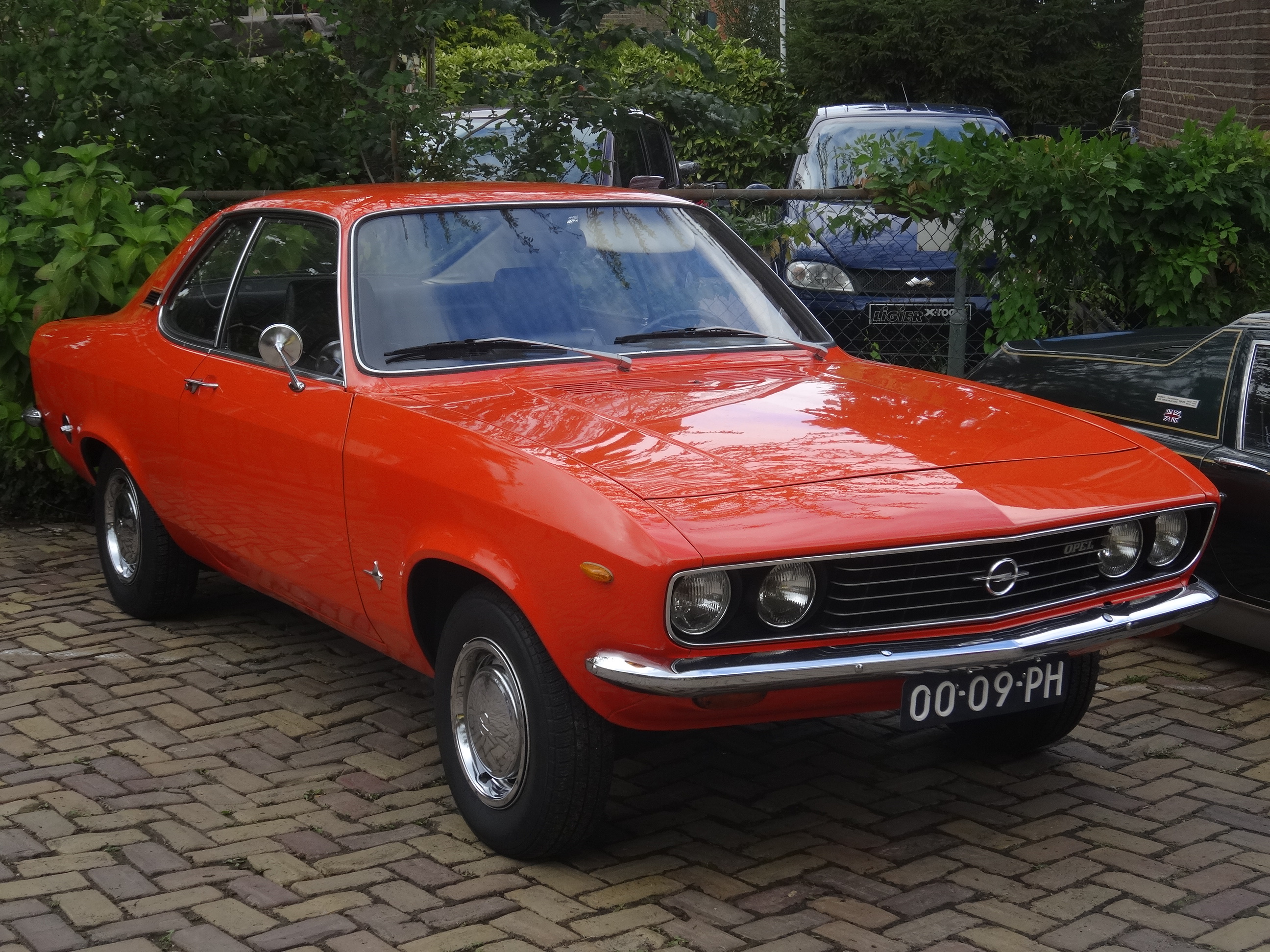
you guys is in the development of the M6 GT, you also came up with the Manta. So you also offer
the Manta body, which is a nice car in itself. That's based off the M8, right? Yeah. It's a
M8 copy from, you know, actually, back in the 80s. Yeah. Yeah, late 70s, 80s. And they were
popular. That's the one that's a convertible. You're going to do the top. Yeah. So have you
been planning on selling those as well? Absolutely. So you can buy either. We consider the Manta more
of like the fun go out for coffee model because of the open top. But we had to, because this body
and the infrastructure for this body with these side pods wasn't done yet, we had to shift gears
for a little bit. And we actually got the Mirage body over the top of it. And that's how we did
a lot of our testing. So we were out there kind of camouflaged for a little bit. Oh, yeah. Yeah,
we definitely turned some heads with that thing. Yeah. So yeah, so we offer that as well.
For testing. Go ahead. Oh, just for testing and geometry and things like that. And we put about
this, probably 600 miles on it. Yeah. But it's nice because now you have like a Roadster version.
Yeah. Yeah. That's really cool. So now can people order these cars now? Are you open to taking orders?
Absolutely. We only have limited spots for the first few. Yeah. Just because of time. And,
you know, it always takes a little bit longer, the first few to tool up and manufacture. But
absolutely, they are available. They have options. The option glass windshield option for whether or
not you want us to do engine and gearbox package. Yeah. But you know, reach out to us. They start
right on the website. You can look at the different packages or download a spec sheet
and get more information. Yeah. Tell me about the Legend Builders Club.
It's a great idea. Yeah. Well, what we wanted to do is, you know, I think that a lot of people
want to be a part of kind of building this car and realize that you are building something unique.
I mean, Bruce McLaren was an absolute legend. Yeah. And this was the car that he was developing
and going to bring to the market. And it kind of has this little bit of a legend behind it. And
our tagline was build your legend. You know, let's get people to build the cars that they've
always wanted. Yeah. And I said, okay, well, you know what? Let's do this where it really
should be an experience with a customer where you feel like you are, one, a priority. And two,
you get to kind of get information, get, you know, memorabilia, be a part of the process
when we're building this, you know, you get photos, you get a specific, you know,
VIN inscribed, you know, not trinkets, but you know, things that actually we craft,
we build everything in-house. The things you get are things that we take a lot of time to
put together. So you get a little bit of, you know, a special experience when you buy and
build one of these things. Yeah. For you guys out there, you haven't seen this. Let me just
describe it to you. It comes in in this really cool box. And you open it up and there's a whole
history about the M6 GT. There's vintage pictures of Bruce and the cars. There's all kinds of plaques
and things that are frameable. I mean, this is really nice stuff. This is similar to like,
if you buy a Ferrari, or if you buy something like that, you get the special watch, you get
the special thing. I just thought it was really cool. And there's very few people that do this,
you know, in the kit car world, you know, that kind of make it special. And I thought it was a
really cool idea. I appreciate that. And also, we're trying to, you know, these aren't things
that we're going to, you know, mass produce hundreds of, you know, these are things that
are carefully engineered and built for you. So I think it should reflect that.
So what's the next step? What's the next car? Or are you just going to focus on M6 GTs for a while,
you know? Yeah. We're kind of forced to. I hate these colors, you know.
The pan is boiling. So we're, you know, we need to do some more development, but we do have a
lot of interest in the cars. That never ends, does it? No, it never does. Not for us anyway.
Yeah. Well, you can always make them better. And there's always things that you're, you know,
I know that you're going to do some more development on this car as well. So that's awesome.
Yeah. Yeah. Production starts when we get back. Yeah. Just so it never ends. Well,
guys, thanks for dropping by, man. It's great to, and the car is awesome. I appreciate that. Thank you.
All right. That's our show for today, which means you need to get out there and start
working on something, spend some time turning wrenches. You might be surprised how much you
like it. Now, make sure that you check out our website, StacyDavid.com, because we've got all
kinds of new products and some other great stuff that you're just going to love. I've got a new
children's book called Iggy and the Stick Man. This is a story about a lowly stick that has
dreams of greatness only to be ridiculed by his friends. But then through a series of events,
he learns that it is possible to get up off the ground and change everything if you're willing
to persevere. You need to check it out. Also, make sure you check out our social media. That's
Instagram, TikTok, Facebook, YouTube, all at official StacyDavid. Our social media is where
you're going to find all of our bonus content, the giveaways, the contests, the trivia. We even have
extra viewer projects that focus on what you are working on. Also, the new season of Gears will be
on Racer Network, and YouTube will be the place where you can view all of your favorite Gears episodes,
as well as the full project builds that follow a project from beginning to end. So that's really
nice. Finally, if you need to work some metal, check out Woodward Fab. These are the tools that I
use in the shop, and they've been making quality metal products since 1966. But remember, the most
important thing is you need to get out there and turn some wrenches yourself. So get a project and
start working on it. All right. That's all the announcements. We're all up to date. We'll see you next time.
You're a podcast listener, and this is a podcast ad heard only in Canada. Reach great Canadian
listeners like yourself with podcast advertising from Libs and Ads. Choose from hundreds of top
podcasts, offering host endorsements, or run a pre-produced ad like this one across thousands
of shows. To reach your target audience with Libs and Ads, email Bob at Libson.com to learn more.
That's B-O-B at L-I-B-S-Y-N.com.
Original notes
We're feeling the need… the need for speed in this episode! To start things off, Stacey has Mike Goodwin from Ford Racing on the mic to talk about Ford's new line of crate engines. Then the guys from Retroformance stop by to drop off and discuss the prototype of their McLaren M6GT replica project.

Tales of a Gearhead
Stacey David
0:00
32:05