Battery electric vehicles are cars that only use electricity to run, meaning they don't have a gas engine. They are better for the environment since they don't produce any exhaust fumes.
Diesel vehicles are cars that run on diesel fuel, which is different from regular gasoline. They usually get better mileage and are often used in trucks and larger cars.
Hybrid electric vehicles are cars that use both a gas engine and an electric motor. This helps them save fuel and produce fewer emissions than regular cars that only use gas.
Plug-in hybrids are cars that can run on both gas and electricity. You can charge them by plugging them in, which lets you drive on electricity for a while before switching to gas.
The Audi A3 is a small luxury car that offers a comfortable ride and stylish design. It's available in different versions, including a sedan and a hatchback, making it versatile for different needs.
The Kia Picanto is a small car that is easy to drive and park, making it perfect for city living. It's known for being affordable and practical, which is why people often compare it to other budget-friendly cars.
Multi-link rear suspension is a type of car suspension that helps the car handle better on the road. It uses several arms to connect the back wheels to the car, making the ride smoother.
The Tesla Model 3 is a small electric car that is very popular because it drives well and has a long battery range. It also has a lot of high-tech features.
SEMA is a big car show in Las Vegas where people show off new car parts and customizations. It's a place for car lovers to see the latest and coolest automotive products.
The Fiat 500 is a small car that was redesigned in 2007 to look like the original version from the past. It's known for being cute and easy to drive around the city.
The Fiat 124 Coupe is a classic car made by Fiat, an Italian company. It was popular in the late 1960s and 1970s for its good looks and sporty feel.
LIVE
Welcome to the motoring podcast, your weekly discussion of motoring news. This is episode 657 on Tuesday, the 11th of November, 2025. Hello, I'm Alan. On my own this week, there's no Andrew, but what will happen is that you're here a reminder that if you connect something to the internet, someone can remote the access it. In Union, you can't use the retro vibes, hit hard, and in points of interest, two men go shopping in Italy.
So that's what you talk about on car podcasts, isn't it? On motoring podcasts anyway. Unfortunately, between now and then, we have some news and the news is newsy in a way that we're all familiar with these days. So let's get started. We've got three pieces of follow-up, and the first one is that the FCA is going to extend its consultation on motor finance redress to the 12th of December. Yes, this is those of us who took out motor finance over a few years.
Just there and people saying that we were, well, we weren't told that people were receiving a kickback for the finance that we were getting. And of course, there's big, big class action lawsuits ready triggered waiting to go to get some form of compensation for that.
The financial conduct authority is saying that it's heard feedback from lenders and some consumers and dealer representatives saying that analysis of the market-wide data is taking time.
As a result, consultation deadline has been extended until 5 p.m. on the 12th of December. I'm sure that final year olds, well, they're saying that they expect to publish final rules in early 2026. So that would probably be February or March. Let's just see what happens with that one and keep an eye on it.
Next up was the government plan to scrap employee car ownership schemes. So those are the ones we've talked about a few times before, where employees of car companies, car related companies, car company related companies can buy a vehicle for a reduced price.
However, it's only there only I had to keep it for six months or 6,000 miles, placed with another car under the same terms. This is car manufacturers and others are pointing out, all the motor industry is pointing out, this lets people actually drive the things that they manufacture at a reduced rate.
And it also means that the car manufacturers end up with a very good source of low mileage, very high quality cars for their used car, proved used car sites of their business as well.
So it's very popular there. The car industry is saying that getting rid of it could result in losses of more than a billion dollars.
Well, the billion pounds in revenue could throttle use car sales and put 5,000 manufacturing at jobs at risk.
There accounts for about 100,000 registrations every year. That's 5% of the annual new car market here in the UK.
So it is pretty serious. The problem the government has with this is that people are buying the cars, they're not being provided as a company car.
And as a result, they don't pay benefiting kind tax or any national insurance contributions on any of these things because the car is owned by the employee, it's not a company asset, it is the employee who's bought its asset.
Yeah, this isn't a government. A government that's interested in keeping things affordable, prices of everything go up.
So why not just just make it a little bit worse? I don't really understand who this is affecting or inconveniencing with the scheme just as it is.
So, yes, we'll see what happens with that. I don't have high hopes that they will, that they'll let it continue.
It just isn't the way that the current UK government is or behaves.
Last piece of follow up, we talked the other week about next period, the Dutch owned, sort of the Dutch chip company that is owned by a Chinese company that the Dutch government is attempting to nationalize basically force force it back from permits.
From its own other Chinese company, Wingtech. China has grown and the Chinese government had then said, no, no, no, no, no, you can't export any of these chips. These chips are not for export anymore entirely for use in our, from their factories in China.
These are entirely for use within China, no more exporting. It now seems that they have granted an exemption to export controls for civilian applications.
Nobody can quite work out what the non-civilian applications are or at least don't know what the non-civilian applications of the chip are.
But it's a great relief for car manufacturers across Europe because it means that they will actually have components that they can put into cars, particularly Volkswagen and others.
I'm sure that there will be a good couple of plain loads of chips making their way across to try to make up for the lack and to keep the factories running.
New news then, and it's second week of the month really, so it's time for the new car registration figures for October 2025.
Yay, et cetera, et cetera, et cetera. New car market has risen 0.5% to 144,948 units, battery electric vehicles taking to battery electric cars, specifically taking 25.4% of the market share.
These numbers mean that the industry is anticipating the overall number of registrations for 2025 will cross the 2 million unit market.
That'll be the first time since about 2019. There is worry though that the whole employee car ownership scheme scrapping that was just talked about could show the market into decline with all of the fund.
The significant economic costs as the SMMT put it that comes with that.
So on the set of the 144,948 registrations in October 2025, battery electric vehicles made up 36,830 of those are 23.6%.
Petrol, oh pardon me, that's not 23.6%, my apologies, 25.4%, it's up 23.6%.
If you saw the graphics from SMMT, you'd understand why it's hard to read them correctly as well.
Petrol vehicles made up 44.4% of the market, diesel vehicles made up 4.8% of the market.
Hybrid electric vehicles are coming in at 13.3% and plug-in hybrids are coming in at 12.1% of the registrations.
Although 38.6% were registered to private individuals, 58.9% were registered to fleets and businesses accounted for a mere 2.5% of that market share.
We've been through the numbers, basically the same as last as 2024, but obviously the mix of motor power is slightly different.
The top models for October come down as follows.
Number 10, the Audi A3, 2192 units registered.
Number 8, the Volkswagen Tiguan, with 2,380 units registered.
Number 7, the Nissan Kashkai, number 6, the Jiku 7, 2,611 of those registered, which is believed to have given the number I see around here.
Number 5, the Nissan Duke, number 4, the Volkswagen Golf, 2,621 units.
Number 3, the Mini Cooper, number 2, the Kia Sportage, number 1, the Ford Puma with 4,418 units registered.
Everything's pretty much all bunched up together. There's under 500 units between 10th and 3rd at the Mini Cooper there.
It comes at 2,653 units registered.
The Sportage, 3,431, and then the Ford Puma, 4,418.
So, almost exactly 1,000 more Puma than Sportage. Quite a jump there.
I'm sure there's some perfectly reasonable explanation for it.
Yeah. Spreadsheet of Doom and Glory is mostly Doom.
Let's start the top run through that. I've got to do both, I'm afraid.
DS down 83, well 84%, 14 DS registered last month.
Fiat down 62%, Genesis down 64%, GWM down 61%, Honda down 45%.
Ineos down 72%, Jaguar down 100%, that's not a surprise, so no new Jaguars registered in the UK last month.
1405, same time last year. By the way, if you wonder just how many fewer vehicles JLR are registering right now.
Jeep down 51%, Lexus down 18%, Mercedes Benz down 29%, MG down 20%, Persia down 27%, Porsche down 17%.
Skoda down 15%, Subaru down 18, Tesla down 47 and other imports were down 44.96%.
Far fewer numbers to read out on the greens, Cooper up 66.33%, Moda up 141.61%.
Paul start up 64%, Renault up 18%, Suzuki up 65%, and last but not least, Vauxhall up 24.24%.
Of course, there are others that went up, others that went down as well, but they're outside this of 15% threshold, either way that we normally have.
Curious one there was Ford, despite the 1000 extra pumes that got registered over anything else.
Their percentage change was only there were only up 2.63% overall.
That pretty much rounds it up, apart from Mike Horsey, SMNT Chief Executive Statement.
He's saying that the government has backed the UK automotive sector with EV incentives and global trade deals helping drive growth and encourage decarbonisation.
Scrapping e-cast would undermine that progress, penalising workers, reducing exchequer income and putting green investment at risk.
A time in the budget should fuel growth, this measure will do the exact opposite, it's time for rethink.
Next we've got results through for the Volkswagen subgroup, the brand group progressive.
So that's the Audi-led division that covers some of the luxury vehicles within the Volkswagen group portfolio.
So that's Lamborghini Bentley, Audi and Jucati.
Bentley's profits plunged 62% to 150 million euros or 101.3 million pounds in the last nine months to the end of September.
That cut the operating profit margin to 6.1% according to the figures that have just been released.
Sales were marginally down just by 2% to 7,236 cars in that time.
Lamborghini, however, fair better, it's operating profits were down 13% to 592 million euros or 521.8 million pounds.
That resulted in an operating margin of 25%, they also sold 8,140 cars in the nine months that was down by 3.2%.
In fact, the only luxury automotive brand that did better by those measures by the Lamborghini was Ferrari, but BMW doesn't split stuff out for Rolls-Royce.
So nobody knows when they see it really.
Lamborghini's, so Lamborghini did incredibly well for the group.
Audi itself posted disappointed margin of just 1.8% into this auto car article.
Lamborghini delivered 38% of the group's operating profit on less than 1% of its sales.
Audi accounted for 52% of the profits, Bentley 7% and Ducati just 3%.
Yeah, nobody's really quite sure why Lamborghini's done so much better than Bentley across that period, but I was quite surprised actually by the number of Lamborghini that was sold in these numbers.
Moving on, Caterham.
There's been a change at the top of Caterham.
Caterham CEO has stepped down in a sort of rather strange way and it was kind of rumored that he disappeared a couple of weeks ago, but it was only this week that it was mentioned.
And it says he's stepping down as no word, whether he's retiring, moving to another business or anything, and no comment from obviously former CEO Bob Lachley.
He started out as Chief Strategic Officer in 2021, became CEO and CEO from June 2022, and he's leaving the company.
In his place, the time being will be Trevor Steele, who's the Chief Financial Officer and the Operations Director, Kenzuho Takahashi, who is the president and founder of the owner of Caterham VT Holdings.
It's a very nice thing about Lachley, but people are a little bit unsure about just what's going on and what's happened.
There's been a lot of change that Caterham recently, of course, as New Headquarters, new engines, and of course there has been the project V as well, pottery along in the background.
So we'll see what happens, maybe there'll be some more news.
Hope all is good and all is well for both parties in this one.
Next up, and it's one of those times, I'm going to be slightly glad that Andrew isn't here, because we're going to talk about cybersecurity.
The Norwegian Policy Transport Operator Aruta has identified some cybersecurity risks related to over-the-air software updates on some of its electric buses from the Chinese manufacturer Yutong following some security tests.
Operators now are going to implement some of the several measures in response.
What actually happened was that they took the...
They took the other buses basically under a mountain so that there were no external signals, and they tried to work out just what was happening in the software in the bus.
And just what it was actually trying to connect to and what information it was trying to exchange with whoever it connected to.
But according to Aruta, the digital access to control systems for software updates and diagnostics could, in theory, allow 850 Yutong buses to be manipulated remotely.
It says here in this electrivarticle that the operator's statement remains deliberately factual, simply noting that the Chinese manufacturer has digital access to the control systems for software updates and diagnostics.
They also say in theory this could be exploited to influence the bus and emphasizes that the bus cameras aren't connected to the internet as no risk of image or video translation from the buses.
They also noticed that the systems were barely integrated, meaning that none of this was concealed or anything very well, if at all.
And that, whilst Yutong could access the battery and power management systems via a Romanian SIM card, meaning that at least theoretically they could remotely disable a bus.
Yeah, it's quite possible. Any time that you've got these systems that provide over the air updates that affect your motive power and just how your vehicle behaves, then yeah, you could absolutely, you know, there's absolutely the chance that vehicles could be disabled.
But anyway, Ritter has now worked out how you can, how they can implement proper security systems to protect them from hacking attempts.
For example, they put in their own firewalls to protect against the hacking.
They have discovered that actually they can they can pause over the air updates to the buses so that lets them check and perform tests on any that are coming into the fleet and make sure that they're okay before then, before then then letting them letting them run as well.
So lots of good work there for Ritter. Just working out what happens, what gets exchanged. I do think that perhaps we should be a little bit more wary about somewhat cars and over the air updates because exactly the same challenges are just there.
Denmark subsequently held heard and so they also are checking a movie. It's a public transport group there. They are trying to work out.
They are trying to work out what they can do about it. What worries me most, this is a second story from carscoops.com, is that the bus in the second picture down in its destination is the railway station.
I go to get to my office when I visit Denmark. So yeah, I really hope they fix those particular buses on a personal point.
Yutong by the way has responded to this and it says that it strictly complies with the applicable laws, regulations and industry standards, locations where its vehicles operate and it does store its EU vehicle data within the EU at an AWS data center in Frankfurt.
Nobody's allowed into it without customer authorization. It's encrypted and has access control and they're making it very clear that they are as close as they could.
Let's be honest, what they're talking about in Norway is not unreasonable if your vehicle can accept over the air updates.
I just think maybe it's a case of making sure it's quite they're very clear about what they're doing and how they're doing it.
And it's a trusting, it's going to become a trusting.
Anyway, other than that by the way, no reason particularly dislike the Yutong buses, although people say that they're not very well built allegedly.
That brings us to the mid point in the show and I almost went tramping straight off into new new car news there. But first of all, it's guilt minute, the quick break in the show where we asked for a tad of financial support to keep the lights on and the hosting running.
If you feel the motoring podcasts were the small consideration every month, then you can become a patron.
Different levels of patron include different levels of commitment from us to you including being able to watch the show recorded live.
We'll sell a small range of merchandise in a spring store from stickers to mugs and t-shirts.
If you don't have any spare cash and we do completely understand if that's the case, then you can help us by following for free from a podcast player to receive every show as they're released.
And by liking or showing whatever way your podcast supply lets you, one of the best ones to use to support us is actually YouTube.
The more hours of viewing and listening that we can amass on YouTube, the better that brings us a little bit closer to being able to grapple back some money from Google.
Just a little bit of money from Google, but it's money that's in our pockets, not Google's pockets and being used to host stuff and stream stuff and all of that kind of good things.
Anyway, if you've done all of that and some of you do, so thank you so very much.
Then the last thing you can do is to recommend us to your friends or colleagues.
You can't use this week. We kick off with a very cool new car that isn't an SUV and it's not Chinese but it is electric and that's pretty awesome.
The 2026 Renault Twingo promises a 163 mile range and a sub 20,000 pound price.
Renault is trying to go out there and it's trying to go toe to toe with and basically revitalize the ace segment, making sure that it's electric offering is the same kind of price as things like the Kia Picanto.
I go the I go cross and stuff and it's cute enough and it's smart enough that people would choose it, not because it's an electric car but despite it being an electric car, which supposedly is one of the reasons people are buying the new 5 EV.
It's got to come in below the price of the lowest five and it starts at 21,495 pounds. So hence the attempt to get a below 20,000 pound price point.
The Twingo is super cute. It looks a lot like the from the front. It looks a lot like the first generation. It has that same mono space, one box shape.
The back looks much more like the second generation, Twingo, which I thought was a bit of a cool looking thing as well.
Lots and lots of inside there's a cool color palette is the first thing really and then lots and lots of nodes to the original inside and out.
One of the things that they've done to keep the price low, they've based it an awful lot on the Renault 5's AMPR small platform.
But some things have gone in order to save costs. So instead of having a multi link rear suspension, it goes back to to a beam rear suspension.
But what's really interesting about this I think is that one of the ways of saving money is in the battery.
And it's not necessarily by having a tiny battery. It's 27.5 kilowatt hours.
But it's a lithium ion phosphate battery rather than the nickel manganese cool bolt that's used in other Renault EVs.
That's supposedly much cheaper to produce. It doesn't seem to have much smaller capacity.
A 27.5 is pretty decent, especially in a range of 163 miles. It's an A segment car and that's still pretty decent.
Of course, having that small battery and having a small car that's relatively lightweight means of course it becomes incredibly energy efficient.
So Renault quoting a figure of 5.9 miles per kilowatt hour.
And it can do that because even with batteries and stuff the weight only ranges from 1200 to 1245 kilos depending on which trim you've got.
It can be charged up to 11 kilowatts on AC 50 kilowatts on a DC rapid charger giving you a 10 to 80% time of about half an hour.
Renault is also saying that the CO2 generated by producing its battery will have paid off after about 18,600 miles or 30,000 kilometers.
And after that it then immediately becomes more environmentally friendly than its internal combustion equivalent.
Power comes from a single motor that sends 80 brake horsepower, 129 pound feet to the front wheels, which is normal amounts for an A segment car.
It's got a quick step off. It's been tuned for that so that you can get away from the lights quickly.
Accelerate to 37 miles an hour for Stanstone 3.85 seconds, 62 from rest, 12.1 seconds.
So he's not exactly going to be racing them, racing any any played testers off the light.
But decent enough is what you expect from a small city car.
Lots of clever stuff, lots of stuff stripped out, lots of modular things as well.
They've kind of pinched the digital euclip system that's using the spring.
It's got physical climate controls, digital instrument panels, there's an infotainment touch screener standard, all of these kinds of things.
But it's super cool. It's really neat. I really, really like it.
I probably looks like it's preferred to the five.
I'd love a shot here and that.
Yeah, but I have always loved the original Twingo as well.
That's super neat. Like that a lot.
A little bit more stayed perhaps, but BYD has announced prices and specifications for these.
It's SEAL 2, Saloon and Touring. This looks like it's going to take on the Volkswagen Passat and similar.
Well, definitely the Tesla Model 3 in Saloon and Estate versions.
That's expected to hit the road starting from £33,990 for the Saloon, £34,990 for the Touring version.
Deliveries starting in December.
Let's just see what happens with that. It's going to be interesting.
I think just the level of kit and the low price are going to make that especially a state.
I would imagine quite an appealing idea to fleets.
I've missed something there. What did I miss?
No, I didn't. I didn't miss anything.
Last thing we're going to cover in new car news was actually some of the stuff from SEMA.
So it's a sort of bonus list of the week.
There's 42 slides from AutoCAR of some of the best of SEMA.
It says, while the wonderful machines for the SEMA show 2025,
amazing concept cars, crazy custom trucks and immaculate restorations from Spectacular Automotive aftermarket show in Las Vegas,
I had picked slide 45 of 42 in your handout, which is a 1990 Nissan Patrol,
which is not exactly standard.
Under the bonnet is a Nissan TB48 4.8L inline 6 engine.
If this one's putting out, this one has Garrett Turbo Chargers,
and it's putting out about a thousand horsepower.
There's more custom wheels, 17-inch axis bead locks with 35-inch Yokohama Geo Landers,
it's a great mobile one, livery,
holy retro bright LED headlamps, Rekara Sports to seats.
It just looks really, really cool. I like it a lot.
More so than maybe some of the lifted trucks.
But no, there's lots of rather cool stuff hanging around there.
Do have a look through SEMA.
SEMA looks like it's one heck of a show.
Supposedly you can do an awful lot of steps when you're at SEMA.
But have a little bit of a look through.
Choose your favourite and let's know what it is for other socials,
which will give you at the end of the show.
Lunchtime read.
Finally, I know that was a kind of full start,
but this is actually the beginning of points of interest.
Lunchtime read is very much lunchtime watch this week.
We talked in the end, finally, the other week about Jim McGill
and Sean heading off on, I've gotten Sean's surname again.
I had to confess to him the other week and it was embarrassing.
I'm sorry mate.
So Jim and Sean headed off and actually did the canola bowl challenge
that we talked about so they went to, they met up in Turin at Lingato
with a friend of the show, Matteo Lucarta, who gave them recipes
and gave them ingredients and sent them off to buy it.
They went and they bought the food locally.
And then within 24 hours had made it back.
I have to make it back to Cambridge in an £800 fee at £500
to then cater to some sort of East Anglican motoring folk.
Hello to Boosplotch and Mrs. Splodge as well,
who made a cameo appearance there.
You'll find out how they go on.
It's a really nice video, it's really nicely shot.
It's a good story.
Take 36 minutes of your life and watch it.
I can't believe it only has 949 views.
It should have many, many times that.
So go watch it please.
It's a fantastic video.
Explains why they're doing it as well.
What they're raising money for too.
So do go do a watch please.
It's really cracking.
Go do a watch.
Proper list of the week this week.
It's a game from AutoCAR and it's every manufacturer's best looking model.
It is not AutoCAR's finest list.
I disagree so much with so many of these but there are 59 slides.
At this point I was hoping to have a debate with Andrew
and disagree about stuff but obviously I can't.
It's a little bit tricky here.
I'm going to say because I think this is a flipping stunning car by anyone's measure.
The Persia 504 Cabrioli, which is a slide 45 and 59 in your handout.
They're saying that it's the most desirable Persia ever aesthetically.
And do you know what?
I kind of agree.
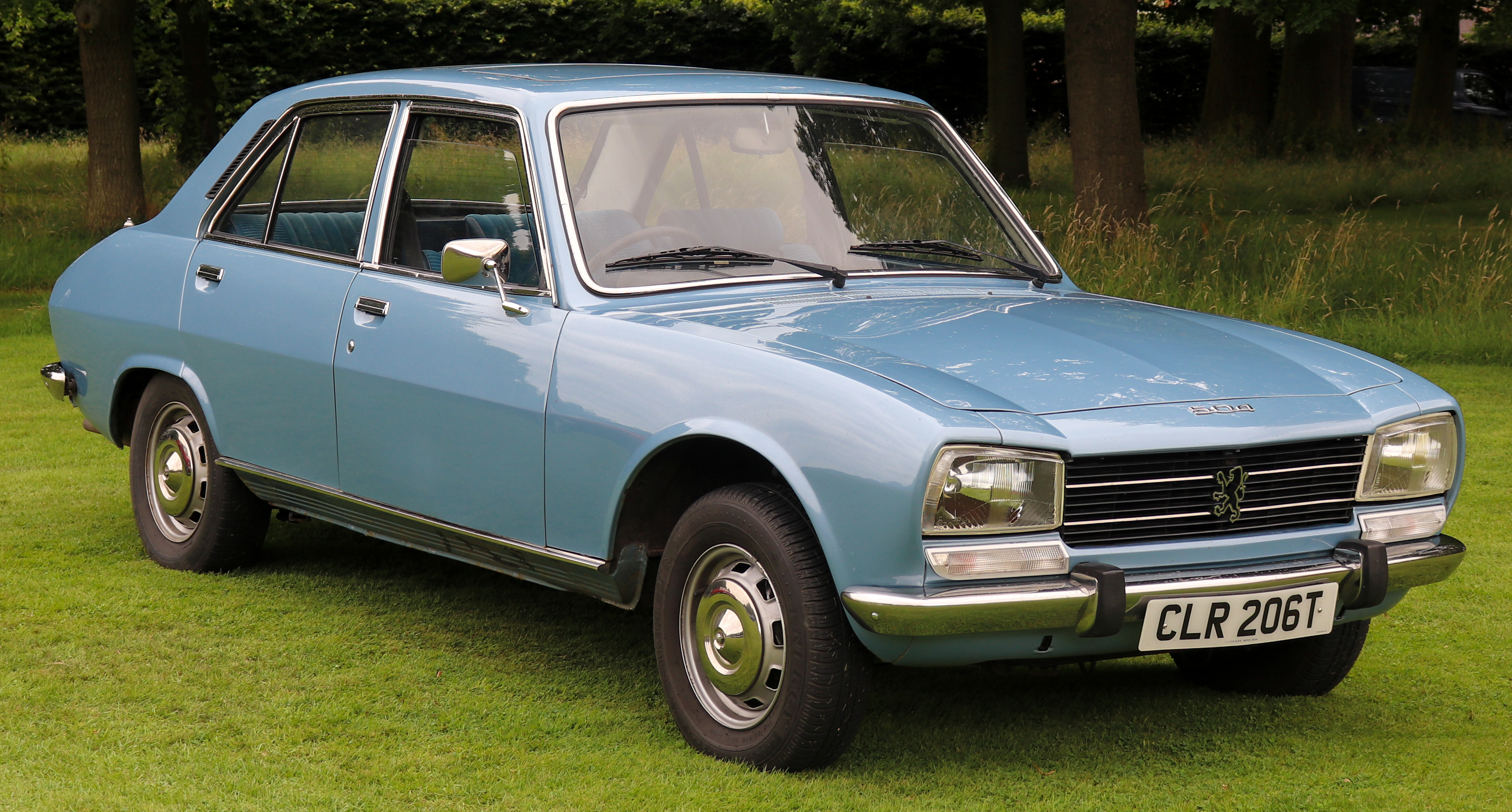
I don't necessarily like the wheels on the later ones but the 504 Cabrioli by
Peninferina is a stunning stunning car and probably one of the prettiest of all the cars
that are listed here.
I mean some of the others where they've chosen a one off by a brand is pretty pathetic.
Other times they've just chosen the wrong car.
And yeah, I will disagree quite.
The prettiest fear ever is the 2007 Fiat 500.
No, I'm sorry that's very much not the case for many, many levels.
I mean there's the original 500.
There's the beautiful 124 coupes.
I think it's 124 coupes.
Again by Peninferina.
It's just wrong.
It's so wrong.
I have a funny feeling it was written by an American.
And therefore it contains a lot of wrongness just through lack of knowledge.
And there's an awful lot of American cars on there where I can't argue with it
because I don't have the knowledge.
So there we go.
They're not wrong, they're just different.
I spent two and a half years saying that.
So last but not least, this week's and finally this one that comes from the telegraph via Yahoo News.
Written by Daniel Puddicum.
But it's about why the world's fastest driver prefers a 20 mile an hour speed powered car.
And it's Andy Green.
He who piloted the thrust SSC to 763 miles an hour in Nevada.
Similarly has got the diesel land speed record in the GCB branded diesel world record holding car.
And he just loves his 1904 Stanley runabout.
He's done it for about seven years.
He's intending on taking it on the on the London to Brighton run.
And he thinks it's great.
He thinks it's fantastic.
And just really enjoys driving it and all the all the pullover that goes along with with starting and getting a getting a steam powered car ready to actually run.
So it's a really nice and logical.
And yeah, that'll that'll tide you over for a couple of minutes.
Towards the end of the day.
I can't really do anyone else if I miss.
Nothing, no particular parish notes.
Hopefully his logic will be back next week.
There is a chance that he won't be, but hopefully he will.
And you won't have to listen to just me warbling on.
But don't forget to put you now and then you can give us any feedback and share your thoughts of the show at motoringpodcast.com on BlueSky at motoringpodcast on Instagram or Facebook.
And on the contact page of motoringpodcast.com the hub of all our activities.
Remember you can support us financially via Patreon.
Please leave a review rating on Apple Podcasts, YouTube or have every podcast app let's you do such a thing.
To get in touch with Andrew is best to search for cracked windscreen on BlueSky.
Or indeed he is on LinkedIn under his own name for some reason.
I mean, I've been using an alias to fight with him.
To get in touch with me, again, best to use BlueSky, where I'm at AGP Bradley.
That's B-I-A-D-L-E-Y dot to B-Sky and dot social.
We'll be back very soon.
Until then, I've been Alan Bradley and safe motoring.
About this episode
A solo Alan discusses the latest motoring news, including the FCA's extension on motor finance consultations and the potential scrapping of employee car ownership schemes, which could significantly impact the UK automotive market. He also covers new car registration figures for October 2025, highlighting the rise of battery electric vehicles. Noteworthy topics include cybersecurity concerns with electric buses, a new electric Renault Twingo, and insights from the SEMA show. The episode wraps up with a light-hearted segment on the world's fastest driver who prefers a vintage steam car.
It’s a solo show from Alan this week, and starts with lots of Follow Up. The FCA has extended the motor finance redress consultation, the UK car industry shows UKGov the high price of ending ECOS, and China has made an exception for some Nexperia chips.
New News this week includes New Car Registration Figures for October, profit analysis for Bentley and Lamborghini, a new boss at Caterham, and cybersecurity gaps in Chinese buses.
New New Car News looks at the just-unveiled Renault Twingo, some likely fleet favourites from BYD and a lot of shiny stuff at SEMA.
Points of Interest bring us Jim and Siôn’s epic charity adventure, and some lovely models from Autocar. We end up on a steamy story of an And Finally.