By-wire technology means that instead of using physical parts to control things like steering and brakes, cars use electronic signals. This can make the car easier to control and allow for new features.
A supercapacitor is a special device that stores energy and can release it very quickly. It's used in some race cars to help them go faster and in cars that need to save energy when braking.
The Dodge Ram is a big truck that people use for work or to haul things around. It's known for being strong and tough, which is why many people like it. When people talk about what the Ram might do in the future, they're curious about new features or improvements that could make it even better.
Turbocharged engines are special types of engines that help cars go faster without using more gas. They use a small turbine to push extra air into the engine.
Software-defined vehicles are cars that use a lot of software to control how they work. This means they can get updates and new features, just like your phone does.
Mechanical links are the physical parts that connect things in a car, like the steering wheel to the wheels. By removing these parts, cars can be lighter and respond better to driver inputs.
Electronic controls are systems in cars that use electricity to make things work instead of mechanical parts. This can help the car perform better and be more flexible.
Electric motors are machines that use electricity to create movement. In cars, they can help control things like brakes without using fluid, making them faster and more efficient.
Steering is how you control where your car goes. New technology allows drivers to change how the steering feels, making it easier or more responsive depending on their preference.
Tunable means you can change how something works to fit your needs. In cars, it means you can make the brakes and steering feel different based on what you like.
Turbocharged V6 engines are a type of engine that uses a turbo to make it more powerful while still being smaller than other engines. This helps the truck go faster and use less gas.
Aluminum body panels are parts of a car made from aluminum instead of steel. They make the car lighter, which helps it use less fuel, but they can be more expensive to fix if damaged.
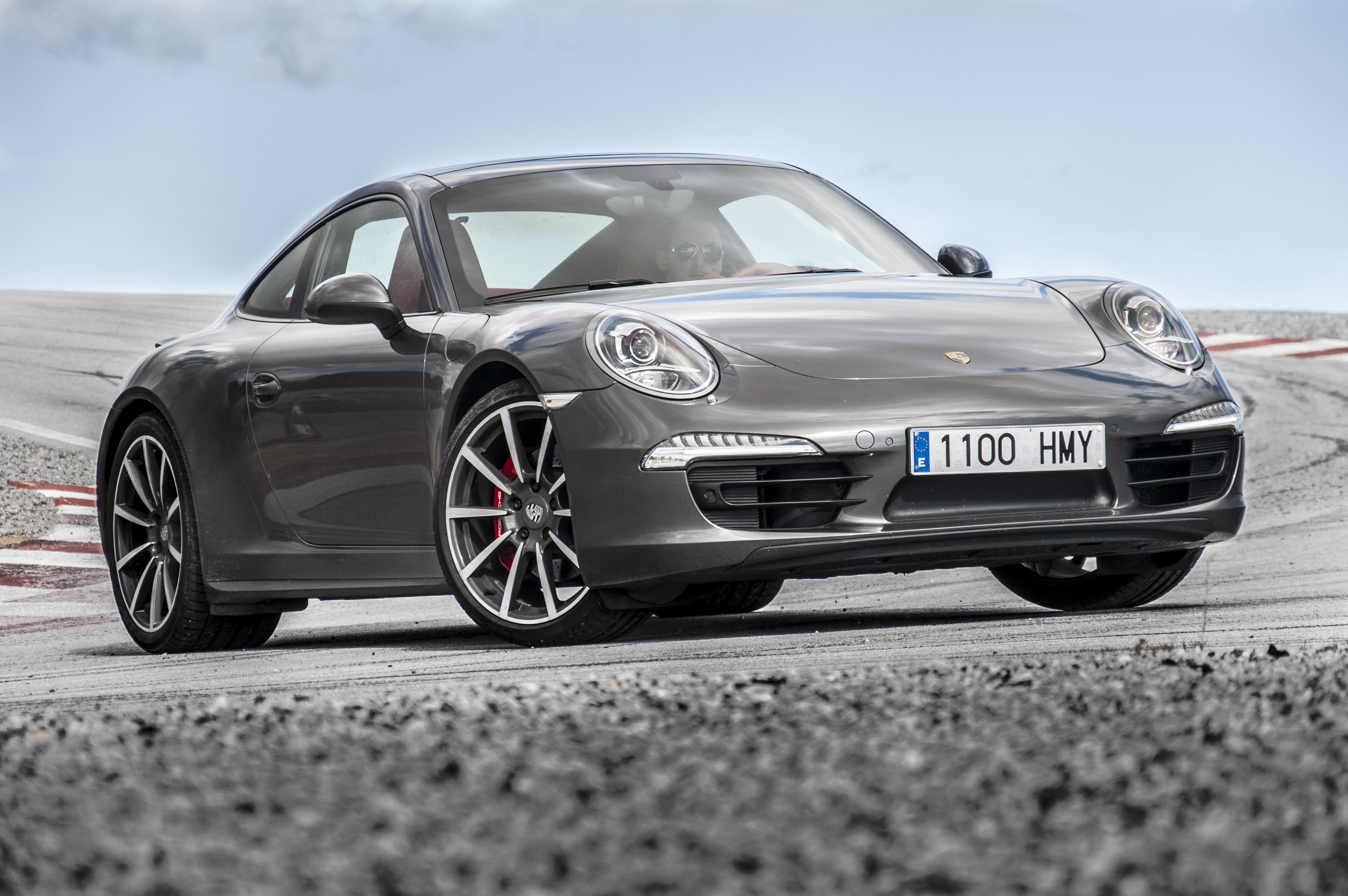
The Porsche 911 is a fancy sports car that many people love because it looks cool and drives really fast. It's been around for a long time and is famous for being well-made and fun to drive. When people talk about it crossing borders, they mean it's a popular car that people want to buy in different countries.
Supply chains are the networks that help get products made and delivered to customers. In cars, this means everything from making parts to putting them together and sending them out to dealerships.
Just-in-time delivery means getting parts or products delivered right when they are needed, so companies don't have to store a lot of extra inventory. It helps save money but requires careful planning.
LIVE
Welcome to Daily Drive.
For Thursday, February 12, 2026, I'm Kellan Walker in Las Vegas.
Today on the show, Nissan is exiting all seven factories it's targeted for closure.
Mercedes-Benz earnings more than half in 2025 and Ford CEO Jim Farley is joining McDonald's
Board of Directors.
Plus, Drew Docans, Mayor of Windsor, Ontario, reacts to President Trump's threat to block
the opening of the Gordy Howe International Bridge and what that means for the auto industry.
Let's run through all the news you need to know to keep up in the auto industry.
Nissan is exiting all seven factories it's targeted for closure and it's running ahead of
schedule on cutting 20,000 jobs.
The final step came last month when it agreed to sell its South African factory to Cherry.
The automaker has cut $1 billion of the $1.6 billion in fixed cost under its RE Nissan
Revival Plan.
It's ahead of schedule on both cost cuts and job reductions.
Nissan reduced its full year operating loss forecast to about $390 million but projects
a $4.2 billion net loss.
Mercedes-Benz earnings more than halved in 2025 dropping to $5.8 billion.
CEO Ola Kalinius blamed tariff costs of about $1.2 billion plus struggles in China where
sales fell a fifth.
The automaker plans to cut global production capacity by more than 10% to 2.2 million units
and expects its cars division profit margin could fall further this year to between 3 and 5%.
Mercedes is banking on cost cuts and its luxury first strategy to turn things around.
And Ford CEO Jim Farley is joining McDonald's board of directors.
Farley brings a vocal presence to a typically cautious fast food chain.
He's warned tariffs would be devastating for auto workers while praising regulatory relief
on fuel economy standards.
He's stepping down from Harley Davidson's board where the motorcycle maker says he won't run for re-election.
And those are today's headlines.
You can read more about those stories and all of today's news at AutoNews.com.
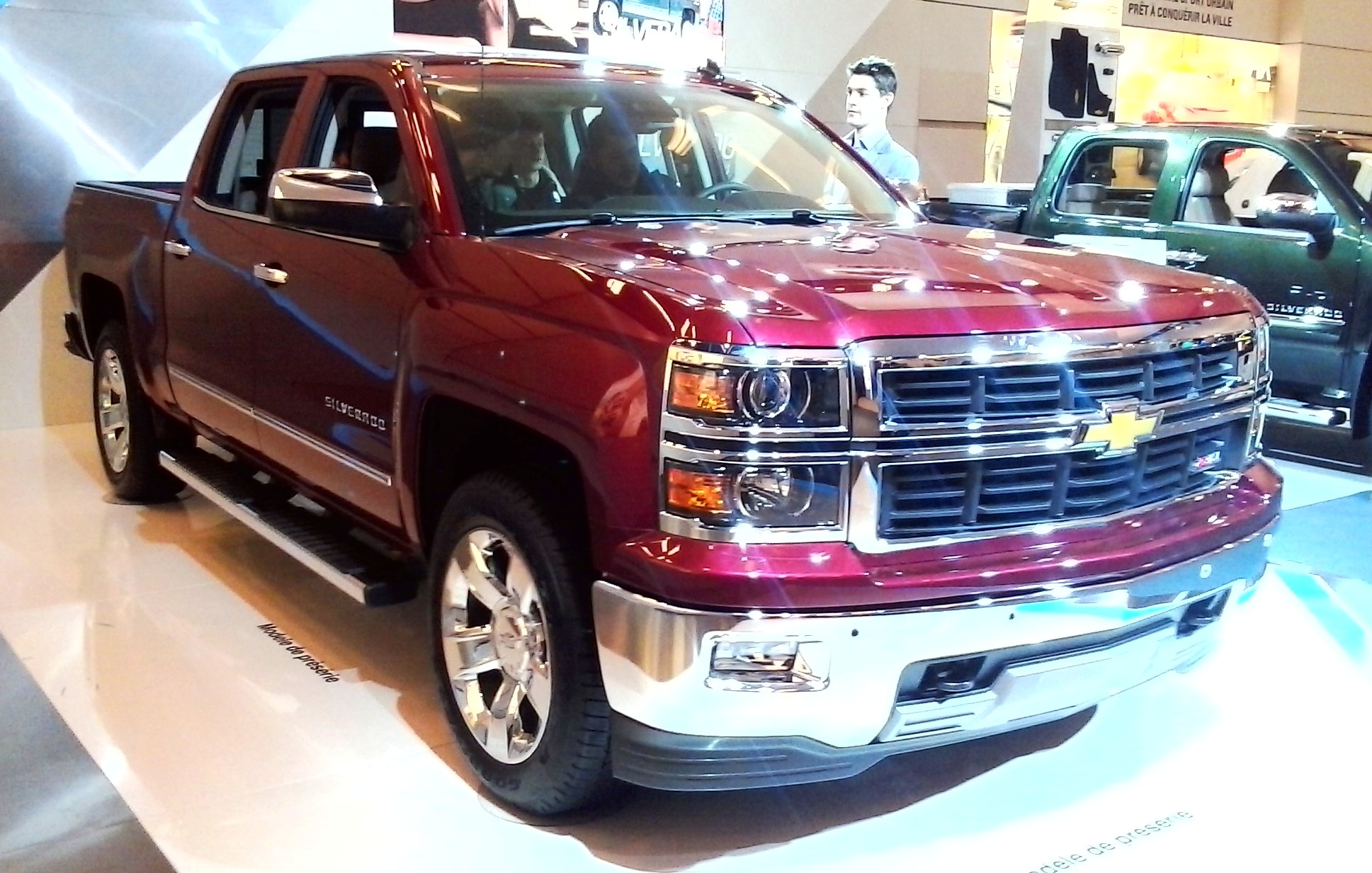
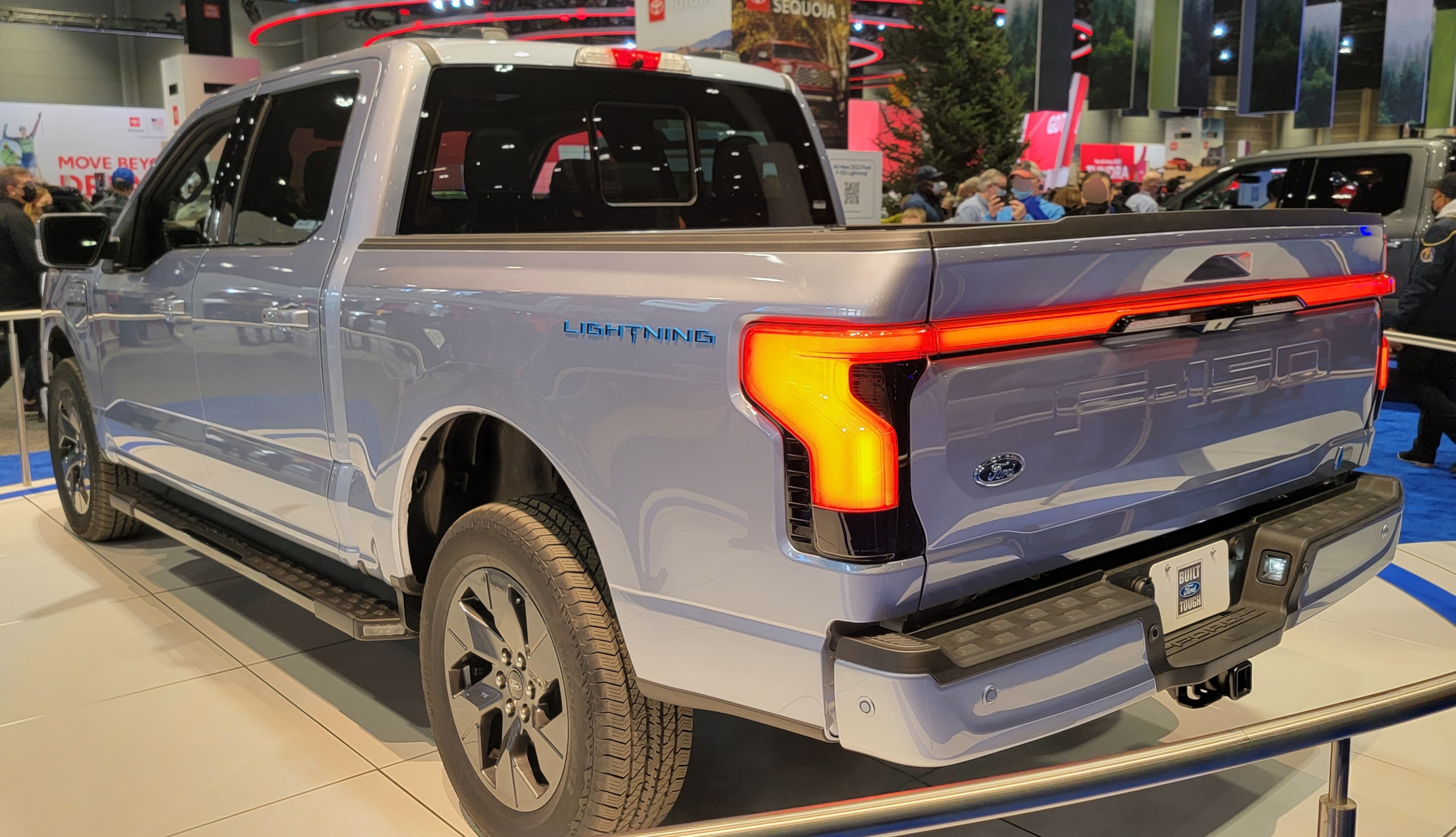
It's starting to look like the next generation of either Ford's F-Series or General Motors'
Chevrolet Silverado or GMC Sierra will be among the most technically advanced pickups ever made.
Our own Jake Nier talked with automotive news reporter Richard Truett about it.
Here's their conversation.
Richard Truett, welcome back to Daily Drive.
It's great to be here, Jake.
So Richard, this is pretty fascinating.
You have pieced together evidence from multiple suppliers to make the case
that Ford's next F-Series will likely debut this by-wire technology before GM's trucks.
So walk us through the key indicators that pointed you toward Ford that you wrote about in this column.
And what was the smoking gun that sort of made you feel confident enough to put this prediction into print?
Well, let's back up just a second.
By-wire technology is creeping onto the market now.
There's two components to this.
There's by-wire technology, which is the steering and the brakes.
And then there's the component that enables them.
That's the supercapacitor, a supercapacitor.
We've seen those in race cars and a very few
low volume production cars.
Mazda and Cadillac in the past have had them.
But now supercapacitors are getting ready to go into high volume production.
But let's back up a second.
What is a supercapacitor?
It's not unlike a battery that you would put in a flashlight or some other small device.
It looks about like that.
But unlike a regular battery, a supercapacitor is designed to deliver all its power very quickly,
like within 15 to 20 seconds, and also recharge just as quickly.
So the world's biggest supplier of 12-volt batteries is a company called Clarios.
Chances are the battery in everybody's car that's listening is made by one of the divisions of Clarios.
They're in like 90% of all cars, almost everybody has a Clarios battery.
Well, now they're getting into supercapacitors.
So they told us last fall that they were evaluating a plant in Holland, Michigan,
which is over near Kalamazoo to start cranking out modules.
That's one component of the puzzle pieces we put together.
But prior to that, ZF, the giant supplier best known for its transmission, said that they have
a contract to supply 5 million electric calibers and that some of them 700,000 are going on heavy
duty trucks. Okay, there's another piece of the puzzle.
Brembo is another company that also said it has a contract to put electric brakes on trucks.
Take a look at those components and look at when the next generation of Ford
and GM trucks are coming out and how much volume they make each year.
You can pretty much narrow it down to either a Ford or a GM truck.
We're not saying that it's impossible that RAM would do it someday, but they don't have the
kind of volume. I mean, last year, Ford and GM cranked out between like 800 and 900,000 full-size
pickups and many of them were made here in Michigan. So this week, Clarios, when they announced their
supercapacitor plant, they also mentioned localized production, which means that whatever
supercapacitor modules come out of that plant, they're going to a factory here in Michigan
somewhere. So it's either going to be Ford's Dearborn truck plant or GM's plant in Flint,
and GM is basically is also going to be expanding their production. But I took a look at when the
timelines of when the next F-150 are coming out and when the next versions of the Chevy Silverado
and GMC Sierra and took a look at when supercapacitor production and brake caliper production would
start. And all that aligns with just about with when Ford's coming out with the next F-150,
which is 2028. We'll probably see it late next year as a 2028 model. So it all tends to point to
Ford. But there was one other thing that involves a little bit of speculation based on history.
If we take a look at the automakers who have put everything that they can into their trucks in terms
of moving them forward with technology and luxury features and really cool stuff, Ford,
every single generation of F-150 has gone where no other truck has gone before. We're talking about
downsized turbocharged engines, aluminum body panels, all sorts of innovative things that Ford
has done. And the reason Ford does that is because the F-150 has been not only its best-selling vehicle,
but the nation's best-selling vehicle since like the mid 1970s. And they're going to do anything
they can to protect that big profitable truck. GM's been a bit more conservative. So I believe,
and I wrote in our column today that all the indicators point to Ford's F-Series as being the
first one on the market with supercapacitors and by-wire technology. So quickly before we wrap
up here, I am curious, for listeners who are following this industry shift in that sort of
direction towards software-defined vehicles, would you say this could be sort of a step toward that?
What does that mean practically for how pickups will be manufactured and serviced and are there
any risks? Let's say if Ford is the one that does this, are there risks for Ford being first to
market with this technology on such a high volume scale? Great question, Jake. Let's start with the
advantages. When you have by-wire technology, you eliminate the mechanical links between the steering
wheel and the front wheel. So when you turn the steering wheel, the front wheels are going to turn
not because there's a shaft connected from the steering column to the steering rack,
but it's all done electronically. And the same thing with the brakes. When you step on the brake
pedal, there will be electric motors that squeeze the pads against the rotors and not hydraulic
fluid. So Ford is going to save, or let's just say Ford or whoever is going to compete first with
this technology is going to save a lot of money on parts that need to be installed on the assembly
line. They won't have to buy those parts. They won't have to source those parts. They won't have
to test those parts. Manufacturing, we're going to get a lot more simpler. Now that's one of the big
benefits. Another big benefit is brakes and steering will be highly tunable just by software.
And so they'll be able to increase customer appeal that way by having you dial in the way
you want your truck to feel. You want brakes to be like instant, powerful on-off or maybe just a
little bit less grabby. However you want, you could probably tune the truck that way. Is Ford
taking a risk? Well, anytime you launch new technology, there's going to be a risk. But
Ford has proven time and time again that when it comes to the F-150, they will spare nothing
to get it right. I mean, look at the chance they took with the downsized turbocharged V6 engines
and a bigger chance even with those aluminum body panels. And time after time, they have proved that
they can pull this off reasonably successfully. Richard Truitt's column is titled 2028 F Series,
seems likely to be the first pickup with supercapacitors and by wire technology. You can
read that all on autonews.com. Richard, thank you so much for the piece and really interesting
insights here. Great to be here, Jake. Thanks for having me. Coming up, Windsor Mayor Drew Dilkins
joins the show and says President Trump's threat to block the Gordy Howe Bridge makes no sense.
Economically or politically. That's next on Daily Drive.
Are you a dealer creating a workplace culture your employees are proud to be part of?
Applications are now open for the 2026 automotive news best dealerships to work for program.
This isn't just an award. It's a chance to get real insight into what's working at your dealership
and where you can improve. And we've expanded the categories this year, recognizing everything
from technician experience and leadership development to AI enablement and employer
retention. The registration deadline is April 17th. Find out more and apply at autonews.com.
Welcome back to Daily Drive. I'm Kellan Walker. The Gordy Howe International Bridge connecting
Windsor and Detroit is built and ready to open. But President Trump says it shouldn't open until
the US owns at least half of it. Windsor Mayor Drew Dilkins says that doesn't make any sense
and will hurt auto companies on both sides of the border. He spoke with our own Molly Boygon.
Mayor Drew Dilkins of Windsor, Ontario on the Canadian side of the bridge. Thanks so much for
joining us. My pleasure. So tell us about why this bridge is being built and the role it will play
in cross border trade between the United States and Canada. Well, this is a really important
bridge and the conversation that really started about 25 years ago in and around 9-11. And there
was a conversation about the need for redundancy in international crossings, but also a need to
be able to start a process that would lead to a new border crossing to support the projected
increase in trade. And we were seeing an increase in trade as a result of the Free Trade Agreement
and the North American Free Trade Agreement and of course now USMCA. And so this conversation
started 25 years ago from when it started to when the day the bridge will open. And reflecting on
the fact that Windsor Detroit is home to the busiest commercial border crossing between our two
nations, about a billion dollars every four days crosses at the Ambassador Bridge today. And so it
was really important to make sure that we had redundancy, that we had increased capacity to
support trade, which is how this project started and why we are where we are today. And President
Trump has contended that the US has basically been ripped off through the construction of the
bridge, but Michigan did play a role in the construction of the bridge. Can you explain
a little bit about the role of Michigan in this whole process? Yeah, so the president's comments
are nonsensical. The United States did not want to fund the construction of the bridge, but they
said if Canada wants to fund it, no problem. We'll give the presidential permit to allow the bridge
to be constructed. The entire cost will fall on Canada's shoulders. Canada will repay itself
through total collection over a period of many years. And then we also partnered with the State
of Michigan all through the process. The State of Michigan has been at the table. Governor
Snyder and Prime Minister Harper were the ones to make the deal. They're the ones to come over and
name the official name of the bridge as Gordie Howe. And so the deal was made between Canada
Federally and the State of Michigan as an entity. And we're joint donors 50-50 in this particular
bridge. Michigan, of course, spent a lot of money on the U.S. side connecting this bridge to the
U.S. I-75 interstate system. And so they are heavily invested as well, which is why their
partners in this operation. And again, it's a 50-50 partnership. Once the expenses of building the
bridge are paid off, we're going to split the proceeds equally moving forward. You spoke a
little bit about the importance of keeping open communication and open trade between Windsor
and Detroit. What is the importance of this bridge to the auto industry in particular?
Well, just think of our particular region where Canada or Windsor, rather, is Canada's
auto capital. Detroit is the motor city. We've got these complex supply chains that have been
built up over the course of really over 100 years. And those supply chains have only accelerated
with the implementation of the free trade agreement NAFTA and USMCA. And so this bridge is really
important, at least in the auto context, because we operate on a just-in-time delivery basis.
And this bridge will be the most technologically advanced connection between Canada and the United
States when it opens. It will remove the majority of the friction at the border. And from an auto
perspective and a parts perspective, that's really good because there's going to be more certainty
that when a part leaves a plant or a vehicle leaves a plant, it's going to reach its destination
in a more timely manner. And because the industry has been built to operate that way,
they need that certainty. This bridge helps provide that certainty.
Have you heard anything from players up and down the automotive value chain about this
dispute, these claims from the Trump administration about the bridge?
You know what? Not really, because I think everyone's looking at this. Any sensible persons
looking at the saying, the bridge is built. There's no more real construction to do. The
bridge is built. The ports of entry are built. The connections to the highway systems and the
ready to open if we just had the staff in place and they were all trained up and we could flip
the switch. And so sensible people are looking at this saying, this is an issue of the day for
Donald Trump. This will be resolved. The bridge will open. And they're not, I think, getting too
flustered about it. In fact, one of the reasons they're not too flustered about it is they've been
using the Ambassador Bridge since 1929. And that bridge isn't going away. It was never intended
to go away. This was meant to add additional capacity and redundancy to a real important
border crossing between our two nations. The opening of the bridge has been delayed from late
2025 to the first part of 2026. Is it your sense that the Trump administration played any role in
the delaying of the opening of the bridge or was that related to normal processes of construction
and delay? It's a great question, really hard to tell. When there was a delay
past the fall, it certainly raised a lot of eyebrows because there was already a big delay
with respect to COVID and supply chain challenges. And so those had mostly resolved themselves.
And any sort of average person walking by or driving by looking at the infrastructure saying,
well, it's really built. There's nothing else to do here. Why aren't they actually staffing it
and opening it? So I don't know the answer to the question, but it was interesting that
with respect to what the president posted earlier this week, it was reported by the New York Times
and others that the owner of the Ambassador Bridge had a private meeting with Secretary Lutnik,
who then phoned the president of the United States, who then made the post on social media.
So unclear what's happening behind the scenes. Clearly, the billionaires are having conversations
with each other and helping each other out. But let's just hope that Bright Minds prevail,
that this border can open, because at the end of the day, the president has launched a trade war
against every country on the planet, including his largest trading partner here in Canada.
Why would he want to continue to add additional pressure, additional problems,
not just to Canada, but really to people who live in Michigan, Ohio, Indiana, Kentucky,
who rely on this border crossing to be smooth and efficient for their own livelihoods and put
bread on their own tables? It makes no sense that he would want to do that, especially
in a state like Michigan that was a swing state that voted for him in the last election.
You spoke at the beginning of our conversation about the bridge's importance
in terms of facilitating greater trade between the two countries. This also comes
at a critical juncture for renegotiating the USMCA. Given that Windsor has the busiest
international crossing in North America, is the heart of Canada's auto manufacturing industry,
what do you think should happen with the USMCA negotiation and what do you expect will happen?
I'm just looking at Donald Trump's behavior in his second term here. What he's done is cherry
pick issue by issue. First, it was an issue with respect to steel, then it's aluminum,
now it's dairy, then it's softwood lumber, it's autos. He likes to cherry pick each individual
issue and try and use any leverage he might have to get a resolution in discrete economic streams.
Obviously, the USMCA and Kuzma on our side is really about a comprehensive trade agreement
about where products are made, how they flow across the border, and every negotiation,
there's give and take. Not everyone gets 100% of what they want. You give a little bit here,
you take a little bit there, but ultimately, you get to a point where everyone feels comfortable
signing off. You unleash that trade agreement on the respective countries and you let business do
what business does and they're really good at it. They find the most efficient places to manufacture,
they find the places where the skills and the talent exist, and then they build their supply
chains around the talent and the location that they think is most practical for their business
and for their customers. I'm hopeful that there will be a comprehensive renegotiation of Kuzma
that deals with the outstanding issues that we may have as a country, that the United States may
have, that Mexico may have, that have been built up over the last few years, that we need to find
pathways to resolve. I'm hopeful that that's going to happen as opposed to the behavior the
President showed so far, which is cherry picking issue by issue. That would be the most unproductive
way to move forward with a comprehensive agreement. You said that driving by the bridge, it looks
like it's basically baked. Things are ready to go. The authority said at the end of last year
that it's slated to open during the first half of the year. Do you anticipate that the bridge
will still open during the first part of the year? I do. I really can't see the United States
starving resources at a bridge that's already paid for that they didn't pay for to begin with
that's going to hurt their other partner, which is the state of Michigan, a state that again
voted for Donald Trump was a swing state in the last election. It would make no sense for him to
want to hurt residents in the state of Michigan as they're walking toward the midterms later this
fall. Politically, it doesn't make sense. Economically, it doesn't make sense. I think what
we've seen earlier this week is a hate to say it, just Donald Trump being Donald Trump throw a bunch
of stuff in the universe, distract from the Epstein conversation and everything else that's
going on. He's really good at that. He's good at manipulating the media and sort of filling the
airwaves. And I think it's just a fair amount of puffery that's going on this particular week
on this item, which of course is important to us and so many Canadians, but so many Americans as
well. We really have a shared interest in making sure this bridge opens to help facilitate more
commerce and more trade between our two nations. Mayor Drew Dilkins of Windsor, Ontario, thanks
so much for joining us. Thanks for having me. That's Daily Drive for today. I'm Kellan Walker.
Thanks to Automotive News executive producer Jake Nier, as well as our own Hans Grimo and Richard
Truitt for their reporting for today's podcast. You can get the latest news on the Gordie Howe
Bridge dispute, Eson's factory exits and everything happening in the auto industry at AutoNews.com.
Come back tomorrow for a look at how Cox Automotive and Amazon Web Services are working
together to help dealerships solve problems using AI. The co-innovation, being on the edge of where
things are going, we're doing that together and doing it at scale and it has just been amazing.
We'd love to hear from you. Let us know what you think of the show and the topics we cover today.
Send us an email at dailydrive at autonews.com or leave us a voicemail at 313-444-2774. And if you
About this episode
Nissan is accelerating its factory closures and job cuts as part of its RE Nissan Revival Plan, while Mercedes-Benz faces a significant drop in earnings due to tariffs and sales struggles in China. Ford CEO Jim Farley joins McDonald's board, highlighting his influence in the fast-food industry. A discussion with automotive reporter Richard Truett reveals that Ford's next F-Series may debut groundbreaking by-wire technology and supercapacitors ahead of GM. Windsor Mayor Drew Dilkins responds to President Trump's bridge threat, emphasizing its economic implications for cross-border trade.