Direct-to-consumer retail means that a company sells its products straight to customers, instead of using stores or dealerships. This can make buying easier and sometimes cheaper.
Organic growth means a company is trying to grow by selling more of its own products and improving its services, instead of buying other companies. It's about getting better at what they already do.
The UAW stands for United Auto Workers, which is a group that helps car workers get fair pay and good working conditions. They work with car companies to make sure workers are treated well.
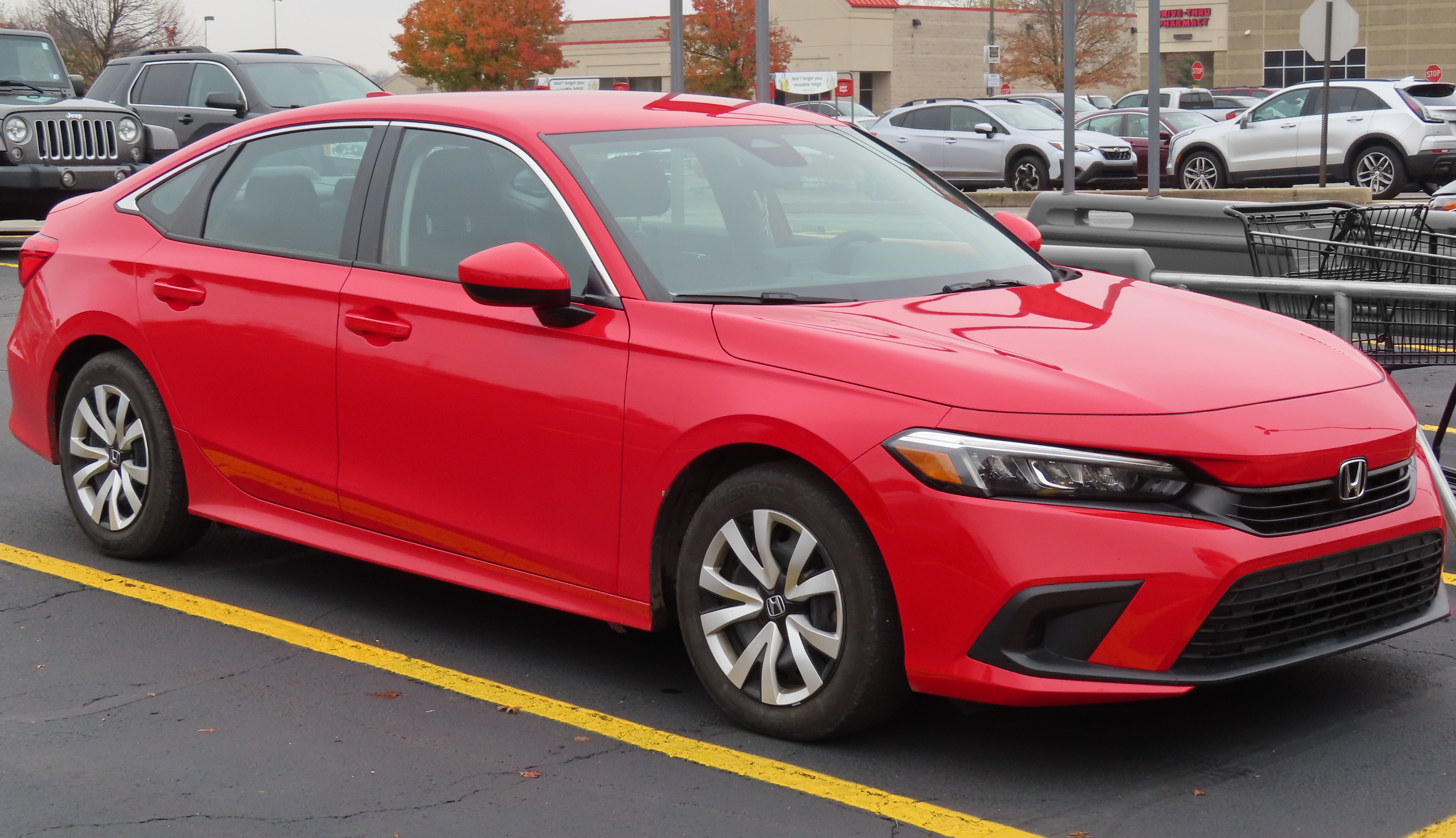
The Honda Civic is a small car that's great for everyday driving. It's known for being dependable and saving you money on gas, making it a favorite for many people. The 2026 version is expected to have some cool new features and a fresh look.
LIVE
If your data isn't connected, your dealership isn't operating at full speed. Curator brings all
your dealership data together to drive better leads, better conversations, and better results.
Visit Goobagoo.com slash Curator to learn more. Welcome to Daily Drive for Thursday, February 5,
2026. I'm Kellen Walker in Las Vegas. Today on the show, the UAW reaches a tentative deal with
Volkswagen and Chattanooga. VW of America aims for a 10% sales increase amid tensions with
dealers and Mercedes targets 325,000 retail sales this year. Plus, an in-depth look at the rise
of AI avatars in dealerships with insights from dealers who are using them successfully
and skeptics who say there's some real risk. You may actually have a negative effect because
consumers may have a very negative intuition for whatever reason against whatever they're
seeing be it a video follow-up or whatever it might be. Let's run through all the news you need to
know to keep up in the auto industry. The UAW has a tentative deal with Volkswagen for the Chattanooga
plant nearly two years after workers voted to join the union. If it's ratified, it'll be the plant's
first union contract and a major win for the UAW's Southern Organizing Campaign. The deal includes a
20% wage increase, lower healthcare costs, a $6,550 signing bonus, and annual bonuses of $2,550. UAW
President Sean Fane announced the deal Wednesday in a Facebook livestream. This is a historic moment,
not only for these members, but for our union as a whole and the entire working class.
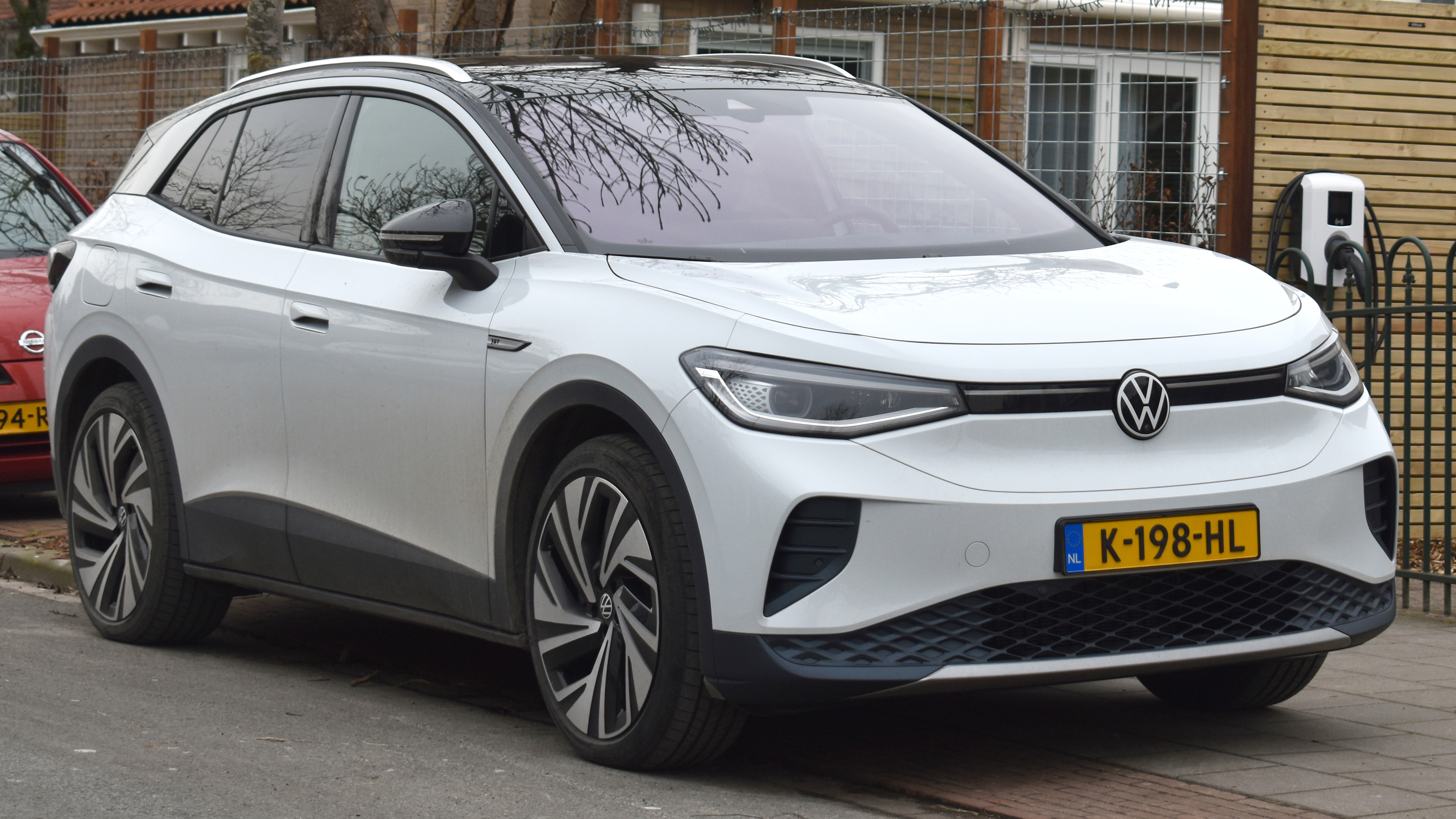
VW builds the Atlas and ID4 in Chattanooga. Workers will vote on the contract in the coming
days. We'll have more on this story in a minute with our own Jack Wallsworth.
Meanwhile, Volkswagen of America is aiming for a 10% U.S. sales increase this year after a tough
2025. But getting there means moving past some serious dealer tension.
Fred Emick IV is managing partner of Emick Automotive in Denver and chairman of VW's
National Dealer Advisory Council. He says the brands make meeting here in Las Vegas this week
went better than Monday night's dealer summit. It went better than the dealer summit the other
night. I think the dealers were able to air some of their frustrations primarily about scout on
Monday night. That February 2nd meeting was dominated by a tense Q&A over scout motors
direct-to-consumer retail plans. And Mercedes-Benz is targeting 325,000 retail sales this year.
That would be a 7% jump. It's part of a push to hit 400,000 annual sales by decades in.
CEO Adam Chamberlain told dealers here at the NADA show that the brand is focused on organic
growth through tactical marketing and simplified operations.
Chamberlain was speaking at the JD Power Auto Forum ahead of this week's NADA show
here in Las Vegas. The strategy includes aggressive product launches and price cuts
to better compete with BMW. And those are today's headlines. You can find more details on all those
stories at AutoNews.com. Joining me now to talk more about that Volkswagen UAW deal is our own
Jack Wallsworth, who's covering the story. Jack, welcome back to Daily Drive. I tell. Great to
be here and great to be here in person. So we're here at NADA, Jack. A lot's going on. Outside of
NADA, a tentative deal agreement seemed to come out of nowhere after months of silence on these
negotiations with the UAW and Volkswagen Group in Chattanooga. Do we know what changed that
finally got both sides to the table? So not yet. I've had a chance to talk with the folks at the
UAW or Volkswagen about this, but like you said, it did really come out of nowhere. I think we
kind of expected something to happen at some point. This timeline goes back quite a ways.
The workers first voted to join the UAW back in April of 24. So almost two years ago, talks
officially started in September of that year, and then things progressed. Volkswagen submitted
their last best final offer in September of 25. UAW submitted a counter offer in October, and then
in late October, workers voted to authorize a strike if necessary. And we really hadn't heard
much update since. So I think maybe timing played a role. Maybe both sides just saw this as an
opportunity to reach an agreement, move on, things like that. But we'll see. Volkswagen does build
the Atlas crossover in Chattanooga. That's one of their best sellers. That vehicle's being redesigned
this year. It's supposed to launch this year. So maybe the launch of that redesign played a
role too in terms of timing, but we just don't know yet to be determined. But hopefully we'll
be finding that out soon. And this is a major milestone for the UAW's southern organizing push.
What does this deal tell us about the union strategy going forward? Yeah, I think we'll
probably maybe see the UAW try to use this as some momentum. We really, when they first announced
this strategy to really go look to unionize plants in the American south, they had success with
Volkswagen with that vote, but they had a vote at the Mercedes plant in Alabama that didn't go
through. And really, that strategy hasn't really gone anywhere since. So I would think this is
great. This is a very easy way for the UAW to show people at other plants, hey, it is possible.
Look at the Volkswagen workers just got in the Senate of Agreement. So again, to be determined,
but I definitely expect the UAW to kind of use this as a big one for them going forward.
Perfect. Jack Wildworth, thank you so much for joining me.
Anytime. Thanks. Coming up, dealerships are testing AI avatars as virtual sales assistants.
We'll hear from retailers and experts with a wide array of opinions about it. That's next on Daily Drive.
If you're an automotive supplier and you know your team is building the next big thing,
prove it on the industry's biggest innovation stage. Automotive News is now accepting
applications for the 2026 PACE program. PACE awards recognize traditional and non-traditional
suppliers worldwide for new product, process and business model innovation. And entries
must be innovations already commercialized through a sale to an automaker. Still pre-commercial,
but past the pilot stage, PACE pilot recognizes post-pilot pre-commercial innovations across
automotive and future mobility, products, software, IT systems and processes with the
potential to revolutionize an automaker's business. All submissions are reviewed by an
independent panel of judges and MIMA is the exclusive lead sponsor. Ready to be recognized?
Apply by February 9th at AutoNews.com.
It cleans it, connects it and pushes it back into your systems. The result is a complete
real-time record of every customer. Let's get to know Alan Tellareado. For nearly 50 years,
they've built their business on one simple idea. Take care of the customers and they'll keep coming
back. But even with decades of loyalty and data, things were getting messy. BDC manager Seth
Stannage puts it best. Customers would reference visits from years ago, but the team could only
see the most recent record. Finding the full story meant digging through duplicates across
multiple systems. That all changed with Curator. Seth says their marketing data is the best it's
ever been thanks to Curator, enabling Alan Tellareado to target buyers at just the right moment
and making sure they're the first and last dealership those shoppers connect with.
The results speak for themselves. Curator collected more than 20,000 data points a week
and generated leads that boast a nearly 30% closing rate. Want to see what Curator can do
for your dealership? Visit gubicou.com slash Curator to learn more.
Welcome back to Daily Drive. I'm Kellan Walker.
Dealerships are starting to experiment with AI avatars to help with customer sales and service.
These virtual assistants can quickly respond to customer inquiries with personalized video
messages about vehicles. Our own Jake Nier spoke with Automotive News Retail Tech
reporter Mark Holmer about how this technology works and what it means for the industry.
Mark Holmer, welcome back to Daily Drive. Thank you. Pleasure to be back.
We recently met Megan and Lauren. I'm Megan, your virtual sales assistant here at
Roorman, Indiana, reaching out on behalf of Lamont Hawthorne.
I'm Lauren, your AI video agent here at Roorman, Indiana. I saw your interest in the 2026 Honda
Civic. Keep watching for a quick showcase and contact us anytime to schedule your test drive.
Megan and Lauren are not people. They are AI avatars. Now, explain what exactly is an AI avatar
and how does it work? Like, what are they being used for?
Megan and Lauren are part of a collection of avatars developed by a company called CoVideo,
which does video that dealerships use for sales leads to send out of prospective cars or whatnot.
They've been around a long time, but they've now jumped into both the AI and the avatar space.
Now, an avatar, there's one version in cinema. There's the avatar movies that James Cameron's
doing, and they are online or different versions of you. They basically take the place of you
in a different technical realm. For this, it's more targeted. In theory, they could be of an
actual salesperson, but they're basically meant to be sales assistants that help the salespeople
do their jobs. How does the customer actually experience this? Walk me through what happens
when someone, let's say, inquires about a car. Well, as they've been testing, because this has
been a beta testing for a while, they're basically meant to help salespeople respond quickly to
inquiries. A salesperson may call or they may email or they may text a dealership saying,
hey, I saw you have this kind of car, it looks great. Can you tell me more? What they would
typically do is to go out into the lot and film a video of the vehicle, send it back,
and take all this time. This is designed to expedite that process a lot more. Once that
inquiries made, the salesperson could trigger the avatar programming. The avatar, which is
driven by multiple forms of AI, then compiles a response saying, thank you for inquiring,
you're going to be working with salesperson X. The video would also then have the car and any
other extra details. The presentation is shockingly real. Other than, I don't think avatar is blank,
really, but it's a real person, all but reality. The person stands there with boys and
grace and talks about the dealership, the car, and what's going to come next.
Mark, you spoke with the CEO of Co-Video, Craig Zeichis, about what goes into making sure
these avatars are palatable, really. What did he tell you?
It's not unlike what they've been doing with generative AI, which was the biggest thing,
not even two years ago, and AI agents, which built on generative AI over the last year,
year and a half. Here's what Craig had to say. Six months ago, when we said we think this is
ready for primetime, we felt pretty good about the technology, but there were things that needed
to evolve. We need to get really crisp in making sure that the avatar seemed real, the voice and
image matched well. We needed to make sure that when we pulled information about the vehicle,
that the information and the synchronization of the talk track and the music and the images that
we were pulling from the website were all coordinated in a way that it felt like the buyer
was immersed in a very professional, highly detailed brand engagement from the dealership.
There was a lot of optimization bringing all these technologies. There might be 10 to 15 different
AI technologies that come to bear to do what we need to do to help a sales associate in our
dealerships actually engage their buyer effectively. Mark, for those of us who are casual observers,
this feels like it's coming out of nowhere in many regards. You also note in the story that
there are multiple companies that are racing to launch this technology at this point. What's
driving that effort to get these things deployed and make it part of the normal dealership experience?
I think there's certainly a wow factor, but it's also that AI advances are accelerating.
Not even a year ago, Cox Automotive was testing avatar technology in-house. They're
continuing to do that, but for now, just focusing on AI agents externally with customers. Spine
is another company that plans to debut its avatar customer dealership technology at NADA.
That's another company that's out there. There's one called P3 Labs, and they're developing
for generic customizable digital worker avatars for marketing. They're in advanced discussions,
a spokesperson said, with several auto dealerships. That's another one. There are probably others
that are going to be quietly there at NADA to show what they have. The novelty of it is
going to probably drive some of the momentum in the short term, but the performance will
in the long term. Let's go back to Megan and Lauren. You spoke with Jeremy Nalding at Rorman,
which is this dealership in Indianapolis that's beta testing Lauren and Megan both.
What did Jeremy tell you about why they wanted to do this and what they were hoping to get out of it?
They're hoping to boost efficiency because customers, once they inquire, it's not necessarily
the easiest thing in the world to get them to buy right away. You want to keep them engaged
continually. If a customer inquires and a salesperson has to go and take time to get the
image of the vehicle and all the other details, then that's time wasted. To have an avatar,
an AI-driven avatar at that that a salesperson can just load and instruct and have them send
in a matter of minutes, that saves a lot of time. It keeps the customer engaged and then there's the
wow factor that keeps them more engaged. Jeremy said that the response to this has actually been
pretty positive, right? That even though customers knew that this was AI, they were okay with it.
Let's hear what Jeremy had to say. Yeah, a couple of them was pretty cool because
they acknowledged to the salesperson that AI video you sent me was very cool,
was very informative, and it actually did the walk around.
Yes, customers have been quite positive. I think part of that probably stems from the
content because you can have a wow factor, but if you don't have anything to back it up,
then it's like, what is this pointless exercise?
All right. Well, those are sort of the most positive responses and that's from a dealer
himself. That means a lot, but there is skepticism here. You talked with Steve Greenfield
from Automotive Ventures. What's his concern when it comes to these things?
Well, he's very much a tech forward guy, but as he pointed out in the story, technology,
that advance can be unsettling when you're trying to talk to someone and buy something.
It's very much like human. It's gotten so far ahead, aside from probably the blinking issue
with some of these avatar technologies, it's close to being human, but it's not quite.
So there's something that kind of thing could be unsettling to some people.
Here's more from Steve on that issue.
Unless you really nail it, consumers are very cautious and have usually a pretty
visceral negative reaction to an avatar that it professes to be human,
but there's something that isn't quite right, whether it's lighting or a facial tick or whatever
it might be. And I think this is the risk that we have, whether this is going to be
representing dealers or automakers or whatever. You're professing without really good disclosures
to having something that simulates a human and you may actually have a negative effect because
consumers may have a very negative intuition for whatever reason against whatever they're
seeing, be it a video follow-up or whatever it might be.
It's the uncanny valley terminology is what comes to mind, right?
I think so.
So, Mark, there might be some real risk here if dealerships get this wrong. Is that right?
There is because if you end up turning off customers, then those are sales lost. I mean,
plain and simple. I think older customers may find that more unsettling.
Younger ones may be used to it because versions of avatars have been used in other industries
online for some time. More rudimentary, not terribly advanced. So, younger consumers
are more accustomed to this kind of thing. You know, I'm Gen X. I'm probably one of the first
generation that played video games and played some of them online. And so, some of these things
feel natural to me, but the avatar takes it to a whole new level. So, not everyone's going to love it.
I got to also wonder if there's concern from the workforce that this could replace salespeople.
Is that something that you've heard?
That's a universal concern about AI. And that might be a longer-term thing to worry about.
But what's being pitched at Mormon is that this is a tool to help existing salespeople be more
efficient and close sales more smoothly and more quickly. But the flip side of that is maybe they
don't hire more or additional salespeople because if the ones they have can do more sales, then
they're fine without bringing in more people.
All right. So, last thing. Let's come full circle here and talk again about Megan and Lauren.
Which one of these avatars did Mormon choose and why?
Mormon chose Lauren for this particular story that where they tested. And because she had a
little more energy with the perception and just basically fit more culturally with the dealership
and its clientele. But Jeremy says this may not be the end of the road for Megan.
Across our group, we currently have an AI that's a sales AI with Impelle that responds to the customer
and that name is already Megan. So, what we'll do as we continue to launch this and scale it out
is we will change our sales AI name from Impelle and we'll mirror that with the avatar's name of
Covideo. So, the consumer from their standpoint, it looks like it's the same person that's
following up in the sales AI thread that's also sending them the video.
We'll have 20 different avatar names across our group.
All right. Well, I got to say, Mark, even though she's not real, I'm happy for Megan.
The story is not necessarily over and maybe we'll see more from Megan in Indianapolis.
We'll see. I hope so too. I think everyone deserves a shot and Covideo is going to have
displays showing off the technology. So, check it out. All right. Yeah, we'll see much more of that
at the NADA show in February. Mark, thank you so much for joining us on Daily Drive. Really
appreciate it. My pleasure. And you can read all about this story and Mark's reporting on it at
autonews.com. That's Daily Drive for today. I'm Kellan Walker. Thanks to Automotive News
executive producer Jake Neer as well as our own Jack Wallsworth and Irvash Kakharia for their
reporting for today's podcast. You can get the latest news on AI tech and dealerships,
the deal between UAW and Volkswagen, and everything happening in the auto industry
at autonews.com. Come back tomorrow for a conversation with Cox Automotive president
Steve Rowley about how AI is transforming the retail landscape and what dealers need to know.
The important thing here is to really make sure you understand it and you look at your systems
and your operations and determine how can this be a part of my life. That's what's so important to
do it early. We'd love to hear from you. Let us know what you think of the show and the topics
we cover today. Send us an email at dailydrive at autonews.com or leave us a voicemail at 313-444-2774.
And if you enjoy the podcast, remember to like, leave a review, and subscribe so you never miss an episode.
Thank you.
About this episode
A tentative deal between the UAW and Volkswagen for the Chattanooga plant marks a significant milestone, promising a 20% wage increase and lower healthcare costs for workers. Meanwhile, Volkswagen aims for a 10% sales increase amid dealer tensions, and Mercedes-Benz targets 325,000 retail sales this year. The episode also dives into the emerging trend of AI avatars in dealerships, featuring insights from dealers and experts about their potential benefits and risks in enhancing customer interactions.
Automotive News Retail Tech Reporter Mark Hollmer talks about how dealerships are starting to use AI avatars in their customer service. The UAW and Volkswagen have reached a tentative agreement covering the Chattanooga plant nearly two years after workers voted to join the union. Plus, VW of America aims for a 10 percent sales increase amid tensions with dealers.