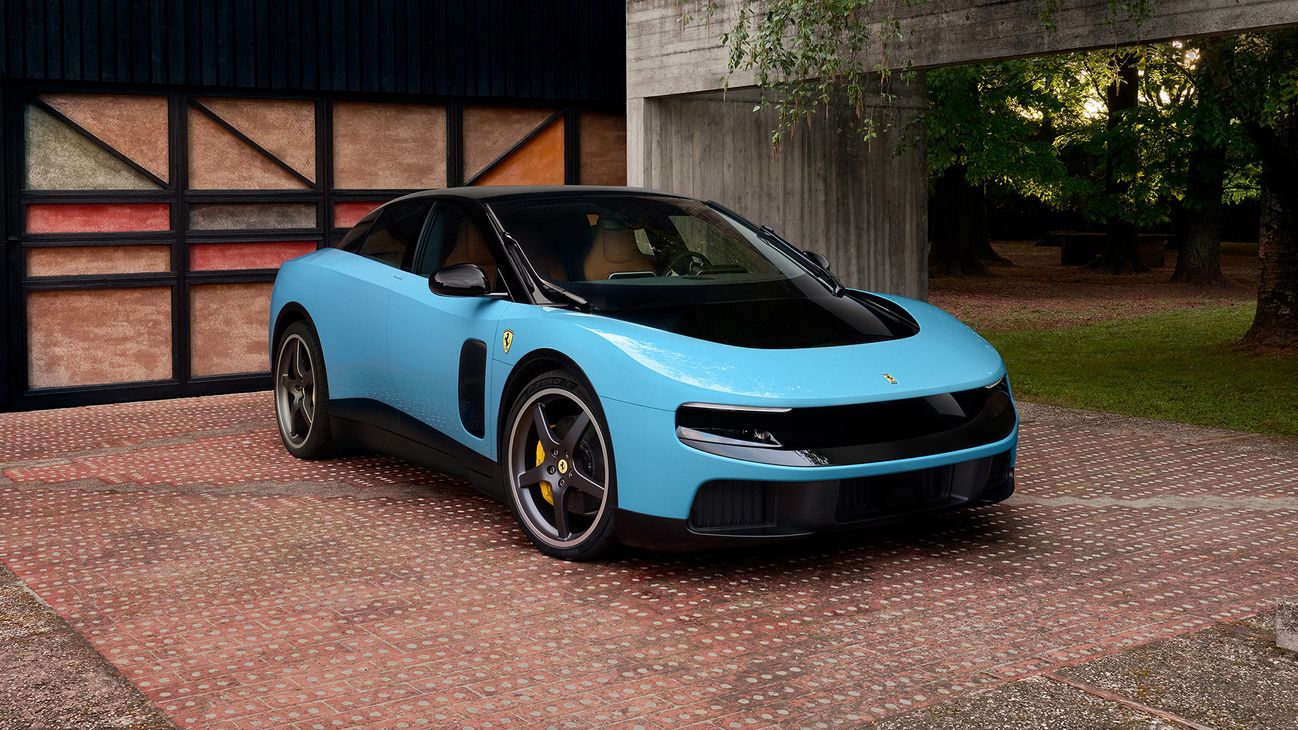
Ferrari Luce is a new Ferrari car that Ferrari has been showing off in steps. First they talked about the mechanical/technical side (the powertrain), and later they showed the inside.
Powertrain is the set of parts that actually make the car move. It includes things like the engine or electric motors and the gearbox that sends power to the wheels.
Developed in-house means the automaker designs and engineers key parts itself rather than relying on external suppliers. For electric drivetrains, in-house development can allow deeper integration between hardware (motors, inverters, battery interfaces) and the control software.
In an electric car, the battery provides electricity in one form (DC). The inverter is the electronics that changes it into the right form so the motor can spin and respond smoothly.
Bosch is a company that makes parts for electric drivetrains. Saying “Bosch motor” usually means the motor is sourced from Bosch rather than designed entirely by the car brand.
They mean the car is powered by electricity (an electric drivetrain). The point is that it’s still meant to feel like a Ferrari, just with electricity doing the work instead of only a gas engine.
A “GT” car is built for long trips—more comfortable and relaxed than a pure track car, but still meant to drive quickly. Here, they’re saying Ferrari Luce was developed to fit that kind of role.
Wheelbase is the distance between the front and rear axles. The hosts use it to describe how Ferrari Luce’s proportions differ from Pura Sangway—longer overall length but a shorter wheelbase—which can influence cabin space, ride character, and how the car turns.
The Hyundai Ioniq 5 is an electric crossover, meaning it’s a battery-powered car with a higher ride height. In the episode, it’s mentioned because it can look smaller than it feels when you’re standing next to it. It’s a common reference point for how EVs can be packaged in a practical way.
The BMW M5 is a fast, sporty four-door car made by BMW’s performance team. People talk about it because it’s meant to be usable every day but still very quick. In the episode, it’s brought up to emphasize how big and substantial it looks in real life.
“24 inch rear wheels” means the wheels are 24 inches across. Bigger wheels usually make a car look more dramatic and can change how tall or wide it appears. Here, they’re saying the large wheels make the car’s size feel even more extreme.
“Disguise prototypes” are test mules or early development cars covered with heavy bodywork, panels, and visual tricks to hide final styling details. Automakers do this so competitors and the media can’t easily judge the production design while the engineering is still changing.
The Porsche Cayenne is a Porsche SUV, meaning it’s a taller vehicle with more space than a typical car. It’s designed to drive like a performance Porsche, not like a basic family SUV. The episode mentions it as an example from around 20 years ago when Porsche was doing something similar with its approach and technology.
“Aero” is short for aerodynamics—the way air flows around the car. When the hosts say the car has “big openings for aero” and “the aero on this car is crazy,” they mean the body is actively shaped to control airflow for stability and downforce.
An “S duct” is a curved air channel in the front of the car. It helps control how air moves around the car, which can improve stability and how well the car cools.
Windscreen wipers are what you use to clear rain off the front glass. This car uses a unusual wiper layout to avoid messing up the airflow around the windshield.
Term
vertical
Here, “vertical” means the wipers move up and down on the sides instead of sweeping across the windshield in the usual way. It’s done to keep the front design cleaner and more aerodynamically efficient.
Carbon fibre is a strong but lightweight material used in some cars. It’s often used to help cars feel more “sleek” and efficient without adding a lot of weight.
Aluminium is a lighter metal than steel. Using more aluminium can help a car be lighter and can make it easier to build certain shapes for a cleaner look.
They’re talking about how the Ferrari name sets a very high bar. Some people may criticize the car more because it’s a Ferrari, even if the design itself is still impressive.
Jonathan Ive and Mark Newsom are famous designers from outside the car world. The hosts are saying this Ferrari’s look was heavily influenced by them, which is why some people question whether it still feels “properly Ferrari.”
Manzoni is Ferrari’s top design leader. The hosts are basically saying he set the rules for the design, but the finished car doesn’t seem to show much of his personal style.
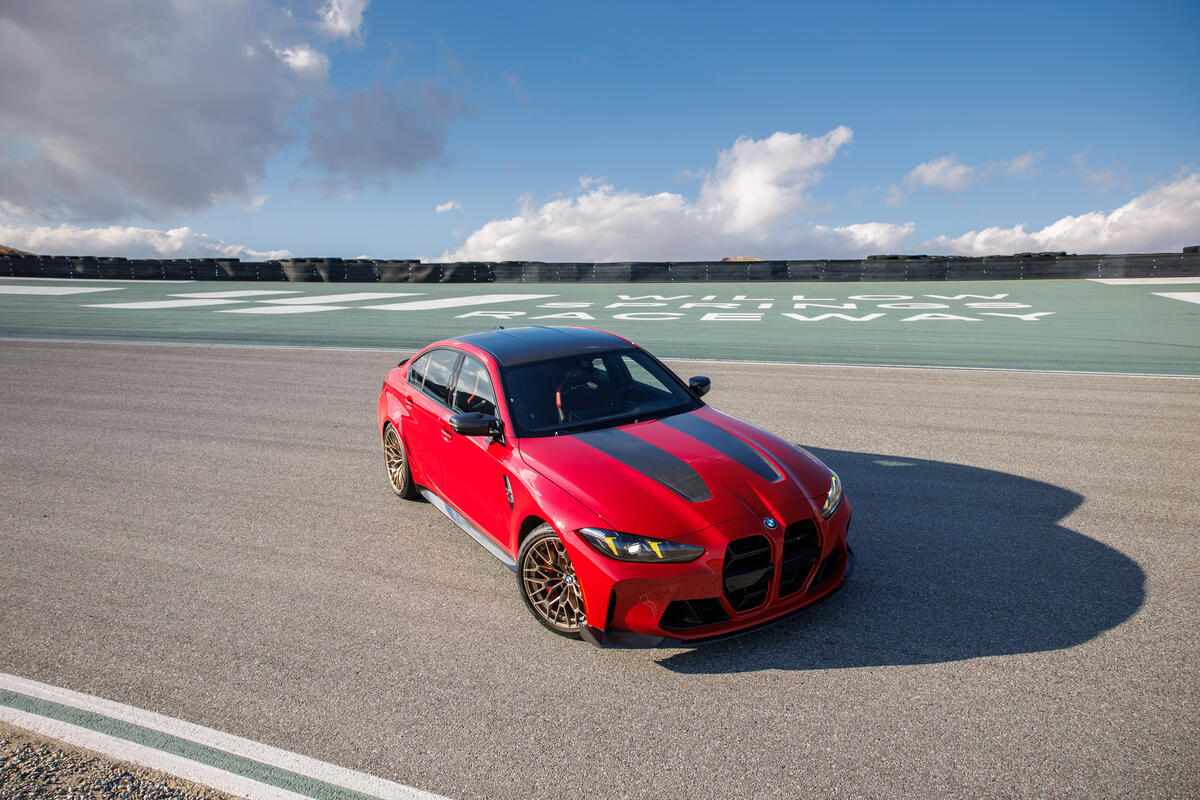
The BMW M3 is a high-performance version of a BMW 3 Series, made for people who want a sporty driving experience. When the podcast says parts are “bespoke,” it means the car uses components designed specifically for it. That’s why it’s often talked about as a very specialized performance car.
“Bespoke” means made specifically for this one thing, not copied from something else. They’re saying this car’s design is tailored and doesn’t just reuse familiar Ferrari cues.
The host brings up the Hyundai IONIQ 5N as a comparison. They’re using it to explain how the rear area and passenger space feel different between the two cars.
Wheel wells are the areas around the tires inside the car’s body shape. Designers sometimes add openings there to help air flow better and reduce unwanted drag.
“Suicide doors” is a nickname for doors that open from the back hinge instead of the front hinge. The host is pointing out that the car uses a different name for the same kind of door.
“Welcome doors” is the nicer-sounding name for a dramatic door style. The host is basically saying the car’s doors are meant to look special when you get in and out.
Ergonomically means the car is set up to fit you better—where the controls are, how you reach them, and how comfortable it feels to use. The host thinks the interior works well once you’re actually sitting in it.
An infotainment tablet is the car’s main screen for things like music, maps, and settings. Here, the host likes that it’s not built into the dashboard in the usual way and can be adjusted to suit you.
Physical toggles and dials are the real buttons and knobs you can feel and use without looking at the screen. The host thinks this makes the car easier to use because you don’t have to keep checking menus.
They’re talking about how good the car’s software feels to use—smooth, responsive, and easy to navigate. The comparison to Apple suggests it doesn’t feel clunky or slow.
Android Auto lets you connect your Android phone to the car. Then you can use things like maps and music through the car’s screen instead of touching your phone.
They’re talking about a stopwatch feature on the car’s screen. It’s not just digital—there are real physical hands moving, which makes it feel more like a traditional gauge.
A transmission tunnel is a raised hump in the floor for drivetrain parts. If there’s no tunnel, the floor can be flatter, which usually makes the back seats feel roomier.
Term
transmission tolls
They’re referring to the raised hump in the floor that some cars have for the drivetrain. That hump can make it tough to fit extra passengers comfortably in the back.
Instead of one electric motor driving the whole car, a quad-motor setup has a motor at each wheel. That lets the car adjust power to each wheel very precisely for grip and handling.
This is a software trick to make an EV feel more like it’s shifting gears. Instead of changing gears mechanically, the car changes how much twisting force (torque) it allows at different moments.
When you lift off the accelerator, the electric motors can slow the car down and also recharge the battery. It’s like slowing down while recovering some energy instead of wasting it as heat.
Driver modes are different settings you can choose in the car. They change how the car responds—like how sensitive the throttle feels or how aggressively it manages traction.
Term
CT off
“CT off” means turning off traction control. That lets the wheels spin a bit more, which can feel more lively, but it can also make the car harder to control on slippery roads.
Bumpy road mode is a setting that helps the car feel calmer on rough pavement. It adjusts how the car responds so bumps don’t make it feel too harsh or too twitchy.
The Ferrari F80 is the new Ferrari the hosts are talking about. They focus on how its suspension and driving modes are set up to make the ride more usable day-to-day, not just track-focused.
This is an active suspension system, meaning the shocks aren’t just set once and left alone. The car can adjust how it absorbs bumps depending on what you’re doing and what the road is like.
Dampers are the shock absorbers that control how the car rides over bumps. The hosts are saying the F80’s shocks are improved—lighter and able to do more—than the earlier setup.
ESC is the car’s stability safety system that helps stop you from sliding out. When it’s “off,” the car lets you drive more freely, with less intervention if the tires start to lose grip.
Term
sound is clearly a massive thing with a Ferrari
Ferrari buyers often care a lot about how the car sounds. The hosts are saying this new system creates a Ferrari-like sound experience using sensors, rather than just copying the exact sound of a traditional V8 or V12.
An accelerometer is a sensor that detects vibration and movement. In this Ferrari, it’s used to “listen” to the car’s mechanical vibrations and then turn that into an engineered sound you hear in and around the car.
“Lift off” just means you take your foot off the gas pedal. On an EV, that can immediately change how the motor works, including switching to slowing down via regenerative braking. You may hear or feel that change right away.
Motor RPM means how fast the electric motor is spinning. If the tires lose grip, the motor can spin faster than the car is actually moving forward. That mismatch can show up as a quick change in sound.
A torque curve is how the car’s pulling force changes as you accelerate. Some cars hit hard all at once, while others build power smoothly. The way it’s shaped can make the acceleration feel more exciting or more unsettling.
Turbocharging is a system that helps the engine make more power by forcing extra air in. That can make acceleration feel stronger and more immediate. It can also affect how the power builds and fades during a pull.
Traction control helps prevent wheel spin. If you turn it off, the car is freer to spin its wheels when you apply power, which can hurt grip and control.
Mid corner is the part of a turn where the car is already turning and trying to hold its line. If you apply too much power there, the tires can lose grip.
The Porsche Cayenne Turbo is the fast, performance-focused version of Porsche’s SUV. Here they’re talking about its official acceleration and top-speed figures as a comparison point.
Crush zones are parts of the car that are designed to crumple in a crash. That controlled crumpling helps protect the people inside by absorbing energy.
“Serviceable” means the part is designed so it can be worked on—like being removed or repaired. With EV batteries, how serviceable the pack is can matter a lot for long-term costs.
A stressed member is a part of the car’s structure that actually helps carry forces. If the battery is built into the main structure, it can make the car stiffer, but it can also affect how easily it’s serviced.
EV batteries don’t last forever in the sense that they slowly lose their ability to hold charge. The point here is that the car needs a plan for replacing or upgrading the battery later.
Here “range” means how many miles the electric car can drive before it needs charging. They’re saying the Luce’s range sounds lower than what people might expect.
A homologated figure is an official test result that’s certified by regulators. They’re saying the current range number isn’t the final official rating yet, so it may change.
The drag coefficient is a measure of how “wind-resistant” the car is. Lower numbers generally mean the car wastes less energy pushing through the air, which helps efficiency.
Independent four-wheel steering means the car can steer with both the front and rear wheels. That can make the car easier to turn and more stable, but it can also add complexity that may affect efficiency.
A “conquest market” means convincing people to switch from another brand to you. The hosts are saying Ferrari may not have an easy pool of people to steal for this EV plan.
This phrase describes a practical EV format: a battery-electric vehicle with four doors and seating for five. The hosts use it to frame the strategy question—whether Ferrari should build something that looks and functions more like a mainstream daily driver rather than a traditional niche supercar.
The Porsche Taycan is an all-electric Porsche sedan. The hosts mention it as an example of someone who already daily-drives an EV and might want a Ferrari instead.
The Tesla Model Y is an electric SUV that runs on batteries instead of gasoline. It’s built to be practical for daily use, like commuting and errands. The episode mentions it because it’s a popular Tesla model that some people want to be associated with.
The Tesla Model S Plaid is a very fast all-electric sedan from Tesla. The hosts are using it as an example of an EV driver who might want a Ferrari for everyday visibility.
EV means electric vehicle. It’s a car that runs mainly on electricity from a battery, and the conversation is about whether Ferrari should go all-in on that or use hybrid tech instead.
Topic
EV strategy vs electrifying existing Ferrari models
They’re debating Ferrari’s plan for electric cars—whether to make current models more electric or to do something totally new. They also compare it to what other big luxury brands are considering.
The Ferrari 296 is a Ferrari model that already uses a hybrid setup. The point here is whether Ferrari could have made it more electric, or whether they needed a totally different approach for their next EV.
A hybrid car uses two ways to move: usually a gas engine and an electric motor. The hosts are comparing that to making a car fully electric with a battery pack.
A purely electric car runs only on electricity from its battery. The discussion is basically: should Ferrari have made this model fully electric, or is there a better way to electrify it?
Jaguar is referenced as an example of another automaker that has faced public criticism and is now reconsidering its direction in response to the EV transition. The point is how competitors interpret Ferrari’s bold electrification move.
Bentley is brought up as another luxury brand that’s planning an all-electric car. They’re using it as an example of what other companies are doing alongside Ferrari.
A V12 is an engine with 12 cylinders arranged in two groups. More cylinders can mean smoother power delivery and strong performance, especially in race cars.
LIVE
Crack a Cayman Jack margarita with real lime, blue agave nectar, and real margarita taste.
Taste your escape.
Cayman Jack, America's number one margarita.
Cayman Jack is a premium malt beverage with flavors.
Please drink responsibly.
Cayman Jack Beverage Company, Chicago, Illinois.
If we knew more about our sleep, what would we do differently?
Would we go to bed at a consistent time, or take steps to reduce interruptions to our sleep?
With Sleep Score, Apple Watch measures your bedtime consistency, interruptions, and sleep duration.
Then, every morning it combines these factors into an easy-to-understand score from one to a hundred.
So you'll know how to take the quality of your sleep from OK to very high.
Know your Sleep Score with Apple Watch.
iPhone 11 or later required.
Do you think they've made the right call? Who's going to buy it?
Well, hello, everyone, and welcome to episode 50 of the Evo podcast.
We've got a special for you today.
I'm joined by James Taylor and Sam Jenkins. How are you guys?
Hello. Good. A bit warm.
We are melting.
Yes, we still have no air conditioning, which was last year's joke.
JV, so please, can we have some air con?
Yes, a bit of a special because today we are talking about a new Ferrari that you may have heard of,
or may not, the Luce.
And Sam is here because he's been following this car's journey from the beginning.
And actually, James, at the very beginning, when Ferrari opened its E building in 2024,
which, they're at pains to point out, isn't just for electric cars, it just happens to have the letter E.
It does.
But Sam, this journey didn't start out of the weekend in Rome, did it?
You've been on quite a trip with this car.
Where did this journey begin for Ferrari starting to communicate what the Luce has we now know to be?
Yeah, I mean, it's been about a year, a year long process.
So it's been a three stage reveal with this car.
Most cars are just a single stage reveal.
You see the whole thing in one, but they did powertrain first.
So all of the technical details of how it all works,
the new stuff they've developed for this car.
Second was in San Francisco for just the interior, which was an interesting one.
It is quite an interior, though.
It is quite an interior.
We'll talk about that in a minute, yeah.
And then the final reveal this week, which was quite a big event.
And how is, as you've done all three events,
have you got a sense that you've learned more about the car each time?
Because there have been three very different focal points
and they've been very Ferrari and only we're talking about the powertrain
and nothing else and we're talking about the interior and nothing else.
But have you been able to get a sense of what the car was like or was at the weekend
when you first saw it a bit of a shock and it was what I was expecting?
It was a bit of a shock.
I think it's been a shock for literally everyone, which I think is what they expected.
We can talk about that a bit more later.
But yeah, I mean, every every event is kind of filled gaps.
There's been overlap.
Yeah, because, you know, not everyone's done every event,
but there's just so much detail within this car
because a lot of this stuff has been developed in-house.
So they're very keen to talk about all of the intricacies of how the motors work
and, you know, the inverters on the motors, which no one usually talks about.
And talking to that level of detail means that you kind of need to dedicate
a lot of times of these things.
Because a lot of those components, as you said, normally they're just bought in,
but I was very proud that we've designed these and developed them
and manufactured them just for our own needs.
Has has that led to getting a much better understanding of the car before you saw it?
Then perhaps when we have with other manufacturers of a Bosch motor,
here's a battery from here.
It's built to our spec to a point, but it's more up the shelf.
This is very everything is very bespoke in this car.
I mean, this last this last event speaking to Rafa
filled in quite a few gaps with how the systems that put into this car
with the software actually function.
Because they were that wasn't too clear until this final event.
But what has been clear in previous events is that it's been developed
like a Ferrari.
It might might not look like a Ferrari, but it has been developed
in the same way that every other Ferrari has been.
So that's that's been clear from the first event.
We'll get to the looks.
But it's been very clear, isn't it?
It's not an electric Ferrari.
It's a new Ferrari that just happens to have an electric power.
And that's that's what they're saying.
Yeah. And so what is sort of how have they developed?
What they developed it as is a GT car, super GT car, a super car.
Well, what is it?
Where does it fit in the hierarchy of the current current family?
I mean, the closest car to it in the current range is Pura Sangway in its form factor.
But when they started development for development for this car,
it was over five years ago, I mean, seven years ago,
they started the Aero development, the Pura Sangway didn't exist.
So yeah, that's the closest car in the current range.
They call it a sports car, which is a bit of a stretch, I would say.
Yeah, it's almost like a it's like a tall saloon.
There is there is no real rival to this car.
It's really hard to place it.
And it's quite you say a tall saloon car.
It's it's proportions are very close to Pura
somewhere on this little narrower overall.
It's lower and narrower than the Pura Sangway,
but it is longer with a shorter wheelbase.
So it's it's
because the Pura Sangway is quite imposing.
It's it's it's the SUV that's not an SUV, but it's still quite high riding.
Very wide. It's wide, isn't it?
And it's the way it's designed.
It's got those haunches that make it quite imposing.
This is a very different design.
But do you get the same sense when you're walking up to this is a big car
and an imposing car?
It's hard to say.
I think you saw it in a glass house that was the size of a one.
Well, it literally literally was a stadium.
In that environment, it didn't look huge.
But it's a bit like the Hyundai Ioniq five
in the sense that that car looks it looks like a hatchback
until you stand next to one and it's like the size of an M5.
Yes, it's a thing.
Yes, so I have a feeling this car will be like that.
If you see it in the context of normal traffic,
it's probably going to look enormous.
And I mean, it has 24 inch rear wheels.
So that's what a dream a government went just designing big wheels for Ferrari.
So that hides some of the excuse the perspective quite a bit.
What is it?
So you saw the car finally having seen all the bits.
Was there one element of those three sort of parts of the journey
that stood out for you that this is going to be something special?
I think everyone focuses on the interior because that was such a big, big moment.
Not just Ferrari, but the automotive industry, wasn't it?
They sort of some has finally come up with a way of creating a modern interior
that is still sort of what a human wants to interact with.
Was there was it the was there one event that stood out of,
okay, this is what they're trying to achieve?
Well, do you need to be on all three to join the dots?
I mean, we've all followed it from afar.
And so I suppose subconsciously you fill in the gaps yourself and you see the,
I mean, the disguise prototypes were whoever designed those was brilliant because they were
knuckled nuts.
You could not tell.
I mean, Rafa has said they just make all
stick like a fridge to the back of the car.
Anything made it look like that bread van 250.
Yeah, fantastic.
But was there any where you think, did you have in your mind?
Okay, I think I know what this is going to be because even the interior wasn't an interior
buck that you saw, was it?
It was separate components.
No, not really.
I still don't, I still haven't fully grasped it.
It's such a complex thing.
The reveal of the design, exterior design obviously was the biggest shock and I'm still
digesting that.
I think everyone else is.
I would like to ask at the event, what were people's reaction when the covers came off?
Because Ferrari had really kept it under wraps.
There were no leaks, nothing that this was the big reveal.
Impressively, no leaks.
And it was a three-day event, wasn't it?
Just talk us through that because I think we're sort of was the press.
Well, that's just our day job.
We go to these events and we know there's lots of hanging around and form-filling and
waiting for stuff and being promised stuff that doesn't turn out.
What was, walk us through those three days of?
It was a huge event, as you would imagine.
They've clearly put quite a lot of money and time behind this car.
Yeah, so it was a three-day event.
So we spent two whole days with the car, pretty much, which is quite rare.
Enough time to digest some of what was going on.
But the way they managed the embargo time so closely made it very clear that they were
really nervous about the car leaking.
They did not want it to get out before they wanted to manage it all themselves really closely,
more so than the usual.
So that was interesting and made it all quite hard work, but it's fine.
We've made it work.
So that was the Saturday, Sunday.
Yeah, Saturday we saw the car.
Sunday we saw the car.
And then Monday customers saw the car after we had.
And it was the live reveal online to the world.
Exactly.
They saw it when the embargo lifted, which usually isn't the case.
Usually customers see it just before the embargo time, which is when leaks happen.
So they kept it really under wraps.
And what was the reaction in the room?
The reaction was exactly the reaction we're seeing online now, the initial reaction.
And that was my initial reaction.
It's just the emoji of the shop.
Yeah, exactly.
I saw some other emojis that they probably weren't hyping.
I saw a picture of it initially.
So the first time I saw the car was not in real life.
And I wasn't keen.
Many people feel the same way now, I think.
But seeing it in person and spending time with the car to sort of
digest it is the best word really.
I mean, there's so much going on.
It has grown on me.
And that's what everyone else there was saying.
I think it is a car you need to spend time with and especially with the interior.
You have to be with the car and to experience it in real life to understand what is going on.
So to walk us round the exterior first because it is a, I mean, that is,
I mean, there's some people who are a little bit more favorable for it.
But that's because they're hoping it allows them to build Ferrari, to build more V12s
similar to the Porsche Cayenne scenario 20 years ago.
But so walk us round, what's the design?
What's it made of?
What's the, it's got that canopy cockpit and the body panels and big openings for aero.
Crazy duct going on the front as well.
The aero on this car is crazy.
So the concept is that it's sort of like a, all of black you see on the car is the glass house.
So that is almost designed like a completely separate component of the aero,
of the painted bodywork you see on the car, which is what forms the aero for the car.
So at the front, you have this huge full width aero pass through that is a real,
it is like that deep, it's a proper, it's not like a slit.
It really is like a massive S duct almost.
And then that flows all the way over the roof to meet the lip of the boot.
So it goes all the way over the car, right over the windscreen.
And they're, they've focused on that being so seamless that they've redesigned the windscreen
wipers to the vertical either side of the windscreen.
And that bit is a bit, it's a bit hard to look at.
Yeah, a few people have sort of commented and it's sort of the park position for
most cars with windscreen wipers like that.
It's those sort of things that are catching people's eyes, isn't it?
I didn't notice them at first, but as soon as you spot them, you can't ignore them.
They're really bulky windscreen wipers as well.
They haven't sort of slimmed them down at all.
I'm not pretty sure how or why.
Yeah, there are a few bits like that that are really hard to get your head around, but...
So that, the whole central spine offence essentially is that we can see above the body
work is all glass.
Essentially, yeah.
Bodywork, aluminium.
Yeah, it's a mixture of aluminium and carbon fibre.
There's a lot of aluminium in this car.
It's incredibly smooth.
Yeah, it's all very, very seamless.
Whereas current Ferrari design is lots of, lots of vents, lots of aero.
Lots of openings, isn't it?
Lots of slats.
And probably the 12-cylinder is the only one that is a little bit less sleep, aero and more sleep.
And this goes to a whole new level.
I mean, there's criticism of, is it just the rebadged Apple car, the people behind designing it?
But is that just an easy kind of thing to, a bit of muttersling in it?
Or, I mean, we spoke this morning and it's, having a Ferrari badge does carry a huge weight of
expectation.
Do you think it's, that's a lot of the backlash on it and a lot of the criticism is because of
just the badge it wears?
Or is it just a piece of design that is impressive, but not great in terms of to look at?
Because cars are very aesthetic.
So I think if you objectively, as a piece of design and as a product, haven't driven it yet,
so we'll have to see how that part of it is.
I think it's an impressive thing.
And I want to own one based on what they've said and how it feels.
But as you say, with a Ferrari badge, it sort of changes everything.
And I can't decide how I feel about that aspect of things.
I don't know if it has to look like a Ferrari to work.
We should probably mention at this juncture that this car has been designed not only
with Ferrari's own design studio, but with love from the design consultant.
So Jonathan I have and Mark Newsom, the two famous product designers,
but not famous automotive designers.
Yeah. So Ferrari's chief designer, Manzoni, sort of set out some principles at the start of the
project and then supposedly completely left love from to it for the interior and exterior design.
And I think that's quite clear.
There's not much Manzoni in this car at all.
And yeah, it's going to take months, possibly years to get,
but by going down that roof, it means that every Ferrari that comes afterwards
would again be either an in-house Ferrari car.
Or do you stick with love from because that's a design template.
Or some of the, yeah, some of the cues that they've...
Because there's not many cues on that car that you would put onto a 296 or an F80 or...
It is all totally bespoke.
And for that car, very clean design language.
That's sort of a smooth lodging look.
I mean, the rear lights are the only kind of real thing.
They think, oh, that looks a bit like a 512 or 308, but...
I'm not sure about the rear lights.
Is that because they actually look quite conventional?
Well, yeah. So they look quite conventional.
They look a bit too close together because it has...
And makes the car look narrow.
Yeah. It makes it look narrow because it has these...
Yes, they're really set up. They're quite a weight.
Yeah.
There's a lot of body work before you get lights.
When you follow an IONIQ 5N, the passengers, the drive and the passenger,
a long way into the middle of the car.
There's a lot of real estate between them and the pillars.
Yeah. Because either side of the rear lights,
there are massive outlets to relieve air from the wheel wells.
Yeah. That I'm not sure about because it feels a bit like they've tried to sort of wedge in
some for... Something from previous Ferrari's into a design that just isn't that.
Yes. I'm not sure how I feel about that.
I feel like it was possibly originally designed with a full width light bar
or something more cohesive with the rest of the design, but it's hard to say.
And the suicide doors, the only thing it has a link for a current Ferrari,
does that look and feel like it's, again, a link to an existing car?
Or is that just a design that just works for the interior which we've come to see?
I think it just... I mean, they call them welcome doors, not the suicide doors.
You're not allowed to call them suicide doors.
Yes, if you're old enough, that's all they know.
Yeah. I mean, it makes the interior feel more open and welcome.
I do understand why they've done it. It makes a car feel more special to which
you kind of want for a car of this price.
Yes, with £450,000 somewhere around that.
Yeah, plus spending time with the sales and getting you to...
Hundreds of thousands other bits.
Well, you've sat in the car, spent time with the interior as kind of modules
before you then saw it in the car. Now you've been in the car itself.
Does it feel like a half million pound car when you're inside it?
Yes, it absolutely does.
It feels... This is the most impressive car interior I've ever experienced.
So in San Francisco, for the interior reveal, they had all of the subcomponents,
all of the machined aluminium parts. I mean, everything is machined aluminium
and glass. So they've worked really closely with Corning.
They've developed 60 new patents for this car, some of which are like for the finishing of the
glass and I mean, it sounds like an expensive project. It feels amazing.
Everything is really, really tactile and it's really logical as well.
It isn't just tactile and clicky for the sake of it.
And on this event, this final reveal event, they had the software
fully functional and integrated with the hardware and seeing that work together
really made it clear that this interior is just leagues ahead of anything else on the market.
It is so far ahead.
Is there one thing that stands out for you on the interior now seeing it in situ in the car?
Because at San Francisco event, you think, well, that's cool because you separated it
and given every component its opportunity to be on its own.
But you want to see it all together. Is it more impressive in the car than
when you're in it, you say it's ergonomically...
It just sort of works.
I mean, the one thing that impressed me was that so it has a separate infotainment
tablet which is not integrated within the dash like most cars,
that has sort of like an aluminium handle that you can rest your hand on and swivel it
so you can adjust it to suit you.
You'd think within that there'd be layers and layers and menu systems like in most cars and
it'd be super complex but there's not actually that much to do on that central display because
most of the controls are physical toggles and dials on the wheel or in the rest of the car
that you switch a switch and then you can look and see
something's on or not... It's not within the central display.
So you know where everything is, you can operate everything
sort of without looking almost. That really impressed me.
I just think it's going to make every other Ferrari in the current range look a bit rubbish.
Yeah, it's going to be amazing cars, but Ferrari Supercar and Sportscar in Sirius are maybe not there.
No, they're almost like, oh, we need to put somewhere to put a dial so you know how fast.
So is there anything from that interior that you think will trickle down to other models?
That seems to be the most sort of logical transition you can have.
I mean, I think three spoke aluminium steering wheels came back.
Yeah, I mean, the steering wheel is pretty awesome.
They claim that this is its own thing and it won't touch the rest of the range for now,
but I have a feeling they will gauge response to this car and it will eventually,
things will eventually trickle down to other models in the range that the software is super
impressive. It's so fluid and seamless. It feels like Apple software, which is funny.
How well does it work with Android phones?
I'm not sure. It does have Android Auto. It definitely does have Android Auto,
but so it has this stopwatch in the central display and clicking the start button for the
stopwatch. The hands are physical within the dial. They each have their own motor,
so each hand has its own system moving independently, but the software behind it,
so it's got a display within the face, is so fluid. It's like an Apple watch in its animations.
You could just sit there clicking the stopwatch all day. Every component in the car is its own
product, but as you say, to see it all come together really made it click.
You can't reason with the sun. Trust us, we've tried. This summer, it's time to put that angry
ball of fire on mute. Columbia's OmniShade technology is engineered to protect you from
the sun's harsh rays that can burn and damage your skin. The sun is relentless, but so is our gear.
Level up your summer at columbia.com to spend more time outside and less time slathering on
Allolotion. You're welcome, Columbia engineered for whatever.
And it's the first five-seat Ferraris. There's no transmission tunnel.
Well, that was funny because they claimed that they could never have done a five-seater before
because transmission tolls exist, but plenty of manufacturers have done that before. So yeah,
classic Ferrari. Yeah, the second four-door as well.
What's the driving position like? Because it's hard to get a handle, as we said. Visually,
it's a bit like a sling car, a bit like an SUV, a bit like kind of nothing else. Does it feel
high to sit in? Low? Does it feel like a... No, it doesn't feel high. I didn't immediately think
it felt like I was sat right down into the car. I only had half an hour to really take that part
of it in and I was sweating quite heavily. But it feels like a comfortable, airy, spacious cabin,
much more so than Ipura Sangway, even though the dimensions are quite similar. So that part of it
is impressive. The packaging is very impressive. I mean, they've managed to make it lower than
Ipura Sangway with a battery under the floor. So to do that is not easy.
Well, going back sort of the couple of steps, the technology in the car, I mean, everything is
bespoke from the platform, the battery, the motors. Just run us through some of the top line
numbers and the spec on this stuff and some of those parts that they have developed themselves.
And there was a whole factory around. Yeah, exactly. Yeah, so it's a quad motor car. So it has a
motor for each wheel. So it's all-wheel drive, 1036 brake horsepower, 731 pound-foot of torque,
of course. So it has plenty of power. But it's not as quick as some cars with this level of power
because they actually said EV acceleration can be unsettling. They acknowledge the fact that
continuous acceleration isn't actually that enjoyable. And so they've developed a system
they're calling torque shift engagement, which I thought was essentially virtual gears like
in Hyundai M products. But this doesn't limit each gear by speed in the same way that a gearbox
does. You can't hit an artificial red line, but it limits it by torque. So as you go up the gears,
there are five sections, you can see on the power needle, it sort of illuminates the next
section of power as you go along. So I think you get 40, 60, 80 and 90%. So in theory, in first
gear, you could reach the top speed of the car, it would just take you a long time to get there.
And then downshifting gives you more regenerative braking, which is essentially like downshifting
in a combustion car. It's like with paddles, like the gear change paddles you'd have.
Behind the steering wheel in the same way that you like every other Ferrari. And those are
super tactile. Everything's milled aluminium. So none of the parts in the interior have been
seen in any other Ferrari. Nothing is shared in that sense. And on the powertrain, what sort of
tech have they gone with chassis tech? Obviously Ferrari with driver modes on the
ice cars, we're all quite self-explanatory with wet and CT off and what have you. What have they
bumpy road mode? How much of that stuff, which defines the character of Ferrari. So while it's
not a super sports car or a super car, it still has to have those characteristics of a Ferrari
that people buy into. Has it got those elements? Was that something that Rafa was talking about
in terms of this is how we've developed it to feel like a Ferrari? So it's the third generation of
multi-matics active suspension tech. So we first saw it in the Pure Sangue. And now the F80. So the
F80 also has a third generation of these dampers. And they're two kilograms lighter per corner
with more capability than the Pure Sangue system. So it has all of that. It has a mantino on the
steering wheel. So you have ice, wet, dry, and then the ESC off. The usual modes,
you don't have bumpy road mode, oddly. But they do say this is the most comfortable and
practical Ferrari yet. So I think the system is probably calibrated to be a lot more
usable every day than a Pure Sangue. Does it not need bumpy road mode? Because it's so heavy,
it will just iron out the bumps. Maybe, steam rollers them over. What was the reaction to others
on the more on the technical side, because it's the looks, everyone, wow, oh my God,
what's that? But from your colleagues that you've been traveling with on this sort of
yeah, Luke's a journey, what's their their feelings on the same on sort of okay, well,
how's it going to drive? Because we want it to drive like a Ferrari? I think it's all pretty
convincing. The ingredients are there to make it a genuine Ferrari driving experience.
The only thing that is slightly tricky to gauge at this stage is the sound it makes,
because sound is clearly a massive thing with a Ferrari. They know that. So they've given it
a sound. They're not replicating the sound of a V12 or a V8. But they've so the way the system
works is it has there's an accelerometer on the rear axle that picks up the vibrations of the
powertrain. And then it translates that into a sound that they put into the cabin and
they project it outside as well, which is quite interesting. But oddly, even though we've had
three stages of this reveal, and this was the big grand final reveal, they didn't give us a proper
preview of the sound. So I'm not convinced they're fully confident about the sound or maybe they just
want people to hear it inside the cabin, you know, as it's designed to be heard. Yeah, that will be
a very it's quite a key part of the experience. Yeah, because it can you can that's one of those
things you can spend an awful lot of time and awful lot of money and still just get it sounds
like a synthesized. Yeah, just car doesn't it and and no matter how good it looks or doesn't
learn how fast it is and all of that stuff can all just be lost if it doesn't sound good. I mean,
that's the biggest criticism for a lot of people with EVs as they get better and more engaging
driving stuff is here, but they still sound uninspiring. That's that's a bit of a challenge.
Yeah, I mean, Raffer was saying, he was explaining how detailed the sound is. And he said that if
you if you lift off, for example, you can hear the the phase change of the motors as you lift off
as it goes into regenerative braking. So clearly, it's a very, very detailed intricate system. And
that is what you want in an EV. You need to you hear when the motor when
you're losing traction. Yeah, that brief moment when you lose traction, the motor RPM will increase
and you should hear that immediately. They say there's no latency as well, which obviously
really helps. And they've done other things like make the central dial in the in the dash,
the speedometer. So you have a better sense of how fast you're going to answer as it would be.
Because you need to in an EV is harder to gauge speed and they have acknowledged that.
Yeah, it's going to be fascinating of how
with that sort of torque limiting or delivery of how that how it feels. Because I think we all
as I say, it's unsettling. You've had a Taycan this weekend doesn't accelerate it,
but it soon very quickly tails off. Yes, and that drama and acceleration where you're expecting it
to carry on and really then start get quite you almost want it to be the other way round.
Don't you? Yeah, it's obviously in reverse almost and so but obviously on a supercar,
a Ferrari again comes back to it. It's got a Ferrari badge. The expectation is it's going to
wow you all the way through. And I think quite clever with the way they tune the torque curve
on their combustion engines as well. They've done exactly what you've described with the CV,
they've tuned the torque curve so you get this continual sense of crescendo
rather than a big wallop of torque. Yeah, which makes them all, particularly with the turbo
charged cars and the hybrid, it's just it's maintained that sense of sort of excitement.
Yeah, almost hasn't it? You always know there's something else else coming.
And it helps you measure the power as well. Because one of my issues with really fast EVs
that don't have virtual gears or a way to measure the power out is that mid corner,
you in theory with traction off, you could spin the wheels up to absolute maximum RPM,
maximum top speed immediately, which is never what you want. That's why gears are quite nice
in a combustion car and this allows you to do that. It prevents you from having all of the
power available immediately and makes a thousand horsepower. Spinning the wheels to 200 miles an
hour. Yeah, it's not very useful. So speaking of that, have they confirmed performance figures for
it? Do they have a top speed and acceleration times? Yeah, they do. Yeah. So 2.5 seconds to 62
is the acceleration time. So which is new Cayenne turbo. Yeah. So it's not it's not
groundbreaking, but it's not slow. 193 mile per hour miles miles. 193 miles per hour is the top
speed. Yeah, which is the same as the pure Sangway. So it's not too bad. I can't imagine many people
are going to be driving at that speed. And the weight is 2,260 kilograms, which is heavy. But
it's actually only 80 kilograms more than a pure Sangway with fluids. Yeah, I was expecting worse
actually. Yeah. So it's not horrendous. And the battery weighs over 600 kilograms. Oh, wow.
So when you put it like that, they've done quite well really. And is the back the
is the battery part? Is it a rigid part? Is it part of the chassis to stiff to provide
stiffness or it sat in a cage completely isolated from the rest of the platform?
Yeah, they've they've clearly paid a lot of attention to the crash structure. And they've
completely reinvented all of that. Because it's a massively cab forward design, as it's quite
clear. So they've had to reinvent the way the suspension towers crush and the impact. And
they've had to reinvent the shape of the chassis. They're a massive sort of crush zones either side
of the battery. And it is a rigid part of the frame. But it's also designed to be serviceable.
What's we're going to ask is when they become rigid or sort of part of a
stressed member in their cage, they're kind of stuck on there and they keep playing with it.
So the pack is designed in multiple sections. So you won't be able to go to your Ferrari dealer
next year and say, can you fit a new battery? You know, I want more performance. But in theory,
in 10, 15 years time, when they have new battery chemistry that is, you know,
offers more performance or efficiency, they will be able to swap it back into the car.
Because that the whole thing with Ferrari is that it's like over 90% are still on the road.
And they want that to continue to be the case even with electric cars. But obviously batteries
degrade over time. So in 50 years time, the original battery is not going to be any good.
And they need to have a way to fix that. On that, if I read this figure correctly,
am I right in saying that the range of the car is less than 330 miles,
which is less than I was expecting from the most usable Ferrari ever or whatever the range.
The range is not class leading. That's not a homologated figure yet.
If you're in a class of your own. Yeah. Well, exactly. I mean, there's no real direct
rival to this car, to be honest. But yeah, range is not amazing. It has the lowest drag coefficient
of any Ferrari, but it is still a thousand horsepower. And it has all of the, you know,
it has independent four wheel steering as well. So doing stuff like that.
Oh, it's not just the racks were steering. It's it's got some super clever stuff going on.
But that's that will not be great for efficiency, because you're increasing drag.
And 24 wheels, I suppose. Yeah, exactly. Yeah.
So the big question has Ferrari made the right call building this car, which you have to caveat
with when these decisions are made. Yeah, it's seven years ago. So different. Yeah. And you're
a publicly owned listed company. You have investors who want you making this car. But
having gone through that journey, you've gone through following it and the reaction.
Do you think they've made the right call? Who's going to buy it?
Yeah, it's, that's a tough. It's a very, very tough. Have they given any indication of,
I've read a couple of things and heard that they're only expecting sort of 20% of existing
Ferrari customers to be potential Luce customers and ace. So where does that 80% come from?
Because there's not really a conquest market to come. Is it to bring people in who wouldn't
consider, you know, they don't, is that cliche of you don't have an electric five-seat four-door
car for me, but now you do, I'll spend half a million with you. Yeah, it's, I mean, it's really
hard to say if they've made the right decision until we see how many they sell. But I think,
realistically, the sort of the eccentric hypercar owner that daily drives a Taycan,
or a Tesla Model S Plaid that wants to be seen in, in a Ferrari every day, they want to drive
to work in a Ferrari. This, this will be the car for them. I don't know how many people
do that. You know, I like that. I can't imagine you're going to see that many in the UK given its size.
I don't know. I think if they made a pure Sangway that was electric, electrified,
it would have just fallen completely flat. It would not have worked. So if they,
if they need to make an EV, which is clearly what they thought or they still think,
I think something as drastic as this is what they needed to do. I, I'm just, I haven't spoken to
a potential buyer. So I'm not, yeah, it's really hard to say. It's harder this, I think, because
as you said, there was no leaks, there's no teasers. Yeah. It is first reactions as we're
recording this 24 hours after the event. And I think this morning when we looked on social
media was that there were 40,000 comments already on Ferrari's official.
Yeah. The comments to like ratio is,
absolutely. Yeah, it's pretty hard. And the 5% drop in market.
Yeah. I mean, it's every, every time they've done one of these loot show events,
the supervisor's dropped. Yeah.
Yeah. I think people are very nervous about an electric Ferrari existing,
but people were nervous about an SUV. Yes. Existing. Pure Sangway has done,
has done okay. As long as you're not trying to sell one.
Yeah. Well, so I'm not sure. I think it's the right way for them to make an EV,
whether they should be making an EV at all. I don't know.
I think you hit the nail on the head, isn't it? If they, they had to do an EV,
it had to be something completely different. They couldn't have electrified 296.
They couldn't have electrified Pure Sangway. You can make them hybrid,
obviously 296. Is that, but I think to put a battery pack and make a Pure Sangway into a
purely electric car would have been the wrong way to go. Yeah.
So I think you're absolutely right there. You're going to have, if you're going to go big,
you've got to really go for it. And I think with that, this car, they certainly have done that.
It's really like nothing else. It's nothing else. I mean, we were again looking,
looking this morning, you know, when it's, it's not just automotive media reporting on a new
Ferrari. New Ferraris are always sort of headline news for everyone, but it was
Wall Street Journal, BPC, New York Times. It was their, their main story.
Everyone was there. It's, it's the financial press. It's,
it's a huge, huge thing, isn't it? And there's other manufacturers who were,
you know, just thinking Jaguar, you know, what are they thinking now of? Oh, actually,
all that flak we took. Yeah. This could be all right for us. And then Bentley looking at
what they do in the summer when their urban SUVs reveal their first all-electric car as well.
So sort of Ferrari have set up, put a line in the sand of this is perhaps what you have to be,
and you have to be bold as it's going to be fascinating to see the next step of that journey.
She'll hopefully be driving it at some point. Before the end of this year.
Yes. Yeah. They've got quite a busy year, Ferrari. There's some other stuff coming on that's,
that's equally exciting. So, well, thanks for that, Sam.
Now you're back from your three-day... I don't want to look at this car for a good
few weeks now, honestly. I've seen far too much of it. But yeah, it's been fascinating.
You're right. You just, you just, yeah, like just imprinted. Yeah.
Well, thanks very much. Thanks for taking us along on that sort of 12-month journey from,
from the Capital Market State back in May 25 to, to Rome. Just think of, on that Rome,
they appear to go to Rome because that's where they won their first Grand Prix in 1947.
On the day. In a rather lovely 125S. But I don't, I think that is the only connection.
There's not much connection. connection as it was a 1.5 V12.
Not really. It was a race car. But thank you very much, James.
Thank you, Sam. Thank you. Thank you all. We will join you on the next podcast in a couple of weeks.
Thank you.
About this episode
Ferrari’s Luce gets a ground-level, first-hand breakdown: a three-stage reveal, a powertrain-first story, and an interior-focused moment in San Francisco. Hosts dig into in-house electric drivetrain intricacies, bespoke packaging, and a cabin built around physical controls and a separate infotainment tablet. They also question whether the gamble pays off—range expectations, battery longevity, and whether the “Ferrari” badge sets up unfair scrutiny. The verdict stays nuanced: bold, fascinating, and still debatable.
In this week's podcast Stuart Gallagher and James Taylor are joined by Sam Jenkins, fresh from the reveal of the car of the moment: the Ferrari Luce. It could well be the most controversial release not just for Maranello, but for the industry as a whole. The question is, was it the right move?