00:45
You know, the problem I have with the RFP process, even if you did, let's say, two or three demos
00:50
and spent four hours on a product demo, you never really understand how the product works
00:56
or what the product is about.
00:58
Maybe you get, I would say, maybe 25% to, if you're lucky, maybe 50%, but you really
01:03
don't know how the product works.
01:05
So what we did was we split up the stores.
01:07
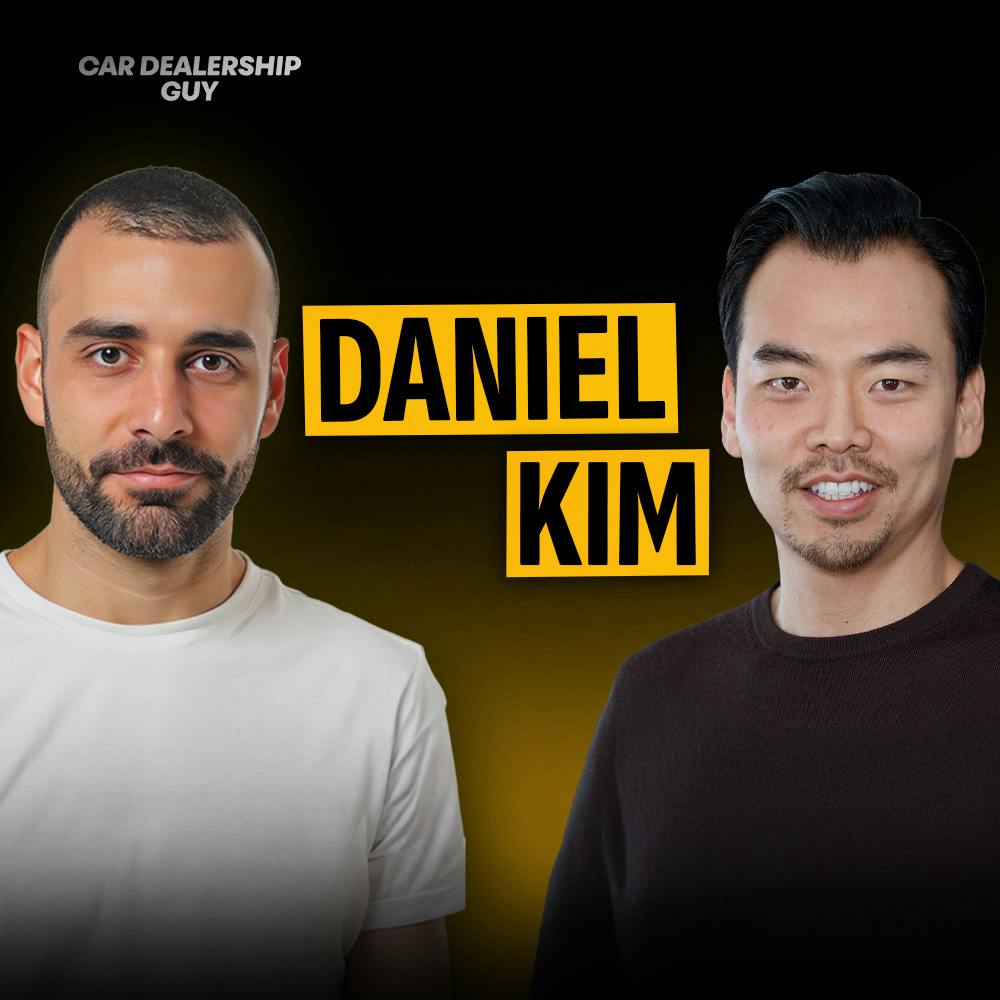
Today, I'm joined by Daniel Kim, Director of Operations at Barnes Crossing Auto Group.
01:12
As a seasoned auto tech entrepreneur, Daniel pulls back the curtain on the reality of AI
01:17
and dealerships, its massive upsides, its lingering flaws, and the sobering truths leaders need
01:22
to know as they bet on the next wave of technology.
01:25
A big thank you to our sponsors for making today's episode possible, Wide Whale, Impel,
01:31
and CDG Dealer Consulting, and now let's get into the show.
01:39
Daniel Kim on the CDG podcast, Daniel, welcome.
01:44
You see, it's super exciting to be here.
01:46
Really pumped to have you on.
01:48
We were coming off what we just had, we called it a dealer data day on Daily Dealer
01:53
Live, and it was all about CDPs, dealership data, like, you know, why should I care?
01:59
So I feel pretty prepared for this conversation.
02:02
Daniel, you are quite an enigma, and I don't say that lightly.
02:07
Our consultant worked on AutoTrader, actually.
02:11
That's pretty interesting.
02:12
We'll talk what that means even.
02:14
Founded two companies that many in our industry have heard of, many used, many use currently,
02:22
You were the founder, and I'd like to understand your founding story there.
02:25
Today, you're the director of Operations, and so I don't butcher the name, but, sorry,
02:30
Barnes Crossing Auto Group, so basically CIPI.
02:33
So you've had a, and you grew up in Indonesia.
02:36
So anyway, clearly, I did my homework and read about you, but just tell us a little bit
02:42
about, let's start with you yourself before we get into the, you know, all the fun stuff,
02:49
Tell us a little bit about your upbringing.
02:52
So in terms of Indonesia, so I was a son of a Korean missionary.
02:58
So my father, a long time ago, decided to go to the most remote place in Indonesia
03:04
in the Borneo Island, which is the biggest island in Indonesia, and he dragged our entire
03:11
family there when I was two years old.
03:13
So when we got there, we had no electricity, no running water, and just kind of grew up
03:19
in the jungles, essentially.
03:22
What point age was that?
03:23
Until, until 10, yeah.
03:25
So at 10 years old, I came to the U.S. I came to California because my mother eventually
03:32
said that's enough.
03:33
My kids need a good education.
03:36
So I ended up in the U.S., got my MBA at Wharton, and yeah, that's just kind of how I got started.
03:44
From no running water in Indonesia to, you know, working with in the auto business in
03:48
the U.S., that's like a very stark transition.
03:51
So kind of let's, yeah, please tell us more about your story.
03:54
Like I want to, I want to lead up to that.
03:57
But one quick question is you, as someone coming from those types of beginnings,
04:02
you know, what was your drive?
04:04
I mean, you said you went to Wharton.
04:05
That's not an easy fee to even get accepted, you know, let alone complete a Wharton degree.
04:10
Like, tell us a little bit more about your personality.
04:13
What drove you to, you know, go down that path?
04:18
First of all, graduating from Wharton is actually not that difficult, as one might
04:23
It's the getting in part.
04:24
But yeah, I think just my parents, you know, they had a really strong work ethic
04:32
and they just always expected me to be, try to be the best at whatever I did.
04:39
So I've always kind of worked hard.
04:43
There isn't kind of this like, hey, I'm going to like some mantra I live by, but I try
04:48
to do the best in everything that I do.
04:51
And yeah, that's, I think that's why I got to go to Wharton as one of the things.
04:57
So tell us about your first exposure.
05:01
By the way, I had some very fun times at parties at Penfraz and whatnot.
05:06
So I went out to University of Pennsylvania.
05:09
I didn't go to UPenn, but I did, I did party there.
05:11
So that's my stamp of approval at some points.
05:15
Tell me a little bit about your first venture into automotive.
05:19
Not your first venture, but you are being consulting.
05:22
I read that about you and you had worked, you literally was, you were retained by
05:26
auto trader to work under acquisition to Cox Automotive and just, can you give
05:30
us the background there?
05:32
I want to understand what that experience was like.
05:35
So kind of accidentally fell into automotive.
05:38
After Wharton, I was a consultant at Bain, and it happened to be that our first
05:43
client that I worked on was auto trader.
05:46
So this was before, I think, Cox, before Cox Automotive, right?
05:49
So I think Chip Perry and Steve Greenfield, which are both still in the industry today,
05:56
They hired us to do all of the post merger integration work after they had just bought
06:01
Vin Solutions, Kelly Bluebook, Viado, HomeNet.
06:05
So I kind of got a firsthand experience of what automotive tech was all about that
06:12
served vendor that served dealers.
06:15
And from looking at all these companies, I just kind of realized, wow, these guys
06:19
are making a lot of money and being sold for a lot of money.
06:24
And that's kind of one of the reasons why I ended up starting my own company.
06:28
So and what company was that?
06:32
So tell us about that transition.
06:33
So you're, at this point in your life, I'm going to guess it's like the mid 2010s,
06:38
correct me if I'm wrong, right?
06:39
You're exposed to automotive and you see an opportunity which goes to become Orbi.
06:46
So tell us, what was that opportunity?
06:50
So one of the companies that we actually, sorry, that we actually looked at was Carvana
06:54
because they were also based out of Atlanta.
06:56
So we looked at them and then I remember seeing, you know, they used to have those, I mean,
07:01
they still do, but the 360 widget or where you could actually see the 360 view of the
07:07
I think they might have been one of the first ones that started that technology.
07:11
So I looked at it and I was like, well, I should probably try to do that for car
07:15
dealerships, like just, you know, regular franchise car dealerships.
07:19
So and, you know, it's so funny, right?
07:21
As an entrepreneur, sometimes not knowing is the courage you need to start something
07:27
because I didn't even know this type of technology already existed back then.
07:32
So I went to the nearest university, found a bunch of engineers, which was a UC Irvine
07:39
because I lived in Irvine, California, made a product that kind of worked and our
07:46
first customer was CarMax.
07:49
That customer, sorry, our first demo was with CarMax.
07:54
I'm going to say that that's a, that's a big whale to pull for a first customer.
07:58
And, and I think it was just sheer stupidity or just not knowing what was out there,
08:03
but that's how we got started.
08:05
Obviously, that's not what Orbi is today.
08:07
We went through this phase of being trying to become a 360 type, you know, photo
08:14
widget for dealers to doing a lot of analytics.
08:18
I think our, we first made our big splash when we detected a lot of bot traffic.
08:24
This was back in like 2016.
08:27
We got published with PCG, Brian Pash.
08:31
And then that's kind of how we got put on the map.
08:33
And now today Orbi is essentially a CDP.
08:36
I think we were probably one of the first companies to talk about a CDP probably
08:46
So to my surprise, when I see the industry today, I'm like, wow, everybody has a CDP.
08:51
What do you tell me about, I want quick pause there, but what do you currently do as director
08:57
of operations at the group?
09:00
So very tech background.
09:01
I think operations, I think slinging metal or reconning cars.
09:06
So what does your scope comprise of?
09:09
So I work at our corporate office of we were a dealership of, you know, 16 rooftops
09:14
and my main, you know, responsibilities, digital marketing, right?
09:18
Because that's kind of my background.
09:20
And then also handling the BVC department and then also vendor management.
09:26
So those are kind of the three big buckets that I look at.
09:29
I'm a little less involved in kind of the like less of like a platform director type
09:35
person where we're digging into the weeds and trying to make, you know, trying to
09:40
look as salespeople and things like that.
09:43
This episode is brought to you by wide whale, the auto industry's trust marketing
09:47
platform. Wide whale is the reputation engine behind thousands of dealers,
09:50
including Lithia, Coons, Westhurst, Swickerd, Herb Chambers and many more.
09:55
AI is here to stay and wide whale is ready to help you take advantage with
09:59
brand new AI topic analysis tools.
10:01
You can give structure to free text customer reviews.
10:03
This allows you to reveal opportunities for improvement according to the voice
10:07
of your customers like never before.
10:09
Wide whale AI analyzes every review to compile frequently mentioned topics.
10:13
Paired with ratings and sentiment, your quarterly reports will go from we have a
10:17
4.4 rating on Google to our customers think wait time at our dealership is 30%
10:22
worse than the industry benchmarks.
10:24
Now that's actionable insight.
10:26
Wide whale is the fastest growing reputation management vendor in
10:29
automotive. You can learn more by visiting wide whale.com or clicking
10:32
the link in the show notes below.
10:34
Yeah. Before we get deeper into your day to day now and what you're
10:38
working on. What did you what are the at being a vendor literally building
10:42
technology for dealerships?
10:44
Like what did that teach you before you actually became a retailer as a
10:48
vendor? What challenges for dealerships were you exposed to?
10:53
Like what were you seeking to fix?
10:55
Because today you're literally running the technology for many stores.
10:59
And so I'm trying to understand were there any major themes that you
11:03
were that you notice that hey, these are the areas where I really
11:06
think dealers need support.
11:08
Dealership technology in many cases is not great.
11:12
And so I'm curious to know what stood out to you the most in terms of
11:14
challenges and opportunities conversely within the space being on the
11:20
Yeah. Yeah. That's a good question.
11:21
I mean, I think the biggest issue is the lack of resources you have
11:27
sometimes, whether you're a single, you know, store or single rooftop
11:32
dealership or even at our scale at 16 rooftops, you don't have a lot of
11:38
technical capabilities.
11:39
So trying to really help dealers almost become a part of their an
11:46
extension of their staff and and really drilling down deep and
11:50
figuring out where opportunities lies.
11:53
I think that was the biggest lesson I learned and that's where you can
11:56
add the most amount of value for the dealerships that you work with as
12:02
Okay. Now talk to us about present day.
12:05
What are you focused on nowadays?
12:07
We talk lots about voice AI, text AI, customer data platforms, right?
12:12
My data being clean, which why does that matter to me as a dealer?
12:16
Well, it matters because I'm going to get more bang for my buck when
12:19
I'm targeting customers, when I'm doing outreach and you could
12:22
tell us more about this.
12:23
But there's so much, there's so much happening at once.
12:26
Dealers have sort of turned from selling these, you know, pieces of
12:30
metal to being technologists.
12:32
It's pretty crazy when you think about what drives this business
12:36
And so back to you, like, what are you focused on in your role now
12:41
Yeah, I think two things.
12:44
I mean, how many times do we talk about AI also on a car
12:48
dealership guy, right?
12:49
So currently we have AI agents.
12:51
So we have a centralized BDC at Barnes Crossing Auto Group.
12:55
And we use AI agents to be the first line of communications for all the
13:01
customers who put in leads or who submit a lead to our dealership.
13:06
And then the second thing is around ownership of data.
13:10
I think there's been a lot of talk around CDPs and using data to leverage
13:19
And I think our industry has done a pretty good job in finally getting
13:24
other vendors to give dealers access to their own data.
13:30
So I think we've kind of gone through that change.
13:33
Now it's out there, but there's a lack of coordination between all of the
13:38
data that all the different vendors are pulling, right?
13:41
So one of the things that we're working on at Barnes Crossing
13:44
Auto Group is building our own data warehouse where we bring in all
13:49
of the data from all the vendors that we work with.
13:53
And then being able to normalize it, do some data hygiene, identity resolution,
14:00
And then being able to then use that data to have a coordinated effort in
14:06
reaching out to your customers as well as planning and strategy for
14:10
the dealership while we control the data, that is ours, right?
14:15
So I think those are the two things that I'm working on right now.
14:19
Okay, so you're trying to get access to all your data.
14:22
Is this, like, how difficult is this?
14:25
Your mid-process clearly, I mean, you're doing it now.
14:27
For a dealer that's listening that maybe hasn't started, maybe has.
14:31
But like, how challenging is it really?
14:33
It sounds, and it sounds silly, right?
14:34
It's like, it's your data, of course you have access to it.
14:36
But things are always more complicated than they seem.
14:40
So tell us about that process.
14:42
Yeah, I think for the majority of the main CRM and DMS vendors,
14:48
for the most part, there is a way to extract data, right?
14:53
So I think that part is not as difficult.
14:56
I think the most difficult part is actually then normalizing it in a way that you can use it.
15:02
And I'll give you an example, right?
15:04
When you get a dump of data, first of all, it's just all in different tables, right?
15:09
So you might have a table for salespeople, a table for all the cars
15:14
that you sold, a table for all the stores and so on and so forth.
15:17
And if you don't map the data or create any kind of relationships
15:21
between all the different data points, then there isn't really a way to use it.
15:26
And this kind of comes back to the difficulties that a lot of the dealerships face
15:30
because how many dealerships do you know you'll see that actually uses
15:35
or has their own data scientist at their dealership?
15:40
So I think that is kind of the hardest part of what I've been kind of facing
15:45
as on the vendor side because, you know, back at Orbi or at Carmigo,
15:50
I had a group of developers that I can go to and say,
15:53
hey, these are some of the things I need to get done versus now I don't have that.
15:58
OK, so how did you let go about this process?
16:02
How are you doing it today?
16:03
You said you don't have those resources.
16:05
You said that's a challenge.
16:06
So what's been your solution?
16:07
Yeah, so it's been about relying on the vendors
16:13
that are willing to be the right partner with you.
16:16
I think that's been kind of the biggest learning that I've had.
16:20
It's a lot harder to even though our dealer principal, he's great.
16:25
He's very supportive.
16:27
He's a great businessman trying to go to him and tell him, hey,
16:30
we need to hire a data engineer for $150 to $200,000 a year.
16:37
It's a pretty difficult sell.
16:39
And also on the same, on that point, even if you hire that person,
16:43
who's going to manage that person, right?
16:45
So the next kind of place that I looked at was who are some of the vendors
16:50
who aren't just there to sell a product to me, but who is willing
16:53
to actually build out some of the things that we wanted to do as a dealer group, right?
16:59
So that's what I've been relying on.
17:01
So so give us the plugs.
17:02
We want all the details.
17:03
So let's go give us like step by step, like, who are you working with today?
17:07
How are you working with them?
17:09
All right, let's start with the names.
17:10
Who are you working with today?
17:11
Yeah. So in terms of the CDP or the AI, so AI agents currently we're working with Impel.
17:19
We just got off of a, a bake off, a Pepsi challenge where we did a pre exhaustive kind
17:27
of RFP of all the, you know, AI solution providers that were out there,
17:32
like Matador, Numa, you know, Podium.
17:35
And we did a bake off with another vendor versus Impel.
17:40
And we just recently made a decision to have all of our chat agents or AI chat
17:47
agent to be with Impel.
17:49
So would you say a bake off?
17:52
I don't think it's something that, you know, it's very common word, wording,
17:56
hint in the dealership world.
17:57
What did you actually do?
17:59
So you ran, I understand the context.
18:01
You ran like, you ran an RFP process, right?
18:03
Like a shopping process here, a comparison.
18:05
But how did you actually do this?
18:08
So, you know, the problem I have with the RFP process, even if you did,
18:12
let's say two or three demos and spent four hours on a product demo,
18:16
you never really understand how the product works or what the product is about.
18:21
Maybe you get, I would say maybe 25% to, if you're lucky, maybe 50%,
18:26
but you really don't know how the product works.
18:28
So what we did was we split up the stores, half of them got Impel
18:34
and another half got a different solution.
18:36
And yeah, we set up metrics on what dictated success
18:41
and we just kind of let it roll.
18:43
But how do you actually do this?
18:45
Like practically speaking, it doesn't take 10 minutes to implement one of these tools.
18:51
So how, practically speaking, how do you actually do this, right?
18:54
Even, like I said, we just had Ryan Roman on the podcast,
18:57
20 something stores, Roman Art Group, and he was talking about,
19:01
spending a year and a half on his CDP implementation process, cleaning up his data.
19:07
So how are you able to be so nimble and run this kind of dual track process
19:12
where you have two separate platforms powering your dealerships?
19:16
How do you actually do that?
19:17
Yeah, so it's not the most efficient way to, I think, select a vendor,
19:25
but I think in the long term, it really helps you find a partner
19:29
and a solution that you can stick with.
19:31
Because the flip side is you can select one vendor,
19:35
but you're also very familiar with dealerships that will switch vendors every three to six months
19:40
because they are not happy with the product that they selected.
19:44
And I think one of the other benefits that I realized was,
19:47
during the bake off or the Pepsi challenge,
19:50
the vendors will really, really make sure that you are taken care of
19:54
in terms of some of the things you need,
19:56
custom work, because they're still trying to earn your business.
20:00
So I think in that sense, it was very helpful.
20:03
Okay, so what did you learn throughout this process?
20:05
Our main purpose of using an AI agent is to help our BDC agents to be more effective,
20:15
meaning they are able to handle way more leads without a dropping quality.
20:21
So for example, ever since we've implemented an AI agent, our centralized BDC,
20:26
and now handles 50% more leads, I think each BDC agent is now at around 300 leads a month,
20:32
versus I think an industry average around 200,
20:35
while still maintaining a 99% plus contact rate without also a loss in effectiveness.
20:42
So that was what I was looking for.
20:45
An AI solution that can help empower and make our sales or BDC agents a lot more effective.
20:54
So that was our number one goal.
20:56
And then throughout the process, what I learned is that obviously there was a winner,
21:03
but I realized that vendors who are willing to provide help in this process
21:10
and be a partner with you is really the type of vendor that you want to work with.
21:15
So for example, at our dealership, I'm one of three people at the corporate level
21:23
outside of HR and accounting that work on these corporate level initiatives.
21:27
So in order to do a bake off, in order to make sure that the AI agent is implemented properly,
21:34
I need help from our vendor partners to do audits to help tweak the product,
21:40
to communicate with our BDC managers, to train our BDC agents sometimes in person.
21:47
And there was a vendor that clearly did this really well for us,
21:51
which was in Pell. That's who we decided to go with because their product was good.
21:56
And also at the same time, they provided exceptional service and worked as a partner to
22:03
work through some of the challenges, including trying to add a Southern twang to our AI chat
22:09
agents because our dealerships are in the South.
22:12
That's awesome. So you mentioned you've implemented these agents,
22:17
which you just spoke about. And that has gone into your BDC. Have you done anything else with
22:23
when it comes to AI or is that the primary use case today at your dealership?
22:27
Look, I'm trying to get like you built dealership technology beforehand.
22:31
And so I'm trying to understand what have been the biggest wins for you.
22:35
It seems like this has been agents have been a big win for you,
22:38
based on what you're describing. Has there been anything else that you've implemented
22:43
that has been a major win throughout this learning process?
22:47
Outside of sales agent AI. Another thing that we're currently working on is putting an LLM or
22:54
an AI layer on top of our data warehouse. So that is still a project that we're working on.
23:01
Let me be able to query or like search all your data and like ask anything.
23:06
Finally, all the customers that purchase red cars under 30,000 miles during Christmas
23:11
in the last 10 years. Yeah. And this I have a funny story about this.
23:15
I mean, there's a one of the reasons why I wanted to do this is because I get a lot of phone calls
23:21
from our general managers who are amazing at what they do, but they will also call me one day at
23:27
a lot of the times and be like, Hey, Daniel, I'm not selling any cars this week.
23:30
Like what's going on? Right? Like, what do I need to focus on to,
23:34
to, you know, sell more cars this week? And, you know, I joke that I'm going to
23:40
replace my phone number with an AI chatbot that they will text and the AI chatbot will
23:47
respond to them and say, Hey, I'm, yeah, I'm not selling cars. What's the problem? And it crunches
23:52
all my entire everything. Oh, it's like your close rate has dropped significantly.
23:56
Like, you know, da, da, da. Exactly. Like, Hey, we noticed that your appointment set to
24:01
show is quite low. Are you confirming your appointments? You know, things like that,
24:06
right? Well, but you're, we're laughing, but like, why is that not going to be the reality
24:10
very soon? It seems like it's the lowest-hanging fruit there is. You don't even need any new software.
24:16
You kind of just need to, like you said, put an LLM or some, you know, attach some software to
24:21
your database, which I'm trying, right? DMSs will do or someone. Right. And essentially,
24:27
the way I look at AI in the dealership world and is, you know, they are there to help
24:33
assist, become tools for automotive dealer employees. So for our agents, essentially what I
24:41
noticed when I first went into the BDC was that our central BDC, they had a stopwatch every six
24:47
minutes. People are checking all the leads and bin solutions and making sure that all the leads
24:52
are responded to within six minutes. And a lot of the times what our BDC agents would do is
24:58
they would go in there and they see like six leads that just came in and they need to, you know,
25:04
respond as soon as possible. So what they end up doing is they will literally copy paste templates
25:10
without really having the time to look at what the actual conversation is about or without kind
25:17
of gaining any kind of context or knowledge. And I don't blame them because they're just trying
25:22
to do their job versus with an AI agent. It will look at the context of what the customer
25:27
is looking for and actually respond in a much more meaningful and thoughtful way
25:33
and do it in under 30 seconds to a minute. Do you think all dealers need a customer data platform
25:40
nowadays? How important is this? Because you don't like in order to have a BDC sales agent
25:47
that's AI, I don't need a CDP for that. So what do you think here is like, what's your opinion
25:53
on just customer data platforms in general based on dealer size and scale?
26:00
Yeah. So I'm going to say more, I kind of called the data operating system. I'm corning the term here
26:08
on car dealership guy, but to have a competitive edge in the future, you are going to have to
26:15
have a complete set of data that you can run analysis on to tell, to understand what your
26:22
business needs to do as well as be able to target the right type of customers for you to be
26:29
effective. The reason why I'm trying to get owner or I'm building out a CDP or a data platform
26:37
from our dealership's perspective, meaning we own the data, is because then we can control
26:43
a lot of the flow to other vendor partners. And we have way more choices in terms of how
26:49
we activate these customers, including some of the third party platforms that are outside of
26:55
automotive that wouldn't be accessible if you were to use a CDP that's built by a CDP company
27:02
only specializing in the automotive industry. And when you say you have more choices how to
27:07
activate, what does this mean? The expensive mean layman's term. Yeah. So for example,
27:11
if you wanted to direct mail, right now, you're going to have to work with a direct
27:17
mail printing company, right, that will probably charge you, I would say some are between depending
27:24
on the type of mail piece, you know, $1.20 to maybe even $1.80 a piece, right per contact that
27:32
they send to most of the time, these people will just find third party data sources to kind
27:38
of send mailers to if I have control over my own data, I could just go and work with a
27:45
Silicon Valley tech company like Lobb, who does one to one direct mail based on kind of the customer
27:52
journeys that you could send set and at a much lower price, something like probably 80 even lower
27:58
sometimes cents a person. So Daniel, I am curious to know like, what have just been the overall
28:05
results you've seen from, you know, you've implemented a CDP, right, you're working with
28:10
AI agents. But at the end of the day, you mentioned your dealer principle, right? When you go and you
28:14
chat with your dealer principle, like what is that end result? How do you quantify that ROI?
28:19
Yeah, so I'll be honest with you, this is still a month six of my job. So we are still in process
28:27
in terms of working on a data platform. But how I envision it is there's a lot of manual
28:33
processes and lack of immediate data availability for our dealer principle. So my number one
28:39
goal and it's launching probably end of this month early next month is to provide a enterprise level
28:46
dashboard with the key important metrics that we can customize that, you know, can be readily
28:53
accessible to all the leadership at our dealer group. What do you think those metrics are
28:57
going to be like? What KPIs are you tracking? Oh, KPIs in terms of just, I would say I would
29:02
start with the basics. Right? What is literally how many leads did you get? How many appointments
29:09
were set? How many appointments were shown? How many people actually bought cars? What kind of cars?
29:14
What was your front and gross back and gross? Just kind of your key metrics and then allowing them to
29:20
understand which areas or which stores need help, because that's kind of what our dealer
29:25
principle does, right? He will go and visit stores that are not performing as well. And that type
29:30
of data will give additional information for him to go there and be a lot more prescriptive
29:36
about what the store needs to do to improve. This episode is brought to you by CDG Dealer Consulting.
29:42
We all know the right tech can make or break a dealership, so don't guess and don't do it alone.
29:47
Backed by insights from 500 plus dealerships and completely free for dealers, CDG Dealer
29:52
Consulting audits your tech stack, recommends the right products and vendors and secures
29:56
guaranteed best pricing. Our team then guides your rollout integration, helping you avoid
30:01
costly mistakes so you can hit the ground running. So discover dealership tech that
30:05
actually works at CDGDealerConsulting.com or click the link in the show notes below.
30:10
That's CDGDealerConsulting.com. Yeah. So going quickly back to your AI Bakeoff,
30:16
is there anything else you learned throughout that process? It seems like a super valuable
30:20
just learning process in general, but other than this, you made your selection, you implemented
30:26
agentic or sales agents into your BDC, which will be my next question as well. What's that
30:31
been like? But anything, any other learning throughout that process, just about AI within
30:37
your store, right, eating employees, replacing employees, what that's been like?
30:43
Yeah. I mean, this is some of the things that I tell all our BDC agents is that, look,
30:48
AI is not going to replace you. Maybe in, I don't know, maybe in the near distant future.
30:55
That's controversial, by the way. I've spoken to many people on this platform who
30:58
have the opposite opinion. They say it is reducing my BDC, but many people agree with you as well.
31:03
It's been very like 50-50. All right. For me, I think people who know how to use AI are the
31:11
ones that are going to be successful at the dealership, right? So if you, because right now,
31:16
we've got a process in our BDC department where our BDC agents need to work alongside AI
31:22
to make sure that they're doing a good job, right? So I think that that's kind of the biggest thing
31:28
that I kind of talk about is, hey, you have to learn how to use some of these AI platforms.
31:34
And what? Just let them arm them with that and assume that you're going to have the same
31:39
headcount, just a more efficient headcount. Is that the idea?
31:42
Yes. And to that point, we might need less people, right? So with AI, I look at it as handling
31:51
little bit less like lower value tasks, such as correct that first initial response.
31:58
Voice AI is still, you know, some might not be that far away, but it's still not very good
32:04
because it's a lot harder to implement. And, you know, so what I've started doing is with our
32:10
BDC agents, they're now just focusing on phone calls in the first 24 hours of the lead
32:15
coming in, as opposed to back then sending texts, sending emails. Oh, you're just focused on one
32:25
channel and I understand what you're saying. Right. And I'm really focusing on the call inputs
32:31
plus helping AI agents when they need help. And then also having my BDC department
32:37
focus on the first 72 hours and then allowing AI to kind of go focus on the longer term follow-up.
32:46
Got it. Daniel, has your marketing mix changed since you've started using, you know, sales agents?
32:53
I just think logically, right, if I can respond at a much lower cost to every lead,
32:59
am I more inclined to work with every single listing site to get, to claw every
33:04
lead I can into the ecosystem because I get more shots at net. Has any of that been part of your
33:09
decision-making? Have you changed your marketing mix? Tell us about that. Yeah, yeah. We've drastically
33:14
reduced our advertising per vehicle spend as a group. That's something that I'm very proud of.
33:20
We've reduced our advertising per vehicle spend by $200 per car, which I think is very
33:25
significant. Part of it is kind of the background that I've had in terms of, you know,
33:30
understanding value and looking for vendors who are going to provide us with opportunities
33:36
at a fair price. And then on the flip side, through process and implementing AI agents,
33:43
we've been able to increase our lead to conversion rate by 20%. All right, so we're spending less
33:49
and we have less leads that are coming in, but we're currently selling more cars than we did
33:54
before because we're a lot more efficient with the leads that we have. Got it. Spending
34:00
less, fewer leads, more efficient with current leads, marketing mix. Has it changed? Have you
34:05
turned up the dial in any marketing? And I understand you're spending less in aggregate.
34:08
Are you spending more on specific things or the same? Yeah, I would say we've been a lot more
34:14
targeted with third-party listing sites. So, all in all, I think here's how I would summarize
34:21
this, right? You implemented sales agents. For you, it's been very successful. You've
34:28
pretty much, like you said, you're letting your team focus on phone as a primary channel and the
34:33
rest, you're going to your sales agents for the first 24 hours. As part of that process,
34:39
right, you have implemented a customer data platform. You are structuring your data so you
34:44
can use it in more ways. Am I missing something? Right, like, what are the skeletons in the
34:50
closet here? Like, what don't I know about how you've gone through a pretty rigorous
34:54
process that you've even, you've had this bake off, right? What am I missing? Like,
34:59
what am I not asking you here? Or what don't we know that we should? Why is every
35:02
dealer not doing this yesterday? Just lack of resources and trying to manage my time.
35:09
So, for example, we are going through an entire dealership website revamp,
35:16
including figuring out all the GTM tags that are slowing our site to improving our,
35:22
you know, call to action buttons to improving our speed. And it's just, it's so much, right? I think,
35:28
I think one of the things that I learned in, in on the retail side when I came in was, I don't think
35:36
there is a specific complex, like very complex concept per se. But there are many concepts
35:44
that you have to learn and get used to it. There's so many different things that you need
35:49
to pay attention to. And that's been kind of my biggest struggle, right? Because I've got all of
35:54
these things that I want to do, right? I'm a tech founder, I know technology, but then, you know,
36:02
it's just this struggle to find the right way to get to where I need to without having
36:10
internal staff members that I can rely on. Totally. And I think that's the biggest
36:16
difference that I see. What departments are you primarily using these agents and, you know,
36:22
you're kind of injecting AI? Is it all departments like sales, service, BDC, or you just focus on
36:27
some departments specifically? Yeah, just on the sales and service of BDC currently.
36:33
They know, in what way did you try AI and service? Yeah, I think, I think the service AI,
36:38
it might have been, you know, the vendor that we decided to go with previously, but
36:43
it just, it just blew up on us in terms of just the confusion, it caused the customers,
36:49
didn't really decrease our call volume, maybe scheduled some appointments, couldn't really
36:55
figure out in terms of giving status updates on cars. And it was just not a effective experience
37:02
for us. So, we've put a pause on it. We will revisit it in the future versus I think on the
37:08
sales side. One, it's more text-reliant. So, I think it's more baked as of today. And I think
37:17
there's solutions out there that can really help augment your BDC or sales department on the lead
37:24
follow-up side of things. So, what's next? Like, what do you, what do you, I didn't ask you
37:30
time frame of how recently you've implemented this. But I'm curious, now that, you know,
37:35
you have your stores running this way, what's the next project for you? Like, where's your focus
37:40
shifting to? Yeah. So, we've just launched our data warehouse. We have DMS and CRM data in a,
37:47
in a relatively manageable way. 4Is has been really helpful in that sense in helping us get
37:54
there alongside with MPEL because they have a partnership. And, you know, with that, I'm
38:01
now in the process of putting two things on top of it. A BI layer and a LLM model on top of our data
38:09
warehouse. So, what that means is BI layer because, because the biggest frustration that I had was
38:15
every time I tried to pull reports from my CRM platform, I wanted to shoot myself.
38:20
I'm a very analytics heavy person. And just the, the lack of flexibility, how long it took
38:29
to update every time I tried to create a new report, outdated UI, just really wanted to
38:35
made me want to, you know, bang my head against the computer. So, you know, that was kind of the,
38:42
the reason why I wanted to start a creative data warehouse, bolt on a business intelligence
38:48
tool on top that I can share with leadership, so that everybody is on the same page and they
38:53
know what is expected of them. Because if you don't measure it, then how do you know
38:57
you're successful? And then afterwards work on a platform where now we can use LLM models to first
39:07
teach it to understand what the data means, right? Because if it doesn't have any context around
39:12
what a vehicle is or where to look for vehicles or customers or things like that,
39:16
then the data is kind of useless. But once we have that, then using an LLM model to
39:21
provide insight and support to the greater staff that works at our, our dealership group.
39:27
Well, we'll have to get you back on the platform to tell us how that went,
39:30
because it sounds like you're working on quite the fun project. One quick question there. You
39:35
mentioned you want to put like a business intelligence tool over your data. What does
39:41
that look like? Or like, what are you actually using for that? Yeah, so we have our data
39:46
warehouse in Snowflake. So Snowflake is a pretty, it's pretty well used data warehouse.
39:52
And, and you know, to the people who are listening to this podcast, you're like,
39:56
oh my gosh, how do I do this? You know, obviously happy to tell you how I did it too. But like,
40:02
it's not like I'm in their writing code for all this stuff, right? I am finding the right partners
40:08
to help me with this. So just want to kind of make that that clear. On top of Snowflake,
40:14
it's not very difficult to put on a BI tool like, you know, Tableau or Power BI from
40:21
Microsoft or, you know, there's a little cheap little data platform.
40:26
A visualization tool. Correct, correct. Yeah, a way to kind of query data and then show graphs
40:33
and charts and whatnot. So we're, yeah, so we have that set up now. After, so then once I have
40:40
that, then I have to create actual reporting by querying the data. All right, Daniel,
40:45
this has been very interesting, man. So I appreciate you kind of filling us in on your
40:49
selection process. And we'll definitely want to do a follow up with you in the future as you
40:53
implement all these other visualization tools. And ultimately, you know, get to the brass
40:57
tax of show me the money. Yeah, for sure. I want to understand, you know, how business has gone up.
41:02
Leave us all with like one piece of advice for anyone listening to this that kind of heard
41:05
about your entire process. Like what's one piece of advice you can leave us with?
41:09
Put in the time and do the research, right? It's the issue that I have sometimes in our
41:16
industry, like we, I think everybody means well, but sometimes there's a lot of noise,
41:22
right? You know, one of the things that I always talk about too is, do you remember digital retailing?
41:26
I do. Yeah. Yeah, you know, I think we got so caught up with the software
41:34
and we totally forgot about process, right? Which was actually the more important part
41:38
of digital retailing. So and I feel like with CDPs, that's kind of what's happened.
41:44
Everybody just got excited about being able to target, you know, that person who didn't buy a car
41:51
from you, but service with you. And now looked at a Hyundai Palisade on your website and I want
41:56
to get to that guy, right? So they'll find some, you know, we'll find some vendor as a dealer
42:01
to help me get to it. But in essence, it's not about really the activation. It's really
42:07
about setting up your data properly. And there, unfortunately, I think isn't a lot of
42:14
ability to capitalize on the ability to just send data to a dealership. So I think vendors are less
42:21
focused about it. But I think there are vendors who exist currently out there who are more aligned
42:27
with kind of what's good for the dealership in the long run, even though it might not sound
42:32
as sexy or be the new next shiny thing. So I think that's kind of what, you know, what I would encourage
42:40
everyone to focus on is, look, you know, what, what, what is the real objective that we're trying
42:44
to get to, which is ownership of data, because that is what's going to help
42:49
your dealership win in the future. And find the right vendors if you don't have internal
42:55
capabilities. And, and, you know, I'll say there are other dealerships out there like
42:59
Chomp, for example, right, they've, they've got a huge team, you know, and it's amazing that they
43:04
were able to implement it and kudos to them. But, you know, we're, you know, we're not there. A
43:09
lot of dealerships don't have that capability. And if that's, if you're in that kind of boat,
43:14
then really finding the right partners to be able to implement some of the things you need
43:20
to do, I think is what's most important. Well said. Daniel Kambarns crossing auto group.
43:26
Daniel, thanks for joining us on the podcast. It's been awesome. All right. Thank you, Yossi.
43:33
All right. Hope you enjoyed that episode. Please give the podcast a rating. Consider
43:37
subscribing to the show and check the show notes for links to what we talked about.
43:41
Thanks for tuning in. I'll see you guys next time.