An apprenticeship program is a way for people to learn a job by working with someone who is already experienced. They get to practice while also learning in a classroom.
Stellantis is a large car company that was created when two companies, Fiat Chrysler and PSA, combined. It includes many car brands you might recognize.
NHRA stands for National Hot Rod Association, which is a group that organizes drag racing events in the U.S. They help make sure the races are safe and fair.
Electronic ignition is a modern way to start a car's engine using electronic parts instead of older mechanical systems. It helps the engine run better and cleaner.
A timing chain helps keep the engine's parts moving in sync. It's important for making sure the engine runs smoothly and efficiently, and it usually lasts a long time before needing replacement.
ASC certifications show that a mechanic knows how to fix cars properly. Having these certifications can help them get better jobs and prove their skills to customers.
The Subaru Forester is a small SUV that can handle different types of weather and terrain. It's great for people who need space for passengers and gear.
The body control computer is like the brain for many parts of the car's body, helping to control things like lights and locks. It makes sure everything works together properly.
The ignition interlock switch is a safety feature that makes sure you can't take the car key out unless the car is in park. This helps prevent the car from rolling away accidentally.
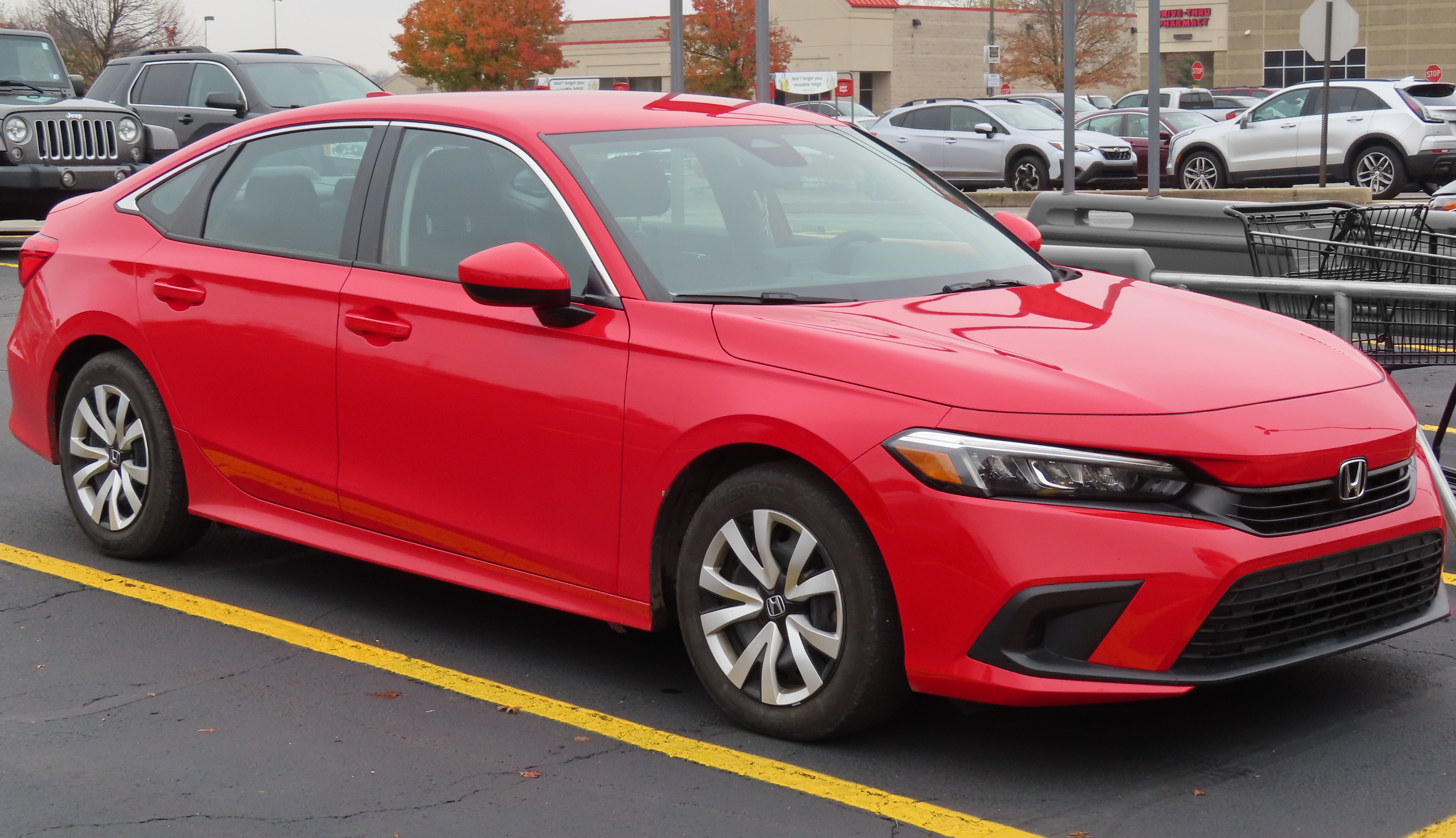
The Honda Civic is a popular small car that is known for being dependable and good on gas. The 2017 version has a turbo engine that helps it use less fuel while still being fun to drive.
Direct injection is a way of getting fuel into the engine that helps it run better and use less gas. It sends the fuel right where it needs to go inside the engine.
Carbon buildup is when carbon from fuel collects in the engine, which can cause problems like the engine not running smoothly. It often happens in engines that use direct injection.
Engine misfiring means that the engine isn't firing correctly, which can make the car run poorly or lose power. It can happen for several reasons, including buildup of carbon in the engine.
P03 codes are error codes that tell you if there's a problem with the engine's cylinders not firing correctly. They help mechanics figure out what's wrong with the engine.
Running too rich means the engine is getting too much fuel compared to air, which can make it less efficient and cause problems. It can lead to higher emissions and wasted fuel.
Regular maintenance means taking care of your car by checking and fixing things like oil, brakes, and tires. This helps keep the car running well and prevents bigger problems later.
Car
Honda That Honda
The Honda That's is a small car that is mainly found in Japan. It's designed to be easy to drive around cities and is known for being practical and fuel-efficient.
The differential is a part of the car that helps the wheels turn at different speeds, which is important when you're going around corners. It keeps the car stable and helps it grip the road better.
The transmission is the part of the car that helps it change gears. It takes power from the engine and sends it to the wheels so the car can move at different speeds.
The suspension is the part of the car that helps it ride smoothly over bumps and keeps the tires on the ground. It makes driving more comfortable and helps with handling.
The Honda Accord is a popular car that many people use for everyday driving. It's known for being dependable and having a lot of space inside, making it a good choice for families or anyone who needs to carry passengers or cargo.
LIVE
W-A-T-D presents John Paul, the car doctor, All Things Automotive.
Have questions? Call or text 7-8-1-837-4900.
Now, here's John Paul, the car doctor.
And good Sunday morning everyone and welcome to another edition of the car doctor program on this, the very first day of 2026.
The best I can tell, at least, it seems to be the very first day of 2026 where apparently it's going to snow rain, get warmer snow again.
My math might be off, but it could be the fourth day of 2026.
It could be the fourth day, but it's the first Sunday.
Oh, okay. All right. I thought you just said day.
Yeah, no. I'm trying to cover it all.
I'll go back till the lightly paying attention.
All right. Yeah, better than not paying attention at all. So I'm okay with that.
So this is a good start for the new year for 2026. We're not getting anywhere so far.
But, you know, in the just about any trades these days, whether it's electricians or plumbers or automotive technicians or just about anything,
for every five people that leave the trade, only two or three are replacing them.
And I've even heard only one or two, depending on what the trade is.
So if you're trying to find a plumber or an electrician or a carpenter, you know, you find there's some challenges.
And AAA is working with NAPA to try to kind of grow new technicians.
And with us on the phone is Jim Sennett.
He is a manager of automotive repair programs for AAA Inc., which we used to call AAA National.
Jim, good morning and welcome back to the Cardoct program.
Good morning, John. Thank you for having me on here your first Sunday of the 2026 year.
Yeah, I'm lucky I still said 2026. You know, it takes me usually until February to get the year right.
You know, so fortunately, I don't have to write checks anymore.
So, you know, I'm a slow learner. Let's face it, you know.
And you're with AAA National, but you were not located in Florida, are you?
No, I am located in the nemesis of Massachusetts and Buffalo, New York.
Yeah, and it snowed there, right?
Yes, it snowed here, for sure.
And how much snow was on the ground in Buffalo?
Well, I live a little northeast of the city, so I only got about six inches.
But if you go down south near the stadium stuff, you're probably over foot.
Yeah, that's what I hear.
So, you know, today the Patriots playing today, we won't even talk about that.
But I do want to talk about this one year kind of anniversary of a program between AAA and NAPA.
And NAPA has been a great partner with AAA.
In fact, AAA members get a discount when they shop at a NAPA store.
You can also buy a AAA branded battery at NAPA stores.
If you don't want to have it delivered to your house, you can go to a NAPA store and go get it.
But tell us about this apprenticeship program.
Yeah, so AAA and NAPA have gone back a long ways.
They're almost 30 years, I think we're 29 years.
We've had a relationship with NAPA.
We've had our approved daughter repair program, you know, where we have independent shop owners out in the country there.
Out in the members, I can talk today.
Out in our services out there offering them for AAA and they get a discount for coming in there for our AAA members and getting worked on in their vehicles.
And we have a strict, I would say, thing that they have to adhere to between warranties on cars, training with their technicians,
the warranty on parts and work and labor and service done and that they have a higher rating for all of their customer service and stuff.
So we have that program that's been around for 50 years in 2025.
So back in 2023, you know, we were tasked with there's a growing gap in automotive technicians.
Like you said, you know, for every technician that leaves, we don't really have an answer for one that's coming back in.
It was getting very, very bad in 2020, 2021, 2022.
In 2023, we saw some of the trade start to sort of, you know, have a rise, you know, modest to 3% growth.
And then in like 2022, 2023, 2024, we started to get more and more growth and AAA being a part of the automotive industry wanted to be dedicated to this.
I guess initiative to have technicians come into the workforce.
So back in 2023, we started some discussions with NAPA and AAA and how we could help with bringing more technicians into the workforce.
They had already started their NAPA apprenticeship program.
So we kind of worked with them and they kind of modeled our apprenticeship program much like NAPA.
We had a few tweaks in there for some different things for us for AAA.
And we started and launched our own program.
And we kind of wanted to do it through AAA and have a part by NAPA so that no matter what your parts affiliation with this, you know, when you work in automotive shops,
sometimes your parts affiliation with O'Reilly's or, you know, with advance or with AutoZone or NAPA.
But we didn't want to make sure that anybody could have access to this apprenticeship program, not just the people that had a relationship with NAPA.
And NAPA was gracious to do this for us.
It was gracious to share all of their time and effort they put into this program and putting it all together.
And we came up with the AAA apprenticeship program.
And like you said, you know, it's not even though it's NAPA, if somebody has a partner, you know, somebody has, you know, some shops still do this today.
You pick up the phone and it automatically connects to your local parts house.
But when you look at it, this program, whether you're a NAPA shop or whether you're a shop that deals with another independent auto parts store,
you're still benefiting the greater good by putting more technicians out there in the field.
Correct. Yeah, that's a program near and dear to my heart.
I have been a technician ASC certified technician for 20 years, actually 25 years now.
And I, you know, I've always looked into, it's a great field that, you know, we've had a bad rap of what it looks like.
You always get the guy that's a greasy guy underneath the car, working on a car, you know, and it wasn't always a high, what's the word I'm looking for?
Like you didn't look at it as a great job.
You looked at it as one of those jobs that wasn't there, but it's actually not that.
I mean, once your job and now is entailed to a laptop computer, you're hooking up to these systems.
It's like a tech job now, right?
It's almost, it's so high tech now.
So many things going on inside the cars and stuff.
It's like, it's not just that greasy guy under the car getting all dirty and everything.
It's using your brain.
It's using these computer systems and it's really, really smart and it's really, really cool to get into this program.
And with the shortages and where they are now, I mean, you can make a technician can make, you know, easy 80, 90, $100,000 a year.
We got guys that are making, you know, 40, 50, $60 an hour.
And then in a shop and, you know, it comes with, you know, I guess a lot less requirements than having a four-year degree, right?
You go through a two-year school, trade school, you go through your local community college and get an automobile tech degree,
or you can come to our apprenticeship program and, you know, you earn as you learn.
So you get to go to work every day and you get to learn more about mechanics.
And then after our two-year program that we have here with, with AAA and that,
but you can become, you know, probably a good C-tech in the program after two years and you're not coming out with any debt.
You earn money along the way or you're collecting a paycheck and you're still working.
And then you're also learning new trades while you're doing it.
Yeah, we're fortunate here in Massachusetts where we have free community college.
And that includes one of the, you know, in my opinion, one of the best community colleges, which is Mass Bay Community College.
And they have automotive programs with Toyota, with GM, with Stellantis.
And they have, in the same school, they actually have, I think they have Hunter and a couple other kind of spin-off classes that run out of that.
But when you combine that with a program like this where you can do e-learning and all of that, you know, you brought up a good point.
There's people out there and it's, and you said, you know, there's guys out there making $40, $50 an hour.
A lot of women out there in this field right now, not as many as probably everybody would like to see.
But, you know, I was at a repair shop, a local AAA repair shop, not far from where I live here, owned by a woman,
has a couple of women that work in a shop, a couple of guys that work in the shop.
And, you know, you just get a little bit different feel when you go into that shop.
So there's a lot of possibilities and growth, but also because there is a bit of a shortage.
People that are good can do better.
I remember when I first kind of decided I wanted to get into this business and it was a local car dealership near where I lived when I was, whatever, 18 or 19.
They had no interest of, you know, taking somebody in that had a little bit of experience.
They were looking for, you know, good solid experience, mechanics, technicians, you know, back then.
Today it's a little bit different story.
You come in with a little bit of knowledge and a good work ethic and somebody who comes into work and wants to learn every day.
There's a lot more possibilities that are open to these new technicians out there, isn't there?
Definitely. And like you said, women, it's a huge thing in there.
I think about 5% of the workforce is now women in the automotive industry, you know, which is pretty cool.
Look at Mary Bear, right?
The CEO of General Motors who started in an engineering program, a technician program at GM and worked a way up to be the CEO.
So it's pretty cool to see that.
I think the growth in all trades are common like the last couple of years here in New York state.
If you are between the ages of 18 and 15, you don't have a degree at all and you want to go back and become into the trades.
They will send you to a pre-community college, much like Massachusetts.
Yep.
And they started that program last year and we've seen the, you know, enrollment rates explode into the automotive trades and into all the other trades, too.
Because, you know, that's a great program to have in there and have in trades and we know some people are going to go through the trades and they're not going to make it
or they're going to get jammed up somewhere and have to go to work, whatever.
But, you know, there's a bunch of avenues with AAA and this is what we like to do is we have, maybe if you don't make it all the way to the automotive technician,
you can be one of our roadside technicians that are driving a tow truck, our roadside problem solvers that were out there changing batteries and tires and getting cars unlocked and stuff.
So there's a lot of avenues that you can come to offer the automotive field, right?
You can go to a service writer, service manager, you can be a service director and, you know, big, huge dealerships and stuff.
So there's a lot of avenues that you can take with automotive when you start with automotive and you can branch out into, you know, manufacturing.
So also with this program with AAA that we have, it's also re-skilling.
So say you've lost your job, right?
You were working at a factory or you were working somewhere where the jobs were downsized and you're moving back in there.
It's a great way to get into the workforce and to the automotive field with a little or no experience and we'll train you as you learn and as you earn and you get a job with a shop and then you work your way up.
And it's a great, great thing.
And then the other cool thing that Napa does for us at the end of completion of this program, we have all the names in there and they get in there.
They offer the technician and the shop that they're working for, you know, a tool starter kit with a toolbox, everything at a discounted rate through their Carlisle tools and stuff with Napa.
And they give them a great way down to get them started into the industry and into the program.
So it's pretty, pretty cool that all the things that Napa has done for us to, you know, make this successful program for AAA and for Napa.
It really is. And I think one of the key things and the recap program that was on before my program this morning, there was a young woman and she lost school, Harvard, whatever.
You know, I have a friend whose niece went to college and, you know, she went to a good school, she went to graduate school.
She probably has, you know, hundreds of thousands of dollars in student debt, you know, and it's going to take a long time, even with a good job.
It's going to take a long time to pay that debt off where you can, like you said, you can make, you know, $40, $50 an hour, $60, $80, $100,000 a year and do it with no student debt.
Yeah, that's the greatest thing. And it's such a cool and evolving industry and you can go anywhere up there, right?
You can specialize. There's people that do just classic cars and restorations. There's people that just work on EV cars.
There's people that work on, you know, Asian import vehicles and European cars and they go into NASCAR and to, you know, Drag Race and NHRA and rebuilding engines and you can rebuild transmissions.
It's just such a vast thing and everybody needs it, right? Everybody's got a car in the driveway. Everybody's got it once they use their car and when it's broken, you know, and they're inconvenienced, they don't have a car, they want it back.
So I think it's just an awesome field that you're going to get into and it's only going to grow as technology grows and as people grow, there's only going to be more and more cars and more vehicles on the road.
Yeah, you're right. And it could be, you know, it may be an electric vehicle and, you know, people look at that and go new technology. But, you know, I'm old enough to remember when, like, electronic ignition and disc brakes came out.
And people, I remember some of the old time, you know, mechanics I work with were like, oh, that's got that electronic ignition in it, you know, and then we found out it was pretty easy.
Or those disc brakes, those are complicated. Well, because you didn't know what they were the same thing with electric cars, you find out, yeah, they're rolling computers, but they're still mechanical.
And, you know, something goes wrong with it. You can still, you can still fix it. I think one of the, you know, keys to this business, you know, somebody who gets into auto repair one way or another.
They tend to do everything. You know, I, you know, I remember when I took an air conditioner course, and, you know, the instructor of the course came back and said, well, you know, if you understand the basic of this, you know, you can go home and fix your beer cooler at home.
And, you know, he was right, because you understand car air conditioning, you can understand refrigeration, and you can look at it and try to figure it out. So I think automotive mechanics, automotive technicians tend to look at things a little bit differently, and they tend to fix stuff.
And sometimes, you know, it goes a little bit out of control, because sometimes they want to fix people. But, but a lot of times you can fix, you know, you look at it and you go, well, it's, it's electrical and mechanical.
I can probably figure that out if I sit there long enough and look at it and understand the theory and the operation behind it. I can probably make it work.
And I think that's something you don't always get in other, other business lines. You know, you, you don't have to take away from lawyers and accountants, but not that many lawyers and accountants fix their own refrigerators.
Right. Like in automotive, right, you can fix your lawnmower, you can fix your snowblower, you can fix your weed wacker, you can do a bunch of other stuff. You know, I know I'm really, I think with the aptitude and mechanical ability, right, like you just have an idea of how things work and take it apart and whether that be a bicycle or whatever when I was younger,
you know, I used to take apart my arm over and fix it or I used to take apart my bicycle and try to, you know, make it better. Right. And I think that's where it comes from. And I think when you have mechanical aptitude, you know, and in the United States, we kind of push them towards an engineering
degree and pushing towards a four year college. And a lot of those guys are missing out on people, the young ladies, men, women that are out there. I'm missing out on a great career in an automotive because it's, it's, you don't need an engineering degree.
You can get a two year, you know, degree and you can start to work in a workforce and you can make a big difference and you can be doing stuff out there. We used to have a thing called the automotive skills challenge for motor company that kind of went defunct back in about 2017, 2018.
And it was, it was a great program. We used to have students from across the country, you know, compete to be a part of this program. And I got to be a keynote speaker at one of their events when I was working for AAA Western Central New York.
And, you know, it was really cool to listen to these kids talk and how they are and how mechanical and how they thought of things and how the thought process comes through.
I think, you know, having an apprenticeship program that AAA has in there gets these kids that maybe, you know, doesn't really want an engineering degree or the actual classroom environments got really for them.
They like to hands on training and they like to learn hands on and do stuff like that. This is probably the way for them to go and it's a way for AAA to help be successful for automotive, you know, in the future as well too.
Yeah, it really isn't. Yeah, the, you know, what was originally the troubleshoot contest and the trouble shooting and Chrysler and Ford auto skills. Again, one of my favorite programs and I was fortunate enough that I was asked to be down and kind of emcee the the outdoor event, I guess, you know, fill some time
while everybody was working on the cars and I got down there to be a judge before and, you know, it was such a great, it was such a great program and to see these, you know, kids from all across the country, you know, competing was fantastic.
If people want to find out more information about this program, where do they, where do they go if it's a, you know, if it's a student that wants to do this a school that maybe this is a, you know, maybe, you know, we have, you know, some school teachers are listening now that go, you know what, I'd like to add, you know, have another option for our kids that are graduating, or maybe in the summertime
they can get involved with some of these programs. Where can they find more information about this program?
I'm going to go to AAA.com backslash auto repair. We also have more about the apprenticeship program is also on our AAA network of saving.com and you can go in there and you can go underneath automotive programs and it has our apprenticeship program laid out inside of there too.
And then we have some press releases, you know, AAA.com slash newsroom and you'll see some of the articles in there somewhere to contact them or they can contact me directly, you know, my email address is, you know, Jay Senate at AAA national dot com and I'll be more than willing to answer any questions anybody has or anything that I can help guide them towards, you know, getting into the program and becoming part of it.
Well, it's kind of funny. Well, we were just talking. I, you know, you said, you know, the address where you can look stuff up. I was just looking at, you know, some of the past classes from from last year in the Boston area, for instance, and these were the instructor led classes, you know, timing chain advanced diagnostics using scopes, modern air and fuel strategies and diagnostics advanced GDI systems and diagnostics.
Some really, some really good stuff hybrid and EV air conditioning diagnostics because and that's actually that was actually taking place in Providence out in the western part of mass similar programs. So there's a lot of stuff going on with these with with the instructor led program, but then the the virtual programs are great to because there's a lot of a lot of stuff there.
So I think for somebody who has an interest who wants to do this. And like you said, it is a is a program that can open up a lot of doors, whether it's whether you get involved in and say, you know, maybe I'm not a hands on technician, but maybe I'm a great parts department person.
And you know, talk to, you know, technicians who work in parts to work in dealerships sometimes, and they live and breathe by how quick they can get their parts. And you know, a good technician who who's right on the ball and can look stuff up and knows what everything is goes there with experience, not just the idea of working a parts catalog can be can be technicians best friend of the dealership.
Yeah, yeah, that and also the service writer right and the service advisor having that person be able to understand what's wrong with the vehicle and be able to articulate to a customer so they can sell those jobs, which in terms makes the technician more money and makes the business more money and makes the
service writer more money. And it helps the motoring public understand, you know, what's going out their vehicles and how what they're getting fixed and understand what's, you know, a little bit more about what they're doing. You know, it's a it's a great program. And I'm lucky. I also am the vice chair on the AC Board of Education board.
So we are now looking at curriculums looking at new things like you said about, you know, every every hybrid, you know, training power train stuff like that, you know, advanced engine diagnostics, all those things on that we're looking at revamping some of those classes and putting them up there and we're always, you know, changing and we're always, you know, helping technicians become more successful.
You know, and ASC certifications are a big thing in this world, especially if you work in the aftermarket in the, you know, the independent shops of the world or like the big shops like, you know, good year, Firestone, all those might as you know, having those ASC having those certifications is something that's important and know that you know what you're doing and you can fix the cars right.
So, you know, it's a great partnership. We also have a partnership with ASC as well on doing some public service announcements and things of how they're on there. And, you know, ASC has done some great things in the field of automotive technician training, you know, between you can get your ASC technicians virtually, you can go and take the test virtually now in some areas.
So, it's really cool. You don't have to go to a testing center anymore. You know, back in the day when I first started taking my ASCs in 1990 something, we won't say the new year, but you know, I had to go to a community college and take a scan, try out the number two pencil and then wait six months to get my results.
Now you can take it on a computer in your own home, you know, and get the results instantly too.
Well, I think, you know, not to date myself, but I think I took my first ASC test in the 70s.
Yeah, yeah, yeah, yeah.
I think I became an ASC master when I, well, I think I had to when I came to work for AAA, I think I kind of told myself I had to do that. That was probably an 85 or 86.
So, long time with the ASC folks and, you know, and it is, it's a good way to, for a shop to kind of say we're a little bit different than maybe the folks down the street.
Hey, Jim, I want to thank you for taking some time out of your Sunday and joining us and, you know, you can, you can still watch the Patriots. It's okay.
I'm not sure if you're watching the build again today, but I will thank you for having us on.
Thank you for representing AAA, John. We really appreciate it and, you know, happy New Year to everybody.
And if anybody's out there wants to get a part of this program, please email, reach out to AAA, reach out to us and we'll get you started.
Yeah, reach out to you, reach out to me. We'll, we'll get you connected to the right folks. Jim, thanks again and happy New Year and talk to you soon.
Thank you too. Happy New Year.
All right. All right. Take care. We need to take a break. Pay some bills. My name's John Paul. This is a car doctor program. If you would like to join us, maybe you have a question about your car.
You can give us a call at 781-837-4900. And sometime between now and sometime, I don't know when, we're going to come up with a way to give away a certificate to the in control driving school.
Remember, we had, we had the folks on from in control last week and they were good enough to send me a gift certificate to give away.
So we are going to give that away. We'll come up with some rules in between. You know, you've never won the gift certificate before, things like that.
Maybe you have a teen that's looking to, you know, has their learners permit. We'll come up with something to be able to give it away and it takes place in Weymouth.
So convenient for most of our listeners. So we'll figure that out when we come back. My name's John Paul. This is a car doctor program. You'll listen to 959-WATD.
Combine that with great rates of insurance, hotel, gas and buying savings and discounts on 8700 brands and you're covered on and off the road.
Get a special membership offer today at aaa.com slash join. That's aaa.com slash join.
But tonight is different. It's gonna be great.
Hey, I'm Ashley Jordan. Tune in to Twilight Showcase Radio, hosted by Sandy Stride and Keith James on 959-WATD and 959-WATD.com.
Search for Twilight Showcase Radio on Facebook and visit twilightshowcase.org.
Twilight Showcase tonight from 8 to 10 on 959-WATD.
Make an appointment Sunday morning at 11 for John Paul, the car doctor on 959-WATD. Now back to the car doctor.
And welcome back to the car doctor program on 959-WATD.
Yeah, Jesse and I get talking during the breaks and it gets out of control sometimes.
Well, like I said, last week Dan Strollow was our guest on the program and he's the executive director of the In Control Family Foundation.
They've been around since a long time, late 80s, I think we decided.
Teaching people how to drive defensively, not driver's ed, which most people take in Massachusetts.
But this is a little bit different. This is learning how to stop an emergency, how anti-lock brakes work, how when you step on the brakes,
the weight transfers to the front wheels so you have more weight on the front wheels which gives the car more control, things like that.
And he sent me along a gift certificate to give away.
And just making sure I have it before I get in trouble because I hate to do that.
Oh yeah, yep. We have a gift certificate for one person.
It's valid until December of next year and we can send it electronically.
So here's the rules.
So Jesse's got to be in charge of this.
You can have not won a gift certificate to In Control before.
You have to be somebody who can use it.
And like Dan said last week, he said 50-year-old kids would learn his permits, ideally for that, in the learners permit stage.
So a little bit of experience driving, you know, know how to put the car in gear, know how the brakes work, all that kind of stuff.
But he's also had, I think he said his oldest student was 94.
But maybe you're 40 or 50 and you're like, you know what, I could use a bit of a brush up.
Like I said, most of the time it's younger people, but not always.
My wife and I took the course 10 years ago, I think.
So we could, you know, we were not the youngest people in the room.
Might have been the oldest, I don't know.
But anyway, so that's the rules. That's as simple as it is.
So you can't have won before.
You need to have a use for it because this is, you know, it's worth 300 or something dollars.
So, you know, don't just win the win, you know, win because you can use it.
Win because you can give it away to your, you know, you can, you and your, one of your kids or your grandkids can go.
It typically takes place in Weymouth at the former Weymouth Navy Base, so convenient to a lot of people.
You do, we're going to need your name and email address to make sure I can send you the certificate.
So you can make arrangements to get that out.
So in control and, you know, they have, they have kind of these other courses too.
The trailer backing up course, when it's snowing, they have a, you know, how to drive in the winter kind of course.
You know, so they have other things that are involved.
They do a lot of teaching with law enforcement, EMS, that type of thing.
They can bring a lot to programs.
And one of the other things that Dan reminded us about was if you have a business with less than 50 people,
you can get a state grant to run your employees through the drive-in control program.
And you can find out more information at drive-in-control.org.
You can learn how to do that.
So, but this is for one person and maybe you're going to win and maybe you're going to go along with the one person.
That's kind of what I did.
My wife and I went together as sort of a couple, you know, other people do a couple things.
We went to driving school together.
So there you go.
So Jesse, how do you want to do this?
How many, how many, what, what color would you like?
Let's do the 300th caller.
300th caller.
While we answer those calls, we have, I believe it's David Price from Price Automotive.
Oh, really?
Yeah.
Okay.
Well, yeah.
So I don't know what, what do you want to do?
We'll dial it back out.
Let's do 10th caller, sure.
10th caller, okay.
So 10th caller gives call at 718374900, 718374900, 10th caller.
But let's talk to David Price.
David.
Good morning.
Good morning.
How was everybody over in WATD land there this morning?
Good.
How are you?
That's good.
Good.
I'm doing well.
I'm down here at my shop today, getting in a little over time as it is.
I just wanted to echo the words of the previous caller.
I wanted to voice everything that he said over the past five to 10 years.
You don't need a huge college degree and a huge college expense to get into the automotive
trades.
We specialize in collision and mechanical repairs down here.
And the number of people entering the field is lower and lower and lower every year.
And the average age of the tech is higher and higher.
That's a bad trend to be in.
I hope that parents listening out there really take my words to heart.
Push for the trades.
It really is something to be said for the blue collar worker.
The money is commensurate with your experience and it climbs right up from there.
If you're a hard worker, you show up, you want to learn.
All the things the previous caller said, they are available to you in the trades.
Yeah.
Yeah.
It really, I mean, I, you know, I just passed summer.
I was trying to find a carpenter to renovate a little bathroom in my little house.
And there were no 25 year olds.
They were, they were, you know, they were in their, they were in their, you know, 50s.
And like you brought it out, you know, they're, you know, we're seeing, you know, and that's
kind of, you know, if you go by and you see, you know, somebody putting in windows or you
see an electrician or you see somebody doing HVAC stuff, it's not, it's, it's, they're
older folks doing it.
Like you said, that's kind of the scary part that, like we started this interview with,
you know, for every five people leaving the trade, maybe two were going back into it.
And that's going to make it tight for people to try to get their cars repaired, body shop
work done, you know, or, you know, that leaky toilet replaced.
This is true.
This is true.
It's a great environment to work in if you don't want to sit in a cubicle, if you aren't
geared for that college education, there's a hell of a lot of things to do.
And the diagnostic part of it too, when you're diagnosing problems and you see how things
fit together, you absolutely transfer that to other aspects of your life.
My children all grew up with dirt bikes and snowmobiles.
And when you're broke down on the trail, you don't call AAA.
You, you dig in and with what you have and your knowledge that you carry with you, that
does carry on into all aspects of your life.
It really does.
Yeah.
Like I said, I wouldn't, when, you know, many, many years ago when I took a air conditioner
course, the guy teaching the course said, you know, you can go home and fix your, you
know, your kegerator if it breaks.
Because the, you know, it's basically the, it's basically the same system, you know,
and, you know, if you understand the, the, the operation of it, yeah, you can, you can
figure it out.
And I think a lot of people in that trade, you know, whether it's, you know, auto body
repair or mechanical repair, they, their hands on people and they tend to fix stuff, I guess
is a good way to say it.
Absolutely.
You know, I got a shirt for Christmas.
It says, I'm an engineer, which basically means I fix stuff and no thanks.
And, you know, so anybody can be an engineer without the engineering degree.
Dig in, find a local repair shop.
Everybody knows where I'm at down here.
And I'm always willing to take on the less experienced people.
They got to show up.
They have to work hard.
They have to want to learn all the things the others call it said.
It's just a good trade for me to be in.
I've supported myself and family, three children and houses, property, and it's all through
the, through hard work.
You just have to want to show up, want to learn and want to work hard and want to fix
things.
Yeah.
I think I remember I was at a guy's shop one day and a young kid came in to see about
a job and the guy said to him, hang on a second.
I got to finish up with a couple of customers and the kid was standing there.
He looked at me and I looked at him and he looked at me again and he picks up a broom
and he starts cleaning up and the guy comes out and he goes, what are you doing?
And he goes, well, you know, there's some junk on the floor and I was just sweeping
up because I was waiting for you to show up and he goes, can you start tomorrow?
You're hired.
You're hired.
Yeah.
And price automotive.
You're on Ferry Street?
Ferry Street, Marshfield, right on the road to Hummer Ock down here.
I think it's the oldest continuously operating business in Marshfield.
I purchased it from the Oxner family and that's a well-known name here in town.
In fact, they used to have a program on local access TV.
Our father's time, I think it was called, but it's been a fixture forever and I'm very
proud to have a shop on my own.
And Chris Oxner might actually be listening.
Hello, Chris, if you are a former VP at Sullivan Tire.
He was a great guy at Sullivan Tire.
I know this and that's another great organization too.
I'm always willing to take on younger people because they're just not getting into the
fields.
A short of saying, we'll take anybody we can get.
We'll take people that want to show up, people that want to work hard.
And again, I stress to the parents that are listening out there.
Push towards that trade, any trade really.
You don't need a college degree to make it in this world.
You need to be able to show up and work hard.
Yeah, absolutely.
Absolutely.
Hey, well, I want to thank you.
I want to thank you for listening and calling any time.
All right.
Thanks again.
All right.
Take care.
Take care, Dave.
Bye.
If you would like to call in, talk about your life, 7-818-374900.
You've got a car question you want to call in.
Jesse, how'd we do with the 300th caller?
Probably could have done 300.
Really?
Yeah, Tom from Pembroke ended up winning.
Oh, okay.
All right.
Okay, good.
So you'll email me his address so I can send it along and all that sort of stuff.
I have done so.
You have.
Wow.
You are quick.
Well, I use carrier pigeons, so who knows when you'll get it.
Well, yeah.
It is the interwebs and all that sort of stuff.
But yeah, if you want to talk to us, our phone number 718374900, always nice to hear from
people when they call in, whether it's somebody owns a repair shop, somebody has a car question,
anything like that, we can take care of it all right here on the car doctor program.
Got an email just this morning from somebody who said, you know, maybe you can help me
with something.
And they said, let's see, it starts off, I have a 2002 Subaru Forester and have never
had any problems with it.
Well, until now.
It has only 82,000 miles on it runs well.
However, the last time I drove it, I couldn't get the key out of the ignition when I got
home.
Luckily, it's in my garage and I have a spare key that has never happened before.
Doing some research, I found out I was pretty lucky that it hadn't happened before.
Is there anything I can do other than bring it to the mechanic to have it taken out?
And the, and because I was sitting here answering car questions, which I do every Sunday morning,
I try to spread my time out a little bit.
I will try to answer, I look at my phone or my laptop or my tablet all week long, try
to answer people's car questions.
And so I'll try to do it, but I try not to sit for hours and hours at a time.
So, but I do look a lot.
So, is there anything they can do?
Probably not.
You can try moving the shifter back and forth in another park, in another park, in another
park.
But the way the system works at the base of the shifter, there's a little mechanical switch
like a little pressure switch and a little pressure switch.
When it goes into park closes or opens a contact, it sends a signal to the body control computer.
The body control computer sends a signal back up to the ignition interlock switch part of
the ignition switch.
And it says, okay, you can rotate the key back and take the key out.
It won't let you do that if, for instance, the car is not in park or new or just park
actually.
So, you can't take the key out with it and gear, for instance, never rolled out, roll
away.
So, it's a safety, it's a safety feature.
It's kind of a clunky safety feature because it uses a series of mechanical things that
are hooked up electrically.
So, it's a combination of items the way it all works.
So, it can be a little bit awkward.
Maybe being a little rough on the shifter going back and forth, you know, park, drive, park,
drive, park, drive might be just enough to loosen up the switch if it's stuck with dirt
or moisture or something along those lines.
So, it might click it back in the gear.
If not, you are going to have to bring it to a shop and they're going to have to diagnose
what's wrong with it.
And that's going to take, like I said, it's probably the switch at the bottom of the
steering, bottom of the shifter column.
And what they'll have to do is take the console out, take the shift knob off, take the console
off, then you can find the switch and then see if the switch is just broken because it's
got junk stuck in it or see if it's electrical.
So, either way.
Our phone number, 718374900.
We're going a little bit out of our normal listening area.
Lewis from Maryland.
Lewis?
Yes, yes.
Hello, Doc.
Hi.
Hey, just a general question.
I have a 2017 Honda Civic has the 1.5 liter engine, direct injection with the turbo.
And these are the cars that started off with the turbos and the direct injection for fuel
efficiency.
And now it seems like a lot of cars like Toyota's and other manufacturers are starting to do
this for fuel efficiency purposes themselves, environmental stuff and all.
But like the Hondas, I've been hearing that they've been having issues with head gasket
issues, needing repair replacements itself because cars, if not well maintained, could
have these issues pop up very easily itself.
I'm wondering what you've heard about these types of engines themselves.
Is it true that it's really a serious problem now with these cars with both direct injection
and turbos that puts a lot of stress onto these four cylinder cars?
Yeah, I mean it may be.
What happens with direct injection, you can get excessive amounts of carbon buildup.
And carbon buildup can cause engine misfiring.
You can get kind of all the P03 codes, so misfiring on one, two, three, four cylinders, whatever
the case is.
You can also get codes for the car running too rich.
In some cases, I'm pretty sure the warranty was extended on a lot of these engines.
The normal Honda warranty is five years to 60,000 miles.
I think what they did is they extended to six years and unlimited mileage on all the
major components.
Any turbocharged engine that is not particularly well maintained can suffer because, you know,
let's face it, back when there was big V8 engines that had huge cubic inch numbers and still
only made 200 or 300 horsepower, they weren't working very hard.
Now, all of a sudden you take a one and a half liter engine that makes, you know, in some
cases 300 horsepower because it's turbocharged, it does put more stress on the engine.
The upside of all that is that most of the time you're driving it pretty normal.
The turbo's not really working that hard.
It's not really putting that extra pressure on it.
Now, if you're somebody who, you know, drives like, you know, you just got, you know, just
got into a video game, that engine's going to suffer a little bit more.
But I think for your car, especially now where you said it's a 2017.
Yep, yep, it's just clocked 100,000 miles, but I'm the original owner and I've done
oil changes every 4,000 miles, they're very well maintained.
Yeah, and that's just it.
Do all the regular maintenance.
Don't beat the daylights out of it.
And just follow, you know, follow the maintenance minder that Honda uses.
And if you want to do a little bit more than that, if you want to kind of, you know, kind
of look at some of the, you know, some of the other stuff.
But, you know, follow the regular periodic maintenance and, you know, it's, but there
isn't, you know, these, you know, Honda, Honda and Toyota make some of the best stuff on
the planet.
So, you know, that's, you know, that's a good start right there.
So, you know, like I said, follow the regular, you know, regular maintenance stuff, you know,
do, like you said, do the oil change regularly, you know, you're doing it, you're probably
even doing it maybe just a little bit early and that's fine.
Make sure you use a good quality oil.
Yep, I use the castor oil.
Yep, yep, yep.
So, and, you know, for the people that are listening that maybe don't drive quite that
much, at least do an oil change every 12 months.
People out there, you know, some people will go, well, the maintenance thing didn't come
on and it's been a year and a half or two, no, do whatever, you know, even if it doesn't
come on, do it every year.
Get, get the oil out of there and, but like I said, it really depends on how the vehicle
is driven.
My wife has a Volkswagen.
It's a turbo.
It's a 1.8 liter engine.
It's the one they kind of, it was an interim engine in there.
You know, it's, you know, how often does a turbo really kick in?
Not very often because she drives it pretty reasonably.
So, same thing, drive it reasonable, take care of it.
And one of the important things that I learned a long time ago from an old time mechanic
who always said to me, whenever you get in your car, for that first five minutes or so,
drive it like it's a brand new car.
Whether it's on a cold winter day or a warm day, drive it like, let, let everything warm
up together.
That's going to really extend the life of the car.
People who get in a car and just jam it in gear and put their foot to the floor, those
are the ones that go through a lot of car parts.
Let everything kind of warm up together.
You know, even people on cold, you know, cold New England days, they, they get in the car,
they start it up, they let it, they let it warm up on the driveway.
It really doesn't do anything for the transmission and the differential and even the brakes and
suspension pieces.
Let everything sort of warm up together.
Drive it like it's a brand new car for at least the first five or 10 minutes every morning
when you get in it.
Yep.
You know, cars have never been modified.
You know, always take my time getting it warmed up itself.
You know, the car was born in, um, well, uh, spent half its life in Chicago, so it really
took care of it there itself and here in Maryland, not quite as bad, but not quite as bad, but
well maintained itself.
So no, no issues.
I've done the spark plugs and even the PCV valves and, you know, all the coolant and transmission
stuff and all that.
So, no, it sounds, it sounds like you're doing the right thing and it sounds like, it sounds
like, uh, realistically, you know, this car will give you a lot of good life just because
of that.
But as far as the engine itself, um, yeah, I think when things change, you always hear,
you know, oh, they put that one and a half liter engine turbocharged engine in, you know,
it's, it's going to, it's going to fall apart.
Only it depends on how you drive it.
If you drive it reasonably, it's going to, it's going to last a reasonable amount of time.
You know, when, when people put, you know, when engine manufacturers put timing belts in,
everybody hated them.
Then they switched to timing chains and people, well, timing chains on as good as timing belt.
Well, York has a, has a timing chain.
It has a timing chain tensioner.
Um, it should last the life of the engine.
Uh, you know, was there, you know, was there a, you know, technical service bulletins about
timing, you know, timing chains?
Yeah.
I mean, you know, you know, the timing chain tensioner on some of these engines did leak.
So it's always worth, you know, taking a look at that.
But for the most part, these are, these are, you know, this is the same basic engine that went from
2016 to 2020, you know, is still in the 2026 model.
So, you know, it's a continual improvement.
Just take care of it.
Do everything you're doing.
It should last a good long time.
Great.
Thanks a lot, Doc.
All right.
Thanks.
All right.
Thanks, Lewis.
Take care.
Well, you don't have to call from Maryland, but if you want to give us calls,
7-8-1-8-3-7-4-9-100, we're going to take a break, pay some bills.
My name's John Paul.
This is the car doctor program.
You're listening on 95-9-WATD.
Get a special membership offer today at aaa.com slash joy.
That's aaa.com slash joy.
Hey there, folks.
It's Quinn Kelly reminding you to tune in Sunday night at five for the South Shore's first voice in sports talk radio,
the Sports Exchange, unmatched coverage of local high school action,
as well as a relatable voice on all things Boston Pro Sports.
We've got you covered live at five every Sunday night.
Have a question for our host, Miss Last Week Show,
or just want to share a great sports story you can find us on Twitter at SE on WATD.
But remember, mark your calendar, folks, and we'll see you Sunday night at five
for the Sports Exchange on 95-9-WATD.
Honored with a Lifetime Achievement Award
from the National Highway Traffic Safety Administration.
He's John Paul, the car doctor on 95-9-WATD.
And welcome back to the Car Doctor Program.
If you would like to join us, our phone number is 7-8-1-8-3-7-4-9-100.
If you want to call in and talk to us about your car and your car problems,
and love to hear what's on your mind,
I was, like I said, I was answering questions this morning and yesterday,
and if you have a question about your car, you can always email me,
and I will always try to do my best to try to answer it.
I need to get a new starter for my 2014 Honda Accord EX with a four-cylinder engine,
and I don't know why, and they said I need to get a new starter twice.
I'd like to have it repaired as the dealership quoted me $1,200, which seems very high.
Can you advise me here on what to do?
Boy, I need to rewrite this.
And if the dealership is charging me the proper amount or overcharging me?
Well, I use a combination of things.
I use a motor manual that came with my Harbor Freight T10 scanner.
I get to think a two-year subscription of that.
I use all data mostly because I've been an all-data customer since all data came out.
I think in 1986, maybe, all data came out with...
It was kind of a neat little unit.
It was a really heavy-duty computer and monitor with a built-in thermal printer
that printed really fast, but it had DVDs or CDs, I guess, back then
that had all the technical information on it, so you had to switch back and forth.
Now it's all internet-based, but I use all data because I've always used all data.
That's the one I feel most comfortable with.
Looking online and all data quotes manufacturer prices.
Now they have a new thing where they quote...
Because they're part of AutoZone, I think, or I think AutoZone.
You can actually reference their parts catalog providing you are a dealer who has an account with them.
Well, I don't, so I can't.
But the list price of a starter at a Honda dealership should be $643.
Then you need to add in labor to remove the old starter and install the new one.
Not a big job, a little bit at 1.2 hours.
The dealer might be adding some diagnostic time.
The most repair shops, if you came in and said, I need a new starter,
most of them will ask why and then they want to do a little bit of diagnostics on their own.
And I would recommend that for this because more than bad starters on Hondas.
Now this is 12 years old now, so it could be a bad starter, sure.
But what I've seen a lot on Hondas is bad starter cables, the battery cable that goes to the starter.
They get corrosion in them and it's not just corrosion at the terminal at the end where you see it.
If you took the cable off and cut it open, you'd find it's green all the way up the cable
and really poor connection, it can be the problem.
But anyway, so a good shop, if you come in and said put a new starter in my car,
usually a good shop will go why and they want to do a little bit of diagnostics on their own
so they might add a little diagnostic time to this.
I use a labor rate because I try to average, you know, upper state New York.
I still think, you know, up where Jim's Senate lives on the other side of Buffalo,
maybe they're charging $90 to $100 an hour for labor in Long Island,
because I, you know, my column runs in Long Island Newsday.
And, you know, people have said to me, well, you know, labor rates out here in Long Island are as high as $265 an hour.
So labor rates can vary quite a bit.
I use $165 an hour to try to kind of balance that out.
So to me, the total cost to put a starter in, a little bit of diagnostic time, shop fees,
which I have kind of a problem with, but that's maybe that could be a age thing, about $925.
So if the labor rates $200 an hour, yeah, you're getting close to that $1,200.
Some studies show that dealerships can charge 30 to 36% more than an independent shop.
So yeah, maybe an independent shop is the way to go.
If you want to find a AAA independent shop, triplea.com slash repair, you can find it in an independent shop.
And there you go.
Somebody wrote to me and said, I read your answer about running out of gas.
And I don't remember when I read that.
I've done that twice.
Once I was stupid and drove too long, the other, the gas gauge on my 1966 Plymouth was miscalibrated.
It was on a quarter of a fall.
It was empty and it always read way over fall when it was full.
He says, down here, wherever down here is, we have an expression live and learn.
And sometimes it's the hard way on the side of the road.
Thanks for your call.
Yeah, my feelings are learning from mistakes is okay.
Jesse says, I do it all the time.
I've read that mistakes are actually how the brain actually learns things.
People actually remember corrective mistakes better than things they got right the first time.
My 16 year old niece was visiting.
She was worried about making mistakes.
She was down here visiting and I said, it's okay to make mistakes.
Just don't do it over and over again.
I explained that WD 40, you know, the lubricant is actually water WD stands for water replacement.
And it's 40 because it's the 40th formula and it's the one that works best.
The first thing I formula is didn't work as well.
The scientists planned.
So they just kept working on it could come up with a better product.
So it's okay to make mistakes.
It's fine.
It's okay to do that.
Real common question and it started with the holiday season and kept on going.
Everybody wants to know about portable air compressors put in their car.
Which ones, which ones I like.
I saw one called a oddly Kapow, which scares me a little bit with that name.
But actually it was a neat little unit.
They all look like they're made by the same company in China.
Need a little unit built in battery.
The only problem with the built in battery ones is you have to make sure they're charged.
I have the kind that plugs into the cigarette lighter in my car.
And I also have the one with the built in battery because it's a battery jumpstart one.
It works well, but there's a lot of different kinds.
If you're just looking for something handy, if you already have cordless power tools,
get something that the battery pack fits on.
That way chances are you're always going to have a charged battery.
There you go.
That music means we need to go.
I want to thank Jim Senate from AAA Inc. for calling in and talking about the Napa AAA program.
And until next week, make sure you wear your seatbelt, drive safely, be good to your car.
And if you see an emergency vehicle by the side of the road, slow down or move over, save lives.
Talk to y'all next week.
Bye-bye.
About this episode
The Car Doctor Podcast kicks off 2026 with a discussion on the automotive technician shortage and the new apprenticeship program launched by AAA in collaboration with NAPA. Host John Paul chats with Jim Sennett from AAA about the importance of attracting new talent to the automotive industry, the benefits of hands-on training, and the evolving nature of automotive work. They emphasize the lucrative opportunities available in the field, especially for those willing to learn and adapt to new technologies, including electric vehicles. The episode also touches on the importance of community colleges and vocational training in bridging the skills gap.
In this program we talk with AAA's Jim Sennett, Manager of Automotive Programs. We talk about the AAA NAPA automotive apprenticeship program. This is a fantastic program that is no cost and helps train future technicians. We also gave away a Incontrol Crash Prevention gift certificate and spoke with David Price of Price Automotive and Louis who is listening to WATD online from Maryland.