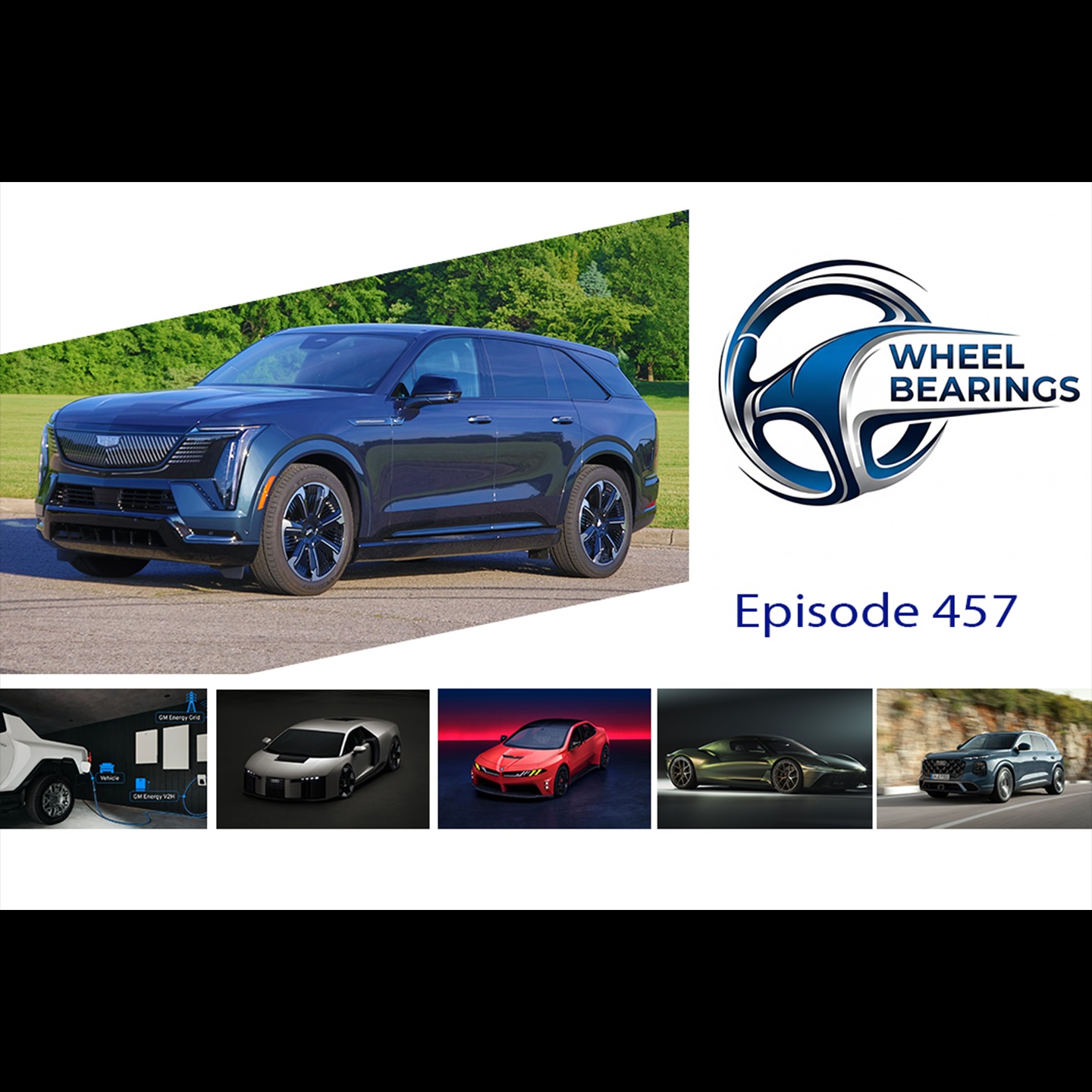
The Cadillac Escalade IQ is a big Cadillac SUV that runs on electricity. The hosts mention it needs fewer charging stops, which usually means it can go farther on a single charge.
A “gigantic battery” is a colloquial way of saying the EV has a very large battery pack. Larger battery capacity generally provides more driving range, which can reduce how often you need to stop to recharge.
The Crosstrek is a small crossover SUV made for regular driving and better traction. It typically comes with all-wheel drive. If it’s driven a lot on rough roads or has high miles, wheel bearings can eventually wear out.
“Toyota’s hybrid system” is Toyota’s way of combining a gas engine with an electric motor. The car can use electricity sometimes and gas other times to get better mileage.
The Crosstrek is a small SUV/crossover that’s made for everyday driving. It’s known for having all-wheel drive for better traction. Wheel bearings can wear out over time, especially if you drive on rough roads a lot.
It’s Subaru’s way of sending power to all four wheels. The system is set up to be balanced, so the car feels more even and stable when you turn or drive on slippery roads.
The Outback is a car that looks like a wagon but is built like a crossover. It’s made for regular driving and also handles rough roads better than many sedans. Wheel bearings can still wear out, especially if the car is driven on bad roads a lot.
Body-on-frame means the car has a separate heavy frame underneath, and the body is mounted on top. It’s common on trucks; the speaker is saying Subaru doesn’t build this way.
A boxer engine is a flat engine design where the pistons move opposite each other. Subaru uses this layout, and it can help the car feel more balanced because the engine sits lower.
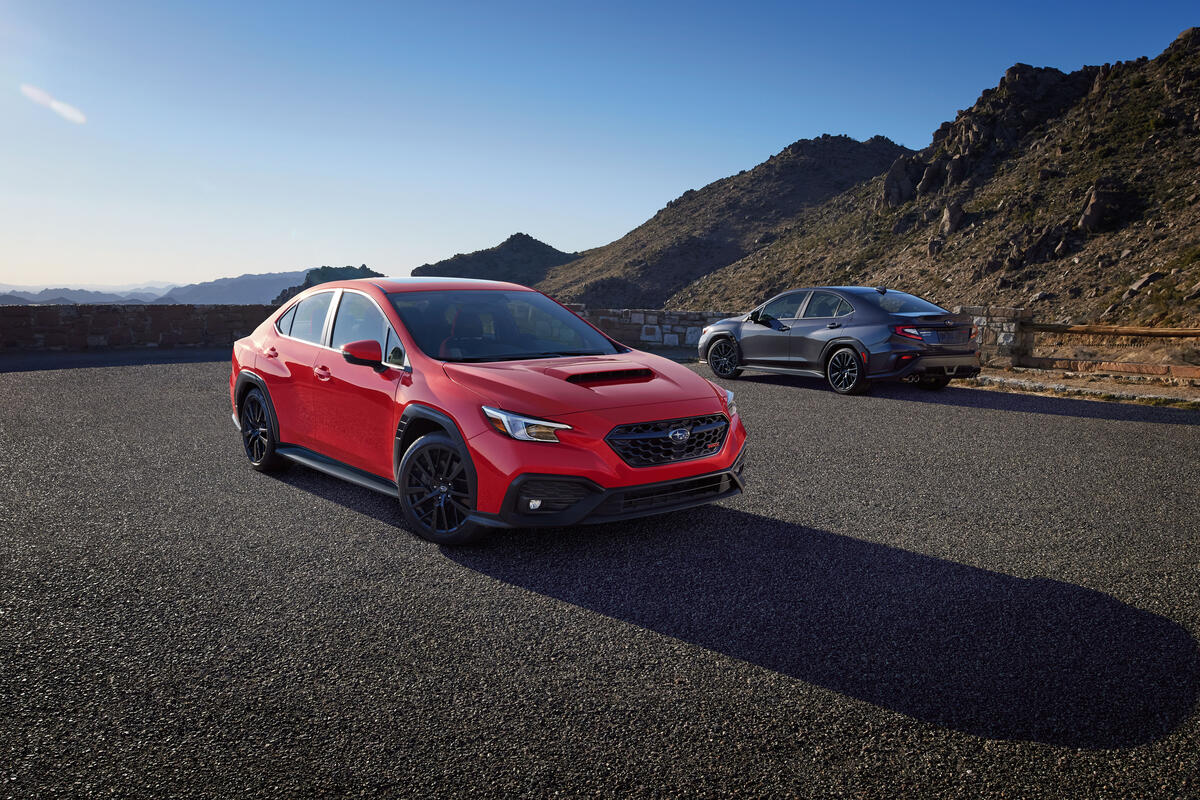
The Subaru WRX is a sporty Subaru that’s famous for all-wheel drive and a lively driving feel. Here it’s mentioned because the owner is talking about the engine’s sound.
Ground clearance is how much space there is between the ground and the bottom of the car. More clearance helps the car avoid scraping when roads are bumpy or snowy.
The Tahoe is a large SUV made for carrying people and gear. It’s popular for road trips and towing because it has a lot of space. Because it’s heavy, parts like wheel bearings can wear faster than on smaller cars.
Snow mode is a setting that helps the car behave better on slippery roads. It usually makes acceleration gentler and helps the wheels grip more so you don’t spin.
Adaptive cruise control is like regular cruise control, but it also watches the car in front of you. If traffic slows down, it can slow the car for you and then resume when the road opens up.
Lane keep assist helps you stay in your lane. If you start drifting, it can nudge the steering or alert you so you don’t accidentally cross the lane lines.
The Wrangler is a rugged SUV made for off-road driving. Even without extreme trails, it’s often driven on rough roads. That can put extra stress on wheel bearings over time.
All-season tires are meant to be a compromise tire for year-round driving. They’re not as good as true winter tires in deep snow, but they’re usually good enough for many people.
Starlink is Subaru’s built-in screen and software for things like music, navigation, and connecting your phone. The host is saying the version in this car isn’t the newest, but it works.
A wireless charger charges your phone without a cable. You just set the phone on a pad, but if the pad is too sloped or the phone doesn’t sit flat, it may not charge reliably.
CarPlay lets you connect your iPhone to the car’s screen. Then you can use navigation, music, and some apps through the car instead of using the car’s own interface.
“Hands free” means the car can do some driving tasks without you gripping the wheel constantly. You still have to stay alert because the system can ask you to take over.
EVs usually go fewer miles at highway speeds because the car has to work harder to push through the air. Rain can make it even less efficient, so range can be lower than you’d expect.
The EPA range rating is the government’s official estimate of how far an EV should go on a full charge. This car’s weight means it may not get that official number, so they estimate range from their trip.
Super Cruise is Cadillac’s advanced driving-assist feature that can help steer and drive on certain roads. In this story, it works for a long time, but sometimes it tells the driver to take over because it can’t find the right road information.
That message means the car’s navigation/driver-assist system can’t find the road details it needs. When it can’t, it may ask you to take control even if you’re just driving straight.
The Honda Stream is a minivan meant for carrying passengers comfortably. It’s designed for everyday family use and can include features for watching or streaming content. Like other cars, it has wheel bearings that can wear out with time and driving.
The Navigator is a big luxury SUV with a focus on comfort and space. It’s designed for people who want a premium interior. Because it’s heavy, wheel bearings can wear out as the vehicle accumulates miles.
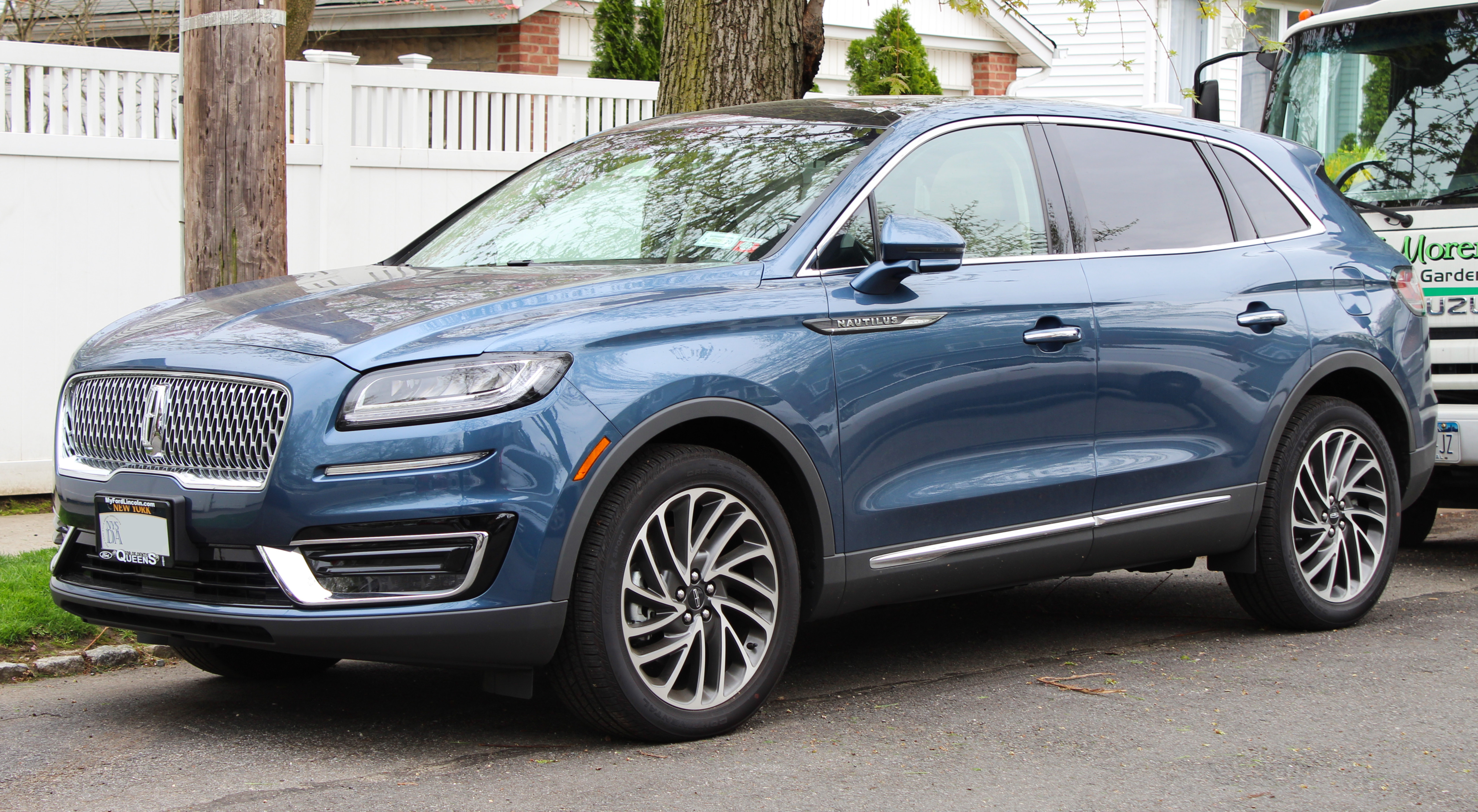
The Nautilus is a midsize luxury SUV, meaning it’s built to feel comfortable and upscale. It includes modern screens and tech inside. Wheel bearings can still wear out over time, even on luxury SUVs.
A dual layer battery pack means the vehicle’s high-voltage battery is arranged in two stacked sections rather than one single block. This packaging can help manage space and cooling, and it’s tied to how the car charges using different voltage paths.
The Volt is a plug-in hybrid, so it can drive on electricity and also has a gasoline engine. You charge it like an EV, but it can still go farther when the battery runs low. Wheel bearings are still normal wear items on this kind of car.
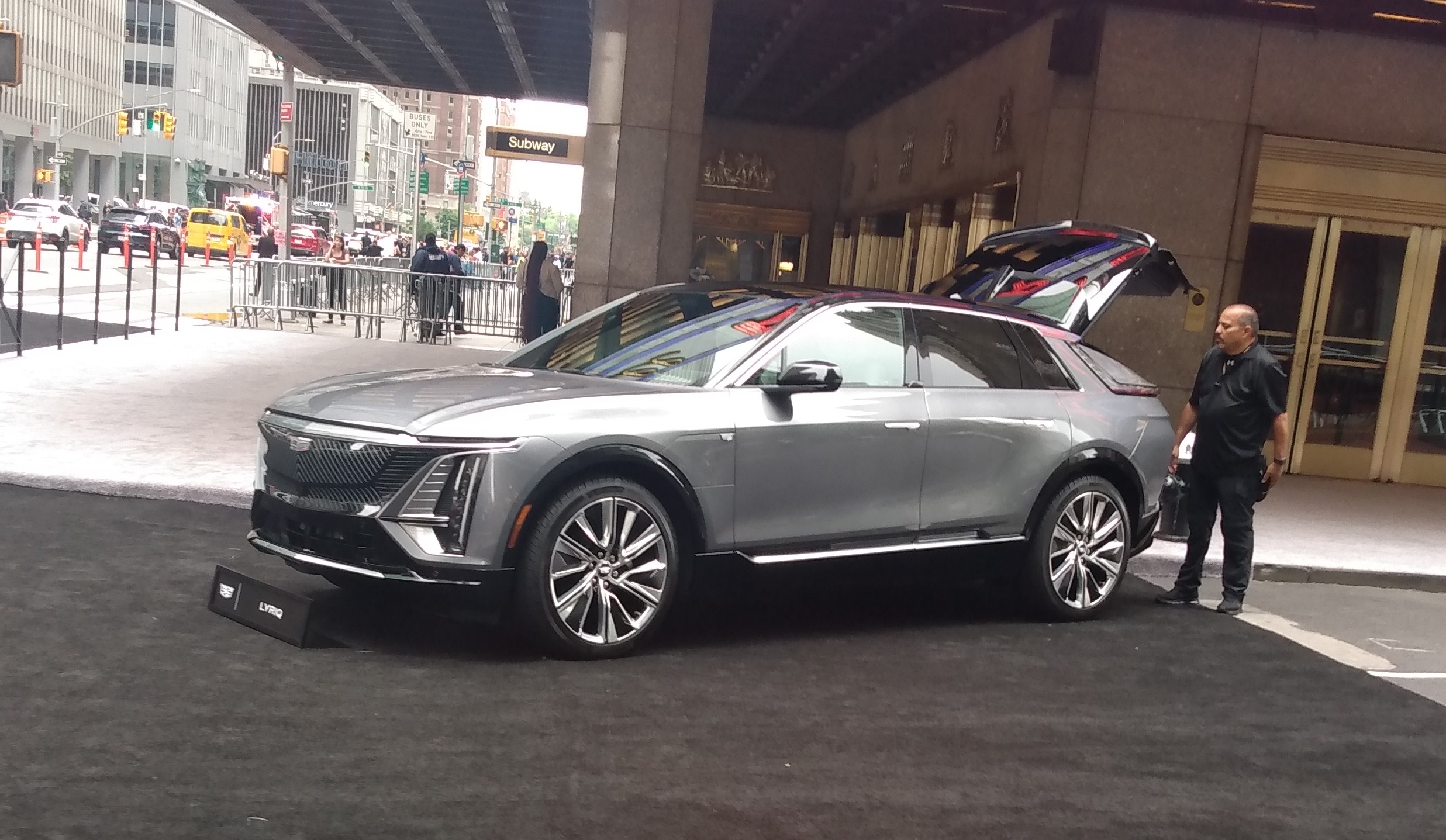
The Cadillac Lyriq is another Cadillac electric vehicle. They mention it to say the Escalade IQ uses a battery design that’s similar to what Cadillac already does in other EVs.
A voltage splitter is part of the charging system that divides the incoming electricity so the battery sections each get the right voltage. That helps the car charge efficiently and safely.
Aerodynamic drag is the “air pushing back” against the car. When you drive faster, the air resistance grows a lot, which makes the car use more energy.
Regen is how an EV recovers some battery energy when you slow down. Instead of wasting all that energy as heat, the car tries to put some back into the battery.
The Charger is a car that’s designed to feel sporty and powerful. People talk about it a lot when discussing performance cars. If it’s driven hard or has high miles, wheel bearings can eventually start making noise.
Drafting means driving close behind another vehicle so the air resistance is lower. It can help the car use less energy to keep going at the same speed.
The Lucid Air is an electric car, meaning it runs on electricity instead of gasoline. It’s built to be comfortable and quiet. Even though it’s electric, it still has wheel bearings that can wear out with time and miles.
The Ineos Grenadier is a tough off-road SUV. The point here is that when you drive in harsh conditions (like strong winds), it can get much worse fuel economy than you’d expect from the basic rating.
Vehicle-to-grid means your EV can act like a backup power source. Instead of only charging from the grid, it can also send power back when the grid needs it.
Bidirectional charging means the charger isn’t just for charging. It can also let your EV send power back out, which is what makes vehicle-to-grid possible.
GM is the car company being discussed. The host says GM is working on vehicle-to-grid, but the early setups may only work with GM cars.
Term
plug-in-charge standard
This is a standard that helps an EV and a charger “talk” to each other so charging can start more automatically. The host says it’s also moving toward supporting power flow both ways.
Delta Electronics is a company that builds charging equipment. The host is saying that automakers often rely on companies like this to build the chargers.
PG&E is a power company that runs electricity service in parts of California. The host says PG&E is interested in vehicle-to-grid, which helps make the idea real.
These are rechargeable batteries that use sodium (like from common salt) instead of lithium. People are interested because sodium is easier to source and the batteries may not need as much cooling as some lithium battery types.
An energy storage system is basically a big battery setup for the power grid. It stores extra electricity when it’s available and then sends it back out when you need power later.
“Parallel” wiring means the battery parts work together to hold more charge. It increases how much energy you can store, while keeping the voltage about the same.
Energy density means how much “battery energy” you can fit into a certain size or weight. EVs care a lot because heavier batteries hurt efficiency, but stationary power setups can be less sensitive to weight.
Active cooling means using a system to keep the battery from getting too hot. Some battery types need this to stay safe and last longer, especially when charging or driving hard.
Term
c and
C-rate is a way to describe how fast the battery is being charged or discharged compared to its size. Faster charging/discharging can be harder on the battery, so engineers design around it.
A “cycle” is basically one round of using the battery—charging it and then using it. More cycles means the battery lasts longer before it starts losing capacity.
Lithium iron phosphate (LFP) is a type of EV battery. It’s known for being pretty stable and long-lasting, which is why it shows up in both cars and backup power systems.
Second Life battery packs are used EV batteries that get a new job after they’re worn out for driving. They can still store energy for things like backup power or smoothing demand on the grid.
Peakers are backup power plants that only turn on when the grid is under heavy demand. They’re used for short bursts, and they can be costly and dirty compared with cleaner power sources.
Genesis is Hyundai’s luxury vehicle line, meaning it’s built to feel more premium and comfortable. It’s still a regular car underneath, with normal wear items. Wheel bearings can wear out over time just like on any vehicle.
Neue Klasse is BMW’s plan for a new generation of vehicles. It’s described as a higher-performance version of what they’ve already been working on. Even with new designs, cars still have wheel bearings that can wear out with time.
This means the EV is built with a higher-voltage electrical system. That can make it charge faster and deliver power more efficiently than lower-voltage setups.
“Kilowatt hours” (kWh) is a unit of energy used to describe EV battery capacity. More kWh generally means more stored energy, which can translate to longer driving range—though real-world range also depends heavily on driving style and efficiency.
Car
Genesis Magma GT3 concept
This is a Genesis concept built around the GT3 racing rules. GT3 is a major worldwide race class, and the idea here is to make a car that can compete on track and still connect back to a road version.
“GT cars” are race cars that start from real production cars. The rules are meant to keep them closer to what you could buy, compared with fully custom prototype race cars.
The Corvette is a sports car built for fast driving. It’s designed to handle well and feel exciting. Like any car, it can develop wheel-bearing problems as miles add up.
The Mustang is a sports car that’s made to be fun to drive. It’s available in different versions, including faster ones. With enough miles and spirited driving, wheel bearings can wear and start making noise.
The AMG GT is a high-performance sports car made for fast driving. It’s designed to handle well and feel sporty. As miles add up, wheel bearings can still wear and start making noise.
A gated shifter is a gear lever that moves into specific, defined positions. It feels more like a classic manual transmission because the lever is guided into the right gear “slots.”
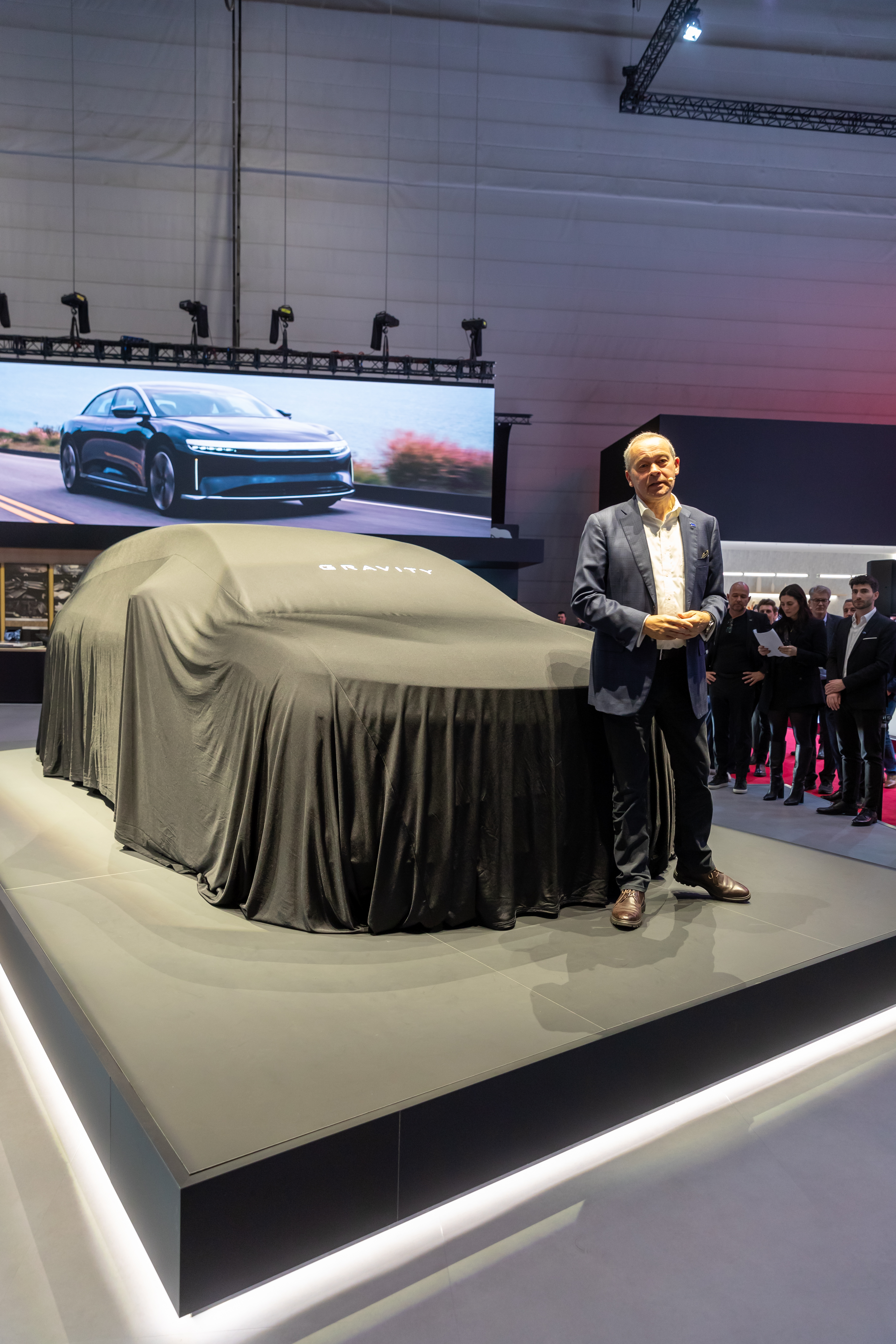
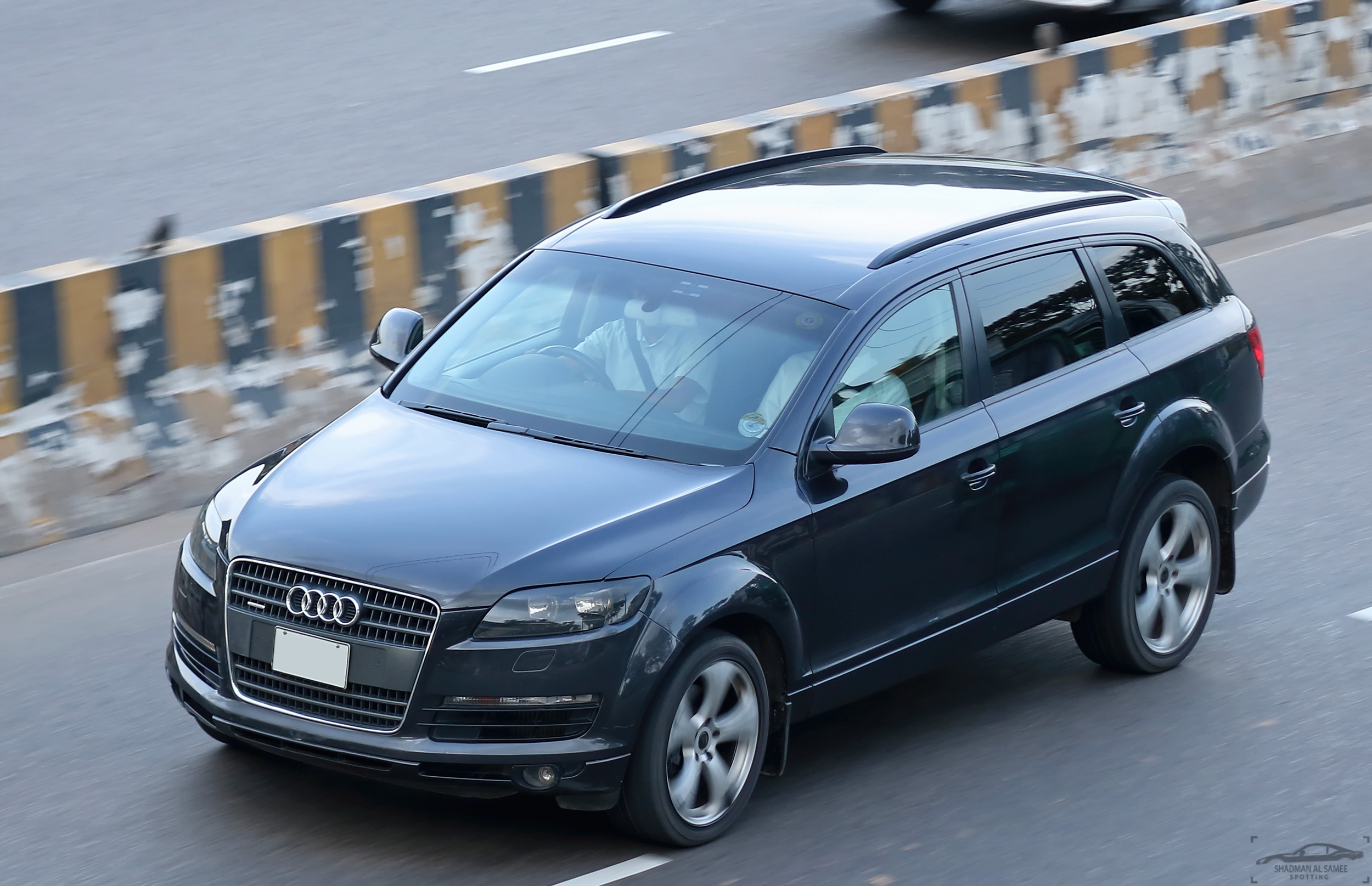
The Audi Q7 is a big family SUV with three rows. Here they’re talking about the new one and what engines it will offer, including a higher-performance SQ7 version.
The SQ7 is the stronger, faster version of the Audi Q7. They mention it uses a twin-turbo V8 and give the headline power and torque numbers from the announcement.
A twin-turbo V8 is a V8 engine with two turbochargers. Turbos cram more air into the engine, which usually makes it produce more power and pull harder.
Car
Audi Nuvolari concept
The Audi Nuvolari is a concept car—basically a preview of what Audi wants to build next. They describe it as a super-powerful hybrid with a twin-turbo V8 plus electric motors.
The hosts say the Audi Nuvolari concept is basically a different-looking version of the Lamborghini Temerario. “Rebodied” means it shares the core hardware, but the outside design is changed.
Car
Audi Q9
The Audi Q9 is a big new SUV Audi is planning. The hosts are talking about its advanced headlights—specifically a system that can control the light pattern more intelligently than normal headlights.
These are headlights made from lots of tiny light sources that can be controlled separately. Instead of switching fully between high and low beams, the car can dim just the parts that would blind oncoming drivers.
Micro LEDs are a more advanced kind of LED made from very tiny light chips. Using them can help the headlights control the light pattern more precisely.
The Rivian R1S is an electric SUV. The host is using it as an example of headlights that can automatically adjust the beam when another car approaches.
A manual transmission means you shift gears yourself using a clutch and a stick. The host is highlighting that Subaru’s teased models will be offered with this kind of gearbox.
The Subaru WRX STI is a sporty Subaru that’s popular with driving enthusiasts. In this segment, it’s mentioned as one of the new models Subaru plans to offer with a manual transmission.
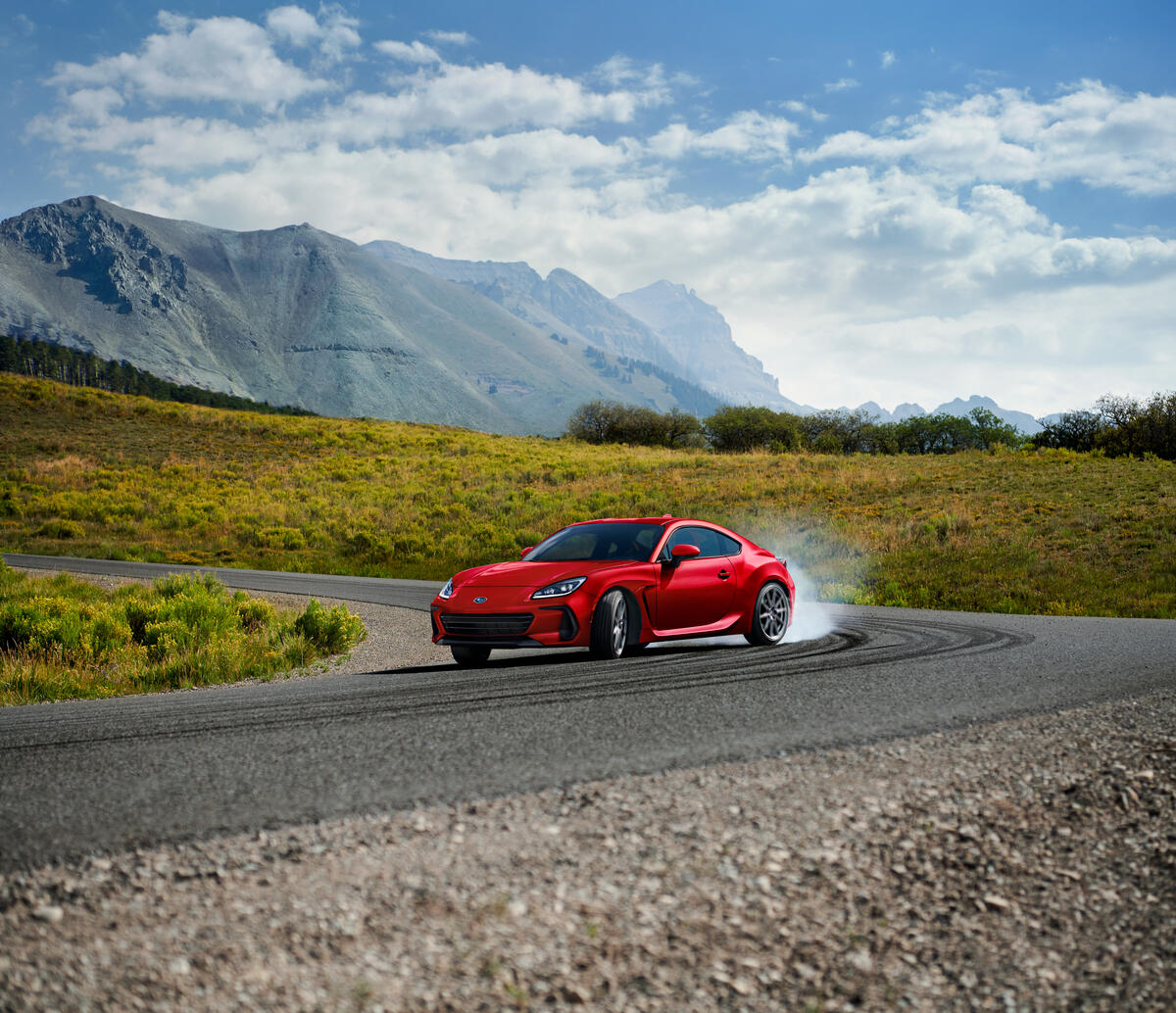
The Subaru BRZ is a small sports car meant to be fun to drive. The host is talking about a special updated BRZ version in Japan that’s limited-run and includes upgraded braking and suspension parts.
The Subaru Impreza is a compact car. The hosts are excited because they’re talking about a new hatchback version that you can get with a manual transmission.
The Challenger is a muscle car meant for strong acceleration and a sporty feel. People often compare it to other performance cars. Over time, especially with hard driving, wheel bearings can wear out and cause noise.
LIVE
Sam Abuelsamid (00:00)
This is Wheelbearings episode four hundred and fifty seven. I am Sam Abuelsamid from Telemetry.
Roberto Baldwin (00:07)
And I am Roberto Baldwin from SAE International.
Sam Abuelsamid (00:10)
And Nicole is absent somewhere and I'm not entirely sure where. and by the time she's ready to to join us again in a couple of days, ⁓ I will be ⁓ busy. So we decided to just go ahead and do this ourselves. ⁓ so Robbie, you've been driving anything?
I've been driving a lot of things. ⁓ I drove ⁓ the E V nine across what is it? Nebraska?
Sam Abuelsamid (00:43)
see Nebraska, Wyoming and into Utah.
Yeah. And so and then I drove the Cadillac Escalade IQ across Wyoming and well, very and Utah. You're not very long in Utah, but in Utah. And then ⁓ mostly
nine was just Nebraska and Wyoming and then you got into the escalate.
Roberto Baldwin (01:04)
Yeah, it's just a very yeah,
it's just a ver yeah, it's because Nebraska's so wide. It's it's just incredibly wide. We just kept driving and we never it never felt like we ever left Nebraska. As far as I can tell I'm still in Nebraska.
And and you could plop down pretty much anywhere along that route in Nebraska and not really be able to just look around and distinguish where you are unless you happen to be in some town that had a sign.
Roberto Baldwin (01:31)
It's it's pretty flat. Like there's a tree and you can see it from one state one side of the state to the other. which is unnerving for me 'cause I've always lived in California, except for the short j you know, stints I lived in Kansas City, which also didn't have any mountains, which made me which made me anxious.
⁓ I'm always used to seeing something off in the distance. Either the mountains or the ocean or something. ⁓ even hills ⁓ and and Nebraska. I saw like a few kind of hills, so ⁓ but yeah.
Roberto Baldwin (02:00)
Yeah. The people at the at the f at the ⁓ gas stations were very nice though. But they were very nice because I was very nice to them and they seemed very surprised by that. I guess people aren't nice to people and when they're driving along the eighty from coast to coast or just like, ⁓
Sam Abuelsamid (02:16)
Well, I mean we we actually encountered a lot of people on our charging stops. So we're we're talking about Operation Frodo, which we did this past week. And ⁓ at ⁓ at the stops where we stop where we ⁓ paused to charge up the E Vs that we were driving and walk the dogs, let them out, get a little get a little fresh air. ⁓ we had we actually had a surprising number of people come up and say hello and
Ask what's going on and and want to learn more about what we were doing while we were transporting all these dogs. and so it was it was kind of fun. but ⁓ what the funniest thing was ⁓ our very last scheduled stop in Stanfield, Oregon on Wednesday. So we at that point we're about a hundred and eighty-five, hundred and eighty six miles from our destination in Portland. While we were there charging and walking the dogs, this guy walks up to us and says,
Hey, are you the crew from Operation Frodo? And said he's been following us on social media for the last three days and was really excited to meet us. So that was fun.
Yeah, that's cool. Yeah. So so during that time I drove those cars and the E excuse me, I'm burping. Sorry. I just took a big swig of Red Bull. And I'm full of lightly carbonated I don't know, liquid cocaine, whatever Red Bull's made out of. Yeah, so I I'd driven a E V nine before. I had not driven the ⁓ Escalade IQ.
Which is i it look so we didn't have to pot we didn't have to charge it as much as the other vehicles. But that's because it has a gigantic battery. And it really was like driving a boat. So yeah. So that that was it's so big. It's just like
Sam Abuelsamid (04:13)
It's a very fast, really big boat.
Roberto Baldwin (04:15)
Yeah, it's a very fast, very big boat. There's lots of room in it. We put a lot of dogs in there. and we were able to get four crates and three people in that car on our during our drive 'cause I was with Nick and with Robert, who is who is ⁓ videographer and photographer.
And we had you know, Nick had to do some sh some video shoot stuff and then they had shoot video of me saying stuff which I don't know where that went. I have to I guess I should look that up. They did an interview with me, I don't know where it's at.
Sam Abuelsamid (04:41)
I I I don't know if that's been published yet.
Roberto Baldwin (04:45)
⁓ but this past week I've been I got back and I got a Subaru Cross Trek, the hybrid version. ⁓ it has ⁓ let's see 194 horsepower. ⁓ it doesn't say ⁓ I'm I'm not really ready today to be honest. ⁓ it doesn't have I haven't had a chance to do like a lot of testing with this vehicle, so I haven't done a ⁓ a a loop or anything. ⁓ but according to s to the the UPA it gets thirty six miles per gallon regardless of what it's doing.
Thirty six thirty six thirty six. it has a two point five liter
not atypical for hybrids, especially once based on Toyota's hybrid system.
Yeah. So and and it is you can tell it's based on Soda's hybrid system because it's you just drive it as a ra you know, it's it's it's a little loud. ⁓ but it you know it's still it's a cross track. It's still a Subaru, you get all wheel drive, you get that symmetrical all drive system. ⁓ it looks fine. That's you know, the Subaru way. ⁓ I you know, I kinda I kinda like the way it looks. I think
Roberto Baldwin (05:48)
If I mean when the cross track first came out, my whole thing was why don't you just get an outback? But sure. the cross track ends up sell doing pretty well for Subaru. and you know, I can understand why it's it is a and like most Subaros, it's a car.
But what that's a car. What do you what do you it's got all wheel drive It's a car. Dick what what what do you do with it? It's a car. It's it's it all the buttons are there. It's you know, big giant up and down for your for your for your
Sam Abuelsamid (06:05)
Yeah, Subaru doesn't make any body on frame stuff. Yeah.
Roberto Baldwin (06:18)
your your control your your climate controls. It's a car. That's that's what it does. It it it does car things. ⁓ it does it with all wheel drive. It does it with a with a with a hatchback so you can shove a bunch of things in the back. ⁓ you know you can fit a bunch of people in there. Well four. Five if you're s hella skinny in the back or if you have a tiny baby I guess. ⁓ yeah. Couple of dog yeah, it's yeah, you just put dogs in it. Subaru dogs. That's it.
Sam Abuelsamid (06:40)
Or you could fit a couple of dogs, put the back seats down.
believe that Subaru actually you know, that part of the purchase agreement when you buy a new Subaru is you have to prove that you do have a dog.
Roberto Baldwin (06:53)
Or you're about to get a dog. Which which is
Roberto Baldwin (06:58)
Get or about to to to to take ⁓ ownership of a dog. Yeah, so it no, it's I I actually you know I I'm a f I'm a Subaru fan. you know, the it's a little it's not fast. It's d definitely not the fastest car in the world. It is even with that hundred ninety four horsepower, you still you know, that that that hybrid system is still like okay, here we go. ⁓
Roberto Baldwin (07:26)
It's the it has a two point five liter four cylinder the boxer engine, which, you know, that's a Subaru engine.
I had a I like the sound of superboxing engines. I used to get ⁓ I used to work at a a studio in Hollywood. Well Burbank. and so one of the perks of working in a studio is there was a place down the street that would wash your car and do oil changes and do like light maintenance, and they would come into the studio and be like, Hey, who wants their car worked on or washed or oil changed or whatever?
And you would just give your keys and they go off and do the thing. Well, everyone else had like boring, like
Sam Abuelsamid (07:35)
I like the sound of Subaru Boxer engine.
Roberto Baldwin (08:04)
human cars and I had my my ⁓ my WRX my sport wagon and so they liked it but they also like making fun of it 'cause it sounds to them it sounded like a like a sewing machine. Like, hey you want your sewing machine done?
I'm like, yeah He's like, All right So yeah, you know it's you know the y when you're you when you're buying this vehicle, you know, it's eight point seven inches of ground clearance. ⁓ you you probably live in New England or Colorado or parts of Northern California or Tahoe or
Roberto Baldwin (08:34)
you know, as it's a smoke ⁓ not smoke. Snow as snow mode. As all the bits that you expect from a Subaru. And at the end of the day, it's a Subaru. It's it's it's it's exactly what it is.
That's the what do you would you want it we want this? Yeah, here you go. This is exactly is it a lot of lot of crazy bells and whistle? Nope. it does have a dust, you know, it does have ⁓ adaptive cruise controller, which works fine.
has lane keep assist, sure, works fine. ⁓ all the things that are all the little extra things work fine.
They're not gonna have issues with them for the most part. but at the end of the day, it's a Subaru, it's just made to plow through things and and take you places and you know, you got muddy boots, throw in the back, 'cause we a big rubber thing in the back. We got a you got some dogs? Awesome. 'Cause that's the only reason we sold you this car on because you promised us you would either had a dog or you would get a dog.
yeah, let's see what else. ⁓ so the one I got, it starts at thirty three thousand nine hundred ninety five dollars, so thirty four thousand dollars. I guess it's less fun to to do the the destination delivery. What do you think the destination delivery is?
Sam Abuelsamid (09:41)
I'm gonna say thirteen ninety five.
Roberto Baldwin (09:46)
Fourteen twenty. So that's pretty close. You win. You win no matter what. So yeah, so thirty five thousand dollars you can you get a a a cross track hybrid. ⁓ it came in a crystal white pearl, which is like you know, they have that cool orange color. What the hell, man? Why you why you why you specking cars in white? Come on, Subaru. Come on. Is this is this Aaron's fault?
Well, you know, it was probably somebody said, Well, what what's the most ⁓ resale value we can get on this vehicle at the end of its lifespan in the in the press fleet? And said, Well, if we get it in white, grey or black it it it'll be better.
It'll yeah, so. But you know, white's always ⁓ shooting photos, shooting video with a white car sucks. ⁓ that's it. Yeah, Subaru, eighteen inch wheels, lots of ⁓ you know, not giant wheels, ⁓ some nice ⁓ sidewall on those wheels for actual driving and it's comfortable.
Roberto Baldwin (10:47)
Yeah, yeah. That's and that's the whole thing. Is it this this car is built to survive? Yeah.
that's I mean that that's always a good start. And it it's surprising how far off road something like a Subaru can go. I mean, obviously, you know, it's ground clearance is about you know, usually somewhere around eight and a half inches or so, which is actually pretty good for this type of vehicle. And you know, and and it's got surprisingly good traction everywhere. And so you can
You know, you're you're not gonna do the Rubicon Trail on this, but you can go a lot of surprising places with a Subaru.
Roberto Baldwin (11:24)
Yeah. I had ⁓ all s I always just put all seasons I went snowboarding twenty five days ⁓ a year through like blizzards and stuff. I would get up in the morning like five AM, drive to Tahoe, snowboard all day, and then turn around and drive back through snow, blizzards, whatever.
And I did that all in all seasons. Just got the nicest all seasons because I live in the Bay Area, so most of the time I you I I don't I can't buy winter tires, that'd be ridiculous. ⁓ and I wasn't gonna buy extra tires 'cause I live in an apartment.
Roberto Baldwin (11:53)
zero issues. Just just just g just just eats up the mountain. It's just rah rah rah. That's what a Subaru does. It just eats up the you're going when you're going up a mountain, you're like, this is why.
When you're driving in snow, you're this is why people buy the Subaru. This is it. 'Cause it just s even even with the the cross track you're not really that high off the ground. So you y you feel you know, you're closer to the ground so you feel a little I don't know, being really high off the ground in in snow always feels a little
wonky to me. It always feels like this isn't the what what we should be doing. but yeah. I mean the the the heated set front seats it has buttons for stuff. There's a lot of buttons.
Yeah. It still has the old Subaru Starlink infotainment system though, right?
Roberto Baldwin (12:40)
Yeah, it still has it which is better than it used to be. You throw in your f you throw your phone on there. You know what's you know what's absolutely worthless though is the the wireless charger. 'Cause if you do Yeah, 'cause it's just f a flat plane, right on it's un and it's underneath in the little cubby below the ⁓ the display. But there's nothing to keep your phone from just sliding all over the place and immediately f sliding off the plane.
Sam Abuelsamid (12:44)
Yeah. Yeah, you just use use your CarPlay or Android Auto and you're good.
Yeah. And and of course, you know, ⁓ mo modern phones are never completely flat, you know, they've always got some kind of island or bar or something for the cameras.
Roberto Baldwin (13:07)
And so it's like, it's charging when I start it and then I tick a right. Yeah, cu this which is which
again, which is dumb. Like who who wants why does my phone need to be f ⁓ thinner than how how thick the the cameras stick out? Are we sliding phones under under doors? Like what's the point? Just make all this a single plane. Yeah, just make it a single plane. Why are we doing this? What are we who who are we impressing with us?
Sam Abuelsamid (13:26)
Well, and even even if you are, it's gonna get stuck on the camera island anyway.
Roberto Baldwin (13:36)
Yeah, a phone that's like, let me see, two millimeters, one millimeter thinner than it could be.
Sam Abuelsamid (13:42)
Some people just want the thinnest thick phone they can possibly get. Hence the iPhone Air.
I don't even yeah. Anyway. Subaru Crosstrack hybrid ⁓ twenty twenty six. It's a hybrid. You're gonna get thirty six miles a gallon, apparently according to the EPA. I'm guessing that's probably on par w with what I would get during a drive. ⁓ I can't a hundred percent say yes that is because I haven't done the drive, unfortunately. Yes it has a C V T. Yes you're gonna notice it. B but at the end of the day you don't care because you bought yourself a Subaru because you just wanna drive
everywhere and feel comfortable and not have to worry about fancy bells and whistles. It's literally the like, hey, you want fancy bells and whistles? Yeah, that's not this car. Go buy a Volvo. Do you want you just want to do so you just
know, that Volvo's gonna cost you a little bit more than the Subaru.
Roberto Baldwin (14:28)
Yeah. Yeah. It's gonna cost you more. And you know, the cross site looks fine. It looks it's a nice looking car.
Roberto Baldwin (14:35)
It has sufficient. It has the what has all the bits that people want now. Adaptive cruise control, maybe lane keep assist. I you know, I I don't think I've ever owned a car that had lane keep assist.
I didn't turn it off after you know, an hour. Yes, I tested on the cars. B in the real life I don't no. I don't need this. I don't I don't need something yelling at me. 'Cause I'm close to the edge of the lane because I'm going around a a switch spec near my house.
I'm like, I don't I don't know. No. If you're on the freeway though, it's great. I guess.
If you're bad at driving. ⁓ If you're bad at driving, late keep assist, your best friend.
Or, you know, I mean if you've got heavy crosswinds, it can be a little a little helpful.
Roberto Baldwin (15:15)
Maybe or or or not. It might be yeah, it might not, you know. Yeah, it could just be benefit if you're eating a burrito while you're while you're driving, maybe that's kinda helpful. There you go. Burritos. Leg keep assist. Good for burritos.
Sam Abuelsamid (15:17)
Yeah. Could just be bouncing around in the lane.
or an egg McMuffin and hash browns. Yeah. Like I like I did last week. Yeah.
hot dog, two frozen burritos that have been deep fried that you bought in in where'd I buy those? Wyoming? I ate both of those burritos, by the way, that I bought. I was trying to get one away and I was like, Hey, does anyone else want this? And they're like, Are you crazy? We're gonna be sitting in a car for hours. What's that gonna do to my stomach? I'm like, What do you mean? I have an iron stomach, apparently. So I ate my two frozen
Roberto Baldwin (15:59)
My two ⁓ if you get you say, Hey, do you want a microwave burrito? I'm like, No. From the store? No. But if they say, Hey do you want a microwave burrito but we've deep fried it? I'm like, Well yeah, give me
can you deep fry anything that automatically makes it better.
Sam Abuelsamid (16:17)
⁓ all right. Uh-huh. No, that's okay. That's good. I mean people need to know. I mean, you know, pe part of the reason people listen to this, you know, aside from our sparkling conversation, is they want to learn about these cars that they might consider buying sometime. And, you know, so you gotta know the important stuff. That you can you can drive a Subaru cross track hybrid and eat deep fried frozen burritos.
Roberto Baldwin (16:18)
Sorry, that was a long that was a lot about the Subaru that I didn't really Yeah.
I did it with the Escalate IQ. You can do it with like yeah. Yeah, that's what Lankub assist is for. To help you eat while you're driving. But please, for the love of God, keep your eyes on the road. I I will say the Escalate IQ, when when it was working, ⁓ the ⁓ the hands free, yeah, worked fine.
Of course, we're in Nebraska. Like how like how's it gonna go wrong? Like I could have stuck I could have tied a rope to it and would have fine. ⁓ but I then I didn't know what to do with my hands, so I just stuck them on the wheel.
Sam Abuelsamid (17:15)
Well then you need more deep fried frozen burritos. Just keep stuffing yourself with burritos for the next three hundred miles.
So so so I t I tip I try not to get like single serving like plastic drinks, you know, like Diet Coke or water. This is essentially all I but that's all they had. ⁓ and so with the with hands free I could unscrew the cap and then drink my drink and then scrape the cap back on. So that's what hands free is good for. It had a use.
Sam Abuelsamid (17:37)
That that is true. So so it it it has a use.
All right. ⁓ well, I also spent a lot of time in that Escalade IQ, that very same Escalade IQ because Cadillac loaned it to us to use for Operation Frodo last week. And and so and and also, you know, Hyundai, Kia and Lucid also loaned us vehicles. ⁓
I did get to drive the Hyundai. I'm sad about that, but there was yeah.
it's basically like driving driving the Kia, but you know, little nicer interior, you know, little little fancier look to it. ⁓ at a little more range. ⁓ but they you know, the Escalade came from the Detroit Press Fleet pr press fleet, which means we had to get it to Omaha for the start of our trip. And since I live here in the greater Detroit area, I got to drive the vehic got to drive that vehicle from here to Omaha, which is
Sam Abuelsamid (18:35)
Roughly about seven hundred and twenty miles from my house. It's a little bit of a jaunt. so I left Friday afternoon and I got ⁓ see, I stopped just shy of Davenport, Iowa, ⁓ Friday evening to put some charge in the battery and have some dinner. So, you know, drove across Michigan, drove across Illinois, ⁓ and western Illinois just before I crossed the river over to
Sam Abuelsamid (19:05)
to Davenport. I stopped. So I had gone about three hundred and seventy ish miles at that point. ⁓ plugged the car in at ⁓ an electrify America station, went across the street to Culver's, had a butter burger, some fries, chocolate shake, and came back by the time I was done eating, walked back with half my shake. ⁓ and the you know, when I arrived the the escalade
was had about seventeen percent charge in it. So that was all you know entirely highway driving. And some of it was through some very heavy rain in West Michigan for a couple of hours. and under those conditions, ⁓ you know, that's kind of the worst case scenario, which we'll talk a little bit more about about speed ⁓ and efficiency in a few minutes. But that's kind of the worst case scenario for range in an EV is highway speeds.
and the because the Escalade IQ weighs somewhere around nine thousand pounds, ⁓ it doesn't have an official EPA range rating on it. you know, because anything over eighty five hundred pounds doesn't get that range rating. So if you look at the Monroni for an Escalade IQ, nothing there. ⁓ it doesn't say anything for range. But GM in their in their marketing, they say, you know, about four hundred and fifty miles of range.
and that's based on a mix of urban and highway driving. Well, based on the three hundred and seventy ish miles that I drove, plus what was left in the battery, ⁓ I would estimate that in highway only driving, you're probably gonna go about four hundred and ten, four hundred and fifteen miles, which is really, really good. I mean that's that's a lot.
Sam Abuelsamid (20:54)
Yes. That's that's a that's a long time to be on the road without ⁓ taking a break and, you know, using the facilities, getting a getting another Red Bull in your case or a cup of tea in my case. ⁓ and you know, I made one stop at Panera to get a get a cup of tea somewhere in West Michigan and then carried on from there. ⁓ and then the next morning, as I was leaving the the days in in
Walcott, Iowa, which is just west of Davenport. ⁓ and the days in in Walcott is fine if you just need a place to lay your head down for a few hours. Yeah, and and as as days in you know, I've stayed in a few days ins over the year. That's the problem. I th
Roberto Baldwin (21:36)
It's a days it's a days in. That's that's all you really need to say. I think we we what's a days a D A Z E. So you're a little day you're like, what is happening? Like, you know what? I just need to sleep.
Yeah, see you're it's Phil Yeah, no, it's like what's happening? You're like, is this a are they legally allowed to rent this to me? I guess. There's a bed, there's a shower.
Sam Abuelsamid (21:51)
It was spelled with a Z instead of a A ⁓ Y S. No wonder. Hey, there were there were no
there were no visible bugs, you know, no no no major stains that I could see. You know, the the bed was kinda s little t too soft for my tastes. But, you know, it was fine. so ⁓ got up the next morning, there was ⁓
Sam Abuelsamid (22:19)
There was a a McDonald's right next door, popped in there, grabbed a sausage McMuffin with egg, a couple of hash browns and a cup of tea, and hit the road towards Omaha. And super cruise, really good for eating a sausage McMuffin with egg and a couple of hash browns and and sipping on a cup of tea as you're cruising down across ⁓ Iowa in this case, which strangely enough looks very much like Nebraska and very much like eastern Wyoming.
Roberto Baldwin (22:50)
It's like the it's a very step and repeat like part of the country.
it it's yeah, I mean it it's a rural part of the country. It's far mostly farmland. ⁓ Iowa actually I was surprised. ⁓ pleasantly surprised. Lot of lot of wind farms ⁓ along there. So very good. ⁓ and then when we got ⁓ further into Wyoming, saw some more wind farms as well. not so much in in Nebraska, but
was weird 'cause it was really windy in Nebraska, yeah, you do you Nebraska.
So over the course of about seven hundred and twenty miles from my home to the Holiday and Express Cherry Hills in ⁓ in Omaha, ⁓ the Escalade IQ averaged ⁓ one point nine miles per kilowatt hour. Which is ⁓
Roberto Baldwin (23:36)
Which is it's like nineteen
miles per gallon, but for a vehicle that big and that heavy
a nine thousand pound full size luxury SUV that can carry four dog kennels and three adult human beings. Full full size adult human beings.
just a giant battery with a c lazy boy chair in it. Yeah, with a bunch of lazy boy chairs. And then just the rest of it is like whatever you got. Just shove it in here.
Sam Abuelsamid (23:56)
Yeah, or multiple lazy boy chairs.
Yeah. So, you know, the the Escalade is you know it is actually a great long distance road trip vehicle. Yeah. It's very comfy. the seats have nice massaging functions in them. y you know, the air conditioning works well. ⁓ over that seven hundred and twenty ish miles, ⁓ I probably had supercrews enabled for about six hundred and eighty miles of that. ⁓ and you know, one one
little oddity I did notice from time to time. Even going along a dead straight road for hundreds of miles, every once in a while it would pop up and say, you know, take the wheel, no road information found. It's like this is a road that is going straight for a hundred miles. Suddenly the road information disappears for like fifteen seconds. And so it would say, take the road, no take the take control, no road information found.
Put my hands on the wheel and then, you know, next thing you know, the green the green light bar's back on and I can take my hands off the wheel again. Very strange. ⁓ yeah, and you know, sometimes, you know, in the maps, you know, there are g gaps in the map, you know, for certain for stretches of road. But for so for s for so many just short little stretches seemed a little odd. ⁓ but ⁓ other than that, you know, this the system worked really well. And ⁓ I'll I'll
as we as we get into the next segment I'll talk a little bit more about where it actually really, really came in handy. But for for now, you know, the Escalade IQ has the same dashboard and ⁓ like fifty five inches of display, coast to coast display that they have in the Celestic in their their high end electric luxury sedan. so you've got an instrument cluster display, an infotainment display in the middle, and then
there's a passenger display on the on the right hand side. And when we were driving on ⁓ or when sorry, when I was driving with s with Sebastian on Wednesday, I was that was the first time I'd been in the passenger seat of the Escalade. So I was messing around with that a little bit. And it's got a filter on there so when it's on, you know, the the passenger can can stream video on there, watch stuff, do do things with it. ⁓ you know, I pulled up pulled up some YouTube on there.
worked fine and the driver cannot see it. It appears completely black to the driver. so you know, it's I don't know how useful it actually is, you know, 'cause most people have a phone, they have an iPad or tablet of some sort. so it's not it's not that useful, but it's there if you wanna use it. ⁓ the ⁓ the the other thing that was a bit of an annoyance to me is most of the climate controls and the
the the more advanced seat functions and everything are in another touch screen that is down below the dashboard. It's angled at about roughly about a forty five degree angle. So it's it's much better, much easier to see than the screens in like the Lincoln ⁓ navigator and Nautilus, which are almost vertical, but mounted down low at that same height, which is yeah, it's just a bad design. but in the in the Escalade ⁓ they are it that screen is angled.
Sam Abuelsamid (27:26)
So you use that for the climate control. You can also control the climate with with your voice. ⁓ you know, just say, hey hey G, you know, set the temperature to whatever. ⁓ the vents are thankfully manual, so you can just reach out and direct the airflow where you want.
Very good thing. Good good for you, Cadillac. and the massage functions and things like that for the seats and and all kinds of other ancillary functions that you don't use very much are through that lower touch screen.
Yeah, it it was it was a great vehicle to drive, you know, most of the way across the country. ⁓ the ⁓ let's see, what else about it? Yeah, like I said lots lots of room inside. ⁓ it charges very fast. You know, the this thing has this dual layer battery pack. So it's actually like two one hundred kilowatt hour battery packs or a hundred and five ish kilowatt hour battery packs. ⁓ so it's basically
The same battery pack that you'll find in a Cadillac Lyric or a Vistic or Chevy Blazer ⁓ EV, but there's two of them, one stacked on top of the other. And so it's a four hundred kilowatt or four hundred volt electrical system in the vehicle, but it'll charge on an eight hundred volt charger and what it does is it's got a voltage splitter that sends four hundred volts to each layer of the battery pack.
So it charges, you know, I saw charging as fast as about three hundred and sixty kilowatts at times. but
Even when I was ⁓ when I was charging, you know, when when I came back from my dinner, ⁓ it was at seventy two percent state of charge, seventy four percent state of charge, and it was still going like a hundred and seventy some kilowatts. So it it does charge very fast. It that doesn't mean that it doesn't still take a lot of time to charge just because it's such an enormous battery. ⁓ but we we use that to our advantage, you know, to skip a few charging stops with the
Sam Abuelsamid (29:22)
with the Escalade during the rest of the trip. So we just charged the other three and the Escalade had more than enough to get to the next charging station. the the one that I had was the ⁓ see it was the I IQ Escalade IQ Premium Sport in deep space metallic, which is a very dark almost sort of greenish blue. ⁓ the interior was harbor blue. and the grand total price ⁓ came to
One hundred and fifty four thousand four hundred and ninety five dollars.
Sam Abuelsamid (29:57)
Yeah, you want to take a guess at the destination charge?
Roberto Baldwin (30:04)
my gosh. Well it does weigh a lot.
Sam Abuelsamid (30:07)
Yeah, nine thousand pounds.
Roberto Baldwin (30:09)
Yeah. My man, that's I mean, well, yeah. There you go.
Sam Abuelsamid (30:15)
Yeah. So this one, you know, it had a few options. ⁓ had the rear seat entertainment system. so you get in the second row you get screens on the back of the front seats, ⁓ and wireless headphones. ⁓ AKG, Bluetooth wireless headphones. ⁓ the the infotainment s the rear rear entertainment system was two grand. The headphones were another four hundred bucks. ⁓ it did come with with an axe adapter, ⁓ which I did not actually have to
Sam Abuelsamid (30:44)
to use on this on this trip. but ⁓ let's see, ⁓ it also had ⁓ the ⁓ seven hundred twenty five bucks for the for the the paint, the deep the deep space metallic paint.
so that is the Escalade IQ. ⁓ let's I mean we talked last week a lot about Operation Frodo, but there's one one more thing I want to discuss related to to Frodo, which is just overall efficiency. Yeah. When I was when I was planning planning out the route for this trip and planning, you know, where we're gonna do charging stops, you know, knowing which vehicles we had, we had the the Escalade, we had Lucid Gravity, the Kia E V nine and a Hyundai Ionic Nine.
Sam Abuelsamid (31:31)
And you know, the the E V nine and Ionic nine, ⁓ particularly the E V nine had the shortest range of the four. So it was it's rated at about two hundred and s eighty miles of range, for the G T line that we had. and you know, as I said, highway driving is kind of the worst case scenario because as your speed increases, the aerodynamic drag force ⁓ goes up. It it's a it's a the
Drag force goes up that's squared as your speed. So if you double your speed, your drag force goes up by a factor of four. ⁓ and that makes a big difference, especially as you get to higher and higher speeds. So if you're the dip you, if you drive an EV, I mean actually the same thing is true if you drive a gas or a diesel vehicle. If you go from 65 to 70 to 75 to 80 miles an hour, you will see a significant drop.
in efficiency. You'll see a lot more fuel consumption with ⁓ with the and a combustion vehicle and you'll see a lot more battery energy consumption with an EV. And through large portions of this trip going down ⁓ you know going especially going across like western Nebraska and into Wyoming and also in Idaho, it's speed limits of eighty miles an hour on the on the highway. And you know
I I encouraged everyone to try to keep the speeds to about seventy five or below, but it's hard to do that when the speed limit is eighty. ⁓ and so, you know, we managed to get through the first two days ⁓ of the trip, with two charging stops a day, ⁓ and then charging in the evening. ⁓ and that that worked out fine. And those were the those are the longer legs of the trip. But when we got to Idaho
⁓ or you know, leaving leaving Utah leaving Salt Lake City and going up driving northwest into Idaho and then on into Oregon, we had a lot more ⁓ elevation change, a lot more climbing and also a lot more wind.
And so based on what we saw the first couple of days, I added an extra charging stop on each of those first two days as we were doing the mountain climbs. ⁓ and that that worked out fine, especially on the on the first on on the day three going from Salt Lake City to Ontario, Oregon.
when we got to day four, ⁓ I added a stop in between Ontario and and Stanfield, Oregon. and ⁓ and when we got to Stanfield, which was scheduled to be our last stop, at that point we had a hundred and eighty six miles to go. And we were not far from descending down into the Columbia River Gorge. you know, so we had passed the the you know, we had hit the the peak elevation. We weren't gonna be doing much more climbing.
But so we'd be going downhill, so I figured okay, we should be good with 186 miles and pretty much a full charge on all these things, or or most of a charge on these things. Because we're going downhill, get some regen, you know, certainly less energy to to go downhill than to go uphill. And boy was I wrong. so we left the the Stanfield charger ⁓ and I I was driving the Escalade. We had fifty f fifty four percent state of charge.
Sam Abuelsamid (34:57)
It showing 245 miles of range. We had 186 miles to go. And Google Maps was estimating we'd arrive with 15% state of charge. ⁓ as we finished the last little bit of the climb and then going down the Columbia River, ⁓ the winds coming up the Columbia River Gorge were just it was like 40 mile an hour winds going in the opposite direction that we were. So it was effectively like going forty miles an hour faster. ⁓ and that
gap between estimated range and how far we had to go kept shrinking and shrinking, going from like 60 miles and eventually got down to twenty miles and was showing only seven percent state of charge ⁓ when we on arrival.
⁓ and that was when we were only about a third of the way along that distance. And figured, okay, we're we're definitely gonna have to stop somewhere. Unfortunately, part of the reason you know why we opted to do this trip is, you know, I look, you know, when I did the research, I figured
there's there's actually a lot of charging stations that we could use. So it wasn't we never had an issue with anybody running out of charge and getting stranded. There was always some place to stop. But you know, I was hoping to not have a stop on that last leg. 'cause we were trying to get to Portland by about two PM to meet up with the crew from Cascade Beagle Rescue and Seattle Beagle Rescue who were gonna be taking the dogs and some of the adoptive par families for the dogs. And ⁓
go as we're going down, ⁓ you know, that the Interstate eighty four, which goes along the the Columbia River, ⁓ the speed limit along there was sixty five. I came up on a FedEx truck that was going like sixty seven, sixty eight miles an hour. It's like, Yes. Tuck in behind that guy, makes a nice big hole in the air for the Escalade, which is a very large vehicle, and just set the supercruise and just stayed on his tail for the next seventy miles and that gap between
range and distance started growing again and ⁓ he finally pulled off the highway about just outside of Portland and we got to our destination with ten percent state of charge and ⁓ forty six miles of range left, which was perfect.
Roberto Baldwin (37:12)
The moral of the story is find a FedEx trucker.
Yeah. Find find a big truck to to coast behind and then you'll be
if you're if you're flying into some crazy headwinds.
Sam Abuelsamid (37:25)
Yeah, well, I mean, last year when I was coming back from Japan from the Japan Mobility show, ⁓ flying out of out of Tokyo, ⁓ for the first four or five hours of the trip, we had something like a hundred and seventy mile an hour headwind.
Or tailwind, I mean. Which which meant that we arrived back in Detroit like an hour and a half early. 'Cause we were you know, the cruising speed for an Airbus A three fifty is about five hundred and eighty miles an hour.
We were we had a ground speed of seven hundred and sixty miles an hour.
Roberto Baldwin (37:56)
Wow. Doing pretty good. Wind's crazy. I'm watch I was like while you were talking I was looking at the map. And I was just like following along.
So yeah, so the the moral of the story, ⁓ such as it is, is you know you don't have to go keep you don't have to drive at you know maximum speed. You know. If you go you know if you just keep your speed down a little bit, you will actually be able to go a lot farther on a charge. the faster you go, you know, every every additional miles mile per hour is going to have a
a mo disproportionate impact on your available range and your energy efficiency. So just slow down a few miles an hour. Go seventy five instead of eighty if you can. ⁓ you know, go go seventy instead of seventy five if you know if you can. ⁓ because you'll you'll go a lot farther.
Roberto Baldwin (38:53)
And same with gas. If you want to save some gas.
Sam Abuelsamid (38:55)
Yeah, no, the same absolutely same thing
is true. Yeah, your your fuel economy yeah, when we were doing ⁓ Operation Frodo in December, one of the vehicles we had was an Ineos Grenadier. And especially driving across Wyoming and and Idaho, ⁓ that thing had ⁓ let's see, it was averaging like twelve miles per gallon. 'Cause yeah, it doesn't get great fuel economy to begin with. And
Sam Abuelsamid (39:24)
Yeah, it yeah, so I mean it's only rated at about sixteen. But with those winds in that region, the headwinds in that region, it really hit the the fuel economy hard. So
But at the at the end of the trip, ⁓ I think the overall let's see, I've got it here somewhere, the overall efficiency for the ⁓ the escalade when we arrived in Portland ⁓ was about ⁓ two miles per kilowatt hour. Which is is not bad.
Yeah. ⁓ let's see it ⁓ in Stanfield, yeah, we were at twenty two hundred miles or somewhere in Oregon we were at twenty two hundred miles and we were one point eight miles per kilowatt hour total and we managed to get that up to almost ⁓ almost two miles per gallon or two miles per kilowatt hour by the time we arrived. So
one of the reasons why you did not were not able to stick around for the whole trip, ⁓ was because you had to go to San Francisco on Tuesday for a GM event.
Yeah. So I went to the GM Power. ⁓ Pow ⁓ Power. ⁓ Power. ⁓ that's a weird sure. Yeah, so I I went to that event and ⁓ it was interesting. There's some of it was like, okay, what you know the the the the app that like you know you put all the
Roberto Baldwin (41:03)
The chargers in was one of their big pieces of news. I'm like, well that's I mean, sure. but the the ⁓ the V to G news was good. it was expected. ⁓ you know, so GM GM Energy has a ⁓ a charging so bidirectional charging system. You can set up it has you can get a battery pack, you can get s you know, you can add it to your solar, and of course you can use your vehicle to charge your home. What it didn't have ⁓ originally is
Up until ⁓ this event was ⁓ V to G, which is vehicle to grid. And now that's the whole system supports V to grid, so all the vehicles that are out that support V to G V to X now support V to G. So essentially, your car with this system can be used to power the grid. And you know, maybe you can make some money, you know. All this depends on individual utility companies. They're they're working with ⁓ PGE.
⁓ here in California and then I forget the name of the Detroit one. DT I that yeah that sounds like pretty easy to remember. I don't know how I forgot that. so DTE energy in in Detroit and again the idea is that you could you could you could you could help balance the grid. Your car is just sitting there most of the time. If you're like me and you work from home if you're you know maybe my car's just sitting at home all day ⁓
Roberto Baldwin (42:29)
if you're at home if you work a regular nine to five, you get home at six o'clock, you plug your car in. ⁓ you could they could use your car. That's that's peak hours, you know, from from like three to nine. Yeah.
Sam Abuelsamid (42:38)
Yeah, that evening period. Yeah, from like three
Roberto Baldwin (42:42)
So you could set your your car to say, hey, I'll allow the grid to use up to to to use my vehicle until it hits about twenty percent of charge. And then in the middle of the night, when it's nice and cheap to to charge your vehicle, you can recharge your vehicle.
So you can make a little money, you can help balance the grid. They talked a lot about AI, which is funny because for you know, for years I've had to like push back on the like, well, EVs are gonna they're gonna, you know, destroy the grid.
They're gonna bring the grid down. I'm like, well, first of all, not everyone doesn't come home and plug in their cars and start charging at the exact same time.
Like that's not how that works. especially if you're like thinking, Well, I sh I wanna save some money because I paid a premium for an EV, I'm gonna plug my car in and have it scheduled to charge the middle of the night when everyone's asleep.
Sure, if you're crazy and you're like full of cash, you know, you're gonna come home and plug your car in at six o'clock and let it charge, then sure, fine. And again, you don't have to c most cars, ⁓ most new cars, you don't have to charge every day.
And if you have an e golf, yeah. If you know you're probably gonna charge out every day.
But if we have you know, I don't we don't charge our our our
Roberto Baldwin (43:48)
Yeah, exactly. It's the same thing with our Ionic five. You know, I think most A B people like, well, if I don't have to plug it in, I'm not going to. And then, you know, it gets under forty percent or whatever.
I guess I should plug in my car. It's essentially how it works. The reality is that AI, which is being used all the time. Anytime someone's on a computer, you know, there's a potential for them to use AI.
AI uses a ton of energy. Like a just a a metric ton of energy.
And they were, you know, GM and P G and E were both like, AI's happening, we can use these cars to help balance the grid, to help, you know, balance the hit that AI data centers are going to be pushing onto the grid. Which is again, I've been p telling people for years, I'm like, you know, your car could charge your house. Your car could be part of the grid. The problem is is that there's standardization for that has become, you know, it's there there is a
IEEE standard that came out last April? Yeah, I think that's right. ⁓ that it's the plug-in go st it's the plug-in go ⁓ plug-in-charge standard. Well that now supports ⁓ bi-directional charging. The problem is getting everyone to do it. So it's not just the the automakers, you have to have the automakers. Then you have to have someone who builds the charging station, which is at this point is usually the automakers, unless you're like ⁓ Kia, they're using Wallbox.
And you have to like get the ⁓ the utility on board.
Sam Abuelsamid (45:16)
Well it's I mean the the the
ch yeah, the automakers usually outsource the charging station manufacturing to companies ⁓ like ⁓ Delta Electronics, like GM uses Delta Electronics for theirs. ⁓
have to sort of get all these different players to to support vehicle to grid. ⁓ GM has it. They're like, hey, we have it, you can use it. It only works with GM vehicles. I can't plug my Hyundai into it and s you know and and and you know do V to G. I can't plug a Ford into it, I can't plug a Lucid into it, I can't plug anything else into it. Only GM vehicles. I talked to them.
And they give me the same answer they give me every time. We're like, well, you know, this is a value proposition for GM owners, blah, blah, blah. But we would happily support, you know, once it's everyone.
⁓ a pr the problem though is still like, you know, it's not universal. It's not, you know, there's there's no standard that everyone can agree on that also requires utilities. And like, you know, like there's, you know, a couple dozen automakers, there's hundreds of utility companies in the United States.
Sam Abuelsamid (46:15)
And there there's there's over three
thousand utilities in the United States. And they all have different standards.
Roberto Baldwin (46:20)
Yeah, so there's a lot. So you know So
Yeah, they're all gonna have different standards. ⁓ the larger ones, you know, like PG and E, ⁓ Southern California Edison, etc. ⁓ con con ed. Yeah, like all these bigger ones, yeah, that's gonna be a lot easier for them to sort of do it if they want to. And that's the other thing. Do they want to do this? Is it worth their time? Do they think it's worth their effort? P G and E seems to think it is. ⁓
Roberto Baldwin (46:51)
So if you have a GM vehicle in the Bay Area or Northern California or central to Northern California where P G and E ⁓ sort of runs the the power here, then you could make you could make this a reality.
so that's I mean that's great. It's one step closer to more and more vehicles having this. It's one step closer to to using the the the full potential of electric vehicles in order to sort of balance the grid.
it's it's weird. Again, it's it's also it's it's funny that it's it's it's the
the the idea that, well, EVs are gonna destroy the grid and now it's like, no no no, hold on. They're an additional battery. They're an additional battery they're an issue ⁓ an additional energy source in order to save the grid. So So that's cool. ⁓ and then they also what what they have our little thing. PG need
Sam Abuelsamid (47:26)
Yeah, E Vs are gonna save the grid.
one more thing on the the V to G. GM said that we're working with P G and E, they're targeting having ⁓ over fifty thousand homes ⁓ in the Bay Area set up with V to G by twenty thirty.
Roberto Baldwin (47:52)
Yeah, that was yeah, I just found that thing. So fifty two yeah, that's a lot of ⁓ a lot of homes. one of the things I learned I think last year or year before is that there's more people with houses than live in than rent.
More people own than rent in this country, which it still kinda boggles my mind. I don't know how that's true. but sure. ⁓ so I guess more people have ⁓ the potential for for for doing this. ⁓ they also showed off a with with ⁓ in collaboration partnership with Peak Energy.
Is a ⁓ well they didn't show it off. It's you know they talked about it. It's a ⁓ sodium ion.
Sam Abuelsamid (48:27)
Yeah, they have a they have a picture of it, a rendering
or a picture of prob you know, a at least a mock up, if not a prototype on the site.
it's a mock-up. sodium ion batteries, which they're built which they want to ⁓ to manufacture and and source for energy storage. So, you know, the energy store you know, the all those the the energy storage systems you'll see ESS used more and more often.
If you see that, that's energy storage system. ⁓ and it's essentially storage for the grid. So you have you know, the one of the fun things is people like whenever you talk about solar or wind, they're like, What happens when the sun's down?
I'm like, well yeah, but when it's up it's free electricity. ⁓
we actu you know, most of the solar facilities that we have already are capable of producing more electricity during daytime hours than can be used during that period. So, you know, that the challenge is okay, you know, so how do we grab that electricity from the sun and make it available the rest of the you know, during the night? And that's where energy storage comes in. Yeah.
when people say, Well, what happens when the sun goes down? They're like, Well, all the extra energy that the sun is making gets put into a battery and then in the middle of the n or wind, ⁓ and then when it's not sunny, you know, nighttime, you use the storage out of those those battery packs.
And you know what's funny is I knew people in the eighties who were doing this with like sort of the off the grid sort of people. I'm from a small town, again. ⁓ so they had like solar and they had a generator.
Roberto Baldwin (50:01)
And then they but they also had batteries and you know at night they would turn off things and it would just be the the you know they'd just be running off the the power in their batteries. and those these were like marine lead acid batteries, like just had like them all running in parallel. Ceres? Yeah. Well, when I said series, my phone went crazy. but yeah, so they you know they they're you know so
Sam Abuelsamid (50:19)
Probably a combination of parallel and series, but
Roberto Baldwin (50:31)
Peak Energy already has a sodium ion battery pack out in an ESS, out in in storage systems. GM says that their their version that what they're working on, what they're developing, is there's like this is like generation two.
Imagine that's gen one, this is gen two. The idea being these are going to be far more energy dense. They they wouldn't tell us what the energy density was. ⁓ they wouldn't tell us what the price per like kilowatt was, price per module was.
The operating cost would be twenty percent lower than what people are using now because sodium ion doesn't need to be cooled because it works at that to a hundred and like forty degrees. ⁓ between negative forty and like I think one forty, one yeah.
Yeah, I I I I talked with Kurt Kelty, who's the head of batteries and electrification at GM, the week before the Power event, before we went out on on the trip. And you know, one of the things he he highlighted, yeah, sodium ion batteries, ⁓ you know, they're actually already in production in China. They're already using ⁓ but you know, the the beauty of sodium ion batteries, it's basically salt. you're using salt. Just a lot of salt in the world. ⁓ and
Pretty easy to process. And the sodium ion batteries have lower energy density than what you get from nickel-rich lithium ion or lithium iron phosphate batteries, which makes them less suitable for EVs. But because the cost is so much lower and it you know, we can process everything here. We don't have to worry about getting processed materials from other parts of the world. ⁓
They can they can manufacture them and and they're they're very stable. Like you said, they don't need the active cooling. ⁓ so be you know, ⁓ an energy storage system, unlike a vehicle, you know, which you know might have say a three thousand pound battery that you have to haul around everywhere.
⁓ you know, and you in a vehicle you want your battery to be smaller and lighter because it makes the vehicle more efficient. For a a stationary energy storage system, you don't really care because that battery's not going anywhere.
So you can use a lower energy density battery. And sodium ion works great for that. And so and so that that's what they're that's what they're gonna start doing at some point in the in the coming years. You know, they they didn't talk about it any date or anything like that.
Roberto Baldwin (52:51)
They told me they would like production 2028. ⁓ so it's you know, it's it's it's something that that they're working on. You know, ⁓ the car battery is a very specialized battery, like you were saying.
And you know, the discharge, you know, the the the the operating environment of a EV battery is bonkers. It's like it's it's gotta discharge, just reach it's gotta discharge, you gotta charge, you gotta discharge like at really quick rates in order for you to have a c and it has to be efficient.
Roberto Baldwin (53:19)
And they're trying to make it as light as possible. And, you know, and and and and and and and all the things you have to deal with. You don't have to worry about this with sodium with with these ESS ⁓ batteries because they don't need to to to charge and discharge at like 230 kilowatts.
You know, they don't they just need to like, okay, we have a bunch of them. All right, we need more energy. Okay, here we go. Here's some energy. All right, now let's just charge it up. All right, now here's some energy.
And it the in and these V these batteries should have a of a much longer cycle.
than your your your car battery. my article isn't up.
you know, close to a hundred thousand charge cycles.
Roberto Baldwin (53:56)
Yeah, yeah, it's a lot of charge cycles, which is more than, you know, you're ever gonna if you had a car, that's a lot of if you charge every single day.
that's that's millions of miles of driving, the equivalent of millions of miles of driving. And frankly, most of the mechanical parts of your car are gonna be worn out long before you would wear out one of these batteries.
So it would be two if you charge it and discharge your your car every day, it's two hundred and seventy three point eight years. Hundred thousand ⁓ cycles. obviously these will you know, they'll charge and discharge throughout the day. That's one of the things. But even then you're just like, that's a long time. That's a yeah. So
that's not all GM's doing with with energy storage though, 'cause you know, they ⁓ they're also starting to produce lithium iron phosphate cells at their Spring Hill, Tennessee plant. ⁓ that but they're again, not for vehicles. They're using L F P cells in the new Chevy Bolt, but they're making the L F P cells they're making in Spring Hill, they are actually selling those back to L G.
to put into energy storage systems because LG is already making those same cells at their plant here in Holland, Michigan. And now Spring Hill, Tennessee is also going to supply those to LG. And LG is building the energy storage systems and selling them to data centers and factories and stuff. ⁓ and they're also ⁓ partnering with Redwood Materials, who is best known up till now mainly for recycling batteries, recycling lithium ion batteries.
But they've also developed a system to repurpose ⁓ used EV batteries. And ⁓ so GM is partnering with Redwood to use ⁓ the old Chevy Bolt batteries. And when you remember when they had the the the recall on all the bolts to replace the batteries? Well all those batteries that came out of Chevy Boltz ⁓ a couple of years ago, they all got sent to a place in Oklahoma City owned by Cox Automotive.
⁓ where they have they've been remanufacturing those batteries. They they test them all and then you know they they went through and tested them and replaced bad cells and modules in in those battery packs and made those available ⁓ as refurbished batteries, you know, for service parts. But now they're also they've got a whole bunch of surplus of that that they ⁓ Redwood is going to
⁓ or using Redwood's process, they're gonna turn those into energy storage for GM facilities. so they're they're building up about a hundred energy storage systems at ⁓ or let's see. ⁓ yeah, Redwood's gonna deploy about a hundred of these battery packs ⁓ at one of their plants in Mi at one of the GM plants in Michigan to provide one and a half megawatts and seven point two megawatt hours of energy storage and then
expand and do do additional ones from that until they use up all these battery packs. so that's pretty cool too. And actually GM GM has a long history of of using these Second Life battery packs 'cause back in the early twenty tens, all the battery packs that they had from all the sh the original Chevy Volt development vehicles, when when those vehicles were scrapped, they took out the battery packs and they they it was a smaller scale one, but they made an energy storage system out of those
volt battery packs at the Milford Proving Grounds to support their IT facilities there. So ⁓ so they've they've ⁓ yeah, they're they're doing doing some interesting stuff with with the batteries.
Roberto Baldwin (57:43)
Yeah, no, it's it's I I did a an article with the battery ⁓ magazine that I run for SAE. That so the the battery magazine doesn't have like if we don't put these ⁓ as online articles, but I'll you know, I'll send you the thing talking about how Red Bull ⁓ not Red Bull Redwood materials.
Like they're they're sort of recycling how they do this safely, how they you know, they get these batteries these these batteries that like, you know, weren't that they have come out of other vehicles and test them.
And and how they they monitor to monitor them, it's pretty it's pretty interesting. I'll I'll send you that. for you can drop in the show notes and stuff. But yeah, it's it's it's a lot of stuff. ⁓ it's not I th I don't think for for the average person it doesn't seem that necessarily that exciting. But at the end of the day, if you're if if a car can make your your your energy bill, you know, less than then that's great, even if it's not your car.
Someone else's car is keeping you from having a brownout then
it's if it's supporting the overall grid and especially as they keep building all these data centers, you know, that's putting more and more strain on the grid, if we can support the grid using the E Vs that we drive, then that is potentially some less infrastructure that utilities like P G and E and D T E ⁓ have to build up as as new stuff.
Roberto Baldwin (59:07)
Yeah. There's this thing called peekers, which are which are part of the grid and they're usually they they fire them up when the grid needs, you know, more electricity. And typically they're pretty bad. 'Cause A it costs a lot of money. B they're usually not great for the environment. They're run you know, diesel coal, polar bears, penguins, you know, whenever something's cute, that's what they use to fire it up with. they just toss it into the
But ⁓ yeah, peakers and if you can replace a peaker with with batteries and batteries that are in cars that are already out on the road, that's that's gonna be great. That that allows you to sort of a not deal with those peakers, which again they're they're expensive to to to spin up because a you gotta put people there, you gotta turn it on, you gotta get it ready, you gotta and then now you have like almost a gross polluting addition to the grid in order to keep the grid from collapsing upon itself.
Why don't we use all these cars that are plugged in and these people have said, Yeah, that's cool, you can use my car then yeah, it's it's it's a smarter way to to do.
Sam Abuelsamid (1:00:16)
Okay, ⁓ was ⁓ see, I think that's pretty much everything they announced at Power. ⁓ all right, let's ⁓ let's go to ⁓ Bm W. So ⁓ this weekend was the ⁓ twenty four hour Lama in France and ⁓ oftentimes
Sam Abuelsamid (1:00:38)
some manufacturers that are involved in endurance racing who make some product announcements ⁓ in the run up to the the big race and you know as we're recording this the race is over. I'm not gonna tell you who won just in case you're you know watching it on a you know watching a recording of it and you don't want to be spoiled. ⁓ but I never had a TiVo. ⁓ we we we we had a Comcast D V R
Roberto Baldwin (1:00:55)
Maybe you T Vot it. Tivo. Remember Ti Vow? I did. I loved my Ti Vow.
Sam Abuelsamid (1:01:05)
for for a number of years until we finally ditched Comcast. but never never had a TiVo. ⁓ so anyway, both ⁓ BMW and Genesis, ⁓ both of whom, you know, were racing ⁓ this weekend, announced some they showed some concepts ⁓ that ⁓ at least one of which ⁓ is ⁓ probably extremely close to a very near future production vehicle and that's BMW. ⁓ so they BMW had the
⁓ concept Neu class. so we we've seen the the new I three, which is their electric sedan, the three series size sedan. ⁓ and ⁓ we've over the over the last year or so we've seen spy photos of the ⁓ the next generation three, an electric three. ⁓ and so now they're basically showing that electric three as a concept. ⁓ and ⁓ this thing is ⁓ this thing is something.
let's see. ⁓ it has where's the number here? It's got it's got a lot of power. huh. Let's see.
Roberto Baldwin (1:02:19)
It it is an ⁓ so that's his that's his ch that's his job.
⁓ let's see. I don't they don't actually say in the press release. But ⁓ it's yeah, it's a a high performance a much higher performance version of what we'll see with the I three. It's got flared out fenders and ⁓ you know, it's got all kinds of other cool stuff on it. ⁓ and this will probably hit production sometime later in twenty twenty seven.
So it's it's using the Neue class's six gen E V hardware that's that's in the in the other Neuer class models. eight hundred volt architecture, ⁓ a battery with more than a hundred kilowatt hours. so you know, it'll probably get somewhere in the in the neighborhood of of ⁓ you know, seven or eight hundred horsepower, I'm guessing.
Roberto Baldwin (1:03:20)
It'll be fine. Ten her volt. It's got a hundred kilowatt hour battery pack, so it's gonna you know, it's like, you can go really far, which you could, but it's a it's an so you'll probably be going like three quarters of that because you're driving like a maniac.
And you know, it it's capable of going at speeds that will severely reduce your overall energy efficiency.
Roberto Baldwin (1:03:43)
But a hundred kilowatt, yeah. No, it's it's it's really cool. I I you know, I'll I'll be it'll be fun to see what it looks like when it comes out. It'll probably look pretty close to this. but it's it's yeah, it'll be even funner to to to to drive it when it's available.
Sam Abuelsamid (1:04:02)
And then Genesis, which had their debut at Le Mans this weekend, ⁓ with their their their hypercar, ⁓ they introduced the Magma GT three concept. So, you know, ⁓ in World Endurance Championship they have two classes of cars. They have the prototypes, the the hypercar prototypes, and they have GT cars, which are nominally based on road cars. You know, so you find cars like
Corvettes, C eight Corvettes and AMG GTs and ⁓ Mustang GT3s, you know, which are ⁓ very look like a Mustang, you know, and there's nine eleven's and Ferrari two ninety sixes. Well, ⁓ it looks like ⁓ Genesis kind of did work work backwards because usually for GT three the the idea is manufacturers are supposed to take a production car and then develop that into a race car.
It looks like AMG or Genesis basically went the opposite way, designed a race car to G T three rules and then are doing a production version of that. ⁓ and so that's what this G T three concept looks like. It you know, they don't give any real technical details on it, but it looks you know, it appears to be a mid engine, two seat sports car, ⁓ with ⁓ which
reportedly will use the the new three point two liter V eight that they use in the the GMR zero zero one hypercar, the prototype, which is a a purebred racing engine. and ⁓ this did you see did you see the the picture of the shifter in here?
Roberto Baldwin (1:05:51)
I mean keep clicking around.
it's a it's a it looks like a a classic ⁓ you know, Ferrari or Lamborghini gated shifter. ⁓ except, you know, like modern performance cars, you know, this is gonna be, you know, some sort of paddle shift system. So you've got a gate that goes between park, reverse, drive, and then on the the far right you have a toggle to go forward and back. But you know, most of the people driving this, you know, if they're gonna shift it they're just gonna use the the paddles on the steering wheel.
Roberto Baldwin (1:05:59)
⁓ yeah, a gated shifter. It's just
Sam Abuelsamid (1:06:24)
And yeah, this is probably going to be a ⁓ a fairly pricey car, ⁓ when they when they build it. And but it'll allow Genesis to to drive to run this in ⁓ the G T three class, which is a popular sports car racing class globally. You know, there's G T three series all over the world. They they run them in here in North America and IMSA, they have the European Le Mans Championship, the Asian Le Mans Championship, SRO has a bunch of series around the world. so
This is one of the most popular racing series globally. so I suspect that probably by twenty twenty eight we will see a Genesis Magma G T ⁓ running globally.
Sam Abuelsamid (1:07:10)
all right. And then ⁓ Audi ⁓ Audi had a bunch of stuff recently. ⁓ they they showed off well first of all you know, they revealed the third generation Q seven this week. and ⁓ you know, so it's basically, you know, read you know, their three row ⁓ con combustion ⁓ crossover and
It's gonna have a variety of powertrains, so there's a Q seven and the the higher performance SQ seven. ⁓ the S Q seven gets a four liter twin turbo V eight, five hundred and ninety one horsepower, five hundred and ninety foot pounds of torque, zero to sixty and three point seven seconds. ⁓ and then the standard Q seven is a two point nine liter twin turbo V six, ⁓ four hundred and twenty nine horsepower, four hundred and forty-two pounds feet of torque, zero to sixty and
⁓ more leisurely four point eight seconds. yeah. ⁓ it'll ⁓ it's gonna have a hybrid system on there.
Sam Abuelsamid (1:08:20)
⁓ although it doesn't say anything in the US press release about that, but I did at least in Europe it's gonna have a hybrid version. It might not for the North American model, 'cause I'm looking at the US press release and it doesn't say anything about the hybrid.
⁓ but you know, it's similar in size to the the current Q seven, which is you know and and I think it's I think it's a better looking vehicle than the current generation Q seven. I was never particularly enamored with that one.
usually the case these days, ⁓ especially for premium vehicles like this. Lots of screen, you know, big giant instrument cluster screen, infotainment screen, and then a passenger screen on the on the far right.
Roberto Baldwin (1:08:59)
Some day America's gonna care about those screens.
Sam Abuelsamid (1:09:01)
⁓ yeah. ⁓ and then ⁓ Audi also showed ⁓ the new Nuvolari concept. So, you know, they they discontinued the R eight a couple of years back. ⁓ didn't give any indication whether it would get a replacement. ⁓ there was some speculation that there might eventually be an all electric replacement. but now they've decided to go a different direction. ⁓ and
This one has you know it's a thousand and one horsepower. because you know, a thousand horsepower even thousand horsepower would simply not be enough. So you got a thousand and one, ⁓ three hundred and fifty kilometer per hour top speed. And it's a twin turbo four liter V eight with ⁓ a plug-in hybrid and three electric motors. Basically, this is a rebodied version of the new Lamborghini Temerario.
Roberto Baldwin (1:09:58)
Yeah. It's you like Art Deco? You want a Lamborghini? There you go.
Sam Abuelsamid (1:10:02)
Yeah. It's a it's an interesting design. Not I don't know if how crazy I am about the front end of it.
Roberto Baldwin (1:10:12)
I like I like Art Deco so well. There go. Yeah, not not cars. You don't like Art Deco cars? Alright, that's
Sam Abuelsamid (1:10:14)
Yeah. I like Art Deco build buildings. I'm not so sure about Art Deco cars.
But ⁓ yeah, so the the Nu Valari I would guess, you know, that this will probably appear by about twenty twenty eight, if not sooner.
Roberto Baldwin (1:10:33)
Probably little tone down just a scooch from this. Just a little. What does it have side mirror? It has side mirrors, so they're done, let's be honest. Actually when I'm looking at it and they're like, you know what? That's on. That's this is what we're getting.
Sam Abuelsamid (1:10:42)
⁓ well yeah, that's true.
Got it's got everything we need. It's got a grill, got side mirrors, got seat belts and everything. I mean it looks it looks fairly complete. So I mean we could see it as early as twenty twenty seven.
Sam Abuelsamid (1:11:00)
⁓ all right, and then ⁓ they also had an announcement about the upcoming Q nine, which is even larger than the Q seven. I actually saw a Q nine prototype when I was in Denver a couple of months ago. It was it was all camouflaged and was driving around. but one of the things on the the Q nine is it's gonna be ⁓ Audi's first US market car with digital matrix LED headlights.
you know, they've had these dynamic headlights in Europe for a long time and they finally changed the regulations here in the US a couple of years ago to allow these things. So, you know, the
not as good as the European ones. This is why you can't yeah. That's that's th the the issue is they had to create like before they would always say, We as soon as the regulations we can just it's this is a software issue. We can just you know, we can just turn the hardware on here in the United States and then the rule came out and they're like, ⁓
Yeah. 'Cause 'cause they they had they had the hardware on the US market cars. They just couldn't they weren't allowed to behave in the dynamic way. They they just had to behave like normal headlights. which didn't really help anybody. so the yeah, the you y you've driven cars with ⁓ you know, these dynamic headlights, right? Yeah. It's pretty cool. ⁓ because
masks and masks out people coming at you. So so you can still have your your high beams on, but the per person driving towards you doesn't get blinded. They just because you've masked Exactly. So it's it's actually quite it's it's good for everyone, to be honest. ⁓ and it's it's ridiculous it took so long. What is it? They've had these in Europe since twenty thirteen
Sam Abuelsamid (1:12:29)
Yeah. As far as they're concerned, you're just driving with low beams.
Well th this one on the on the Q nine is a new generation that's using micro LEDs for the lighting. ⁓ but yeah, I mean I I drove when I drove the second generation Rivian R one S, that one had ⁓ was one of the first US market cars that to have to have these kinds of headlights. I don't think they're micro LEDs on the the Rivian. but you know, driving down I was driving down a a rural road
one night and you know, it had the high beams on and as soon as a car was coming towards us, I just see this little cutout in the light pattern where it went to low beams right around that car and everything around it was still lit up, which is really really neat. So you can still see when a deer runs out in front of you.
all right, Subaru ⁓ also ⁓ in Japan this week, teased three new models coming next year, all available with manual transmissions.
Roberto Baldwin (1:13:43)
Dun dun dun. Well two of were like, well duh.
Sam Abuelsamid (1:13:45)
And ⁓ among those yeah, among
Sam Abuelsamid (1:13:53)
So there's there's a W R X STI. There is a ⁓ an updated ⁓ BRZ that's based on the STI Sport Type R A that they launched in Japan. ⁓ the that one, they were only making three hundred units of those. and it's only for the Japan market. So it's got ZF dampers, Brembo brakes, improved arrow. so they're doing a version of that which is apparently gonna be for
Sam Abuelsamid (1:14:23)
for global markets. ⁓ and then there is also gonna be ⁓ a new ⁓ Impreza hatchback with a manual transmission. So you you will be able to get you know basically like a cross track type vehicle with a manual transmission.
Yeah, yeah. Maybe in the United States. Maybe. The US. Yeah. I like the Empreza idea because it's just like, you want a pretty cool, okay car, but now it's a lot more fun. Yeah. I mean it just makes the Empreza about ten times better as far as I'm concerned, throwing a manual transmission in it.
Sam Abuelsamid (1:14:41)
Maybe. Yeah, we'll see if they actually sell all of them here in the US.
⁓ and then ⁓ there's one last item. ⁓ Father's Day is coming up next Sunday. ⁓ and so Dodge has got got a gift for the fathers in your life. Or maybe yeah maybe I don't know. I don't know who would want to give this to their father. They've cr Yeah. Yeah, yeah. The they have come up with a Dodge Charger fragrance.
Roberto Baldwin (1:15:18)
I I there's some people who would. The Mopar Nokar people.
Sam Abuelsamid (1:15:29)
⁓ and the headline on the press release is one spray will have dad firing on all cylinders.
Sam Abuelsamid (1:15:37)
Yeah. I I I don't even want to imagine what this stuff smells like. It was like I was saying earlier, it's probably a combination of axe, gasoline, and burnt rubber.
Yeah. Yeah. Yeah. It's a Dodge Charger fragrance. I'm like, yeah, I think it's you know, it'll be a it's it's one step away from a gag gift. For most people I think it's gonna be a gag gift. For some dads it's gonna like, This is the greatest thing you've ever purchased me. I now love you, son and or daughter.
if if your if your father, you know, has a has a Charger Challenger Hellcat ⁓ you know, and loves that car and wouldn't give it up for the world, get them some of the Dodge Charger fragrance. They will probably like it.
Roberto Baldwin (1:16:23)
It doesn't come with the it it's twenty five bucks. ⁓ it's ⁓ okay, so the top notes are bergamot, I don't know if that is, mandarin and orange, the mid notes are black pepper, sage and jasmine, and then the base notes are cedar wood, patchouli and amber. You lost me a patchouli. Yeah, hippies
Roberto Baldwin (1:16:46)
Black pepper. Yeah, so y your car smells so you're gonna your dad's gonna smell like a baked potato. Like f all the bits you put on a baked potato.
I'm sure I'm sure your dad will love it. But ⁓ if if my kids are listening and I'm pretty sure they're not, ⁓ please don't get me this.
I wanna get this for my dad. He no, he doesn't really care about cars to be honest. He knows how to work on everything. Doesn't care about cars. He knows he cares that it gets him where he needs to go. That's all he cares about.
⁓ all right. And then finally we had one email from Mark in Chicago. ⁓ this is also a Frodo related ⁓ query. Mark yeah, Mark Mark won don't worry, after today we we won't be talking about Frodo again for a while. Okay. ⁓ I Mark had a ⁓ says I have a quick question. Is Frodo only open to journalists or can normal human volunteers drive? my wife and I are huge dog rescue supporters here in Chicago.
Sam Abuelsamid (1:17:46)
although our work schedule won't allow it, I'd be more than happy to be a volunteer driver, having just taken delivery of a new twenty six reg line. ⁓ I'd be able to help out as a support vehicle and carry supplies.
I could also have dog crates in the back seat. Realize it's too late for this year. ⁓ I'm but I'm retired and thinking ahead to next year. Greatly enjoy your podcast and look forward to each episode.
So Mark and to to everyone else, ⁓ it's not you know, I mean it started off, you know, just as people from automotive media. But
you know, th on this particular trip, we did have someone who volunteered. ⁓ you know, we were we were looking for one additional driver and and Nick Miles who started this whole thing put out a post on in a group on Facebook and we had Michelle join us. ⁓ yeah, she's never done anything like this before. So there there is potential to bring in outsiders ⁓ if you're if you're interested. ⁓ Mark, I will put your name on the list. We will be doing another
trip in December with it that one will be a non-EV trip again although we'll probably have some hybrids in there. ⁓ and ⁓ so I'll put your name on the list and yeah we'll see how things work out. And if you know for for every everyone else ⁓ you know even even if you're not participating specifically in Operation Frodo, there are lots of opportunities to work with your local shelters, local rescue organizations
not just with dogs but with other animals as well. ⁓ and you know if you're if you're interested in helping out, you know, find your local Humane Society, SPCA, you know, ⁓ dog rescues, you know, for all different kinds of breeds, ⁓ cat rescues, you know, and and and other animals. And, you know, ⁓ do do some volunteer work with them. You know, I mean shelters usually need people to
You know, s just spend some time with the animals, you know, go walk the dogs, you know, spend some time with the cats. you know, so they're not just isolated ⁓ by themselves in the shelters. ⁓ they often need ⁓ foster parents, ⁓ you know, 'cause a lot of shelters are overcrowded.
there's some dogs that just or some animals that just don't do well d in a direct shelter environment. ⁓ you know, they may be skittish, afraid of other other other other animals 'cause they're being mistreated or whatever.
⁓ so you know, oftentimes, you know, they're looking for fosters ⁓ to look you know, to care for these animals at home at in their homes, temporarily until ⁓ you know, adoptive families can be found. ⁓ so there's there's lots of opportunities to participate, you know, to help out animals. so you know, reach out to us, you know, if you're interested in in participating in Frodo and we'll see if we can get you in.
But also, you know, reach out to your local organizations and see see what they need, what kind of help they need.
Roberto Baldwin (1:20:40)
Yeah, you can you know, it's it money. That's the other thing. You'd be like, I don't have time, I don't have like you know, you can send a little a little bit of money goes a long way.
⁓ some of these places usually have it's it's like ⁓ I always talk to people like food banks are like, I'm gonna take food. I'm like, Don't take food. Take money. Give them money. 'Cause they typically they can get stuff at a at a at a better rate than, you know, your old can of peas.
They can get like you know, if you give them the money that you spend on your old can of peas, they can probably buy three cans of peas. So yeah
you know, non profits, you know, usually ⁓ you know, they get exempted from things like sales taxes and so on. So they can they can get more from the same amount of money, ⁓ if you if you just give them cash. But reach out, see what they need. You know, sometimes they need they need materials, they need cash and they need volunteers. So, you know, help out in any way you can.
Sam Abuelsamid (1:21:30)
All right, and that's it for this week. And I think Nicole will be back next Sunday with us. So thanks all for listening and we will talk to you next time. Bye.
About this episode
The hosts start by recapping their cross-country EV trip for Operation Frodo, then dig into real-world efficiency and charging—especially how highway speed, weight, and even drafting behind a FedEx truck can swing EV range. They also preview a hybrid Subaru Crosstrek, focusing on its 2.5-liter boxer setup, AWD, and driver-assist behavior, plus practical tech like CarPlay/Android Auto. Later, they broaden into V2G, sodium-ion storage, and upcoming model teases like Audi Q9 digital matrix headlights and Subaru manual-transmission plans.
This week Robbie has been driving the Subaru Crosstrek Hybrid and Sam talks about the Cadillac Escalade IQ.
We discuss the effect of speed on efficiency. BMW revealed a concept version of the upcoming electric M3. Audi showed the new Q7, the Nuvolari supercar and matrix LED lights for the new Q9. Genesis has a Magma GT3 sportscar coming. Mitsubishi has a rebadged Leaf and Subaru has 3 new manual transmission models. GM hosted a battery event in San Francisco and Dodge has a new fragrance for dads.