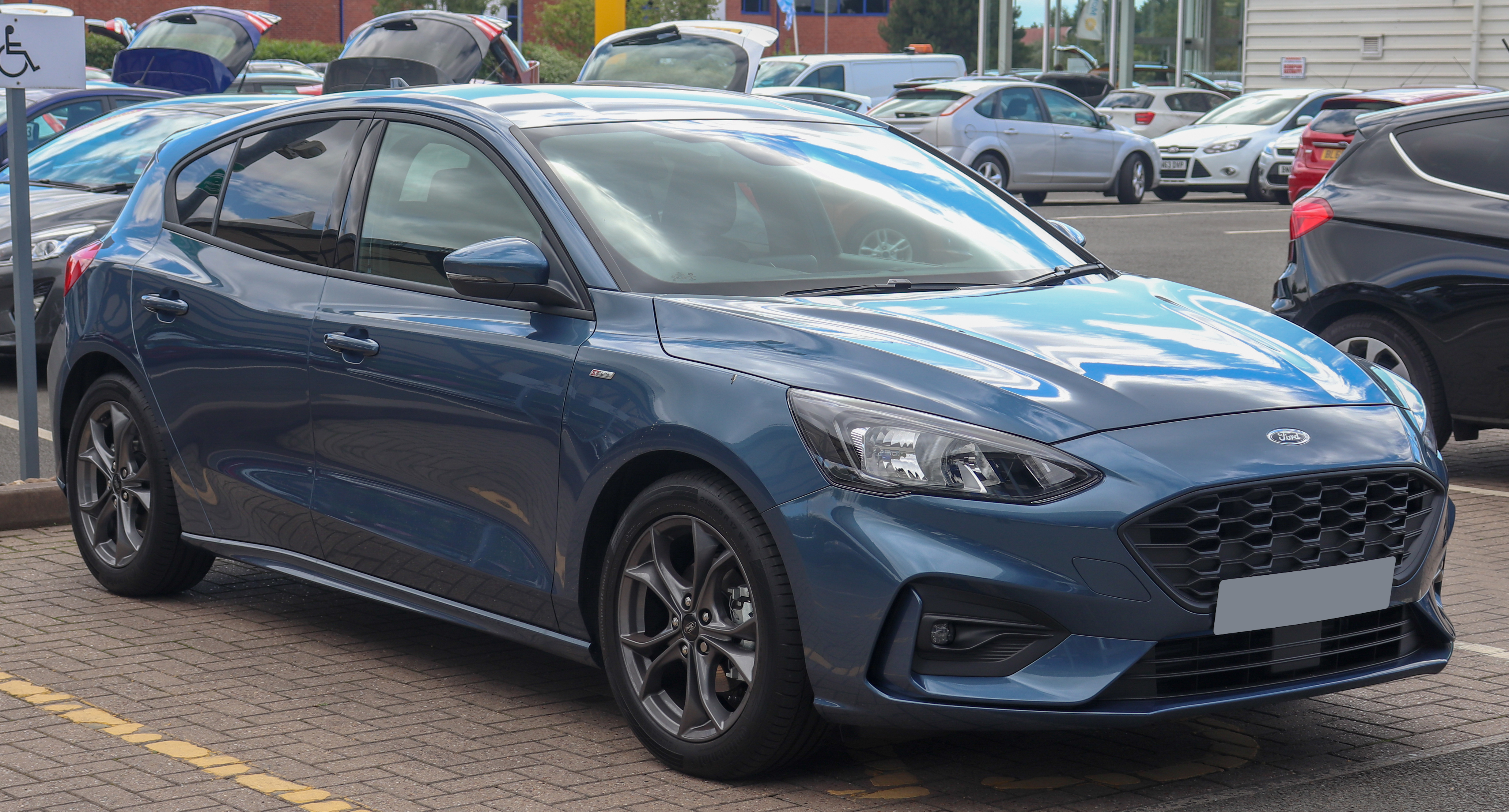
Four square negotiating is a way car dealers try to sell cars by focusing on different parts of the deal like your trade-in, the car price, and monthly payments. It can be tricky because they try to make you focus on one part while changing another.
A payment buyer is someone who cares mostly about how much they pay each month for a car, not the full price. Dealers sometimes use this to make more money by changing the loan details.
The 2015 Chevrolet Corvette convertible is a fast and fun car that you can drive with the roof down. It's a popular American sports car that many people enjoy for its speed and style.
A small SUV is a type of car that is bigger than a regular car but smaller than a big truck. It lets you see better when driving and can carry more stuff.
The Lincoln Town Car is a big, comfortable car that many people liked for its roomy seats and easy driving. The 2005 version is one of the last ones made before they stopped making this model.
A remanufactured engine is a used engine that has been fixed up with new parts and tested to work like new. It costs more than a used engine but is safer to buy.
A car dealership is a place where you can buy cars and sometimes get your car fixed or serviced.
LIVE
Oh my goodness, I am ex-hosted.
I've had to have the creative juices flowing this morning.
So remember the marketing funnel that I was talking about in the last episode?
You probably don't.
Anyway, I have to record spots, radio spots and TV spots here on my computer that will
hopefully resonate with people that are let's say at various stages of the buying process.
They're in the funnel and they're navigating their way down towards the purchase experience.
So that's what these commercials are designed to do.
So I did some reputation spots.
We have been in business in Greenville, Tennessee for 55 years.
And I guess my point with that is that, well, if we've lasted 55 years, we must have been doing something right,
especially in a relatively small town with a population of 16,000 approximately.
Now, we've had to become a regional dealer in order to survive.
I mean, if we sold every single car that was sold in our county of 75,000,
then no, we wouldn't need to sell anybody from anywhere else.
But because we have some leakage out of our market by people saying, I want to go to Johnson City or I want to go to Knoxville,
they want to shop around and go all over the place.
So some of those are going to leak and then some of those will leak out of other markets to us.
So I'm kind of fishing with a broad net over this entire region.
But anyway, the creativity that this takes, it's taxing on an old mind like mine.
The advantage that I have is I've done it for going on 47 years.
Well, I take that back.
My mom used to write all the commercials in the early days.
I didn't really start writing and performing until 1985.
But I have gotten to the point where if you say Lenny Wright is 60 second radio spot,
so I'll just get out a piece of paper or start typing on my computer.
And if you time it, it'll be 57 seconds, just enough time for a little opening and closing music.
And that's just based on, you know, I've done it a bunch.
It's kind of like learning how to swing a golf club.
Once you get really good at it, you never forget it.
You might get older and your swing not be quite as pretty,
but you'll still make good ball contact and get on the grain.
You might have to use a club with a little less loft.
And so that's what I'm doing right now.
I'm using a little less loft.
But there is a formula to this.
I mean, you got to tell people who you are.
You got to tell them what's in it for them because people don't care how great you are.
They want to know, okay, what does this do for me as the consumer?
We've won the president's award eight times in a row.
We're the number one dealer in East Tennessee.
Do you care?
No, all you care about is the right car for you.
And are you going to give me a great deal on it?
And how are you going to convince me that you're going to give me a great deal?
And that's really hard to do in a 15 second radio commercial or a 30 or a 60 even.
I remember one time my choir teacher had this little joke.
She would say, and it really wasn't funny, but she said, don't be sharp.
Don't be flat.
Just be natural.
So that's really what I try to do.
I mean, the way I handle this podcast slash radio show is in my natural voice and natural personality.
What you hear, I started to say what you see, but what you hear is what you get when you come or if you come to buy a car from us.
Now, does every single person that works for me handle every transaction exactly the way that I would handle it?
No, how could they?
We're different personalities, but we do have a process, a step by step procedure, which if followed religiously is very helpful to the consumer because they learn everything they need to learn about the product itself.
The features and the benefits that it offers to them as a car buyer and a car owner.
And then the pricing process is simplified.
We don't use the crazy four square negotiating techniques that dealers, so many dealers use to deceive people.
Why do they do that?
Because they can make more money on a particular type of buyer and that is somebody who is primarily a payment buyer.
I mean, yeah, they'll look at the price of the vehicle and they'll look at what they're getting for their trade, but what they really zero in on is the payment.
Now, the advertisement that we have may draw them in, you know, because of our 55 year reputation or because of the fact that we have zero, zero, zero, you know, all these big rebates and stuff like that.
They may get them in the door.
But once they get in the door, the payment buyer, that is, it's all about that monthly payment.
Can we get it under 500 a month?
Or can we get it under 300 a month?
Terrible way to buy a car.
They lose all their focus.
And as I've said before, there are five different attributes that buyers of any product look for.
Price, product, service, access and experience.
And of course, we talk a lot about experience.
We talk a lot about price in our advertising.
You have to.
I mean, you want people to understand that we got some deals, you know, we've got great values here.
But once they get here, we want it to be a great experience.
And you can't just talk about that.
I mean, it has to be real.
Because if it's not, humans are smart.
Well, most of them are.
And if you're bragging about how great it is to buy a car from you, it better be great.
But will somebody buy a car from you just because it's a great experience?
I haven't seen many that would because price is important.
The product is critical, you know, making sure that they get what they want.
I've got a guy right now.
He's got a 2015 Chevrolet Corvette convertible.
I sold it to him new 2015 with 10,000 miles on it.
Obviously, he doesn't drive very much.
I went out to his house yesterday and took pictures of it and I'm doing a little research.
I just want to make sure that I don't get burned trading for it.
But guess what he wants to trade it for?
A small SUV.
Now, probably a couple of times back, he was the same guy that was driving a, I can't remember, like a 2005 Lincoln town car.
You know what he wanted to trade for then?
A Ford Focus.
Little itty bitty car.
I asked him $5,000 difference because his Lincoln was about worn out.
And he said, I don't want to pay any difference.
I said, what else you got?
And he said, I got some old visible gas pumps.
So I traded with him.
Those gas pumps are out there in the showroom right now.
So he keeps coming back.
He knows that I'll trade for just about anything.
And he also knows that when he does business with me, he can count on me.
He knows that I'll be there.
He has my cell phone number as does every single customer that asks for it.
And you have it too, 423-552-2020.
Is that your only cell phone?
Yes, it is my only cell phone.
Thank you very much.
But you know, I've found that people don't really abuse it.
I hope they don't start now.
But if you want to really get the most out of my cell phone number, text me your email address.
And I'll send you a copy of the My Car Guru guidebook.
32 pages of absolute automotive brilliance from a new car dealer with a twist
who is telling you how to avoid falling into the traps that a lot of dealers set at their dealership.
We talk about process.
Their process is to figure out a way to make as much as they can without you knowing about it.
Is that scary?
Get the guidebook.
I'll be back in just one minute.
Okay, I am back.
I may have mentioned the other day about this customer that has a, what year is that thing?
2013 Ford Expedition.
It's got 190,000 miles on it.
And it needs an engine.
So what my used car manager did is he appraised it.
He looked at the value of that vehicle with a good engine and then subtracted the repair bill or the repair estimate
that my service department said it was going to cost to put a, not a re-manufactured engine,
but actually another used engine in this vehicle.
So it would be usable.
And so it was actually worth, after you did the math, it was worth $300.
There was $300 left over in value.
And so my used car manager offered him $300 for it.
And he said, well, I thought it'd be worth a little bit more than that, but if that's the most you can give me.
So he called me just to double check.
He has my cell phone number.
Hey, Lenny, would you just, you know, I've been thinking about $300.
That car has got good seats in it.
And it's got, you know, the rest of the vehicle is okay.
It is really $300.
Is that all we can get for?
So I called a salvage yard.
I mentioned this the other day and they said, yeah, we'll give $1,500 for it.
I thought it'd be worth a little bit more than that, but, you know, they've got to make a profit too.
So I called him back and told him that and he said, wonderful.
We're good.
Thank you very much.
But just because I went that extra mile and he had my cell phone number, we're ordering him a brand new expedition.
Now there's a lot of dealers that will just leave that, let that dog lie.
As we say in East Tennessee, of course they probably say that in different parts of the country.
Leave the dog alone.
Give him the $300 and he was cool with it.
But I'm always trying to find a way to maximize value, not just for me, but for my car buyer because I want to exceed their expectations.
There was this seminar that I went to many years ago.
I had just become an Oldsmobile dealer and Oldsmobile was trying to be like Saturn.
You remember Saturn?
That was a, well, you know, at first it was a successful experiment for General Motors.
They end up losing billions of dollars over it and eliminating the brand.
But the concept was interesting.
They had decent little cars, basically a Chevrolet Cavalier that looked different.
It had plastic body panels on the outside, which was unusual.
Like I said, small cars in a unique looking dealership with salespeople that were not paid on commission.
They had a delivery center in the middle of their showroom, which was duplicated many times over since then.
I mean, they had some very interesting concepts.
Well, Oldsmobile decided that they wanted to do that.
So one of the aspects of that is if you want to be a Saturn dealer or a Saturn salesperson, you had to go to, I think it was, well, someplace in Middle Tennessee, Southern Asheville.
I can't remember the name of it.
But you had to go there and go through this experience where you would climb in trees and swing off of ropes and do all kinds of things in the spirit of team building.
Well, Oldsmobile duplicated that in an orange grove in Florida.
And I went down there and experienced that and it was transformational.
I was not optimistic.
But when I came back, I said, you know what, that was pretty cool.
I learned a lot about myself and about this kind of new way of selling vehicles.
But one of the concepts they taught was understanding three things.
The level of expectation that somebody has before they walk into a business.
The level of reality, which is what really happens when you're in this business and then various moments of truth.
And what is a moment of truth?
So you get ready to go get chocolate Sunday and you are thinking about it.
You've never been in this business, but you're thinking about it and you've got these visions.
You've got like this nice bowl and it's got three or four scoops of delicious vanilla ice cream.
And they just load it with Hershey's chocolate.
Maybe throw some peanuts or various nuts on top of it and then use whipped cream and then put a cherry on the top.
So that's your level of expectation.
Then you arrive at the place.
You order your chocolate Sunday and when you get it, it doesn't look anything like you envisioned.
Your expectation was not exceeded.
It's the ice creams discolored and partially melted.
The chocolate is hard.
You didn't want hard chocolate.
You wanted soft Hershey's chocolate.
Little dab of whipped cream.
No nuts.
And the cherry looks like it's a month old.
That'll be seven dollars, sir.
And you know, some people will just go ahead and pay it because they don't want to embarrass the person that's asking for the money.
There are those of us, though, that will hand it back and say, you need to do this again because this is not meeting my expectation.
Well, I'll tell you what, the moment of truth is what that person behind the counter does next.
Do they say, well, I can't do anything about it.
That's just the way we make it.
You'll never be back.
Or if they apologize, sir, I am so sorry.
We're having a problem with our freezer and it's just not holding a good temperature.
But we got some more ice cream around back and I'll make you one personally right now exactly like what you wanted.
And they come back and they bring you one that's just perfect.
Are you going to come back to that place a second time?
Probably.
And simply because of how they responded at that moment of truth.
You weren't satisfied.
They recognized that.
You know, if you could just find employees that would totally buy in that would totally take ownership of that customer's experience.
And too often that their response is, well, that's not my job.
You know, it's not my job to escort the customer to the bathroom.
I just point.
It's not my job to keep their water glass full.
They shouldn't drink so fast.
I think we've desensitized people to bad service until they get great service.
And then they say, whoa, that was awesome.
I can't believe that that counter person did that for me.
I can't believe that they went through that much effort.
So how do you get people to do that?
How do you get people to respond that way when they're working in your business?
We'll talk about that here in just a minute.
When I think about what it takes to get an employee, regardless of where they work to deliver a very high level of customer service,
I think it boils down to a couple of things.
Number one, you got to hire the right people with the right kind of personality, the right kind of drive.
They have to get it.
They have to understand the value of relationship and how to communicate with other human beings.
And if they don't, they don't need to be serving tables for you, waiting on customers, interacting with them.
You know, sometimes I'll go to Walmart, for example, and I'll be looking for whatever I need.
And I'll find somebody that has the blue vest on and they look up at me like they could kill me.
They're not in a good place.
They may be great people.
I'm sure they are.
But their mindset is stocking something.
It's not taking care of me.
And then I'll run into somebody in the same store at the same time and I'll ask them for help.
And they'll take me there and thank me for my business because they get it.
They understand that they're a part of the organization and they understand their role in that organization.
So you've got to hire the right person, but then it comes down to leadership and training.
And the leadership in a business has to define the expectations and they have to reinforce those expectations.
They have to monitor what they expect.
And then when people don't deliver, you know, based on customer surveys, Google reviews, you know, it could be a one-time situation where something happens
in a car dealership, for example, a customer has to bring their car back more than once to get the same problem fixed.
There's a different kind of language that has to take place in order to handle that situation.
You know, I've found that a lot of people, they just have a hard time apologizing.
They just can't say I'm sorry.
They especially can't say I'm sorry when they didn't make the mistake.
Somebody else did.
But then again, it's like that person at Walmart.
She's taken ownership of Walmart.
That's her business.
She looks at it differently.
The guy that was stalking the merchandise, he's just there for a job.
You ask him what he does for a living?
He'll tell you, I stalk.
I put stuff on the shelves.
You ask her what she does for a living?
She says, I serve the public.
I take care of customers.
I do everything I can to make them happy.
So they hire the right person.
They motivate them through positive training and reinforcement.
They reward them.
But they also hold them accountable.
And that's hard.
It's hard to monitor every second when you've got 10 or 12 salespeople like we do.
We've got two separate showrooms, two different service drives.
We've got five and a half acres of cars out there.
It's hard to control every movement and every word that comes out of every person's mouth.
That's why we have to start our day.
Basically the same way and making sure that everybody understands what the mission is today.
You know, when somebody does come in, we want to exceed their expectations.
And that there are certain moments of truth that will be crucial in whether or not we earn their business
and whether or not we keep their business long term.
I think you plant the seeds for long term referrals and long term repeat business
when you deliver the car to somebody.
And what you do after that, do you follow up with a phone call?
Make sure that they're okay, that they don't need anything,
that you didn't promise something that you haven't given them yet.
I mean, buying a car is stressful for a lot of people, wouldn't you agree?
But it's, you know, it's stressful for a salesperson too.
Because they need to sell a car.
Most salespeople, I guess, are on straight commission or partial commission.
And they only get paid if they earn somebody's business.
And there's nothing wrong with that.
I mean, if you think about a fruit stand or any kind of business that is in retail,
if they don't sell something, they don't survive.
So that's the world we live in.
But if the salesperson does a great job building value in the product with his knowledge,
he's cordial, he's positive, he helps the customer make a good financial decision,
a good purchase decision, puts them in the right car at the right price.
When they leave, they're going to be happy if he follows up with them,
if he makes their service appointments for them, if he becomes their car guy,
the person that they call when they have a question about cars,
he's going to sell them again more than likely.
And that's what you want.
That's what it takes for a business to survive this day.
Because look at what we're competing against.
We're competing against the speed that other businesses deliver to customers,
specifically Amazon.
Look how fast they turn stuff around.
You order something one day, it's at your front door the next day.
You didn't have to talk to anybody.
You just click on something and there it is.
Is that the way major products should be sold as well?
I don't think so.
I think buying a car is different than buying a washing machine,
but it's even more different from buying soap powders from Amazon.
So that's the truth that I live by in my business.
And hopefully that is good enough.
Well, it has been for 47 years.
Well, thanks for listening to this edition of My Car Guru.
If you need me, send me a text 423-552-2020.
Ask for the My Car Guru guidebook and I'll turn it around as fast as you could say My Car Guru.
I'll see you next time.
About this episode
Lenny Wright shares insights on aligning marketing with authentic business values, drawing from his 47 years in car sales. He discusses crafting effective radio and TV spots that resonate with buyers at different stages, emphasizing honesty and simplicity over gimmicks. Lenny highlights the importance of focusing on customer experience, transparent pricing, and building trust through personal connections. He also shares stories about unique trade-ins, customer loyalty, and lessons from dealership training programs, illustrating how genuine service and clear communication can set a business apart in a competitive market.