The Ford Mustang Mach-E is a new electric SUV from Ford, inspired by the classic Mustang sports car. It's designed for families and has a good range on a single charge.
The Lucid Gravity is a fancy electric SUV made by a company called Lucid Motors. It's designed to be very comfortable and has a lot of cool tech features, making it a strong competitor against other luxury cars.
The Lucid Air is a fancy electric car that has a lot of space inside and can go really far on a single charge. It's designed to compete with other luxury electric cars.
The Hyundai Genesis is a high-end car made by Hyundai, designed to be more luxurious than their regular models. It offers a smooth ride and lots of nice features, making it a good choice for people looking for a comfortable and stylish car.
Car
Land Rover EV
Land Rover is making electric cars that are tough and luxurious, just like their regular SUVs, but better for the environment.
The Jaguar I-PACE is a luxury electric SUV that looks stylish and can go far on a charge. It's designed for people who want an eco-friendly car with a lot of features.
DC fast charging is a way to charge electric cars quickly. It uses a special type of electricity that goes straight into the car's battery, making it faster than regular charging methods.
Rivian is a company that makes electric trucks and SUVs. They are known for creating vehicles that are designed for outdoor adventures and use electricity instead of gasoline.
A supercharger is a fast charging station for electric cars, especially Teslas. It helps you charge your car quickly so you can keep driving without waiting too long.
CCS1 is a way to charge electric cars quickly. It uses a special plug that can handle both regular and fast charging, making it more efficient.
LIVE
Hello and welcome back to the Out of Spec podcast. Ford says that only 20% of Ford drivers, EV
drivers, use Tesla's supercharging network. Let's talk about it.
So Ford released a news article breaking down the rollout of their Ford Nax adapters. Ford was
the first company to announce that they would be not only adopting Nax, but introducing adapters
that will allow current, at the time, Ford owners to use Tesla's supercharging network.
Let's select Tesla superchargers, over 20,000 chargers across North America, and they have
shipped over 139,900. And I think it's like 80 of these adapters. So 140,000 of these adapters,
by the time you're watching this, and those are complimentary, those are free adapters.
Now you have to reserve those if you have a Ford vehicle, I believe the time is still within the
time now that you can just order the adapter, believe new Ford owners have to buy the adapter.
Let me know if that's correct, but you can charge your Ford EV, your Maki, your F 150 at Tesla's
supercharging network in North America. That goes for the same of Rivian, General Motors GM,
Volvo, Polestar, Nissan, Mercedes-Benz, the Lucid Gravity with native Nax, as well as the Hyundai
Ioniq 5 with native Nax. And soon we'll be getting the full rollout of what the Lucid Air with the
native Nax, as well as with adapters, the Ioniq vehicles, the EV Kia vehicles, Genesis, Jaguar
Land Rover, Jaguar with the I-Pace, Land Rover with their new EV, which hopefully at this point
we'll have native Nax, but we'll talk about that in a second, as well as BMW. And then after that,
we're going to see Stellantis, Toyota, Volkswagen, and Honda get access later this year as well.
And so soon, pretty much almost every legacy large automaker will have access to Tesla's
supercharging network. And that's great. Whether you like Tesla or not, Tesla has the most reliable,
the most robust DC fast charging network in North America, not only private,
so just for Tesla owners, but public as well. So they have the most public, and I say public
because it's still close to a certain subset of automakers, but the biggest public DC fast
charging network as well. And that's, let's kind of break down more of this article that
Ford comes out with. So as Ford's director of charging and energy services, I know how this
concept of unlocking access has been central to our team's mission for both a current and a
future electric vehicle owners, because this initiative was more than just sending out adapters.
It was a sign of our commitment to delivering a seamless charging experience away from home and
making it easier than ever to confidently go electric with Ford. We're proud to share that
we have fulfilled our commitment to deliver complimentary adapters. Every complimentary
adapter reserved by our US customers has been shipped from customer reservation one in Austin,
Texas to customer reservation number 100, 139,936 in Waciona, Minnesota. Hopefully I'm pronouncing
that correctly for those in Minnesota. We are truly grateful for those who have charged with us
and patiently waited for us. I believe Rivian is kind of on a similar route. Of course,
they don't have 139,000 EVs to deliver NAX adapters to, but I believe it was
Rivian originally said that by the end of February, they would have shipped out every
single NAX adapter to current Rivian owners. And then at that point, if you get a new Rivian
delivery, then you would just get your adapter within then two weeks of delivery shipped to you.
I know some people get them act delivery, but for most people, you're going to get them
shipped to you. So same thing for Rivian. Most owners, it's not all at this point have NAX adapters,
same thing with Ford, but let's actually just jump into the stats. I'm not going to read this
entire article to you. All right, it's a lot of marketing, you know, oh, we got access to
Tesla Supercharger Network with our Blue Oval program. Look at us crush this NAX adapter,
which was made by Electron and look at us IP test our NAX adapter. Yeah, we got it. Now,
to the actual stats, Ford says that most Ford EV owners are within 18 miles of a DC fast charger.
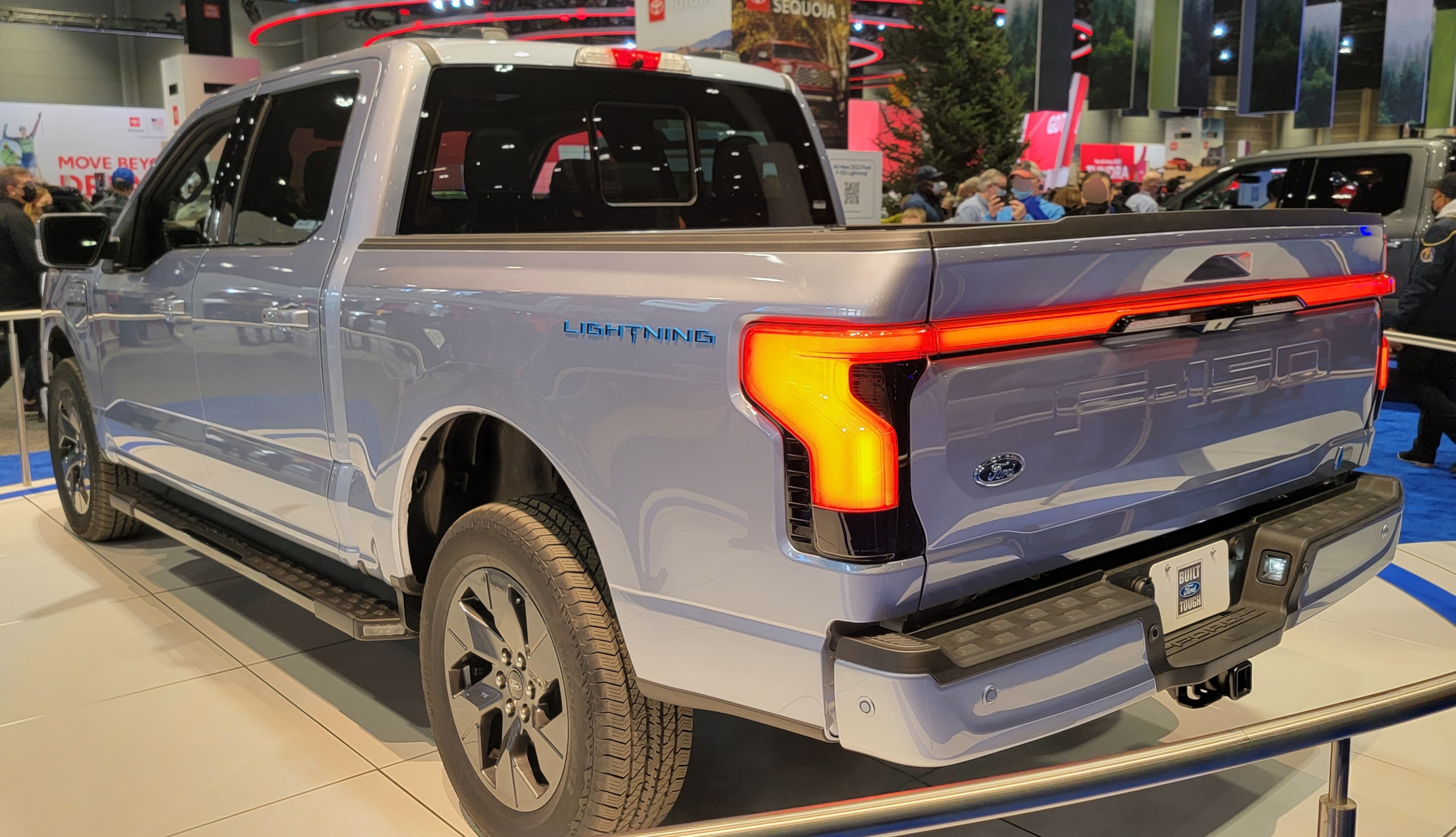
So your average Ford EV owner F 150 lightning Ford Mustang Mach E, you're just within 18 miles of a
DC fast charger with Ford's Blue Oval Network, which includes plug and charge, which is crazy.
You have access to 40,000 chargers, 40,000 sites, thousands of stations where you can plug and charge
your Ford. And that's amazing. Now accessing more than 20,000 Tesla Superchargers, actual stalls,
that's up from 15,300 in the beginning of 2024. So 20,000 superchargers. In fact, Ford says that
their busiest month with these adapters was February. So just February, because their business
month we're in March. So when Mark ends, March will probably be their busiest month. And they say
growth has peaked right this year. So I mean, this past month, February 2025 was Ford's biggest
month using Tesla's superchargers. They said the holiday season was the most amount of charging
sessions that they've had within a simple time period. And February was also the best ever
charging reliability for Ford owner. So February was a pretty, pretty, pretty good month. Now,
here's the stat that kind of jumped out to me. Ford says 20% of all Ford EV charging sessions
now happen at Tesla superchargers, which we hear this talk of, you know, and I admit it,
I've been one of those people, we need Nax, there needs to be native Nax. Well, most Ford owners
have a Nax adapter, and they're not using Tesla supercharging network. Now most of you are going
to be charging at home. But when they do DC fast charge, they're not using Tesla's supercharging
network. There are plenty of reasons for this. Part of this being that Tesla supercharging
network is more expensive. It's definitely not competitive unless you have the membership. So
Tesla superchargers, but it's a lot, it's more expensive in a lot of situations. For me,
for Florida residents, you're probably familiar with FPL, Florida power and light. They are
the biggest energy provider for the state of Florida. Ironically, they just don't sell
energy in Tallahassee. But west and east of me in Tallahassee,
Florida power light has chargers and they provide energy very reliable, great speeds,
500 amp cables, great, like perfect. But it's only 30 cents at FPL. For me, 30 cents versus a Tesla
supercharger, even with the membership would be anywhere from 32 to 40 cents. So at that point,
it's like, why even go to a Tesla supercharger when I can go to FPL? I don't have to interrupt stalls.
I don't have to bother anyone. It's just an easier process for me. Now Tesla superchargers
are very convenient, right? There's been times where I want to charge. I want to stop at a
certain exit, but there is no other, there's no CCF station, but I want to go to this rest stop.
Well, there's Tesla superchargers there. I can charge and get food. It's become convenient.
And there's times where I don't have to stop early to charge because there's not another
charger for the next 50 miles, or I can go even longer and push my state of charge to just two,
three, four, five percent because there is a Tesla supercharger. The Tesla superchargers are great,
but 20% of Ford owners using them means they're using EVGO. They're using Electrify America.
They're using IANA. They're using BP Pulse. They're using Mercedes. They're using,
you know, all of the other networks out there, they're using those. And so this kind of poses
the question to you. Maybe we don't need to see the roll out of Nax as quickly as people initially
anticipated. Now I know native Nax is great. You had access to Tesla supercharging network,
but you're only getting access to the same Tesla superchargers that non-TESLA vehicles would be
able to get with adapters. So whether or not you have an adapter or you have native Nax,
you're going to be charging at the same stations. And whether or not you have native Nax or CCS1,
you're going to use an adapter. At some point, you're going to want to charge at a CCS1 station,
believe me, even if you have native Nax, and you're going to want to use it, you're going to have
an adapter to use. And then for someone like me who has a CCS1 vehicle and I want to charge at
a Tesla supercharging network at some time, I have a Nax to CCS1 adapter. So regardless of
whether you have native Nax or not, you're going to end up using an adapter. Now native Nax is coming
very soon for a lot of automakers, especially a lot of automakers later this year, like GM
and Rivian. But initially a lot of people wanted to see native Nax like mid-early 2024. And a lot
of people were complaining, myself included, Hey, when are we going to get native Nax? Hey,
so we ended up getting CCS1 vehicles. And maybe that was a better decision because if most Ford
owners are still using CCS1, even though they have Nax adapters that tells me regardless, they
were going to with a native Nax or not, they're probably going to continue to use CCS1 adapters,
or it could be something psychological. People don't want to use the adapter. They don't want to
deal with taking up two parking spaces, two stalls. They just like using CCS1. So maybe if they did
get native Nax, it would almost entice them to use Tesla Supercharger Network. But in this case,
with adapters, they're still using CCS1 and not native Nax. It just creates this interesting
dichotomy of it all. Why are people doing that? Why are you doing that? Why are you
continuing to use CCS1 stations like me? For me, it's price. But why are you doing it? And are
automakers waiting a good time to introduce native Nax in their vehicles? Are they taking too long
or controversial? Should automakers wait it out? We see Tesla expanding their version 4 post and
version 4 sites and stations with actual, right, 1000 volts charging. So it would be great for
the high voltage vehicles. And so Tesla is continuing to expand their public DC fast charging
network. But is it at the pace of which it's worth removing CCS1 for Nax? Are we moving too fast?
Are we at the right pace? Or should we just wait it out? Let me know what you guys think down in
the comments below. Thank you guys so much for watching. My name is Isaiah, and I will see you
guys in the next one.
About this episode
Ford's recent rollout of 140,000 NACS adapters is a game-changer for EV owners, allowing them to access Tesla's extensive supercharging network. Despite this, only 20% of Ford EV drivers utilize these chargers, with many preferring alternative networks due to cost and convenience. The episode dives into the implications of this trend, discussing the charging landscape, the role of adapters, and the future of native NACS integration across various automakers. Insights from Ford's director of charging highlight the company's commitment to enhancing the EV charging experience.
In this episode of the Out of Spec Podcast, Isaiah discusses Ford’s rollout of 140,000 NACS adapters for their EVs and the surprising fact that only 20% of owners are using them. We dive into the reasons why this could be, from the cost of charging at Tesla Superchargers to the convenience of other networks like Electrify America. Let's talk about it.
Find us on all of these places:
YouTube: https://www.youtube.com/outofspecpodcast
Apple Podcasts: https://podcasts.apple.com/us/podcast/out-of-spec-podcast/id1576636119