The 2025 Ford Expedition is a large SUV that can carry many passengers and cargo. It's built tough, similar to a pickup truck, making it good for towing and off-road driving.
EcoBoost engines are Ford's way of making smaller engines that still have a lot of power. They use turbochargers to help them perform better while using less fuel.
A 10-speed automatic transmission is a type of car gearbox that can change gears automatically and has ten different gears to help the car run better and save fuel.
Diesel is a type of fuel used in some engines. Diesel engines are often more efficient and can pull heavier loads compared to regular gasoline engines.
The Ford F-150 is a big truck that can carry heavy loads and is great for work or everyday driving. Some versions even have a diesel engine, which helps it pull bigger things like trailers or boats.
Body on frame means the main part of the car, called the body, is built on a strong frame. This is often used in bigger vehicles like trucks and SUVs to make them tough and easy to fix.
The Chevy Suburban is a large SUV that can carry many passengers and has a lot of room for cargo. It's great for families or anyone who needs to transport a lot of stuff.
The Lincoln Navigator is a large, fancy SUV that has a lot of room and nice features for passengers. It's great for families or anyone who wants a comfortable ride with lots of space.
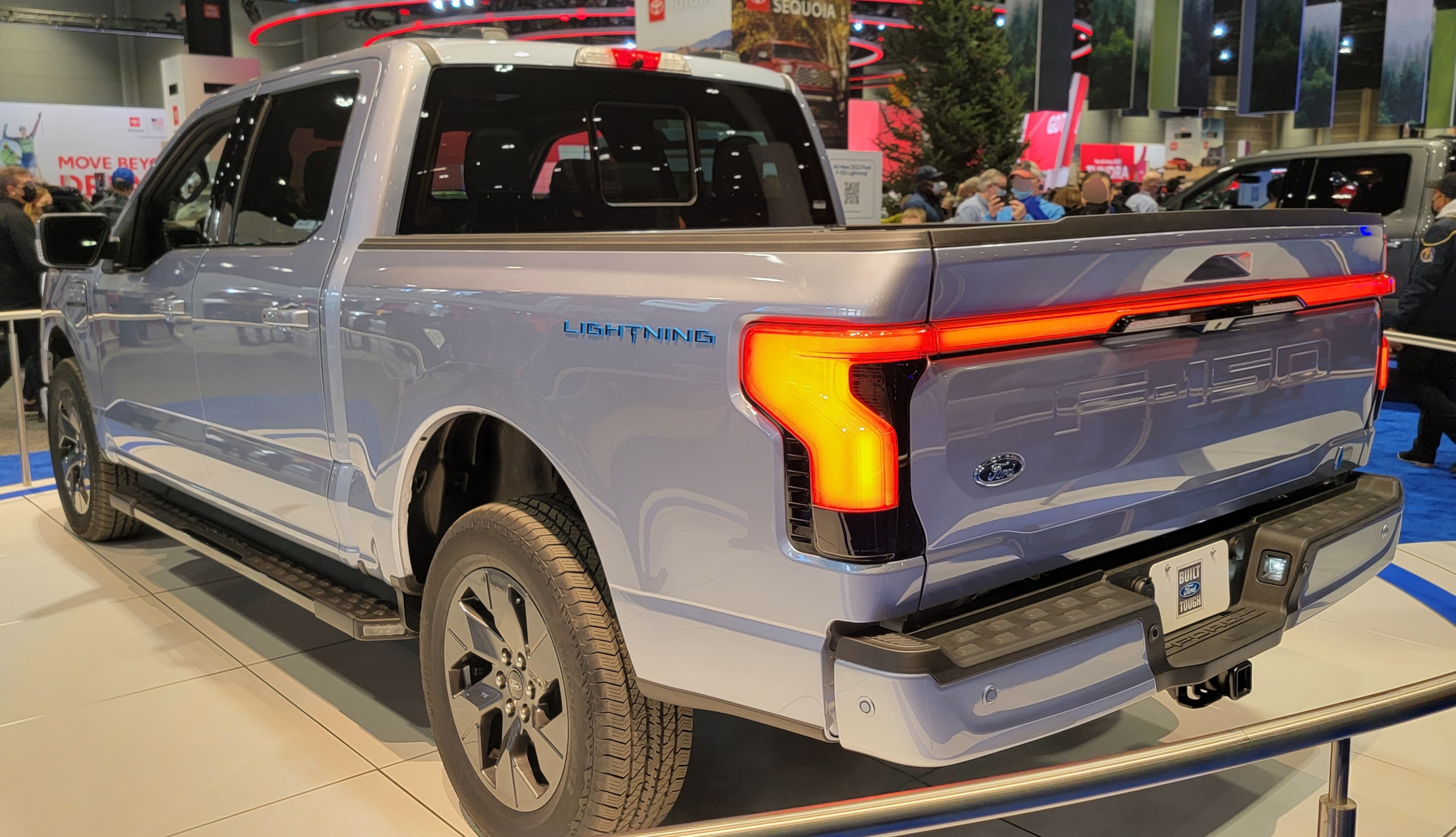
The Tesla Semi is a big electric truck that companies can use to transport goods. It's designed to save money on fuel and help the environment by not using gas.
Car
Kenworth T680 Next Gen
The Kenworth T680 Next Gen is a type of large truck designed for long-distance hauling. It's built to be comfortable and efficient, making it easier for drivers to spend long hours on the road.
Ergonomic interior design means that the inside of the truck is made to be comfortable and easy to use, helping the driver feel better during long drives.
Car
Freightliner Cascadia
The Freightliner Cascadia is a big truck used for transporting goods over long distances. It's designed to be fuel-efficient and has features that make it comfortable for drivers.
Car
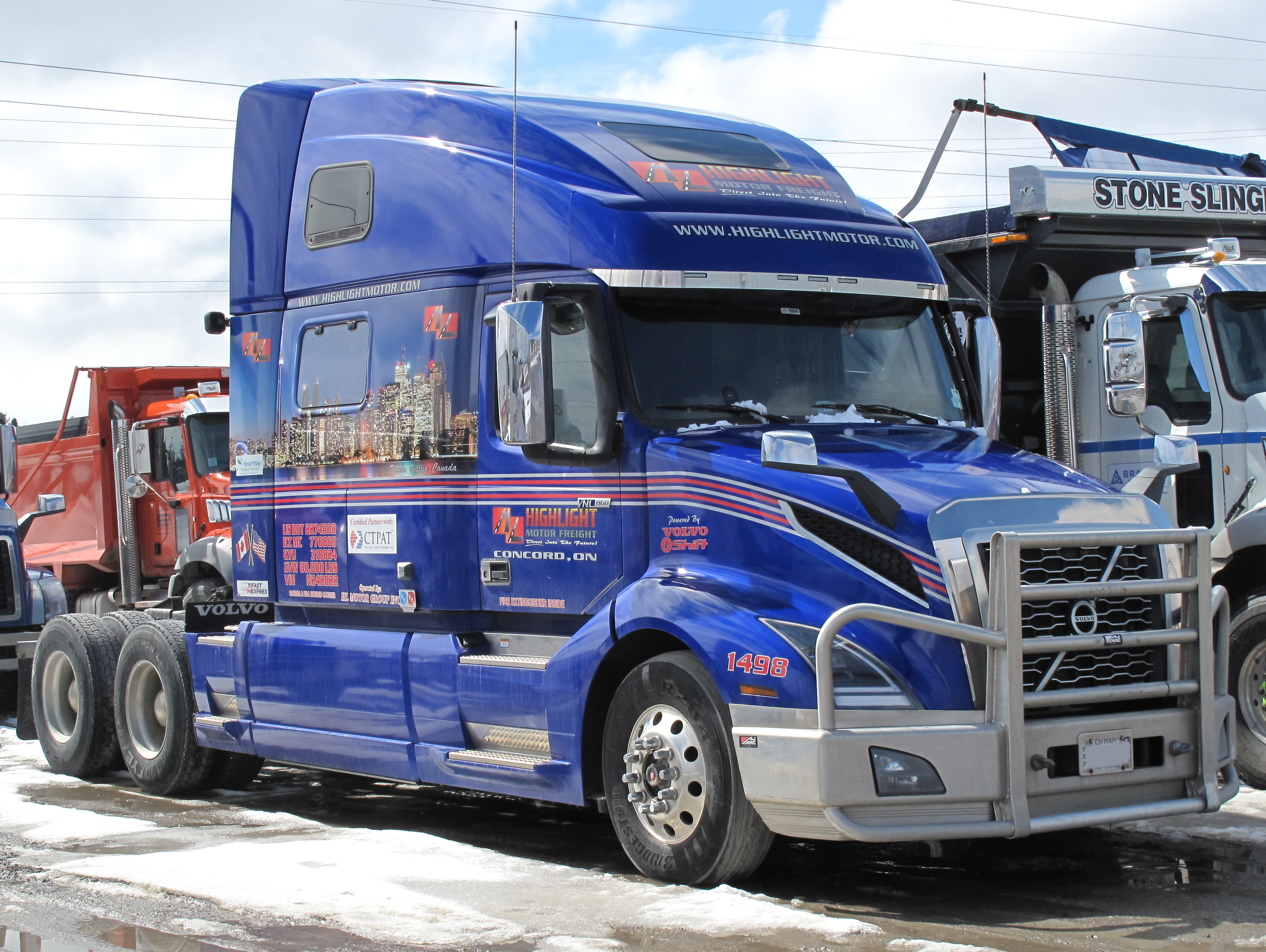
Volvo VNL860
The Volvo VNL860 is a large truck made for long trips, offering a comfortable sleeping area for drivers and modern technology to make driving easier.
A classic car collection is a group of older cars that people keep because they are special or interesting. These cars are usually at least 20 years old and are often in good condition or restored to look nice.
Chaparral Racing Cars are famous race cars created by Jim Hall. They are known for being very advanced for their time, especially in how they were designed to go fast and handle well on the track.
Vintage trucks are old pickup trucks that people like to collect because they remind them of the past. They can be interesting to look at and often have unique designs.
Trim levels are different versions of the same car that come with different features and styles. The Lincoln Aviator has several options to choose from, like Premier and Black Label, which offer different things.
A self-driving feature is a technology in cars that lets them drive themselves without you controlling them. However, you still need to pay attention and be ready to take control if something goes wrong.
A twin-turbo V6 engine is a type of car engine that has six cylinders and uses two turbochargers to make it more powerful. This helps the car go faster while still being efficient with fuel.
Adaptive suspension is a system that can change how the car's suspension feels while you're driving. It helps make the ride smoother or sportier depending on the situation.
The Acura MDX is a spacious SUV that can fit a lot of people and their stuff. It's known for being dependable and has nice features that make driving more enjoyable.
The Volvo XC90 is a fancy family SUV that is designed to keep you and your passengers safe and comfortable. It has a lot of room inside and comes with cool technology to make driving easier.
LIVE
Time now for this hour's car review. I had the opportunity to drive the 2025 Ford Expedition
made in Louisville, Kentucky. All American available trim levels are the active, the max active,
the platinum, the max platinum, the trimmer which we had, the king ranch and the max king ranch.
I reviewed the trimmer four by four. This is a standard or full-size body on frame SUV.
Underneath it, it's a F-150 pickup truck for the most part. That's what it's based on.
Exterior changes. Well, it was fully redesigned for 2025, although I think most of us would be
hard pressed to be able to tell the difference between a 24 model and a 25 model. Exterior
features. Trimmer grille which is distinct amongst all of the expeditions gives a nod to the Chevrolet
actually. The front grille kind of looks like a Chevy with the bar through the middle of it
with that center horizontal bar. Also, it does have copper gold accents. Some people said,
I don't like that. I do. I think it makes it different. It stands out a little bit. I'm sure
an idea that straight horizontal side body moldings on it. Extra light, extra lighting now on the
rear hatch makes it more unique. What I really liked about it was that the trimmer package
gives it a more off-road or rugged look. Not sure about the back hatch with the two-tone
look for most of the expeditions. You may have seen one or two of those. Kind of a
piano black thing going on back there around the color that's on the car.
Interior highlights. Trimmer stitching on the seat backs.
Comfortable seating throughout. Easy access to the second and third rows. Yes, this is a
three-row vehicle. Sweeping, driver display. Love that. Plenty of cubbies throughout the cabin
and really electrical connections throughout as well. Cargo, adequate. With the third row
seats up, it's just okay. Clearly the seats are going to take up some room back there
in what would be the cargo area. What I liked, the design and the quality with optional
two-foot center screen. A two-foot center screen. I did say that. What could use improvement?
The steering wheel accessory controls are over complicated and you've got to look at a screen
to see what you're doing. Which kind of defeats the purpose because you're supposed to be watching
the road. Exactly. And it's not Ford's fault that everything they all do. Mine does it too because
you make a mistake and you'd go oopsie on the steering wheel and you're not where you want to
be in the system. Yep. 3.5 liter high output EcoBoost V6. 440 horsepower. Wow. 510 pound
feet of torque. 10 speed automatic transmission with a tow rating of 9,000 pounds max depending
on how you got set up. That's a big drop. It's huge. It's an aircraft carrier. Mileage, 15 miles per
gallon city. I guess it's better than the V8, the old V8 that isn't available anymore because I think
it got 12 or 13. 22 on the highway for combined to 18. I got 16.6 over 486.1 miles. What I liked
about it, the power, not only in the horsepower but the torque. What could you use improvement?
Obviously, fuel economy. I think this would be ripe for a hybrid. Or a diesel. Or a diesel. But
you know, it's funny because, you know, they've tried diesels in these things before. Chevy did it.
They've all done it when they got this big and it would make sense. But people, you got to have
a mindset for diesel. Right. You're going to the eco side of the ownership rather than the torque
and the towing. Yeah. If you're, if you tow a lot, if you got your landscaping trailer behind you,
that's got 10 tractors on it, then maybe a diesel would work. But there again, you know, Ford does
make diesel F-150s and 250s. They did. And I don't know what it would take to put a diesel in this,
but that's body on frame. Another open can of worms because remember, when you change engines
in anything, then you get the EPA involved. Yeah. And it just becomes a whole another issue.
I liked about it. The extra large, long limousine ride. Oh, it's sweet, baby.
What could you use improvement? Steering radius is a little bit on the long side. But remember,
it's about a hundred feet long. So it's going to take you a little bit to get in that park.
It's the SS trimmer, USS trimmer. It's exactly right. What could you use improvement? The
steering radius. All right. So here's the pricing for this. The base trim price for the trimmer is
$83,945. Price is tested $86,695. Probably most in the floor mats because you got to have about
15 of them. Base model price, 57,4. So you can get in one without the floor mats.
Yeah. There's rubber flooring in it. $57,400. Okay. Competitors. Well, you know what they are.
Chevy Suburban, 61.5 is where it starts. The Yukon XL, which is the Chevy's other brother,
that's 69.9. And we threw in the Toyota Sequoia, although it's not quite as big.
It starts at 62,425. Not as much sheet metal. So you get a break on that.
Yeah. Probably not as heavy either. Or less towing.
And that is my review of the 2025 Ford Expedition. There's the Mineroni on it.
Oh boy.
It's very nice. Ford blue.
Not a fine print.
Nice vehicle.
It is. You got to have your glasses on for that.
Anyway, we've got another car review next hour. And I have to dig down to tell you what I've done.
But I didn't want to tell you that next hour, I am going to review
the Lincoln Aviator all wheel drive.
I didn't see you have that one. That was a short one.
You're going to lose a short one.
It's a midsize.
No, I mean, you didn't have it for a long time.
Oh yeah. I know. Because we were going through Christmas and New Year's at that time.
And so usually I get a car change on Thursday.
This particular one happened on a Tuesday.
And so it was.
And the reason I stayed is when he had a vehicle, sometimes during the week,
I'll see the vehicle and he'll point out the features and go over the Moroni with me.
So it's kind of interesting.
Very cool.
It is actually. I have a lot of people.
I run it.
I run it.
I run it.
Takes me for a ride.
I drive a new different car every week.
And I kind of take it for granted. I've been doing it for so long.
But I really enjoy it and really appreciate the manufacturers
loaning me the vehicle for a week because they don't have to.
That.
Hey, if you'd like to get in touch with us, send us an email.
The address is info at in wheel time.com.
We're back.
Okay, turn now for Jeff's car culture.
Those big mysterious big rig sleepers.
They've been in the news a lot for the good things, though, but comparing semi truck
sleepers comfort space features for life on the road, long haul truckers.
The sleeper cab just isn't a place to catch a nap.
It's home on 18 wheels, whether you're an owner operator or fleet manager,
evaluating trucks for your drivers, trying to choose the right sleeper setup.
Makes a huge difference in comfort and retention of those drivers.
And that's very important for these companies because they hop around.
These drivers hop around and look for the money.
What to consider?
Trip length, weight and fuel economy.
So here we go.
Mike, first one in the hat is a Peterbilt 579 ultra.
Wow, look at that.
It's an 80 inch sleeper.
Comfort and customization is best.
The pros on this baby is spacious interior with a high roof for easy movement,
ample storage for dual bunk options in case you need that.
You stand up in there.
Yeah, optional sleep amenities like refrigerator and TV mount.
The cons of this, this is the most expensive one.
It's the premium price.
The ultra loft is one of the most luxurious sleeper options on the road,
often favored by owner operators who spend weeks on the road in their truck.
How much?
Well, in average, these sleepers go from 230 on up to 350.
What?
Yeah.
Then we get the truck.
You know, you get everything with it, but 230,000 to 350,000.
For the truck and the sleeper?
Yeah, and the whole nine yards, yeah.
Gee, whiz.
And that's, you got to be dedicated and that's your profession.
The next one is a Kenworth T680 Next Gen.
It's a 76 inch sleeper.
Fuel efficiency and comfort is what it's known for.
The pros are a quiet cab with excellent, excellent insulation.
Ergonomic interior design, smart wheel controls for the digital dash.
The cons, slightly smaller living space than the first one, the Peterbilt,
who's got the largest sleeper, but the T680 blends modern tech with practical layout.
Great for fleets focused on driver satisfaction and miles per gallon,
because that's very, very important.
On some of these, can't you buy the sleeper separately from the actual cab and then they marry them?
I think that's how they originally build them, but then you can also choose like your interior,
like when you buy a house, you buy a room.
This thing looks almost like an RV from that angle.
And at the end of this, I'm going to point something out on all these pictures to you.
All right, the next one is a Freightliner Cascadia.
It's a 72 inch raised roof sleeper.
It's best known for its fleet efficiency and reliability for the drivers.
The pros available in the Detroit Assurance Suite for Safety Features optimize the fuel economy
and uptime.
It's a well-balanced sleeper layout with optional amenities.
The cons less customizable than the first two we talked about.
Freightliner dominates the fleet and that's what they base everything on.
Next one is a Volvo VNL860.
It's a 77 inch sleeper, smooth ride for driver comfort.
The pros on this exceptional ride quality, safety tech, workstations convertible to a sleeper,
advanced infotainment system and digital controls.
The cons less aftermath customization, it's a US based brand Volvo, the VNL series,
puts driver experience front and center with most ergonomically friendly interiors available.
So this was more designed for the driver rather than the sleeper.
The last one we have Mike is an international LT series.
It's a 73 inch sleeper, value conscious fleets, that's what it's best known for.
Competitive pricing and fuel economy with a smart nav system, Bluetooth integration.
Decent sleep area with basic amenities.
The cons, fewer period premium sleep options, it's the lower end of it.
And international offers a solid no frills option for those drivers.
Let me ask you something.
Do these have toilets in them?
No, you can probably get one with it.
Yes.
No, I don't know about shower.
No, showers you would do at the truck stop.
Yes, you can get a commodes type device in there.
But what I see on these, you know, when you're on an airplane and all that plastic
on the walls and around the windows, that's what this reminds me of being on an airliner.
That typo, that typo, I can see that.
Yeah, that's what it reminds me of and it's probably lightweight,
like they need it for the fuel efficiency and being economical for the MPGs.
So I always wondered.
Yeah, so I'm Don Armstrong.
Glad you could join us on this Saturday.
You promised Mr. Morris to get in his driving destinations and we're looking forward to it,
Morris.
Here we go.
Yeah, I wanted to finish up talking about some of the car museums.
If you're looking for something to do in the winter,
you don't really want to go out on a big cruise,
but you're looking for something to get your car fixed in.
Look around your area for these small, unique car museums.
They're all across the state.
And today we're going to start with the Austin Rock and Roll Car Museum.
Now it is a nonprofit car museum and it's tied into music,
films, and pop culture.
Of course, it's in Austin, so it's got a little bit of everything in it,
including the classic cars.
Now it does have open hours on select weekends and it's a great looking,
looking at the pictures of it and doing the research.
That would be a real fun place to go to check out the cars and rock and roll
and whatever else they got in there because they got a little bit of everything from Austin.
Then the Roadside America Museum up in Hillsboro.
We've been there a couple of times with them doing some video tours of their place.
Now this is a private classic car and automobile collection.
It's in a historic Ford dealership there with 40s to 50s vehicles and vintage signage.
They have a lot of groups, have events up there, a lot of clubs.
The Hot Rod Tour of Texas has been known to make a stop in there.
It's a really cool place to go and see a lot of Americana from an automotive perspective.
Now you can also go down to Cross Plains, to Woody's Classic Cars and Baseball Museum.
Now this is a big place.
It's amazingly big and they got a lot of classic cars.
Of course, with the baseball, they got a different collection of classics from mid 20th century
and it's on Highway 36 West so it's got a easy to kind of find but you've got to be
out around Abilene and Brownwood to find this place.
But it might be well worth your trip.
If you're close enough to go look at this, be sure and check the website.
Get a better idea and check the hours, particularly during the winter.
Then a really cool museum that I've tried to get to a couple of times,
the Permian Basin Petroleum Museum.
This is Automotive and Racing History.
Now it's primarily an oil industry museum out in West Texas.
But what it's known for, the Chaparral Racing Car Gallery.
Now they've got a lot of historic cars in there that were built by Jim Hall and Hap Sharp.
It really appeals to car enthusiasts because you get to see the cars and you get to see the
oil industry and how it's all tied together.
And they've got a lot of nice displays in there.
And about every other month, if you time it right,
they do take the cars out into the parking lot into the area out there and they start them
and they drive them around a little bit.
That's part of the maintenance on them to keep them running and keep them in pristine shape.
They don't just sit there forever and ever.
These cars run and you'll be able to see them ride around a little bit.
The last one I wanted to point out was Bill's Backyard Classics up in Amarillo.
Now this is a private classic car collection.
They've got over 100 vehicles in there spanning hot rods,
muscle cars and vintage trucks.
So it's a grassroots auto museum experience.
But up in that Texas Panhandle, it's very popular and it's got a lot of great things
to see if you go up in that part of the Texas environment.
Just a few things that you could do during the winter to go check out some automobile
museums. Be sure and look around your area and see where some of these small ones are that you
might find a little bit closer.
Good idea. Thank you, sir.
Time now for this hour's car review.
I had a chance to drive the 2026 Lincoln Aviator.
Final assembly location, Chicago, Illinois.
Available trim levels, the Premier, the Reserve and the Black Label.
I reviewed, drove the all-wheel drive Black Label.
This is a standard SUV.
It includes three rows with a total of six seats.
Sharp looking.
Exterior changes from last model year.
Well, it was introduced in 2020, but they've done some updates to it and it looks modern
and it doesn't really look like it needs an update, to be honest with you.
Sharp looking Lincoln grille, chrome bling or tuxedo black appearance trims,
roof line narrows at the roof, back at the back of the roof there, as you can see.
Modern lighting, front and rear, but I like the straight lines, the conservative,
all-American black tie look.
What could use improvement?
Can't wait to see the new design.
You know that it's got to be on paper already if they haven't already started making parts.
Interior highlights, our Black Label is luxurious throughout the cabin.
To die for comfortable seating, high class leather appointments in our top of the line vehicle.
Attention to detail is evident throughout.
Cargo room behind the third row, it's small when the third row is up.
Do you seat that many people in the third row?
I wouldn't think so unless it's the kids.
What I liked, overall comfort.
What it could use improvement, steering wheel controls lead to eyes off the road,
because you have to look at a screen to see where you are with all of that.
Not a big fan.
Self-driving feature, that needs improvement.
I don't understand why you would have a self-driving feature
that you have to keep your eyes on the road all the time.
You know what I'm saying?
Yeah, I don't understand the whole philosophy.
You may have some thoughts on it yourself.
Maybe you've got a self-driving vehicle, more power to you.
Three-liter twin-turbo V6, 400 horsepower, 415 pound-feet of torque,
10-speed automatic transmission with a tow rating of 5,000 pounds, pretty good.
17 miles per gallon city is what it's rated, 25 on the highway for a combined of 20.
I got 20.3 miles per gallon, over 506 miles.
Shame on me, I went over the 500.
Oh, lordy man.
What I liked, the smooth V8-like power.
What could use improvement?
How about a hybrid version of that?
Why not?
Get a little bit bad gas mileage?
Yeah, same power.
I'm all for it.
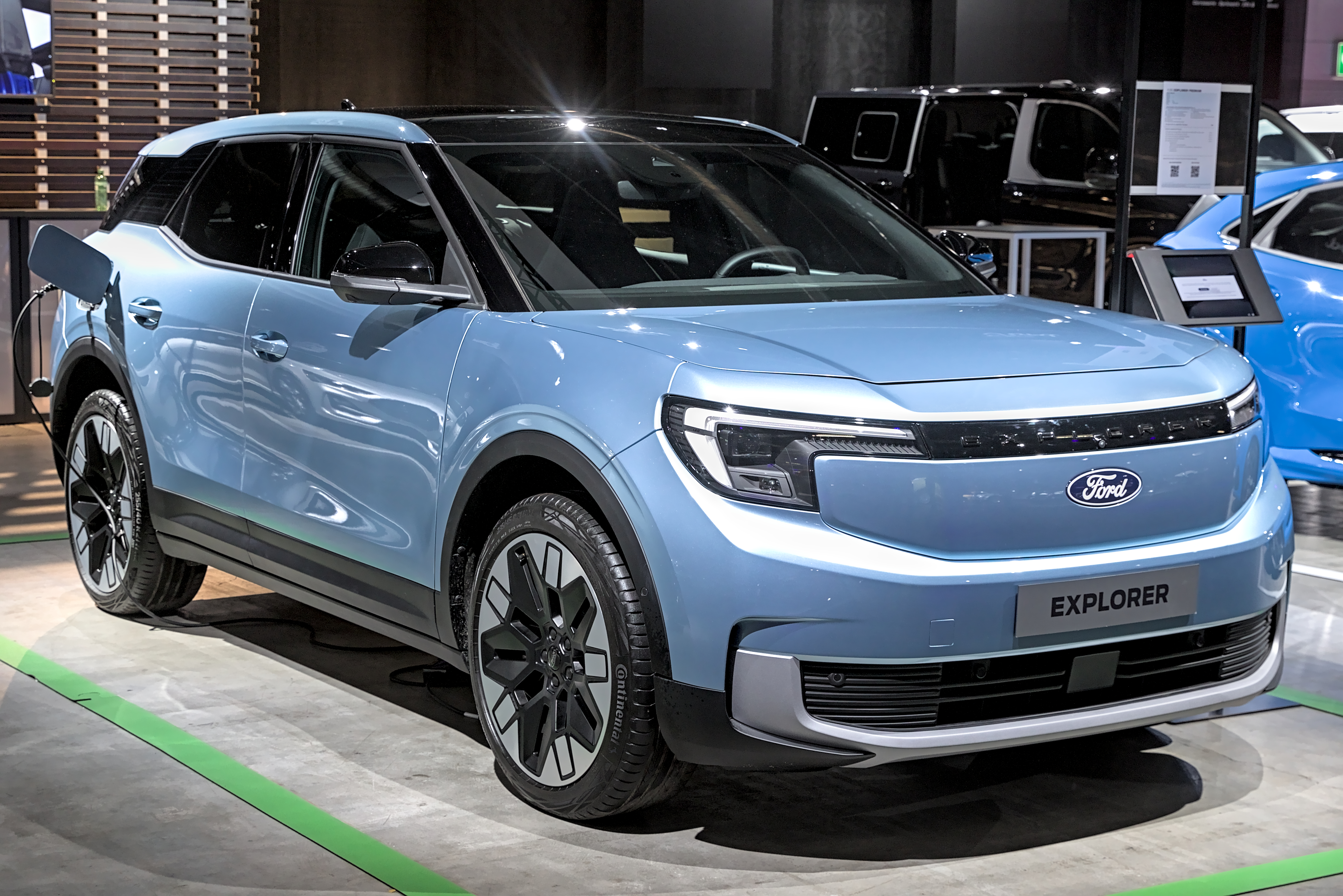
This is underpinned by Explorer parts.
Ford Explorer is a unibody chassis.
So there is not a body on frame.
Those things are nice too.
Ford's doors are nice too.
They are.
And this is obviously the gussied up version of the electric, I like to call it.
What I liked about the ride and handling, superb adaptive suspension.
It was smooth, baby.
What could use improvement?
Competition from Cadillac.
I was going to say this one rides like a Cadillac, right?
Why didn't you ask me?
I don't know.
You say that.
Why doesn't Cadillac have a competitor?
Well, the term comes from bad the luxury Cadillac at the beginning.
Of course.
No, I got it.
That's just an old saying.
No, I get it.
But no, I like this.
I do too.
I like it a lot.
Not so sure about the price though.
You might not like that.
Okay, let's go.
Base trim price, of course, is top of the line.
85, 170.
Price is tested, 88, 495.
Mars has got one on order.
Base model price, the entry level price on this aviator, 52, 238.
Competitors, let's put the Lexus GX up against it for $64,735.
The Acura MDX 51-8.
Now remember now, we're talking about base prices.
Base price on the aviators, 52, 238.
The Balbo XC90, also a competitor, $61,050.
Wow.
You know, you talked about the self-driving aspect of it and eyes on the road.
My vehicle's got a feature where, when you wear sunglasses and things, it'll tell you,
hey, keep your eyes on the road, the little thing will flash up on the screen.
That's not part of the self-driving.
It's just a different feature that they put on.
Well, I have a 10-seat to drive with my hands at 12 o'clock.
Well, even when I got my eyes open, I got it there.
And it'll block a lot of that and it'll tell me to keep your eyes on the road.
All I've got to do is move my hands to the proper one and three position or whatever.
Yeah.
And it's very irritating.
Do you still have a driver's license?
The state of Texas gives you a driver's license, Mark?
Well, we need to move on to the next segment.
Has it been suspended or something?
No.
Not yet.
Not yet.
Not again.
Not again.
Hey, I had so many tickets growing up, the cop and I were on a first name basis.
About this episode
A detailed review of the 2025 Ford Expedition and 2026 Lincoln Aviator highlights their features, performance, and design. The Expedition, based on the F-150, offers various trims with a rugged trimmer package, a powerful EcoBoost V6, and a spacious interior, though fuel economy could improve. The Lincoln Aviator impresses with luxury and comfort, featuring a smooth ride and advanced tech, but also faces criticism for complicated controls. Additionally, the episode explores sleeper cabs for long-haul trucks and unique auto museums worth visiting.
Big SUVs promise comfort and power, but where do they land on efficiency, tech, and day-to-day usability? We took the 2025 Ford Expedition Tremor and the 2026 Lincoln Aviator Black Label on extended drives to find out. From grille details and cabin storage to third-row realities and highway manners, we dig into what these family haulers do well and where they fall short.
The Expedition Tremor leans into body-on-frame muscle with a 3.5L high-output EcoBoost that churns out 440 hp and 510 lb-ft. It tows, it cruises, and it rides like a stretched limo, yet parking-lot pivots and fuel economy remind you how large it is. We break down pricing against the Chevy Suburban, GMC Yukon XL, and Toyota Sequoia, and talk honestly about the need for a hybrid solution that preserves torque without draining wallets.
Then we switch lanes to the Aviator, a unibody luxury SUV with a clean, tuxedo look and a plush Black Label interior. The twin-turbo 3.0L V6 delivers V8-like thrust while adaptive suspension keeps the cabin calm. We cover real-world mpg, third-row practicality, and why some steering-wheel controls and driver-monitoring prompts still distract more than they should. Consider this a straight-shooting guide to what matters when you’re choosing between truck-tough and luxury-smooth.
We also step into life on 18 wheels, comparing sleeper cabs from Peterbilt, Kenworth, Freightliner, Volvo, and International—highlighting comfort, customization, and the fuel-sipping tech that keeps drivers happy and fleets profitable. To round it out, we map a few winter-ready Texas car museums that deliver serious automotive inspiration, from Chaparral race legends to Americana-filled collections.
Enjoy the ride? Follow the show, share with a friend, and leave a quick rating—what would you pick for your next long haul: torque-heavy SUV or hybrid luxury?
Disclaimer: This post contains affiliate links. If you make a purchase, I may receive a commission at no extra cost to you.
---- ----- Want more In Wheel Time car talk any time?
In Wheel Time is now available on Audacy!
Just go to Audacy.com/InWheelTime where ever you are. ----- ----- Be sure to subscribe on your favorite podcast provider for the next episode of In Wheel Time Podcast and check out our live multiplatform broadcast every Saturday, 10a - 12nCT simulcasting on Audacy, YouTube, Facebook, Twitter, Twitch and InWheelTime.com.
In Wheel Time Podcast can be heard on you mobile device from providers such as:
Apple Podcasts, Amazon Music Podcast, Spotify, SiriusXM Podcast, iHeartRadio podcast, TuneIn + Alexa, Podcast Addict, Castro, Castbox, YouTube Podcast and more on your mobile device.
Follow InWheelTime.com for the latest updates!
Twitter: https://twitter.com/InWheelTime
Instagram: https://www.instagram.com/inwheeltime/
https://www.youtube.com/inwheeltime
https://www.Facebook.com/InWheelTime
For more information about In Wheel Time Podcast, email us at