Dealer floor plan costs are the fees that car dealerships pay to borrow money for the cars they have on their lot. Instead of buying the cars outright, they finance them, which costs money over time.
The average asking price for cars is how much most dealerships are asking for the cars they sell. It gives you an idea of what you might expect to pay when buying a new car.
The Hyundai Genesis is a fancy car that feels really nice to drive and has lots of cool features. It's a good option for people who want luxury without spending too much money.
Days supply of inventory means how many days a car company can keep selling cars with the stock they have. If they have too many cars, it can mean they are not selling well.
The Toyota Land Cruiser is a big, tough SUV that can handle rough roads and off-road adventures. It's also comfortable and has nice features, which is why many people love it for both trips and daily driving.
A seller's market is when there are more buyers than there are products to sell. This means sellers can ask for higher prices because people want what they have.
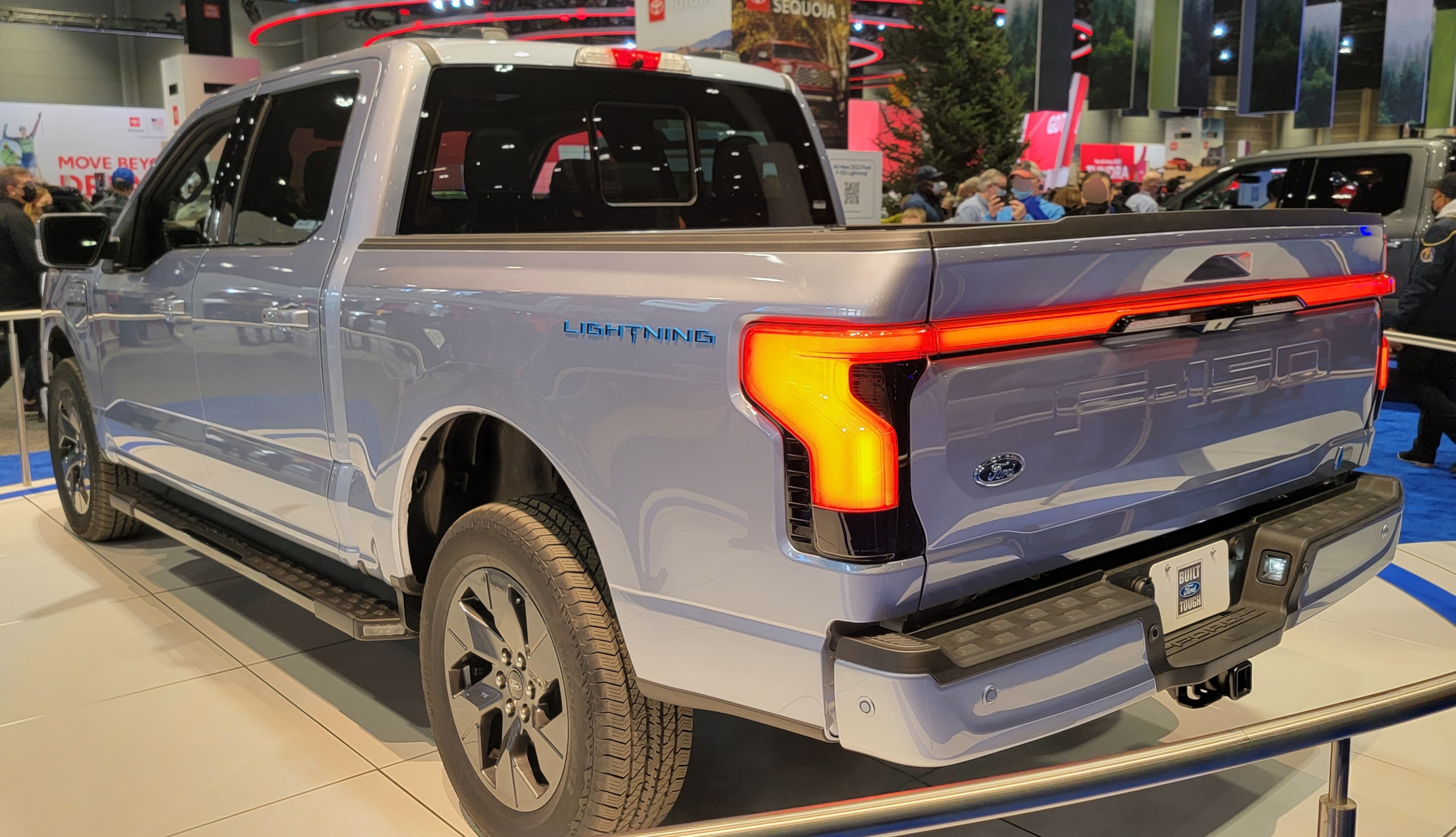
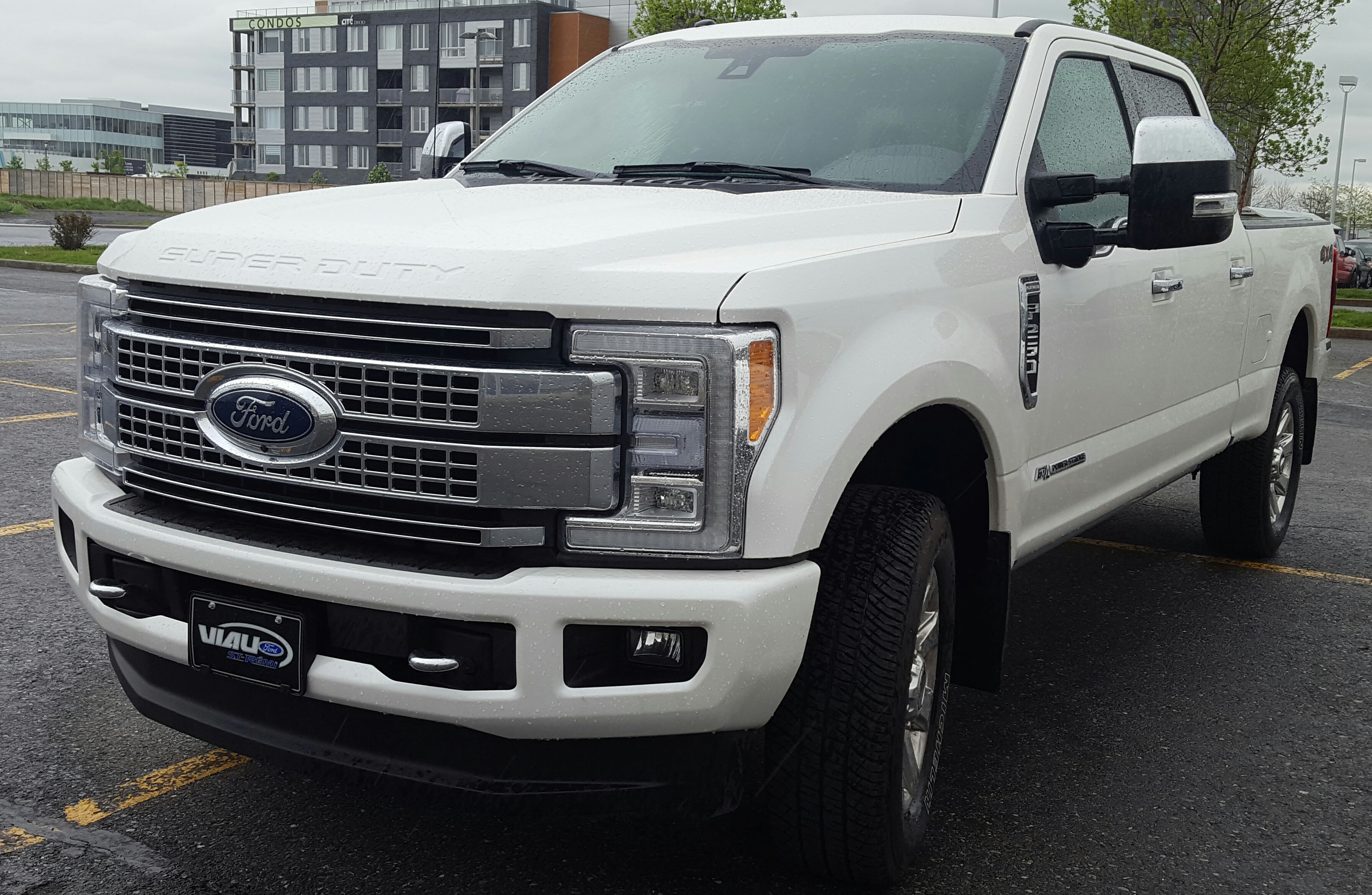
The Ford Bronco is a strong SUV that can go off-road and handle tough conditions. It's been redesigned recently, making it popular for people who love adventure and want a cool-looking vehicle.
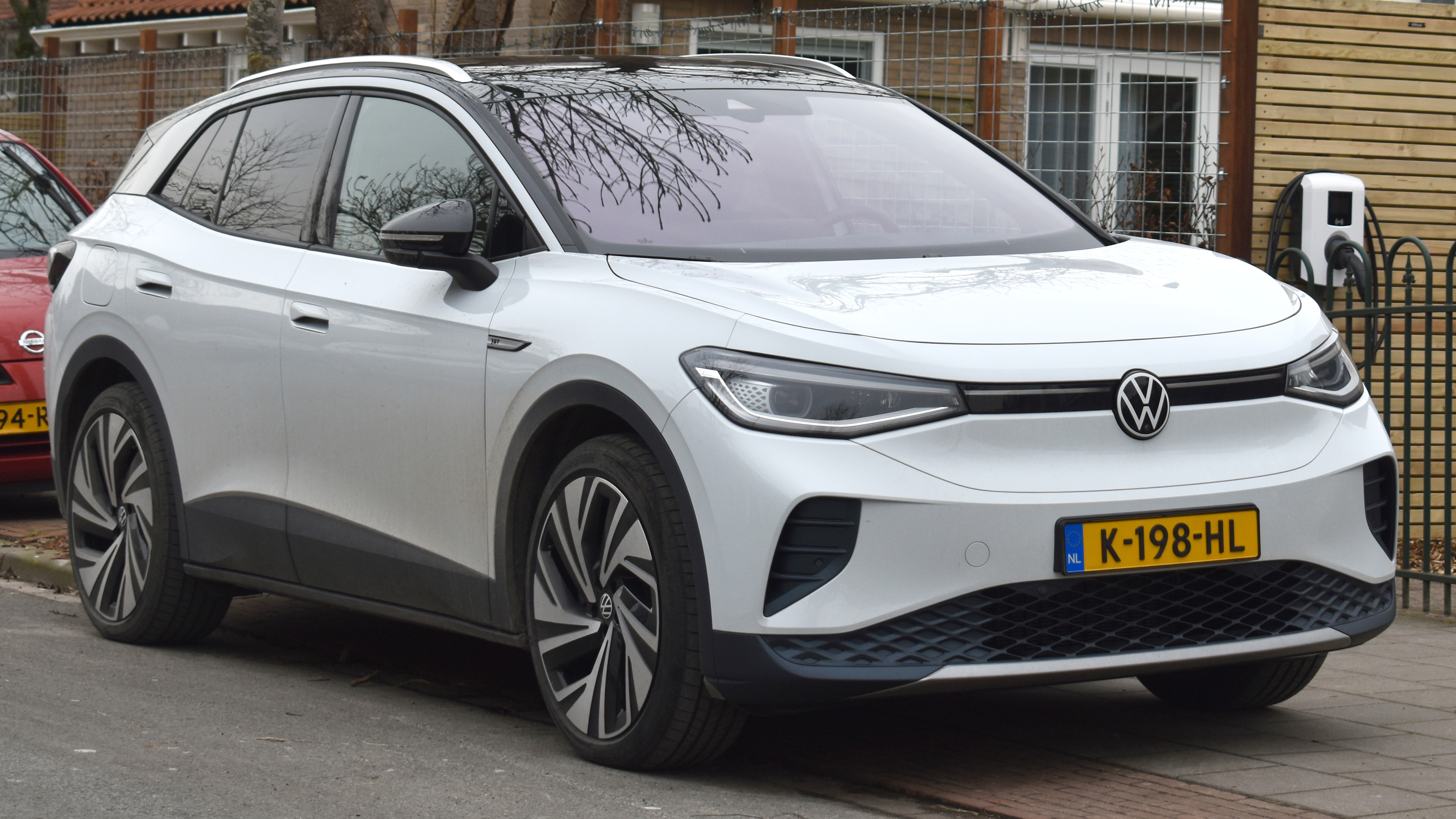
The Volkswagen ID.4 is a new electric SUV that runs on batteries instead of gas. It's designed to be roomy and has the latest tech, making it a great choice for people looking to go green.
EV sales are about how well electric cars are selling. They are becoming more popular, but there are still some problems that make it hard for people to buy them, like needing places to charge them.
The Grand Cherokee is a bigger SUV from Jeep that combines luxury and off-road abilities. It's designed for comfort while still being tough enough for adventures.
The Subaru Forester is a small SUV that can drive well in bad weather because it has all-wheel drive. It's great for families and people who like to go on adventures because it's roomy and safe.
Realized value is how much a car is actually worth when you return it after a lease. It might be different from what was expected, which can affect what you owe.
Excess wear and tear means any damage to the car that is more than what is considered normal. If you return the car with too much damage, you might have to pay extra fees.
The out-the-door price is the total amount you pay for a car, including all taxes and fees. It tells you exactly how much you need to spend to buy the car.
The Honda Prelude is a two-door car that is fun to drive and looks sporty. It's well-liked because it combines good performance with Honda's reputation for being reliable.
A protection package is a set of extra services or products you can buy for your car to keep it safe and looking good. It might include things like special coatings or warranties.
Additional dealer markup is when a car dealer charges more than the suggested price because they think the car is in high demand. This means you might pay more than what the manufacturer recommends.
Bait and switch advertising is when a store advertises something at a low price to get people in, but then tries to sell them something more expensive instead. It's considered dishonest and is illegal in many places.
LIVE
It's live here in Ventner City, New Jersey, and our nation's capital, or might it be
St. Louis, Missouri.
And this is Car Edge Live for Thursday, January 22 with your host, me, Ray, here in Ventner,
and Zach Wells, somewhere in America.
And yes, we're back, ladies and gentlemen, and we do apologize for being away for nearly
a week.
But some things are out of our control.
How are you today, handsome?
Bops, just a couple of things.
One, you said it's live, not it's noon.
So I don't know, double check that, rewatch the tape when you get a chance afterwards.
We've got to work on your intro.
Two, check your internet, man.
It's been a week, buddy.
I forgot how the intro goes.
It's noon here, or it's live.
I don't know.
We'll have to work on that.
And check your internet after today's show.
You're freezing up on us a couple of times here this morning.
I hate to put you in that predicament, but we can hear you, OK.
Now, here's the deal, folks.
Today, our show is brought to you by CarEdge.com.
We're going to be talking about Ford, Volkswagen, Jeep and Mazda and how they can't lower prices fast enough.
We've got the latest data from Cox Automotive that we're going to run through here in just a second.
A friend, the reminder, CarEdge.com is the website my dad and I started six years ago, and we're
offering a little end of month promotion, $250 off our car buying service, 25% off CarEdge Pro,
and we've got $250 off the extended warranty back over there by fair on the website as well.
So check out CarEdge.com.
We're seeing here in the chat, dad.
Video looks good for you.
So it must have been on my end.
Sorry, y'all, the WeWork bill.
Maybe I didn't pay it this month, dad.
The latest new car inventory data, new vehicle inventory contracts as industry enters Pivotal 2026.
Now, we're going to pick on a couple of automakers here, Ford, Volkswagen, Jeep and Mazda in a second.
But there's actually a really surprising undertone to all of this, which is the day's supply of
inventory and the total amount of new vehicle inventory actually contracted significantly
at the end of last year heading into this year.
So what's your overarching readout on new vehicle inventory?
And then we're going to hone in on Ford, VW, Jeep and Mazda in just a second.
Well, let's say if the manufacturers paid any attention to the pundits at all,
they understand that we are expected to see a decline in new car auto sales in 2026 from,
they're saying somewhere from 16.2 million in 2025 to perhaps between 15.5 and 15.8 million in 2026.
Well, if you believe that to be the case, and I believe most of the manufacturers do believe
that to be the case, then you're going to plan your inventory accordingly for the first quarter
of 2026. Not uncommon for inventory levels to be significantly lower in January and February,
simply because they're the two slowest selling months of the year.
So why would you want to burden your dealers with the added cost of having to carry the
interest charges on excess inventory? So the fact that the inventory has dropped
doesn't surprise me. What would be a surprise is what happens come March 1st when we get into
spring selling season. I want to dumb it down a little bit that if you don't mind. So you're
talking about why would they increase the burden of interest costs? You're going super deep.
Let's start a little bit higher if you don't mind. So you're saying it's actually not a surprise for
inventory levels to contract in January and February because manufacturers expect to sell
fewer cars. That's what you're trying to say here? I thought that's what I articulated,
but perhaps not. Yes, that's what I'm trying to say. So then why would automotive, excuse me,
why would Cox Automotive here, Dad? They're showing that this is the largest market day
supply drop that we've seen in recent memory. This is not normal is what they've quoted out here.
Let me find it. Give me one second here. Down sharply from 92 days, inventory fell precipitously,
decline of nearly 8%. Whether the reduction reflects deliberate production discipline,
robust holiday sales or supply chain constraints leading into the new year. I mean,
they're making this sound like, Dad, this is much more significant than not wanting to overburden
dealers with inventory. Well, I think the key there is I think it really does reflect
deliberate production discipline. You would be hard-pressed if you are in the automotive industry
to not understand the implications of what we saw in 2025 as far as pricing and where things
were headed. And every talking head, every pundit, every forecaster in the automotive sector
has said new car sales are going to decline in 2026. And I think the manufacturers are well aware
of that. And I think they've planned accordingly for that. Now, will it come back to bite them?
I don't know. Is it the biggest decline we've seen recently? Perhaps, but if your business
model suggests that sales are going to decline, then why wouldn't you be preparing for that?
And why wouldn't you allow your inventory levels to decline?
So, now what's interesting, Dad, is some brands, we look at this every single month,
some brands are better at inventory discipline than others. So, okay, if you all agree with my
Dad, I'll go along with it here. So, the reason that we saw month over month a significant,
I mean, we were at 3 million new cars in dealer inventory at the beginning of last month. Now,
we're at 2.77 million. This day's supply, which again, I want to dumb things down a little bit
here, Dad, not because our audience needs things dumbed down, but because the simplification
of this makes it helps me make more sense of it. 76 days supply means it would take 76 days to sell
all these 2.77 million new cars in inventory right now based on current sales rate and how
much inventory there is. That was 92 last month. The higher that number is, the more
leveraged consumers have, the more pain the auto industry is feeling. So, again, we saw huge declines
month over month in terms of inventory levels and how much pain the auto industry is in.
This actually starts to look more like a seller's market than a buyer's market, these latest numbers
that we have. Well, then look at things based on each manufacturer. That's where we get into
Ford Volkswagen Jeep and Mazda not being able to lower prices fast enough because when we look at
that day's supply number broken out by brand-dad, you can see Volkswagen has a 143 day supply of
inventory over there on the right. Jeep has a 130 day supply of inventory, 4 to 96 day supply of
inventory, Mazda a 93 day supply of inventory. Now is probably a great time to mention that
tomorrow Joe Lewis from JC Lewis Ford and Mazda will be joining us to talk about how his year ended
up and what's going on in his neck of the woods. But dad, this would then demonstrate that these
brands did a worse job to your point around inventory management and those dealers are
sitting on inventory, which brings us all the way back to the way you originally framed this,
which is dealer floor plant costs, which obviously cost dealerships money. But let's explain that.
Yeah, let's start simple. We're just getting back into the groove here.
Well, let's realize that dealers do not pay cash for their new car inventory. They finance
it just like you and I, okay? They get a slightly better way because, well, they're financing
probably between $5 and $15 million. And you know, the average asking price for cars today
is pretty close to $50,000, which means that the average cost for the dealership to finance that
car sitting on the lot after the assistance from the manufacturer goes away is probably pretty close
to $500 a month. So the more cars you have sitting for an extended period of time,
the higher your costs are for carrying that inventory. So yes, some manufacturers,
and this has been true forever, some manufacturers do a much better job of producing what is needed
as opposed to producing, period. And Ford, Volkswagen, Mazda, Jeep, Ram, they've been up
up and to the right on this chart for the longest period of time now. And that is a
significant issue for their dealer body, as opposed to say at Toyota, where they're like at a 28-day
supply, where the cost of carrying inventory is negligible. So this is really, I'm pulling up
e-course comment here, Zach, lower supply equals stronger sales. Some brands looked at Toyota and
are now taking the Toyota strategy straight from their playbook. I completely agree with this.
So there are certain brands, Ford, Volkswagen, Jeep, Mazda, pretty much every brand to the right
of that green line on the screen. So Genesis, Subaru, Accurate, Dodge, Kia, Mazda, Nissan,
Hyundai, Ford, Buick, Ram, Jeep, Lincoln, Mitsubishi, Mini Volkswagen, and Chrysler all have a higher
days supply of inventory, meaning again, the higher that number is, the more pain the automaker is in.
Now, to the left of that line, those would be the brands that have a better management of their
inventory levels, which is again, your point earlier in the show, that those are the manufacturers
who just are more dialed in when it comes to the vehicles that they're producing. And so Lexus,
Toyota, Land Rover, Honda, Infiniti to a degree, BMW, Porsche, Chevrolet, Cadillac, Mercedes-Benz,
GMC, they all have a lower days supply. And ultimately, those dealerships are in more,
they have more leverage walking into this new year.
Yes, yes, the lower your day supply, the more of a seller's market it is, the higher your day
supply to the right of the 76, which is the national average, the higher your day supply,
the more of a buyer's market it is for those brands. So let's phrase it this way, if you are
looking to get a great deal, not necessarily a great vehicle, but a great deal, meaning a
sizable discount, the likelihood of that happening is with brands that have an excess or over amount
of inventory, and it is less likely to happen with the brands that have a limited supply of
inventory. If you want quality, and many of the brands that have a limited supply are known as
quality brands, especially Toyota and Lexus, you're going to pay more for that quality and probably
not get quite as good a deal as you could if you were looking at a Volkswagen or a Mazda at this
particular point in time. Now, that being said, Dad, I want to talk about the implications of
production strategy going into 2026 because a lot of vehicles are left over 2025. So the next
place I want to look here is I actually want to go to the car edge car search and on the car edge
car search, I want to look at how many leftover vehicles do we still have out there. So I'm going
over here, new cars, I want to go to 2025. We still have 746,628 left over new cars for sale
nationwide right now. So it doesn't matter how materially these manufacturers are restricting
the production of new vehicles, they still have three fourths a million old leftover vehicles
out there. And that's where the Fords, the Volkswagen, the Jeeps and the Mazdas are really
running into trouble right now as they overproduced for 24 and 25. And those leftover vehicles are
now lingering into 2026. That's where the prices have to come down significantly. We're almost at
the end of January already. You can't afford to have vehicles sitting around that long.
No, you can't. And what that shows is that approximately a little less than 25% of on-hand
inventory are leftovers. And so if you are the consumer that wants a deal, savings, a discount,
well, you should be able to get that on the nearly 750,000 leftovers that are available.
Obviously, some dealers will work more closely with you than others. But those are vehicles
that there is a motivation to get rid of them. They are not going to get more valuable as we
get deeper into 2026. Customers are going to want even more significant savings on those 2025,
say, in April, May, June. You don't want them hanging around. So the dealers need to get rid
of those now. So if you are somebody that's after discounts and significant savings,
and you really wanted a 2026, if you want those discounts and significant savings,
you probably need to be looking at a 2025 and you very well could end up getting the discounts
that you're looking for. So let's do a little bit of live experimentation. You know I love to do
this. So let's come back over here. So I called out Ford, VW Jeep, and Mazda today because, again,
the latest data we have on the new car inventory situation shows those brands well over to the
right on this chart, which is the day supply of inventory. So let's come here, Dad, and let's
start with Ford. We don't need to be searching nationwide. Let me change that really quickly.
We'll just do within 100 miles of Boys Town, Nebraska. That's where we are today. So let's
look at that. It's some of these vehicles that have been sitting around. 121 days on the market for
this $85,000 platinum, 94 days on the market for this Ranger, which is only $40,000. Another F-150,
101 days on the market, $79,000. So there's a bit of a theme here that many of these are expensive,
and you can see, here's a perfect example of one, 253 days on the market, but 4,000 miles. This is
a service loaner that the dealership has found a way to repurpose. Here's an F-250 that the
dealership has found a way to repurpose. So these vehicles, Dad, that are leftovers, they obviously
have high price points, but also seemingly many of them not only have been sitting for a while,
but they've also been put into service loaner use. At least that's what I'm noticing on first
glance here for Ford. It appears in many cases they have. Most people don't realize how much of
their personal information is being bought and sold every day. Data brokers are making billions,
pulling details about you from public records and the internet, then packaging and selling it,
usually without your consent. That's how your information lands in the hands of scammers,
spammers, even stockers. It's why you get endless robocalls and why ads seem to follow you everywhere.
That's where Aura comes in. Aura actively removes your data from broker sites and keeps it off.
They also instantly alert you if your information shows up in a breach or on the dark web,
but Aura goes beyond data protection. With one app, you get a VPN, antivirus, password manager,
spam call protection, dark web monitoring, and even up to $5 million in identity theft
insurance, all backed by 24-7 US-based fraud support. Other companies might sell just credit
monitoring or just a VPN. Aura gives you all of it together at the same price
competitive charge for just one service. Start your free trial today at aura.com
slash secure. Protect yourself now at aura.com slash secure.
That's not to say that you can't get a good deal on a service loaner. In many cases, you can. Those
vehicles have been written down. They've been depreciated since they were first put into service
loaner fleet so that the dealer A owns them for less than an absolute brand new one with zero
miles on it. Oftentimes, as a retired service loaner, they have an extended warranty from the
manufacturer that's available to help make up for the 1,300 miles in the case of that Ford Bronco
4-door. That's on the Ford side. The other automaker that I called out to add would be
Volkswagen. We know Volkswagen has the slowest selling car in the United States of America
right now, the ID4. Let's take a quick peek. This is within 100 miles of Boys Town, Nebraska.
We've only got 73. I'm going to open this up a little bit. Let's see within 500 miles. Here we go.
What are we working with here? Tiguan's, 124 days on the market, 162 days on the market,
a Jetta, 207 days on the market. These are relatively affordable vehicles. That is a relatively
low price point, but still not selling. I'm interested here. Look at this ID bus. Wow,
this is fascinating. Actually, let's click into this one. Let's spend a second because we know EVs
are slow selling now in a post tax incentive world. MSRP of $62,280, Dad. The dealer's advertising it
for $49,780 even though the invoice price is $59,789. Drum roll, please. None have sold in the last
45 days in this area. This one's been sitting for 382 days. This is, Dad. This is the perfect
example of Volkswagen can't drop the price fast enough. Yeah, this is a perfect example of building
what it is that people don't necessarily want. It is a damn cute-looking vehicle. Okay, to remind us
of the old VW bugs, not bugs, the buses, the other bands. So yeah, it's got some relatively
cute looks to it, but apparently that doesn't match up with what people are looking for.
We know EV sales are tough to begin with, and many of Volkswagen's EV products
have been slower selling than a lot of their competitors. But yeah, you're right. This is a
vehicle that you can't seem to get the price low enough to get somebody interested enough to buy it.
382 days. That seems like a long time. It recently celebrated a birthday.
Yeah, hopefully it comes with cake and a candle.
Hopefully it does. Okay, so that's Volkswagen's. So now let's go back here. What was the other
brand I called out? Jeep. So let's pull up Jeep. Let's see what's going on. Holy cow. Look at that.
12,790 leftover Jeeps. Within a 500 mile radius, yeah.
Yeah, within of Boystown. And again, price point here, time on market, the Cherokee L,
74 days on market, $67,000 vehicle, the Grand Cherokee, Grand Cherokee L. Let's look at a
few more of these here. Actually, for Jeeps, not too terribly expensive. Many of these under
$50,000, but that is just another example of vehicles sitting for months on end that aren't
selling. It's a perfect example of why, if you, to your point earlier, you can get a better deal
on many of these vehicles than you can the brand new 26s. And again, it goes back to your point.
We'll look at Mazda in a second here. Production management. Well, you can't go back in time.
You can't unproduce these prior model year vehicles. They've already been produced,
invoiced and sold to dealers. I'll pull up Mazda really quickly here. There's over 5,000 leftover
Mazdas for sale right now, 147 days on the market, 179 days on the market, 139 days,
147 days. There's just such an incentive. Because again, if I get rid of the, let's do this really
quickly. So there's 5,346 leftovers. What about, let me do this. Whoops, I want this to actually be
2026. We've got 13,000 non-leftovers. So that's a lot of leftovers, man, that they still haven't
sold yet. Yeah, that's 25% of their inventory. Okay, if you take 13 and add the 5, so yeah,
25% of their inventory. It is crazy. So some manufacturers do a much better job than others.
And we know when we were looking at Jeep, for example, in 2025, I believe Jeep sales were
actually up year over year for the first time in five or six years. And yet they are still inundated
with way too many Jeeps at too high of price points. And I know Jeep internally is trying to
address that and to earn back some market share and some customer loyalty. And the reason they
lost customers is they went too upscale too quickly and their customers couldn't go along
for the ride. Or they didn't feel like getting taken for a ride, one of the two.
So in many cases that a lot of these manufacturers, even though the initial data suggests that as
we head into the new year, there's less inventory and a lower day supply, which again is a net
negative for consumers. Many of these manufacturers, it's much more nuanced. Many of these manufacturers
are already actually, they're in a bad position headed into 2026 because these leftover 25s
have been sold. It doesn't matter if you're a Jeep and you've realized now that you've overpriced
your vehicles, it takes a long time to turn these big ships. And so the new vehicles that do come
to market, it's going to be later this year. So I think it's a really important conversation to
understand for many of these brands, which again, Cox Automotive is the one, they're the industry
conglomerate, they're the ones that put out this data. All the brands to the right of that green
line, those are the ones where as consumers you have more leverage, it is significantly more
nuanced than that. That's why we have the car edge car search. And for example, again, this is Boys
Town Nebraska, you can look and see what type of leverage you have on any vehicle. So in this
particular one, you do have strong leverage because look at the days on market, look at the
market day supply, look how many are selling right now in this particular market area.
This is the type of research that needs to be done before making outreach to a dealership because
many of these brands, for example, that one, they can't lower their prices fast enough. The car has
already been produced, it's already been invoiced, it's already accruing a floor plan cost, they
got to get rid of it. Yes. And it appears from the numbers, the 2.77 million. It appears that many
of the manufacturers have decided to take a much more conservative approach for the first quarter
of 2026 to literally see where we are at. As we know, many of the manufacturers have discussed
their affordability crisis. Some have said that they're trying to address that. And I guess what
we all need to wait to find out is if their actions match their words, if we actually see them
start producing and start marketing the lower priced vehicles that might tend to be more
affordable or have they decided that they can make tidy enough profits just selling, say,
15.8 million new cars a year as opposed to 16.5 to 17 million new cars a year. So I just think
most of them have taken a somewhat conservative approach for the first quarter.
Let's come here to the chat we've got from LEGO Joe. We appreciate the current contribution. Thank
you so much. $199 lease special for a 2025 Subaru Forest during Denver's small print quote.
Let's see maybe responsible for additional charges at the end of the lease term based
upon the difference between the residual value and its realized value. Is that absurd?
It is indeed. The residual value is what the lease is based, is one of the factors off of
what the lease price is based off. And you are not responsible for the difference between the
residual value and what they're calling the realized value. Those type of leases went away,
I don't know, in the 80s, maybe the 90s. So yeah, that is an unusual phrasing for a lease.
The things that you wouldn't be responsible for are any excess wear and tear and any mileage
overage that you might have incurred. But if the residual value isn't worth the
real value at the time, if the residual value is higher than the real value, that's not your
responsibility. That's the leasing company's responsibility for setting the residual where
they set it. Yeah, absolutely. Now, Dad, let's go ahead and play our favorite game. Let's do our
first check-in for the recall counter in 2026. Any guesses in the chat who is leading the
league in recalls thus far in 2026? Well, we're three weeks in and somebody averaged
three a week last year pretty close. So I'm going to say Ford is sitting at nine recalls already.
And perhaps a Stalantis brand of some kind is in second place.
Okay, so it's not quite nine, but Ford is currently leading with three recalls thus far
in 2026 Rivian at the number two spot. I don't see Dad's Stalantis on this list yet. So four
Dad with three recalls. One of the more recent ones here impacting 116,000 vehicles, heater risk,
119,000 vehicles as well. So yeah, lots of vehicles already being recalled thus far in 2026. Some
things continue to go the way we think. Some things never change. Recalls at Ford seems to be one of
them. Yeah, it really does. Now, one other thing that I want to bring up today, I looked at some of
our OTD quotes that we've been able to capture for customers. Again, if you're interested back
at CarEdge.com, we help people get out-the-door price quotes all day long to help them get a fair
car deal. This was one I found recently, Dad, that we got for a customer. Look at this. This is for
a Honda Prelude. You've got an MSRP of $43,195, a dealer discount of $10,000, and then a $15,000
protection package. Just like what's going on here? I am guessing that that must be like a
diamond-encrusted condom for a car. What kind of protection package can you get for $15,000?
I'm assuming that the real MSRP on that vehicle is $43,195. I know that the Prelude just coming out
again. Many dealers are charging additional dealer markup on those because there seems to be a market
for that car. This is a dealership that obviously wants to say, yeah, we'll give you a big discount,
but ultimately, you're going to pay $5,000 more than MSRP for the vehicle when we're done with our
protection package that goes on every Prelude that comes in. Just absolutely nuts that. Yeah,
this vehicle is still actually actively for sale. We got this quote for this customer back on
Christmas the day after Christmas on the 26th, and it's still for sale. It's been there for 57 days,
and you want to know what state it's in. It's in Florida, but yeah, it's just a crazy way to
advertise inventory. We're going to offer it for $10,000 off, which actually did. Their online
advertisement just has the MSRP. It's just nuts, man. We're going to charge $5,000 over MSRP, but
don't you worry because you're getting $10,000. It's the lunacy of buying a car. The importance
of why you get out-the-door price quotes, you get real prices before you go to the dealership.
Again, we do this back on the website. You can call the dealership, etc., but get the real price
before you go. It's not worth wasting your time. It is yet another example of how car dealers treat
their customers and why their customers hate them. It's not like
you see a shirt advertised at Coles for $29.95, and then when you go in and they tell you,
well, they have the upgrade package, and that's another $15. I did an interview, a radio interview.
It was with a gentleman in Boston on WBZ. We were talking about bait and switch advertising
for dealerships, and he said to me, he said, you would just think that that's got to be
illegal. As I said to him, absolutely it's illegal. It's just not enforced because the consumer affairs
divisions of your state attorney general's office just typically don't have the staff
to be able to go around and enforce all the infractions that they see. It would be nice if,
as an industry, dealerships would say, enough of this. We don't want to play like that anymore.
We shouldn't play like that anymore. It's not the proper way to play. At this point,
there's not enough dealers that are willing to do the right thing. Because of them,
we will be in business for a very, very, very long time, and I probably should thank them all
from the bottom of my heart. Thank you, dealers, for your crazy pricing antics that keep us in
business. A friend and reminder, folks, caredge.com. If we can assist you with car shopping,
selling a vehicle, anything in between, we love that opportunity. We are offering a promotion
for a few days here on our car buying service in Car Edge Pro. Again, I mentioned it a second ago.
Get the out-the-door price. Get the out-the-door price. That is absolutely the most important
thing when it comes to buying a car. We can get you that out-the-door price back at caredge.com.
Pops will be back doing this again tomorrow. Grateful to be with everyone. Joe Lewis from
JC Lewis will be with us, so please tune in for that. We'll have a normal schedule here for at
least a little bit. Then, Dad, I actually need to update you. I am traveling a bunch more over
the coming weeks, but whatever. We'll figure it out. Much love, Pops. Enjoy the afternoon,
and I'll see you soon. Love you as well. Thanks everybody for being here. We'll see you back here
tomorrow. If you liked the show, please take a moment to rate, review, and subscribe. It really
does help the show to grow. Thank you for listening.
About this episode
Ford, Volkswagen, Jeep, and Mazda are struggling with high inventory levels and can't lower prices quickly enough as they prepare for a projected decline in new car sales by 2026. The hosts discuss the latest data from Cox Automotive, highlighting significant drops in new vehicle inventory and the implications for dealers. They analyze how different manufacturers manage inventory and pricing, emphasizing that brands with excess inventory may offer better deals for consumers. The episode also touches on the challenges of leftover vehicles from previous model years and the importance of understanding market dynamics when buying a car.
Today on CarEdge Live, Ray and Zach discuss the latest car sales data and inventory levels. Tune in to learn more! Hosted by Simplecast, an AdsWizz company. See https://pcm.adswizz.com
for information about our collection and use of personal data for
advertising.