Fox Body Mustang. From Indy Pace Car to Cop Notchbacks to 7-Up Fiasco. Serial owner drops facts. Why it matters for OEMs to have long lived nameplates and loyal fans.
Cars The Podcast
Fox Body Mustang. From Indy Pace Car to Cop Notchbacks to 7-Up Fiasco. Serial owner drops facts. Why it matters for OEMs to have long lived nameplates and loyal fans.Cars The Podcast · Jan 10, 2026
The Fox Body Mustang is a version of the Ford Mustang that was made between 1979 and 1993. It's popular for its sporty look and performance, and many people enjoy customizing them.
Baby boomers are people who were born right after World War II, between 1946 and 1964. They are important because they had a big impact on things like car buying when they grew up.
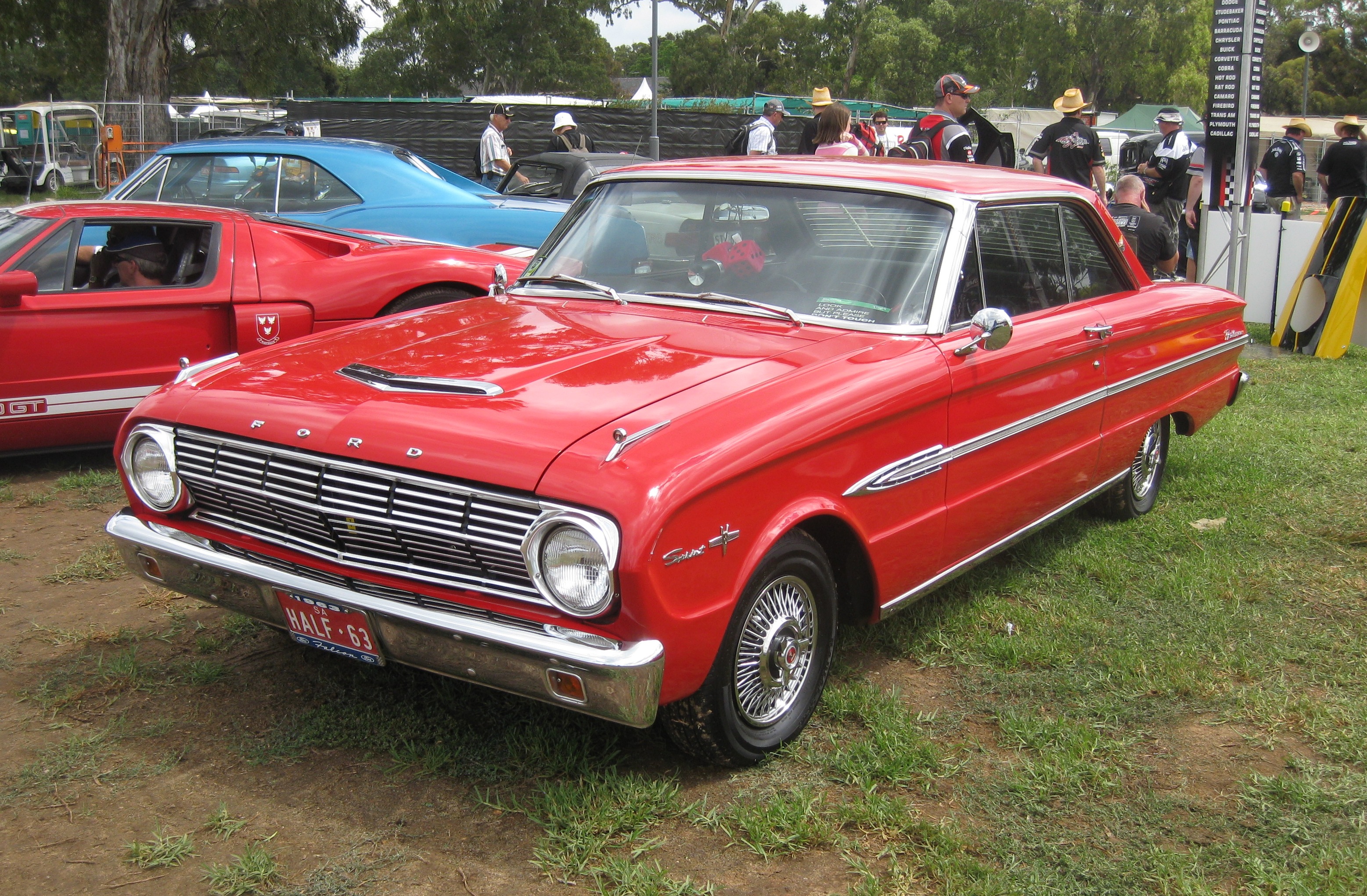
The Ford Falcon was a car made by Ford a long time ago that was known for being light and not too expensive. It was popular in the 1960s and helped Ford create other famous cars like the Mustang. People talk about it because it's a classic car that many still appreciate today.
The Ford LTD II was a big car that Ford made in the late 1970s. It was popular because it had a lot of room inside, making it good for families. People mention it when talking about older American cars that were common back then.
The Ford Galaxie was a large car made by Ford that people used to drive a lot. It was popular in the 1960s and 70s, but not many of them are still around today.
The Ford Fairmont is a car that Ford made in the late 1970s. It was the first car built on a specific platform that many other cars were also built on.
The Fox body is a type of car design that Ford used for many of its vehicles in the late 70s and 80s. It made the cars lighter and helped them perform better.
Five mile per hour bumpers are designed to protect cars from small accidents at low speeds. They help prevent damage when you bump into something slowly.
Integrated bumpers are built into the car's design, making them look smoother and more modern. They are often made from flexible materials that can handle small hits better.
Muscle cars are powerful cars that are usually made in America. They often have big engines and are built for speed, especially in a straight line. They became popular in the 1960s and 1970s.
A V8 engine is a type of engine that has eight cylinders arranged in a V shape. This design helps the car produce more power and run more smoothly, which is why it's often used in fast cars.
A V6 engine has six cylinders arranged in a V shape. It's a common engine type that offers a balance between power and fuel efficiency, making it popular in many cars.
A 2.8 liter engine means the total space inside all the engine's cylinders adds up to 2.8 liters. Generally, bigger engines can produce more power, but they might use more fuel.
A pace car is a car that drives in front of the race cars to control their speed at the beginning of a race or when there's a caution. It helps keep everything safe until the race can start again.
A turbo is a part that helps an engine produce more power by pushing extra air into it. This lets the engine burn more fuel and go faster without needing a bigger engine.
Term
302
The 302 is a type of engine size, specifically a 5.0-liter V8, often found in Ford cars. It's known for providing a good amount of power without being too big or heavy.
The Indianapolis 500 is a famous car race that happens every year in Indiana. Cars race around a big track for 500 miles, and it's one of the biggest events in racing.
The Ford Mustang II is a smaller version of the original Mustang that was made in the 1970s. It was built to be more fuel-efficient and shared parts with another car called the Pinto, which some people didn't like.
The Shelby name comes from a famous car designer and racer, Carroll Shelby. It's often used on cars to show they are high-performance or special editions.
The Dodge Omni was a small car made by Dodge that people liked in the 80s because it was easy to drive and had a hatchback design. It was one of the first small cars in the U.S. and helped make small cars more popular. People mention it because it was different and fun for its time.
'Ford versus Ferrari' is a movie about the competition between the Ford car company and Ferrari in a famous car race. It shows how the two companies tried to outdo each other and the friendships that formed during this rivalry.
Shelby America is a company that makes special, high-performance versions of Ford cars, especially Mustangs. They are known for their speed and racing heritage.
The Ford Mustang GTD is a special version of the Mustang that is built for speed and performance. It's designed for people who love driving fast and want a car that handles really well on the track. People talk about it because it's an exciting option for Mustang fans.
The 1996 Ford Mustang Cobra is a special version of the Mustang sports car that has a powerful engine and a unique paint that changes color. It's a popular car among enthusiasts for its performance and style.
The Chevrolet Camaro is a popular sports car that has been around since the late 1960s. It's known for being fast and stylish, often compared to other cars like the Ford Mustang.
The Ford Taurus was a family car that many people drove in the 80s and 90s because it was roomy and comfortable. It was very popular for a long time, but eventually, Ford stopped making it. People mention it to remember how important it was for families back then.
The Honda Prelude was a two-door car that was fun to drive and looked cool. It was made by Honda for many years and is remembered for being sporty and stylish. People talk about bringing it back because it has a lot of fans who loved it.
The Honda Civic is a small car that many people like because it's dependable and saves on gas. It's been around for a long time and has a good reputation for being a smart choice for drivers. People often talk about it because it's a popular car that many families use.
The Buick Century was a car made for many years that people liked because it was comfortable and easy to drive. It was often chosen by families and older people who wanted a reliable car. People talk about it because it has a long history and is part of Buick's story.
The Ford Maverick is a small truck that Ford started making again recently. It's popular because it's affordable and can be used for many different tasks, like carrying things or driving around town. People are excited about it because it's a new option for those who want a truck without spending too much money.
The Dodge Avenger was a car that looked sporty and was made in two different times, first in the 90s and then again in the 2000s. Some people liked it, but it had some problems with reliability and finding parts later on. People talk about it to remember its unique style and the issues it faced.
LIVE
From the shadows of Mount Rainier, this is Cars, the podcast with your host, Don Swear.
I am Joe Black.
Joe Black, the creator of the empire known as Fast Cars and Freedom Tube on Instagram,
Tiktok and YouTube.
Man, I found out this guy is like a wealth of knowledge.
He's had more Fox body mustangs than I've had cars, I think, if I had Italian up.
17 Fox bodies.
Oh, that's amazing.
79 to 93.
So I'm going to assume our audience knows what that means, a Fox body Mustang.
Yeah, pretty much an Audi Fox.
Yeah, sure.
And that's how it started, you know, with the struts and the suspension system from
boy, you're just from Audi's.
You're pulling facts out of the air here.
That's yeah, I'm assuming you are.
You're probably pulling my leg.
No, it's true.
Look it up, Google it.
Well, OK, I remember seeing you and I are about the same age.
Yeah.
But I remember, OK, the Mustang was a huge hit for Ford starting in the 64.
64, yeah.
And they want to have to be exact because people like to argue and they say
Mustang was the first muscle car, but correct.
Well, this has all been played out before.
But yeah, you know, Leigh Iacocca was a visionary.
He saw that these these baby boomers were who were born starting in 46.
We're reaching age 18.
If I my mouth is right to like buy cars and things, I guess.
And it just turned into a humongous hit.
They had.
I mean, it was just a runaway hit.
And it was a car that, you know, the Mustang was like a Ford Falcon, right?
With a pretty body on it.
But did you know this?
I bet you did not know this.
What?
Because the Mustang came out 64 and a half, which is April instead of August.
So in 65, actually still to this day at that time was the Ford full size cars
outsold the Mustang. No kidding, still.
They in 65, they sold the Mustangs.
Well, the more practical because people wanted those big body cars.
Well, yeah, I guess it was an era where.
You know, you've just a decade before that in the 50s, you when you said a Ford,
you didn't have to say a Ford LTD or a right.
I mean, it was a Ford was a Ford.
There was no choice.
Yeah, it was that body or the pickup.
Give me a 427 big block.
So people are used to owning the big sedans.
Yeah, the galaxies and yet nowadays, I mean, very few of those Ford galaxies
were saved, but we see Mustangs from that era all the time.
Yeah. So fast forward that to.
They went through, I don't know.
I feel like the Mustang got increasingly bigger and heavier
and they kind of lost the plot and the fuel price happened in 70.
Well, the fuel price of the only smaller.
So 73 is when they went from bigger bodies to the smaller one.
They went to the Mustang to 74 to 77.
Yeah, which is derided.
It's it's nobody seems to want those.
Yeah, although they're super rare now because nobody wanted them.
They've been crushed.
Most of them.
Yeah, they want those little shell.
They want those Shelby Cobra, two Mustangs and the ones that they thought
were pretty ugly and what they used to call them is glorified pentose.
Yeah, that's what they were back in the day.
That's what they were now, you know, because they got four lugs, you know.
Yeah, people just want those things now and you can find them.
You can get a pretty good price on those.
So fast forward again to the late 70s.
And Ford had come out with this Fairmont, which was a.
Also a Fox body.
Yeah, because it was the first Fox body, right?
They made several cars off this platform that started with the Fairmont.
And the Mustang was a short and wheelbase version,
quote, sporty version of of that Fox body.
Correct.
And the Mercury also.
And I remember because I was I was quite young then, but I remember
it was a very modern looking car.
It was if people remember cars from the 70s looked really bad.
They had these huge chrome bumpers that legislated by our government to put
these five mile per hour bumpers on cars.
And they all looked, they just looked like tanks, the Malaysia era.
Yeah.
And here was a car that had integrated bumpers, you know,
polyurethane, pretty clean European lines.
But they didn't pay any tribute to the 60s Mustang at all.
Do you ever notice that other than totally different cars?
Yeah.
No recessed headlights and yeah, just totally different.
I mean, even the horsepower wise and nobody wanted to go back to the 60s then.
Yeah, they're like, hey, this is the new age.
This is where things are going smaller.
And but that that era of Mustang went all the way from 79, 78, 79 till 93
and without really much change in the body, which is phenomenal.
Yeah.
Not many cars make it that far without a whole lot of styling changes.
Man, that's success.
You got to keep going with it.
So you let me guess, you're a muscle car guy.
Pretty much.
Were all yours V8s?
All my muscle cars have been V8s.
Correct.
How about the the Foxbody Mustangs?
My very first Foxbody Mustang was not.
It was a V6.
I think it was a 1980 and I had moved to California.
I had a brand new pickup truck at the time, but I wanted a Mustang.
I wanted a hot rod and this one, if you looked at it because it had the whole
Aero package early, so it looked, it had all the Steve saline, you know,
spoilers on it and fender flares and all this other stuff.
It was all in black.
So it was a sheep and wolf's clothing.
Yeah, it was just, I mean, it looked like it was one of those fast Darth Vader
looking car and everything else.
And it only had a V6 in it.
So that would have been like a 2.8 liter.
Yeah.
And I just, you know, and it was automatic and I was just like, I said, hey,
this car looks faster than it is.
I mean, people look at it almost every car back then.
Yeah.
And I was just like, and I, I had it probably for about, I think a year at the
most and yeah, and then I sold it and made some money off of it.
But the one that really caught my eye back then was the, it was the Indy
Pace car in 1979.
And I remember somebody in our neighborhood had a replica or somebody in our
town had a replica, which was, it was black on the lower half.
It was pewter up above and it had all these gaudy stripes and, you know,
had that beautiful, what is it?
Rick, your car interior?
Oh, yeah.
The plaid, it's like a hound's tooth.
Yeah.
But those headrests.
Yes.
With the netting, you could, they were headrests you could see through.
And they also offered that car on a four cylinder with a turbo.
All the way up to a 302, which was not a lot of power, but yeah.
So it was enough power to get around the Indianapolis 500.
With a tailwind.
Yeah, exactly.
Directions, but it's funny to think that, you know, of course, when you're young,
kind of Garris stuff catches your eye more than, than later in life.
Yeah.
I, you know, did a little, a little research and some of it's just come
just out of my head from memory.
But what was the hot cobra or it was a cobra, right?
The hot mustang starting in the late seventies.
Cause they had to have a, you know, a warmed up version.
Wasn't it cobra?
They had the, uh, the Mustang two, like the glorified Pinto,
which had a cobra version.
Yeah.
Shelby Cobra, but it was just a stock 302.
Now that was just all the flares on it, the paint on it and everything else
that looked really good.
Yeah.
But I mean, this is the Charlie's angel you're talking about.
Yes.
Okay.
Exactly.
So now when you're young and you're the name Shelby should have meant something,
but Ford really bastardized the name.
Didn't they, they, they, our companies are so guilty of this.
They take a once historic important name and they slap it on stuff that they're
trying to milk the name for all it's worth.
Yeah.
And that, and there was also, I'm not sure how it worked, but there was also
lawsuits back and forth because it's using the Shelby name at the time.
And then also remember Shelby also went to Mopar and they had a Shelby over
there for the, for like the omnis or whatever they were.
Yeah.
Cause, cause they didn't Shelby have a falling out with, with Ford and, and his
old buddy Lee Iacocca jumped ship to Chrysler.
So that's why, you know, if you've ever seen the movie Ford versus Ferrari.
That's a great movie.
Yeah.
But it, it's long, but you know what, you don't even realize how long it is.
But you understand the friendship that Shelby and Iacocca had and it, it went
from company to company.
Yeah.
It's, you know what, that's true friendship right there.
Yeah.
Look, you leave it.
I'm leaving too.
I'm good.
Yeah.
And so they was, there was lawsuits back and forth.
You can't use the Shelby name and this and that.
And then of course now they have Shelby America in Las Vegas.
And I recall, cause I was impressionable at the time, Ford was going to bring the
GT back Ford Mustang GT, which meant it was the hot version from the,
from the Mustang.
Yeah.
From this, the sixties and early seventies.
I think you, I think you said that what 82, 82, right?
But it had all of 157 horsepower, which sounds laughable now.
You're better than me.
Cause then I, I wouldn't remember that horsepower, but I remember it.
I think what the Mustang has got up to 275 eventually with the Fox bodies.
But that was a jump from the year before when the hottest one you could get was a
4.2 liter with a, I think they said 120 horsepower.
Probably about right.
Which sounds.
It's like you want one now because nobody has one.
Yes.
But back then.
Yeah.
You didn't want one.
But, but what's, what are the memorable Fox bodies you had?
So one of the, my very first Fox body, I told you was the glorified, like it kind
of looked like a Darth Vader kind of car because it was all black.
Even had like tinted headlight covers.
Okay.
Oh, you're that guy.
I just, just the way I found it.
And I bought it cause I was like, okay.
So I didn't really do anything to it except for drive it.
People come up to get their light.
And of course to be revving their engines.
I'm like, I got nothing, man.
Just keep my window up and wouldn't even look at them.
And so 1993, I bought my first GT, which was a 1990 GT triple black convertible.
And it had, you know, it was just beautiful car.
Yeah.
I mean, and the thing was is you and, you and vanilla ice.
Yeah.
But I was just the opposite.
I just was all black.
And so his car was white.
And yeah.
And so it was just like, just a fast hot car that the Fox bodies were known to be
so light.
And I used to work out at Sonoma Raceway when I was going to college.
So I mean, I used to be there for, you know, Thursday night drags, things like that.
And so every once in a while, I'd take my car down the track also.
But you could just build those mustangs, especially if like you ordered like a 1990
notch back minus air conditioning and all these other things.
Basically, you're getting a car that you can just slap on a pair of slicks,
change some gears, and you're in 12 seconds and a quarter mile.
And so to build those, they were just so easy to build.
And they were just like bulletproof cars.
But I had that Mustang for, I think, five years.
And this is just a beautiful car.
And so somewhere along the line, I've just continued to get Fox bodies.
One of my favorite ones that I probably shouldn't have got rid of
was a 92 SSP.
Oh, the cop car.
Exactly.
But here's the funny part about that car.
But what state had it been used in Washington state?
Oh, OK.
And here's the funny part about it was this was used for an insurance company
fraud investigation car. OK.
So please tell me what.
So after so after the patrol had used it, no, no, the company
purchased it just for fraud investigations.
Oh, no kidding. So it wasn't. Yeah.
But it was still it was an SSP model.
Really? Was it just monotone?
Like what color?
So this is to get you.
It was Calypso green.
Oh, my God.
It's like, how do you use a car like that for fraud investigation
that it's undercover that color?
Because sometimes when you do undercover stuff for insurance companies,
it's not just like coming up to you like, hey, I'm going to investigate your car
because we think it was not stolen or whatever the investigation is.
Right.
But sometimes you do have to follow these people around to see what's really going on.
Maybe they figured out somebody working for insurance
wouldn't be driving a car like that.
And I don't know.
But it's kind of like like it sticks out like crazy.
So I can remember buying that car.
It's like the guys robbing it.
You know, if you're going to rob a museum or something,
you wear like bright, you know, construction clothing.
So it doesn't look like you're trying to hide.
Yeah, I'm just the UPS guy.
Yeah, exactly. Give me a big brown truck.
And I'm coming up to your doorstep.
Nobody suspects.
Cross the street.
But so I bought this car.
This was in mid 2000s.
And what it was is those cars only came with one one interior color for those,
which was gray. Yeah.
And so the 3025 speed, is that what it was?
3025 speed.
But this car was built actually a little bit more.
SSPs were nothing special, performance wise, as far as engines, you know.
So what happened was is this guy, he was a soldier.
He came back from Iraq and I saw this car for sale.
And I was like, oh, I said, and I knew by the history of it, what the car was worth.
And so basically he came back from Iraq and he had two kids and his wife got a divorce.
He's like, well, I need a car that, you know, my wife, I have four doors.
I need my kids.
And so I'm like, oh, so what are you interested in?
Well, at this time, I was buying lots of crown Vicks, the P 71s.
Yeah. From the sheriff's departments, the police departments.
And there was one time I had actually seven of those at once.
I would go to the auctions and I picked them up.
This is the past I didn't know about.
Yes, I didn't.
I would go to the auctions and I would pick up these cars, average on about $1,000.
Clean them up.
I'd get just enough time to get the title and I flip them, sell them for 3,000.
I mean, just that easy.
Yeah. Well, taxi buyers, the taxi drivers buy them or?
No, they try to.
Yeah. Yeah, they try to.
But people like that spotlight, you know, undercover looking kind of car this and that.
Try to try to play five or whatever they do.
But anyways, what happened was, is
I had that and I had a tourist that I also picked up an auction
for my wife at the time.
I was like, hey, you know, you like this tourist.
And it was a, I think it was a 2008 or something like that, four tourists,
which were really good cars. Yeah.
And so I said to him, I said, hey, I said, I said, I have two cars.
I said, you have a choice.
And I said, I said, I can give you this car and give you some cash.
And so he just like jumped all over it, man.
So I think I gave him $1,000 cash and I gave him the the tourists,
which I also bought an auction.
So I think I bought the car for like total would have been $3,200.
Well, that car had been around the area.
And there was a place up in Seattle called Detroit Auto Works.
And I know what they do and what they don't do.
And they had put a lot of money into this car.
So I knew what he paid for the car because I knew the value.
So he was into this car for over almost $9,000.
And you're talking about this is mid 2000s, 2007.
I think it was what it was.
He said what he had in it, but what, what kind of?
Well, at this time was, and it wasn't him.
I found out this stuff later on down the line, but there was a guy that went to
there's that school down in
it's down in Tacoma, that college.
That they bait baits.
Correct. That's the one.
Norman Bates, yeah, Norman Bates, he might have owned the car, his grandson.
But this, he went to the school and that was his car.
He built this car.
So he had put 410 Detroit locker rear end in it.
He had up the motor and done a lot of stuff to it.
It's not forget the factory headers.
The car was done up, right?
Somehow it ended up at Detroit Auto Works.
This kid picked it up and he had no use for it.
Like I said, so basically I got into this car for $3,200.
And I can remember the color.
I sat there and looked at, I go, you know what?
I go, I can't do that color.
That's ridiculous looking.
I go, that's foolish.
I said, this has got to be like my, you know, it's just ugly looking that color.
I couldn't do it.
And I'm like, I'm going to paint that car black.
And I had that car for a kid.
You're not about a week, 10 days.
And that color grew on me.
And it's like this people would say, Oh my God, I love that color.
I mean, I didn't buy it for other people.
I bought it for me.
So at that point I was like, no, I said, you know what?
I'm going to, I'm going to keep it the same color, but the interior was terrible.
So this guy, they all, they come that way from the factory.
It is, but this guy was a soldier, a lot of soldiers, smoke, cigarettes, coffee.
So the interior was totally stained out.
So you know what I did was I was like, you know, they don't come in black.
But I, what I did is I found on Craigslist, a 92 Fox body with a four cylinder
up in Bellevue.
And the guy goes, it has a little engine noise every once in a while.
Car was mint conditioned though.
Red with black interior.
Yeah.
Well, when people buy, go to do interiors, where they do, they spend a lot of ridiculous money.
So basically on Labor Day weekend, 2007, did an interior swap.
I swapped it all the way out with the black interior.
It means brand new interior was like brand new swapped out the interiors through
the gray interior into the red one cleaned up a little bit.
And I turned around and sold the, the red one I paid for a hundred four sold for a thousand.
And I had this mint condition in my, in my other one.
And I basically had that car for like three years.
I mean, that was my pride and joy.
I was going to build it up.
And the only reason why I sold it was for a 96 mystic cobra.
And that's the one that changes colors.
Yeah.
I was like, you know what, I can't pass this deal up on this car.
It was another deal of steel.
So I was like, and I'm like, I sold the car, I think for 7,500 bucks.
Yeah.
You know what I mean?
So I made money off the car.
I wasn't intent to, but I mean, in all likelihood, I probably would have kept that
car now because a notch is really hard to find.
And especially, you know, that color combination and that car was around the area for a while.
The next person I saw that had bought it, it had put the 16 inch wheels back on it,
the five spokes, and it was like really clean and mint condition.
I saw it in a parking lot one day.
And I knew it was mine because, you know, I had some identifiers because
it has black interior because the key still worked in the door.
No, I didn't have the key, but it had black interior.
I said, they didn't make them with black interior.
I knew it was mine.
Yeah.
And I don't know what else happened to the car since, but, um, beautiful car.
I've had a couple, um, 19, I've owned four different 1997 up convertibles.
So I could picture it.
It's seven up because of the color, right?
Correct.
And they were made for the 1990 basketball championship, which is really big.
If you ever watch basketball every year, the final 64.
So what it was is a, it's going to be a giveaway at halftime from your can,
your bottle cap or whatever else.
And if you make a basketball shot, you know, you get to win the car.
Well, the deal fell through with seven up and with Ford.
The company that built these cars was out of Brighton, Michigan.
So the combination of those colors of those cars, and they didn't make that
convertible style at that time, they actually were hard tops and they made
those cars convertibles.
So was it still a four-seater?
Yeah, still, okay.
Yep.
Yep.
Still four C, but it had, which didn't come.
It had white leather interior, had a white vinyl top to go with the emerald green,
a brand new color that it wasn't a Ford color.
So they made 4,400, I think it's seven.
I think, but 4,100 of those, five speeds and automatics.
Most of them are actually were at the automatics at the time.
Of course.
But I've had four different ones.
I actually have a picture sometime I can show you.
I had own two of them at once.
And it's only because I found a mint condition one at the time, but I've had
four of those and I've had just multiple bimini blue GTs, just numerous of them.
You know, I have some experience with the memorable experience with the SSP.
I went to a autocross event out at Kitsap Airport and a guy there, a real friendly
guy, he had a, I mean, this is when these were old, that it was an old SSP Mustang
and the interior was completely stripped out.
So super light, we had real sticky kumos or some Hoosiers on their racing tires.
Hey, you want to go for a ride?
So we went on the autocross guard.
That was, that was really impressive.
Right.
Yeah.
That's right.
With that old air strip set, right?
Well, if they still use it, but it's right next to the raceway.
Yeah, it is.
It's right.
Yeah.
The airport and the raceway are almost indistinguishable.
So yeah, yeah, yeah, that.
And another SSP, I was involved with rally racing here and I was doing
marshalling and a guy had a, he turned a Mustang SSP into a rally car.
So it had the full roll cage and, oh man, I loved hearing that thing coming
down the rally stage because it was, you know, to echo off the trees.
And it was the only V8 out there.
So you knew, you knew exactly what it was.
And so people don't know how to identify these cars.
So they have called a buck tag.
So if you're looking at the car, you pop up the hood, you can actually almost
see, so you can see it between the firewall and the fender, not the firewall.
I'm sorry, but they're first of all, they're all notch backs.
Instead of the hatchback, right?
The SSPs.
No.
Oh yeah, I'm sorry.
The SSPs, correct.
Yes, SSPs.
All right.
There are actually a few somewhere that are also.
That's backs, hatchbacks.
Like what I've read over the years.
So when you lift up the hood and you have the, the radiator support and the
bumper in between there, there's a head on your headlight on the driver's side.
If you look behind there, it looks like a duck, it looks like a dog tag.
Oh, so that's the identifier on the car.
It's like a big gold plate.
It's actually, it's, it's clipped on there.
And so it doesn't come off.
I mean, you could pull it off or break it off, but that's how you identify an SSP.
Well, come to find out over the years, it wasn't just SSPs that had the buck
tags on them.
They had limited edition Mustangs that they also put that on with the seven up
also being one of them, which I didn't know this seven ups have them also, but
there's also a special edition Mustang, which they are the green.
I'm sorry, not green, yellow, white and red.
And that's in the 93 Mustangs.
It's a special edition convertible.
They also have those.
And I never knew that until I did some research.
So when we start seeing Fox bodies at Pebble Beach Concord, you're going to
be the judge to know as all this.
Yeah, it's, it's not difficult to do, but I can tell you, um, for
example, there's a guy that lived in Port Orchard, we're going back 10, 15 years
ago now, this guy had eight miles on his 1997 up convertible, just eight miles.
And so people thought he was crazy.
He had that thing up for sale for $25,000 for years.
I mean, you, you just pull up Craigslist.
There it is for sale.
Let me, he's like, I'm not giving you $25,000 for that car.
He's just waiting for the prices to go out.
Just 25, but this was 25,000.
Yeah.
He still had the plastic on the seats.
Yeah.
You know, sitting in, and you could see it in the storage.
And this, like I said, this car was on there for years.
Well, Barrett Jackson, go back, I think it was two, three years ago now.
They had a 1997 up convertible.
I think it was like with less than 10,000 miles on it.
The car sold for like 70 something thousand dollars.
No wonder.
Yeah, he was so thinking that other guy.
I'm like, I guess he wasn't too far off.
Was he?
So the price is either that or the guys at Barrett Jackson had a few too many.
Yeah.
And that's usual for Barrett Jackson.
I mean, Meekum has a better deal for cars if you really wanted to go find one.
That's still my bucket list to go to a Barrett Jackson show.
But yeah, the Fox bodies have just, they're like the 55, 57 Chevy's of the day.
Yeah.
The price has just gone crazy.
I think the, the important thing from this, this whole podcast, though, is that
it really helps when a car maker keeps the same body style for years and years
because it, it eventually becomes a.
It's very difficult to do.
Yeah, but it also, it means that there's going to be an enthusiast base in the
future that will, you know, could become customers of your brand because they,
you know, they have an affinity for your old product.
And that's where you get that market for like late model restoration, which is
Mustang or you have American muscle, which is Mustang parts.
Yeah.
And they dealt with mainly Fox body parts that nobody could get no more and they
reproduced them from China or wherever.
And those companies are out there.
But I mean, of course, now they do all the other Mustangs.
But I feel like the Detroit car makers are guilty of this more than, more than
the foreign brands that they'll, they'll have a model name.
And then if there's ever a problem, they stop the model name and they start, I
mean, think of, you know, like Cavalier and then there were problems.
So then they changed it to, you know, Cobalt and then they changed it to
crews and, you know, you're going to make mistakes along the way.
And Ford just kept, Ford did a good job keeping that Mustang name going.
All these, you know, it's over, well, it's over 60 years now.
You, you build loyalty that way.
Even Chevrolet, you know, with the Camaro, they fits and starts.
They've, that's, it's now in a stall period again, they've stopped making them.
Ford did a big dummy move back in the nineties.
And I was with the Ford Taurus.
Oh, the Ford Taurus, when they ended that Ford Taurus, which was, they used to
remember, there used to be a lot of police cars and everything else that they
used for, and I believe it's 1996 was the last of that body style.
And then they changed that body style to all aerodynamic and so that was one
of the biggest mistakes ever.
My, any car manufacturer ever, because that car was so successful.
And, and then coming a bunch of years later, so they're marking the newer ones
called the Taurus and then for, I think it was two years, 500, 500, but you
know what, I just recently saw something on the 500.
So the 500 horsepower wise and all wheel drive wise had one that, that is
actually a really, really good car that, that I had no idea.
I was like, I was a two year run.
It was terrible.
They realized they made a mistake and they used them in NASCAR for a couple
years because they had to use that for Ford.
But, um, yeah, the, the 2007, I think it is.
Ford 500 is like unbelievable steel of a deal.
If you can find the right car.
Well, yeah, I think a lot of car makers could learn from, you know, even
Ford could learn from themselves to the key to a model name going, we're
going to find out if you can revive a model name like, like prelude is coming back.
Right.
I mean, Honda's been good about keeping the Accord and the civic name going for,
I think you can, as long as you keep it for yourself.
I mean, but I don't think I try to take that name.
You better find some copyrights there somewhere.
Well, it's funny how there are cars overseas that use.
Oh yeah.
Like the Falcon, go back to the Falcon.
So that, that's, that's technically, I think that's the Mad Max cars of Falcon.
You know what I mean?
But who wouldn't want Mad Max?
Everybody would want Mad Max.
But some of his different countries.
I know this is going off topic a bit, but the century Buick had that name for years.
But Toyota has also used the word century for years for their flagship model.
And, you know, I think now that Buick's dropped the ball on that, that Toyota
might try to sell a century here.
Yeah, that might make, yeah, there might be a big difference then try to sell it here.
You know what I mean?
Or however that works, if they're building them here, I don't know.
Or hope that people who actually remember it don't remember the bad parts like,
like Dart, yeah, didn't quite work out.
Somehow Maverick, right?
There's another Ford gun, baby.
Right.
But, but the Maverick pickup, right?
Yeah, the core buyers probably don't remember the Maverick.
Yeah.
Like the Comet, a fairly pathetic, fairly pathetic Ford from.
But there are some nice ones.
Hey, there's, you know what?
There's nothing like having a 302.
A Maverick with a 302 in it, with a grabber edition.
You know, if you had a, one that's a hundred percent stock or the Comet,
yeah, your Comet.
Well, somebody brings a really nice one to, to Griot's.
And then, like you said, it's a 302.
Yeah.
I mean, some nice looking cars.
Probably, probably can get out run.
It was funny because those cars, they didn't have a glove compartment.
Is that right?
Well, there's your Ford.
Yeah.
So it's like, you know, so it's like, they didn't have a glove compartment.
You're like, what the hell's glove compartment?
And it's like, it was, it was like an open dash underneath.
Yeah.
You know, and that was the first car I ever remember seeing that was like with a Maverick.
Some day we're going to have to go over automotive terms that, right?
The dashboard, right?
And where that comes from and.
Sure.
Yeah.
That's, that's from the horse, the horse and buggy days.
You know, more than I would.
Well, the horse was dashing.
You didn't want him throwing mud up on, on you.
Okay.
See, there you go.
A bit of a, a bit of a tangent there.
You've been doing some work.
Yeah.
But it's all, it's pointless.
Yeah.
All the stupid trivia you and I have all these years.
Yeah.
We just got to give it to knowledge.
Yeah.
Like you bring up stuff and like, oh my God, I, I suddenly remember.
Things like, like the McLaren Mustangs.
Right.
The two doors.
Yeah.
You said you've never had one, but.
Nope.
I just, I never have.
And I mean, I thought about it one years ago when I saw a decent price on one.
And I just, I don't know.
I just couldn't get through it.
You know, is it because the name McLaren was on there?
No, cause I'd like that name being on there.
I mean, I mean, it's still Ford, you know what I mean?
See these McLaren's stuff like that.
But it's, it's also, you know, the, the, the nice thing is being a Mustang, like
we were talking about earlier, they've kept that name for all these years.
But also finding parts, right?
Just like those tri-five Chevy's.
You can, there's people out there supporting aftermarket parts.
Yeah.
You can build 55 Chevy's from the ground up.
Yeah.
You can get the frame, you can get the body itself.
There's companies that are out there.
I don't know.
It went on big for a while.
I don't know if it still is, but they had these companies.
You get the whole body and they actually had a Mustang company doing that too.
But if you have a.
For an early Mustang, I should say.
You know, if you have a Dodge Avenger that's 12 years old, good luck
finding parts for that.
Yeah.
I'll say like the Pontiac Aztec.
Yeah.
It's weird that you can, you can find parts for much older cars, but there's
some cars that were built in the last 15 years.
The dealer just looks at you like you're, you've got three heads.
It's kind of like the junkyard thing, you know what I mean?
It's like, you go to a junkyard and it's like, you're going to find all new cars
in there, but to find the junkyards that have the old stuff now is kind of
difficult, you know, if you want those matching numbers or that certain trim
that they don't reproduce that the metal is worth too much crushed and, and
melted down, unfortunately, speaking of, uh, melted down, we can be reached
at cars, the podcast at gmail.com and go ahead and check out my, uh, social
media, if you would, and, uh, it's fast cars and freedom with a number two at
the end and I'm under Instagram.
And it's the same name at a tech talk and YouTube, right?
Yeah.
Tick tock and YouTube, all of them are all the same and just videos on cars.
And we're trying to do some other things lately, but.
So signing out for today is Don Swear and Joe Black.
About this episode
Exploring the legacy of the Fox Body Mustang, Joe Black shares his extensive experience as a serial owner of 17 Fox Bodies. The discussion covers the evolution of the Mustang from its inception in 1964 to its various iterations, including the unique 7-Up edition and cop-spec SSP models. The episode highlights the importance of long-lived nameplates for car manufacturers and how they foster loyal fanbases. With anecdotes about personal ownership and insights into the Mustang's cultural impact, this episode is a deep dive into a beloved automotive icon.
Serial owner of 17 Fox Body Mustangs (plus several Panther Police Interceptors) breaks down some highlights of this growing modern classic as it nears age 50. Ford holds on as Mustang fever goes through fat years and lean years. Honda, Toyota, GM, Mopar, Porsche, VW, Mercedes, Nissan and even Tesla learn lessons from an OG carmaker.
Visit fastcarsandfreedom2 for Joe's videos celebrating muscle cars and pony cars.