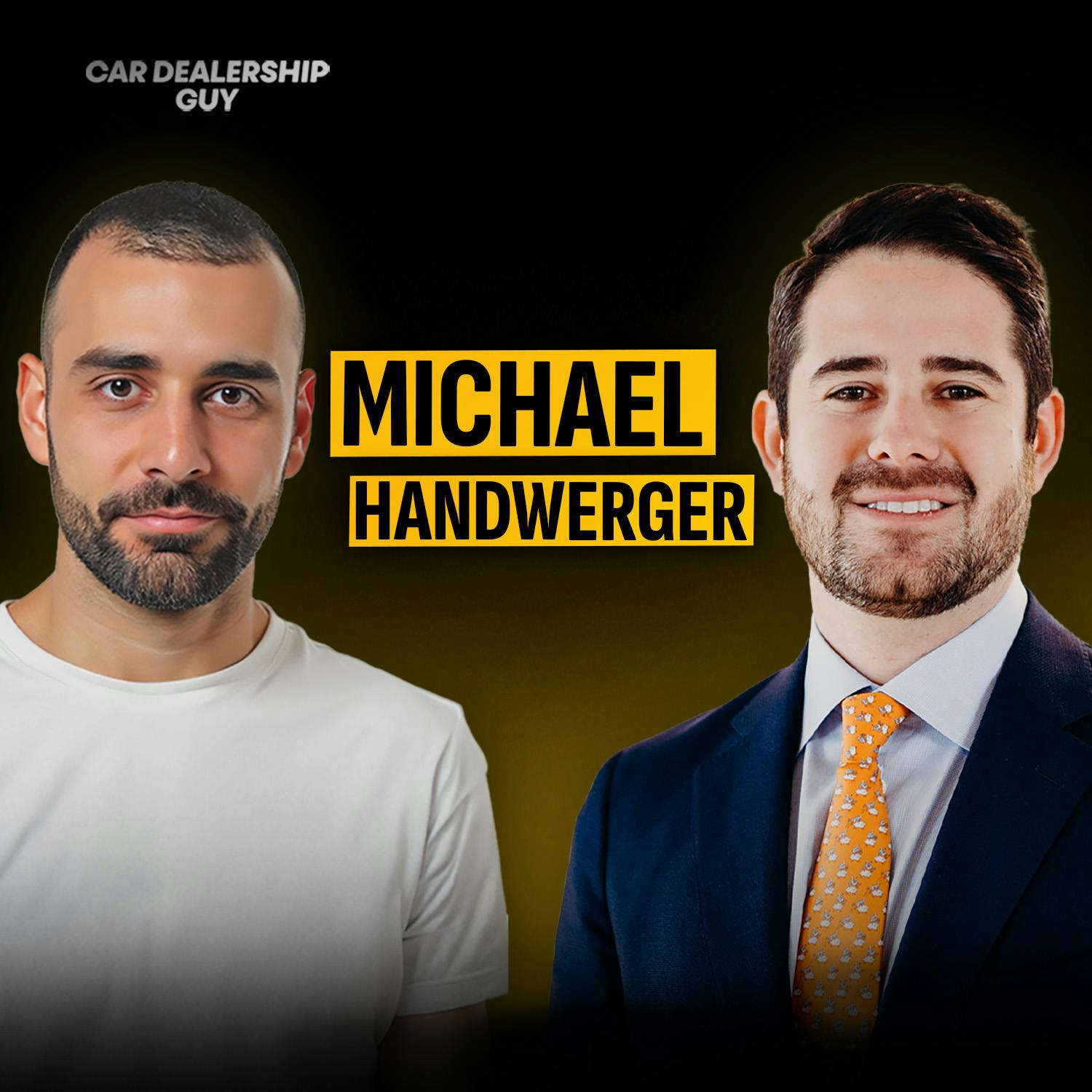
From Corporate to Rural Dealer: What It Takes to Win Today in Every Market | Michael Handwerger, President & Dealer Principal at Alpha One Automotive
Car Dealership Guy Podcast
From Corporate to Rural Dealer: What It Takes to Win Today in Every Market | Michael Handwerger, President & Dealer Principal at Alpha One AutomotiveCar Dealership Guy Podcast · Nov 27, 2025
Luxury cars are fancy cars that have a lot of comfort and high-quality features. Exotic cars are very special and fast cars that are usually very expensive.
The Lancia Beta Coupe is a small, sporty car made in Italy during the 1970s and early 1980s. It's known for its cool looks and fun driving experience, making it a favorite among car enthusiasts who appreciate classic designs.
LIVE
Dealers, last chance to join our dealer chat groups.
Initial groups are forming now.
Registration closes on November 25th, and we won't open new groups again until April.
If you want real operator-to-operator insight heading into the new year,
join hundreds of top dealers at cdgcircles.com.
I'll see you inside.
When inventory was really hard to acquire, there was a lack of use car inventory.
People would drive to us.
New cars, when there was no inventory and we had something special,
they would drive from Austin or other towns around us, cities around us.
That's not really happening anymore.
So we have to focus on the local market and then building new, you know,
kind of books of business within our markets that we hadn't really focused on initially
when we acquired the stores.
Today I'm joined by Michael Handwerger,
president and dealer principal at Alpha One Automotive.
Michael breaks down his shift from a corporate background and a large metro
to running his own first franchises in rural areas.
We get into the current acquisition squeeze, culture resets, customer mix,
and why social media has become essential for first-time owners operating in any sized market.
A big thank you to our sponsors for making this episode possible.
Four eyes, AFSA and cdgcircles.
And now let's get into the show.
Michael Handwerger on the podcast or cdgpodcast, I should say.
Michael, welcome.
Thank you so much.
Happy to be here.
Happy to have you on.
We were just going through different pronunciations of your name.
So glad we nailed that one down.
You got it.
First try.
First try.
Bye, man.
Michael, Michael, welcome.
So you are a former exotic auto retailer today, a wholesaler,
also dealer principal of a Ford and Chevy store in rural Texas.
Yes.
So that should be interesting.
I haven't spoken to too many rural dealers on here.
How's that holding up here?
Quite different, quite humbling experience since we entered the rural
dealership world from where I came from and learned a lot, still learning every day.
And it's been a journey, but I'm overall extremely grateful for even being a dealer.
And so I got it.
Sometimes I need to remember that.
Well, you didn't come from a dealer family.
You started in the business from what I can tell here.
Based on my notes that you were, you got into the business organically.
Can you tell us a little bit about that?
I don't need like play by play of 20 years, but I'm curious how you went from,
I guess, being hired at a dealership to today, owning multiple dealerships
before we talk about the future.
Tell us a little bit about that.
Yeah, you know, 18 years, it's been a journey.
I got into the auto industry.
I am first generation dealer, but I am not a first generation person in the car business.
Actually, my mom sold cars for 10 years and it was a part of that nudge to go in and interview
and kind of the rest is history.
Wow.
Okay.
So what, so your mom was selling cars.
You were exposed to this business and then what happened?
I was a failed entrepreneur at 18 years old and was at that crossroads of go to college or
figure it out and she said, well, why don't you go and go see this person and go interview
and see what happens.
And that's what I did and got the job.
You know, it wasn't real difficult.
The interview was all of five minutes.
Hey, you know, you're so and so son.
You're hired and there wasn't much to the interview.
Yeah, it started selling cars in 2007 and that was for group one with group one automotive is
where I got started.
Oh, wow.
Okay.
So, okay.
Well, listen in the spirit of the PhDs in the car business, we have a little nepotism in
the air.
So you need a little bit of that, you know, it's the classic.
We need that just a little bit for the podcast.
Now I'm playing, but seriously, I mean, your mom was selling cars.
You joined to sell cars in group one.
What happens from 2008-2007 when you start selling cars to 2021 when you acquire a
dealership in Rockdale, Texas?
Like what happens in that time period?
Yeah, just great timing.
I think able to get into the industry, start liking and start making money.
Obviously, you start getting motivated.
You see people around you and how successful they are.
You learn a lot along the way.
And for me, it was asking for, I was asking for the next opportunity as quickly as possible.
So selling internet was that natural progression in the FNI came quickly,
behind that, hey, I want to do that.
Put me in there.
So I would say it was about six years from when I started group one
to when I was a general manager for a group.
Impressive.
And then along your journey, what was the first store that you launched or acquired?
Was it the independent store that you launched?
Or the franchise stores that you acquired?
What did you do first?
Like tell us about the transition now from corporate GM to owner.
Yeah, the transition was I met a family from Louisiana.
They were a third generation dealer and they had recently opened an open point store,
open point Audi store.
And I got to know them and ended up partnering with them on that open point.
And that's where my journey moved from group one to ownership and partnership deal.
And that was the first step outside of working for group one.
All right.
So we went GM to operating partner to independent owner.
Yes.
Okay.
I like that.
Well, we'll dig in more to that.
First of all, you're very active on social from just an engagement perspective.
I've noticed that you clearly and it seems like you're like some pretty aggressive growth mode
based on you're interacting a lot, you're posing questions out to the network.
To start us off, what are you working on nowadays?
Tell us a little bit about your group setup.
What's your top priorities?
Just give us a lay of the land.
Yeah, definitely.
Well, to talk about the posting, I would say I've absolutely neglected social media from a
professional and personal level.
And at first, I think my opinion on sort of self-branding wasn't real positive.
I just didn't relate to it.
And so fast forward four or five, six years, I started to begin to see advantages to it
from relevancy, trust for people who can trust me when they're looking me up or
seeing who we are as a company, especially when I'm trying to acquire talent.
So I think the credibility is what I was focused on with LinkedIn, especially,
because that journey started recently.
So it hasn't been, we've been posting for three months or so.
So it hasn't been this long journey.
Yeah, just a different perspective to auto retailing, being a dealer, that maybe I felt
there was a void.
Okay, what is the void?
Have you solved that?
What is your void?
No, I mean, I just, obviously, I'm a frequent listener of this podcast.
And when I scroll down through the episodes, absolutely, when I scroll through the episodes,
I identify the people that I want to listen to, right?
And it could be, it could be Hague, I just listened to the most recent one episode with Hague,
Matt Bowers, guys that I really want to hear what they have to say.
But I can't necessarily get off the podcast and start acting as within my company, my situation,
like they are.
So I felt that if you put myself out there, maybe I can fill that void.
And I don't mean that I've figured it out, but maybe help somebody give a different perspective.
There's probably a lot more people like myself that are maybe in the same boat,
where they could use some more relatable content, conversation, first generation dealers,
you know, single point dealers, small group dealers.
That's the motivation behind what I've been doing.
And where we're headed is obviously, I still have, you know, big dreams and goals and aspirations.
But buying stores is different even in the short amount of time since I acquired my stores.
What do you mean by that?
What's different?
Pricing.
I think, you know, it's stores are still two or three times what they were when we started getting
into it.
You know, when we started acquiring our stores, that stuff hadn't hit like it did,
you know, in 23 and 24.
So we were very fortunate.
I think timing, it was really, really on our side to acquire stores.
Today, I believe it's a lot harder to acquire stores.
I think lending is much more difficult to obtain to buy a store.
So how are your stores doing right now?
Again, you have Ford, you have Chevy.
You had an exotic retailer that you pivoted to wholesale.
We'll talk about that soon.
How are the Ford and Chevy stores doing?
They're doing really great.
You know, I think for us right now, it's been an affordability challenge.
Just like most people talk about when they talk about these type of stores.
And also for us with the way we acquired the stores, there's some lending triggers.
And we can go into that as detailed as we need to.
But we have, there's a lot of pressure on selling new Fords through the end of the year
to obtain some loan forgiveness that was put into our agreements when we acquired the store.
Ford in particular.
This episode is brought to you by Four Eyes.
If a plumber told you the best way to unclog your pipes was to change the faucet,
you'd call a new plumber.
But that's what's happening in automotive today.
Dealers keep stacking new AI tools and widgets on top of broken, siloed data,
creating disjointed customer experiences and over communication.
Four Eyes fixes what's underneath by connecting CRM, inventory,
website and DMS data so it's clean, connected and flowing.
Then all the stuff you've been stacking on top, it finally works.
Collect, connect and put your data to work with Four Eyes.
Click the link in the show notes below to learn more.
What are these lending agreements or what's the challenge?
Well, you know, when we acquired our Ford store, you know, they look at what is the
current dealer doing?
What's their sales effective number?
If you can increase what the previous dealer was doing,
they offered some loan forgiveness for some of our loans.
So you have to achieve those numbers in order to get the forgiveness.
Are you on track to achieve enough?
We're on track.
It's not a layup, but so that's been, you know, when you say house business,
business is great, but we have to hit this number.
So everything is focused on this new car number because it's a big number to forgive on this loan.
What happens if you don't hit it?
Is this like existential or it just sucks?
You got to work another couple of years to pay off the loan.
Yeah, it just sucks.
I mean, if money's put out there, I don't want to leave it on the table.
I want to get it.
And our first two years being a Ford dealer,
there's been so much change that it's been hard to achieve those numbers
because it was a pretty well-randy relationship when we acquired it.
So the numbers that we had to do were pretty healthy, you know, increases over,
you know, 100% sales effective.
Okay.
So what is your, so you're saying you're really focused on performance of these stores.
You clearly have some benchmarks here to hit that will, you know, be very,
I mean, the return will be extraordinary for your long term.
You're, now you have no partners today, right?
I have one partner.
Oh, you have one partner.
Okay.
And what, like, what are you focused on yourself?
Are you just an operating partner in addition to you?
Are you guys focused on different things?
How does that work?
Yeah, I mean, we, he's an investor, investor partner.
He, he's, he's has, he's in a totally different industry.
And based on your experience, again, you've been through,
he's been through the gamut in this industry.
It's, you've been in since 07 and you've been to a public and group on,
you've clearly had some good training.
What is your, like, how do you, what is your strong?
What are you best at?
What are you, you know, what are you weaker at?
Like how do you explain that to me about your skill set?
I want to understand you better before we go on to, you know, deeper connection.
What I believe to be the answer to that question,
a lot of people around me don't necessarily agree with,
but for me, you know, throughout group one, I believe that I was,
I was putting really great opportunities in great stores, but I maximized it.
Maybe it was easier, you know, when you're at a Lexa store or you're at a Toyota store,
you know, maybe there's, there's, there's more opportunity to, to excel.
But I made sure that I did whatever the goals were for that particular department when I
was at apartment head, I, I had to meet and exceed those.
So I would say it was use cars that would be that those, those are the, those are the positions
before I became a general manager that I was put in and excel that.
Now, you know, when I'm talking to people in my organization and I bring that up,
they say, no, you're, you're really more of a visionary.
You're, you're not a use car guy, you're not a new car guy.
You're not a service guy.
So I think it's hard to answer that question because I think it's evolved.
But while I was progressing in group one, I was, I felt really confident in use cars,
but that was also working for a big company with a lot of resources and ways to acquire
cars and a lot of trade ins and service loaders and all the things.
So that didn't necessarily correlate to when I left group one and went to Louisiana
to a, you know, a town of 100,000 people, 150,000 people, those same things
didn't necessarily translate.
So I think it's where, where the opportunity was, the market, what the brand was.
But, but I would say use cars was maybe the, the, the boost to get into
more responsibility, more opportunities.
Hmm. So now tell me, being at two rural stores, how does that look?
What's different about operating those stores versus like a Metro store?
A lot. You know, you're, you're at the mercy of a really small populated area.
You know, our stores are 4,000 people, 5,000 people.
And, you know, when you think it's only 40,
yeah, when, when you think it's only 40, 45 miles from Metro Austin,
it's not like these, you know, big cities in the, in the, in the Northeast that,
you know, you're, you're at heavily populated areas as you, as you disperse.
This is country roads that you're taking from Metro Austin to our locations.
Yes. When, when inventory was really hard to acquire.
There was a lack of, of use car inventory, people would drive to us.
New cars, when there was no inventory and we had something special,
they would drive from Austin or, you know, other towns around us, cities around us.
That's not really happening anymore.
So we have to focus on the local market and then building new,
you know, kind of books of business within our, within our markets that we,
we hadn't really focused on initially when we acquired the stores.
What do you mean by new books of business?
I call them buckets, like new buckets.
So, you know, our, our communities are pretty heavy Hispanic communities
within our, within our, our dealerships.
And we, we were not focusing on that at all.
So we didn't have Spanish speakers on the showroom floor.
Maybe there was one in the store.
So, you know, it wasn't really set up to be successful there.
Those things have been, you know, really a focus for us within the last year.
And I think it's really helped tremendously, even though our, our areas are really small,
we're, we're building, you know, kind of new buckets that we had never,
people that have never stepped foot in our dealerships before are, are, are stepping foot now.
And, you know, the surnames are beginning to change.
Wow. Okay. So,
so basically one thing you're doing is you're not casting a big wide net,
you're segmenting your audiences and you're saying,
how can I better appeal to different types of audiences?
Are there any other examples that you're deploying other than like in this case,
Spanish speakers, but are there any other, you know,
buckets that you're targeting and what are you doing?
Yeah, definitely. You know, we're, we're obviously doing Spanish specific marketing, radio, TV, social
media. We're also, you know, doing a lot of, which, you know, maybe a lot of people don't
find to be valuable. And I, and I really didn't before, but mailers, pre-approval,
pre-approval mailers are really beginning to work for us. We had tried them before,
but we didn't have the right people in place to work those leads.
Now we do, and we're, we're finding, we're converting those at a much higher rate than we
ever did before. And a lot of it has to do with buying and the people we have within our stores
leadership, you know, being pretty well versed in those types of leads.
Have you turned over leadership in all your stores since you acquired them?
Yes, we have.
What were you looking to solve? Like what, or what were you looking for in,
in like a new leader in these stores?
Yeah. You know, you asked about what kind of, you know, what are the challenges when you're
buying rural stores and a lot of it is people. So when we acquired our stores, our goals
were to keep everybody. And I think we kept some people too long that just did not fit
our culture or what we believe in. And so the issue, you don't realize what,
you know, if you separate with somebody that's been in the community for 20, 30, 40 years,
you lose that person. It's getting out there and it spreads like wildfire. I mean, he's...
You're saying that's small. It's like a village.
It's like a village. And so you're, you have someone stand up in church and talk about
how we're terrible people and everybody believes it. And so that impacted our,
one of our dealerships in a huge way. And so, yeah, in hindsight, was it worth it?
I still believe it was, but it's been, it's hurt really, really bad.
And there's been a few cases with people we inherited that had been there a long time,
that ended up being difficult situations to navigate.
That's very interesting. I mean, I haven't operated like a rural store or a store in
like a rural area. So I'm not, I'm not very familiar with that, right? Like,
you know, in these big Metro stores, the reality is, you know, someone has let go,
unless it's like a sales person with a direct, you know, a book of business,
like the dealership doesn't really skip a beat. I'm not saying it doesn't,
okay, it does clearly impact, but it's not like what you're describing here,
like a direct impact to the sales just like that overnight. So you, you're,
it just seems like you're a lot more vulnerable. And with the people here,
they have a lot of power just by, you know, based on local relationships and stuff.
Yes. Yes. More than we ever expected. So that's a huge difference that I never experience in a
Metro store where you lose somebody and then you're getting, you know, emails, phone calls,
messages. What did you do? How could you do this? You know, finding me on any platform
to communicate with me. This episode is brought to you by AFSA. Join vehicle finance leaders at
the 2026 AFSA vehicle finance conference and expo February 1st through the third at the Bellagio
in Las Vegas where mobility and money meet to shape the future of how America drives.
Hear from compelling keynotes, including Bob Tasker, the third and innovative leader
on the showroom floor and the funny car racing circuit. Explore cutting edge sessions
on AI use cases and fraud prevention, as well as customer experience and dealer
collaboration sessions moderated by car dealership guy host and Ziegler Auto Group COO, Sam Dark.
Visit vf-conference.afsa online.org for more information or click the link in the show notes
below. So like what else would you say is what else has been different about operating these
stores? People aside, are there different, you know, are you seeing like a different
mix of revenue than you'd expect? Right? I can only imagine that electric vehicles
are probably not a strong seller in these markets. Yeah, but like what else, like other
than the people, what else is different about operating these stores? When you're acquiring
these stores, the expense structure that the exiting dealer has is completely different to
what ours is going to be. So that's the biggest difference right there.
You know, if I believe that if you plan on being the GM, maybe the used car manager also,
and you have your brother or your cousin that's going to come with you,
and you can keep the expenses really low, you can keep it. There's the probability of
keeping it closer to the current situation is there. But for us, that's not the way
we're set up. We're taking on debt to buy these stores. We're having to bring people from outside
of the market to come work there, which is, it costs more money to compensate these people
to drive an hour to work there. So the biggest difference is it's very difficult to get your
expenses to where they were, which means you have to grow all of your departments in a major way
just to turn a profit. And, you know, we've done pretty well, but we still have some areas
of opportunity for sure. So what drives that though? Is it just the fact that volume is
lower so you can't rely on one single department to drive the business? Not that
and any dealership you will clearly want every department, but are you saying here it's like
you'll never get your new car sales to 300 units per month, right? So what is it?
Correct. I mean, you know, even if you come in and, you know, you increased business by 10,
20, 30% when we're talking about a small number to start with. And if you increase your PRUs
500 or 1000, which, you know, typically that's why I say it's been very humbling.
Humbling is the word for acquiring these dealerships and operating these dealerships because
even though you know you can improve certain KPIs, it doesn't affect the bottom line
like it does a Metro store when you have volume. So that's a challenge. That's been a challenge
for us. What are you expecting in net to sales in these stores like percentage wise?
What's the expectation that I had a feeling you're going to ask that question? I think for us,
you know, I don't look at that particular KPI right now. For me, it's we need to service the debt,
which there's a lot. You know, so if we can service the debt and still be profitable,
that's the goal right now because we know that as our loans begin to mature,
all of those things are going to change quickly. You know, so that's not really
a KPI that that I'm really looking at right now because of our situation.
But I'm saying isolating, you're describing cash flow, which I understand, right? You want to
service the debt and you want to come out like cash flow makes sense. But putting that aside,
like how profitable do you expect these stores to be more or less than the Metro? Where do
we fall in the spectrum? Because ultimately what I'm trying to get to here is like who is fit
for these stores? Sure, right? Are these stores that really you should only go to if you're a new
operator? Or is there some hidden potential here for existing operators that want to expand?
That's what kind of my next question where I'm getting to. Yeah, yeah, there's definitely
potential. There's definitely ways that we have and will perform like some Metro stores,
especially in today's environment. So for us, you know, the way I look at an acquisition is
can the store make a million dollars a year? Can it make a million dollars a year? Got it.
Are our stores making a million dollars a year now? No, but they will. That's the way I look at
growing and they can. So it's not, it is a viable business, but it's challenging and it's especially
going from bigger companies with a lot of support or bigger markets to rule. It's quite different.
It begs the question, what is the better model for growth in today's day and age?
If you are not coming or like if you don't have an existing group or infrastructure or just
capital, the two models I see are you could wish for an open point and hope that you somehow find
an open point, which that's a slog that will take time. It's an option. You could work your model,
find a small roll store with that. You can scoop up probably like the single digit millions
and grow it, you know, kind of brute force it to growth. Or you could go the,
something similar to what Coleman Auto Group has been doing, who is a former GM from a large group
in Indiana. You could raise capital and acquire these stores and you could actually acquire
bigger stores that way. But now you also have a stable of investors behind you who are
expecting a return and you're working for them. So that's kind of the options I see.
You're smiling, but yeah, I mean, do you see anything different?
I think that's exactly right. I mean, we've, you know, throughout this journey,
all of those scenarios, you know, for me have come up because, you know,
I had a next business partner that said, you know, I'd rather own 10% of a big store
than 100% of a small store. And so those things do come up in the way I look at the future.
But again, you know, do the pros outweigh the cons on that. I believe where our stores are,
in Austin is a very desirable market for dealers. There's a lot of growth here.
There's a lot of people that want to be in business here. And I believe that
we're pretty fortunate still, although there's been a lot of challenges to get to this point.
There's a lot of long-term opportunity with what we have in this model.
Yeah. And listen, different strokes for different folks. I have not acquired a
dealership, but I have raised money from investors for a dealership, right? So I've
been on that side, you know, CDG, just to tell you, to bring you behind the scenes,
like we haven't accepted a dollar to this business yet, I should say,
or not that we're expecting to, but, you know, never say never is what I'm trying to say.
So it's just different, you know, you can do, you can do different things in different ways.
And I think it comes down to personality and what's right for you. Because like I said,
you could technically grow in both ways. I want to shift the conversation a bit to your,
so you had an exotic store. Why did you launch this? You're an exotic retailer.
Like what was the story behind that? Well, the story was we were ready to go back to Texas
from Louisiana. Austin was home base. Austin's where we wanted to be. Our families are here
and you can't go buy a store in Austin, Texas. So, you know, I had, but you can buy Terry Blacks.
You can. You can. You can. That was good. That was good. I tried, tried it. I really
enjoyed it. Yeah. We wanted to be here. And so, you know, at that point, the confidence to,
you know, had operated as operating partner of that, the Audi dealership in Louisiana for
a little over four years. I just felt like what, what I need to do to get back is probably
just open an independent. And so that was what we did. So move back, open independent,
you know, kind of, you know, timing was. You're such a used car guy at heart. You're over here
putting this facade with your franchise. You're a used car guy at heart, talking about not leaving
meat on the bone, making sure you get this loan forgiven by Ford. I mean, you're a used car guy,
man. Oh, you're not leaving any meat on that bone. That's what I believe when I look in the
mirror. So I'm going to stick to that. I like that. And I think that independent evolved quickly
to luxury and then to exotic. So that was the start of alpha one was the exotic location alpha one
motors. And it was a, it was a heck of a run retail, you know, the highs of highs and the lows
of lows. And that business is very difficult to operate in today's climate. So we've shifted
and now we're wholesaling and it's been great. And I've got a great partner with that business
that's an expert in exotics. And we're excited about it. Really excited about it.
How did you move up the food chain so quickly from like a used car dealer to
exotics? That's a big transition. You didn't even go to luxury. Like you went all the way
up the food chain. Did like, are you like a secret celeb? Do you have like a crazy network
to sell these cars too? Or like, what's the story? How did this happen?
I think timing. I think, you know, I had great support around me. I saw what other people
were doing. And I knew I believed that I could do it. So no, I don't have this, you know, data
client list of celebrities and athletes and a lot of my peers do, but we never were afforded
that luxury. So I think timing of that business with, you know, COVID after COVID, you know, 21,
22, those were some really great years. And we just maximized that business during those times.
And maybe, you know, I'll admit now that I hung on a little too long to keep that business
going at the same time of acquiring these dealerships that we have today and not focusing as much time
on those trying to save the retail part of our business there. And now in hindsight,
maybe it was a little too long. Okay, so you save to say you capitalized on the opportunity.
People were flipping Bitcoin and NFTs and Texas was the place to sell exotics. So I get it.
Why stay in the business? You have two stores to run. That's enough work on its own.
Why stay in the wholesale business? Is it just you have the right partner to still make money
there? Or is there anything more than that? Yeah, mainly the partner. So, you know, I
was focused on transitioning my time to the franchises. And there was an opportunity to bring a
new partner into that business. And so that was the transition was a little unexpected.
But the brand itself meant a great deal to me to hang on to. And so
there was the right situation to keep it going.
This episode is brought to you by CDG Circles. Running a dealership today takes more than it
ever has between new technology regulations and constant change. But the hardest part is doing
it alone. I've been there. No one to call when things got tough. No place to ask what's actually
working for you right now. Is this vendor legit? How would you fix this problem in your
service department and much, much more? And that's why I built CDG Circles, a new kind of
peer group for top performing dealers. With Circles, you get a dealer group chat, structured
sessions, real time conversations, all with the full confidentiality, antitrust compliance,
and a group of dealers who actually get it. Our goal is to end the isolation that costs
dealers time, money and clarity. We're not a 20 group. There's no travel. We're not
retrospective and we don't group you by brand. Circles is for dealers who are looking for
in the moment insights, almost like having a personal sounding board of top notch dealers
who are playing on your level. Over a thousand dealers joined our original wait list. And this
month we've officially opened up signups to additional founding members. So join us and
be part of the first wave, taking the car business back into our own hands. Join us at
cdgcircles.com or click the link in the show notes below. Flipping back to your current
franchise stores. I'm curious what kind of change you're seeing in these stores nowadays.
You know, again, I talk about this a lot, so you probably heard about it, but in Circles,
our CDG Circles are group chats at our peer group, which has not launched yet. So I don't want
to confuse anyone, but we have like a couple beta groups, you know, where we're testing
things and we're learning. And one of the guys was one of the gentlemen was sharing that
his service department is started using the Meta glasses, like the Meta Ray Bands
in to do to do MPIs in the service department. And I thought, wow, I thought that's like super
unique and forward thinking and just smart. I would give him a shout out right now,
but I don't want to breach the confidentiality of saying who it is. Not that I think he'll
care. I think he'd be thrilled about sharing that. But anyway, so my question to you is
what's the tech landscape in the more, you know, less Metro stores? Like how, you know,
how forward thinking are we? I, again, I imagine EVs is not a hot thing where you're at
in these stores, but can you give us an overview on what's the appetite for kind of tech and just
just new age technology? Definitely. Well, I love that. And if, if that ended up being
the third one, right? Pretty, pretty exciting. We, I'll say this. It's not the same as when we
acquired the stores when we had all the same staff in place. Technology change were not,
was not welcomed at all. So we had to maneuver that. And, and, you know, there's a lot of
things that I was used to having in place and offering to our clients that we just could
not get the buy-in from the staff. One of which, you know, digital MPIs, videos,
we just could not get that rolled out. And so it was kind of a year of wasted capital
when we just couldn't get enough people bought in on it. There was always an excuse about,
you know, the Wi-Fi isn't strong enough. Technician's not comfortable. The advisor's
not comfortable doing the video. So the, the, there's definitely a delay in buying in for the
technology that I was used to and a lot of people are using and have been using. It's not like this
stuff is new. This stuff's been around for over 10 years. We're not, we're, we're, it's,
now it's better because we've, you know, we've, we've changed a lot of, you know,
of people and they're used to these things. They've been in Metro stores. This is not new to them. So
that, that's been, that's been definitely a hot button for us because I wanted to
deliver that experience, but, you know, it just hadn't, hadn't happened.
And now in terms of actual operations, has there been any specific lever that you could
point to that you've pulled that has just had a disproportionate impact on like growth,
retention, something in your store from your experience? I mean, any, any changes that have
had big impacts could also be many small changes, but I'm curious to know how you've
pushed these stores for growth. Yeah. We've grown the stores in a big way on fixed ops.
You know, so both stores have grown tremendously. Technician counts have grown. We've,
we've found ways to add bays in the current infrastructure. We've invested a lot of money
and equipment. So that's been, I would say when you look at, yeah, volume has, we have increased
volume in a pretty sizable way. But again, we're talking about small numbers of where we
started, but service, you know, we're talking, you know, a million dollars at one store,
half a million at another, 15 texts we've added for four bays. And I'm not saying we built,
we added on to our infrastructure. We just found corners and ways to clear things out so that we
can put a stall there. That's been a, I'd say our biggest improvement since we've taken over
these stores has been in fixed operations. And it's been, it's been primarily by what
you just stated, but like, or has demand generation been an issue? Or has the demand
been there? You just needed to, you know, enable the infrastructure, the tools, the text, like,
has the demand been pretty, the easy part here in these stores? I believe the demand was there,
but we had leaders in the chair that were not maximizing that, you know, when you looked at
our service scheduler, it was not maximized. It was always straddled back. We were not growing
our technician count at all. So there's a number of things that that I believe we've done. But I
believe the demand was there. And Ford and Chevy service and where our stores are is is great.
Interesting. All right. So what's next for you? Like, are you looking to acquire more stores or
what's your plan right now, given where the market's at? You mentioned you just listened to
our M&A segment with Hague. So yeah, I'm always keeping an eye on it and find those,
that information very valuable. I'd say I'm talking about opportunities every week.
So there's, there's a lot of opportunities out there. And so, but, you know, the way we,
the way we look at what's the right move has changed, obviously quite a bit.
But we do want to grow, we want to grow the right way with the right opportunities
at the same time, building a bench of people where when, when there is an acquisition,
you know, we've got people that we can deploy to those opportunities. And that takes time. So
we've learned growing fast, there's foundational things you need to get settled.
What's one role that you need the most right now to the many, many people listening to this?
What's one role that you'd love to hire yesterday? Not like an opera, not like a,
you know, service advisor, but, you know, more senior managerial, if that's what you're
looking for for, you know, growing your footprint. Yeah, I don't know that we necessarily are looking
to add senior, senior management positions. I think it's more of being able to grow and groom
the people that are in the organization now. So it's taken time to get the right leaders in
place today. And then you've got, you know, department heads, management, even sales people
that were beginning to develop, so that when opportunities come, we can begin to deploy,
or we can pull an existing general manager out and promote one there. But it's...
Makes sense.
That's more sustainable for where our stores are. Because recruiting, you know, I believe
we've done a great job, but we've, we have, you know, not, we've made some, some
poor decisions on hiring in the past. And so the chances of somebody staying is a lot higher
if we've developed them versus recruiting somebody from, from the metro area.
I can understand that. And when you say we've made some big mistakes, what have those been
stakes been?
Accounting, we've had a lot of, you know, we had some hard burn with accounting as we grew,
you know, that was an area that we really needed to solidify, which we have. And then
general managers, you know, I, we've hired general managers that just didn't work out.
They, you know, were doing well in their current roles, but going out there is not,
not the same. And that's the same thing as what we've learned acquiring the stores.
It's, it takes a different, a different skill set to excel when, when the phone's not ringing
all the time. People are not like, not walking the door all the time. You have to grow that
business. And, and it's, it's not there. You have to go get it.
Got to be a hunter.
Got to be a hunter.
You got to have the right EQ. What am I missing?
You know, I think a lot of people have a hard time, you know, they want to implement their
playbook, but they're not comfortable calling audibles. And that playbook has to be nimble.
It's got to be nimble. That it just, you have to be nimble. A lot of people aren't.
Well said. Well, Michael, this has been very, very a great conversation. Before we wrap up,
is there something I should have asked you that I didn't ask you?
No, you know, for me, it's, I want to relate to, to a different, you know, to a different
segment of dealers or, or aspirational dealers. I want to be able to bring some insight into
some of these struggles that you're going to face. I know for me, if, if I knew some of
these things going into our acquisitions, there probably would have been some different
decisions made. There would have been some, some, some suffering, you know, it maybe wouldn't have
happened. So to me, that piece is what I would like to get better at and also be available
to, to dealers, managers, general managers. If that, if their goal is to go out and acquire
stores and be a dealer, there may be some, some more relative perspective.
What's the best way for someone to reach out to you if there are in a situation?
I think LinkedIn is, you can reach out to me on LinkedIn, follow message.
Amazing. Have you joined Circles or do I need to brute force you aggressively?
I have not joined Circles. I clicked on it. I read about it. I'm interested in it,
but I have not joined.
Okay. Give me the feedback. Why didn't you join?
No particular reason. No particular reason. So I, there wasn't something holding me back
from, from it. So I, you know, when you read your post, it's, you're getting a lot, you know,
a lot of people that want to get into these, you know, and so for me, it's,
where do I fit in and add value? I believe I do. But, you know, I guess it depends on,
you know, if I'm, again, if I'm in a group with different, you know, generational business
dealers or, or dealers that have a lot of rooftops, maybe I can bring as much value to that type of
group that I could or more, you know, relatable to, to me, but I'm interested in it.
That's good feedback because you're not the first to mention that as a concern. I think
some people have reluctance of like, what group will I be placed in and will people,
you know, run bigger groups, smaller groups. So I think one of the things that we've done
is we don't, obviously we don't group you by brand and that's very, it's for a good reason.
We group you by goals, by, by, we grew up by goals, by size and by relative position. And so
for example, like you're a rural dealer at a certain scale, like there's many, many other
people like you. So, so give it a shot. The entry tier is only $1. So it doesn't break the
bank. There's a, you know, bigger tiers, but I just say it because I actually think that you're
in a growth mode and I think it could be very helpful to you. So Michael had a really, really fun
time chatting with you and I'm, it's going to be fun doing another podcast in a year from today
or maybe sooner when you announce another acquisition because you'll be growing and
I'm going to be very curious to hear how you're performing. So I'm looking forward to it.
Michael Hanwarger on the CDG podcast. Michael, thanks so much for coming on.
Thanks so much for having me.
All right. Hope you enjoyed that episode. Please give the podcast a rating,
consider subscribing to the show and check the show notes for links to what we talked about.
Thanks for tuning in. I'll see you guys next time.
About this episode
Michael Handwerger, president of Alpha One Automotive, shares his journey from corporate auto retailing to owning rural dealerships in Texas. He discusses the challenges of operating in smaller markets, including the importance of community engagement and adapting to local demographics. Handwerger emphasizes the need for effective use of social media and innovative marketing strategies to attract customers. The conversation also touches on the evolving landscape of dealership operations, the impact of technology, and the significance of building a strong team to navigate the complexities of the automotive industry today.
Today I’m joined by President & Dealer Principal at Alpha One Automotive.
We break down his jump from a corporate career into dealership ownership, and why social media became one of his strongest tools for credibility and recruiting.
Michael also shares why acquiring rooftops is tougher than ever, how rural stores operate differently from metro dealerships, and what it takes to build a culture that actually performs. His perspective on customer segmentation, profitability expectations, and growth models gives dealers a clear look at the realities of operating in today’s market.
This episode is brought to you by:
1. Foureyes - Foureyes fixes what’s underneath —by connecting CRM, inventory, website, and DMS data so it’s clean, connected, and flowing. Then all the stuff you've been stacking on top? It finally works. Collect, connect, and put your data to work – visit @ http://www.foureyes.io to learn more
2. AFSA - Get Revv’d Up for the Ultimate Vehicle Finance Event of 2026 February 3rd to 5th, 2026 | Bellagio Hotel, Las Vegas, Nevada. The vehicle finance industry is evolving at breakneck speed. Are you ready to accelerate ahead of the competition? Join hundreds of industry leaders, innovators, and decision-makers at the 2026 American Financial Services Association Vehicle Finance Conference & Expo—the must-attend event where cutting-edge insights, powerful connections, and game-changing strategies converge under one roof. World-Class Keynote speakers who inspire action, and sessions that put vehicle finance insights into overdrive. Secure your spot today @ http://vf-conference.afsaonline.org - The 2026 AFSA Vehicle Finance Conference & Expo – Where the Leaders in Vehicle Finance Accelerate to Success.
3. CDG Circles - A modern peer group for auto dealers. Private dealer chats. Real insights — confidential, compliant, no travel required. Visit @ https://cdgcircles.com to learn more.
Check out Car Dealership Guy’s stuff:
For dealers:
CDG Circles ➤ https://cdgcircles.com
Industry job board ➤ http://jobs.dealershipguy.com
Dealership recruiting ➤ http://www.cdgrecruiting.com
Fix your dealership’s social media ➤ http://www.trynomad.co
Request to be a podcast guest ➤ http://www.cdgguest.com
For industry vendors:
Advertise with Car Dealership Guy ➤ http://www.cdgpartner.com
Industry job board ➤ http://jobs.dealershipguy.com
Request to be a podcast guest ➤ http://www.cdgguest.com
Topics:
00:21 How did Michael enter the auto industry?
01:28 Transitioning to dealership ownership how?
05:03 How social media drives professional growth?
08:49 Biggest challenge in rural dealerships?
17:27 Leadership's role in community impact?
24:21 Are rural dealerships still viable?
25:12 Best growth model for rural stores?
27:55 Transitioning to exotic cars: why?
37:48 Future plans for the business?
Car Dealership Guy Socials:
X ➤ x.com/GuyDealership
Instagram ➤ instagram.com/cardealershipguy/
TikTok ➤ tiktok.com/@guydealership
LinkedIn ➤ linkedin.com/company/cardealershipguy
Threads ➤ threads.net/@cardealershipguy
Facebook ➤ facebook.com/profile.php?id=100077402857683
Everything else ➤ dealershipguy.com