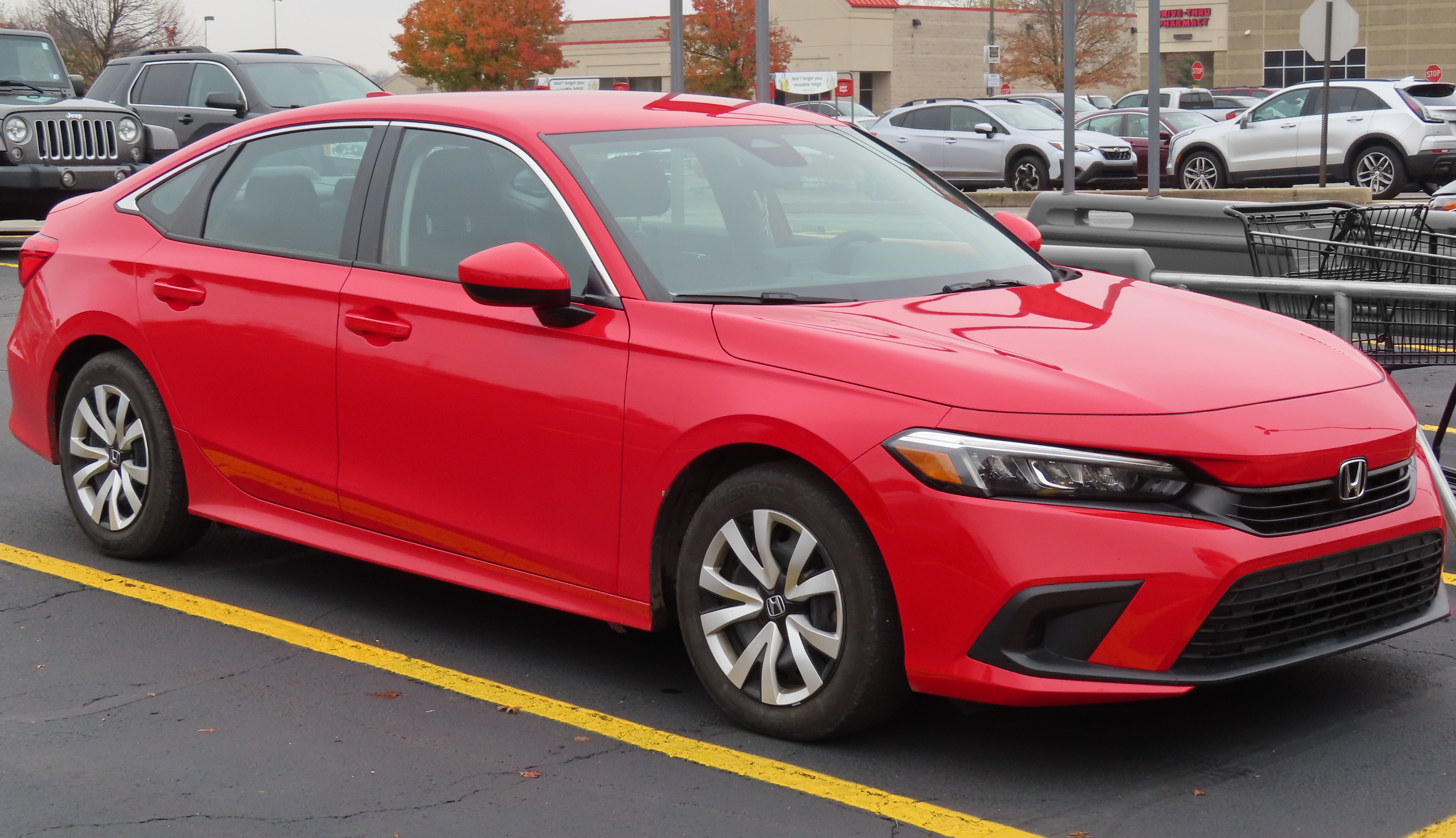
The mod ladder is like a step-by-step plan that shows what changes people usually make to their cars first, then next, and so on. It helps people know what to do to make their car better.
The Civic Type R is a sportier and faster version of the regular Honda Civic. It comes with better tires and parts that help it drive better and faster.
Drag slicks are special tires that help cars go really fast in straight lines during races, but they don’t work well on regular roads or in bad weather.
Summer tires are special tires made to work best when it's warm outside, giving your car good grip and control, but they don’t work well in cold or snowy weather.
R compounds are special tires that stick really well to the road but wear out fast. They're great for racing but not good for everyday driving, especially in places with rain or cold weather.
Cutting springs means cutting the metal coils of the car's suspension springs to make the car sit lower. People did this to make their cars look cooler or handle better, but it's not the best way to do it.
Car modification means changing parts of a car to make it look cooler or perform better. People often start with easy changes like taking off parts or lowering the car.
The air box is like a box that cleans the air before it goes into the engine. Taking it off might make the car sound cooler but can hurt how well the engine works.
Mudflaps are like shields behind the wheels that stop dirt and rocks from hitting the car or other cars. When they scrape the ground, it usually means the car is lowered or modified.
KYB is a company that makes parts called shocks, which help your car ride smoothly. Their special yellow shocks are good for cars with upgraded springs.
Koni makes special car parts called shocks that help your car ride smoother or handle better. You can adjust them to make your car feel softer or firmer when driving.
Spherical bearings are special parts in a car's suspension that let the wheels move more precisely, but they can make the ride rougher for everyday driving.
Dyno tuning is when a mechanic uses a special machine to test and adjust your car's engine so it runs better and makes more power. It helps make sure the car is working just right.
The Infiniti Q50 is a fancy car that is similar to some other Nissan and Infiniti cars, so many parts can be used on all of them. This makes it easier and cheaper for people who like to change their cars to find parts. It’s a nice car that is both comfortable and fun to drive.
The Nissan 300ZX is a sporty car from the 1990s that many people like because it was very advanced for its time and goes fast. People often change its engine to make it even more powerful and exciting to drive. It’s a car that helps people try new things and have fun with their rides.
A project car is a car that someone is fixing up or changing to make it better or different. People usually spend time working on it instead of driving it every day.
The head gasket is a part inside the engine that keeps oil and coolant from mixing. If it breaks, the engine can have big problems, so fixing it is important.
The Honda CRX is a small, sporty car from the 1980s that many people like because it's light and easy to fix. People often put in different engines to make it faster and more powerful. It's a popular car for those who want to change things and make it their own.
Horsepower tells you how strong a car's engine is and how much power it can make to move the car. More horsepower usually means the car can go faster or accelerate quicker.
The Ford Mustang is a popular sports car from America that many people like because it looks cool and goes fast. Car fans often like to change parts on it, like putting different wheels to make it unique. It's a car that lots of people talk about because it's fun to drive and easy to customize.
LIVE
What's up everyone, welcome back to the behind the wheel podcast where today, today we're
talking about the mod ladder.
What is the mod ladder?
So we were talking about sort of the steps that people take when modifying their cars,
whether it's a daily driver, a weekend warrior, a full blown track car, or maybe something
that kind of does everything.
What steps you take typically to start building that car?
I think a lot of people will assume, Nick, that because of where we are, we're going
to save wheels and tires first, right?
What do you think?
So give me some scenarios.
I definitely fall into that camp.
I do fully believe that tires are probably one of the most important purchases when it
comes to any project car.
It's one of the easiest ways to increase the performance from a vehicle without doing major
modifications.
Most passenger or tires are not up to the stand.
I mean, I say that with a grain of salt because nowadays you do have manufacturers that are
putting Michelin Pilot Sports on and good quality and some of the extreme contact stuff
from Continental.
So depending on the model, right?
Correct.
A Civic Type R or something is going to have better tires than a base model.
Yeah.
So and that's kind of where my mindset always went with it was, you know, get the wheels
to be lighter, obviously.
And then also to have a tire that has increased performance, not necessarily just traction.
Like I'm not saying go out and just throw a set of drag slicks on your car all of a
sudden, but something that is balanced for the vehicle will increase the performance
of the vehicle over what you already have and fits your needs.
And that's the biggest thing.
Don't throw a summer tire on if you're going to be driving six months below freezing temperatures.
Right.
So as we're all experiencing here.
Right.
Yeah, you probably don't want to grab, you know, a set of R compounds if you're if you're
daily driving in New York, especially right now.
But I think a lot of it comes down to where you are in life in terms of your level of
maturity for sure, but also how much money you have in your bank account and how much
money you have coming in.
Yeah.
If you've got, you know, a mortgage in kids, you're probably not going to dump a bunch of
money into a car all at once unless you're paid like that, unless you've got, you know,
like Nick money, right?
Oh, yeah.
But if you're, but if you're, you know, if you're doing this a little, a little at a time, I
think you need to plan out what it is you're after.
Are you looking for something that's going to give you a specific look or you're looking
for something that's going to give you elevated performance or a little bit of both?
You can mix it up.
Right.
I think for me, when I was much younger and dumber, I got my first, you know, my first car or
two, you know, this is, this is a long time ago, but I made the mistake of wanting the
car to be lowered, right?
I had bought this, this CRX 1990 CRX SI.
And so at that time it was pretty common to cut your springs.
That was like a normal thing, right?
There weren't a ton of suspension options out there.
This is before coilovers became like the norm, you know, this is even before the sleeve
coilovers that the cheapie, you know, seep style, right?
So, you know, cutting springs was pretty normal.
So I think when I got my car, it was only stock for maybe, maybe a week and a half, two
weeks, and then me and my buddy, you know, got in there and, you know, started hacking
coils, which was just the worst idea.
But at the time that was sort of like a rite of passage, right?
That was like the first mod you would do.
So that and taking off the air box or something stupid like that.
So, you know, at that time, you know, you kind of make those, those early mistakes.
If you, if you didn't know, this is before, you know, the internet and all the information
we have available now.
So I did that.
And then obviously the ride was awful.
It looked good, but, you know, it was, it was like a rite of passage to have like your
mudflaps scraping on the ground a little bit, you know what I mean?
When you made a turn.
So anyway, it was, it was a big mistake.
I did that.
And then after a while, finally made the decision to buy actual springs and you got
a new speed springs and threw those on there.
It lifted the car up quite a bit, but it handled so much better.
Right.
It was, it was not neat difference.
I may have cut off a coil of those two just because I was stupid, but regardless,
you made those kind of mistakes.
Looking back, I would never do that now, but it, you know, it was like, you know,
it was like a give and take, right?
It was sort of like learn as you go type thing, you know?
So while we're on the topic of changing out springs, now a big mistake that I see a
lot of people make is not pairing a proper shock to the spring.
And, and so in case anyone doesn't know, if you take your factory shock and you
put a lowering spring on it, the shock travel rate is incorrect at that point.
Um, you're now using that shock in an ineffective range versus where it was
cycling before where you had a larger range for it to cycle.
So a lot of, a lot of times when we would do that, we would switch over to like KYB
yellows, tequico blues, something like that.
Um, were those around at that time?
Like, I know that's kind of where it kind of started was back then.
Cause I mean, my whole time, it wasn't all black and white.
Relax, relax.
Okay.
Like sure with that time, with that time, there, there were, um, like
to Kiko blues, um, uh, you know, there was Coney adjustables and things like that.
Um, most guys weren't doing that at the time, but then I think it was, as we learned,
uh, you know, you can get a much better, you know, uh, handling vehicle.
You know, I don't want to make it seem like if you put a set of springs in your
car and you don't change the shocks, it's, you know, life and death.
It's just going to change the handling characteristics.
It's not going to be as good as it could be.
You're leaving performance on the table, so to speak.
You also shorten the life of the shock.
That was also part of that, that whole thing where you're, you're, I mean, we're
talking massively shortening the life.
Uh, but then on the other end of that too, you can also overdo it, right?
Like if you have a vehicle that you're just daily driving and you want to,
you want to get a, uh, you want to get it down a little bit, maybe put some
wheels and tires on it, maybe going with like an Olin's like, you know,
you really mean like you don't have to, you know,
and I fully agree.
A, a, like a KWV three is not necessary for your daily use street car.
And, and I think that's something that's also been lost, um, on the modern car
culture that not every build has to be that level of, okay, I need track
performance parts.
I need this on my daily, like on the car that you're using on the street, it's
not necessary to have spherical bearings and it's not necessary to have a, you
know, getting into engines and stuff like a massive cam where you can't even
drive the car.
There is something to be said about useful, uh, something to be said about
useful tuning of a vehicle, useful upgrading of a vehicle where the car
becomes more than some of its parts versus just throwing parts on it to make
something.
Yeah.
And I think the benefit now is obviously you have a ton more, more, uh, content
information online.
You can learn from right.
Like you, there's so many people that have made the mistakes before you have
that you can kind of look it up, figure it out, you know, and I think that kind
of takes away a little bit of the, of the sort of the little by little portion
of the ladder, like, you know, in the, in the old days, people would be, you
know, adding parts on, expecting a certain amount of performance.
Maybe they got it.
Maybe they didn't, there weren't even dyno tuning that much.
So it was more like, you know, a seat of the pants filling, but now if you get
like, let's say, uh, an FL five, for example, you look online, you can see if
I add this intake, uh, you know, I had Han data, I do a front pipe down pipe exhaust.
I know I'm going to get about this amount of power and you're usually like right
in that area, right?
Now you have the recipes and you know what the cake is going to be done where
before you were kind of pioneering your way through it.
Yeah.
And don't get me wrong.
Like I like that because it lets you know exactly what you're doing.
You, you spend your money wisely.
I think that way.
You know exactly what you're getting into, but I do sort of miss sometimes
that, um, that sort of like guessing and like trial and error portion of it.
Um, if, you know, between the two though, I prefer the more modern era of being
able to, to know what I'm getting into.
But, uh, it was definitely a lot of, um, you know, adding a cam and going, man,
I hope it adds the 10 horsepower that company says it's going to add.
But, you know, typically it didn't, but, um, you know, there was just
combinations that, that people were not fully aware of at the time.
And they were kind of just guessing at it a little bit, you know, um, especially
for the Honda world, like in the mid nineties, turbo charging was like
still pretty new.
Um, so you're kind of guessing at it, like how many pounds should I run?
You know, what type of, um, you know, boost control, that was pretty important
to do before popping engines left and right.
So, um, that was a major part of it too.
You know,
So do you feel that the, that there's less innovation now because you have
those recipes, you have those, all right, I know this works.
So do you think there's less experimentation because of that?
Do you think that we're having?
So you still think that there's, I see, I feel like I, I disagree because.
Well, wait, are you, are you talking from a DIY liking?
Yeah, from a manufacturer level.
No, I think from a, from a do it yourself level.
I think that's lost out because now it's so simple to just go on and be like,
Hey, I want to do this down the other thing.
And I'm not going to have to come up with a way to solve this problem.
Somebody's already solved it.
I can go online, buy the part, throw it in.
I know what I'm getting.
I know what I'm doing.
And it, I feel like every car becomes almost cookie cutter.
Like I, I'm a Z, you know, I'm a Z one fanboy.
I, I, I order parts from them constantly, but like, let's be honest, the same parts
are on a G 37 or 370 Z and a Q 50.
I could park in a parking lot with other modified ones and they'll be crossover
amongst a lot of the parts because they're the largest distributor that we have for them.
And I feel like we've lost out a little bit on the creativity that you used to see
back in the day when you were trying to ascend your, you know, the quote,
unquote ladder, you're, you're going up and you're like, Oh, you know what?
That, that version of intake doesn't work.
So now instead of leaving it in the engine bay, we put an extension on it.
And now it's the actual true cold air.
Now the car feels better.
Now it's breathing better.
Sounds better too.
Oh my God, look how great it sounds as the car goes by those things.
I feel like we've lost out on over time as it's become more cookie cutter.
Yeah.
I think for, from an enthusiast level, a DIY or level, I think you're right.
I don't know.
You could argue both ways that it's good or good and bad.
Like I said, being able to get a modern vehicle now and then already have an idea
of what type of power you're going to hit or what type of issues you're going to run into
because there's a hundred guys already that are posting on social about,
you know, the issues they've run into.
It's pretty good.
It's pretty comfy.
It is pretty healthy.
It makes life easier.
Don't get me wrong.
I agree with you on that.
I think for myself, and I'm not trying to speak for Scott, but I think Scott's kind
of in the same mindset.
We already went through the trial and air portion, you know, in our earlier lives.
So having that convenience now is kind of nice.
We know, you know, we have a lot more experience, I think.
But looking back, there were, you know, I made a lot of mistakes, you know,
like the cutting of the spring thing was terrible.
I probably have back damage from that still.
You know what I mean?
Like it, there's a lot of mistakes that I made, excuse me, growing up and growing
into this, but, um, it was, you know, it was all fun though.
You know what I mean?
It was still fun.
I feel like part of that, see, I don't know.
I'm, maybe I'm just, I'm looking at it through like those rose tinted glasses,
but I, I felt like some of those experiences like, yeah, it's absolutely
devastating to blow an engine.
Like it sucks.
You know, you feel it in the pity or something, but then okay, I get to build
an engine, I get to swap something different in.
I got, it creates these possibilities that you weren't originally looking at
before, like when the reason I started, did my RB swap on my Z 32 originally is
cause the King, the crankshaft keyway sheared off in my crankshaft on the
stock VG 30, there was no way I was fixing a NA VG 30 to, to do this.
Like there was no way.
I was like, all right, you know what engine swap, let's go a different route.
And at the time the RB swap wasn't as common as it is now.
There was only like two or three of us in the country that had it.
So it was really kind of finding your own way.
I had to find the guy that had motor mounts.
I had to find the guy that could help me do the wiring because I had to convert,
you know, things that I've never done.
I had to get like help, you know, I, as you said, there was no internet.
There was no ability to just go out and be like, Hey, this is what I'm doing.
Do you have a solution for me at that time?
There wasn't one.
And I feel like that's, you know, that's obviously at the very top of the ladder
when you're, you're doing it, but you do get there eventually.
And you will get to that point where it's like, Hey, yeah, I'm not necessarily
modifying my project car, my daily car anymore, but I know I have a project.
And I feel like that's where that mod ladder changes because when you get to
the project car, you're going to be like, okay, I need an engine, a
transmission, a wiring harness, fuel system, and you start piecing those together.
Now, do you ever find yourself like on your bigger projects now?
Do you find yourself like group buying?
Like, Oh, I'm going to do the rear end.
So let me get diff bushings.
Let me get the, the, you know, upgraded diff carrier housing.
You know, is that something that you find yourself doing more now?
Or are you still doing it the one piece at a time like you had before?
First of all, what's, what's a rear diff?
Oh, I'm sorry.
Front wheel drive.
I'm sorry.
Front wheel drive.
Yeah, I know.
Oh, geez.
Yeah.
I think for, for me, I think we talked about it before, but like with the last
two cars that I built, I really kind of piled up the parts before I got started.
You know, I had, I had the funds available to, to do that.
Not everyone does, you know, when I was younger, I certainly didn't.
It was living paycheck to paycheck, but yeah, so I kind of got all the parts
together, but I did it tackle it in section.
So with the civic project, it was like I spent, you know, maybe three weeks
just doing the suspension, replacing bushings and putting in some portions are
spherical, you know, coil overs and all kinds of stuff.
So that was all done at once in one, in one setting.
And then I worked on the engine separately, interior separately.
So all done in sections, but I had most of the parts already.
I wasn't really ordering a ton of parts during the buildup.
I kind of had them all piled up.
I wish I could have done that when I was younger, but you know, I couldn't afford it.
Um, I think looking back now, as long as I have the plan of attack beforehand,
that's the way to do it.
Uh, get everything together because a lot of times if you're working in one area
and you don't have the rest of the parts, you might switch your attention over
to like the interior for a while, right?
And then you kind of get lost in, in where you were.
For me, just doing it in sections kept it like really uniform.
And, uh, that was like probably the easiest build I've ever done because
it was just so straightforward.
Everything was there, you know, there was a few times I had to order parts
and wait for them, but it's pretty rare.
So that's actually one of the hardest parts about working in a speech up.
Um, I can tell you from experience on this one, um, there was nothing worse
than getting halfway into a project and going, Oh, wait, we need XYZ.
And then all of a sudden you're looking at it and you're going, Oh, why
wasn't that customer didn't supply that this down the other thing?
Whatever it is, whatever the excuse was at the time, it becomes a massive
roadblock into momentum.
And as you said, then you also turn into the scatterbrain where you're like,
okay, well, I'm waiting on this, so let me go build my fuel system.
And then you don't know where you left off necessarily.
Like you can figure your way back, but let's be honest, it's, it's a lot easier
when you're in there to just keep that momentum on the project that you're
doing or what you're doing and finish that versus hopping off of it.
Go do something else and come back to it.
So yeah, that's, that is definitely something as I've gotten older.
I find myself doing as well with the, with the project that I'm doing on the Z.
Now it's, I bought the components for the, the transmission.
I'm buying the, you know, um, it's billet flex plate and, and this
than the other thing, whatever, buying all the components at once
before starting down the road of actually doing the job because I don't
want the car down for a while.
You know, I want to be able to do what I have to do and move on to the next task.
Just to, to be clear also, like if you're building the car, you're building the car.
Like as long as you're doing it and you're having fun with it, it's, it's
what you want to do.
It's great.
I'm just seeing from my perspective, looking back, um, at older builds that I
did compared to once I've done a little bit more recently, the, the fact that
having the parts already there helps a ton.
Um, and like you said, you can kind of get lost in, in where you were.
And it's not, it's not the worst thing in the world, right?
You make a, you make some notes, you know, where you, where you're left off,
but I think for me, um, just being able to have them available and not have to
wait, you know, three months for something to come in, it helped a lot.
Now I did make a few mistakes on this one where, um, I should have waited on
the power coating and the seracoat stuff.
And I ended up going back to the shop to get stuff done more than once.
I probably would have saved quite a bit of money if I just grouped it all together.
Um, I think I just got a little bit excited and I was doing like, you know,
like powder coating the roll bar and a couple other pieces.
And then, um, you know, not doing the engine based stuff because it wasn't ready.
I should have just waited and just give him a huge pile of stuff to just do all
at once.
So I did blow a little bit of money that way, um, but nothing crazy.
Um, but I do regret that portion of it in the future.
If I do build another car, I would certainly be a little bit smarter about that.
Uh, cause it does get a little bit expensive when you're, you know, you're
having them do four or five parts as opposed to doing like a dozen parts where
you can kind of get a little bit of a break in pricing.
So yeah.
So when you're building your car, I find myself doing the rough install.
I'll go in, I'll put the major components in, do all my wiring, then pull stuff
back out, take it to the final finish.
So it's like, okay, this has to go to the powder coder or I have to finish
doing these connectors because they need to replace.
You ever find yourself doing a build that way where you're, where it's almost
like the two steps forward, one step back, two steps forward, one step back, but
efficiently, I guess I could, I guess I could put it that way.
Like you have a plan where there's a mockup, a disassembly and a final assembly.
If that makes sense.
No, only because I think like my, my, my last few projects compared to yours were
a lot simpler, um, but the pretty straightforward swap, right?
Like it's a case swap and you know, it's been done a billion times.
So, um, there's really no big surprises.
So I didn't have to like install it and then uninstall it and, you know, that kind
of thing.
So when I prepped the, um, the engine, anything that I was going to like, uh,
clean up or paint at home or whatever, I just, I did it beforehand.
So once the engine went in, it was in, that was pretty much it.
Um, I did have a leaky rear main seal.
So I did have to, uh, sort of drop it down a little bit, but not all the way out.
Um, so I found that out when I started it up for the first time, but it happens.
So on the, uh, on those cars, you're able to just separate, um, the transfer,
um, sorry, the transaxle and the engine just enough to actually slide up in
there and replace it.
Or do you have to pull it?
I just pulled off the trans, I just popped it off and then, uh, yeah.
And then just popped it off and then got in there.
You have to, you know, it takes a little bit of, of work.
Unfortunately it was right in the, the, like the middle of summer.
So, um, it was like, I just remember it was like over a hundred degrees.
It was, it was a little bit rough, but you know, that's part of it.
And that's part of it.
But that's what makes cars fun, right?
That, that's the fun part of cars, right?
Yeah.
Looking back, it was still, it was still, um, you know, it was an experience
and something, you know, you do on your own and in my case, on my own, and I figured
it out and you know, once I finally got her up and running and, and actually driving,
it was like, you know, it was worth it.
Oh yeah, a hundred percent.
I mean, that's, that's part of the joy of it.
Like I feel like that's something that also comes from the building of the car.
You know, as your, it's something you can put your name on.
You can hang your hat on it.
Like it's the, you're proud of it.
You, you completed that task.
And even if it's something as simple as doing a lowering spring wheel and tire
install, when you walk away from that car for the first time and you look back at
it, there's something that feels, well, for me, it's an intoxicating feeling.
It's one of those like, it's one of those joys that you get in life.
Be like, Oh, I did that.
I created that.
I changed, you know, whatever it is, that was, I put my name on it.
And I, I, yeah, I think like, and when I see people that are going through that
for like the first time or maybe the first or second time, it's pretty cool to
see, I think one of the individuals we work with, um, Joyce Tech, who we talked
about before, um, we supplied wheels for her, um, for her Civic, basically her
first car, right?
And she's doing everything on her own and she did like the brakes on her own
and the suspension.
And, um, I think she had help in the vinyl wrap, but like, you know, she was hands
on with it and I think she changed her head gasket recently as well in that
part, and like, she's a first timer and just watching her do it.
It's pretty interesting to see.
It's pretty cool.
Um, I know that feeling when you first accomplish it and you get it, you turn
the car back on and it actually works.
And you're like, Whoa, I did something right.
You know, so, um, I know that feeling.
And, um, I don't know if you can ever really get that back once you've kind
of already gone through it.
So it's pretty cool to watch, uh, at least, at least to see her do it.
I know, I know you can't get it for the first time, but as I feel like you take
on tougher and tougher projects, as we go up that, that quote unquote ladder,
you start to find those bigger milestones where you still get that same feeling.
It requires a, a harder task, but like, yeah, you know, the first time you're
able to break into the 10s, for instance, or break into the nines with a car,
like something like that is one of those feelings.
Like anytime you have one of those milestone accomplishments when it comes
to our industry or our hobby, even, um, it's great.
Like I think that's what draws me to it in a lot of ways is that it, it's
something that I can tangibly feel accomplishment from.
Like, you know, it's, and it's not something that's dictated by somebody else.
You know, we're, we're able to look at it and go, Hey, you know, I was
able to do this engine swap.
I was able to put a B series in my 88, 89 CRX or whatever.
And the only thing I've ever done up until this point is changed
oil and look at what I've accomplished.
You know, I think that's, that's something that's no matter if it's
something simple as that, or if it's something as complex as building a full
project car, you still have that ascension, you know, the, the ascending the
ladder, let's say, as you, as you wanted to, uh, for you, for you, you've seen it
from both ends because, you know, you worked at a shop for quite a while.
So I'm sure you probably had some guys that come in there and jumped up the car
and like, you know, put this motor in there.
I want these mods on it.
Like, you know, let me know.
I'll come pick it up in a month or whatever happened all the time.
So it was a different, they don't touch it.
You do all the work for them and then they get it back.
So for you, it's like the opposite side of that, right?
Yeah, exactly.
And that's, that's something that I think is the difference between necessarily
the car builder and the car enthusiasts.
Like there are enthusiasts that, that will drive a car, race a car, go out to the
track, but they've never turned a wrench and then you'll have the guys that will
be out there turning wrenches and going out and racing or turning wrenches and
just enjoying the car.
And we're all getting different joys from the vehicle, but we're all getting
joy from the vehicles.
I guess you could say.
Yeah, yeah, I think it's, it's funny now because when, when I, we're talking about
this and it makes me think of like the old days, but like with that CRX, I did,
you know, the bolt-on stuff that you would typically do because that was like
during the street racing days and everyone kind of had the same thing, right?
The whole B-Series swap was just starting to kind of emerge and become a thing.
In LA, it was, it was bigger for sure.
I was down in San Diego, but I remember thinking at the time I'd heard about it,
but I never, I've never even seen one in person, right?
I just heard about it from word of mouth.
And I actually found in the newspaper and the classifies, there was a section in
there, it was like a shop that was just starting up, a guy that I kind of knew
through friends or whatever.
And it said, you know, we'll, we'll put a VTech engine in your 88 to 91 Civic
CRX for X amount of dollars.
I don't know what it was at the time, probably $2,000 or something.
And I was like, wow, there's so many locals that's doing this.
And so I started talking to that person and then they're like, yeah, we can do
the swap, you know, like the shop just getting set up or whatever.
So I ended up doing my first swap there, you know, with help, obviously, I don't
know what I was doing.
So I was kind of learning as it went and then paid less because of the fact
that I was doing some of the labor.
And I just remember thinking like this is so groundbreaking because I, I just,
I'd never seen one before, you know, and so now I had one in my car.
And so it's such a big deal at that time.
And, but nowadays, it's, you know, it's so much easier.
You just go online, find the engine you want, order it, have it delivered.
The swap kit, you know, whatever you need, you need a new shift linkage, you
need, you know, whatever you need, it's so much easier.
So, um, but I think, you know, the modern day enthusiasts is sort of missing
that, that portion of it.
I mean, it's not such a bad thing because it's just life is a little bit easier now.
You know, I mean, yeah, I mean, don't get me wrong.
It's, it's a lot different when you have a car that was what, uh, less
than a hundred horsepower, the, the factory CRX, yeah.
So less than a hundred horsepower.
You go ahead, you put 160 horsepower engine in it.
That was, that was a big come up.
Nowadays, you can tune a, you know, BMW and make that same, that same
come up and not do anywhere near the work.
I know it's a lot different for sure.
It is different.
Um, I don't know if I like it though.
Like I, as like once again, I think I'm, I'm a little bit jaded.
I, I enjoy the car build.
I'm a hot rodter through and through.
Like I was talking to Jim earlier today and even if it's a new car, I'm
still that hot rod mentality.
I'm like, what engine can I swap in?
What can I, what drama can I create with this thing that, that it shouldn't
be doing?
Like, you know, I, I enjoy that aspect of it.
I think that's why I like ruffling your feathers with the Lambo doors just
cause it's funny because it's like, Oh, I know that really, let's be honest,
they don't belong on, on a Z 32, but they kind of belong on a Z 32.
You know, so it's, it's one of those things where I, I enjoy that aspect of it.
And I think that was something that I always had when I was building cars.
It was always, um, let me put a set of Mustang wheels on my S 13 because Cobra
ours were 17 by nine plus 25 offset.
And I was like, those will fit.
And I throw them on through the biggest tire I could and I made some dumb decisions.
I mean, I, I blew up my SR 20 and my S 13 because I decided to try to run as much
boost as possible thinking that the engine would handle it because the only way
you're going to know what the limit of the engine is, is by blowing it up.
But now, yeah, no, no, back then I'm saying this was, this was when I was in high
school or just out of high school.
But yeah, um, I think a lot of people avoid that now, but I, I don't know if
the car culture is better for it.
I think, um, we might have a little bit of, it's a lot easier to just go and click
a button and have it versus earning it, which well, that's a good question.
So we should probably ask that.
So if you're watching this and you kind of, obviously you're going to have an
opinion, maybe you're a little bit more old school, maybe you're a modern
enthusiast.
Do you prefer the way things are now where it's all searchable, you know,
tap of a button, you get the stuff delivered to you and it's all kind of
like laid out for you.
Or do you prefer the older times and it was like trial and error, um, you know,
couple of guys in the garage just trying to figure it out, probably making some
dumb mistakes like I did, um, let us know and then also, uh, in terms of the mod
ladder, where do you start?
Like, is it suspension first?
Is it wheels and tires?
Is it only power?
That sounds like a great idea, Matt.
Why don't we go ahead and put the comments down below, like and subscribe and
catch us on the next behind the wheel podcast.
About this episode
The discussion dives into the typical progression of car modifications, emphasizing the importance of tires and wheels as foundational upgrades. The hosts share personal stories about early mistakes like cutting springs and highlight the necessity of pairing shocks with springs for optimal handling. They debate the balance between practical, useful upgrades versus over-the-top modifications, and reflect on how modern access to information and pre-tested parts has changed the DIY tuning experience, making it easier but perhaps less creative than in the past.
In this episode with KONIG Wheels, we break down the natural progression most enthusiasts follow when building their cars — what we call the mod ladder.
Too many people jump straight to power mods and skip the foundation. The reality? There’s a smarter way to build.
Most builds follow a pattern:
Wheels & Tires
Suspension
Brakes
Supporting Mods
Power Adders
We talk through why wheels and tires are usually the first step, how suspension transforms the driving experience, when it makes sense to add performance upgrades, and where people commonly go wrong.
If you’re planning your next upgrade — or starting fresh with a new build — this episode will help you prioritize your mods the right way and get the most out of your budget.
Whether you’re into daily drivers, track builds, stance, grip, or horsepower numbers… understanding the progression matters.
Let us know in the comments – What was your first modification?
2026 Behind the Wheel Podcast | All Rights Reserved
Thank you for tuning in, and if you enjoy our podcast, please SUBSCRIBE! We’re on Spotify, Apple Podcast, and iHeartRadio, and we always upload our full video interviews on our YouTube Channel: https://www.youtube.com/konigwheels (we’d love for you to subscribe there as well!) Thank you for listening!